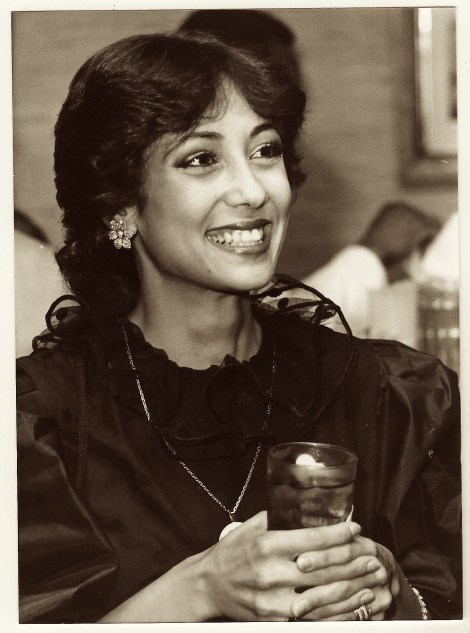
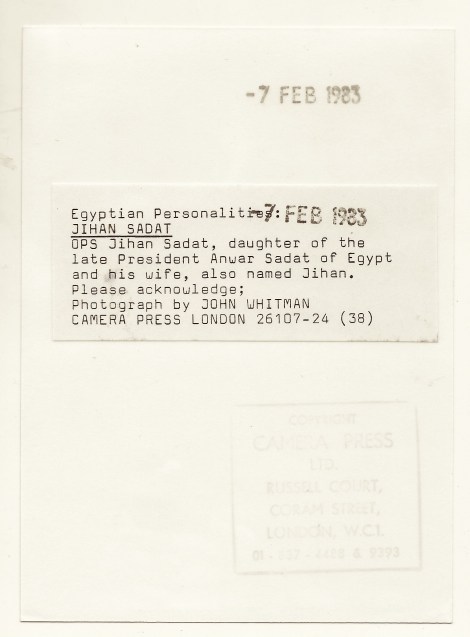
This press photo features Jihan (Jehan) Sadat. She is the daughter of the late Egyptian President, Anwar Sadat (1918-1981). He was the third President of Egypt and served from 1970 to 1981. He was assassinated while in office. He negotiated a peace treaty with Israel’s Menachem Begin and the two shared the Nobel Peace prize. This photograph was taken by John Whitman of Camera Press, located in London, England. It was taken in 1983. SOLD
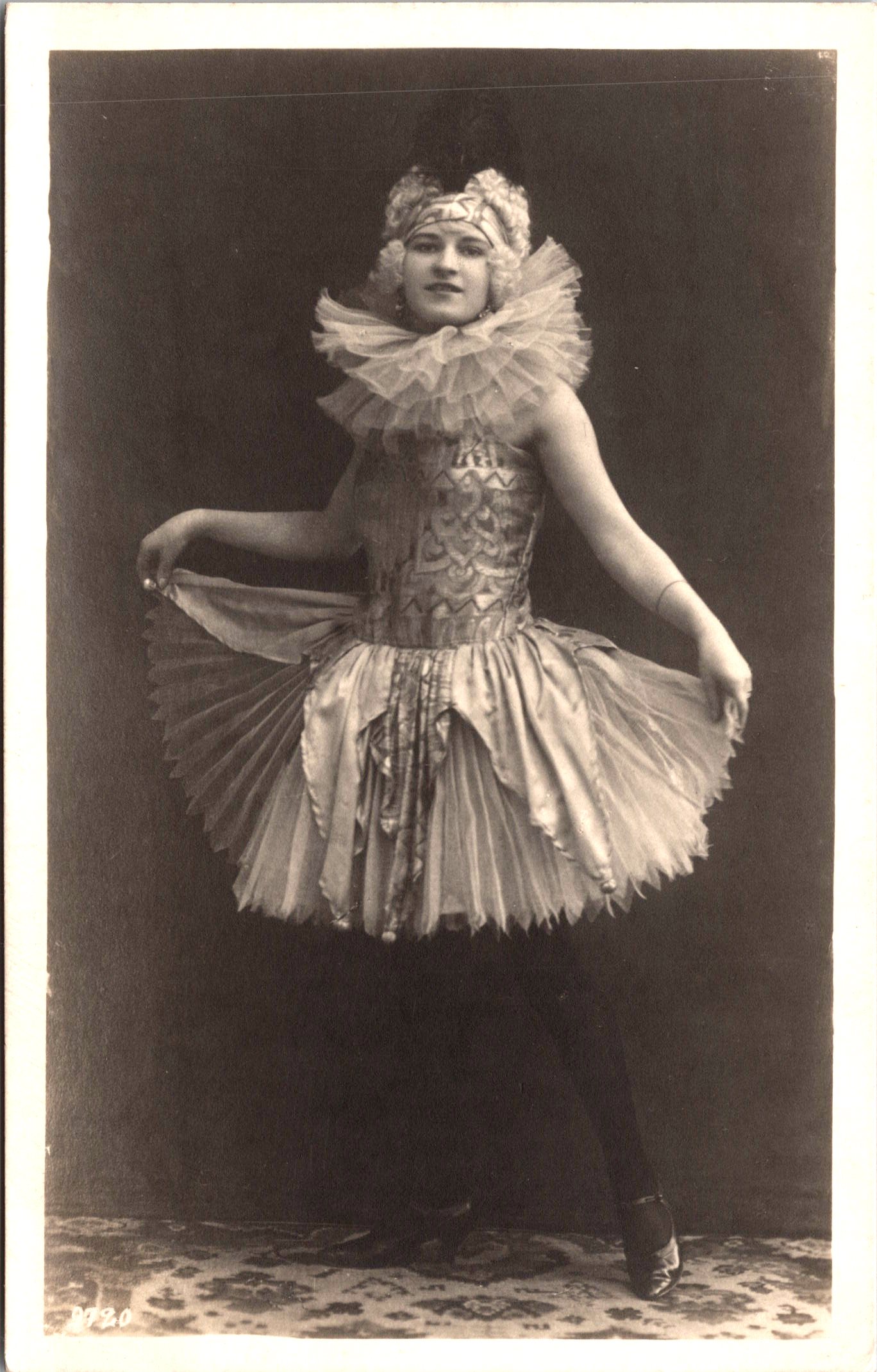
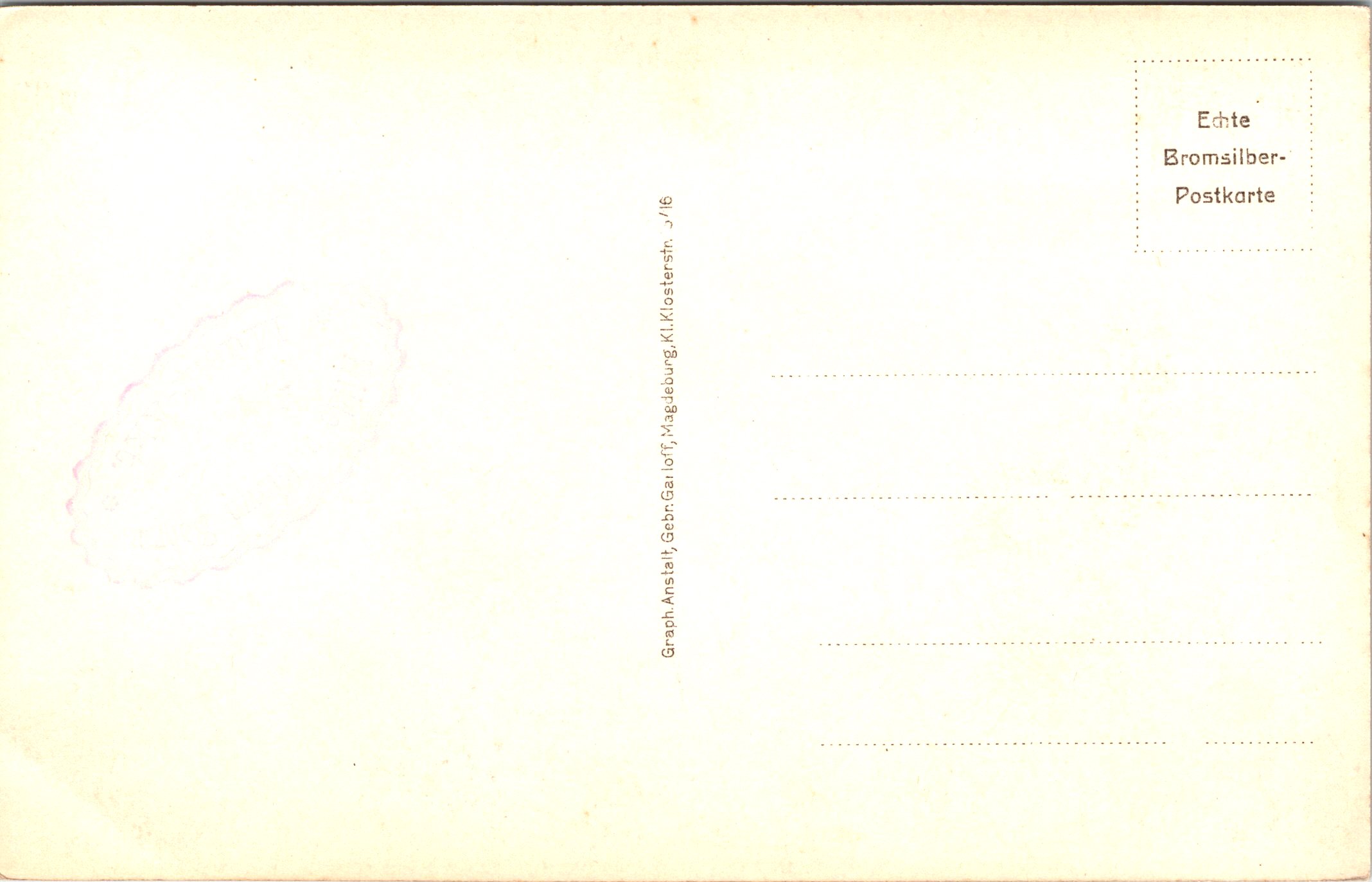
This vintage divided back real photo postcard features a young woman dressed as a Pierrot. Actually, the female version of a Pierrot is “Pierrette”. The girl’s photo was taken by Hilde u. Clown Sarra Musik-Akt. The publisher of the postcard was Graph. Anstalt, located in Magdburg, Germany. (SOLD)
This cabinet card photograph features a young father and his son. The little boy has darling curls. The photo studio that took this photograph is Cintra & Cia. The studio was located in Recife, Brazil. The city of Recife is in the state of Pernambuco which is in northeastern Brazil and on the Atlantic Ocean. SOLD
This vintage photograph captures four young men posing in their dress-up clothing and patriotic straw hats. An inscription on the reverse of the image states that the men were photographed on July fourth, 1900. The men are wearing prize ribbons on their lapels. They apparently won a contest of some sort. Its interesting to note that the two men in the front row are balancing luggage bags on their knees. The bags almost look like doctor bags. This photograph was taken by J. L. Blessing of Salamanca, New York. Blessing was no amateur as is apparent in his 1908 photograph of a Native American woman seen below. She is from the Seneca tribe and her name is Ah-Weh-Eyu (translation: Pretty Flower). Her English name was Goldie Jamison Conklin and she was from the Allegany Reservation in Western New York. She was born in Salamanca in 1892 and died in 1974. She was quite beautiful and worked as a model for the Cattarugus Cutlery Company of Little Valley, New York. She helped advertise the company’s line of “Indian Brand” knives. She was often photographed by Jesse Lynn Blessing who operated the Blessing Studio in Salamanca. His father was J. H. Blessing (1851-1920) who started the studio. According to an entry on geneology.com by J. L. Blessing’s grandaughter, Mr Blessing “was asked to work with Disney Studios by Walt Disney but decided to take over his father’s studio instead”. (SOLD)
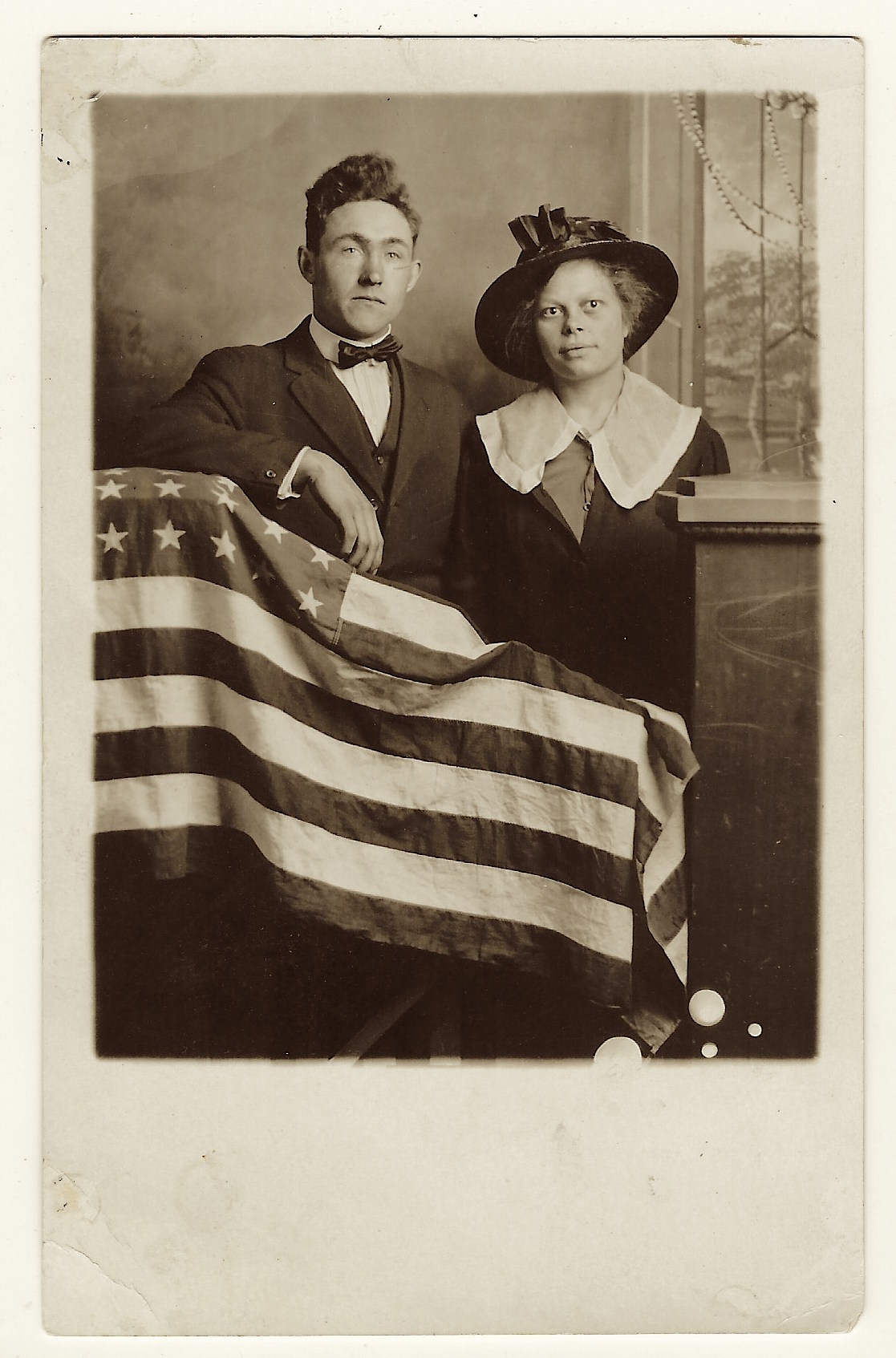
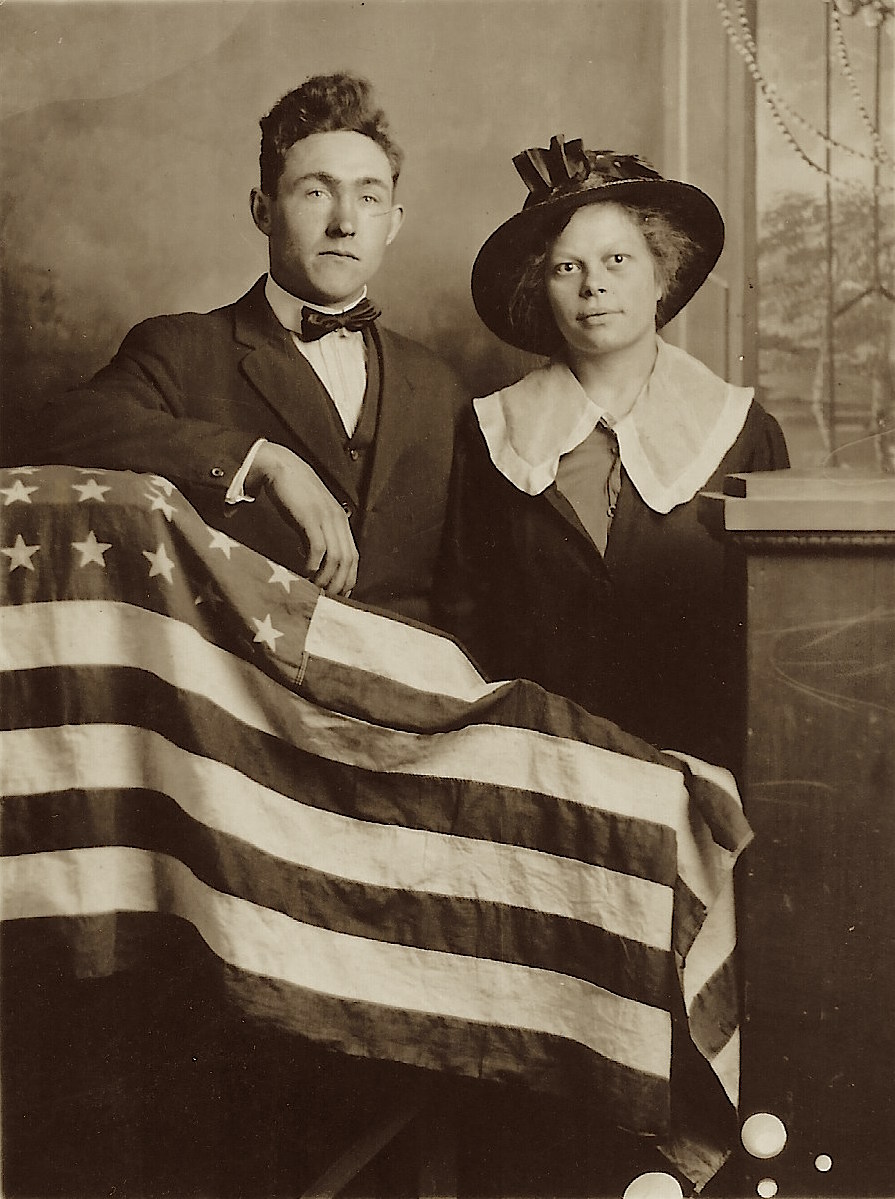
This vintage real photo postcard exudes a form of patriotism that is seldom seen today. The AZO stamp box indicates that this photo was taken sometime between 1918 and 1930. This was an era when it was relatively common for individuals to include flags when having their picture taken. We tend to see a resurgence of exhibiting American flags for short stints during the time of national threat or crisis (ie 9/11). When people chose to pose with flags during the 1910’s and 1920’s, it wasn’t to tout a particular cause. They were just expressing their love and fidelity toward their country. There is faint writing in pencil on the reverse of this postcard. The text states “With love from Mr. and Mrs. Chester McCrumb (?), To our sister Mrs. Jennie Hubbard”. This photo postcard has excellent clarity and is in good condition (See Scans and note bottom right of image). SOLD
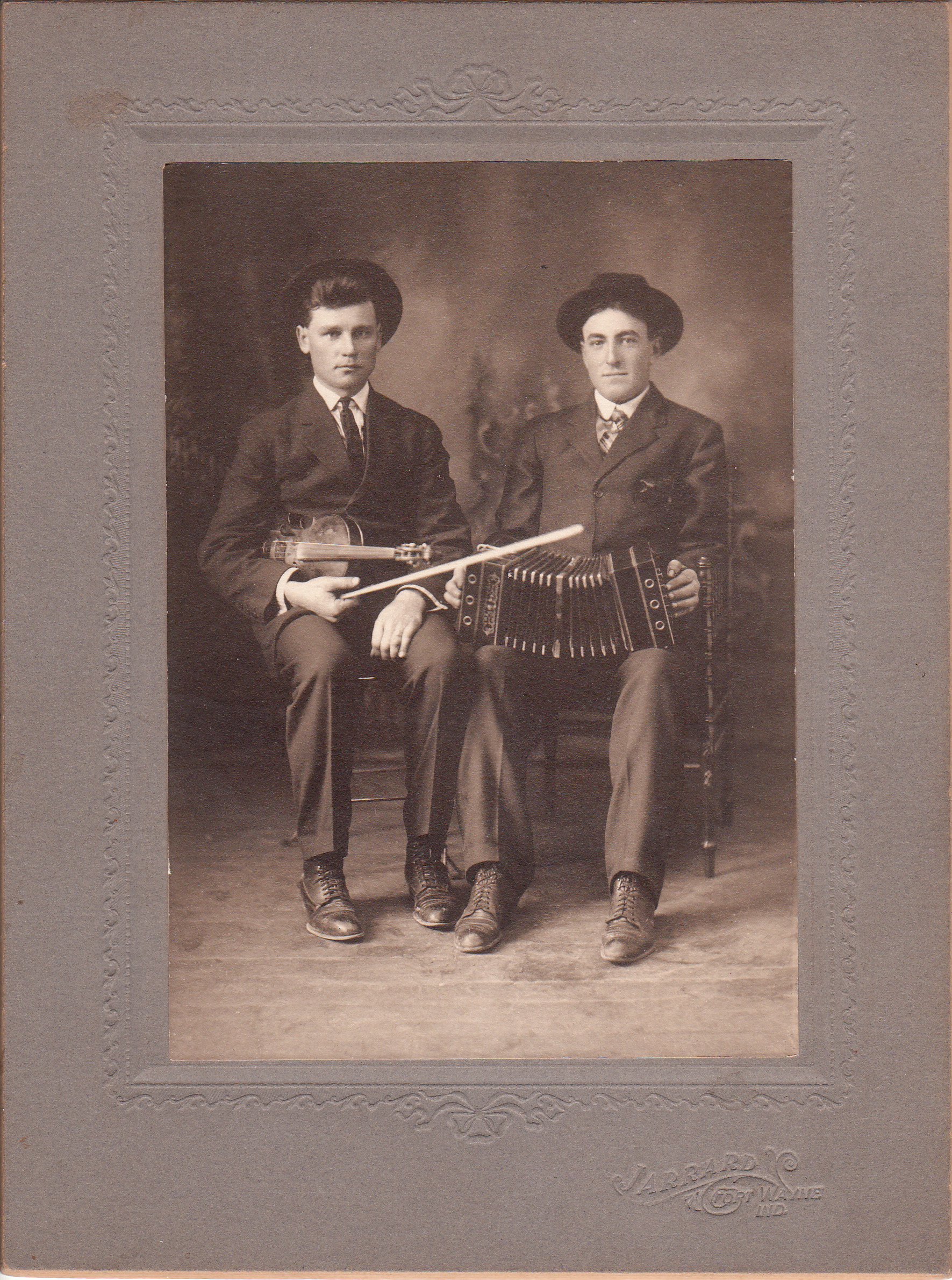
This photograph features two musicians posing for their portrait at the Jarrard Studio in Fort Wayne, Indiana. According to an inscription on the reverse of the photograph, the violinist is named “Louie Dudenhofer” and he is the “Brother to Jeanette”. The second musician is unidentified and he is holding his accordion. The photographer, Harry R. Jarrard was born in Indiana in 1852. He is known to have been a photographer from at least 1889 through 1910. He is thought to have arrived in Fort Wayne in 1886 and in 1888 married Emma Short. His photography business in Fort Wayne occupied several locations during its existence. SOLD
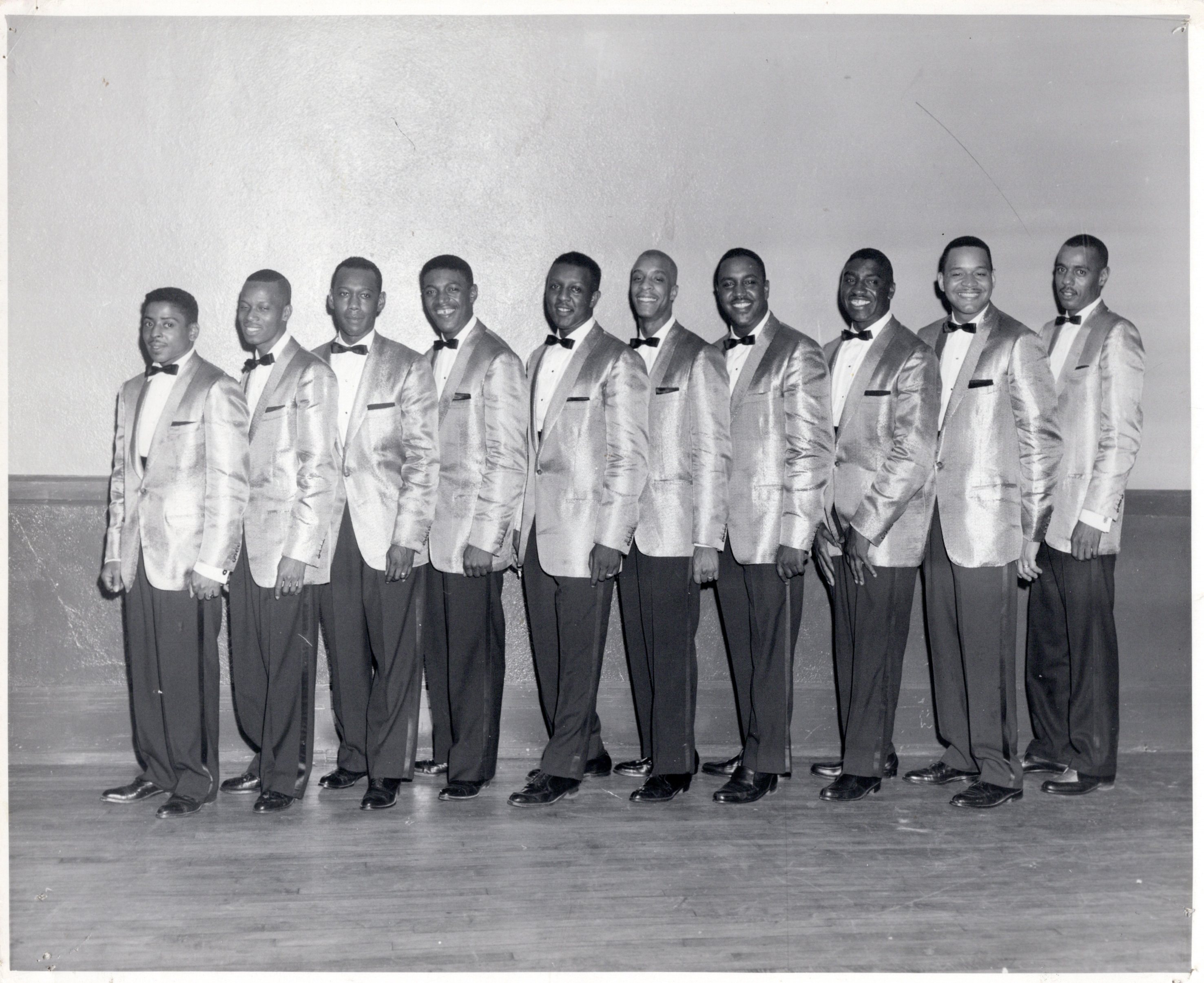
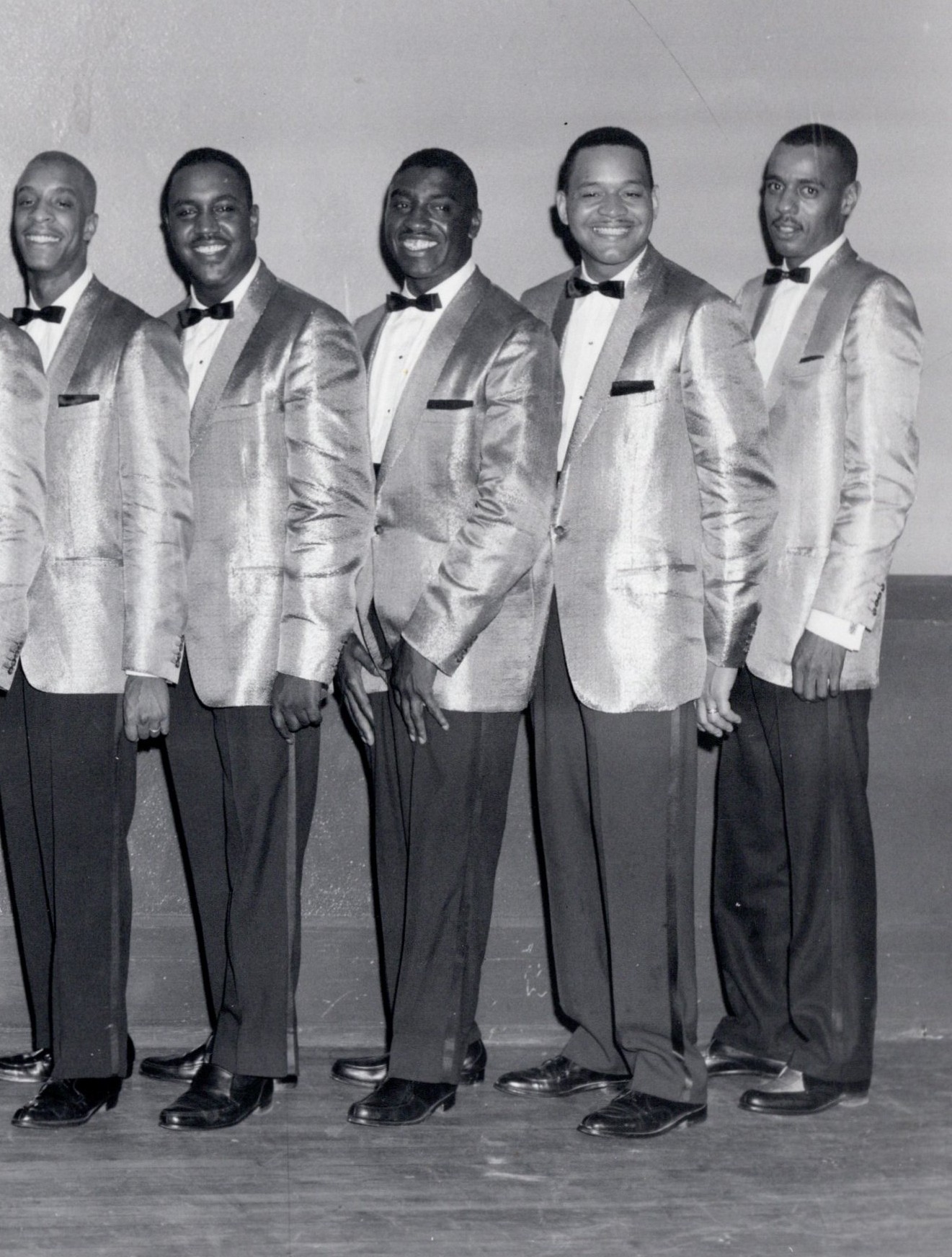
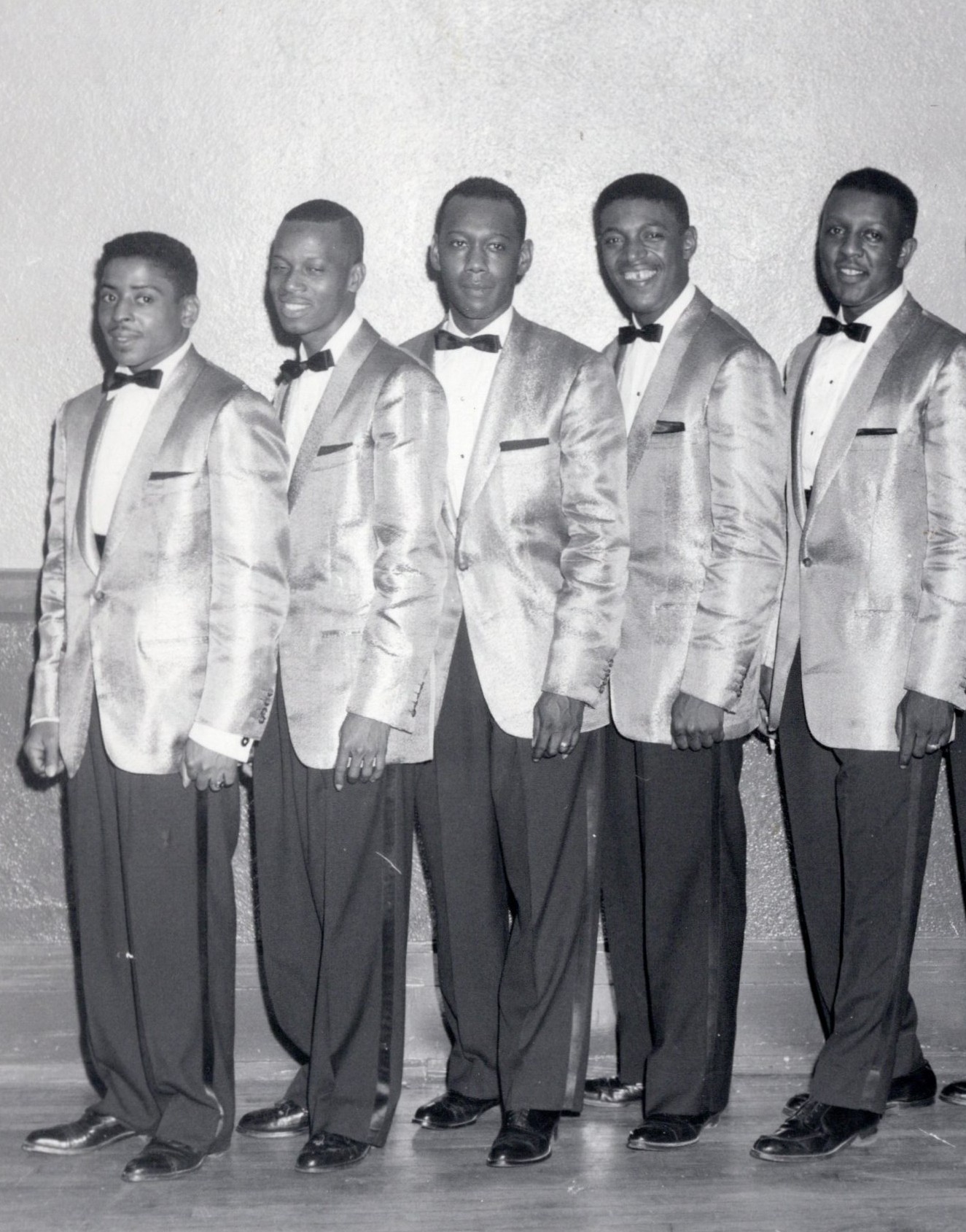
This striking black-and-white photograph, taken by Cleveland photographer Jimmy Baynes (1922–2010), captures a moment of unity, elegance, and pride. The image showcases a distinguished group of African American men, impeccably dressed in matching metallic-toned tuxedo jackets, crisp white dress shirts, and black bow ties. Their tailored jackets gleam under the light, emphasizing their polished, formal appearance. Completing their attire, neatly pressed black trousers and polished dress shoes reflect a commitment to both style and sophistication. Standing in a carefully arranged formation, the men present a sense of camaraderie and professionalism. Their expressions range from confident smiles to serious, poised looks—perhaps reflecting the anticipation of a performance or an important social event. Each man exudes dignity, their upright postures and synchronized attire reinforcing a sense of unity. The background is simple and unembellished, allowing the focus to remain on the subjects themselves, their expressions, and the sharp contrast of their gleaming jackets against the darkened floor. The photographer of this photograph, Jimmy Baynes was known for his ability to capture the essence of African American life, culture, and entertainment from the 1950s through the 1980s. Originally a postal worker, Baynes pursued photography as a passion, ultimately founding Baynes Foto Service. His work chronicled the vibrancy of mid-century African American social life, from intimate gatherings and beauty contests to the pulsating energy of live music performances and political events. Baynes photographed some of the most iconic figures in entertainment history, including Aretha Franklin, Louis Armstrong, Count Basie, Mahalia Jackson, Louis Jordan, Jerry Lee Lewis, the Platters, and the Drifters. His ability to capture both candid and staged moments gave his work a lasting impact, preserving the rich history of Cleveland’s African American community. His legacy is recognized today by institutions such as the Rock and Roll Hall of Fame and Museum Library and Archives in Cleveland, which houses a collection of his photographs, primarily focusing on music and entertainment. In 2010, shortly before his passing, his work was featured in the “Polaroid: Instant Joy” exhibition in Brooklyn, New York, reaffirming his role as a visual storyteller of African American life in the mid-20th century. This photograph was taken in the 1950’s. (SOLD)
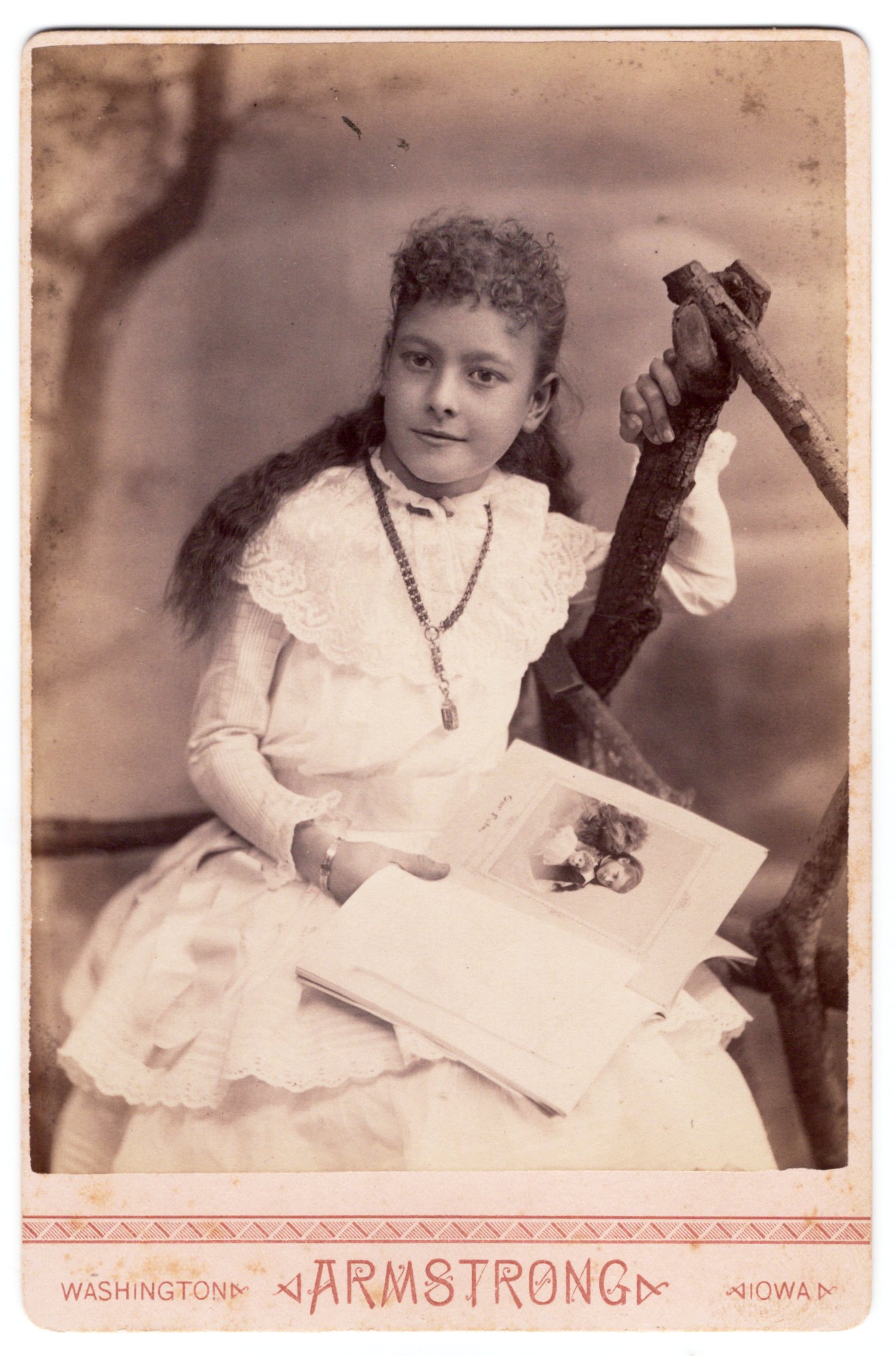
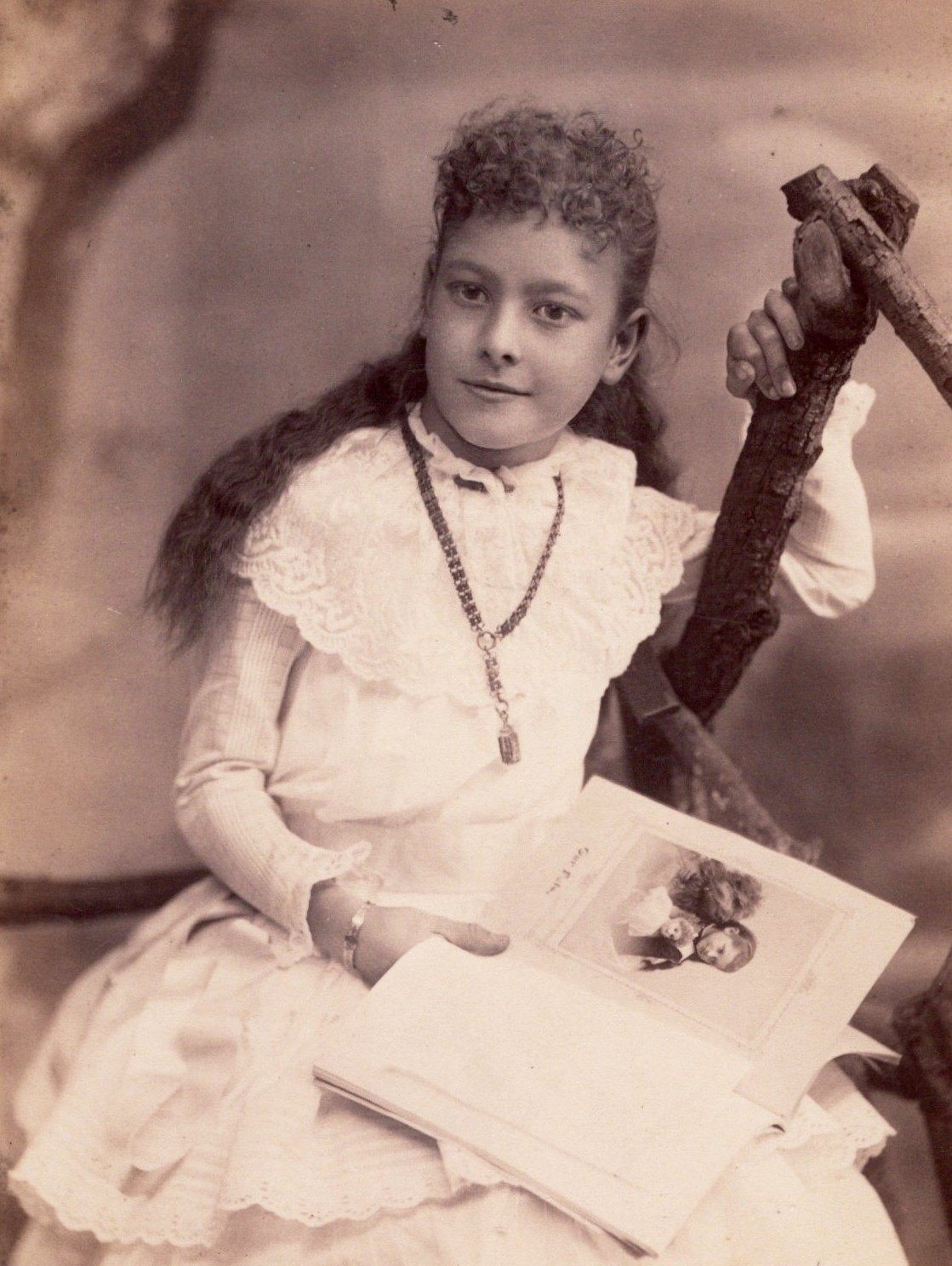
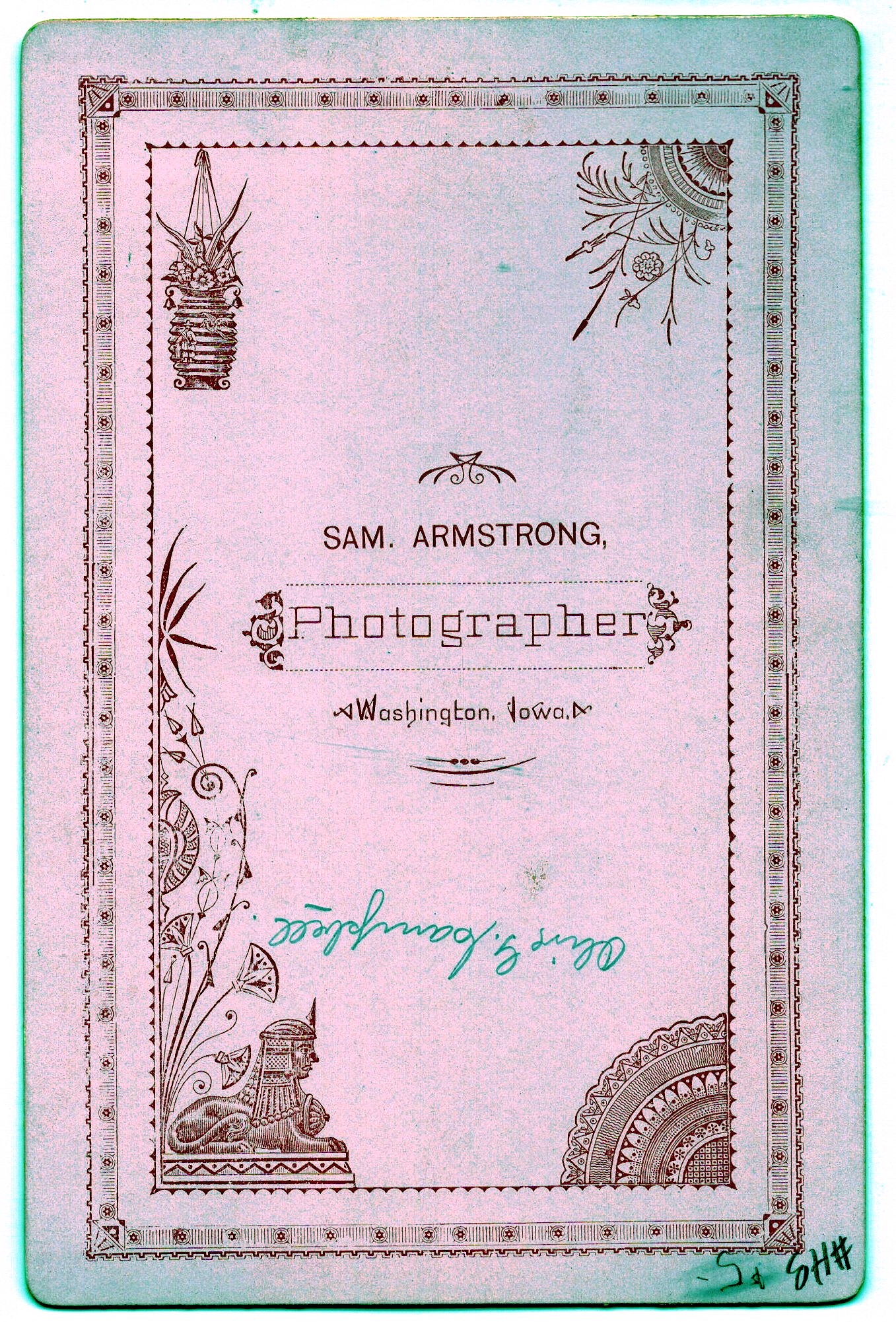
This captivating cabinet card portrait features a young Victorian girl posed in a rustic studio setting, seated gracefully beside a faux wooden fence. Dressed in a pristine white dress adorned with a broad, ornate lace collar and a tiered, ruffled skirt, she embodies the fashion of late 19th-century childhood portraiture. Her tightly curled bangs frame her youthful face, while her long, loose hair cascades over one shoulder—an uncommon and charming detail. She wears a long beaded necklace, from which a small rectangular locket or charm is suspended. A bracelet graces her left wrist, adding a delicate finishing touch to her ensemble. In her lap she holds an open album or book, featuring a cabinet card or mounted photograph of another child—possibly a sibling or friend—suggesting a theme of familial affection or memory. The girl gazes directly at the camera with a calm, slightly serious expression, her composure and gentle poise typical of studio portraits from this era. The setting evokes naturalism, yet remains artfully staged, blending domesticity with refinement. The back of the card is elaborately decorated in brown ink with Victorian embellishments including an ornate border, floral flourishes, and a small Sphinx illustration. The photographer is identified as Sam. Armstrong of Washington, Iowa. Samuel McDowell Armstrong learned photography in 1868 from Washington photographer, Austin Kracaw. In 1873 he partnered with Kracaw and within a year, Armstrong moved to Springfield Missouri. A name is handwritten in ink across the reverse: “Olive Campbell”. This is likely the name of the the girl seen in this photograph. Olive Gordan Campbell was born in 1878 and died in 1941. (SOLD)
This cabinet card features Cardinal James Gibbons in his coronation portrait, taken around 1886. The sepia-toned photograph depicts him standing in a formal pose. He is dressed in traditional Roman Catholic clerical attire, holding a rosary in his left hand and wearing distinctive ecclesiastical garments. A crucifix is prominently displayed on the table beside him. Cardinal Gibbons is dressed in his clerical clothing. Note the following garments. 1) Cassock: A long black robe buttoned down the front, signifying his clerical rank 2) Zucchetto: A skullcap typically worn by clergy, indicating his episcopal office, 3) Roman Collar: A white collar worn by Catholic priests, 4) Sash/Cincture: A silk sash tied around the waist, symbolizing purity and obedience, 5) Surplice with Lace: A white garment adorned with lace, often worn during liturgical functions, and 6) Pectoral Cross: A cross worn on a chain or cord around the neck, signifying his role as a bishop or cardinal. Cardinal James Gibbons (1834–1921) was a prominent American prelate of the Roman Catholic Church. He served as the Archbishop of Baltimore from 1877 to 1921 and was elevated to Cardinal in 1886 by Pope Leo XIII. Gibbons was a key figure in the American Catholic Church and played a significant role in bridging the divide between Catholicism and American culture. His key achievements were as follows. 1) He was a Labor Rights Advocate. He supported the labor movement and the rights of workers, particularly during the rise of industrialization. 2) Ecumenism: Gibbons was a strong advocate for unity among Christian denominations. 3) Americanist Views: He championed the compatibility of Catholicism with American democratic values. 4) Publications: He authored The Faith of Our Fathers, a popular book explaining Catholic beliefs, which became widely read.
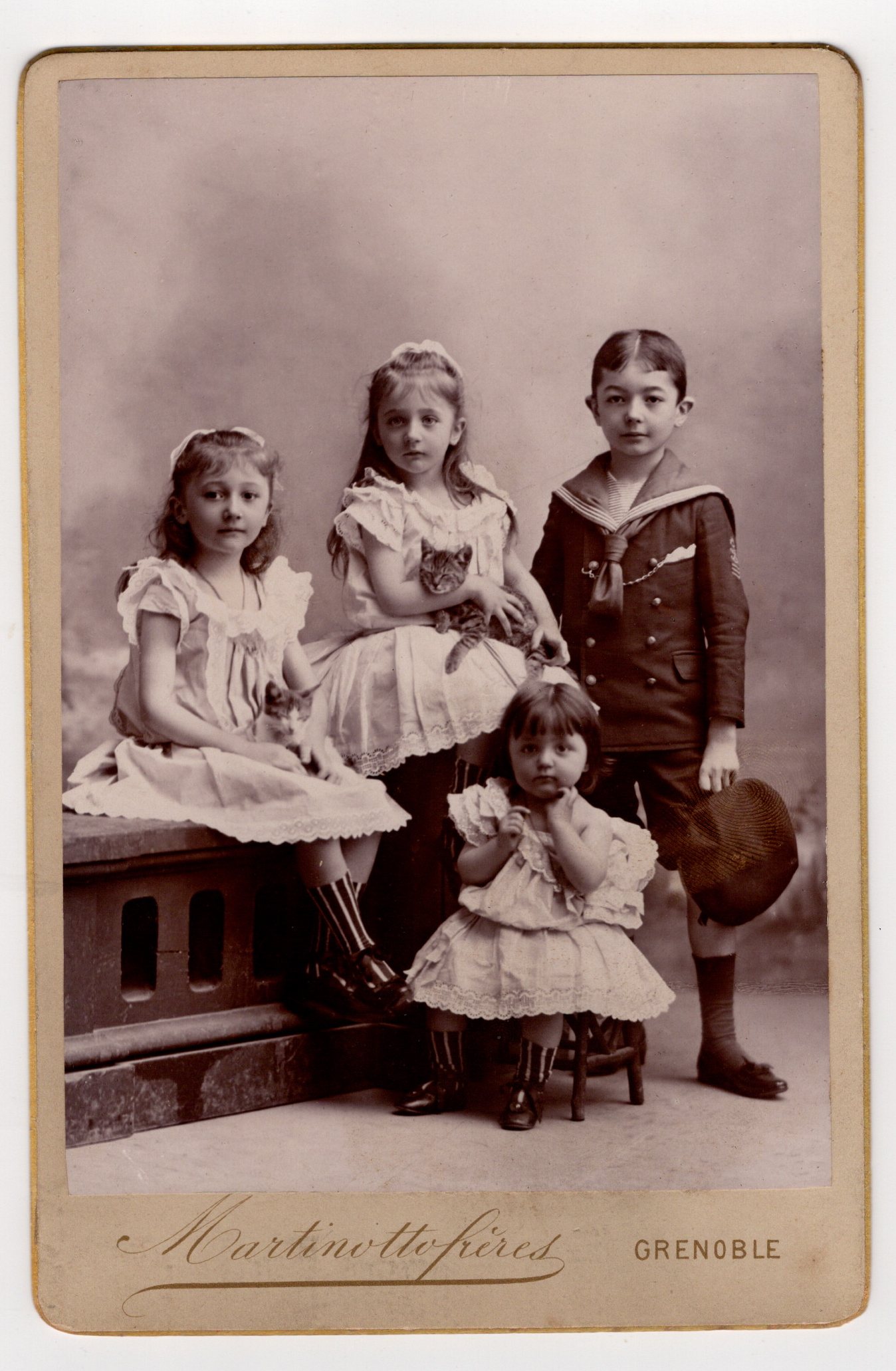
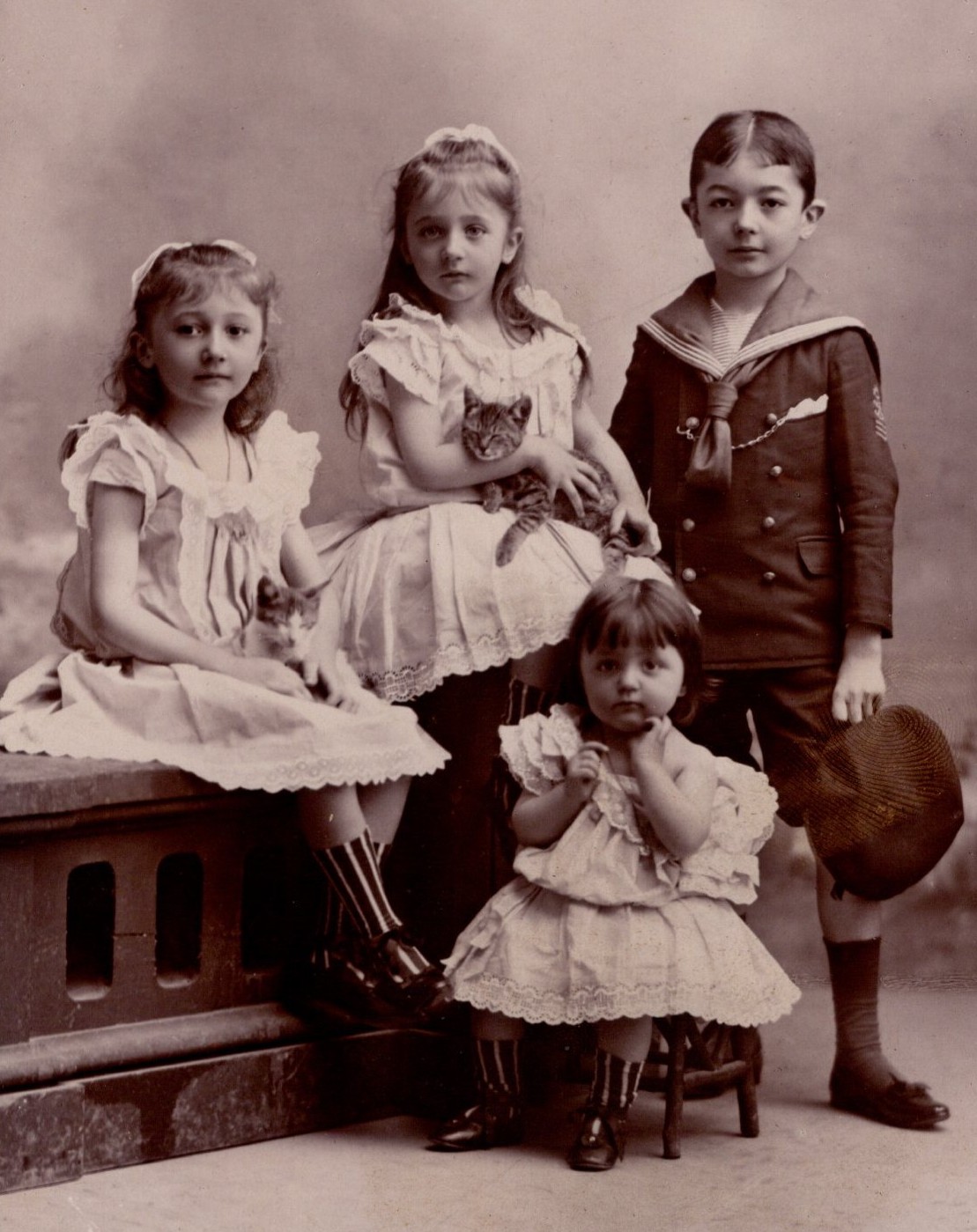
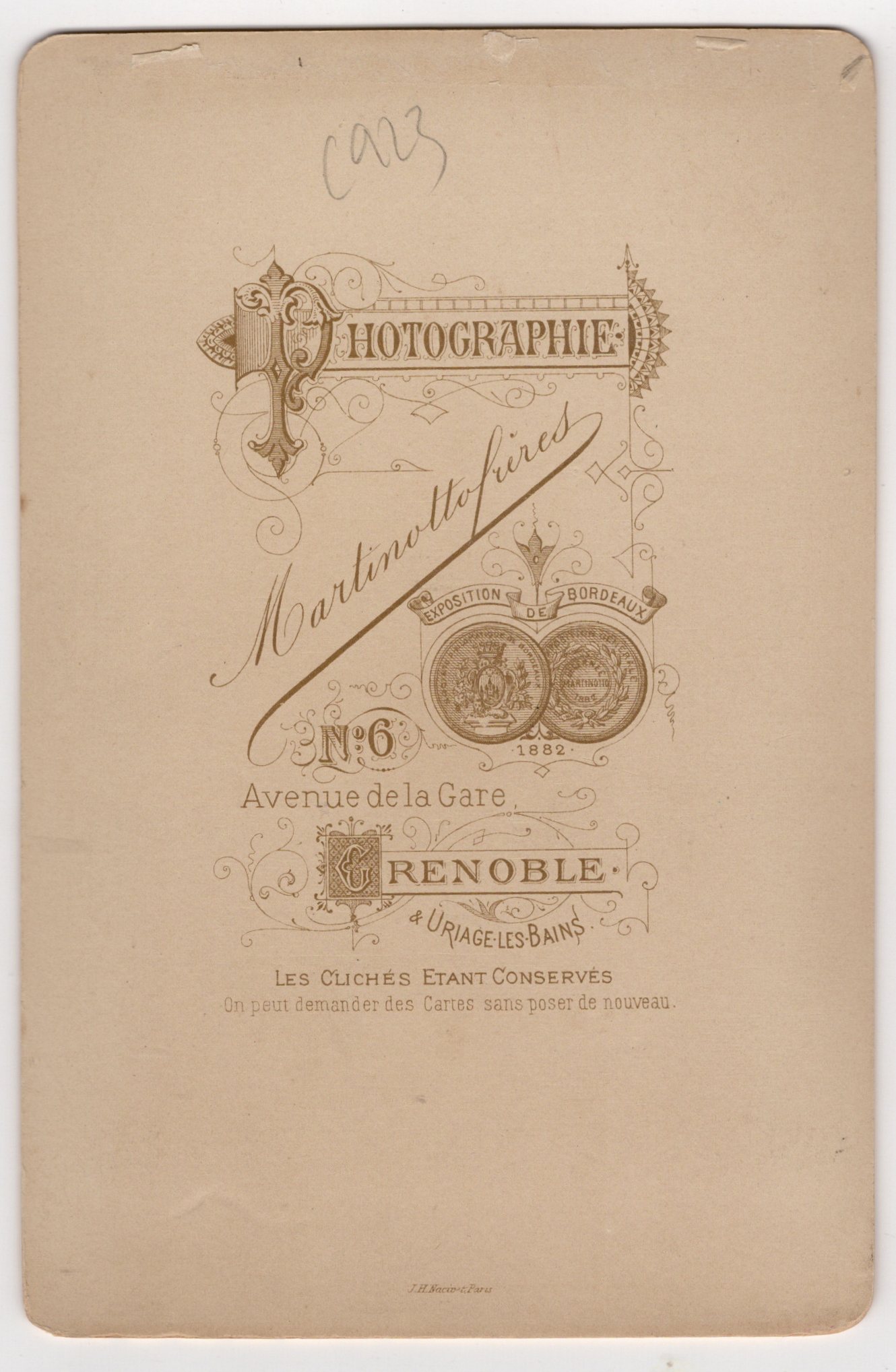
This enchanting cabinet card portrait captures a tender domestic scene from the late 19th century. The image features four children—three girls and a boy—posed formally in a studio setting. Their expressions are a blend of poise and innocence, with a touch of curiosity and seriousness common in portraits of the period. Each child is neatly dressed, their attire reflecting the middle-to-upper-class fashion of the Victorian era. The two older girls, seated on a stone bench, gently cradle small kittens in their laps, adding a heartwarming, spontaneous touch to the otherwise composed image. Their delicate white dresses are adorned with ruffles and lace, and they wear matching striped stockings and black shoes. Their hair is neatly styled, with ribbons typing it back, creating a soft angelic appearance. Beside them stands their older brother, dressed in an immaculate dark nautical outfit, complete with a wide sailor collar, decorative buttons, and a silk tie. His right hand holds a large straw hat, and his confident posture suggests a protective older sibling role. The youngest child, a toddler, stands in front on a miniature chair, wearing a ruffled white dress with puffed sleeves and a curious expression. Her chubby cheeks and tousled bob haircut lend her a particularly charming presence. The photographer of this beautiful image is Martinot Frères, whose studio was located in Grenoble, France..The elaborate typography and decoration on the back of the card advertise the studio’s prestige, including a mention of awards received at the Exposition de Bordeaux in 1882. The inclusion of this medal suggests a respected reputation and hints at the high quality of the photography. (SOLD)

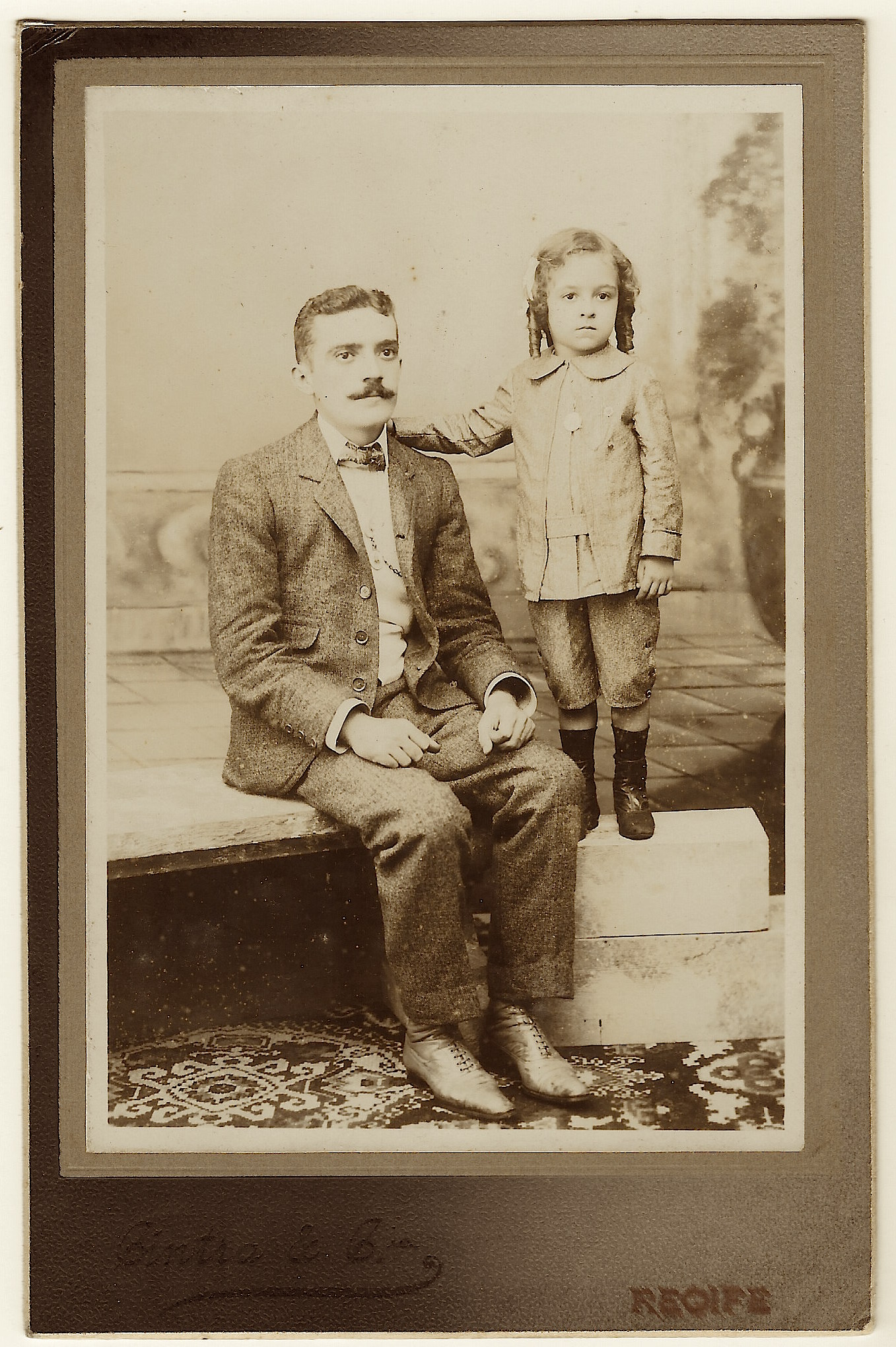
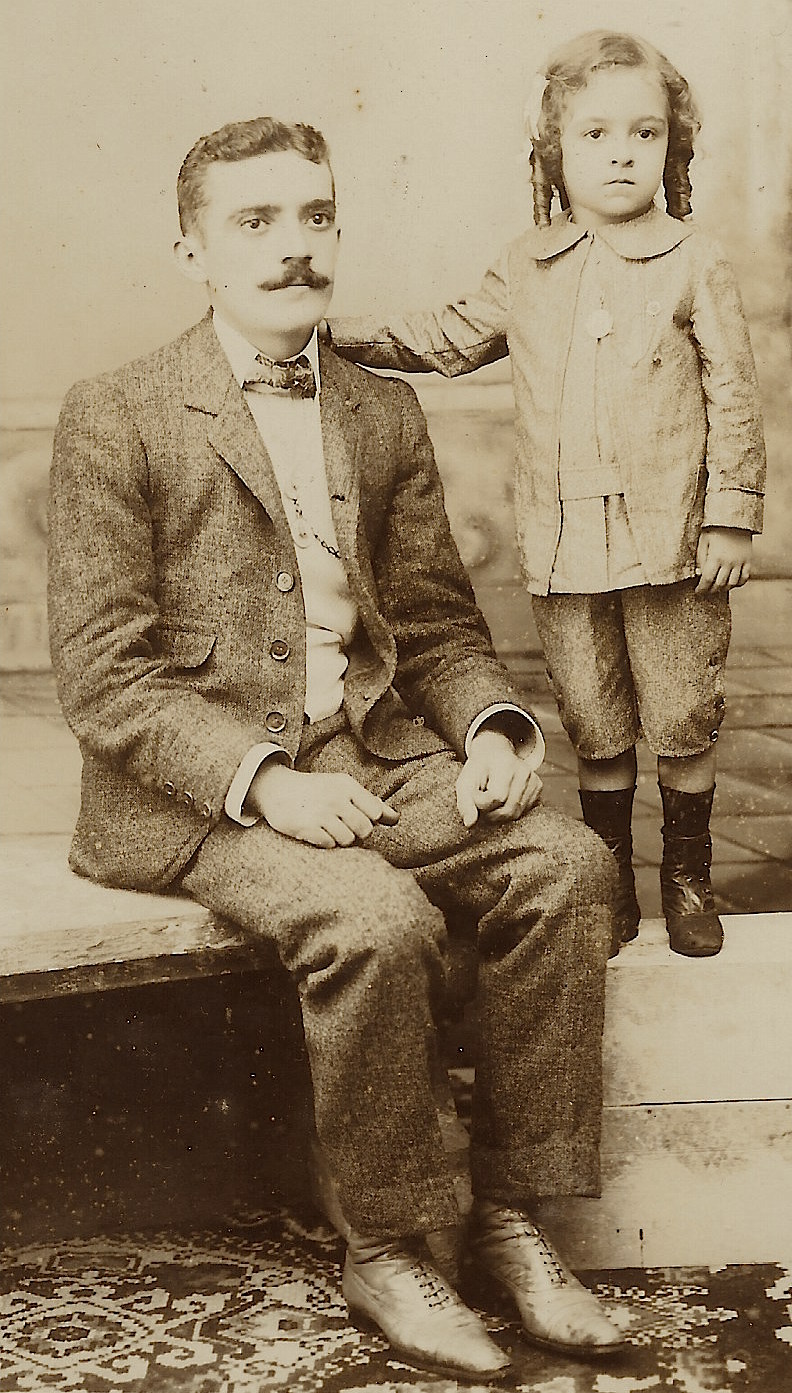 This cabinet card photograph features a young father and his son. The little boy has darling curls. The photo studio that took this photograph is Cintra & Cia. The studio was located in Recife, Brazil. The city of Recife is in the state of Pernambuco which is in northeastern Brazil and on the Atlantic Ocean. SOLD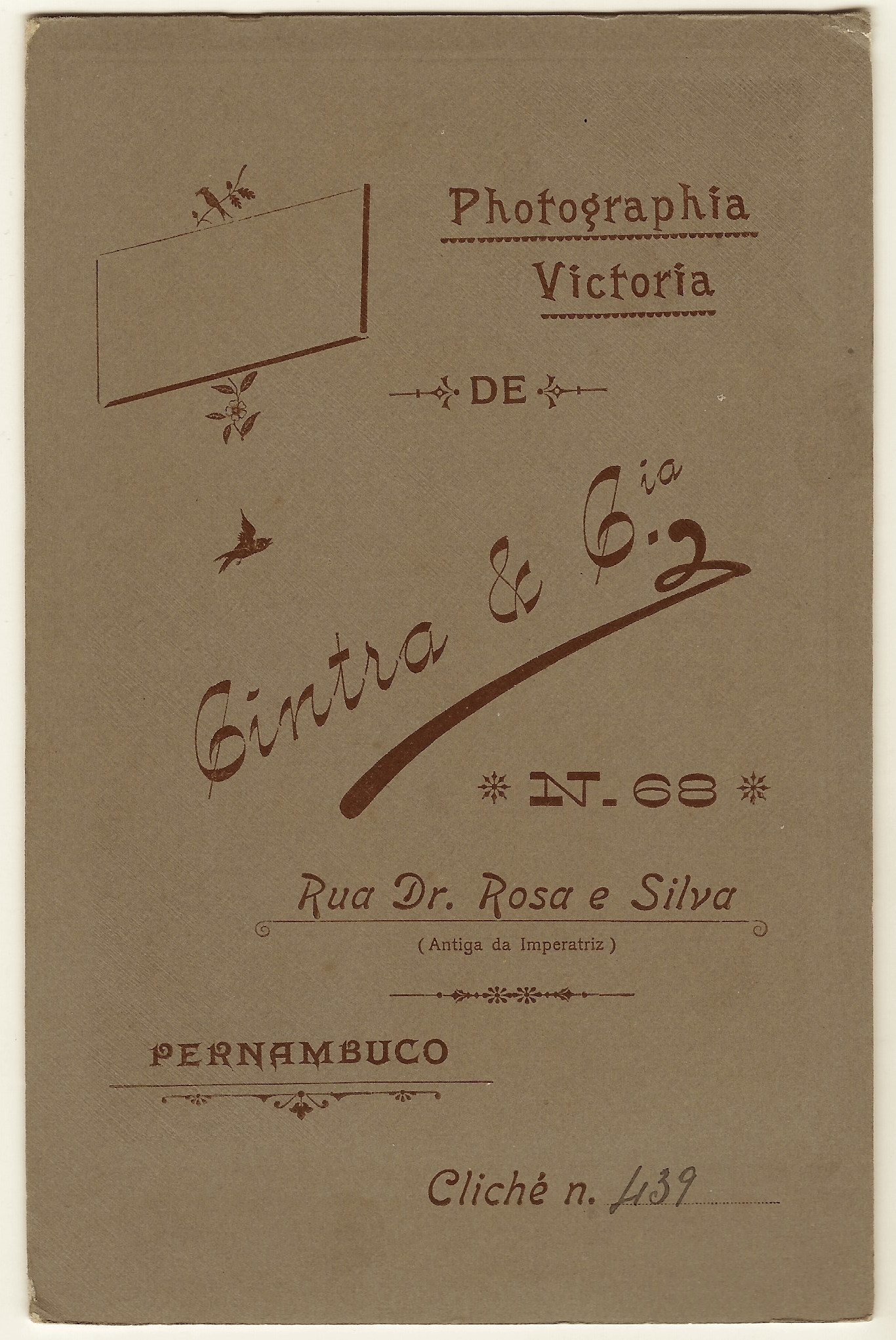






 THE CABINET CARD GALLERY