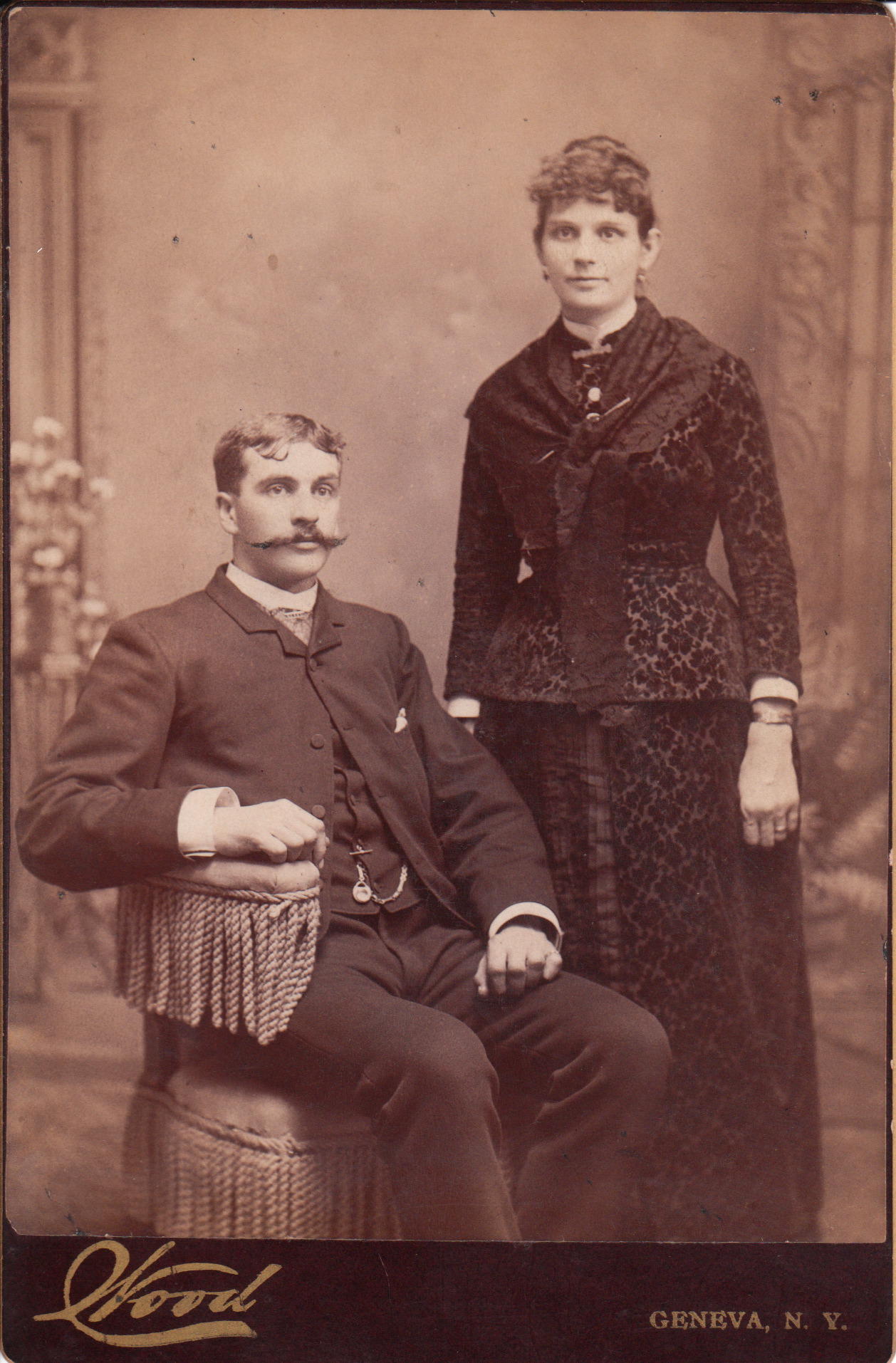
A handsome young Victorian couple pose for their portrait at the Wood studio in Geneva, New York. The gentleman in the photograph has a long mustache, a handkerchief rises from his jacket pockent, and he is displaying the chain to his pocket watch. He sits in a interesting chair that seems to be braided and designed with just one arm. The young woman is wearing a lot of jewelry including a ring, pin, and earrings. Her figure appears to be enhanced by a corset. The reverse of the cabinet card reveals some information about the photographer. Theo. H. Wood’s studio was located at 4 & 6 Seneca Street in Geneva. Theodore Wood was born in England in 1844 and immigrated to the United States in 1850. He is listed as a photographer in Geneva City directories from 1901 until 1905. The 1907 directory reports his occupation as “retired”. Wood also makes appearances in the 1900 and 1910 US census. In both surveys he is listed as single and as living as a lodger in a boarding house.
HANDSOME VICTORIAN COUPLE IN GENEVA, NEW YORK
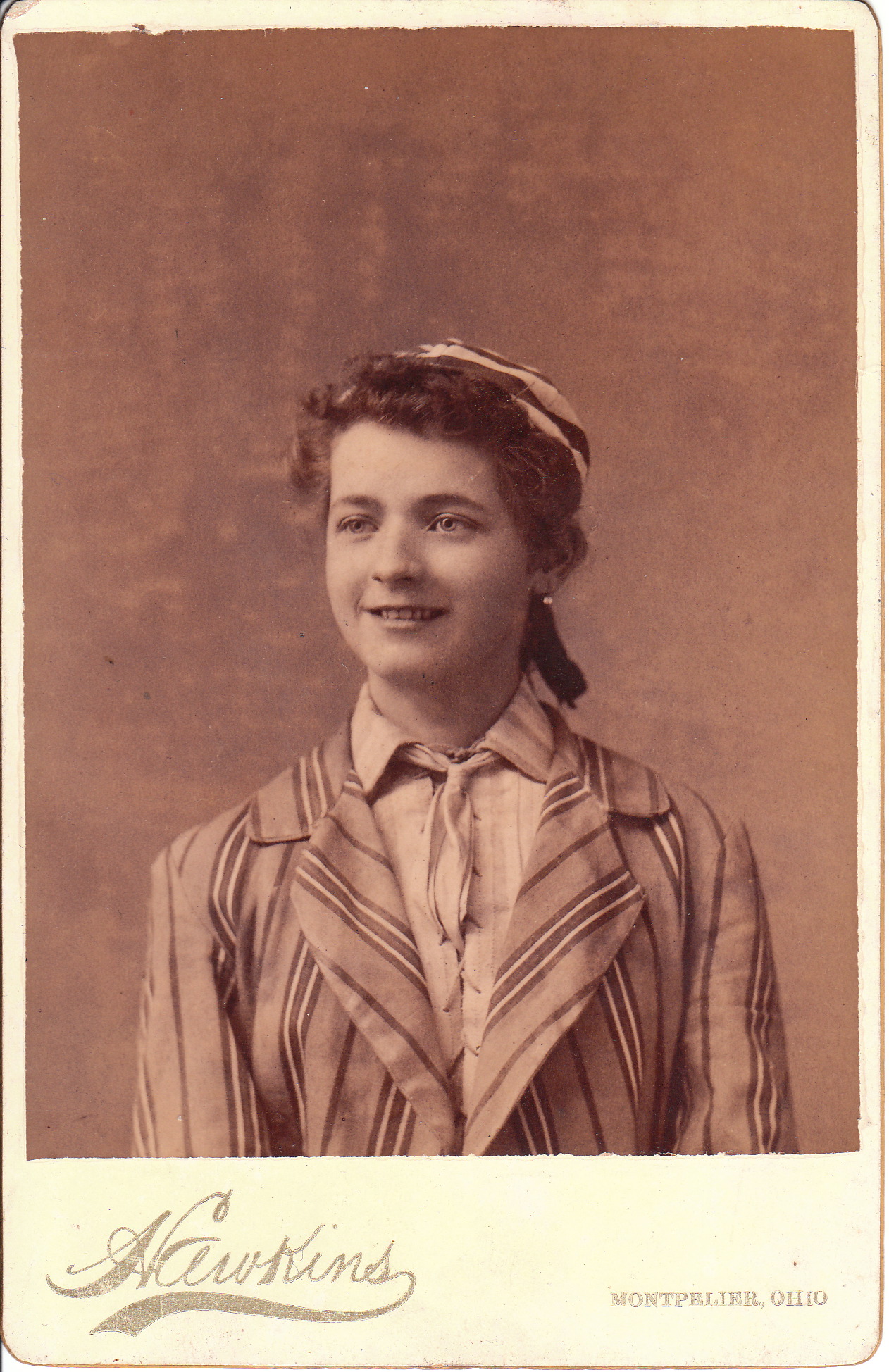
YOUNG WOMAN WEARING UNUSUAL ATTIRE IN MONTPELIER, OHIO
This cabinet card portrait features a smiling young woman wearing unusual attire. Is she wearing a uniform? If her clothing is a uniform, is she wearing it for work or is she part of a sports team? Note that her cap matches her jacket and that the style of her blouse is atypical for the cabinet card era. Hopefully, some cabinet card gallery’s visitors will leave a comment speculating or informing the rest of us about the fashion worn in this photograph. The Hawkins studio, located in Montpelier, Ohio, produced this image. Research reveals that there was a photographer in Montpelier named George B. Hawkins. At some point, there was a studio in Montpelier called Hawkins & Marsh. It is likely that George Hawkins once partnered with Mr. Marsh. The reverse of the cabinet card has an inscription which states “Cousin to Marian” and “Kelly-girl”. Clearly, the subject of this portrait is a cousin to Marian and it is likely that the subject’s last name is “Kelly”. The term “Kelly-girl” took a different meaning many years after this photograph was taken. In 1946, Russell Kelly started a business providing temporary employees to local Detroit businesses. His employees called themselves “Kelly Girls” to distinguish themselves from their temporary office coworkers. Russell Kelly’s novel business idea gave birth to the modern staffing business. SOLD
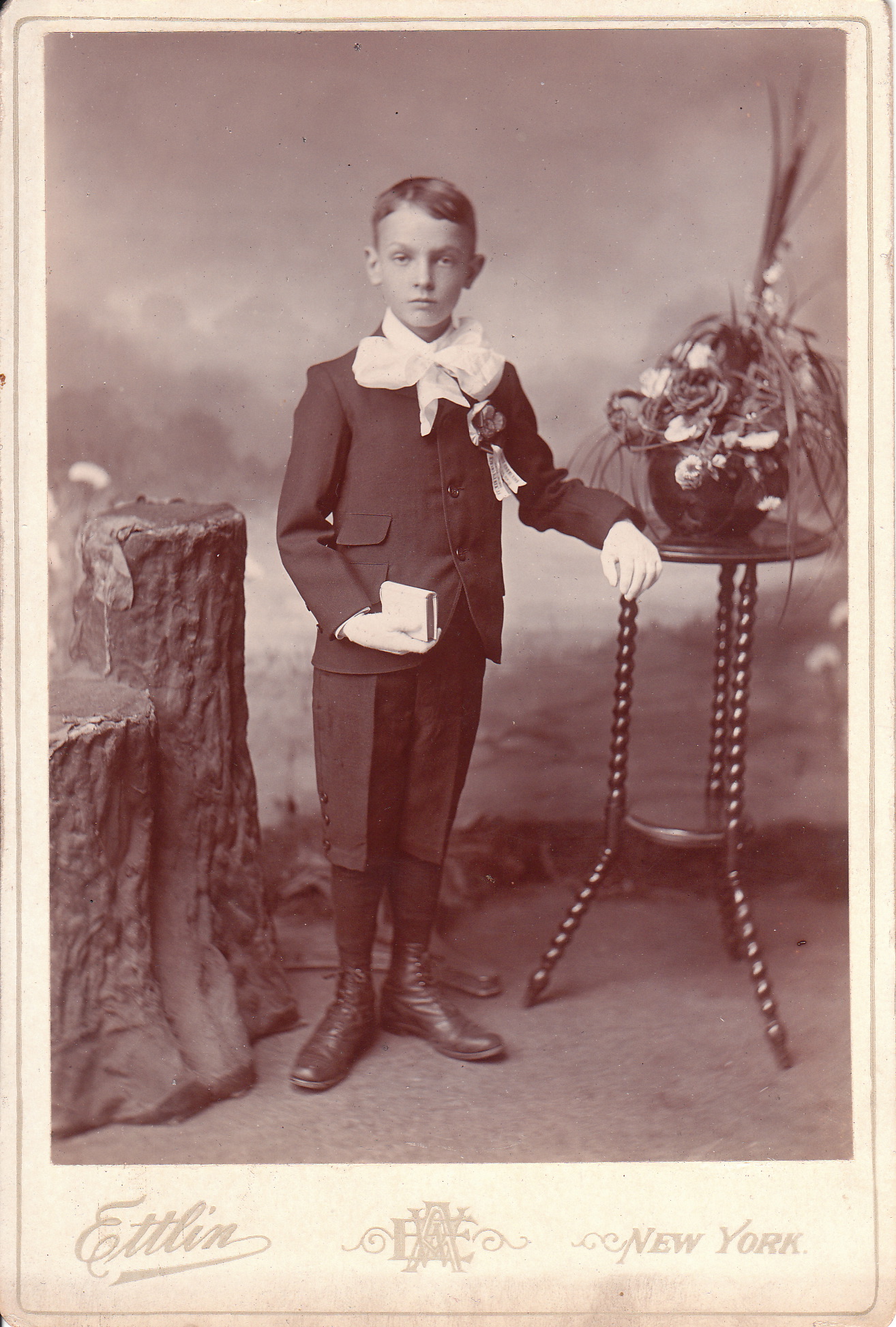
WILLIE BUTLER FINDS RELIGION AT ST. MARY’S CHURCH IN NEW YORK CITY
This cabinet card portrait features a young boy dressed up for his confirmation and holding a religious book. Note his huge bow tie. He is wearing two ribbons pinned to his jacket. One of the ribbons has the printed name “St. Mary’s Church”. The reverse of the photograph has an inscription stating “Willie Butler”. Young Master Butler posed for this image at Ettlin’s Portraits which was located at 17 Chatham Square in New York City. William A. Ettlin is listed in the 1902 and 1905 New York City directory as well as in Trow’s Business Directory of 1898.
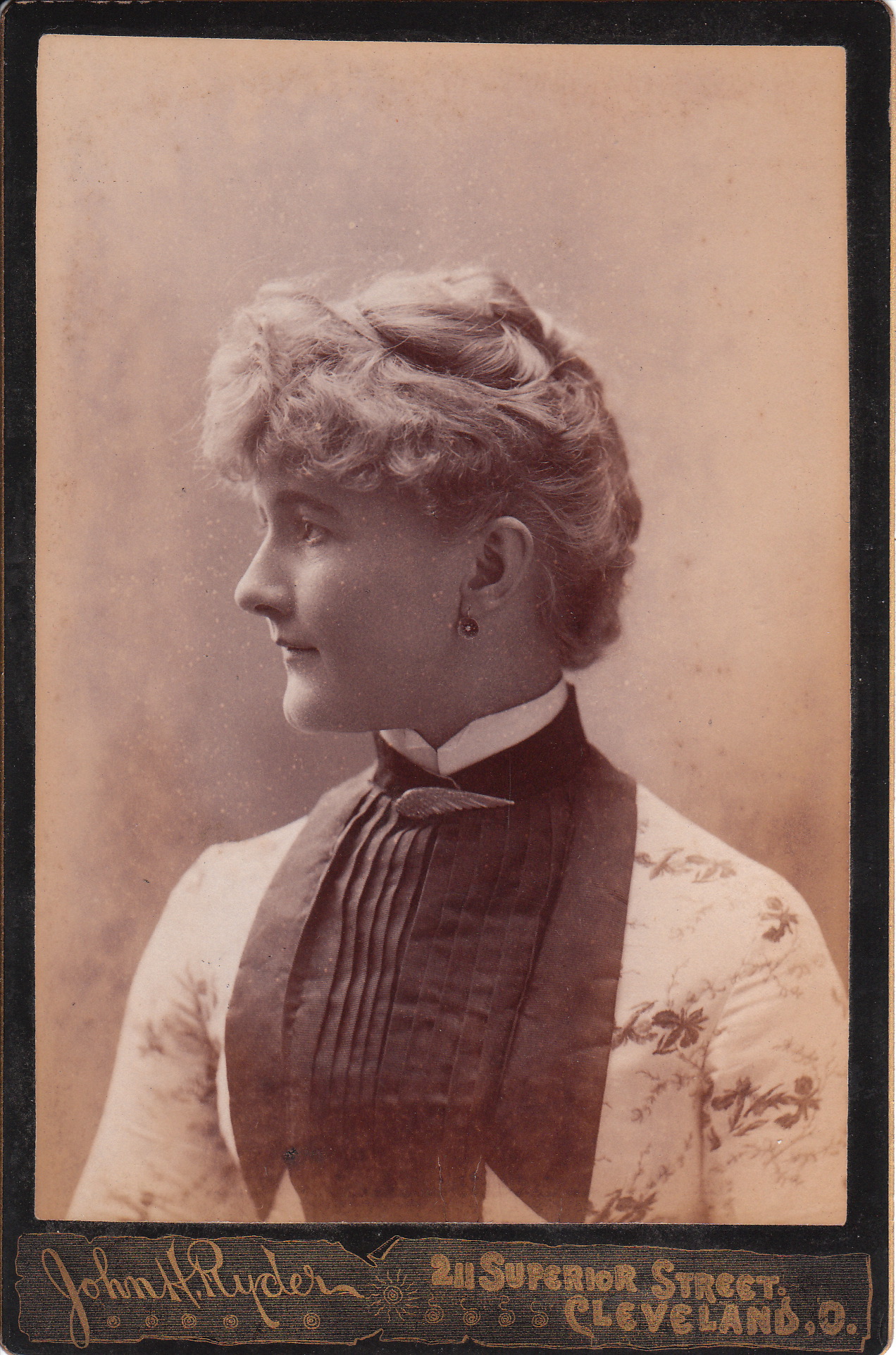
PROFILE OF A PRETTY WOMAN IN CLEVELAND, OHIO
A pretty woman poses for her portrait at the studio of John H. Ryder in Cleveland, Ohio. The subject is wearing a collar pin, earrings, and a interesting patterned dress. John H. Ryder (aka Jack) was a daguerreotype artist and photographer active on and off in Cleveland from the late 1850’s until his death in 1898. He was born in New York around 1832. After working with his older brother James F Ryder (1826-1904) for many years, he opened his own studio in 1884. John Ryder found a diversion from his photography career during his days of working for his brother. Some time around 1864 he went on a series of tours with humorist Charles F. Browne who was known on the lecture series as Artemus Ward”. Ryder served as Browne’s agent and manager. A photograph of Browne can be found below.

SOLEMN MAMA BROWN POSES FOR HER PORTRAIT IN WASHINGTON D.C.
The inscription on the reverse of this cabinet card identifies the subject of this portrait. She is “Mama Brown, friend and neighbor of Annie S. Peters”. The photographer of this photograph is G. W. Dahi… and his studio was located at 925 Pennsylvania Avenue in Washington, D. C.. Dahi… had a second studio located at 821 Broad Street in Richmond, Virginia. If you are wondering why his name is spelled “Dahi…”, let me tell you the answer. The first four letters of the photographers name are “Dahi” and the rest of the letters are unknown because they were removed when the image was taken from the frame or album that used to house it. Note the subjects, ruffles, lace, flowers, and hair ornament. Research did not identify the photographer. There were a number of photographers that operated businesses from the 925 Pennsylvania Avenue address. They included Henry Whitefield Samson (1878), J. D. Merritt, G. W. Davis, and Tassert or Fassett. Research also failed to identify Mama Brown. There are a number of Mamie Browns that lived in the Washington D. C. area and it is possible that one of them is the subject of this portrait. Annie S. Peters, Mama Brown’s friend and neighbor, was easy to track down. She appears in a number of US Censuses. Annie was born around 1849 and was married to David W. Peters in 1871.
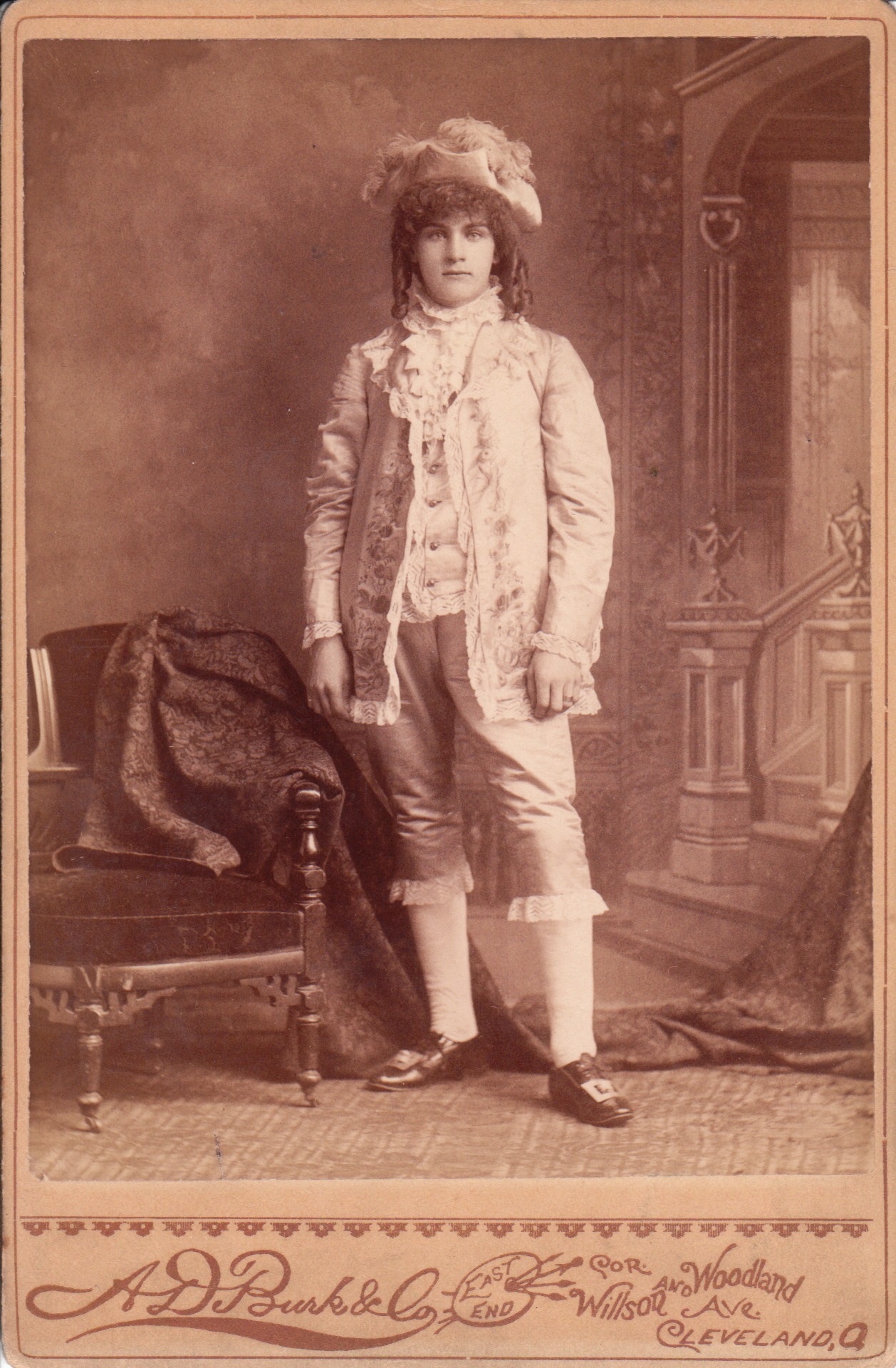
STAGE PERFORMER IN EFFEMINATE COSTUME (IS THIS A YOUNG MAN OR A YOUNG WOMAN?)
This cabinet card portrait, photographed by A. D. Burk and Co. presents a gender mystery. A stage performer wearing an effeminate stage costume by today’s standards, is the subject of this portrait. Note the subjects frilly shirt and jacket, and the feathered hat. Also take note of the subjects long curly hair and hanging curls. Are we looking at a handsome actor or a pretty actress? My guess is actress. The photographer, Alcynus D. Burk worked in Cleveland from 1889, when he partnered with David Bailey until 1900 or later.
LLOYD BRUNDAGE: A TWO YEAR OLD POSES IN FRONT OF A PLAYHOUSE IN SAN FRANCISCO, CALIFORNIA (1888)
A very young child, holding a box by the handle, poses for his portrait at the Morse Studio in San Francisco, California. The child is standing in front of a small house. The faux house is a studio prop. Note that that the number “1888” is above the open window. The number likely indicates the year that this portrait was taken. The reverse of the cabinet card has inscription with the name “Lloyd Brundage” and a note that states that Master Brundage was 21 months old at the time he was photographed. Research reveals that the subject of this image, Lloyd Jeffers Brundage was born in San Francisco on New Years day in 1887. He appears in many US censuses. In 1900 he was thirteen years old and living in Bridgeport, California with his father and mother. His father was named Marshal and was a 46 year-old laborer who was a native Canadian. Lloyd’s mother was named Nillie and she was 31 years old and a native Californian. Her maiden name was Smallwood. Lloyd had a five year-old sister named Delphine. The 1920 census found Lloyd living in Chico, California, with his wife Anna. He was employed as an “agriculturist”. Ten years later he was working as a mechanic in an industiral plant. He and his wife remained in Chico. The 1940 census discovers Lloyd working in a governmental general maintenance position. Lloyd died in 1955 in Butte, California. To learn more about the photographer, George Daniels Morse, and to see other examples of his work, click on the category “Photographer: Morse”.
A YOUNG WEDDING COUPLE IN MANKATO, MINNESOTA
A young couple pose for their wedding portrait in Mankato, Minnesota. The photographer is the Snow Art Gallery. The reverse of the photograph has an inscription that states “Mrs Fred Drury”. Presumably, Mrs Drury is the woman seen in this image. John R. Snow, the proprietor of the Snow Gallery, was born in New Brunswick, Canada, in 1868. At nine years old, he and his family moved to Maine where he finished common school. After graduating, he went to work in a sardine and lobster factory. He left Maine for Wisconsin and it is there that he began his photography career as a tent photographer. He travelled in this capacity and covered the area between Wisconsin and Kentucky. He later had studios in Fort Dodge, Iowa, and Zumbrota, Minnesota. He bought a studio in Mankato in 1893. His addresses in Mankato included 118 East Jackson (1893-1902), and 313 South Front Street (1912-1919). The 1910 US Census lists both John and his wife Margaret as Mankato photographers. Their son, Cecil J. Snow (1894-?), worked as a photographer in Mankato in the 1920’s and 1930’s.
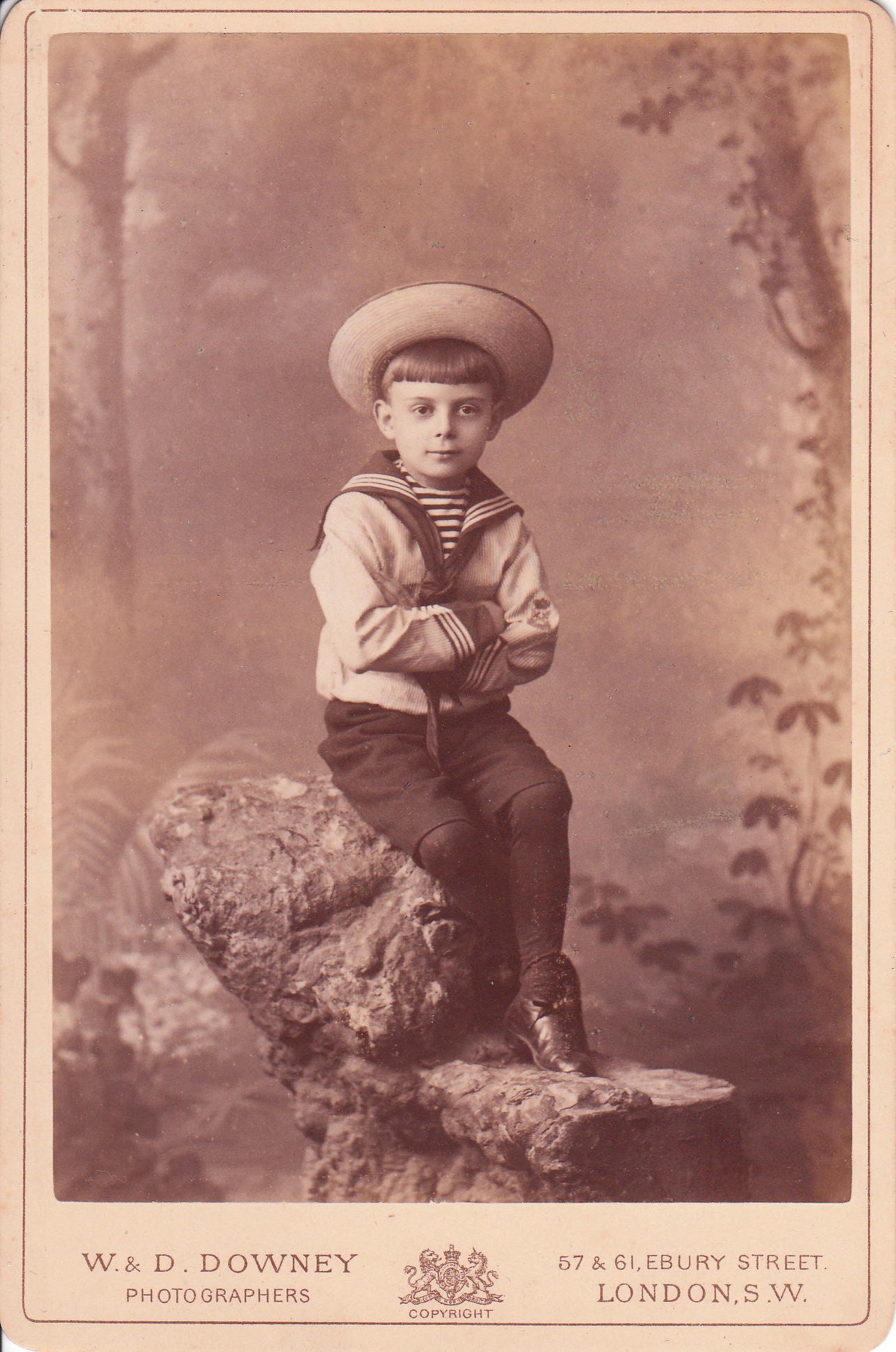
ADORABLE LITTLE BOY WEARING A SAILOR SUIT (PHOTOGRAPH BY W. AND D. DOWNEY)
A little boy wearing a sailor suit poses for his portrait in London, England. The boy is adorable and he is posed beautifully sitting on a faux rock with his arms folded against his chest. He is wearing a straw hat and a terrific grin. The photographer is the W & D Downey studio. This studio was well known and highly respected in England. They advertised themselves as photographers specially appointed to photograph the imperial and royal families of Europe. To view other photographs by this studio, click on the category “Photographer: Downey”.
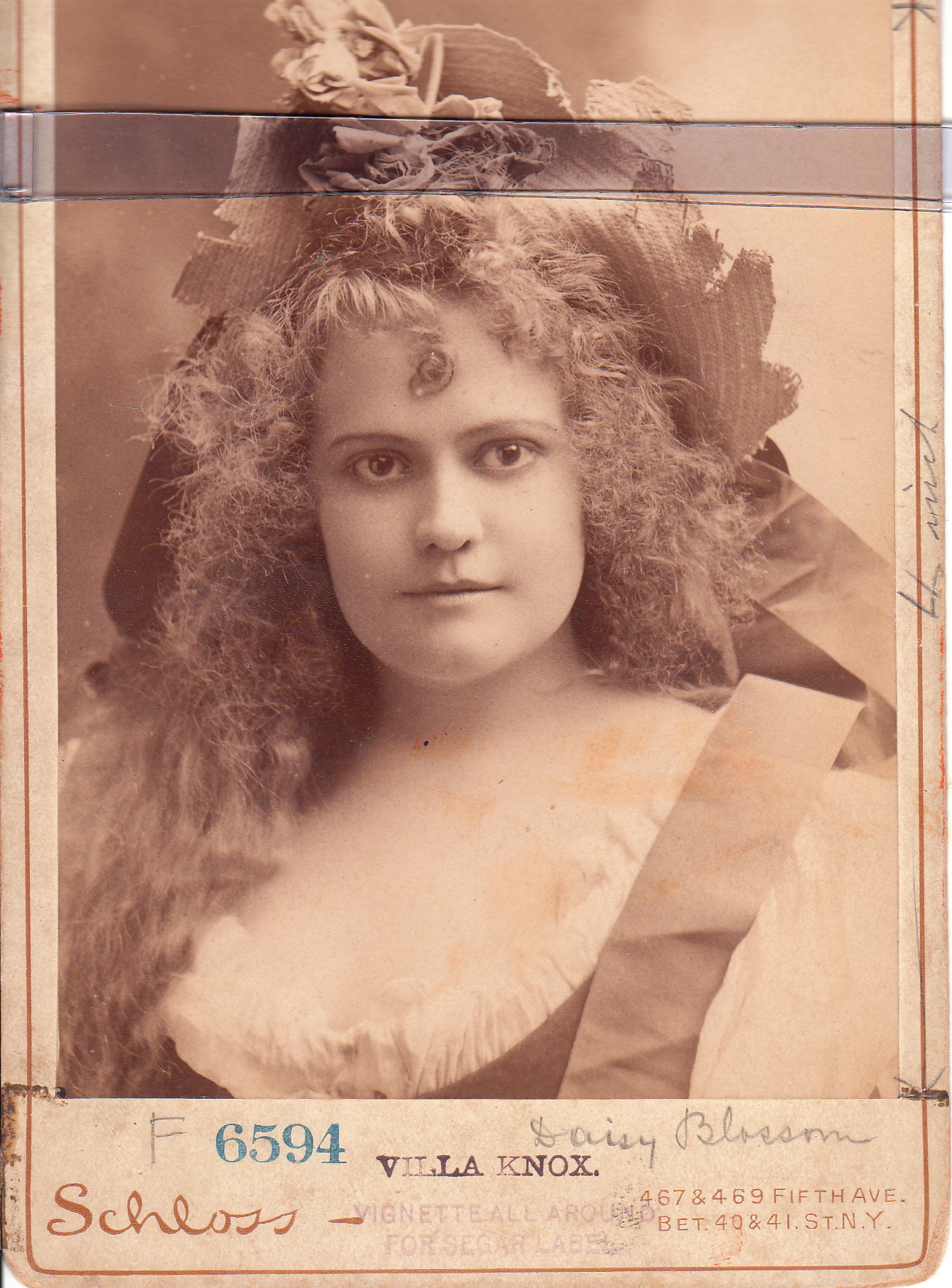
PORTRAIT OF STAGE ACTRESS VILLA KNOX IN ROLE OF DAISY BLOSSOM (PHOTOGRAPH BY JACOB SCHLOSS)
This cabinet card has a lot to say. First, the photograph features an actress named Villa Knox. She appeared in productions in the United States, England, and probably a number of other places. She acted in at least two Broadway shows. She appeared in the musical comedy “Boccaccio” (1898) and in “Apollo, or, The Oracle of Delphi” (1891). Second, the photographer of this image is the well known celebrity photographer, Jacob Schloss. At the time that this photograph was taken, the Schloss studio was located at 467 and 469 Fifth Avenue, between 40th and 41st Streets in New York City.. To view more of his photographs click on the category “Photographer: Schloss”. A third aspect of this photograph is that it has the pencilled name “Daisy Blossom” on the front of the card. Thanks to a little luck in my research, I learned that “Daisy Blossom” is a character in a play called “London Day by Day” (1893) which was reviewed by The Sydney Mail. This portrait likely captures Miss Knox in costume for that role. The fourth interesting fact about this image is the stamp appearing on the front of the card that states “Vignettes All Around For Segar Label”. It appears that this photograph was used as a vignette photograph for a cigar box label. The last feature I will mention concerning this image is that it has all the signs of once residing in someones photograph album. The cabinet card truly tells a number of stories and is in good condition. SOLD