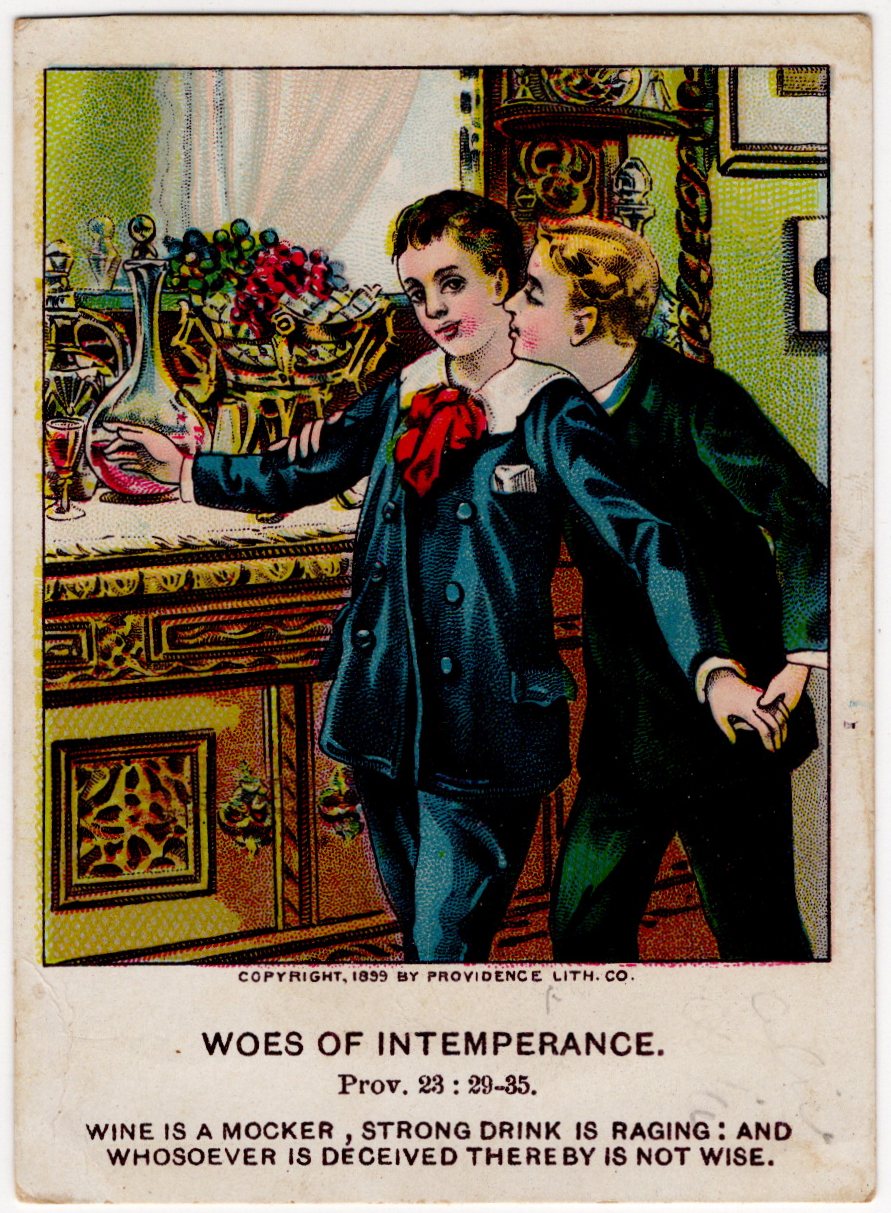
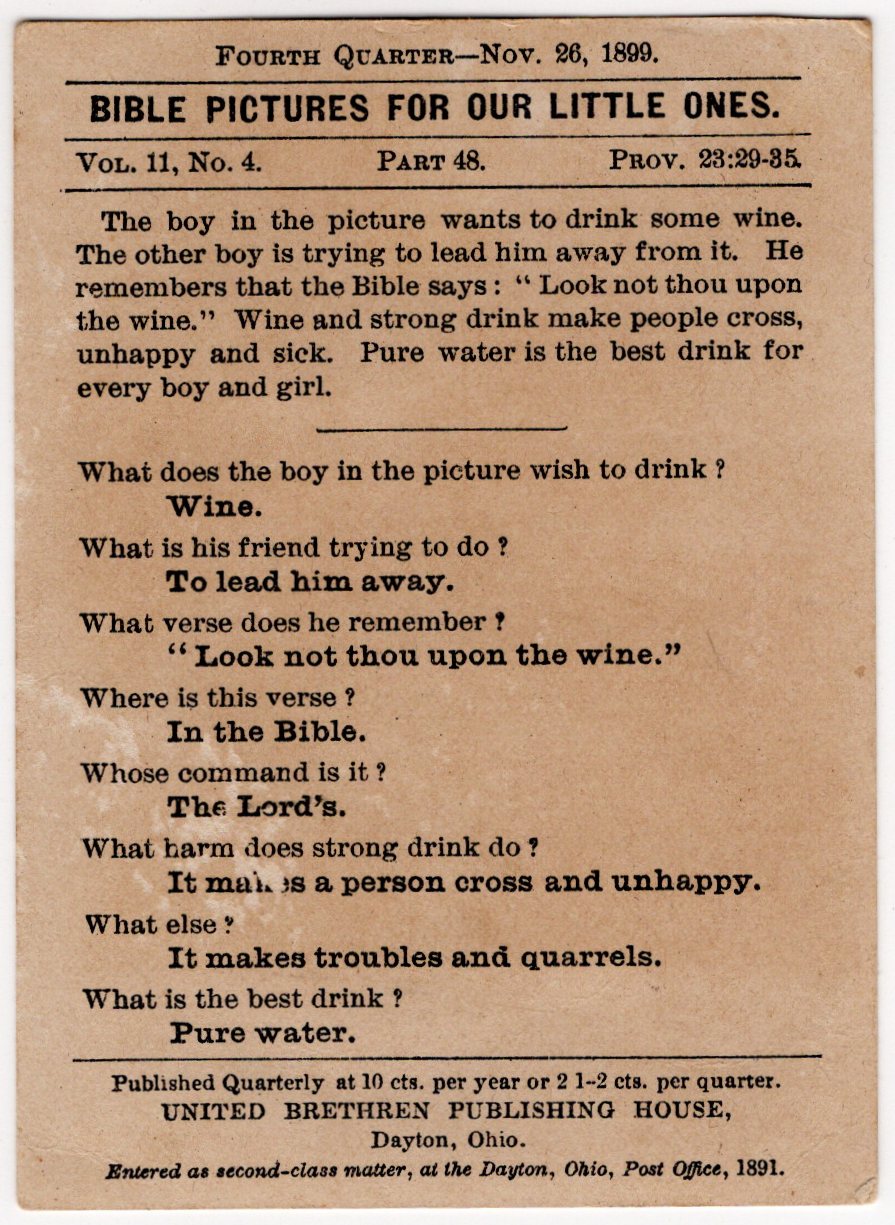
This original illustrated card dates to 1899 and was issued as part of the religious educational series “Bible Pictures for Our Little Ones,” published by the United Brethren Publishing House of Dayton, Ohio. The front features a vivid chromolithograph illustration titled “Woes of Intemperance,” copyrighted in 1899 by the Providence Lithograph Company, a major American lithographic firm known for high-quality color printing in the late 19th century. The scene depicts two well-dressed boys in a domestic interior, standing beside a sideboard laden with glassware and wine. One boy reaches toward a glass of wine, while the other gently restrains him, attempting to lead him away. The image is deliberately moralistic, visually reinforcing the biblical warning against alcohol consumption. Beneath the illustration appears the scripture citation Proverbs 23:29–35, followed by the admonition: “Wine is a mocker, strong drink is raging: and whosoever is deceived thereby is not wise.” The reverse contains a didactic lesson sheet, clearly dated Fourth Quarter—November 26, 1899, and intended for use in Sunday schools or home religious instruction. It explains the image in simple language, emphasizing temperance and obedience to scripture, and concludes with a series of question-and-answer prompts designed for children, reinforcing the moral lesson that pure water is the best drink. Items like this were meant to be both instructional and collectible, and they reflect the strong influence of the 19th-century temperance movement, which intertwined religious education with social reform. Survival rates are relatively low, as these cards were often handled by children and discarded after use. (SOLD)
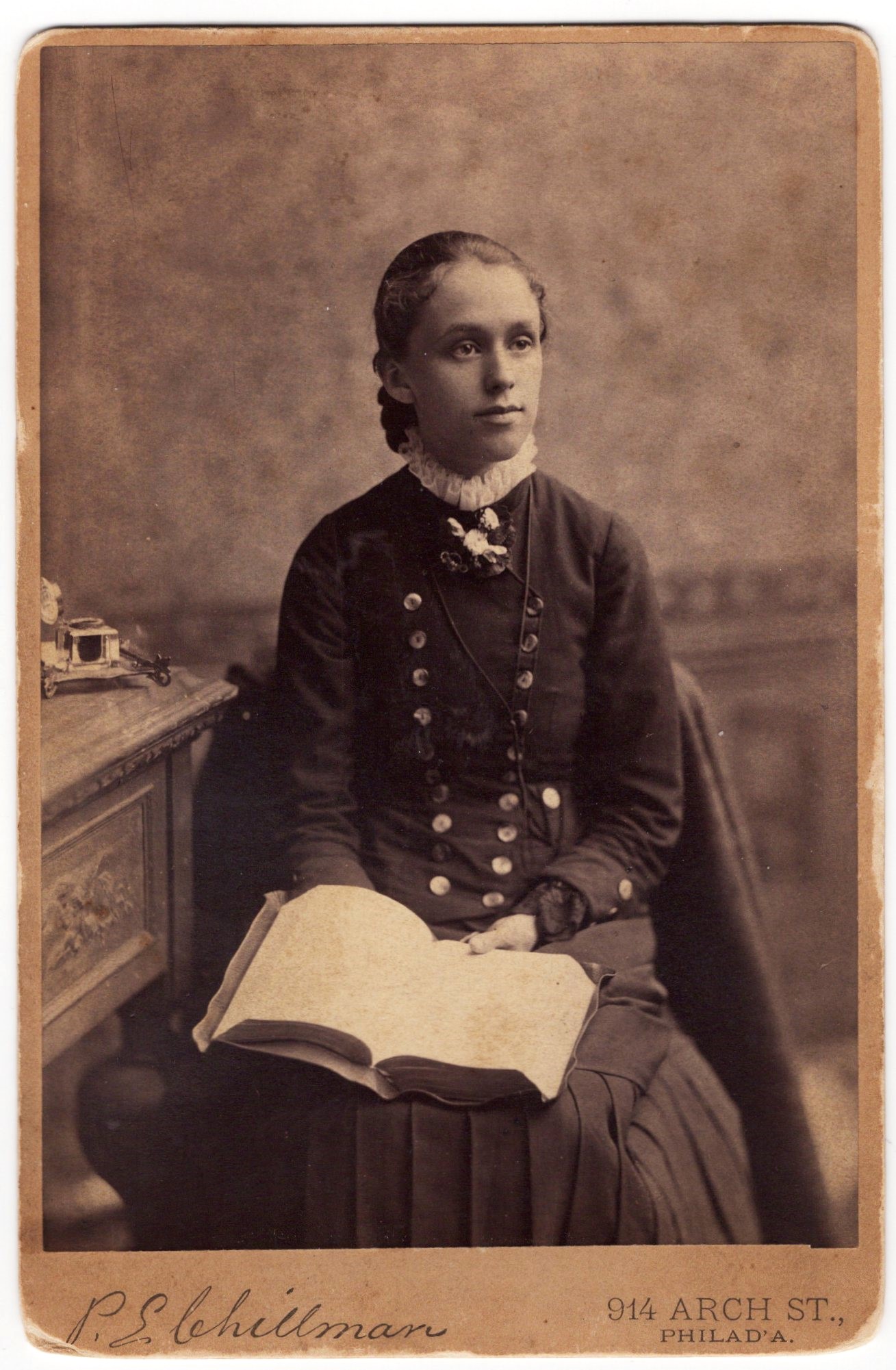
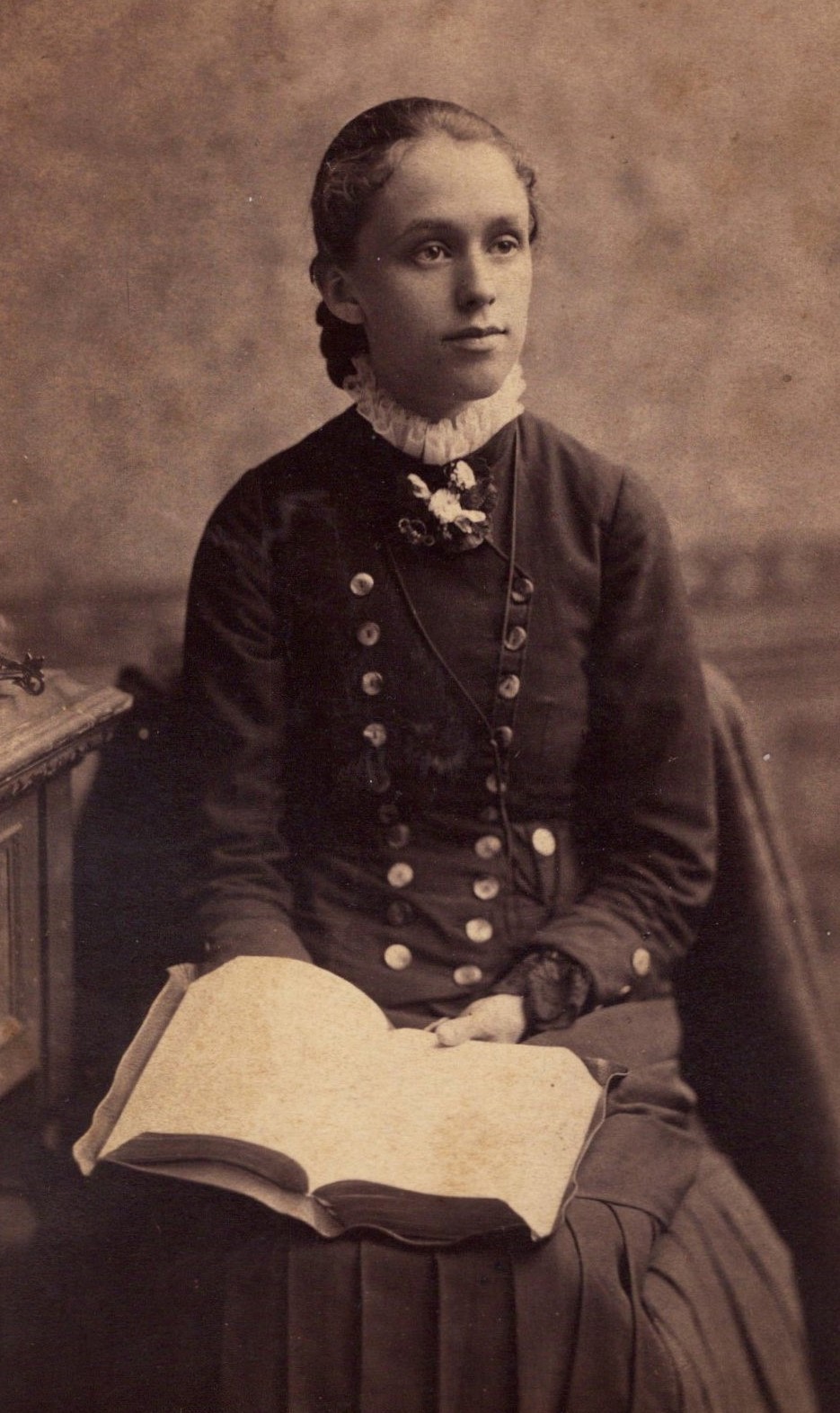
SEATED YOUNG WOMAN WITH AN OPEN BOOK : BIBLE : CABINET CARD (1886)
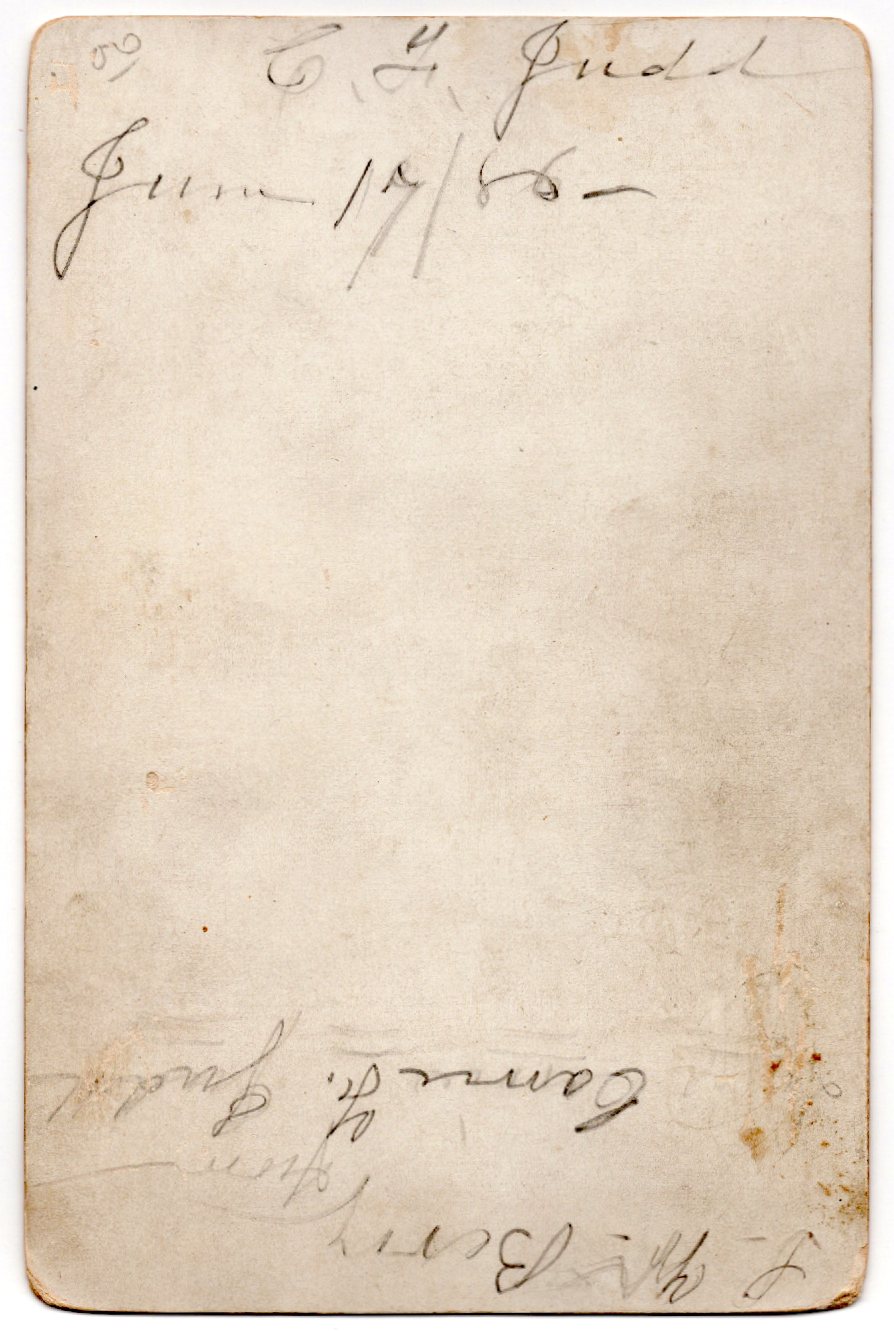
This cabinet card portrait features a seated young woman holding a book with many pages. It is likely that the book is a bible. The woman appears to be in her teenage years. She is dressed well but not overly fancy. Note her lace collar and the multiple buttons on the front of her dress. This photograph is from the Chillman studio in Philadelphia, Pennsylvania. Phillip E. Chillman’s obituary appears in the Bulletin of Photography (1915). Chillman died in 1915 at the age of 73. He was a pioneer of photography in Philadelphia. He opened his studio on Arch Street in the early 1860’s. He held many photography patents. During his 15 year retirement he took up and excelled at water coloring. His work was exhibited at Pennsylvania, New York City, and Boston exhibitions. An inscription on the reverse of this photograph indicates that it was taken in 1886. SOLD
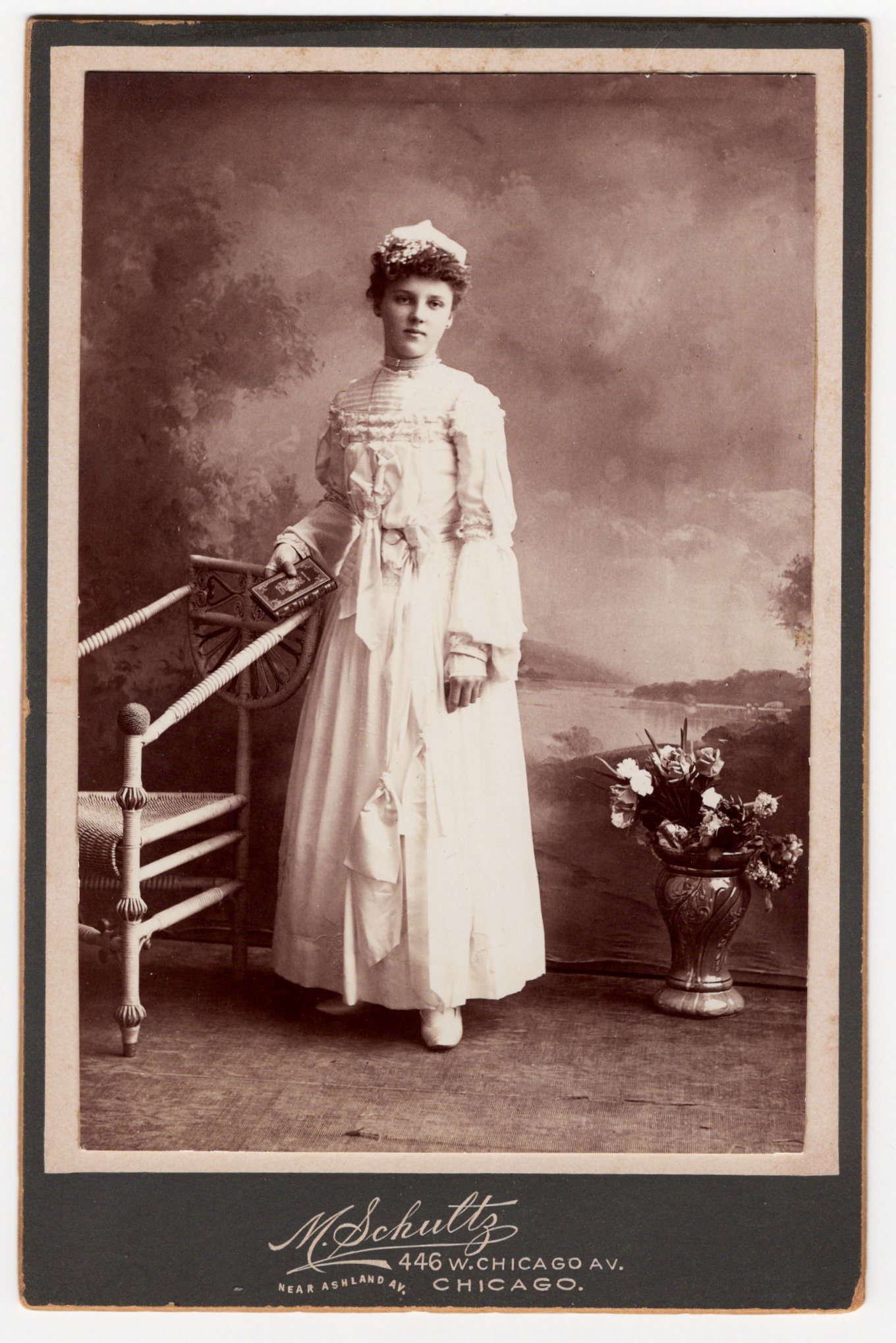
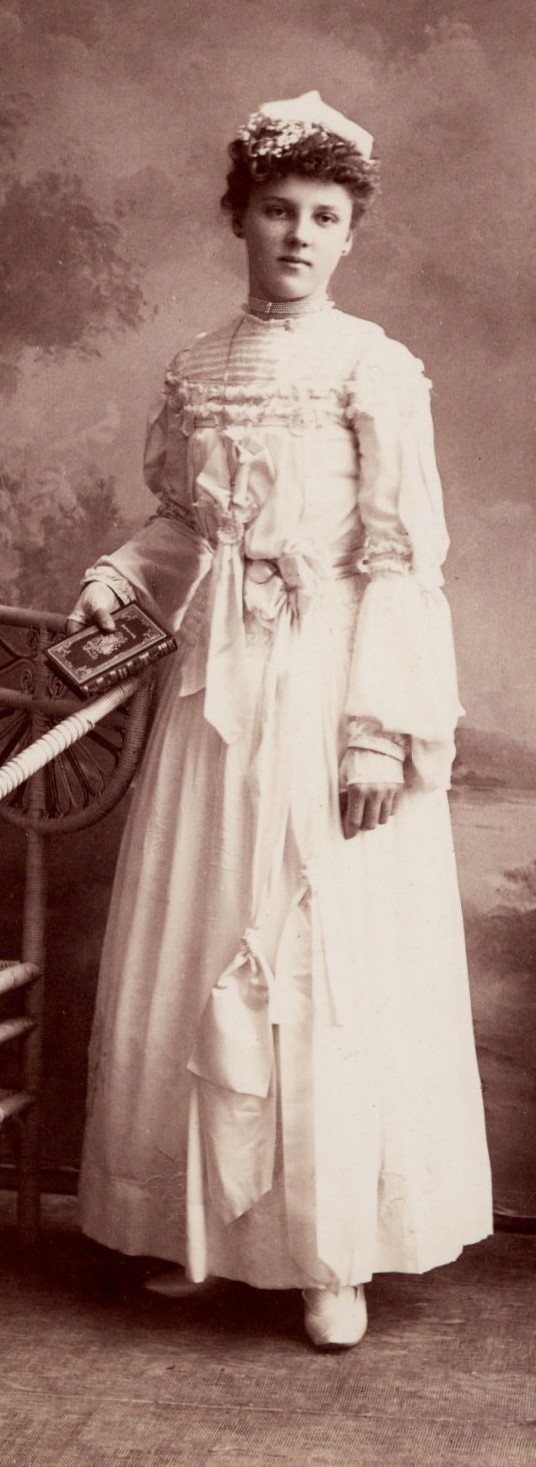
PRETTY TEENAGE GIRL : RELIGIOUS CEREMONY : CHICAGO, ILLINOIS : CABINET CARD
This cabinet card presents a pretty young woman posing for her portrait. She appears to be in her teenage years and is posed holding a bible or other religious book. She is beautifully dressed for a religious ceremony, most likely, her confirmation. Note her fingerless gloves. The photographer of this portrait is Max Schultz. He operated a studio in Chicago, Illinois between 1894 and 1900. Schultz worked from the location listed on this cabinet card (446 W. Chicago Ave) between 1897 and 1900. SOLD
ENGLISH STAGE ACTRESS: ELLEN TERRY (THERE AIN’T NOTHIN LIKE A DAME!)
Dame Ellen Terry (1847-1928) was an English stage actress. The top cabinet card is from the studio of Campbell, in Elizabeth, New Jersey. Ellen Terry was the leading Shakespearian actress in Great Britain. She was born into a family that was immersed in the theatre; and future generations continued theatrical pursuits; including grand nephew, John Gielgud (actor, director, producer). Ellen Terry began playing Shakespeare roles as a child and continued to do so. In 1878 she joined Henry Irving’s company. She toured Britain and the United States with great success. In 1903 she took over management of London’s Imperial Theatre and her focus included the plays of George Bernard Shaw and Henrik Ibsen. In 1916 she began acting in films and in 1925 she was made a “Dame Grand Cross of the Order of the British Empire”. Terry’s romantic life, including marriages and love affairs, make interesting reading. Research about the photographer of this cabinet card discovered his obituary in the New York Times (1912). The Times reports that Alfred S. Campbell (1839-1912) was a pioneer in the development of art photography. Among his accomplishments was the publication of an edition of the bible that was illustrated with photographs he took in the Holy Land. He emigrated to the United States on the invitation of famed photographer, Napoleon Sarony in 1866. Among his “intimate friends” were Henry Longfellow, Thomas Nast, and William Cullen Bryant . Visitors to the Cabinet Card Gallery can see photographs by Sarony under the category of “Photographer: Sarony” and can see a portrait of William Cullen Bryant under the category of “Journalist”. To view other photographs by Campbell, click on the category “Photographer: Campbell”.
The second cabinet card features Ellen Terry in the role of “Beatrice” in William Shakespeare’s play, “Much Ado About Nothing”. The Window & Grove studio of London,England, published this photograph. The studio operated in London from the 1870’s to at least 1908.