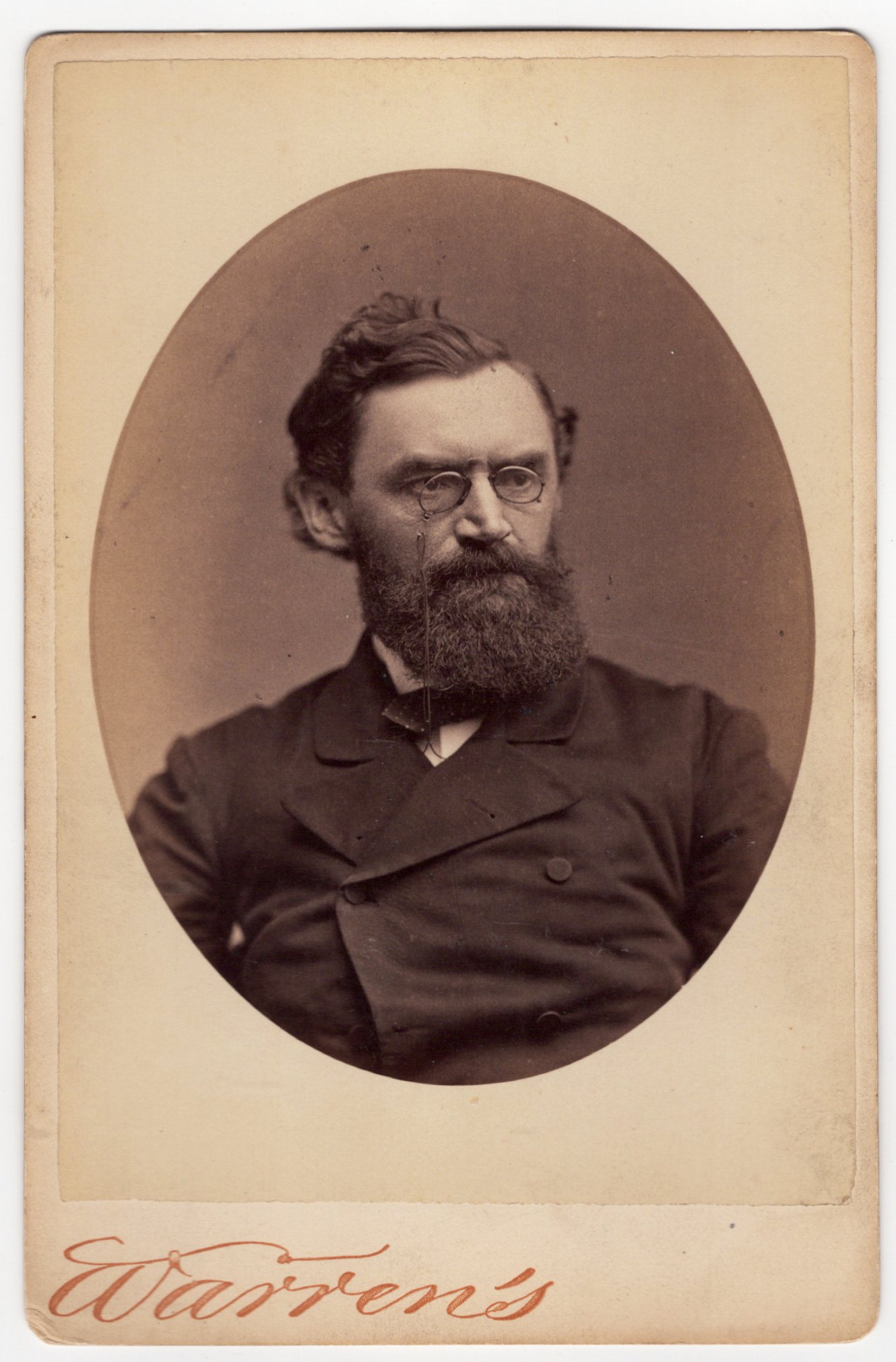
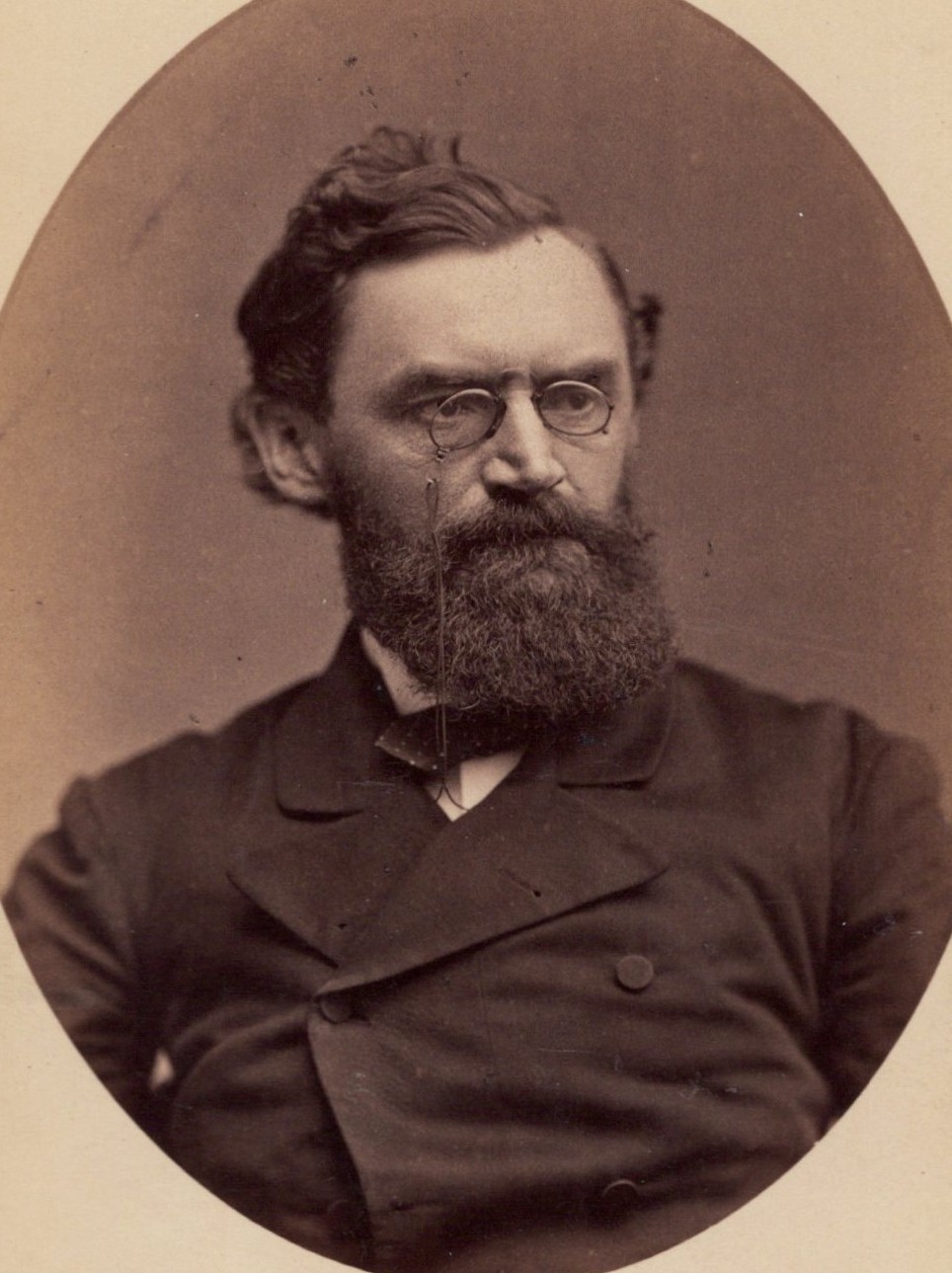
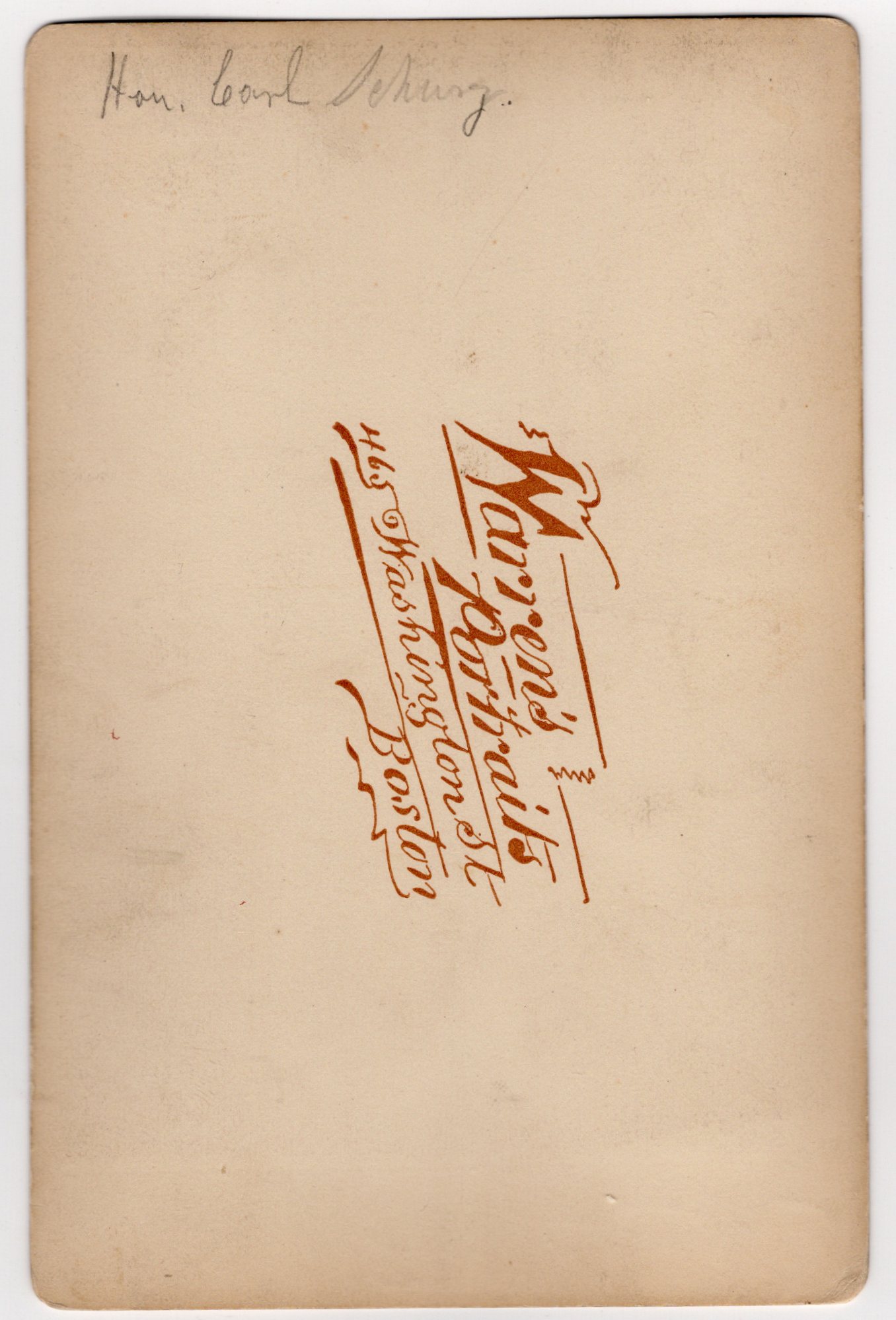
This striking 19th-century cabinet card features The Honorable Carl Schurz (1829-1906), a distinguished Civil War general, U.S. Senator, and reform-minded statesman. The photograph was taken at Warren’s Portraits, a prestigious Boston studio located at 465 Washington Street and renowned for its elegant images of notable figures during the late 1800s. In this formal portrait, Schurz is captured in a three-quarter view, seated in a dark, double-breasted coat with a subtle bow tie at his collar. His thick, well-kept beard and wavy hair give him a scholarly yet commanding presence. He gazes slightly to his left, a monocle suspended at his eye—projecting a look of intellectual rigor and seriousness. The background is a simple studio gradient, helping focus all attention on Schurz’s intense expression and refined appearance. On the reverse, the card is elegantly marked with the Warren’s Portraits logo. In pencil is written: “Hon. Carl Schurz,” affirming the identity of the sitter. Carl Schurz was born in Liblar, Prussia (modern-day Germany) in 1829. A revolutionary in his youth, he fought in the 1848 German uprisings, which ultimately failed, forcing him to flee Europe. He emigrated to the United States in 1852, where he quickly became involved in politics and the anti-slavery movement. During the American Civil War, Schurz was appointed brigadier general of Union volunteers by President Lincoln in 1862. He eventually rose to the rank of major general. Though courageous and respected, his battlefield performance received mixed reviews. He fought in key engagements including: the Second Battle of Bull Run (1862), the Battle of Chancellorsville (1863), and the Battle of Gettysburg (1863), where his XI Corps was flanked on the first day. While he was not a professional military man, Schurz’s service was notable for his efforts to advocate for German-American troops and his commitment to the Union cause. He did not have prior military experience in Europe before serving in the U.S. Army. After the war, Schurz enjoyed a long and prominent career in politics. He served as a U.S. Senator from Missouri (1869–1875) and later as Secretary of the Interior under President Rutherford B. Hayes (1877–1881). A staunch advocate of civil service reform and anti-corruption measures, he became one of the leading voices of the Liberal Republican movement. This cabinet card was produced by Warren’s Portraits, one of Boston’s most prominent photography studios in the 19th century. Operated by William Shaw Warren, the studio specialized in elegant, high-quality portraits and was especially known for photographing celebrities, politicians, military figures, and distinguished members of Boston society. Warren’s operated primarily during the 1860s through the 1890s. Warren’s images often feature clean studio backdrops, strong lighting, and detailed retouching, emphasizing refinement and dignity—qualities clearly present in this cabinet card of Carl Schurz. (SOLD)
GENERAL WESLEY MERRITT : CIVIL WAR : CHANCELLORSVILLE, GETTTYSBURG, APPOMATTOX
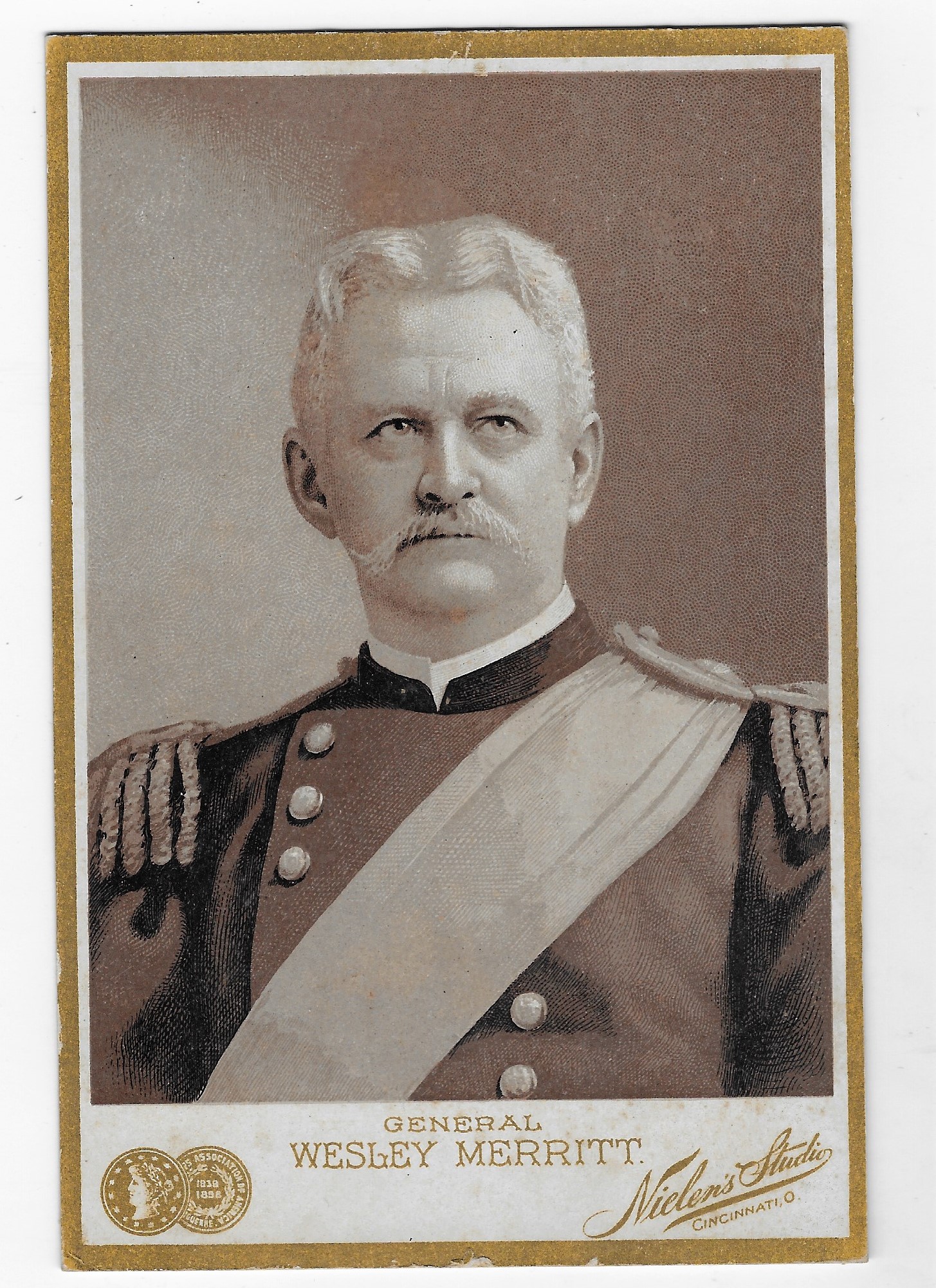
This cabinet card features a portrait of civil war General Wesley Merritt (1836-1910). During the war, he served on the side of the Union. Merritt graduated from West Point in 1860. Initially, as a second lieutenant, he served under John Buford in Utah. In 1862, he was named a Captain in the 2nd Cavalry and participated in the defense of Washington D.C.. In 1863, he was appointed adjutant for Major General George Stoneman. Merritt participated in Stoneman’s Raid in the Battle of Chancellorsville. He participated in the Gettysburg campaign as commander of the Reserve Brigade, 1st Division, Cavalry Corps of the Army of the Potomac. He saw no real action until the third day of the battle. He took part in the attack, led by Brig Gen Judson Kilpatrick on the Confederate right. He sustained a slight wound in the Battle of Brandy Station. His actions at Brandy Station contributed to his promotion to Brigadier General. Upon the death of John Buford, Merritt took over command of the 1st Division of the Cavalry Corps. He led the division during Grant’s Overland Campaign in 1864. Merritt later became the commander of the 1st Division Cavalry Corps of the Army of the Shenandoah, under Major Gen. Phillip Sheridan. He participated in Sheridan’s Valley Campaigns of 1864. His division routed the confederates in the Third Battle of Winchester. He was second to command under General Sheridan during the Appomattox Campaign and was present for the Confederate surrender at Appomattox. He had a long and accomplished career in the military, after the civil war. He commanded the Cavalry in the Southwest and participated in the Indian Wars. After serving on the frontier, he spent five years as superintendent of West Point. In 1895 he was promoted to major general in the regular army. In 1898, he commanded the Eighth Army Corp in the Spanish American War. After the victory, Merritt became the first American military governor of the Philippines. Merritt retired from the army in 1900. His military career had a 40 year duration. This cabinet card appropriately shows General Merritt in military uniform. Nielen’s Studio, in Cincinnati, Ohio is credited just below Merritt’s image. Andries Nielen (1850-1940) was born in Holland. He emigrated to the United States and in time, became the head of a tea and spice firm in Cincinnati. He retired in 1905 and he travelled around the world. He began a new career as a photographer and postcard publisher. He also was an amateur philosopher. He ran a publication espousing his philosophy as well as published the “wisdom” of others. SOLD
PRETTY AND ELEGANT YOUNG WOMAN IN ROCKLAND, MAINE


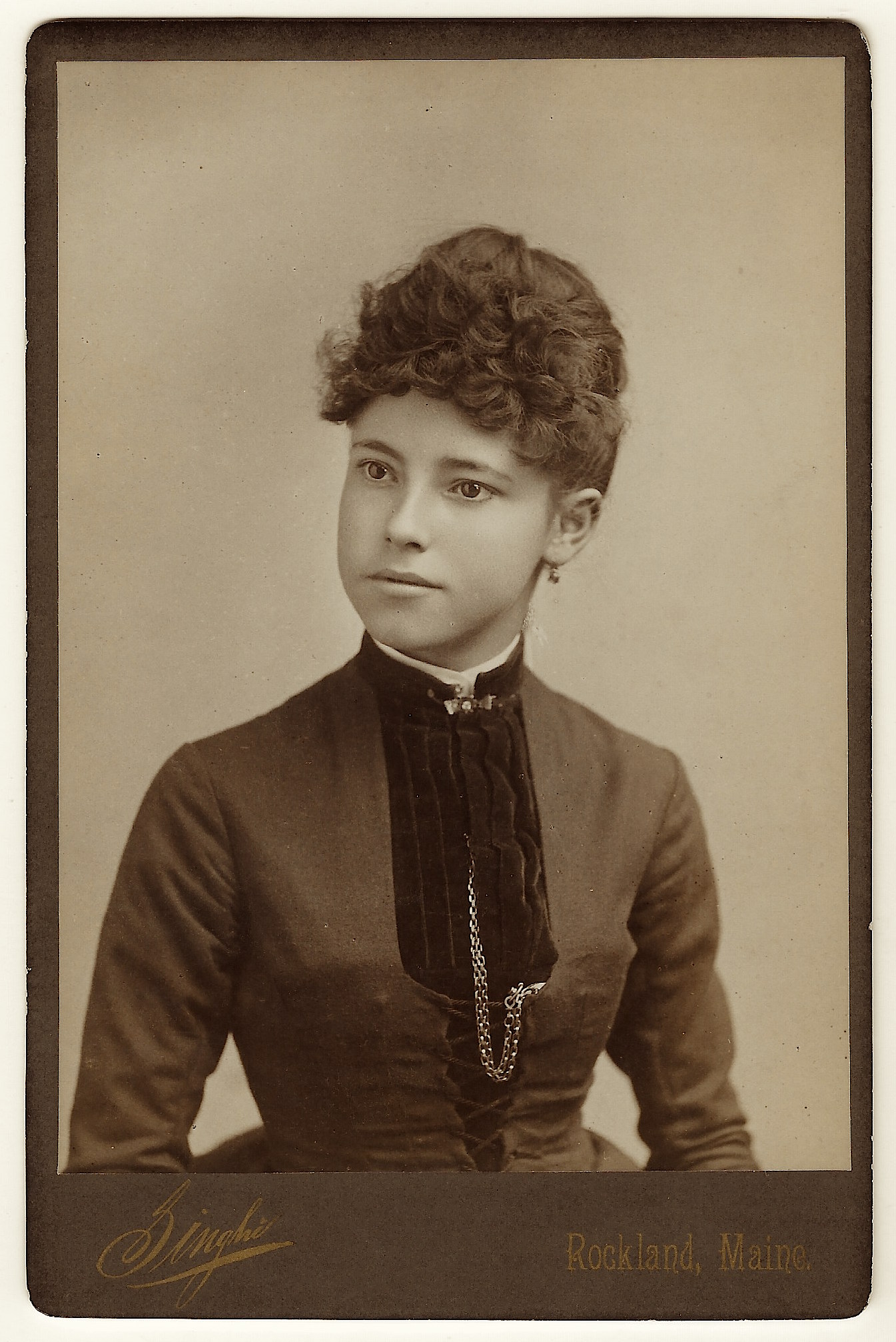
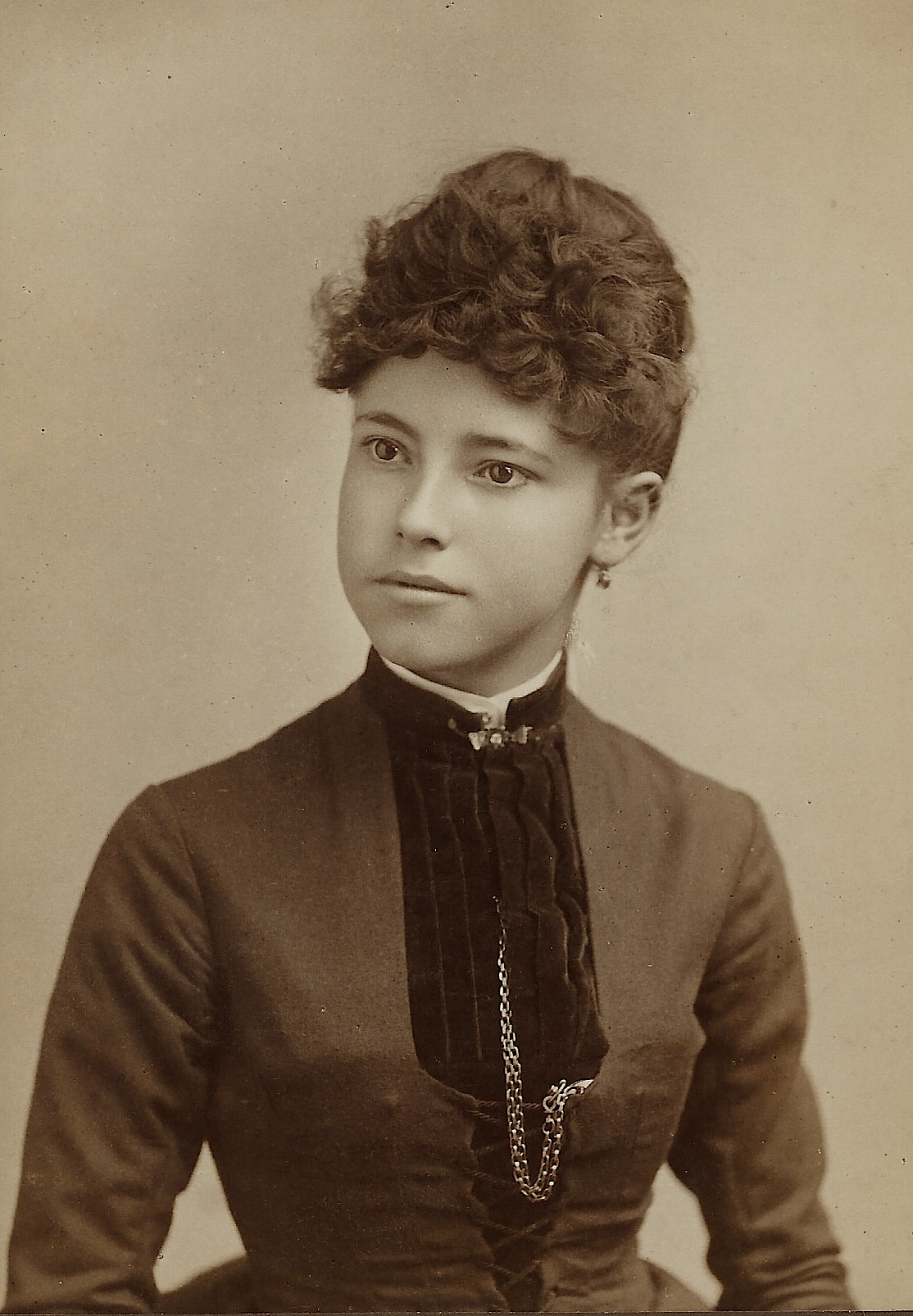
A pretty and elegant looking young woman poses for her portrait at the Singhi studio in Rockland, Maine. She is beautifully dressed and wearing a watch chain emanating from a watch in her dress pocket. She appears very business-like. The photographer was named John F. Singhi (1834-1906). He was a native of Maine but his father was born in Italy. Mr. Singhi was a participant in the Civil War. He entered the Union Army as a Private in the 4th Infantry Regiment of Maine. He was mustered in in April, 1861 and mustered out in July,, 1864. He was promoted to Corporal in 1862. Upon entry into the army, he was listed as a leader of the company band and Fife Major. The fourth regiment was assembled in Rockland. In all, 144o men served in the regiment during the war and 170 of them died in or from battle. Forty men died in Confederate prisons and 137 soldiers died from disease. The Fourth Regiment participated in many major battles including The First Bull Run, Fredericksburg, Chancellorsville, and Gettysburg. After the service, he worked as a photographer. He was listed in Rockland city directories as a photographer from 1877 through 1897. In addition to soldiering, music and photography; John Singhi liked to get married. He especially liked marrying younger women. The 1870 US census revealed that John lived with a woman named Frances who was presumably his wife. In 1872 he married Hannah C. Bartlett. John and Hannah were reported in the 1880 census. John was 46 while his wife was 31. In 1898, John married Caroline Look who was 17 years his junior. In 1901, John married Georgie Dow, a woman who was 13 years younger than him. In 1906, John Singhi died at age 72. His death certificate listed his cause of death to be “Shock (Paralysis)”. From that description, one imagines he died from a stroke. Perhaps cavorting with his numerous younger wives was deleterious to his health. (SOLD)

NOVEL MUSTACHE IN WEST CHESTER, PENNSYLVANIA
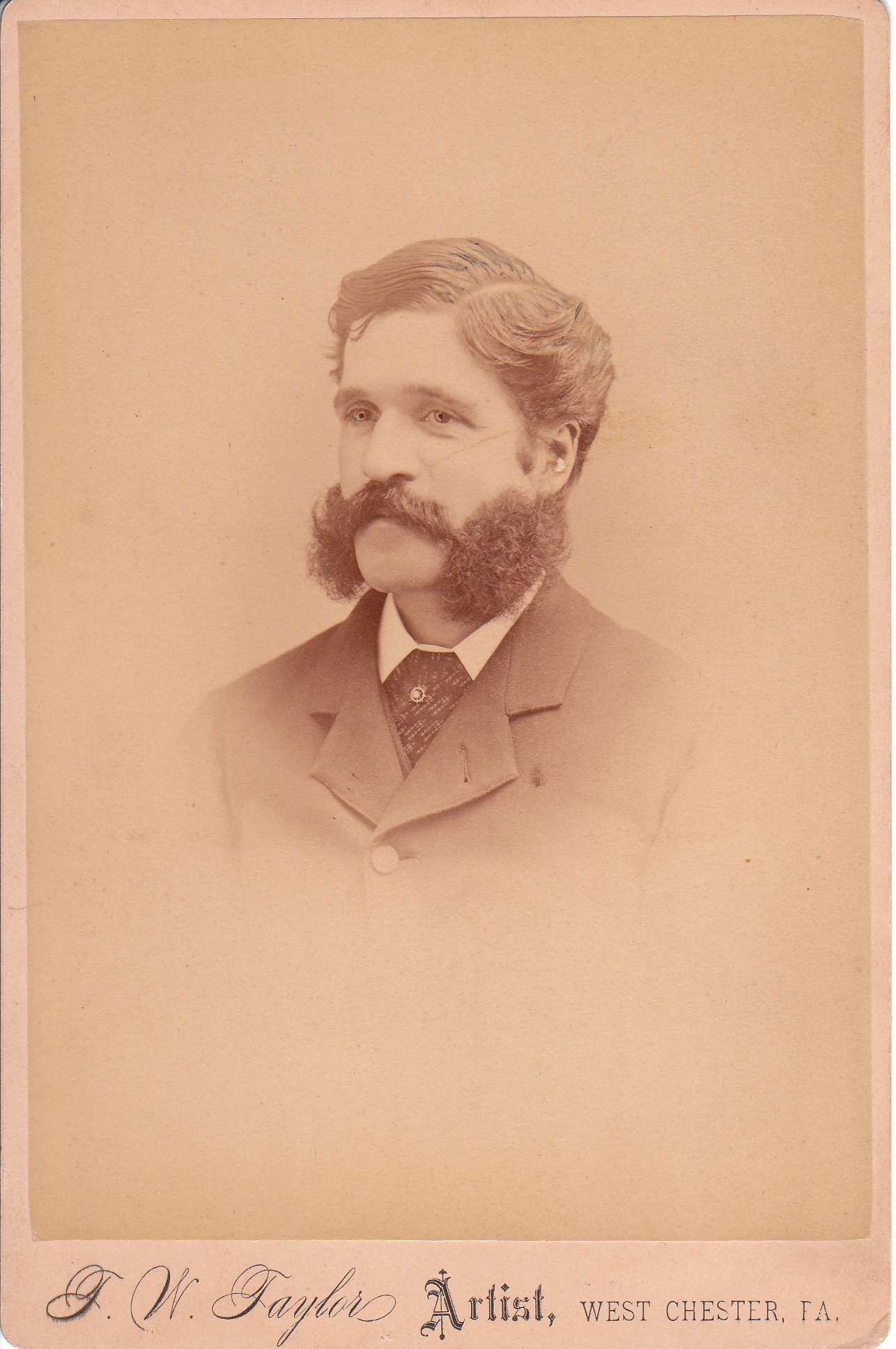
This cabinet card features a gentleman with an unusual mustache. This style mustache could be labeled an “ear muff mustache”. The mustache looks like the man had been wearing ear muffs and they slid down his face stopping in a position where the furry ear coverings came to rest on his cheek and upper jaw, while the head band settled in a spot above his upper lip and below his nose. To view other interesting and unique mustaches, click on cabinet card gallery’s category “mustaches (Only the Best)”. The photographer of this image is T. W. Taylor. In advertising on the reverse of the photograph he has printed the name of his studio, “First Premium Gallery”. It was located at 10 West Gay Street in West Chester, Pennsylvania. The previous described advertising also indicates that in 1882 the studio won a “prize medal” for its use of Crayons. Thomas W. Taylor (1838-1904) is described by the Chester County Historical Society as operating one of the most prominent studios in West Chester. His photography career was interrupted by the Civil War. Taylor joined Company E of the 124th Regiment of Pennsylvania Volunteers. He fought at Chancellorsville and Antietam. He entered the Union army as a private and mustered out as a corporal. He reopened his studio for business in 1863 and worked into the 1890’s.