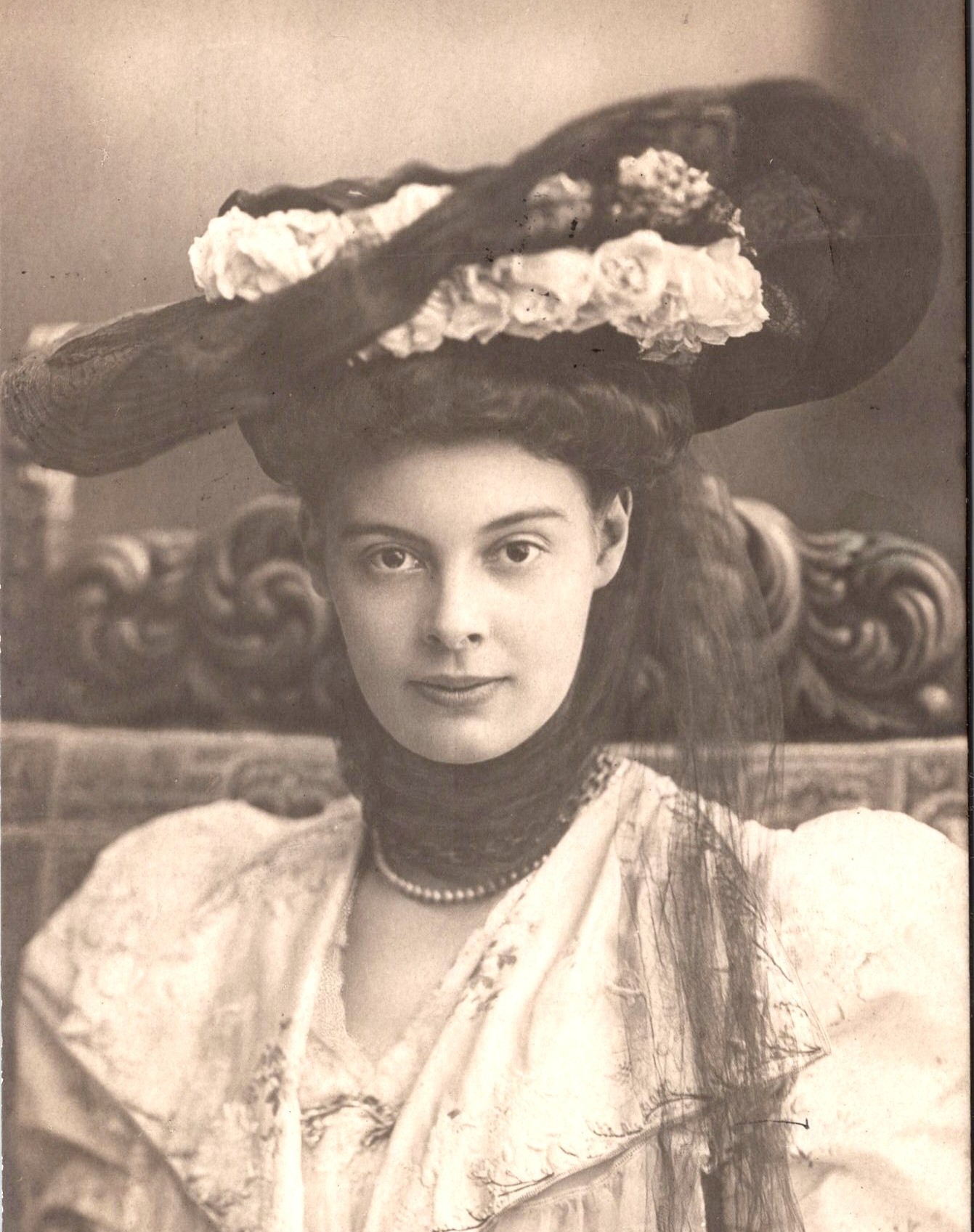
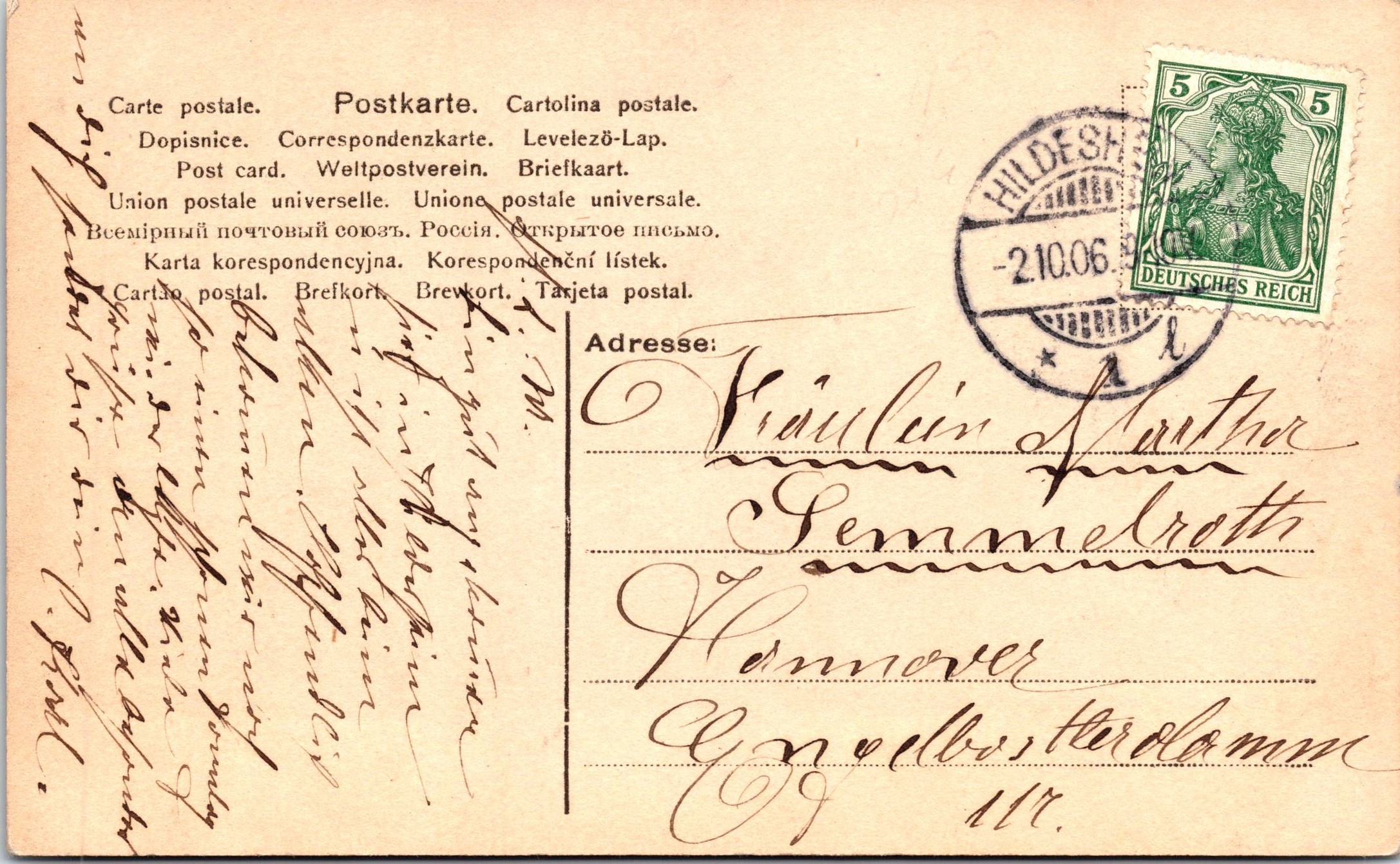
CROWN PRINCESS CECILIE RPPC : BEAUTY : GERMAN ROYALTY POSTCARD : POSTMARKED 1906

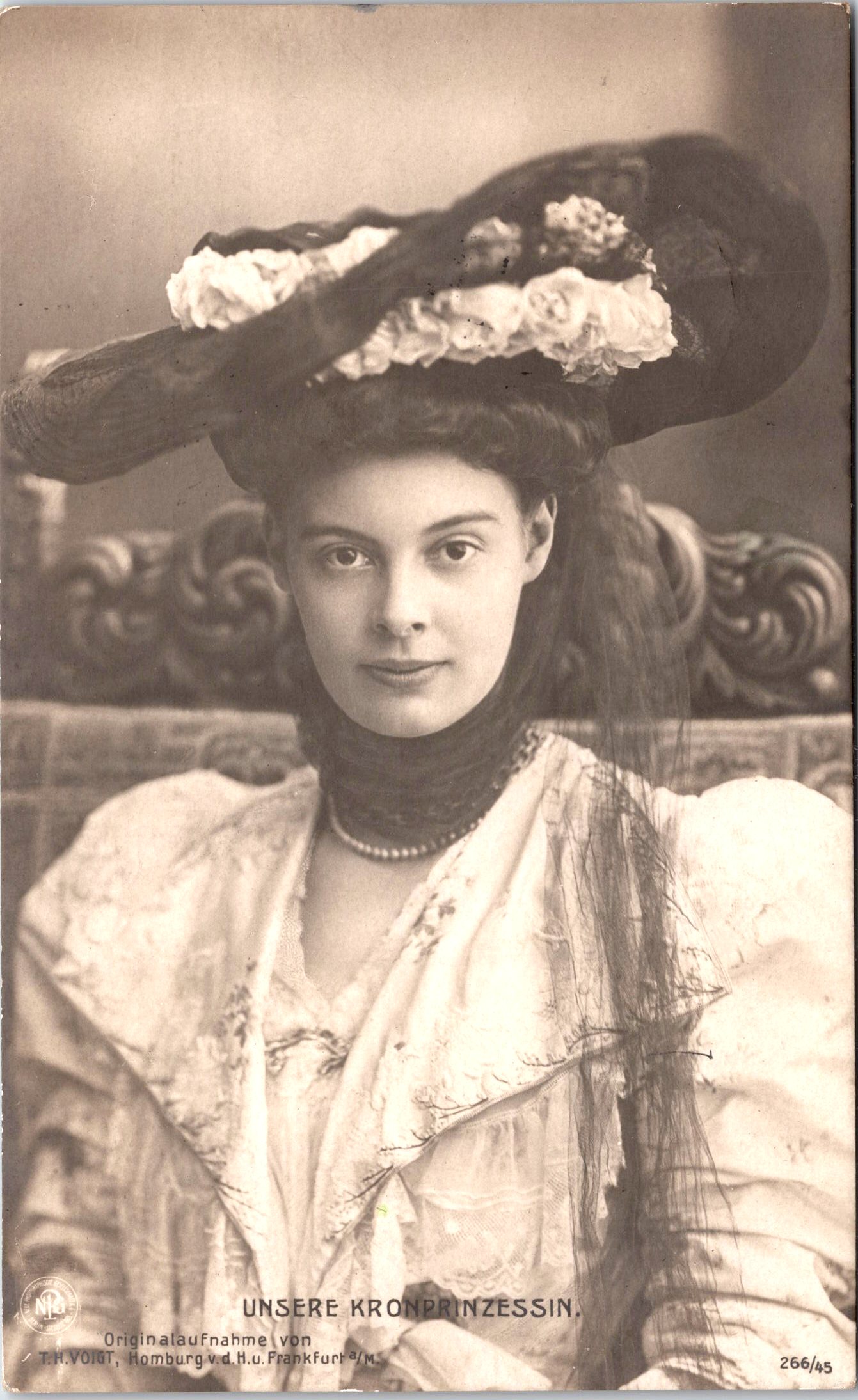
Crown Princess Cecilie of Prussia (1886–1954) was a prominent royal figure in early 20th-century Germany. She was the daughter of Frederick Francis III, Grand Duke of Mecklenburg-Schwerin, and Grand Duchess Anastasia Mikhailovna of Russia, making her a granddaughter of Emperor Nicholas I of Russia. Cecilie came from a highly prestigious lineage that united German and Russian imperial bloodlines. In 1905, she married German Crown Prince Wilhelm (Wilhelm of Prussia (1882–1951), the eldest son of Kaiser Wilhelm II, Emperor of Germany and King of Prussia. As the wife of the Crown Prince, Cecilie held the title of German Crown Princess and was seen as the future Empress of Germany. However, the German monarchy was overthrown in 1918 at the end of World War I, and the family went into exile. Wilhelm never ascended the throne, as the monarchy was abolished with the abdication of his father, Wilhelm II. Cecilie and Wilhelm had six children.Their marriage, while initially harmonious and dutiful, became strained over time due to Wilhelm’s infidelities and political turmoil. Despite no longer being royalty in power, Cecilie remained a respected figure. After the monarchy fell, she lived modestly in Germany and did not follow her husband into exile in the Netherlands. She died in Bad Kissingen, West Germany, in 1954. This real photo postcard is a studio portrait of Crown Princess Cecilie, taken by T.H. Voigt, a photographer based in Homburg v.d.H. and Frankfurt a/M. The publisher number “266/45” appears in the lower right corner, and the “NPG” logo indicates it was part of the Neue Photographische Gesellschaft series—one of the most prestigious photo publishers in Imperial Germany. In this beautifully lit and softly focused portrait, Crown Princess Cecilie sits regally, gazing directly at the camera with serene confidence. Her expression is calm and composed, projecting the quiet dignity expected of a royal consort. She wears a sumptuous white or light-colored gown, richly embroidered with floral motifs and delicate lace details. Around her neck is a strand of pearls, and an elegant dark scarf or netting is wrapped gracefully around her collar and beneath her chin. Her wide-brimmed hat, adorned with layers of flowers and lace, is spectacular—an extravagant Edwardian fashion statement in keeping with her status. Her long hair is styled in a voluminous updo beneath the hat. The combination of textures—lace, netting, silk, and pearls—exudes both softness and formality, symbolic of her royal role. The postcard is addressed to a woman residing in Hanover, Germany and the card is postmarked in 1906 in Hildesheim, Germany. Cecilie had been a princess for just a short time when this photo was taken. The stamp on the card is a 5 Pfennig green stamp bearing the image of Germania, a common stamp of the Deutsches Reich (German Empire), designed by Paul Eduard Waldraff and issued between 1900–1922. The cursive German message on the left margin is difficult to fully decipher, but it appears to be a friendly greeting.  (SOLD)
LA JANA : AUSTRO-GERMAN EXOTIC DANCER AND FILM STAR : RISQUE : RPPC

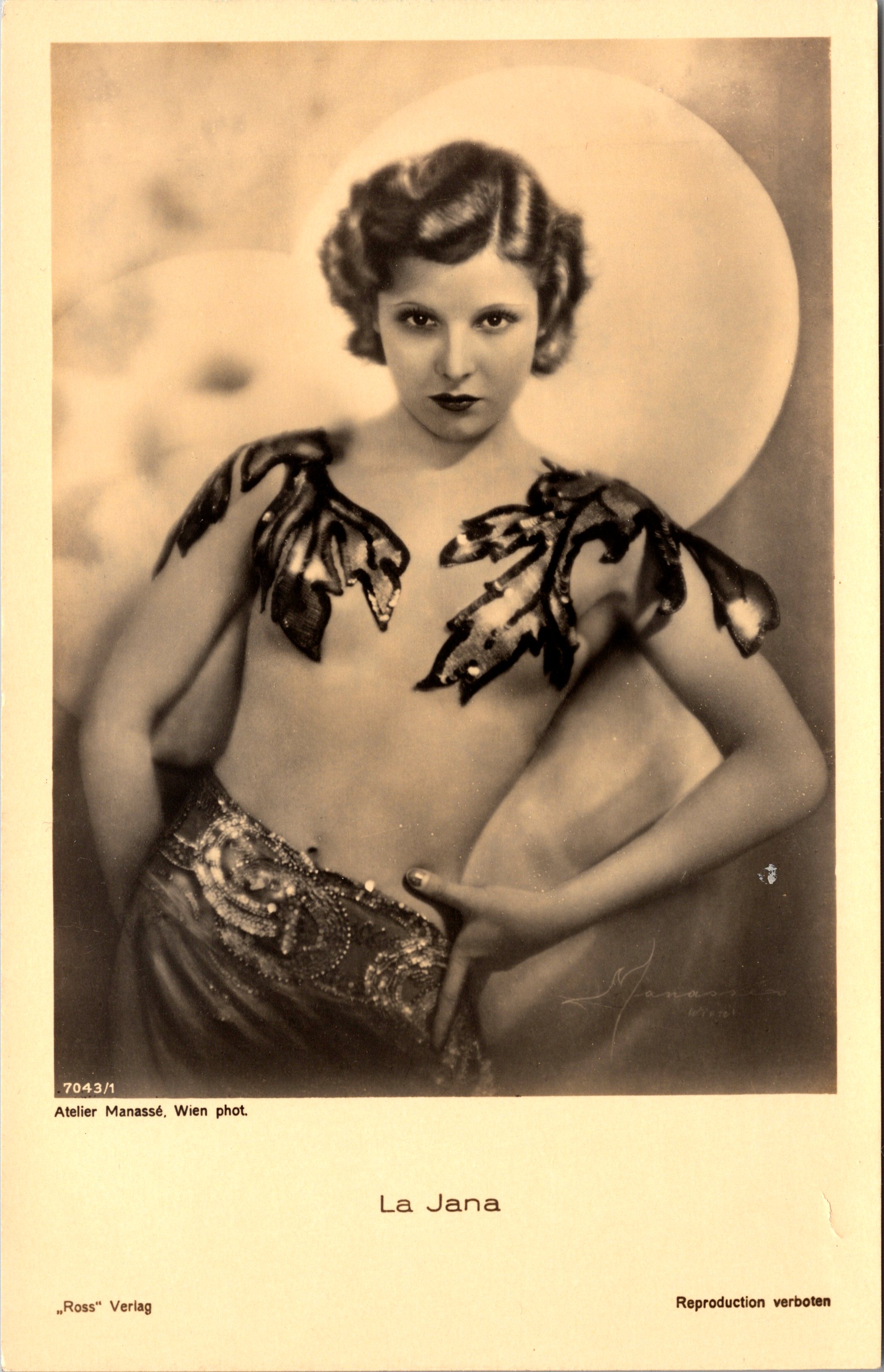
Postcard 1 (SOLD)

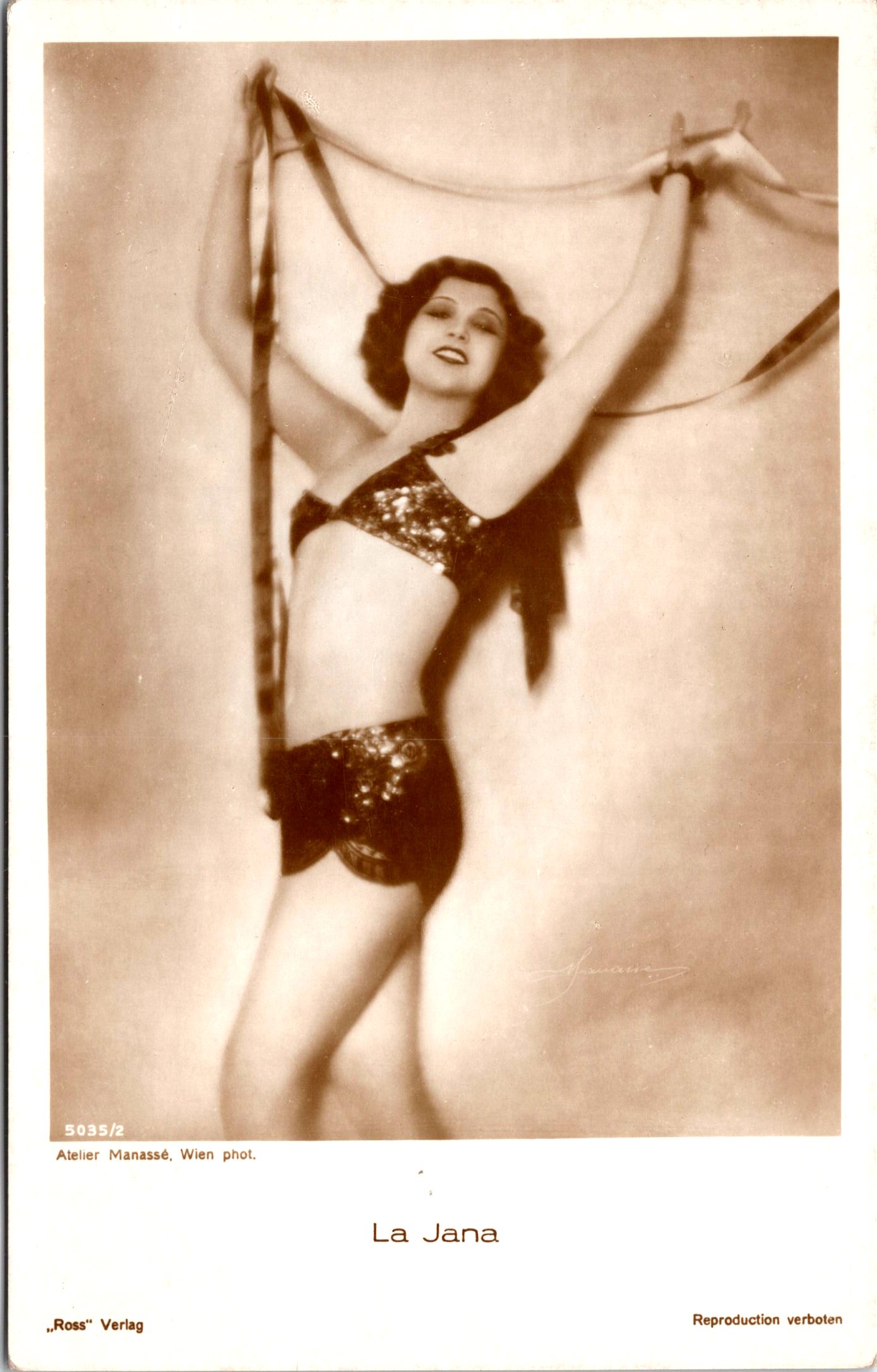
Postcard 2 (SOLD)

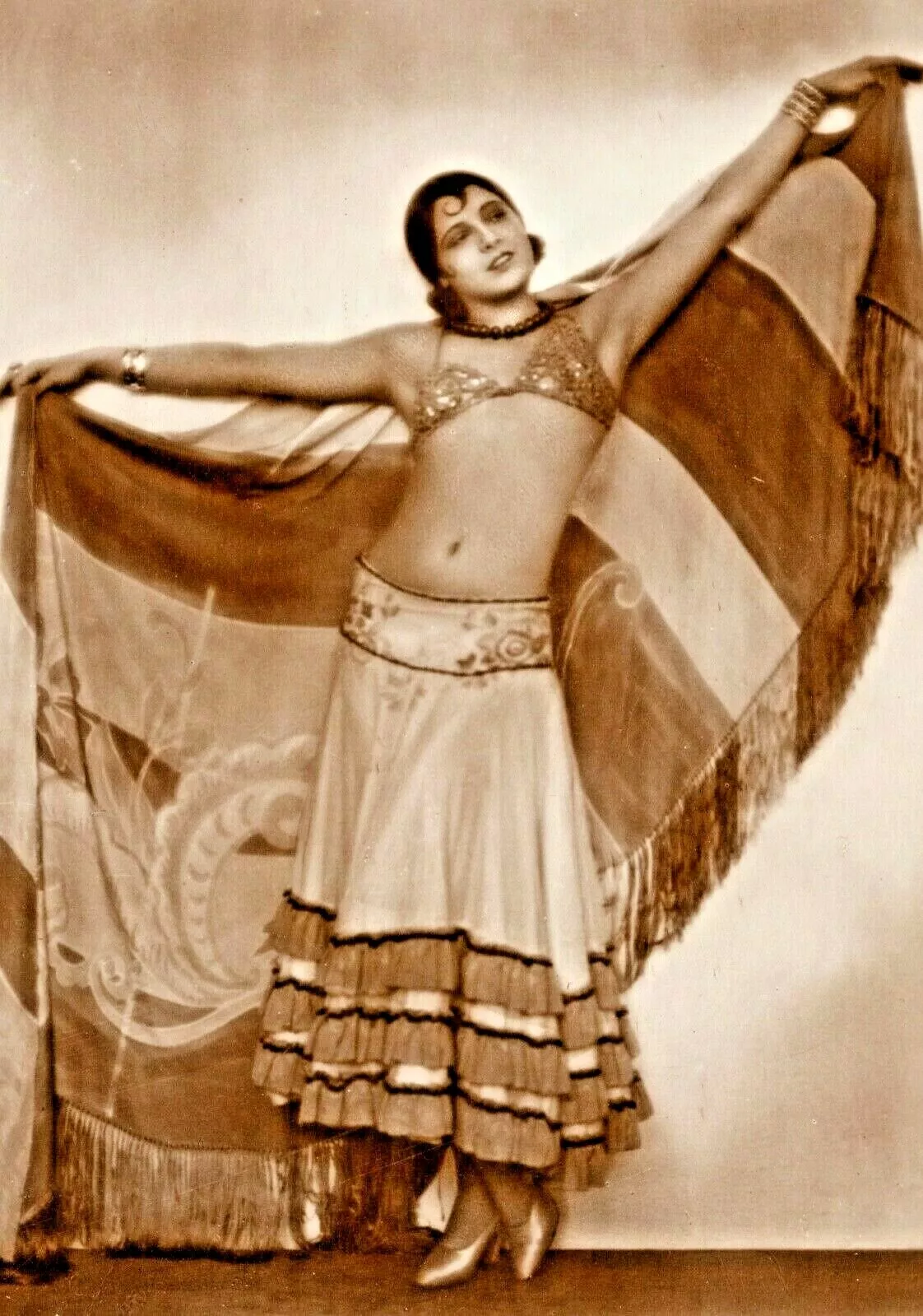
Postcard 3 (SOLD)

La Jana (1905-1940) was an actress and dancer. Her nationality was Austro-German. She was the illegitimate daughter of a master gilder and his housekeeper. Her parents wed four years after her birth. Her family was Jewish. She went by the name, Henny.. She trained as a dancer at the Frankfurt Opera Ballet and her first stage appearance was at the age of eight. She later began dancing in revues. She was “discovered” in Paris and brought to Berlin to meet with Frederic Zelnik who got her into films. The film director who “discovered” her said that the first time he saw her dance, “that woman possessed the most attractive body that I had set eyes upon” in my not all that long life. He went on to describe her as simple, nice and approachable. He added that she “had as much interest in sex as in Immanuel Kant”. meaning, none at all. As her career advanced, she danced in revues in Berlin, Stockholm, London, and many other cities. When she appeared in “Casanova” she viewed by the audience semi-naked and on a silver platter. In Berlin, she began an affair with Crown Prince Wilhelm. There were also rumors that she had an affair with Joseph Goebbels. Charlie Chaplin was also one of her lovers. Clearly, her attitude about sex changed from the earlier days of her dancing career. In 1937, her performance in a film catapulted her to film stardom. In 1940, while touring Germany, entertaining troops, she fell ill with pneumonia and passed away. The IMDb gives La Jana 23 film credits between 1926 and 1940.

La Jana’s portrait for Postcard 1 was taken by the Manasse studio in Vienna, Austria. The Manasse studio was in existence between about 1922 and 1938. The studio was run by Olga Solarics (1896-1969) and her husband Adorja’n von Wlassics (1893-1946). Olga was known for her interest in photographing nudes. The studio flourished in Vienna during the 1930’s. Many of the portraits taken by the studio had an erotic flavor. The studio attracted some of the leading ladies of film and theater. This postcard was published by Ross Verlag (no.7043/1). This vintage postcard has a small imperfection located under La Jana’s left elbow. (SOLD)

Postcard 2 was published by Ross Verlag (no.5035/2). Miss Jana’s photograph was taken by the Manasse studio in Vienna, Austria.  The Manasse studio was in existence between about 1922 and 1938. The studio was run by Olga Solarics (1896-1969) and her husband Adorja’n von Wlassics (1893-1946). Olga was known for her interest in photographing nudes. The studio flourished in Vienna during the 1930’s. Many of the portraits taken by the studio had an erotic flavor. The studio attracted some of the leading ladies of film and theater.  (SOLD)

Postcard 3 was published by Ross Verlag (no.3911/1). Miss Jana’s photograph was taken by Martin Badekow (1896-1983) in Berlin.  In the 1920’s, Badekow was a well known photographer in Berlin. He photographed portraits of many film stars and other celebrities. He also was a fashion photographer. Before she was famous, Badekow took many fashion photos of Marlene Dietrich. After World War I, he and his son Heinz, took photographs of the devastation in Berlin. Some of them can be found at Getty Images. After the 1920’s, interest in Badekow’s work waned. More recently, Badekow’s photographs from the Berlin cabarets and of the stars of German silent films, can now be found in museums and are considered symbolic images of Weimar Germany.  (SOLD)