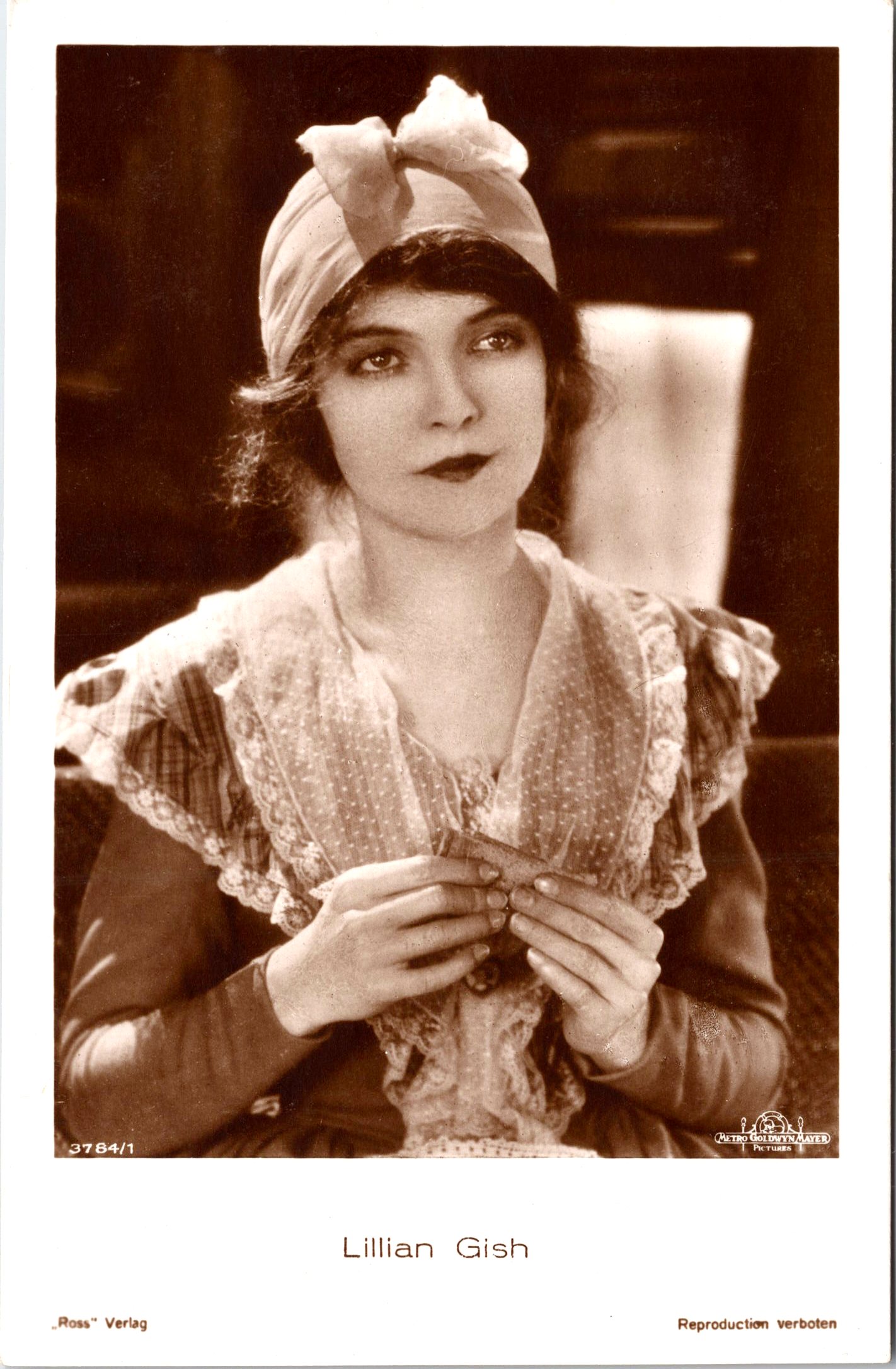
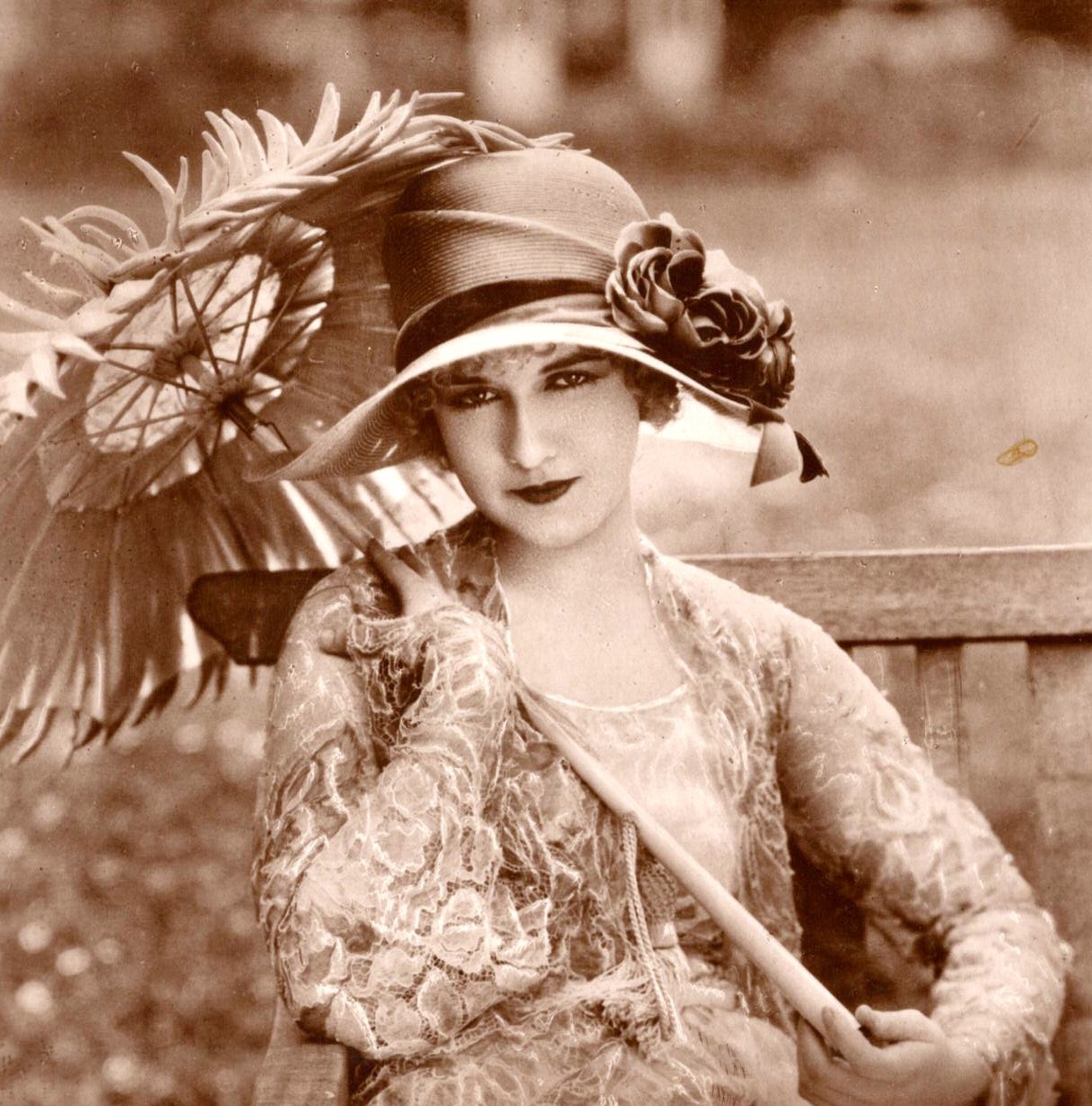
POSTCARD 1 (SOLD)
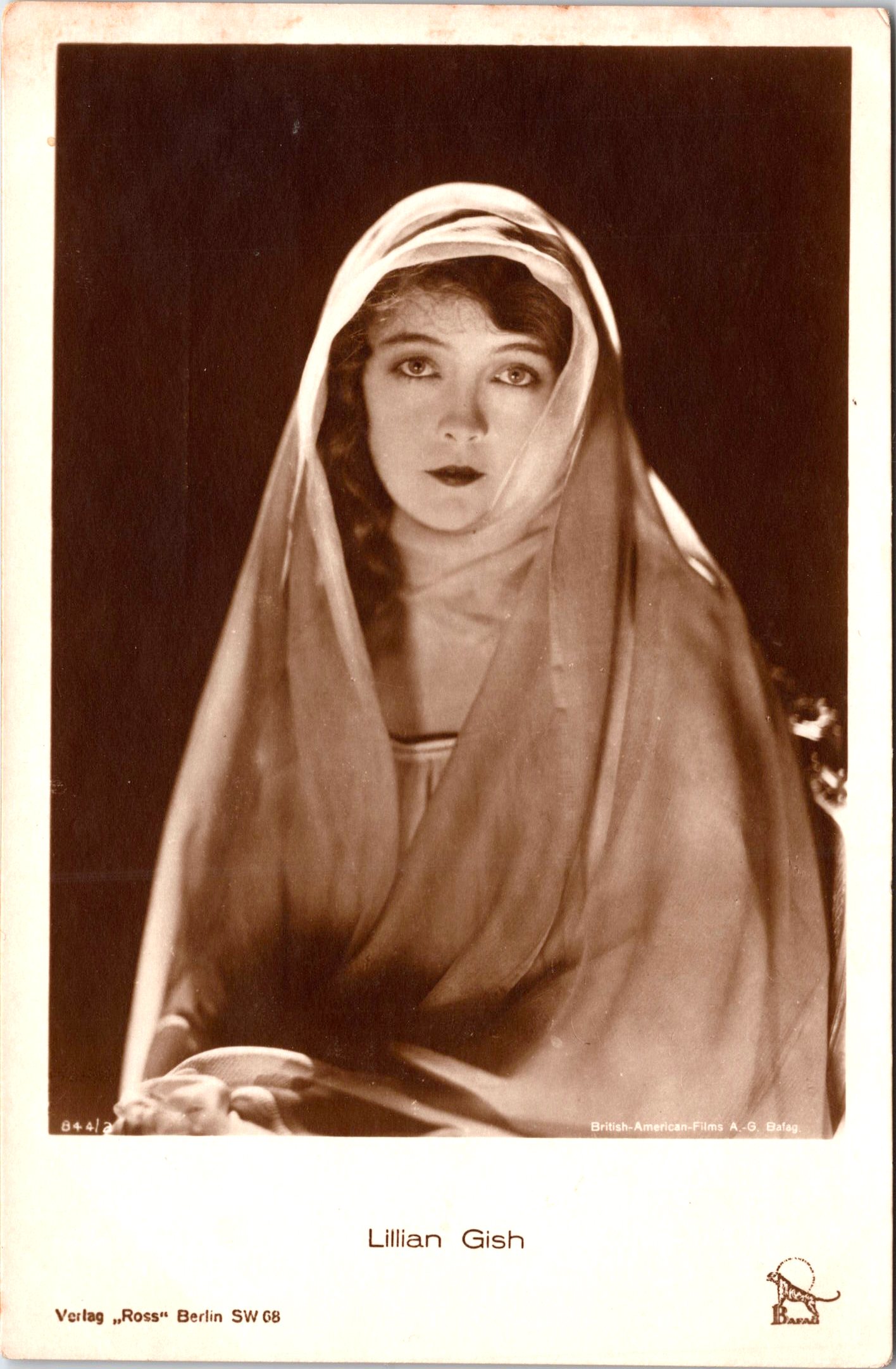
POSTCARD 2 (SOLD)
Postcard 1 features American actress, Lillian Gish (1893–1993). She is considered one of the pioneering figures in early cinema. Born in Springfield, Ohio, Gish began her career on the stage alongside her sister, Dorothy, but soon transitioned to film, where her delicate features and expressive acting made her a favorite of directors during the silent film era. In 1912, Gish joined legendary director D.W. Griffith, becoming his protégé and collaborating with him on groundbreaking films like The Birth of a Nation (1915), Broken Blossoms (1919), and Way Down East (1920). These films cemented her reputation as a leading lady, often playing roles that emphasized innocence and emotional depth. She was known for her meticulous attention to the art of acting. She helped establish the art of screen acting, emphasizing subtlety and naturalism at a time when film was still evolving away from theatrical exaggeration. She was a versatile actress, adapting well to various roles, from delicate heroines to more complex characters, and her commitment to authenticity often saw her enduring extreme conditions on set, like filming in freezing temperatures and performing her own stunts. When silent films gave way to “talkies” in the late 1920s, Gish transitioned gracefully, though her popularity declined as she aged and Hollywood’s focus shifted to younger stars. Still, she continued acting, taking on character roles and even appearing on television. One of her most memorable later performances was in The Night of the Hunter (1955), a film now regarded as a classic. In addition to her acting career, Gish became a vocal advocate for film preservation and the legacy of silent cinema. She gave lectures on the subject. Her work won her numerous accolades, including an honorary Academy Award in 1971, and she remained active in the industry well into her later years. Gish’s career spanned over 75 years, and she is remembered as an icon who bridged the silent and sound eras, leaving an indelible impact on American cinema. Lillian Gish, though a public figure, led a private and often solitary personal life. She was born on October 14, 1893, in Springfield, Ohio, to James Leigh Gish and Mary Robinson McConnell. Her early life was marked by hardship; her father abandoned the family when she was young, leaving her mother to support Lillian and her younger sister, Dorothy. Her mother opened a candy store in New York City, where the family eventually settled, and the two sisters began acting in theater to help support the family financially. Lillian and Dorothy were close throughout their lives, frequently working together in theater and film. Lillian took on the role of family protector and provider from a young age. Though she later became one of the most celebrated actresses of her time, Lillian remained deeply committed to her family, often prioritizing family relationships over romantic entanglements. She never married and had no children, believing that marriage and family life might interfere with her career. However, she did have close friendships with several prominent figures in Hollywood, including her frequent collaborator, director D.W. Griffith, with whom she shared a professional and deeply loyal relationship. There were rumors of a romance with Griffith, though Gish maintained that their relationship was strictly professional. Other rumored suitors included producer Charles Duell and critic George Jean Nathan, yet she largely avoided the spotlight when it came to romance. She valued independence and often expressed a desire to avoid the constraints she felt marriage could impose on her creative pursuits. In later life, she lived with her sister Dorothy until Dorothy’s death in 1968, a loss that deeply affected her. In her final years, Gish continued to work in the entertainment industry and to honor the legacy of silent cinema. She died in 1993, at the age of 99, leaving behind a remarkable career and a life dedicated to her art, family, and the preservation of film history.
Postcard 1 : The logo for Metro Goldwyn Mayor Films can be seen in the lower right corner of the image. This postcard was published by Ross Verlag (Berlin) as part of a series (No.3784/1). (SOLD)
Postcard 2 : This postcard portrait was taken in 1923. LIllian was 30 years old and the photo shows her as she appeared in the film “The White Sister”. This 1923 silent drama film co-starred Ronald Coleman. The logo for British American Films can be seen in the lower right corner of the image. This postcard was published by Ross Verlag (Berlin), is (844/2) in a series. SOLD
POSTCARD 1

POSTCARD 2



 THE CABINET CARD GALLERY