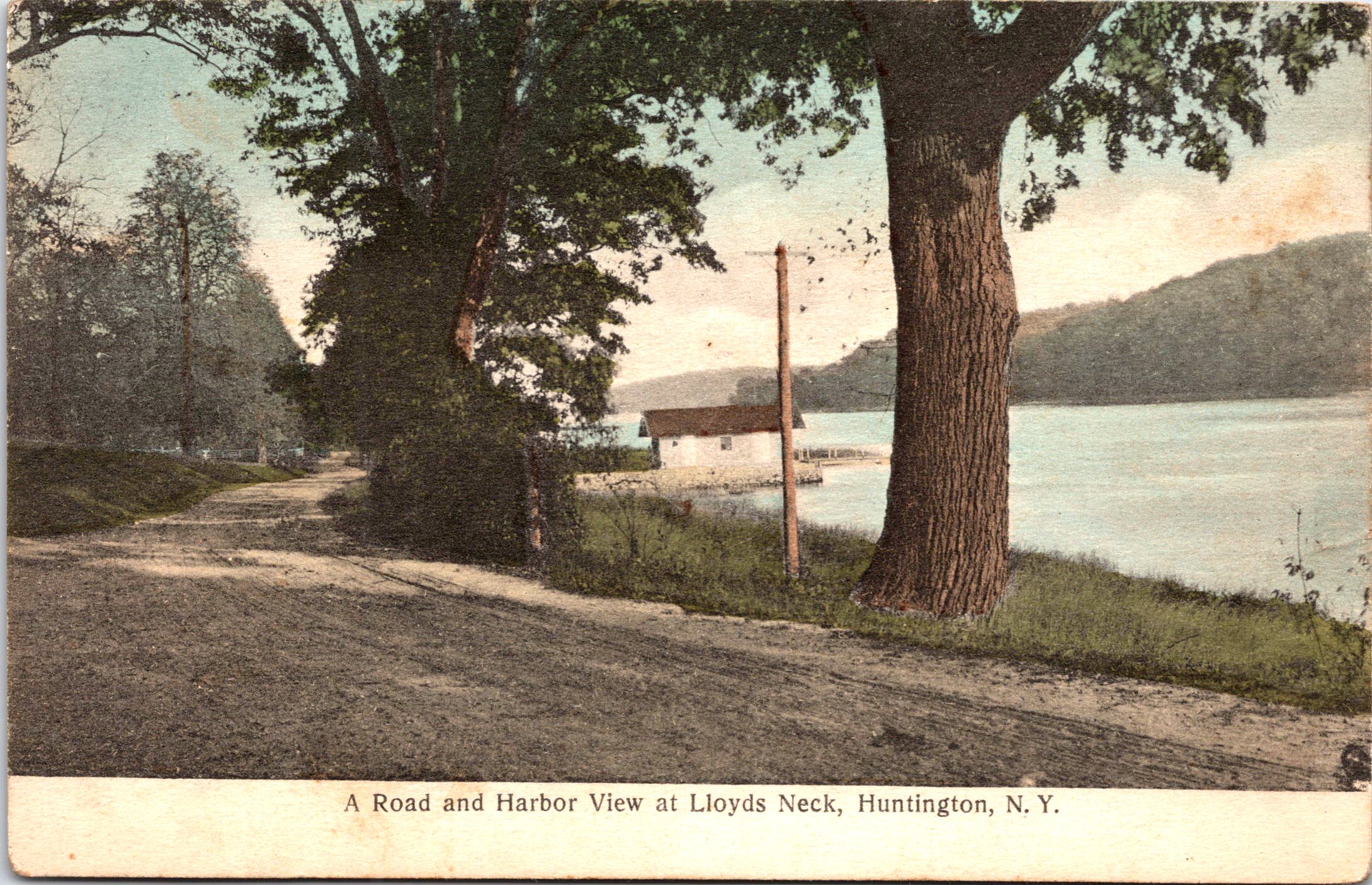
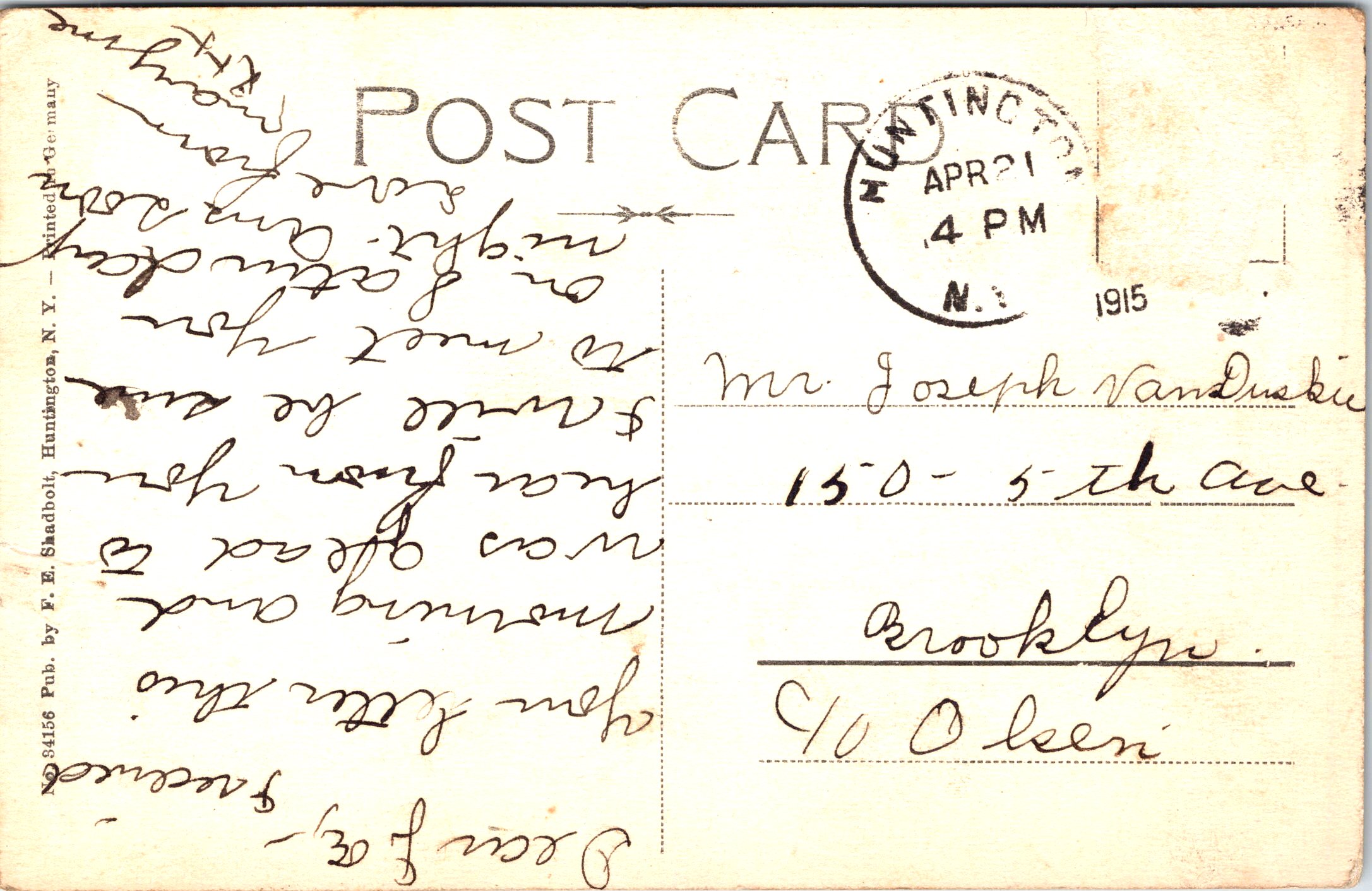
This charming hand-colored postcard, postmarked in 1915, offers a tranquil view titled “A Road and Harbor View at Lloyds Neck, Huntington, N.Y.” It captures a serene dirt road gently curving along the wooded shoreline of Lloyd’s Neck, which is part of Lloyd Harbor, a picturesque village located within the town of Huntington, Long Island, New York. On the right, the calm waters of the harbor lap against a small boathouse and dock nestled at the water’s edge, while a wooded hillside rises across the harbor in the distance. Remarkably, over a century later, this very road still exists—and though it is now paved, the view remains largely unchanged. Drivers today can still experience this scenic coastal stretch as they travel down Lloyd’s Neck, making this postcard a fascinating glimpse into the enduring landscape of Long Island’s North Shore. The postcard was published by F. E. Shadbolt of Huntington, N.Y. and printed in Germany. It bears the publisher number No. 3415 and includes a detailed handwritten message addressed to a gentleman in Brooklyn, New York. SOLD
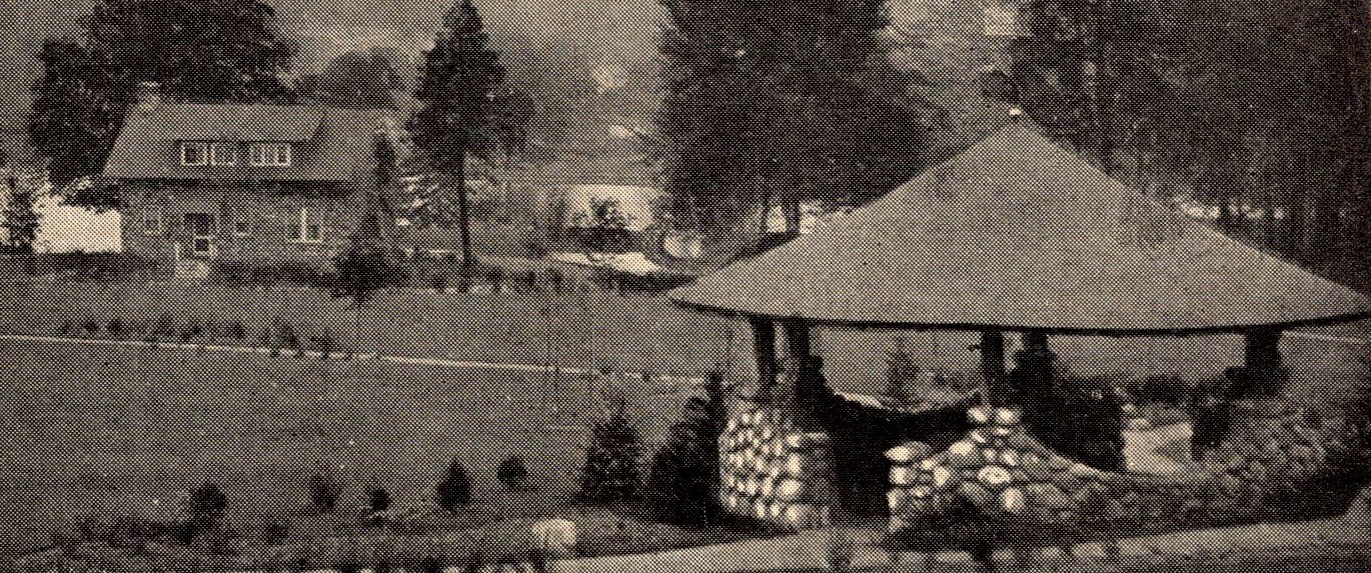
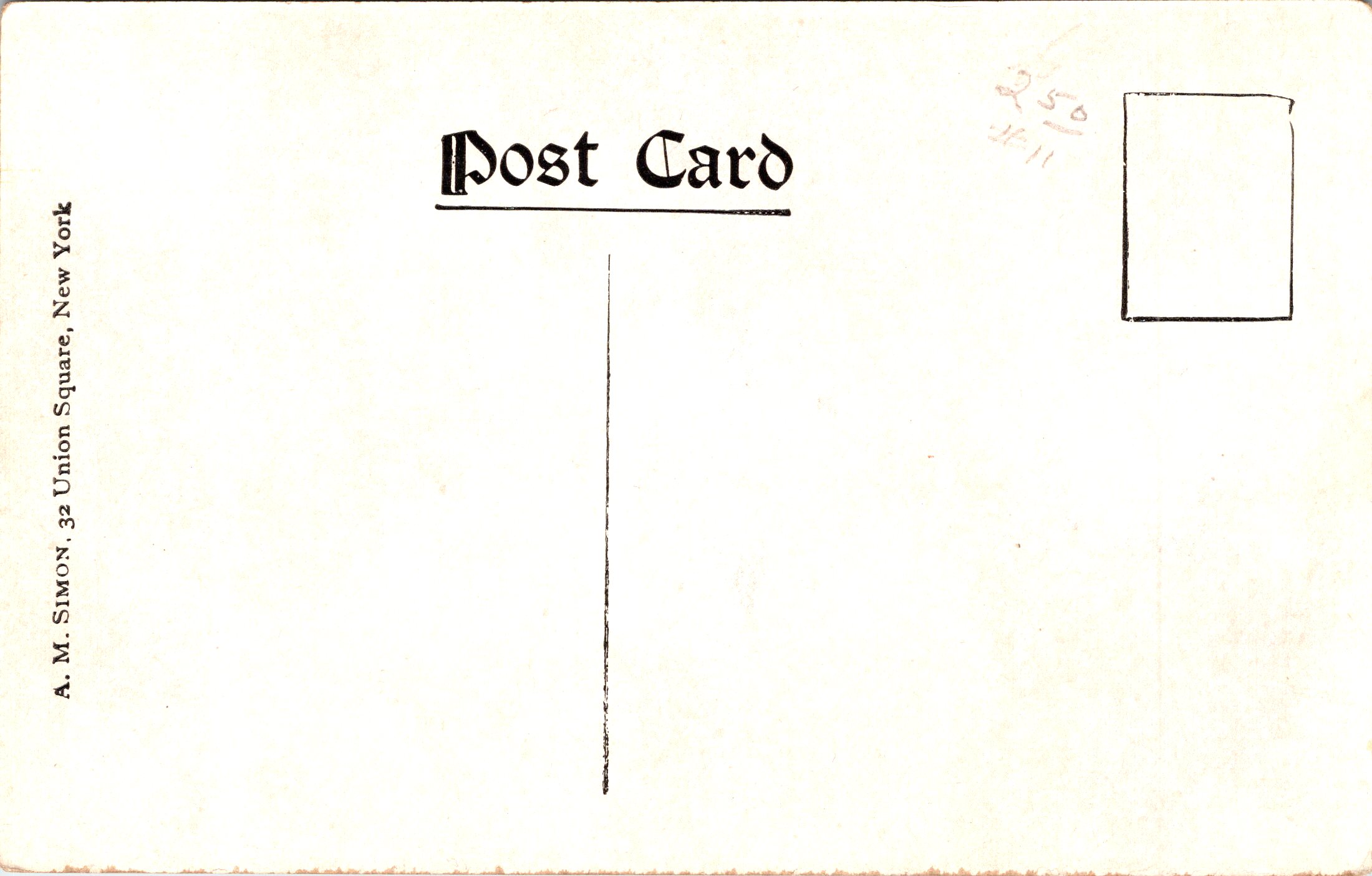
This vintage lithographic postcard offers a tranquil early view of Heckscher Park in Huntington, Long Island, capturing the park in its formative years as a carefully landscaped civic retreat. In the foreground stands the distinctive stone pavilion, its rustic construction harmonizing with the gently sloping lawns, young plantings, and wooded hills beyond. The stone house and pavilion still stand and are in use today. The scene featured on this postcard reflects the early 20th-century ideal of public park design—orderly, pastoral, and restorative—intended to provide town residents with a refined escape from daily life. Heckscher Park was a gift to the Town of Huntington from August Heckscher, a prominent industrialist and philanthropist. Heckscher, who made his fortune in zinc mining and banking, was deeply committed to public welfare and urban beautification. In 1920, he donated the land and funds necessary to establish the park, which officially opened shortly thereafter. His vision was to create a permanent green space that would enhance civic life and cultural enrichment—an ambition that continues to define the park today. Over the decades, Heckscher Park has become one of Huntington’s most beloved landmarks. It now hosts concerts, festivals, art fairs, and seasonal events, and serves as the outdoor setting for the adjacent Heckscher Museum of Art, also founded through August Heckscher’s philanthropy. The park remains a focal point of community life, blending recreation, culture, and history in a setting that has changed remarkably little in spirit since this postcard was produced. The postcard was published by A. M. Simon, located at 32 Union Square, New York City, a prolific early-20th-century postcard publisher known for high-quality photographic and halftone views of American cities, parks, and landmarks. Simon postcards are widely collected for their clear imagery and strong documentation of urban and suburban development during the Undivided Back and early Divided Back eras, generally dating this card to the circa 1915–1925 period. This unused postcard is in good condition with minor corner and edge wear (see scans).
This vintage postcard is available for purchase at The History Peddler for $17.50 or Best Offer.
This vintage linen postcard features the United States Post Office located in Huntington, New York. The Treasury Department constructed the building in 1939. It was located on Carver Street in the village of Huntington. The post office moved to a new and larger building in 1978. The building seen on this card was sold to a private insurance firm. (SOLD)
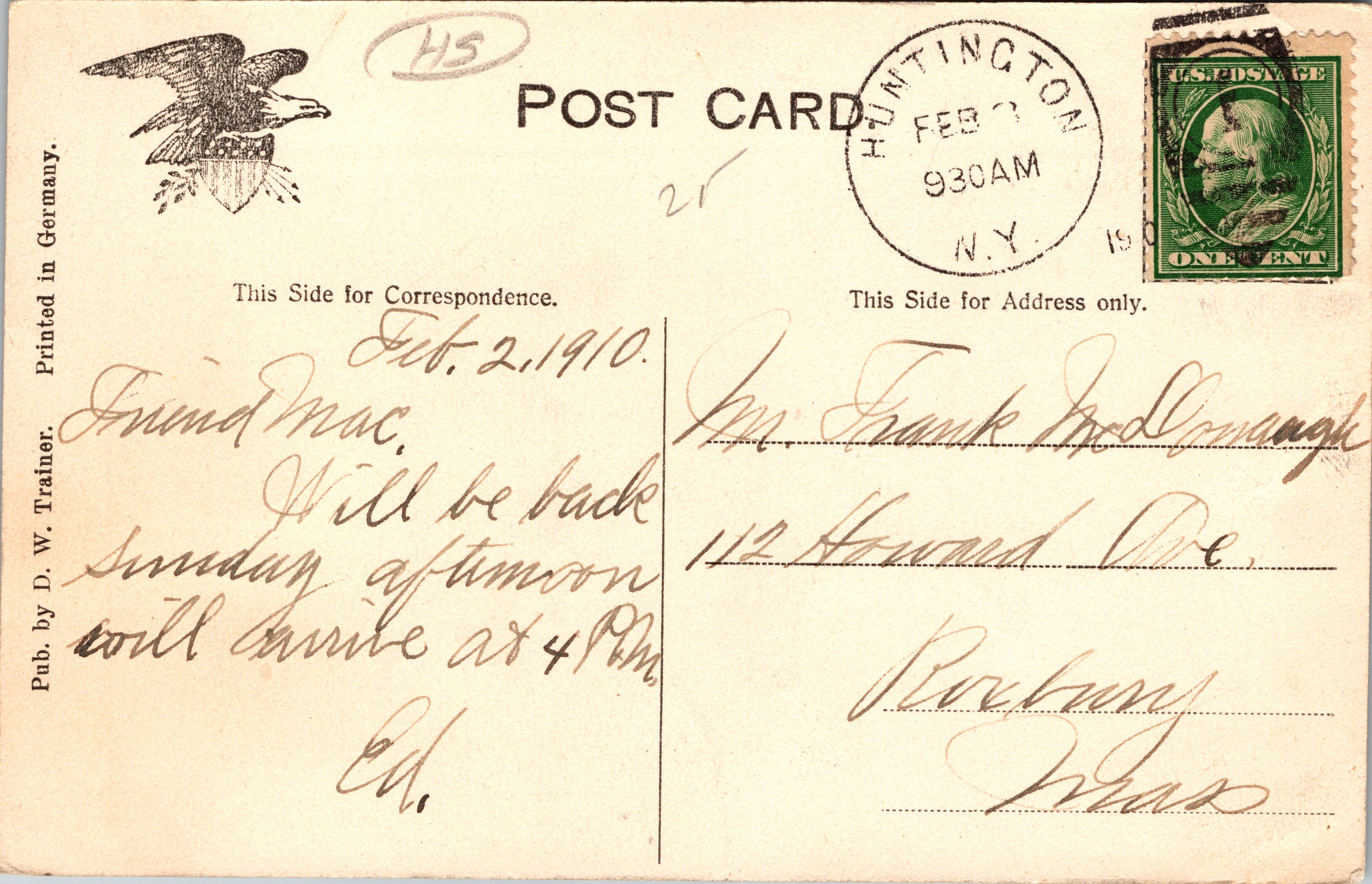
This vintage real photo postcard features the steamer “Huntington”. The ship was photographed as she travelled through Huntington Harbor, in Huntington, Long Island, New York. The 125 foot boat was built in 1888. It had a regular run between Huntington and Pier 36 in New York City. The ship also made two trips each summer, across the Long Island Sound to Norwalk, Connecticut. In addition, the steamer “Huntington”, was also chartered for excursion parties by local residents. In 1913, the ship was bought by the George W. Bush & Sons Company. The firm was located in Wilmington, Delaware. The steamer was used to transport freight down the Delaware River. After changing ownership a number of times, the ship was scuttled in 1938. This postcard was published by D. W, Trainer. The card was printed in Germany. The message on the postcard was written in 1910. This 110 year-old postcard is in very good condition. SOLD
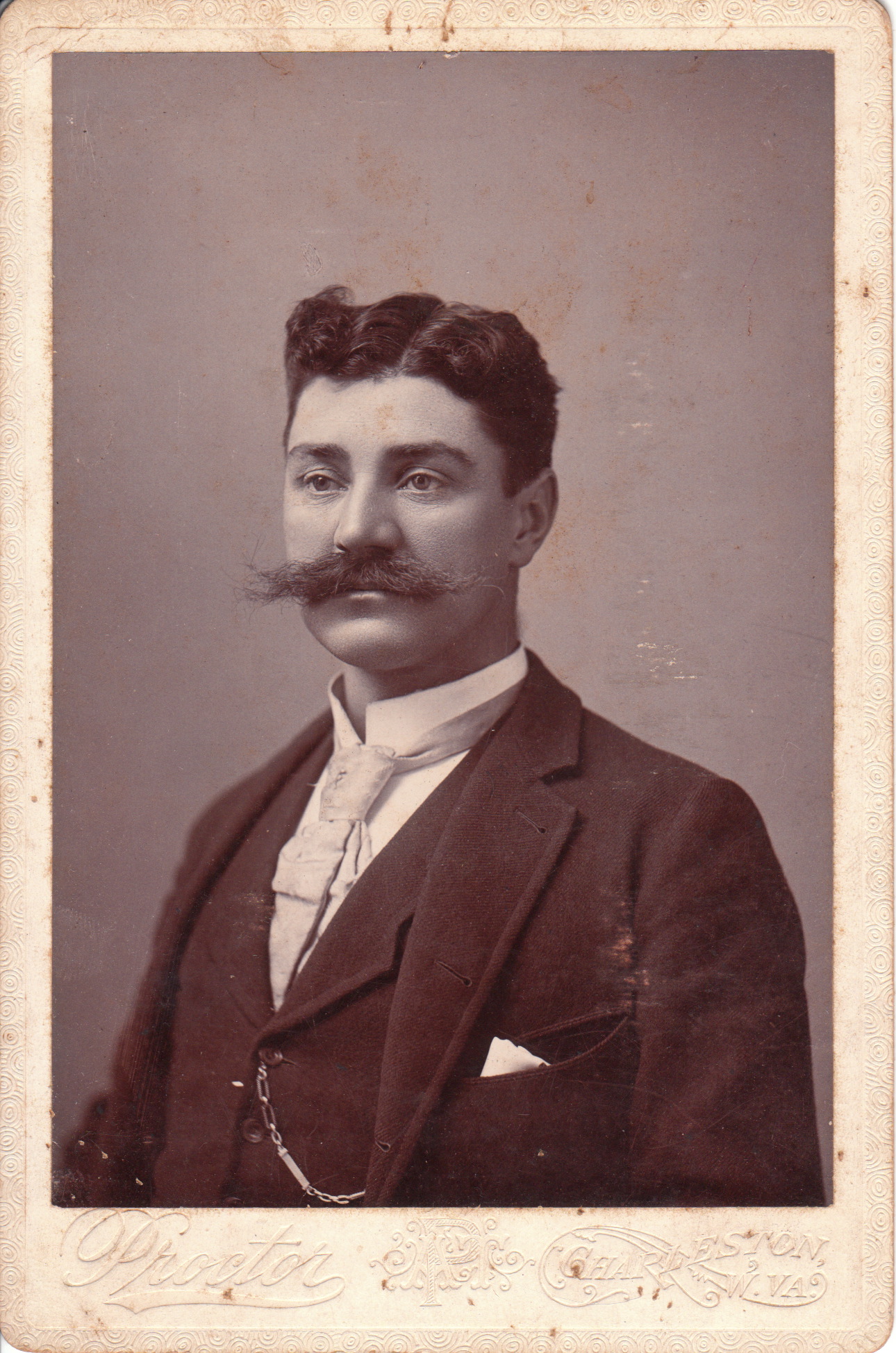
The Proctor studio produced this cabinet card portrait of a man with a walrus mustache. This admirable facial hair places this image in the category “Mustaches (Only the Best”). Click on the category to view an array of notable mustaches. A. T. Proctor’s studio was located on Capitol Street in Charleston, West Virginia. He was the successor to the Becker & Fell studio. Alfred Tobert Proctor was born in 1864 in Catalpa, Virginia. Sometime about 1888 he began his photography career in Charleston. He originally partnered with Elmer B. Tully (Proctor & Tully). In 1894 they moved their business to Huntington, West Virginia leaving photographer William Erskine to run the Charleston studio. In 1897 Erskine joined the two partners in Huntington. Ultimately the partnership ended and the three photographers operated independent businesses. Proctor was very active in the photography community. He served as President of the American Photographers Association for several years beginning in 1910. He competed in many exhibitions and Eastman Kodak used his portrait in its national advertising. He died of a heart attack in 1933. Much of his work now resides in the special collections library at Marshall University.






 THE CABINET CARD GALLERY