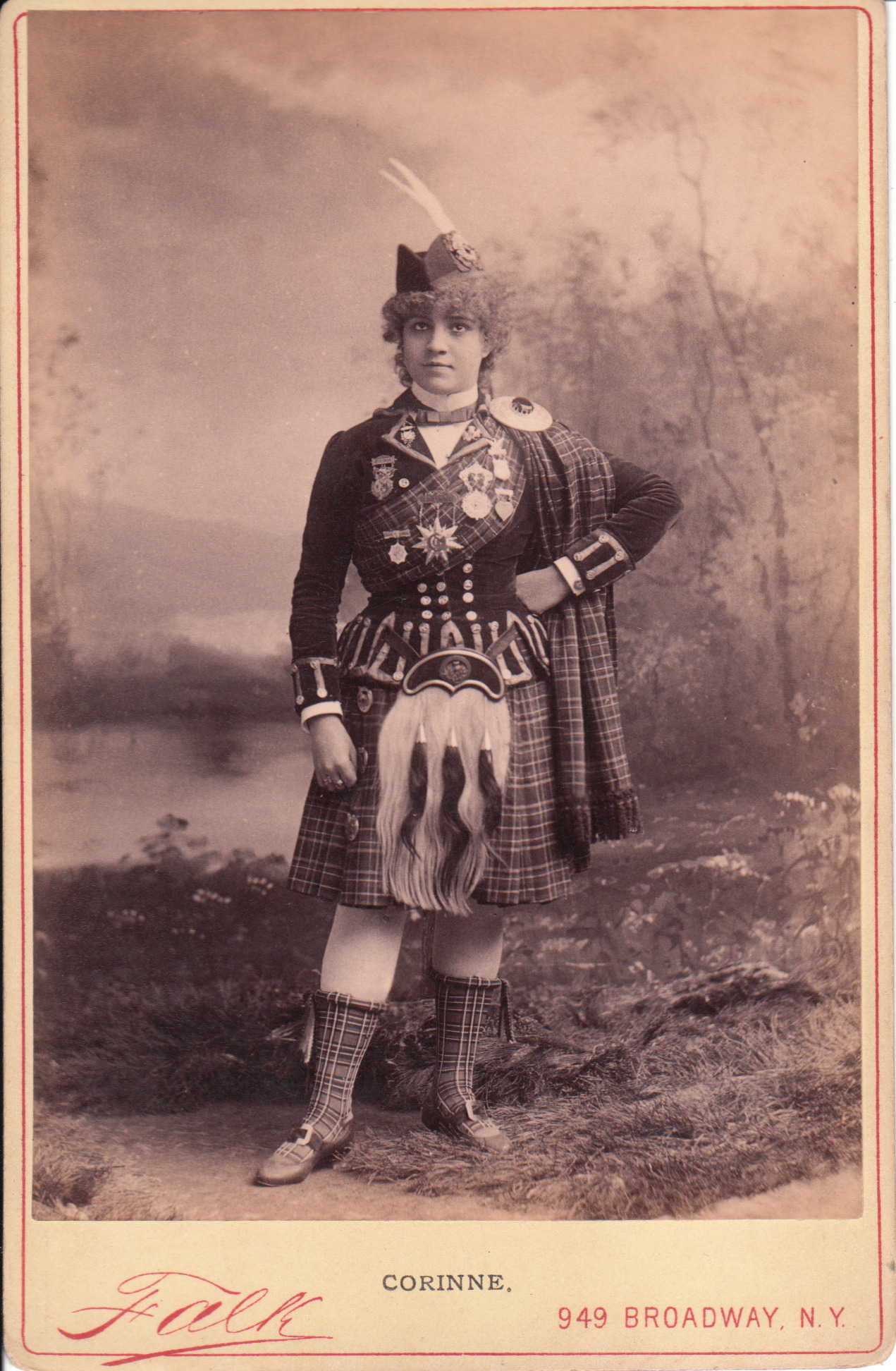
 CABINET CARD 1
 CABINET CARD 2
The actress pictured in Cabinet Card 1 is Corrine. Corrine, like Elvis or Selena, was a performer that received national recognition and was known by just her first name. In the top portrait by celebrity photographer B. J. Falk, Corrine looks to be teenager or young adult. She is dressed in theatrical costume. Corinne was the daughter of actress Jennie Kimball. Kimball acted in the theater between 1865 and 1873. The year of her retirement, she became the mother of Corinne, who the New York Times (1896) labelled “the most famous of all the child actresses of this country”. It is not clear how Kimball and her husband came to raise Corinne, but is was speculated that she was adopted as an orphan. Kimball trained her young daughter for the stage. Corrine debuted in the theater at age two and a half. At five years of age she played the part of “Little Buttercup” in the Boston production of “Pinafore”. She played the role more than one hundred times. At fifteen years of age she was traveling as head of her own theater company. Jennie Kimball doubled as Corinne’s mother and manager. The New York Times (1896) reported that Corinne “was a goldmine” during her early days for Mrs. Kimball and remained a major money producer through the time the article was written. At the time the article appeared, Corinne was twenty-two years old. Jennie Kimball’s successful management of her daughter’s career wasn’t appreciated by all observers. The New York Times (1881) asserted that the Society for the Prevention of Cruelty to Children objected to the way Corinne was being raised and successfully pursued custody of the child. During the custody hearing, eight year-old Corinne was put on the stand and interrogated by the society’s lawyer. He asked her how many times she was photographed and she didn’t know but said “she was never photographed in tights nor with her limbs and breast exposed”. The lawyer’s questioning revealed that the child had never attended school. However, Jennie Kimball did give her “lessons” each morning. The lawyer then gave Corinne an impromptu writing/spelling test during her testimony. The attorney also prompted the child to say she had never attended sunday school and didn’t know what a bible was nor had she ever been taught anything about Jesus Christ. The society lawyer was initially able to convince the judge to remove the child from the custody of Mrs Kimball because she was “unlawfully exhibited and employed” in dancing, singing and acting on the theatrical stage. Mrs. Kimball was allowed to take her daughter for a brief period to change her clothing but was assigned an escort to insure that the child would be brought to the society. Mrs Kimball was advised by George Hackett, the manager of a Providence opera house that if she took her daughter from New York to Jersey City, New Jersey; the girl would be out of the courts jurisdiction and she could keep her daughter. Mrs. Kimball followed his suggestion, and allowed a man to spirit the child out of state. As a result, Mrs. Kimball was charged with abduction and she ended up back in court. After a short time, the judge considered all the testimony that he heard and decided to return Corinne to her parents (he called them guardians). He believed that they were loving toward the child and responsible enough to continue raising her. Interestingly, he had something to say about the religious angle pursued by the society lawyer. The judge wrote that the the US constitution protected Corinne’s parents from being punished for not providing religious education to their daughter. Corinne continued her acting career and eventually became involved in burlesque theater. The New York Times (1894) wrote “Corinne has grown up and proves a lively and entertaining performer. The article adds that “she has no large share of original talent, musical or dramatic, but she can sing and dance “well enough”.
Cabinet Card 2 pictures Miss Corinne and was published by Newsboy (#20 of a series). She is wearing jewelry galore and flowers in her hair. What is that contraption that she is wearing around her waist? Is it a pouch? If so, what is it meant to carry? SOLD


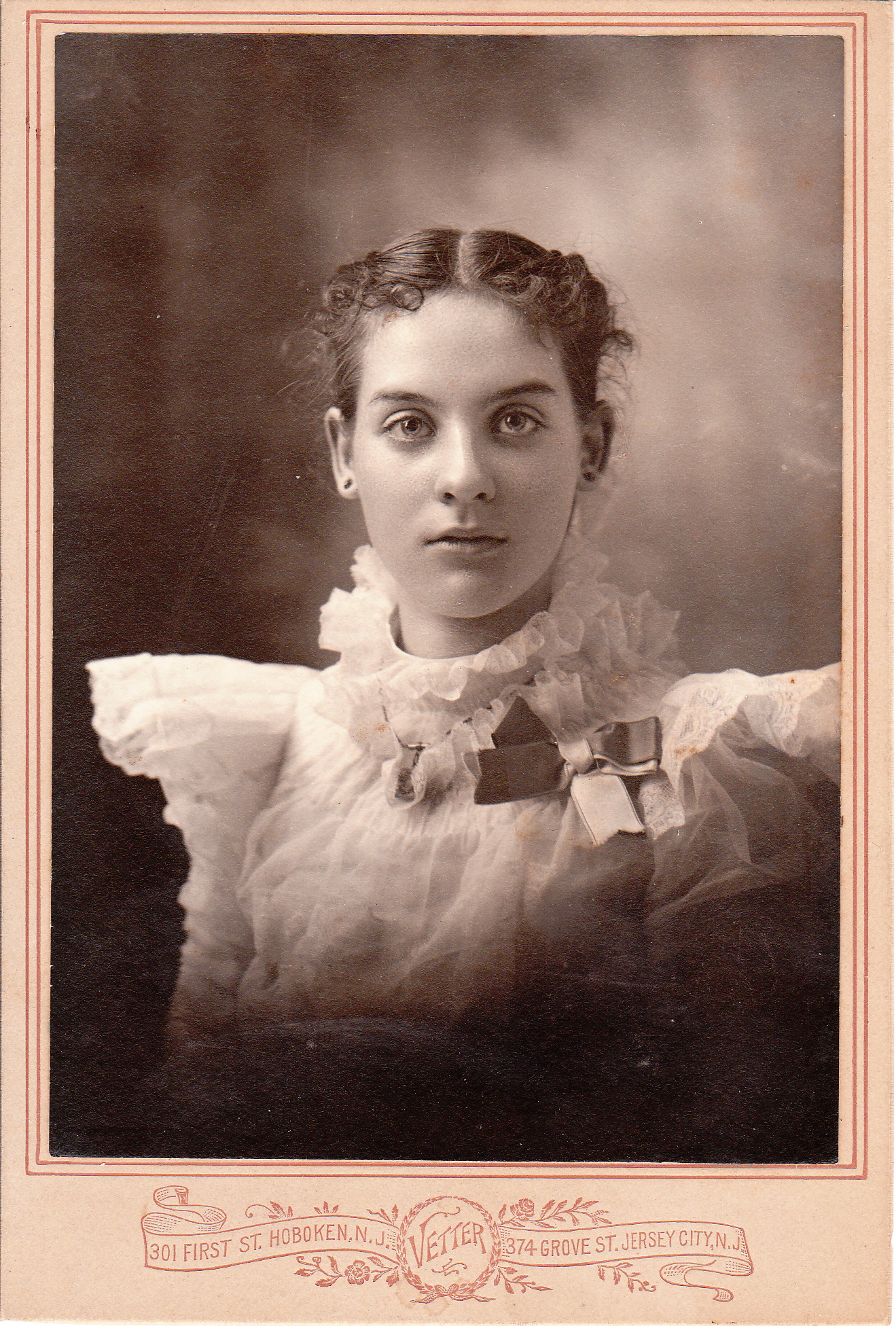
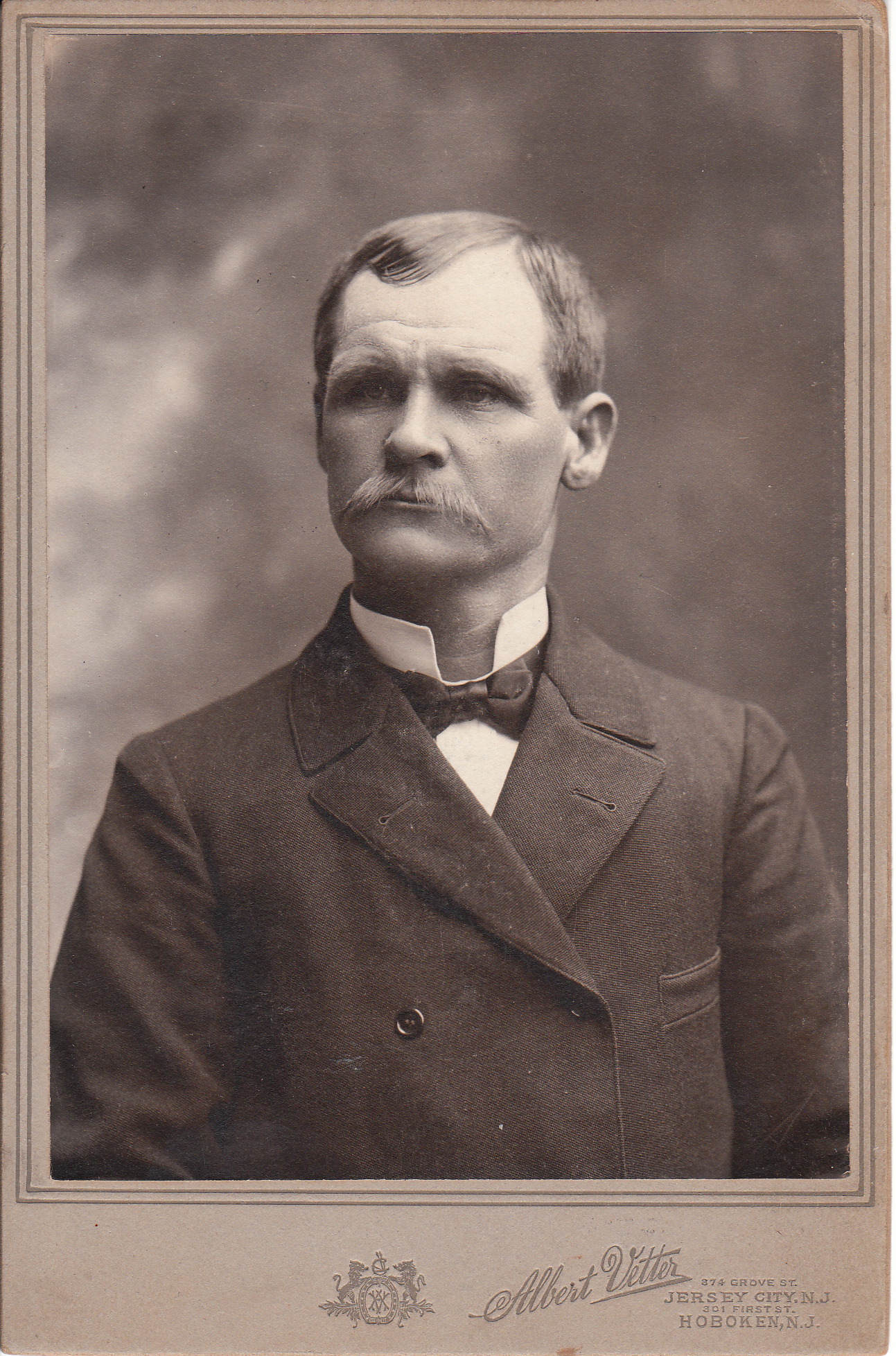
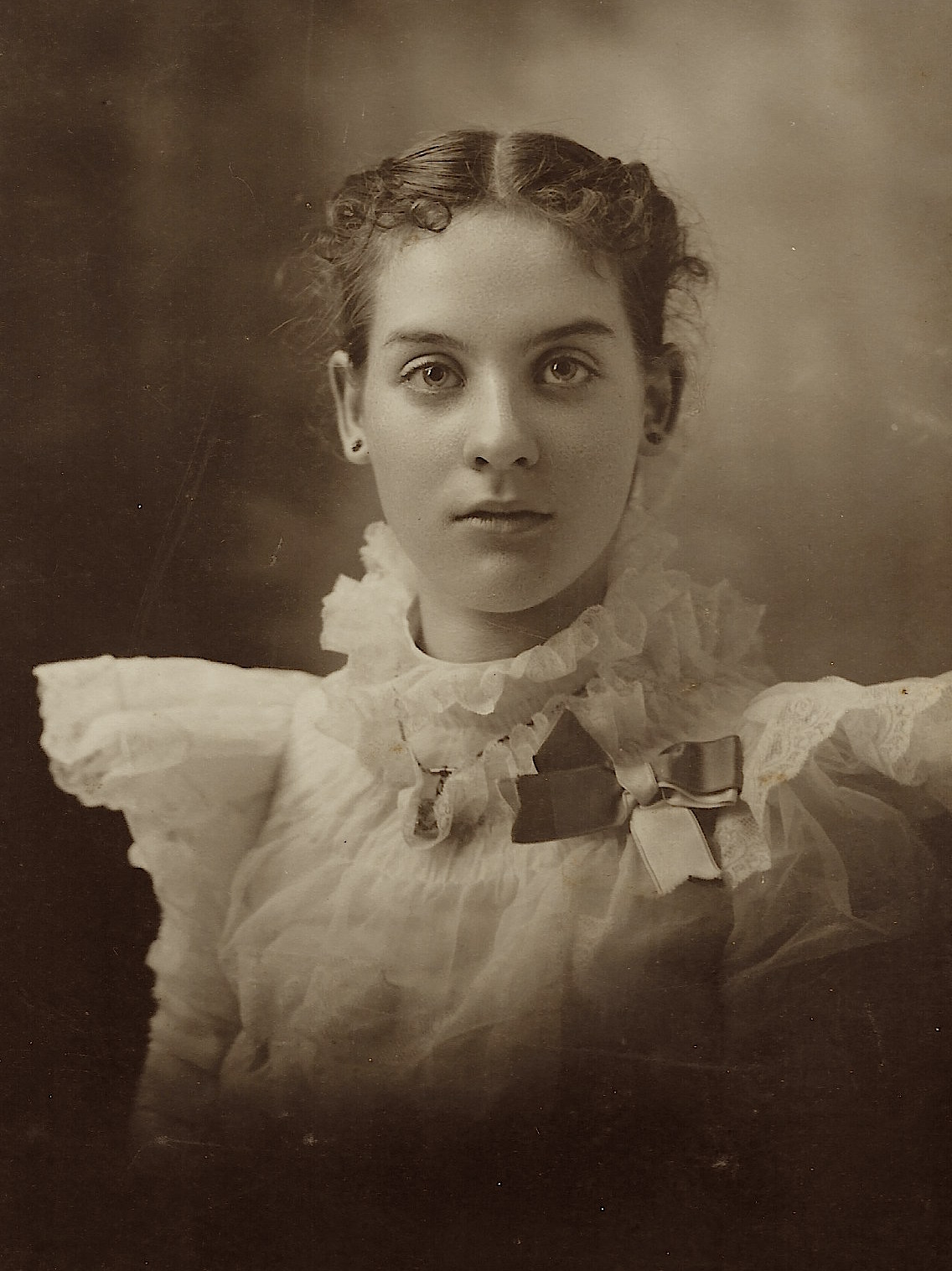 A pretty girl poses for photographer Albert Vetter in either Hoboken or Jersey City, New Jersey. This “Jersey Girl’s” portrait is captured in a crisp and clear image. She is wearing a frilly dress and a ribbon pinned near her shoulder. In addition, she is wearing a necklace with a pendant, and she is wearing it over the collar of her dress where it is hardly visible. The photographer, Albert Vetter, was quite an interesting character. Apparently, he was a vengeful man. The magazine, The Camera and the Darkroom ( 1904) reported that Vetter was at odds with the family that lived in the house that was also the home of his studio. Vetter got a picture of the head of the family, who recently died. He enlarged the picture and fastened a rope around it at the neck, and hung it out the window. The daughter of the late man, got a step ladder and removed the photograph. A “war of words” followed and Vetter was arrested. He was arraigned in front of a judge for disorderly conduct and he was put up for bond to maintain the peace. The magazine used a humorous headline to describe this incident; “New Idea in Picture Hanging”. (SOLD)



 THE CABINET CARD GALLERY