ILSE WERNER : GERMAN FILM STAR : GLAMOUR PORTRAIT : BY FOTO-QUICK : RPPC

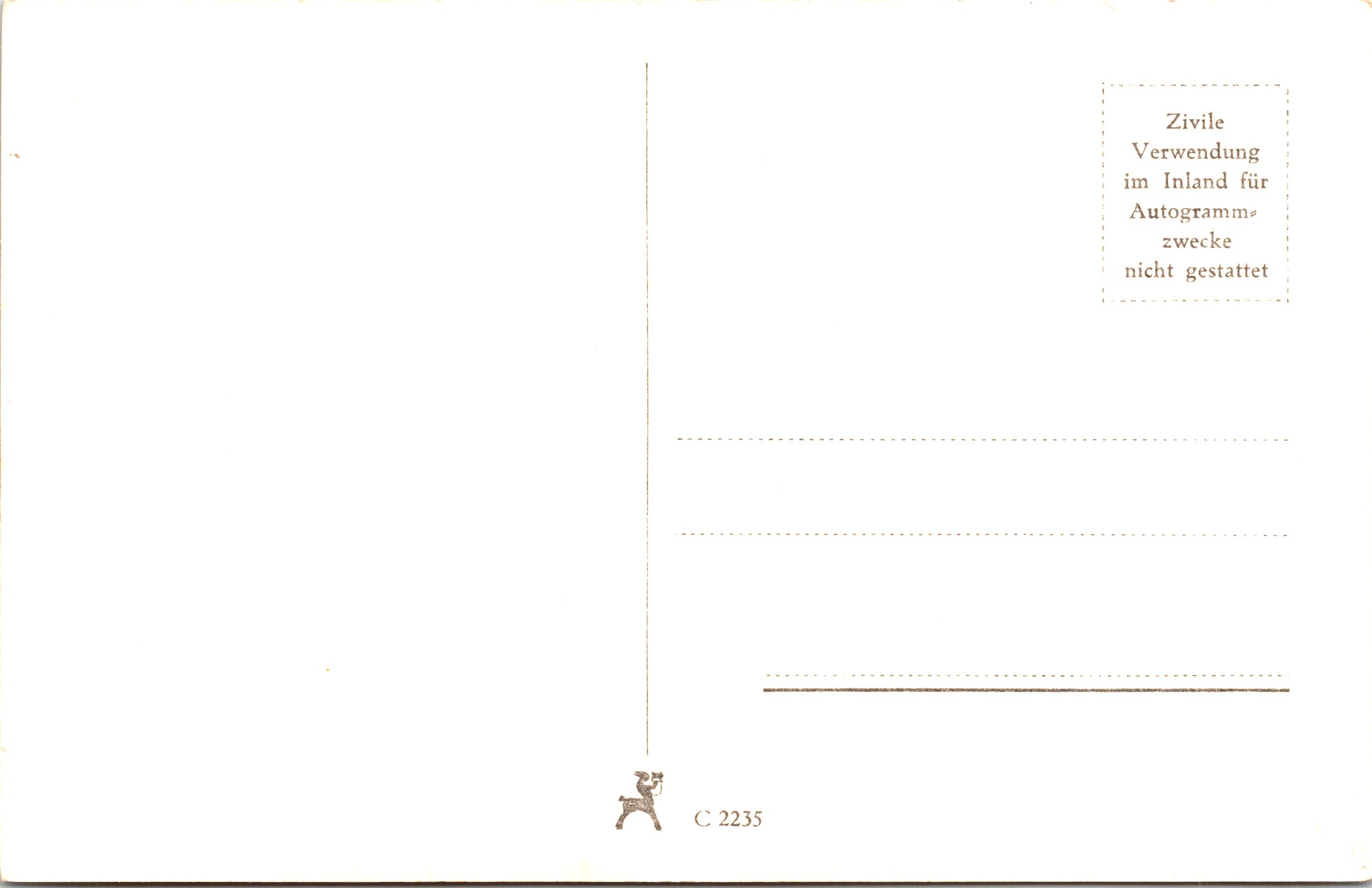
This striking vintage real photo postcard features a glamorous close-up portrait of Ilse Werner, a celebrated German-Dutch actress and singer known for her charismatic screen presence and unique whistling talent. In this image, Werner is draped in a shimmering veil that frames her face with a soft, radiant glow. Her expressive eyes, long lashes, and glossed lips project a poised, serene beauty, while the glinting fabric around her adds a mystical, almost cinematic aura. The postcard was published by Film-Foto-Verlag, a major distributor of German film star postcards during the 1930s and 1940s, and is marked “A 3732/1” in the lower left corner. The photo credit goes to Foto Quick. .On the reverse is the wartime disclaimer: “Zivile Verwendung im Inland für Autogrammzwecke nicht gestattet” (Civilian use for autograph purposes not permitted), reflecting its origin in Nazi Germany. The cards were meant for building national morale and not private autograph collecting. A small fawn symbol in the stamp box area marks it as part of the Film-Foto-Verlag series. Ilse Werner was born in 1921, in Batavia, Dutch East Indies (now Jakarta, Indonesia), where her father worked as a Dutch colonial official. Her mother was German, and the family moved to Germany when she was a child. She trained at the Max Reinhardt Seminar in Vienna, one of the premier acting schools in the German-speaking world, and made her film debut in 1939. Her breakout role came in the film Wunschkonzert (1940), one of the most popular and propagandistic films of the Nazi era. She quickly became a favorite among German audiences, known not only for her acting but also for her unusual skill as a professional whistler, which she often demonstrated in her recordings and film appearances. During the Nazi period, Ilse Werner became one of Germany’s most beloved film stars, appearing in state-approved entertainment. Though she never joined the Nazi Party, her films were often apolitical and aligned with the regime’s values of escapism and wholesome entertainment. Her popularity made her a public symbol of the Third Reich’s cultural life, though she was not considered an overt political supporter. After the war, her Dutch citizenship initially barred her from performing in postwar Germany due to denazification policies, which caused a temporary decline in her career until restrictions were lifted. lse Werner was married to actor Tony Rödel for a brief period. The marriage ended in divorce. She did not have children. Her later years were marked by occasional television appearances and nostalgic performances of her trademark whistling songs. She passed away in 2005 at the age of 84.  (SOLD)
FOUR PORTRAITS OF PROVOCATIVE GERMAN SILENT FILM STAR RUTH WEYHER

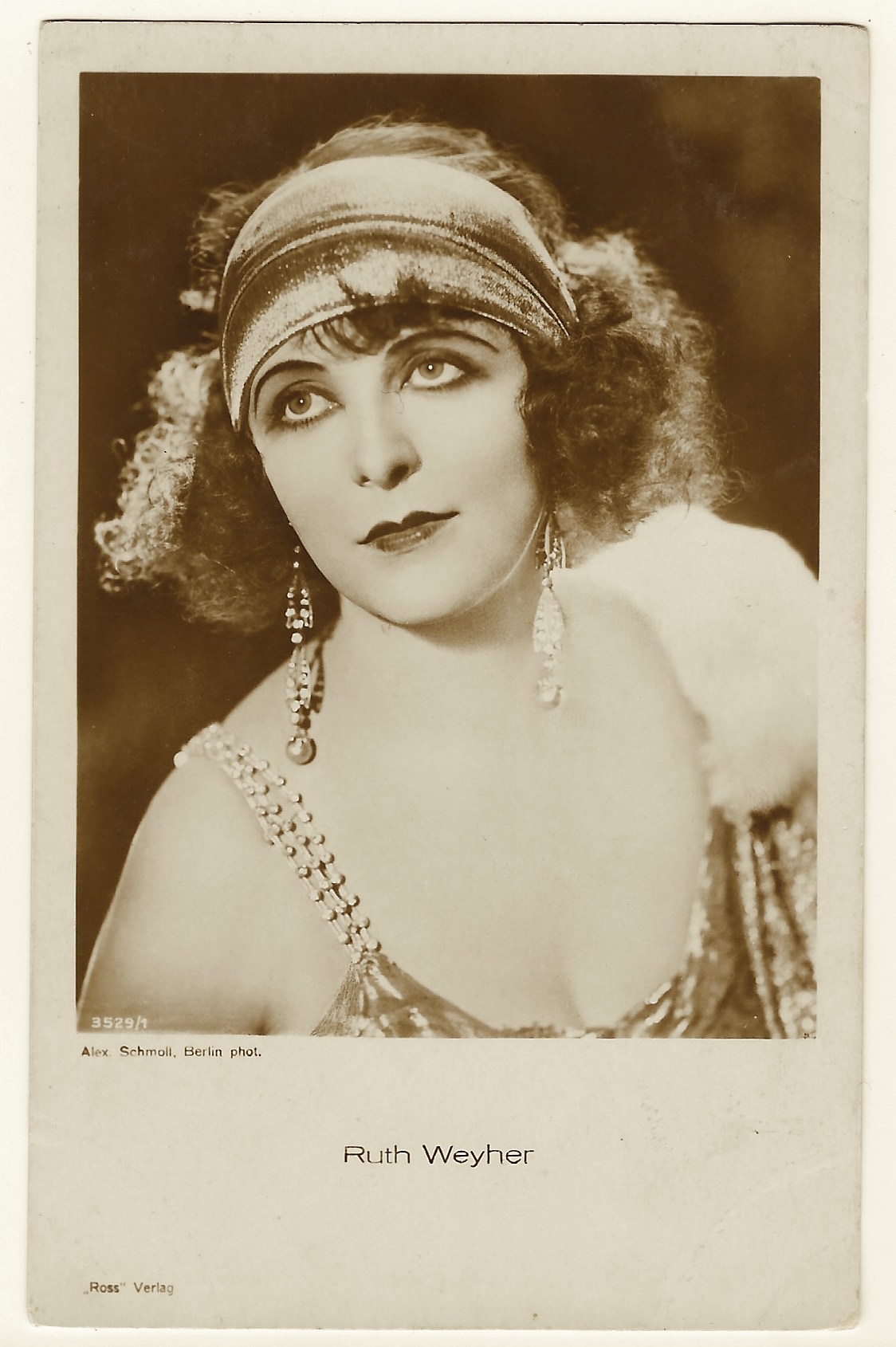
POSTCARD 1
weyher
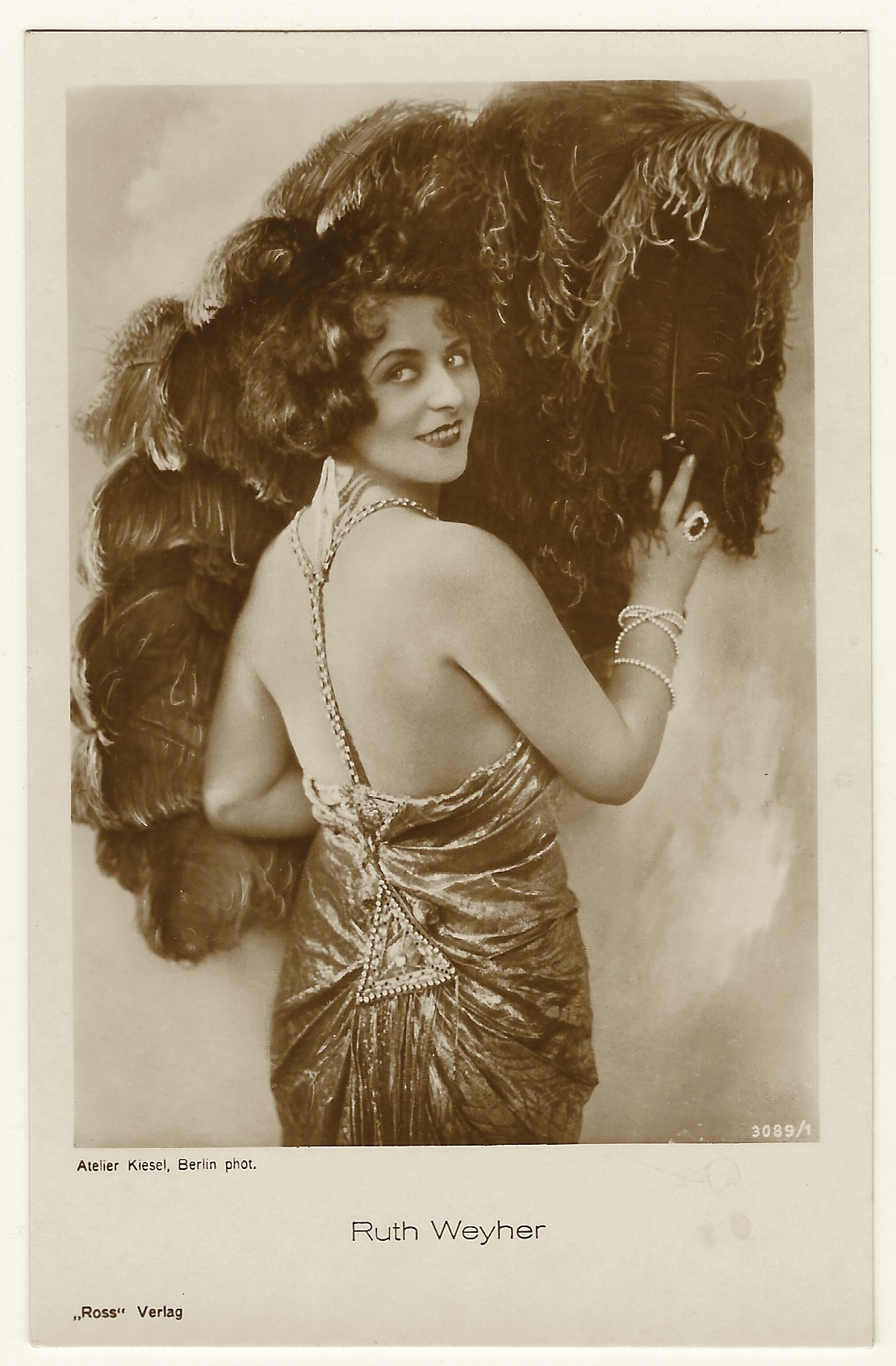
POSTCARD 2 (SOLD)


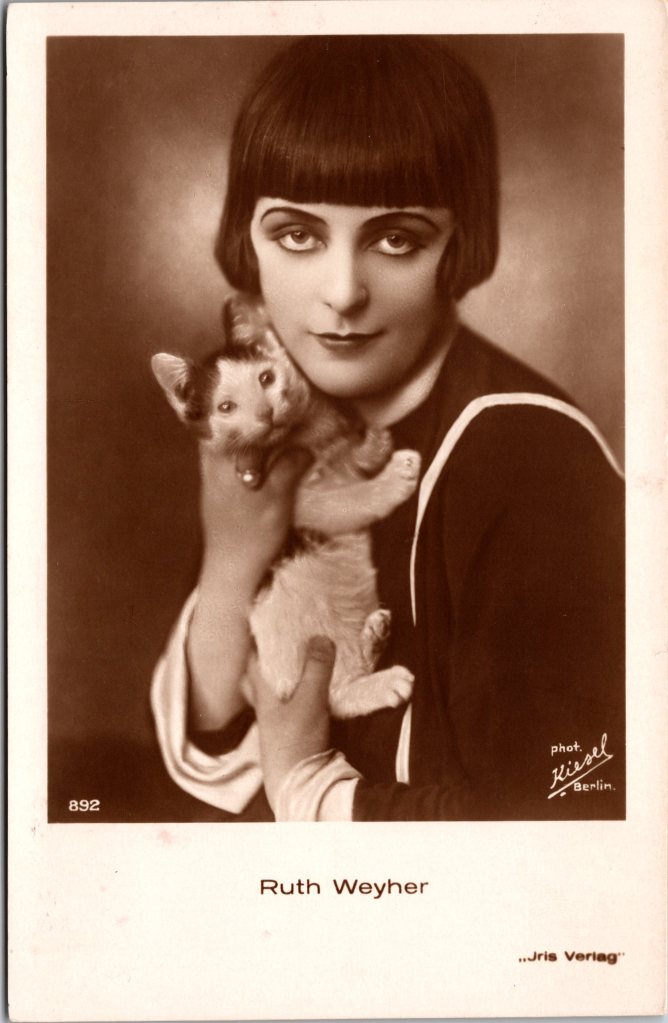
This image has an empty alt attribute; its file name is ruth-weyher_0001.jpgPOSTCARD 3  (SOLD)

RUTH WEYHER : SULTRY GERMAN SILENT FILM ACTRESS : RPPC - Picture 1 of 3

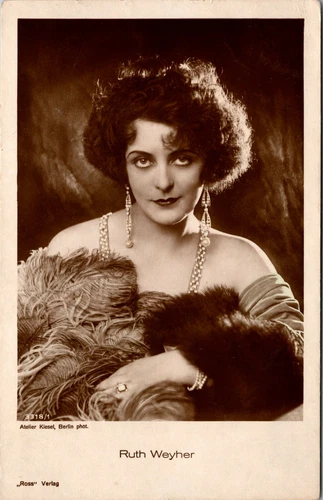
POSTCARD 4  (SOLD)

Postcard 1 is a vintage real photo postcard that features German silent film actress, Ruth Weyher (1901-1983). She was born in Neumark, East Prussia, Germany.  Weyher grew up in Danzig where she studied painting until she switched to a conservatory to study singing. An illness robbed her of her singing voice and in 1919 she travelled to Berlin where she studied a Max Reinhardt’s theatre school. Reinhardt was a well known director and producer. She appeared in 48 films between 1920 and 1930. She starred in director Georg Wilhelm Pabst’s film “Secrets of the Soul” (1926). She also produced a film in 1929. During her career, Weyher only appeared in a few sound movies and she abandoned acting after marrying publisher Hans Geiselberger in 1932. It is reported that she retired at her husband’s request. The video clip below features Miss Weyher in her appearance in the film “Shadows: A Nightly Hallucination” (1923). The film title translation was done by “google translate”. Weyher’s costar in this film was Austrian stage and film actor Fritz Kortner (1892-1970). A review of this film describes Weyher as “beautiful and passionate”.  Ruth Weyher’s appearance in this film can be described as risque or provocative. One of the themes of this film is infidelity. This postcard was published by Ross Verlag and is part of a series (no. 3529/1). The portrait of Miss Weyher was taken by Alex Schmoll, a photographer located in Berlin, Germany. There is Italian print on the reverse of the postcard that roughly translates as “Exclusive sale publisher: Ballerini and Fratini, Firenze (Florence, Italy). A bit of research reveals that the publishing house, Ballerini & Fratini Montespertoli began in Florence in the year 1912.                                     

Postcard 2 features Ruth Weyher and was published by Ross Verlag. The postcard is part of a series (no. 3089/1). This portrait of Miss Weyher  has her posed in position to display her bare back. She has an engaging smile and holds a large fan of dark feathers. Some may find this image somewhat sexually provocative. The photographer of this photograph is Kiesel of Berlin, Germany.  (SOLD)

Postcard 3 is a vintage real photo postcard that features Miss Weyher holding an adorable kitten. This postcard was published by Iris Verlag and is part of a series (no. 892). The portrait of Miss Weyher was taken by Kiesell, a photographer located in Berlin, Germany. This postcard has remnants of it’s former scrapbook home on back of card. It is in  overall good condition (see scans).   (SOLD)

Postcard 4 was published by Ross Verlag and is part of a series (no. 3318/1). The portrait of Miss Weyher was taken by the Kiese studio in Berlin, Germany.   (SOLD)