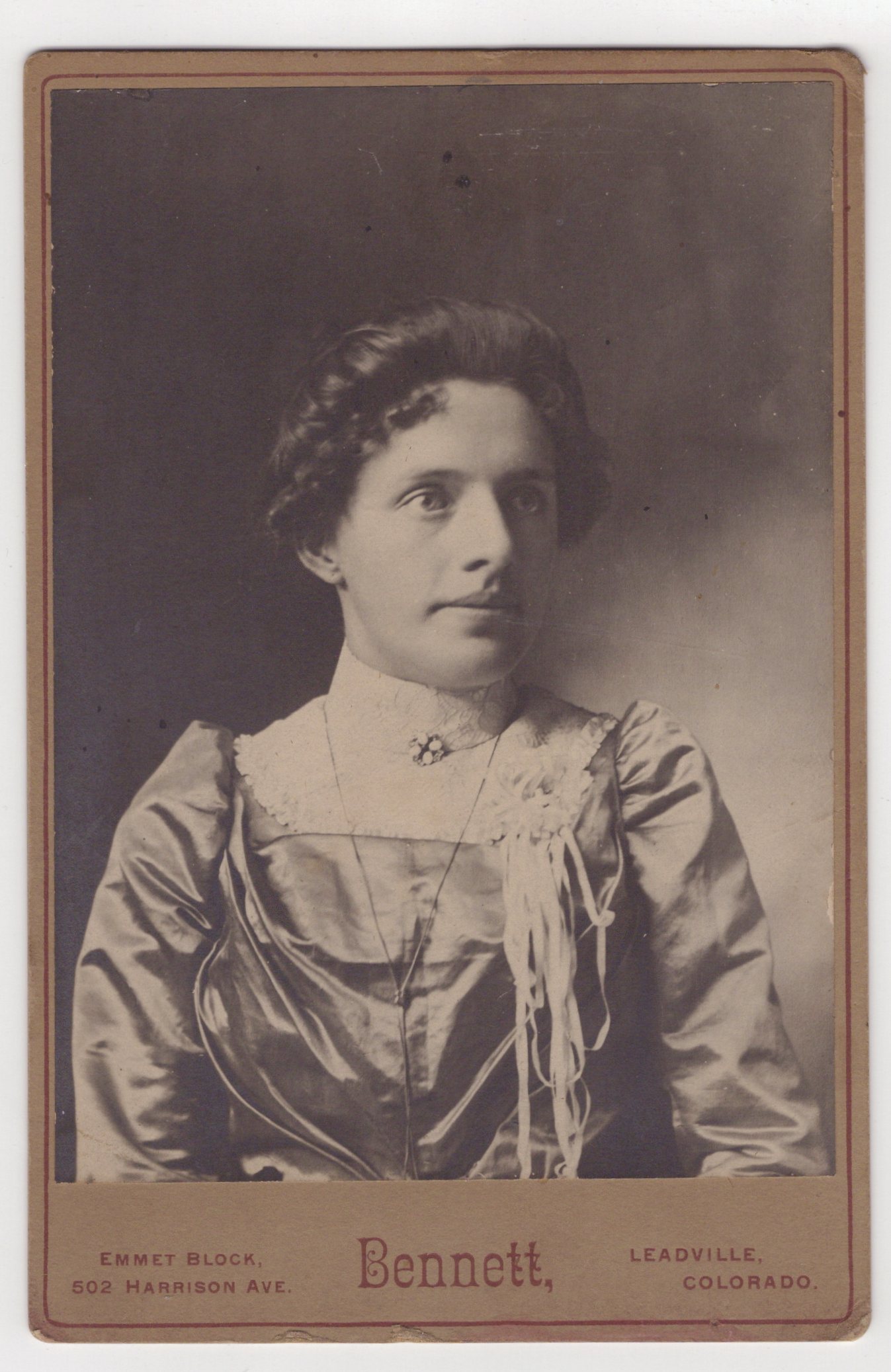
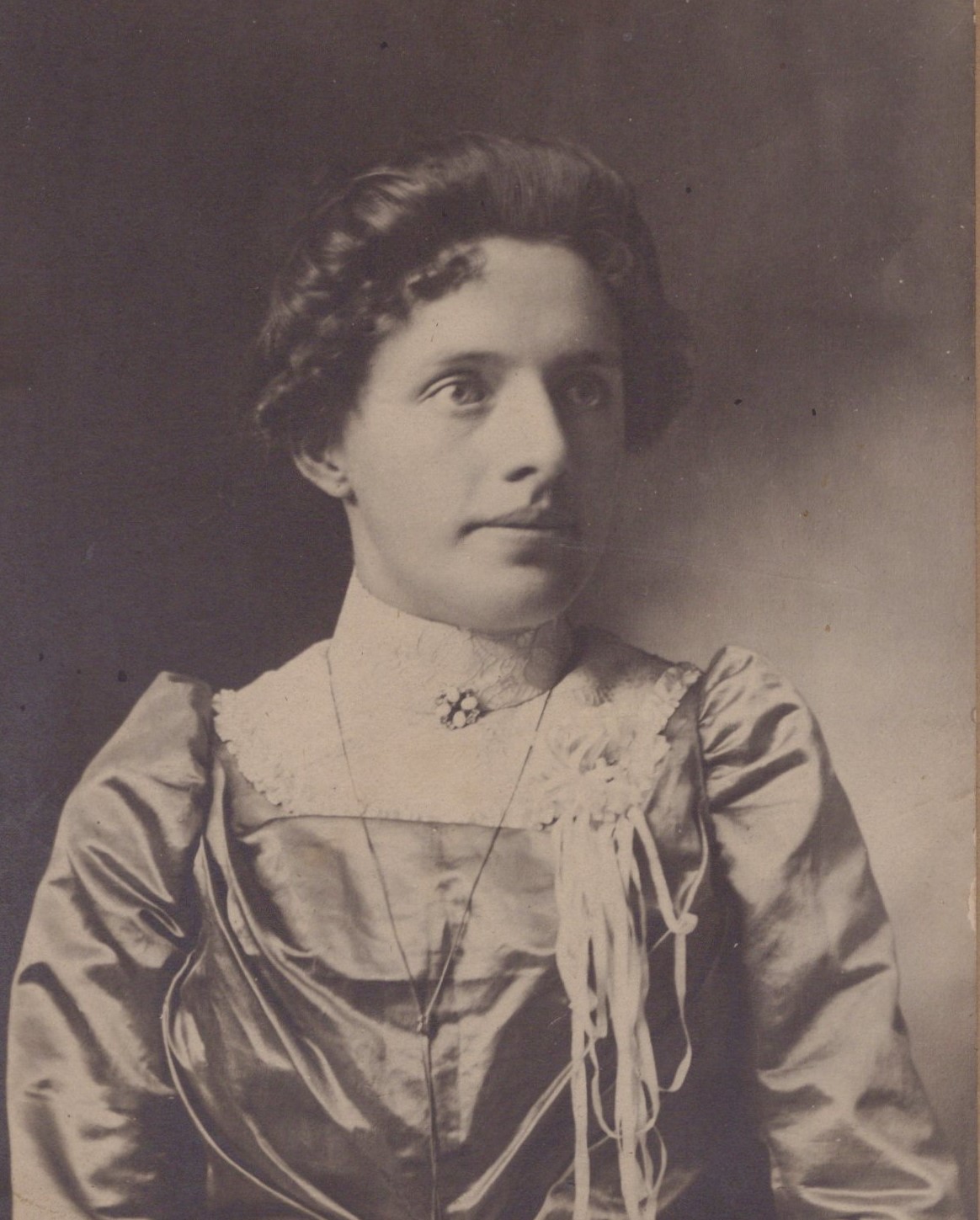
FASHIONABLE WOMAN : HISTORIC MINING TOWN : LEADVILLE, COLORADO : CABINET CARD

This vintage Cabinet Card features a fashionable woman. She is wearing a fancy dress and is well accessorized. Whe is wearing a large necklace, a collar pin, and what appears to be, a flower with streaming ribbons. The photographer of this image was the Bennett Studio. Bennett operated a studio in Leadville, Colorado. Alfred E. Bennett’s (1862-1942) foray into photography may have been a brief one. He is listed in the 1900 US Census as a photographer but held other occupations in other decade census’s. When this photo was taken, Leadville was a booming mining town. Leadville is located at an altitude of 10,152 feet and in the late 1800’s was the second most populated city in Colorado. Denver was number one in population. Leadville was one of the worlds largest Silver camps and was the home of Doc Holliday shortly after the gunfight at the OK Corral.  SOLD
Published in: on October 22, 2025 at 12:00 pm  Leave a Comment  
Tags: , , , , , , ,

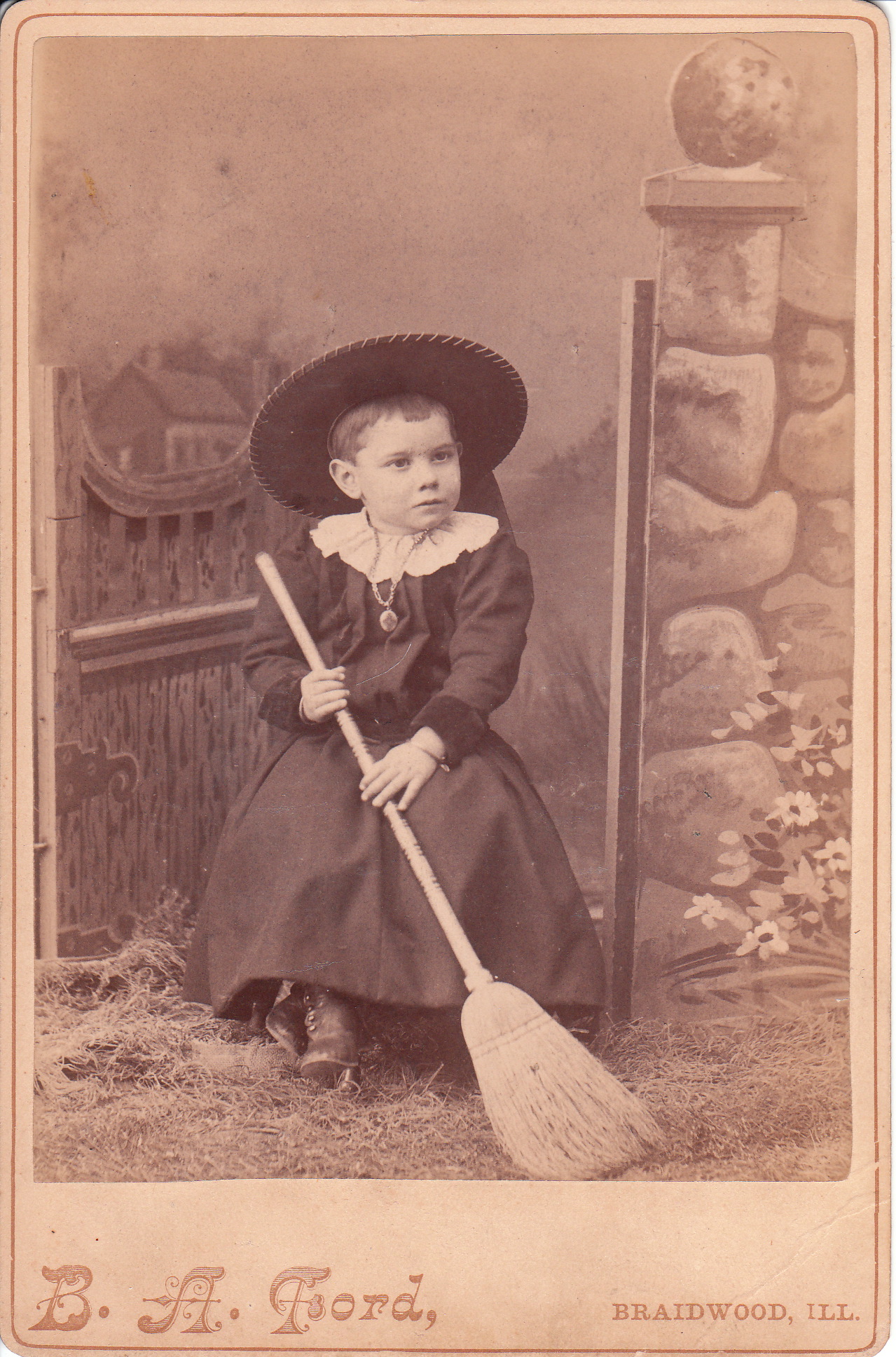
CHILD WITCH IN BRAIDWOOD, ILLINOIS

A young witch prepares for take-off with her trusty broom. The photograph must have been taken around the time of Halloween. In reality, this photograph is a portrait of a young child posing with a broom. The child’s clothing, though appropriate for the era, resembles the garb of a witch. The child is wearing a necklace and a bracelet which favors the likelihood that the child is a girl. The photographer of this image is B. A. Ford of Braidwood, Illinois. Ford was a photographer of note in Illinois. He was a documenter of the early history of coal fields in his town. In 1879 he advertised for an apprentice for his busy studio. Many of his subjects were miners or members of miner’s families. In an 1885 ad he offered to give free advice to his customers so that they may learn the art of hand tinting. Ford’s community of Braidwood was located 53 miles southwest of Chicago, Illinois. In 1864, a family digging for water, found coal and soon a mining community sprouted. The town was called Keeversville. James Braidwood was an early resident and he became the superintendent of the sinking of the first deep mine shaft. In 1873, the town was named in his honor.