
The gentleman in this cabinet card portrait looks amazingly like Abraham Lincoln (1809-1865), the 16th President of the United States. As much a I would like this to be an early photograph of Lincoln, it most certainly is not. This photograph was produced several years after Lincoln’s death. The photographer of this image was George Pine (1840-1906). For part of George’s photography career he operated a studio with his brother Robert G. Pine. Records indicate that Pine conducted his business at the 27 & 29 East State between 1878 and 1888. He operated out of several addresses over the course of his career and all of his galleries were located in Trenton, New Jersey. I was able to confirm that he ran the studios from at least 1872 through the early 1900’s. George was born in New Jersey. An 1867 business directory indicates that he and his brother had a gold and silver plating business before entering the field of photography. The 1880 US census reveals that George lived in Trenton with his wife Theodosia Burroughs Pine (1842-1900). The couple were living alone. The Trenton Evening Times (1906) ran George’s obituary. He died in Trenton although he did spend some years in Florida where his wife passed away. At the time of his death he was the curator of the Cadwalader Park Museum. The article states that after a successful photography career, George had become a “prominent naturalist”. Cadwalader Park is located in Trenton.The park is nearly 100 acres and is the city’s oldest park (construction began in 1887). The park was designed by Frederick Law Olmsted (creator of New York City’s Central Park). SOLD



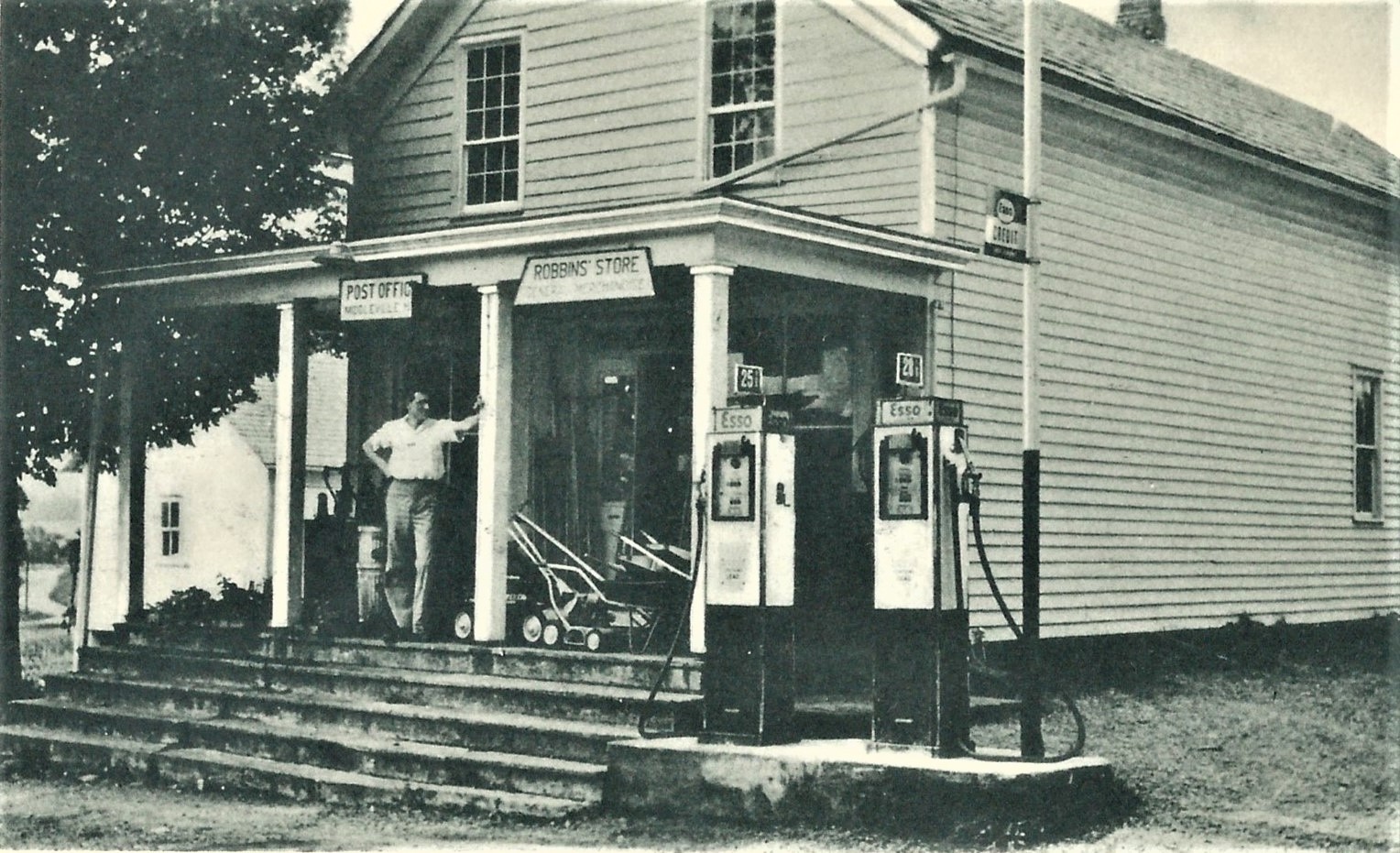
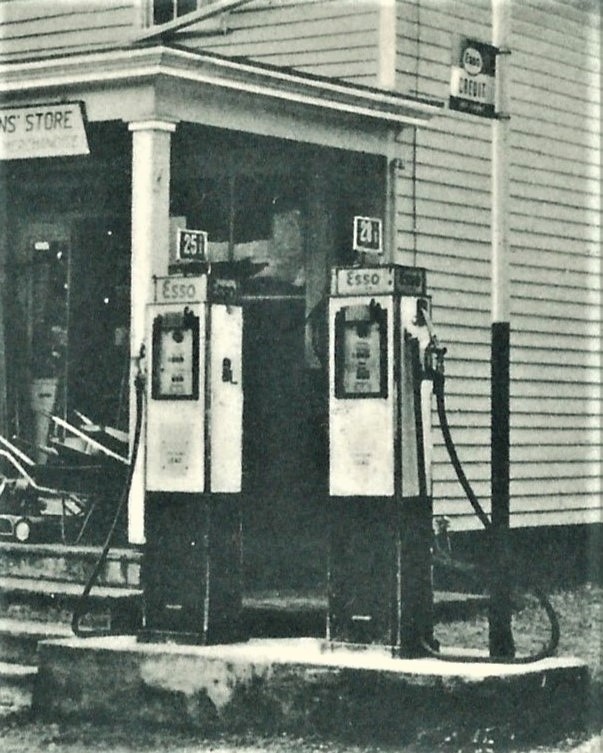
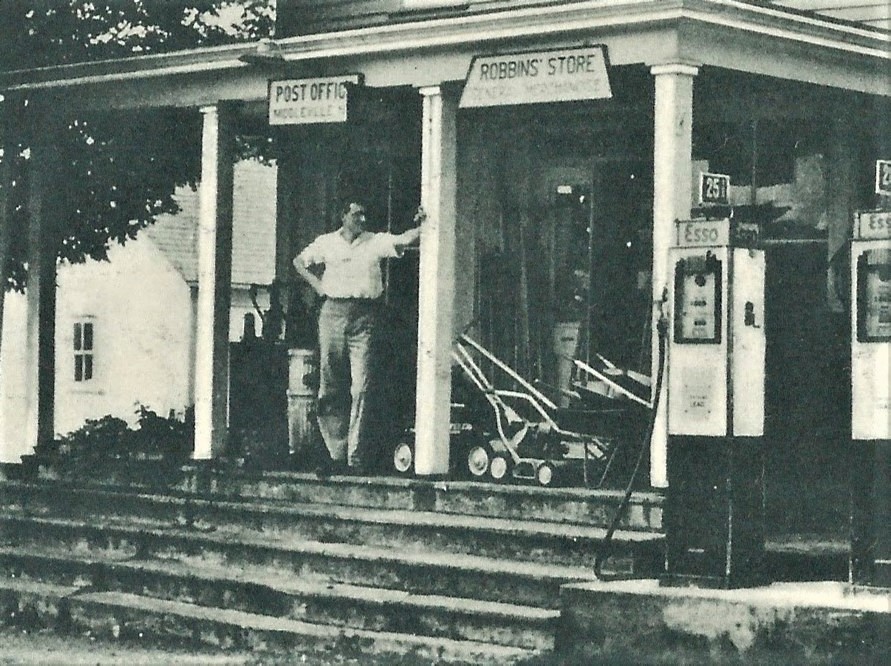 This vintage real photo postcard features the Robbins General Store in Middleville, New Jersey. The store also served as the town’s post office and as an Esso gas station. Note the two gas pumps in front of the building. A sign indicates that the price of gas was 25 cents a gallon for regular, and 28 cents per gallon for premium. There is an Esso credit card advertising sign on a pole next to the pumps. Some of the store’s merchandise can be seen on the front porch. The items for sale include lawnmowers, garbage cans, and a wagon. The store is housed in a two story wooden structure. I wonder how the second floor was utilized. A man is posed on the porch. He is likely the proprietor of the store (Mr. Robbins?). Victor M. Robbins became the postmaster of Middleville in 1914. Victor had acquired the store in 1903. The store’s building is thought to have been built before 1837. Victor was the postmaster until 1955. Victor was succeeded by his son, Donald A. Robbins who operated the store and post office until 1987. The father and son duo ran the post office for a cumulative 73 years. The Robbins store later housed the “Robin’s General Store and Country Kitchen” which existed in Middleville until at least 2016. This postcard was published in the 1950’s by the Artvue Post Card Company. The firm was located on Fifth Avenue in New York City. The company was formed in 1948 and produced black & white postcards in the 1950’s despite the popularity of color postcards during that time. The company’s “claim to fame” was that it published postcards picturing plaques of the players that were enshrined in Baseball’s Hall of Fame in Cooperstown, New York. They produced the cards from about 1951 through 1963. SOLD
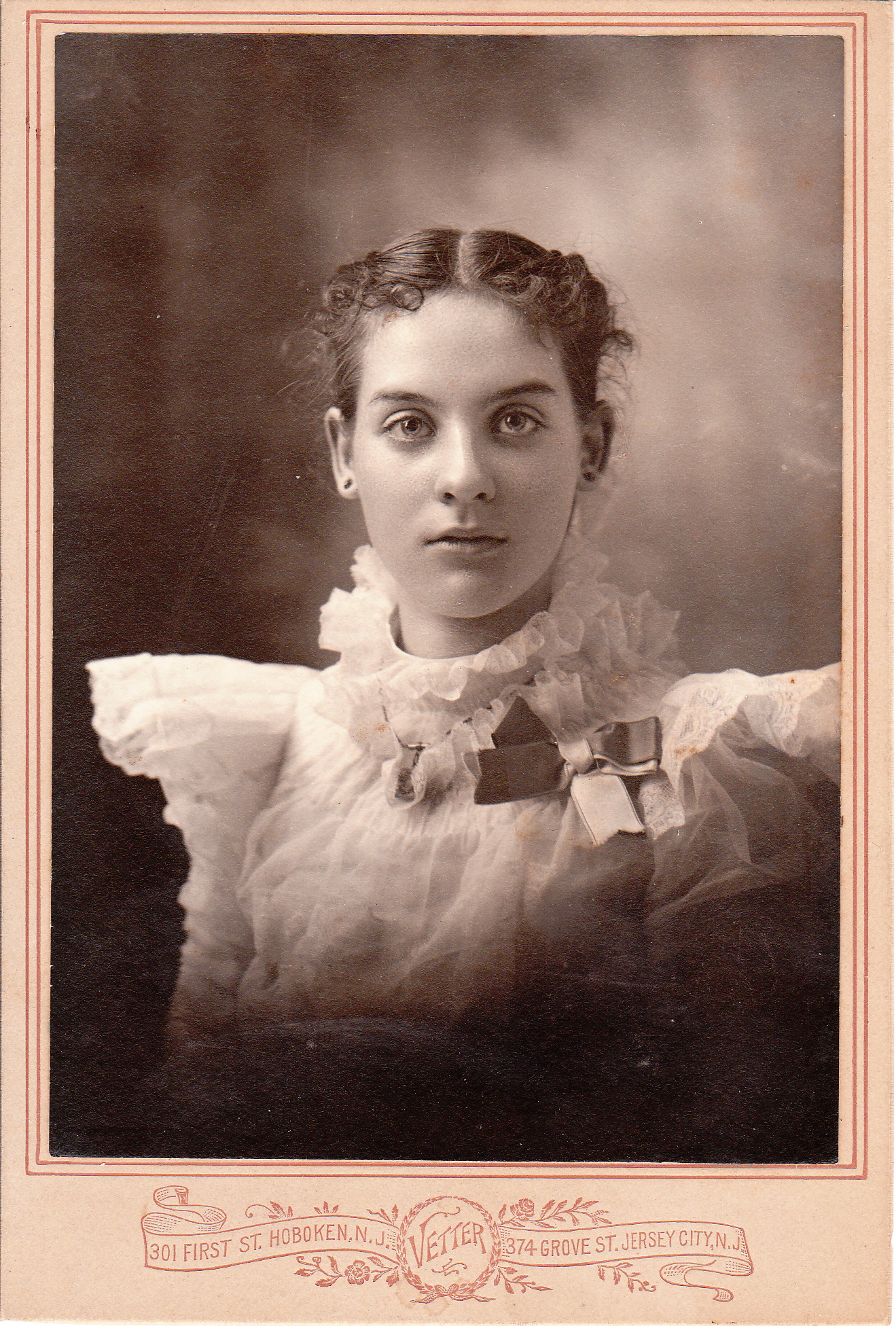
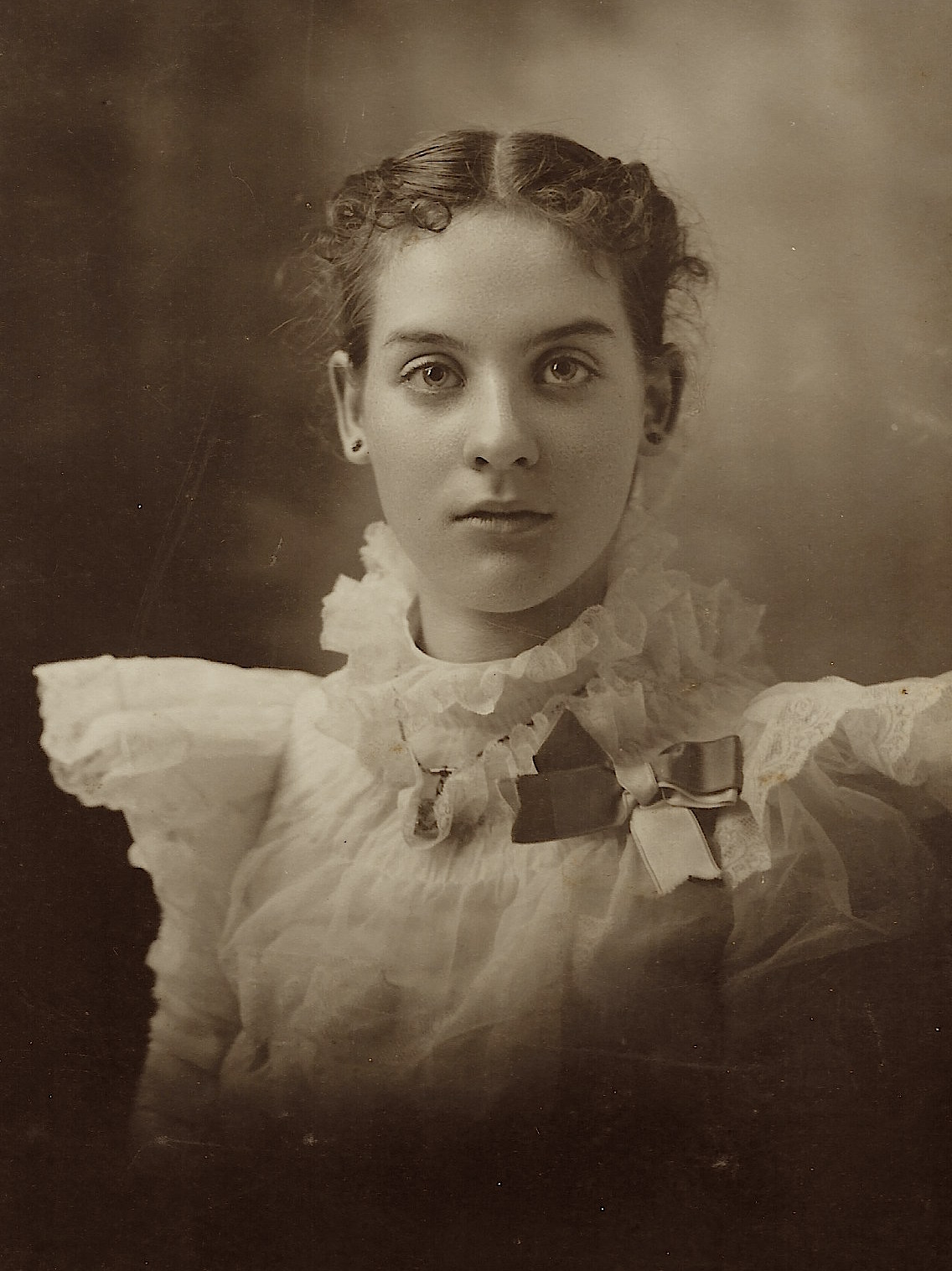 A pretty girl poses for photographer Albert Vetter in either Hoboken or Jersey City, New Jersey. This “Jersey Girl’s” portrait is captured in a crisp and clear image. She is wearing a frilly dress and a ribbon pinned near her shoulder. In addition, she is wearing a necklace with a pendant, and she is wearing it over the collar of her dress where it is hardly visible. The photographer, Albert Vetter, was quite an interesting character. Apparently, he was a vengeful man. The magazine, The Camera and the Darkroom ( 1904) reported that Vetter was at odds with the family that lived in the house that was also the home of his studio. Vetter got a picture of the head of the family, who recently died. He enlarged the picture and fastened a rope around it at the neck, and hung it out the window. The daughter of the late man, got a step ladder and removed the photograph. A “war of words” followed and Vetter was arrested. He was arraigned in front of a judge for disorderly conduct and he was put up for bond to maintain the peace. The magazine used a humorous headline to describe this incident; “New Idea in Picture Hanging”. (SOLD)
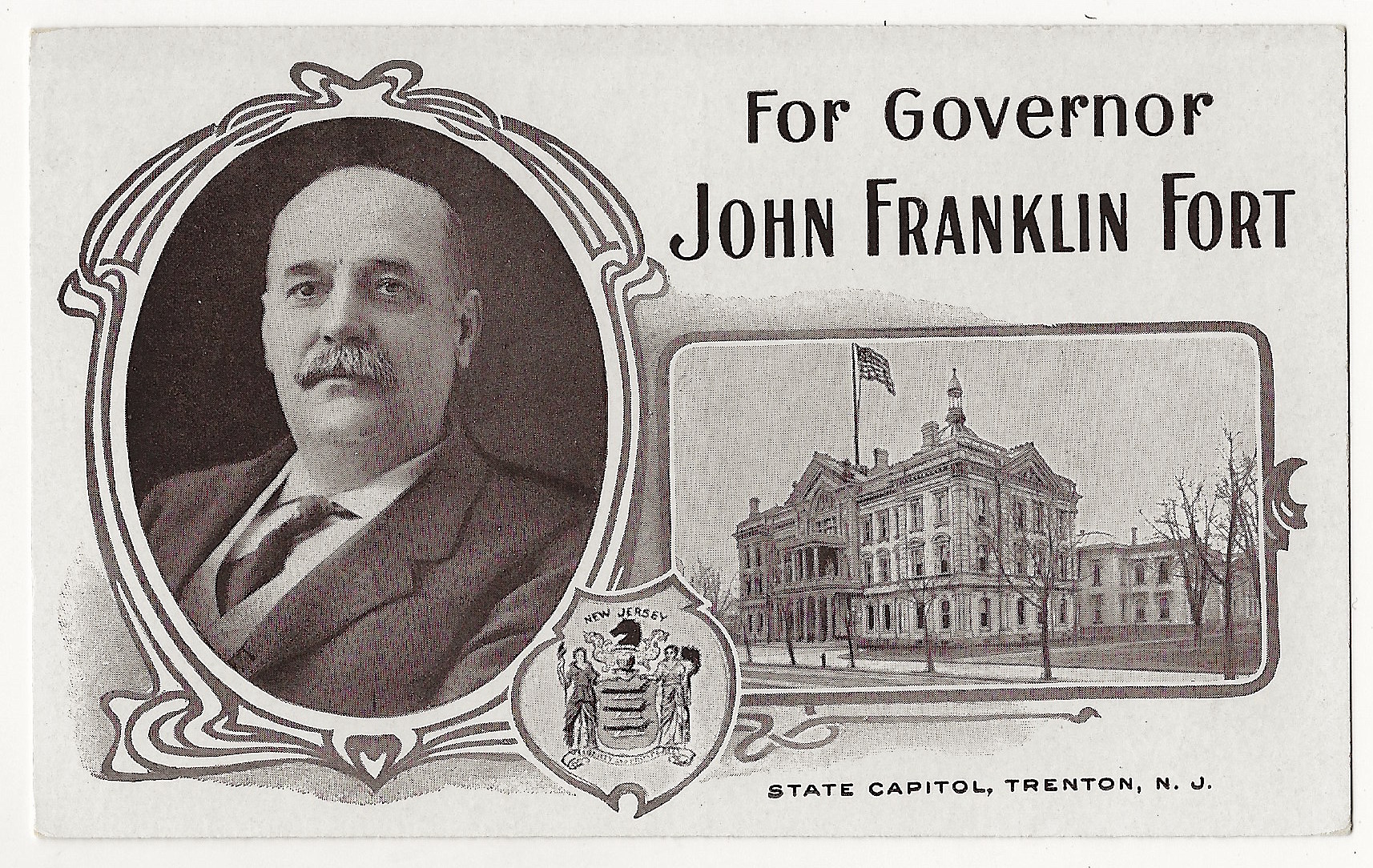
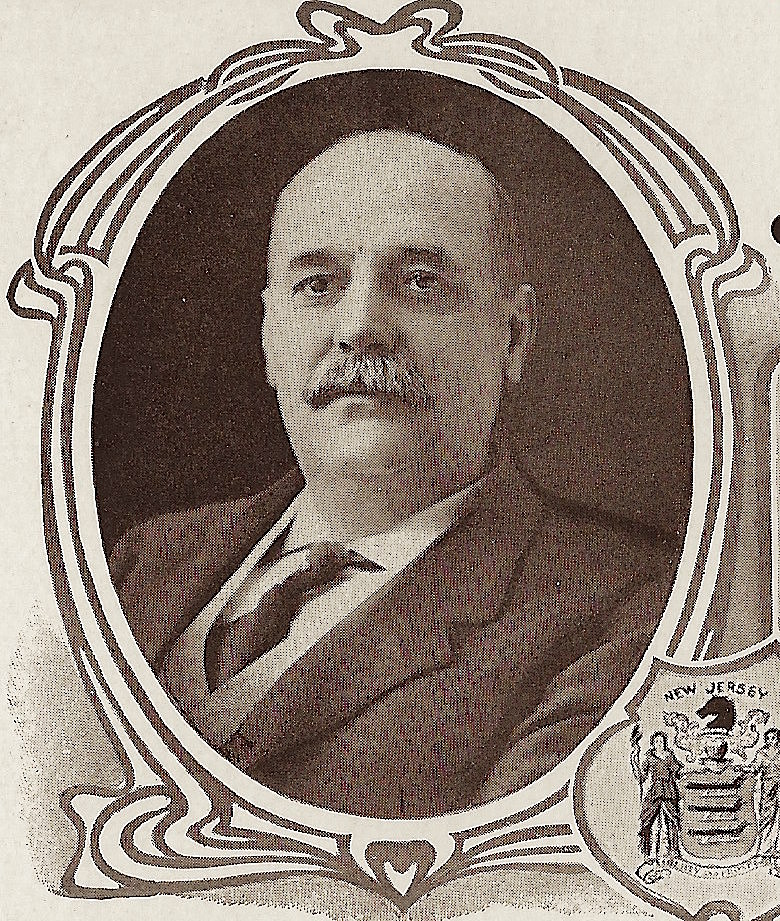 This vintage postcard was employed as advertising for New Jersey Governor candidate, John Franklin Fort (1852-1920). Fort was a Republican and won his race to become the 33rd Governor of New Jersey. He served between 1908 and 1911. He defeated Democrat, Frank S. Katzenbach. In 1908, Fort participated in New Jersey’s first radio broadcast. In 1910 he established New Jersey’s first Department of Education. Fort was followed by Woodrow Wilson in the position of Governor. Wilson went on to become the President of the United States. Fort was a lawyer. He obtained his law degree at the Albany Law School. Governor and ex civil war General, George B. McClellan, appointed Fort to serve as a judge in a Newark district court. In 1884, 1896, and 1912 he served as a delegate to the Republican National Convention. In 1900, he was appointed to the New Jersey Supreme Court. In 1915, Wilson, now President, appointed Fort to the Federal Trade Commission. He held the position for about four years but was forced to resign due to failing health. At one point,Wilson appointed Fort to act as US Ambassador to Haiti and the Dominican Republic. Besides featuring a portrait of John Franklin Fort, the postcard also displays a drawing of the state capital building in Trenton. It is interesting to note that


 THE CABINET CARD GALLERY