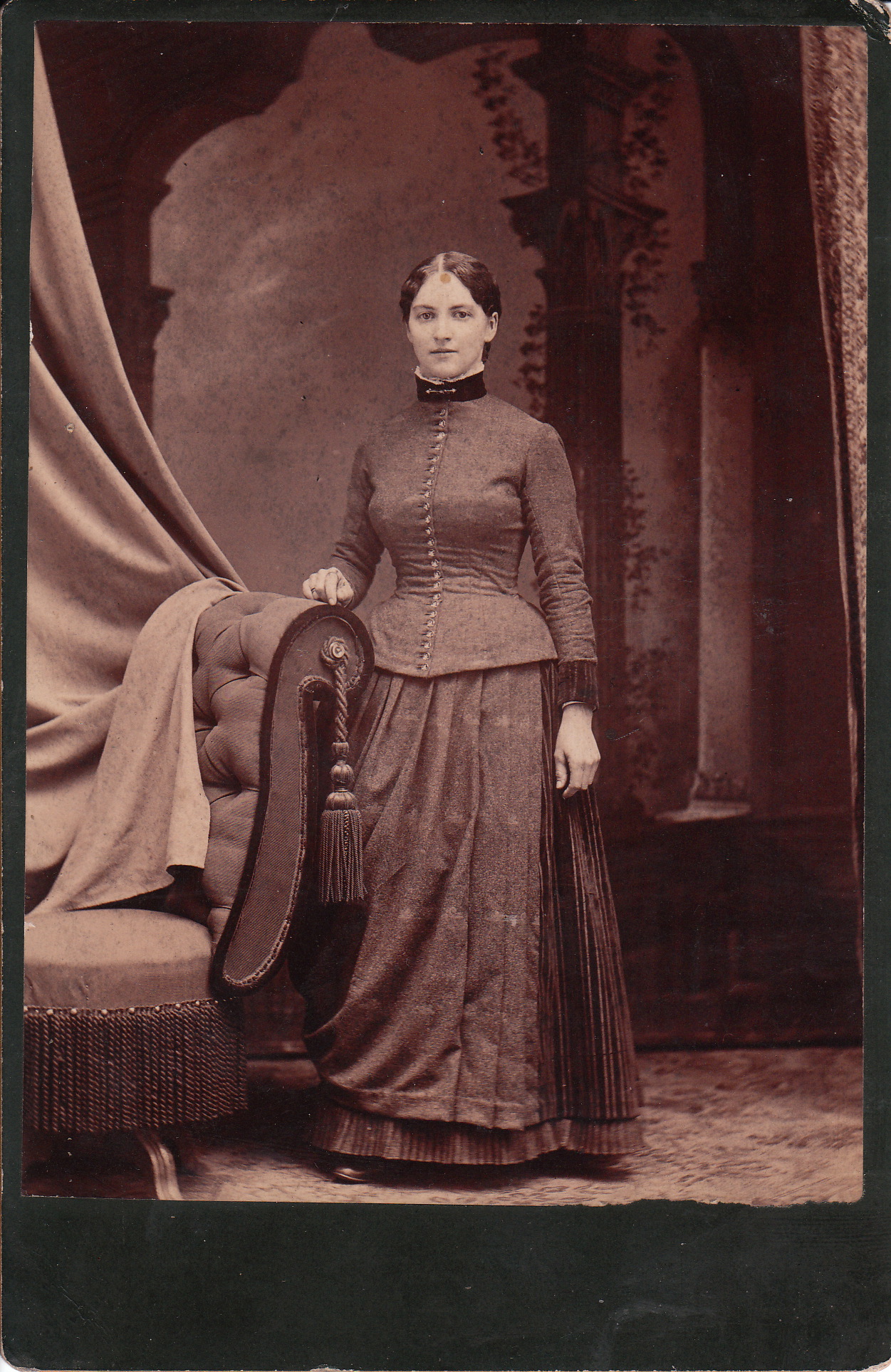
This cabinet card features a gentleman with an unusual mustache. This style mustache could be labeled an “ear muff mustache”. The mustache looks like the man had been wearing ear muffs and they slid down his face stopping in a position where the furry ear coverings came to rest on his cheek and upper jaw, while the head band settled in a spot above his upper lip and below his nose. To view other interesting and unique mustaches, click on cabinet card gallery’s category “mustaches (Only the Best)”. The photographer of this image is T. W. Taylor. In advertising on the reverse of the photograph he has printed the name of his studio, “First Premium Gallery”. It was located at 10 West Gay Street in West Chester, Pennsylvania. The previous described advertising also indicates that in 1882 the studio won a “prize medal” for its use of Crayons. Thomas W. Taylor (1838-1904) is described by the Chester County Historical Society as operating one of the most prominent studios in West Chester. His photography career was interrupted by the Civil War. Taylor joined Company E of the 124th Regiment of Pennsylvania Volunteers. He fought at Chancellorsville and Antietam. He entered the Union army as a private and mustered out as a corporal. He reopened his studio for business in 1863 and worked into the 1890’s.
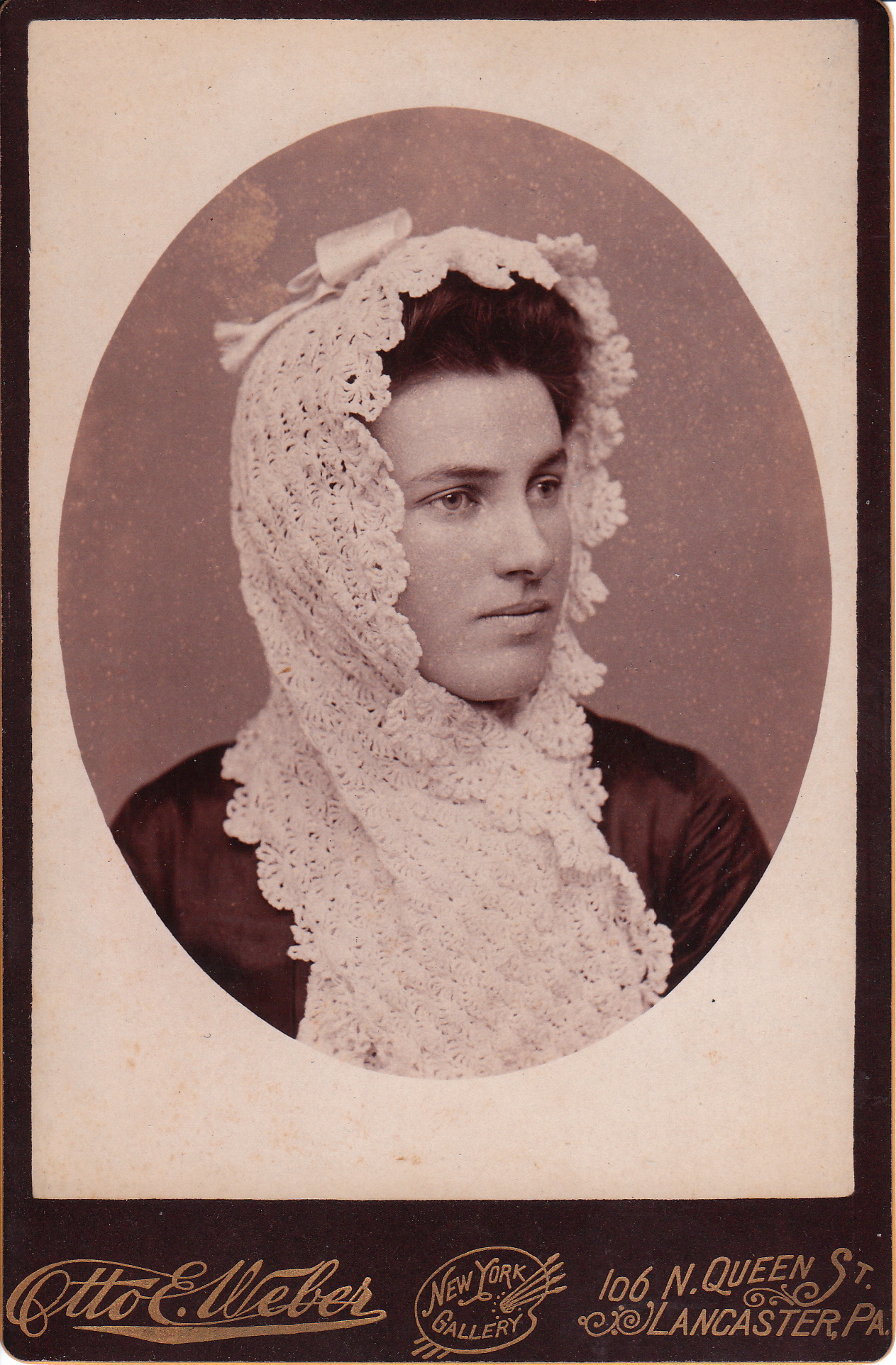
VEILED WOMAN IN LANCASTER, PENNSYLVANIA
A veiled woman poses for her portrait at the studio of Otto E. Weber’s New York Gallery. Contrary to common sense, the New York Gallery was not located in New York. Weber operated his studio out of Lancaster, Pennsylvania. The veil, or head scarf, is beautifully knitted. It looks very soft. Note the white bow on top of the unidentified woman’s head. The Biographical Annals of Lancaster County (1903) reports that Weber (1857-1913) was one of the finest photographers in Pennsylvania. He was of German extraction and came to the United States with his parents in 1878. He opened his photography studio in Lancaster in about 1888. Weber served four years in the National Guard of Pennsylvania. The Annals state that Weber was a great lover of “manly sports” and expert with both shotgun and rifle. Another reference asserts that Weber operated his Lancaster studio between 1890 and 1906.
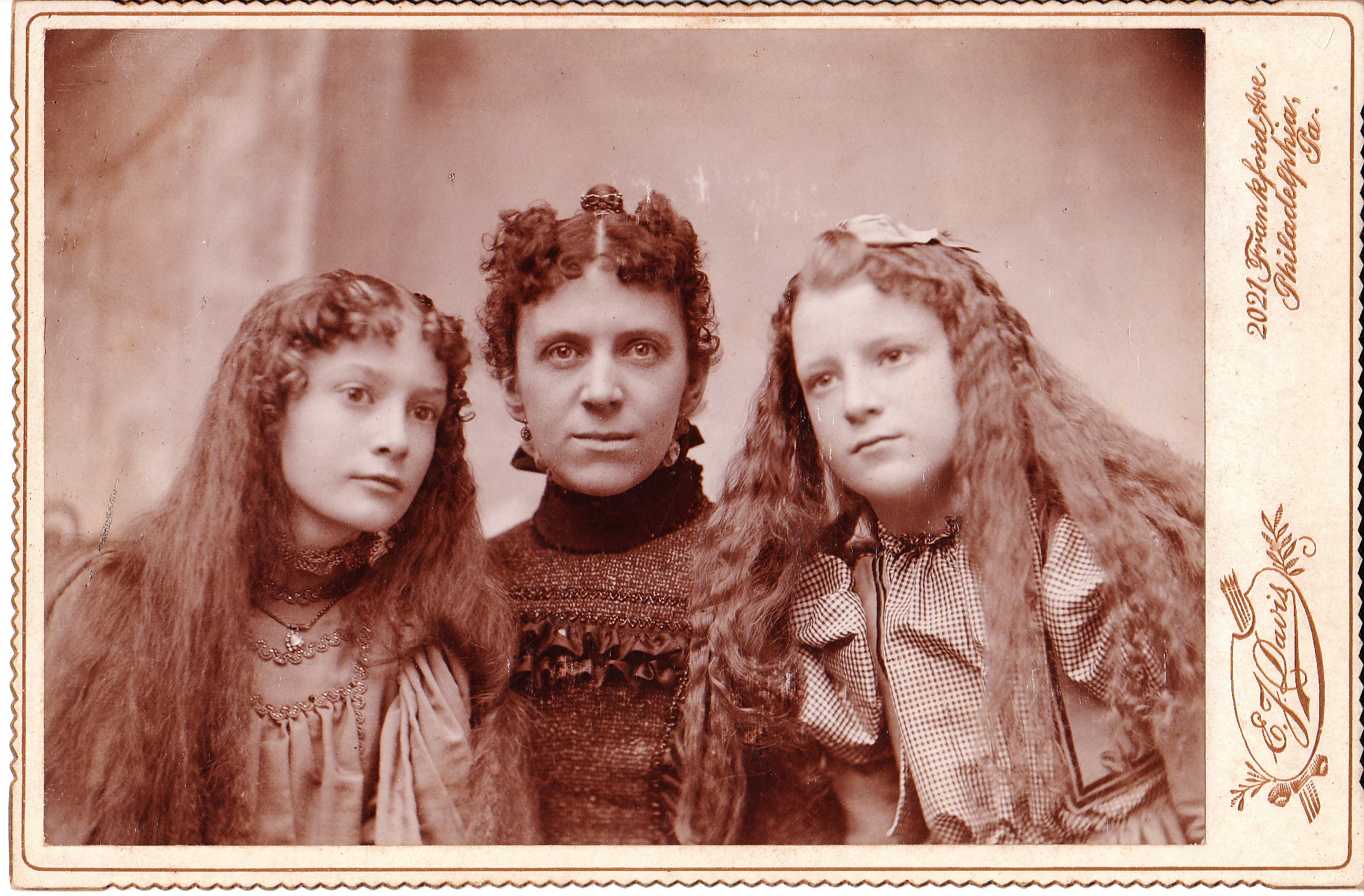
MOTHER AND TWO DAUGHTERS EXPERIENCE A BAD HAIR DAY IN PHILADELPHIA, PENNSYLVANIA
A mother and her two long haired daughters pose for their portrait at the studio of E. J. Davis in Philadelphia, Pennsylvania. The young girls don’t just have long hair, they have long frizzy hair. Are they having a bad hair day? One can only guess what the girls thought about their hair before they sat for this photograph. What do you think about the dynamics between the family members in this portrait? It appears to me that this is one very detached family. The lack of connection between mother, older daughter, and younger daughter is striking. All three individuals appear to be very much in their own world. Little information could be found about photographer E. J. Davis. The only information uncovered concerning Davis, was an ad he placed in a photography journal, Snap Shots (1908). The ad listed some of his photography equipment for sale. The subjects of this photograph are not identified. SOLD
FIREMAN IN READING, PENNSYLVANIA
Photographer John D. Strunk photographed this young fireman at his studio in Reading, Pennsylvania. The subject is wearing a dress uniform with buttons with the letters F. D. (Fire Department). He has a ribbon and medal pinned to his chest. He is handsome and has a terrific mustache. To view other firemen, click on the category “Firemen and Policemen”. Other photographs by Strunk can be viewed by clicking on the category “Photographer: Strunk”.
HE’S IN THE ARMY NOW…..THE SALVATION ARMY (PHILADELPHIA, PENNSYLVANIA)
A young man, wearing a salvation army uniform, poses for his portrait at a studio in Philadelphia, Pennsylvania. The man has long hair and a great mustache. The photographer of this image was Frank A. Kroneberger (1847-?). The photographer’s studio was located at 1313 and 1315 Columbia Avenue. Kroneberger was born in Maryland and was of German heritage. He appears in the 1900 census as living in Philadelphia and working as a photographer. He was listed as being married to Henrietta Kroneberger since 1870 and as having three daughters (age 16 to age 21). Kroneberger had longevity in the field of photography. He is listed in various directories (from 1877 to 1918) as being a photographer. He appears to have started his career in Chester, Pennsylvania. To view other images of Salvation Army workers, click on the category “Salvation Army”.
ACTRESS MARY ANDERSON: BEAUTIFUL STAR OF THE AMERICAN AND ENGLISH STAGE

These cabinet cards feature American stage actress, Mary Anderson (1859-1940). Interestingly, Anderson’s father was an Oxford educated New Yorker who after Mary was born, moved his family to Kentucky. He then joined the Confederate army and was killed in action when Mary was just three years old. Mary was not much of a student but loved to read Shakespeare. Her step father sent her to New York at age 14 to take ten professional acting lessons. In 1875, at age 16, Mary Anderson began her stage acting career in a Kentucky production of Romeo and Juliet. She continued acting in Kentucky and then appeared in a number of other cities, including New York. Her critical reviews tended to be mixed but she was well loved by the public. She then worked the New York and touring company stages for twelve years until she spent the next six years on the English stage (appearing in a lot of Shakespeare productions). She then returned to the United States, and at age 30, collapsed on stage with a case of nervous exhaustion. This experience, likely coupled with less than favorable reviews, caused her to retire from acting.
Cabinet Card 1 features Anderson in the role of Galatea. A review of Mary Anderson’s performance in this role appeared in the New York Times in a September 1884 edition. She was appearing opposite British actor William Terriss, in the play “Pygmalion and Galatea”, at the Lyceum Theatre in London. Many notables were in attendance, including Oscar Wilde. The review states ” Miss Anderson surpassed herself and that the performance was throughly artistic and finished”. The cabinet card was photographed by The Vanderweyde Light of London, England (182 Regent Street W.). Henry Van Der Weyde (1838-1924) was an artist and photographer. In 1877, he became the first photographer to install and take photographs by electric light. (SOLD)
The second cabinet card was photographed by celebrity photographer, Sarony. The image reflects Mary Anderson’s great beauty. To view other photographs by Sarony, click on Cabinet Card Gallery’s category “Photographer: Sarony”.
The third cabinet card was photographed by “The Sparks Studio”. The studio was located in Philadelphia, Pennsylvania and the artist/manager was Elliott Houseworth. This cabinet card offers a profile portrait of the attractive Ms. Anderson. The 1880 census lists Elliott A. Houseworth as being born in 1855, residing in San Francisco, California, and working as a photographer. Houseworth also appears in the 1900 census as living in Norwood, Pennsylvania and working as a manager. These demographics fit the photographer of this image, since Houseworth managed Sparks Photography Studio and Norwood is only about eleven miles from Philadelphia. To view other photographs of actresses by Sparks, click on the category “Photographer: Sparks Photo Publishing Co.”.
The fourth cabinet card features a smartly dressed Mary Anderson and was photographed by George Rockwood, of New York City. To learn more about Rockwood and to view more of his photographs, click on the category “Photographer: Rockwood”. A sticker on the reverse of the photograph indicates that the image was once part of the Kean Archives in Philadelphia, Pennsylvania. The Kean Archives was a company that served as a source of illustrations and photographs for various modes of media. They eventually were purchased by Getty Images.
PRETTY WOMAN IN PHILADELPHIA, PENNSYLVANIA (1885)
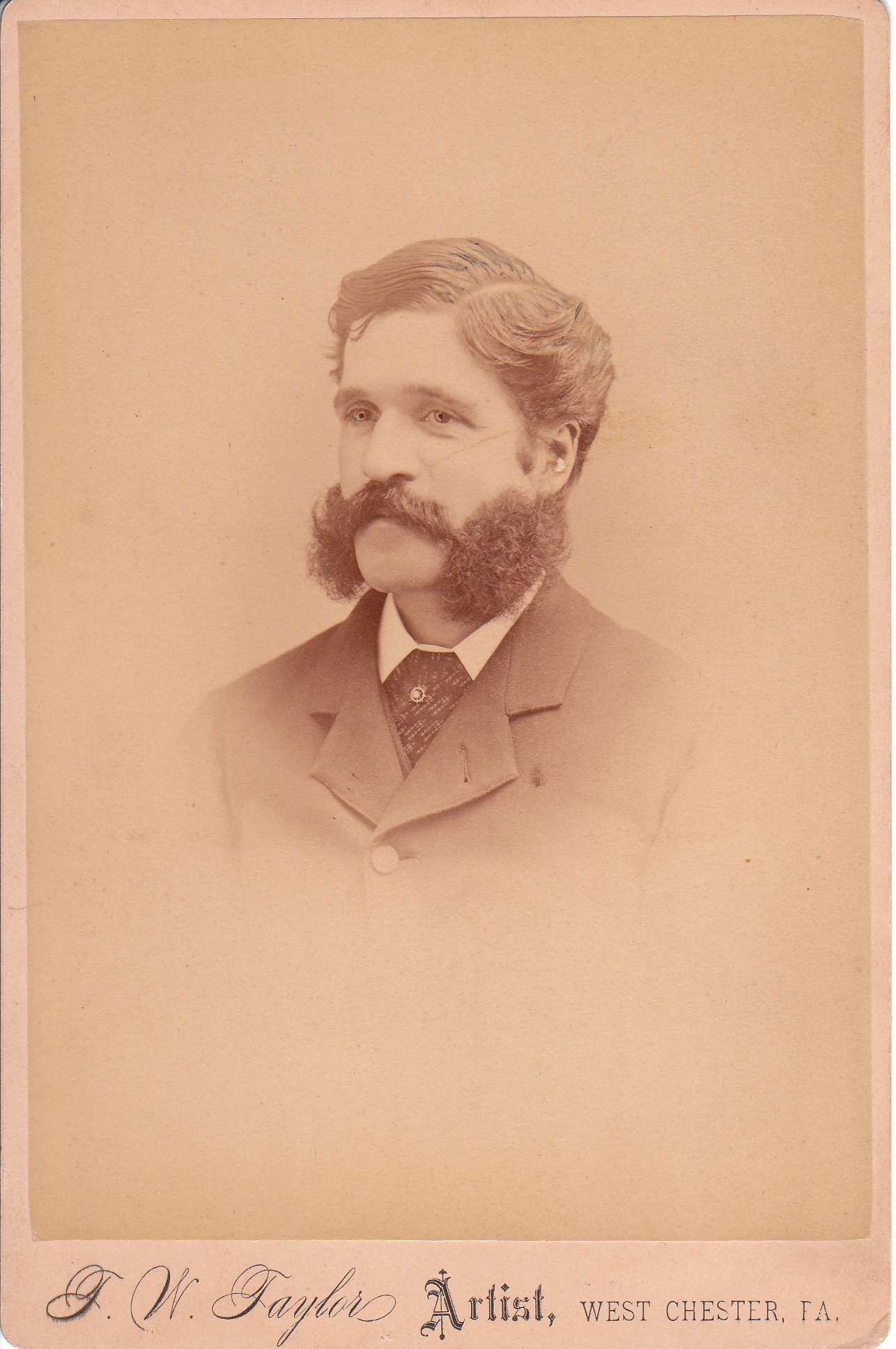
A pretty woman poses for her portrait at the Dunshee Studio in Philadelphia, Pennslvania. The studio was located across the street from the U. S. Mint. The subject’s dress has a very lacy collar and she is wearing an elaborate belt. Note the buttons on the side of her skirt. This arrangement of buttons is not commonly seen on dresses in cabinet card photographs. Her figure is improved by the corset that she is wearing. Print on the reverse of the photograph indicates that the image was produced in 1885. To view other photographs by Edward Sidney Dunshee, and learn more about his history, click on the category, “Photographer: Dunshee”.
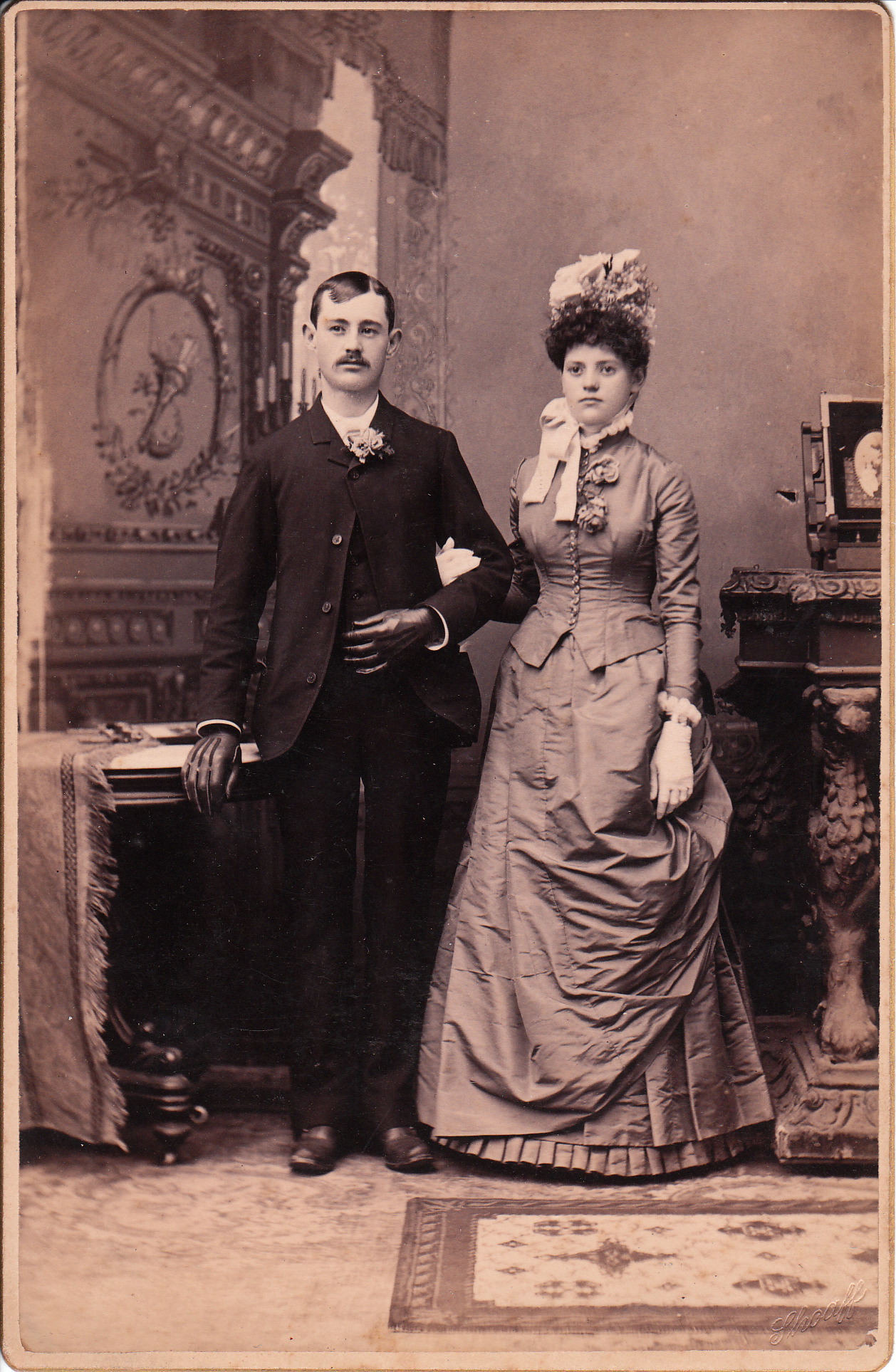
PORTRAIT OF A LOVELY COUPLE IN FORT WAYNE, INDIANA
This cabinet card is a portrait of a fashionable couple posing in a Fort Wayne, Indiana, photographic studio. Note that both subjects are wearing gloves; the man is wearing black gloves while the woman is wearing white gloves. The photographer is John A. Shoaff (1836-1921). Shoaff was born in Juanita, Pennsylvania and moved with his family to Fort Wayne at the age of twelve. He operated his business in Fort Wayne until his retirement in 1894. He died at the age of 85, in Fort Wayne. To view other photographs by this photographer, click on the category “Photographer: Shoaff”.
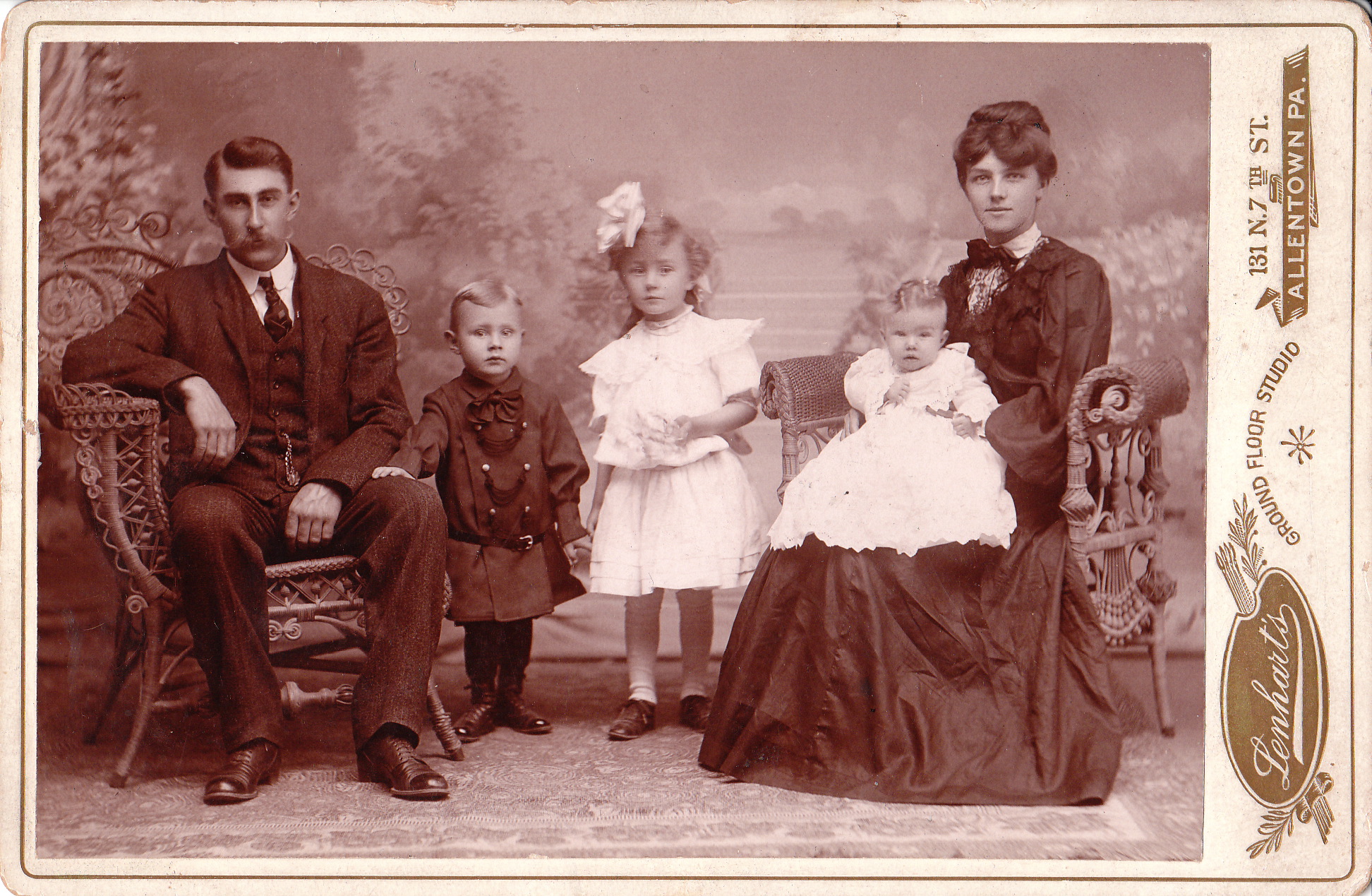
“AND WE’RE LIVING HERE IN ALLENTOWN” FAMILY PORTRAIT IN PENNSYLVANIA
This cabinet card features a family portrait taken at the Lenhart’s studio in Allentown, Pennsylvania. There is a real contrast of facial expressions between mother and father in this image. The mother of this family appears calm and bright eyed; and she has a pleasant smile. The father is looking quite haggard, depressed, and disoriented. Maybe he is finding the children exhausting, or perhaps; he has fallen upon hard economic times. Writing on the reverse of the photograph provides the answer. “Well I’m living here in Allentown. And it’s hard to keep a good man down. But I won’t be getting up today. And its getting very hard to stay. And we’re living here in Allentown”. Ok. These words are not really on the back of the image. The words are actually lyrics to Billy Joel’s hit song, “Allentown”. Sorry, I couldn’t resist the temptation. The photographer of this cabinet card is Thomas Lenhart. He was a talented photographer and one of his photographs is exhibited in the American Museum of Photography. The cabinet card displayed is a double self portrait. It is called a double self portrait because the image captures Lenhart taking a photograph of himself. In other words, he assumes two different poses in the same photograph. Lenhart is known to have operated in Allentown between 1894 and 1899. It is very possible that he was located there before and after those years; but no documentation for other years has been found. To view other photographs by Lenhart, click on cabinet card gallery’s category “Photographer: Lenhart”.
A PRETTY WOMAN IN ALTOONA, PENNSYLVANIA
A pretty woman poses for her portrait at the studio of R. A. Bonine, in Altoona, Pennsylvania. The studio was located on 14th Street. The woman in the photograph is beautifully dressed and looks terrific in her dress; a fact not lost to the photographer who took a portrait of the woman that captures her, head to toe. This image is nicely done. The pose integrates the chair and curtain for balance and the swirl in the curtain along side the swirl in the woman’s dress enhances the image. Saying it simply, this is a beautiful portrait. The photographer, Robert Atkinson Bonine (1838-?) moved his photography business from Holidaysburg to Altoona, Pennsylvania, in 1878. He came to Altoona with his wife, Matilda Hollinger (1838-?), whom he married in 1860. When Bonine wasn’t producing photographs, he was producing children. He and his wife had eleven children. A number of his children entered the field of photography. One of his sons, Robert Kates Bonine (1862-1923) was a well known film maker of travelogues. He was employed twice by Edison, and also worked for the American Mutoscope and Biograph Company. His work included films about the Klondike Gold Rush, the San Francisco Earthquake, Yosemite, Japan and China.


Cabinet Card 1 (SOLD)