This vintage real photo postcard features German soprano, Erna Sack (1898-1972). Her nickname was the “German Nightingale” due to her high vocal range. She looks pretty in her dizzying attire and her feathered hat. Her blonde hair has been styled into ringlets. Sack was a very successful opera star. She toured all around the world. She also made many radio appearances and recordings. She performed in two movies, Flowers from Nice (1936) and Nanon (1938).This postcard was published by Ross Verlag as part of a series (no. A1930/1). The logo for the film company, UFA can be seen in the right hand lower corner of the image. Miss Sack’s photo was taken by the Hammerer studio. She also toured in the United States and one of the venues in her tour was Carnegie Hall. (SOLD)
MARINA VON DITMAR GERMAN FILM ACTRESS
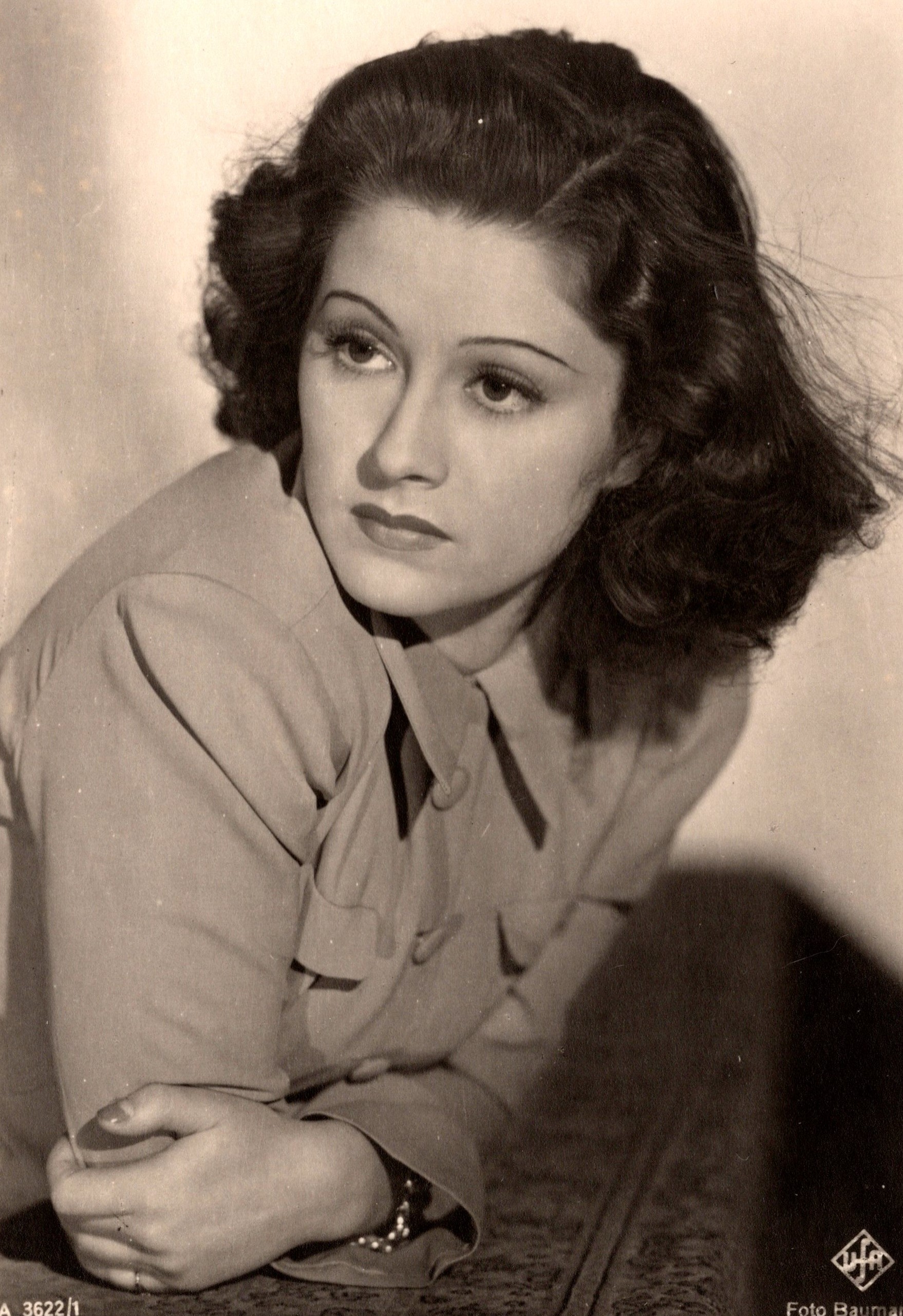
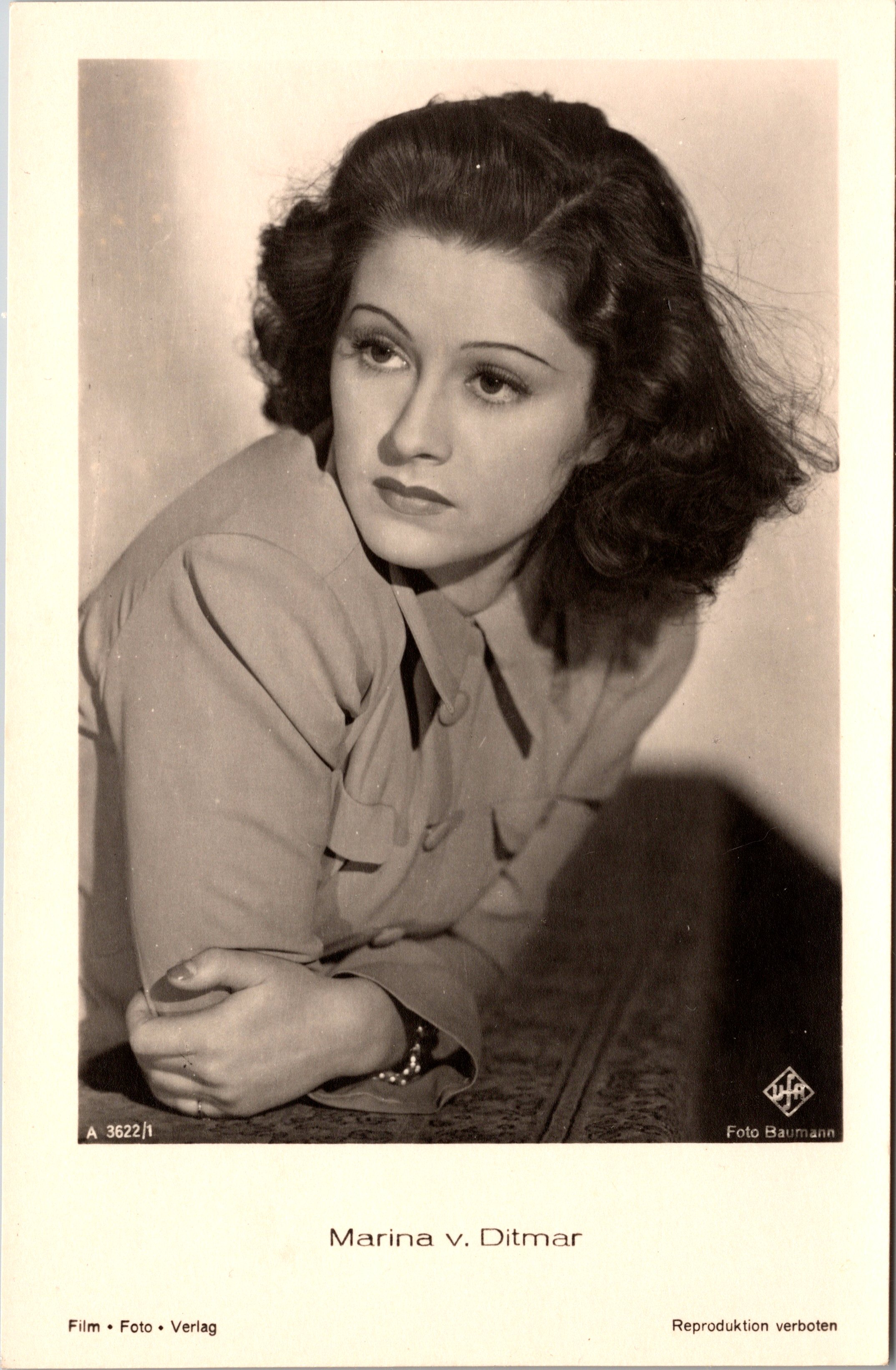
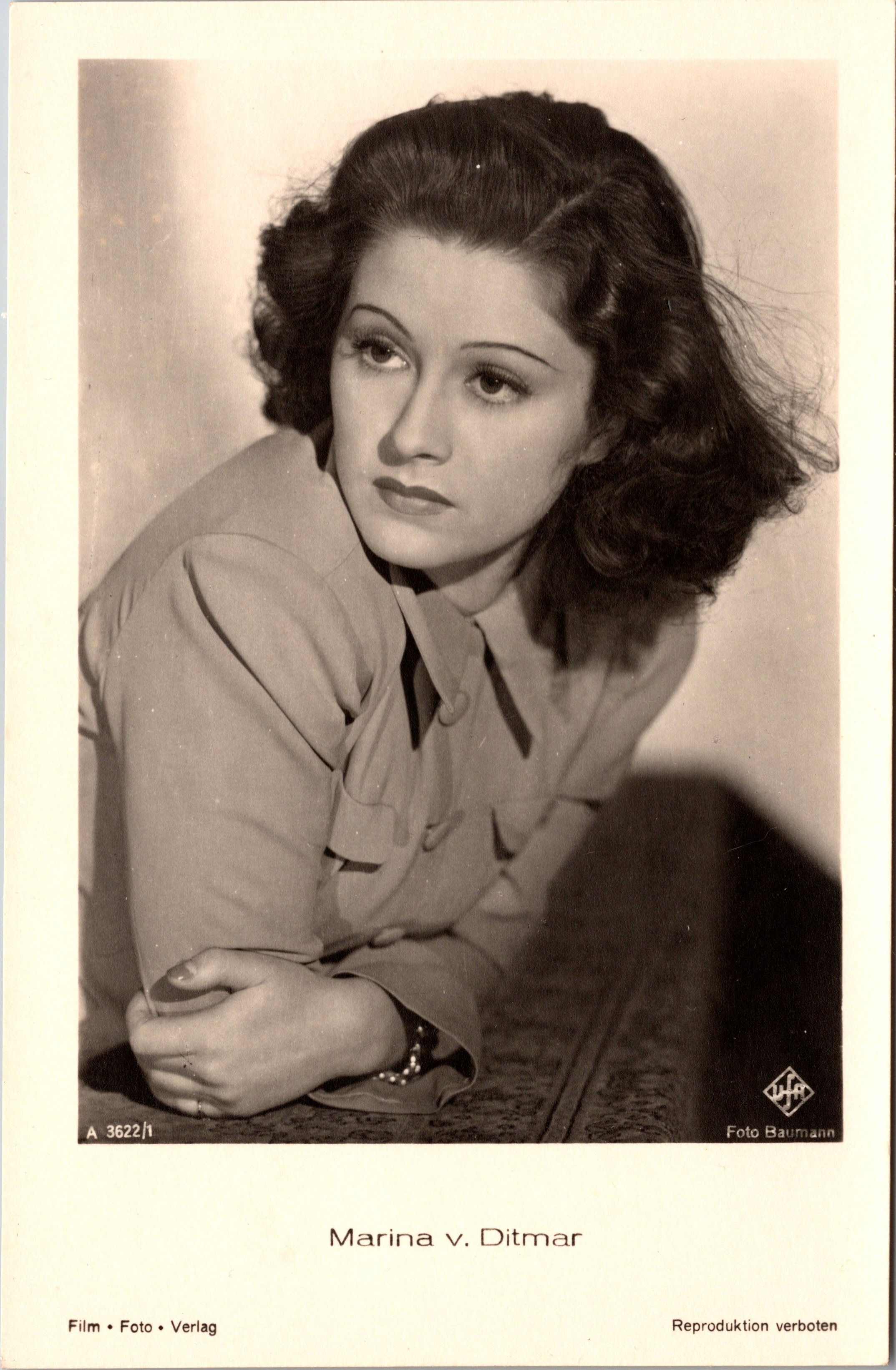
This real photo postcards feature German film actress Marina von Ditmar (1914-2014), a leading lady of the 1930’s and 40’s. . She was born in the Russia Empire and was of Baltic German descent. When she moved to Germany she studied acting. Her first roles were appearances at Schauspielhaus, Bremen, and the Altes Theater (Leipzig). In 1937 she joined the ensemble at the Volksbuhne in Berlin and by 1940, she was a permanent actress at this venue. Her first major movie success was in “The Csardas Princess” (1934). In 1943, she starred in “Muchhausen”, a film that had great commercial success. Von Ditmar was also well known for her role in “The Big Shadow” (1942). She appeared in several Nazi propaganda film including Stukas (1941). She married D. Hans-Georg Dehnhardt (1913-2001), a leading physician and owner of a sanitarium, Soon after her marriage, she retired from acting. The IMDB credits Miss von Ditmar with thirty film roles. This postcard was published by Film-Forto-Verlag and was part of a series (A 3622/1). The photographer was Baumann and there is an advertising logo for the German film company UFA. Film-Foto-Verlag published this postcard. The company became known for it’s postcard portraits of film stars of the German and Italian cinema. The company was formerly known as Ross Verlag but changed it’s name in 1941.This postcard is in excellent condition (see scans).
Buy this Vintage Real Photo Postcard (includes shipping within the US) #5017
To purchase this item, click on the Pay with PayPal button below
$7.74
Buy this Vintage Real Photo Postcard (includes International shipping outside the US) 5017
To purchase this item, click on the Pay with PayPal button below
$16.99
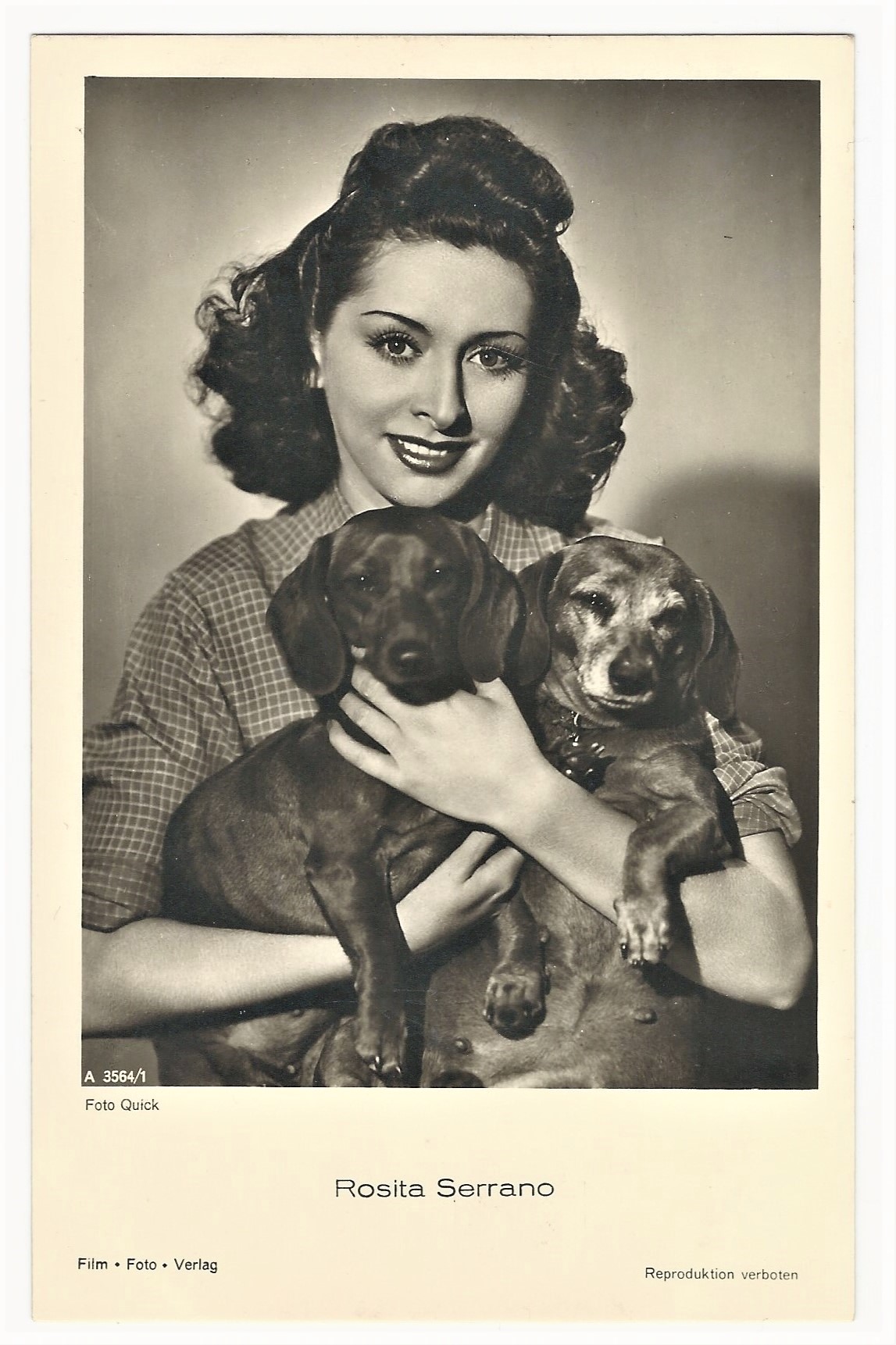
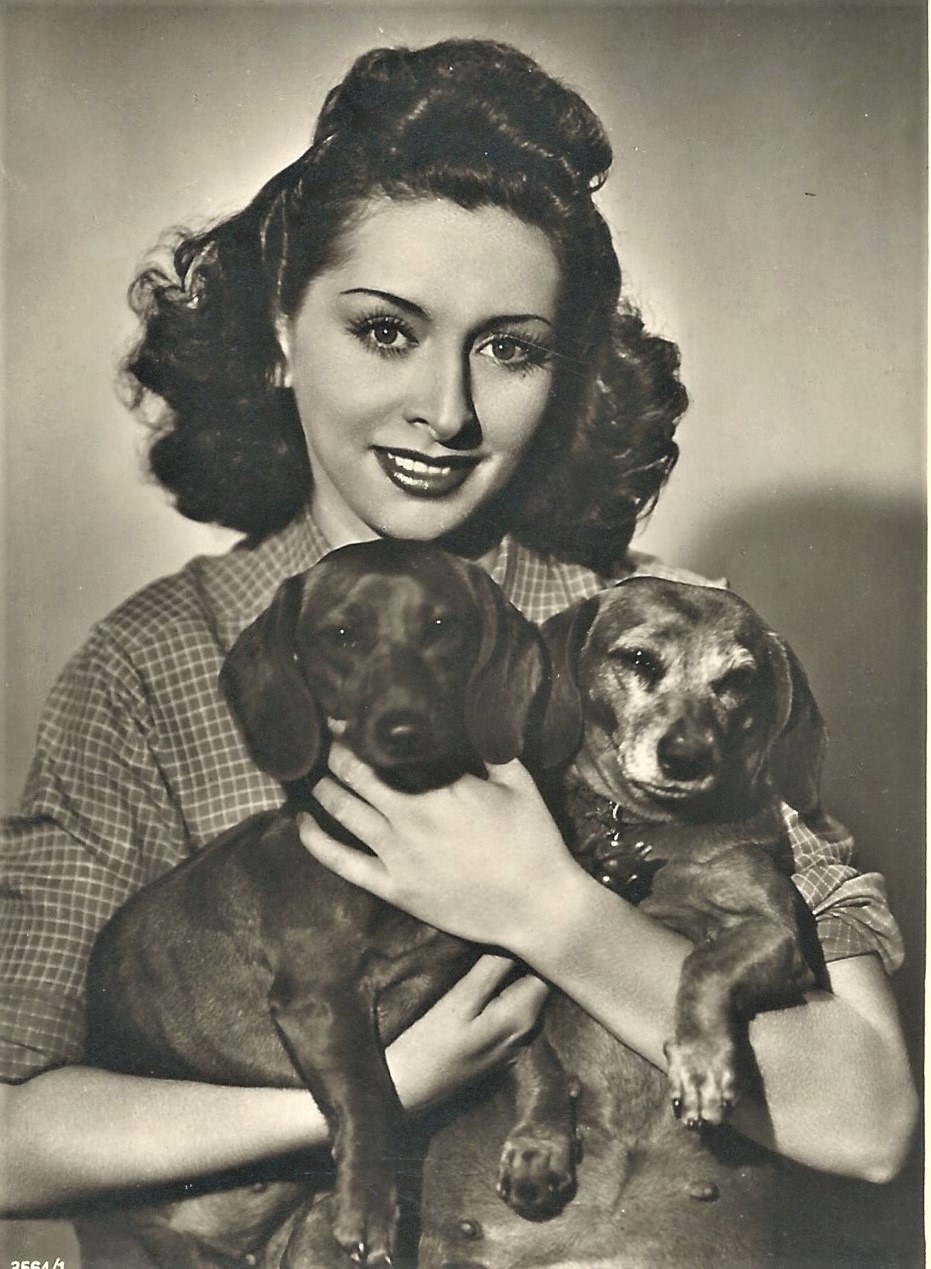
ROSITA SERRANO : “THE CHILEAN NIGHTINGALE” LANDS IN NAZI GERMANY


This vintage real photo postcard features pretty actress and singer, Rosita Serrano (1912-1997 . She is casually dressed and is holding two adorable dachshunds. This photo portrait displays Rosita’s lovely smile. Serrano was a Chilean singer who obtained her major success in Nazi Germany between the 1930’s and the early 1940’s. Her singing was known for her bell-like voice and her pitch-perfect whistling. She was known by her nickname as “The Chilean Nightingale”. Rosita was born in Chile. Her father was in the diplomatic corps and her mother was a popular opera singer. The family lived in Portugal and France . By 1936, the family moved to Berlin. Serrano’s initial success was in the Wintergarten and the Metropol Theater where she sang Chilean folk songs. This performance earned her a record contract. From that point, she performed in German. Many of her songs became very popular. In 1938, she began to appear in films. When she was between film roles, she toured with two popular dance orchestras. Minister Joseph Goebbels helped het her appearances on a Wehrmacht (military) radio show. In 1940, Serrano’s song “La Paloma”, became very popular throughout Germany. Serrano’s voice style is described as “coloratura soprano”. Her recordings were in German and Spanish. She sang songs in the folk and pop genre. Her songs included flamenco, rumba, tango and mambo. During a Swedish tour in 1943, she did a benefit concert for Jewish refugees. As a result of this performance, she was accused by Germany of being a spy. Rather than return to Germany and face possible arrest, she fled to Chile. Germany than banned her music. She went on tour to the United States but was not well received. It is conjectured that US citizens could not get enthusiastic about hearing Serrano’s German songs, so close to the end of World War II. She returned to West Germany to appear in films in 1951 and 1952. Besides those two movie roles, her German comeback was unsuccessful. She returned to Chile where she lived out her life. She was not welcomed upon her return to her native country. The public in Chile condemned her for performing in Nazi Germany. She died in poverty. It seems to me that Serrano had the unfortunate pattern of consistently being in the wrong place at the wrong time. Poor timing ruined this talented singer’s career. Serrano’s filmography includes 8 films between 1938 and 1952. This postcard was published by Film Foto Verlag, a subsidiary of UFA Universum Film AG. Note the company’s horse logo on the reverse of the card. The photo was taken by Foto Quick and the postcard is part of a series (no. A3564/1). Check out the video recording of Miss Serrano seen below. This real photo postcard is in very good condition.
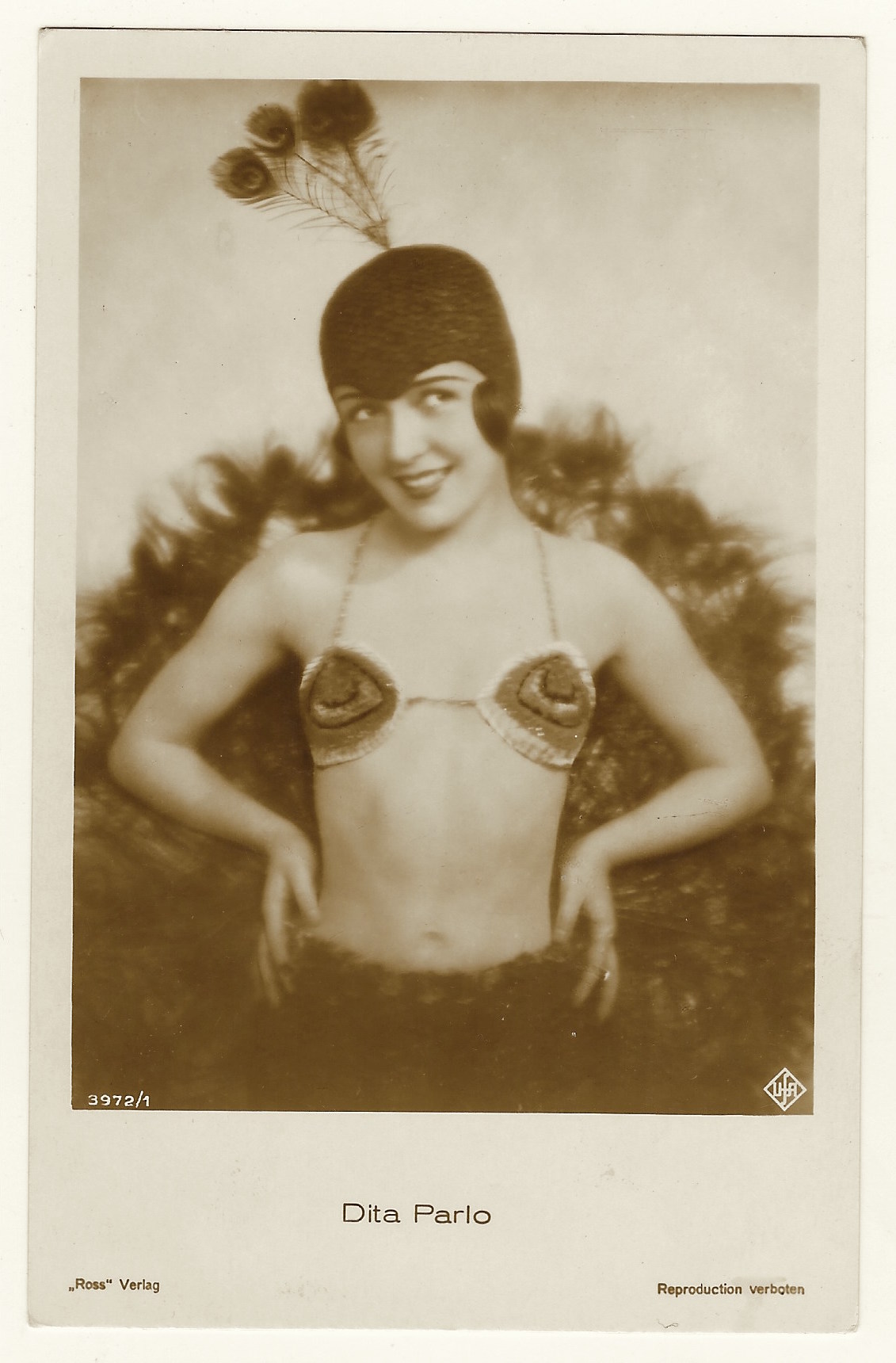
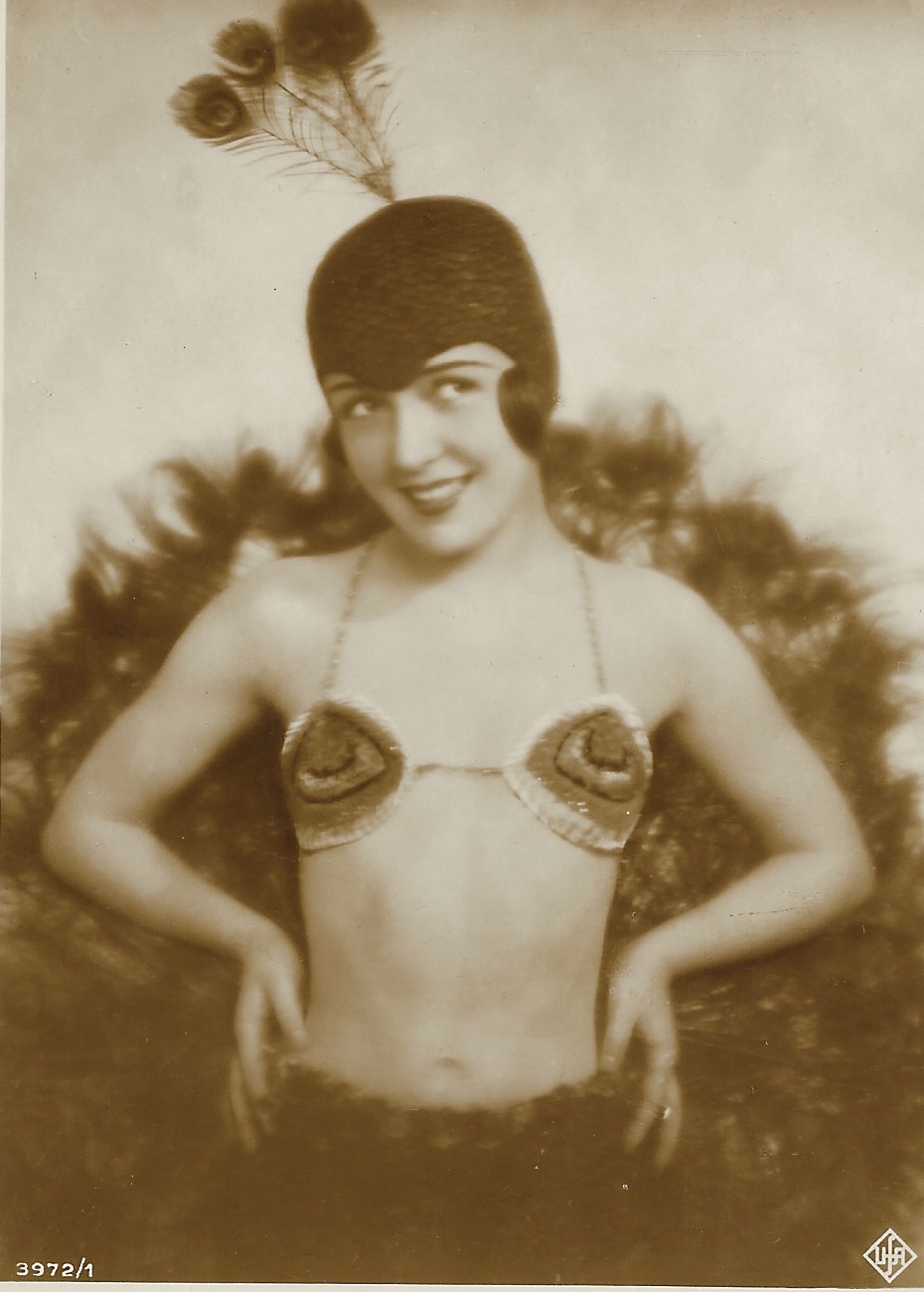
RISQUE PORTRAIT OF GERMAN SILENT FILM ACTRESS DITA PARLO


This vintage real photo postcard portrait features German silent film actress, Dita Parlo (1908-1971). She was born in present-day Szczecin, Poland. At the time of her birth, the city was part of Germany. Her father was a forest ranger. She was initially trained as a ballerina but switched to studying acting at the Babelsberg film school. Producer, Erich Pommer, discovered Parlo and signed her to a contract to Ufa. She made her film debut in “Homecoming” (1928) and in short time became a popular actress in Germany. During the 1930’s she appeared in both German and French films and achieved much acclaim. Two of her films in particular are considered among the best in cinema history: “L’Atalante” (1934) and “La Grande Illusion” (1937). During World War II she was deported to Germany but returned to France in 1949 and resumed her career. Parlo made an attempt to establish herself in American films but had limited success. She did appear in a couple of American films and in the late 1930’s and she nearly had a role in the Orson Welles production of Joseph Conrad’s “Heart of Darkness”. Unfortunately, the project did not materialize. The horror! The horror! Oh the horror of disappointment she must have experienced. According to the IMDb, Parlo appeared in 28 films between the years of 1928 and 1966. Parlo was married to a Protestant pastor, Franck Gueutal (1904-1983) and the couple remained married until she died in 1971. An interesting piece of trivia is that Madonna took Parlo’s name for a character she created for her book entitled “Sex”. The singer stated that she was fascinated by Dita Parlo. This portrait postcard was published by Ross Verlag and was part of a series (no. 3972/1). The postcard displays the logo of “Ufa”, a German film company. The video below shows Miss Parlo in the film “Au bonheur des dames” (1930). Her co-star in the film was Pierre De Guingand (1885-1964). The movie was based on the romance of French writer Emile Zola.
SOLD

TWO PORTRAITS OF GERMAN FILM ACTRESS MARINA VON DITMAR
POSTCARD 1 (SOLD)

POSTCARD 2 (SOLD)

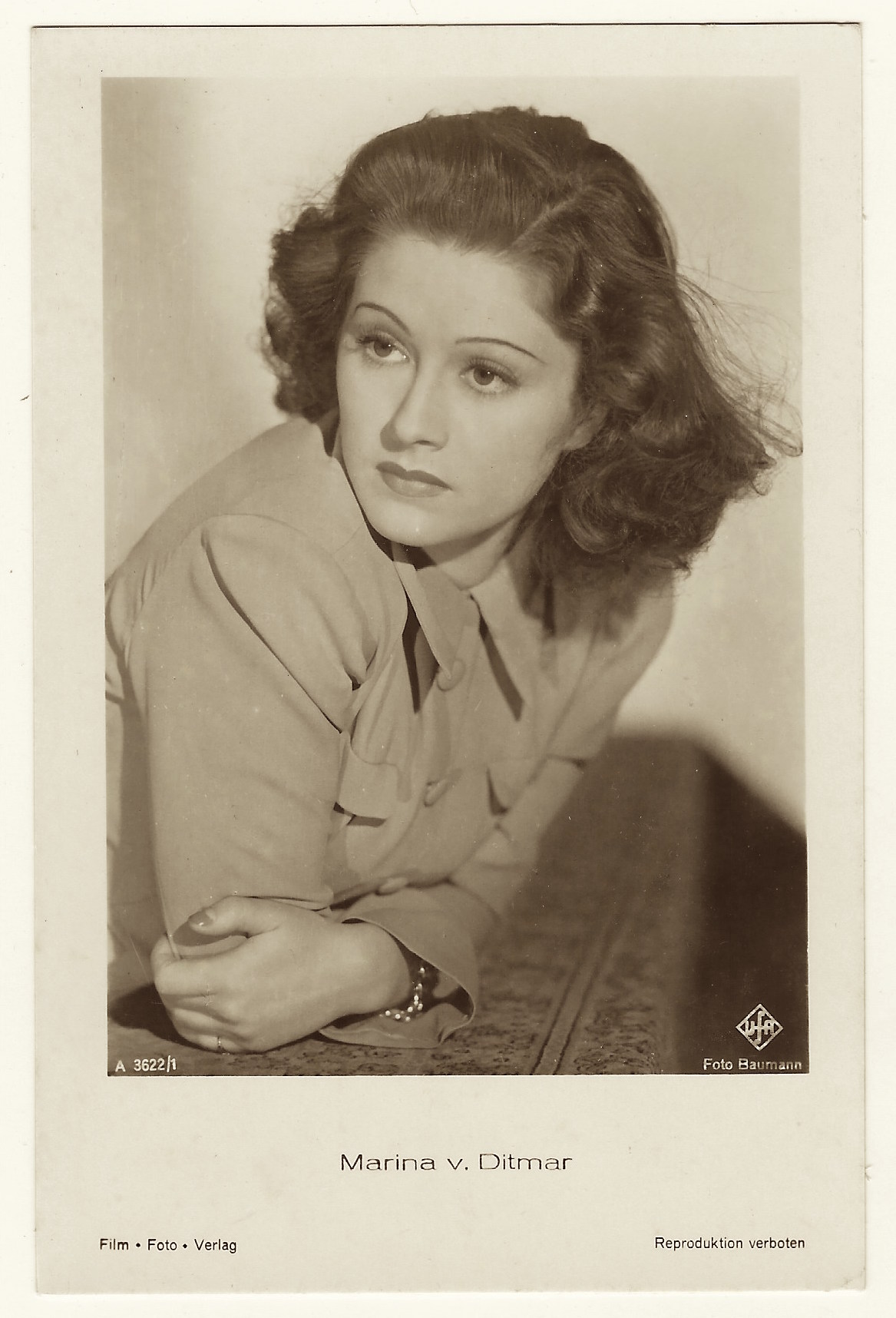
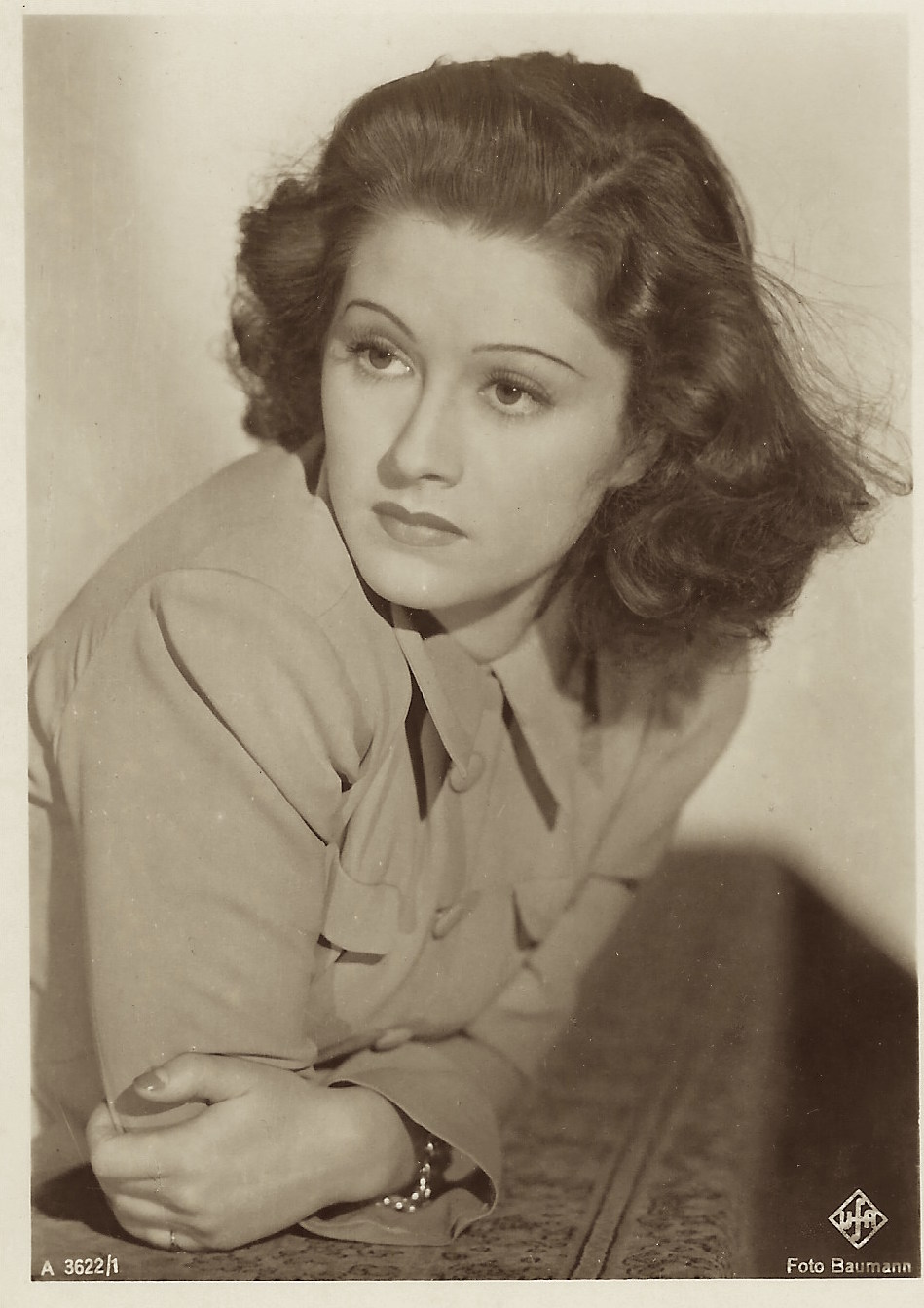
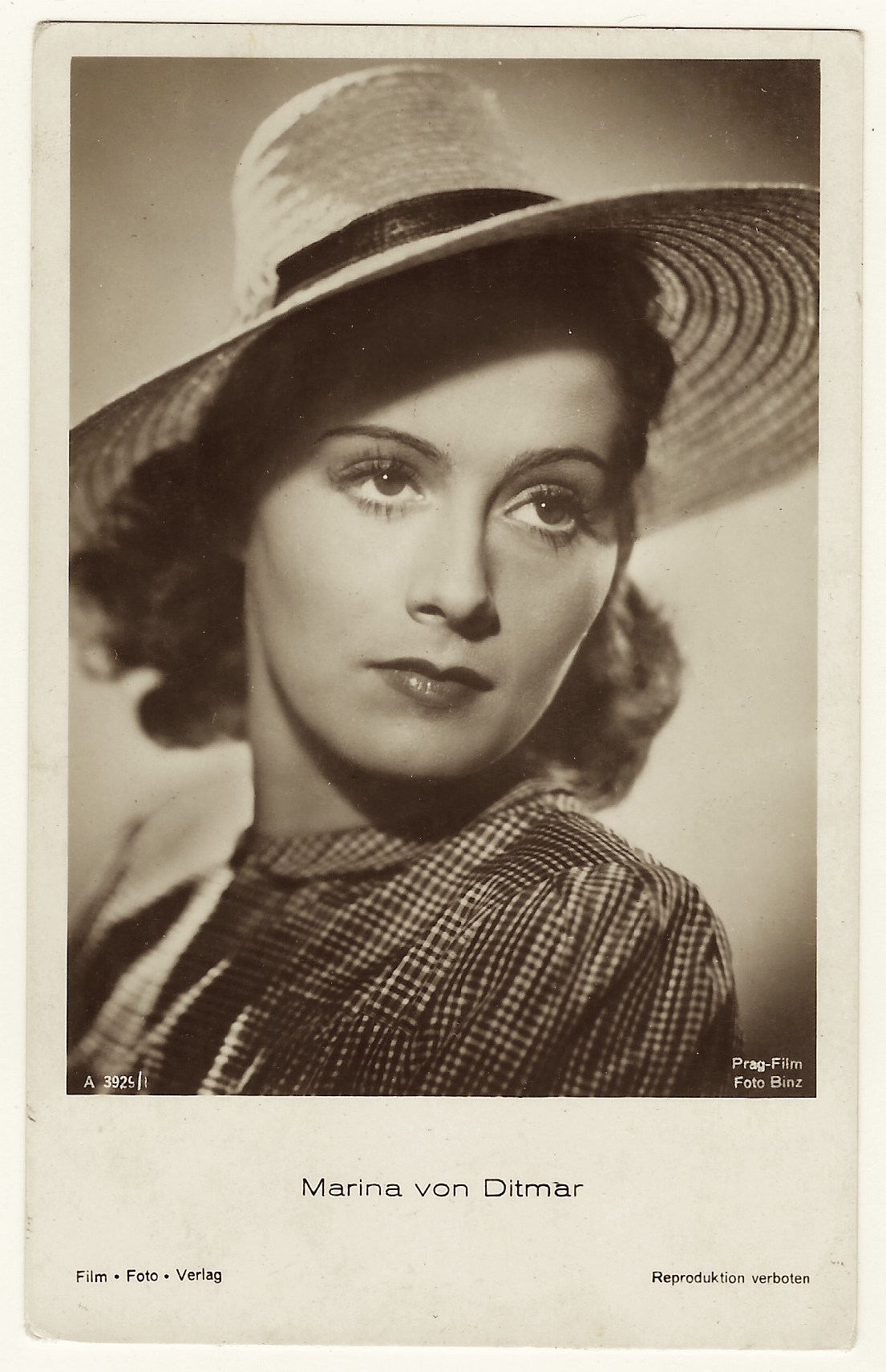
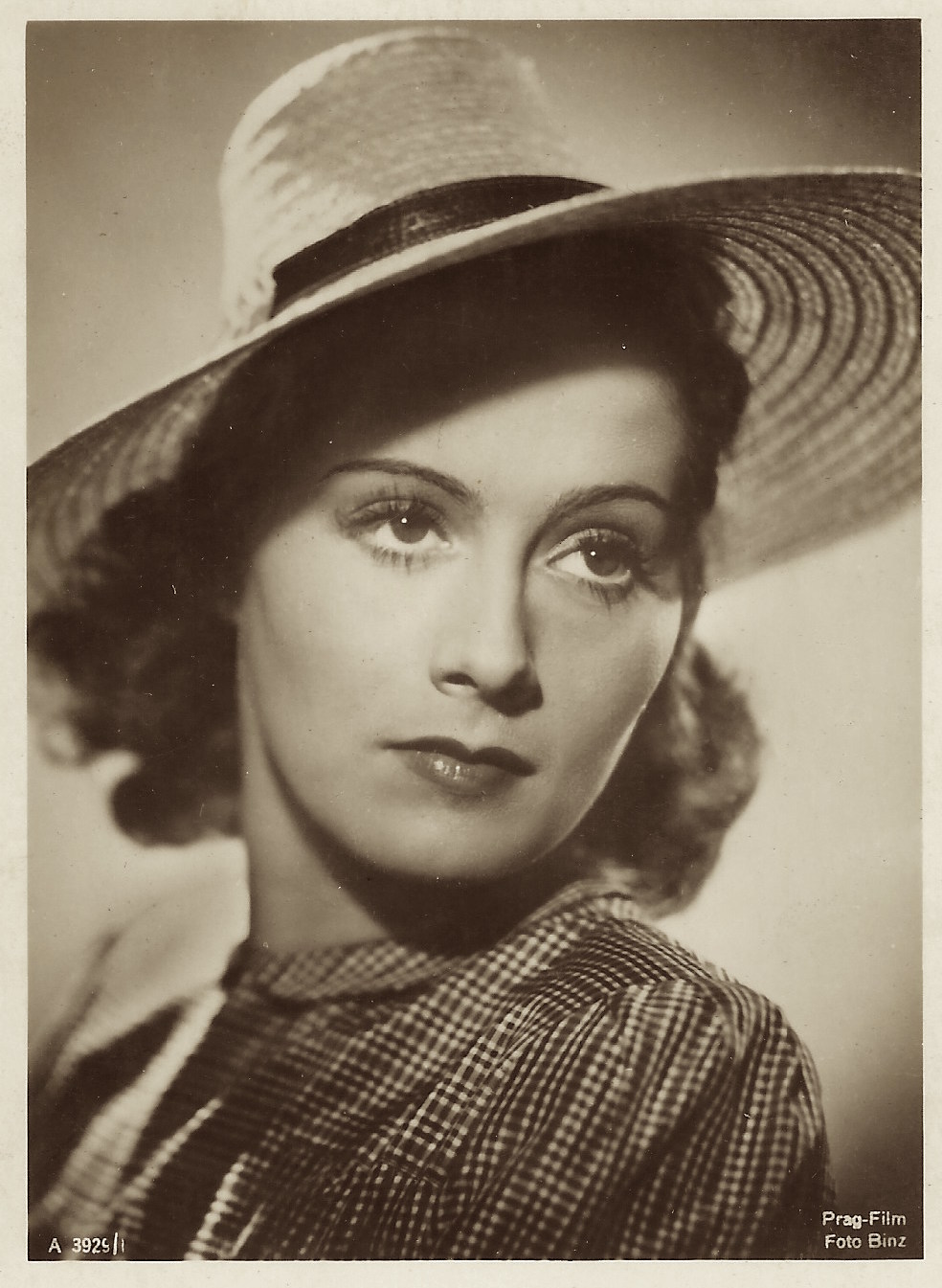
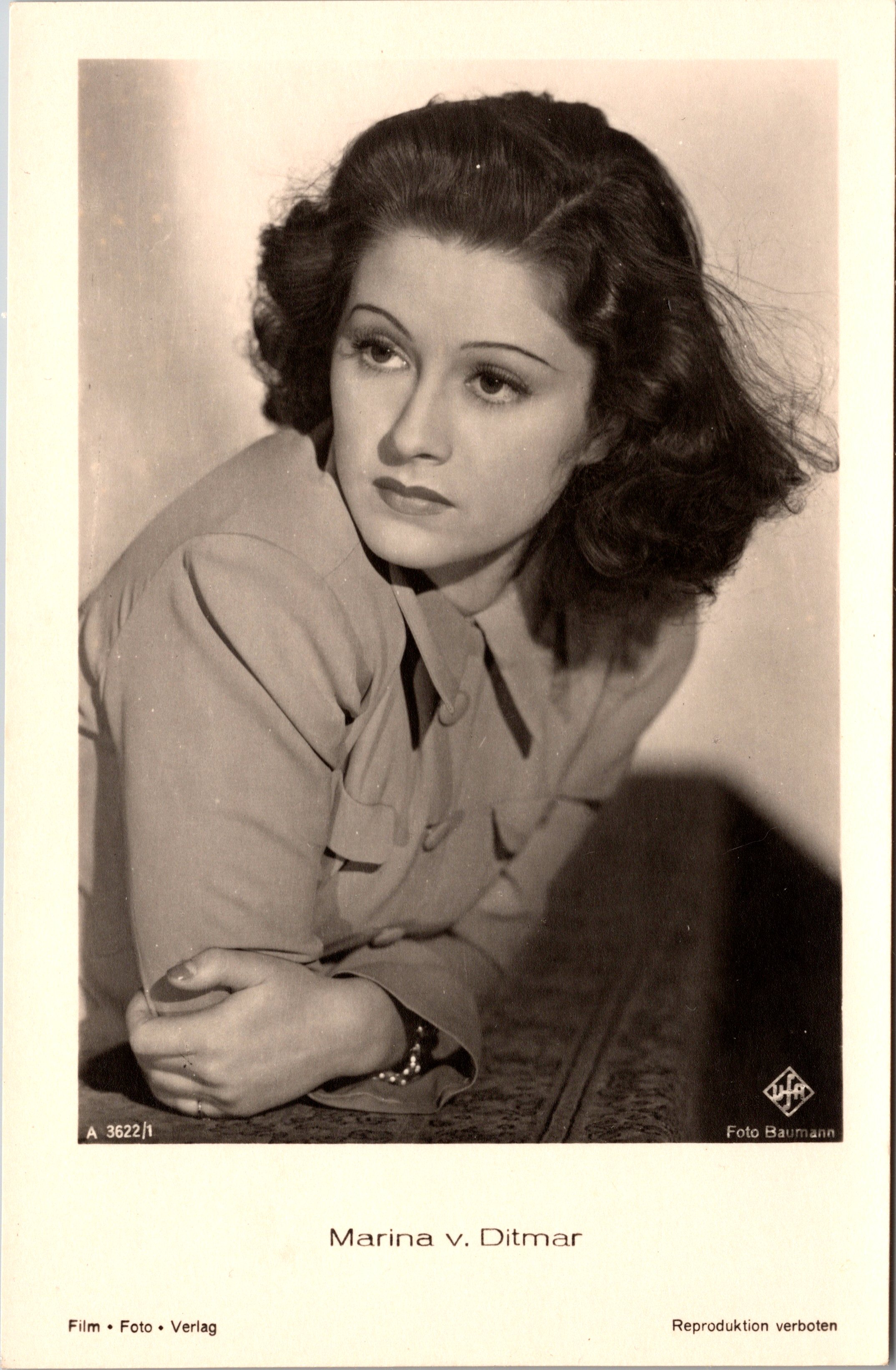
These two real photo postcards feature German film actress Marina von Ditmar (1914-2014), a leading lady of the 1930’s and 40’s. . She was born in the Russia Empire and was of Baltic German descent. When she moved to Germany she studied acting. Her first roles were appearances at Schauspielhaus, Bremen, and the Altes Theater (Leipzig). In 1937 she joined the ensemble at the Volksbuhne in Berlin and by 1940, she was a permanent actress at this venue. Her first major movie success was in “The Csardas Princess” (1934). In 1943, she starred in “Muchhausen”, a film that had great commercial success. Von Ditmar was also well known for her role in “The Big Shadow” (1942). She appeared in several Nazi propaganda film including Stukas (1941). She married D. Hans-Georg Dehnhardt (1913-2001), a leading physician and owner of a sanitarium, Soon after her marriage, she retired from acting. The IMDB credits Miss von Ditmar with thirty film roles. The top postcard was published by Film-Forto-Verlag and was part of a series (A 2622/1). The photographer was Baumann and there is an advertising logo for the German film company UFA. The bottom postcard was also published by Film-Foto-Verlag and was part of a series (no. A 3926/1). The photographer was Binz and there is an advertising logo for Prag Films. The Prag company produced 14 films between 1943 and 1945. Many of the people employed to produce these films were Czechs who were forced by war time German authorities to produce these films. The photographer, Tita Binz (1903-1970), was German and she photographed many film stars of the Third Reich, She also made portraits of the soldiers who earned the Knight’s Cross (the highest military award in Nazi Germany). Binz began her career by apprenticing in Paris between 1928 and 1930. She was an apprentice for her uncle, the celebrated photographer, Leopold Reutlinger whose studio was opened in 1850 and became of the worlds most renowned studios. Binz settled in Berlin and worked for various photo studios until opening her own studio in 1938. She specialized in portrait photography and photographed actors, artists, politicians, and other celebrities. One of her clients was the publisher Film-Foto-Verlag (formerly Ross Verlag). The founder of the company, Heinrich Ross was forced out in 1937 by the National Socialists because he was Jewish and Jews were not allowed to own businesses. Ross Verlag retained it’s name until 1941. Film-Foto-Verlag became known for it’s postcard portraits of film stars of the German and Italian cinema. Today, many of Binz’s photo portraits can be found in the collection owned by the Deutsches Historisches Museum in Berlin.
REVERSE TOP POSTCARD
REVERSE BOTTOM POSTCARD