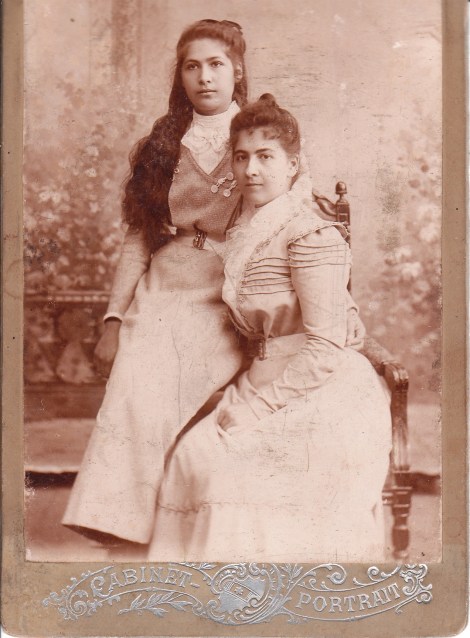
This Cabinet Portrait is an image of two Armenian women photographed in Georgia in 1910. Writing on the reverse of the card indicates that the women are named Mara and Jenia.
This Cabinet Portrait is an image of two Armenian women photographed in Georgia in 1910. Writing on the reverse of the card indicates that the women are named Mara and Jenia.

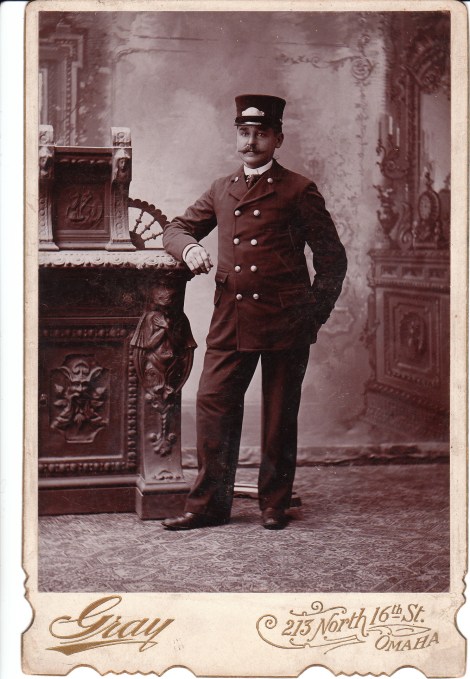
This Cabinet card is an image of a railway or trolley car worker. The badge on his cap is labeled “motorman”. If he worked for a trolley line, than he worked for the Omaha Cable Tramway Company which operated in Omaha between 1884 and 1894. Instead, he may have worked on a train belonging to the Union Pacific Railroad which was one of several railroads operating in Omaha, Nebraska. It would be great to read some comments from readers who may have expertise or knowledge concerning the railway history of Omaha. The photographer of this photograph is Gray, of Omaha. To view other photographs by Gray, click on the category “Photographer: Gray (NE)”.
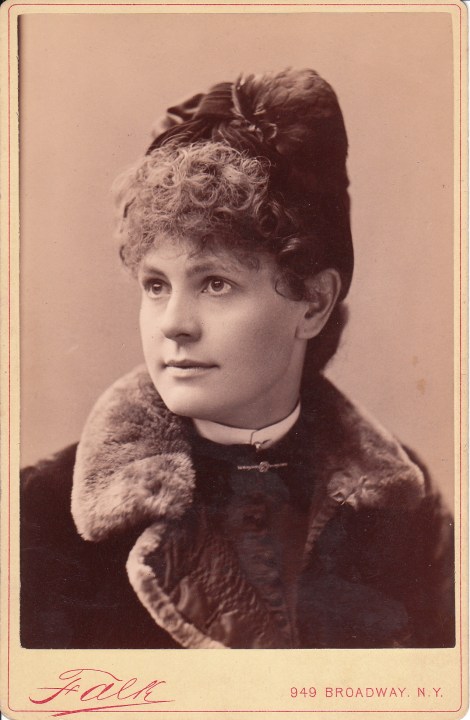
Jessie Bartlett Davis (1859?-1905) was an American actress and operatic singer from Illinois who was billed as “America’s Representative Contralto”. Her father was a farmer and country school master and she was one of ten children. She was discovered when she was performing locally and was taken by traveling managers to perform on the west coast. In 1879 she made her debut in the opera H.M.S. Pinafore. She performed with several opera companies before joining the new Boston Ideal Opera and remained with this troupe until 1901 performing as their prima donna. She is most well known for her role as Alan a-Dale in the 1890 opera Robin Hood. She also toured performing opera in Europe one season and in 1897 she opened on Broadway in The Serenade. She played Broadway again in 1903 in Jakobowski”s operetta Erminie. This versatile performer also performed vaudeville, wrote songs, stories and poems. She had a home in Chicago and summer home in Indiana where she raised horses, collies and fox terriers. In 1905 she died of Brights disease and is buried in Chicago. The photographer of this portrait is renowned theatrical photogarpher Benjamin J Falk of New York City.
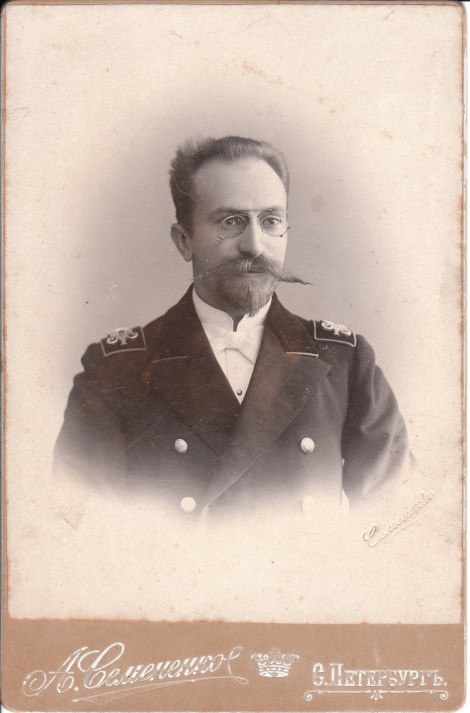
This Cabinet card photo is of a Russian teacher or administrater of a Learning Institution founded under the auspices of Emperor Alexander I or Emperor Nicholas I, circa 1900. The photographer is Alexander Semenenko Photo Studio in St. Petersburg. The reverse of the card has images of two awards in photography exhibitions of 1883 and 1889.
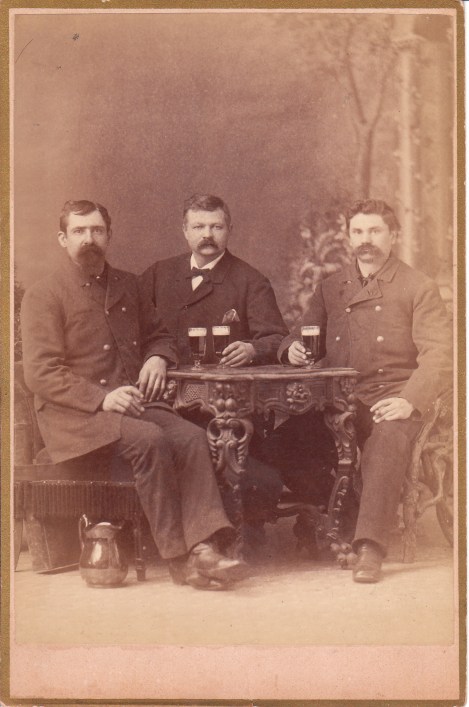
This Cabinet card depicts three guys out for a beer. They look like they are going to do some serious drinking and have a pitcher ready on the floor for refilling their glasses. The photograph was taken by F. W. Streit of Milwaukee, Wisconsin. How appropriate! Milwaukee is and was the unofficial beer capitol of the United States. The city was once the home to four of the world’s largest breweries and was the number one beer producing city in the world for many years.
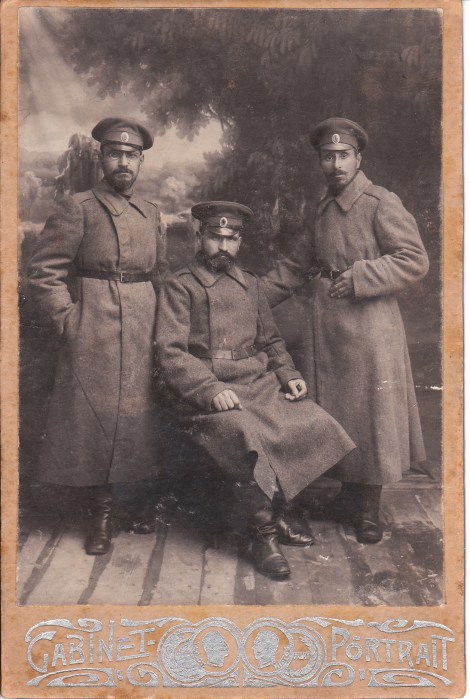
Three enlisted men from the World War I Russian Army are pictured in this Cabinet card. The reverse of the card indicates that the photograph was taken in 1916 by the “Photo Studio of Y. S. Ivanchenko”. What exactly may have been on these soldiers minds. In 1916 Russia, the Russian war effort was characterized by shortages, poor command, death, and desertion. The citizens were facing starvatio, inflation and a refugee problem. Soldiers and civilians blamed the incompetence of the Tsar and the government. By the end of the year Rasputin was killed and the Tsar was warned that the army would not support him in event of revolution.
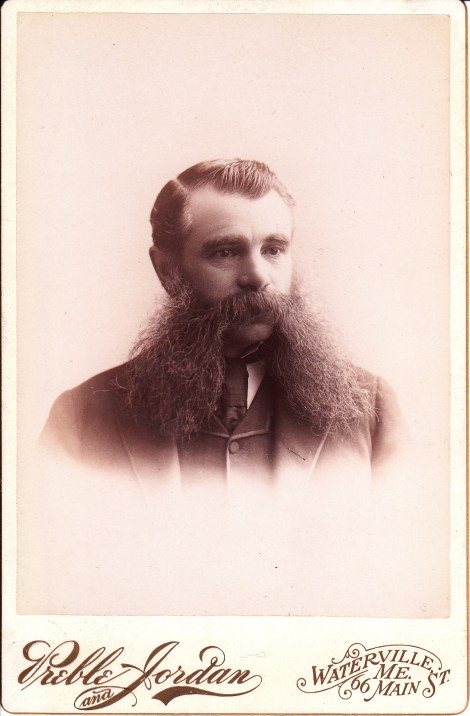
The gentleman pictured in this Cabinet card has a mustache of distinction. In my years of collecting Cabinet cards I have yet to find a mustache quite as impressive as this one. Preble and Jordan of Waterville, Maine is the photographic studio where this picture was taken. Waterville is located in south central Maine. Early industries included fishing, lumbering, agriculture and ship building. There was also a waterpower company established and a number of mills.
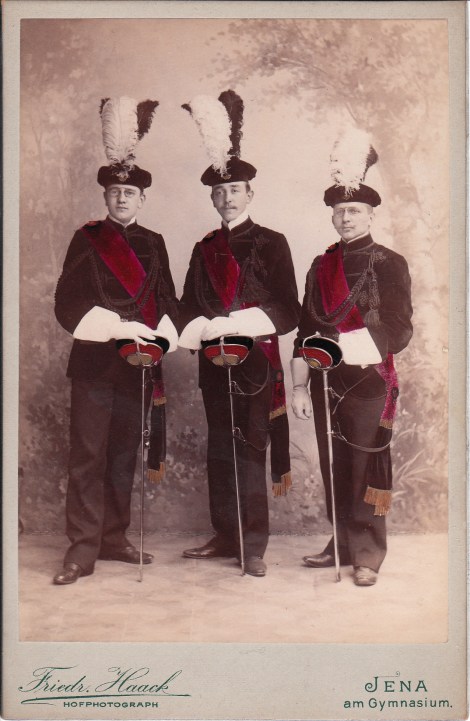
This Cabinet card is a terrific image of three fencers photographed by Friedr. Haack of Jena, Germany. Note the color which was added after the photograph was taken. Jena is a university city in central Germany. At the end of the 18th century Jena became a center for precision machinery, optics, and glass making. The subjects of this fencing Cabinet card probably were university students, as academic fencing was very popular during the time period this photograph was taken. I hope some knowledegable fencing aficionados can provide further information about the details concerning this image.
 | bmarshphd on ELEANOR GAINES : LUBIN SILENT… |
 | phantomfamous0cbbe9d… on ELEANOR GAINES : LUBIN SILENT… |
 | summertime75 on MARY MILES MINTER : SILENT FIL… |
 | beth on WINGS CIGARETTES : ADVERTISING… |
| beth on FOUR CHEERFUL SASSY FRIENDS :… |
 THE CABINET CARD GALLERY