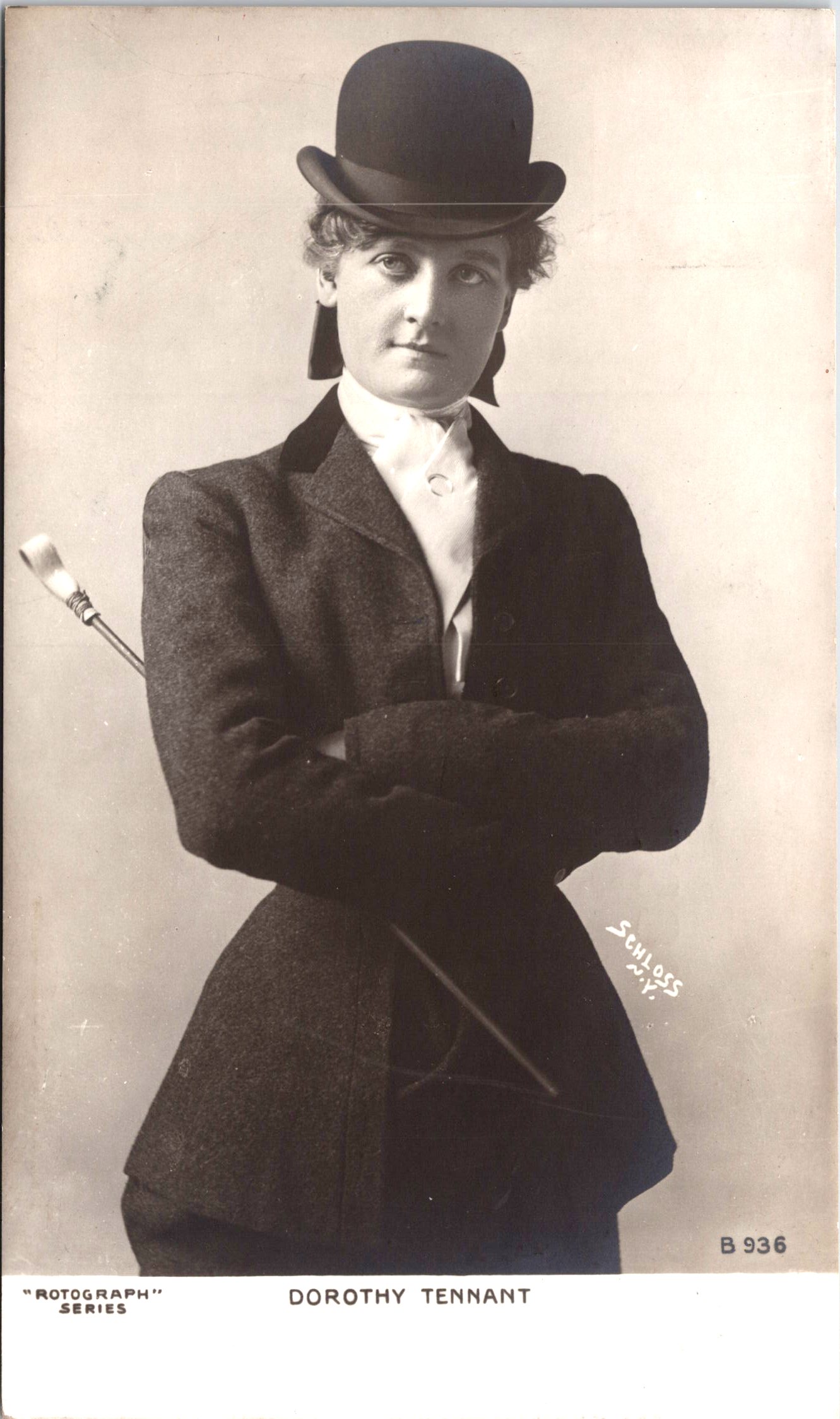
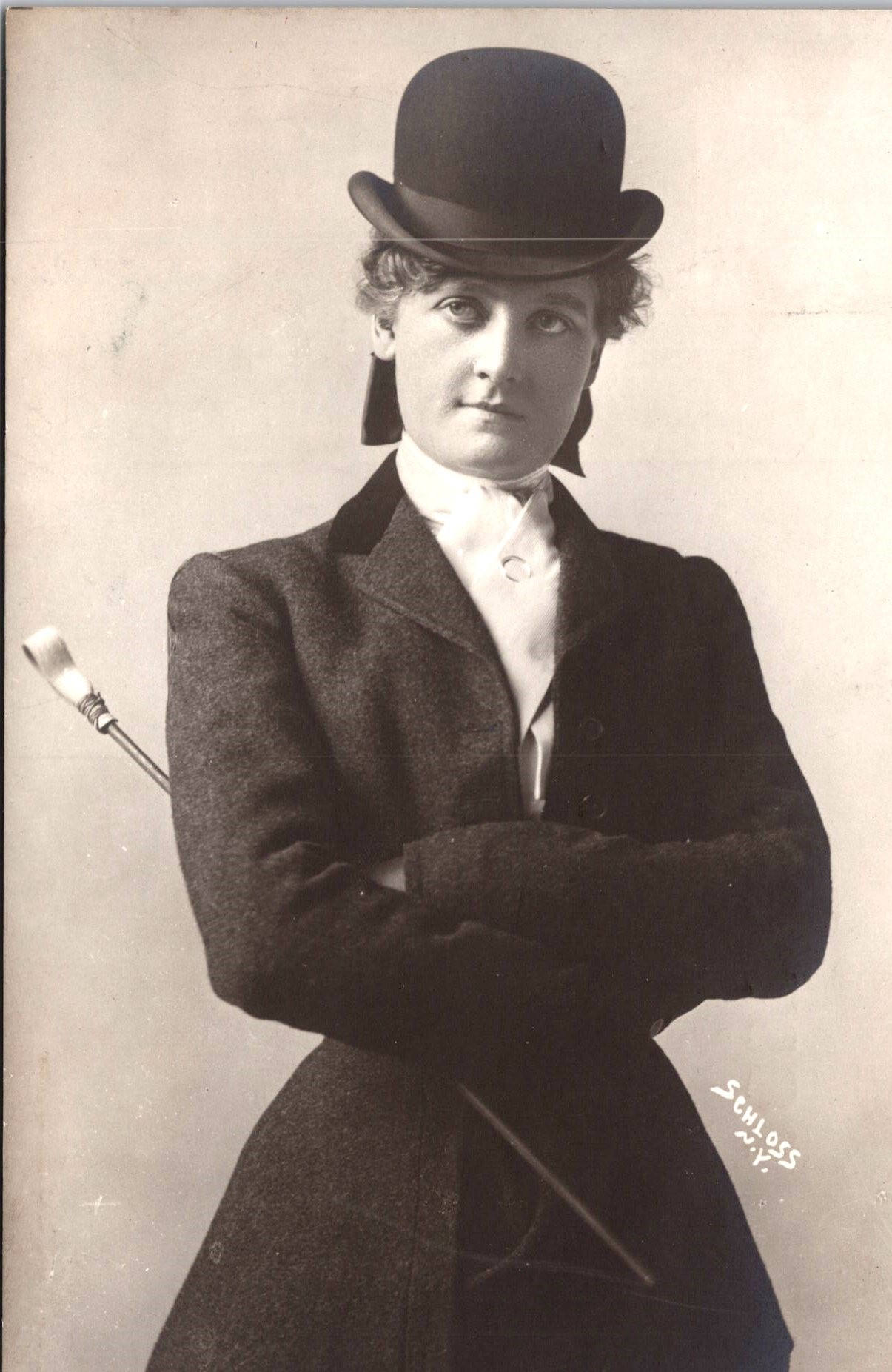
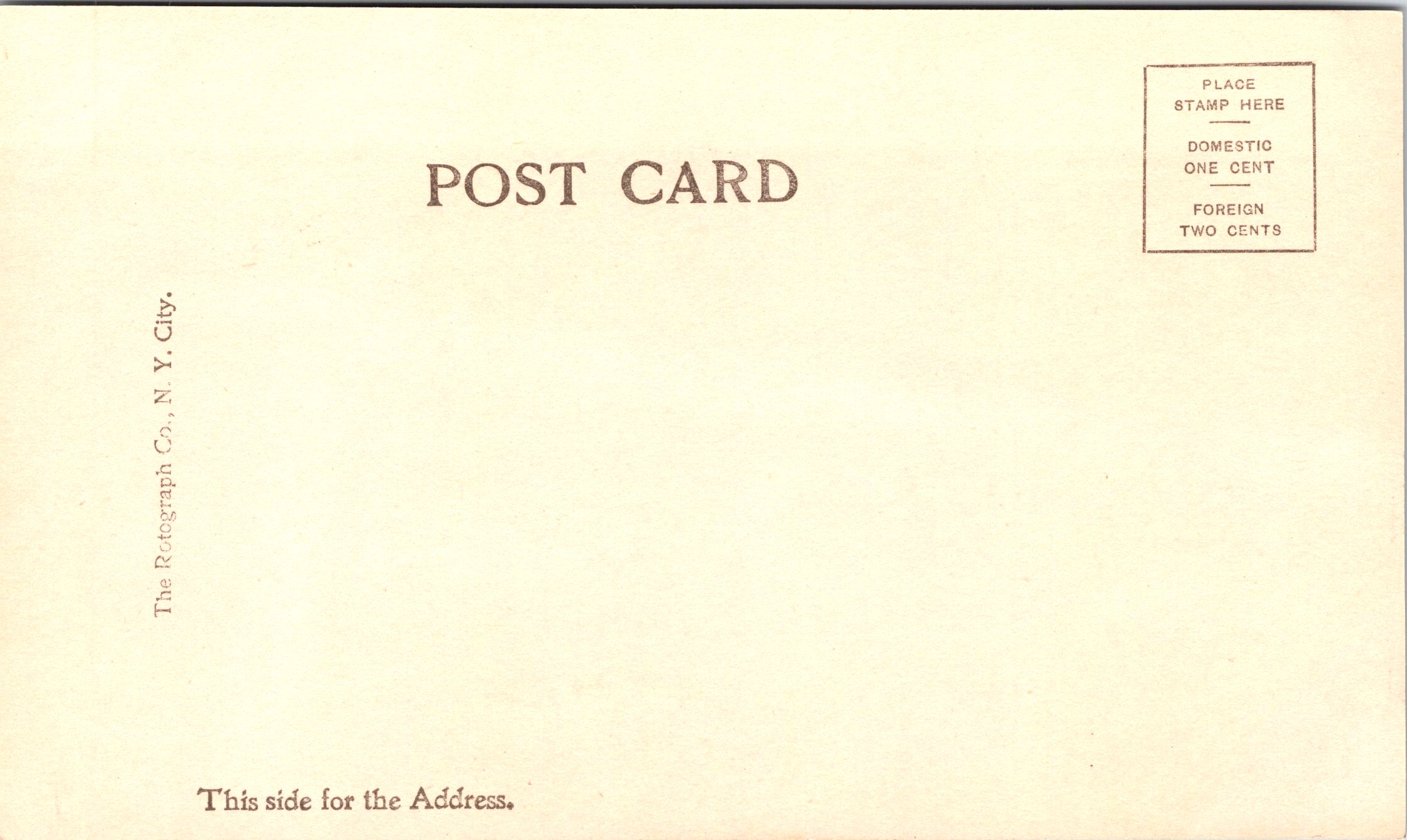
This undivided back vintage real photo postcard features American stage and screen actress, Dorothy Tennant (1865-1942). She is best known for her stage roles in the first ten years of the twentieth century. Her most prominent starring role was in the 1904 comedy, “The College Widow”. She performed in this play both on Broadway and on tour. She first appeared on stage in 1901 in the New York production of “White Roses”. The IBDb reports that she appeared in eight Broadway plays between 1902 and 1932. The IMDb states that Tennant acted in eight films between 1929 and 1938. This postcard was published by the Rotograph Company of New York City as part of a series (No.B936). The photo of Tennant seen on this card was taken by esteemed photographer Jacob Schloss. SOLD
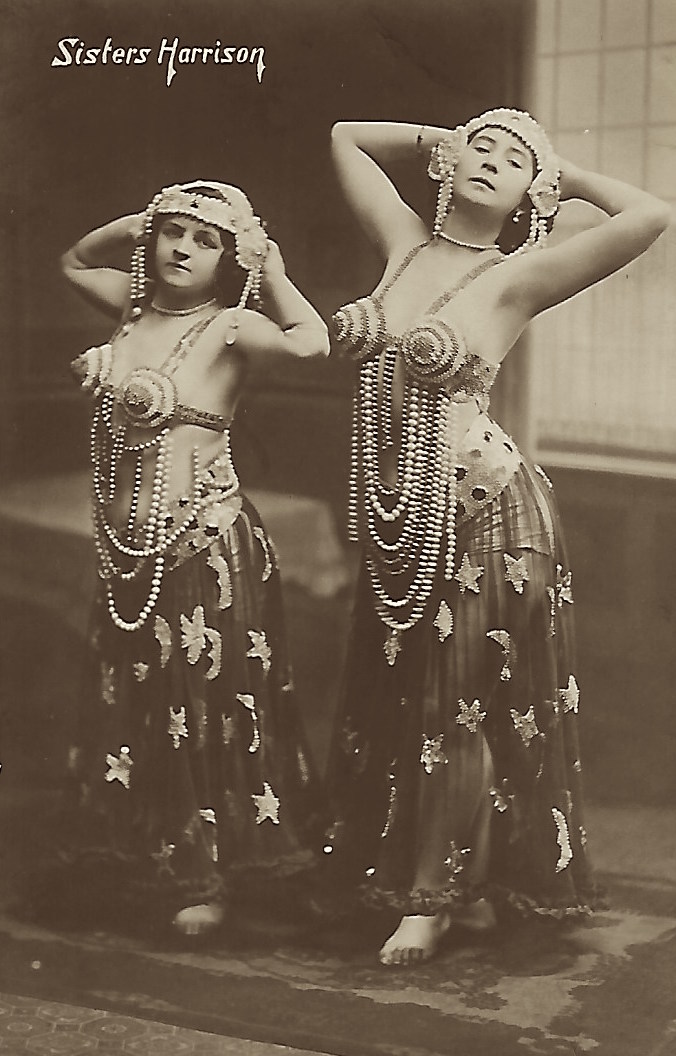
Meet the Harrison Sisters, or the “Sisters Harrison” if you prefer the title on this vintage real photo postcard. The sisters are dressed like belly dancers and perhaps that is their trademark talent. Judging by their expressions, the young women don’t appear to be too interested in their career choice. Note the dancer’s sheer skirts and abundance of jewelry. The provocative skirts and the performer’s bikini top certainly makes this a risque photograph for it’s era. Postcard images such as this often appeared with a Salome theme. Salome, the daughter of Herod II and Herodias is involved in the story of John the Baptist, or more specifically, the head of John the Baptist. Salome was a popular subject in literature, theater, and art around the time that these images were produced. Salome became a symbol for dangerous female seductiveness. To make a long story longer, I am not sure if the inspiration of this postcard’s image is Middle Eastern belly dancing or the temptress Salome. Preliminary research uncovered nothing about the “Sisters Harrison” and clearly more extensive investigation is required. Perhaps the Cabinet Card Gallery’s research department (it’s visitors) have some information to share about these dancing siblings. SOLD
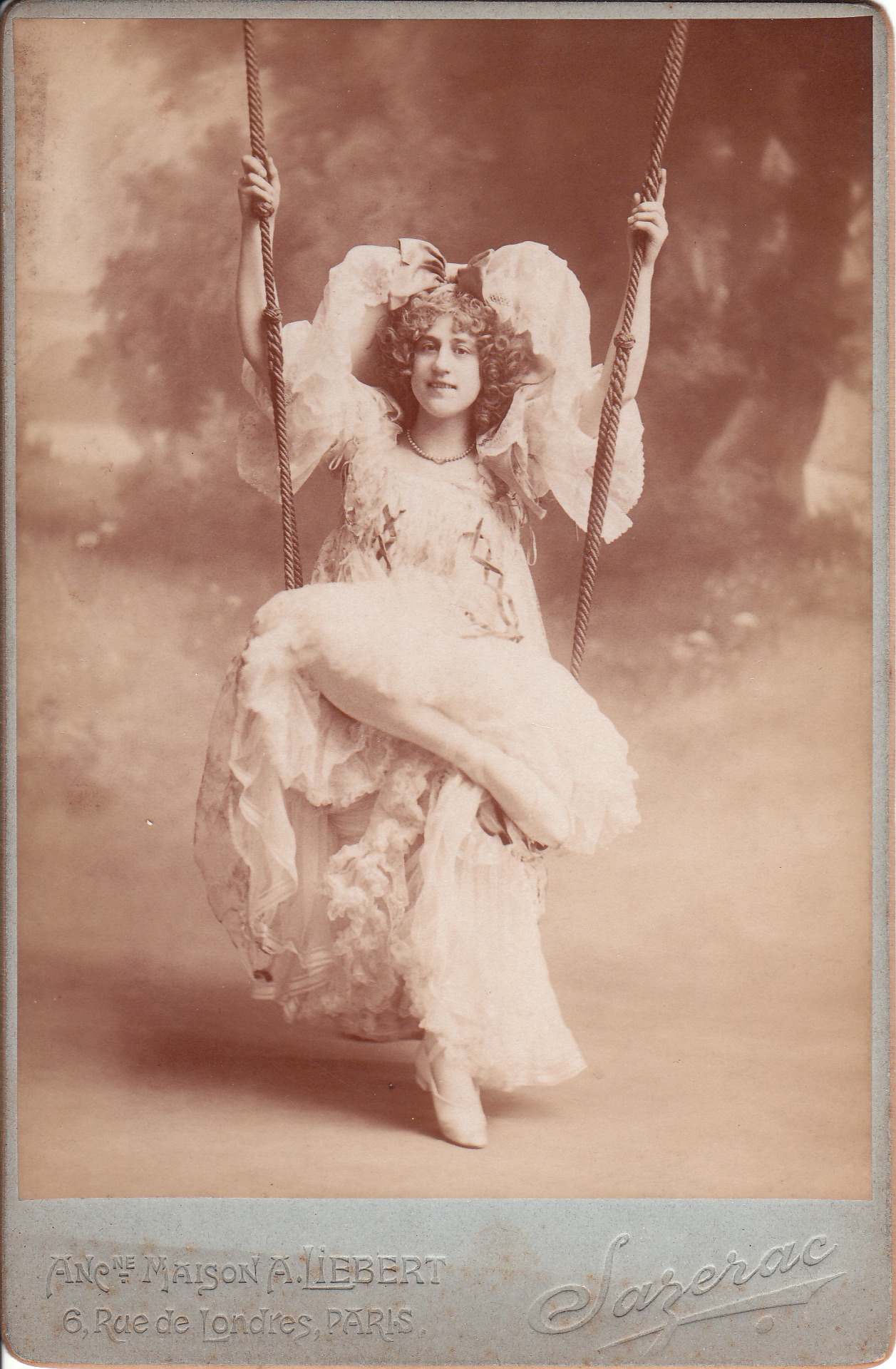
This cabinet card portrait features an unknown actress in a provocative pose sitting on a swing. An exposed leg and lacy undergarments propel this photograph into risque territory. The curly haired young woman flashes a terrific smile at the camera. The photographer of this image is the Sazerac studio which was located at the “Hotel Prive” in Paris, France. No information could be located about Mr. Sazerac but one can easily find real photo postcard portraits of French show girls that were produced by his studio. Sazerac cabinet cards are less common. SOLD
This interesting oversized cabinet card was photographed by L. Grillich in Vienna, Austria. The subjects are two very interesting looking young men. One man is wearing a tuxedo and top hat. He is holding a cane and wearing eyeglasses. The second young man appears to be wearing a formal military uniform. He is holding white gloves and wearing a sword. There is likely an interesting story attached to this photograph but that story is lost to history. The photographer of this image was Ludwig Grillich (1855-1926). Grillich was a portrait photographer located in Vienna and in Franzensbad. Included in the list of famous subjects of his portraits, are Johann Strauss, Johannes Brahms and Sigmud Freud. Grillich is also known for a series of postcards he published that displayed many of Vienna’s famous buildings of that era. SOLD
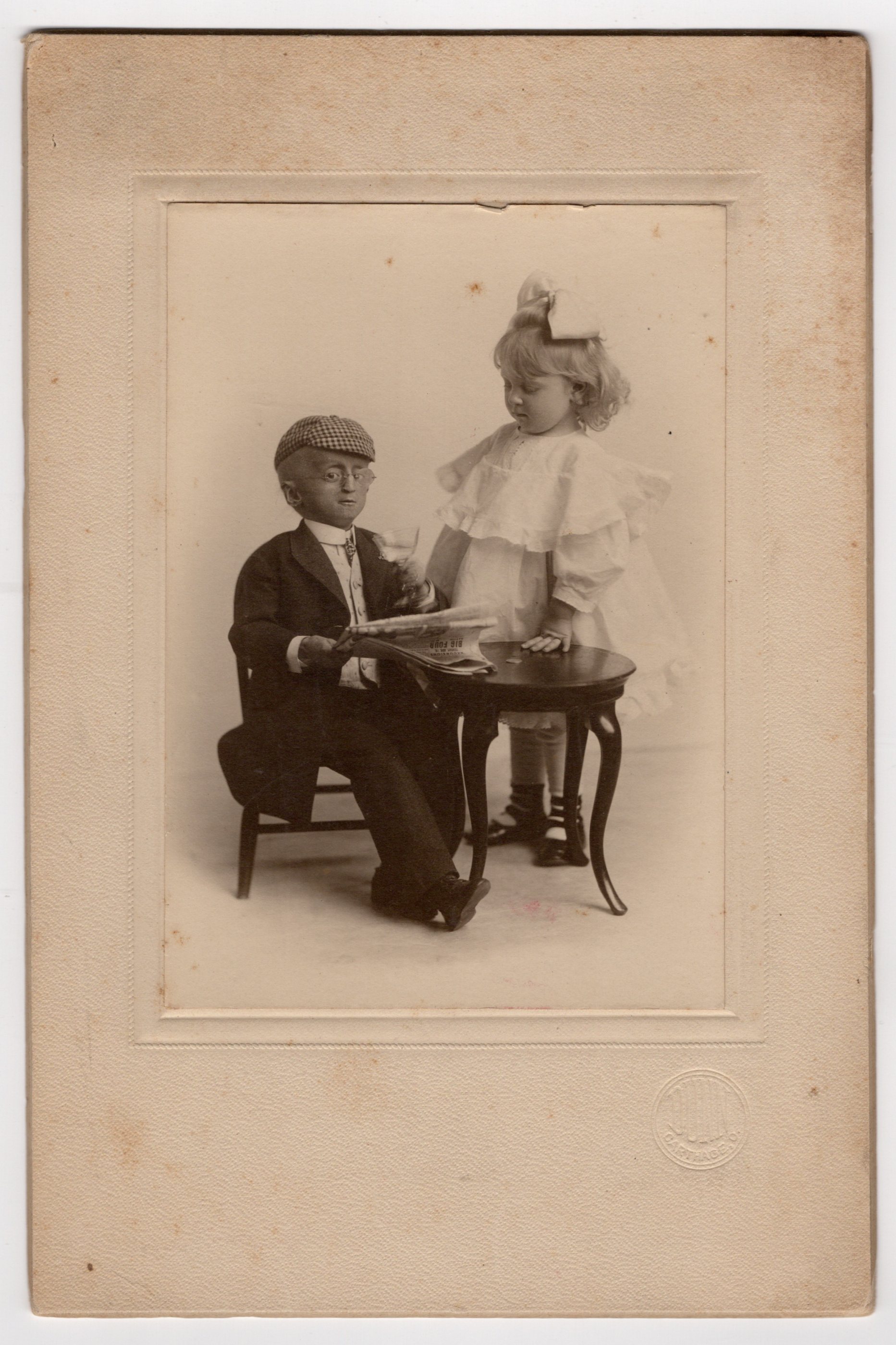
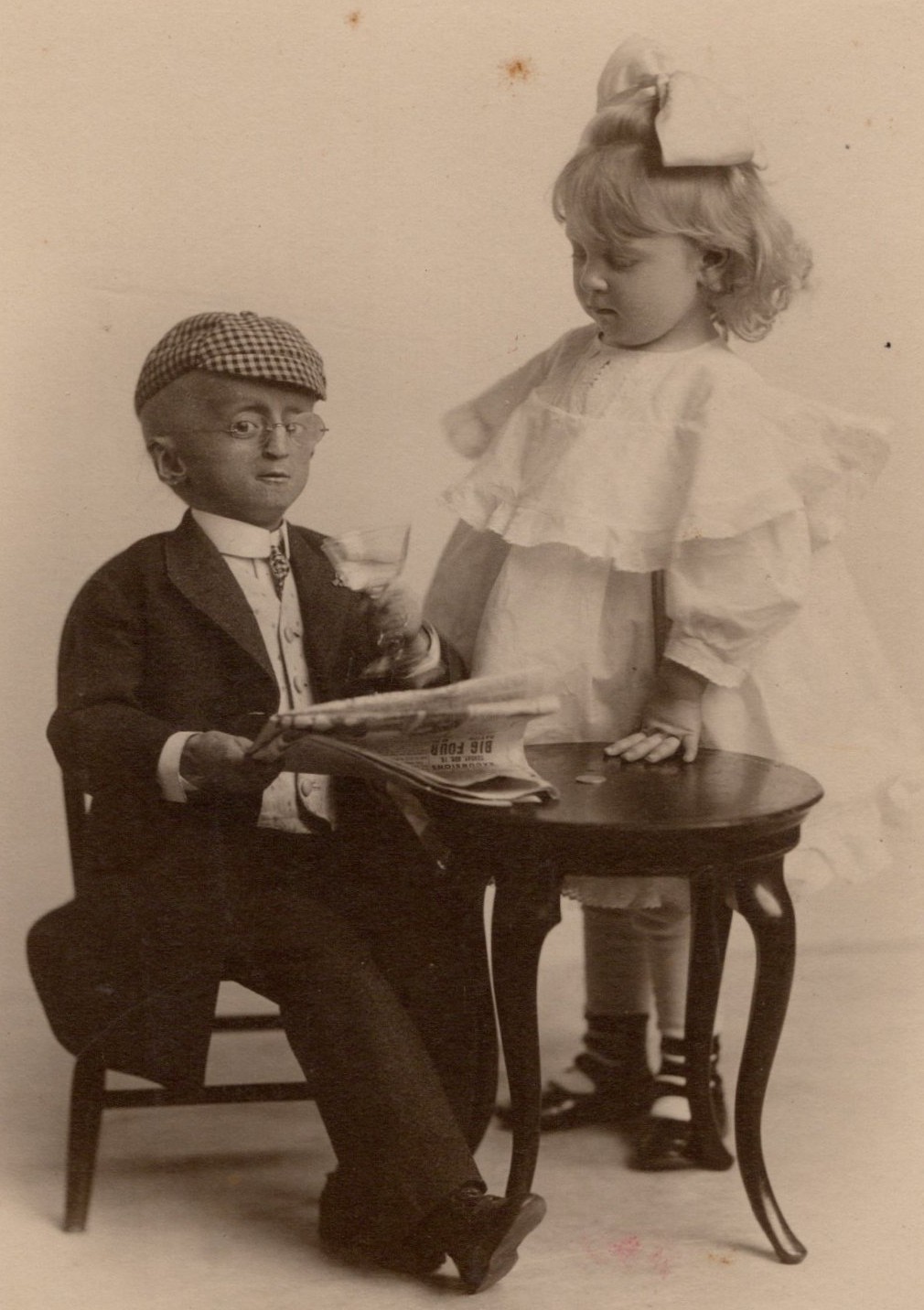
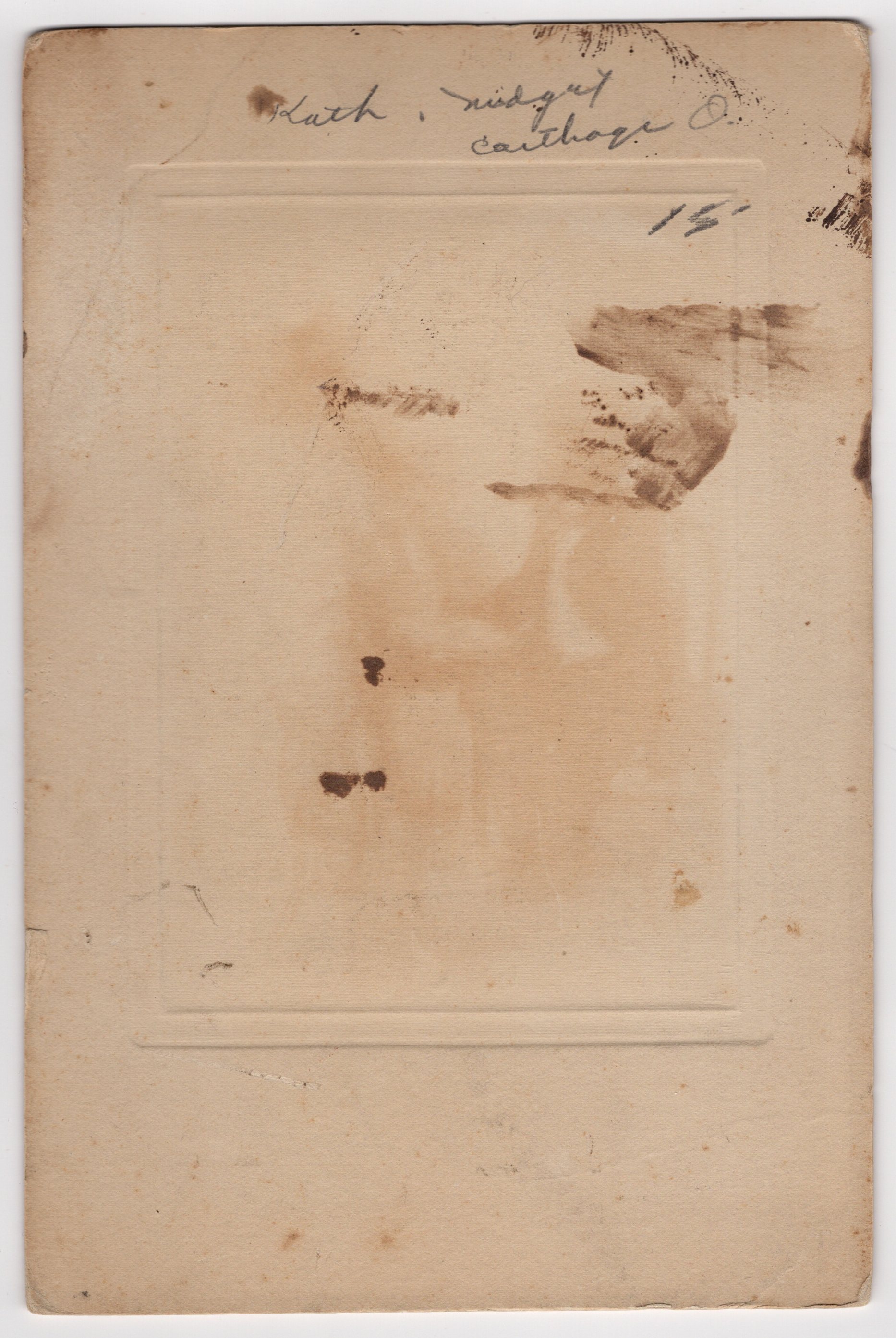
This vintage cabinet card features a formal indoor studio portrait of a well-dressed man seated at a table with a young woman beside him. The photograph, likely taken in the 1890s or early 1900s, comes from the Dunn studio in Carthage, Ohio, a historically independent village that was later annexed into Cincinnati. The man in the photo appears to be in his late middle years. He wears a smart three-piece suit, an unusual flat-topped cap, and wire-rim glasses. He is captured holding a stemmed glass—possibly filled with wine or another beverage—in one hand, while his other hand rests on a folded newspaper. The expression on his face is dignified and contemplative. Standing beside him is a young female, dressed in a formal white or light-colored dress with puffed sleeves and a ribbon at the waist. Her hairstyle and attire match fashion trends of the late Victorian or early Edwardian period. Her smaller physical stature raises the question: is she a child, or is she an adult woman with dwarfism (historically referred to by the now-outdated term “midget”)? Her mature facial features and posture lean toward the latter possibility, though this cannot be confirmed with certainty. The back of the card has handwritten ink notations that appear to read: “Ruth, midget, Carthage O.” This further supports the interpretation that the subject may be an adult woman of short stature. The photographer’s stamp can be seen in the lower right corner of the front of the card. SOLD
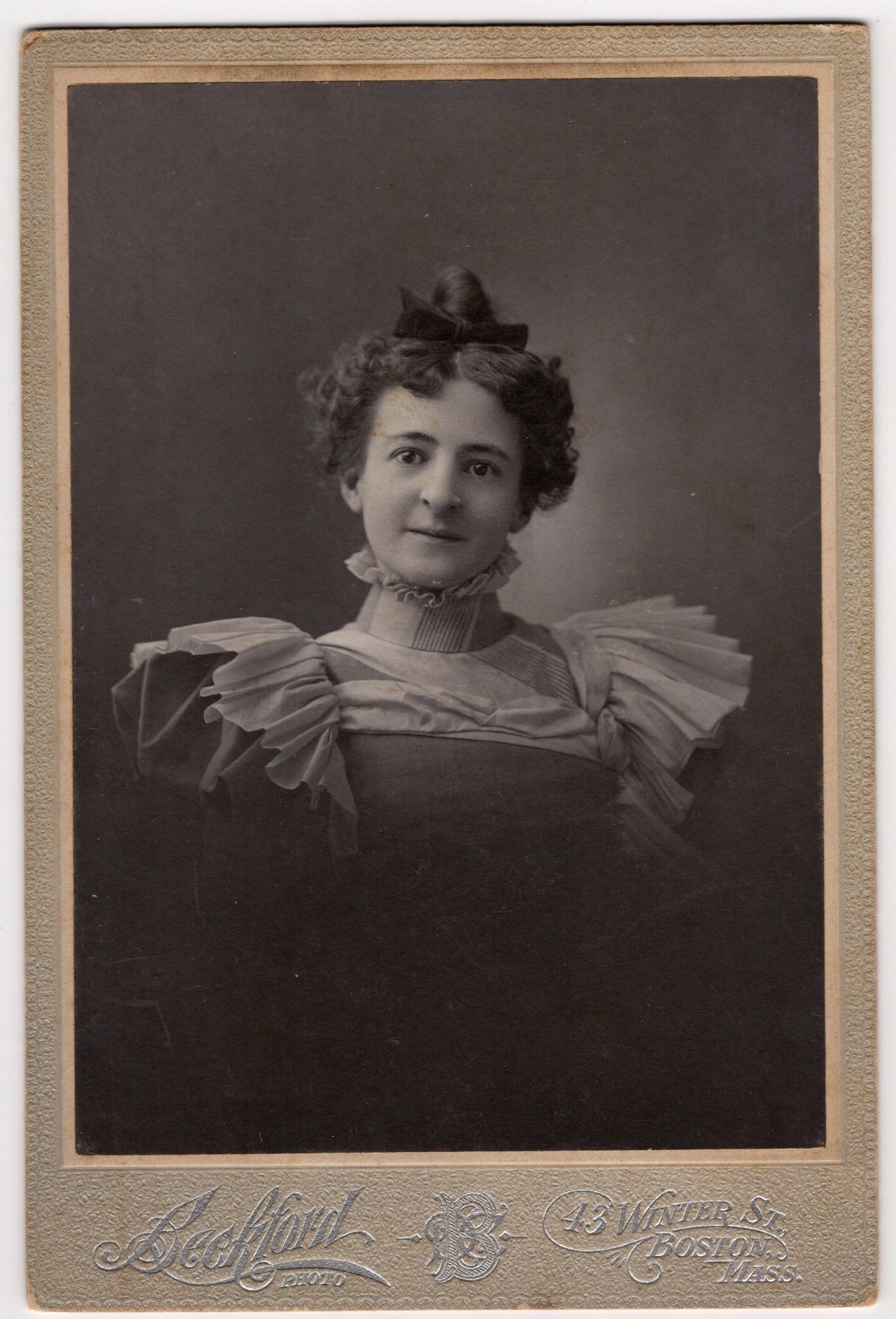
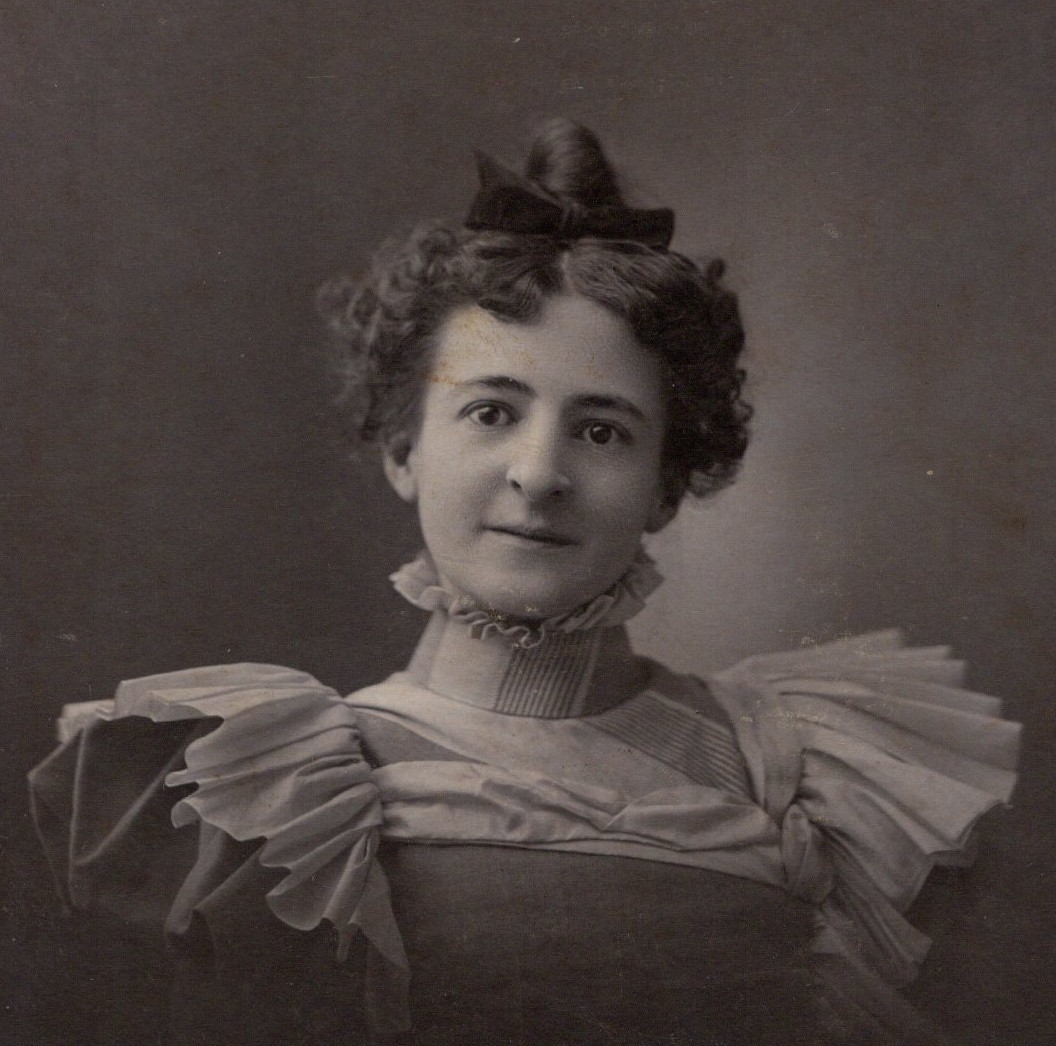
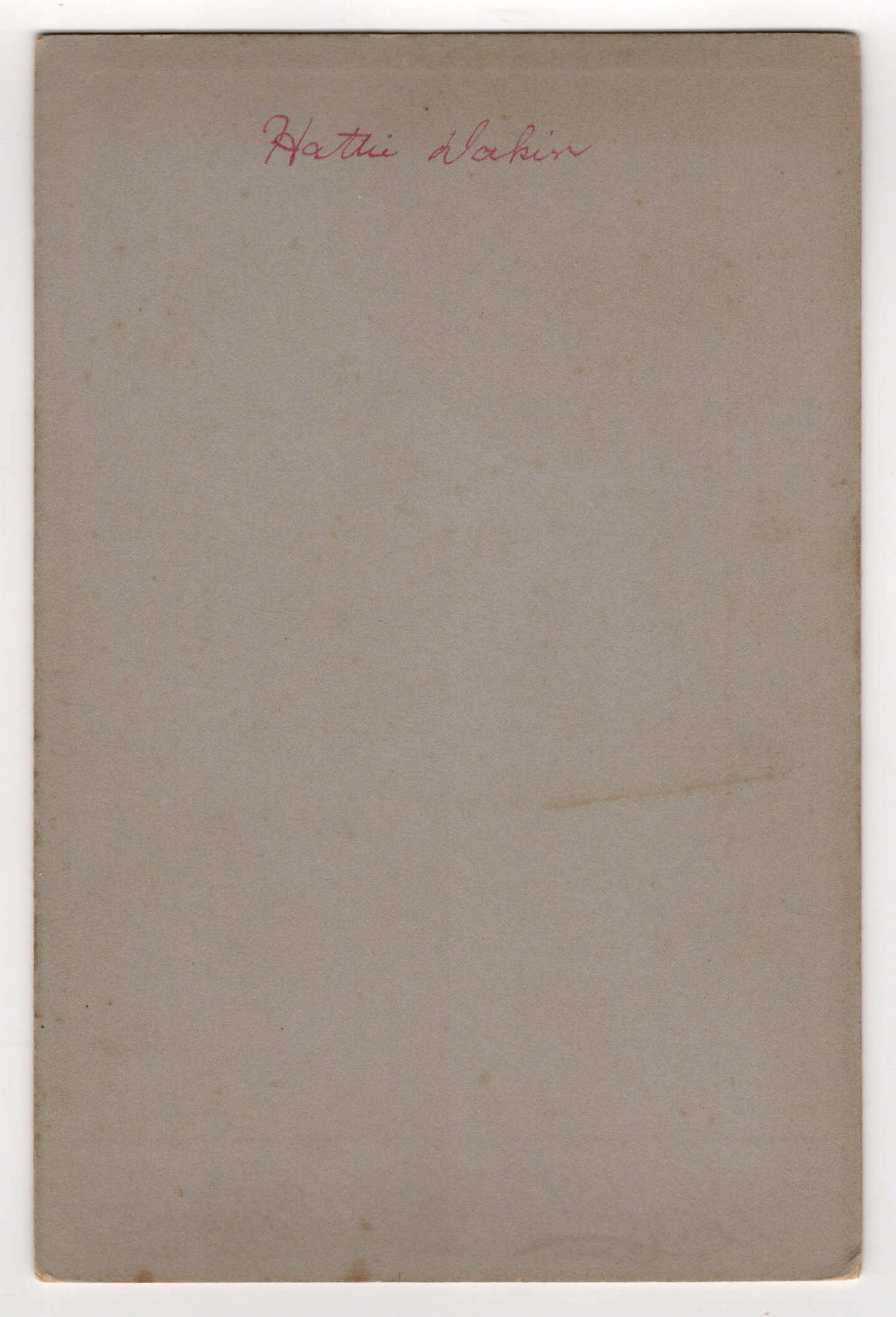
This original 1899 cabinet card photograph features a charming and elegant young woman identified on the reverse as Hattie Dakin. Her portrait is beautifully posed and lit, capturing her in a high-necked gown typical of the late Victorian period—with puffed gigot sleeves, delicate pleats, and a structured bodice. Her hair is styled in curls, pulled up with a ribbon bow, and her expression is serene, with just a hint of a smile. The reverse inscription provides her name. This cabinet card was discovered as part of a larger group of similar photographs, all featuring young women, each dated and named—supporting the theory that these were likely taken to commemorate a school graduation in 1899. What makes this particular image especially significant is the identity of the photographer: David C. Beckford, an African American photographer whose studio—Beckford Photo, 43 Winter Street, Boston, Massachusetts—was among the leading photography establishments of its time. David C. Beckford was a native of Jamaica, born in 1856, and immigrated to the United States in 1872. He originally worked for Walter E. Chickering (a disreputable businessman), and eventually took over the business in 1888, renaming it under his own name. His studio employed four assistants and was highly respected. Beckford operated his photography studio until at least 1909, while also managing a hardware business in Jamaica, which he rebuilt after a devastating earthquake. Beckford’s status as a Black photographer in turn-of-the-century Boston is noteworthy. He received recognition in the book “Boston: Its Commerce, Finance, and Literature,” and is also referenced in a 1909 article in The Southern Workman, confirming both his heritage and his professional stature. His life reflects the resilience and entrepreneurship of a man who overcame barriers of race and geography to establish himself as a photographic artist and businessman. Photographs by African American photographers from the 19th century are uncommon.(SOLD)
The woman in this photograph does not want to compete with the sculpture alongside her so she adeptly covered the top of the piece with her hand. Perhaps its not the competition she feared but instead she wanted to protect the viewers of her portrait from seeing the “bad art” beside her. Most likely the real reason why she’s holding the statue is that she didn’t know what else to do with her hand. This is where the photographer is supposed to play a role by posing his subject. However, Mr Hartwell seems to have been asleep at the camera and didn’t notice the posing faux pas. Mr Hartwell operated his studio in Phoenix, Arizona. The city of Phoenix was no booming metropolis. It’s population in 1880 was only 2,453. At the time of this photograph, Arizona was a US territory and would not become a state until 1912. The subject of this portrait is unidentified. She is dressed well and is wearing a wide bracelet. Her nice figure is likely accentuated by a corset. The photographer of this cabinet card, Frank A. Hartwell, became a US citizen in 1882 while living in Arizona. He formerly was a citizen of England. He is listed in the Phoenix City Directory (1903) as a photographer. He placed an advertisement for his studio in TheNative American (1908).The Pacific Coast Photographer (1894) includes a human interest story pertaining to Mr. Hartwell. The article reports that upon the birth of his daughter, Hartwell, thinking like the creative photographer that he was, decided to formulate a list of all the baby girls born on the same day as his daughter and gather them all together for a group photograph. Due to the absence of today’s HIPA’s privacy laws, his research produced a list of six baby girls. I do not know if Hartwell ever photographed these six infants, but I certainly would love to have that photograph, if it exists, to exhibit in the Cabinet Card Gallery. SOLD
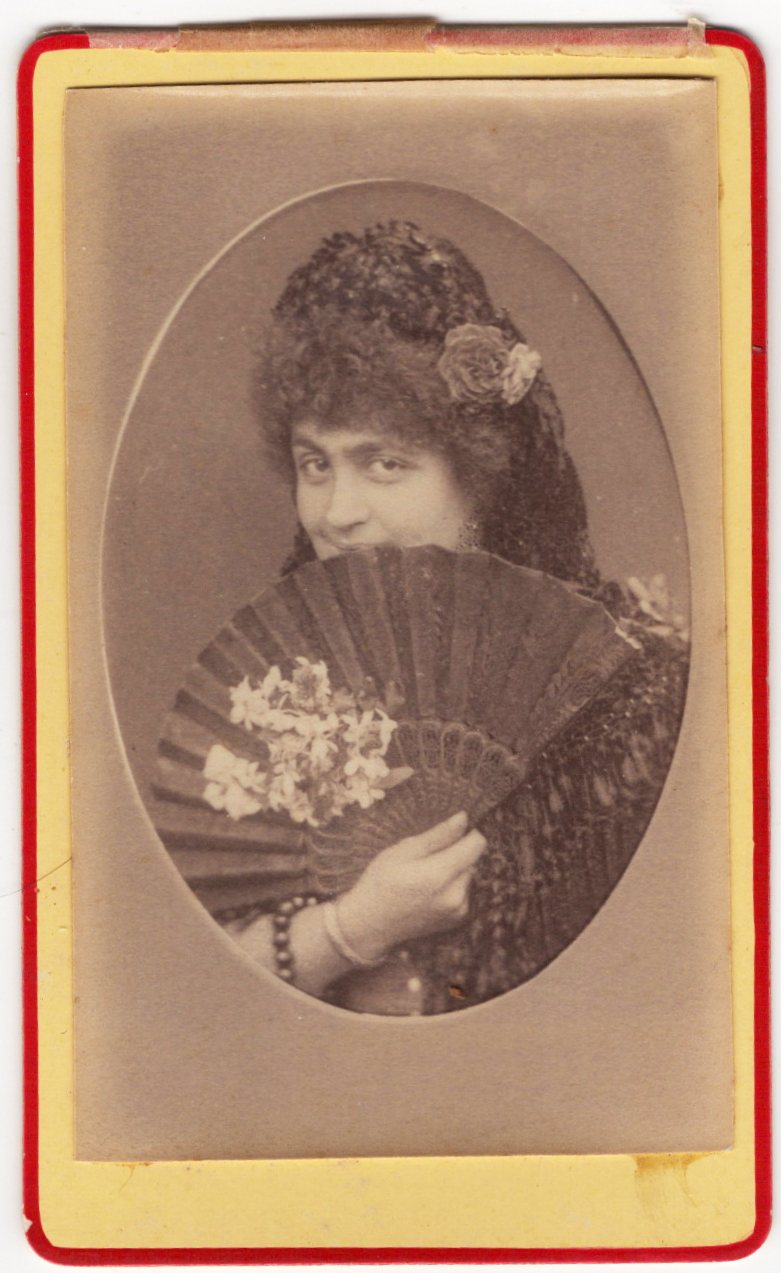
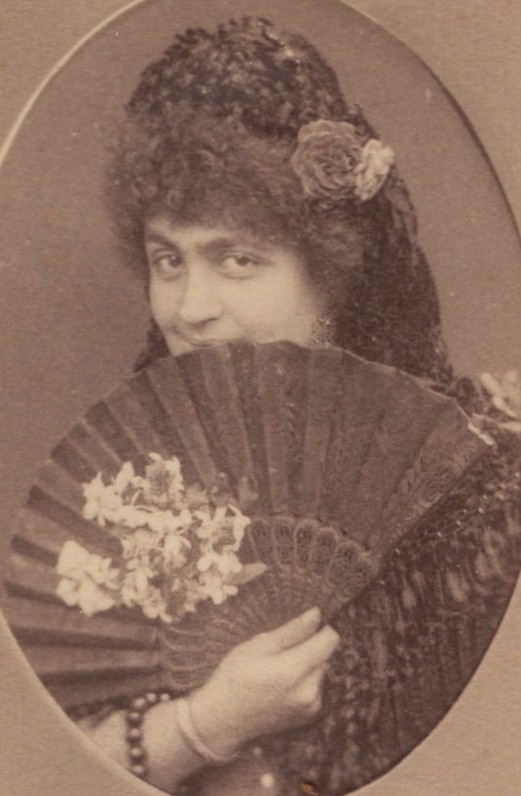
This carte de visite presents an elegant and mysterious woman from the late 19th century, captured in a striking, staged portrait. She gazes directly at the camera with an enigmatic expression, her dark eyes hinting at amusement or perhaps secrecy. Her face is partially obscured by a beautifully detailed folding fan, adorned with delicate flowers, which she holds just below her nose, adding an air of flirtation and intrigue. The fan’s design suggests an appreciation for fine accessories, possibly hinting at a woman of refined taste or theatrical flair. Her hair is voluminous and curly, styled in a way that suggests fashion-forward sensibilities for the time. A decorative flower adorns her locks, further enhancing her romantic and dramatic appearance. She is dressed in a richly textured, dark garment, possibly velvet or lace, with intricate embellishments. A beaded bracelet encircles her wrist, another indication of elegance. This portrait seems to capture not just an image but a persona—perhaps that of an actress, performer, or a woman who enjoyed playing with identity and allure. Her playful concealment behind the fan suggests confidence, charm, and perhaps a bit of mischief. SOLD
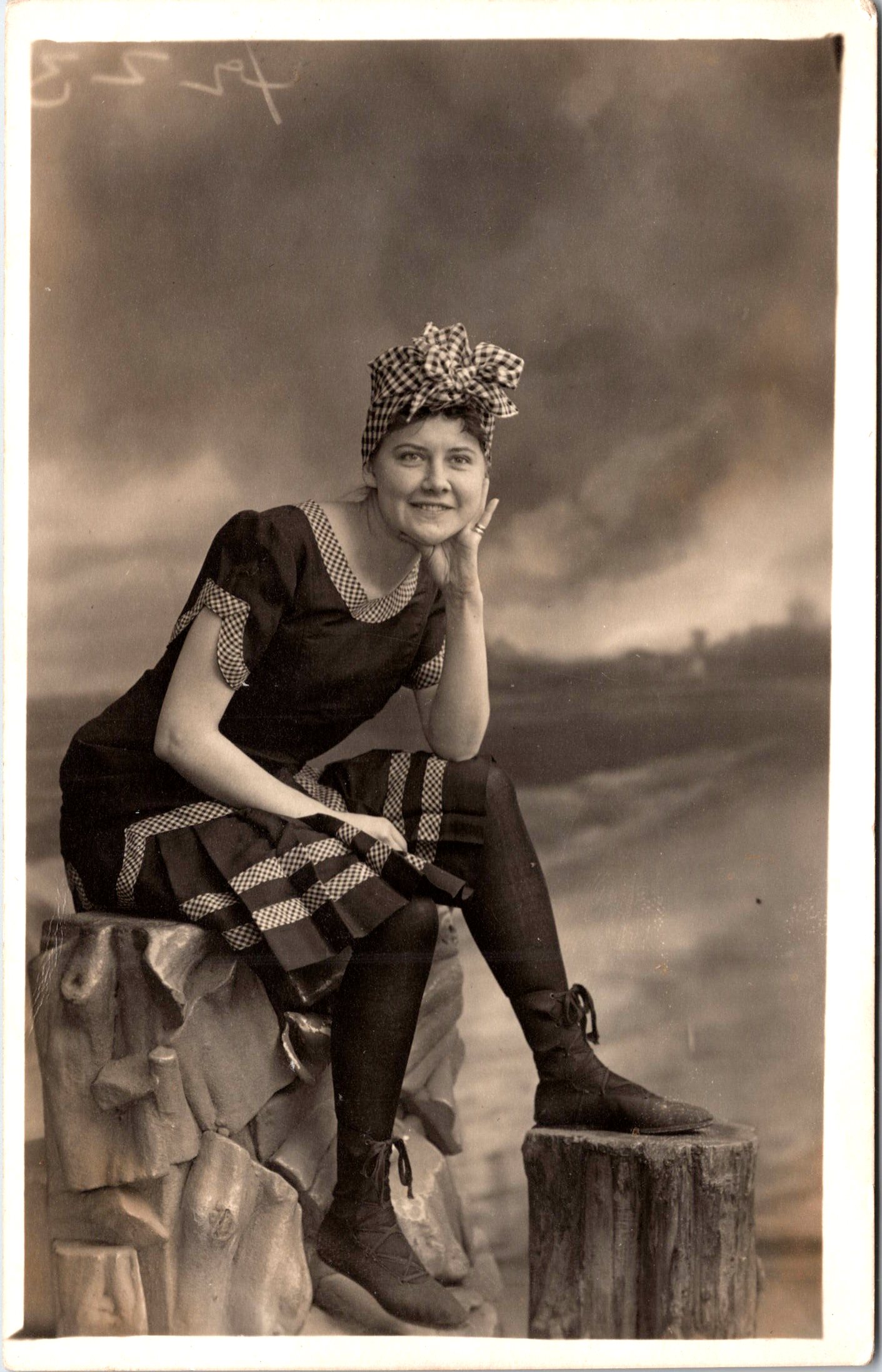
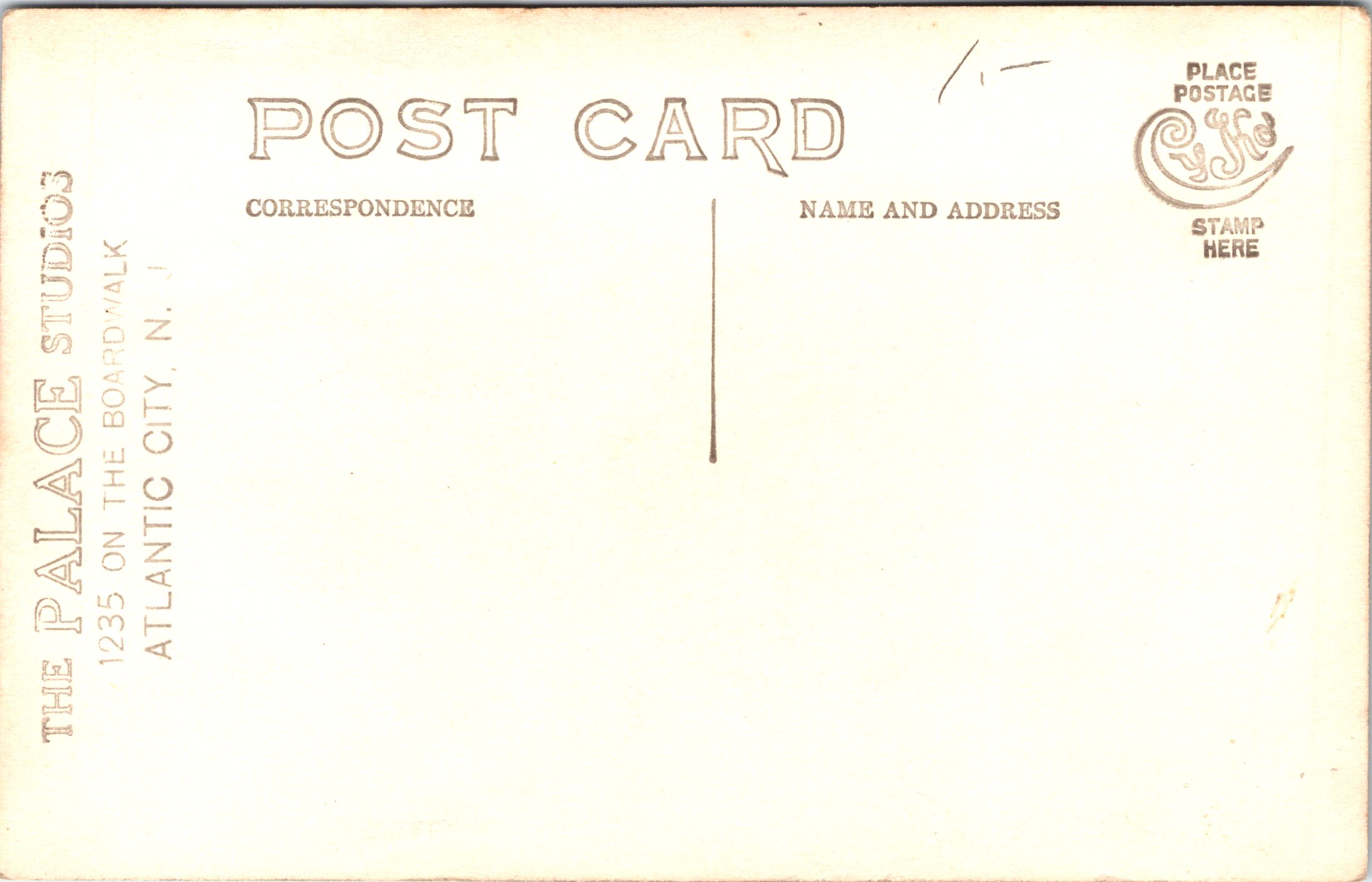
This delightful real photo postcard features a cheerful young woman seated on a faux rock formation, wearing a charming bathing costume and matching head wrap. Her outfit is a stylish two-piece ensemble made of dark fabric with bold, checked gingham trim on the collar, sleeves, and skirt hem—a classic look from the 1910s to early 1920s. Her lace-up bathing boots and the studio backdrop, which imitates a beach setting, reinforce the seaside theme. The woman’s expression is warm and welcoming; she smiles gently at the camera, her chin resting lightly on her hand in a relaxed pose. There is an engaging sense of playfulness and personality in the portrait—characteristics that make it especially appealing to collectors of early 20th-century beach imagery and character photography. This postcard was produced by The Palace Studios, located at 1235 on the Boardwalk, Atlantic City, New Jersey, a popular tourist destination in the early 20th century. Palace Studios specialized in novelty and souvenir portrait photography for beachgoers, offering whimsical props and painted backdrops that gave visitors an idealized memento of their seaside vacation. The reverse of the postcard features a CYKO stamp box, a format used by the CYKO photographic paper brand, which helps to date this postcard to the 1910s–early 1920s. The card has a divided back, which also aligns with that time frame. SOLD
This vintage photograph features a beautiful young woman wearing a pretty dress. The woman has a terrific smile. She is wearing a necklace and a hair bow. This photograph measures 3″ x 6″ and has no identifying information. SOLD






 THE CABINET CARD GALLERY
