PEARS JIF SHAVING STICK OR CREAM : ADVERTISING BOOKMARK : VINTAGE c1930’s

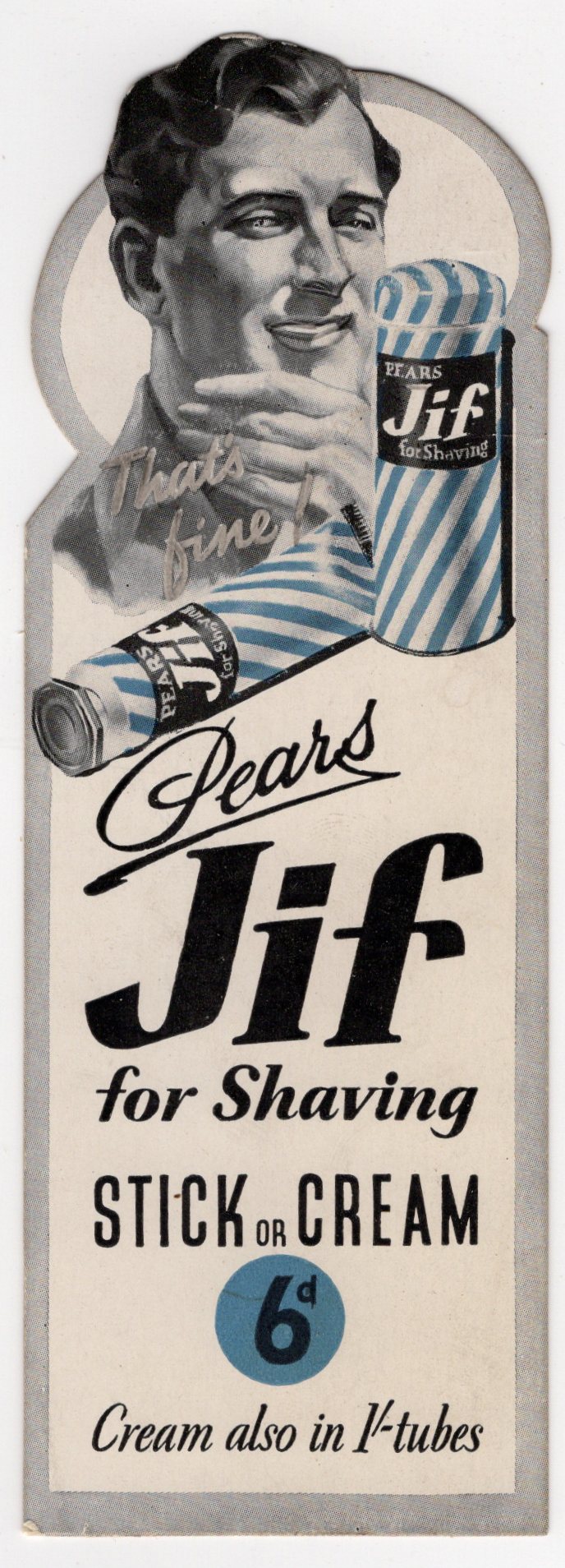
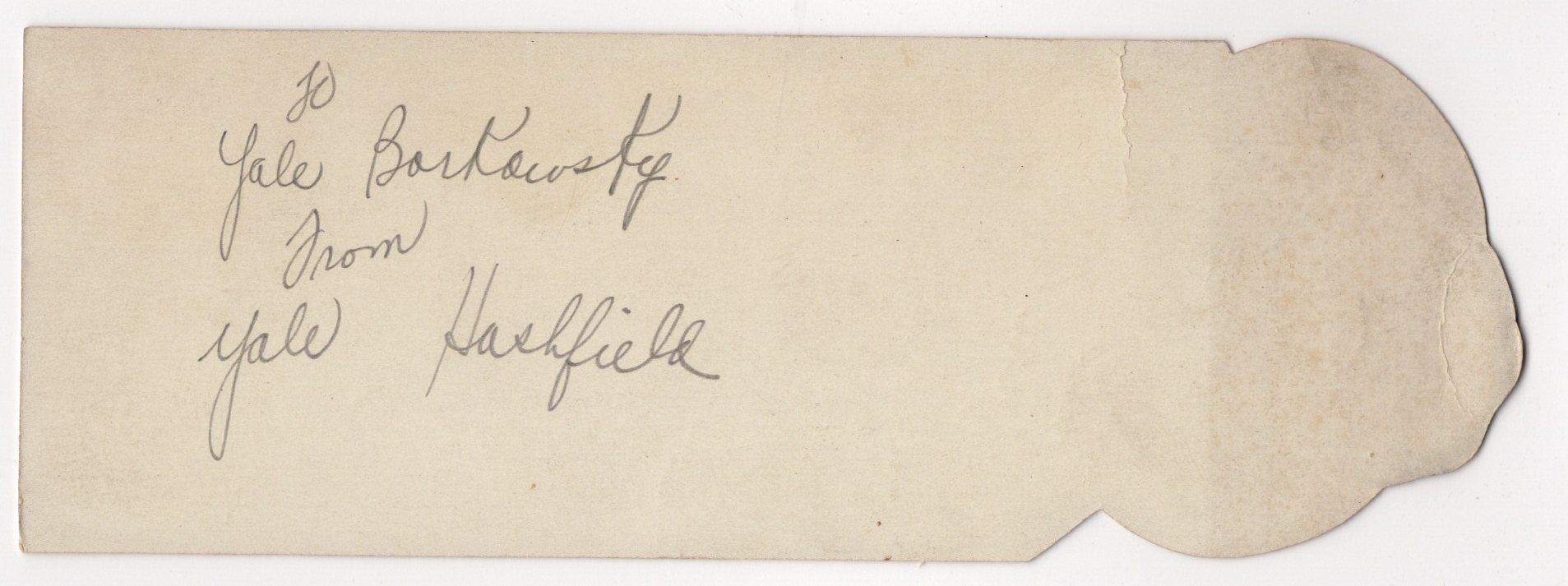
This unusual vintage advertising piece appears to be a bookmark or advertising insert promoting Pears JIF Shaving Stick or Cream. The piece measures approximately 2 1/8 inches wide by about 6 inches tall, a size and shape consistent with promotional bookmarks or advertising inserts that would have been distributed in shops, included in product packaging, or handed out as promotional items. The front features a striking graphic illustration of a clean-shaven man alongside a tube and shaving stick container labeled “Pears JIF for Shaving – Stick or Cream.” The price 6d (six pence) is printed near the bottom. The currency indicates British pricing and suggesting this item was produced for the British market. The design, typography, and illustration style are very characteristic of 1930s advertising art. The reverse side has a handwritten inscription. Pears was a famous British soap company founded in the late 18th century by Andrew Pears in London. Pears became internationally known for its transparent glycerin soap and was one of the earliest companies to use modern advertising and promotional items, including prints, cards, and advertising novelties like this one. Pears JIF Shaving Cream was one of their shaving products marketed in the early 20th century, particularly in the 1920s–1930s, when shaving sticks and creams in tubes became popular. The “JIF” brand was a Pears shaving preparation marketed for convenience and a smooth shave. The Pears company was eventually absorbed into larger corporations over time. The Pears brand itself survived into the late 20th century and still exists today as a soap brand, though many of the early products such as JIF shaving cream disappeared decades ago. Based on the graphic style, pricing in pence, and product packaging shown, this advertising bookmark most likely dates to the 1930s.The bookmark is in good vintage condition. There is some light wear consistent with use. There is a light crease near the gentleman’s hairline. The reverse has a handwritten inscription. Overall, it displays very well and is an unusual and attractive piece of vintage shaving advertising. See scans. 

This advertising item is available for purchase at my store, The History Peddler, for $16.00 or best offer.

Interested collectors may view the listing here:

https://www.ebay.com/itm/236738751926
Published in: on April 6, 2026 at 12:00 pm  Leave a Comment  

BEAUTIFUL THEATRE ACTRESS: YVONNE GARRICK “A MOST WELCOME RECRUIT FROM THE PARIS STAGE”

POSTCARD 1

Picture 1 of 2

Postcard 2

 YVONNE GARRICK : PRETTY STAGE ACTRESS : RPPC  1906

POSTCARD 3 (SOLD)

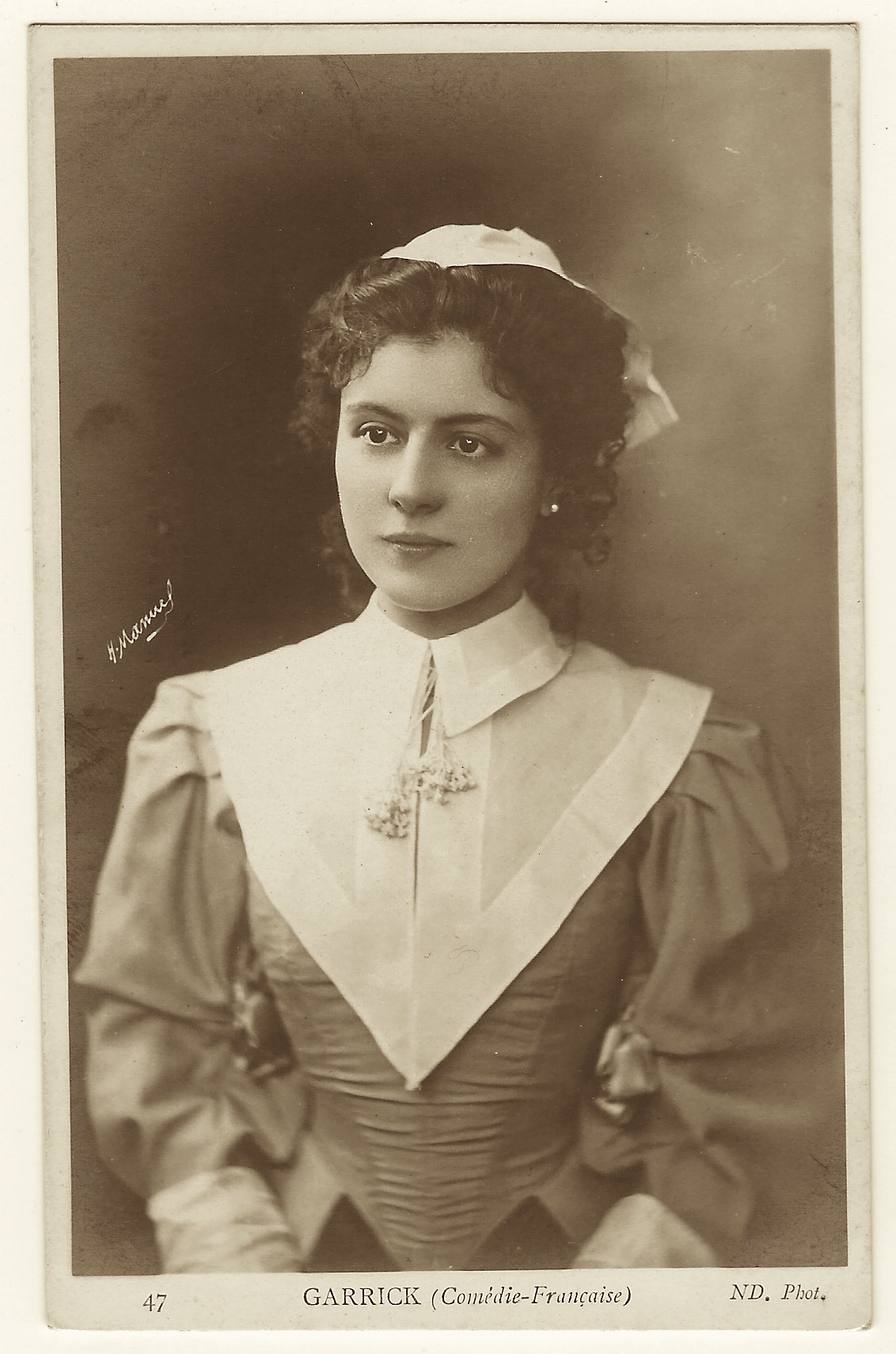
This vintage real photo postcard features the beautiful French theatre actress, Yvonne Garrick (1878-?). She performed at the “Theatre de L’Odeon”  and the “Comedie-Francaise” in Paris. During the World War I years, she appeared at the “Theatre Francais” in New York City. The IDBD reports that she performed on Broadway in two productions;  “Lets Go” (1918) and “Musk” (1920). The magazine, “Sketch: A Journal of Art and Actuality” (1902) published a glowing article about Mlle. Garrick. The writer stated that no artist had made such a “positive hurricane progress” in the French theatrical world as Yvonne Garrick of the O’Deon.  The critic also stated that he had recently seen Garrick in a play and her performance reminded him of the early days of Sarah Bernhardt. Although thewriter admits that she may not be the second coming of Mlle. Bernhardt; he believes that Garrick will make a world wide reputation. He continues to write that he has seen no young actress so “natural and so “sympathetic”.  The New York Times (1908) published a review for the play “Jeanne Qui Rit” in which Mlle. Garrick played a starring role. The article states that Yvonne Garrick was a young actress who has attracted much attention at the Comedy-Francaise. She was reported to have received a hearty reception and was “repeatedly recalled” (cheered for an encore). A New York Times (1918) article records Mlle. Garrick’s debut in a New York farcical comedy “Mon Ami Teddy”. In the piece she is described as a “comely and charming actress who proves a most welcome recruit from the Paris stage”.

Postcard 1 provides a portrait of Mlle. Garrick during the time she was appearing at the Comedie-Francaise.  The photograph was taken by Henri Manuel (1874-1947). In 1900, Manuel opened a portrait studio in Paris with his brother Gaston. He quickly became renowned for his portraits of politicians, artists, and athletes. His images were used by news agencies . His studio became the largest studio in Paris and it attracted many young photographers who sharpened their skills there. In 1925 the brothers expended their business to include fashion photography. They worked for such designers as Chanel, Patou, and Lanvin. The studio shut down during World War II and many of their photographic plates were destroyed. Manuel was the official photographer for the French government from 1914 through 1944. To view other photographs by Manuel, click on the category “Photographer: Manuel”. This portrait postcard is in very good condition (see scans).

Postcard 2 was taken by celebrity photographer, Leopold Reutlinger as part of a series (No.1306). The card was published by SIP.  (SOLD)

Postcard 3 was taken by celebrity photographer, Leopold Reutlinger as part of a series (No.1282). He was based in Paris. The card was published by SIP. (SOLD)

Buy this Vintage Real Photo Postcard (includes shipping within the US) #3916

To purchase this item, click on the Pay with PayPal button below

$27.75

Buy this Vintage Real Photo Postcard (includes International shipping outside the US) #3916

To purchase this item, click on the Pay with PayPal button below

$37.00

Postcard 1

Postcard 2

POSTCARD 3

GABY DESLYS: BEAUTIFUL & TALENTED ACTRESS, DANCER & SINGER : EAS : RPPC

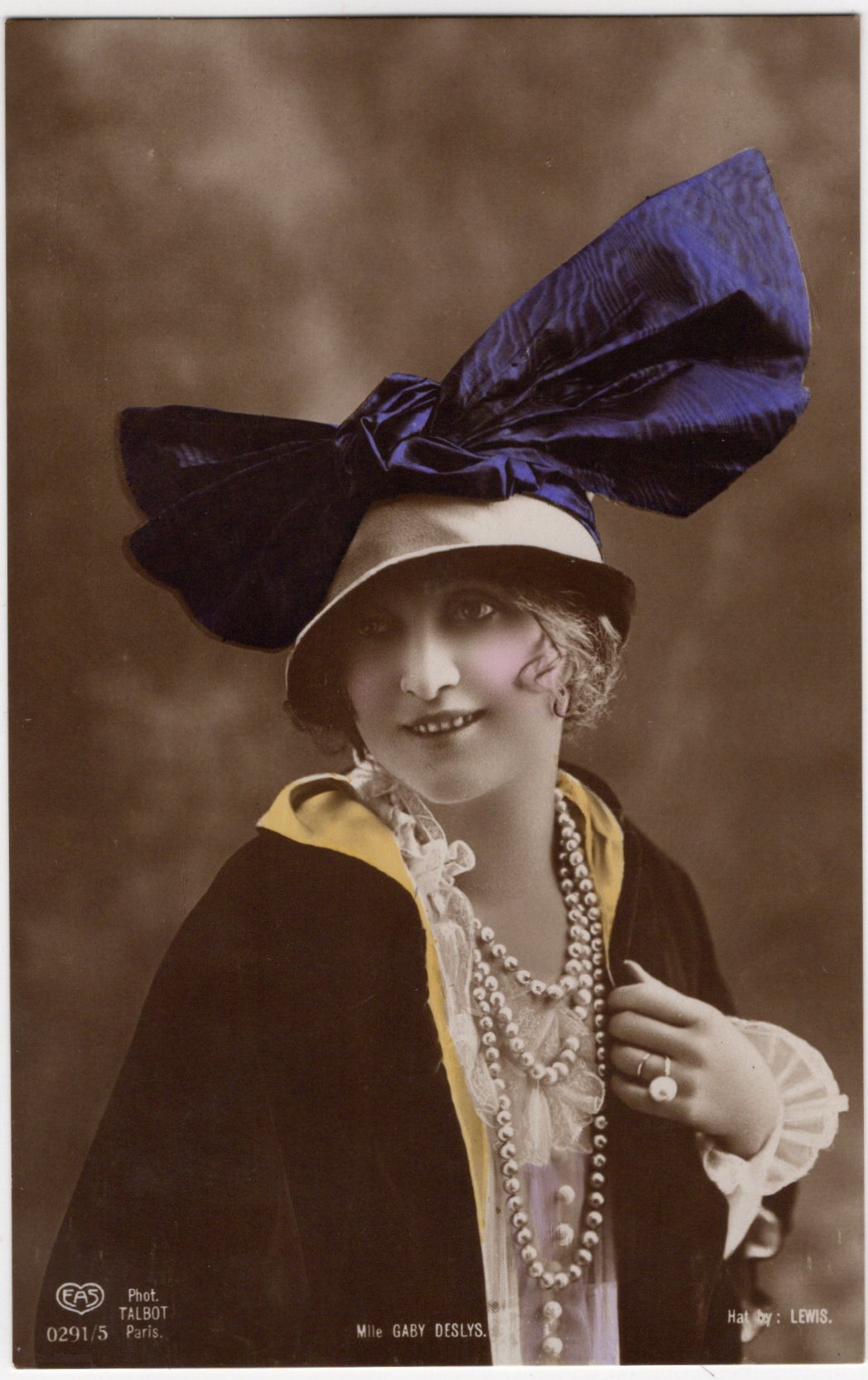
This vintage real photo postcard features a portrait of the multi talented actress, dancer, and singer, Gaby Deslys (1881-1920). Miss Deslys performed at the beginning of the twentieth century in both Europe and the United States. She was extremely popular worldwide. In fact, she was able to earn four thousand dollars a week when performing in the United States. She performed several times on Broadway. She had a dance named after her, “The Gaby Glide” (1911). You can find the sheet music, with Gaby on the cover, elsewhere on ebay. Her love life was the topic of much public gossip. She probably added to the sensationalism surrounding her by posing in a number of risque postcards. She was courted by many wealthy and powerful men, including the King of Portugal. Her life was cut short by the “Spanish” influenza.  It was published by E. A. Schwerdtfeger Company of London and printed in Berlin (no. 0291/5). The company also had an office in New York (opened in 1910). This publishing house printed many different types of real photo postcards but was known for its hand-colored real photo postcards of actresses and fashionable women in exotic costumes. The photographer was the Talbot studio (Paris). The creator of Miss Deslys’s hat is also credited (Lewis). Gaby Deslys is shown in a softly lit studio setting, posed in a three-quarter view and looking directly toward the camera with a gentle, confident smile. Her expression is warm and engaging. She is wearing a fashionable cloche-style hat adorned with an enormous silk bow, dramatically oversized and extending widely on both sides of the hat. The bow has been hand-colored in a deep blue tone, making it the most visually striking element in the photograph. The photograph itself is sepia-toned, but selective hand-coloring has been applied to parts of her clothing—most notably the bow, the yellow lining of her coat or wrap, and subtle tinting on her blouse—creating a refined, elegant effect. Deslys is dressed in an elegant outfit consisting of a dark wrap or coat with a light-colored lining, worn over a delicate lace blouse. Around her neck she wears multiple strands of pearls, reinforcing her image as a glamorous stage celebrity. On her right hand she wears a ring, and her hand is posed lightly against her coat lapel, a classic studio pose meant to convey poise and sophistication. The background is softly blurred and neutral, ensuring full attention remains on the sitter. The overall composition—large hat, pearls, lace, and hand coloring—creates a strong sense of Parisian fashion and theatrical elegance from the late 1910s or early 1920s. Overall, this is a striking and stylish Paris studio portrait that captures Gaby Deslys at the height of her fame, emphasizing fashion, glamour, and personality—everything that made her one of the most famous French music hall stars of her era. This vintage postcard is in excellent condition (see scans).

This vintage postcard is available for purchase at my store, The History Peddler, for $45.00 or best offer.

Interested collectors may view the listing here:

https://www.ebay.com/itm/336520522171

Published in: on April 5, 2026 at 5:57 pm  Leave a Comment  

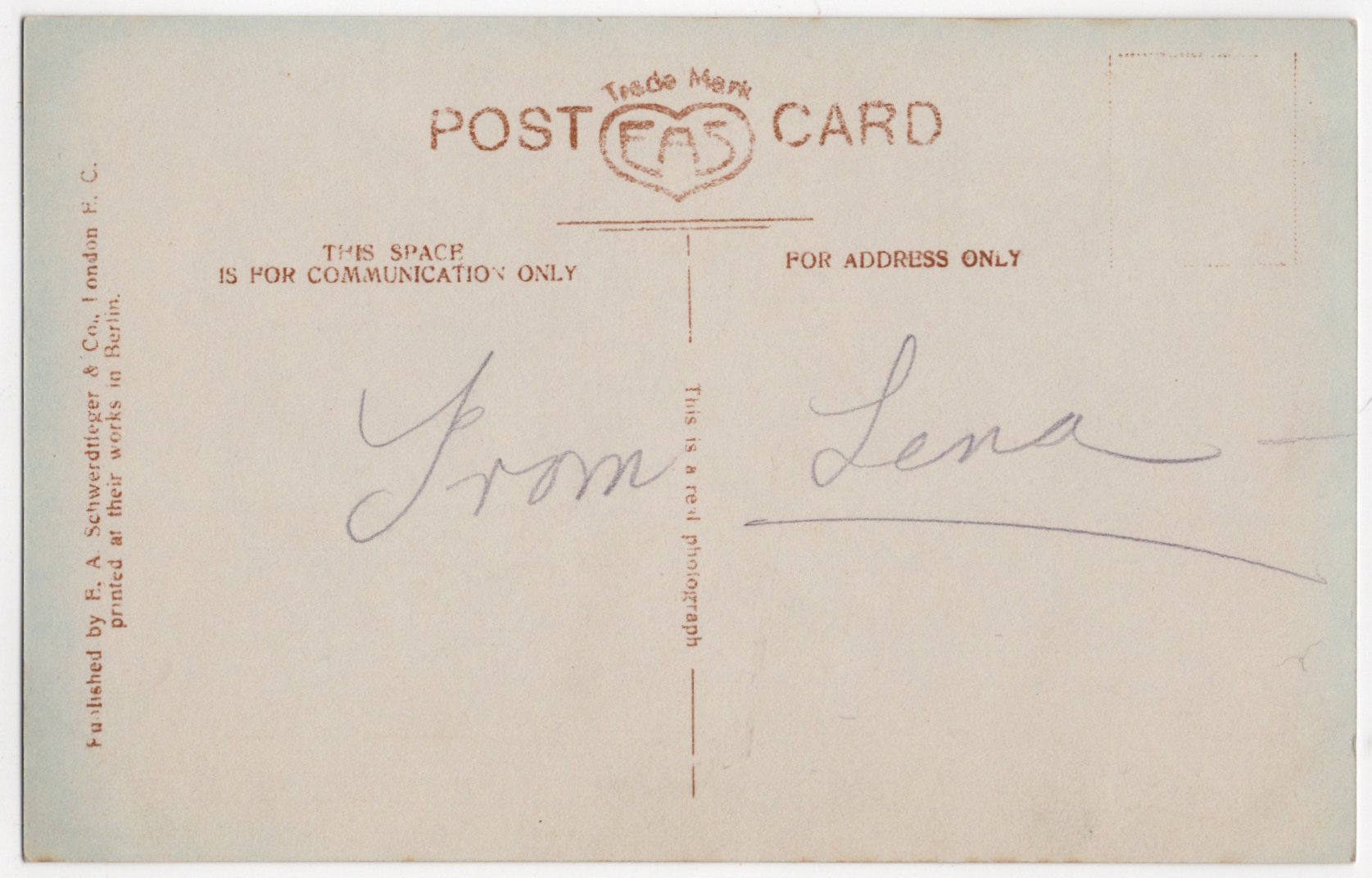
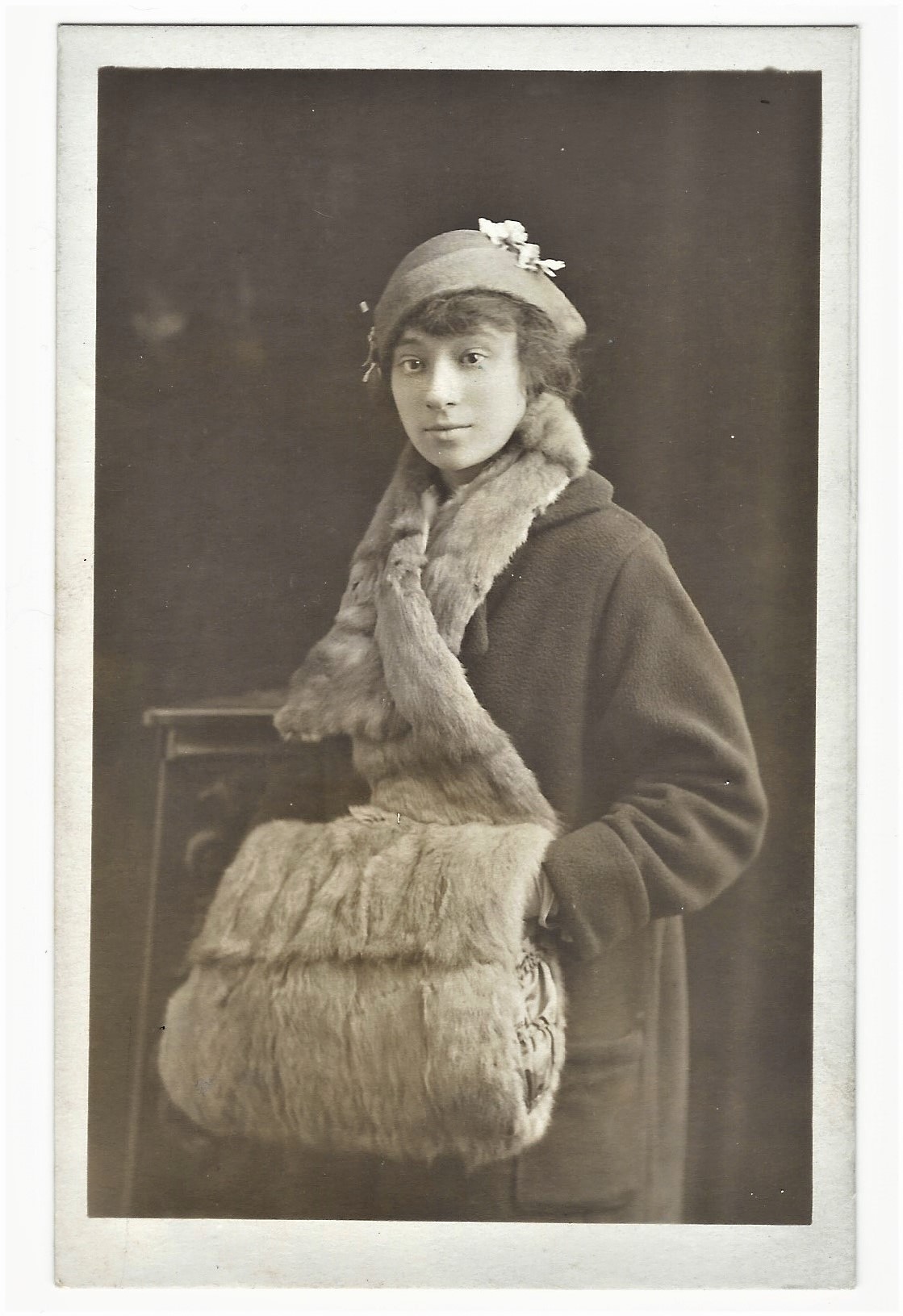
A YOUNG WINTERIZED ETHNIC WOMAN AND HER GIANT MUFF

This vintage real photo postcard features a young woman posing in her winter jacket and her fur stole. Her winterized clothing also includes a cute hat and a giant muff. The fur muff will certainly keep her hands warm. In fact, these muffs are so large that they could probably keep three of her friends hands warm too. The woman in this photo, in my opinion, appears to be black or mulatto. This postcard was photographed by the USA studios which was located in London and the Provinces. USA Studios  was a firm established in England during the Edwardian period. It was established in around 1907. The firms focus was portrait photography. The company was also known as the American Photographic Company. The firm was started by either photographer John Harry Woolfe (1880-1942) or by his parents, Henry Wolfe (1852-1927)  and Mrs Fanny Wolfe (1854-?). John Harry Wolfe”s younger brother, William Swift Woolfe (1893-?), also became a photographer. John Harry became a photographer in the early 1900’s and bought an established London studio in 1907. The studios were very successful during World War I. The studios were all managed by Wolfe family members until World War II. John Harry’s mother, Mrs Fanny Woolfe, was listed as the proprietor of some of the USA studios. A list of the company’s studios indicates that there were at different times, fourteen studios in London and it’s nearby towns. These studios operated between 1907 and 1919. There were thirteen studios in the provinces and they were in operation cumulatively between 1907 and 1969.  SOLD
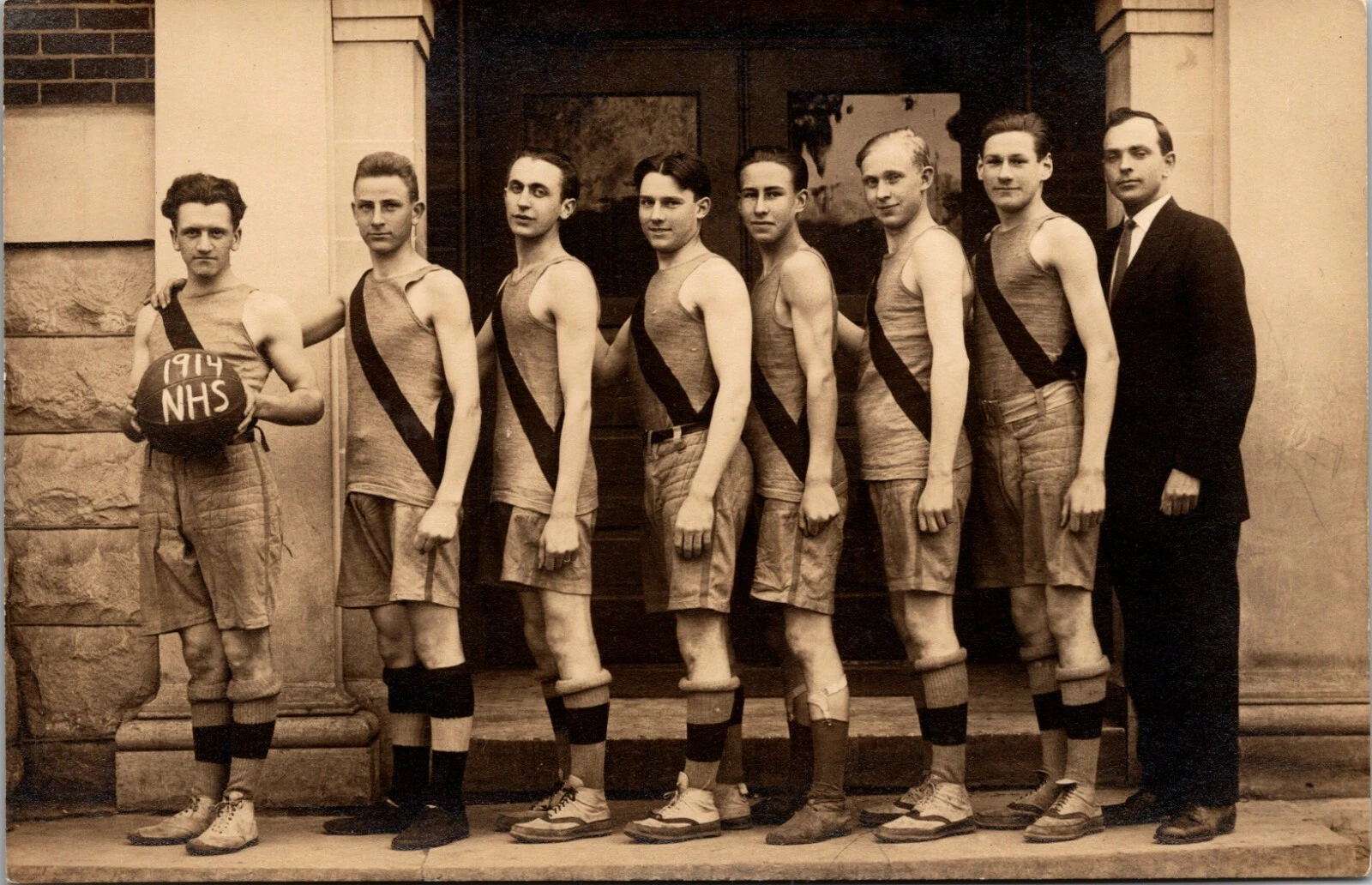
PHOTO OF A HIGH SCHOOL BASKETBALL TEAM : 1914 : CYKO STAMP BOX

This vintage real photo postcard features a seven member basketball team and their coach. One player holds a ball marked with the team’s name (initials only) and the year 1914. Note the player’s uniforms. Long baggy shorts and tank top shirts were the order of the day. It is interesting to note, that just like the present, the team’s coach wears a suit for photos and games. SOLD

Published in: on April 4, 2026 at 12:00 pm  Leave a Comment  

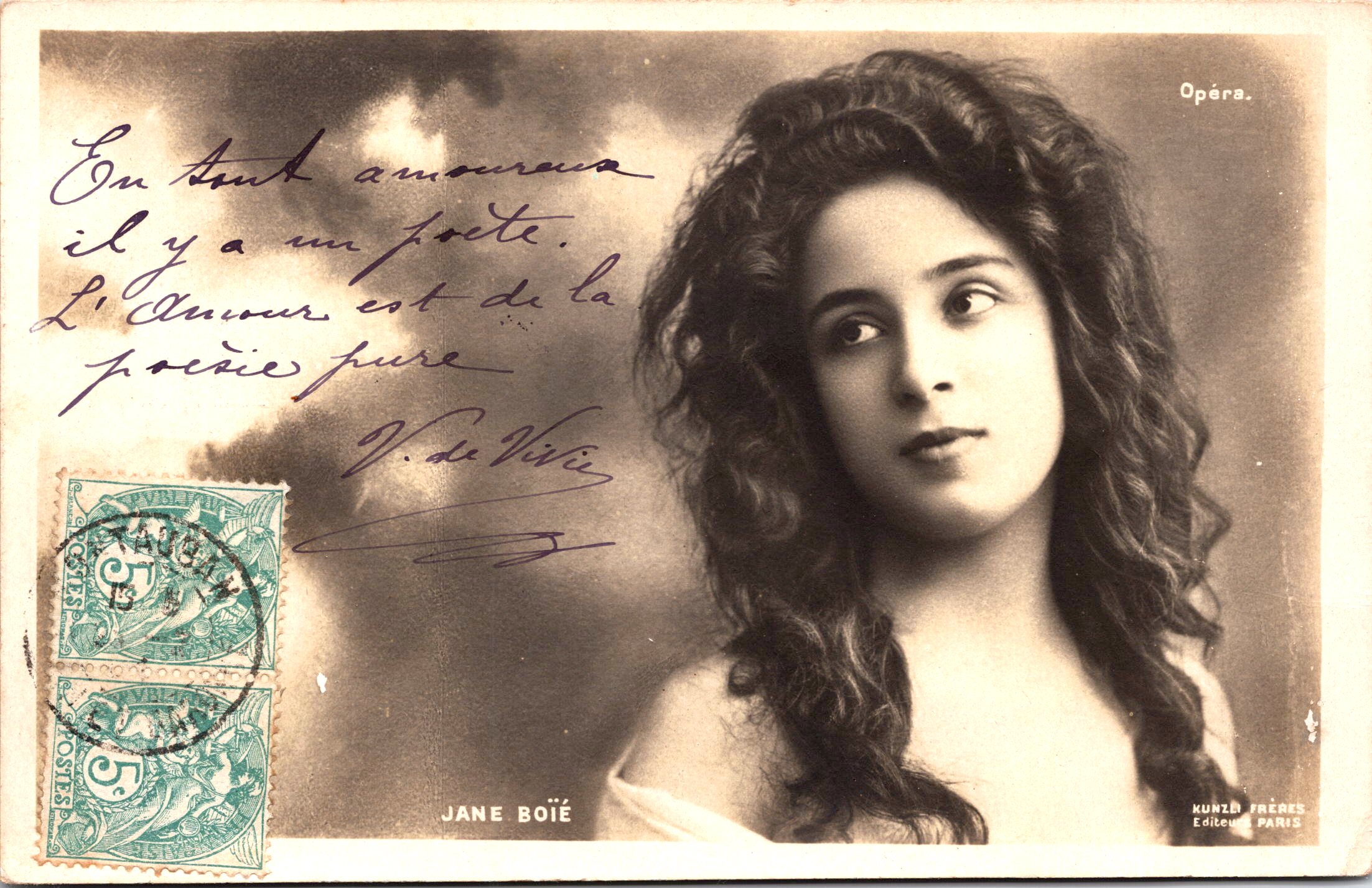
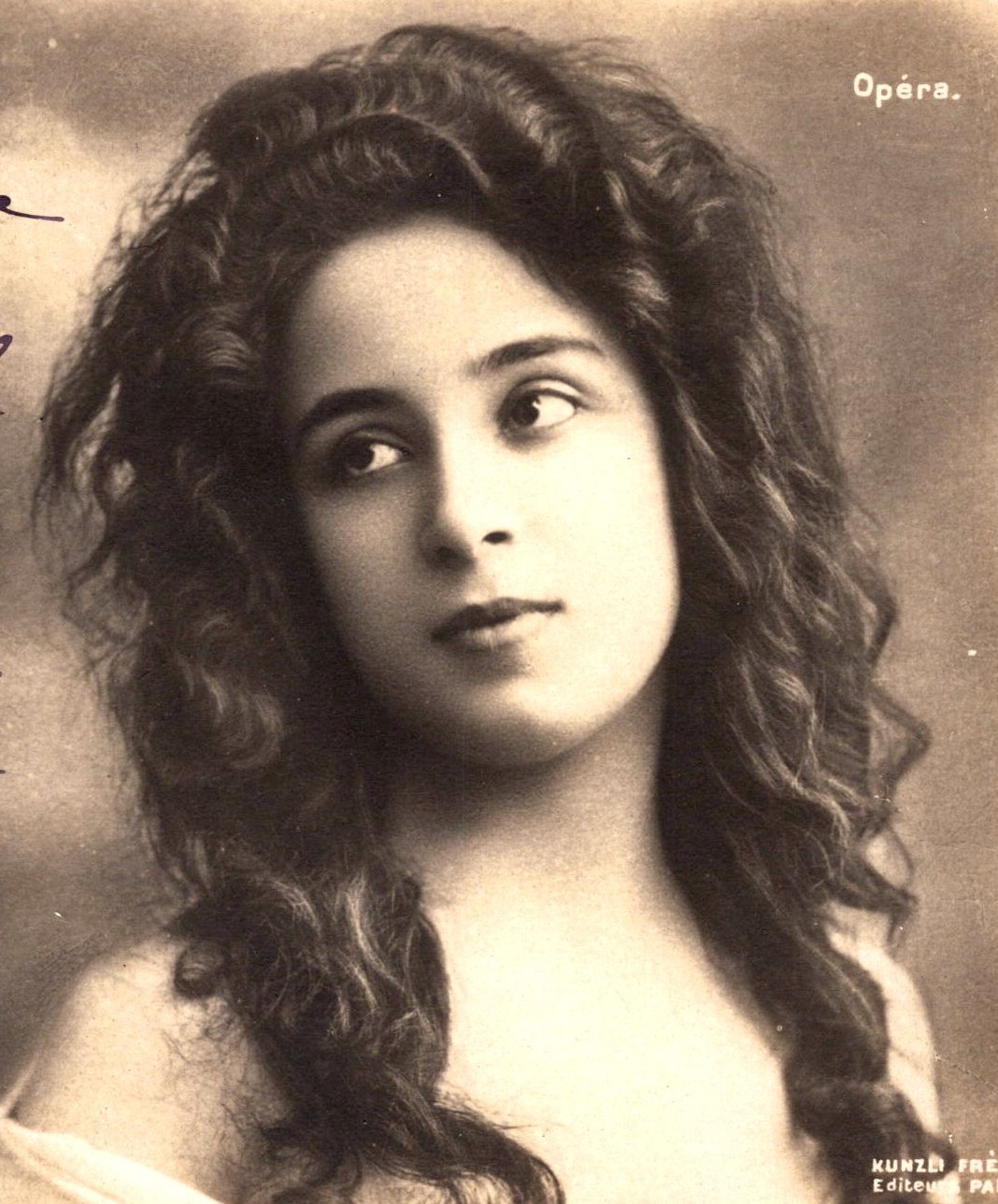
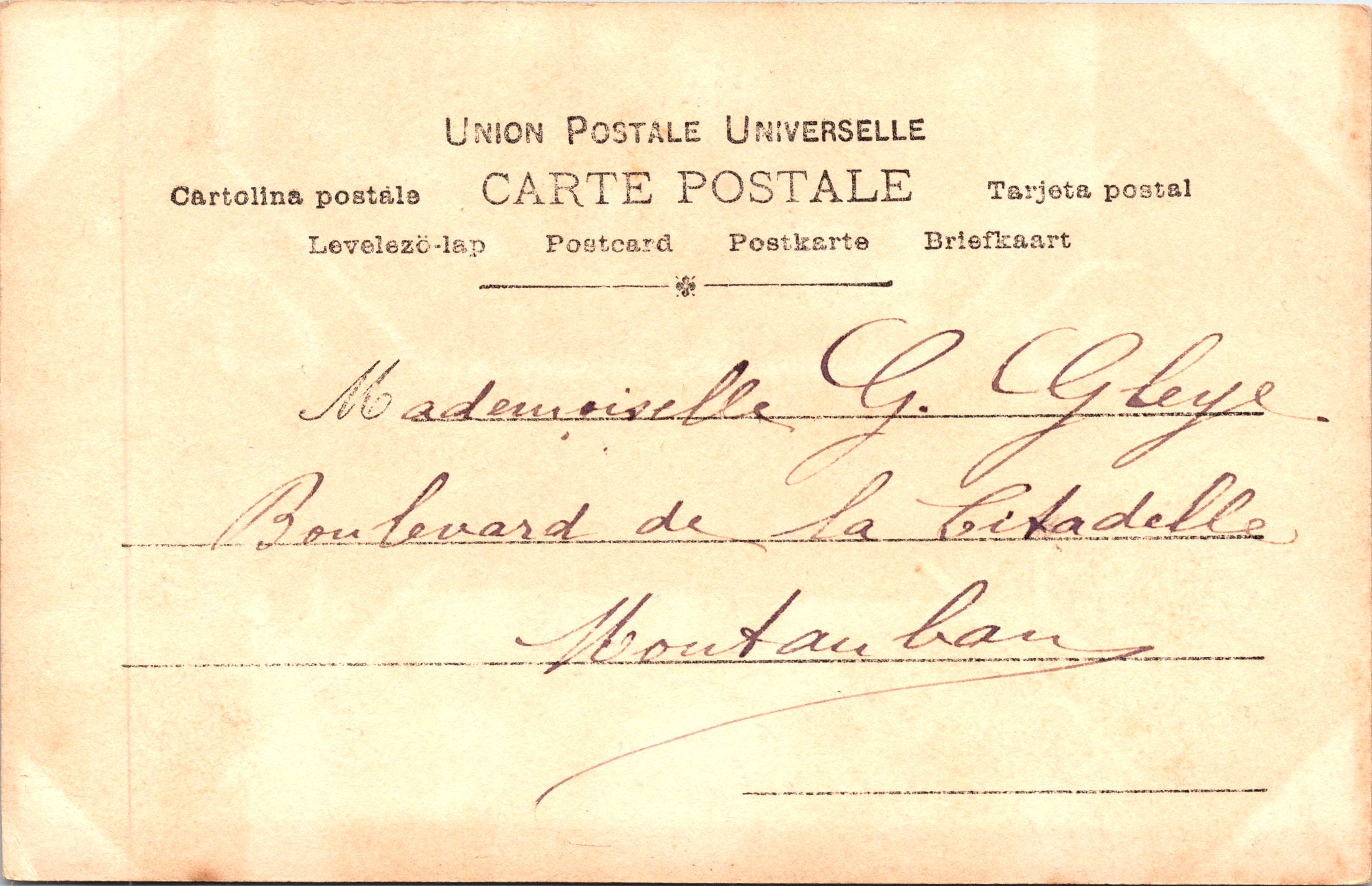
JANE BOIÉ : OPERA SINGER : KUNZLI : PARIS, FRANCE : RPPC c1905

This beautiful antique postcard features French opera singer Jane Boïé, shown in a soft-focus studio portrait typical of early 20th century theatrical photography. Her name appears printed at the bottom of the card, and the word “Opéra” appears in the upper right corner, indicating that she was an opera performer rather than a stage actress or music hall performer. This designation was commonly used on European theatrical postcards to identify performers associated with opera companies or operatic roles. The postcard was published by Künzli Frères, Paris, a well-known French postcard publisher active in the early 1900s and particularly noted for producing high-quality theatrical and celebrity postcards of opera singers, actresses, and performers. The company was one of the largest pioneer postcard publishing houses. The company was established in 1874. It had offices in Zurich and Paris. Beginning 1898, it became known for publishing postcard maps throughout Europe. Miss Boie’s photograph was taken by the esteemed Reutlinger studio in Paris. Jane Boïé was a French opera singer (soprano) active in the early 20th century, particularly in the period around 1900–1915. She performed in opera and operetta and appeared in a number of productions in France and possibly Belgium. Singers like Boïé were frequently photographed and issued as postcards because opera singers were major celebrities of the era, much like film stars a few decades later. The translated handwritten message on the front of the postcard is in French and reads: “In every lover there is a poet. Love is pure poetry.” — Alfred de Vigny. Alfred de Vigny was a famous 19th-century French poet and writer, and this romantic quotation was likely chosen to accompany the portrait image. The postcard bears two 5 centimes French stamps and a postmark, indicating it was mailed. SOLD

Published in: on April 3, 2026 at 12:00 pm  Leave a Comment  

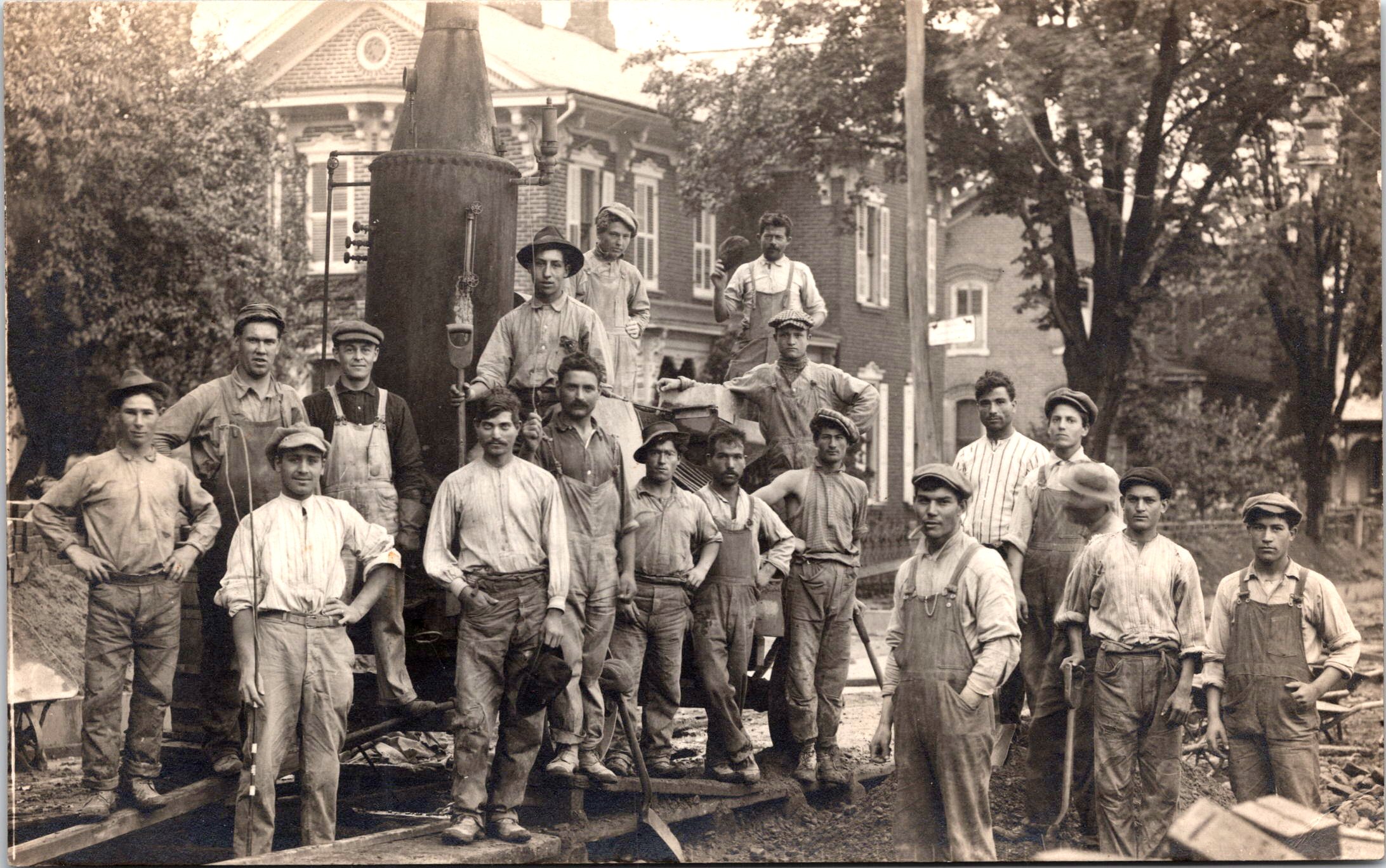
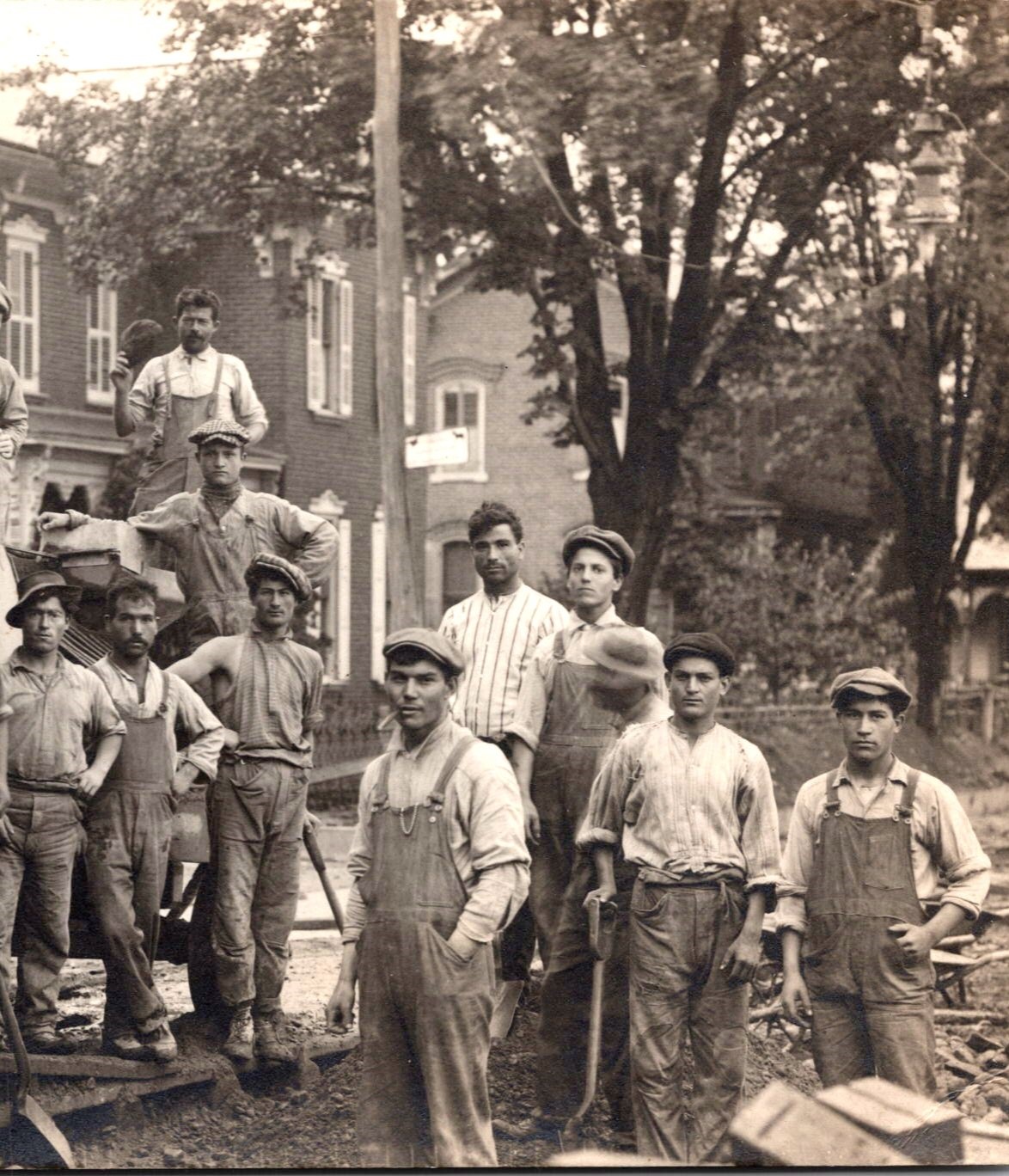
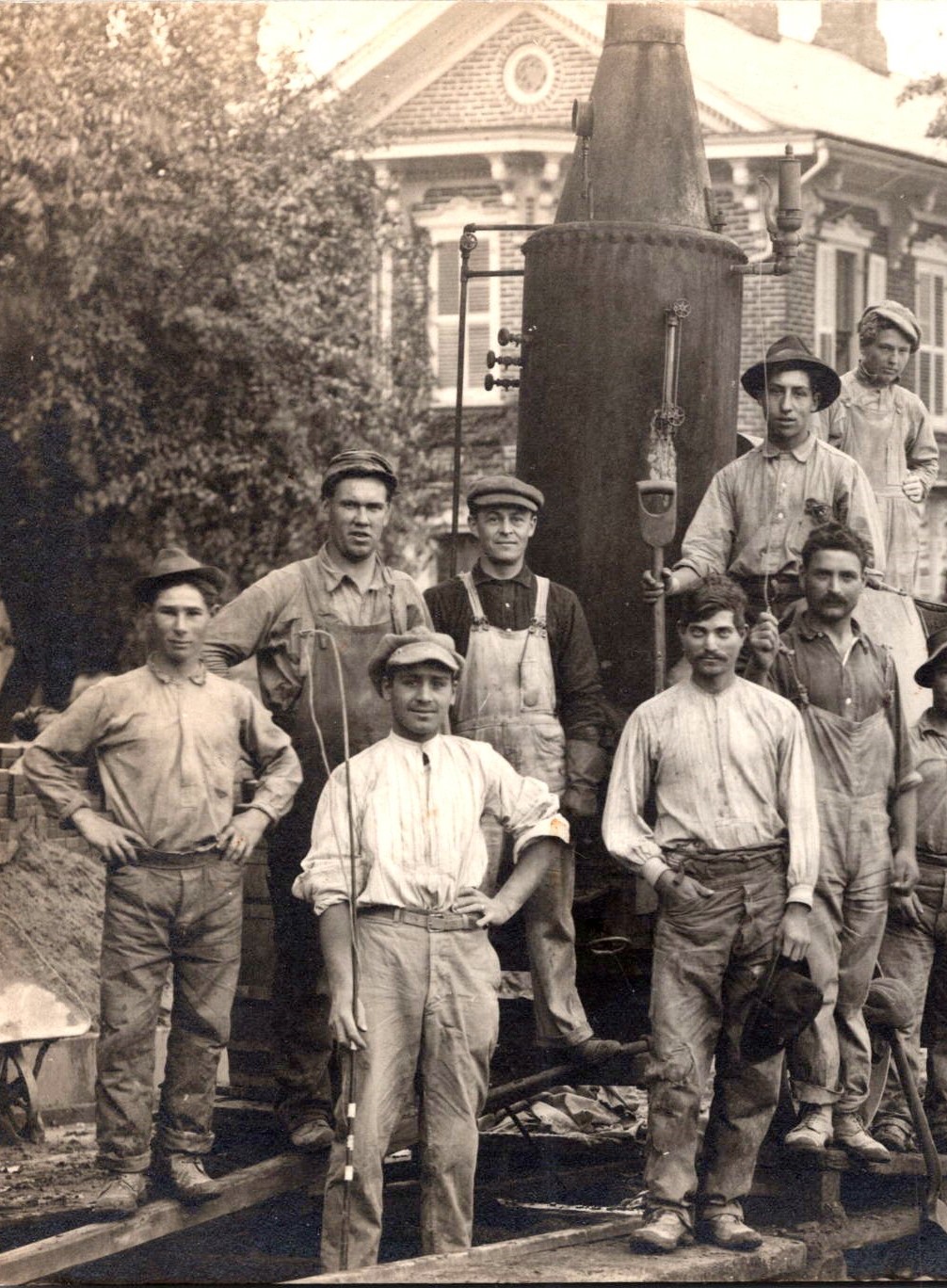
GROUP OF WORKMEN WITH STEAM ENGINE : OCCUPATIONAL: VINTAGE RPPC (1904-1918)

This vintage real photo occupational postcard features a portrait of a large group of construction workers. They are standing by some sort of steam engine. They may be constructing tracks or a bridge.  SOLD

Published in: on April 3, 2026 at 11:30 am  Leave a Comment  

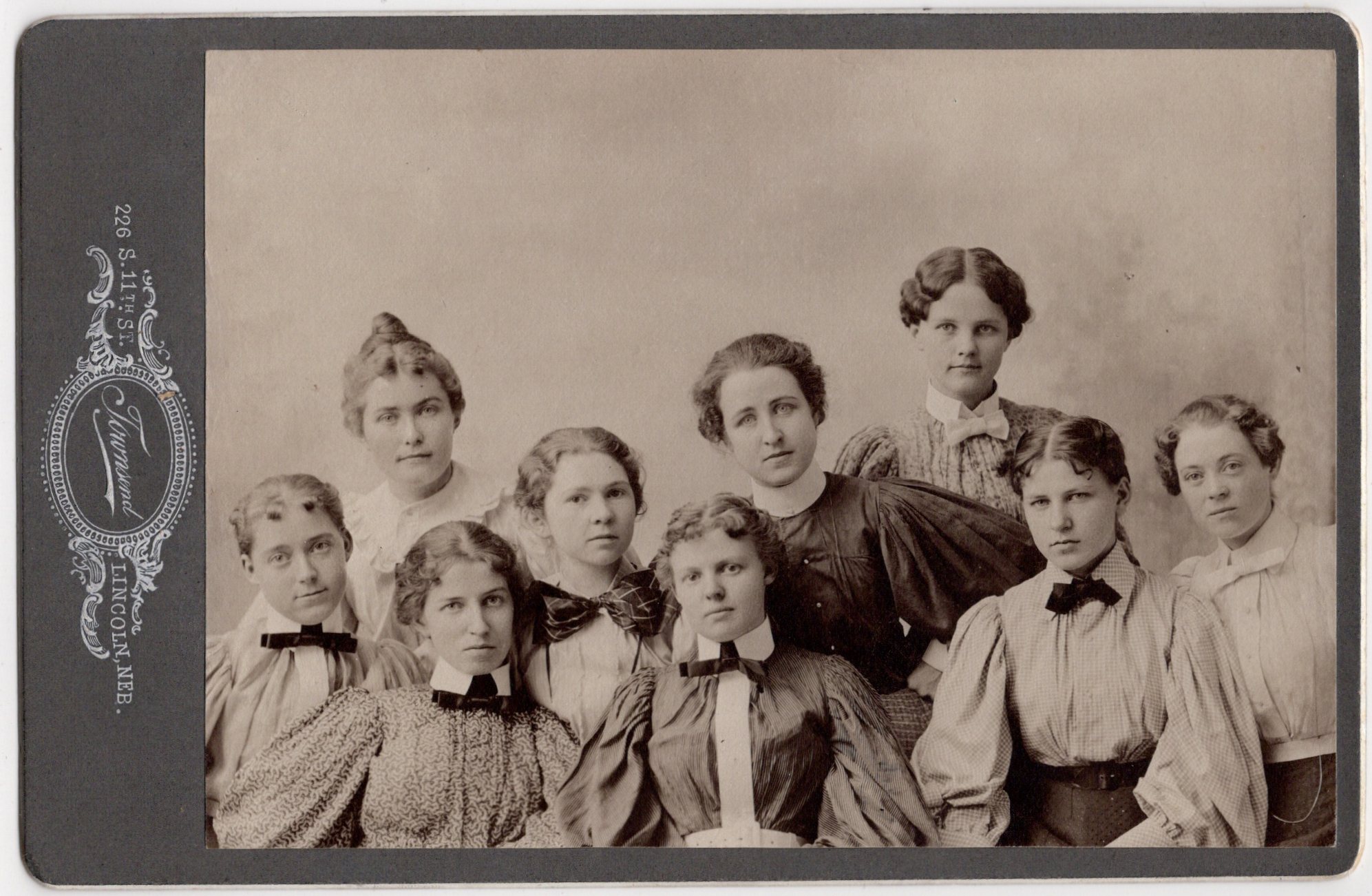
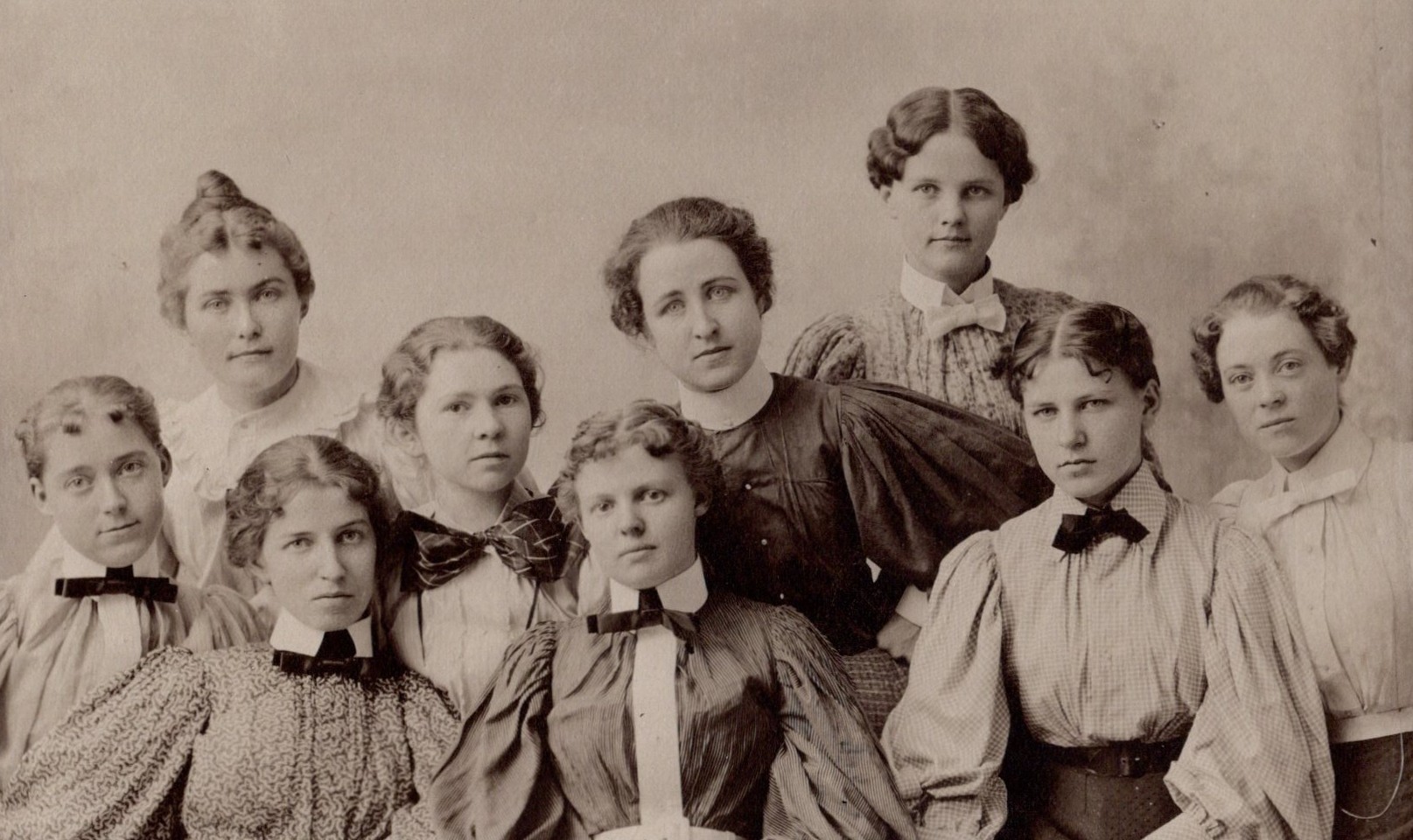
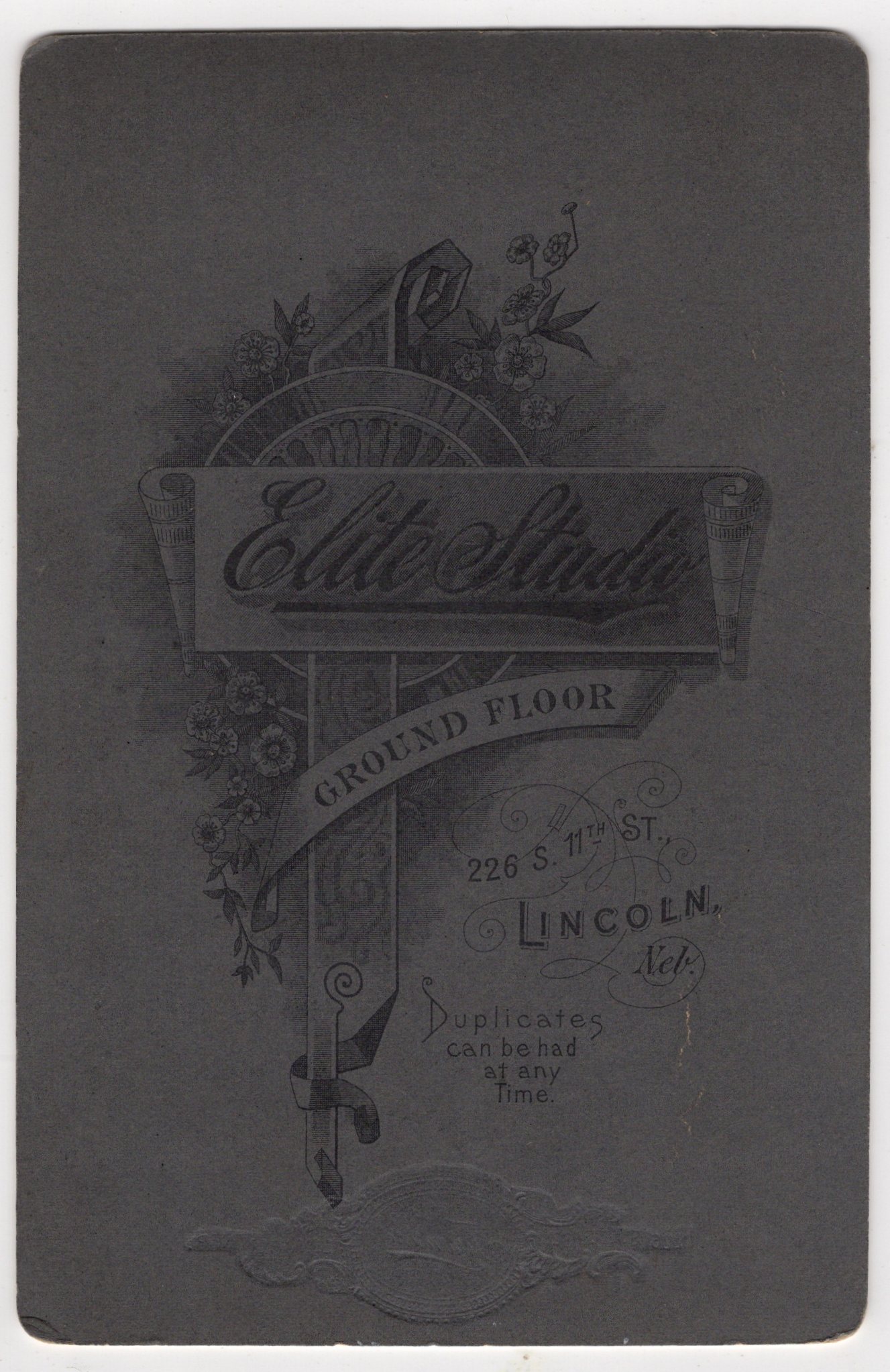
NINE YOUNG WOMEN : CLASS PHOTO : ELITE STUDIO : LINCOLN NEBRASKA : CABINET CARD

This is an exceptional and visually striking cabinet card featuring a group portrait of nine young women, posed closely together in a carefully arranged studio composition. Their attire—high-collared blouses, puffed sleeves, and decorative bows—reflects late Victorian to early Edwardian fashion, suggesting a date in the circa 1895–1905 range. The sitters present a unified and dignified appearance, possibly indicating a school group, literary society, or women’s club, all of which were increasingly prominent during this period. The photographer’s imprint appears prominently on the mount: “Elite Studio, Ground Floor, 226 S. 11th St., Lincoln, Neb.” The elaborate back mark, featuring decorative typography and floral motifs, is typical of turn-of-the-century cabinet card design and suggests a studio positioning itself as modern and upscale. It is likely that the photographers name is “Townsend”. That name can be found in the logo. Lincoln, Nebraska, during the cabinet card era was a rapidly growing Midwestern city following its designation as the state capital in 1867. By the late 19th century, Lincoln had developed into a regional hub for education, commerce, and culture, anchored by the presence of the University of Nebraska. The image itself is beautifully rendered, with strong tonal range and fine detail in the faces and textiles. The women’s expressions range from composed to subtly assertive, lending the photograph a compelling presence and a sense of individuality within the group. The cabinet card is in very good antique condition overall. The photograph remains crisp and well-defined, with strong contrast. There is light corner wear to the mount. The reverse backmark is clear and attractive, with only minor wear and no significant damage. Overall, this is a clean and highly displayable example. See Scans.

This vintage postcard is available for purchase at my store, The History Peddler, for $28.00 or best offer.

Interested collectors may view the listing here:

https://www.ebay.com/itm/236722549767

Published in: on April 2, 2026 at 12:00 pm  Leave a Comment  

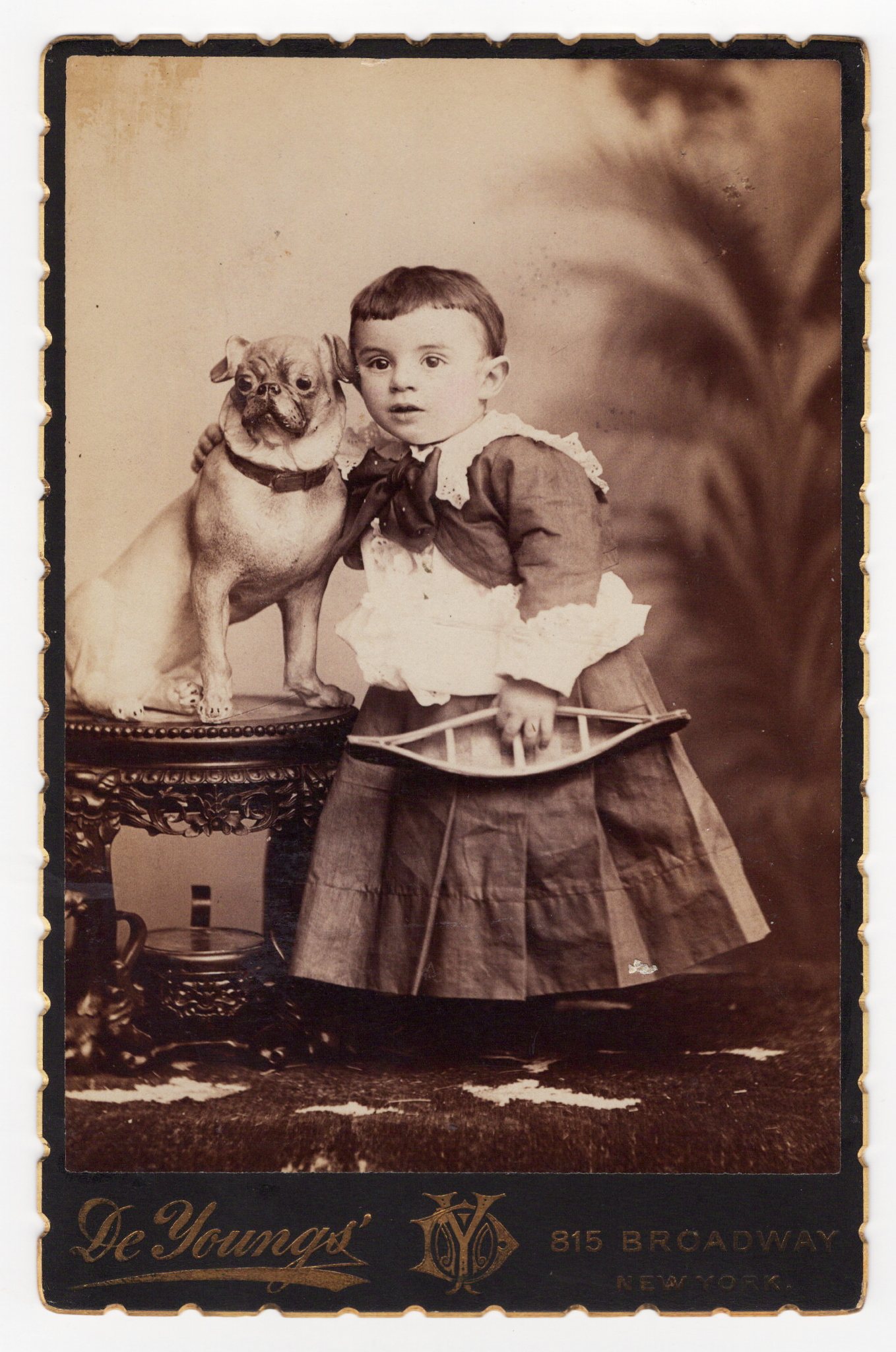
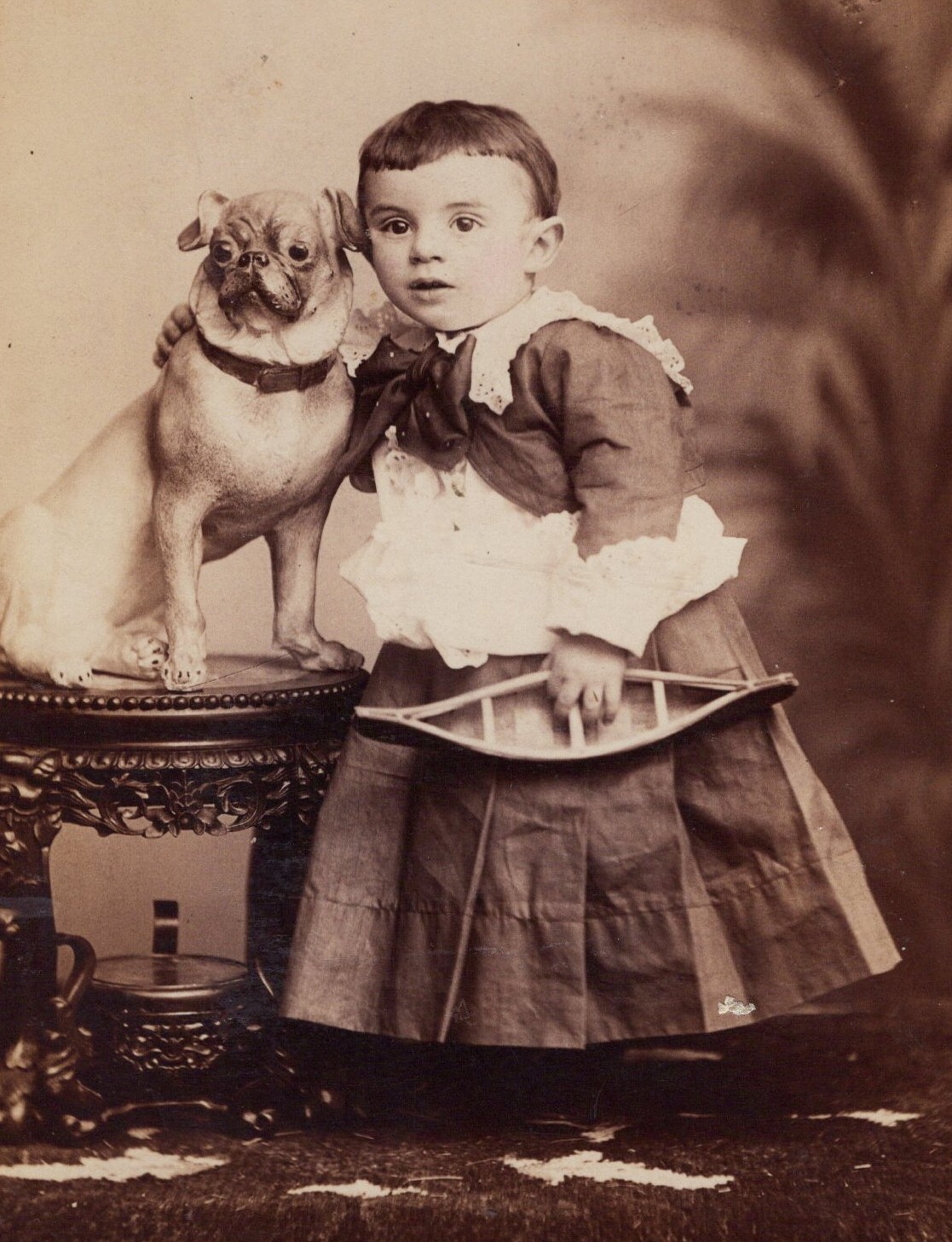
A CHILD POSES WITH HIS PUG DOG : DE YOUNGS’ STUDIO :NEW YORK CITY : CABINET CARD

This striking cabinet card photograph captures a young child, seemingly around two or three years old, standing beside a small dog that is perched on an ornately decorated pedestal table. The child, dressed in a beautifully tailored Victorian outfit, places an arm around the dog in a gentle yet confident embrace, looking directly at the camera with an expression that conveys a mix of curiosity and composure. The child holds a small wooden toy boat, a charming prop that adds an element of playfulness to the otherwise formal portrait. The child is dressed in a dark-colored, long-sleeved dress with a pleated skirt, a lace-trimmed collar, and a large bow at the neck. White lace detailing decorates the cuffs and bodice, further emphasizing the intricate craftsmanship of the garment. The child’s short, neatly trimmed hair, round face, and large eyes give them an endearing yet serious appearance. At first glance, the dog appears almost lifelike, but upon closer inspection, its stiff posture, rigid gaze, and unnatural stillness suggest that it may not be a live animal but rather a taxidermy specimen or even a sculpted prop. The dog’s breed resembles that of a pug or pug-mix, with a compact, sturdy build, a broad face, short snout, and slightly bulging eyes. Its expression is frozen in an almost human-like seriousness. The photograph is mounted on a cabinet card with elegant scalloped edges, a decorative feature that enhances its visual appeal. The photographer’s name, De Young’s, is embossed in gold lettering at the bottom, along with the studio’s address at 815 Broadway, New York. The photographer, Joseph DeYoung (1843-1919), was both well known and highly respected. He had operated his studio from a number of addresses in New York City. He left the 815 Broadway address, where this photograph was taken in about 1890. He was at that location from at least 1884. In 1907 DeYoung’s studio was involved in the apprehension of a noted thief. The studio had a display case outside the store so pedestrians could see samples of their work. The thief was caught jimmying open the case and removing two sports photographs. The police were very interested in the home address given to them by their new arrestee. They were surprised that he lived in a mansion but it made sense when they learned he was a millionaire’s butler. He had worked in that same capacity for other millionaires living in the city. When the police searched his room, they found a cache of personal items belonging to his current and former employers. Years later, a deceased DeYoung made the news because of his bizarre estate planning. When he died, he left five dollars to his wife, five dollars to his son, and one half of his business to his business partner, Matilda Wallace. The back of the cabinet card is a masterpiece in itself, featuring an elaborate gold-embossed design against a black background. Swirling Victorian filigree, floral motifs, and elegant typography proudly advertise the services of De Young’s as Photographers, Portrait Painters, and Crayon Artists. The phrase “Extra Finish” suggests that this particular image may have been a premium offering, possibly with superior printing quality or special treatment. (SOLD)

Published in: on April 2, 2026 at 11:30 am  Leave a Comment  

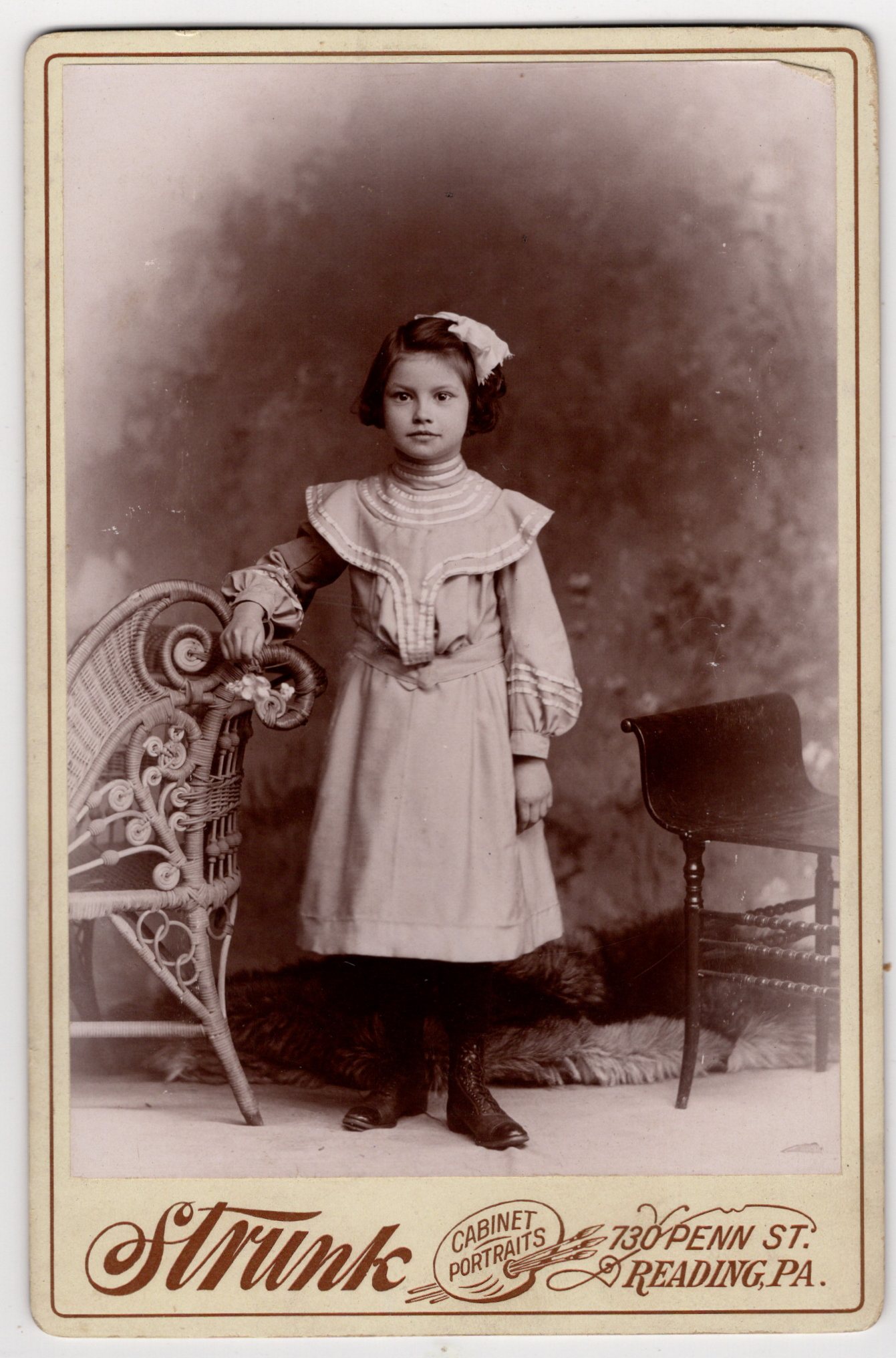
ADORABLE BRIGHT EYED YOUNG GIRL : READING, PENNSYLVANIA : CABINET CARD

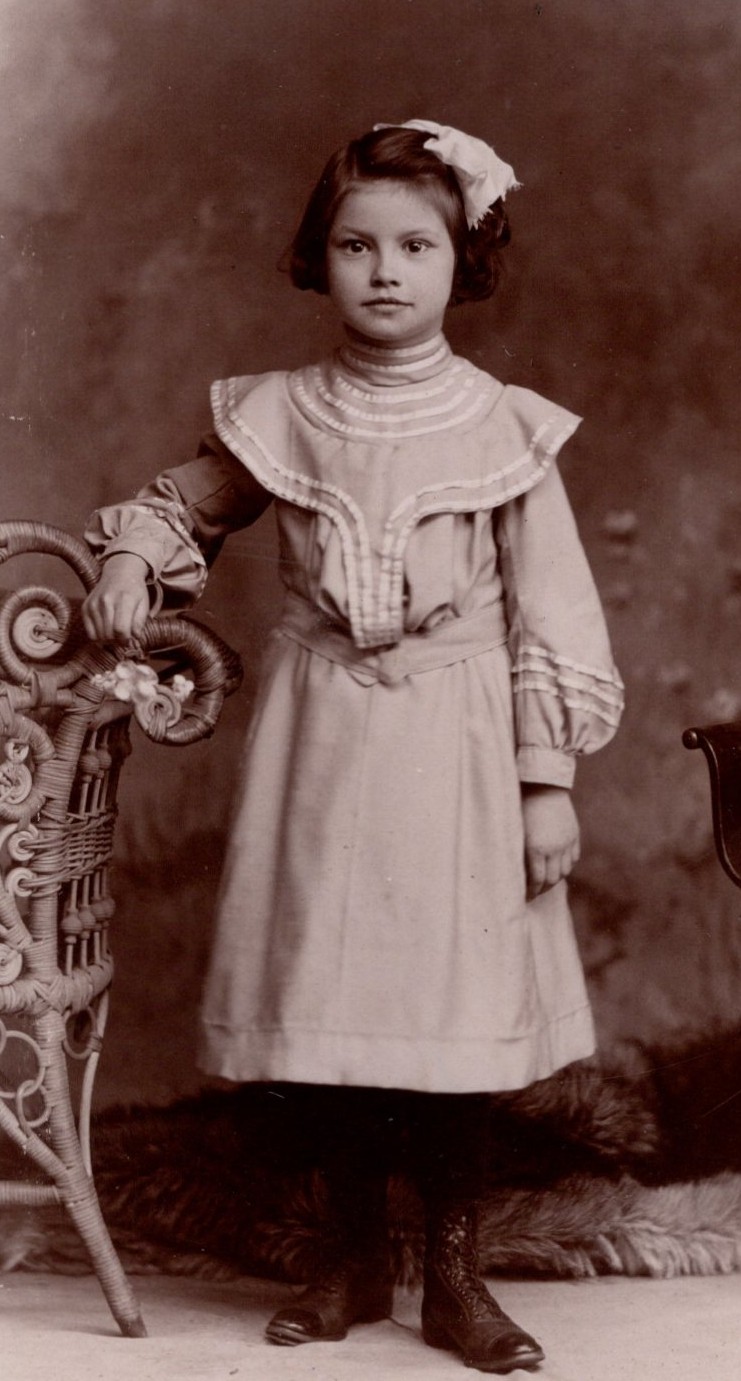
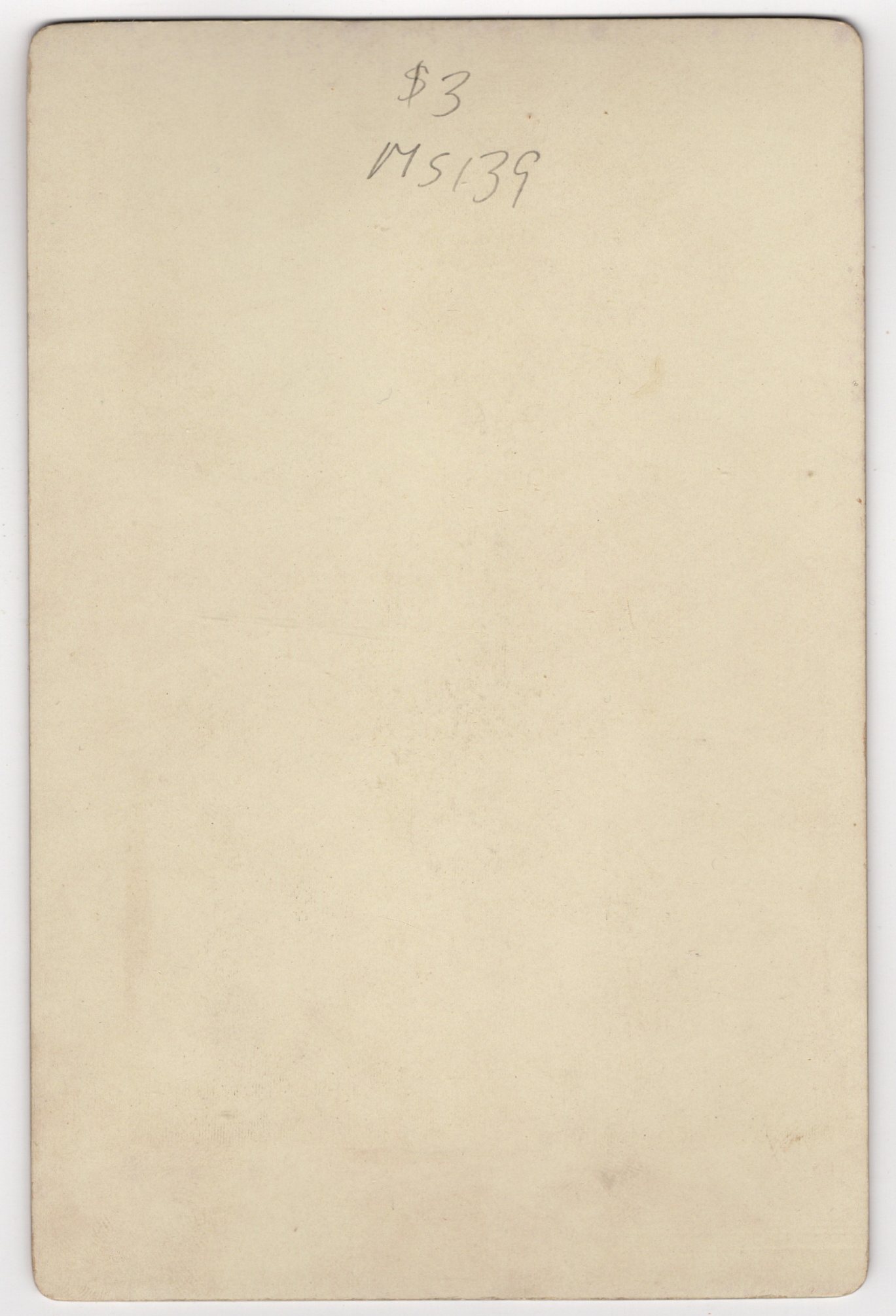
This lovely antique cabinet card photograph features a full-length studio portrait of a young girl, photographed by Strunk of Reading, Pennsylvania, whose studio imprint appears prominently at the bottom of the mount. The girl stands beside an ornate wicker chair, resting one hand on the elaborately curved armrest. A small wooden chair is positioned on the opposite side, and a fur rug is visible beneath her feet, all typical studio props used in late 19th and early 20th century portrait photography. The painted studio backdrop creates a soft, neutral setting that keeps the focus on the subject. She wears a light-colored dress with decorative trim and a wide, ruffled collar, along with dark stockings and lace-up boots. A large bow adorns her hair, which is styled in a short bob with gentle waves. Her expression is serious and composed, as was common in children’s studio portraits of the period, and she stands very still in a formal pose, suggesting the photograph dates to a time when longer exposure times required subjects to remain motionless. John D. Strunk was a well-known Reading, Pennsylvania photographer and a pioneer in photography in the region, operating a studio in Reading for many decades. His cabinet cards are widely collected today, particularly those depicting children and families from the Reading area. I have a collection of Strunk photographs; he was a prolific photographer. Much of his work reflects high craftsmanship. This cabinet card is in very good condition for its age. The photograph retains strong detail throughout, with good contrast and clarity. The image has a tiny crease in it’s top right corner but is generally clean. Overall, it presents extremely well and remains a well-preserved portrait of an adorable little girl. (see scans). Based on the mount style, studio props, and the child’s clothing and hairstyle, this cabinet card likely dates to the late 1890s to early 1900s.

This Cabinet Card is available for purchase at my store, The History Peddler, for $24.00 at auction.

Interested collectors may view the listing here:

https://www.ebay.com/itm/336504202383

Published in: on April 1, 2026 at 12:00 pm  Leave a Comment