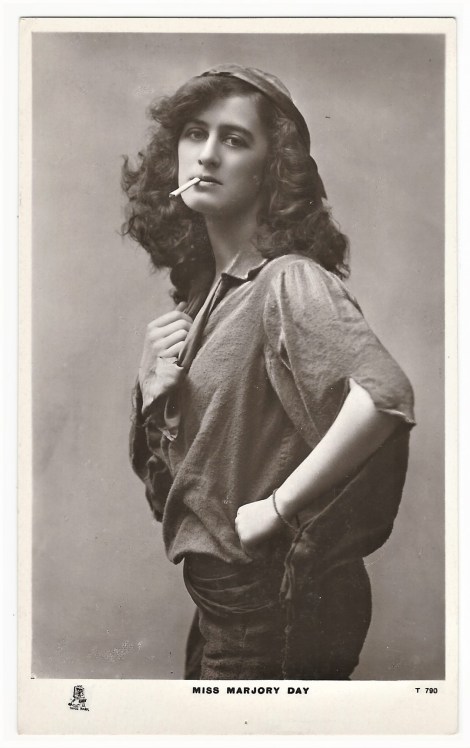
 This vintage real photo postcard features actress Marjory Day (1887-1940). She was born in New Zealand. She was an actress and was known for “The Woman Who Was Nothing” (1917), “The Life of Lord Byron” (1922), and “The Fighting Marine” (1926). Miss Day was married and divorced from producer/actor George Desmond (1881-1969). The National Portrait Gallery has 15 portraits of Miss Day in their collection. This postcard captures Day exhibiting socially inappropriate behavior. Day’s deviant behavior is the fact that she is smoking a cigarette. She also seems to be wearing pants which is also a violation that could get her in trouble with the fashion police. To top things off, she is rebelliously staring at the photographer as this photo was taken. At first, I thought that Marjory Day was one of those “bad girls” of the theatre (there were also “bad boys”). However, I later learned that this photograph was taken while Day was in costume for playwright George Bernard Shaw’s “Devil’s Disciple” (1897). This postcard was published by Rafael Tuck as part of the “Celebrities of the Stage” series (no. T 790). Raphael Tuck and his wife started their photography business in 1866 in London. Their store sold pictures, greeting cards, and in time, postcards. Their success came from the sale of postcards during the late 1890’s and early 1900’s. In the early 1900’s the firm conducted postcard competitions for collectors of Tuck postcards. These competitions offered cash prizes and they were very popular. The winner of one of these competitions had a collection consisting of over twenty-five thousand cards. Three of Tuck’s four sons participated in the business. The company was devastated by German bombing during World War II. In 1959 the company merged with two other printing companies. (SOLD)


 This vintage real photo postcard features Russian ballerina, choreographer, and silent film star, Vera Karalli (1889-1972). She was born in Moscow. Her father was an entrepreneur and her mother was an actress. Karalli was active between 1914 and 1921. Karalli was a graduate of the Moscow Theatre School in 1906. She performed in the Ballets Russes company in 1909, and then again, in 1919 and 1920. She was a soloist with the Bolshoi Theater and after two years became a ballerina in 1915. She often danced with ballet star, Mikhail Mordkin. Karalli becan acting in 1914 and she became one of Russia’s most celebrated film actresses. From 1914 to 1919, Karalli appeared in about sixteen Russian silent films. One of these films was an adaptation of Tolstoy’s “War and Peace”. Her last film was a German drama released in 1921. Karalli was a mistress of the Grand Duke Dmitri Pavlovich of Russia. He was the cousin of Nicholas II. It was reported that she was a co-conspirator in the 1916 murder of Grigori Rasputin. After the October Revolution, she fled to the West. Between In the 1920’s she taught dance in Lithuania. Between 1930 and 1935 she was ballet mistress of the Romanian opera in Bucharest. She lived in Paris between 1938 and 1941. She later settled in Baden, Austria. (SOLD)

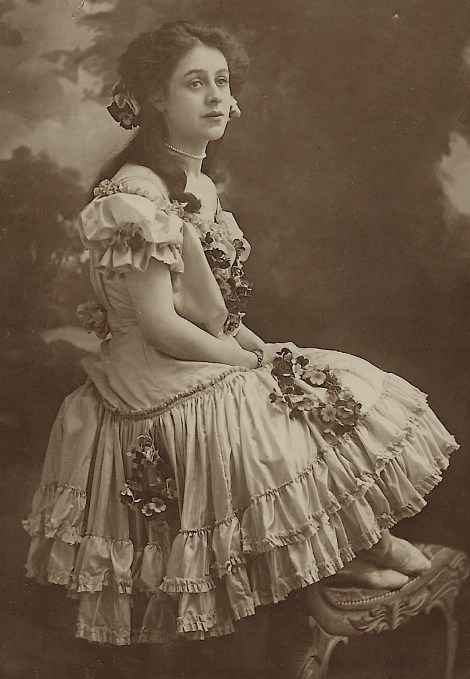 This real photo postcard features actress Miss Rosalie Jacobi. Little information could be found about her and this particular postcard is very uncommon. Miss Jacobi appeared in the 1900 production of “Herod” which was produced at “Her Majesty’s Theatre” in London, England. Actors in the play included Maude Jeffries and Beerbohm Tree. The Sketch (1900) has an article about the play “Bonnie Dundee”, which appeared at the Adelphi Theatre. The review praises Rosalie Jacobi and labels her as a “child actress”. The article also states that she gave a “remarkably talented performance”. The photograph on the face of this postcard is from 1906 (see the postmark) and it is likely that the photo was taken when Jacobi was in her teenage years. The postcard was published by Rapid Photo of London as part of a series (no.3036). The photographer was Carr & Hopperton. This vintage postcard is in good condition (see scans).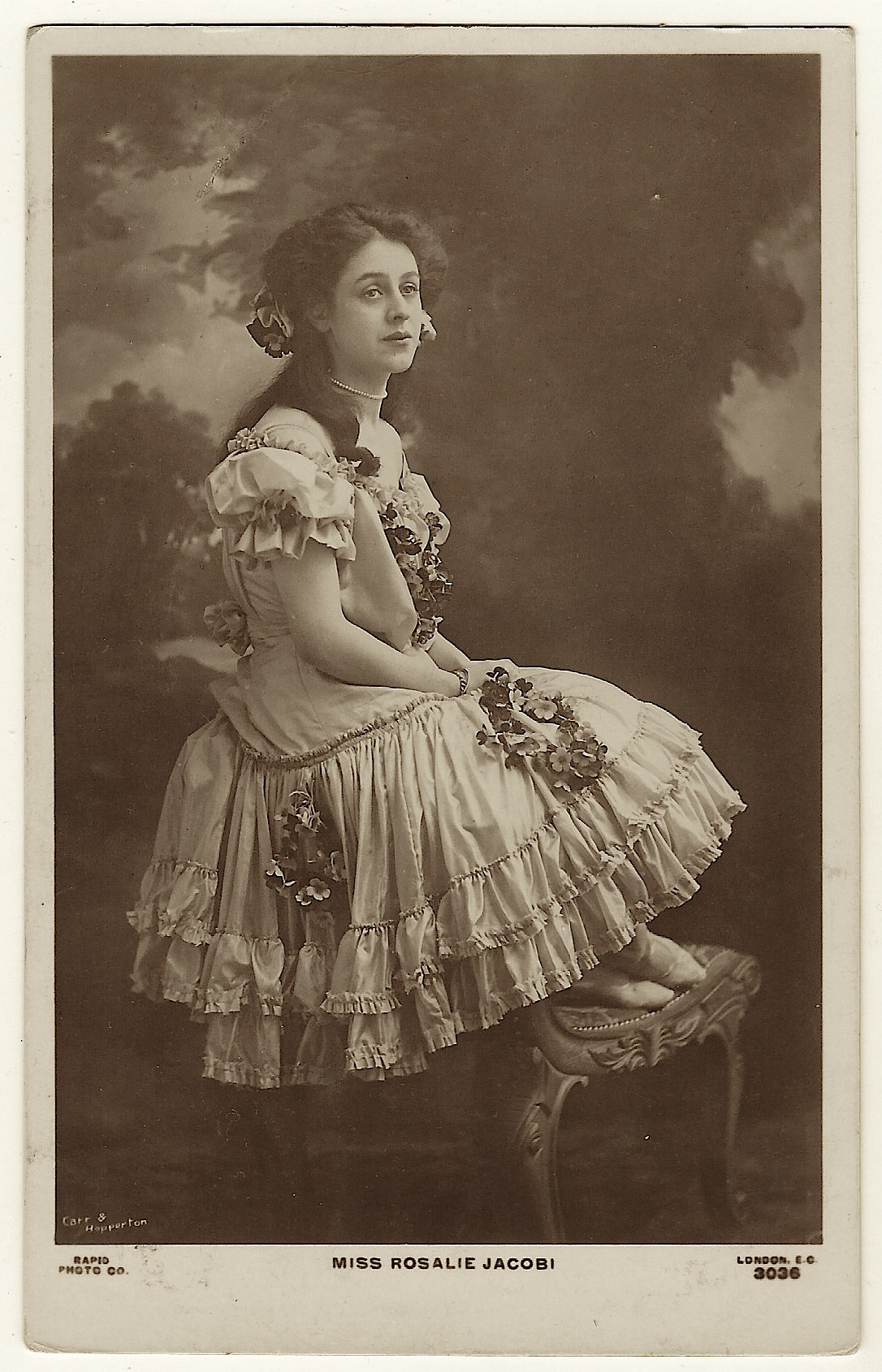
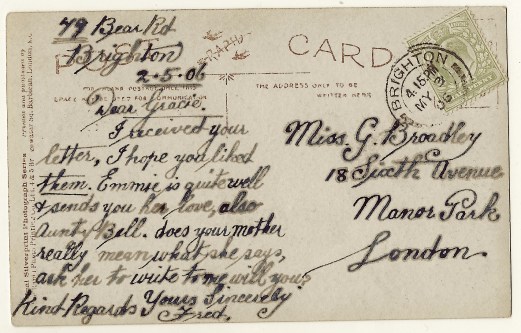



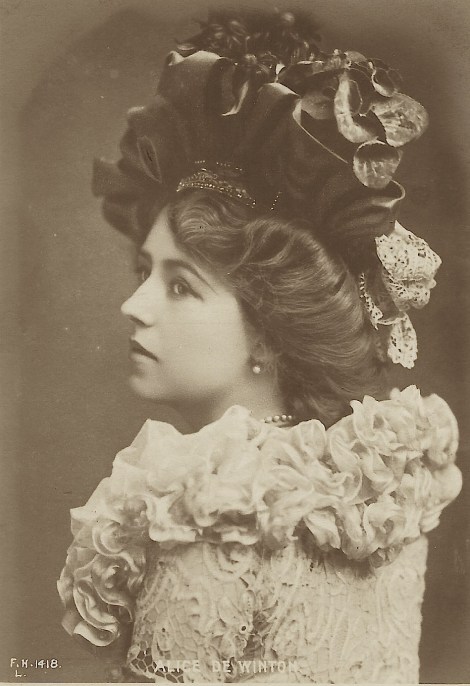 This vintage real photo postcard features British actress, Alice de Winton (1870-1941). She was born and died in the city of London. Her sister, Dora de Winton was also an actress. Alice de Winton was a very popular stage actress. She appeared on Broadway in “The Man from Blankley’s” (1903). De Winton was beautiful and sophisticated. She also had a film career. She appeared in many drama films. In 1912 she played a role in Cecil Hepworth Film Companys “The Fairy Doll’. Other notable appearances included “Lady Windermere’s Fan” (1916) and “The Bachelor’s Club (1921). De Winton also was a film script writer. The IMDB credits her with 24 film appearances between 1913 and 1921. The National Portrait Gallery has two cabinet card photographs of Miss de Winton in their collections. Both images were photographed by the Elliott and Fry studio in the 1890’s. This vintage postcard was published by Frederick Hartmann. His postcard publishing company was headquartered in London. He was active in the UK between 1902 and 1909. It is thought that he produced the first divided back card in the world. His postcards were printed in Saxony (Germany) because of the country’s advanced printing industry. He produced view cards from all over England and imported glamour cards from the European continent. He was the English distributor for Trenkler & Company postcards. In 1907, Hartmann partnered with Christian Linck. The business went bankrupt that same year (1907). This vintage portrait postcard is in very good condition (see scans).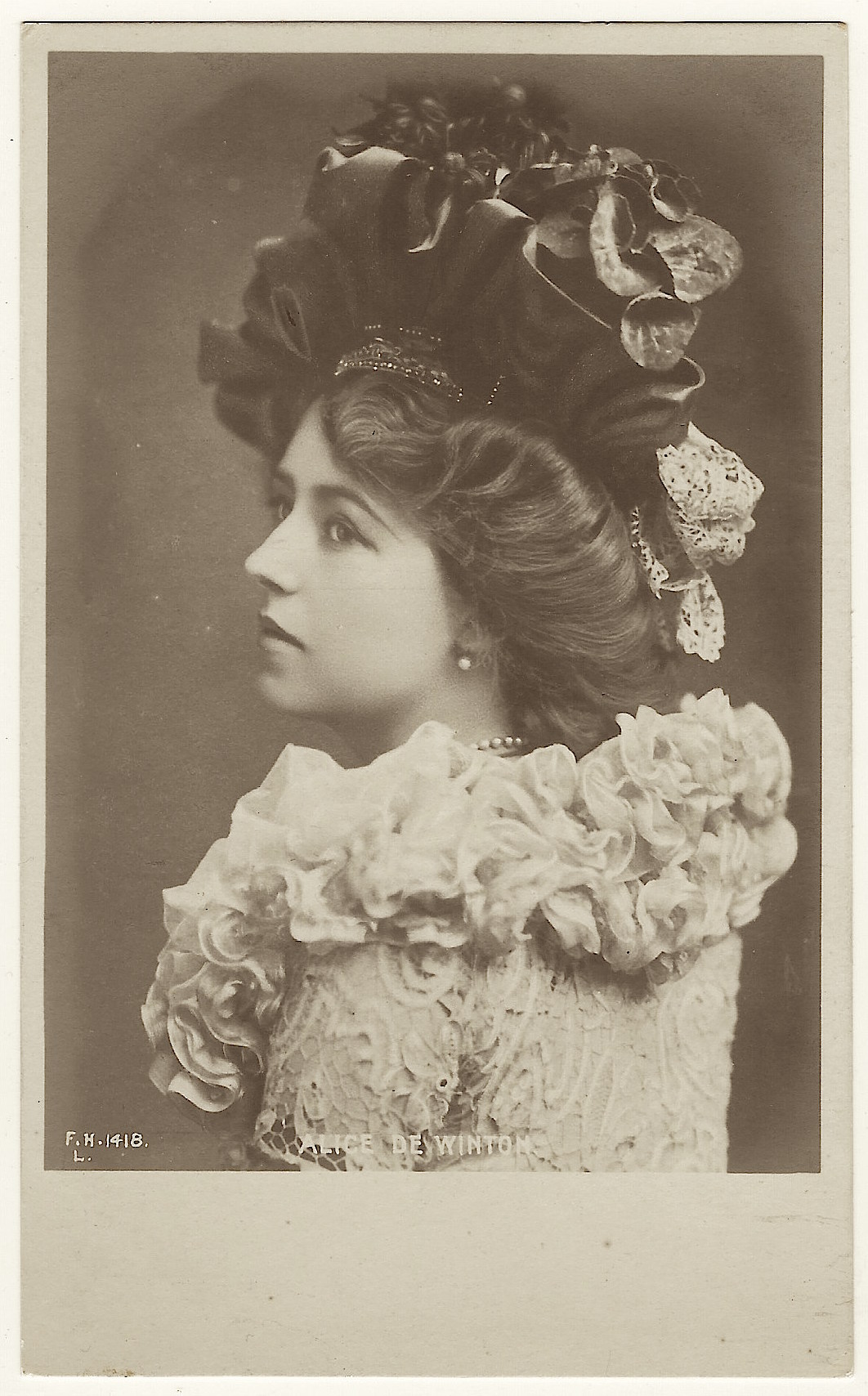


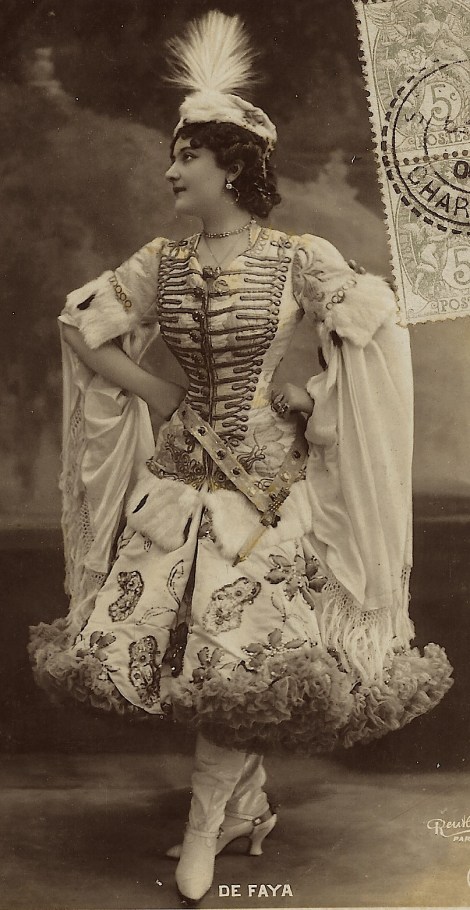


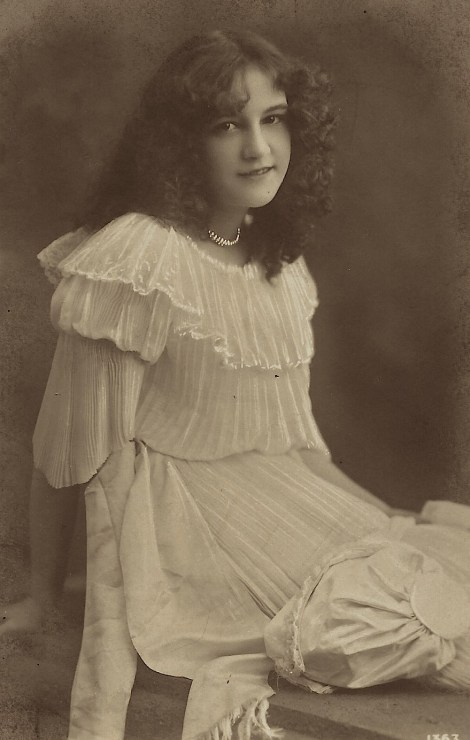

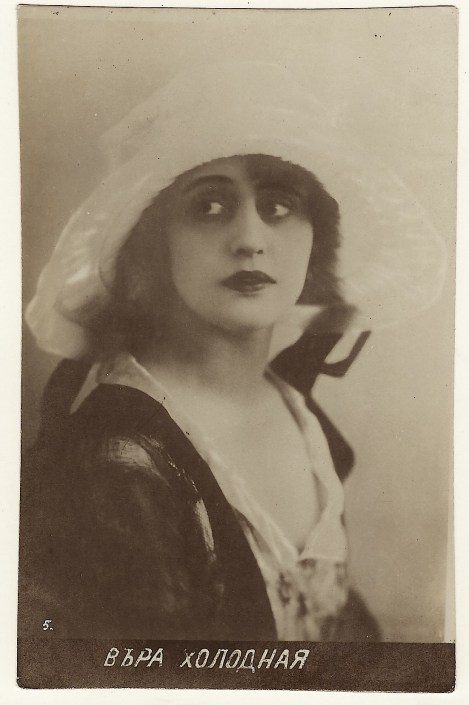
 This vintage real photo postcard features Russian actress Vera Vasilyevna Kholodnaya (1893-1919). Sometimes she is referred to as Holodnaja). She was the first star of Russian silent film. The number of films that she appeared in, is unknown. It is estimated the number of appearances is somewhere between fifty and one hundred. It is unfortunate that only five of her films survived the passage of time. She was born in Poltava which was part of the Russian Empire, and is now located in the Ukraine. At the age of two, she moved to Moscow to live with her grandmother. As a child, she fantasized about becoming a classical ballerina. She eventually enrolled in the Bolshoi Theatre ballet school From early childhood, she participated in family theater productions, While attending her school prom to celebrate her graduation she met Vladimir Kholodny, whom she married in 1910. He is known as one of Russia’s first race car drivers. The pair had two children. In 1908, after seeing actress Vera Komissarzhevskaya in a stage role, she decided that she wanted to pursue a career in films. She sought out Vladimir Gardin, a major Russian film director, and he gave her a minor role in Anna Karenina. In 1915, film director Yevgeni Bauer was searching for an actress who possessed great beauty. After meeting Vera Kholodnaya, he found the enchantress that he was looking for. Bauer’s film was a resounding success. He then made a second film starring Kholodnaya. These two Bauer films made Vera a major celebrity. She soon became known as “the Queen of Screen” and had great successes with other films. By 1918, she was a film phenom. When Russia entered World War I, her husband joined the military. She participated in charity concerts to support the soldiers and their families. It is reported that she was “worshipped” by soldiers. By the time of the Russian Revolution (1917), a new Kholodnaya film was released every three weeks and she continued to experience acclaim and success. Around this time, the actress moved with her film company to Odessa. She died there, at age 25, during the 1918 flu pandemic.This version of the flu, was known as the “Spanish Flu” and it infected 500 million people around the world between 1918 and 1920. Estimates are that between 50 and 100 million people died during the pandemic. (SOLD)
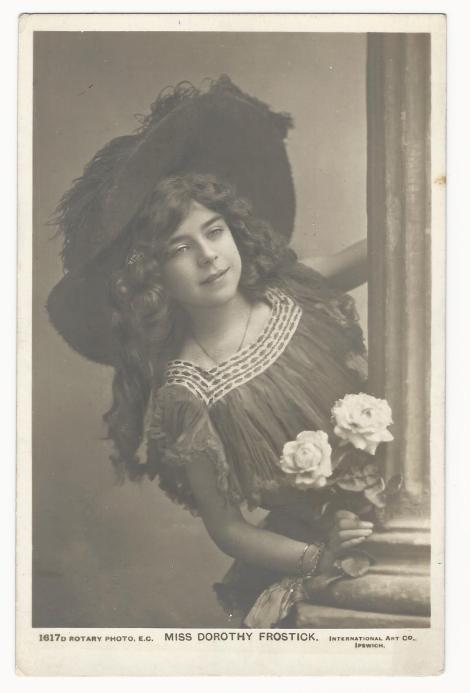 This vintage real photo postcard features English actress, dancer, and singer; Miss Dorothy Frostick. In 1901, Frostick made her debut in the successful musical dream play, “Bluebell in Fairyland”. The play appeared at London’s Vaudeville Theatre. The stars of the show were Seymour Hicks and Ellaline Teriss, a theatrical married couple. Frostick appeared again with the couple in “The Cherry Girl” (1903) and in a revival of Bluebell in 1905. There is a void of information about Miss Frostick until 1912 at which time she joined a pierrot group, “The Quaints”. She appeared with the group until at least 1914. Her final documented London appearance was in a musical and dance production, “The Latest Craze” (1919). The show bombed and closed after twenty-five performances. A portrait of Dorothy Frostick appears in England’s National Portrait Gallery. The photo on this postcard was produced by the International Art Company, which was based in Ipswich, England. This postcard was published by Rotary Photo (active 1897-1916) as part of their Rotary Photographic Series (no. 1617D). SOLD


 THE CABINET CARD GALLERY