

Buy this original Press Photo (includes International shipping outside the US) #3087
To purchase this item, click on the Pay with PayPal button below
$25.52
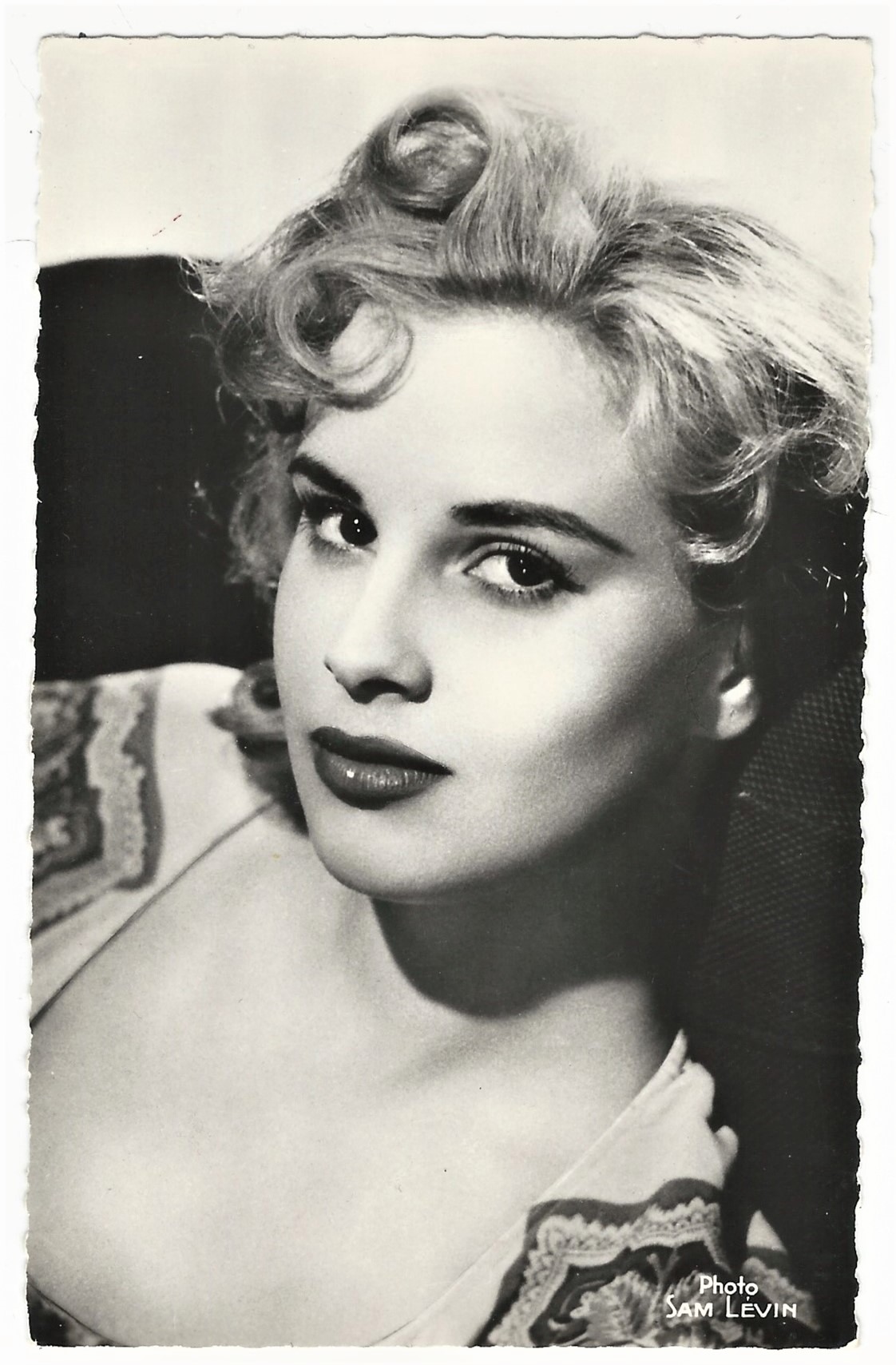
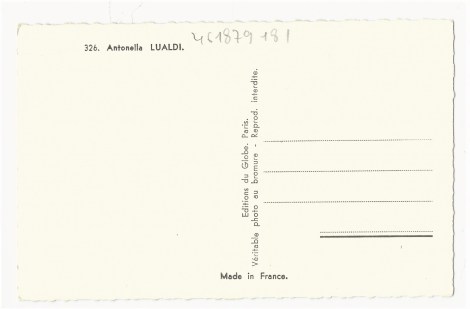
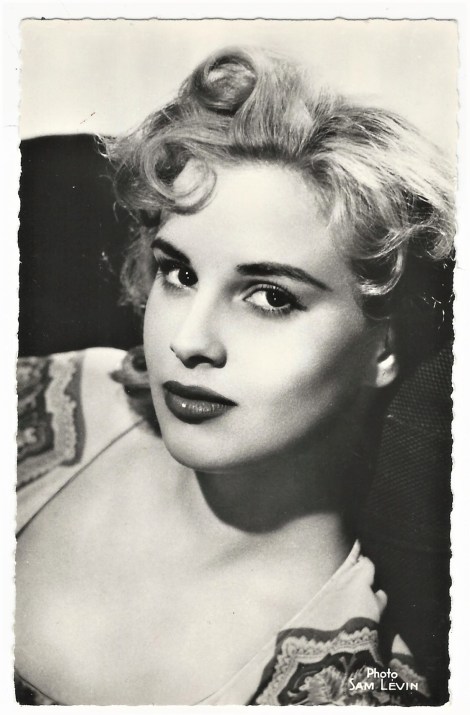 The pretty actress seen in this vintage real photo postcard is Antonella Lualdi (1931- ). Although she is an Italian actress and singer, she appeared in both Italian and French films in the 1950’s and 1960’s. One of the more noted films was “The Red and the Black” (1954). Lualdi was born in Beirut, Lebanon. Her father was Italian and her mother was Greek. Growing up, she became fluent in Arabic, French, and Italian. Her career was propelled by winning a “new talent” competition held by the cinema magazine, “Hollywood”. She was introduced by the name of “Signorina X” and readers were asked to choose her stage name. Lualdi’s filmography published by IMDb reports that she has 107 TV and film credits ranging from 1949 through 2010. In 1955, she married Italian actor Franco Interlenghi. They had starred together in several films. The couple had two daughters, both of whom became actresses. This postcard was published in 1950 by the Globe (Paris). The card is part of a series (no. 326). The photographer of this portrait photo is Sam Levin (1904-1992). He was born in the Ukraine but emigrated to France when he was two years of age. He is famous for his stage photographs and his portraits of movie stars. His studio was in Paris. Levin was a film photographer for 75 films. He was arrested by the Nazis during World War II and was sent to a camp. His crime was, being Jewish. The fact that he was sent to a detention camp rather than a death camp, indicates there was a high ranking Nazi official acting as his guardian angel. He photographed nearly all the major French and European movie stars of the 1950’s and 1960’s. He is particularly celebrated for his photos of Brigitte Bardot. Levin did over 180 magazine covers in the United States. A number of Levin’s photo postcards can be found in the Cabinet Card Gallery. This vintage postcard is in excellent condition (see scans).
Buy this Vintage Real Photo Postcard (includes shipping within the US) #3093
To purchase this item, click on the Pay with PayPal button below
$13.73
Buy this Vintage Postcard (includes International shipping outside the US) #3093
To purchase this item, click on the Pay with PayPal button below
$22.23

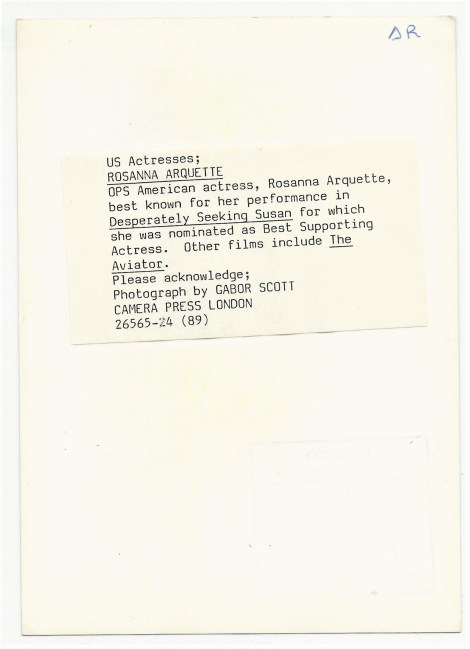
 This press photo features award-winning actress (film and television), film director, and film producer, Rosanna Arquette (1959- ). Her movie credits include roles in “Desperately Seeking Susan” (1985), “Pulp Fiction” (1994), and David Cronenberg’s Crash (1996). Arquette was born in New York City. Her mother was an actress, poet, therapist, and more. Her father is a film actor, screenwriter, and producer. Her grandfather (Charley Weaver) was a comedian. She has four siblings that became actors. Must be in the genes. Arquette was one of the victims of Harvey Weinstein’s predatory sexual behavior and she spoke out about her experience early on when Weinstein was being deservedly skewered by the press. She has been married four times and divorced three times. While making a film with Bette Davis in 1978, Arquette was advised by the apparently prescient screen star that mixing a career and a relationship would never work. In 1990 Arquette was on the cover and featured in a nude pictorial for Playboy magazine. The IMDb credits her with 152 acting credits and 3 for directing. This silver print photograph was taken by celebrity photographer, Gabor Scott, in 1989. It is my presumption that the number 89 printed on the reverse of the photo stands for 1989. The Press Gazette reported Gabor’s death in 2014. He was 65 years-old. The article’s headline asserts that he “made his name covering 1980’s glitterati”. The London based photographer once photographed Prince Harry giving him “the finger”. He was the “house photographer” at Camden Palace, one of the most fashionable London clubs in the 80’s. He photographed many celebrities there and elsewhere. Scott was born in Hungary in 1948 and moved with his family to London in 1956. Scott syndicated his images through a number of agencies. This press photo was distributed by Camera Press. The photo measures about 5″ x 7″ and is in excellent condition (see scans).
Buy this Original Press Photo (includes shipping within the US) #3087
To purchase this item, click on the Pay with PayPal button below
$17.02
Buy this original Press Photo (includes International shipping outside the US) #3087
To purchase this item, click on the Pay with PayPal button below
$25.52
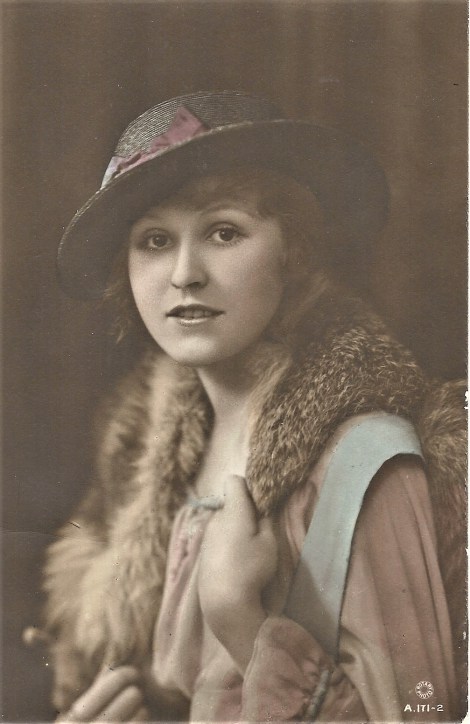
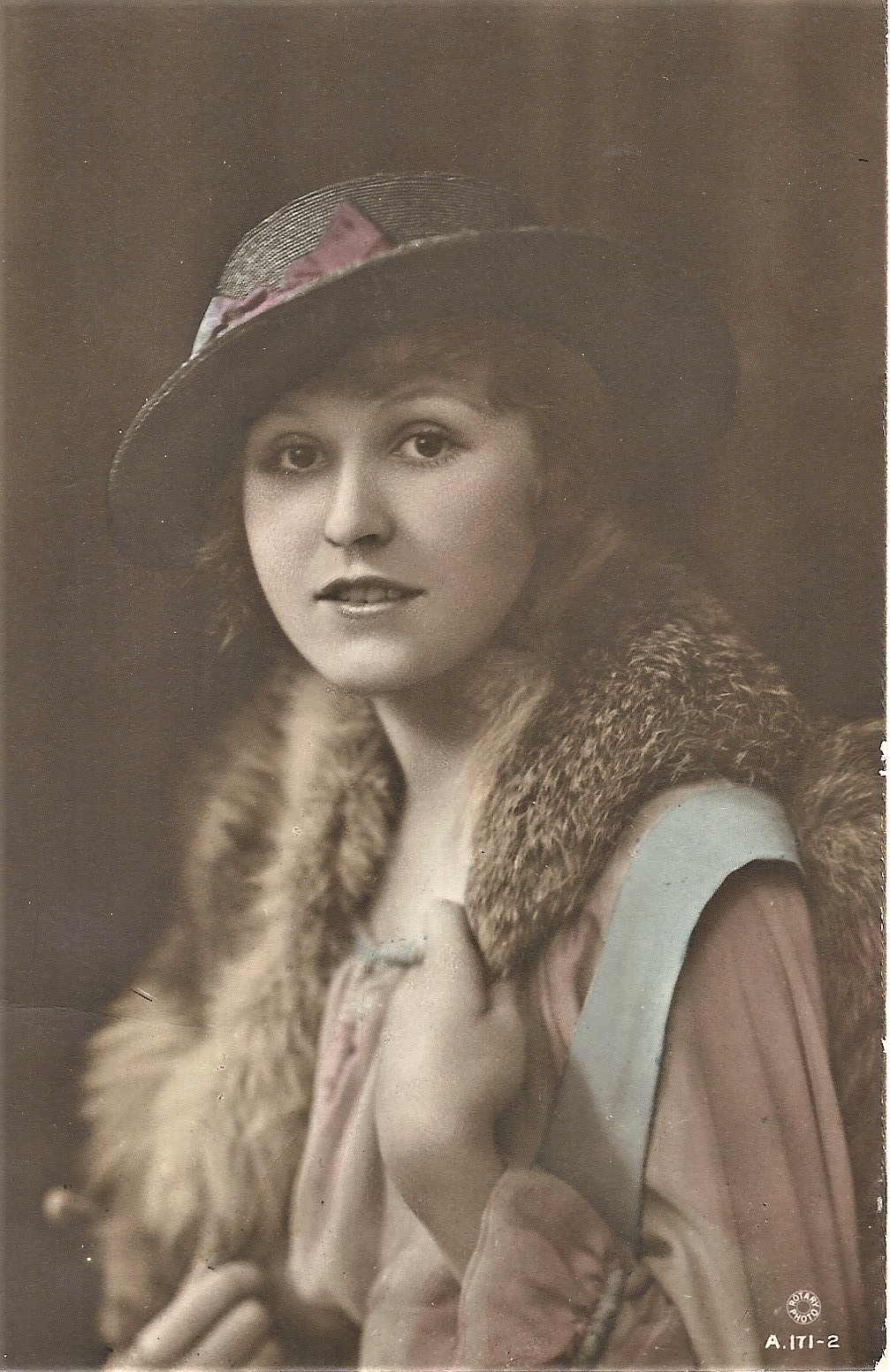
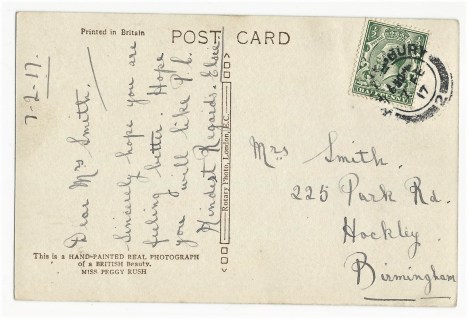
This vintage real photo postcard features pretty stage and film actress Peggy Rush. She was born in Chicago, Illinois, in around 1898. Her parents relocated to England when she was just three months old. Miss Rush began her stage career playing in musical comedy choruses. In 1915 she played such a role in New York. She was a member of the company that appeared in “Quinneys” at the Maxine Elliott theatre. The Green Book magazine (1916) reported that for for the first three seasons Rush appeared on stage, she was a chorus girl for the first year, and she was a leading lady for the final two seasons. A reviewer in “The Theatre” magazine described Rush as “fascinatingly girlish”. The New York Times (1916) reported her engagement to to the Honorable George St. John Brodrick, the eldest son of Viscount Middleton and heir to the peerage (definition – those holding title). George St John Brodrick, 2nd Earl of Midleton (1888 –1979) was an English aristocrat, landowner and soldier. It was not unusual for actresses or chorus girls to meet and marry titled individuals. Some of these men were “stage door Johnnies”. A photograph by the Bassano studio (1923) can be found in Britain’s National Portrait Gallery. I also found a notice of Rush’s divorce from her titled husband. I uncovered a 1924 press photo of Peggy Rush. The caption of the image discloses that the Viscountess Dunsford (Formerly Peggy Rush) was suing her husband, the count, for divorce. He went on to marry two more actresses. Miss Rush had a sense of humor. She once said that she never knew whether to refer to herself as American or English. She quipped that she felt safest calling herself a Chicagoan. This photo postcard was published by Rotary Photo as part of a series (no.A171-2).The card is “hand painted” and part of the “British Beauty” series. The postcard was written and postmarked in 1917. This real photo postcard is in very good condition.
Buy this Vintage Real Photo Postcard (includes shipping within the US) #3086
To purchase this item, click on the Pay with PayPal button below
$17.73
Buy this Vintage Real Photo Postcard (includes International shipping outside the US) #3086
To purchase this item, click on the Pay with PayPal button below
$26.23
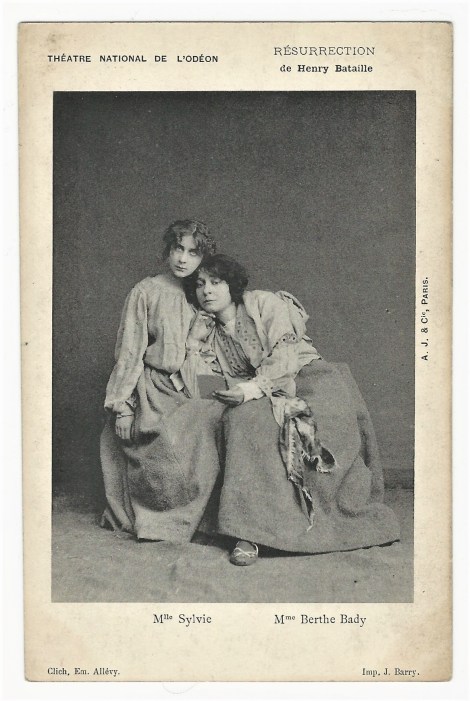
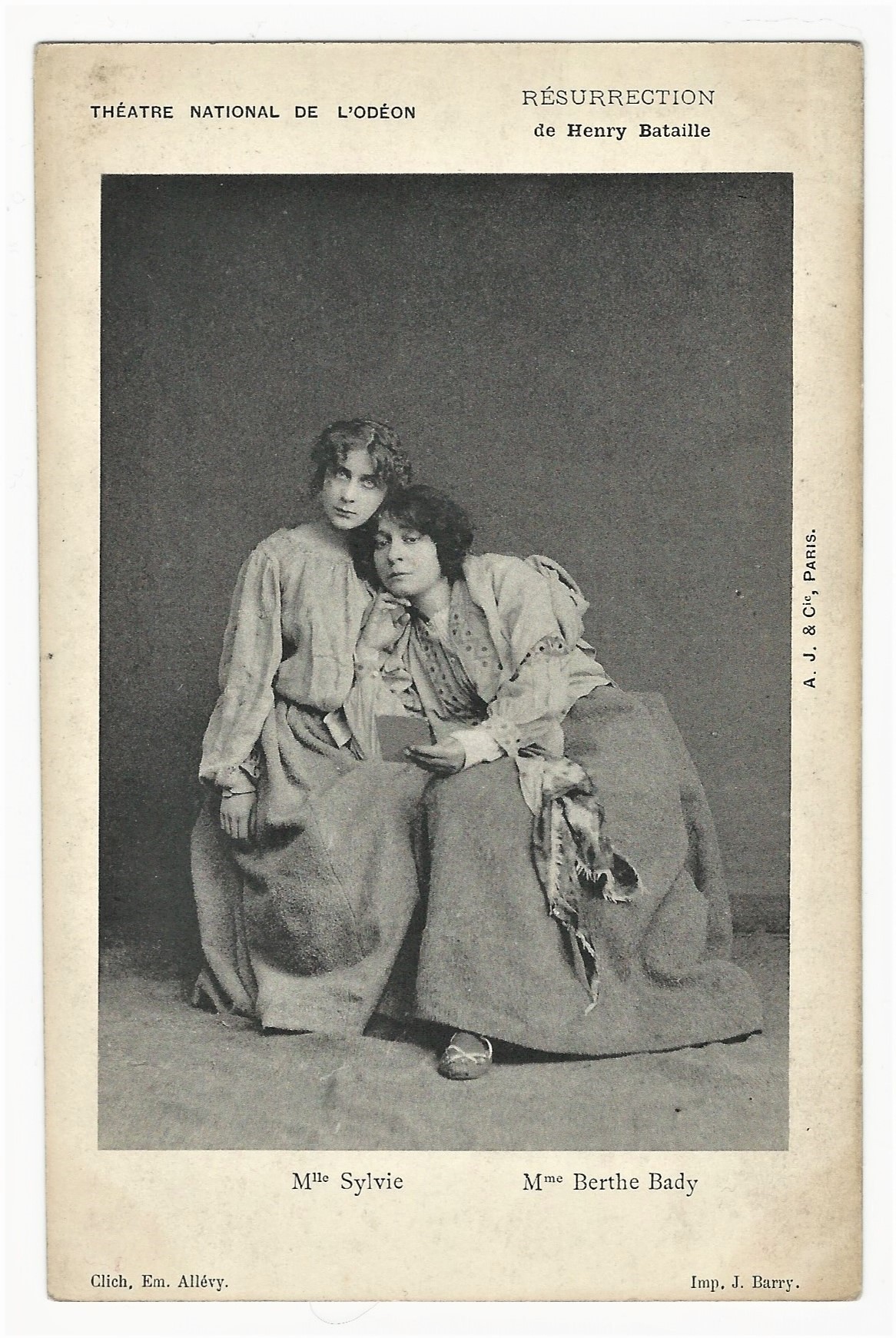
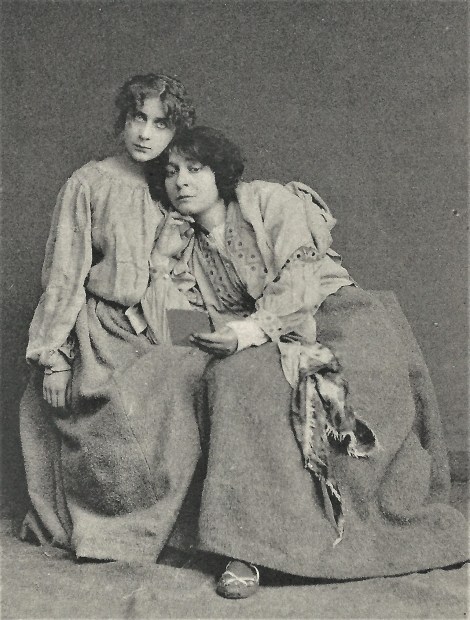 This vintage theater postcard features two actresses appearing in the play, “Resurrection”, by Henry Bataille. The play was adapted from a novel written by Leo Tolstoy. The novel was originally published in 1899. The play was performed at the “Theatre National de L’odeon. The actresses are Mll Sylvie (1883-1970) and Mme Bertha Bady (1872-1921). Here are brief biographical skethches of the actresses. Sylvie was born in Paris, France. Her original name was Louise Pauline Mainguene. Her father was a sailor and her mother was a teacher. She started her professional career in 1903. She appeared in a number of French silent films. She was both a stage and a screen actress. She graduated from the Paris Conservatoire. Her filmography, listed by IMDb, credits her as acting in 54 films between 1912 and 1968. Berthe Bady was born in Belgium but her nationality was French. Berthe Bady attended the Brussels Conservatory and was active on the stage between 1893 and 1913. She was a beautiful actress. Berthe was a companion to both Lugne-Poe and Felix-Henri Bataille. Lugne-Poe was a French actor, theatrical director, and scenic designer. He and Bady were involved in symbolist movement of the arts. Bataille was a French dramatist and poet. A brief explanation of symbolism seems to be merited. In theatre, symbolism is a way to bring a greater meaning to something than is apparent at face value. The use of color, characters, movement, props and costumes are all methods of presenting symbolism. In 1897 Bady was the subject of a portrait by Toulouse Lautrec and her death was the subject of a poem by a leading French poet, Louis Aragon. In addition, playwright Fernand Crommelynck dedicated a play to her. Wikipedia credits her with sixteen “notable” play appearances between 1893 and 1913. She appeared in Ibsen’s “The Master Builder” on an international tour. The tour took her to London, Brussels, Amsterdam, Milan, and additional cities. In 1918 she appeared in her one and only film, “Ecce Homo”. The photo of Berthe and Sylvie was taken by Emile Allevy, a Paris photographer. The postcard was published by A.J.C. (Arthur John Carter) of Eastbourne, England. This postcard was likely published around 1902 since that is when Bady played in the play at the Theatre National de L’odeon. This vintage postcard is in good condition (see scans).
Buy this Vintage Real Photo Postcard (includes shipping within the US) #3081
To purchase this item, click on the Pay with PayPal button below
$21.39
Buy this Vintage Real Photo Postcard (includes International shipping outside the US) #3081
To purchase this item, click on the Pay with PayPal button below
$29.89


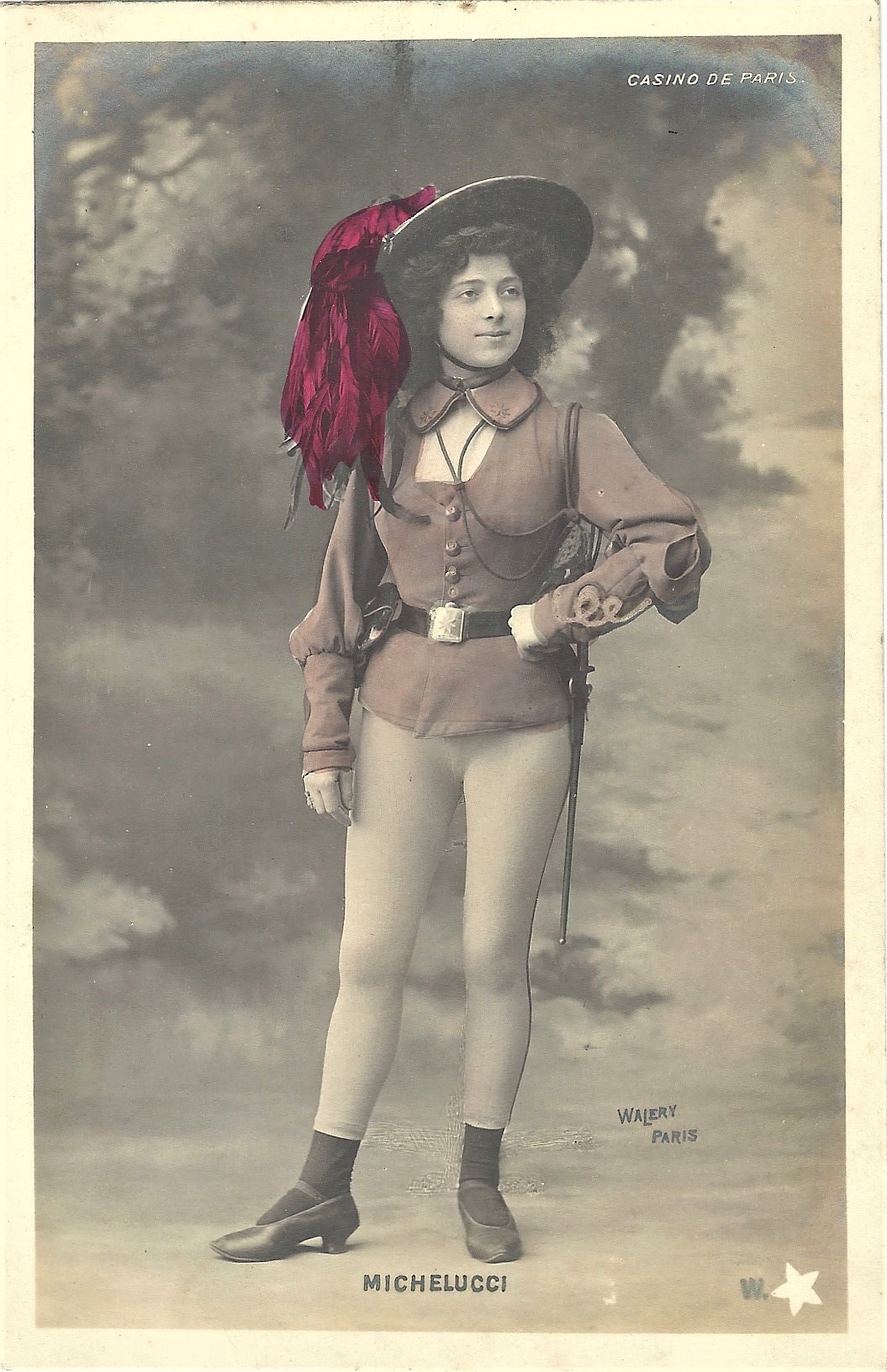
This vintage real photo postcard features a pretty performer named Michelucci. Although she is fully clothed, the photo is risque. Printing on the top right of the photo indicates that she performed at the Casino de Paris, one of the better known music halls in Paris. This portrait postcard was photographed by Lucien Walery. He was a celebrated Paris photographer known for his portraits of artists and cabaret dancers from the city’s music halls. He is very well known for his portraits of Mata Hari and Josephine Baker. Walery did a lot of work in the genre of nude/erotic photography. He photographed the beautiful women of Paris between the early 1900’s and the 1920’s. The postcard is part of a series (no. 4). The card is color tinted and in very good condition (see scans).
Buy this Vintage Real Photo Postcard (includes shipping within the US) #3061
To purchase this item, click on the Pay with PayPal button below
$31.49
Buy this Vintage Postcard (includes International shipping outside the US) 3061
To purchase this item, click on the Pay with PayPal button below
$39.99

 This vintage real photo postcard features American stage and film actress, Mayo Methot (1904-1951). Until encountering this postcard, I had never heard of Miss Methot. However, a Hollywood historian would easily recognize her name. The exact reason for her name recognition will become apparent in just a bit. Methot’s acting career spanned between 1909 and 1940. She was married three times and divorced three times. Her third husband was actor Humphrey Bogart. Their seven year marriage, beginning in 1938, is one of the reasons she is known by Hollywood aficionados. Their marriage was turbulent. The press reported many of their violent fights. The press called them the “Battling Bogarts”. Methot struggled with alcoholism and was diagnosed as a paranoid schizophrenic after she attempted suicide in 1943. Methot appeared in over 30 films, as well as many Broadway productions. The IBDb credits her with 11 appearances in Broadway shows. She was raised in Portland, Oregon, where she began her theater career at the age of 5. She was a prolific child actress and continued to perform in Portland through the 1910’s and 1920’s. In 1922 she moved to New York to pursue a career in Broadway theater. After starring in more than ten Broadway shows, she relocated to Los Angeles in 1930. She emigrated to the west coast to begin a film career. She was signed by Warner Brothers and appeared in a variety of supporting roles. She often portrayed hard edged women. The IMDb credits Methot with 28 film appearances between 1930 and 1940. After divorcing Bogart, Methot’s film career stalled and she returned to Portland. Her drinking and depression worsened and she died there from complications from alcoholism. This card was published by Societe Industrielle de Photograpie (SIP) of Rueil, France. It is part of the 77 series (no.5). Methot’s photograph was taken by celebrity photographer Jacob Schloss (1856-1938) in his Manhattan studio. Schloss received his education at the Cooper Union in New York City. He graduated in 1872 as an etcher. He joined Benjamin J. Falk’s photography studio and worked there in the mid 1870’s. He left Falk’s employ to open his own studio (54 West 23rd Street) where like Falk, he specialized in theatrical photography. He tended to favor photographing actresses in costume in front of generic studio furnishings. He produced many cabinet card photographs but also was active in the production of magazine images. By the 1890’s he was particularly known for his photographs of beautiful women, much like photographer Jose Maria Mora. Schloss also was an activist for photographers rights. He was very involved in the movement to copyright images. He sued those who used his photographs without crediting or paying him. He was very involved in national photographer associations and was an active photographer until the 1910’s. This postcard formerly resided in a postcard album. SOLD
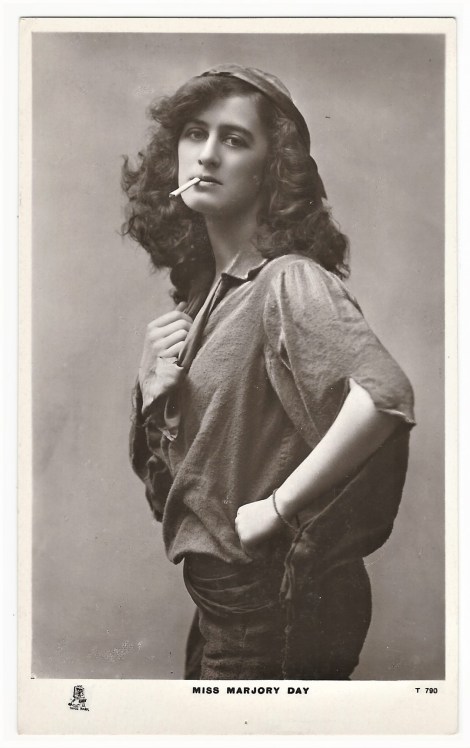 This vintage real photo postcard features actress Marjory Day (1887-1940). She was born in New Zealand. She was an actress and was known for “The Woman Who Was Nothing” (1917), “The Life of Lord Byron” (1922), and “The Fighting Marine” (1926). Miss Day was married and divorced from producer/actor George Desmond (1881-1969). The National Portrait Gallery has 15 portraits of Miss Day in their collection. This postcard captures Day exhibiting socially inappropriate behavior. Day’s deviant behavior is the fact that she is smoking a cigarette. She also seems to be wearing pants which is also a violation that could get her in trouble with the fashion police. To top things off, she is rebelliously staring at the photographer as this photo was taken. At first, I thought that Marjory Day was one of those “bad girls” of the theatre (there were also “bad boys”). However, I later learned that this photograph was taken while Day was in costume for playwright George Bernard Shaw’s “Devil’s Disciple” (1897). This postcard was published by Rafael Tuck as part of the “Celebrities of the Stage” series (no. T 790). Raphael Tuck and his wife started their photography business in 1866 in London. Their store sold pictures, greeting cards, and in time, postcards. Their success came from the sale of postcards during the late 1890’s and early 1900’s. In the early 1900’s the firm conducted postcard competitions for collectors of Tuck postcards. These competitions offered cash prizes and they were very popular. The winner of one of these competitions had a collection consisting of over twenty-five thousand cards. Three of Tuck’s four sons participated in the business. The company was devastated by German bombing during World War II. In 1959 the company merged with two other printing companies. (SOLD)

 This vintage real photo postcard features Russian ballerina, choreographer, and silent film star, Vera Karalli (1889-1972). She was born in Moscow. Her father was an entrepreneur and her mother was an actress. Karalli was active between 1914 and 1921. Karalli was a graduate of the Moscow Theatre School in 1906. She performed in the Ballets Russes company in 1909, and then again, in 1919 and 1920. She was a soloist with the Bolshoi Theater and after two years became a ballerina in 1915. She often danced with ballet star, Mikhail Mordkin. Karalli becan acting in 1914 and she became one of Russia’s most celebrated film actresses. From 1914 to 1919, Karalli appeared in about sixteen Russian silent films. One of these films was an adaptation of Tolstoy’s “War and Peace”. Her last film was a German drama released in 1921. Karalli was a mistress of the Grand Duke Dmitri Pavlovich of Russia. He was the cousin of Nicholas II. It was reported that she was a co-conspirator in the 1916 murder of Grigori Rasputin. After the October Revolution, she fled to the West. Between In the 1920’s she taught dance in Lithuania. Between 1930 and 1935 she was ballet mistress of the Romanian opera in Bucharest. She lived in Paris between 1938 and 1941. She later settled in Baden, Austria. (SOLD)


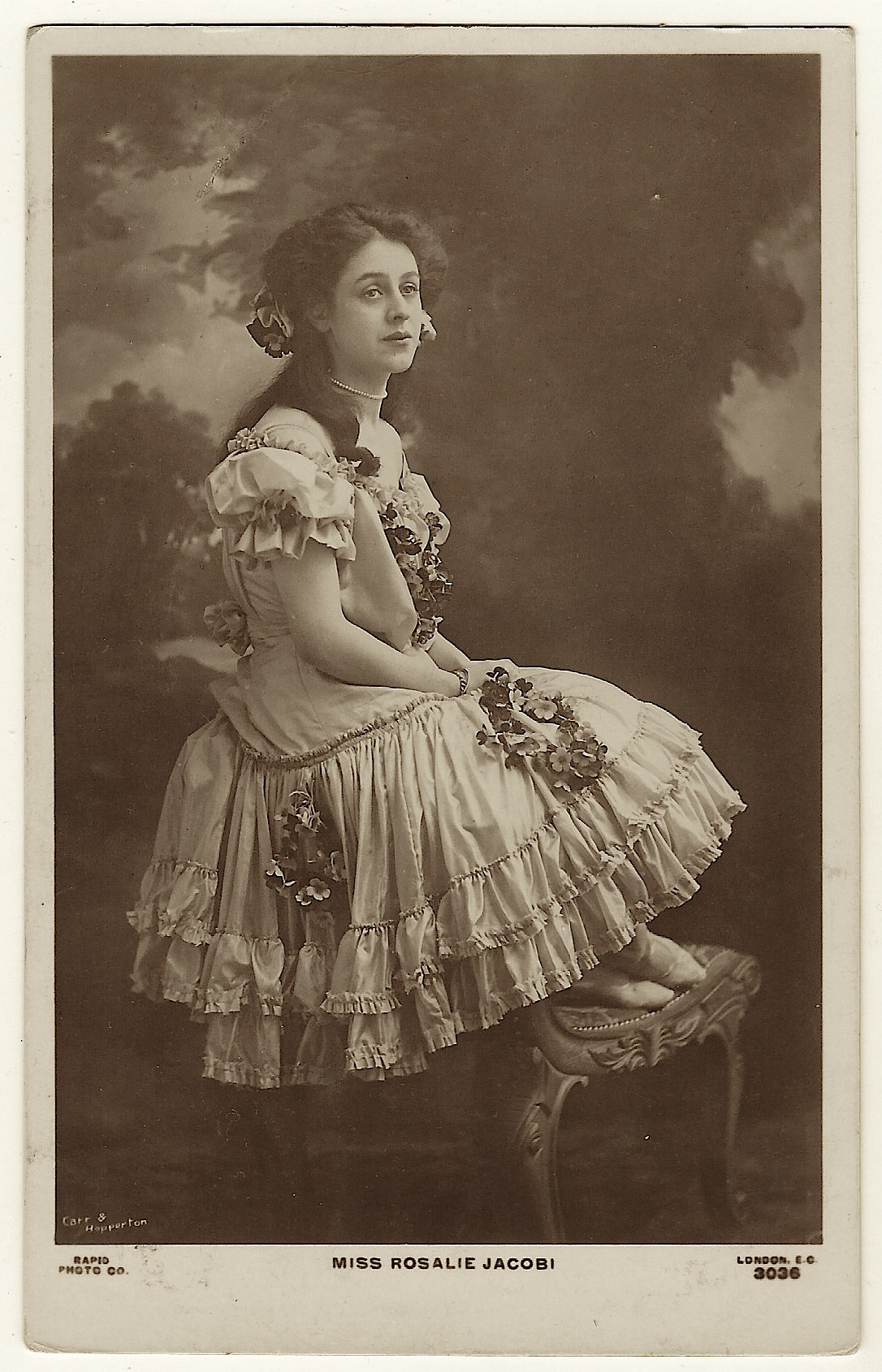
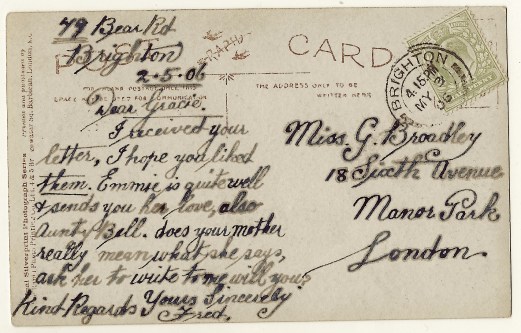
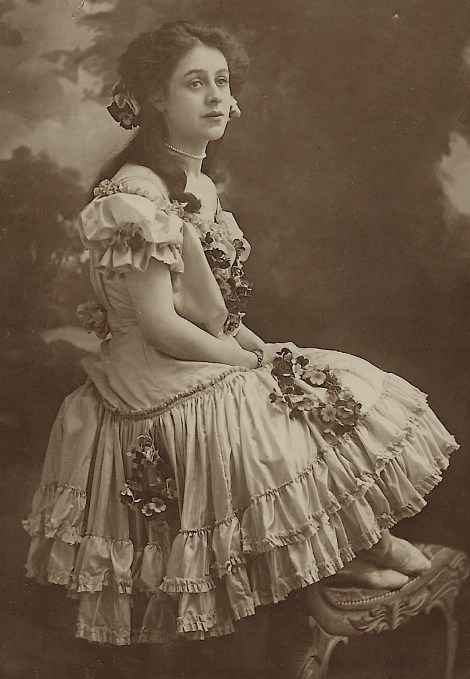 This real photo postcard features actress Miss Rosalie Jacobi. Little information could be found about her and this particular postcard is very uncommon. Miss Jacobi appeared in the 1900 production of “Herod” which was produced at “Her Majesty’s Theatre” in London, England. Actors in the play included Maude Jeffries and Beerbohm Tree. The Sketch (1900) has an article about the play “Bonnie Dundee”, which appeared at the Adelphi Theatre. The review praises Rosalie Jacobi and labels her as a “child actress”. The article also states that she gave a “remarkably talented performance”. The photograph on the face of this postcard is from 1906 (see the postmark) and it is likely that the photo was taken when Jacobi was in her teenage years. The postcard was published by Rapid Photo of London as part of a series (no.3036). The photographer was Carr & Hopperton. This vintage postcard is in good condition (see scans).
Buy this Vintage Real Photo Postcard (includes shipping within the US) #3004
To purchase this item, click on the Pay with PayPal button below
$15.50
Buy this Vintage Real Photo Postcard (includes International shipping outside the US) #3004
To purchase this item, click on the Pay with PayPal button below
$24.00


This risque vintage real photo postcard features Russian-German actress, Olga Tschechowa (1897-1980). Her father was a railway engineer who became Russia’s Minister of Railways. She was the niece of Anton Chekov’s wife. She went to school and studied art and literature at an art school in St. Petersburg. . After watching famed actress Eleonora Duse, Olga joined the Moscow Art Theare’s studio. In 1914, while at the school, she met Russian-Jewish actor Mikhail Chekov. He was the nephew of Anton Chekov. She married him the same year and they had a daughter in 1916. In 1917, during the October Revolution, she divorced her husband. It is reported that he had an affair while Olga was pregnant. Olga would marry three more times. She joined a cabaret group and was offered a part in a silent movie. She travelled to Vienna and moved to Berlin in 1920, She continued to perform in films. She was one of the fortunate actresses who successfully made the transition from silent to sound movies. In the 1930’s she became one of the leading actresses of the Third Reich and was admired by Adolf Hitler. Olga was courted by Hermann Goring and Joseph Goebbels. Goebbels introduced her to Hitler in 1933 and she and Hitler became friends. In 1936, she was named “State Actress” of the Third Reich and she was made a German citizen. Olga’s brother was sent from Russia to Germany on a secret mission to assassinate Hitler. Stalin got cold feet and called off the “hit”. The brother ended up in a Nazi concentration camp, but survived the war. At one point, Olga was accused of being a Russian agent in Nazi Germany. Himmler ordered an investigation of Olga by the SS. She was often kept under surveillance by both Nazi and Soviet agents. In 1945, Himmler planned to arrest her but Hitler intervened. Olga survived the war through lying, acting, and disguise. She protected her daughter from the concentration camps by hiding the fact that she had a Jewish father. At the war’s end, Olga was arrested by the Red Army and brought to Moscow for a debriefing. She was interrogated for two months and then taken to Berlin to assist the Soviet Army. She established herself in East Berlin. She played in dramas but preferred comedies. Olga was very successful in the film business,. Her filmography reveals that she has 138 credits as an actor, director, and producer between the years of 1917 and 1974. After the World War II, she lived in Soviet occupied Berlin and in 1949 she moved to Munich, Bavaria. In Munich she started a cosmetics company. Simultaneously she continued to act in more than 20 films. She published a book of memoirs and retired from acting in the 1970’s. In 1966, her daughter died in a plane crash. Olga suffered from depression and alcohol abuse. She died in Munich and just before she died, she had her granddaughter bring her a glass of champagne, Her last words were purported to be “Life is beautiful”. This postcard was published by Ross Verlag and is part of a series (no. 3040/1). The front of the card has the logo for UFA, a German film company. This vintage portrait postcard is uncommon. (SOLD)
 | bmarshphd on MEET THE HERSHEY FAMILY OF LAN… |
 | Brigitte on MEET THE HERSHEY FAMILY OF LAN… |
 | usermattw on TWO MEN ON BICYCLES : FEMALE P… |
| bmarshphd on Young Egyptian Woman : Veil :… |
 | summertime75 on Young Egyptian Woman : Veil :… |

