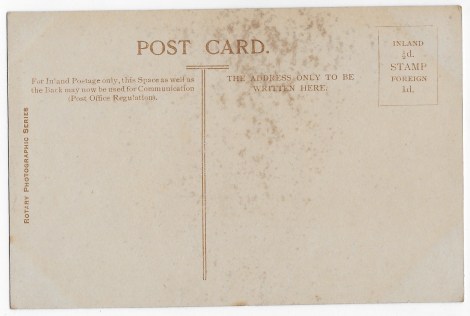
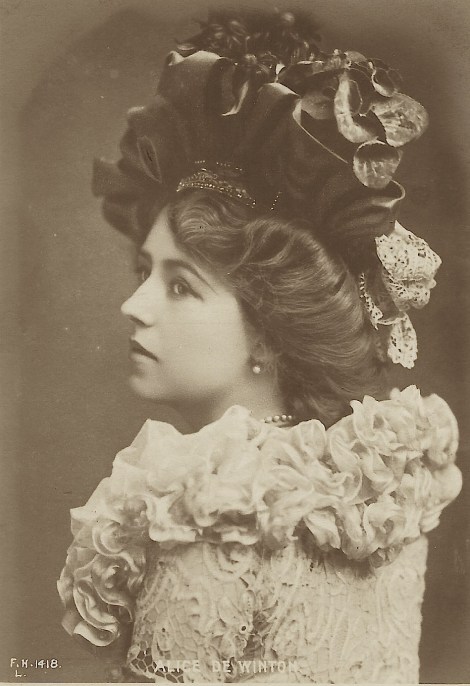
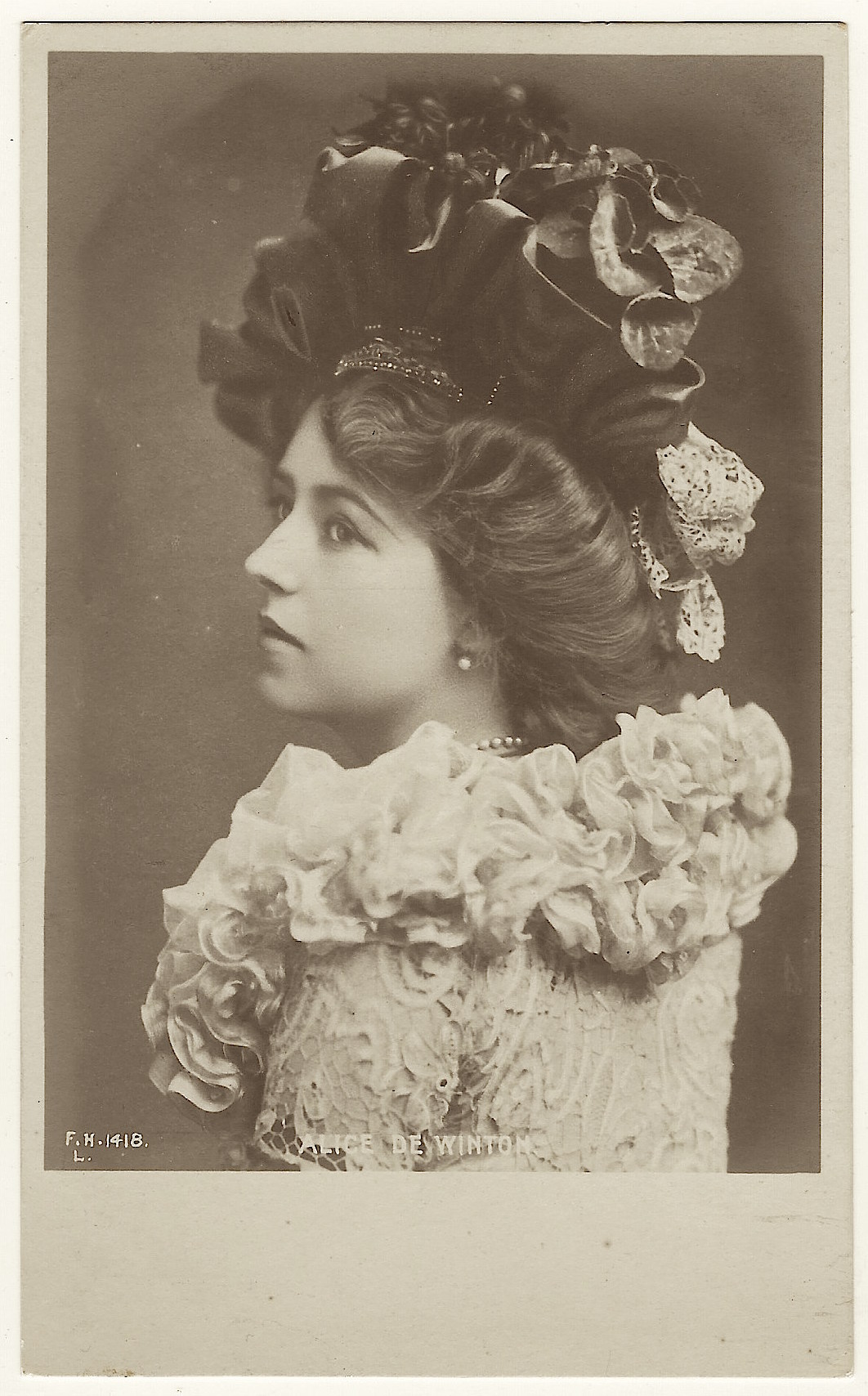
 This vintage real photo postcard features British actress, Alice de Winton (1870-1941). She was born and died in the city of London. Her sister, Dora de Winton was also an actress. Alice de Winton was a very popular stage actress. She appeared on Broadway in “The Man from Blankley’s” (1903). De Winton was beautiful and sophisticated. She also had a film career. She appeared in many drama films. In 1912 she played a role in Cecil Hepworth Film Companys “The Fairy Doll’. Other notable appearances included “Lady Windermere’s Fan” (1916) and “The Bachelor’s Club (1921). De Winton also was a film script writer. The IMDB credits her with 24 film appearances between 1913 and 1921. The National Portrait Gallery has two cabinet card photographs of Miss de Winton in their collections. Both images were photographed by the Elliott and Fry studio in the 1890’s. This vintage postcard was published by Frederick Hartmann. His postcard publishing company was headquartered in London. He was active in the UK between 1902 and 1909. It is thought that he produced the first divided back card in the world. His postcards were printed in Saxony (Germany) because of the country’s advanced printing industry. He produced view cards from all over England and imported glamour cards from the European continent. He was the English distributor for Trenkler & Company postcards. In 1907, Hartmann partnered with Christian Linck. The business went bankrupt that same year (1907). This vintage portrait postcard is in very good condition (see scans).
Buy this Real Photo Vintage Postcard (includes shipping within the US) #2974
To purchase this item, click on the Pay with PayPal button below
$21.50
Buy this Vintage Real Photo Postcard (includes International shipping outside the US) #2974
To purchase this item, click on the Pay with PayPal button below
$30.00


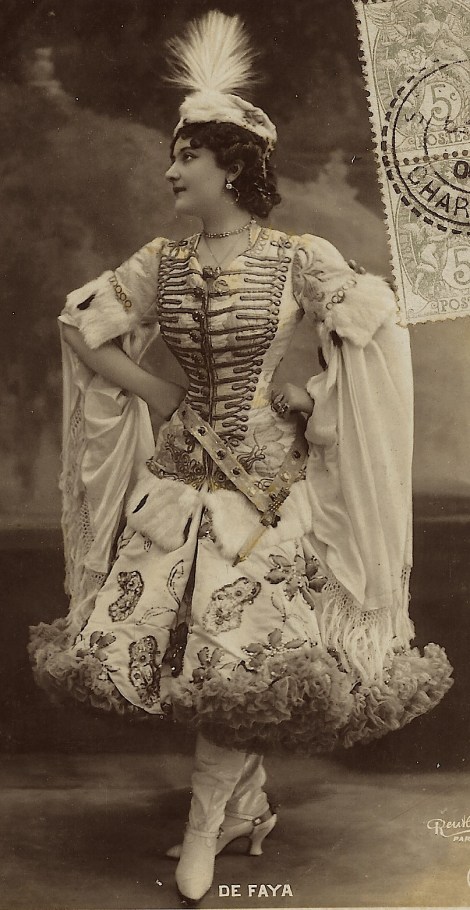


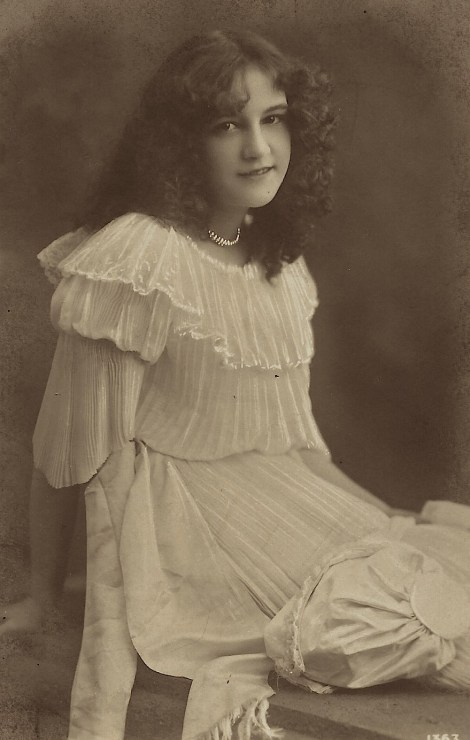

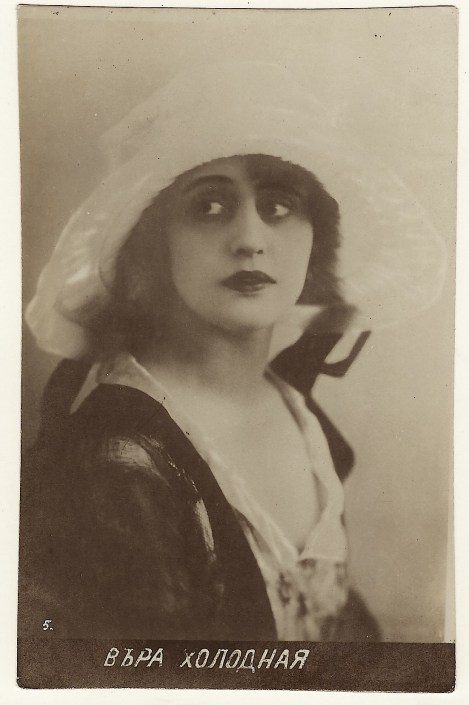
 This vintage real photo postcard features Russian actress Vera Vasilyevna Kholodnaya (1893-1919). Sometimes she is referred to as Holodnaja). She was the first star of Russian silent film. The number of films that she appeared in, is unknown. It is estimated the number of appearances is somewhere between fifty and one hundred. It is unfortunate that only five of her films survived the passage of time. She was born in Poltava which was part of the Russian Empire, and is now located in the Ukraine. At the age of two, she moved to Moscow to live with her grandmother. As a child, she fantasized about becoming a classical ballerina. She eventually enrolled in the Bolshoi Theatre ballet school From early childhood, she participated in family theater productions, While attending her school prom to celebrate her graduation she met Vladimir Kholodny, whom she married in 1910. He is known as one of Russia’s first race car drivers. The pair had two children. In 1908, after seeing actress Vera Komissarzhevskaya in a stage role, she decided that she wanted to pursue a career in films. She sought out Vladimir Gardin, a major Russian film director, and he gave her a minor role in Anna Karenina. In 1915, film director Yevgeni Bauer was searching for an actress who possessed great beauty. After meeting Vera Kholodnaya, he found the enchantress that he was looking for. Bauer’s film was a resounding success. He then made a second film starring Kholodnaya. These two Bauer films made Vera a major celebrity. She soon became known as “the Queen of Screen” and had great successes with other films. By 1918, she was a film phenom. When Russia entered World War I, her husband joined the military. She participated in charity concerts to support the soldiers and their families. It is reported that she was “worshipped” by soldiers. By the time of the Russian Revolution (1917), a new Kholodnaya film was released every three weeks and she continued to experience acclaim and success. Around this time, the actress moved with her film company to Odessa. She died there, at age 25, during the 1918 flu pandemic.This version of the flu, was known as the “Spanish Flu” and it infected 500 million people around the world between 1918 and 1920. Estimates are that between 50 and 100 million people died during the pandemic. (SOLD)
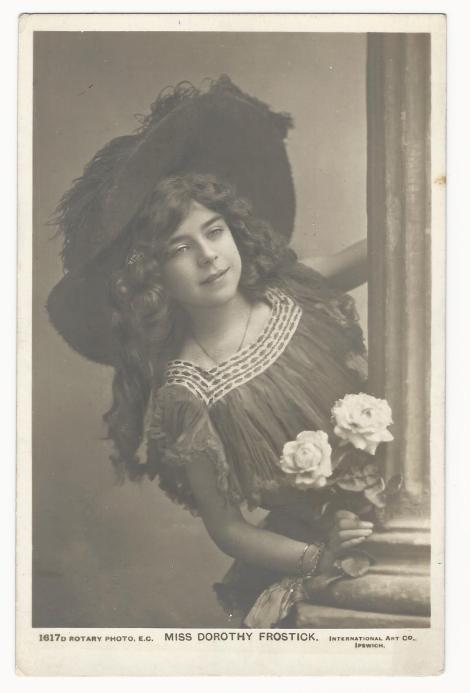 This vintage real photo postcard features English actress, dancer, and singer; Miss Dorothy Frostick. In 1901, Frostick made her debut in the successful musical dream play, “Bluebell in Fairyland”. The play appeared at London’s Vaudeville Theatre. The stars of the show were Seymour Hicks and Ellaline Teriss, a theatrical married couple. Frostick appeared again with the couple in “The Cherry Girl” (1903) and in a revival of Bluebell in 1905. There is a void of information about Miss Frostick until 1912 at which time she joined a pierrot group, “The Quaints”. She appeared with the group until at least 1914. Her final documented London appearance was in a musical and dance production, “The Latest Craze” (1919). The show bombed and closed after twenty-five performances. A portrait of Dorothy Frostick appears in England’s National Portrait Gallery. The photo on this postcard was produced by the International Art Company, which was based in Ipswich, England. This postcard was published by Rotary Photo (active 1897-1916) as part of their Rotary Photographic Series (no. 1617D). SOLD

 This vintage real photo postcard features stage and film actress, Blanche Walsh (1873-1915). Walsh was born in the lower east side of New York City. Walsh’s father was a Tammany Hall (New York City) politician and prison warden. His name was Thomas Power “Fatty” Walsh. Miss Walsh was an active actress between 1888 and 1915. Blanche Walsh made her stage debut at 15 years of age in 1888. She joined Charles Frohman’s stock company. She was a supporting actress for the likes of Marie Wainwright and William Gillette. She toured Australia with actor Nat Goodwin in 1896. Walsh became popular playing “emotional” roles and succeeded Fanny Davenport when she became too ill to perform in such roles. In fact, many fans believed that Walsh closely resembled Davenport in appearance. Walsh than began being tasked in more challenging roles such as in her performances in “The Woman in the Case” (1905) and in Tolstoy’s “The Kreutzer Sonata” (1904). Walsh appeared in ten Broadway productions between 1895 and 1907. A reviewer in “Variety” (1918) wrote that Walsh ” was not only a great actress, but an artist enough to subordinate whatever personal charms she might have had to a proper characterization of a role”. Blanche Walsh only appeared in one film. She was a well respected American actress. Her only film was Resurrection (1912). The film was based on one of Leo Tolstoy’s novels. The film helped Adolph Zukor launch his movie company, Famous Players Studio. It later became Paramount. She was one of the first stage stars to appear in a long feature film (over 50 minutes). Miss Walsh had two marriages. Her first husband, Alfred Hickman (1873-1931) was an English actor who appeared in thirty-five films. Walsh had no children. She was one of the original advocates of an American National Theater where people could see major plays at a low price. Walsh had significant health problems during her career. She had several hospitalizations. She died at 42 years of age from kidney problems. This vintage postcard was published by the Rotograph Company as part of the “Rotograph Series” (No. B 506) The photographer was Jacob Schloss (1856-1938) and his studio was located in New York City. Schloss received his education at the Cooper Union in New York City. He graduated in 1872 as an etcher. He joined Benjamin J. Falk’s photography studio and worked there in the mid 1870’s. He left Falk’s employ to open his own studio (54 West 23rd Street) where like Falk, he specialized in theatrical photography. He tended to favor photographing actresses in costume in front of generic studio furnishings. He produced many cabinet card photographs but also was active in the production of magazine images. By the 1890’s he was particularly known for his photographs of beautiful women, much like photographer Jose Maria Mora. Schloss also was an activist for photographers rights. He was very involved in the movement to copyright images. He sued those who used his photographs without crediting or paying him. He was very involved in national photographer associations and was an active photographer until the 1910’s. SOLD
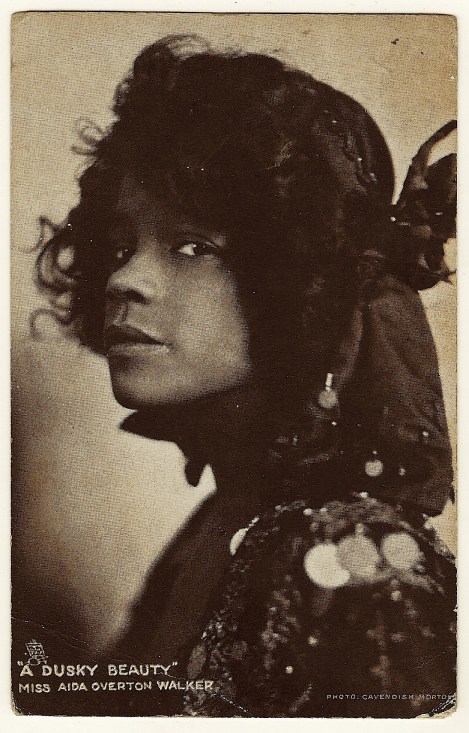
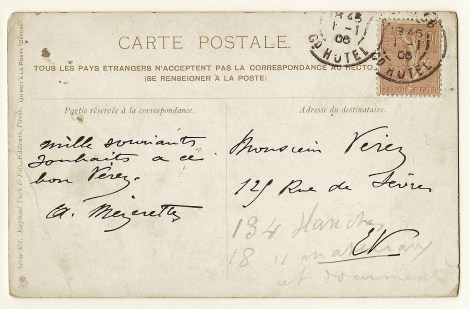

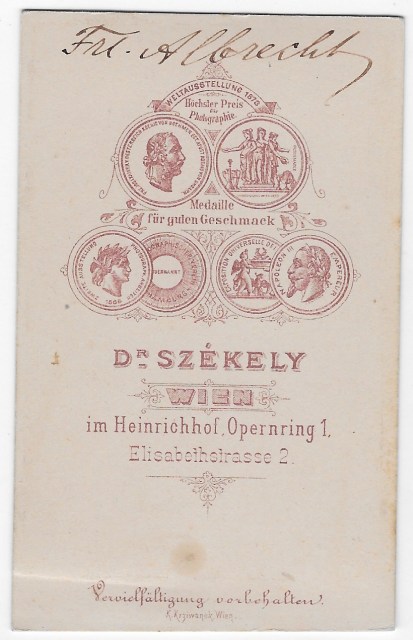
 This carte de visite portrait features Austria-Hungarian theater actress Hermine Albrecht (1856-1929). She studied acting with German actor, Karl Wilhelm Meixner and made her debut in 1875. In that year she signed with the Vienna City Theater where she worked until 1884. In 1887 she joined the ensemble of Burgtheater ensemble and in 1890 she was appointed a court actress. She left the theater in 1893 to join private life. She was married to Count Tamas Nyary de Bedegh (1838-1902). Her sister was also an actress (Charlotte Albrecht).