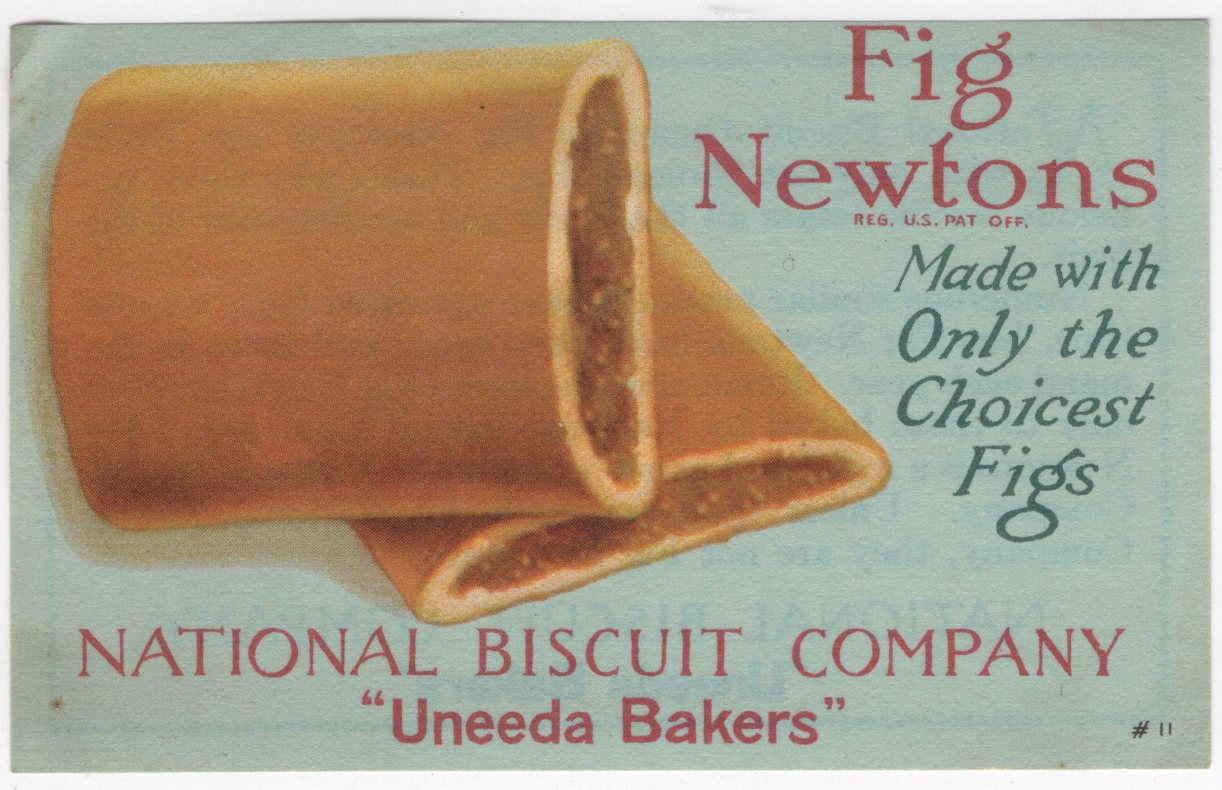
EARLY 1900s FIG NEWTONS ADVERTISING TRADE CARD NATIONAL BISCUIT CO UNEEDA BAKERS

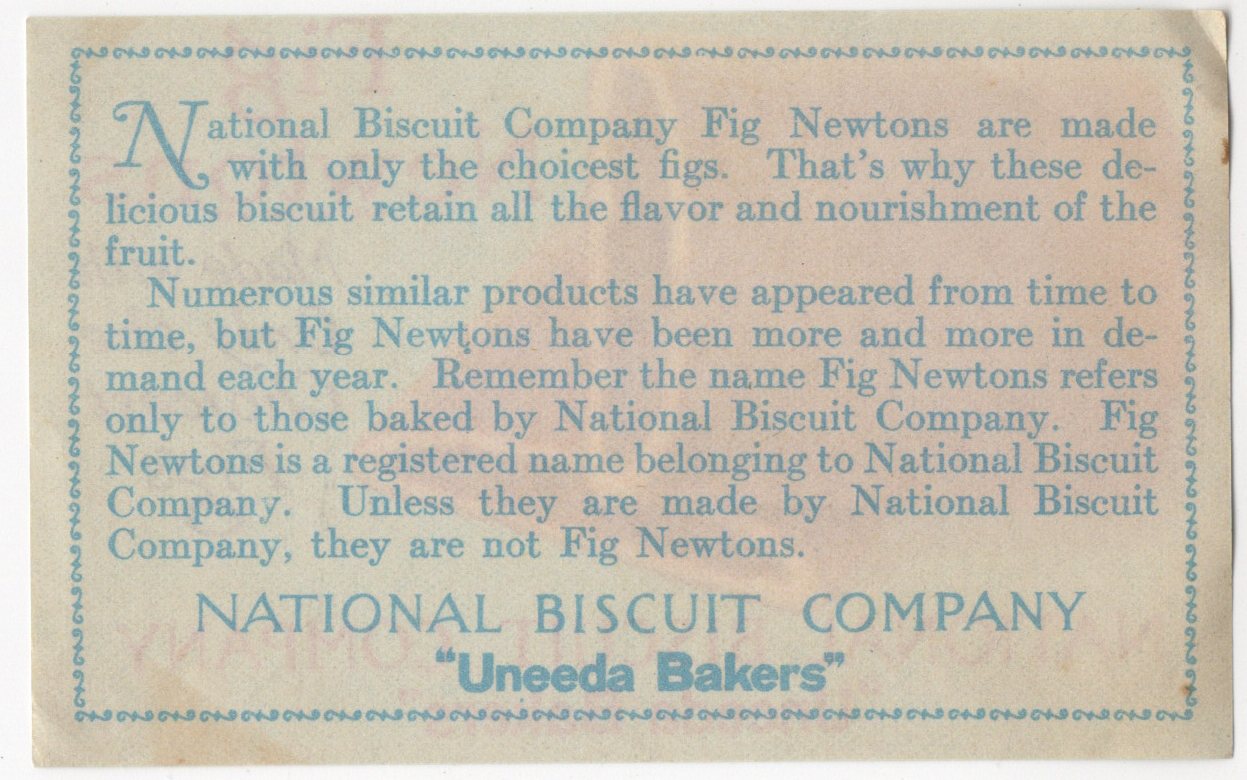
This is a charming early 20th-century advertising/trade card for the iconic Fig Newtons brand, produced by the National Biscuit Company. The card features vivid full-color printing of the Fig Newtons bar and cookies, alongside text: ‘Made with Only the Choicest Figs.’ On the reverse is the company’s advertising message noting Fig Newtons’ growing demand year after year. Printed on thin paper (rather than heavy cardstock), this piece likely was distributed as an insert or giveaway promotion around the 1905–1920 era. SOLD

Published in: on December 15, 2025 at 12:00 pm  Leave a Comment  
Tags: , , ,

EBERHARD FABER INK BLOTTER: MAKING PENCILS FOR THE WAR EFFORT : UNCLE SAM : 1941

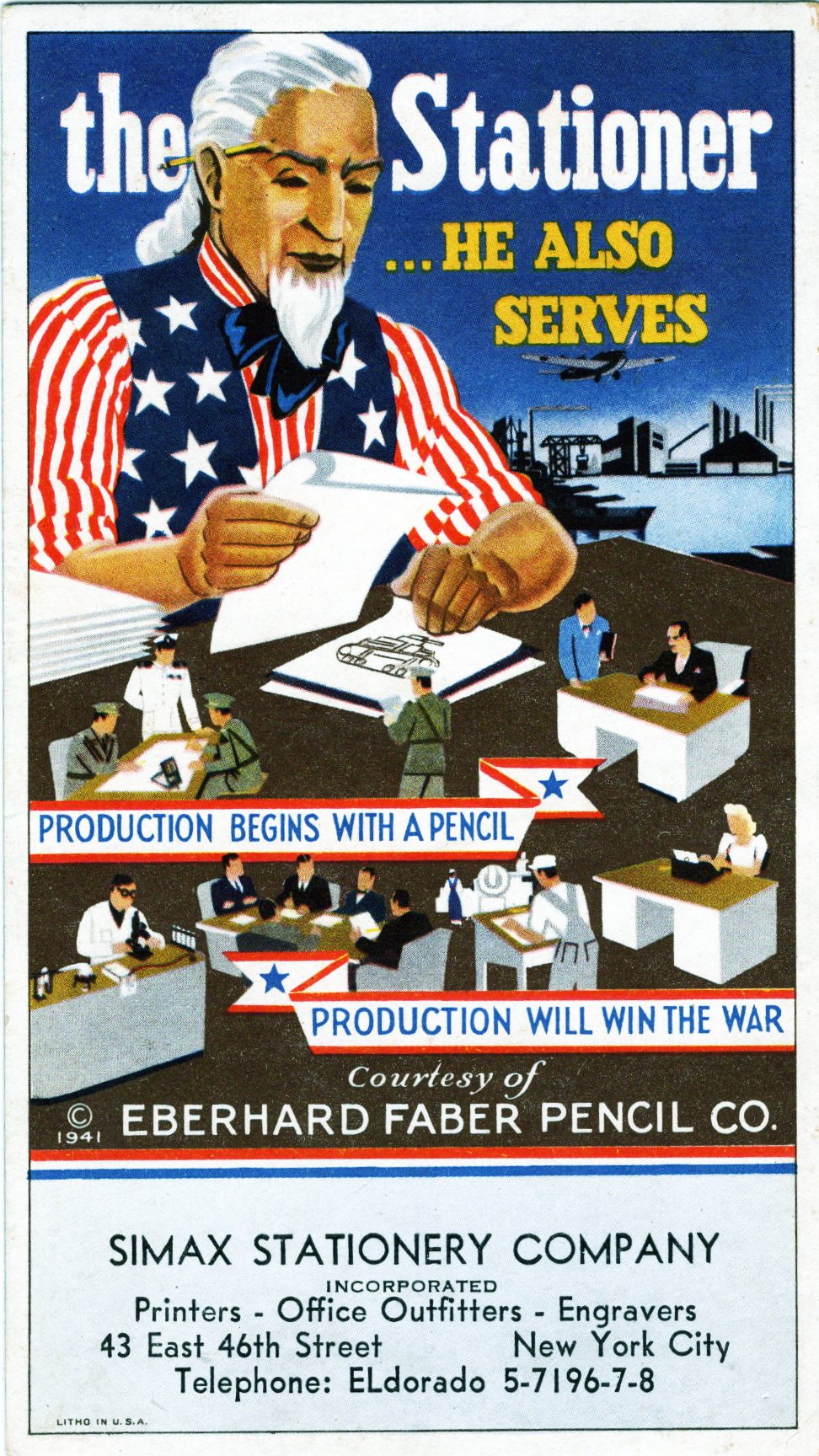
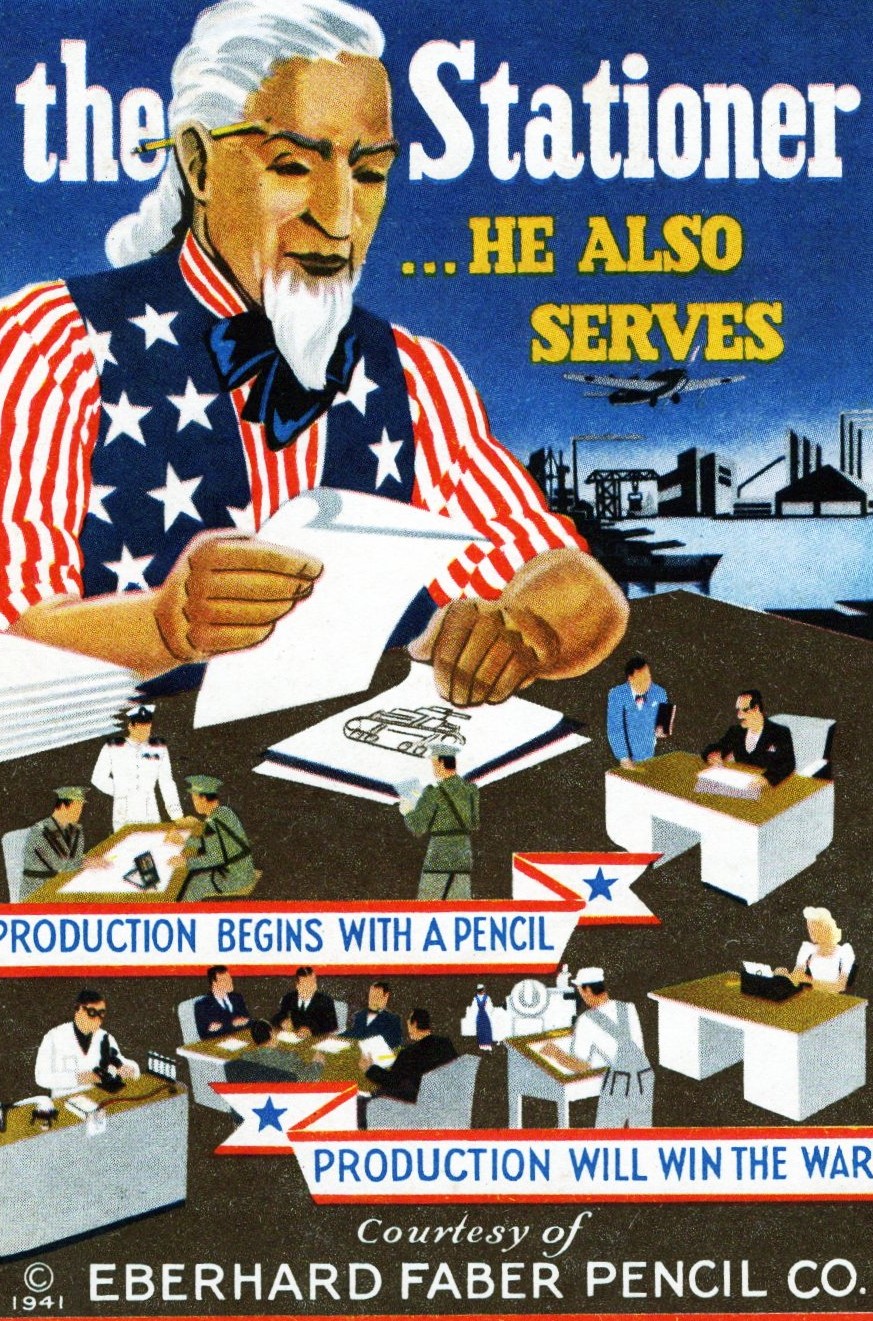
This original 1941 ink blotter, issued by the Eberhard Faber Pencil Co., is a striking piece of World War II-era advertising that highlights the vital role of stationery and writing instruments in wartime production. Measuring approximately 3 1/8 x 5 3/4 inches, this blotter is not only a functional office supply from the past but also a fascinating collectible reflecting the patriotic spirit of the time. The artwork features a Uncle Sam-like figure dressed in a patriotic red, white, and blue vest with stars and stripes. He is seen writing on a piece of paper, reinforcing the idea that even stationers serve the country by supplying essential tools for planning, designing, and producing materials necessary for the war effort. In the background is a busy industrial scene including factories and airplanes, emphasizing wartime manufacturing.The lower portion of the blotter contains two bold banners stating: “Production Begins with a Pencil” and “Production Will Win the War”. The blotter is marked Courtesy of Eberhard Faber Pencil Co. and was distributed by Simax Stationery Company of New York City, a firm specializing in printers, office outfitting, and engraving. Eberhard Faber was a major force in American pencil manufacturing, with roots tracing back to 1761 in Germany. The company’s U.S. operations began in the mid-1800s, and by the early 20th century, they were one of the most respected stationery brands. Known for their high-quality pencils, including the iconic Blackwing 602, Eberhard Faber supplied artists, writers, and engineers. During WWII, their products were essential for military and industrial planning, as reflected in this ink blotter’s theme.This blotter is in excellent condition. The colors remain vibrant, and the artwork is clear and legible, making it an excellent display piece for collectors of vintage advertising, WWII memorabilia, or office ephemera. (SOLD)

ADVERTISING INK BLOTTER : “IT PAYS TO HIRE A PAINTER” : DECATUR, ILLINOIS

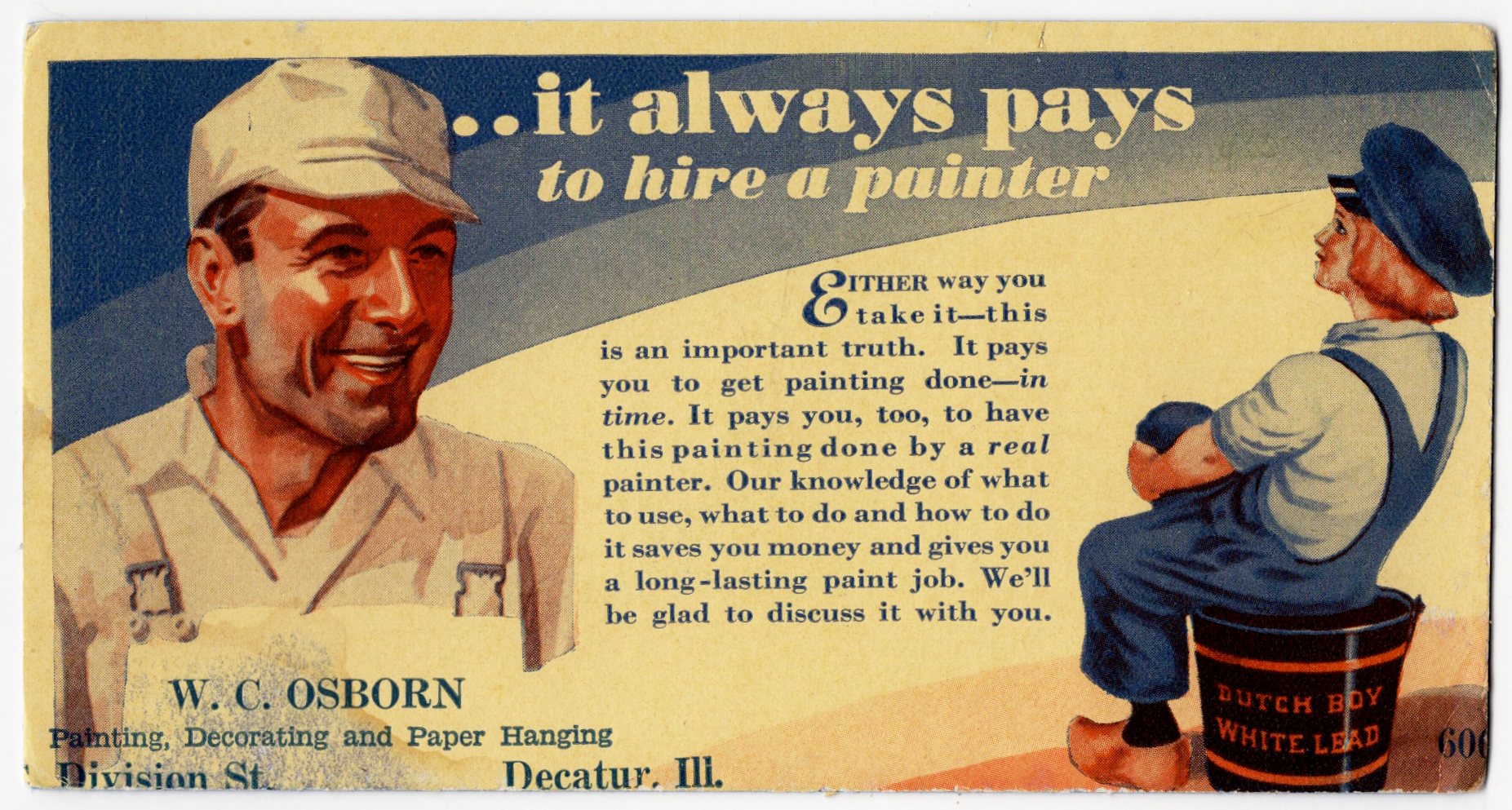
This is a vintage advertising blotter for W. C. Osborn, a painter and decorator from Decatur, Illinois. The colorful lithographed design features a cheerful painter promoting the benefits of hiring a  professional. The blotter shows a young boy sitting on a Dutch Boy White Lead paint bucket. The blotter likely dates back to the 1920s. SOLD

Published in: on May 16, 2025 at 12:00 pm  Comments (2)  
Tags: , ,

MISS VIOLET CAMERON: SCANDALOUS STAGE ACTRESS

CABINET CARD 1

cameron

CABINET CARD 2
V CAMERON 3_0002CABINET CARD 3

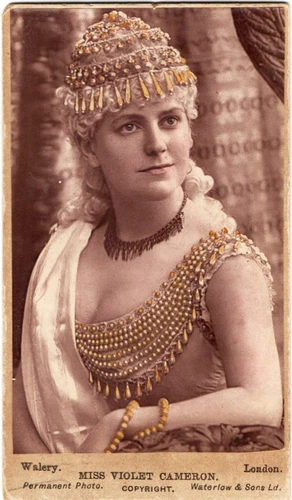
CAMERON FRONTCABINET CARD 4 MISS VIOLET CAMERON : SCANDALOUS STAGE ACTRESS : CDV ; AD FOR MINERAL WATER - Picture 1 of 2CARTE de VISITE 1

Violet Cameron (1862-1919), was an English stage star. She was the niece of burlesque legend Lydia Thompson. Cameron  began her stage career as a child in 1871. She played several child roles at the Drury Lane Pantomime theatre. As an adult, she played many prominent roles in the most important English theatres. In 1886 she came to America and played in “The Commodore” and “Kenilworth”. In 1893 she had great success in the stage play “Morocco Bound”. She was involved in several scandalous love affairs during her stage career.  

Cabinet Card 1 is a product of Elliot & Fry, a prominent London photography studio.

Cabinet Card 2 was produced at the studio of W & D Downey in London, England.

Cabinet Card 3 is also by Downey. She looks lovely in her ruffly dress and her plunging neckline (relative to the cabinet card era) highlights her necklace. The reverse of the cabinet card has the stamp of Charles Ritzmann of New York City indicating that it was once owned by the esteemed purveyor of theatrical photographs.

Cabinet Card 4 also comes from the Downey studio. Cameron appears to be wearing a wedding dress in this cabinet card portrait. 

The reverse of Carte de Visite 1 has an advertisement for Taunus Mineral Water. The natural sparkling water came from Springs located near Frankfurt, Germany. Miss Cameron’s portrait for this carte de visite was taken by the celebrated Walery studio in London, England.

MISS VIOLET CAMERON : SCANDALOUS STAGE ACTRESS : CDV ; AD FOR MINERAL WATER - Picture 2 of 2

CARTE de VISITE 1

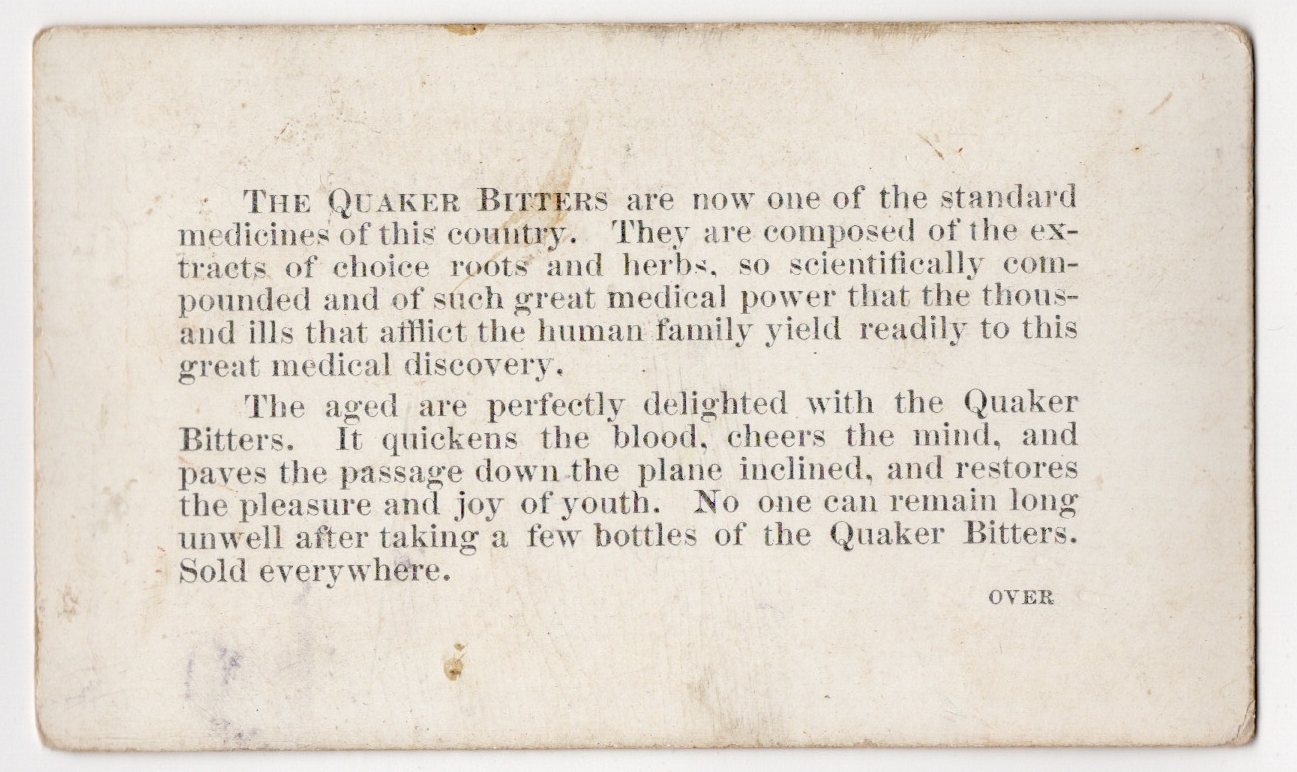
DR HENRY S FLINT : PROPIETOR OF QUAKER BITTERS : PROVIDENCE, RI : RARE CDV

This rare Carte de Visite portrait features Dr. Henry Sanborn Flint. He was a prominent figure in Providence, Rhode Island, during the late 19th century. Initially, he and his brother Ezra H. Flint established Flint & Co. in 1864, focusing on furniture and housewares. By 1876, Henry had transitioned into medicine, becoming a physician and taking over the production of Old Dr. Warren’s Herb & Root Bitters, which he rebranded as Dr. H.S. Flint & Co. Quaker Bitters. ​Dr. Flint’s Quaker Bitters was marketed as a comprehensive remedy for various ailments, including digestive issues, liver complaints, and general debility. This product was like snake oil. The bitters were advertise on the reverse of the card as having such great medical power that “the thousand ills that afflict the human family yield readily to this great medical discovery”. The product’s packaging often featured a Quaker figure, symbolizing purity and trustworthiness.  SOLD

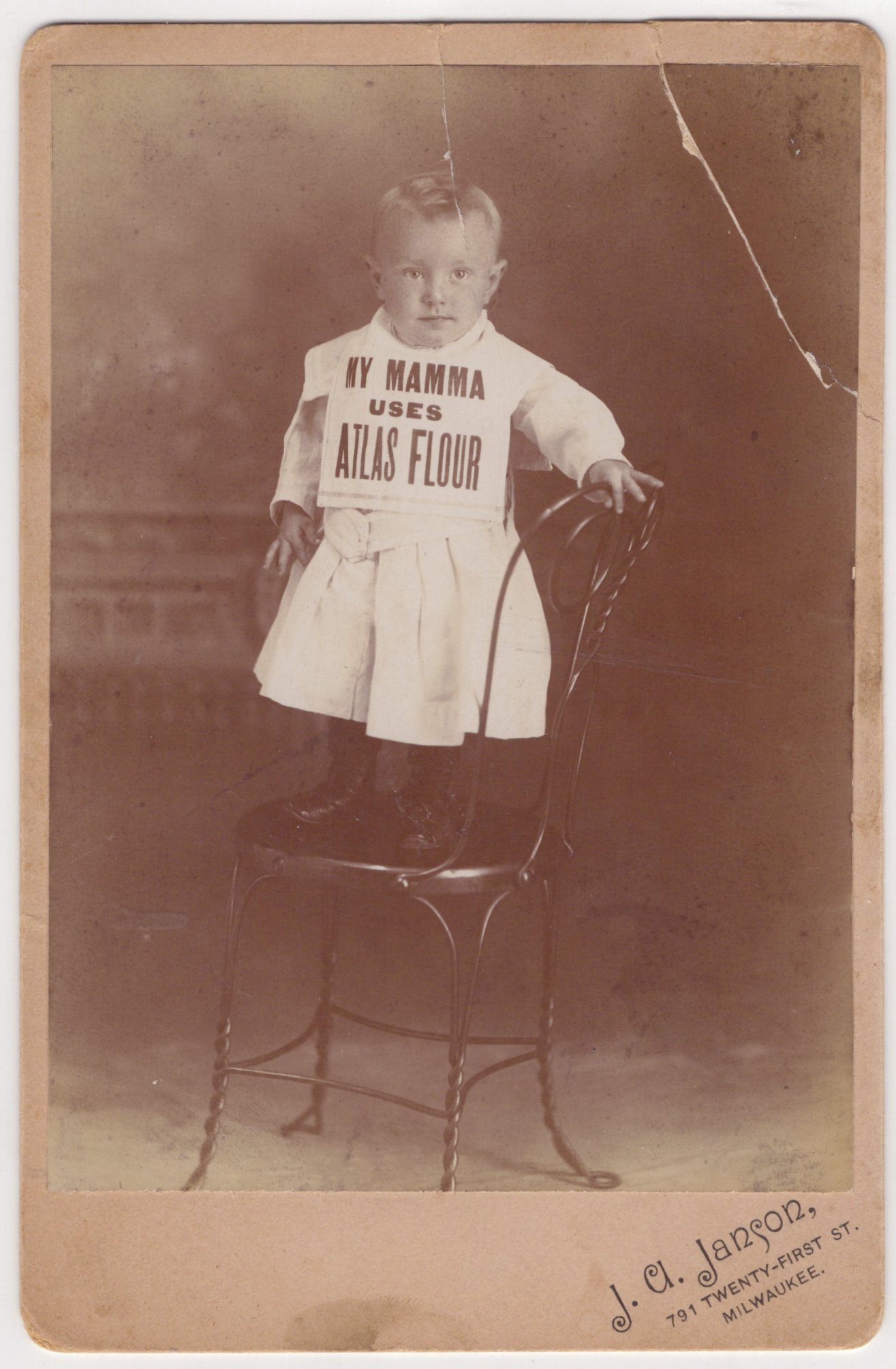
ADVERTISING CABINET CARD : ATLAS FLOUR : CHILD STANDING ON CHAIR : MILWAUKEE, WISCONSIN

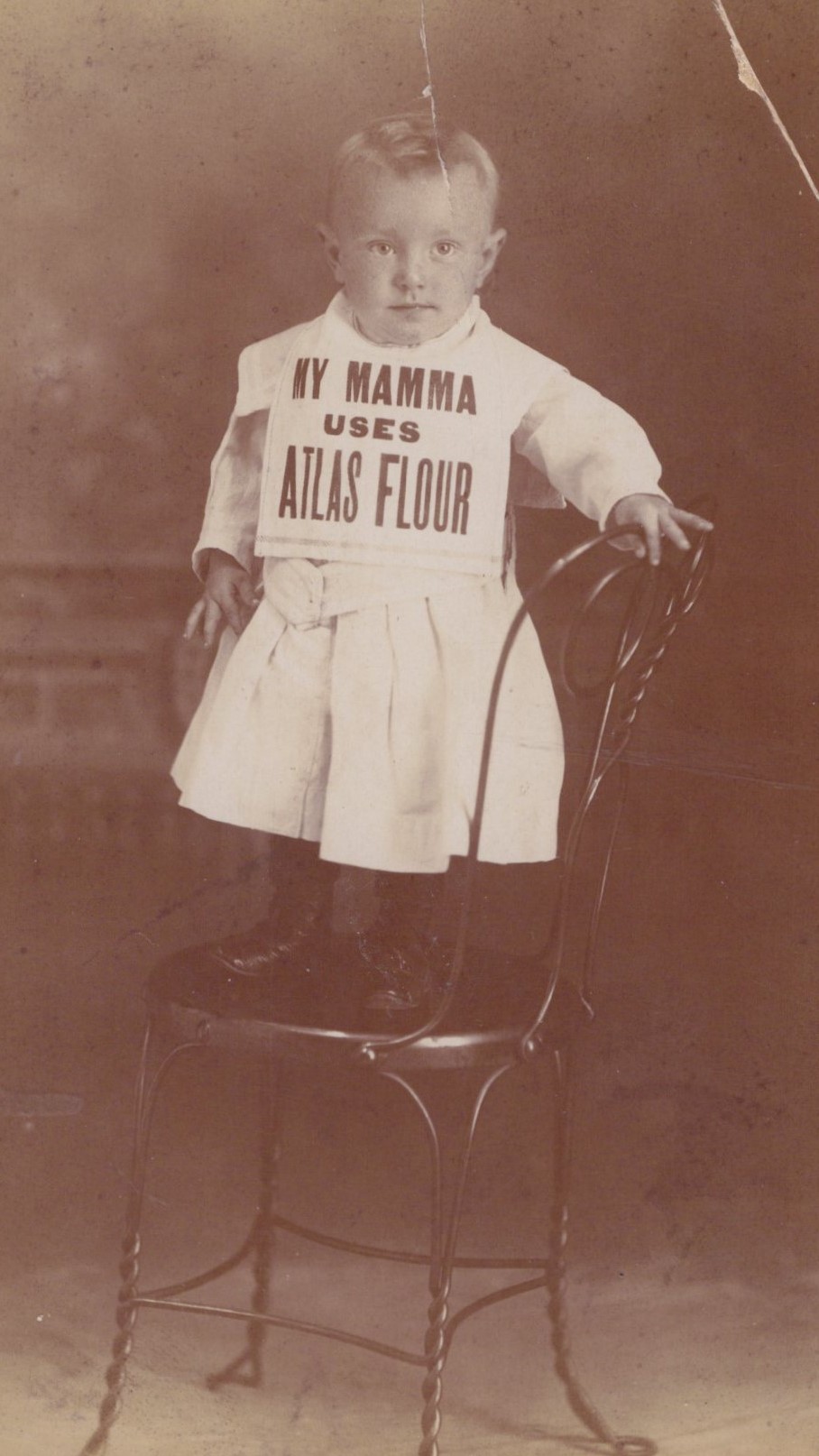
This advertising cabinet card features a little boy on a metal chair wearing a bib imprinted “MY MAMMA USES ATLAS FLOUR”. Atlas Flour was manufactured by B. Stern & Sons (Milwaukee, Wisconsin). The card’s photograph was taken by J. A. Janson in his studio also located in Milwaukee. This cabinet card, along with similar examples, was likely produced as part of a local promotion for the flour. It is likely that photos were of children of the company’s employees or other city residents.  SOLD

DENTIST : DR C. D. RICHEY : YORK , PENNSYLVANIA : ADVERTISING TRADE CARD 1898

This vintage trade card advertises Dr. Richey’s Dental Parlors. Dr. Richey’s practice was located in York, Pennsylvania. The advertising copy could have been written today. Dr C. D. Richey is described as a Crown and Bridge work specialist. In addition, it is claimed that his “new method” of extracting teeth is “without pain”. His secret for painless extraction is somnoforme, an anesthetic. This inhalational anesthetic was developed in 1901 by a French dental professor, Georges Rolland. Due to risk of fire risk when combined with electrosurgery, and due to false advertising claims about the product, the use of somnoforme became steadily less popular and the concoction was totally abandoned in 1931.  SOLD

SANDPOINT, IDAHO :STREET SCENE : MOBIL GAS SIGN : PEGASUS : OLD POSTCARD (1956)

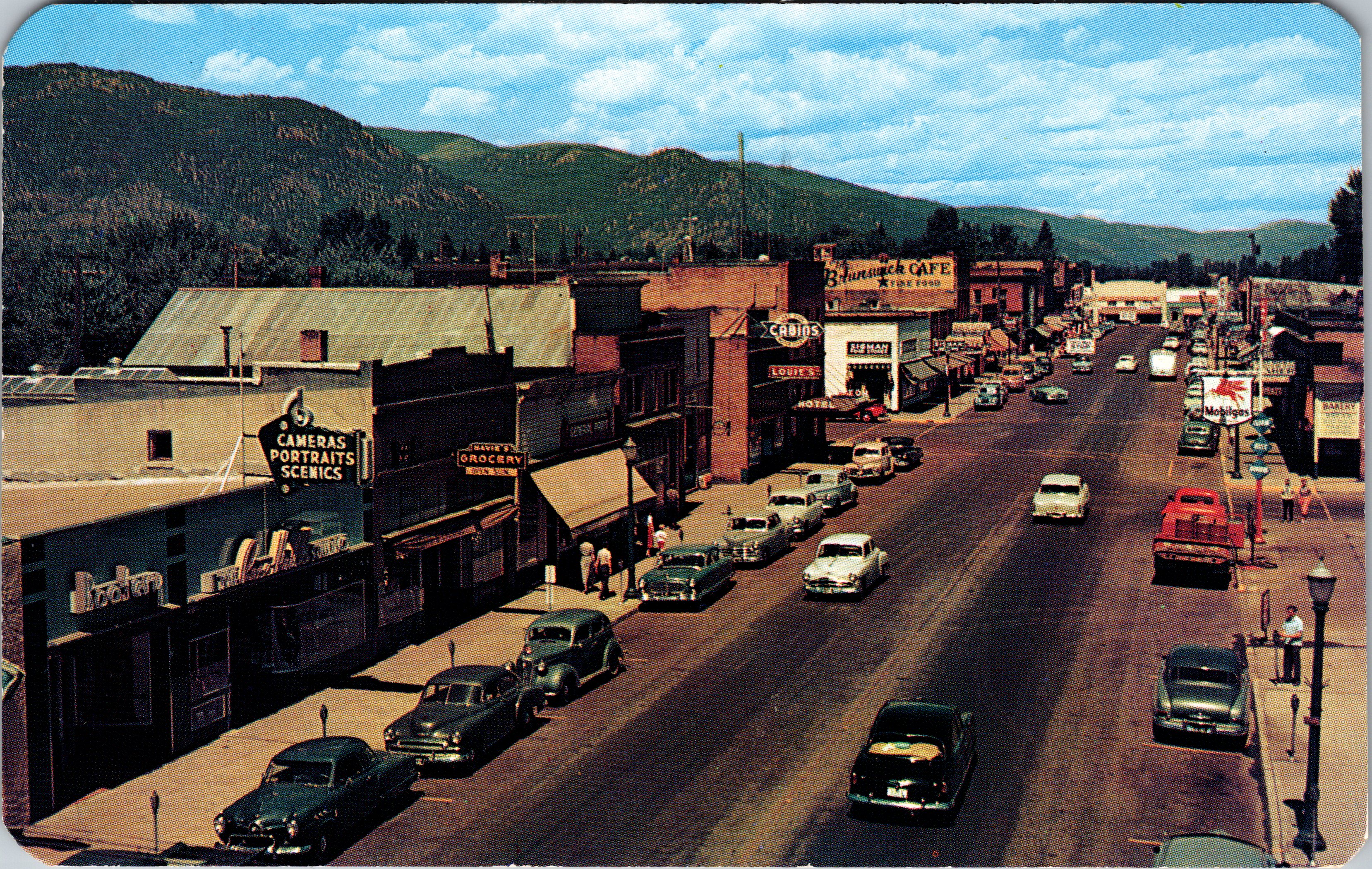
This vintage lithographic postcard features a street scene (First Avenue) in Sandpoint, Idaho. Note the old cars, parking meters, and mountains in the background. The street scene includes a number of signs advertising a grocery, a camera store/studio, hotel, cafe, and a big man store. The most “cool sign” is the Mobil Gas sign with the Pegasus logo. The caption on the reverse of the card states that the street is situated near the beach and marina on Lake Pend Oreille. The town was associated with forest products, agriculture and the tourist trade. At the time of the publication of this postcard, Sandpoint had a population of about five thousand. This postcard was published by The Ross Hall Studio, located in Sandpoint. The card was postmarked in 1956. SOLD

TRADE CARD ADVERTISING : J & P COATS THREADS : BLACK CHILD : CROWS : WE NEVER FADE

This vintage trade card advertises a major fine-thread company. Their product was effective in holding their color in the wash. In the advertising copy seen on the reverse of the card, the company insults users of their competitor’s product. The copy states “Intelligent people do not wash their clothes in acid baths”. This originally Scottish firm was established by a weaver named James Coats (1774-1857) and his brother, Patrick. The company specialized in making cotton yarns. Later, he added silk yarn to the company’s products. James Coats retired in 1830 and was succeeded by his four sons. The company began to expand their market by selling internationally. In 1866, the firm opened a mill in Pawtucket, Rhode Island where they produced a variety of threads. In the 1880’s J & P Coats opened more mills in the United States and their trade cards became popular. During the twentieth century, the company continued to expand around the world via acquisitions and mergers. Interestingly, embroidery threads are still being produced under the trade name of J & P Coats. It is important to note that this trade card’s advertising copy is unacceptably racist. The heading in front of the card states “We Never Fade”. Below this caption are pictures of a couple of black birds (crows?) as well as a picture of a black child. Obviously, the message is that the company’s black thread holds it’s color just as much as a black bird or a black child hold their own color. Understandably, such racist advertising would not pass muster today.  SOLD

T. WHALEN TOBACCO DEALERS : SALESMAN CALLING CARD : POSTCARD (PRE 1907)

This vintage postcard is an interesting example of both Tobacciana and Postal history. This postcard was a calling card sent by Tobacco salesmen to their tobacconist customers. More specifically, the postcard would inform shopkeepers as to the exact date they could expect the salesman to call on them. This postcard was sent by a salesman employed by T Whalen. The firm was located in Rochester, New York. It manufactured Tobacco and Cigars and dealt in Pipes and Leaf Tobacco. The business was established in 1840 by Abraham Van Slyke. In 1864 the firm became Woodbury & Whalen, and a year later,the company evolved into R & T Whalen. This postcard likely dates back to pre 1907, as it is undivided and allows for no message on the address side of the card. SOLD

Published in: on February 8, 2024 at 12:00 pm  Leave a Comment  
Tags: , , ,