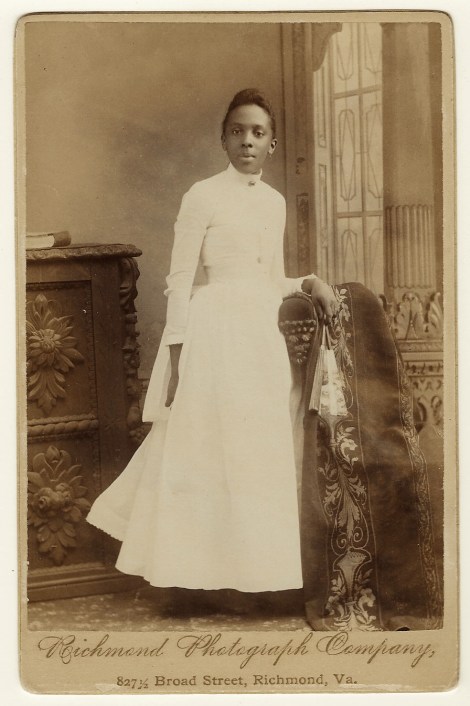
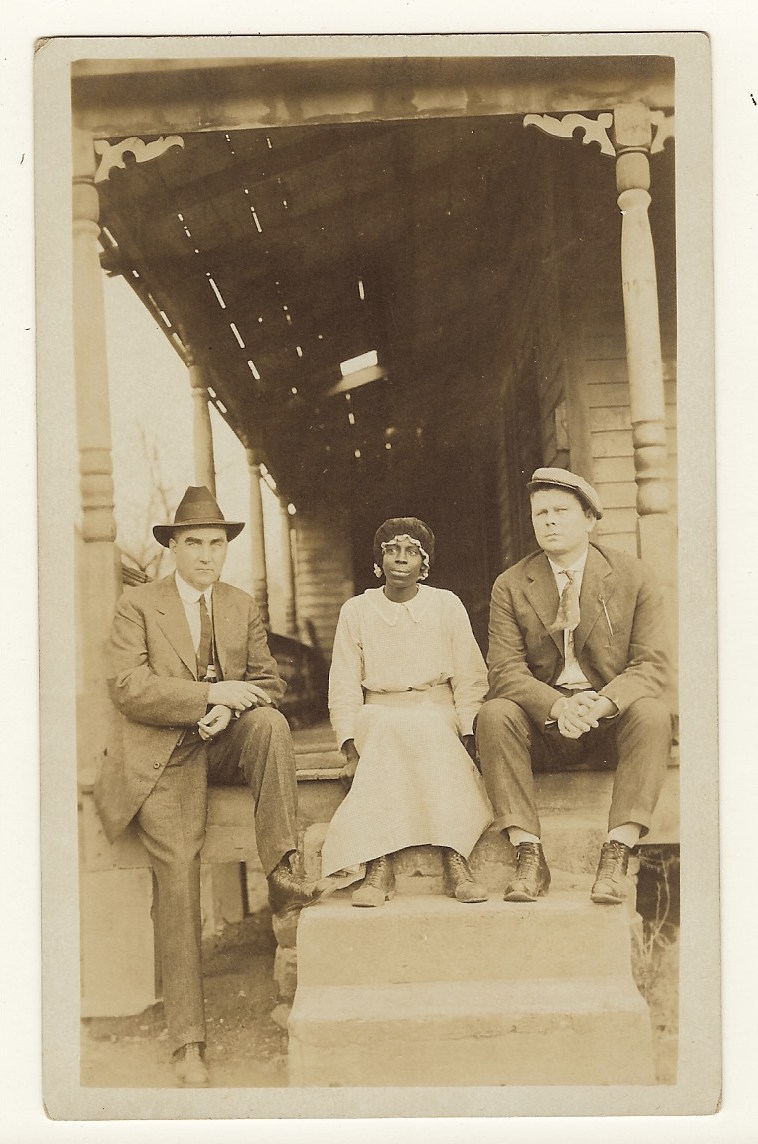
This is a wonderful cabinet card portrait of a pretty young woman. The photograph features a great deal of uncertainty. The individual who formerly owned this image claimed that the subject is African American. In my opinion, the claim is debatable. One of the issues relating to some cabinet card images of African Americans is this very question. Some collectors and dealers sincerely believe they possess a portrait of an African American while others dishonestly make the claim in order to increase the value of the photograph. This particular image presents another interesting and debatable subject. The previous owner also claimed that this photograph is a memorial cabinet card. In other words, the photograph was made in honor of this young woman upon her death (not a post-mortem photo). The placement of the woman’s image inside a scroll, or whatever the shape represents, is the alleged tip off that it is a memorial photograph. I have seen experts provide conflicting opinions about such claims. Lets talk about what we do know. This young and attractive woman is making an interesting fashion statement. Her dress has little squares of fabric attached to it in what appears to be a haphazard manner. She is wearing a horseshoe collar pin and a thin necklace. If this photo is a memorial cabinet card, then the horseshoe certainly didn’t provide her with good luck. She is wearing her hair up. The photographer of this cabinet card is William T. Ross (1861-1945) who operated a studio in Appleton, Wisconsin. Ross appears in “Wilson Photographic Magazine” (1898) in an article that reports that he was elected Treasurer of the Convention of Wisconsin Photographers. Ross has a presence in a number of Appleton city directories from 1889 through 1934. He was born in Syracuse, New York and was married to Ella A. Ross. The edges of this cabinet card are scalloped and gold gilded. The reverse of the cabinet card has a ghost image (see below). The image was likely formed by the rear of the cabinet card being pressed against the front of another image while occupying a frame or album. SOLD



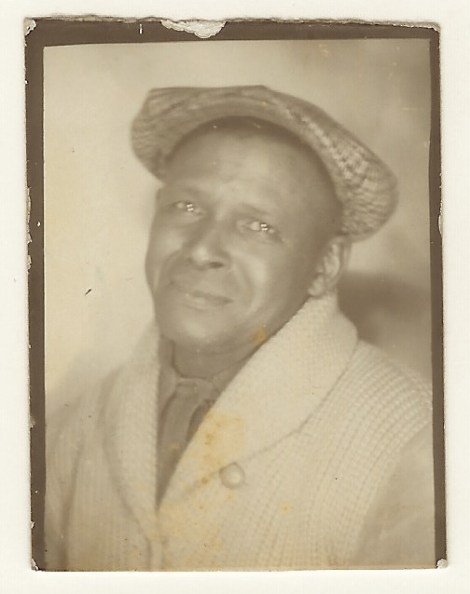

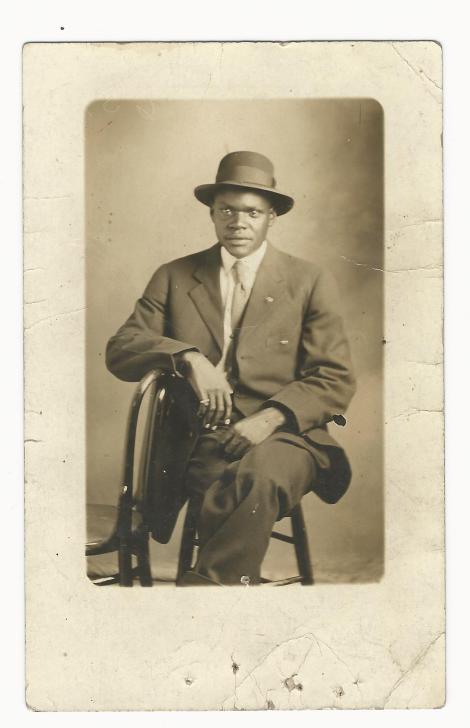 This vintage real photo postcard features a well dressed African American man. He is wearing a ring and a nice hat. He is looking directly at the photographer. The reverse of the postcard has an inscription which includes his name as well as his wife’s name. The gentleman’s name is John Anderson and he inscribed the card to his wife, Inez Anderson. He humorously wrote that she knew that he was the “pretty man” in the photo. The postcard has an AZO stamp box which indicates that it was produced between 1904 and 1918. The lower portion of the postcard has eight tack holes which indicates that the postcard may have traveled a bit and been tacked to a number of walls. There is also residue evidence that the postcard once resided in a photo album. SOLD