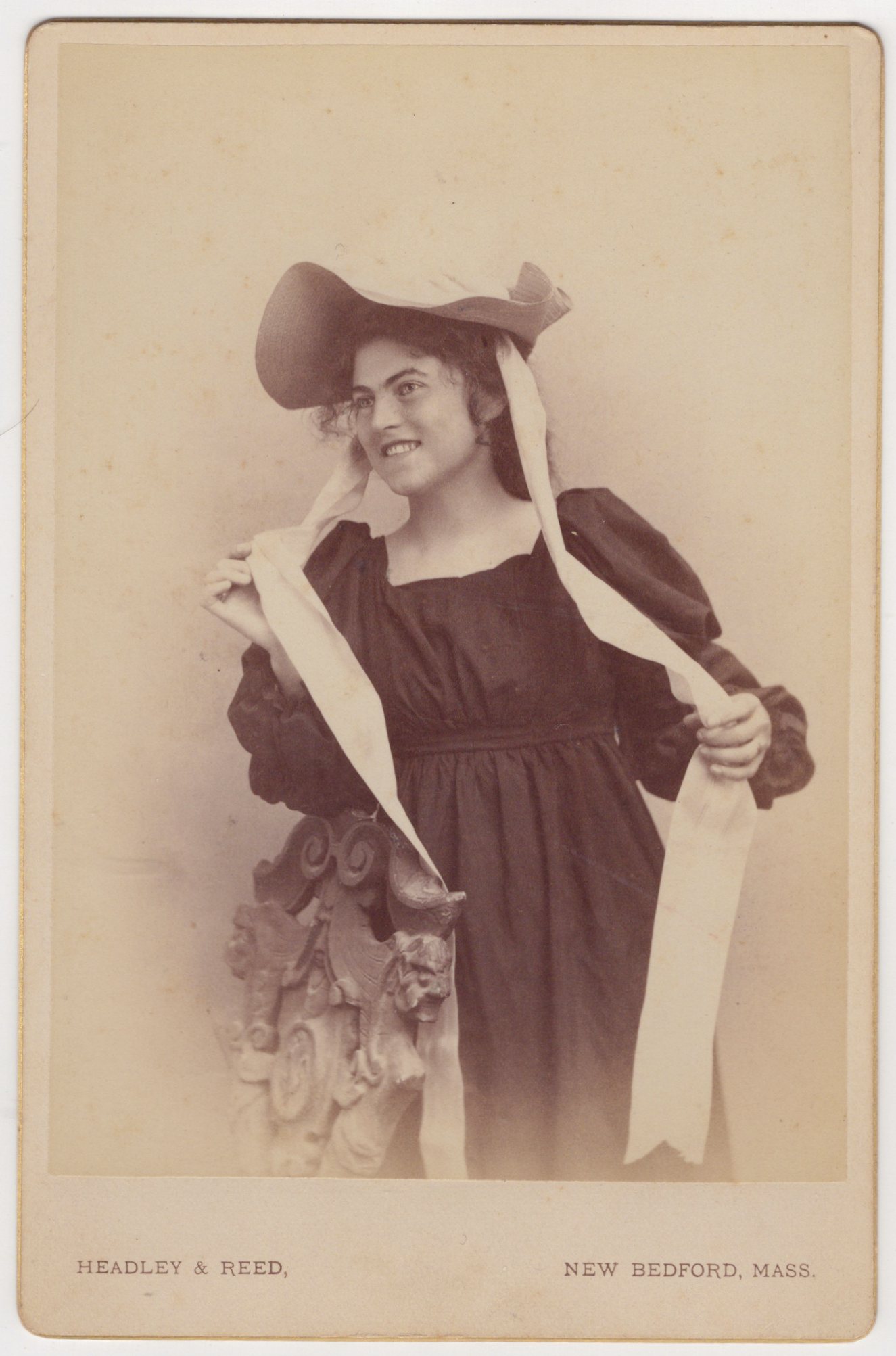
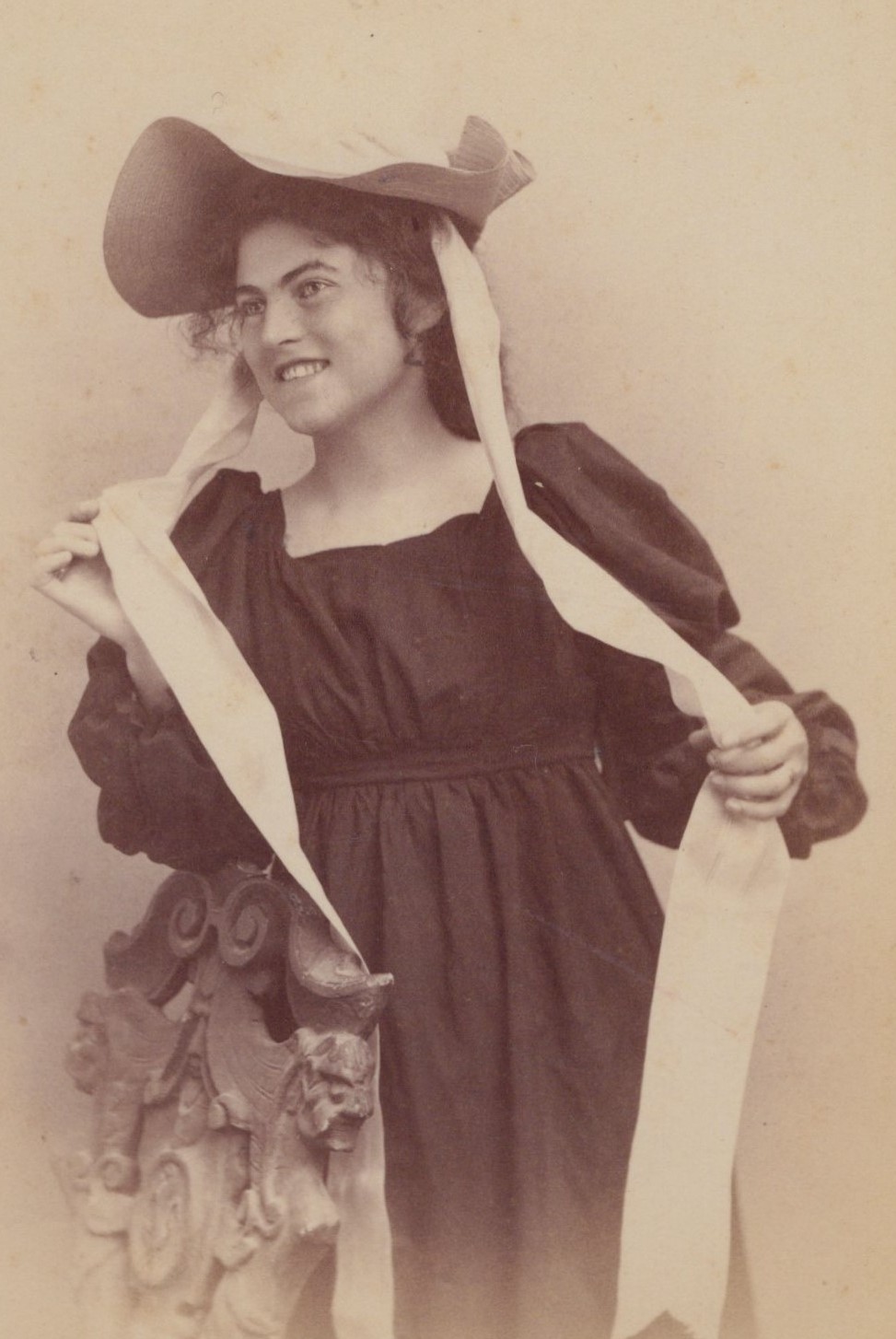
BLACK PHOTOGRAPHER : PRETTY YOUNG WOMAN : NEW BEDFORD, MASS : CABINET CARD

This cabinet card portrait features a fun looking vivacious young woman. She looks pretty and fashionable in her spring like clothing. She is wearing a wonderful hat and a beautiful smile. She shows an excellent and relaxed presence in front of the camera. Perhaps she was a local or touring actress. This young woman’s photograph was taken by the Headley & Reed studio in New Bedford, Massachusetts. The Headley & Reed partnership was an interracial one. Phineas Camp Headley (1858-1921) was a white man while James E. Reed (1864-1939) was an African American man. They operated a studio at 5 Purchase Street. Reed was an important figure in New Bedfords early history. He took photos of city streets, whaleships and people. His human subjects were both white and black. He had a passion for the field of photography and was prolific in his work. By 1895, he was making enough money to open his own studio, which he did with his partner, Mr. Headley. Headley, a white man, besides being a photographer, was a successful cotton broker. Headley & Reed were the premier studio in New Bedford and operated successfully from 1890 until 1896. One of Reed’s claims to fame was that he photographed Frederick Douglas. It is not known why Headly left the business. Reed continued running the business until 1914. Reed moved on to become the first Photostat (photocopier) Operator for the Massachusetts State Archives, a position he held until he retired. During Reed’s photography career, his wife, Anna Jourdain, colorized and tinted his photographs. She also worked on tiffany style lampshades. She was educated in art at the Swain School of Design (New Bedford).  SOLD

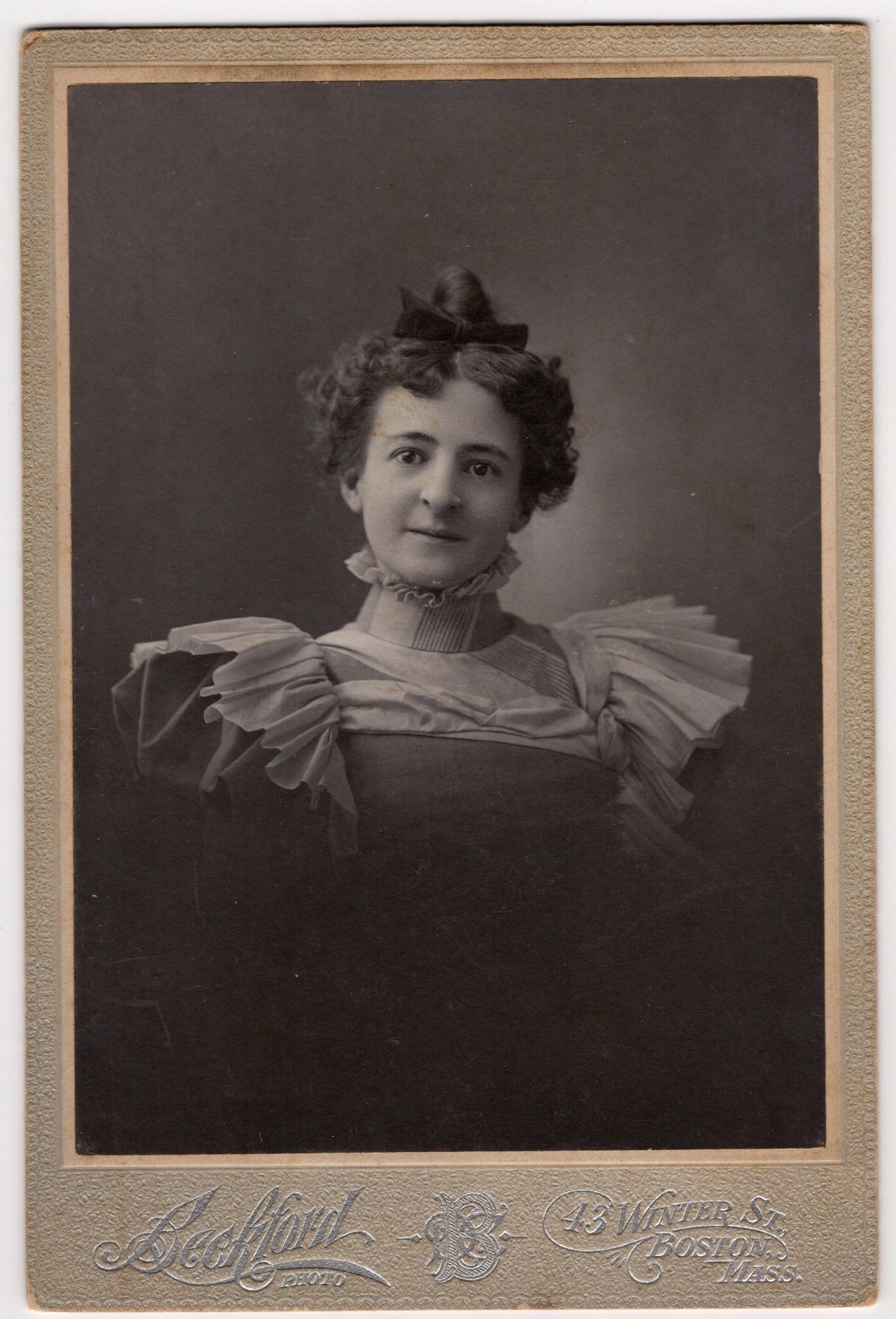
PHOTO OF YOUNG WOMAN : BLACK PHOTOGRAPHER : DAVID BECKFORD : BOSTON : CABINET CARD

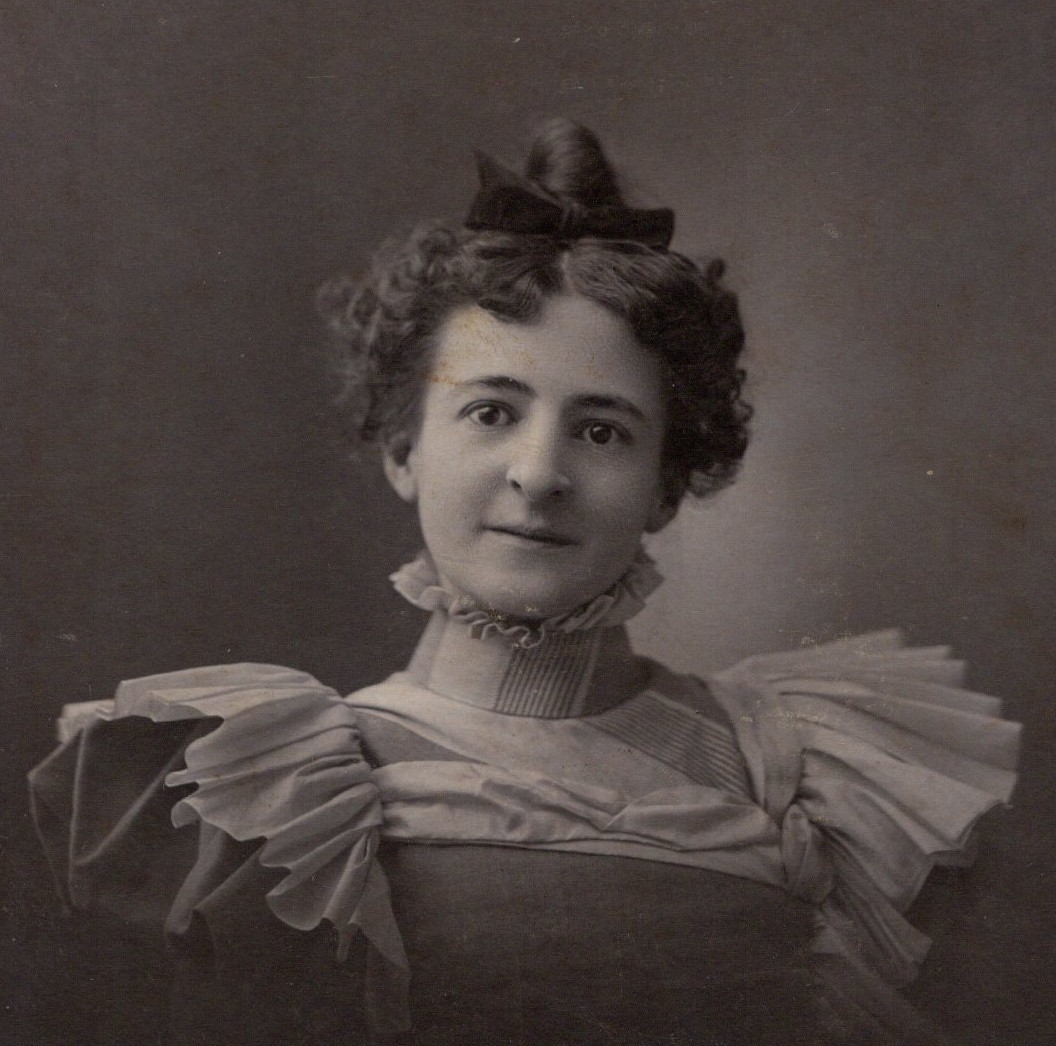
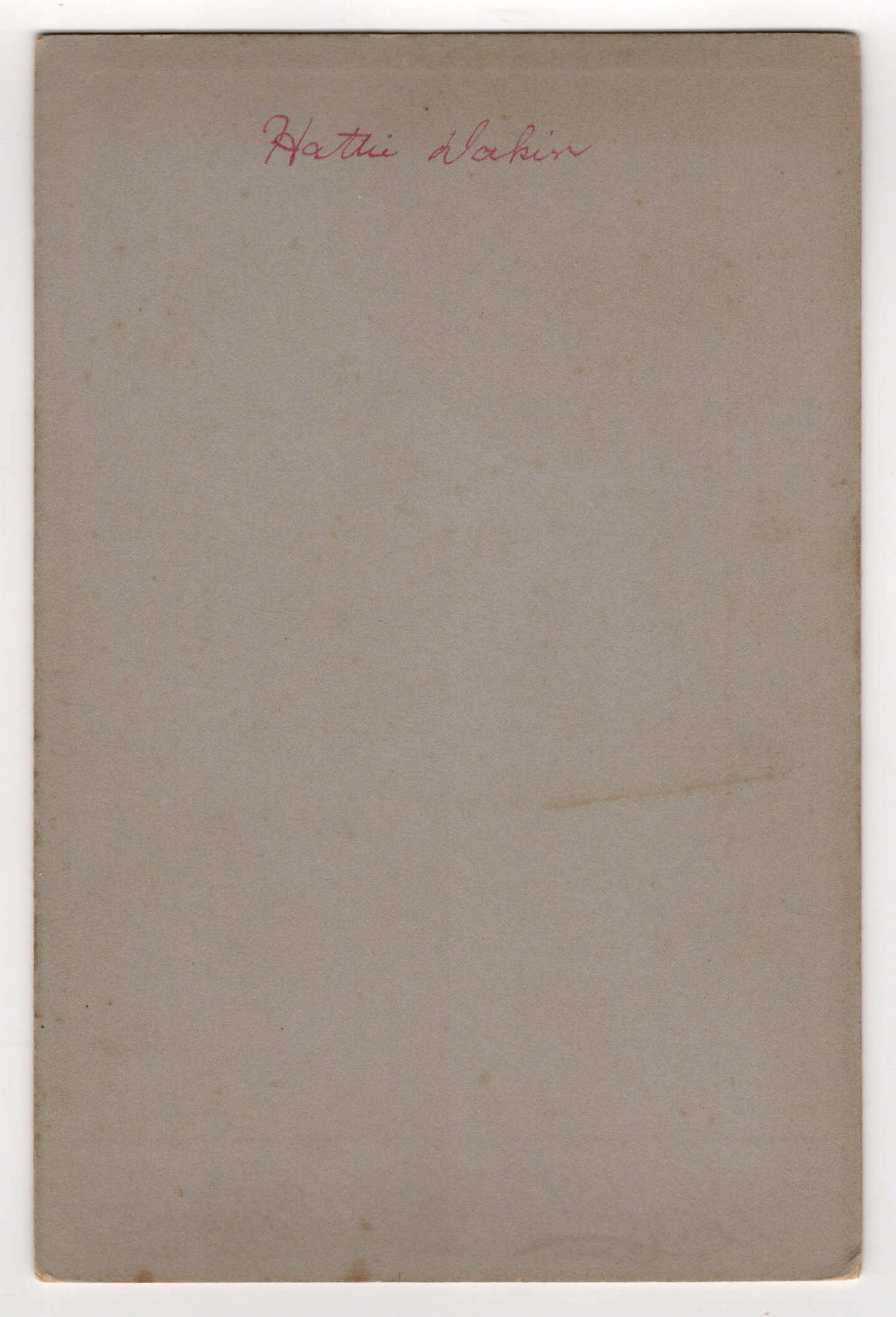
This original 1899 cabinet card photograph features a charming and elegant young woman identified on the reverse as Hattie Dakin. Her portrait is beautifully posed and lit, capturing her in a high-necked gown typical of the late Victorian period—with puffed gigot sleeves, delicate pleats, and a structured bodice. Her hair is styled in curls, pulled up with a ribbon bow, and her expression is serene, with just a hint of a smile. The reverse inscription provides her name. This cabinet card was discovered as part of a larger group of similar photographs, all featuring young women, each dated and named—supporting the theory that these were likely taken to commemorate a school graduation in 1899. What makes this particular image especially significant is the identity of the photographer: David C. Beckford, an African American photographer whose studio—Beckford Photo, 43 Winter Street, Boston, Massachusetts—was among the leading photography establishments of its time. David C. Beckford was a native of Jamaica, born in 1856, and immigrated to the United States in 1872. He originally worked for Walter E. Chickering (a disreputable businessman), and eventually took over the business in 1888, renaming it under his own name. His studio employed four assistants and was highly respected. Beckford operated his photography studio until at least 1909, while also managing a hardware business in Jamaica, which he rebuilt after a devastating earthquake. Beckford’s status as a Black photographer in turn-of-the-century Boston is noteworthy. He received recognition in the book “Boston: Its Commerce, Finance, and Literature,” and is also referenced in a 1909 article in The Southern Workman, confirming both his heritage and his professional stature. His life reflects the resilience and entrepreneurship of a man who overcame barriers of race and geography to establish himself as a photographic artist and businessman. Photographs by African American photographers from the 19th century are uncommon. (SOLD)

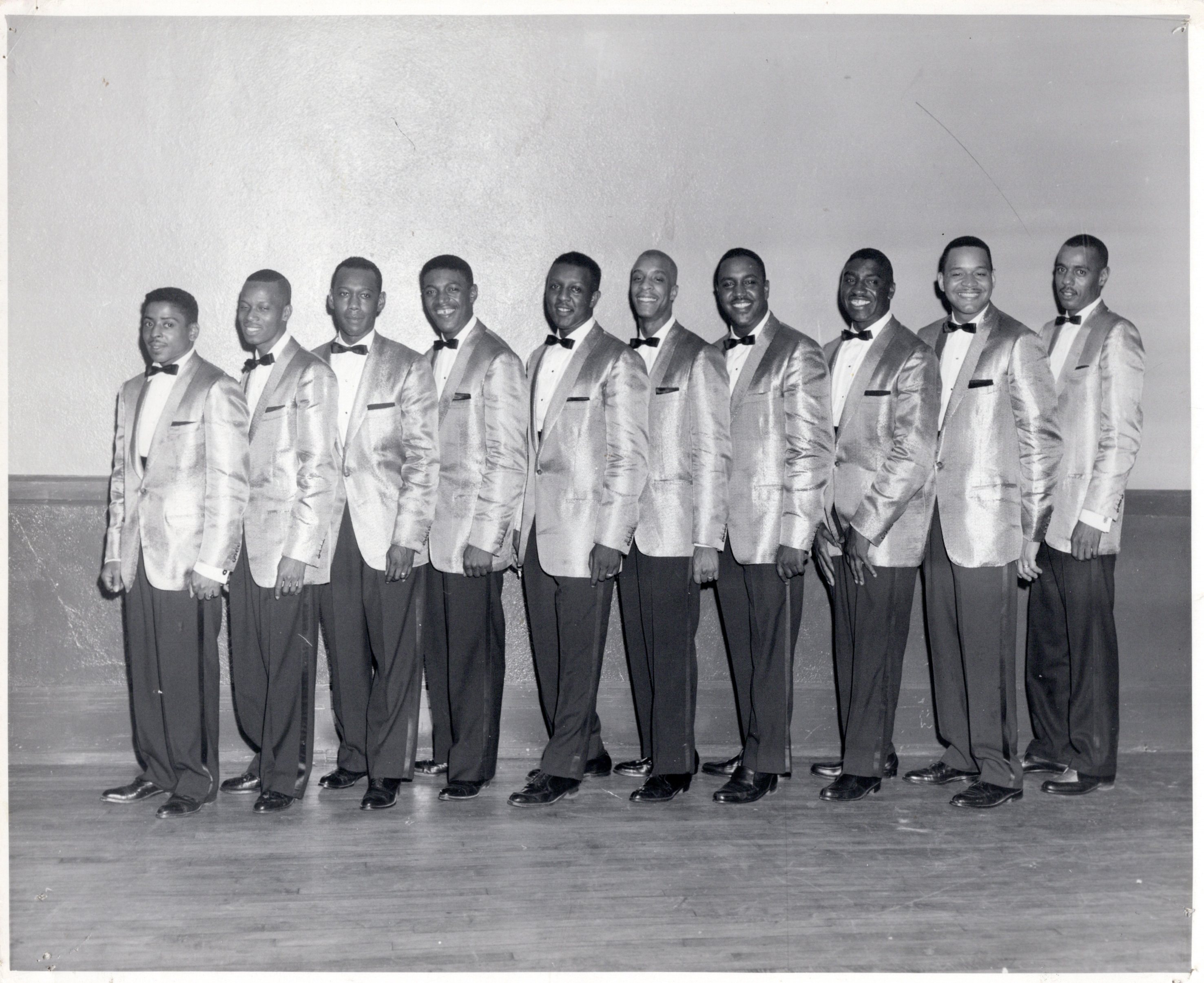
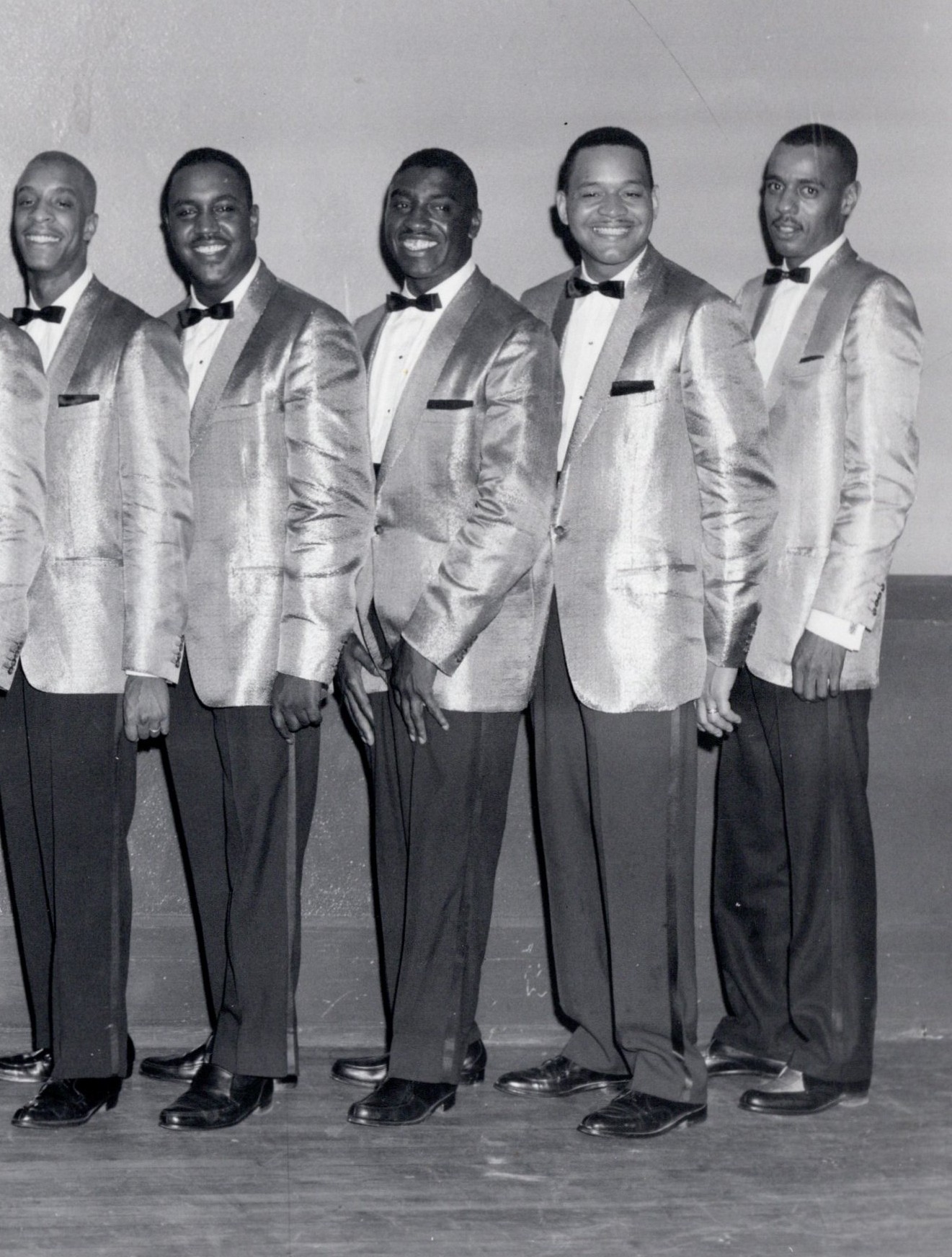
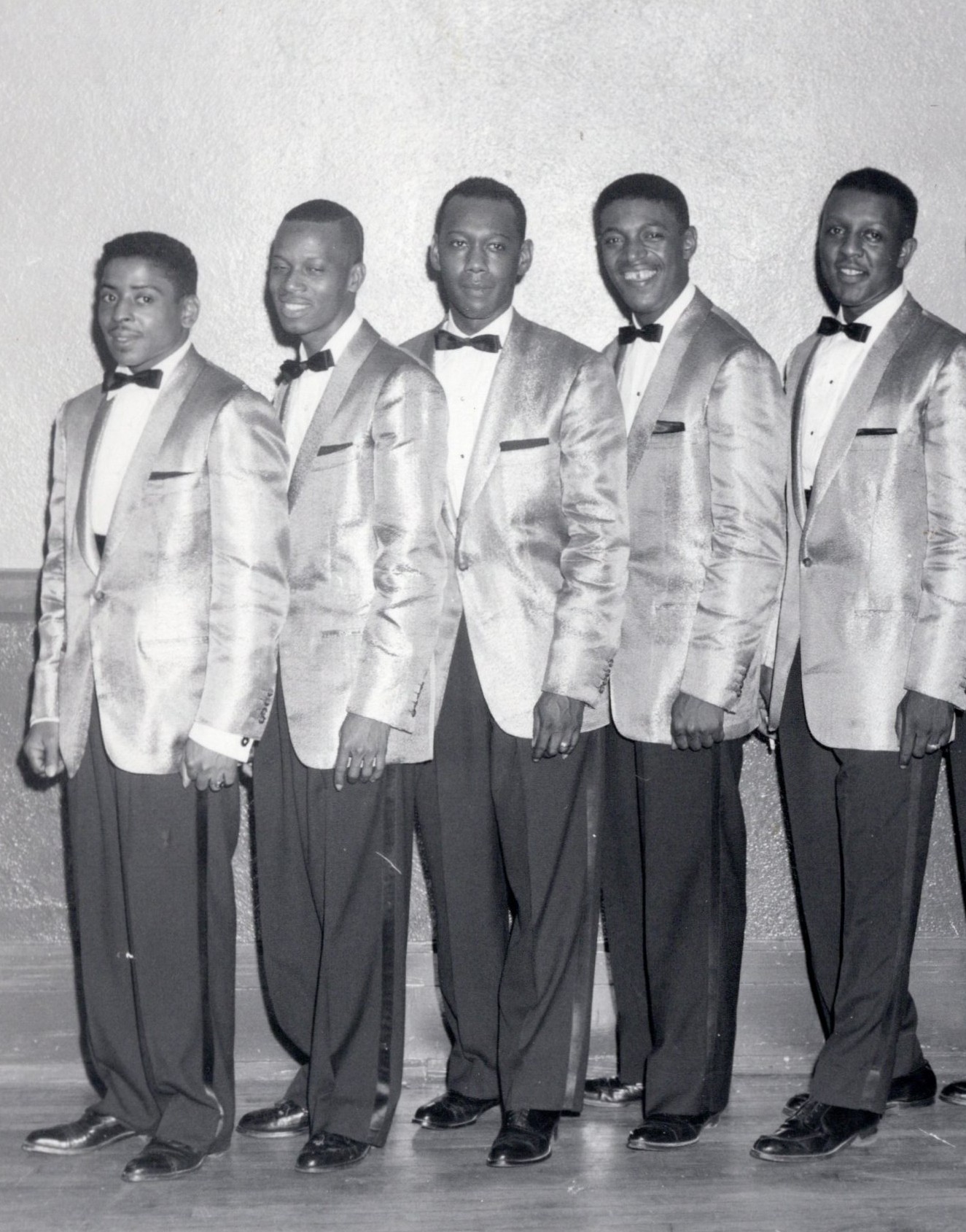
ELEGANT AFRICAN AMERICAN MEN : PHOTO BY JIMMY BAYNES : CLEVELAND, OHIO 1950’s

This striking black-and-white photograph, taken by Cleveland photographer Jimmy Baynes (1922–2010), captures a moment of unity, elegance, and pride. The image showcases a distinguished group of African American men, impeccably dressed in matching metallic-toned tuxedo jackets, crisp white dress shirts, and black bow ties. Their tailored jackets gleam under the light, emphasizing their polished, formal appearance. Completing their attire, neatly pressed black trousers and polished dress shoes reflect a commitment to both style and sophistication. Standing in a carefully arranged formation, the men present a sense of camaraderie and professionalism. Their expressions range from confident smiles to serious, poised looks—perhaps reflecting the anticipation of a performance or an important social event. Each man exudes dignity, their upright postures and synchronized attire reinforcing a sense of unity. The background is simple and unembellished, allowing the focus to remain on the subjects themselves, their expressions, and the sharp contrast of their gleaming jackets against the darkened floor. The photographer of this photograph, Jimmy Baynes was  known for his ability to capture the essence of African American life, culture, and entertainment from the 1950s through the 1980s. Originally a postal worker, Baynes pursued photography as a passion, ultimately founding Baynes Foto Service. His work chronicled the vibrancy of mid-century African American social life, from intimate gatherings and beauty contests to the pulsating energy of live music performances and political events. Baynes photographed some of the most iconic figures in entertainment history, including Aretha Franklin, Louis Armstrong, Count Basie, Mahalia Jackson, Louis Jordan, Jerry Lee Lewis, the Platters, and the Drifters. His ability to capture both candid and staged moments gave his work a lasting impact, preserving the rich history of Cleveland’s African American community. His legacy is recognized today by institutions such as the Rock and Roll Hall of Fame and Museum Library and Archives in Cleveland, which houses a collection of his photographs, primarily focusing on music and entertainment. In 2010, shortly before his passing, his work was featured in the “Polaroid: Instant Joy” exhibition in Brooklyn, New York, reaffirming his role as a visual storyteller of African American life in the mid-20th century. This photograph was taken in the 1950’s. (SOLD)

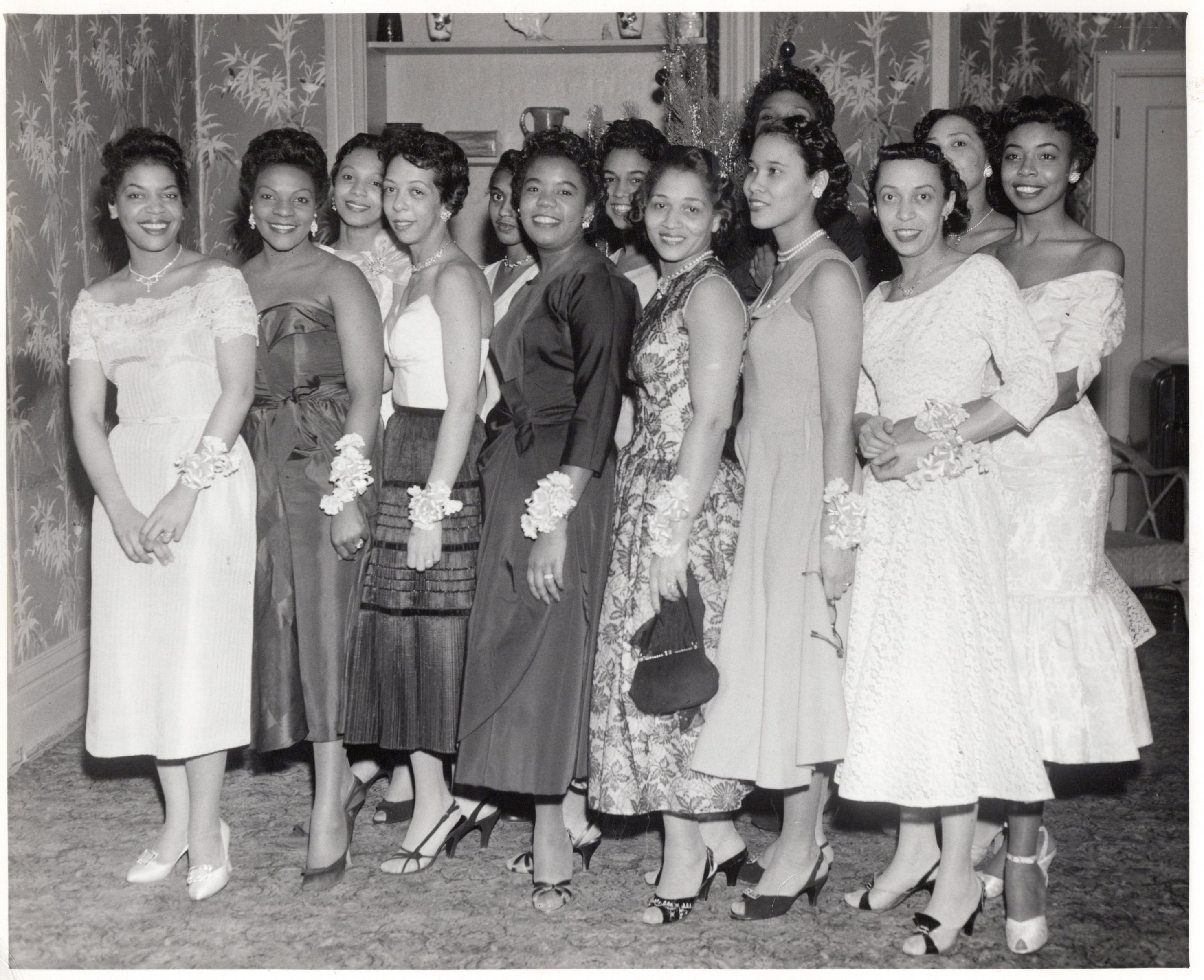
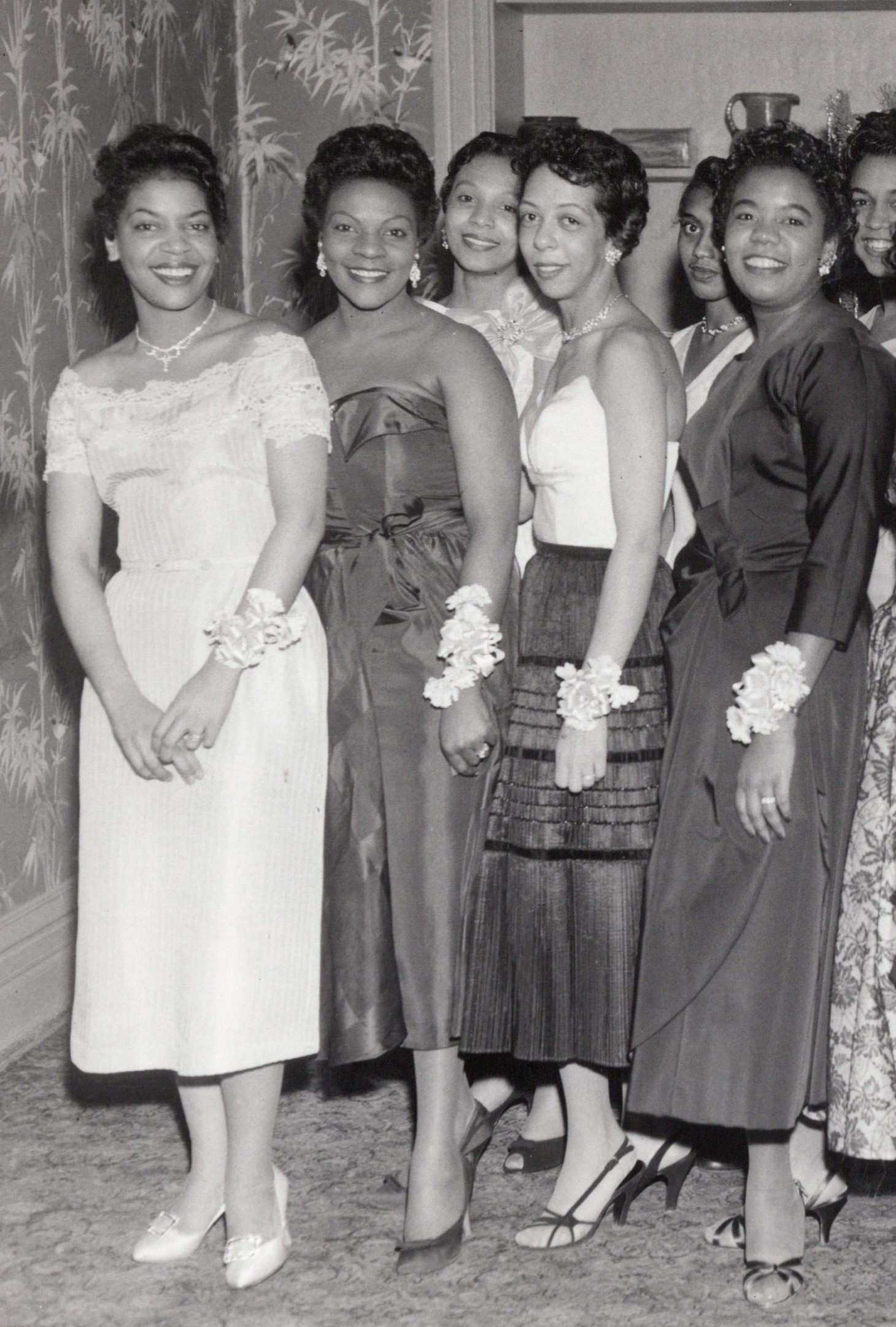
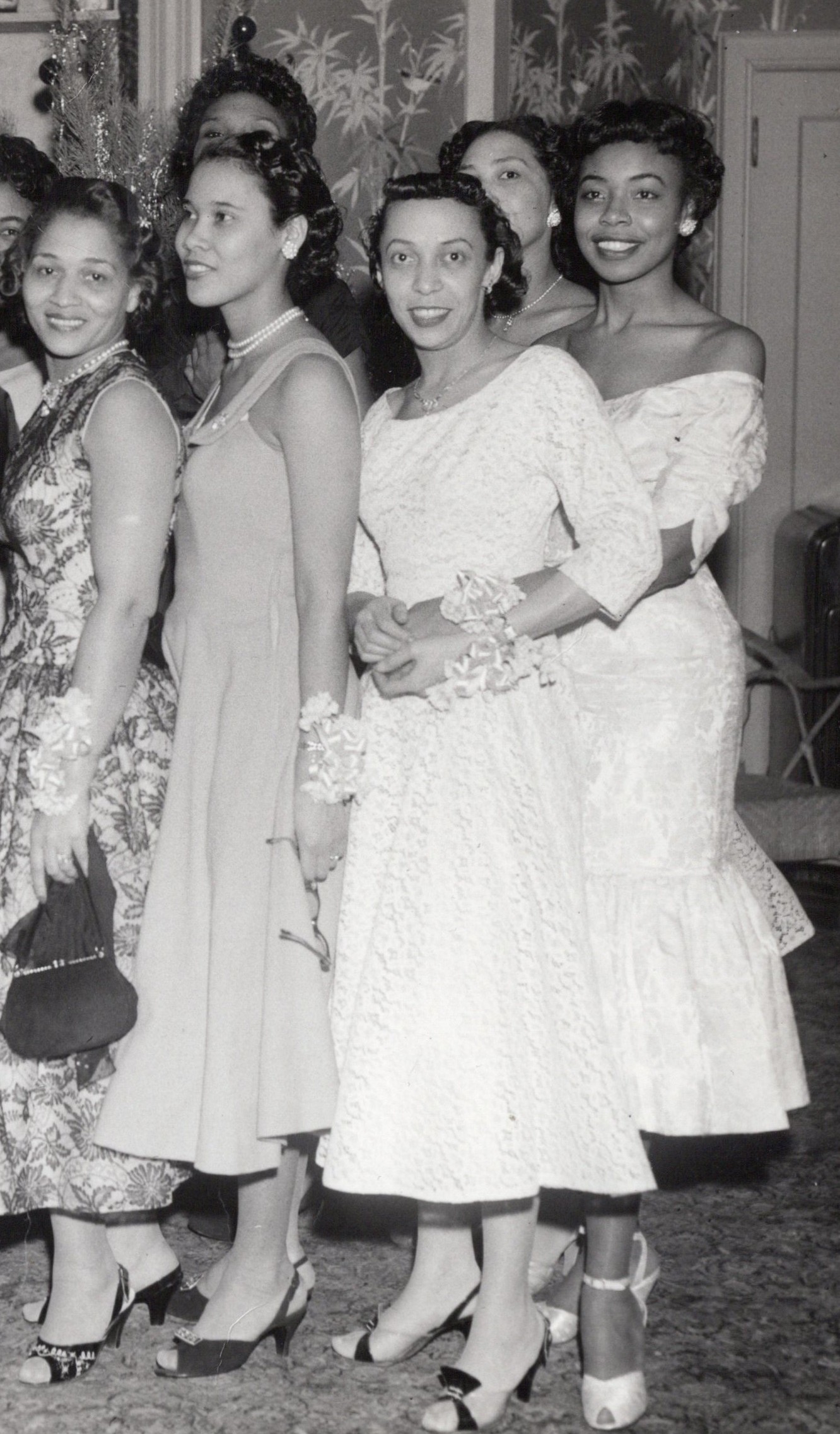
STYLISH AFRICAN AMERICAN WOMEN : PHOTO BY JIMMY BAYNES : CLEVELAND, OHIO 1956

A group of elegantly dressed African American women gathers for a formal event, their smiles warm and inviting. The air is filled with laughter and the quiet hum of conversation, the kind shared among close friends and social circles. Captured through the lens of Jimmy Baynes (1922-2010), this striking black-and-white photograph offers a window into a bygone era of grace and refinement. The photograph was taken in 1956. Each woman stands poised in a display of sophistication, dressed in the finest evening attire of the time. Flowing cocktail dresses and full-skirted gowns drape effortlessly, adorned with delicate lace, satin finishes, and off-the-shoulder silhouettes. Wrist corsages add a touch of tradition, suggesting the occasion could be a gala, a debutante ball, or an exclusive sorority event. Their accessories—clutch purses, pearl necklaces, and elegantly styled hair—complete their timeless looks, reflecting the pride and elegance of their community. The setting, a well-appointed room with patterned wallpaper and a shelf filled with trinkets, provides an intimate backdrop for this moment of celebration. The women lean into each other slightly, exuding warmth, camaraderie, and joy. This is more than just a photograph; it is a glimpse into a world where fashion, culture, and history intertwine. Baynes, a Cleveland-based photographer known for documenting African American life, produced this image which holds both artistic and historical significance. He is renowned for capturing the vibrancy of African American life from the 1950s through the 1980s. Initially working as a postal worker, Baynes pursued photography as a passionate side venture, eventually establishing Baynes Foto Service. ​Over more than three decades, Baynes documented a wide array of events, including weddings, beauty contests, burlesque shows, and live music performances. His portfolio features candid and authentic glimpses into Cleveland’s African American community, encompassing local politicians, nightclub entertainers, and everyday social gatherings. Notably, he photographed prominent figures such as Aretha Franklin, Louis Armstrong, Count Basie, Mahalia Jackson, Louis Jordan, Jerry Lee Lewis, the Platters, and the Drifters. ​Baynes’ work has been recognized and preserved by institutions like the Rock and Roll Hall of Fame and Museum Library and Archives in Cleveland, where a collection of his photographs is housed, primarily focusing on music and entertainment. His images offer a rich narrative of mid-20th-century African American public life in the Midwest, reflecting both the cultural significance and everyday experiences of the community.​ In the summer of 2010, just months before his passing, Baynes’ photographs were featured in a group exhibition titled “Polaroid: Instant Joy” at a gallery in Brooklyn, New York, highlighting the enduring impact of his visual storytelling. (SOLD)

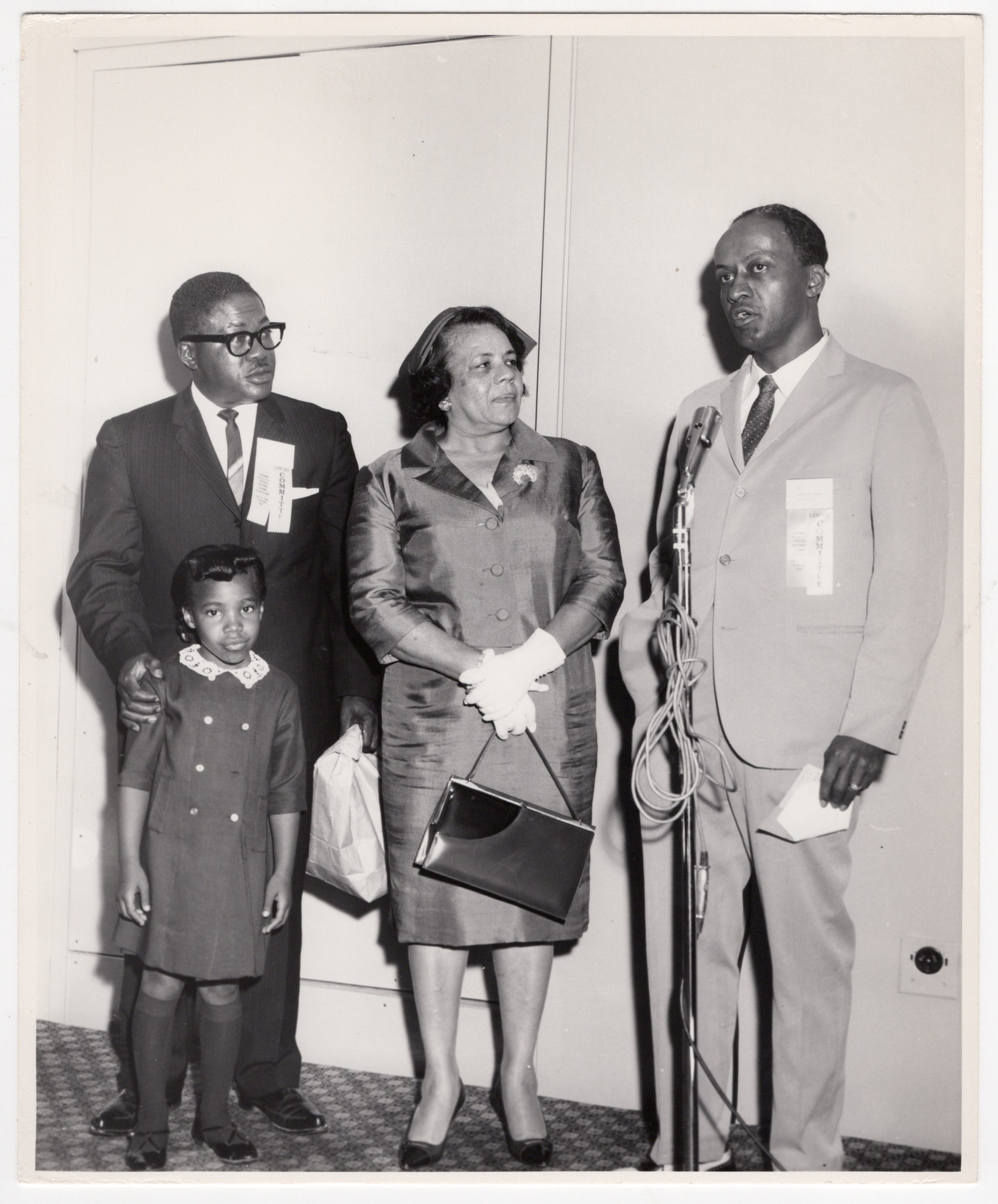
AFRICAN AMERICAN FAMILY AT EVENT : PHOTO BY JIMMY BAYNES : CLEVELAND, OHIO

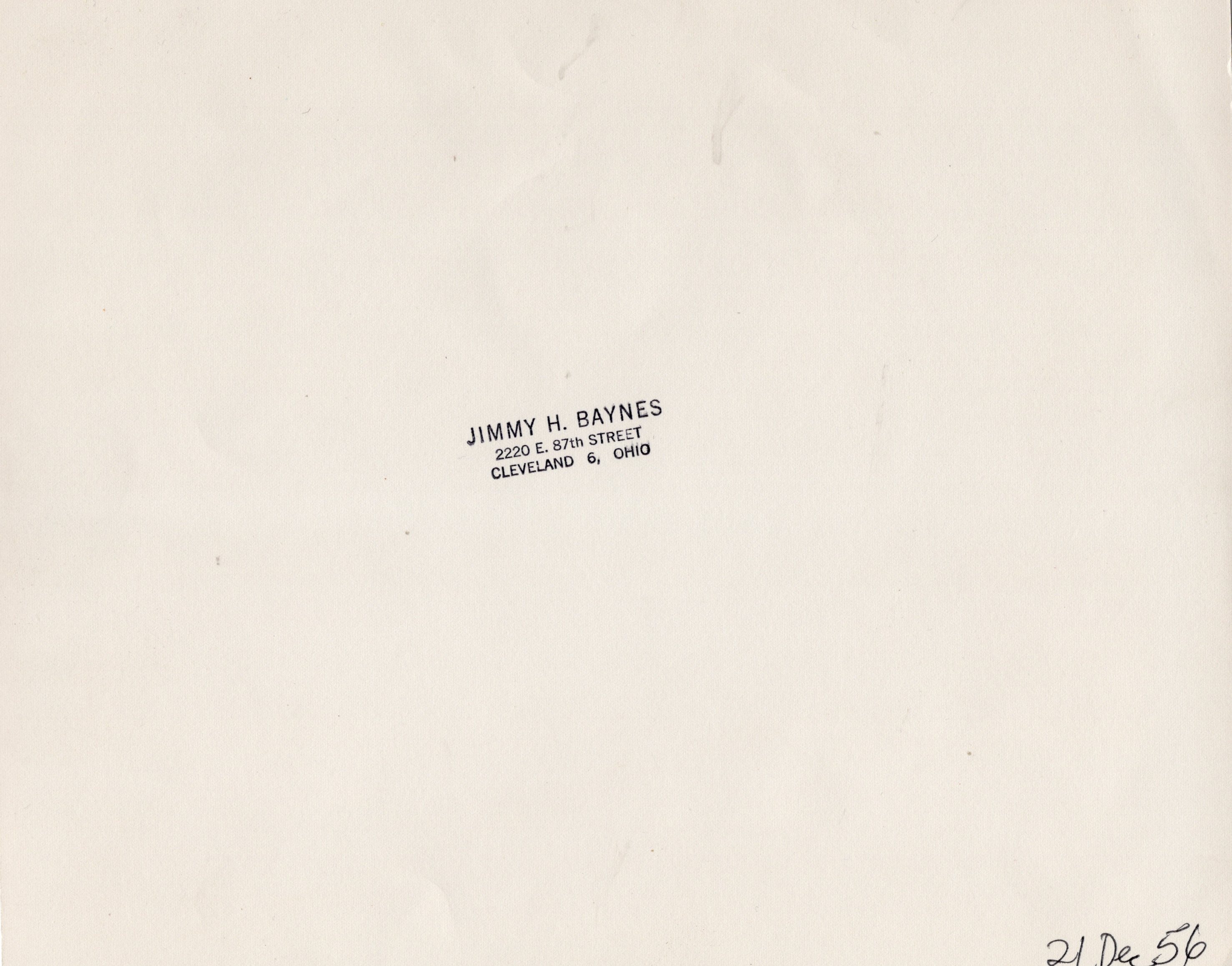
This original black-and-white press photograph was taken by noted Cleveland photo journalist Jimmy Baynes, whose stamp appears on the reverse. Baynes was a prolific photojournalist and chronicler of Cleveland’s African American community during the mid-20th century. His work documented civic events, political gatherings, cultural programs, and the everyday lives of African Americans in Cleveland. His images today stand as a vital record of local history and are increasingly valued by collectors of press photography and African American ephemera. In this photograph, Baynes captures an intimate and historically significant moment at what appears to be a civic or organizational event. The image shows four African American subjects—an elegantly dressed woman wearing white gloves and a matching hat, a man beside her holding the hand of a young girl, and another man standing at a microphone delivering remarks. Close examination of the image reveals that two of the adults are wearing ribbons pinned to their lapels, both reading “COMMITTEE.” The man on the right, speaking into the microphone, also wears an additional ribbon with partial text visible, suggesting this was a formal banquet, conference, or community leadership meeting—possibly church-affiliated or sponsored by a civic organization. The photograph’s composition and tone suggest a moment of recognition or introduction, possibly honoring the central woman—whose dignified attire and central position imply she was a guest of distinction. The expressions of all four subjects convey a deep sense of formality and pride typical of mid-century African American community gatherings. The photo bears the distinctive stamped credit on reverse: “PHOTO BY JIMMY BAYNES”. Jimmy Baynes (1909–2004) was a pioneering African American photographer and journalist based in Cleveland, Ohio, who chronicled the city’s Black community for decades. His work documented social, political, and cultural life—from church events to visits by civil rights leaders.  Baynes was  known for his ability to capture the essence of African American life, culture, and entertainment from the 1950s through the 1980s. Originally a postal worker, Baynes pursued photography as a passion, ultimately founding Baynes Foto Service. His work chronicled the vibrancy of mid-century African American social life, from intimate gatherings and beauty contests to the pulsating energy of live music performances and political events. Baynes photographed some of the most iconic figures in entertainment history, including Aretha Franklin, Louis Armstrong, Count Basie, Mahalia Jackson, Louis Jordan, Jerry Lee Lewis, the Platters, and the Drifters. His ability to capture both candid and staged moments gave his work a lasting impact, preserving the rich history of Cleveland’s African American community. His legacy is recognized today by institutions such as the Western Reserve Historical Society, the African American Museum of Cleveland, the Rock and Roll Hall of Fame and the Museum Library and Archives in Cleveland, which houses a collection of his photographs, primarily focusing on music and entertainment. In 2010, shortly before his passing, his work was featured in the “Polaroid: Instant Joy” exhibition in Brooklyn, New York, reaffirming his role as a visual storyteller 
of African American life in the mid-20th century.
(SOLD)

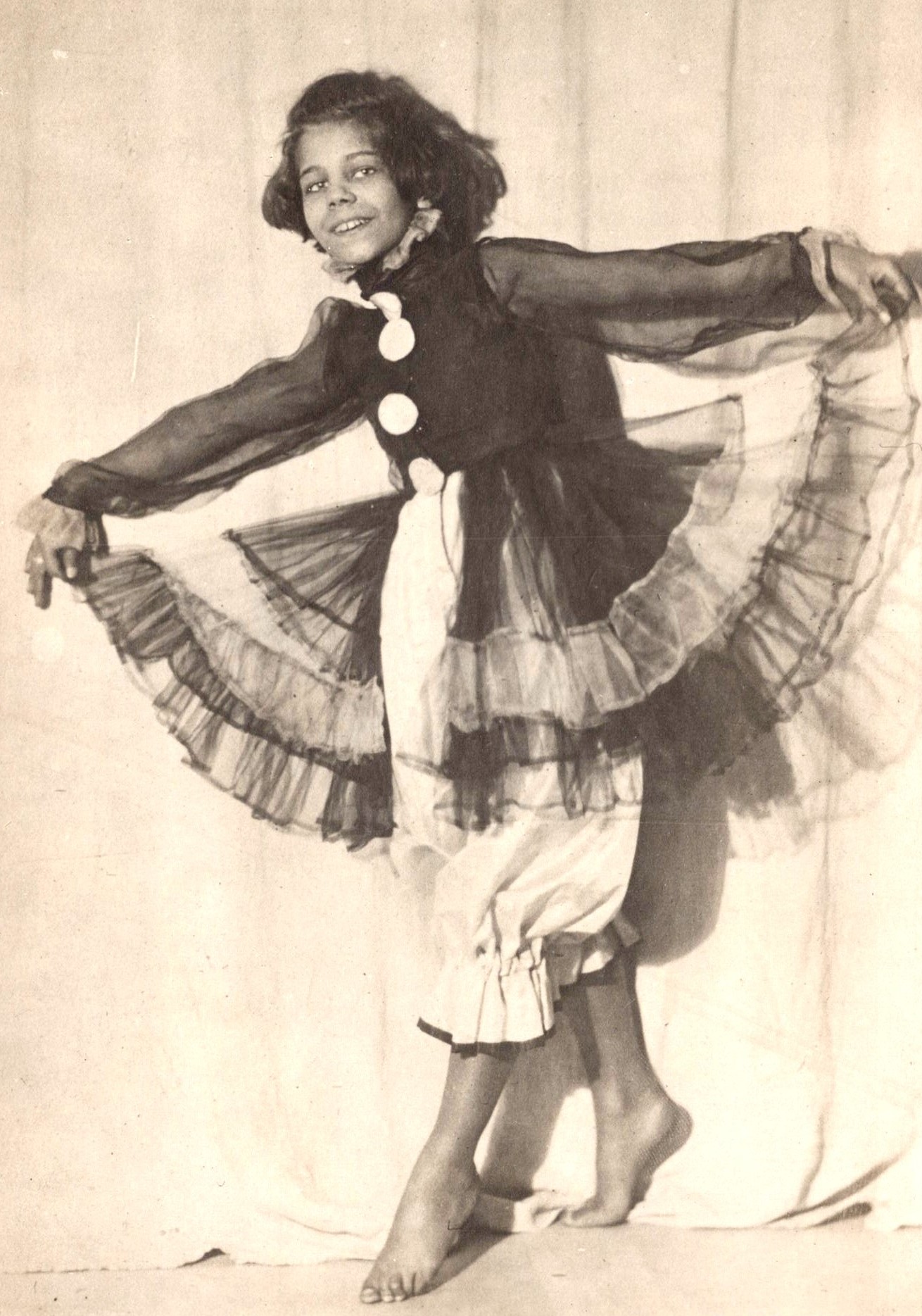
BLACK FEMALE DANCER IN COSTUME : STUDIO PORTRAIT : VINTAGE RPPC

This vintage real photo postcard features a Black Woman in her dance costume. She is an unusual costume and she is lifting her skirt in a risque manner. The woman has a pretty smile.  SOLD

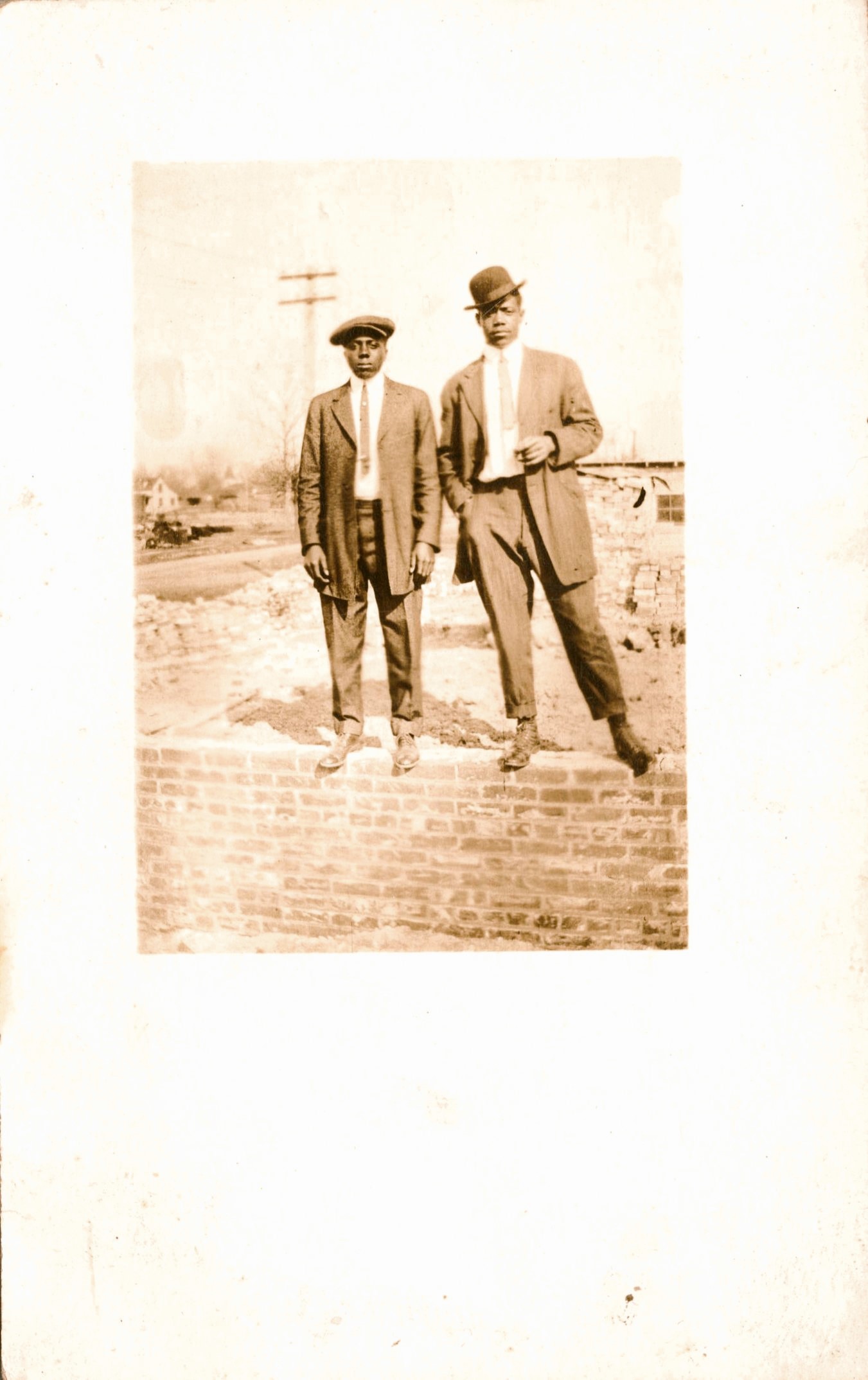
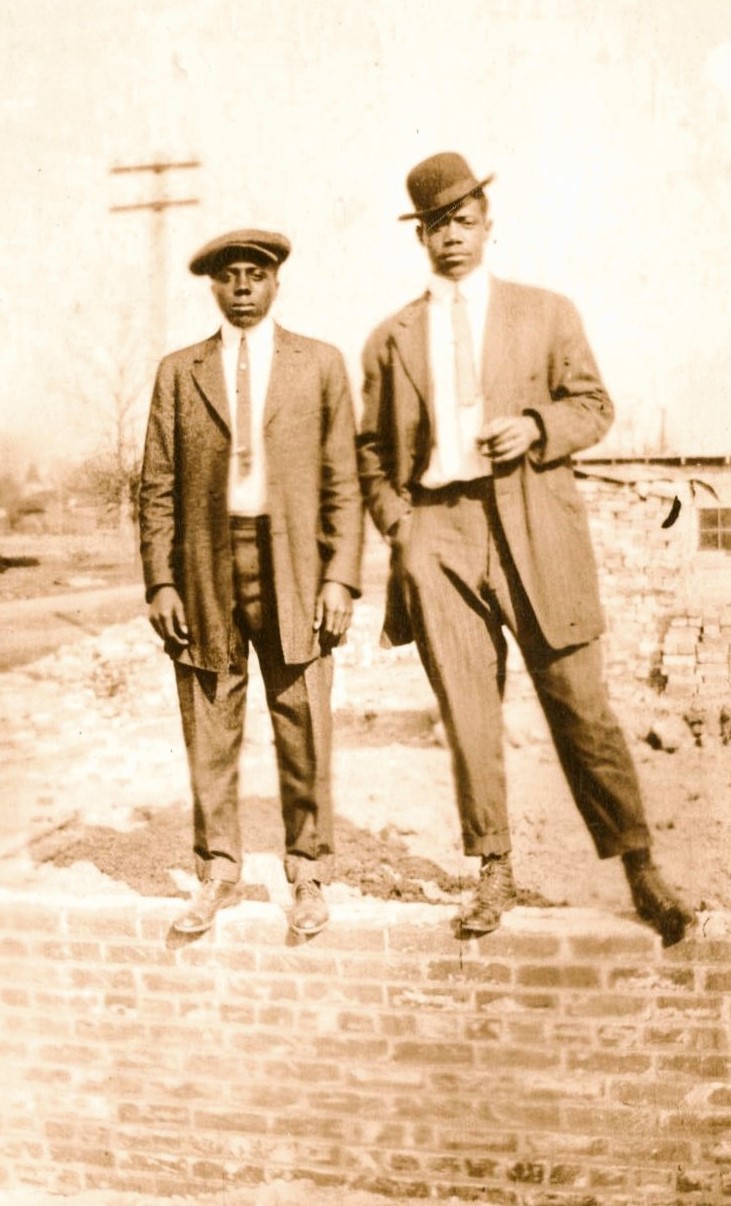
TWO AFRICAN AMERICAN MEN STANDING ON A BRICK WALL : WELL DRESSED: RPPC 1904-1918

This vintage real photo postcard features a portrait of two young African American men posed standing on a brick wall. The dapper men are well dressed, wearing a suit and tie. Note the men’s hats. It is presumed that these men are African American because this postcard was found in the US. However, it is possible that the men are actually from somewhere other than America. It would certainly be interesting to know why these men seem to be in the middle of nowhere standing on a wall. There are bricks behind them which may indicates that the men are at a construction site or perhaps, at the location of a destroyed building. The AZO stamp box on this card indicates that the postcard dates back to between 1918 and 1930. (SOLD)

Published in: on April 5, 2024 at 12:00 pm  Leave a Comment  
Tags: , ,

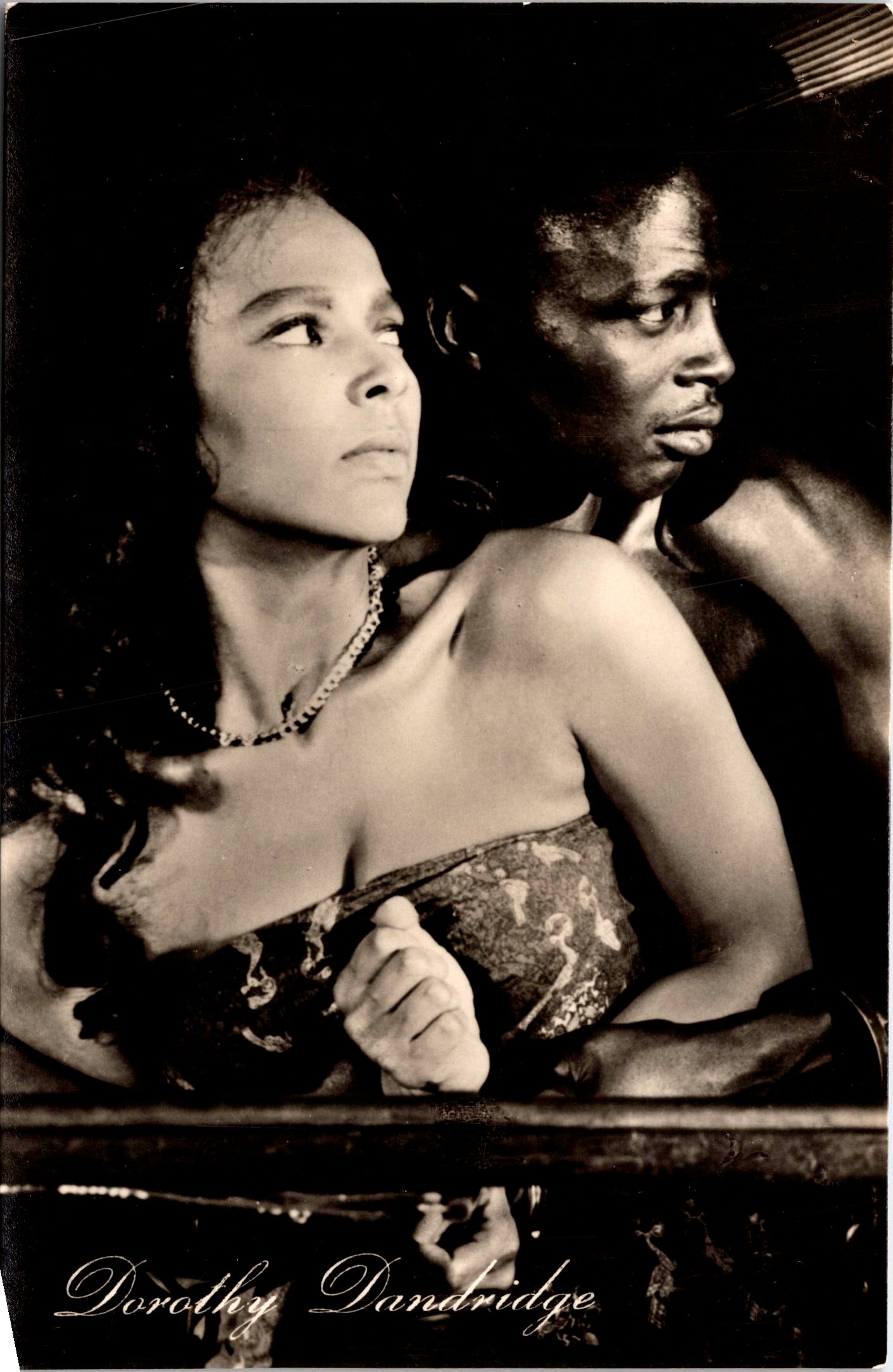
DOROTHY DANDRIDGE : AFRICAN AMERICAN ACTRESS & SINGER & ACTIVIST : TAMANGO : RPPC

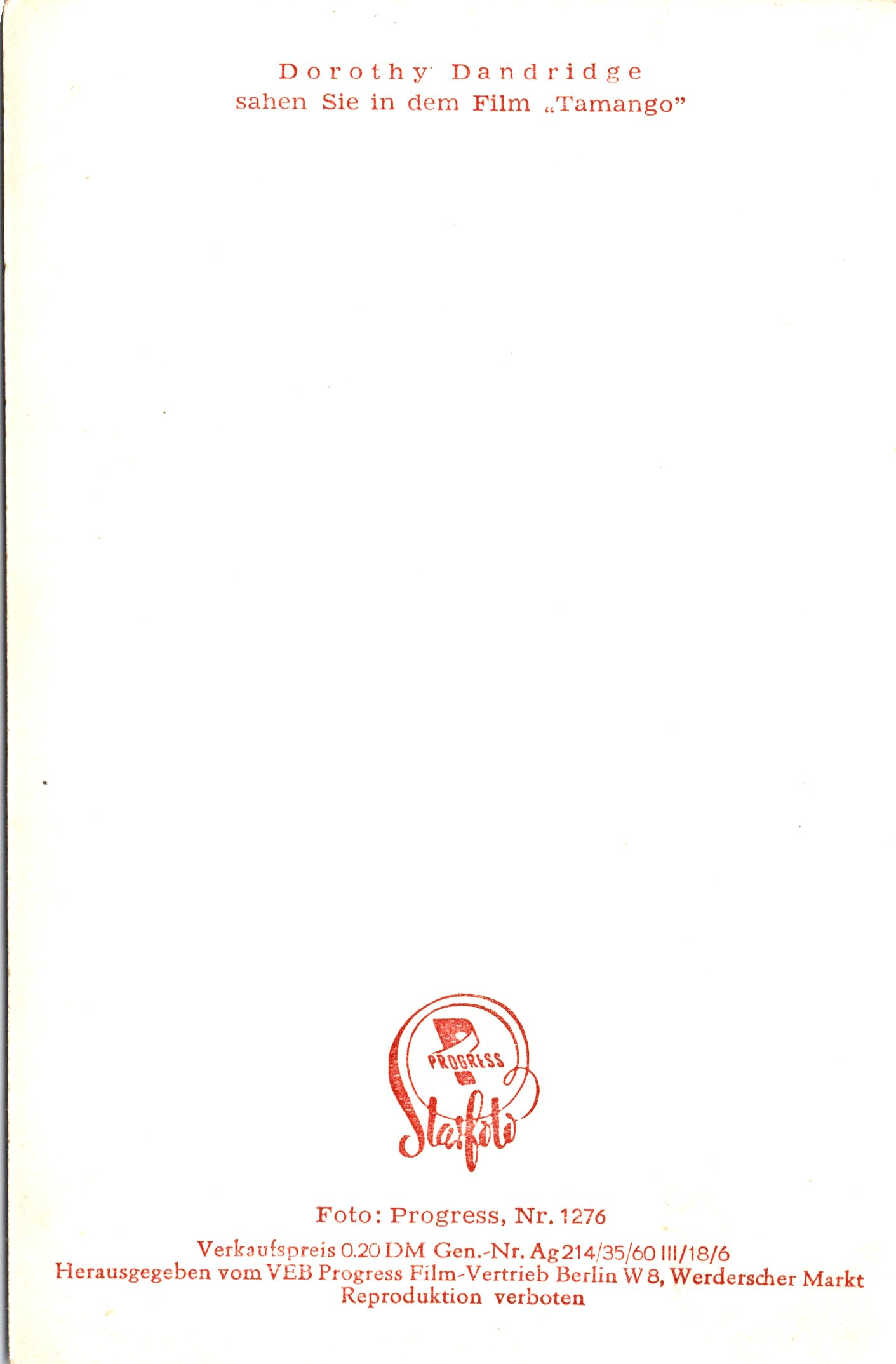
This vintage real photo postcard features African American actress and singer, Dorothy Dandridge (1922-1965). She was born in Cleveland, Ohio. Her mother was an entertainer and her father was a cabinet maker and Baptist minister. Before Dorothy was born, her parents separated. Ruby’s mom built a song and dance act for Dorothy and her sister. Her mom’s lover managed the act and it is written that the children were given abusive discipline. They toured continuously for five years and they barely attended school. When the depression hit, Ruby moved her girls to Hollywood, California. Before long, the sisters teamed up with school mate Etta Jones to do a dance act called “The Dandridge Sisters”. The act did well for several years and played in venues such as the Cotton Club and the Apollo Theater. Dorothy’s first screen appearance occurred when she was 13 in an episode of “Our Gang”. This was followed by a number of other screen roles including an appearance in “A Day at the Races” (1937) with the Marx Brothers. Her firs credited film role was in 1940. Her film roles were limited because she rejected many stereotypical black roles. In the 1940’s she appeared in both film and on the stage. She also performed as a singer in films with Count Basie and Louis Armstrong. Her first starring role was in “Bright Road” (1952) where she played opposite Harry Belafonte. In 1954, she starred in “Carmen Jones”. She received great reviews and the movie made her one of Hollywood’s first African American sex symbols and she was featured on a number of national magazine covers. In addition, she was nominated for an Academy Award for Best Actress. In 1957, she appeared in the film “Island in the Sun” in which she was involved in an interracial love affair with a white man. The script had to be revised a number of times because of the Motion Picture Production Code. The movie was controversial but received positive reviews and was successful. The IMDb credits Dandridge with 39 films between 1935 and 1962. She was politically active and was involved with the National Urban League and the NAACP. Dandridge was married and divorced twice and had a four year affair with director, Otto Preminger. Toward the end of her career, she discovered that her financial advisors had stolen much of her money and she owed over 100,00 dollars in back taxes. Her finances were in shambles and she had to move into a small apartment. In 1965, she had a phone conversation with a friend in which she made cryptic remarks intimating that her time left on earth might be short lived. The next day she was found dead in her apartment. There were two investigation into the cause of her death. One concluded she died of an accidental overdose of an anti-depressant. The other investigation determined she died of an embolism. This postcard features Dorothy Dandridge in the film “Tamango” (1959). The film tells the story of a rebellion on a Dutch slave ship. The actor standing behind Dandridge is Alex Cressan, who played the leader of the rebellion. Cressan only appeared in this one film. When he was cast in the film, he was a medical student in Martinique. Cressan received good reviews for his acting in this film. How he lived his life after this film is unknown. This real photo postcard was published by Progress Starfoto. (SOLD)

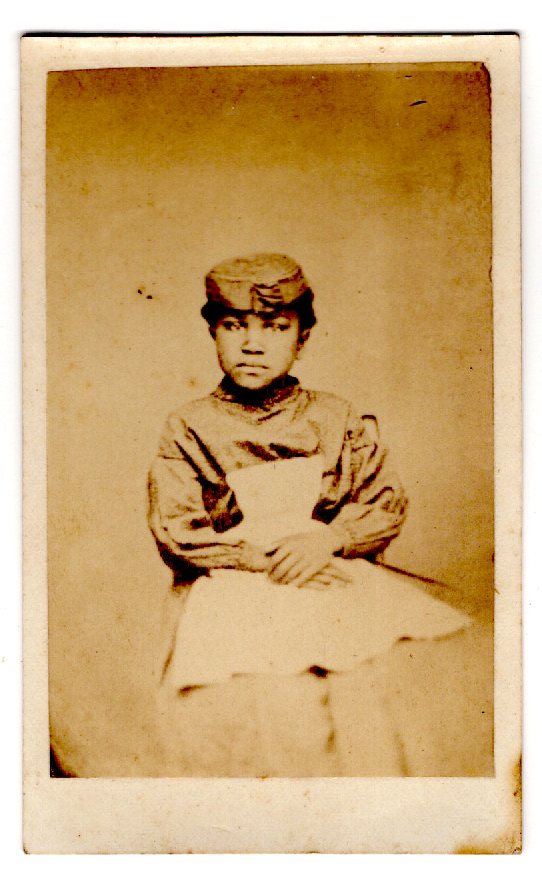
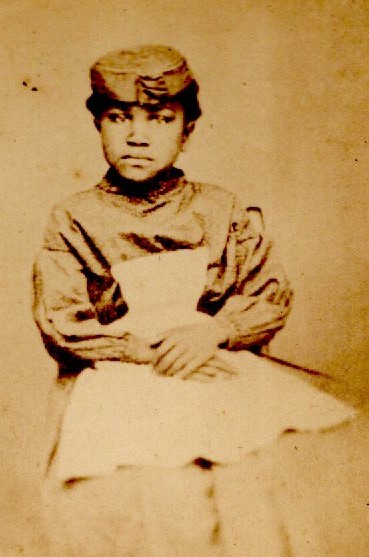
AFRICAN AMERICAN WOMAN : SLAVE OR FORMER SLAVE OR FREE WOMAN : CARTE DE VISITE

This carte de visite portrait features an African American woman. The woman is either a slave, former slave, or a free woman at the time of this photograph. The cdv image was taken sometime between the pre civil war period and shortly after the conclusion of the civil war. Her hat indicates that she is wearing her Sunday best but she is also wearing an apron. Was she “kitchen help”? This photograph is an excellent remnant of American and African American history. The image brings up thoughts about one of America’s most shameful periods in it’s history. (SOLD)

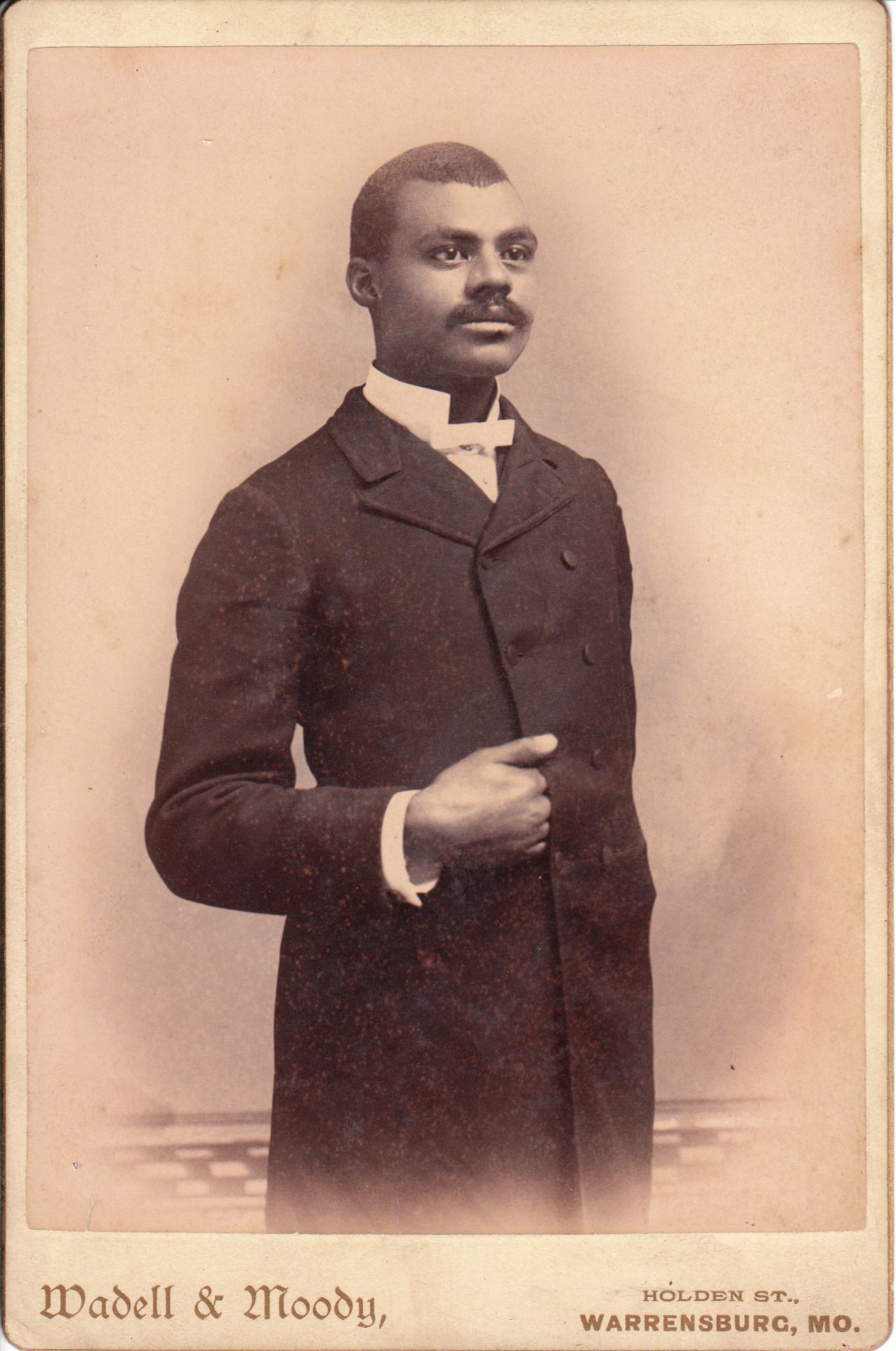
HANDSOME AFRICAN AMERICAN MAN IN WARRENSBURG, MISSOURI

A handsome young African American man poses for his portrait at the Wadell & Moody Studio in Warrensburg, Missouri. The gentleman is very well dressed and has an appearance of confidence. His identity is unknown.  SOLD

Published in: on January 15, 2024 at 12:00 pm  Leave a Comment  
Tags: , , , ,