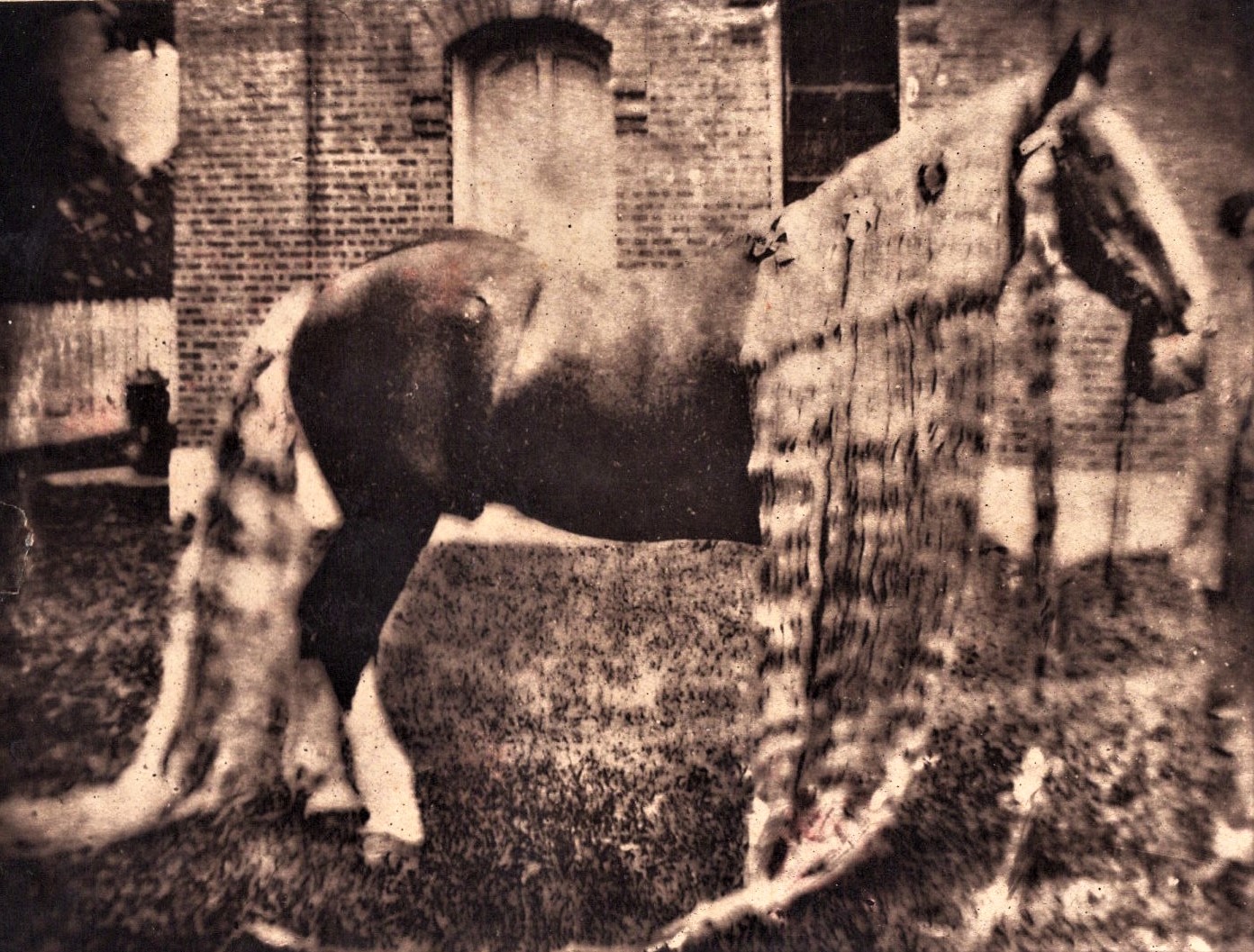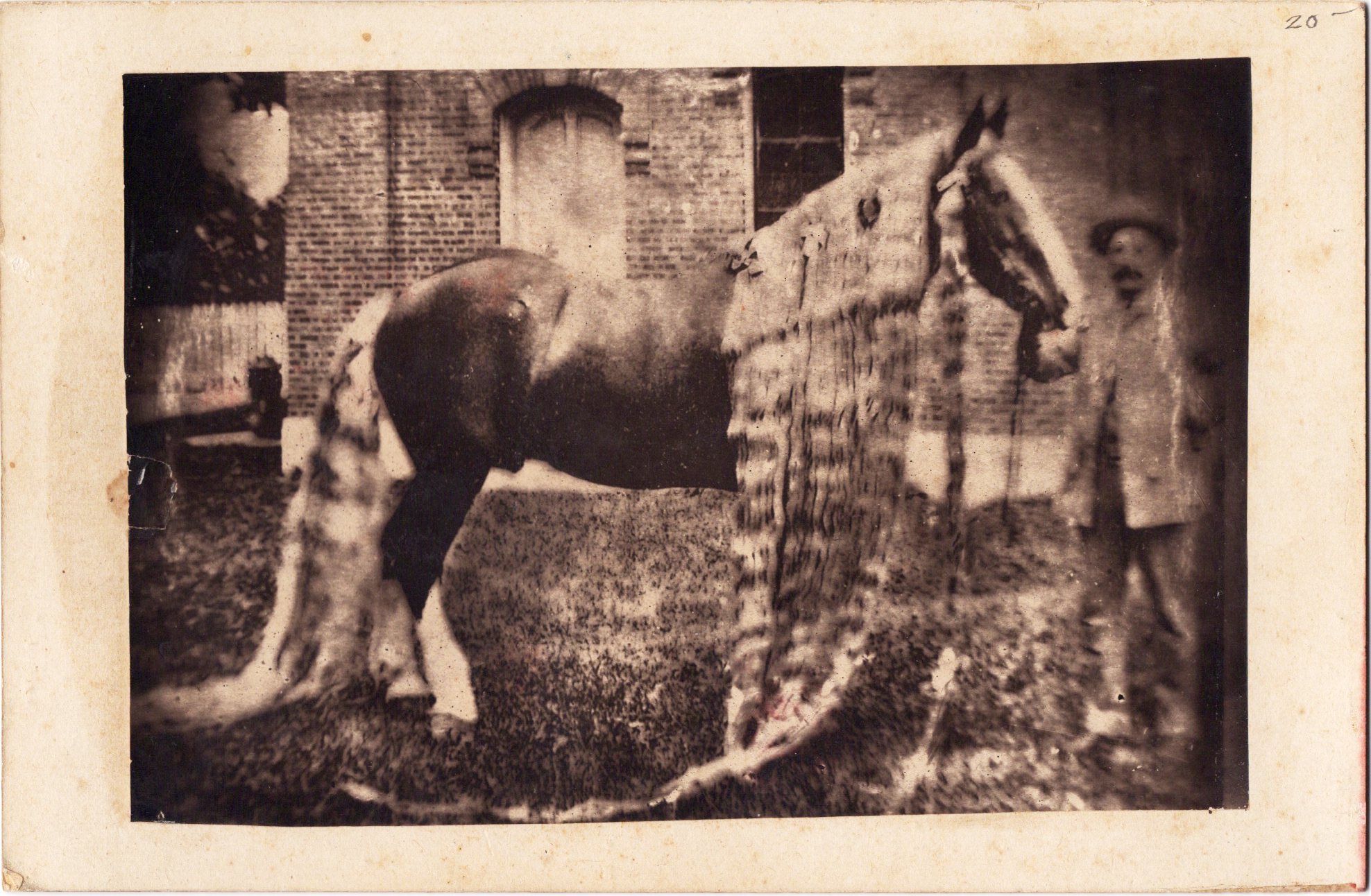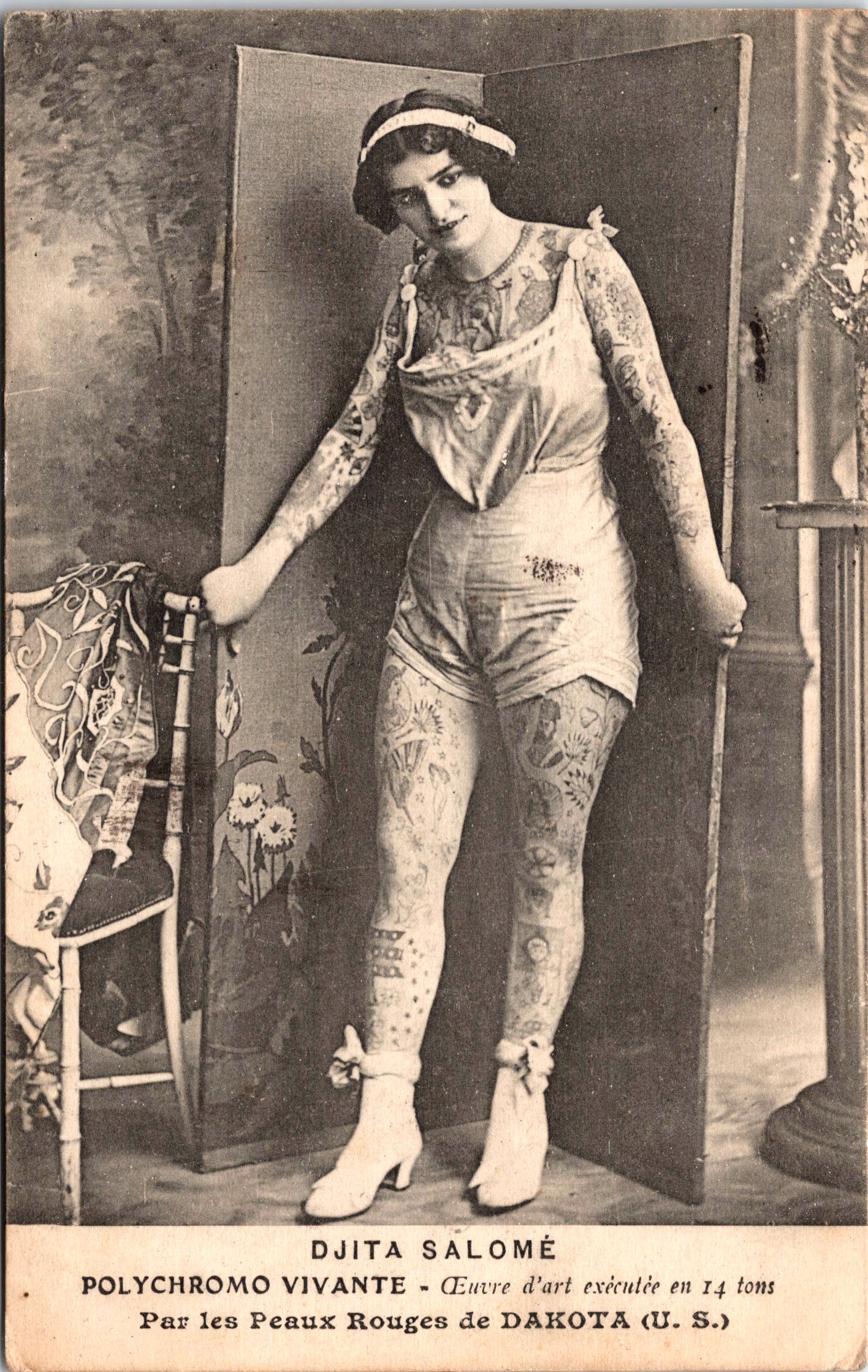
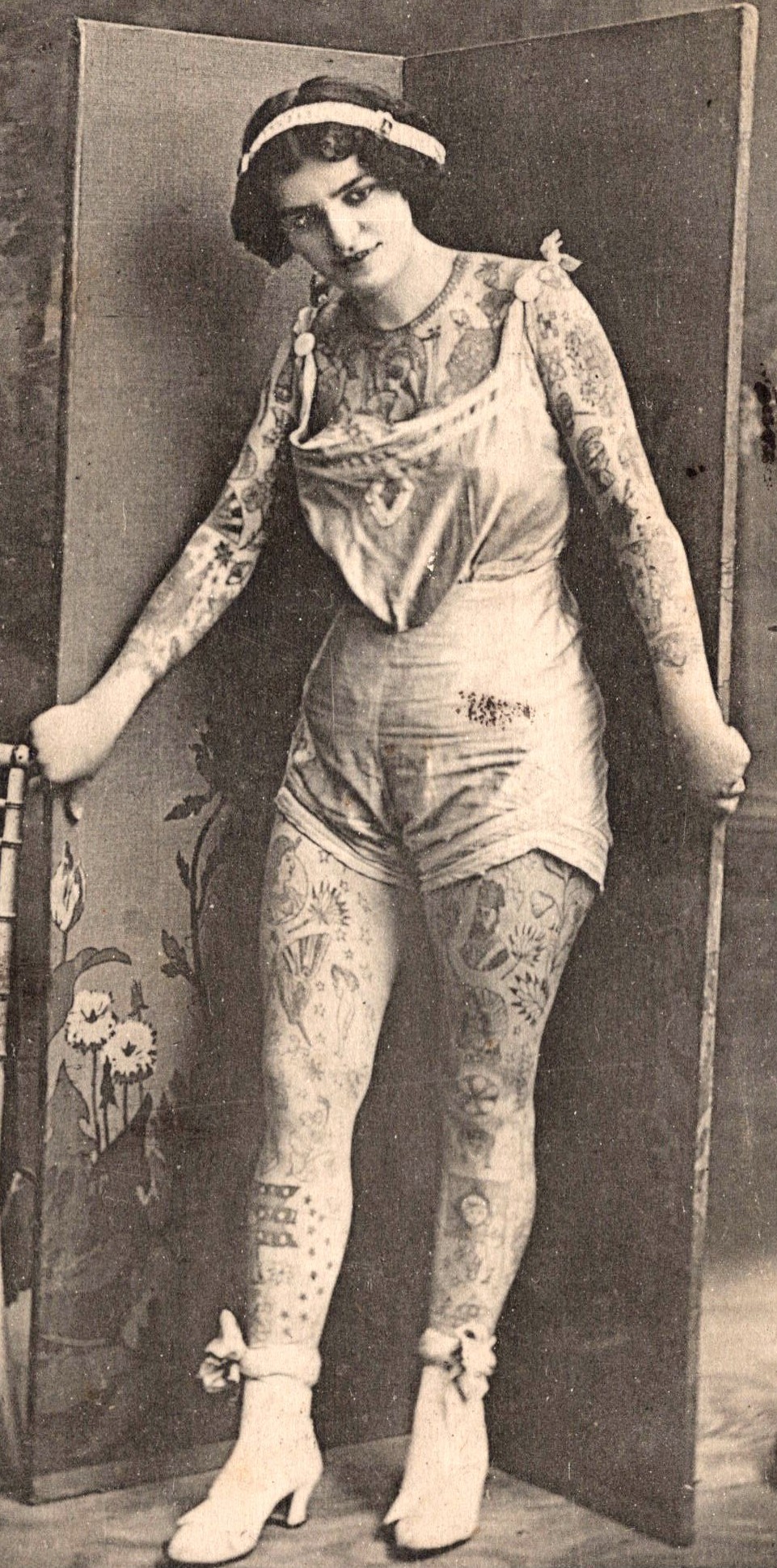
This extraordinary real photo postcard features Djita Salomé, one of Europe’s most celebrated tattooed ladies of the early 20th century. Salomé toured widely on the sideshow and carnival circuit and was promoted as a “living polychrome work of art.” Her entire body was covered in elaborate tattoos, executed in up to 14 different colors, making her a sensation across Europe. She performed at major venues including Edinburgh’s Waverley Market (1911), Toulouse’s Théâtre des Nouveautés (1913), Laval (1914), and Paris’s Bal Tabarin (1914). The postcard’s printed caption (in French) describes her as: “Djita Salomé – Living Polychrome – Work of art executed in 14 tones by the Red Skins of Dakota (U.S.)”. Such phrasing was typical of the bold circus-style marketing used to promote her act. The card carries a handwritten message dated 1916,. The card was sent from Drome, France; and was addressed to Léon Florançon at a local barracks. The following is a rough translation of the message : ” My dear Léon, I received your letter of the 14th with great pleasure. I am happy to know that you are well. Here, everything is going fine, and we are all in good health. Papa is working as usual, and we are managing with the household accounts as best we can. I sent the 25 francs you asked for last week—please let me know if you received it. Write more often when you can; your letters always bring us joy. Mama sends you her warm affection. Courage, my dear boy, and remember that we think of you every day. With tender kisses, Your loving sister, Jeanne.” This message not only adds personal warmth but also situates the postcard directly in the context of World War I France, where families maintained contact with sons and brothers in service. (SOLD)
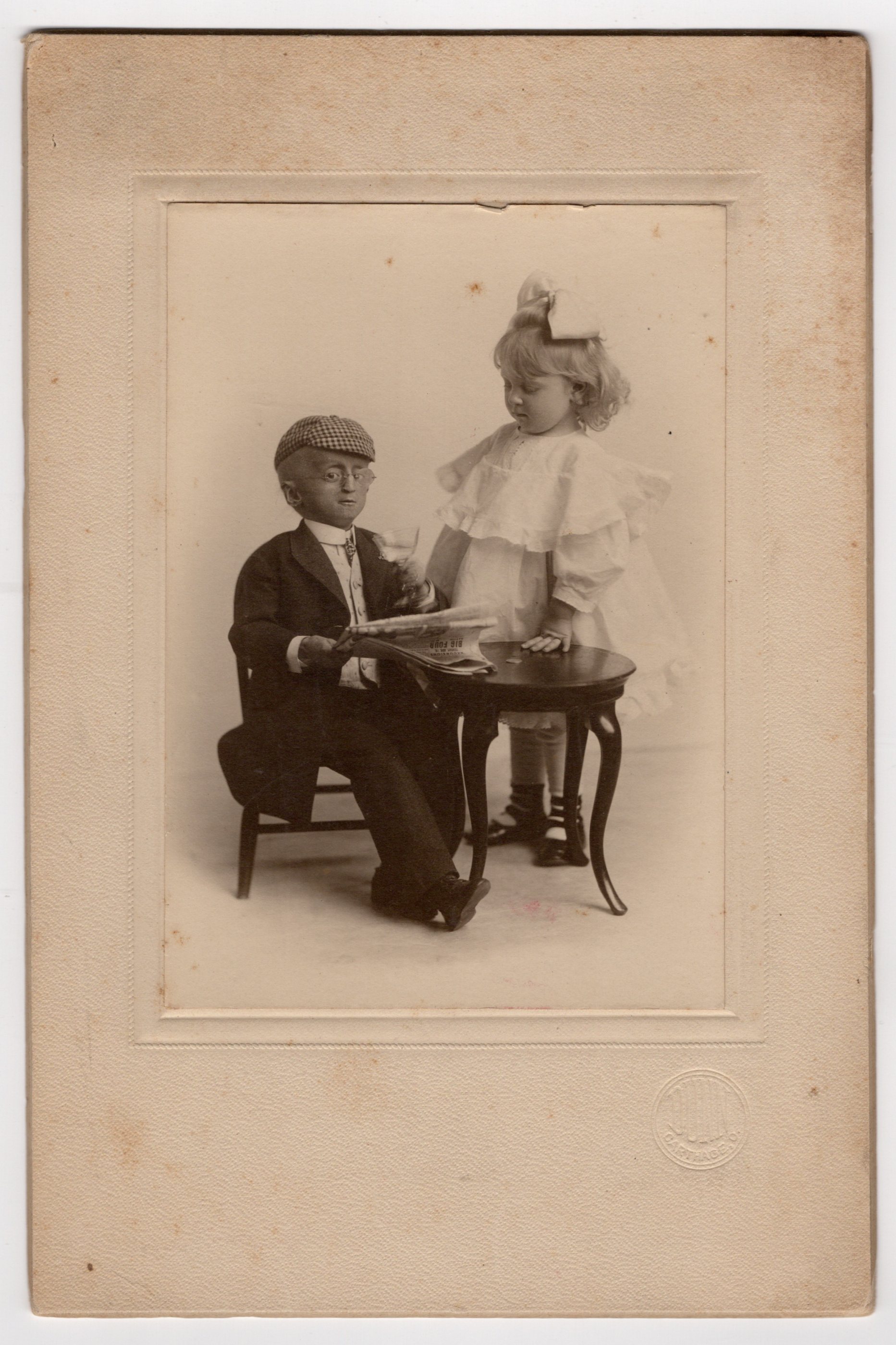
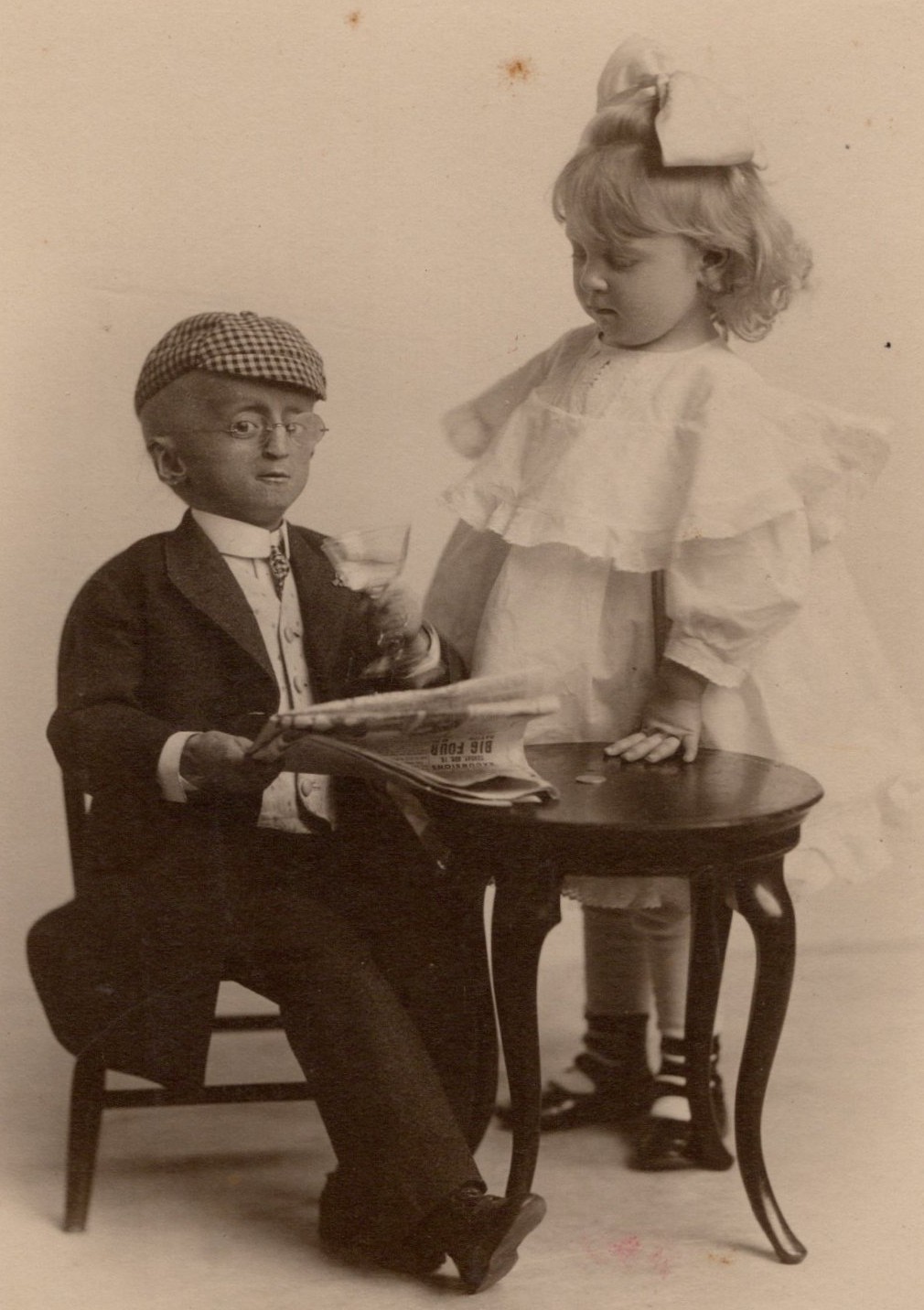
RARE PHOTO OF MIDGET MAN & WOMAN SEATED AT TABLE WITH DRINK & NEWSPAPER : c 1900
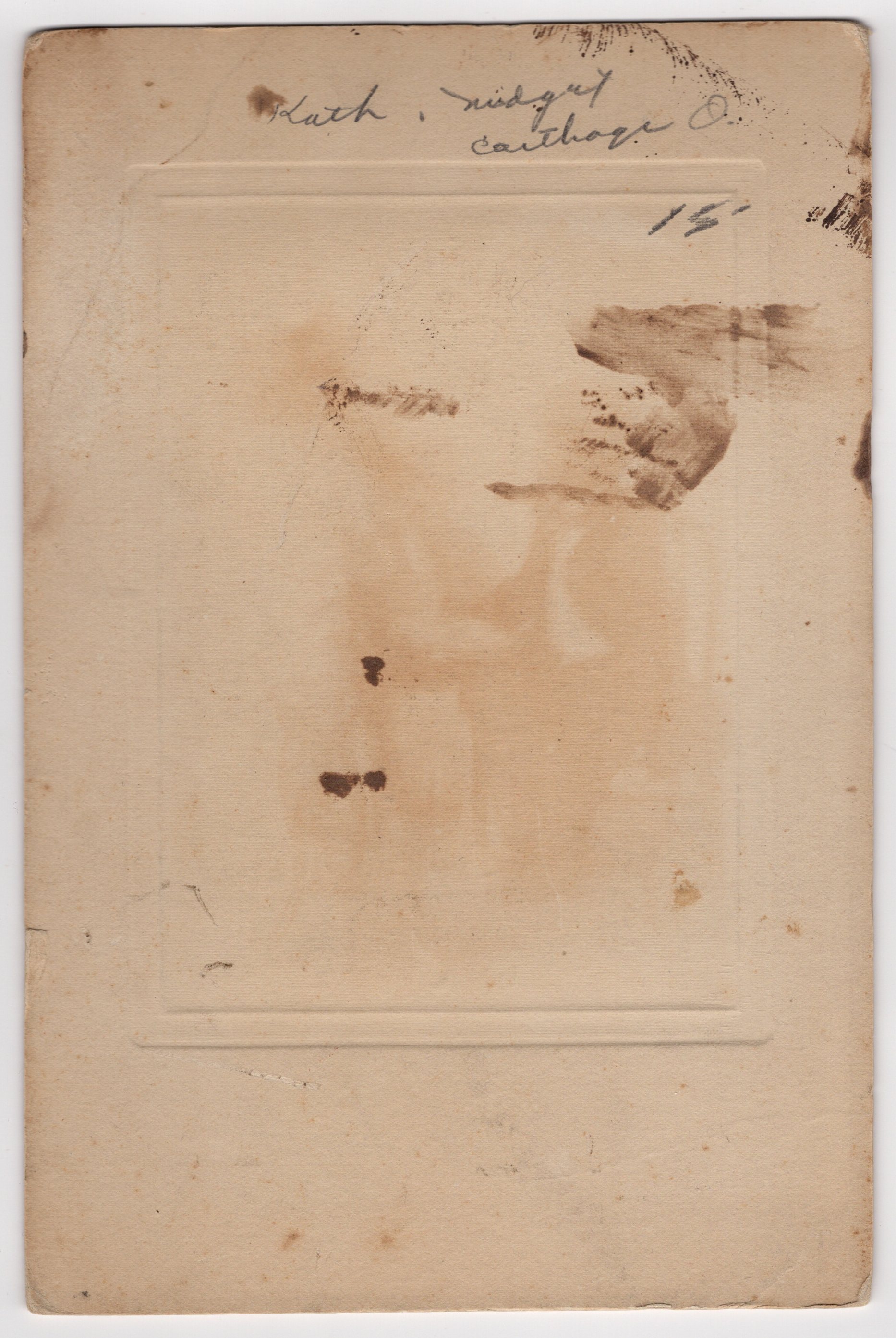
This vintage cabinet card features a formal indoor studio portrait of a well-dressed man seated at a table with a young woman beside him. The photograph, likely taken in the 1890s or early 1900s, comes from the Dunn studio in Carthage, Ohio, a historically independent village that was later annexed into Cincinnati. The man in the photo appears to be in his late middle years. He wears a smart three-piece suit, an unusual flat-topped cap, and wire-rim glasses. He is captured holding a stemmed glass—possibly filled with wine or another beverage—in one hand, while his other hand rests on a folded newspaper. The expression on his face is dignified and contemplative. Standing beside him is a young female, dressed in a formal white or light-colored dress with puffed sleeves and a ribbon at the waist. Her hairstyle and attire match fashion trends of the late Victorian or early Edwardian period. Her smaller physical stature raises the question: is she a child, or is she an adult woman with dwarfism (historically referred to by the now-outdated term “midget”)? Her mature facial features and posture lean toward the latter possibility, though this cannot be confirmed with certainty. The back of the card has handwritten ink notations that appear to read: “Ruth, midget, Carthage O.” This further supports the interpretation that the subject may be an adult woman of short stature. The photographer’s stamp can be seen in the lower right corner of the front of the card. SOLD
PORTRAIT OF A HANDSOME MAN : CROOKSTON, MINNESOTA : CABINET CARD
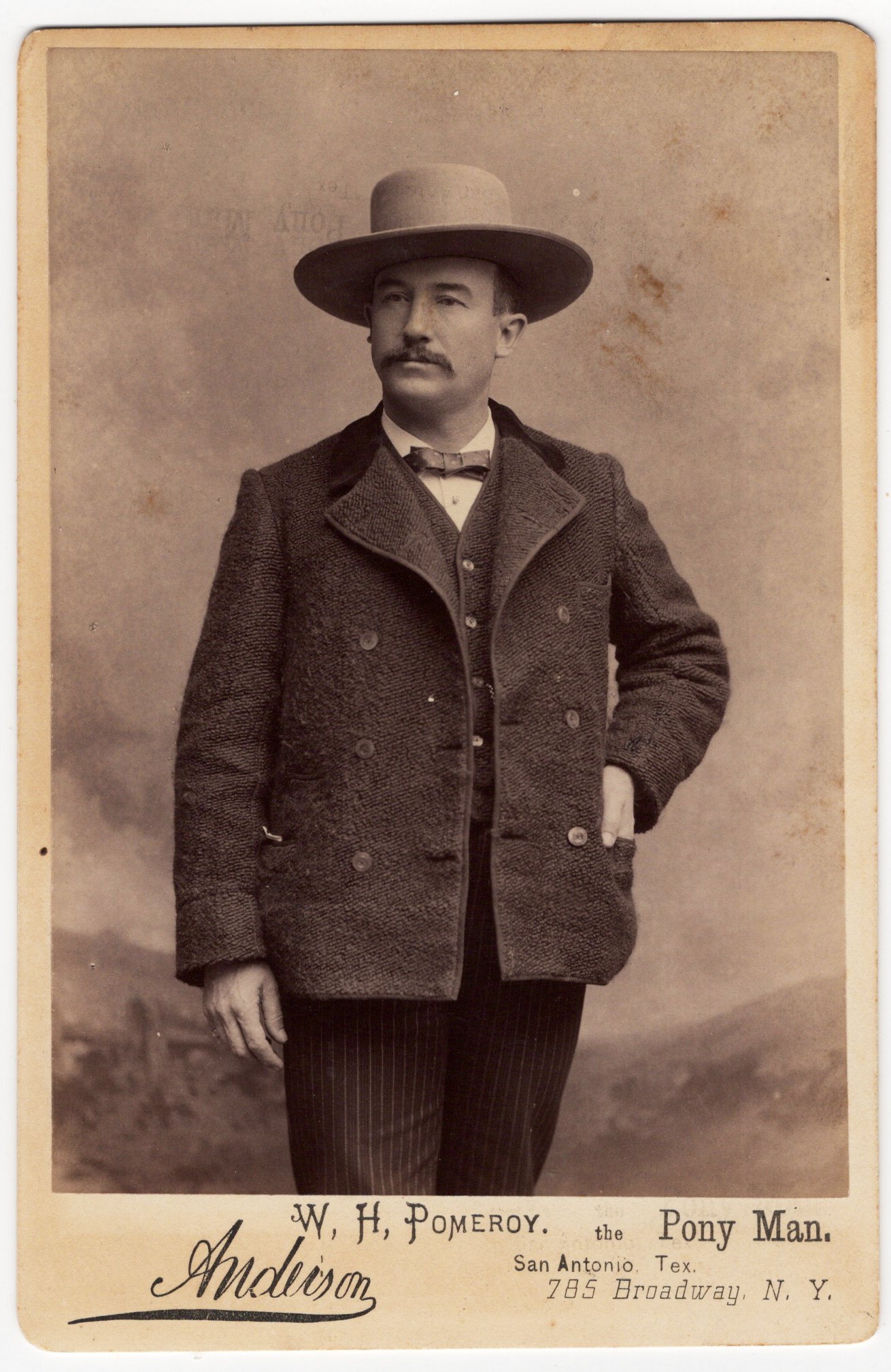
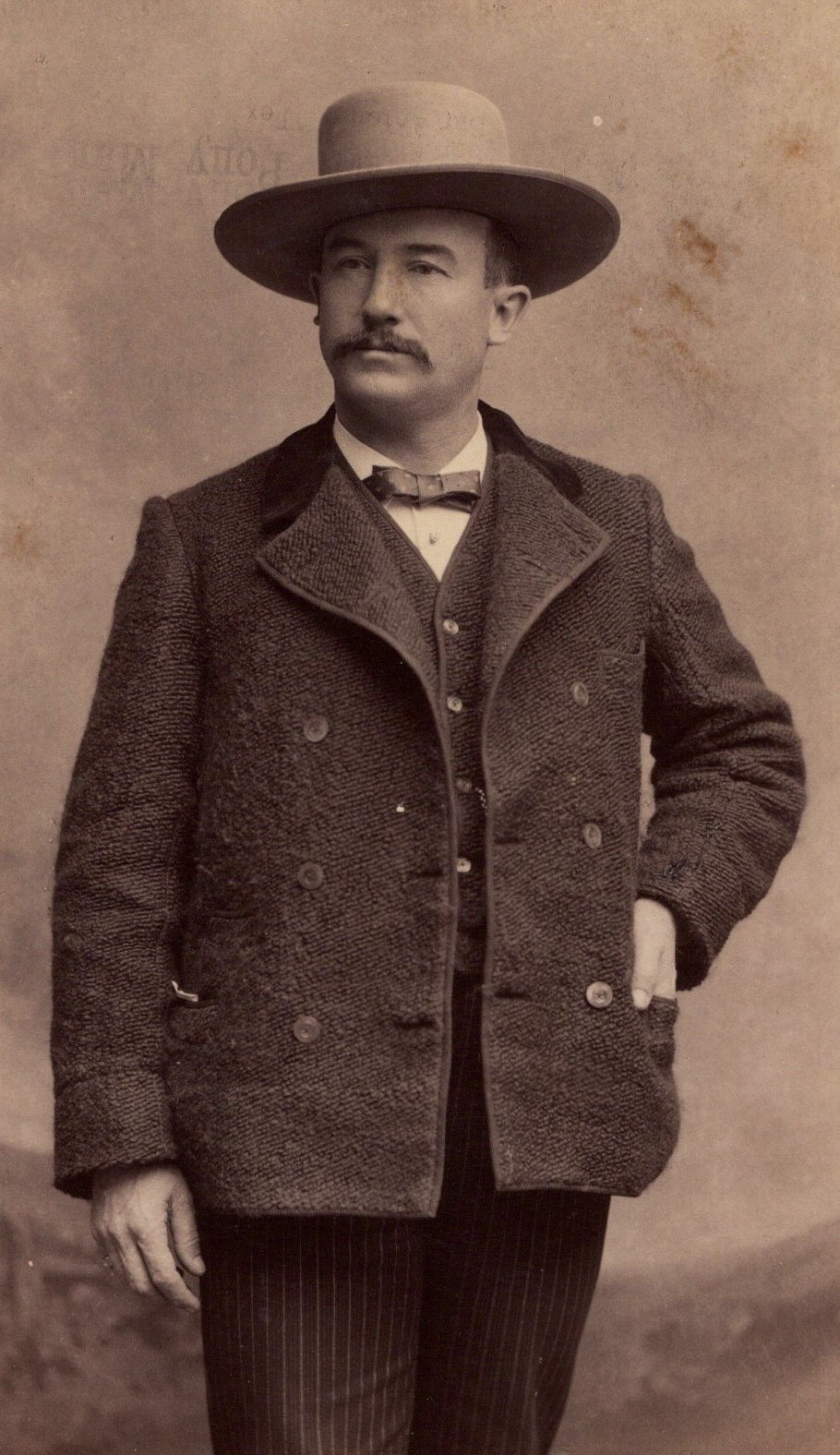
This cabinet card photograph features a handsome man posing for his portrait at the Anderson studio in New York City. A caption under the image identifies him as “W. H. Pomeroy, the Pony Man”. The caption also indicates that Pomeroy was from San Antonio, Texas. During the late 1880’s, Pomeroy owned “Pomeroy’s Western World Troupe” and “Pomeroy’s Western World Show”. Both were Wild West shows. The show was composed of more than 100 people and 125 horses, ponies, donkeys, and mules. The show also included a ten piece band. In 1891, Pomeroy partnered with Max Samuels, from San Antonio, to found a circus. The circus was called “Pomeroy & Samuel’s Great International Railroad Shows”. Pomeroy is well dressed and sports a nicely trimmed mustache. in this photograph. He is wearing a coarse wool coat and a matching waist coat. He is dressed in a crisp white shirt accentuated by a small silk bow tie. Atop his head is a flat crowned felt planter hat. There is something peeking out of his left jacket pocket. Mr. Pomeroy is posing in front of a backdrop. The photographer of this image was D. H. Anderson who operated a studio on Broadway in New York City. Anderson used the same photo studio formerly occupied by the famed photographer, Matthew Brady. Anderson had worked in various other American cities before moving to New York in 1881. He became known as a talented celebrity photographer. This photograph has an interesting aberration. If you look very closely in the sky next to the left side of his hat (slightly above the brim), you can see the words “Pony Man”. The words are very light and upside down. This developing error occurred more than one hundred years ago. SOLD
PEARL WHITE : AMERICAN STAGE AND FILM STAR : PERILS OF PAULINE : RPPC
Pearl White (1889-1938) was an American actress of film and stage. She started her career on the stage at just 6 years old in the play, “Uncle Tom’s Cabin”. At thirteen years of age she was a bareback rider for a circus. She dropped out of high school to join a touring stage company. Next she worked as a singer in Cuba and South America. She made her appearances in dance halls and casinos. In 1910, her voice began to fail and she began to appear in silent films, including many popular serials. Her nickname was “Queen of the Serials’. She did the majority of her own stunts in these film serials. She is known well for her role in “The Perils of Pauline”. She was often cast in the role of an athletic heroine, rather than the more typical, innocent young woman. As a result of her appearances in “The Perils of Pauline”, she was soon earning $1,750 per week. She increased her star power as she appeared in other serials. In these films she flew airplanes, raced cars, and did other action hero feats. By 1919 White moved on to more dramatic roles. She appeared in ten drama films for Fox Film Corporation. She finished her career by taking roles in European films, and finally, appearing on the European stage. While performing in London, she earned three thousand dollars a week. At the time of her retirement (1924), White had banked two million dollars. She then began investing. Her investments included a hotel, a night club, and a stable of race horses. White was married twice, each time, for short duration to actors. White died of liver failure, possibly due to her history of heavy drinking. Her drinking may have been attributable to her problems with pain stemming from a spinal injury occurring during her stunt days. The IMDb site credits white with 228 film appearances between 1910 and 1924. This real photo film star photo was published by Cinemagazine (Paris Edition). The card is part of the “Les Vedettes de Cinema” (Stars of the Cinema) series (No.,55). White’s postcard photo portrait was taken by the celebrated photographer, Alfred Noyer. (SOLD)

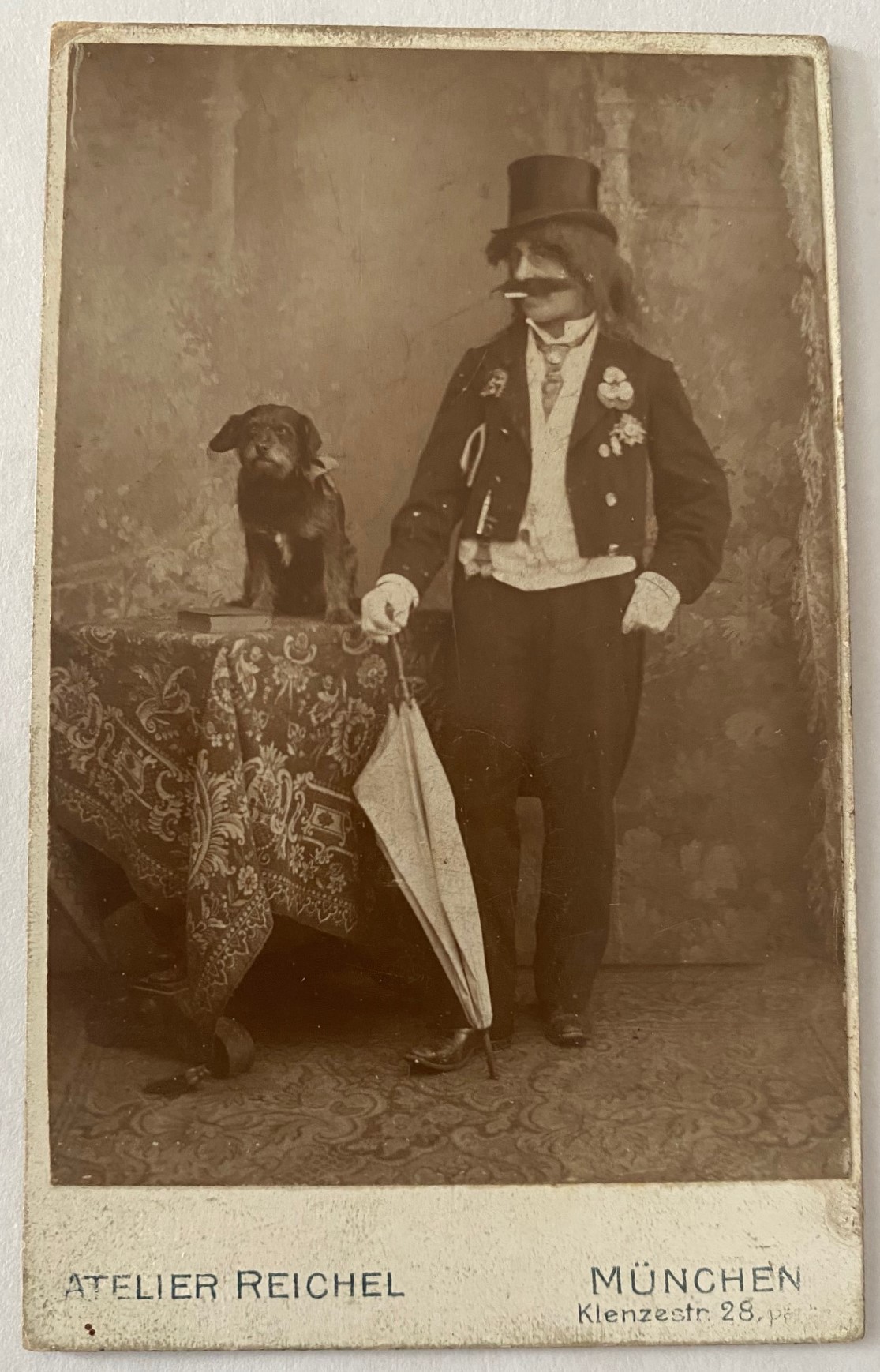
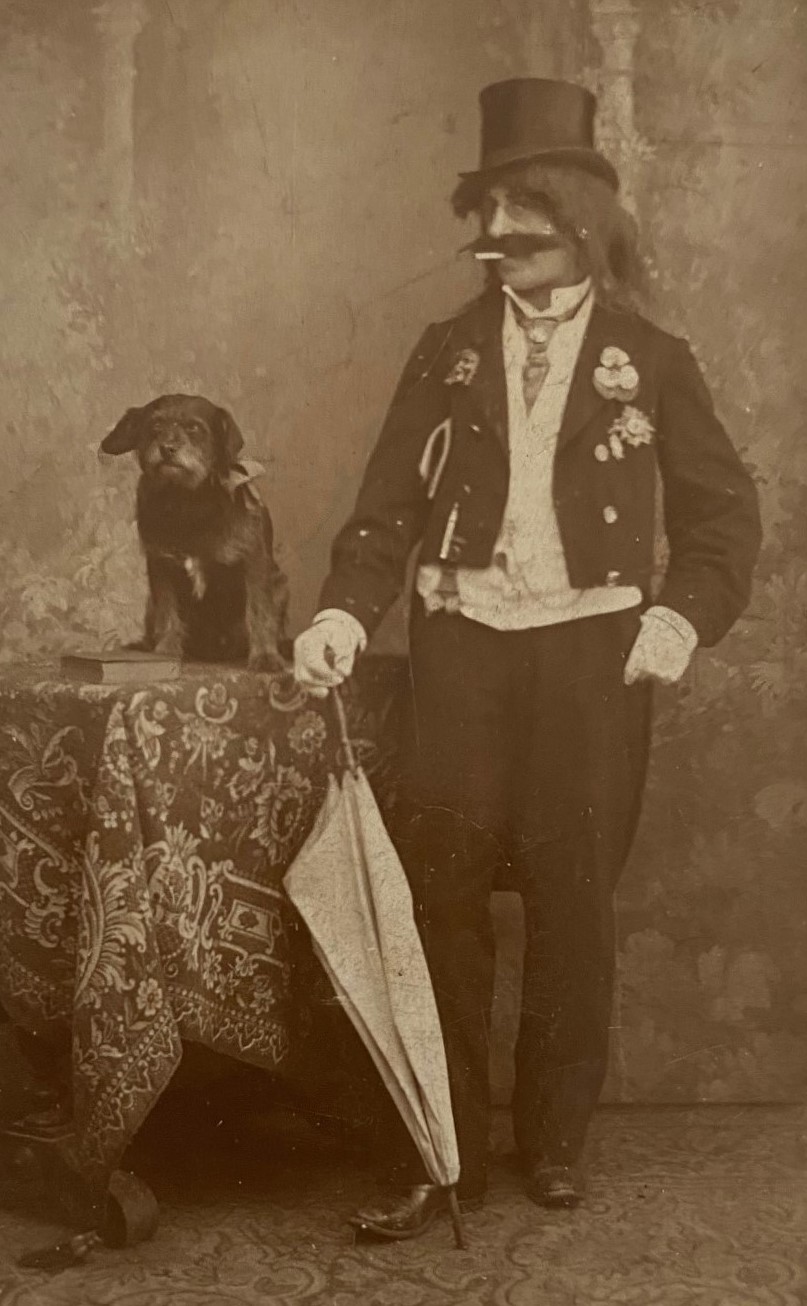
PORTRAIT OF A CLOWN AND HIS DOG : CIRCUS : MUNICH, GERMANY
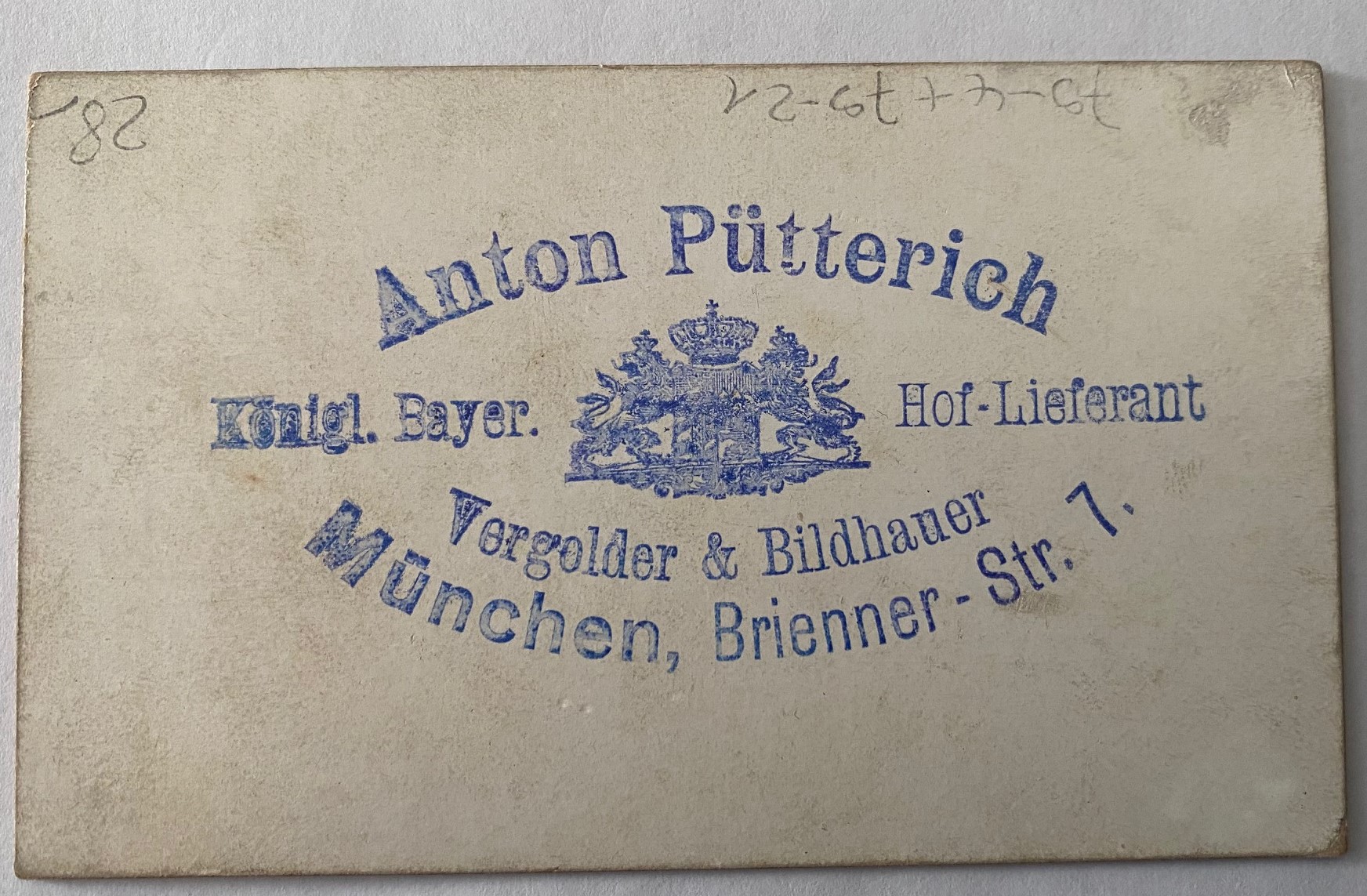
This carte de visite photograph features a clown in his clown costume. He is dressed like a hobo with the exception of his top hat. Note that he is wearing eye glasses and is smoking a cigarette. The clown is posing with his small dog on a table beside him. This clown and his dog are likely members of a circus troupe. This cdv photograph was taken at the Reichel studio in Munich, Germany. The reverse of the photo lists the photographer as Anton Putterich. It is likely that one of these gentlemen succeeded the other in operating the studio. SOLD

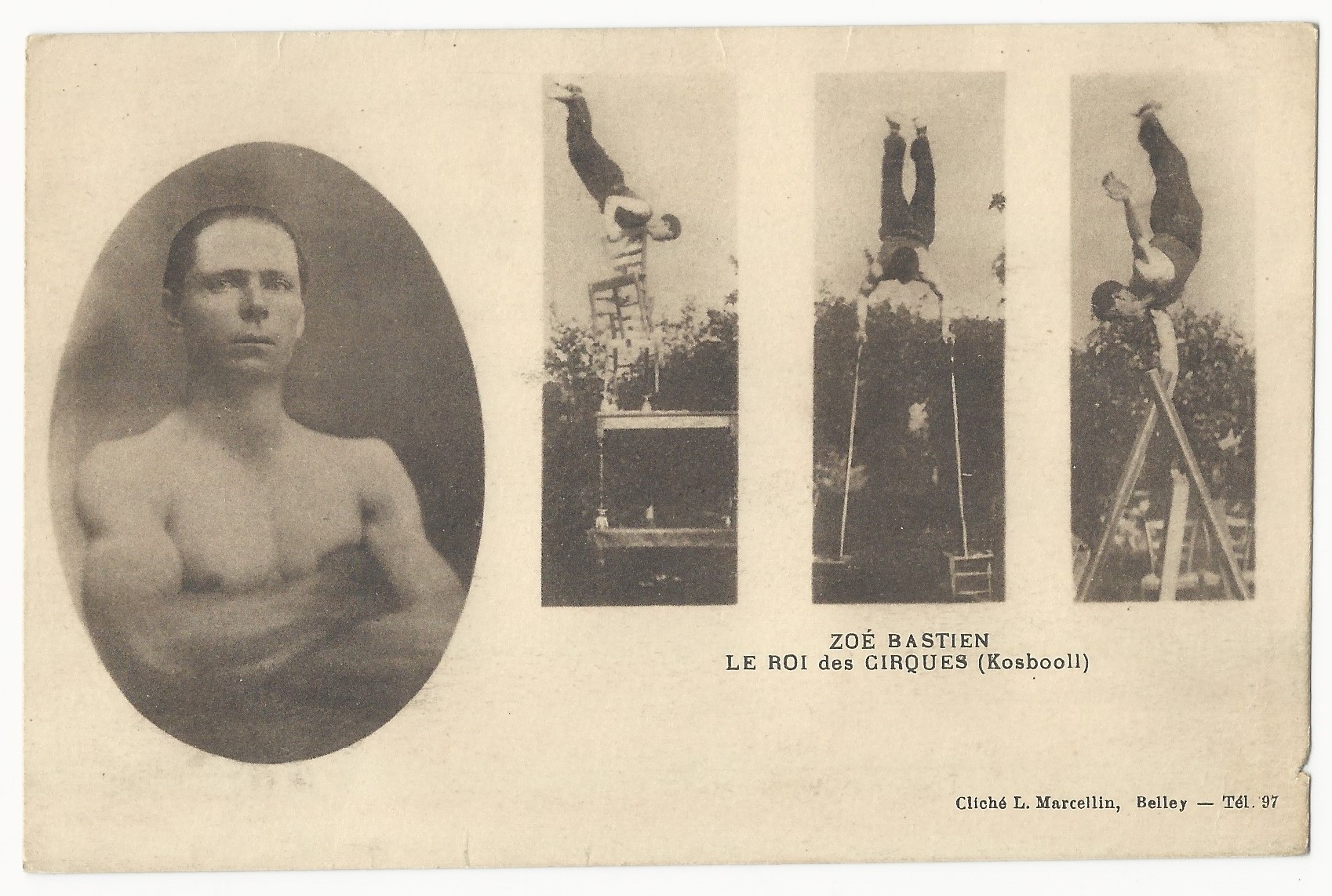
ZOE BASTIEN LE ROI des CIRQUES (KOSBOOLI) (CIRCUS RPPC)

This vintage real photo postcard is an advertisement for a circus. Translated, the title states Zoe Bastien: King of the Circus. I do not know if “Zoe Bastien” is the name of the circus or if it is the name of the pictured acrobat. I am guessing that it is the name of the acrobat but I can not find confirmation. The photographs seen on this postcard were taken by L Marcellin. He operated a studio in Belley, a community in eastern France. The postcard has a tiny chip on the bottom right edge portion of the card. SOLD

FERN ANDRA : SILENT FILM ACTRESS POSES WITH HER BORZOI

This vintage real photo postcard features American silent film actress, Fern Andra (1893-1974). Andra was one of Germany’s most popular actresses in German silent film. She also worked as a film director, script writer, and producer. The pretty smiling Miss Andra poses with a Borzoi dog. She was born in Watseka, Illinois. Her father died when she was five years-old and her mother remarried. Fern’s step-dad was a vaudeville actor, circus performer and tight-rope walker. By age four, Fern was part of a tight-rope act. She later trained in dance and singing. In 1899, at age six, she made her first film, a version of “Uncle Tom’s Cabin”. She continued to perform with the circus and toured the United States, Canado, and Europe. She was a member of a famous troupe of wire artists. In Berlin, she took acting lessons from Max Reinhardt, prominent film and theater director. She appeared in several of his plays and films. In 1913, she acted in her first German film. In 1915, she was in her first Austrian film. Some believe Andra was an Allied spy in World War I. To deal with these rumors, she married a Prussian Baron. At some point, she stated that she actually was spying for the allies. This was her first marriage. He was killed in the war. Her second marriage was to a professional boxer. Her appearance in the film “Genuine” (1920) caused a great stir. In this horror film, she wore a costume that was simply, her painted body. She continued to make films in Europe but by the mid 1920’s, her popularity waned in Germany. In 1922, she was widely reported as being killed in a plane crash. In fact, she, and her companion, director Geog Bluen, survived the crash but according to one article, died the next day. However, the pilot, a former World War I fighter pilot and brother of the “Red Baron”, was killed. By 1928, Andra was working in the United Kingdom and the United States. She also expanded her acting to radio and television. Andra was married four times. She was widowed two times and divorced two times. Her fourth marriage, to a General, lasted about 35 years. She had no children. The IMDb gives Andra 51 acting credits between 1913 and 1930. She is also credited as a writer, producer, and director. An interesting side note is that when she was working as a producer, she interacted with a young German playwright named Josef Goebbels. Interestingly, she did propaganda broadcasts into Germany for the allies during World War II. Fern Andra died at age 80, in South Carolina. The stamp box of this postcard has an interesting story. “NBC” (Neue Bromsilber Convention) was a price cartel established in 1909 that continued until the 1930’s. The purpose of the cartel was to ensure that the minimum price charged for postcards was kept at a sufficiently profitable level. A number of postcard publishing companies joined the cartel in an effort to stave off the effect of competition on the pricing of postcards. This postcard is part of a series (no.131/1). The logo for the motion picture company, “Film Sterne” ,can be seen in the lower left hand corner of the image. SOLD


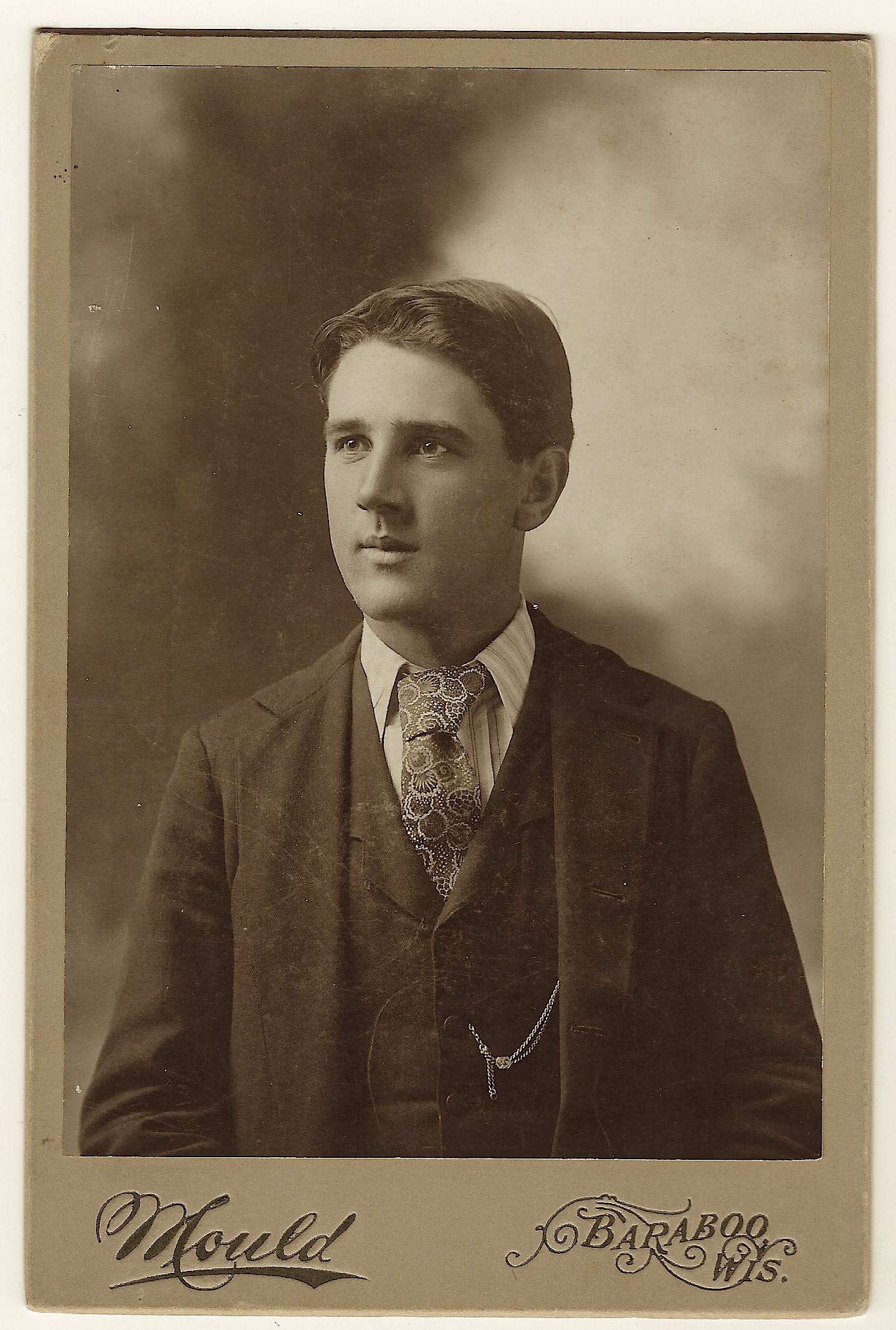
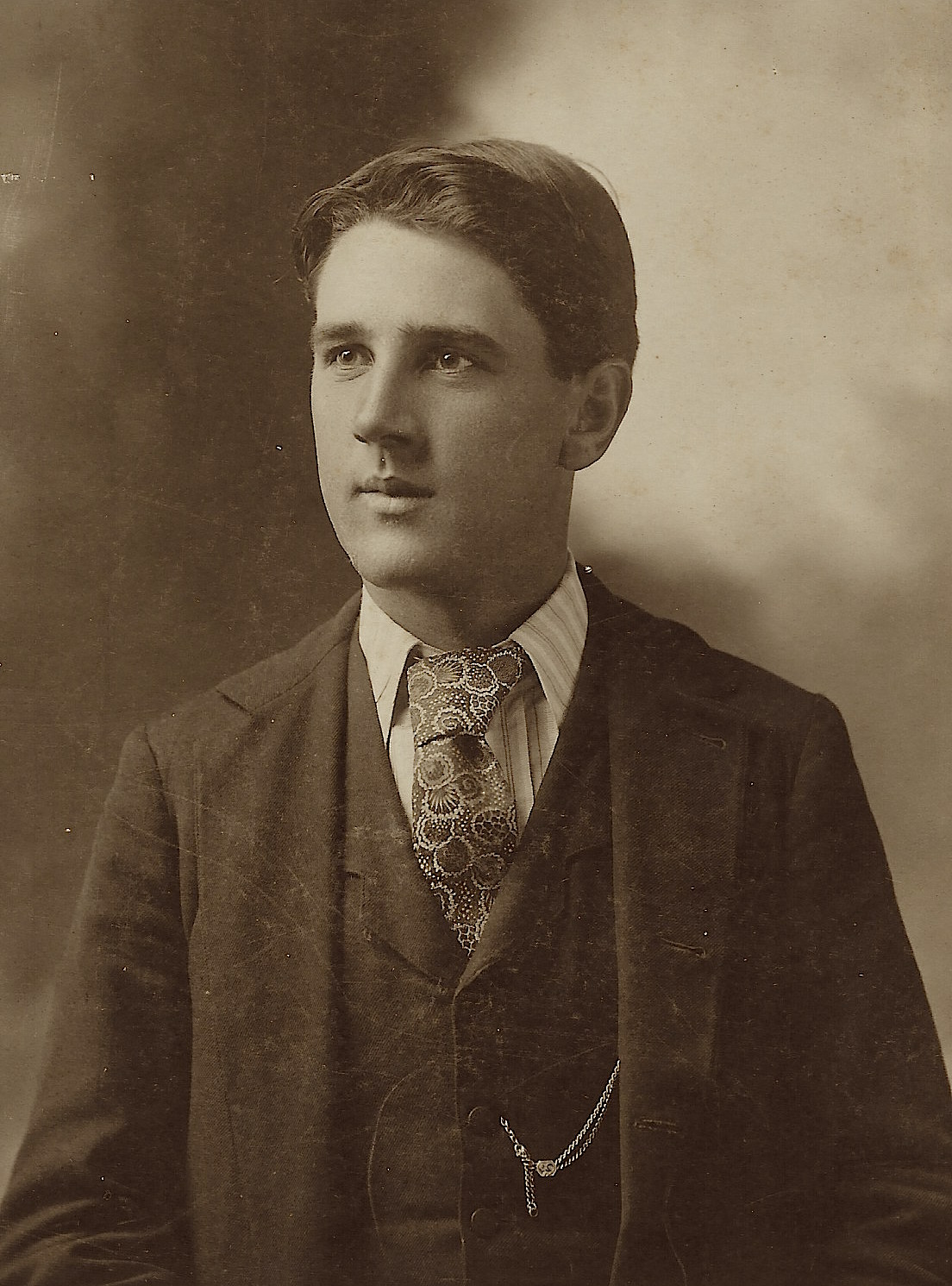
The handsome young man in this photograph is named Howard Briscoe. His name is inscribed on the reverse of this cabinet card photo. Briscoe lived in Baraboo, Wisconsin. He lived there all, or most of his life. Briscoe was born in 1878. His father was a miller by trade, Briscoe’s wife was named Julia Simon Briscoe. Howard Briscoe worked as a carpenter for a railroad company. The photographer of this image, Mr. Mould, is mentioned in a number of photographic journals. He placed an ad for his studio in a book about Sauk County, Wisconsin (1891). The Photographic Times (1898) reports on his appointment to a lobbying committee of the Photographers Association of Wisconsin. The Encyclopedia Dubuque (1911) reveals that Sim Mould operated a photographic studio at 107 Main Street in Dubuque, Iowa. The cabinet card gallery has other photographs by Mould, Place his name in the search box to view these other images. The town of Baraboo is situated on the Baraboo river. The town was settled by Abe Wood and originally called Adams. In 1852 it was renamed Baraboo. In the town’s early history it became the home of several sawmills. In the nineteenth century the town served as the headquarters of several circuses, including Ringling Brothers. Baraboo became known as “Circus City”. SOLD