FAMOUS NORWEGIAN-AMERICAN SCULPTOR: JAKOB FJELDE IN MINNEAPOLIS, MINNESOTA (CABINET CARD PORTRAIT)


norway

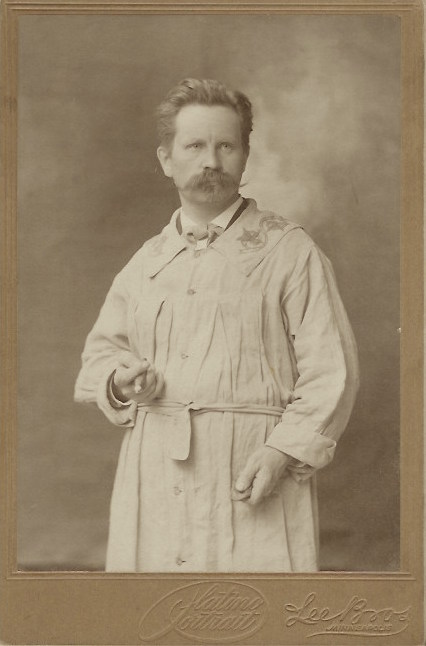
This cabinet card portrait features famous Norwegian-American sculptor Jakob Fjelde (1855-1896). Fjelde is wearing an interesting overcoat with embroidery on it’s shoulders. Perhaps this is a coat that he wore while creating his sculpture. He has a attractive bushy mustache and is holding a half smoked cigar. Fjelde was born in Alesund, Norway and arrived in the United States in 1887. He settled in Minneapolis, Minnesota. He was the father of sculptor Paul Fjelde and brother of artist Pauline Fjelde. Jakob was a prolific portraitist and created a number of public monuments. One of his most well known monuments was one dedicated to the 1st Minnesota Infantry (1897) that is located at the Gettysburg battlefield. Some of his statues in the Minneapolis / St. Paul area include “Hiawatha carrying Minnehaha”, “Minerva”, and “Ole Bull”. In 1885 he sculpted Henrik Ibsen from life and created a number of public statues and busts from the experience. The photographer of this image is the Lee Brothers who operated a studio in Minneapolis. To view more photographs by this photographer, click on the category “Photographer: Lee Bros.”


STOIC MAN WITH WISPY BEARD IN AUSTIN, MINNESOTA

WISPY_0009

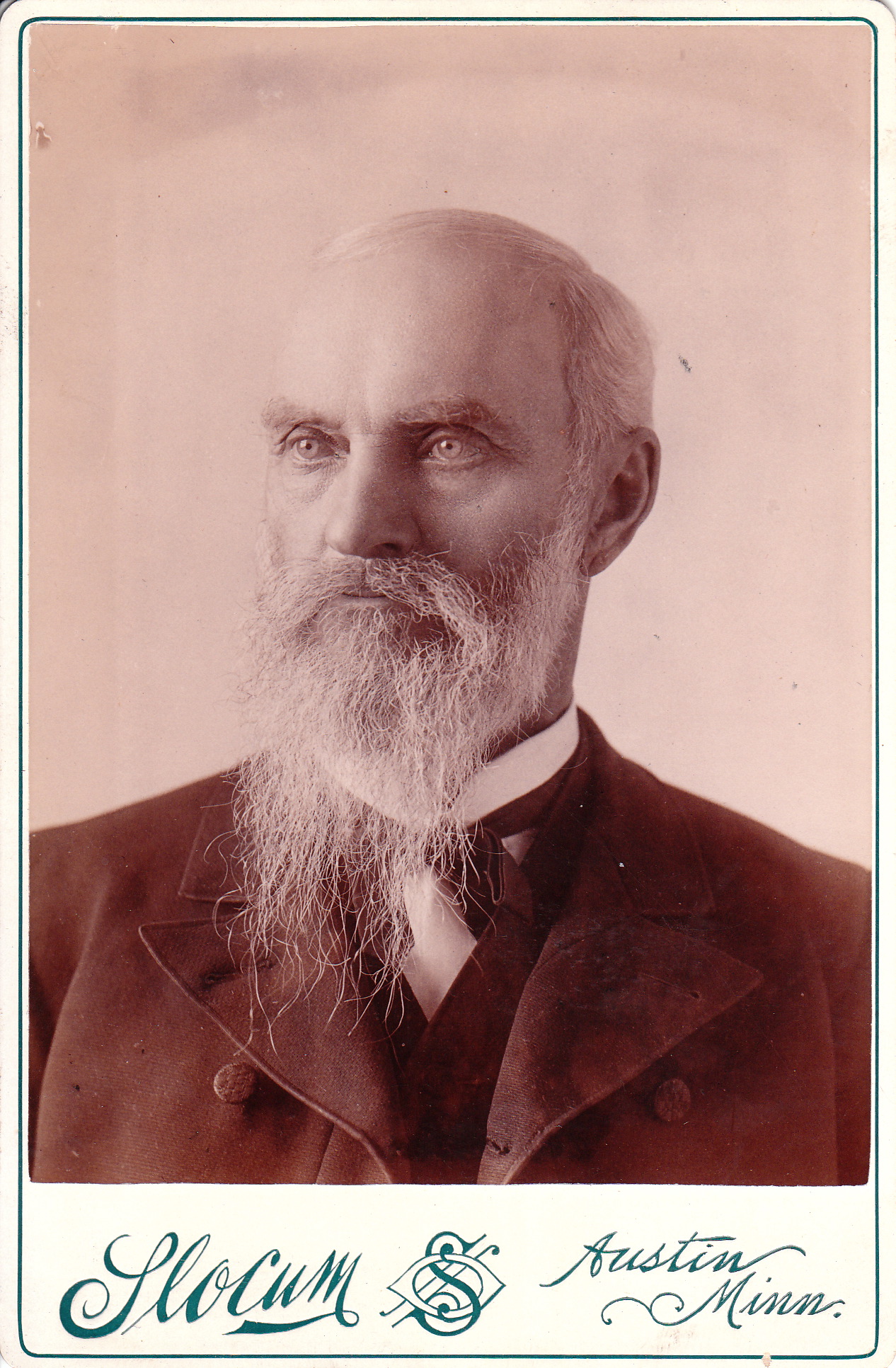
This cabinet card portrait features a stoic looking man with haunting eyes and a wispy beard. He is well dressed and well groomed. The photographer of this photograph is Orville Slocum whose studio was in Austin, Minnesota. J. E. and Orville Slocum were both photographers in Austin. Presumably they were brothers. Research discovered little about J. E. but information was found about Orville.  Orville Slocum was born in Herkimer County, New York in 1843. He worked as a photographer in Minnesota in the 1870’s, 1880’s, and 1890’s. He apprenticed with H. S. Coon. Before entering the photography business he fought in the Civil War as a private with the 1st Minnesota Cavalry (Company M). It appears that he married the boss’s daughter. His first wife was Barbara Coon who he married in 1865. That marriage ended in divorce and he then married Mary Hayden in 1891. Orville Slocum died in 1910 and is buried in the Iowa Veterans Home Cemetery in Marshalltown, Cemetery.


PORTRAIT OF A WOMAN AND HER VIOLIN IN MASSACHUSETTS

violinist

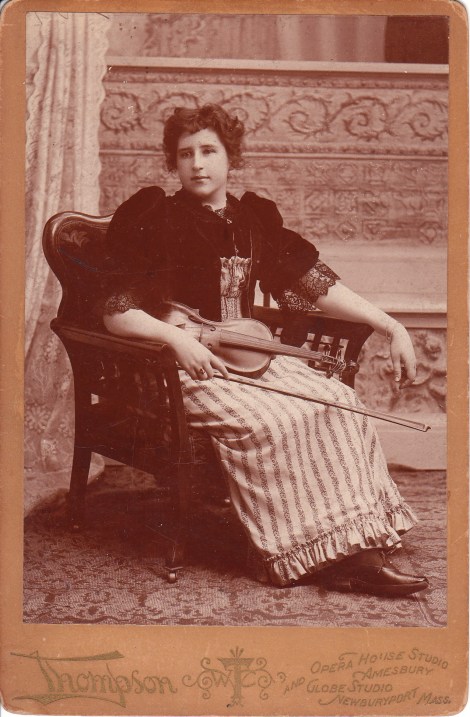
This cabinet card photograph features a woman and her violin and bow. At least, I think its a violin. Hopefully, an informed visitor to the cabinet card gallery will confirm whether her instrument is a violin and if it isn’t, will correctly identify the stringed instrument. The portrait is a product of a photographer named W. C. Thompson. Mr Thompson operated the Opera House Studio in Amesbury, Massachusetts, as well as the Globe Studio which was located in Newsburyport, Massachusetts. One has to wonder whether the woman in this image was a performer at the Opera House in Amesbury. The Amesbury Opera House has an interesting history. P. Stevens, author of the History of Amesbury (1999) writes that the Opera House was “the most ostentatious building ever to grace the streets of Amesbury”. The citizens of Amesbury experienced a change of scenery when the building burned down in what is considered the worst fire in Amesbury’s history. A contributing factor to the lack of success that the fire department had in putting out the fire was the fact that the man in charge of keeping water pressure high to fight fires was away for the weekend and failed to designate anyone to relieve him during his time away. It seems safe to say that this portrait was photographed before the 1899 fire since the photographic studio likely also was destroyed in the the blaze. According to one source, the photographer of this image, William Cushing Thompson (1839-1917) operated his Amesbury studio between 1869 and 1893. It was located for at least some of this time at Market and Main Street. The Bulletin of Photography (1917) reported that Thompson was in the photography business when the civil war started and he temporarily quit his career to join the Union army. According to the article, he stayed in the war until it ended. Thompson entered the war as a private and mustered out as a sergeant. He served in Company A of the 48th Massachusetts Infantry. Some of Thompson’s photographs are in the collections of the New York Public Library and the Massachusetts Historical Society. Thompson was born and died in Newsburyport. He is buried in the Oak Hill Cemetery in Newsburyport. To view other photographs by this photographer, click on the category “Photographer: Thompson”.
SWEET GIRL LEANING ON A CHAIR AND CLASHING FABRICS IN HUDSON, NEW YORK

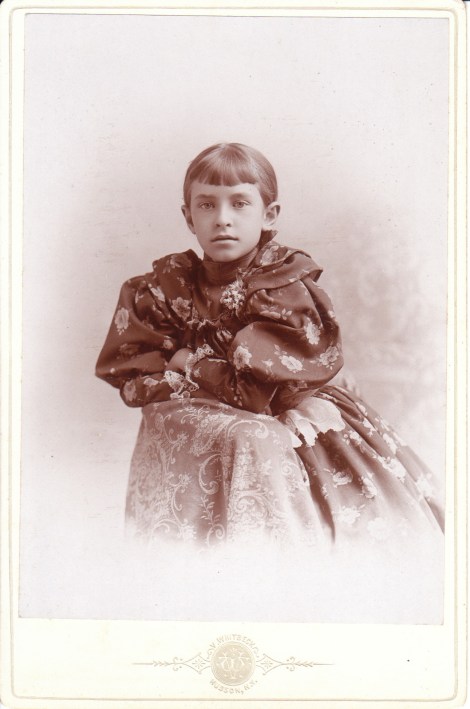
SWEET GIRL_0001A sweet young girl with her arms crossed leans against a chair at the V. Whitbeck studio in Hudson, New York. One wonders if Whitbeck ever noticed the major pattern clash between the fabrics of the girl’s clothing and the chair.  The reverse of the photograph has advertising that indicates that Whitbeck was successor to a photographer named Forshew. Frank Forshew (1827-1895) established his photography business in 1850 in Hudson, a small city on the banks of the Hudson River in upstate New York. He began as a daguerrian and progressed through the stages of photography, eventually producing cdv’s, cabinet cards, and stereoviews. He sold his business to Volkert Whitbeck (1843-?) in the early 1890’s. Whitbeck had joined the business after his discharge from the Union army in 1863. Whitbeck had enlisted into the 14th NY Infantry (Co K) as a corporal. Before his mustering out on 5/23/1863, he had reached the rank of sergeant. Records indicate that he remained in the reserves and continued to rise in rank reaching Captain. Whitbeck appears in the 1880 US census and at that point in time he worked as a photographer and shared his name and residence with his father. His father was a physician. Whitbeck’s photography business is listed in many Hudson city directories. The latest one appears to be 1913.

AN ADORABLE CHILD IN BURLINGTON, IOWA

BURLINGTON KID_0005

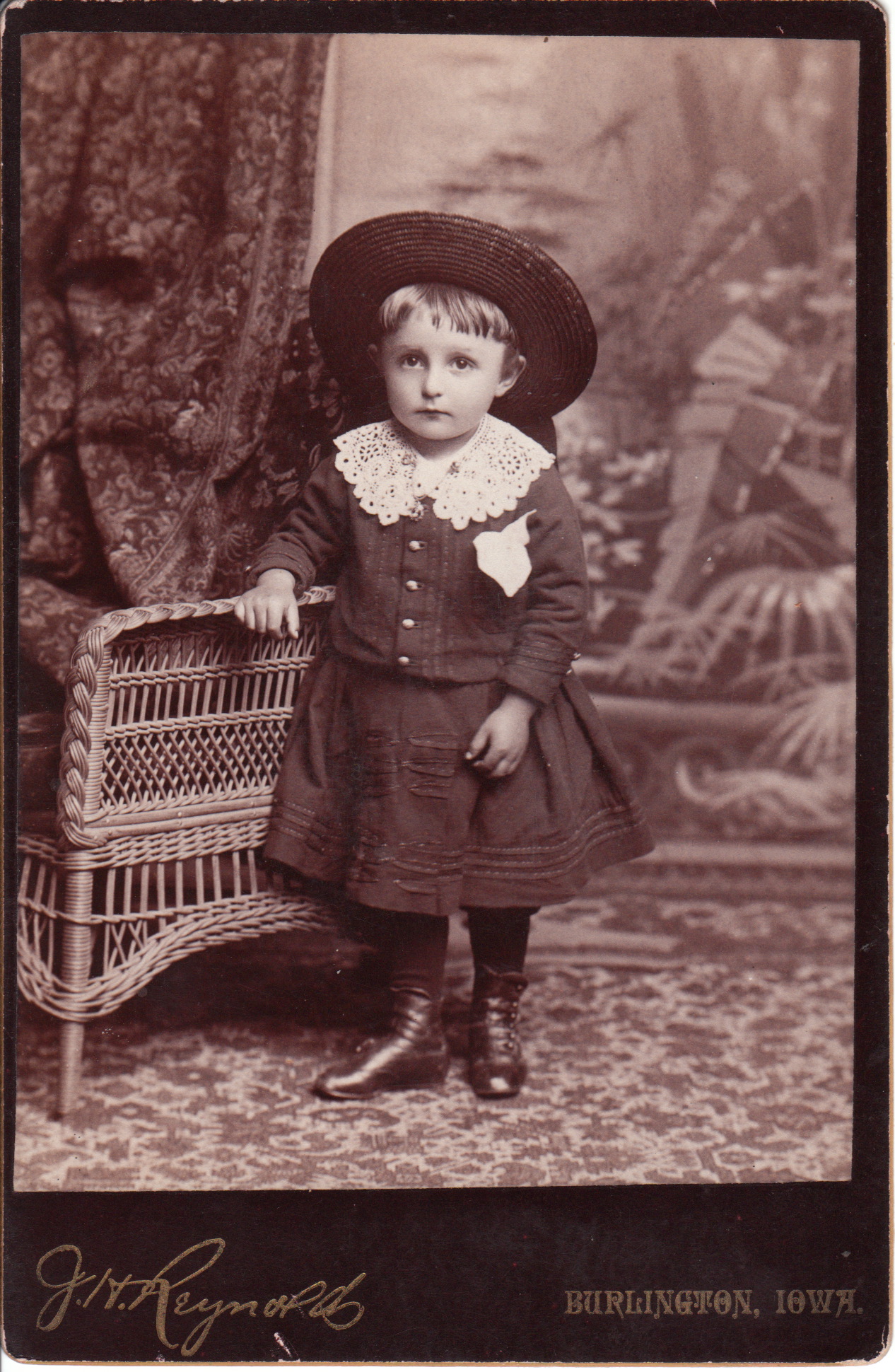
A REAL CUTIE PIE,  BOY OR GIRL IS UNCERTAIN BUT I VOTE FOR GIRL       NICE HAT AND BUTTON UP BOOTS   J H REYNOLDS IS PHOTOGRAPHER   JH REYNOLDS PHOTOGRAPHIC STUDIO IS WAY ITS WRITTEN   BANGS LACE COLLAR    STRAW HAT?

SALVATION ARMY MEMBER WEARING “JESUS IS MIGHTY TO SAVE” RIBBON IN IPSWICH, MASSACHUSETTS

SALV ARMY MAN_0001A member of the Salvation Army poses for his portrait at the Dodge studio in Ipswich, Massachusetts. He is wearing a “S” pin identifying his affiliation with the religious/community service group. He is also wearing a ribbon which asserts that “Jesus is Mighty to Save”. The Cabinet Card Gallery has a wonderful collection of photographs of Salvation Army members and to view them, click on the category “Salvation Army”. George K. Dodge is listed as a a photographer in a number of Ipswich business directories from 1888 through 1896. He may have served in the 99th New Hampshire infantry as a musician between 1861and 1862. His military service is likely but not confirmed.

OLDER GENTLEMAN WITH LONG WHITE BEARD IN PAWTUCKET, RHODE ISLAND

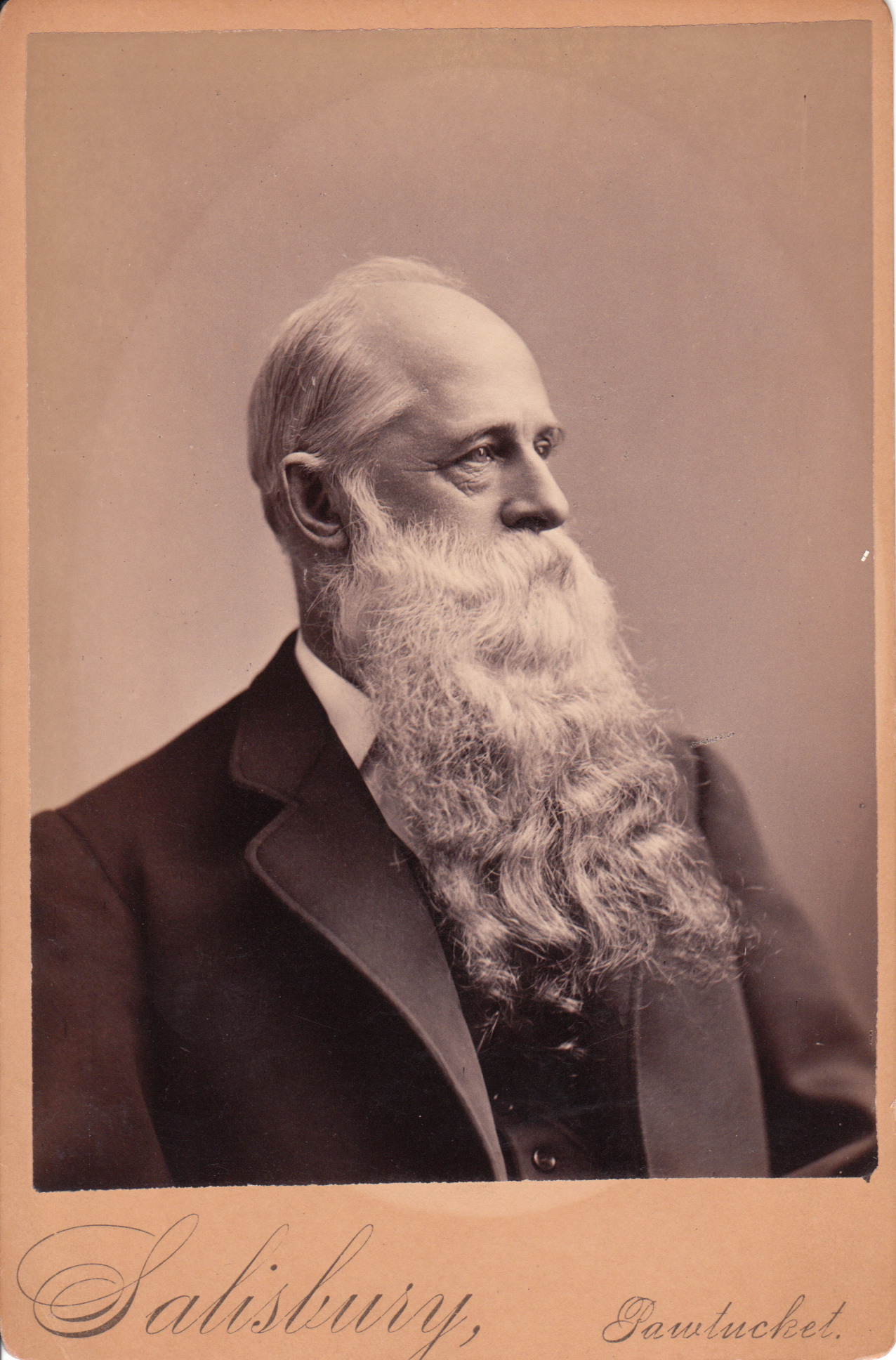
RI BEARD_0004The Salisbury studio in Pawtucket, Rhode Island produced this cabinet card portrait of an elderly man with a long white beard. His beard is very impressive but one wonders how he ate without wearing his food. To view other interesting beards click on the category “Beards (Only The Best)”. The photographer was Arnold F. Salisbury. His name can be found in many Pawtucket city directories of the 1880’s. At one time his studio was located at 65 Mill Street. He is considered by “Classy Arts” photo history site as one of America’s most productive photographers during the Carte De  Visite era (he  is among over 200 photographers so designated). Salisbury’s obituary appears in the Bulletin of Photography (1918). In the brief article it is mentioned that Salisbury was a civil war veteran. Further research revealed that he was a private in the 1st Regiment Rhode Island Infantry (company E) for three months in 1861. He later served as a second sergeant in the 9th Regiment Rhode Island Infantry (Company A) and as a first lieutenant in the 12th Regiment Rhode Island Infantry (Company H).

CUTEST DOG IN BRIDGEPORT, CONNECTICUT (1892)

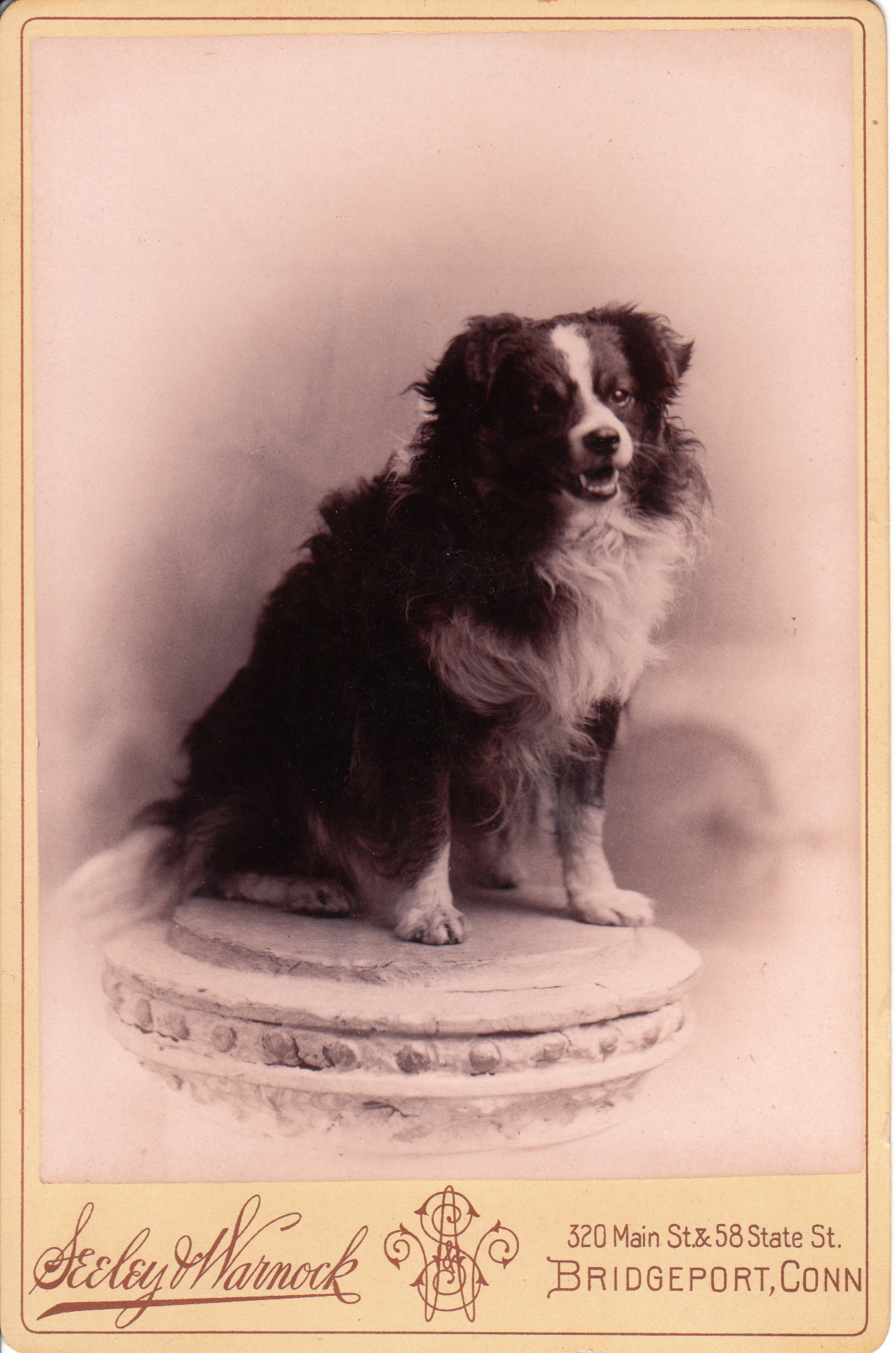
BRIDGEPORT DOG_0007Photographers Seeley & Warnock took this photograph of a cute dog posing in their studio in Bridgeport, Connecticut. What a pose?  The photographers have captured this adorable canine exhibiting a smile (with his/her mouth open). The lighting utilized in this photograph could have been better, but lets remember that dogs are tough customers for a photographer. On the reverse of the cabinet card is advertising that states “Instantaneous Portraits of Children A Successful Specialty”.  Note that photographing children is not only a “specialty” but it is a “successful specialty”. Additional printing on the reverse of the cabinet card indicates that it was produced in 1892. Preliminary research found no information about Mr. Warnock but there is an abundance of information about Mr. Seeley. Henry James Seeley was well known in Grand Army of the Republic circles. He was a department commander (Connecticut) and served in national offices of the organization. He was born in Jericho, Vermont in 1849. At the age of fifteen he enlisted in the 10th Indiana Battery, Light Artillery. After serving with the unit he was transferred to the gunboat Stone River which was operating on the Tennessee River. His next post was Fort Johnson in Huntsville, Indiana. Seeley entered and left the military as a private. After mustering out of the military in 1865, he taught school in Carbondale, Illinois. He then went to Vermont to further his education and then had teaching stints in Rome (NY), Worcester, Fall River and Bridgewater (MA). In 1872 he moved to Bridgeport where he studied photography and finally settled down. He opened a photography studio there in 1872 at 922 Main Street. He spent the next forty-five years or more working as a photographer.

PORTRAIT OF A TRAIN CONDUCTOR (RAILROAD OF NEW JERSEY)

NJ CONDUCTOR_0001J. C. Sunderlin produced this portrait of a train conductor in full uniform. Sunderlin operated a studio on Main Street in Flemington, New Jersey. The subject of this photograph is wearing a cap that has a plate tag which states “Conductor”. The patches on the lapel of his jacket indicate that he was employed by the “Railroad of New Jersey”. It is likely, but not certain, that this gentleman worked for the Central Railroad of New Jersey. This railway line has its roots in the 1830’s but adopted the Central Railroad name in 1849.  Note this gentleman’s terrific bushy mustache. The photographer, John Corbin Sunderlin was born in 1835 at Fort Anne, New York. His birth name was John Corbin Vorce but his mother died during his infancy and he was adopted at nine years of age. He married Harriet A. Penny in 1855 and the couple had five children. In 1856 he left farming for photography. He became an itinerate photographer and his studio was located on a horse drawn wagon. During the civil war he enlisted in the 5th Vermont Volunteer Infantry where he reached the rank of sergeant. His obituary states that he served three years in participated in eight major battles until he was wounded at Fredericksburg. After the war he settled in Fort Edward, New York. While living in Fort Edward he was a member of the Grand Army of the Republic, the Masons, Odd Fellows, and the New York State Prohibition Party. He worked as a photographer until 1870 when he was ordained by the Methodist Church. In 1880 he left his ministry work and returned to his career in photography. He operated a studio in Flemington until 1902 when he bought a studio in Blairstown, New Jersey from William C. Walters. He remained in Blairstown until his death from pneumonia in 1911.

THEATER ACTRESS HENRIETTA CROSMAN (PORTRAIT BY SARONY)

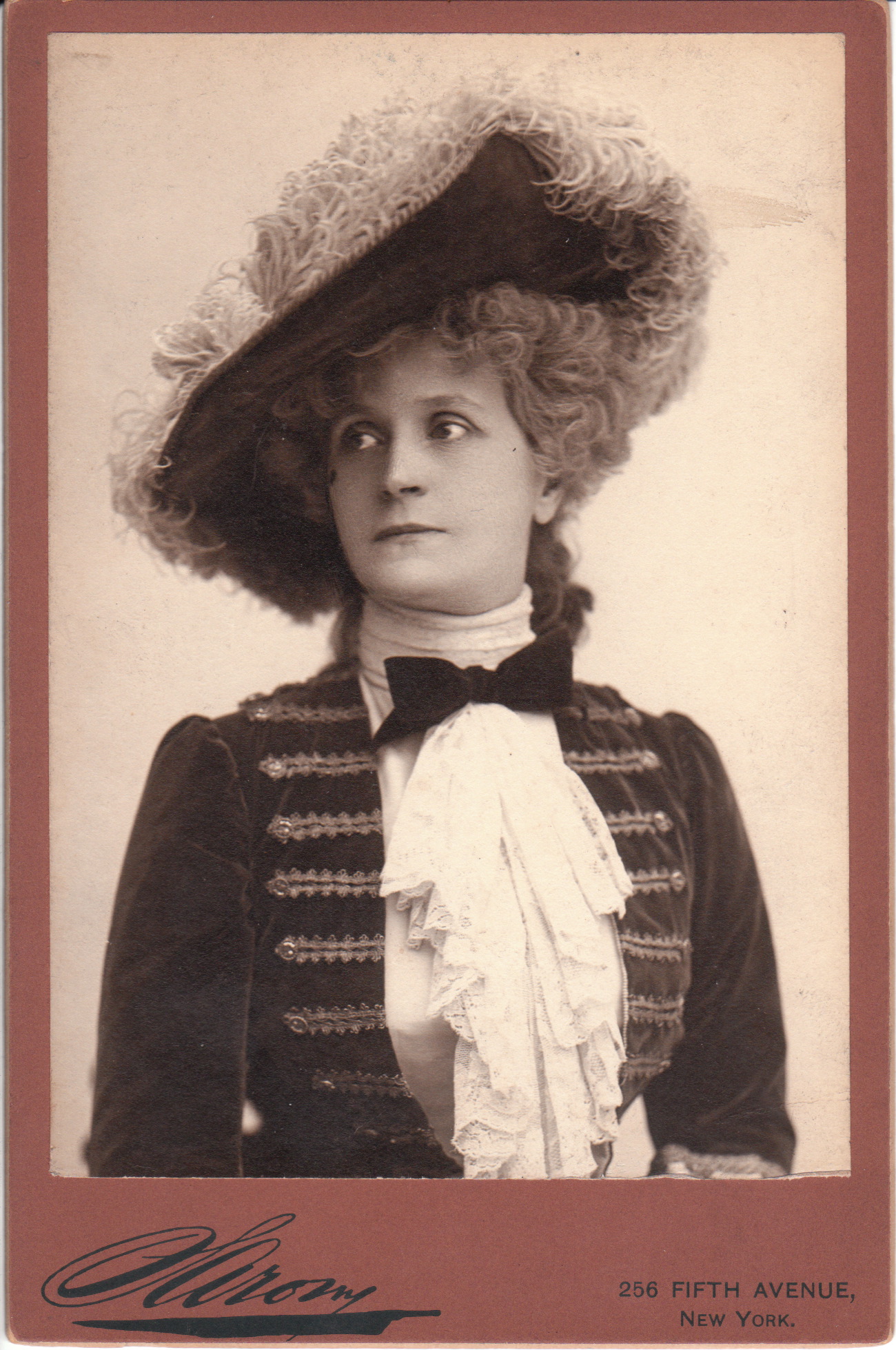
crossman_0004Henrietta Crosman was a renowned American stage and film actress and she is captured beautifully in this cabinet card photographed by Napoleon Sarony. To learn more about Sarony, a famous celebrity photographer, click on the category “Photographer: Sarony”. Sarony’s subject, Miss Crosman was born In West Virginia. Her father was a civil war Major and her mother was the niece of composer Stephen Foster. She was educated in several locations as her father was stationed in a number of posts while pursuing his military career. She began acting in New York City when she joined a local theater company in 1883. Her next experience with a theater company included a national tour. In 1889 she performed Shakespeare for the first time. She performed at the Daly Theater. In the 1890’s she joined Daniel Frohman’s stock company. She excelled in adventure romances and popular drawing farces. By 1900, she had reached stardom. Her appearances included roles in such plays as “As You Like It” (1902), “Sweet Kitty Bellairs” (1903), and “The Real Thing” (1911). Crosman avoided motion pictures until 1914. She then signed a deal with Adolph Zukor’s Famous Players. Her husband, Maurice Campbell became a noted director. Crosman appeared in both silent films and “talkies”. She was in a total of 22 films between 1914 and 1937 including “Charlie Chan’s Secret” (1936),