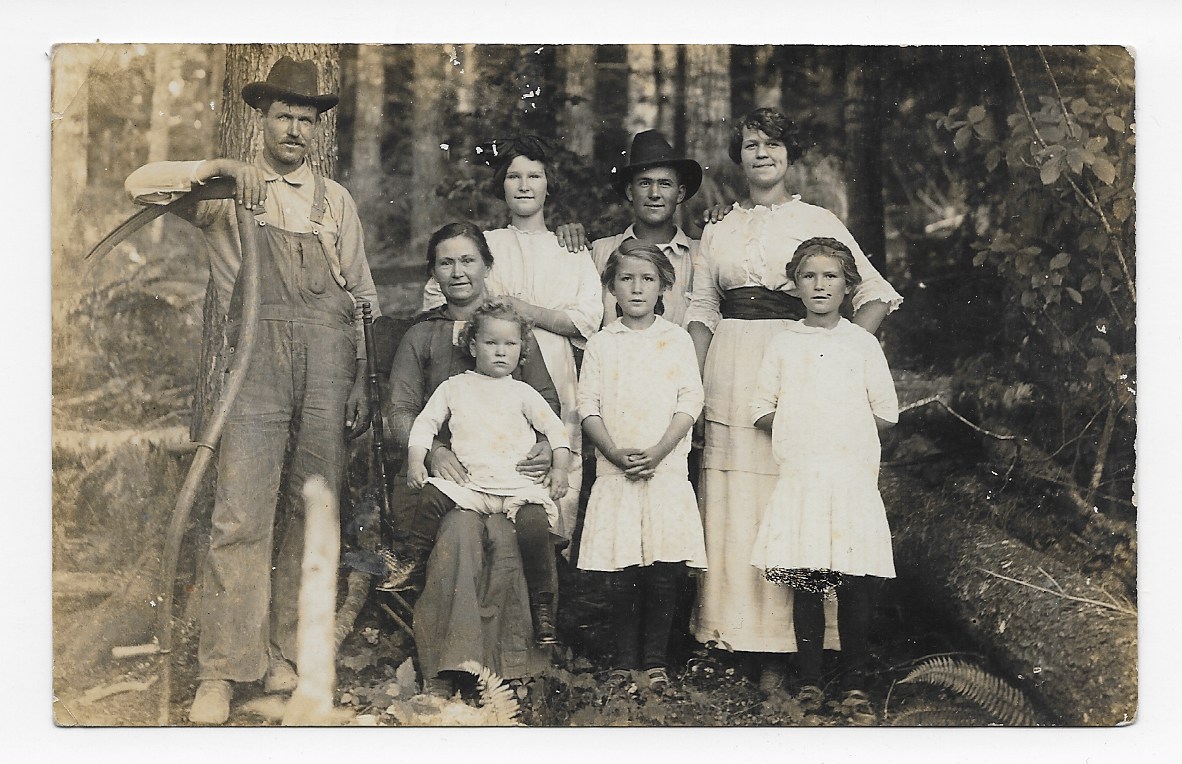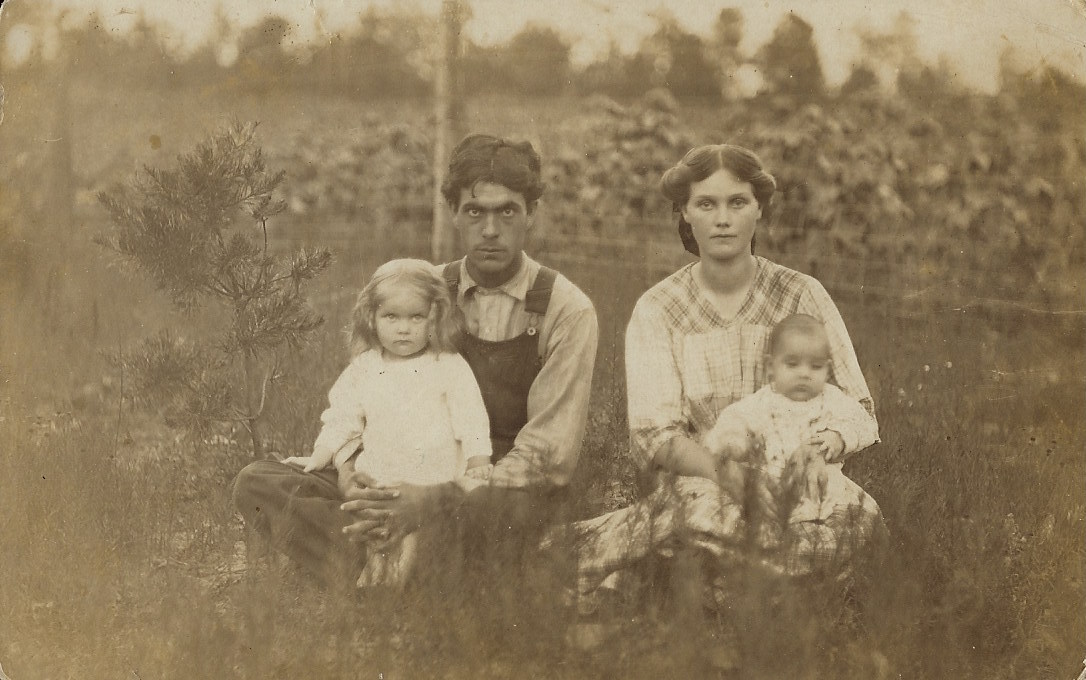
This vintage real photo postcard portrait features a farm family posing for their portrait in a field. An examination of the faces of this extended family displays the feeling of hard work and determination. The expression of the farmer holding his scythe truly captures the grit of a man facing lots of responsibility and pressure. Note that two of the girls in this family appear to be identical twins. This photo postcard is printed on AZO paper which was issued sometime between 1904 and 1918.
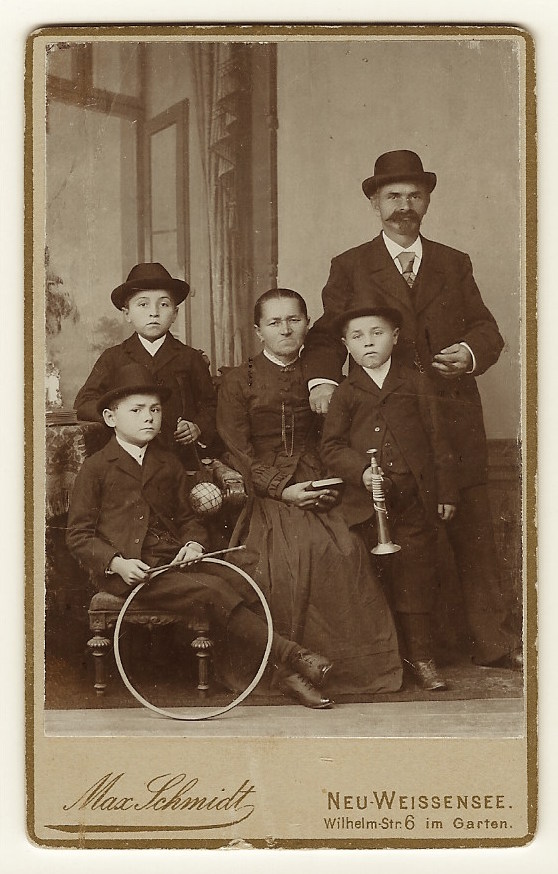
PARENTS AND THEIR THREE SONS AND A HOOP TOY IN NEU-WEISSENSEE, GERMANY (CARTE DE VISITE)
This family portrait carte de visite includes a set of parents and their three young sons. Each member of this clan appears very serious as they pose for this image. The family is wearing their fine clothing for their photograph which was taken by Max Schmidt of Neu-Weissensee, Germany. Mom is holding a book, most likely a bible. Each boy is wearing a hat and holding a toy. One boy is holding a horn, the second child has a ball toy, and and the third boy is holding a trundling hoop. Hoop rolling or hoop trundling is a child’s game which has been documented as far back as Ancient Greece. In the game, the hoop is rolled along the ground, usually by an object held by the player. The player tries to keep the hoop upright for an extended period of time or performs tricks with the hoop.
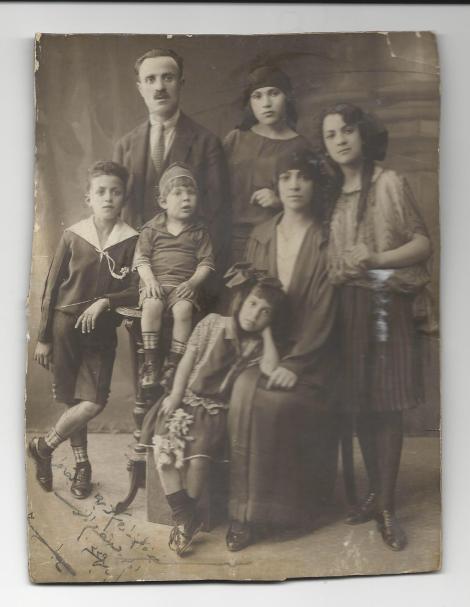
AN BEAUTIFUL ARMENIAN FAMILY IN CONSTANTINOPLE, TURKEY
Somehow this photograph survived. It must have been an incredible journey through history and time. The image carries some scars. The borders of the photograph have been trimmed (probably to fit into a frame), and the photograph is a bit warped. Not terribly warped, but enough to be unable to lie completely flat on an even surface. This great photograph would look even greater if it was framed. I suppose I have said enough about the condition of the photograph. This image is absolutely extraordinary. The Armenian family in this image may be one of the most expressive photographed families that I have seen in my many years of viewing historic photographs. This is certainly a family that does not hide emotions. The family is also beautiful and wonderfully dressed. I am having difficulty figuring out the family constellation. In my opinion, either the seven people in the photograph are all siblings, or the image captures a father, mother, and their five children. The father would obviously be the man standing in the rear of the picture. The mother, I hypothesize, is the seated woman. What is your theory about the family constellation of the subjects of this fascinating portrait? There is a note inscribed on the bottom left corner of the photograph. I do not know the translation. The previous owner of this image informed me that this family is Armenian in origin and the photograph was taken in Constantinople, Turkey in the 1920’s. It is important to remember the terrible holocaust that the Armenians experienced just before the time of this photograph. There was conflict between Armenians and Turks between 1892 and 1915. This resulted in the Armenian Genocide which occurred between 1915 and 1918. Estimates are that between .9 and 1.2 million Armenians were killed or deported because of alleged political and security considerations. By the end of the 1920’s, the only viable Armenian population left in Turkey was located in Constantinople. This photograph measures about 5 1/2″ x 7 1/2″.
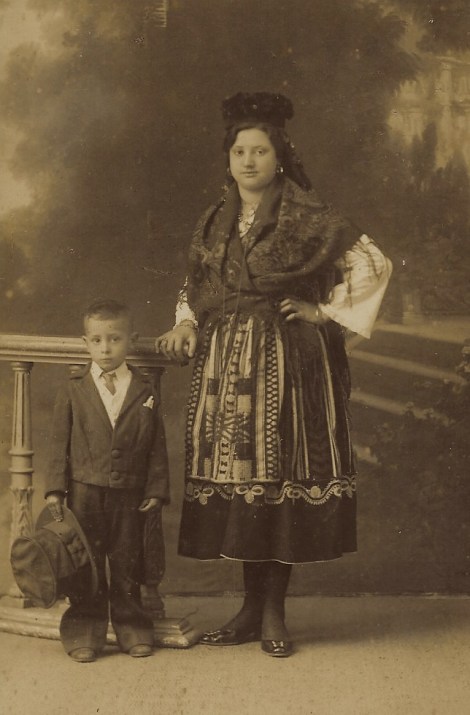
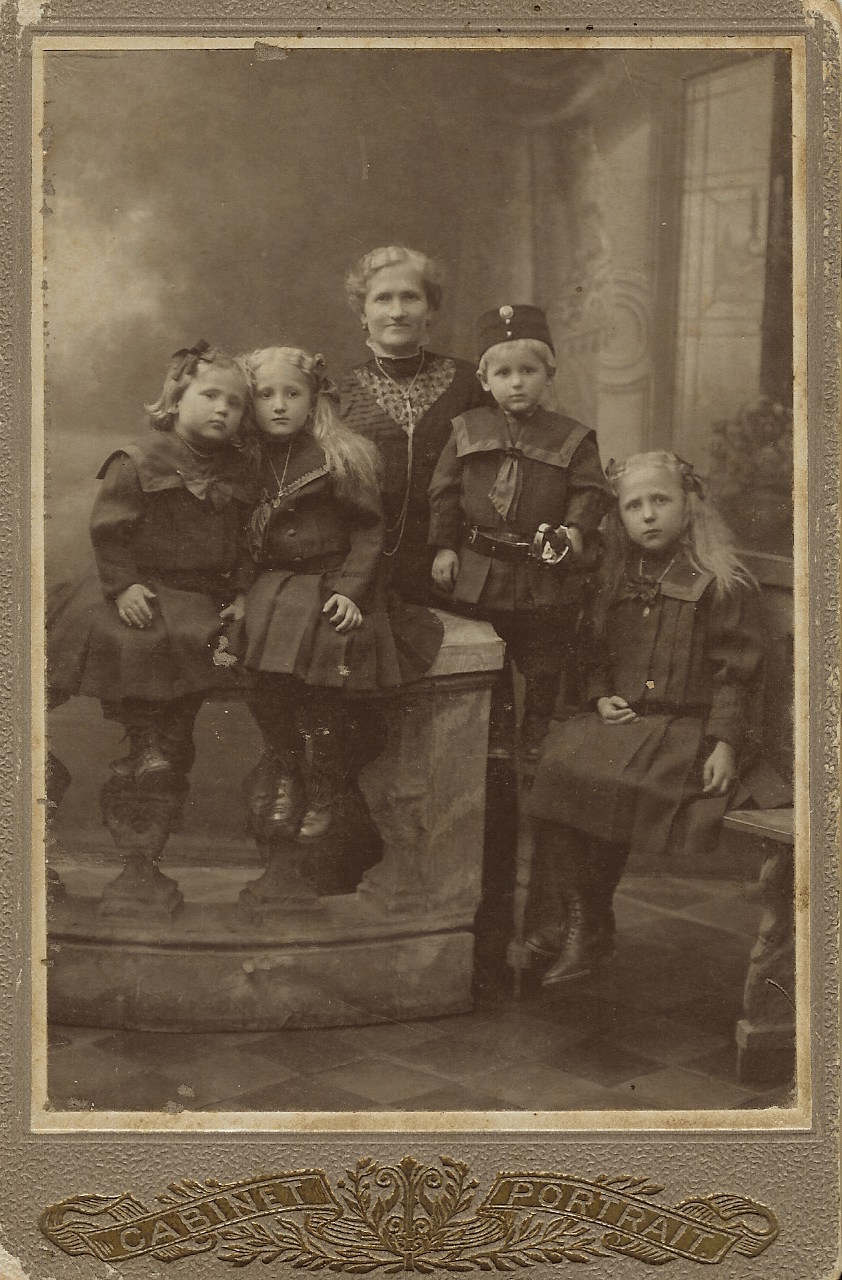
A GRANDMOTHER AND FOUR ADORABLE GRANDCHILDREN IN A FAR OFF PLACE (BUT WHERE?)
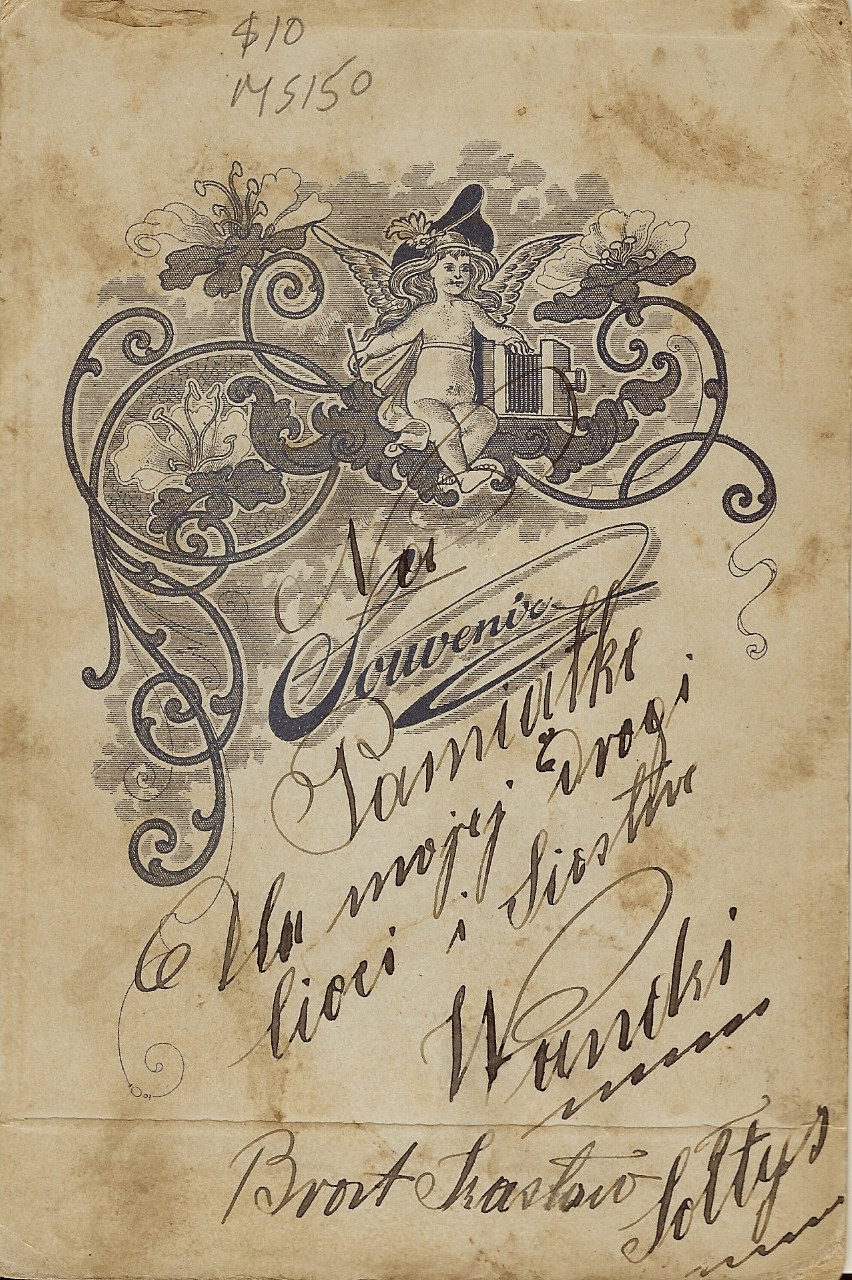
This cabinet card portrait is of European origin but I am clueless about determining it’s nationality. Hopefully, a member of the cabinet card gallery’s research department (the gallery’s visitors) will leave a comment telling us the photo’s national origin. There is evidence (an inscription) on the reverse of the photograph that will help someone with the identification (see image below). The photograph itself features what appears to be a family of five. Perhaps the adult in the photograph is the children’s grandmother but it is possible that she is their mother. The two girls sitting on the wall look incredibly adorable as they sit nearly on top of each other in a show of affection. The child wearing the fez appears to be a boy. I can not determine what he is holding in his left hand. The object looks like it could be the hilt of a sword (hopefully a toy). Perhaps a cabinet card gallery visitor can determine what exactly the lad is holding. Grandma, or is it Mom, appears quite proud of her brood of children.
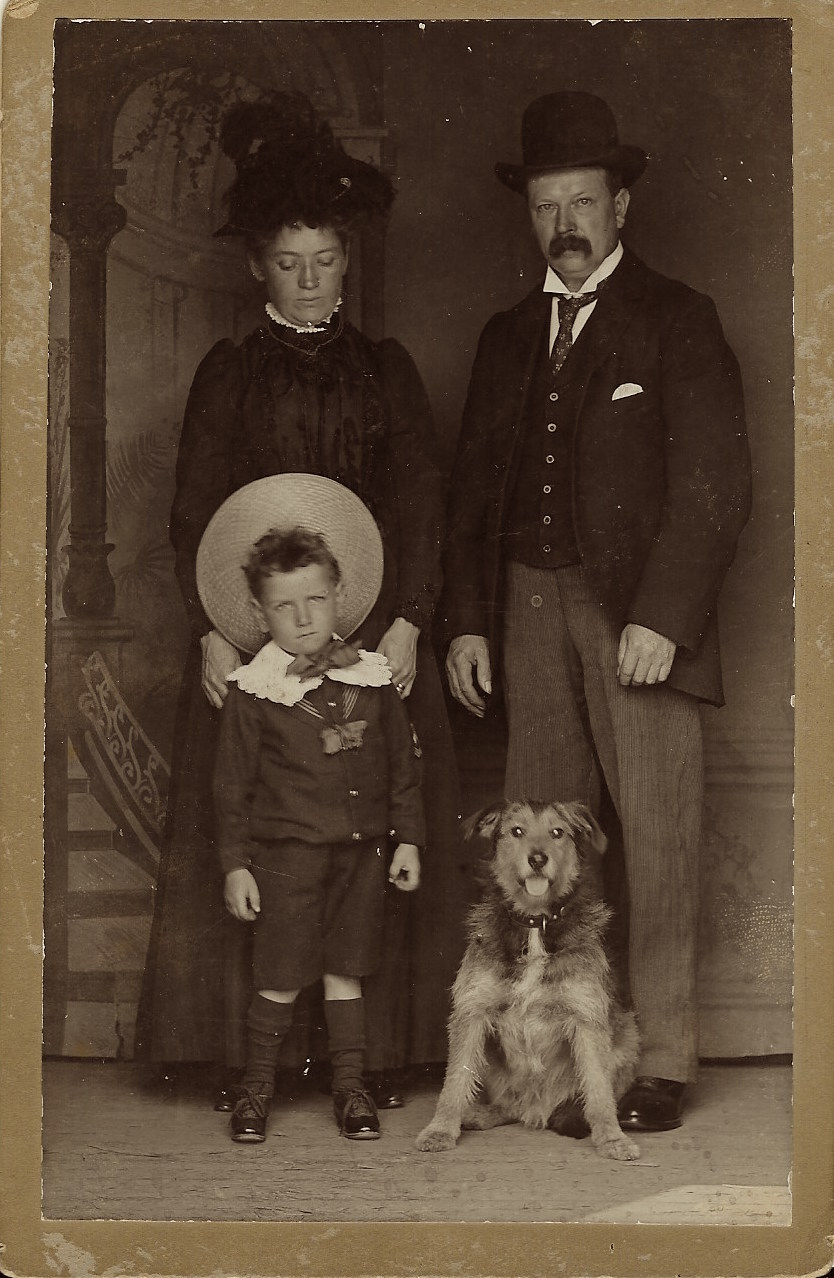
EVERYONE IS TENSE IN THIS SMALL FAMILY EXCEPT THE DOG
This cabinet card features a family portrait of what appears to be a very tense family. Dad’s facial expression indicates that he is quite angry. At the very least he seems very stern and is the type of guy you don’t want to provoke. Perhaps he is steamed about having to get dressed up and spend money for a photograph that he views as frivolous. Mom is not dealing with the situation. She is looking down toward the floor but she has closed her eyes. It is as if she wants the whole situation to go away. The couple’s son is adorable and smartly dressed in a sailor style outfit. He is displaying some of his dad’s intensity and looks as if he wishes the photographic session would come to a quick end. The only one in this portrait that seems happy is the family dog. This cute canine is bright eyed and flashing a doggy smile. The individuals in this photograph as well as the photographer are unidentified. This particular photograph is one of those images that tells an interesting story but it is up to the observer to hypothesize the details of the story. Perhaps some Cabinet Card Gallery visitors will comment about their perceptions concerning this emotionally provocative photograph. SOLD
ADORABLE CARTES DE VISITE: CUTE LITTLE GIRL SHOWING LOVE TO HER PRETTY MOTHER (WHAT IS A CDV DOING IN THE CABINET CARD GALLERY?)
The Cabinet Card Gallery was born in 2008 and at that time I decided not to include any cartes de visites in the collection. I believed that it was important I keep the scope of the gallery narrow so cabinet card aficionados had a site that specifically catered to their interest. Every once in awhile I would come across a cdv that I wanted to include in the gallery but I always managed to control the impulse. Today the impulse won. This Cartes de Visite photograph is an incredible portrait. The photographer did an excellent job of capturing a little girl’s love for her mother. The little girl, wearing a white gown, is adorable. She is standing on a chair and leaning into her mom. The viewer can see the child’s quest for love and security from the mother that she adores. The child’s mother is a pretty woman and very well dressed. She is holding her hat in one hand and has, what looks like a scarf, draped over her other arm. The photographer of this terrific cdv is the J. E. James studio in Galena, Illinois. James Edward James (1842-1878) was born in Liverpool, England. After immigrating to the United States he served in the 96th Illinois Infantry (Company A) during the civil war. He entered the service as a Private but was discharged as a Commissary Sergeant. He died while still a young man and left his wife Kitty to raise their four children and operate his photographic studio.
MOM AND DAD AND THEIR EIGHT KIDS NICELY DRESSED IN MADISON, SOUTH DAKOTA
This cabinet card is a portrait of a large family taken at the studio of A. T. Lewis in Madison, South Dakota. This family is well dressed and likely well-to-do. South Dakota was part of the Dakota Territory until it became a state in 1889. This knowledge reveals that this photograph was taken in 1889 or later. The city of Madison was named after Madison, Wisconsin. Wikipedia reports that the city’s original name was Herman and that it was founded in 1880. Abrah T. Lewis, the photographer of this image was married to Miss Sarah J. Norcott in 1873. She was also a photographer and is actually the more likely of the two to have taken this photograph. Mrs. Lewis tended to do portraits while Mr. Lewis focused on scenic views. Abrah Lewis was born in Oneida, New York in 1853. He next lived with his family in Canada between 1855 and 1873. In 1873, Abrah and his bride moved to Michigan and eight years later he lost his house to a forest fire (1881). Mrs. Lewis’s grandmother perished in the fire and she nearly lost her mother. The couple left for a brief stay in Canada and then settled in South Dakota and worked as photographers in Sioux Falls. Three years later they moved to Madison and opened a photography studio there that was predominately operated by Mrs. Lewis while Mr. Lewis attended to branches of the studio at Brookings, Elkton, and Arlington (all in South Dakota). The pair resided in Madison (five years), Huron (two years) and Clark (two years). Like many photographer of the cabinet card era, this couple kept moving. Their next stop was various locations in Iowa where they continued to work as photographers. One of their locations was a town called Rock Rapids. To view photographs by other female photographers, click on the category “Female Photographers”.