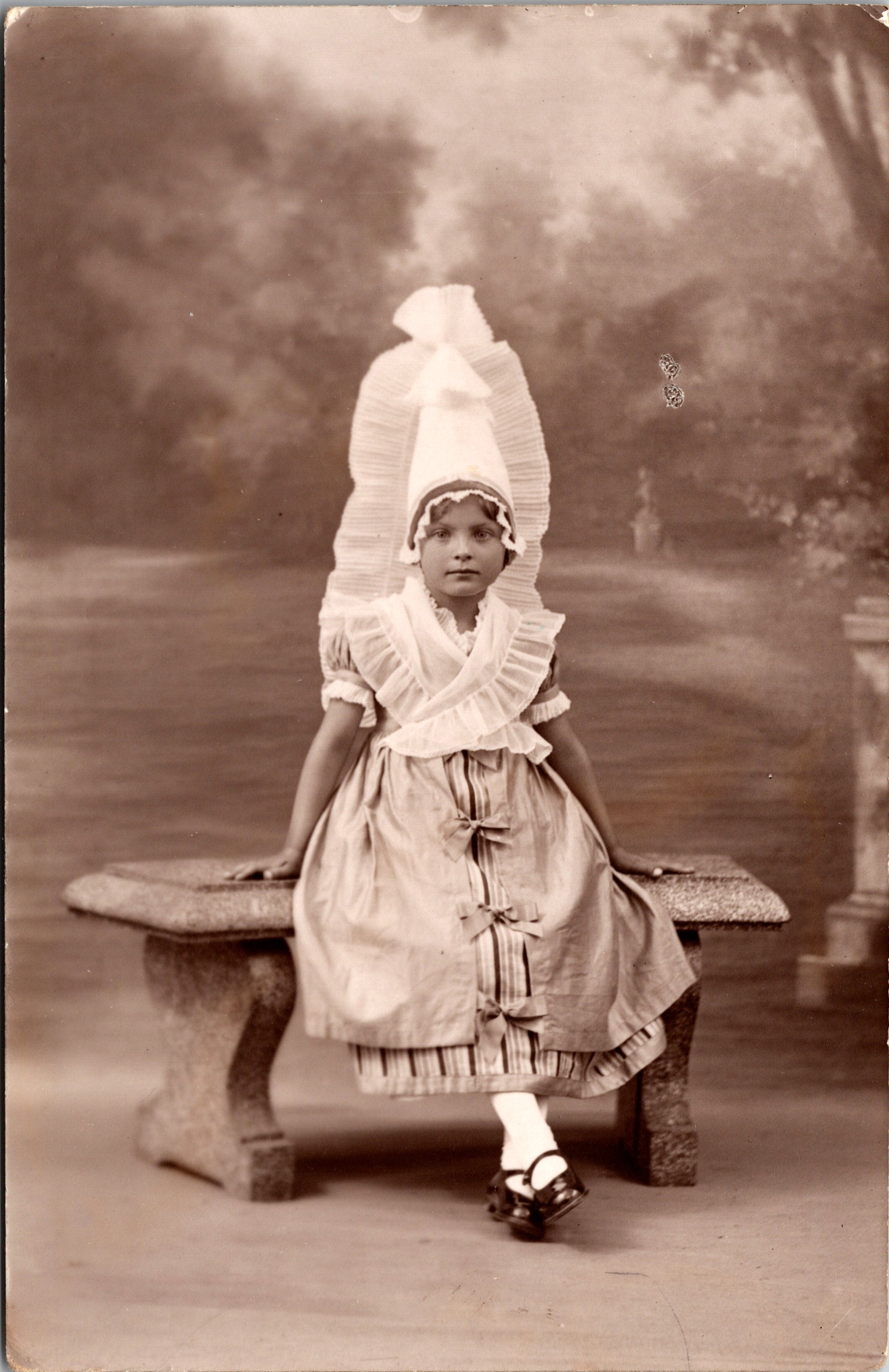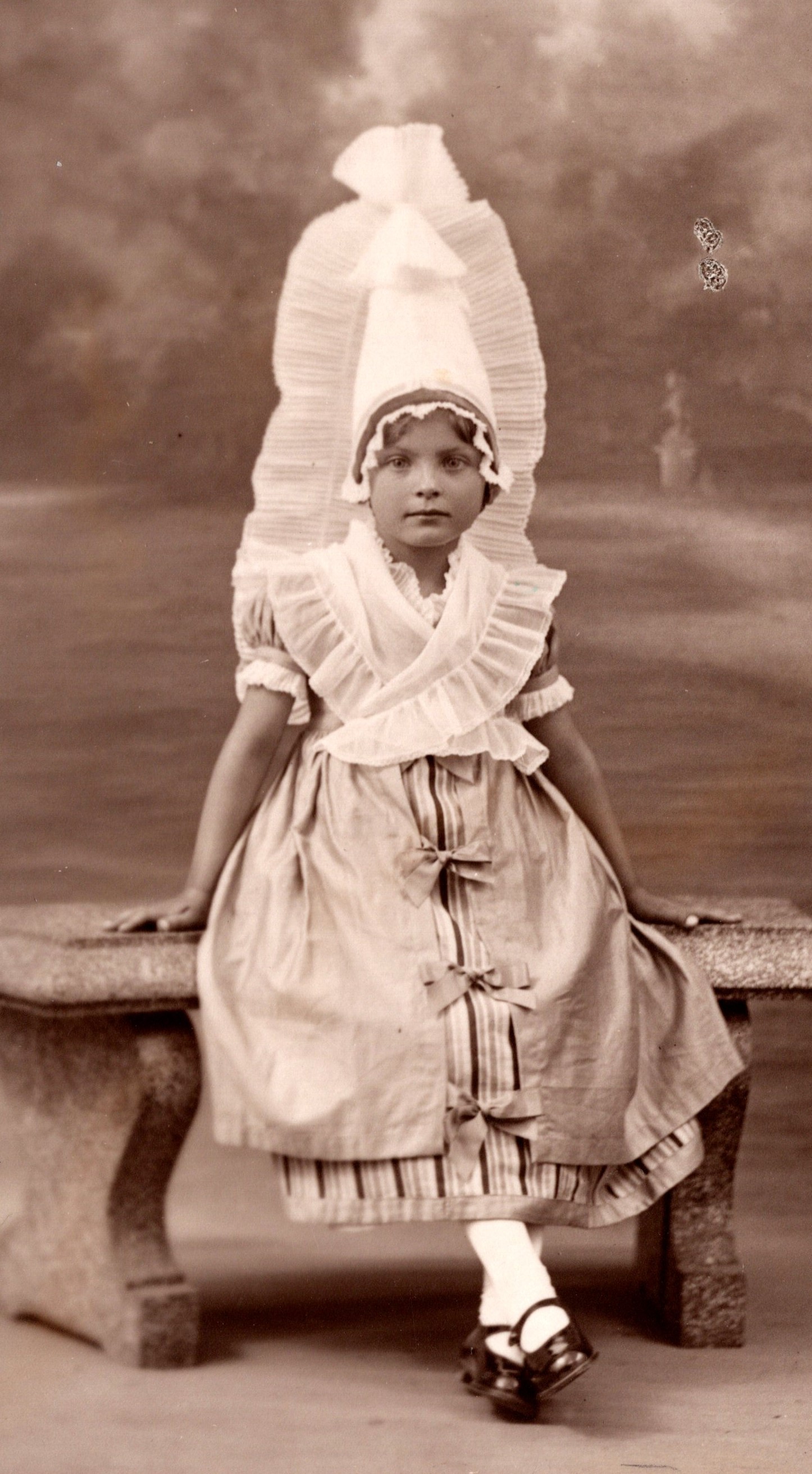
This vintage real photo postcard features an adorable little girl dressed in ethnic / cultural costume. She is sitting on a concrete bench in front of a studio backdrop. The girl’s portrait was taken at the Grande Photographie Studio St Julien in the town of Rouen, France. This is a private postcard and it is likely one of a kind. (SOLD)
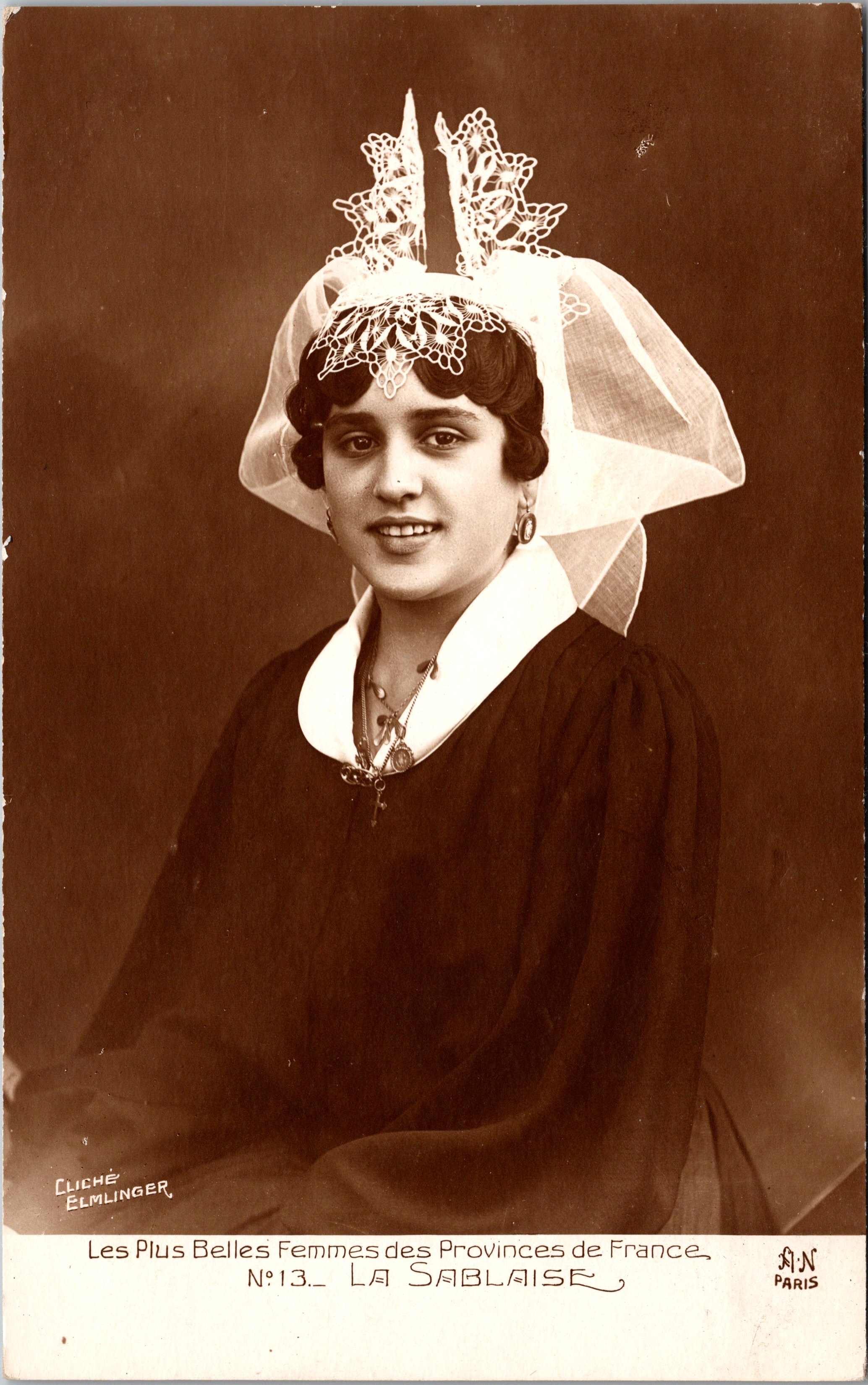
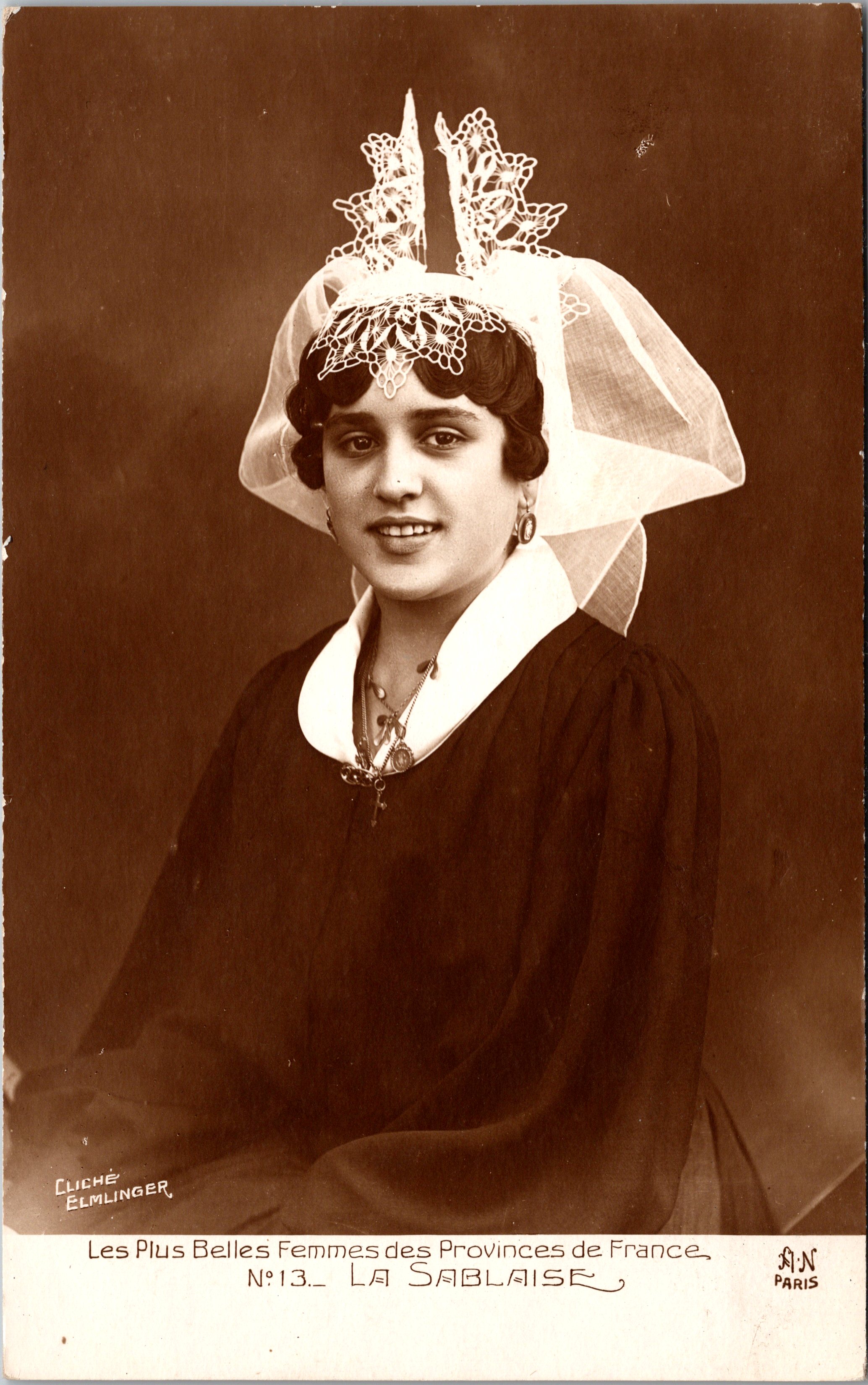
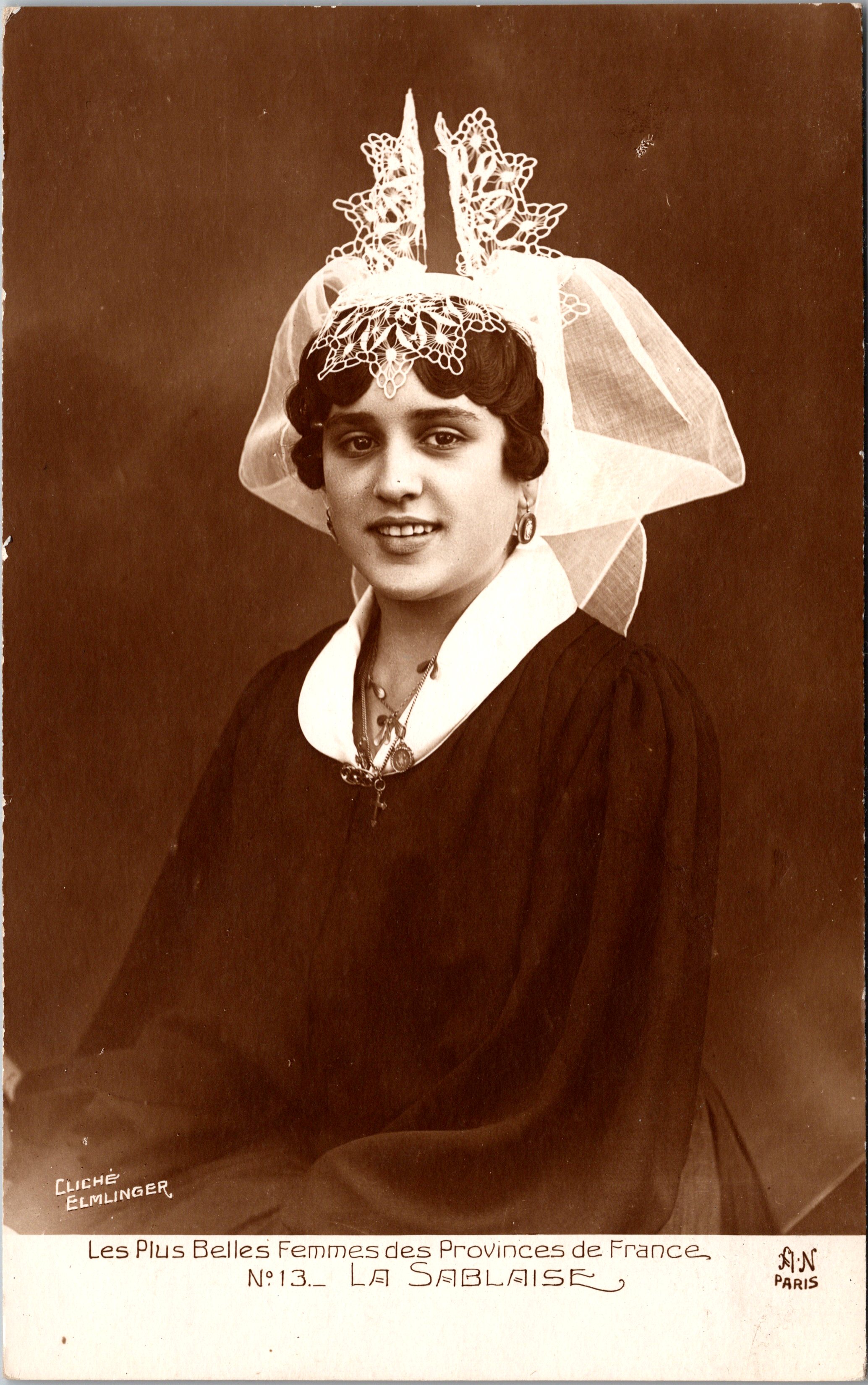
MOST BEAUTIFUL WOMEN OF FRANCE : LA SABLAISE PROVINCE : PHOTO BY ELMLINGER
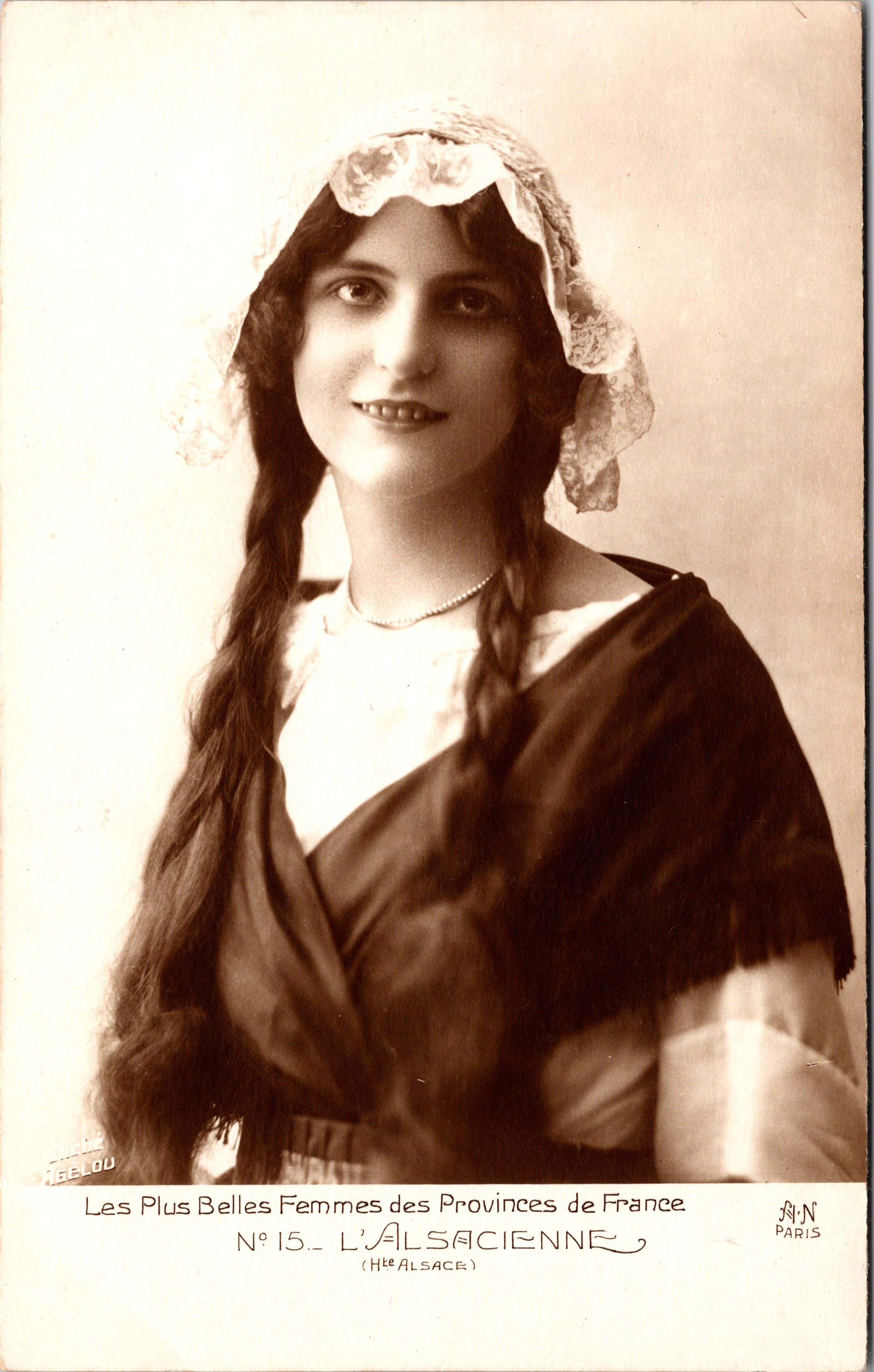
This vintage real photo postcard is part of a series named “Les Plus Belles Femmes de France” (The Most Beautiful Women of France). This series is about the Provinces of France, and the model for this image represents La Sablaise. Note that the woman in this photograph is wearing a pretty smile. This postcard is no.13 in the series. There were a number of different series published. The Province series was one of the more popular series. The models in this series represent different French Provinces and wear traditional clothing from that particular area of the country. This postcard was published by well known photographer Alfred Noyer. The celebrated photographer supervised a large photo studio in Paris. The Noyer Studio operated from 1910 until the 1940’s. Many of the postcards he produced of women were nudes or risque images.The photographer of this postcard portrait is the Elmlinger studio. This vintage postcard is in good condition (see scans).

Buy this Vintage Real Photo Postcard (includes shipping within the US) #5119
To purchase this item, click on the Pay with PayPal button below
$17.50

Buy this Vintage Real Photo Postcard (includes International shipping outside the US) #5119
To purchase this item, click on the Pay with PayPal button below
$27.50

PRETTY TEENAGE GIRL : ROSE PRINT DRESS : RPPC (1914)
This vintage real photo postcard features a pretty young woman wearing a pink and green rose print dress and a nice smile. She appears to be in her teenage years. The card originates from France and the message on the card was written in 1914 (see postmark). Note the tiny pinhole near the bottom border of the postcard. (SOLD)

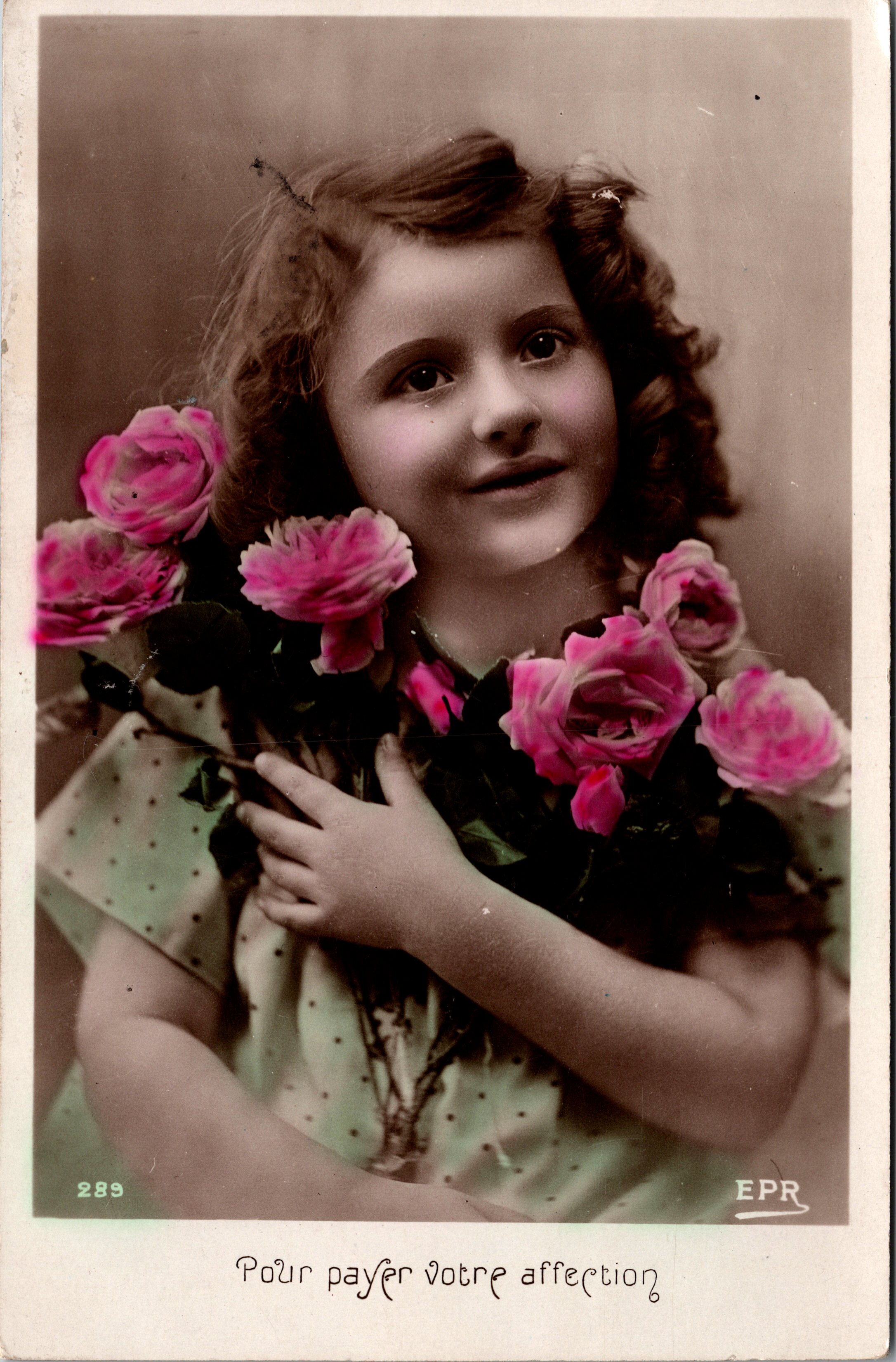
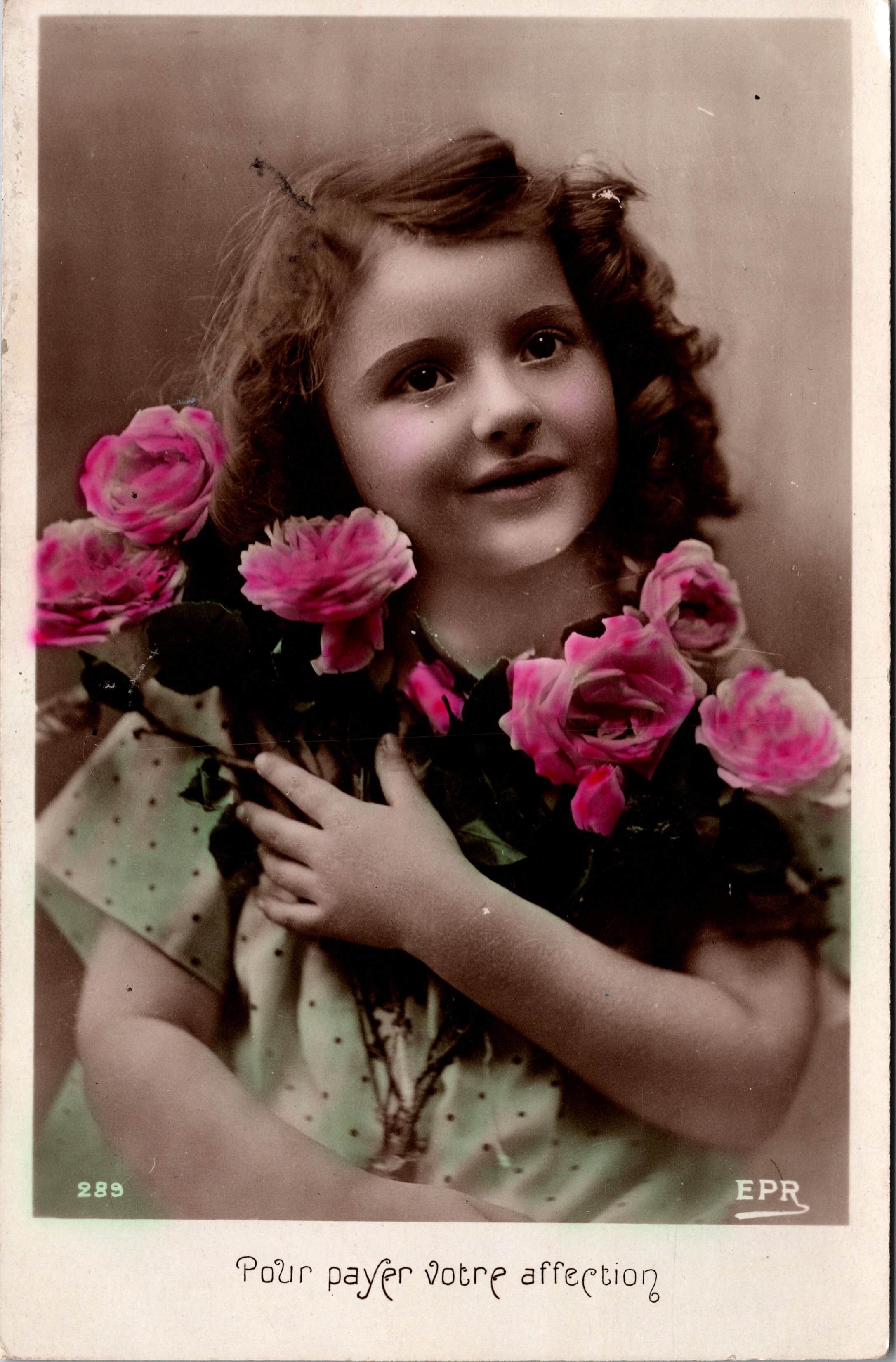
ADORABLE LITTLE GIRL HOLDING A BOUQUET OF PINK ROSES : BELLE EPOQUE : RPPC
This vintage real photo postcard features an adorable little girl holding a bouquet of pink flowers. The girl is bright eyed and is flashing a beautiful smile. The French caption on the front of the card translates to “To Pay For Your Attention”. I believe that the card is a Thank-You card. The postcard was published by EPR as part of a series (No. 289). This real photo postcard is in overall good condition (see scans).

Buy this Vintage Real Photo Postcard (includes shipping within the US) #5056
To purchase this item, click on the Pay with PayPal button below
$22.00
Buy this Vintage Real Photo Postcard (includes International shipping outside the US) #5056
To purchase this item, click on the Pay with PayPal button below
$32.00
WORLD’S FIRST PLAYBOY BUNNY: FRENCH ACTRESS MISS AUGUS-THYNE

This vintage real photo postcard features the world’s first playboy bunny. Not really. This wonderful portrait captures French actress Miss Augus-Thyne in a risque costume and sporting long rabbit ears. Her exotic outfit also includes bells and pom poms. The “Ambassadeurs”, a Paris music hall, is printed on the top right hand corner of the front of the postcard. The portrait of Miss Augus-Thyne was photographed by celebrated Paris photographer Stanislaw Julian Ignacy Walery (1863-1935). Walery opened a studio in Paris in 1900 and was known for his portraits of showgirls. SOLD
TWO ADORABLE CHILDREN HOLDING LARGE FLOWERS : OFFERED IN FRIENDSHIP : RPPC
This vintage real photo postcard features an adorable little boy and girl posing while they hold large faux flowers. A caption (translated) at the top of the image states “Offered in Friendship”. This photograph was taken at a studio in Paris, France. The postcard is in fair condition (see scans).

Buy this original Real Photo Postcard (includes shipping within the US) #5081
To purchase this item, click on the Pay with PayPal button below
$13.95

Buy this original Real Photo Postcard (includes International shipping outside the US) #5081
To purchase this item, click on the Pay with PayPal button below
$23.95

FABIENNE : PRETTY STAGE STAR : PHOTOGRAPHS BY PAUL BOYER : COLOR TINTED
POSTCARD 5 (SOLD)
Postcard 1 features lovely edwardian stage performer, Fabienne Darlay. Her photograph was expertly taken by the celebrated French photographer, Paul Boyer (1861-1908). He was based in Paris, and photographed many celebrities during his career. This postcard was published by Societe Industrielle de Photograpie (SIP) of Rueil, France, and was part of a series (no.1441). The image was hand tinted. This postcard dates back to circa 1904-1908. Note there is minor cornerwear and a light crease in the upper left hand corner of the card. (SOLD)
Postcard 2 was published by Societe Industrielle de Photograpie (SIP) of Rueil, France, and was part of a series (no.1441). This image was hand tinted. This postcard dates back to circa 1904-1908. (SOLD)
Postcard 3 features another photograph by Paul Boyer and this postcard was also published by SIP as part of a series (No.1441). The image was hand tinted. This postcard was postmarked in 1906. (SOLD)
Postcard 4 was published by Societe Industrielle de Photograpie (SIP) of Rueil, France, and was part of a series (no.1441). The image was hand tinted. This postcard was postmarked in 1906. (SOLD)
Postcard 5 was published by Societe Industrielle de Photograpie (SIP) of Rueil, France, and was part of a series (no.1441). The image was hand tinted. This postcard has a 1907 postmark. (SOLD)
POSTCARD 5 (SOLD)
PORTRAIT OF THE MOST BEAUTIFUL WOMEN OF FRANCE : L’EMERAUDE : ALFRED NOYER
This vintage real photo postcard is part of a series named “Les Plus Belles Femmes de France” (The Most Beautiful Women of France). This series is about gem stones, and the model for this image represents “L’Emeraude” (Emeralds). There were a number of different series published. One of the more popular series was one in which models represented different French Provinces by wearing traditional clothing from that particular area of the country. This postcard was edited by well known photographer Alfred Noyer. The celebrated photographer supervised a large photo studio in Paris. The Noyer Studio operated from 1910 until the 1940’s. Many of his early postcards were reproductions of artworks. He also produced illustrated patriotic postcards during World War I. With the onset of the 1920’s he began producing postcards of children and women. Many of the postcards he produced of women were nudes or risque images. Some of his postcards list his name while others are simply marked “AN”. SOLD2

POSTMORTEM PHOTO : YOUNG GIRL : PARIS, FRANCE : CABINET CARD
This cabinet card is a postmortem photograph of a young girl. The image is upsetting and sad, but served as a remembrance of a family member for their grief stricken family. Note the flowers and cross lying on the child’s bed and the religious statues and candles on the side table. The photographer of this cabinet card was R. Dechavannes, whose studio was located in Paris, France. To view other photographs by Dechavannes, click on the category “Photographer: Dechavannes”. Hopefully, visitors to the cabinet card gallery will not find this image offensive. A website called “Ostrobogulous Cackleberries”, has an interesting article about the practice of postmortem photography. The writer states that during the Victorian era, photographing the recently deceased was “extremely prevalent”. The author points out that the practice existed before the invention of the camera. Instead of photographing the dead, artists painted their portraits immediately following their death. In many cases, the postmortem photo was the only image a family possessed of the departed family member. Many of the Victorian memorial photographs were of infants and children. The mortality rate of children during that time was very high. The writer offers a description of how the dead were posed and there seems to be a great deal of approaches to the practice. Postmortem images could be full body or facial close-ups. Coffins were not frequently included in the picture. The dead were often posed as if they were sleeping and sometimes were presented as life-like. In some photos they were braced or tied into chairs or propped up against other family members to look as alive as possible. According to the article, the popularity of postmortem photography faded in the early twentieth century. Funerals moved from the home parlor to the funeral parlor. Society stopped “embracing mortality” and we became the death denying culture of today. SOLD