UNUSUAL POST MORTEM PHOTOGRAPH FROM SCHWABACH, GERMANY

This post mortem cabinet card image features an older bearded man partially covered with flowers. The card on the bottom right hand corner of the image likely has the words of a prayer or a religious reading. The image has amazing clarity. The deceased gentleman is lying at an unusual angle. The photographer of this cabinet card image is the Kandel studio which was located in Schwabach, Germany. The town is near Nuremberg and in the center of the Franconia region in North Bavaria. Hopefully, visitors to the Cabinet Card Gallery will not find this image offensive. Photographs of deceased family members were commonplace during the nineteenth and early twentieth centuries in America and Europe. The images helped surviving loved ones through the grieving process. In addition, sometimes the post mortem photographs were the only images possessed by the deceased’s family. (SOLD)

Published in: on March 13, 2017 at 7:18 pm  Comments (4)  
Tags: , ,

FANCY CAR AND FANCY DRIVER IN SCHONINGEN, GERMANY (RPPC 1934)

car-and-driver

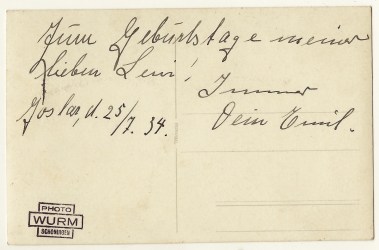
A classy looking man and his classy looking automobile are the subject of this vintage real photo postcard produced by a photographer named Herr Wurm in Schoningen, Germany. The car looks new and is absolutely beautiful.The owner of the auto must love the car. He is showing his affection by putting one foot on the running board and placing his hand against the car’s door. He looks quite stylish with his white coat, dark hat, and driving gloves. There is something sticking out of his coat pocket. It may be a wallet and you can be sure that he had to be somewhat wealthy to afford this luxurious car. The town of Schoningen is in the district of Helmstedt, in Lower Saxony, Germany. The community is known for its mining of lignite. The writing on the reverse of this photo postcard is dated 1934. The postcard is not postmarked and was likely mailed inside of an envelope.   (SOLD)

car-and-driver-1

Published in: on January 21, 2017 at 12:00 pm  Comments (1)  
Tags: ,

TWO ADORABLE CHILDREN IN TRADITIONAL GERMAN COSTUMES IN HAMBURG

kindermann

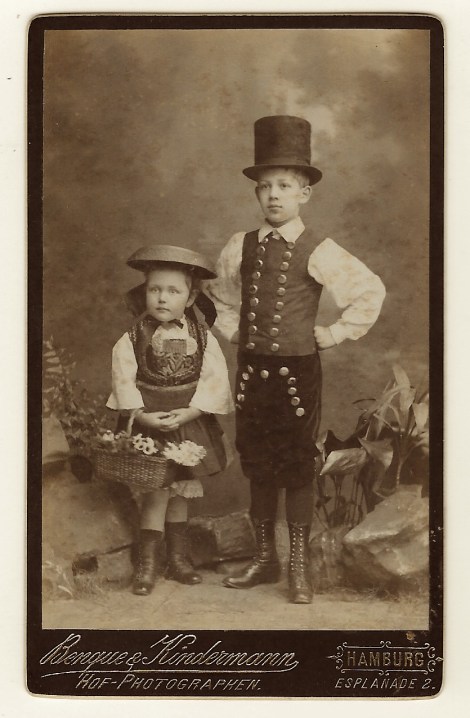
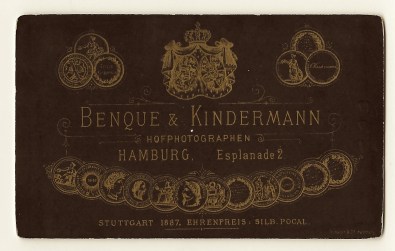
This wonderful Carte de Visite features two adorable children wearing traditional clothing posing for their portrait at the Banque & Kindermann studio in Hamburg, Germany. The boys outfit has an abundance of buttons and he is wearing a top hat. The little girl is holding a basket of pretty flowers and is wearing a hat that resembles a “frying pan”. On each side of the children are potted plants. The image is actually a lovely photograph. The reverse of the photograph has print that advertises the fact that the studio won medals at an 1887 exhibition in Stuttgart, Germany. This photograph was likely taken shortly after that contest. “The Photographic Times” (1897) tells the story of photographer Conrad Kindermann. He was born in Lubeck, Germany in 1842. He apprenticed in a cloth house in Riza, Russia for five years and worked there another year. He then was introduced to working as a photographer by his brother who had a studio in Hamburg. In 1863 he opened a studio in Lubeck. The ceilings in this studio were so low that they prohibited photographing adults when they were standing. The resourceful Kindermann decided to specialize in photographing children. It is very interesting to note that the word “kinder” means “children”. He was truly a Kindermann. In 1869 he met photographer Herr Benque. They becamse fast friends and were soon partners in a studio in Hamburg. The studio encountered financial problems so Benque left and soon the studio became very successful and Kindermann became known as one of the best photographers of children in the country. A review of the era’s photography journals demonstrate that he was often cited or the subject of articles. Another fascinating fact is that Darwin used three of Kindermann’s photographs in his book “The Expression of Emotions in Man and Animals” (1872).

kindermann-1

AN ADORABLE BABY AND HER DOLL

girl-and-doll

This vintage real photo postcard features a lovely image of an adorable little girl holding a beautiful doll. The child is wearing a lacy dress, a necklace, and a pink ribbon in her hair. She is so photogenic. This postcard was sent by a woman named Suzanne to her younger brother living in Argentan, France. The postmark dates back to 1906. Suzanne wrote her name on the top right hand corner of the front of the postcard. She wrote it in red which is the same color ink she used to write her message on the reverse. The postcard was published by Germany’s Neue Photographische Gesellschaft (NPG) (New Photographical Society). The company was in business between 1894 and 1948. It was founded by Arthur Black (1862-1943) and it became of the most well known and largest companies involved in the production of postcards. Over time, NPG opened subsidiaries in London, Paris, Rome, and New York. Interestingly, the company was one of the “Best Companies to Work For”. Employees were given free medical treatment and illness benefits. Employees also received bonuses and life insurance. The company offered it’s employees a library, a casino, and a dining room which sold food for cost. In addition, the company offered it’s workers a reading room and a theater for lectures and theatrical performances. Now we know where Google and other employee friendly companies got some of their ideas from. Printing on the reverse of this postcard mentions that this postcard is an “Oranotypie” and also lists the name “A. G. Steglitz”. An oranotype is a trade name for a type of glossy real photo postcard published by NPG at the beginning of the 20th century. These cards are hand colored. I am unsure if Steglitz was a postcard publisher or a photographer. I have seen postcard aficionados refer to him as both a photographer and a publisher. My guess is that most of these “experts” are as unsure as I am about his role in producing postcards. 

girl-and-doll-2

HANDSOME YOUNG MAN WEARING UNIVERSITY UNIFORM- MUNICH,GERMANY (CARTES DE VISITE)

sailor

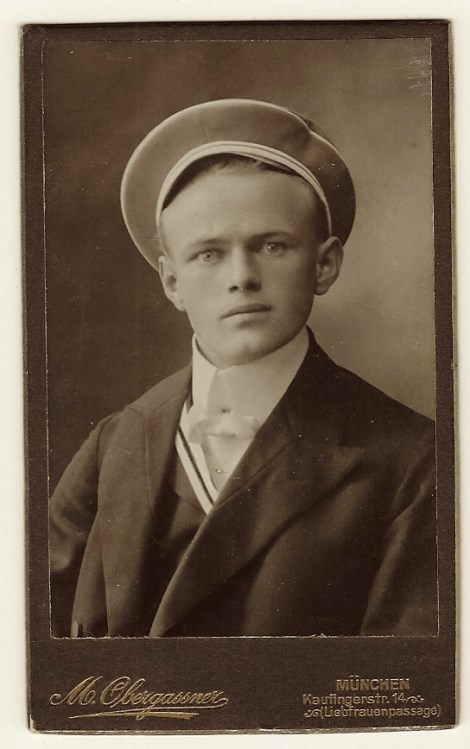
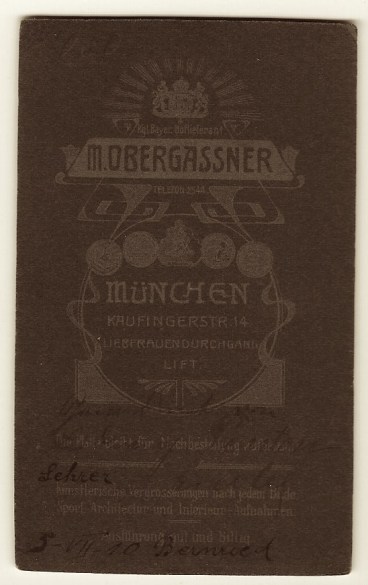
This cartes de visite (CDV) features a handsome young man wearing a university uniform. Note his standup collar, heavy pea coat, and wonderful cap. The photograph was taken at the M. Obergassner studio in Munich, Germany. Preliminary research reveals that Michael Obergassner had a second business besides working as a photographer. He operated a photo supply company which he established in 1889.

sailor-1

Published in: on November 11, 2016 at 12:00 pm  Leave a Comment  
Tags: ,

STUDIO PORTRAIT OF A CUTE HAPPY LITTLE GIRL AND HER BEAUTIFUL DOG

girl-and-dog

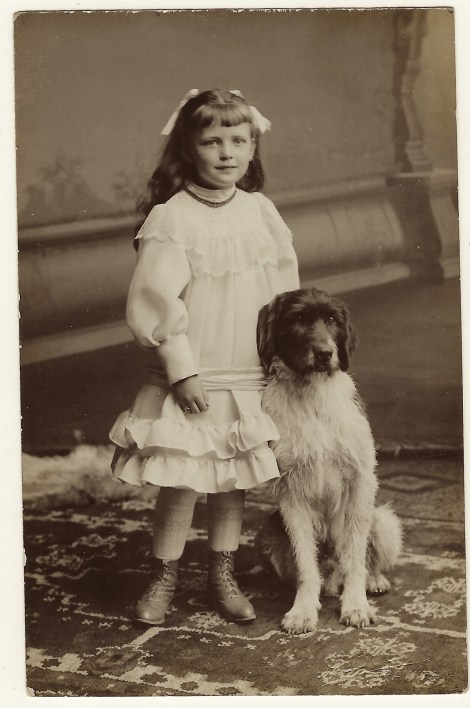
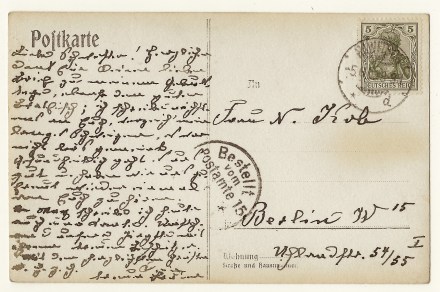
This vintage real photo postcard an adorable little girl and her beautiful dog. The girl is flashing a smile and has a twinkle in her eyes. She is wearing a frilly cute dress and note her long stocking and tied high boots. She is also adorned with hair ribbons and a ring. I don’t recognize the dogs breed so it may be mixed. I certainly see some terrier in this noble looking canine. The postcard has a 1908 postmark and a German stamp. The postmark on the card is from Rawitsch (currently Poland). The postcard is addressed to someone in Berlin, Germany.  (SOLD)

girl-and-dog-1


Published in: on October 29, 2016 at 12:00 pm  Leave a Comment  
Tags: , ,

EXQUISITE PORTRAIT OF A GERMAN COUPLE BY EMILIE BIEBER (CARTES DE VISITE 1870’s)

bieber

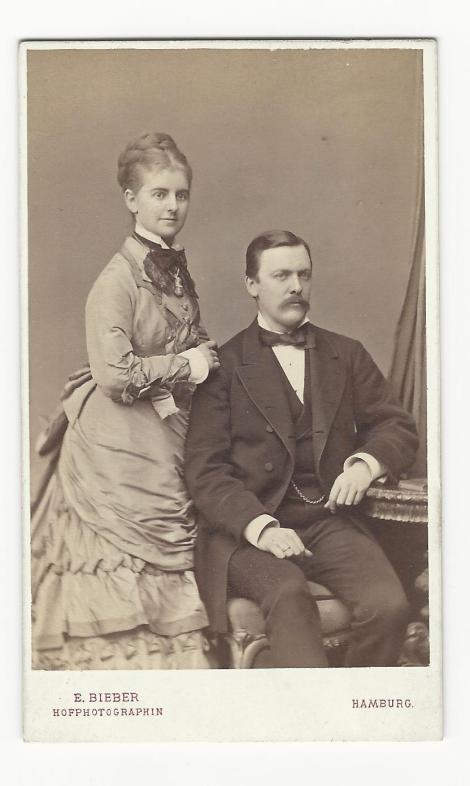
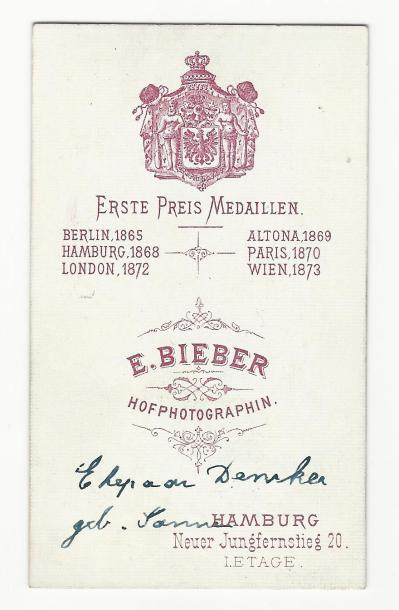
Emilie Bieber is one of my favorite photographers of the Cartes de Visite/Cabinet Card era. The quality of her work soars above her contemporary photographers. View more of her images by clicking on the category “Photographer: Bieber” or just put her name in the search box. This CDV captures a lovely immaculately dressed couple posing in Bieber’s Hamburg studio. The woman’s hair is beautifully done. She is wearing a cross on a chain. The gentleman is wearing formal clothes and also is wearing a ring and pocket watch. Bieber had a second photo studio which was located in Berlin. Emilie Bieber ran her Hamburg studio for 1852 through 1872 when she was joied by her nephew, Leonard Berlin-Bieber. She died in 1884. This cdv likely dates back to the 1870’s. The reverse of the photograph lists prizes garnered by Bieber at various photo exhibitions including Berlin (1865), Paris (1870), London (1872), and Vienna (1873).   SOLD

bieber-2

PORTRAIT OF A YOUNG AND PRETTY FASHIONISTA IN NEUDEK, GERMANY (CARTE DE VISITE)

neudek

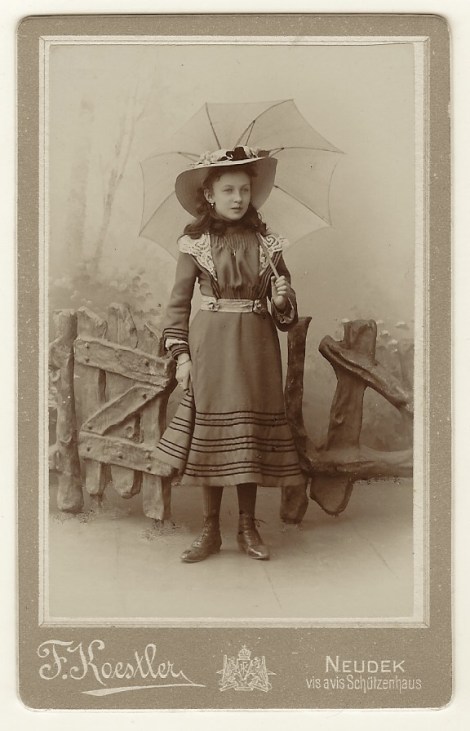
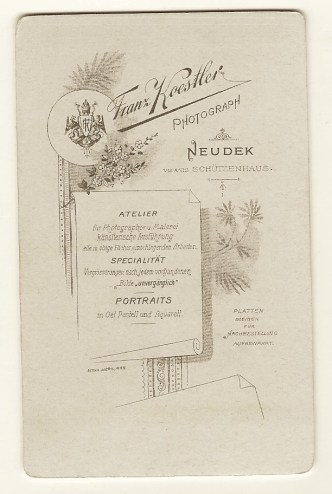
This carte de visite photograph features a beautiful young girl dressed in the best of fashion. Her clothing indicates that she is from a family of means. She is wearing a stunning dress, a wonderful hat, and is carrying a parasol. She is wearing jewelry (bracelet, earrings) and appears in a manner that is very adult-like. This image reminds me of current day practices by little girl beauty pageants. The contestants, like the young girl above, are portrayed as miniature adults. This cdv portrait produced by photographer Franz Kostler who operated a studio in the town of Neudek. Today, Neudek is called Nejdek and is located in the Karlovy Vary Region of the Czech Republic. The name “Neudek” is of German origin and it is my guess that at the time that this photograph was taken, the town was part of Germany.

neudek-1

PORTRAIT OF A YOUNG WEDDING COUPLE IN SAALFELD, GERMANY

kraatzert

This carte de visite is a wedding portrait that was taken by the Kratzert studio in Saalfeld, Germany. Like many wedding photographs of the time, we see the groom sitting and the bride standing. The couple appear to be relatively young. The pretty bride is wearing a wedding gown with a high collar. She is wearing a necklace and holding a bouquet of flowers. The groom is well dressed in his three piece suit and is displaying a poor version of a pensive expression. He appears to be uncomfortable, while his bride seems significantly more relaxed. The couple were photographed at a studio in the town of Saalfeld, which is the capital of the Saalfeld Rudolstadt district of Thuringia. The town is located in the valley of the Saale River.  (SOLD)


Published in: on August 27, 2016 at 12:00 pm  Leave a Comment  
Tags: , , , , , , ,

A BEAUTIFUL LITTLE GIRL WITH ATTITUDE POSES WITH HER BEAUTIFUL DOLL (GERMAN CARTE DE VISITE)

porcelin doll

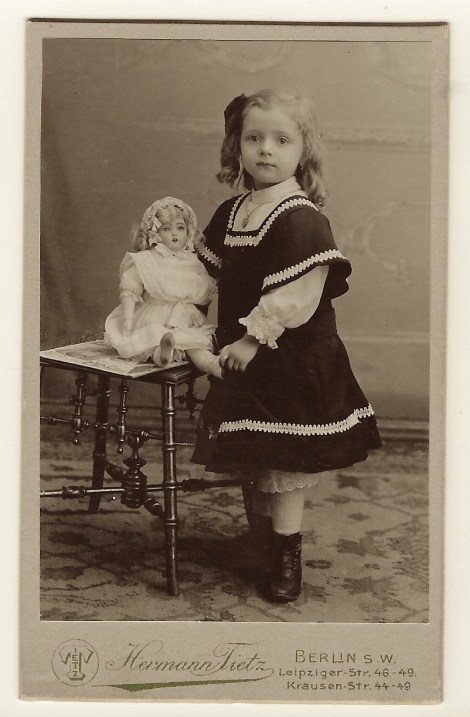
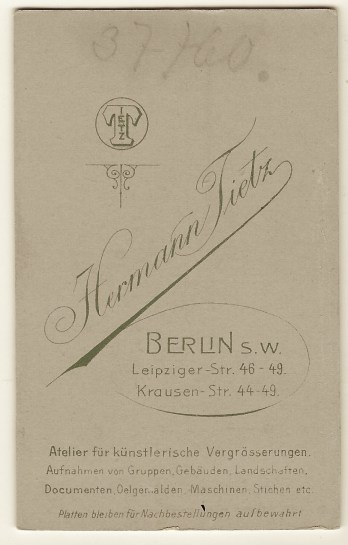
This carte de visite portrait is truly special. The photograph features an impeccably dressed beautiful little girl posing alongside her beautiful porcelain doll. This charming child looks at the camera with confidence. The photograph actually captures her magnetism and spunk. The photographer of this image is Hermann Tietz and the studio was located in Berlin, Germany. Preliminary research indicates that Hermann Tietz is actually “Waarenhaus Hermann Tietz” which is a department store. Apparently, the department store had an in-store photography studio. Hermann Tietz was a German merchant. He was of the Jewish faith and born in 1837 near Posen and died in Berlin in 1907. Tietz invented the concept of a department store chain.  The first store opened in Gera, Germany in 1882. It was opened by his nephew Oskar Tietz. After successfully opening stores in small towns including Erfurt, Rostock and Wismar; Tietz opened a large branch store in Berlin (1911). Stores followed in Leipzger (1900), Alexanderlatz (1904), and Hamburg (1912). By the time 1927 arrived, the Tietz chain included ten stores and 13,000 employees. Nazi Germany seized the department store chain, along with other Jewish owned businesses.  The government found new owners to replace the Tietz family who fled the country in 1938. The store took on the name “Hertie Department Stores” because it was a less Jewish sounding name. It actually was an abbreviated version of Hermann Tietz’s name. The department store existed until 1909 when it closed due to bankruptcy.

porcelin doll 1

Published in: on July 19, 2016 at 4:27 pm  Comments (1)  
Tags: , , , , ,