This vintage photograph features French bantam-weight boxer, Felix Said Brami (1940-2018). He was born in Tunis, Tunisia and was of Jewish descent. His boxing career spanned from 1961 through 1975. The website BoxRec states that he was in the super fly-weight division. Brami had an impressive record of 44 wins, 10 losses, and 3 draws. Twenty-two of his victories were by knockout. Brami won his first 20 fights. He was ranked as high as #6 bantamweight in the world by The Ring magazine in 1964, He was ranked in the top ten bantamweights in the world between 1963 and 1966. He held the French junior lightweight title from 1971 through 1975. Note the Star of David on Brami’s boxing shorts. I imagine that the star represents Brami’s heritage. Note the Star of David embroidered on his boxing trunks. Brami may have developed the idea in imitation of Max Baer. Baer was Jewish and a national hero after he won a bout against German boxer, Max Schmeling, in 1933. This photo indicates that Brami’s manager was G. Charles Raymond. The card’s portrait was photographed by the Belonie studio. SOLD
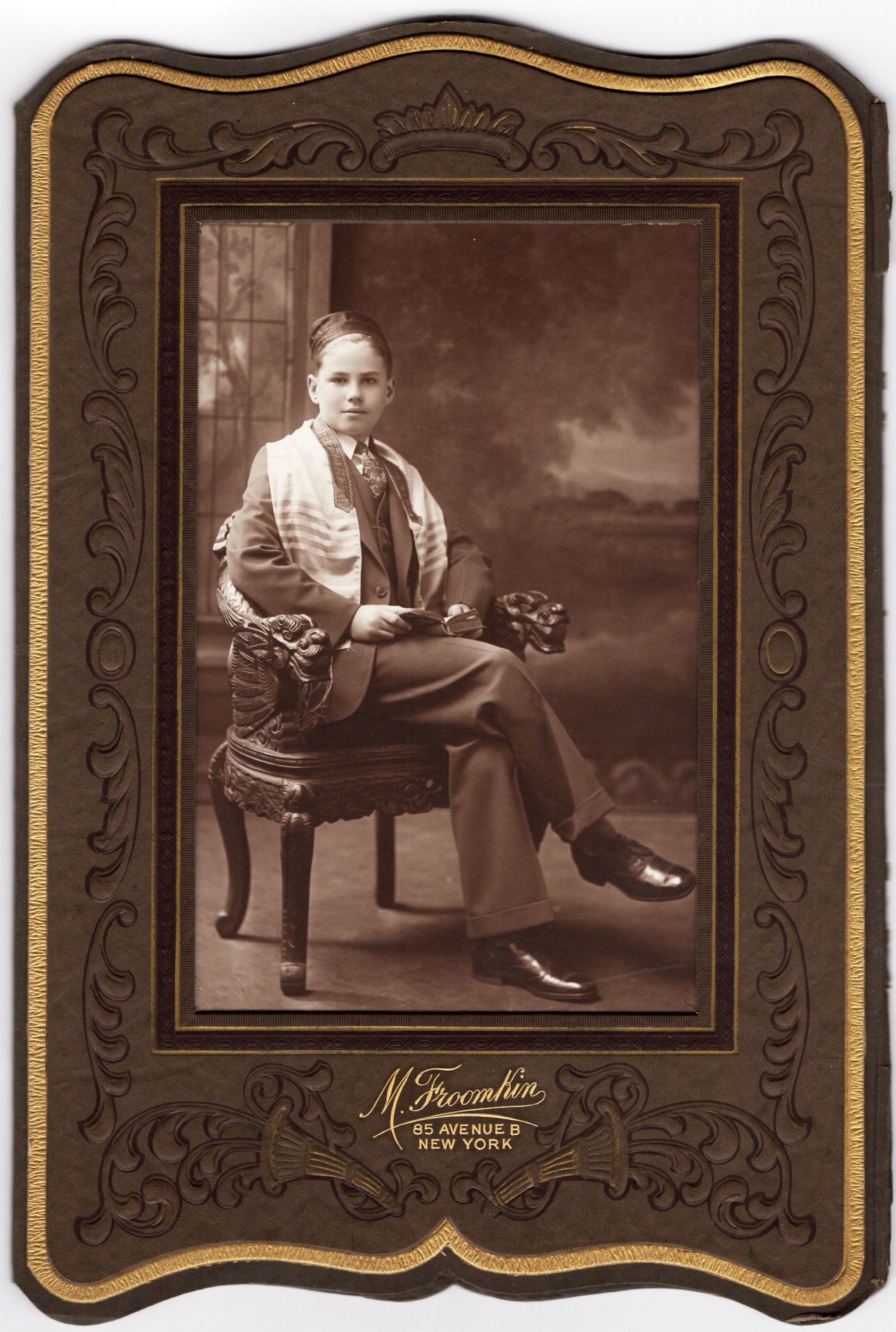
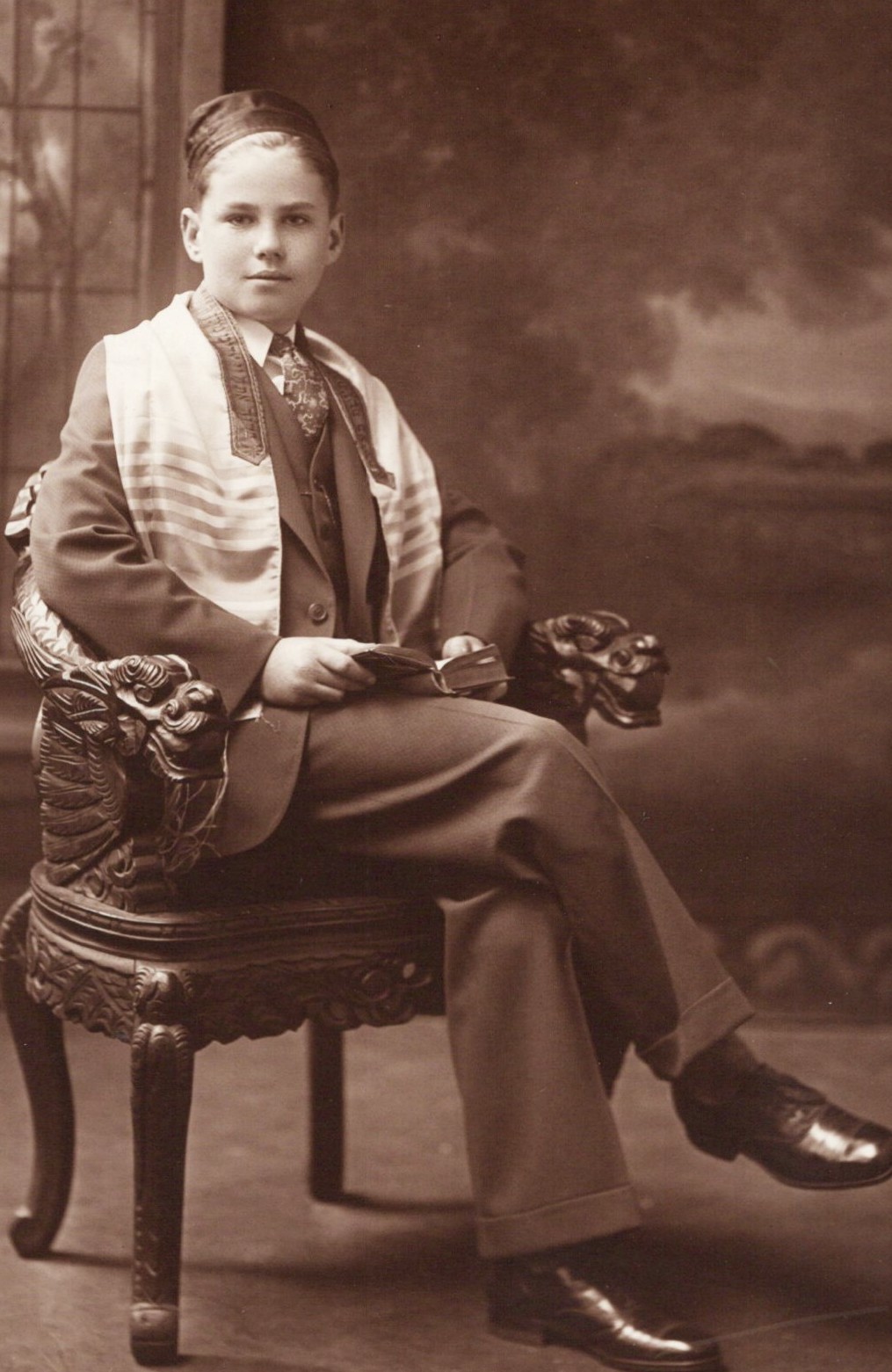
This vintage portrait photograph captures a poised young Jewish boy, likely taken around the 1920s, dressed formally for what appears to be his Bar Mitzvah. He sits confidently in a high-backed carved chair with lion-head arms, wearing a well-tailored three-piece suit. Draped over his shoulders is a traditional tallit (Jewish prayer shawl), a ceremonial item typically worn during religious rites of passage such as a Bar Mitzvah. In his hands he gently holds what appears to be a small prayer book or sacred text. His expression is one of calm maturity and seriousness, with just the faintest trace of a smile. His hair is neatly combed, and his polished shoes and well-fitted clothing reflect the importance of the occasion. The photograph was taken by Max Froomkin, a Russian-American professional photographer located at 85 Avenue B, New York—a neighborhood historically known for its vibrant Jewish immigrant community on the Lower East Side. The photograph is beautifully mounted in a decorative folder with an embossed Art Nouveau-style frame. This is a touching and visually striking example of early 20th-century Jewish portraiture in America, and it offers both historical and cultural value. (SOLD)
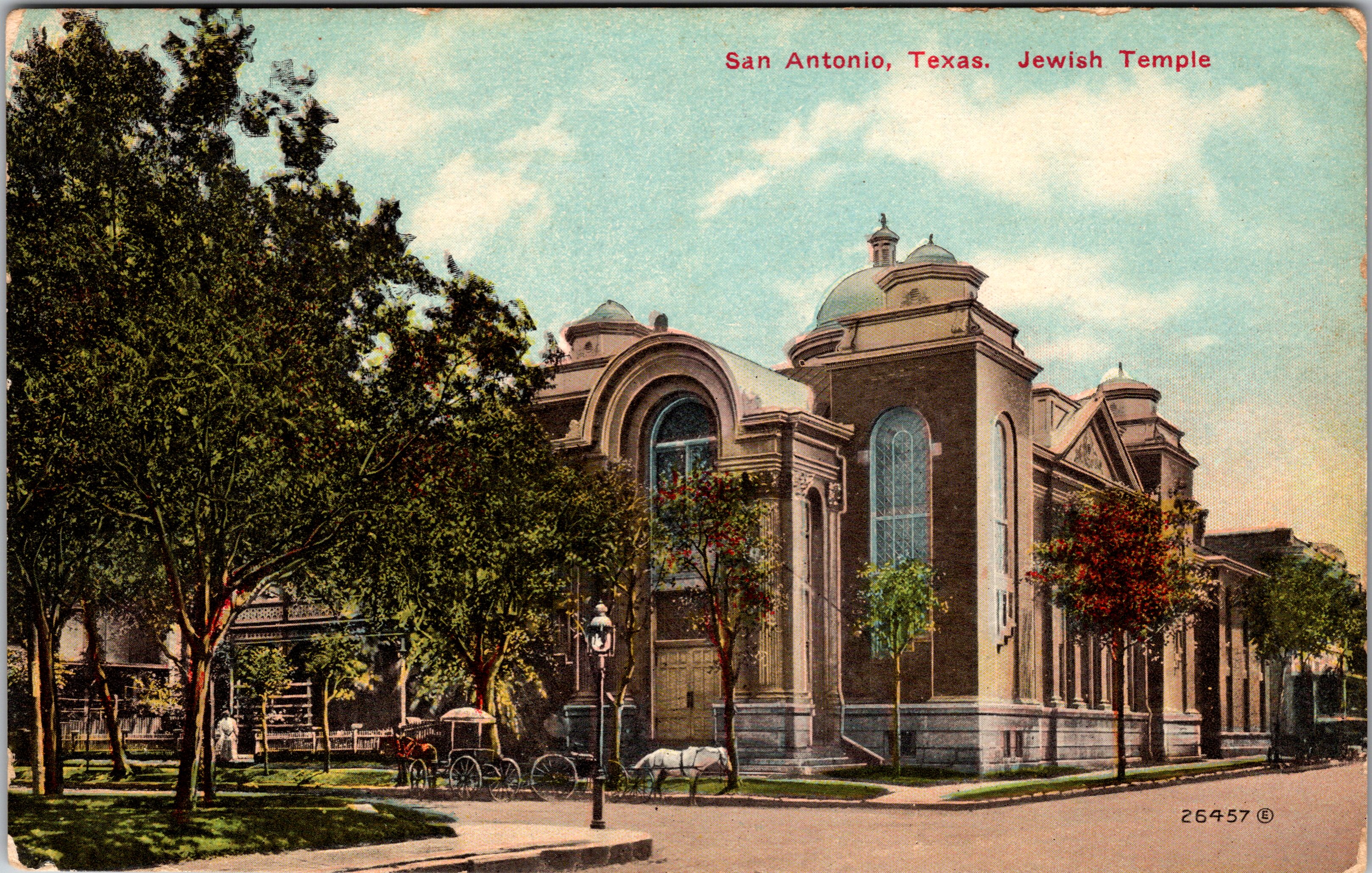
This vintage lithographic postcard features a Jewish Temple, located in San Antonio, Texas. Note the two horse and carriages at the curb in front of the temple. The temple appearing on this postcard is “Temple Beth El”. The congregation was founded in 1874 and its first temple was opened in 1875. Many of the temple’s members were German immigrants who came to Texas in the 1850’s and 1860’s. In 1903, the congregation opened another temple to replace the first which was outgrown. The second temple, built on the site of the first, is pictured on this postcard. The second temple was replaced in 1927. This postcard is from the 1900’s or 1910’s. It was published by Paul Ebers, located in San Antonio. SOLD
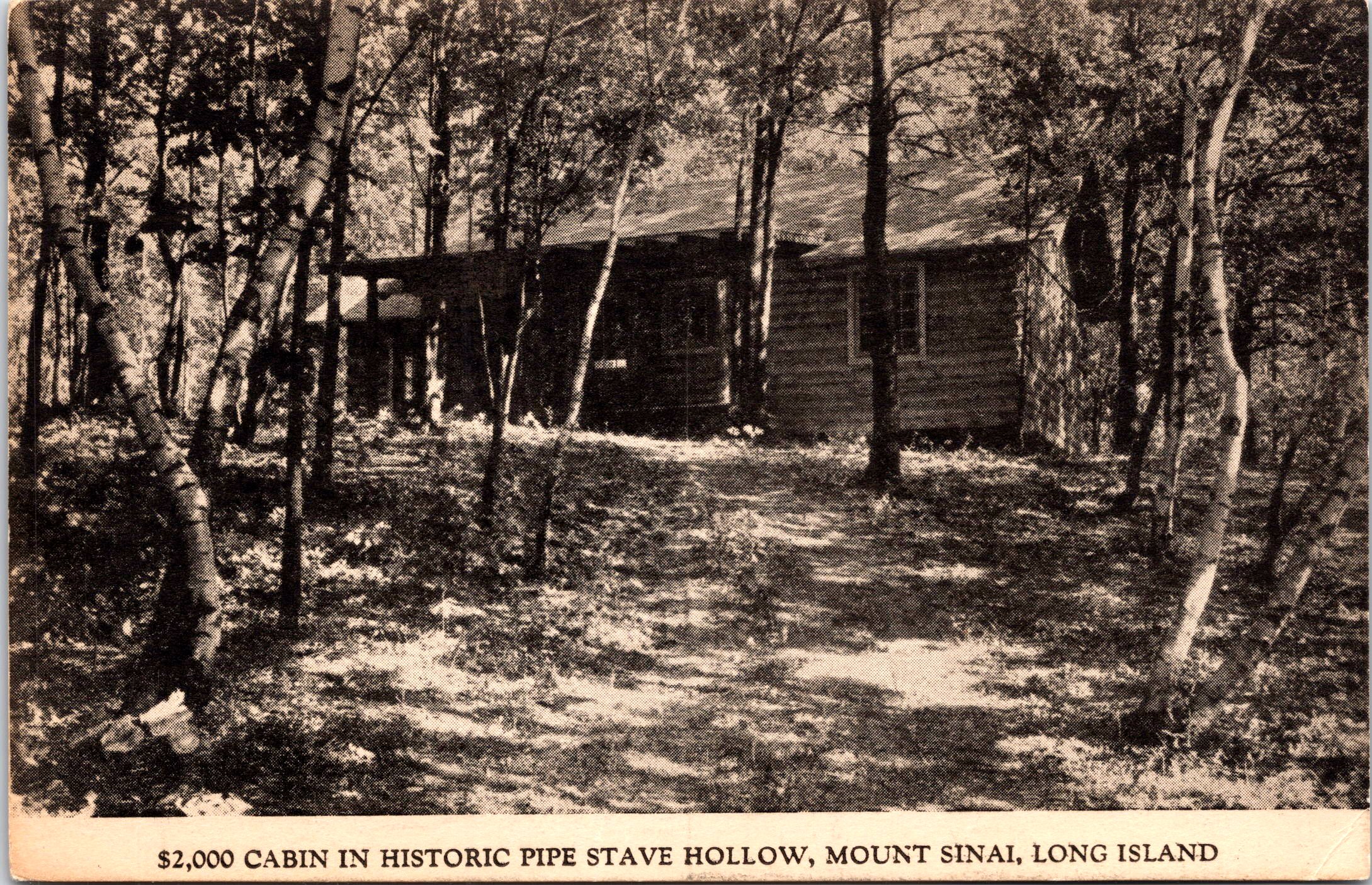
This vintage postcard features two sides, each depicting lithographic prints of cabins located in “Historic Pipe Stave Hollow” in Mount Sinai, Long Island, New York. The purpose of the postcard is to advertise cabin rentals in a secluded, rustic area near the Long Island Sound, and it offers a glimpse into mid-20th-century marketing practices, including discriminatory policies. The lithographic image on the front showcases a cabin surrounded by a dense grove of trees. The setting is tranquil and woodsy, suggesting a retreat-like atmosphere. The caption below the image reads: “$2,000 Cabin in Historic Pipe Stave Hollow, Mount Sinai, Long Island.” This implies that the cabin was valued at $2,000—a significant sum at the time. The image emphasizes the natural beauty of the area, with dappled sunlight filtering through the trees, creating an idyllic appeal for potential renters. The reverse side contains another lithographic image, this time of a smaller, simpler cabin nestled among the trees. The text below describes the rental terms “Rent: $165 for a furnished cabin from March to November, Amenities: The cabin features four rooms, an inside flush toilet, a kitchen sink, and an outdoor shower, and Setting: The cabins are located in a “rocky wooded glen near Long Island Sound,” further promoting the serene, natural environment. Other cabins in the same area are advertised for higher rents ($200–$300), likely reflecting size or location differences. “Pipe Stave Hollow” in Mount Sinai, Long Island, is described as a historically significant location. This area may have derived its name from a historical use of the land, such as for the manufacturing of pipe staves (wooden pieces used in barrels or pipes), a practice common in colonial times. This postcard is anti-semitic. The postcard explicitly states, “We prefer Christians,” revealing a discriminatory and anti-Semitic policy that was unfortunately commonplace in certain regions and industries during the early 20th century. This statement provides insight into the social and cultural climate of the period, emphasizing the exclusionary practices that were socially tolerated at the time. This postcard likely dates to the 1920’s or 1930’s. SOLD
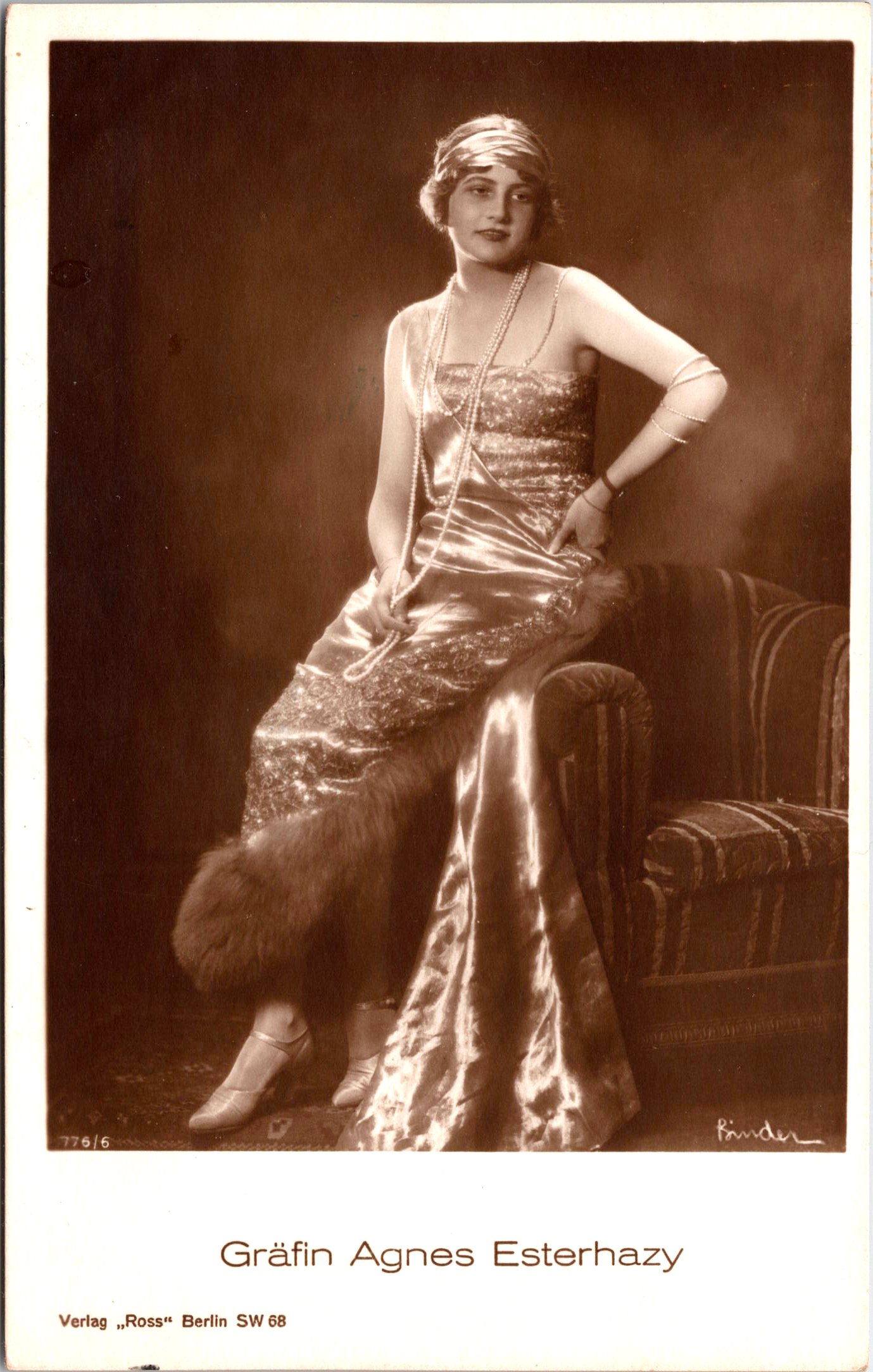
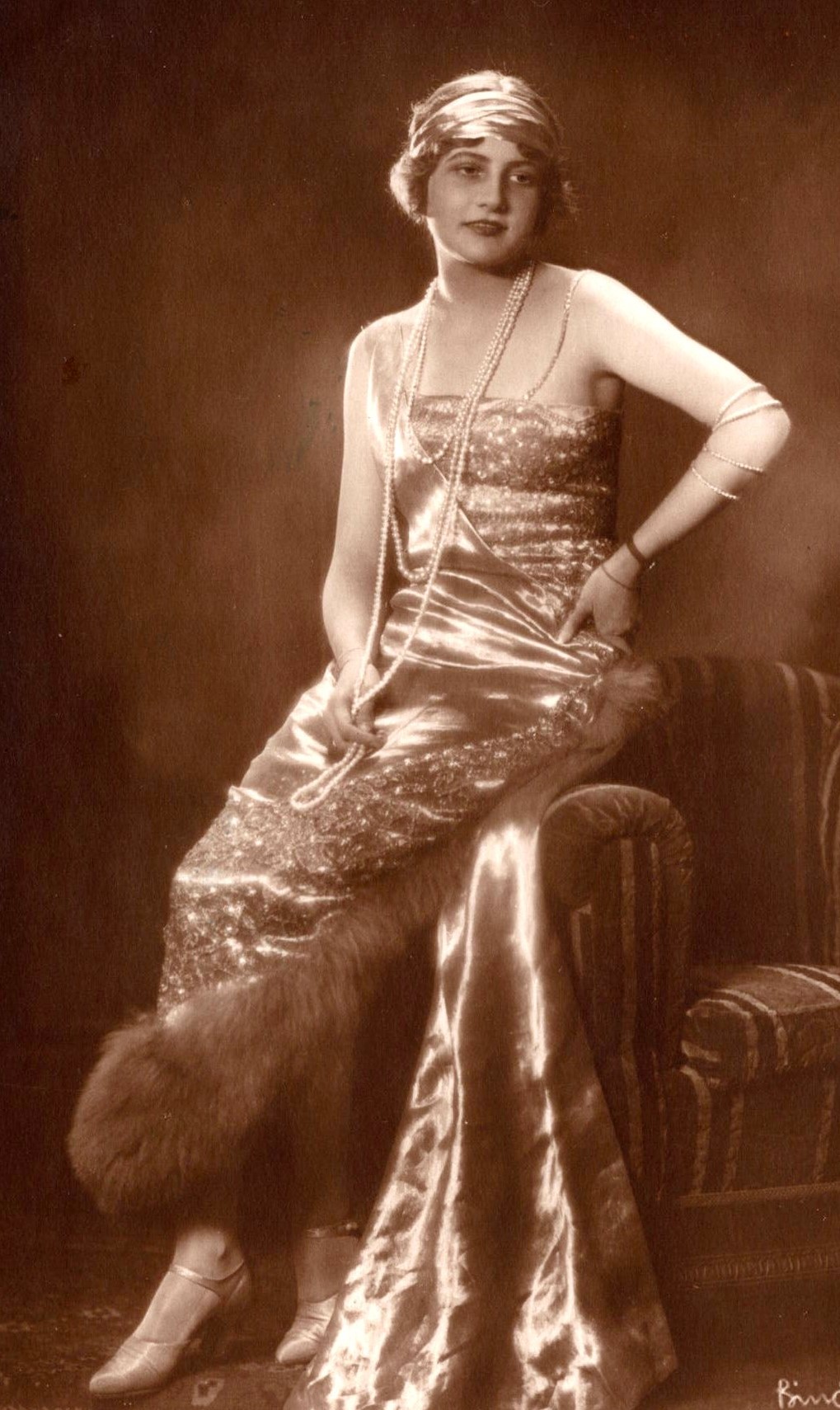
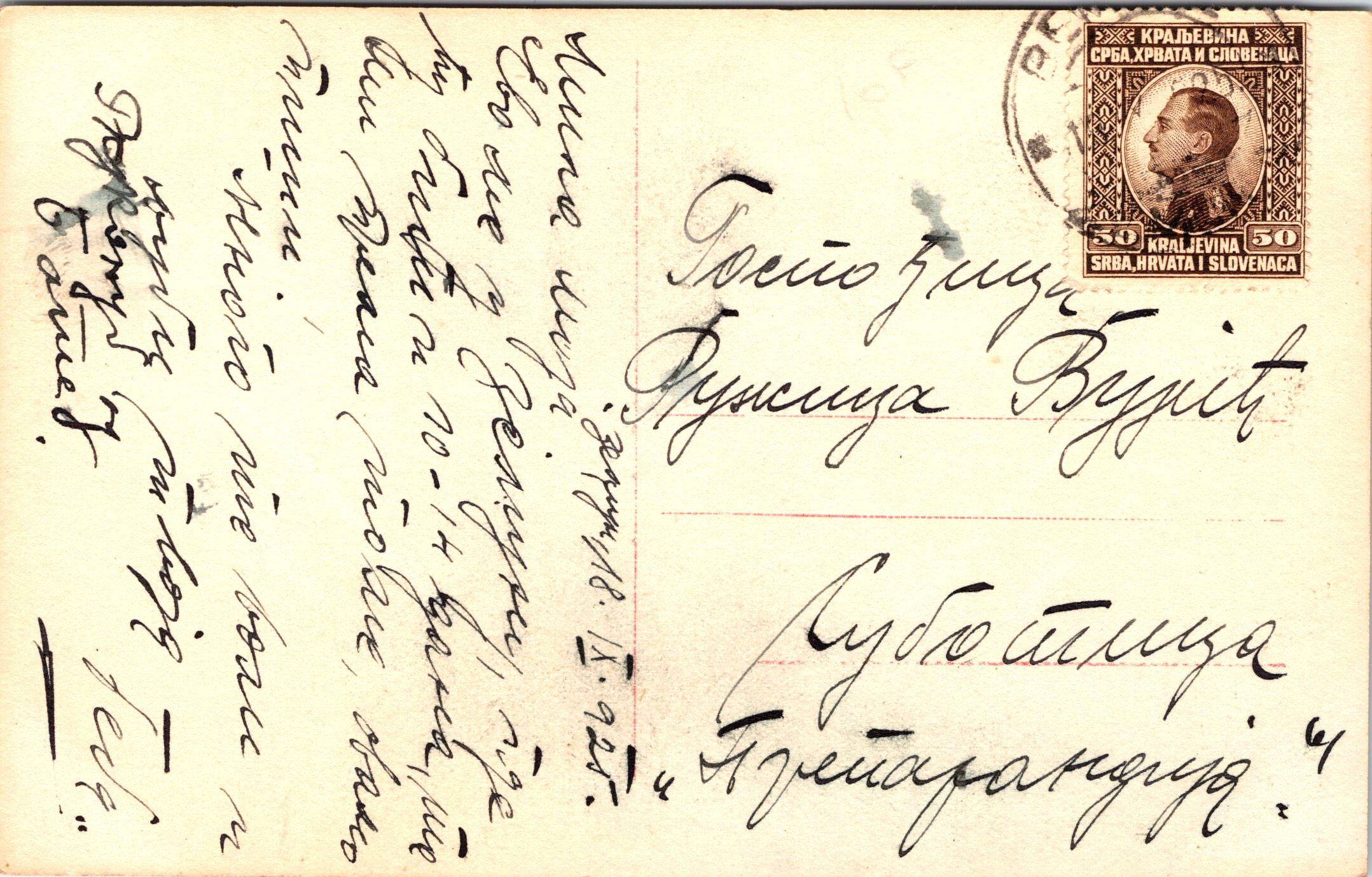
This vintage real photo postcard features Hungarian film actress Agnes Esterhazy (1891-1956). She is quite pretty and is dressed in flapper fashion. Esterhazy predominately appeared in Austrian and German films. In total, her IMDb filmography includes 32 films between 1918 and 1943. Her parents were a Count and Countess. She married actor Fritz Schulz in 1910. He was 14 years old and she was 19 years of age. I am sure there is an interesting story there and a lot of material for armchair psychologists to hypothesize about. After World War I, the pair lived in Budapest and Agnes began acting lessons. She made her film debut in 1918 and many more roles followed. During her career she acted alongside Harry Liedtke, Hanni Weisse, Asta Nielsen and Greta Garbo. Agnes mostly played supporting roles but she also played some leading roles. Esterhazy’s career virtually ended with the arrival of sound films. After her retirement from film, she she acted at various theaters, many of which were in Ostrava (Czech Republic). Esterhazy’s husband (Fritz Schulz) was arrested by the Nazis and held in a Vienna prison. His crime was that he was Jewish. Esterhazy was able to get him released in the Spring of 1938. This portrait postcard was published by Ross Verlag (Berlin). The postcard is part of a series (no.776/6). Esterhazy’s photograph was taken by celebrity photographer, Alex Binder (Berlin). The card is posted and has a stamp that was issued by Yugoslavia in 1921. The message on the postcard is dated 1925. (SOLD)
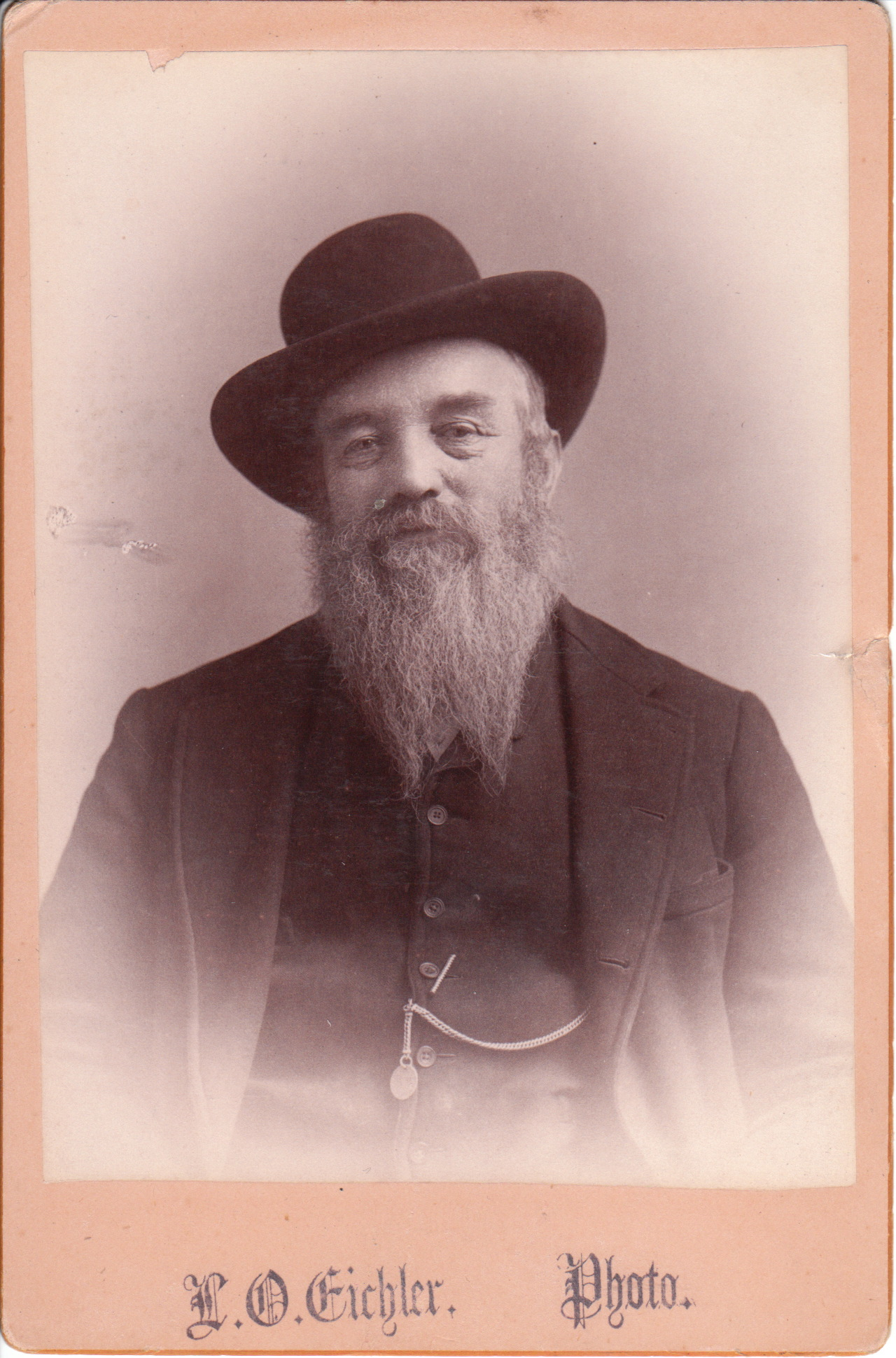
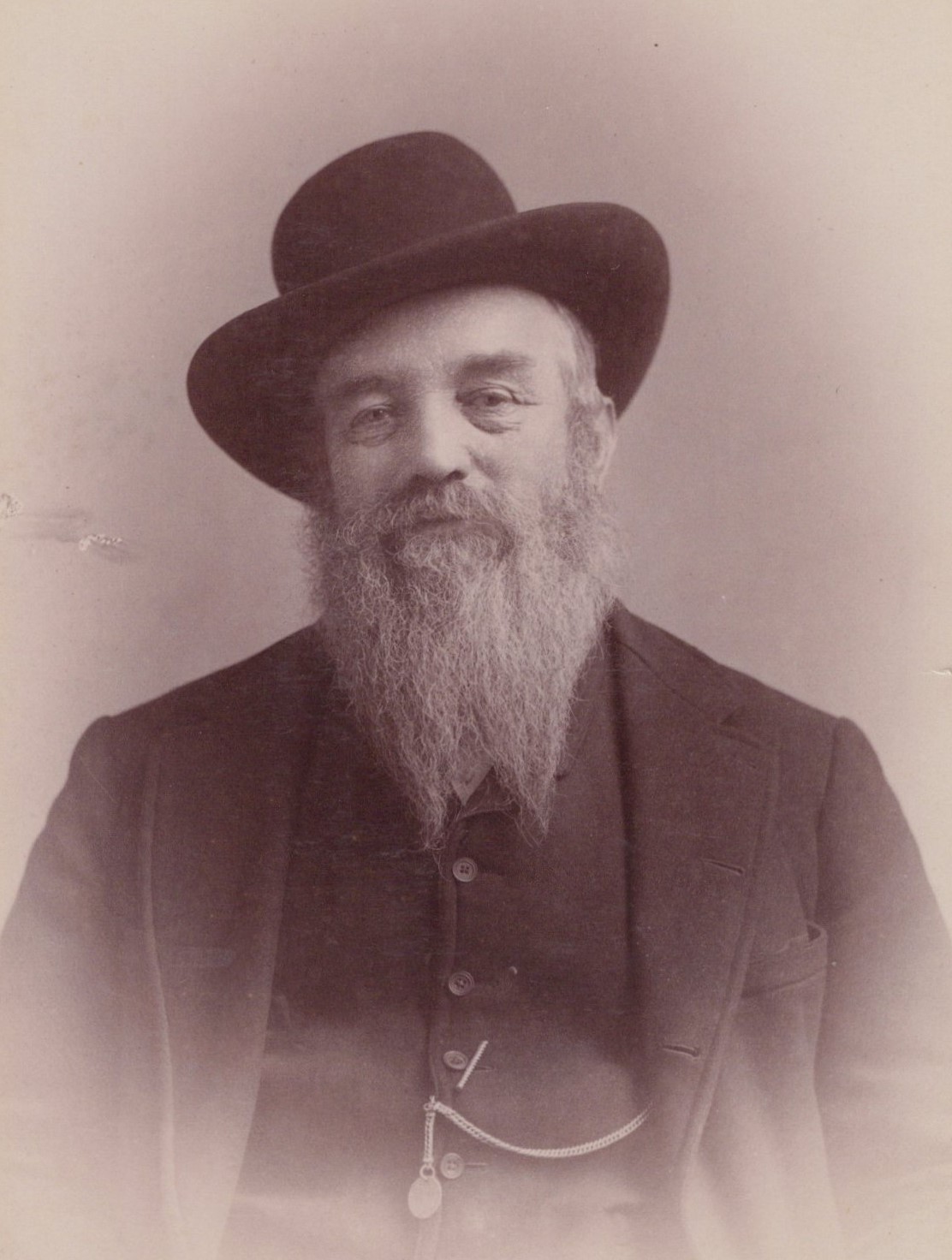
A long bearded gentleman with a black hat poses for his portrait at the studio of H. O. Eichler. It is likely that Eichler was the proprietor of Eichler Artistic Portraits, located at 3 Avenue A, in New York City. However, there is no identifying information about the man in the photograph or the location of the studio. Amazingly, this gentleman could pass for a rabbi or Orthodox Jewish man living in modern day New York City. SOLD
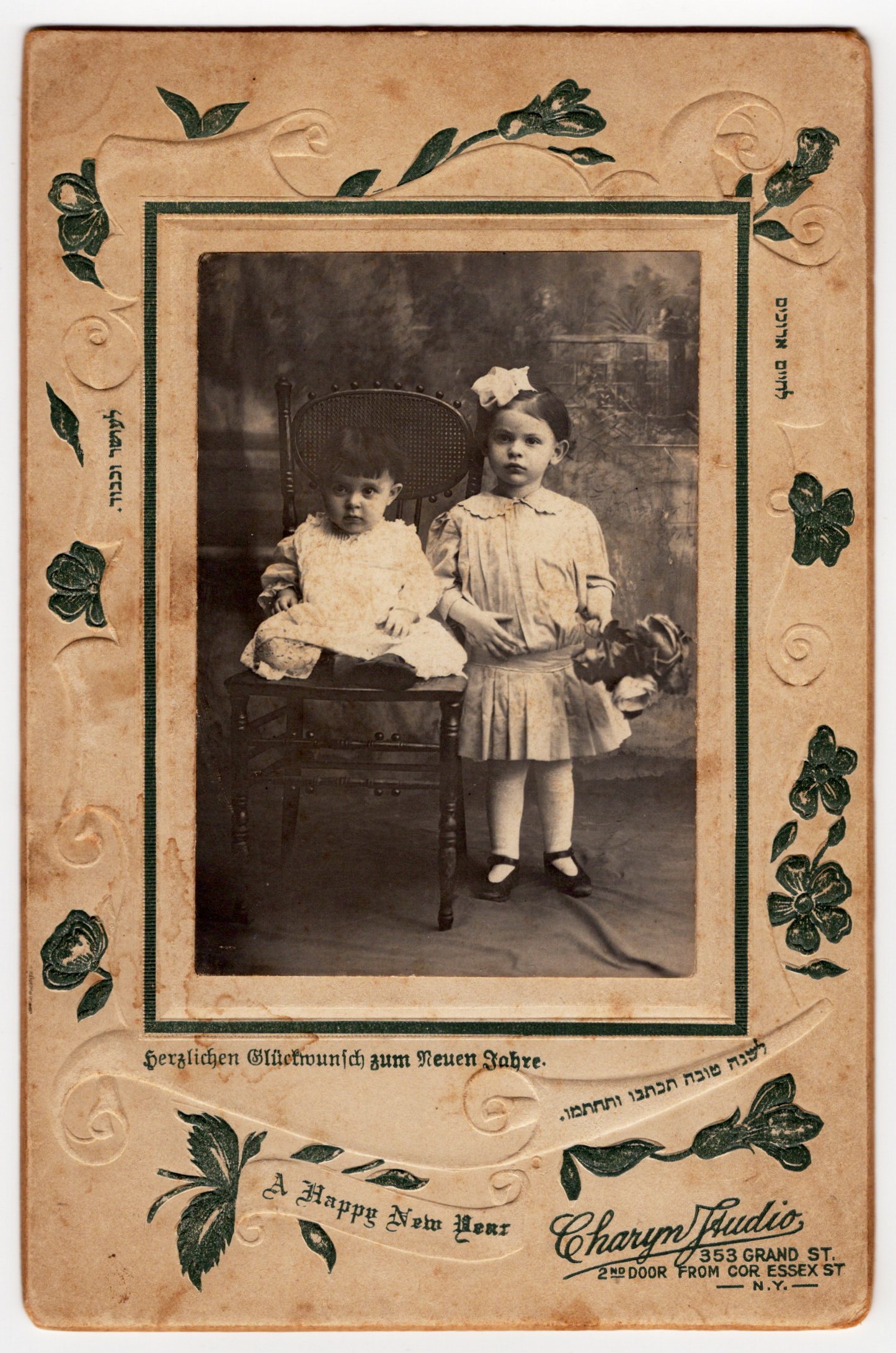
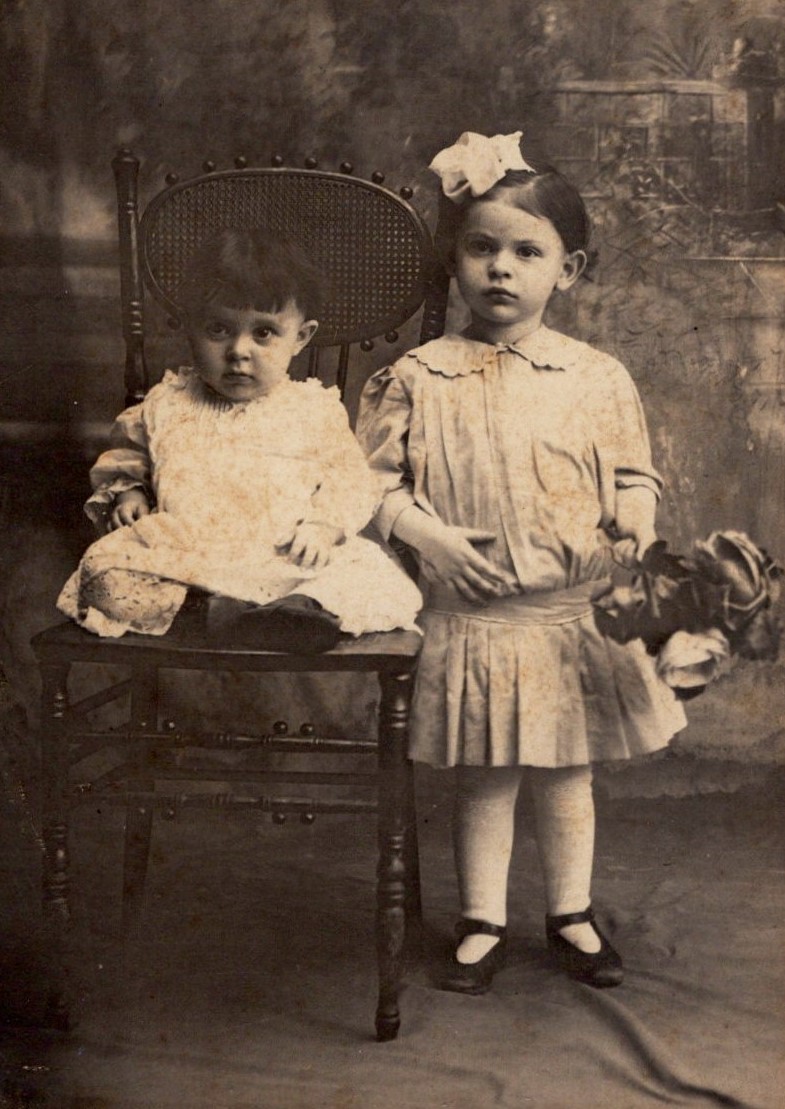
This cabinet card photograph actually served as a Happy Jewish New Years (L’shana Tova) card. This photograph was likely given to friends and family by the proud parents of the two children seen in the photo. Printed on the card are New Years greetings written in Hebrew, German, and English. This photograph was produced by the Charyn Studio located on Grand Street in New York City. Victor Charyn (1876-1928) was born in Russia and emigrated to the United States. Some research would likely uncover more biographical information about him. A similar Jewish New Year’s photo from the Charyn Studio can be found at the International Center of Photography (ICP) in New York City. SOLD
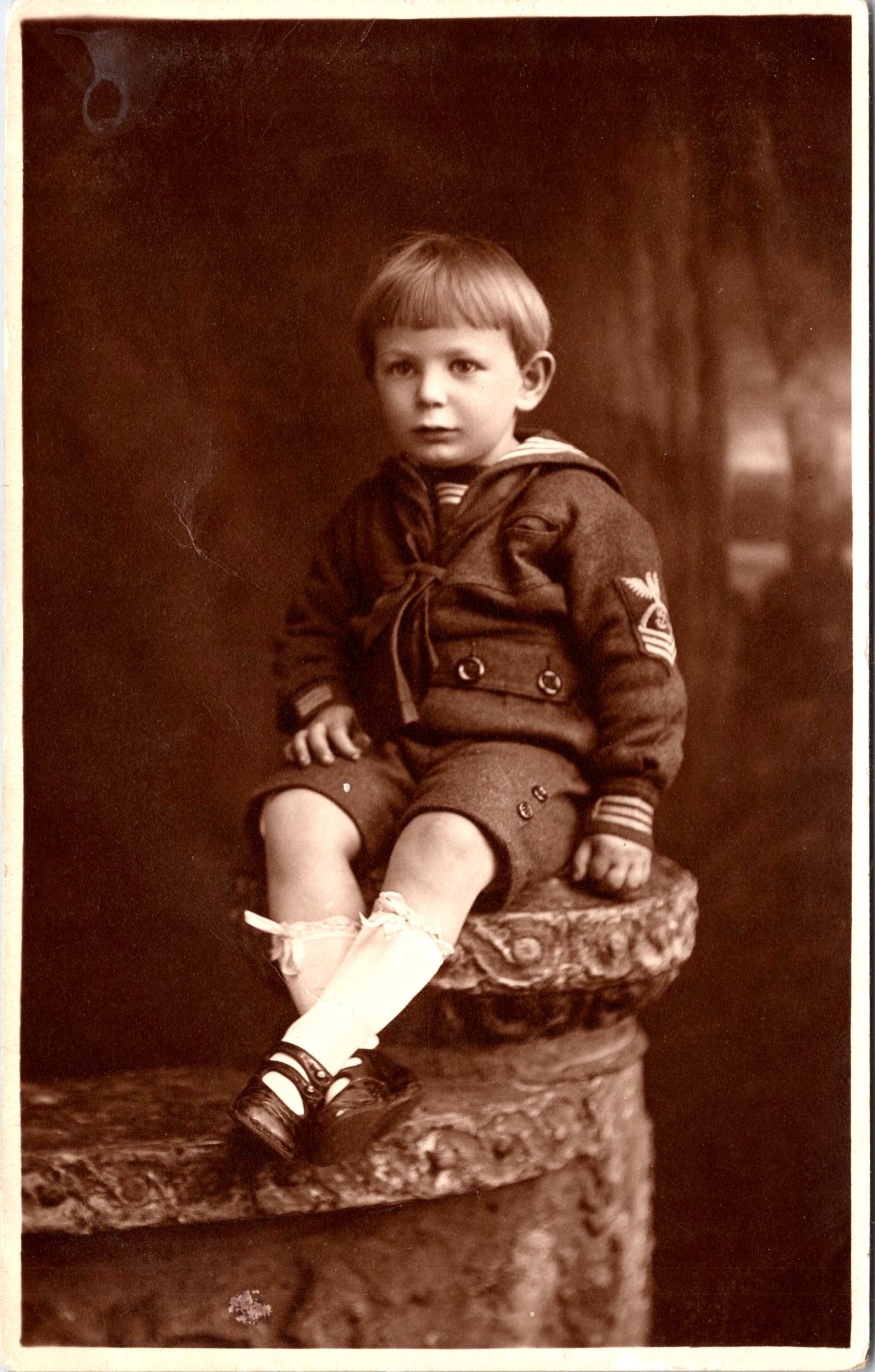
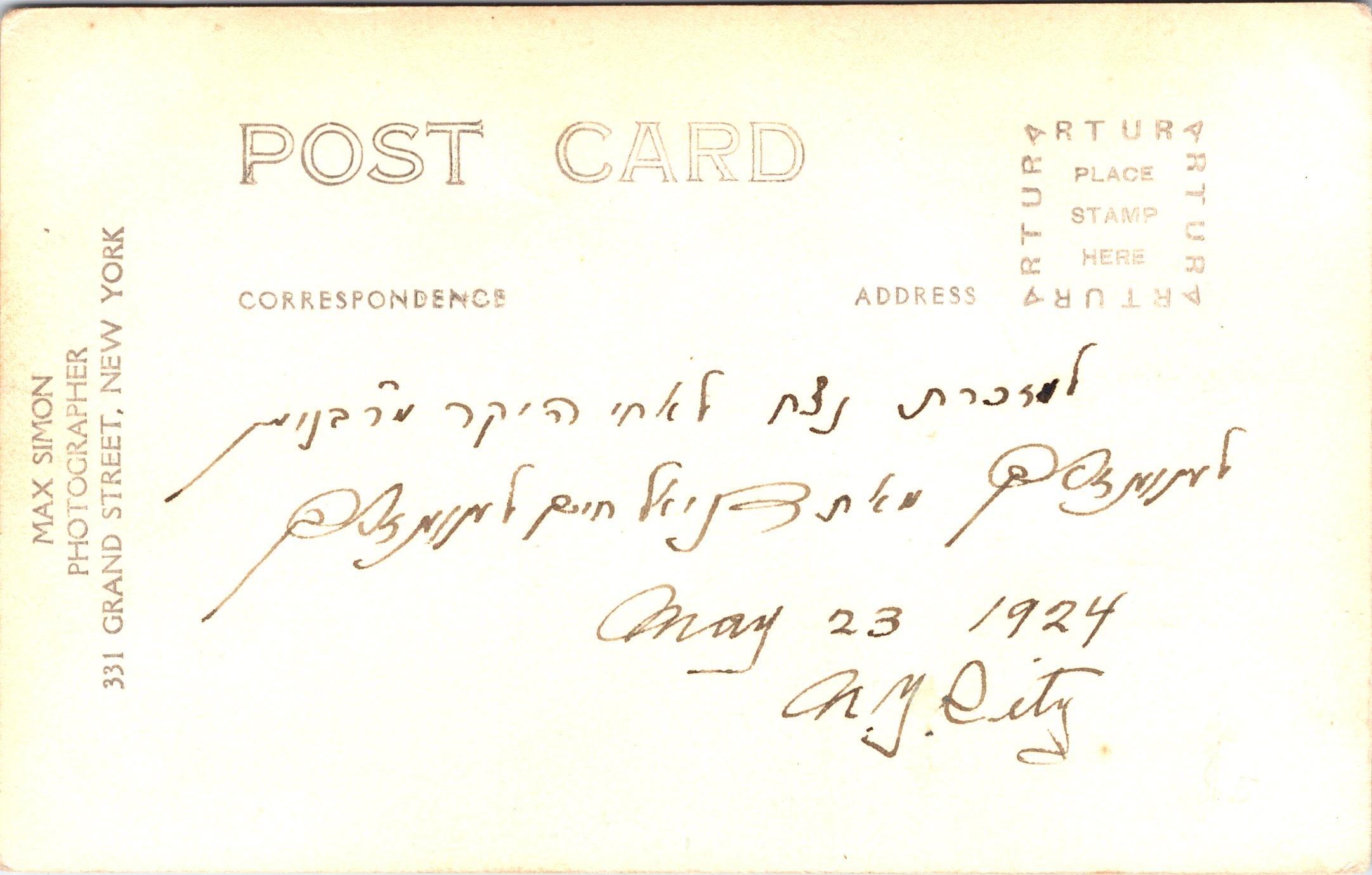
This vintage divided back real photo postcard features an adorable little boy. He is wearing a sailor outfit. Note his socks. There is a bow at the top of each sock. Also note the message on the reverse of the postcard is written in Hebrew. The card is dated 1924. The photographer of this child’s portrait is Max Simon. Simon was extremely likely, a Jewish man. He operated a studio at 331 Grand Street in New York City. (SOLD)
This uncommon vintage postcard announces that Jewish girls in Riverhead, Long Island, New York are good catches. I am hoping that this card is not viewed as anti-semitic and instead is seen as Jewish humor. The artist created a scene with a Riverhead banner and a pretty young woman walking by. This postcard was published by G. D & D. (New York & London). The card is part of a series (No.5007). The series included identical cards representing other towns and cities. I have found that these cards were postmarked circa 1913. SOLD
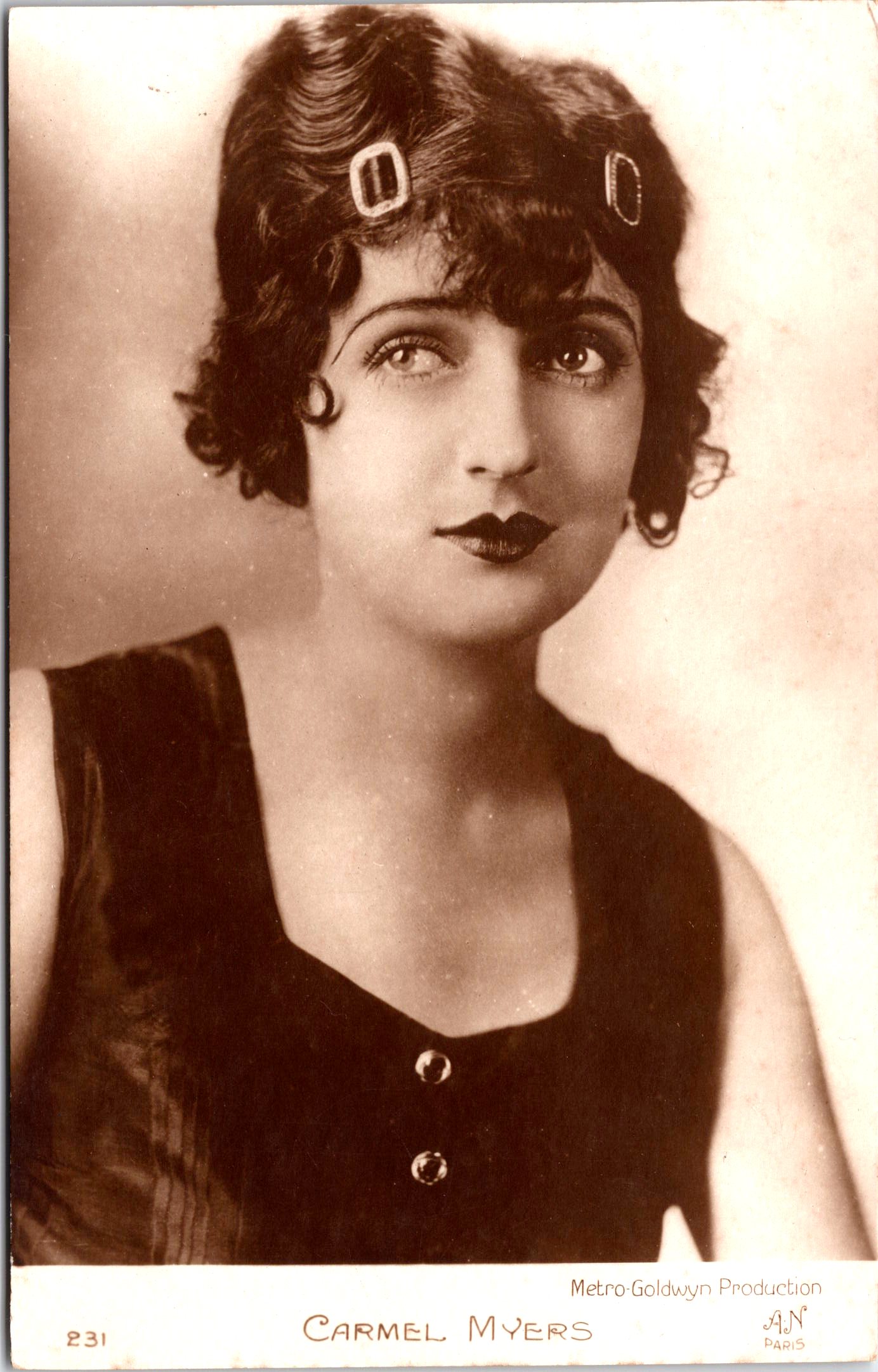
This vintage real photo postcard features American silent and sound film actress, Carmel Myers (1899-1980). Carmel Myers was an extraordinary actress who captivated audiences during the early years of Hollywood. She had striking beauty, magnetic screen presence, and versatile talent. Myers was born in San Francisco to Jewish immigrants. Her father was a Rabbi from Russian and her mother was from Austria-Hungary. She grew up in a theatrical household and was exposed to the performing arts from a young age. She participated in both school plays and local theater productions. At the age of 16, Carmel Myers made her professional debut on stage, impressing both critics and audiences with her natural talent. It wasn’t long before she gained the attention of film producers. In 1916 she made her screen debut in the silent film “The House of Mystery”. This was the start of a more than twenty year career in the film business. During the silent film era, Carmel Myers became one of the most sought-after actresses in Hollywood. Known for her expressive eyes, graceful movements, and remarkable versatility, she effortlessly transitioned between comedic and dramatic roles. Her notable films during this period include “Ben-Hur” (1925), where she portrayed the seductive courtesan Iras. Many of her early roles were playing a “vamp”. Carmel Myers was also an early advocate for actors’ rights and was instrumental in establishing the Motion Picture Artists Association. She fought for fair wages, better working conditions, and creative control for performers, contributing to the formation of movie industry unions. With the advent of sound in films, Carmel Myers smoothly made the transition from silent movies to “talkies.” Her resonant voice and impeccable timing added another dimension to her performances. She starred in a range of films throughout the 1930s, including comedies, dramas, and musicals, collaborating with renowned directors and actors of the time. her most popular sound films were “Svengali” (1931) and “The Mad Genius” (1931). Her final film appearance was in the 1945 production of “Blonde Ransom,” marking the end of her illustrious acting career. However, Myers remained involved with both radio and television. Carmel Myers lived a private life outside of the spotlight, rarely divulging details about her personal affairs. She was married three times, first to an attorney and song writer in 1919, in 1929, she married a second attorney, and thirdly, she married a Paramount Pictures executive in 1951. Her first two marriages ended in divorce, and her third marriage ended with her husband’s death. After her husband’s death, she wrote a book about handling grief effectively. After retiring from acting, Carmel Myers devoted herself to philanthropy and community work. She supported various charitable organizations and advocated for social causes.
Postcard 1 was published by A. Noyer and is of French origin. The card has the MGM logo on it’s front. (SOLD)
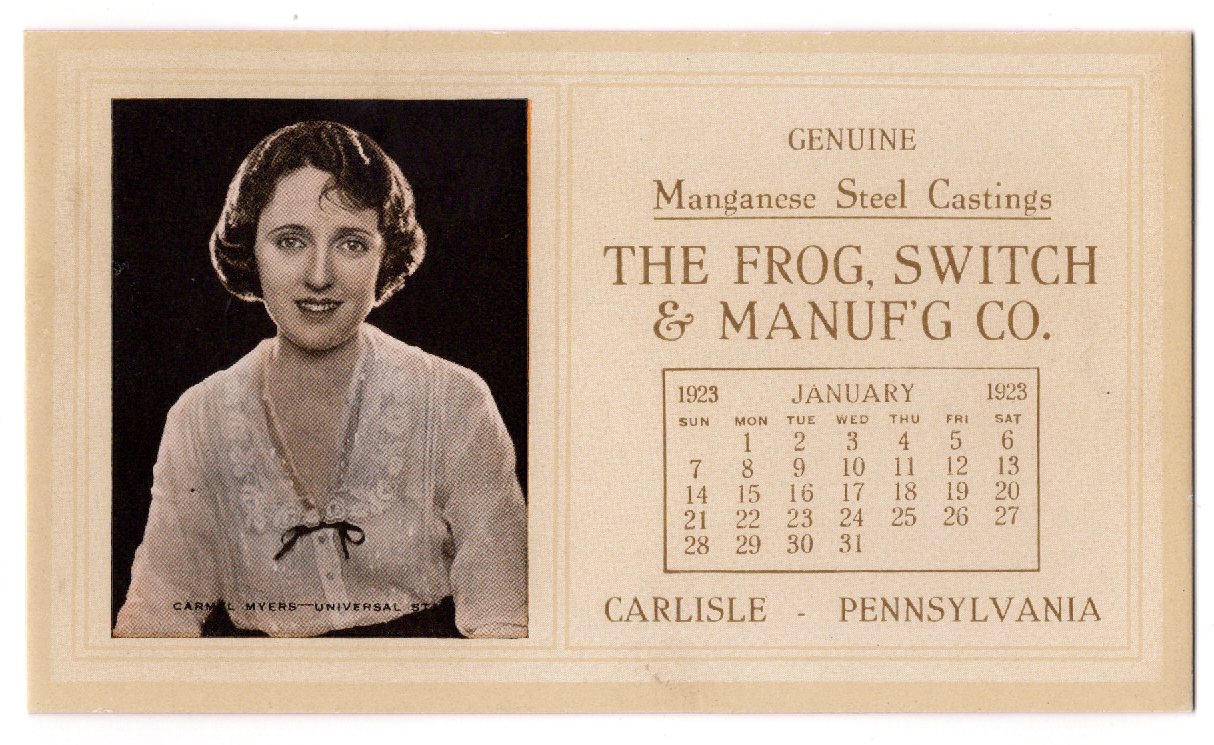
Blotter 1 is a vintage ink blotter that advertises the Frog Switch & Manufacturing Company, located in Carlisle, Pennsylvania. The blotter has a calendar for January, 1923. The blotter also features a photograph (litho) of Carmel Myers. (SOLD)










 THE CABINET CARD GALLERY