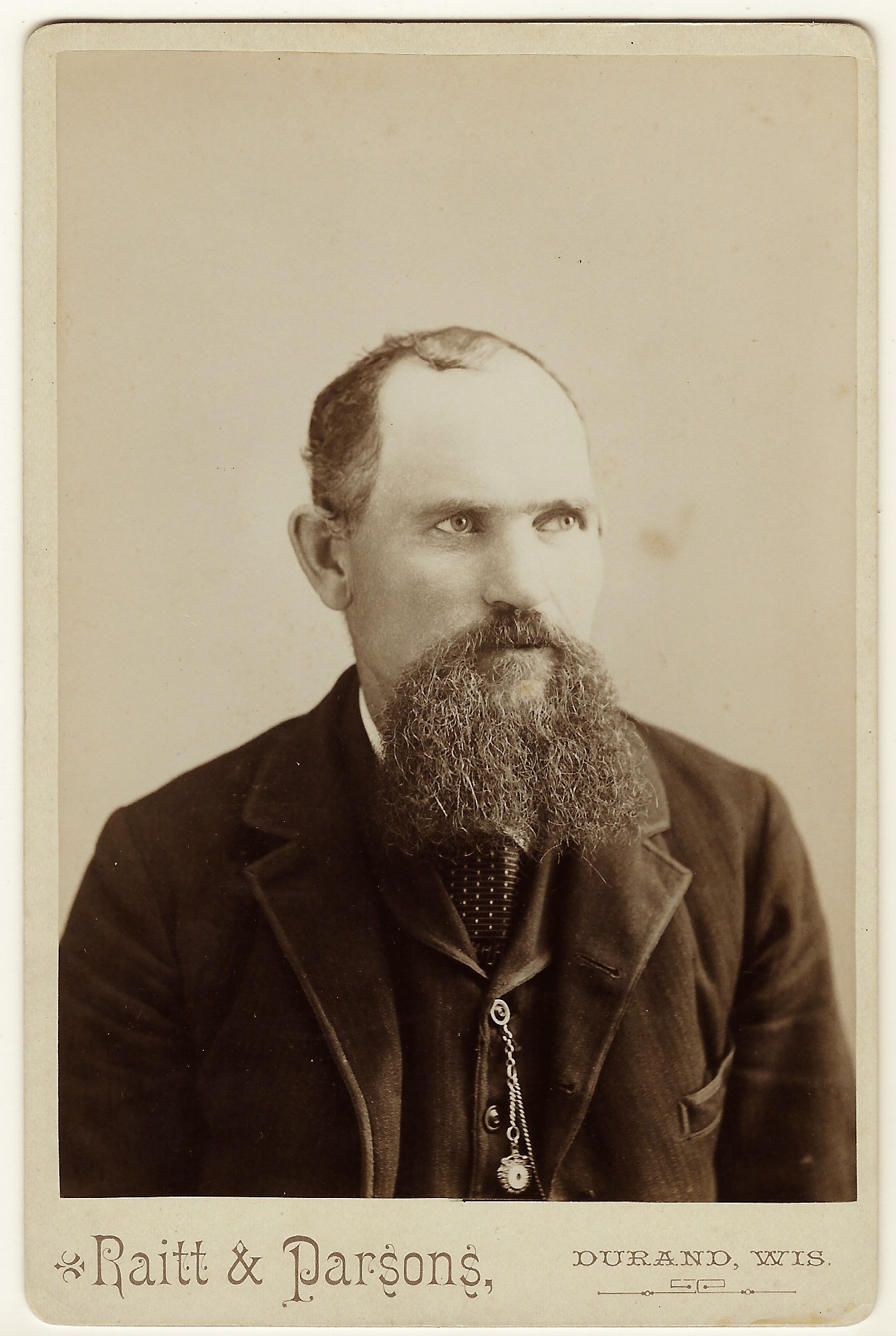
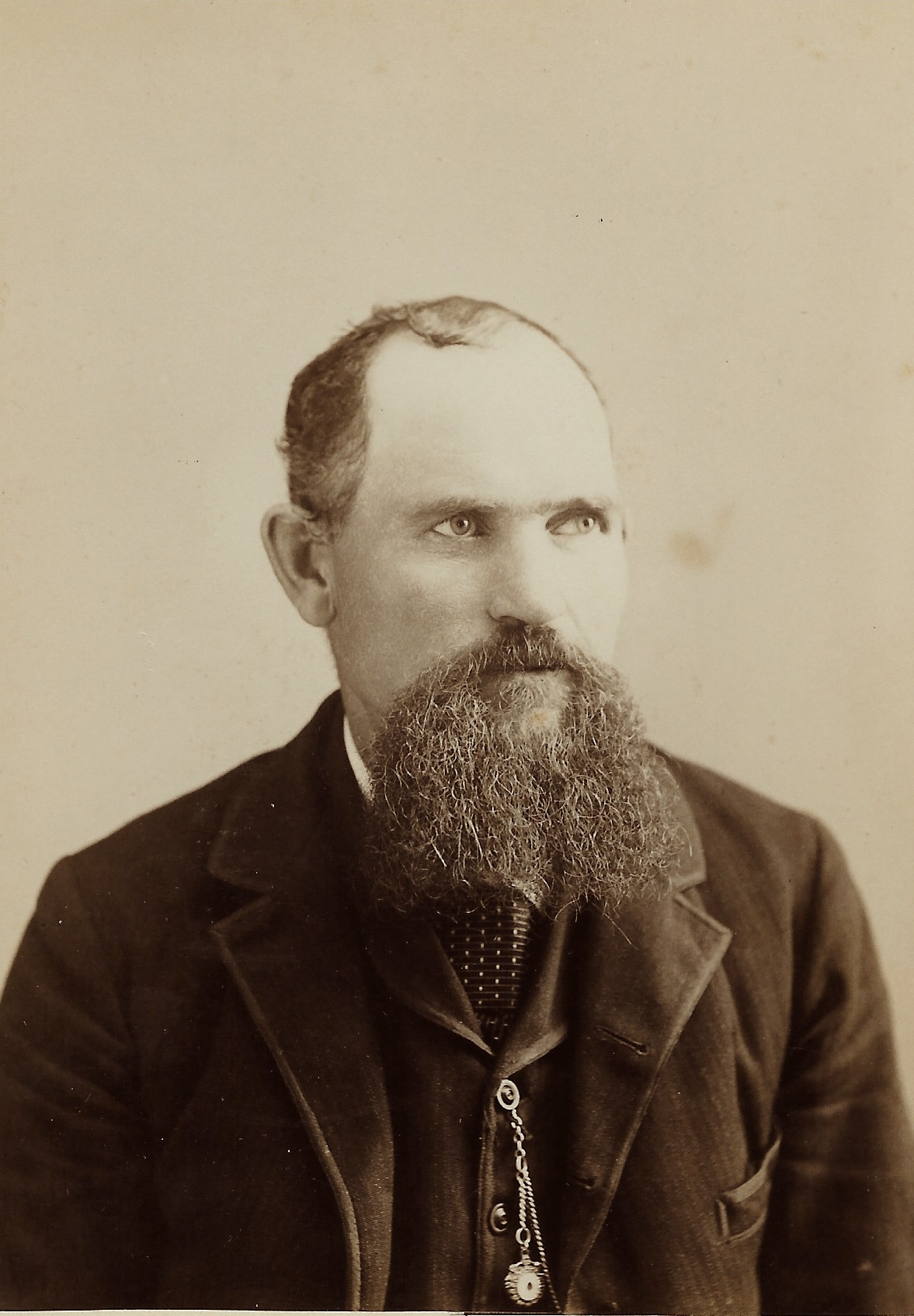
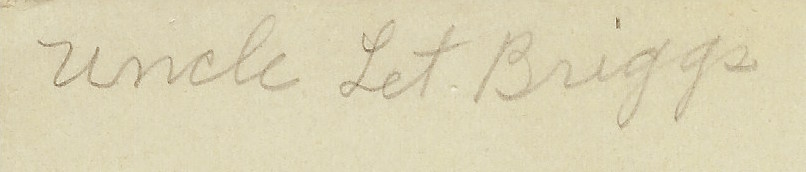
This cabinet card portrait features a well dressed man with a masterful wiry mustache and chin beard. He is wearing a watch on a chain as well as a very serious expression. This photograph was taken at the Raitt & Parsons studio, which was located in Durand, Wisconsin. The town of Durand is in western Wisconsin and was first settled in 1856 by 21 year-old Miles Durand Prindle.. The town was incorporated in 1887. Photographer, Thomas G Raitt (1847-1904) operated a studio with Mr Parsons between 1891 and 1892. He was a sole proprietor photographer between 1893 and 1904. After Thomas died, another Raitt continued to work as a photographer in Durand. The most likely suspect is Mazie Penelope Raitt (1880-1945) who was a daughter of Thomas and his assistant photographer. In 1905, she ran her own studio, which was likely her late father’s business. One can assume she succeeded her father after Thomas’s death. It appears that Mazie later joined forces with photographer Oscar Fryklund. The pair are listed as partners in the Historical Index of Wisconsin Photographers. An inscription on the reverse of this photograph indicates that the subject is “Uncle Let Briggs”. A preliminary investigation did not obtain confirmable biographical information about “Let Briggs”. There was a “Let Briggs” born in Michigan in 1875, but if the subject was this man, it would mean that he would have been in his mid twenties when he posed for this image. The man in this photograph is clearly significantly older than the mid twenties.
This cabinet card is available for purchase at my store, The History Peddler, for $24.00 or best offer .
Interested collectors may view the listing here:
https://www.ebay.com/itm/336082097008

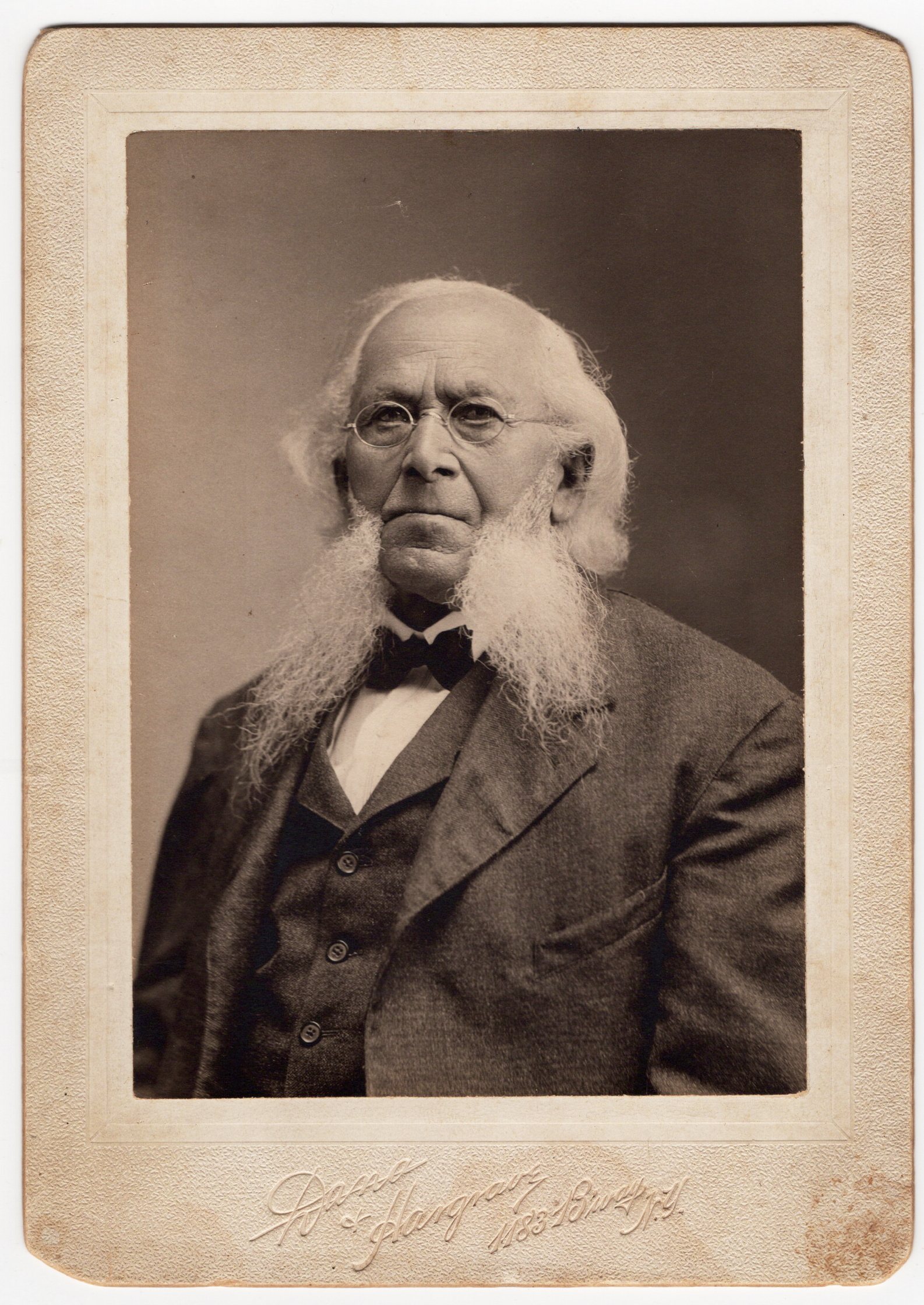
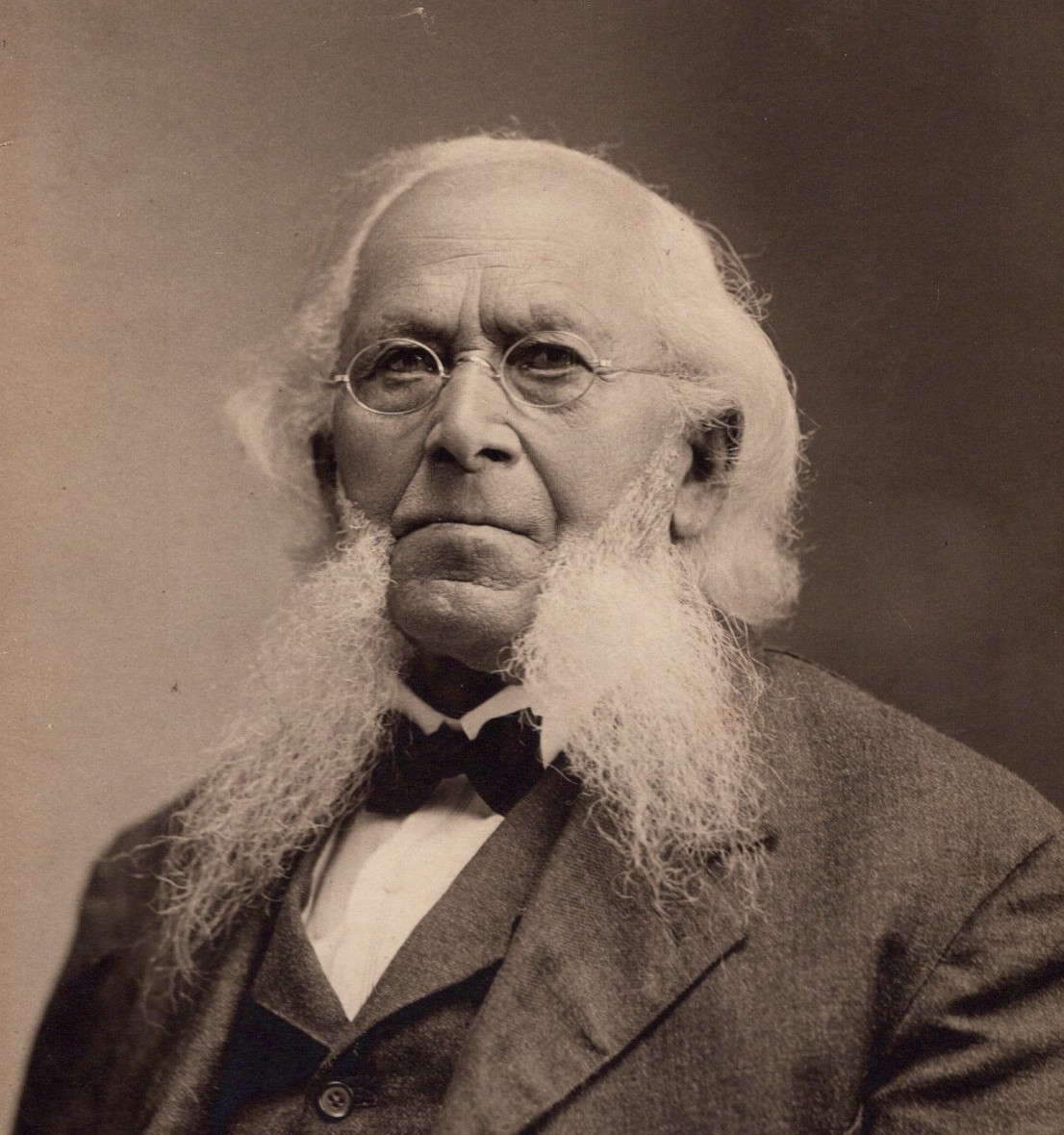
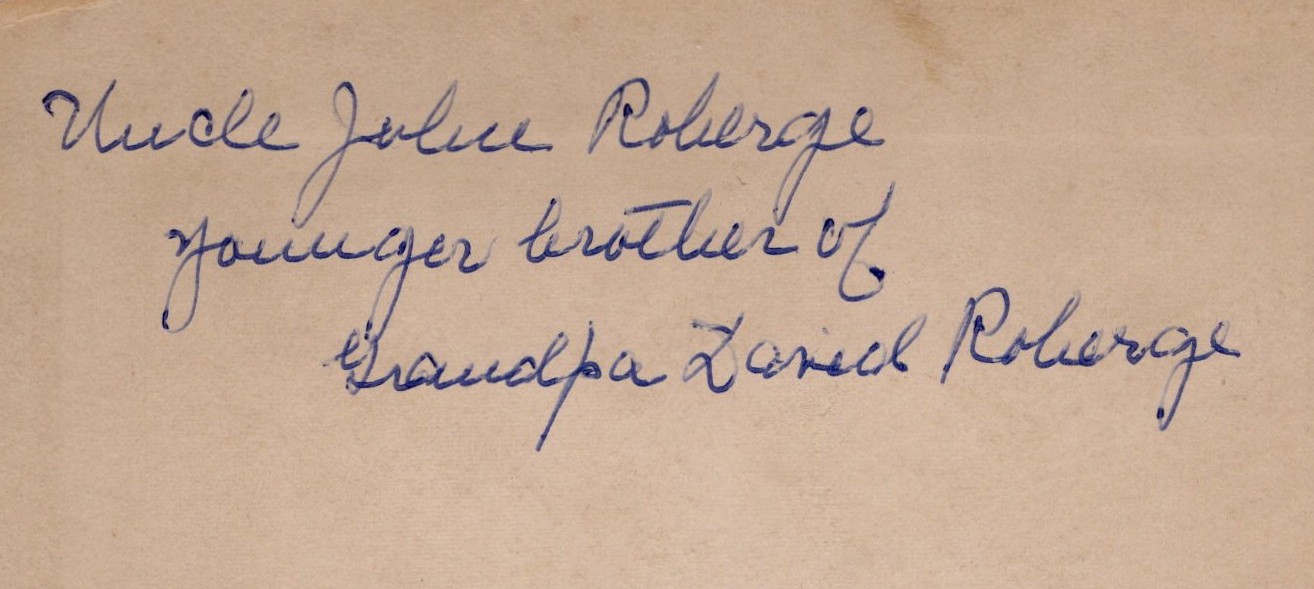
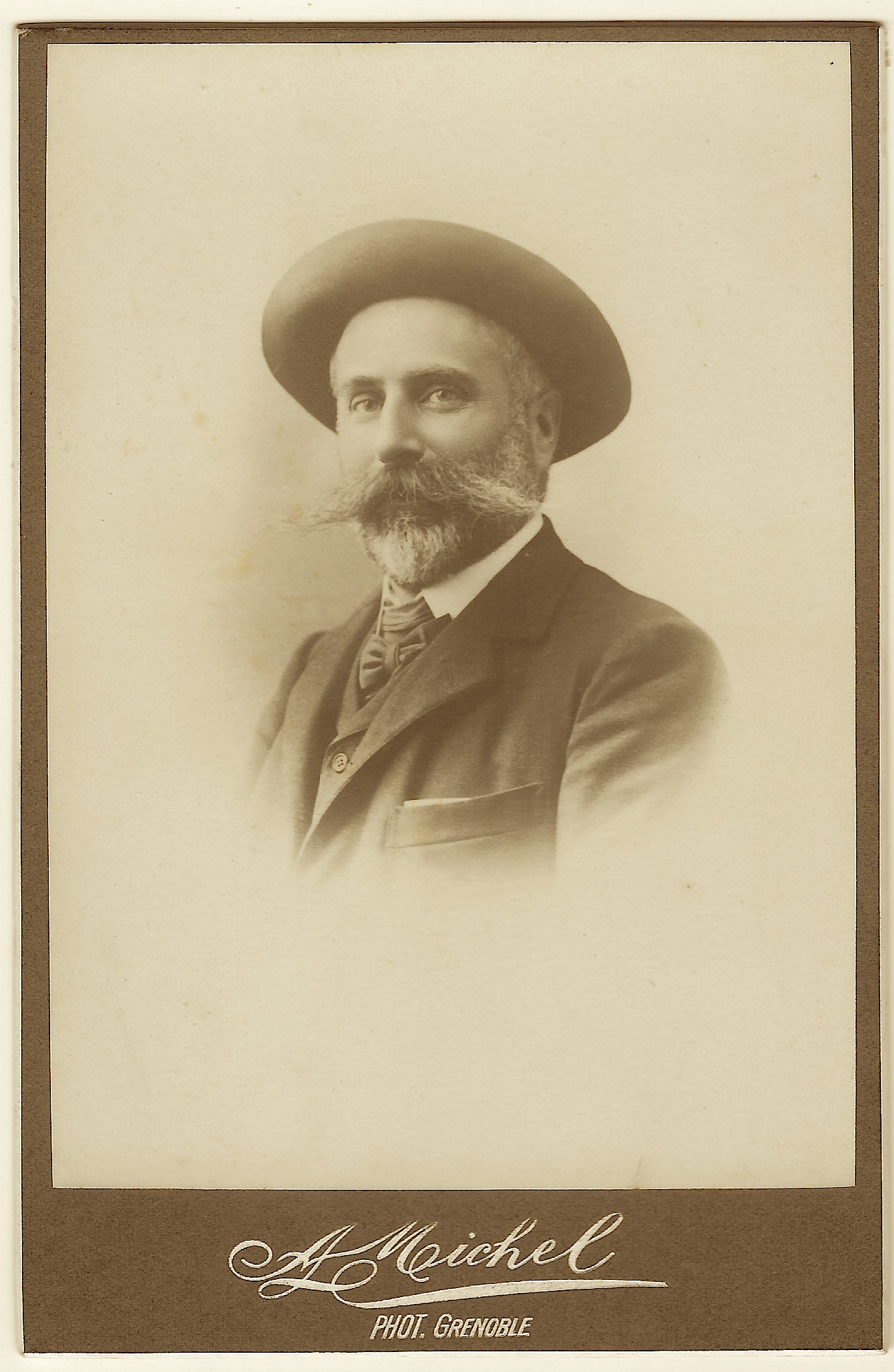
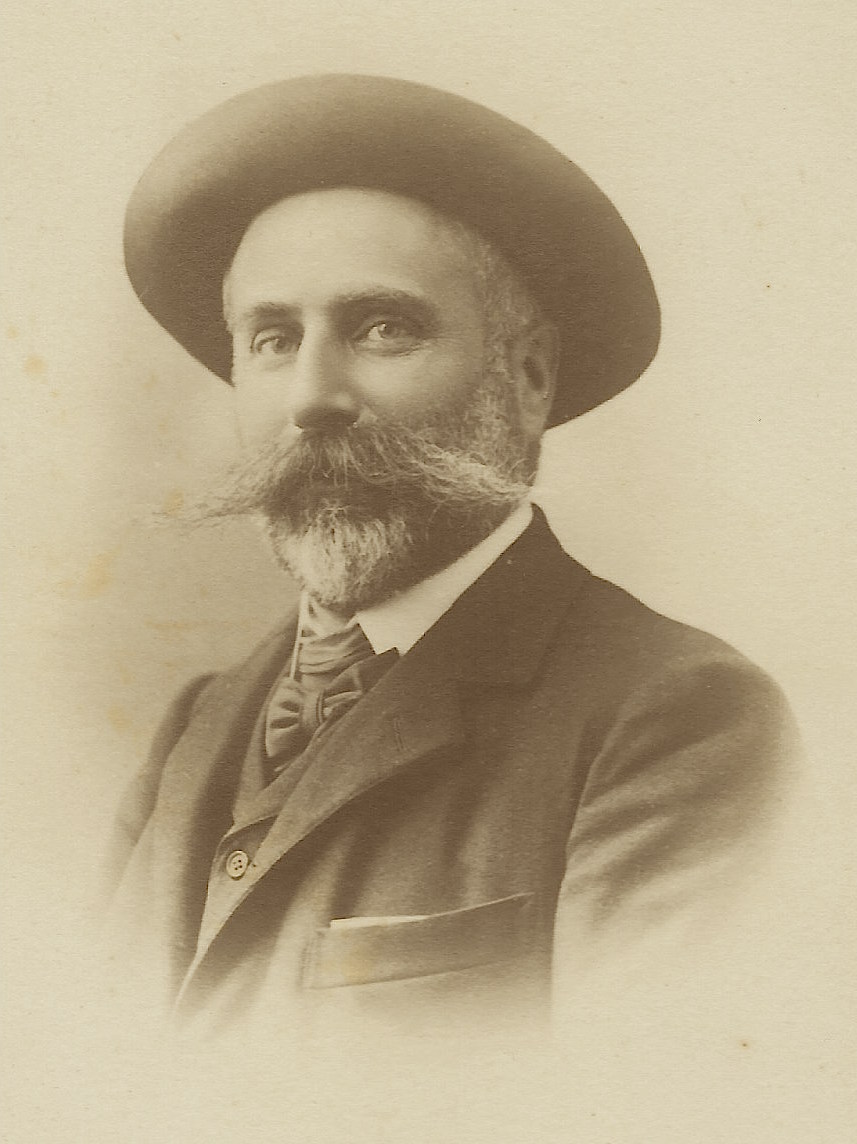 This cabinet card photograph features a dapper older man with an exquisite mustache. The gentleman’s impressive mustache may be one of the widest mustaches that I have ever seen. He has a sparkle in his eyes but it is impossible to ascertain if he is smiling because his lip sweater is blocking our view. The photographer of this cabinet card portrait is A. Michel. He operated a studio in Grenoble, France. Grenoble is in the Auvergne-Rhone-Alpes region of southeastern France. It is known as a center for winter sports. Advertising on the reverse of the cabinet card indicates that Maichel won a medal at an exhibit in Marseille in 1897. The gentleman in the photograph is identified on the verso as Gabriel Lucas. This portrait was likely taken circa 1900. SOLD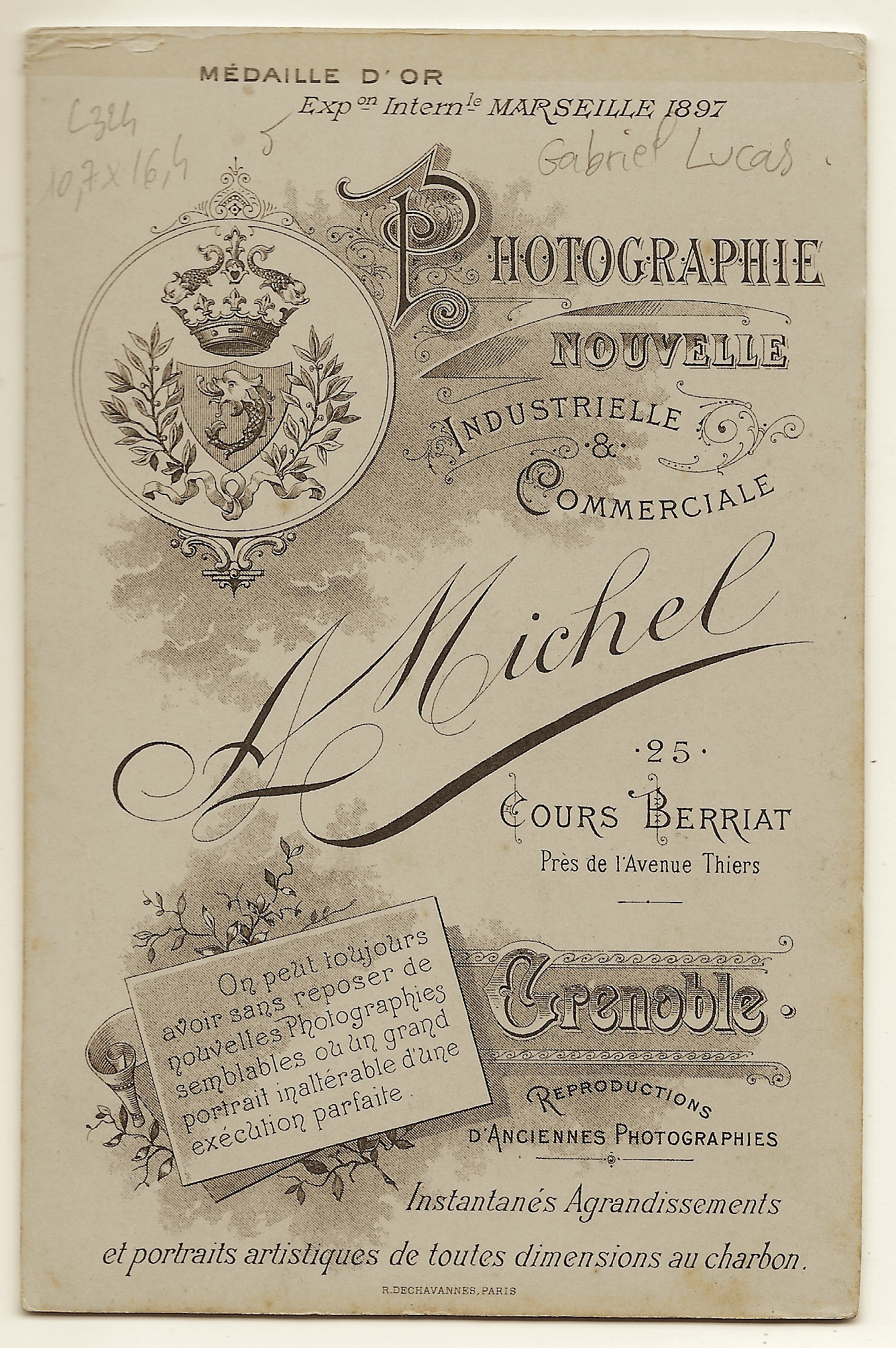

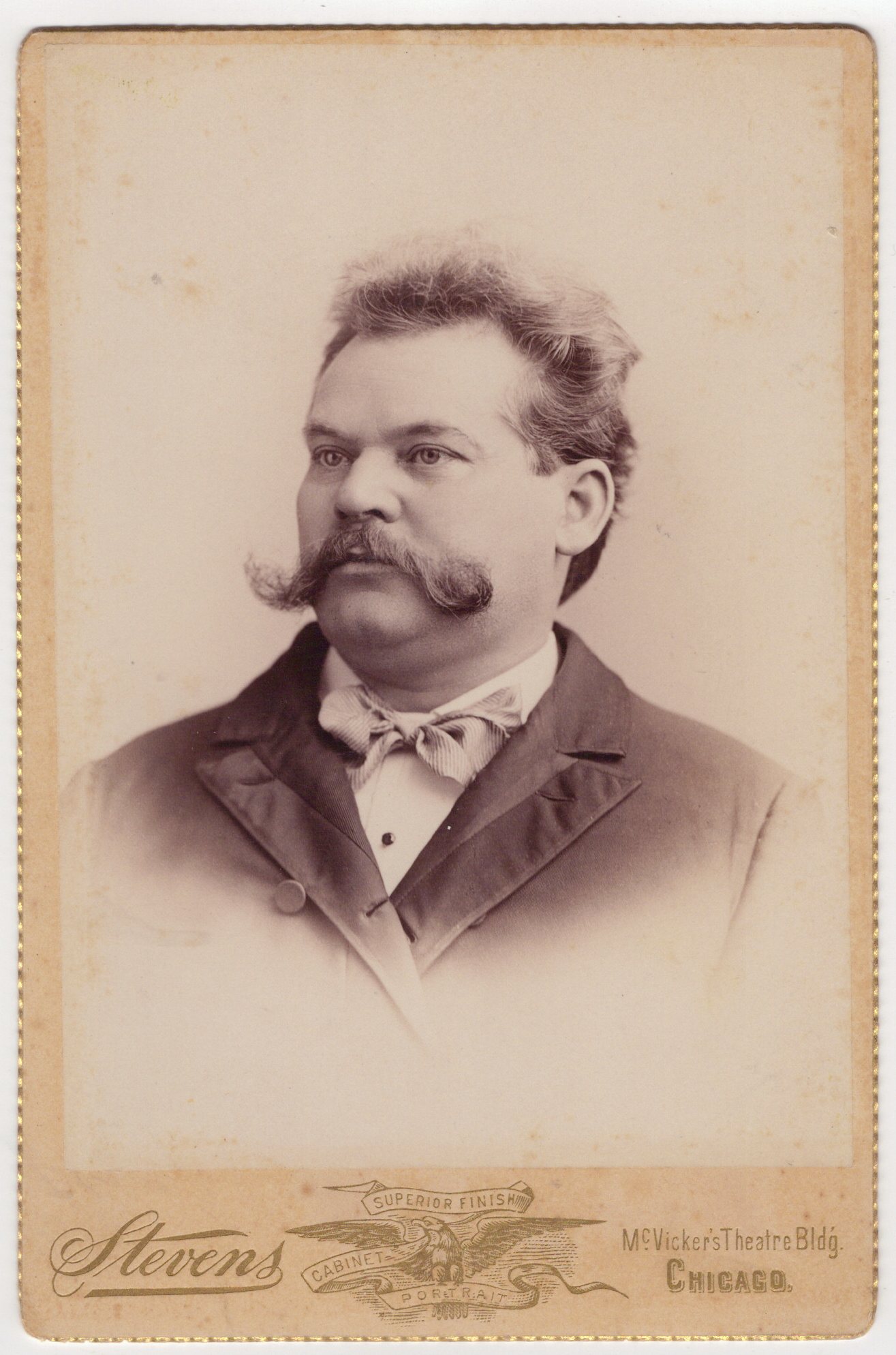






 THE CABINET CARD GALLERY