 This cabinet card portrait captures a handsome man with a terrific thick mustache. He is dressed impeccably. The photographer is Sterry and his studio was located at 520 & 522 Broadway, in Albany, New York. To view other interesting mustaches, click on Cabinet Card Gallery’s category “Mustaches (Only the Best). Edwin S. Sterry (1842-1900) was the successor to Mcdonald & Sterry, also located in Albany. Sterry was considered the principal photographer in Albany for 27 years, according to the journal “The Photogram (1894)”. The journal describes Sterry as the equivalent of a European court photographer. It is reported that he was patronized by all levels of politicians from both parties. It is also asserted that his photograph of the judges of the Court of Appeals generated fifteen thousand dollars in sales.
HANDSOME MAN WITH THICK MUSTACHE IN ALBANY, NEW YORK

DISTINGUISHED GENTLEMAN IN SAN FRANCISCO, CALIFORNIA
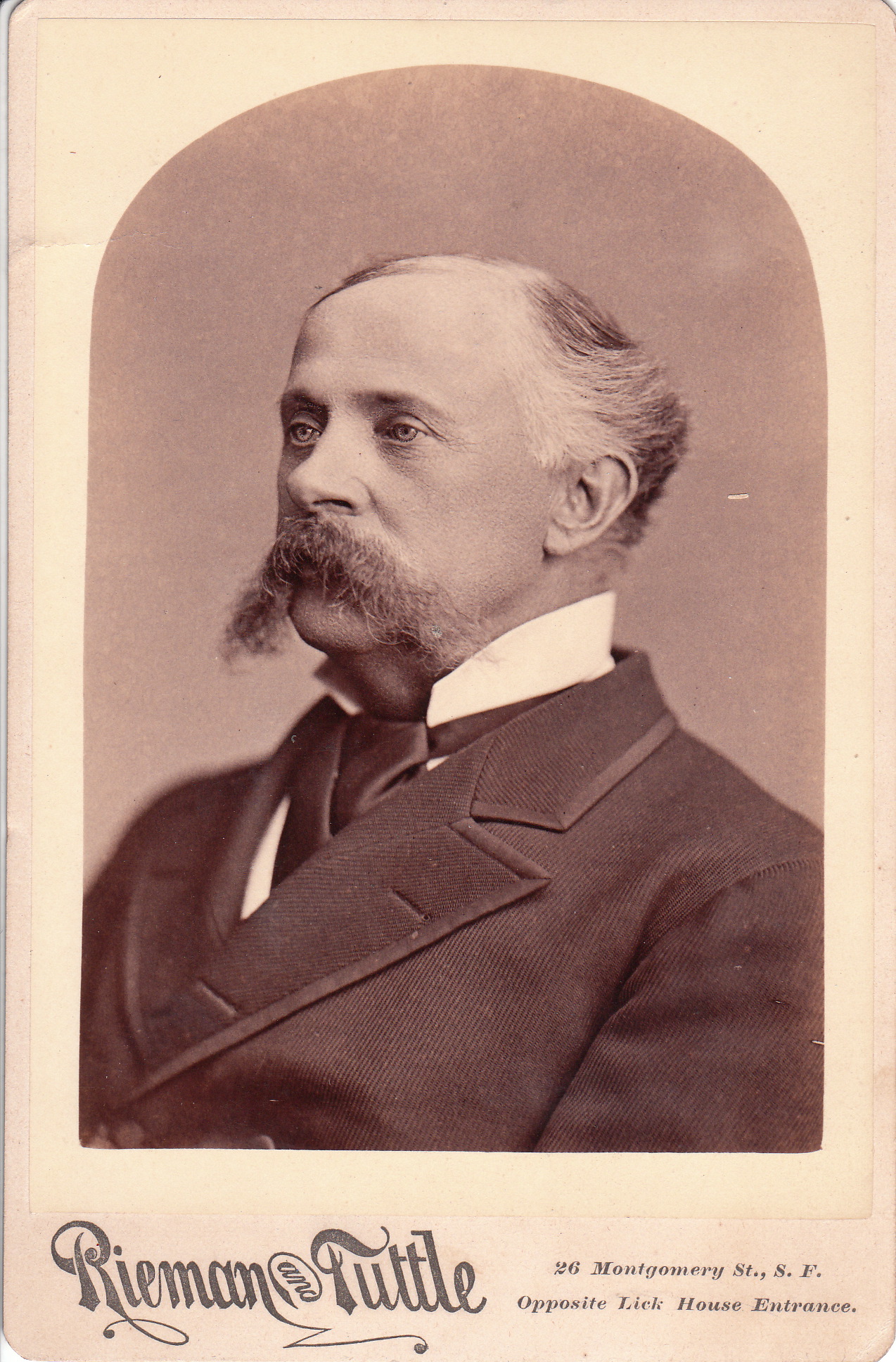 This cabinet card is a portrait of a nicely dressed older gentleman with a bushy mustache. The gentleman appears quite distinguished and may have been part of the elite of San Francisco. The Rieman and Tuttle Studio produced this cabinet card. George B. Rieman and William Nutting Tuttle (1844-1895) became partners in 1879. The first three letters of Mr Tuttle’s middle name seems to have described his personality. He appears to have been a vagabond photographer; working in a number of studios and having multiple business partners in the years proceeding his venture with Rieman. In 1880, Tuttle left his family in Oakland and sailed to Australia to start anew. Tuttle’s wife, Belle, went to Australia to try to convince her husband to return to California. Her efforts were fruitless. Although Tuttle’s photography studios were very successful and he prospered in Australia, he didn’t support his family back in the United States. He stayed abroad until his death in 1895. The Cabinet Card Gallery has some photographs related to this image. To see other terrific mustaches, click on the category “Mustaches (Only the Best). To view other photographs by Rieman, and to learn more about his life, click on the category “Photographer: Rieman”.
LESTER WALLACK: THEATRE ACTOR AND PLAYWRIGHT
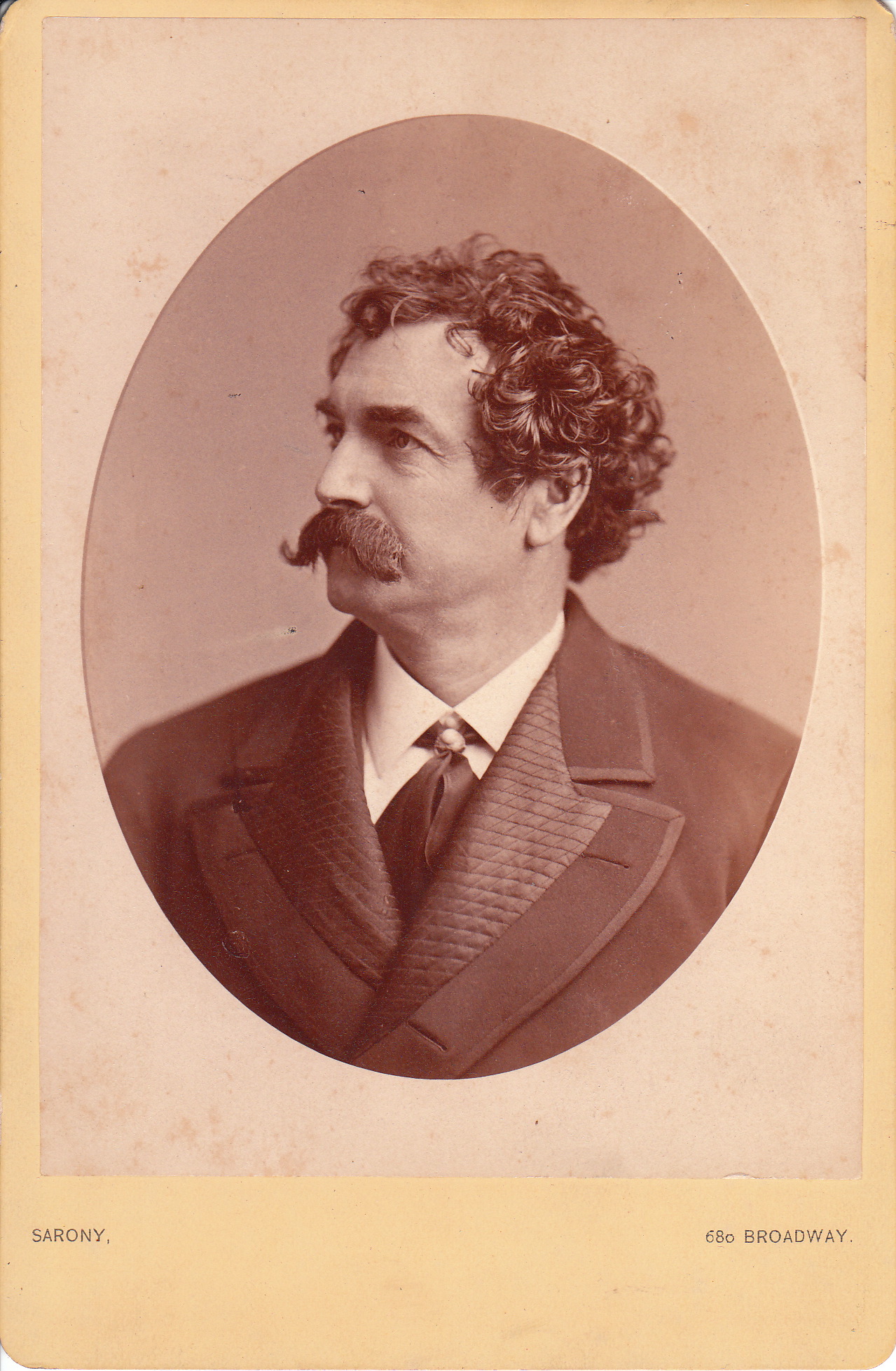 This Cabinet Card was published by celebrity photographer, Napoleon Sarony. His studio was located in New York City. The subject of this portrait is actor, playwright, and theatre manager, John Lester Wallack (1820-1888). Wallack was born into a theatrical family. Wallack served in the British Army before appearing on the Dublin and London stage. His first stage appearance in New York was in 1847 in Boucicault’s adaptation of “Used Up.” Wallack became what many consider, the leading light comedian on the American stage. His autobiography, “Memories of Fifty Years”, was published in 1889. To view other photographs by Sarony, click on category “Photographers: Sarony”. To view other actors, click on category “Actor”. (SOLD)
“A TEACHER OF MINE”: A PORTRAIT OF MR HENRY LUTSCH
 This cabinet card photograph is a portrait of Mr. Henry Lutsch. The reverse of the photograph has an inscription stating “Henry Lutsch, a teacher of mine”. There is no other identifying information. The photographer and the studio location are unknown. Perhaps one of Cabinet Card Gallery’s visitors, will be able to provide additional information. They have demonstrated amazing genealogical detective skills in the past illustrated by their informative comments. The only information that I was able to recover, comes from the 1880 U.S. census. Henry Lutsch was born 1n 1869, in the state of Wisconsin. The head of household, at the time of the census was Jacob Lutsch, who was born in Switzerland. Jacob Lutsch was probably Henry”s father. The “Census Place” was Great Bend, Barton, Kansas. The town of Great Bend was settled in the early 1870’s and located in Barton County, Kansas. Interestingly, this cabinet card was originally purchased from a collector in Kansas. Mr Lutsch is a handsome man and he has an admirable mustache which places him in Cabinet Card Gallery’s category of “Mustaches (Only the Best). Click on the category to view some amazing displays of facial hair. Thinking about this cabinet card prompts the question as to why a student would want a photograph of his, or her, teacher. Is the answer to the question as simple as that the student wanted a keepsake from their education experience; like modern day students often want a yearbook upon graduation. Another possible explanation is that the student had a crush on the handsome Mr Lutsch, and wanted a portrait of him in order to hang on to their fantasy, just a little longer.
NICE MUSTACHE IN TRENTON NEW JERSEY
 This cabinet card features a well dressed gentleman with a noteworthy mustache. In fact, the mustache is so noteworthy, that it joins other cabinet cards featuring fantastic mustaches in Cabinet Card Gallery’s category of Mustaches (Only the Best). Click on the category and view the other mustaches. The photographer of this image is Henry C. Lovejoy (1838-1901) of Trenton, New Jersey. Lovejoy had a series of studios in Trenton between 1869 and 1900. A Trenton Times (1891) newspaper article interviewed Lovejoy about many issues pertaining to portrait photography. He stated that “the great art, however, is in placing a person in position. This can only be acquired by long practice and experience.” He added “the photographer must also by a physiognomist” because different people will photograph better in different positions. A physiognomist is an expert at the art of judging human character from facial features. Later in the same article, Lovejoy provides interesting comments about post mortem photography (photographing the dead).
“A JOLLY GOOD FELLOW” POSES FOR HIS PORTRAIT IN SAN FRANCISCO, CALIFORNIA (PHOTOGRAPH BY TABER)
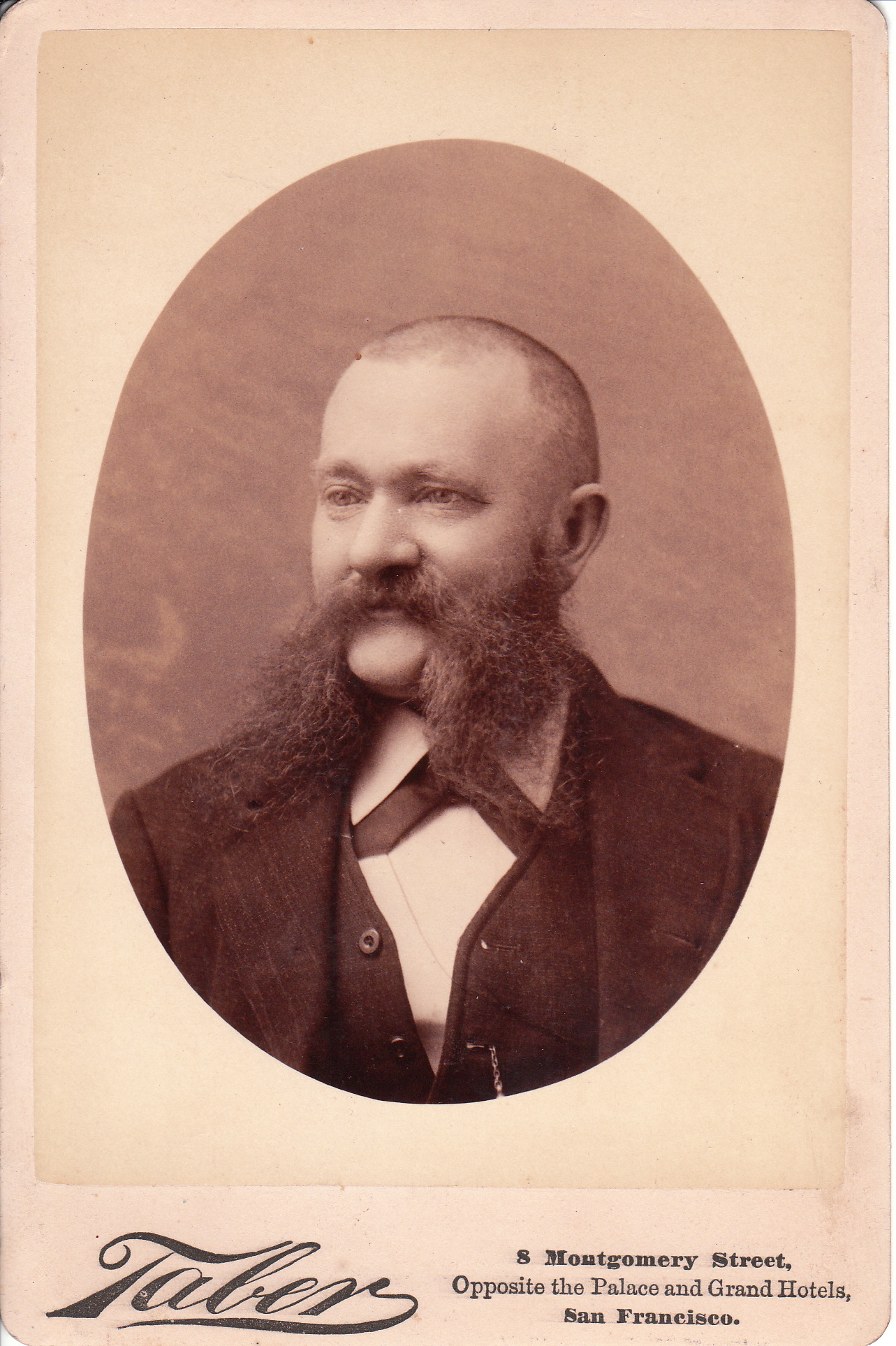 A jolly looking man poses for a portrait at the studio of Isaiah West Taber (1830-1912), in San Francisco, California. The happy gentleman has a wonderful mustache and earns the right to join other men with remarkable mustaches in the Cabinet Card Gallery’s category “Mustaches (Only the Best)”. Taber was a well known daguerreotypist, ambrotypist and photographer who photographed many California notables. Taber was also a sketch artist and a dentist. He was born in New Bedford, Massachusetts. Between 1845 and 1849, he worked on a whaling ship. He moved to California in 1850 and returned to the east, four years later. Upon his return, he opened a photography studio in Syracuse, New York. In 1864, he returned to California where he worked in the studio of Bradley and Rulofson until 1873. To view images by Bradley and Rulofson, click on the category, “Photographer: Bradley & Rulofson”. In 1871, Tabor opened his own studio and became famous for reproducing the photographs of well known California photographer, Carleton Watkins. Watkin’s business had gone bankrupt, and Taber reproduced his work without giving Watkins any credit. In 1880, Taber took a six week photographic trip to Hawaii. During part of that trip, he fulfilled his commission to photograph King Kalakaua. By 1890, Taber had expanded his operation to include studios in London and other parts of Europe. However, the 1906 San Francisco earthquake, put him out of business. The natural disaster destroyed Taber’s studio, gallery and negatives.
NOTABLE MUSTACHE IN MINNEAPOLIS, MINNESOTA (THE PHOTOGRAPHER WAS A SCOUNDREL)
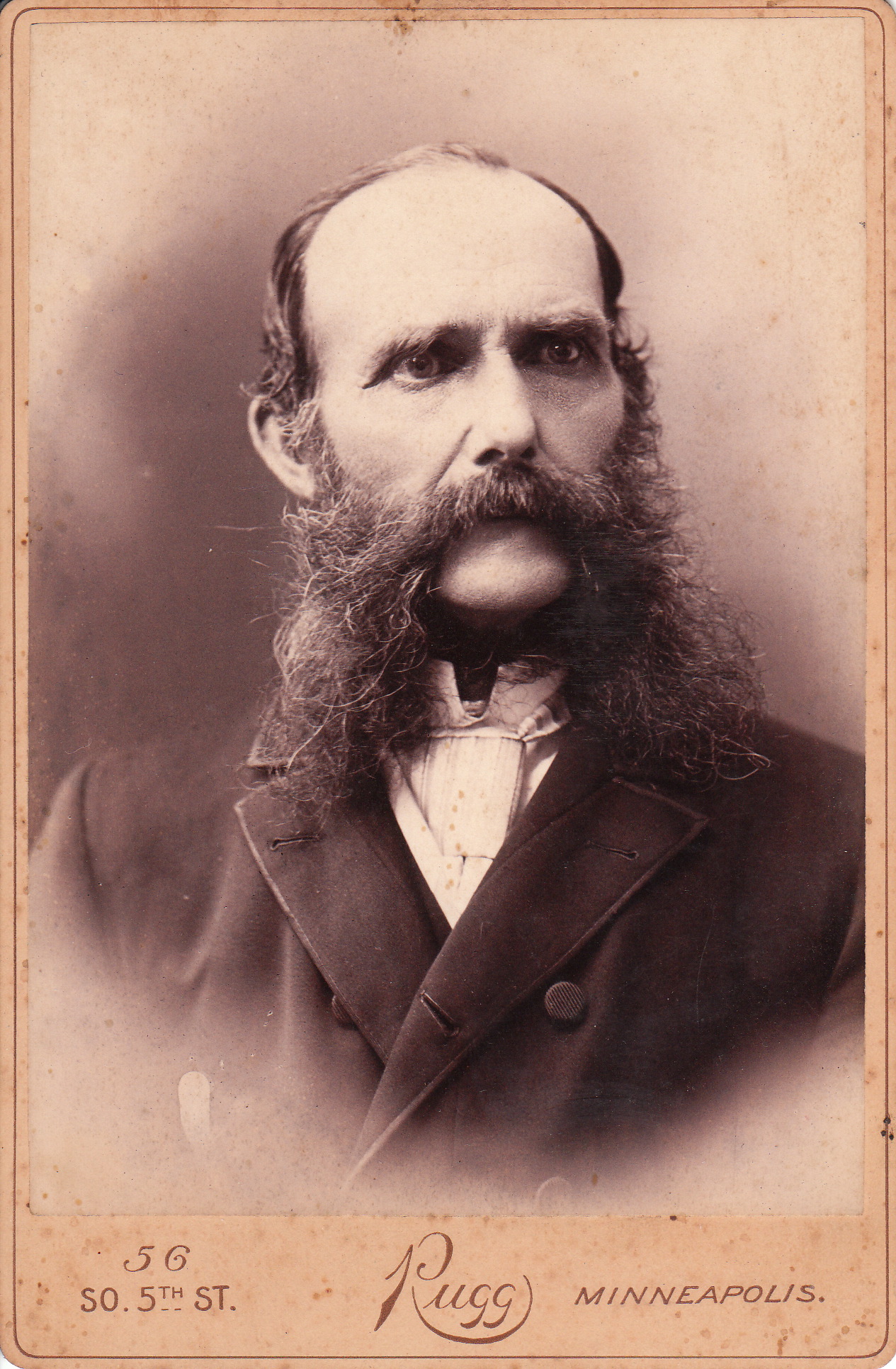 This cabinet card features a gentleman with a very notable mustache and bushy sideburns. He looks like a very intense man as he stares at the camera. The man behind the camera was Arthur B. Rugg (1853-?). Rugg’s life story is likely similar to many men who pursued the occupation of photographer. Such a life requires much change; first, working for various photographers in various locations, and finally, making enough money to finance ones own gallery. Rugg, at age 17, was an apprentice to J. C. Moulten of Fitchburg, Massachusetts. Moulton took ill just three weeks after Rugg began his apprenticeship and Rugg was forced to be a quick learner. He operated the gallery by himself and at night consulted with Moulten in his sick chamber , receiving criticisms and instructions. Rugg operated the business on his own for three weeks and the business did not suffer with him at its helm. In 1873, Rugg opened his own gallery but it did not do well, so he moved to Boston and worked for a photographer there for the next two years. He then went to Florida to become an orange grower but he lost everything when the business failed. His next stop was New Orleans where he worked for W. W. Washburn in one of the city’s leading galleries. However, after contacting malaria, he was forced to move North and ended up in LaCrosse, Wisconsin where he worked for a year and a half for a leading studio there. In 1879, he moved to Minneapolis and purchased the studio of William Brown and soon Rugg became one of the leading photographers of Minneapolis. Rugg was also noted for being involved in a major lawsuit that had impact on the profession of photography. The American Journal of Photography (1890) reported that the Supreme Court of Minnesota handed down a decision against Rugg for selling a copy of Mrs. Ida E. Moore’s photograph “which was put on exhibition in improper places, much to the discredit of the lady”. He was ruled to have had no right to the picture which legally belonged to the sitter (Ms. Moore). She won her suit for damages of five thousand dollars although it is not clear if that was the actual amount awarded. Another photography journal of that time reported more specifics of the case. It seems that Rugg had given one of Ms. Moore’s pictures to a police detective named Clark, who showed the photos in a number of houses of ill repute in the Minneapolis and St. Paul area. The court ruled that although the negatives of the photograph belonged to Rugg, he could not print photographs from those negatives without permission from Ms Moore. Mr Rugg seems to have lacked some ethics in this instance. Now, back to that great mustache. To view other photographs of unusual mustaches, click on Cabinet Card Gallery’s category of “Mustaches (Only the Best)”.
A HANDSOME MAN IN BROOKLYN, NEW YORK
 A very handsome man poses for his portrait at the Dana studio in Brooklyn, New York. Information written on the reverse of the photograph indicates that this good looking gentleman was named Ferdinand Clauburg. The inscription also indicates that the date of this photograph was July 2nd, 1897. Mr. Clauburg is well dressed and is wearing a pin on his lapel. The Dana studio was located at 565 Fulton Street, Brooklyn, New York. Edward Cary Dana (1853-1897) was born in Boston, Massachusetts, developed an interest in photography, and moved to Brooklyn, where he opened a studio. In time he had a great reputation as a skilled photographer and had established three galleries in New York City. He died at age 44 of kidney problems and left a widow, Miss Ada Sherman, of Staten Island, New York.
NOTABLE MUSTACHE IN TORONTO, CANADA
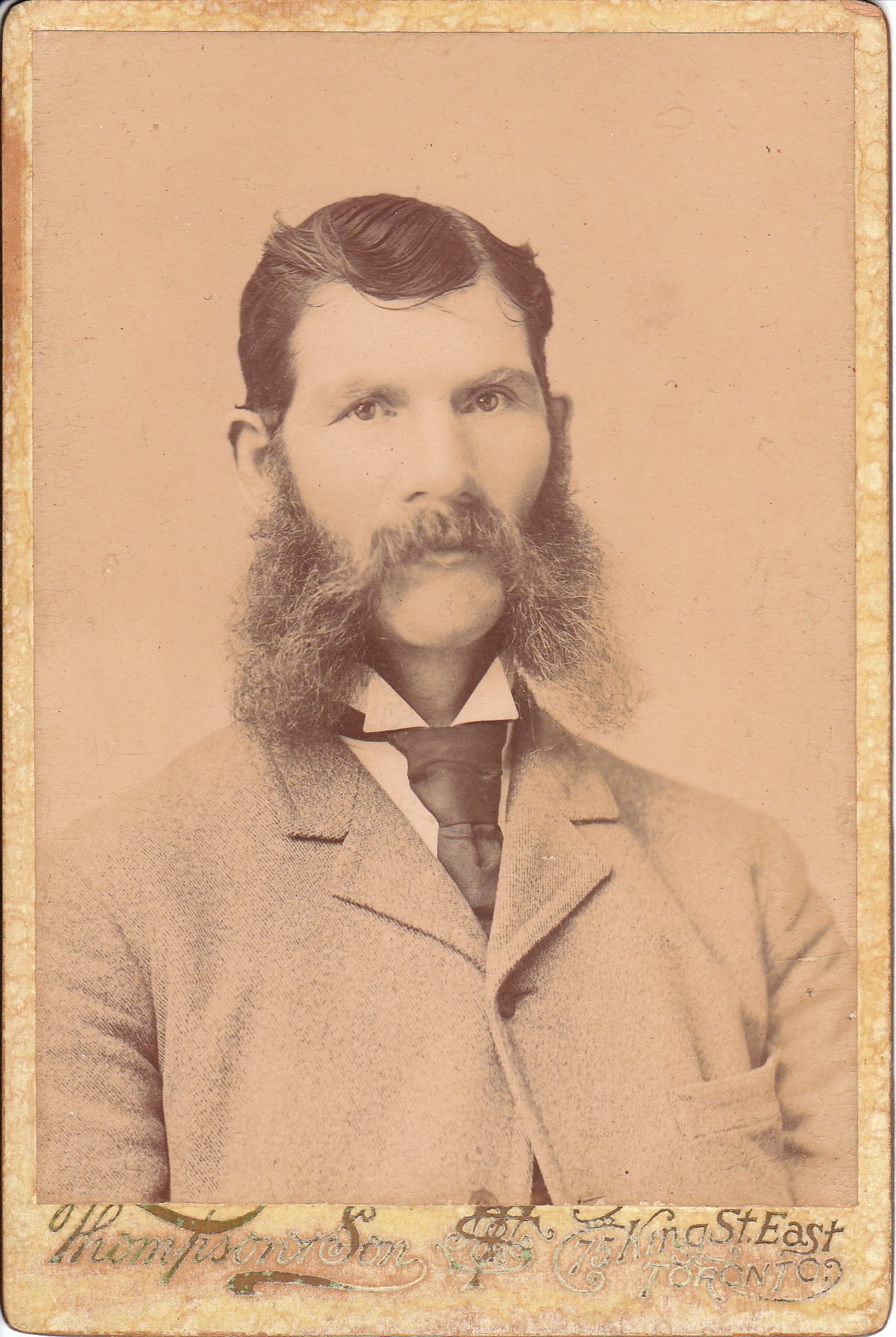 This cabinet card features a man with a noteworthy mustache. The photographer is Thompson and Son’s, located at 75 King Street, in Toronto, Canada. To view other terrific mustaches, click on Cabinet Card Gallery’s category “Mustaches (Only the Best).
MARVELOUS MUSTACHE IN MERIDEN, CONNECTICUT
 This cabinet card is a portrait of an older bespectacled gentleman with a significant mustache. He is well dressed and is wearing a pin on his lapel. The top of the pin seems to have a figure that looks like a buffalo or bucking bull. The print on the bottom of the pin is illegible. Hopefully, a visitor to this site will be able to provide more details about the lapel pin. The photographer of this image was H. C. Voorhees of Meriden, Connecticut. Voorhees liked to write instructional articles appearing in the era’s photographic journals. Among his articles were publications in Wilson’s Photographic Magazine (1891) and Photographic Mosaics (1896). To view other interesting photographs of remarkable mustaches, click on Cabinet Card Gallery’s category of “Mustaches (Only the Best).


 THE CABINET CARD GALLERY