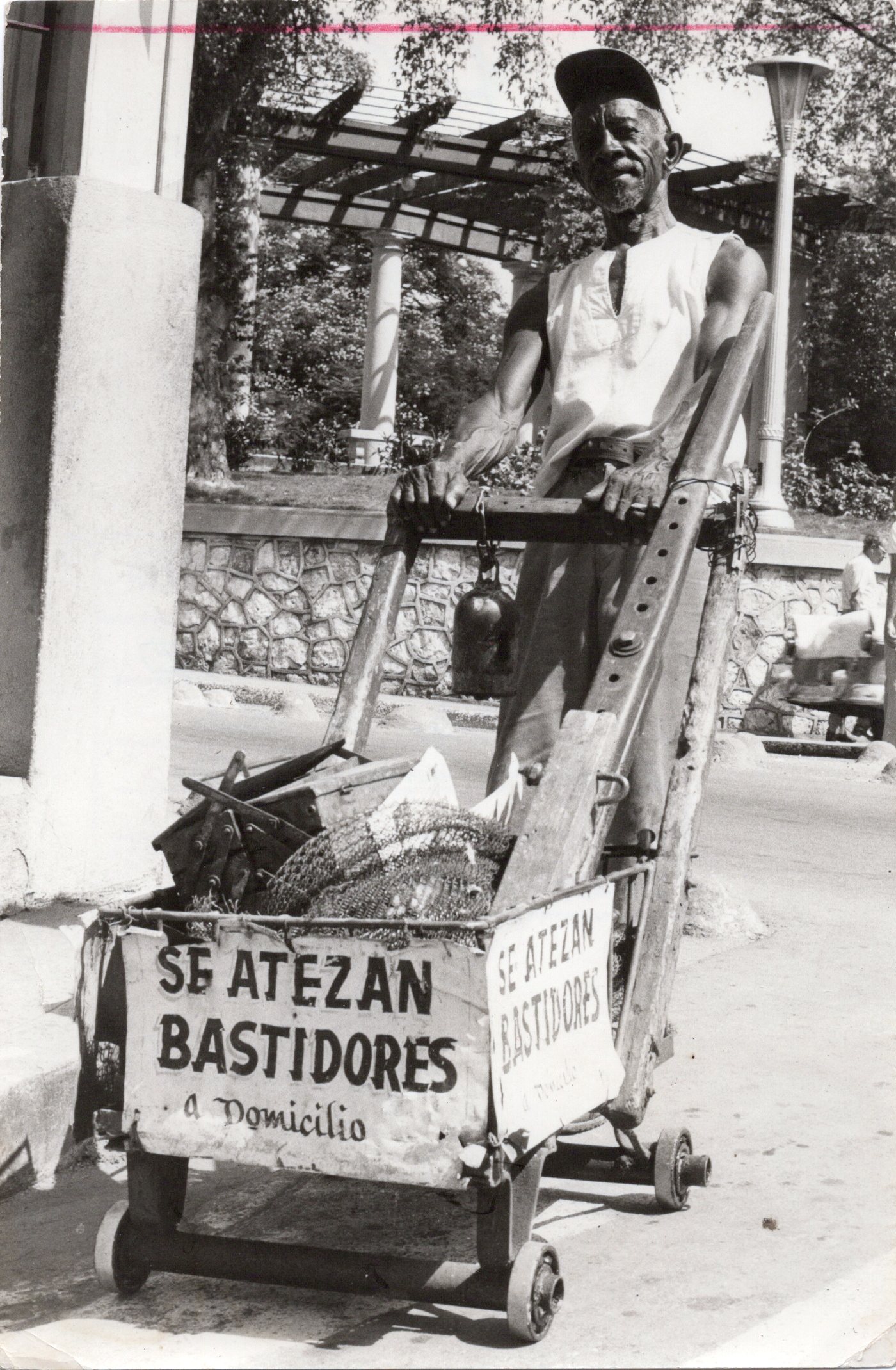
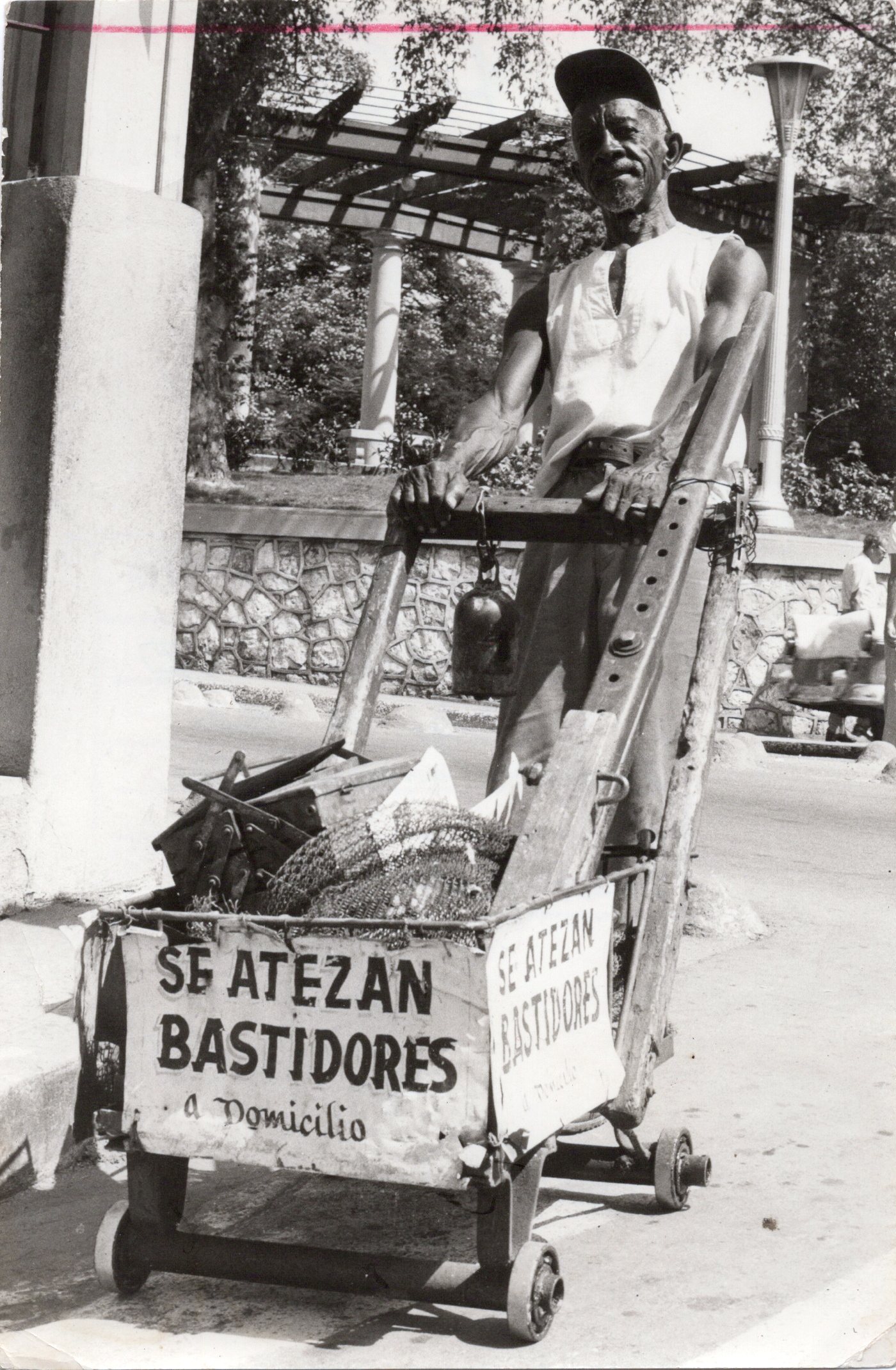
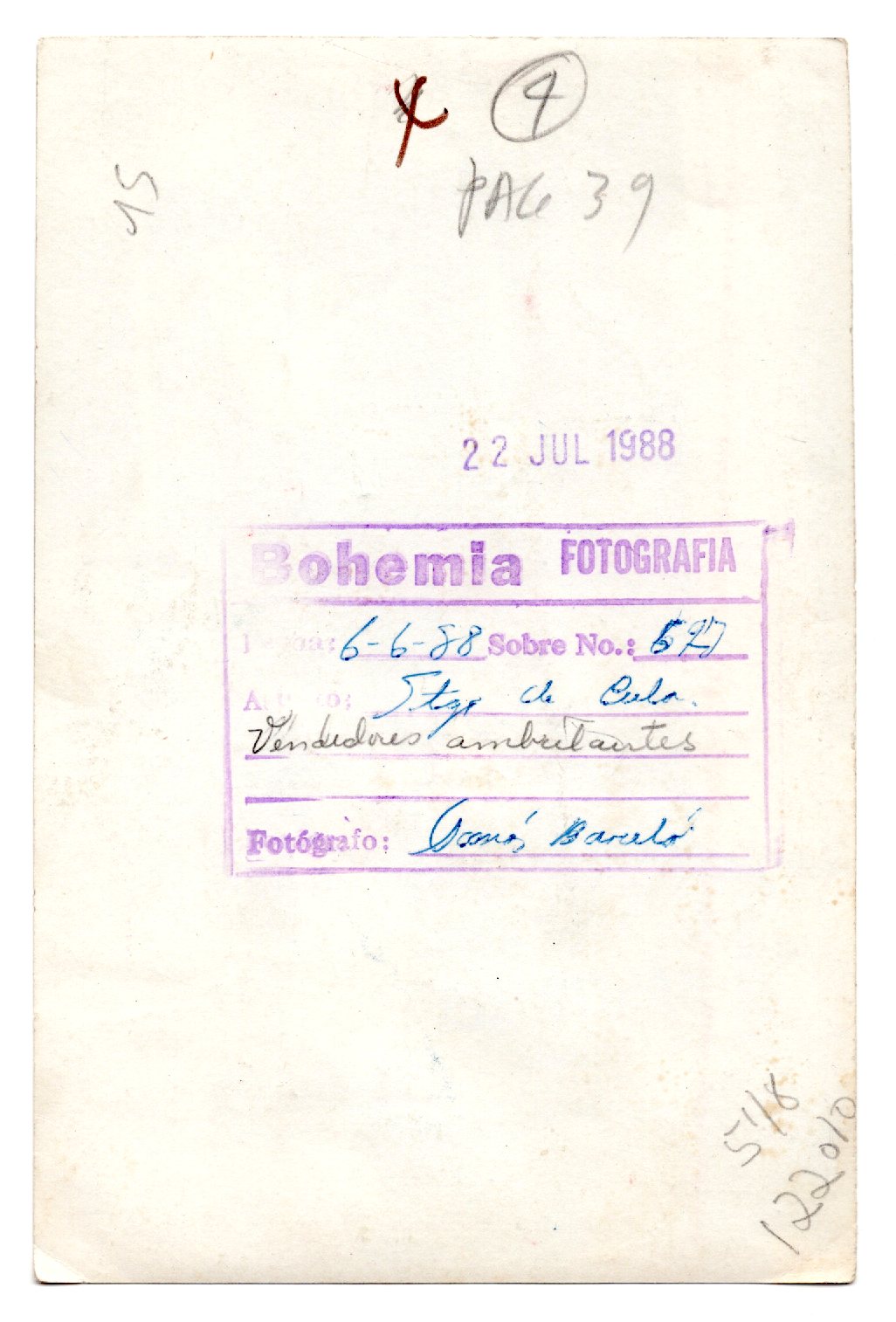
This vintage press photo features an older Cuban worker pushing his work cart down the street in Havana, Cuba. The cart seems to contain tools and materials. A translation site could only tell me that the man worked with frames in homes. I am hypothesizing that he is a framer. A stamp on the photo’s reverse indicates that the photograph was taken in 1988 and belonged to “Bohemia Fotografia”. It is likely that this image was used by “Revista Bohemia”; Cuba’s oldest general consumer magazine. This photograph measures about 4 3/4″ x 7 1/8″ and is in excellent condition.
Buy this Original Press Photo (includes shipping within the US) #3727
To purchase this item, click on the Pay with PayPal button below
$31.50
Buy this original Press Photo (includes International shipping outside the US) #3727
To purchase this item, click on the Pay with PayPal button below
This vintage trade card is an advertisement for “Albany Dentists”. The practice was located in Lancaster, Pennsylvania. Albany Dentists was managed by Dr. N. A. Becker. The advertising copy on this trade card is very astute and interesting. The advertisement counters many of the objections people have about going to the dentist. The card states that “Teeth Extracted Positively Without Pain”. To counter women’s concerns about safety, the trade card asserts that there is a “Lady in Attendance”. For fearful patients, the advertisement states “Special Attention given to the Weak and Nervous”. Note the prices printed on the reverse of the card. An extraction cost twenty-five cents. A set of teeth only cost $5.50. Research discovered that there was a Dr. M. A. Becker that practiced dentistry in Lancaster. His full name was Dr. Michael Augustus Becker (1866-1938). It is very likely that the “N. A.” seen on the trade card is a misprint. This trade card was printed by the Calvert Lithograph Company (Detroit, Michigan). The firm was established in 1863. SOLD
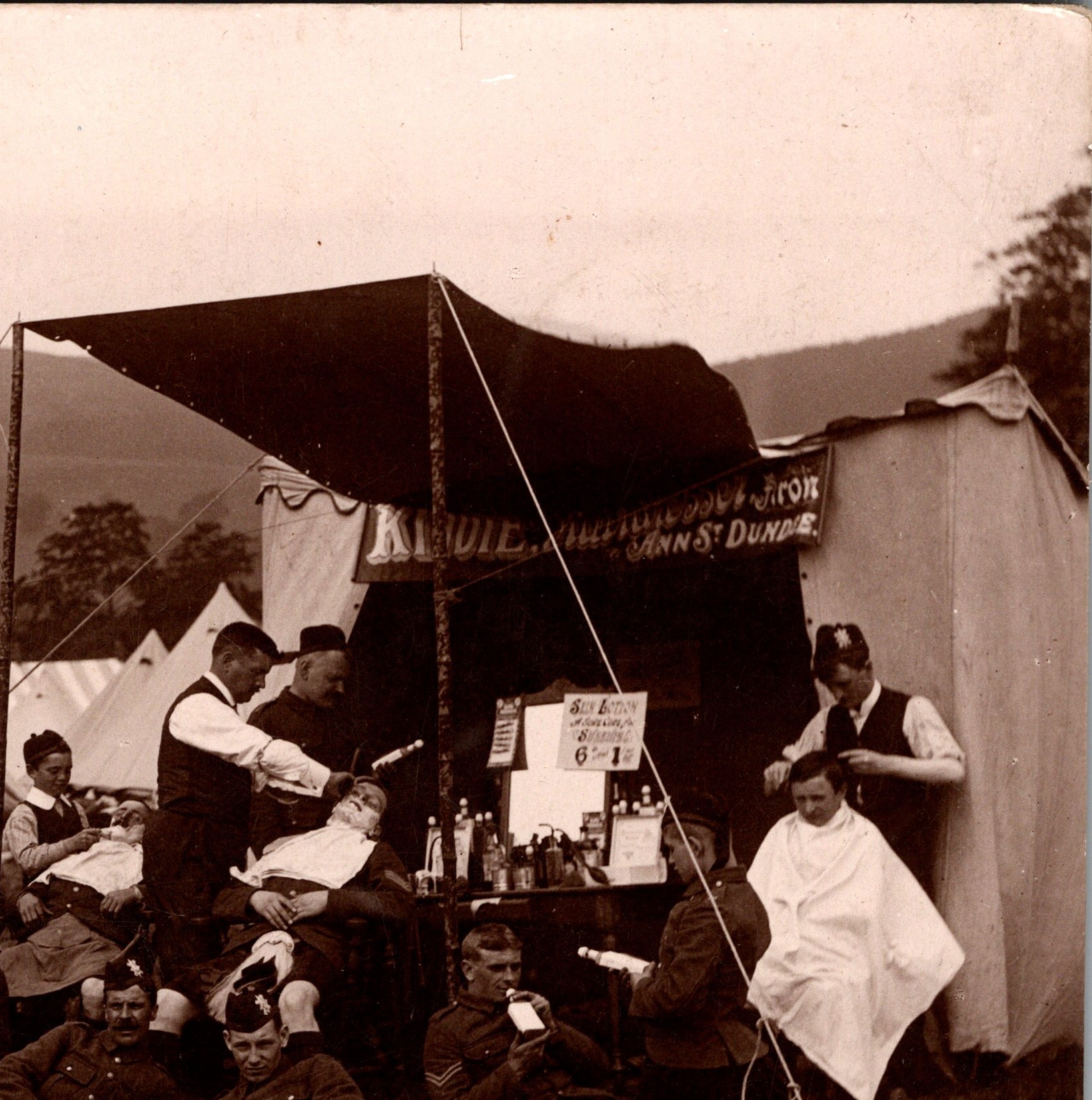
CLOSE UP VIEW OF BARBERS AT WORK AND BARBER SUPPLIES
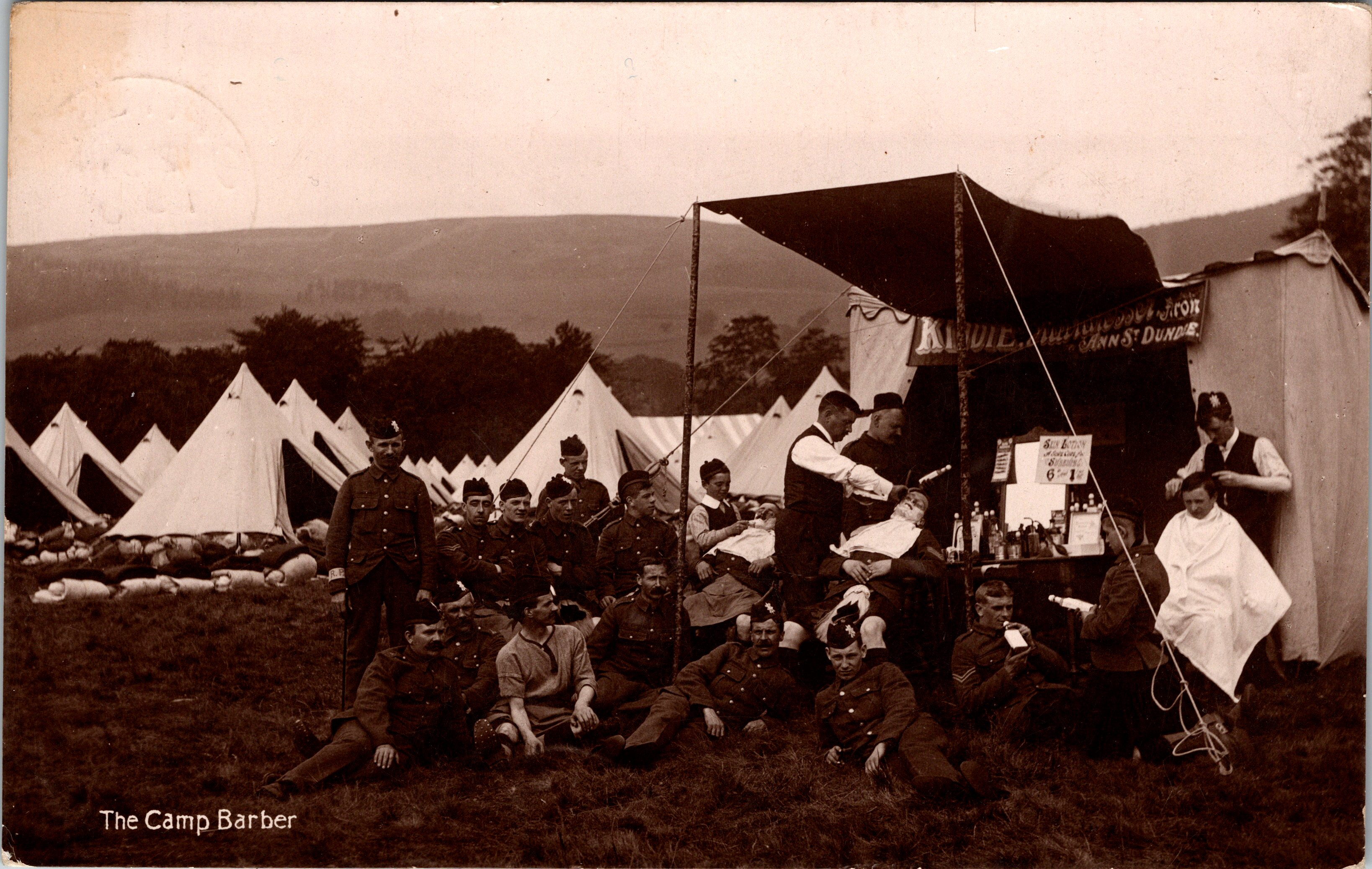
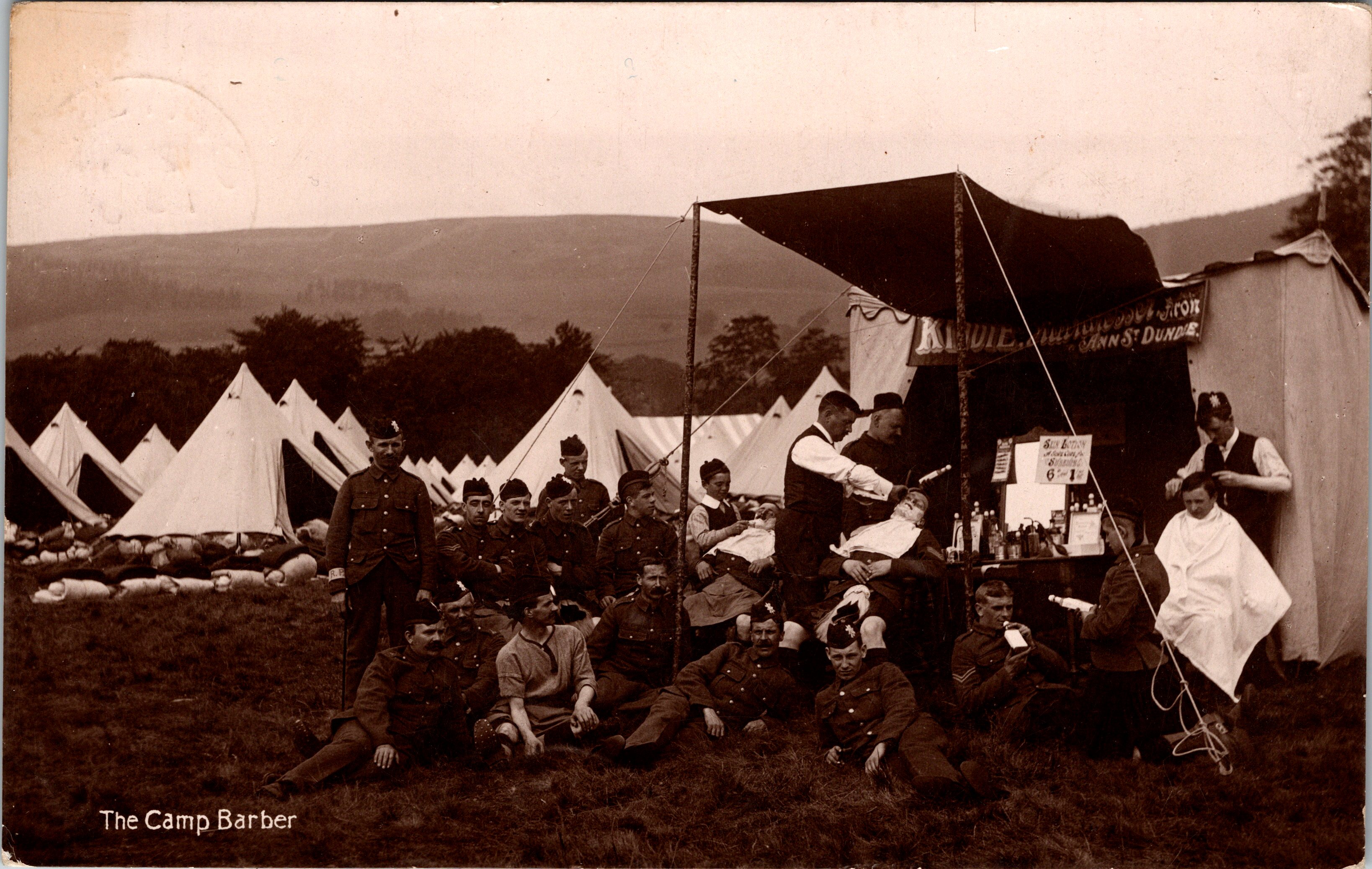
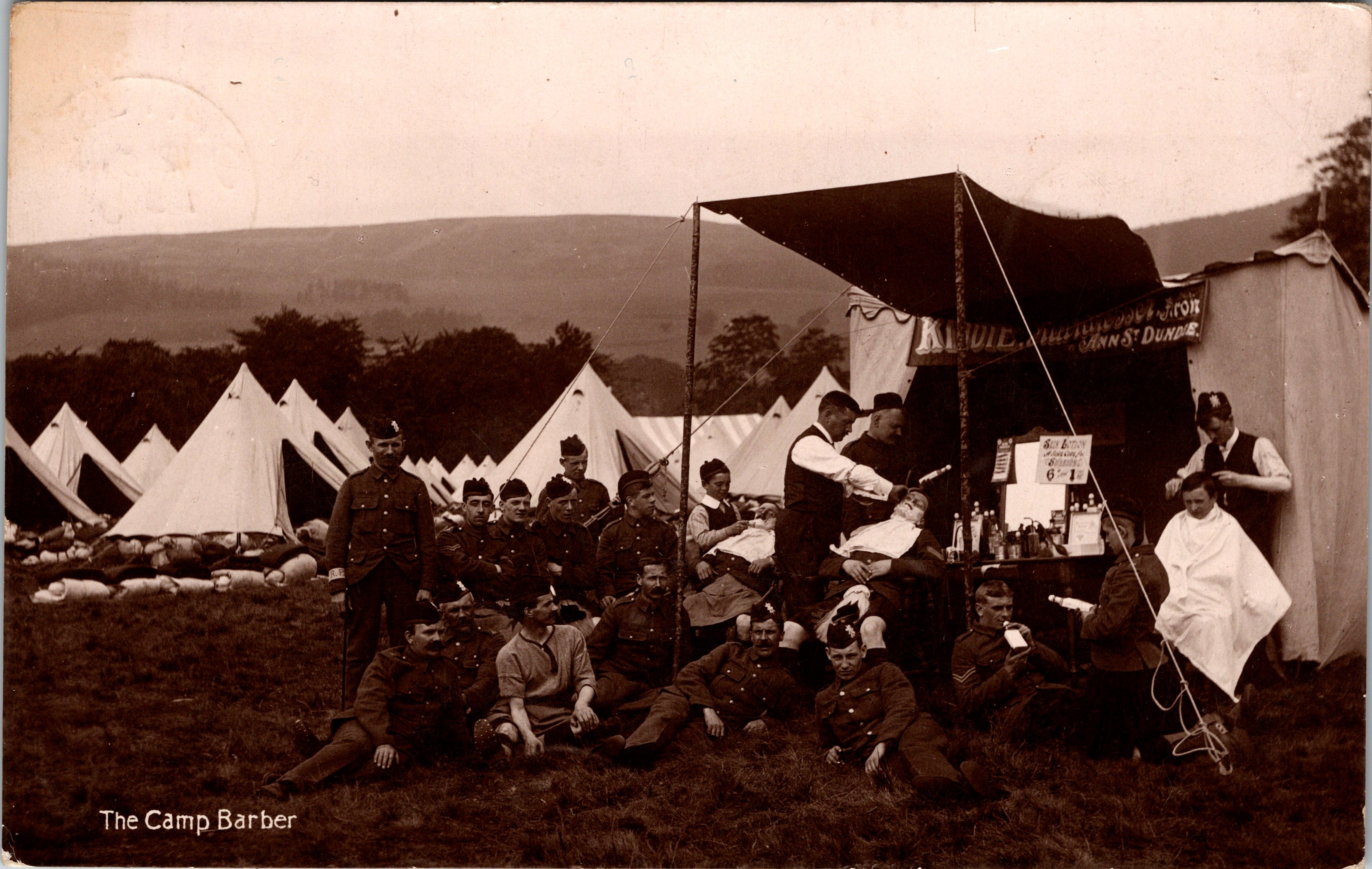
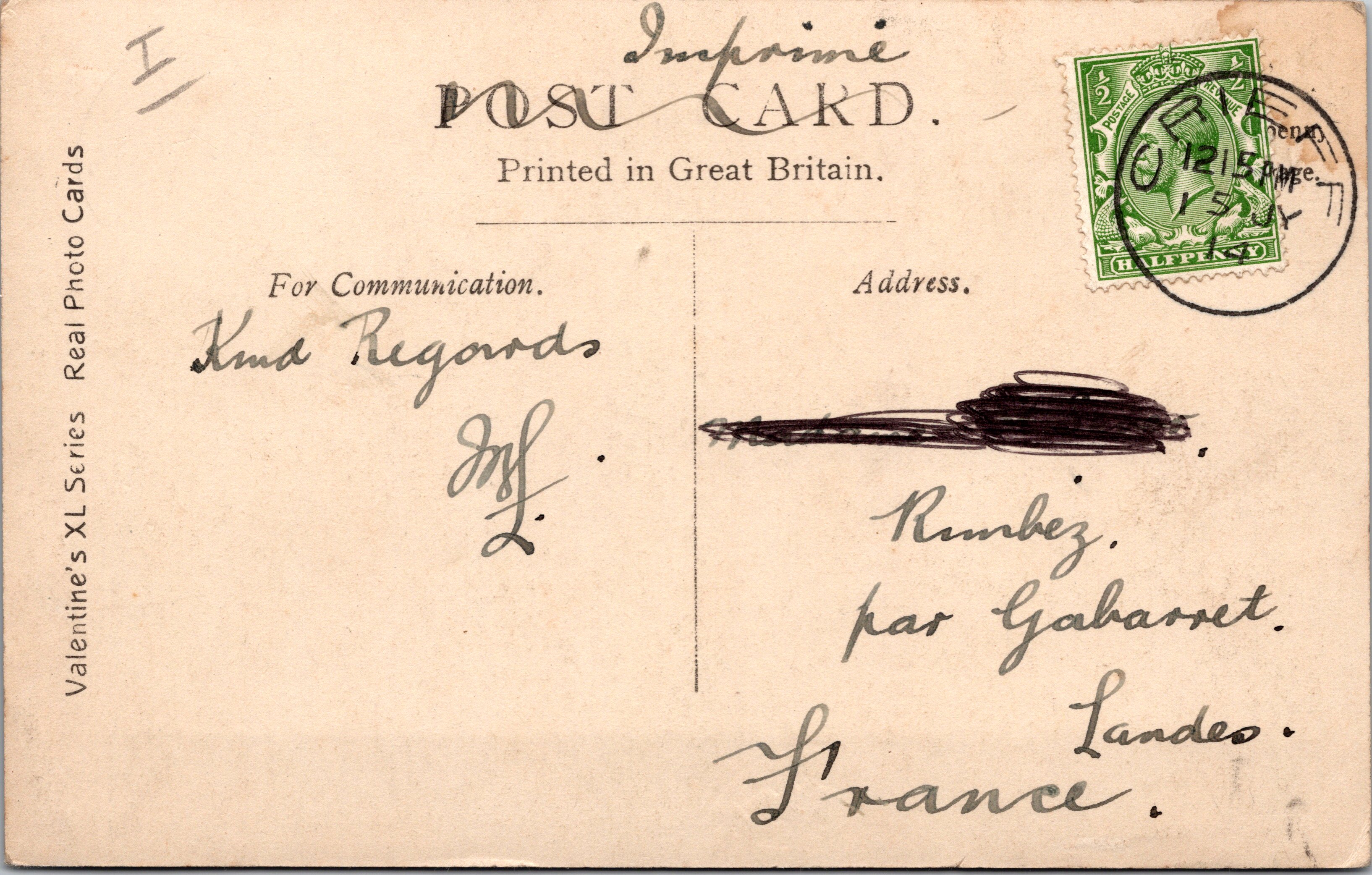
This vintage real photo postcard features a pop-up barbershop tent in a camp of World War1 era soldiers. The caption on this photograph states “Camp Barber”. The close-up view of the shop is very interesting. There are two adult barbers giving haircuts and a child barber giving a soldier a shave. I wonder how many men reading this would trust a child, who appears to be about 12 years-old, to give them a shave. Check out the barber’s supplies. They can be seen on the table. Note the calendar and the sign advertising sun lotion for sale. There is another sign over the entrance of the tent which advertises the name of the barbershop. Unfortunately, I can not decipher the shop’s name from the letters that are visible. Notice that there is a man sitting near the table drinking a bottle of alcohol. Lets hope he is not drinking a bottle of hair tonic. Another soldier is examining a bottle of “something”. This postcard was published by Valentines as part of the XL series. The Valentine and Sons printing company was founded in Dundee, Scotland in 1851. The founder was James Valentine (1815-1879). The company became the leading manufacturer of picture postcards in Scotland. After James died, his two sons operated the business. The company was purchased by John Waddington Limited in 1963, In 1980, the Valentine business was bought by Hallmark Cards. In 1994, the company ceased operations. The card was printed in Great Britain and has an affixed British postage stamp. The postcard is addressed to someone in Landes, France. This card was postmarked in Crieff, a Scottish market town. This postcard is in very good condition (see scans)
Buy this Vintage Real Photo Postcard (includes shipping within the US) #3510
To purchase this item, click on the Pay with PayPal button below
$27.50
Buy this Vintage Real Photo Postcard (includes International shipping outside the US) 3510
To purchase this item, click on the Pay with PayPal button below
This vintage real photo postcard is a wonderful example of an occupational image. My only issue with this photograph is that I am uncertain of the subject’s occupation. My first hypothesis is that the man is a wallpaper hanger. My second guess is that he works with cement or tile. His tools should reveal his occupation but I know little about such things. Hopefully, a visitor to the Cabinet Card Gallery will leave a comment and reveal this tradesman’s line of work. This photo postcard portrait presents the man, his work clothes, and his tools with great detail and clarity. He is well poised, has a great smile, and gives an impression of being a friendly nice guy. This vintage postcard has excellent clarity and is in excellent condition (see scans).
Buy this Vintage Real Photo Postcard (includes shipping within the US) #3396
To purchase this item, click on the Pay with PayPal button below
$35.50
Buy this Vintage Real Photo Postcard (includes International shipping outside the US) 3396
To purchase this item, click on the Pay with PayPal button below
This carte de visite photo is special because it is an occupational photograph. Many vintage image collectors search for and value occupational photographs. This CDV features a man at work but what is his occupation? It is clear that a clamp vice is one of the tools that he utilizes. There are strips of some material on the table in front of the vice. Are they strips made from medal? The worker appears to be wearing a uniform. I wish I knew his story? The photographer of this image is named Vaino Anshelm Rautell. As a photographer, he went by the name of VA Rautell. He was born in Lahti, Finland in 1875, and died there in 1942. Rautel studied art (painting) in Helsinki during the early 1890’s. He worked as a photographer in Lahti from about 1895 through 1927. In 1918, he photographed events of the Finnish civil war in Lahti. Teresia Dahlbom, his wife (m.1905) , worked with him in his studio. The couple divorced in 1927 and it appears they both ended their photography careers that same year. The pair had two children. At least one of Rautell’s photographs can be found in the collection of the Finnish Museum of Photography in Helsinki. SOLD
This vintage real photo postcard features a close-up view of four uniformed Viennese tea room waitresses. The three standing women are dressed nearly identically while the seated woman is dressed notably different. Is the seated woman the tea room’s manager or owner? You may be wondering how I know that these ladies are tea room employees? Actually, I don’t. I am just repeating what I was told by the previous owner of this photo postcard. Of course, I may be wrong about the women’s occupation. However, I am certain about the identity of the photographer of this portrait. I am also certain that he was very talented. The Cabinet Card Gallery has three of his photographs in it’s collection. They are beautiful cabinet card portraits. The photographer’s name and address are embossed near the bottom right hand corner of this postcard. The photographer is S. Weitzmann and his studio was located in Vienna, Austria. The studio won medals at exhibitions Paris, London, and Grand Prix. Weitzmann is mentioned in a book entitled “Hitler’s Silent Partners : Swiss Banks, Nazi Gold, and the Pursuit of Justice” (2011). The book states that Weitzmann was the foremost portrait photographer in Vienna and worked for the Austrian Royal Court before it’s demise in 1918. SOLD]
This vintage real photo postcard is quite unique. The photograph features a gentleman wearing a long apron. He is obviously dressed for work but for what kind of work? Is he a butcher, baker, or candlestick maker? Perhaps he is a physician or possibly a photographer? He is dressed well, wearing a nice vest and neck tie. He looks quite intense as he poses for his portrait at the E Worsely-Benison studio in Egham, England. (SOLD)
A bearded gentleman poses for his portrait at the D. C. Herrin studio in The Dalles, Oregon. The subject is wearing overalls and his attire indicates that he is a workman of some type. He is resting his hand on a wicker chair and is striking an unusual pose in that his feet are crossed at the knee. The gentleman looks rather bored as he endures the process of having his portrait taken. David C. Herrin began his photography career in Medford, Oregon (1888). He and his photographer wife, Margaret, operated a studio in The Dalles from 1892 through 1898. The couple moved to Portland, Oregon in 1899 and joined Frank G. Abell for establish Abell & Herrin photography studio. David Herrin died in 1909. An interesting side note concerns the name of the town that hosted the above photographic session. The city of “The Dalles” is named after a rock. Dalle is a French word meaning flagstone. The name of the town refers to the basalt rocks carved by the Columbia River on which the town is located. This cabinet card is in very good condition (see scans). (SOLD)
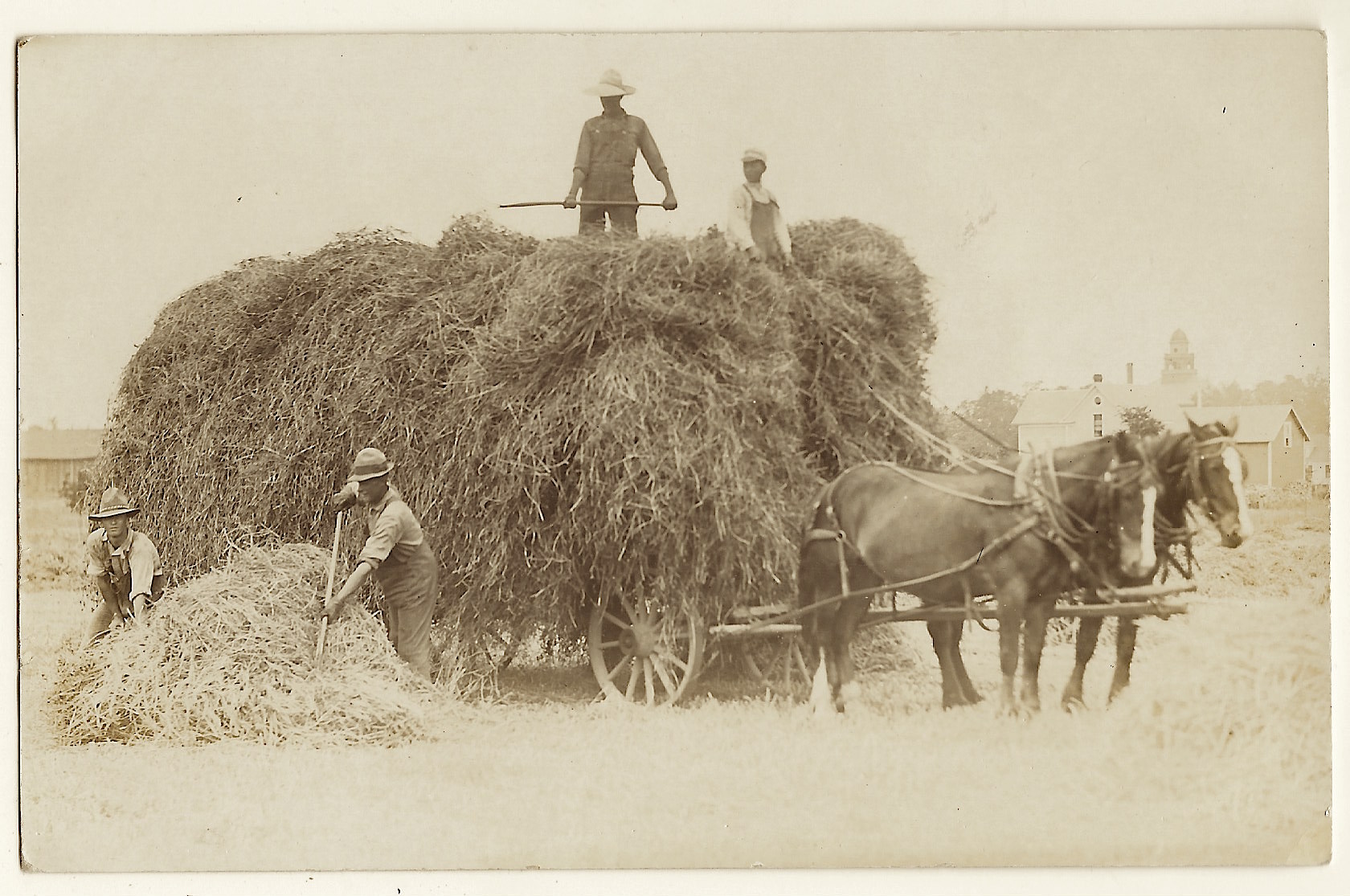
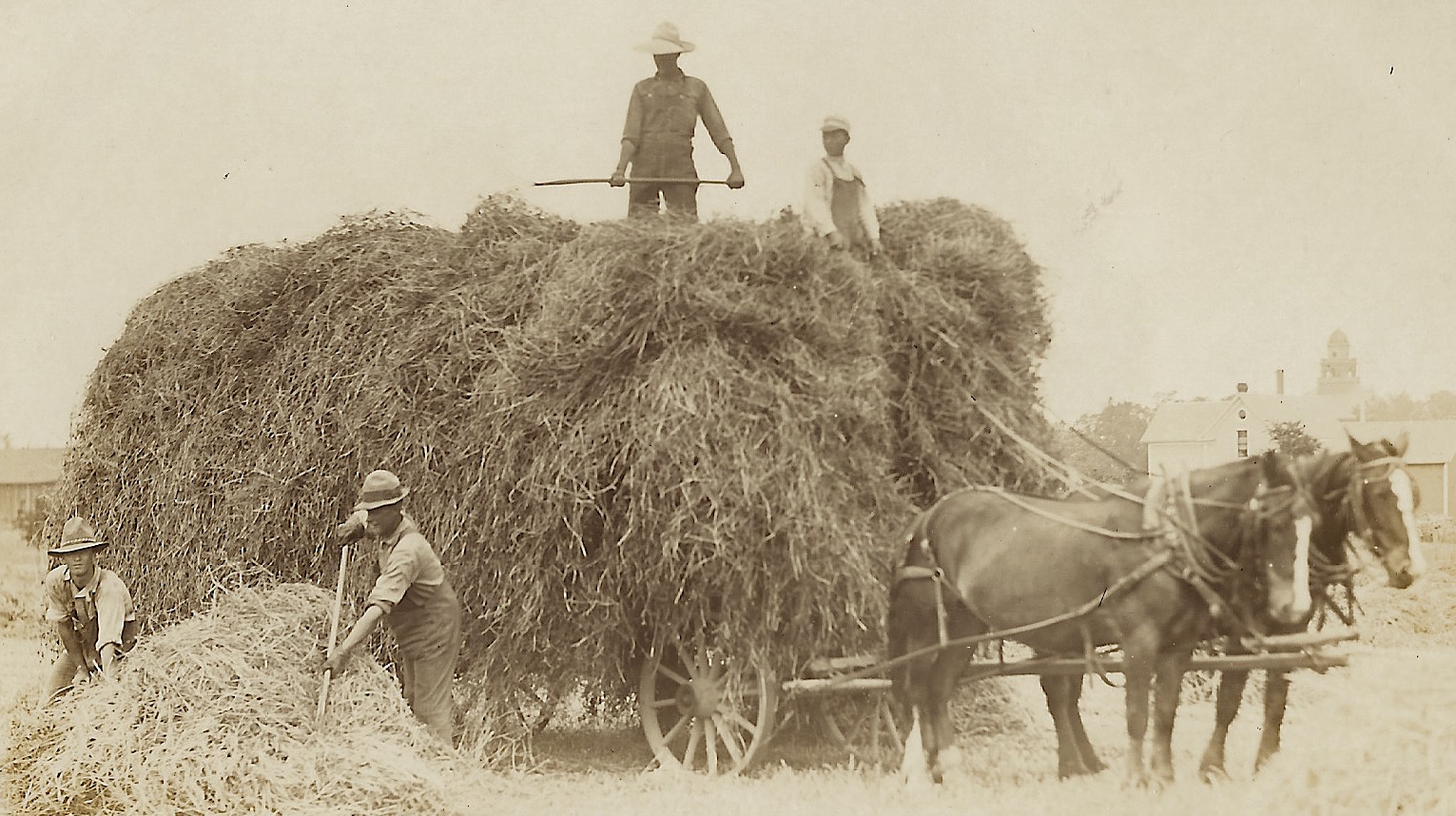
This vintage real photo postcard features four hard working men gathering hay and loading their horse drawn wagon. The wagon is chock full of hay. It is hard to imagine that the wagon can fit much more hay. The AZO stamp box on the reverse of the postcard indicates that the card was published sometime between 1904 and 1918. This occupational postcard is in very good condition (see scans).
Buy this original Real Photo Postcard (includes shipping within the US) #2510
To purchase this item, click on the Pay with PayPal button below
$25.50
Buy this original Real Photo Postcard (includes International shipping outside the US) #2510
To purchase this item, click on the Pay with PayPal button below
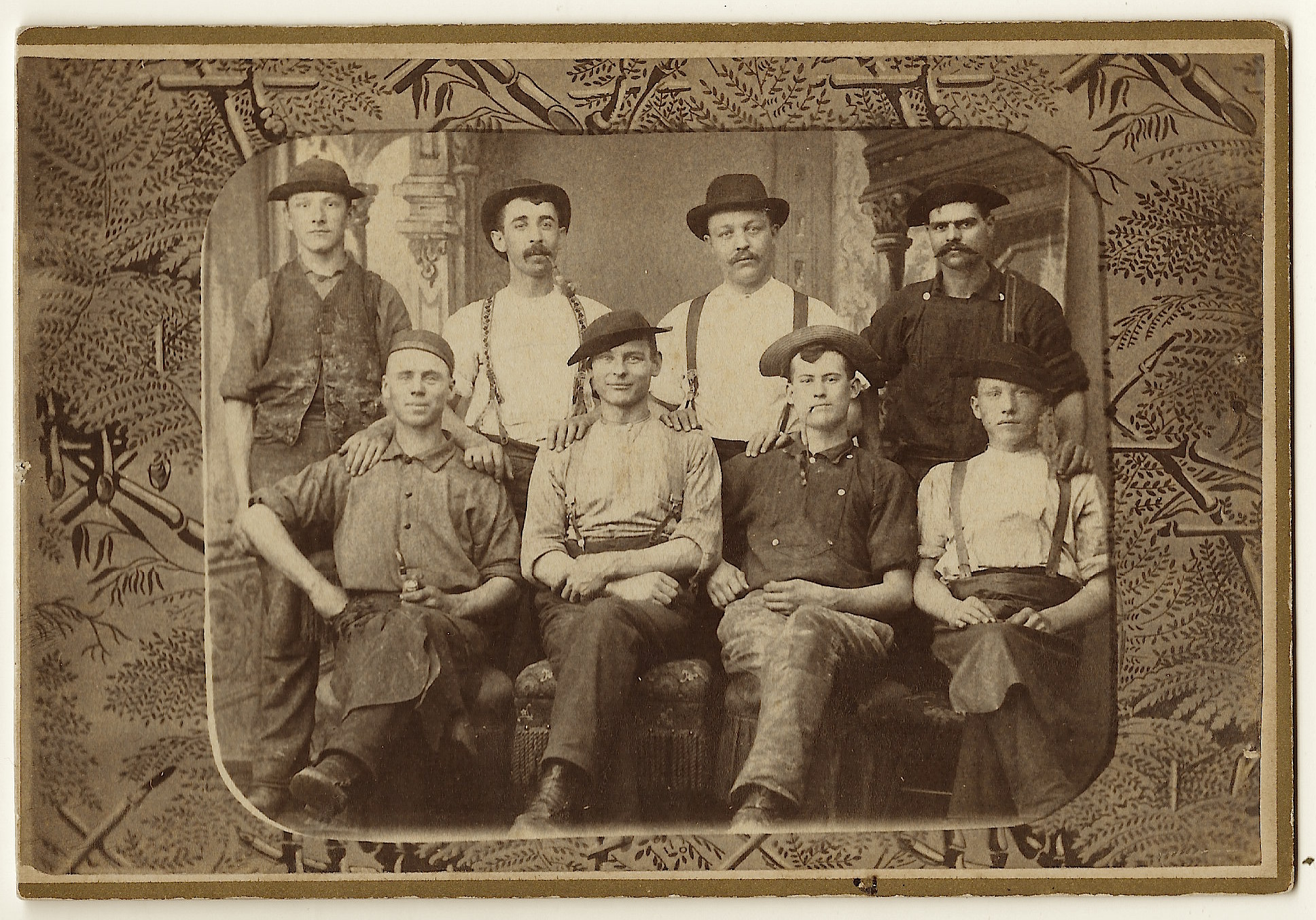
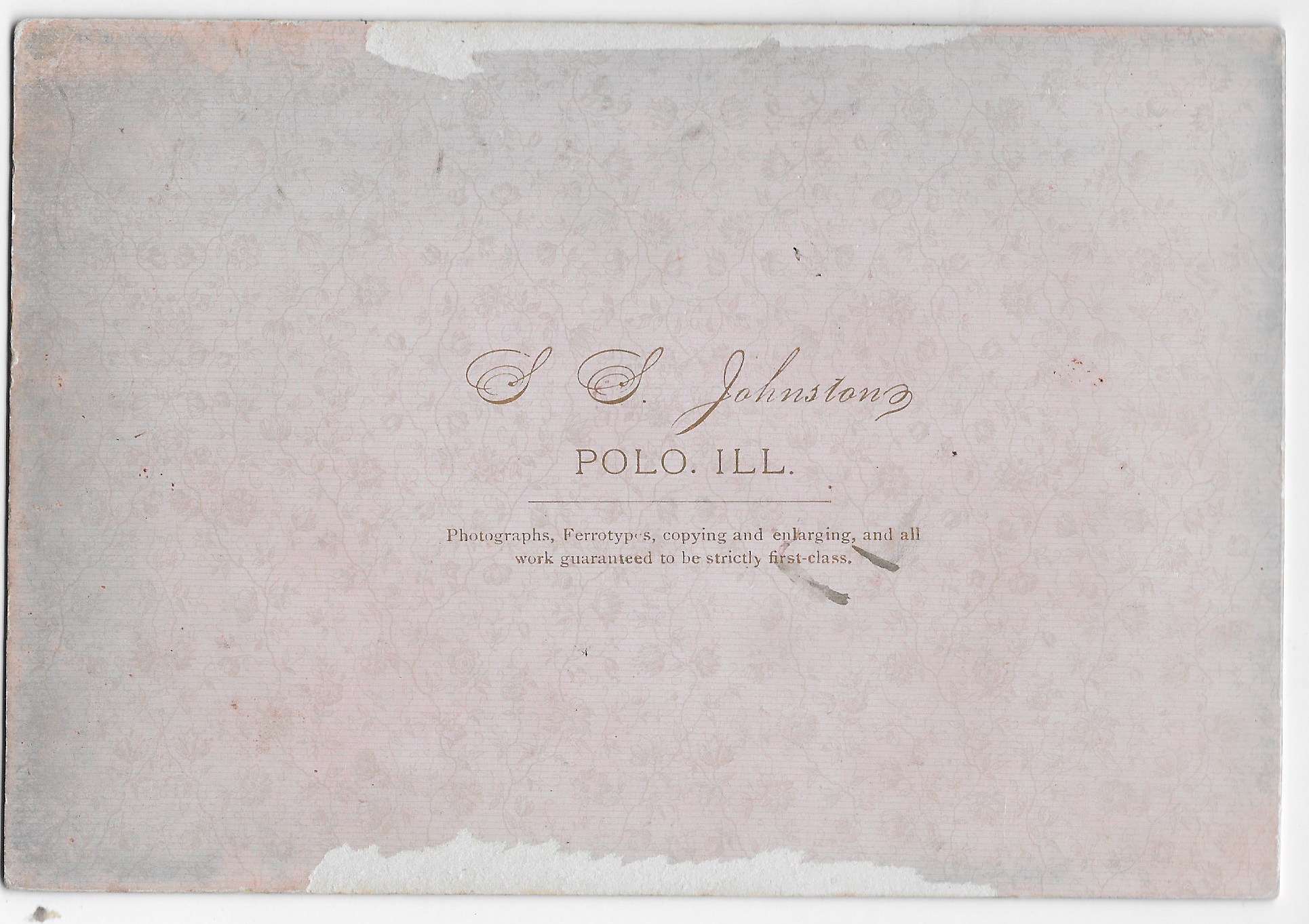
Eight good old boys pose for their portrait at the studio of Samuel S. Johnston in Polo, Illinois. These fellows are dressed like they are workers. Their work clothing includes a various assortment of hats and many of the guys are wearing suspenders. It is apparent that these men are not desk workers. They clearly have jobs requiring physical effort. Samuel Johnston was born in Ohio in 1826. His name appears in the 1870 census and he is listed as a photographer living in Polo. His name and photography business also appear in a number of business directories from the 1870’s. Sam was married to Sarah J. Johnston. The town of Polo was named after Marco Polo. The town was incorporated in 1876. ADDENDUM: The buyer of this cabinet card was the great-grandson of one of the men in this photo. He reports that his great grand dad was a buggy maker and the other men in the photograph were his co-workers. (SOLD)



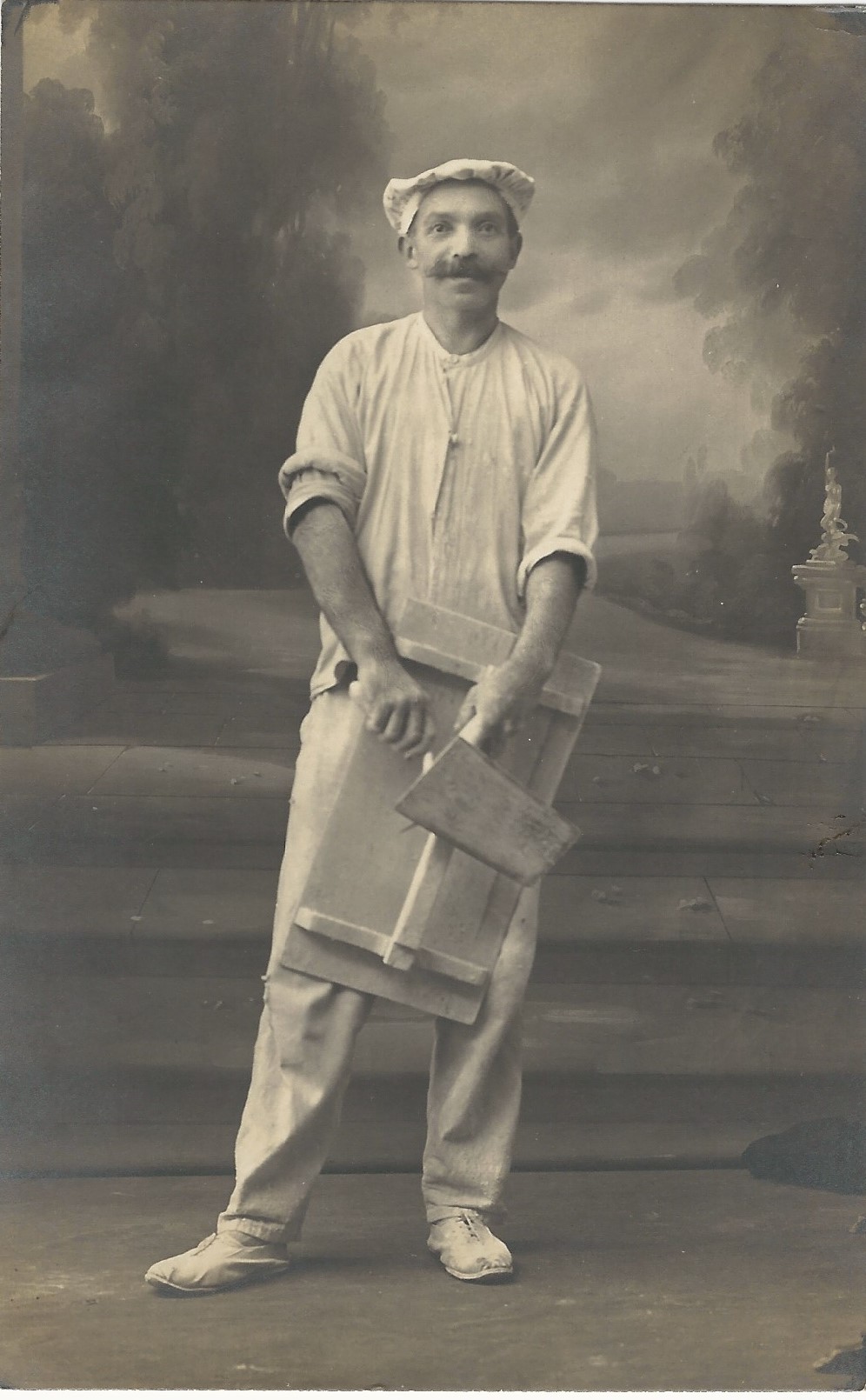

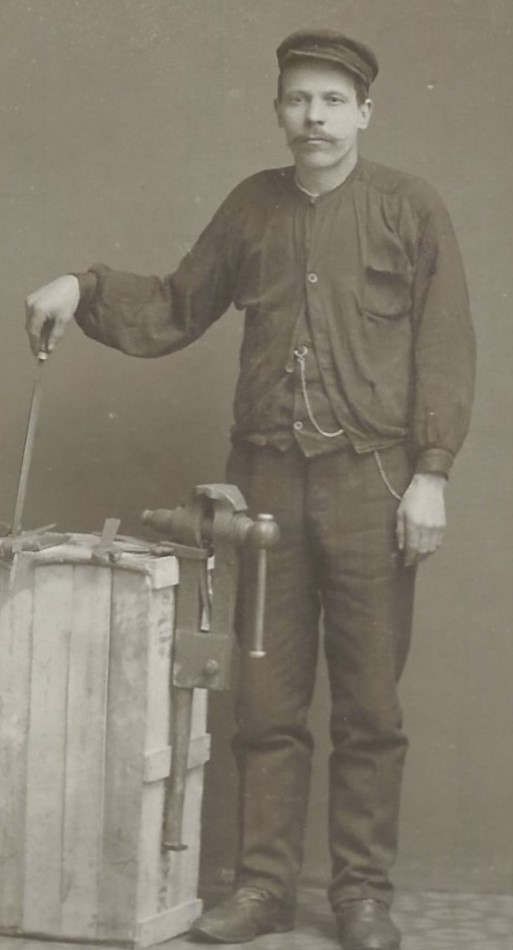 This carte de visite photo is special because it is an occupational photograph. Many vintage image collectors search for and value occupational photographs. This CDV features a man at work but what is his occupation? It is clear that a clamp vice is one of the tools that he utilizes. There are strips of some material on the table in front of the vice. Are they strips made from medal? The worker appears to be wearing a uniform. I wish I knew his story? The photographer of this image is named Vaino Anshelm Rautell. As a photographer, he went by the name of VA Rautell. He was born in Lahti, Finland in 1875, and died there in 1942. Rautel studied art (painting) in Helsinki during the early 1890’s. He worked as a photographer in Lahti from about 1895 through 1927. In 1918, he photographed events of the Finnish civil war in Lahti. Teresia Dahlbom, his wife (m.1905) , worked with him in his studio. The couple divorced in 1927 and it appears they both ended their photography careers that same year. The pair had two children. At least one of Rautell’s photographs can be found in the collection of the Finnish Museum of Photography in Helsinki. SOLD
 This vintage real photo postcard features a close-up view of four uniformed Viennese tea room waitresses. The three standing women are dressed nearly identically while the seated woman is dressed notably different. Is the seated woman the tea room’s manager or owner? You may be wondering how I know that these ladies are tea room employees? Actually, I don’t. I am just repeating what I was told by the previous owner of this photo postcard. Of course, I may be wrong about the women’s occupation. However, I am certain about the identity of the photographer of this portrait. I am also certain that he was very talented. The Cabinet Card Gallery has three of his photographs in it’s collection. They are beautiful cabinet card portraits. The photographer’s name and address are embossed near the bottom right hand corner of this postcard. The photographer is S. Weitzmann and his studio was located in Vienna, Austria. The studio won medals at exhibitions Paris, London, and Grand Prix. Weitzmann is mentioned in a book entitled “Hitler’s Silent Partners : Swiss Banks, Nazi Gold, and the Pursuit of Justice” (2011). The book states that Weitzmann was the foremost portrait photographer in Vienna and worked for the Austrian Royal Court before it’s demise in 1918. SOLD]
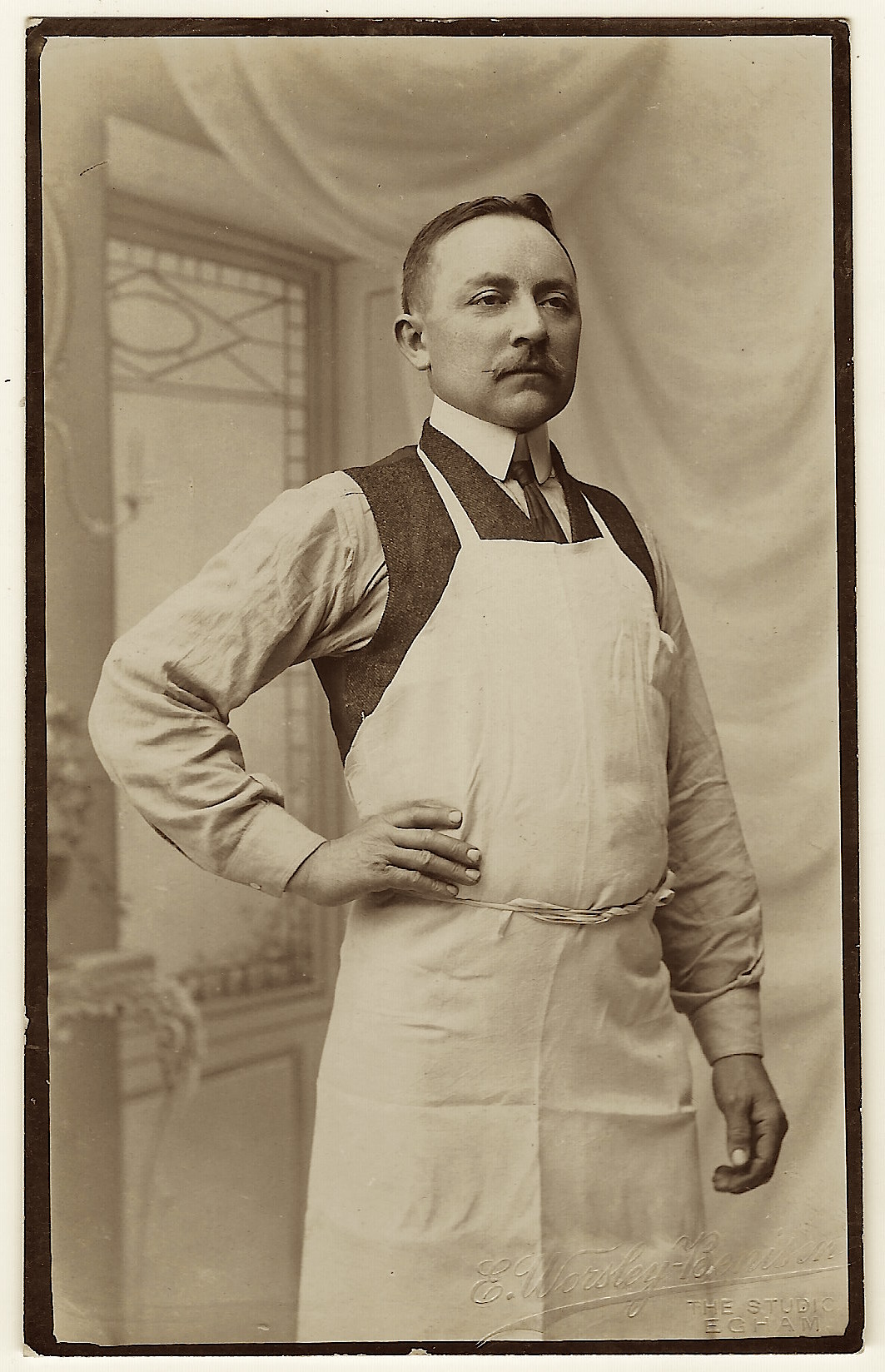
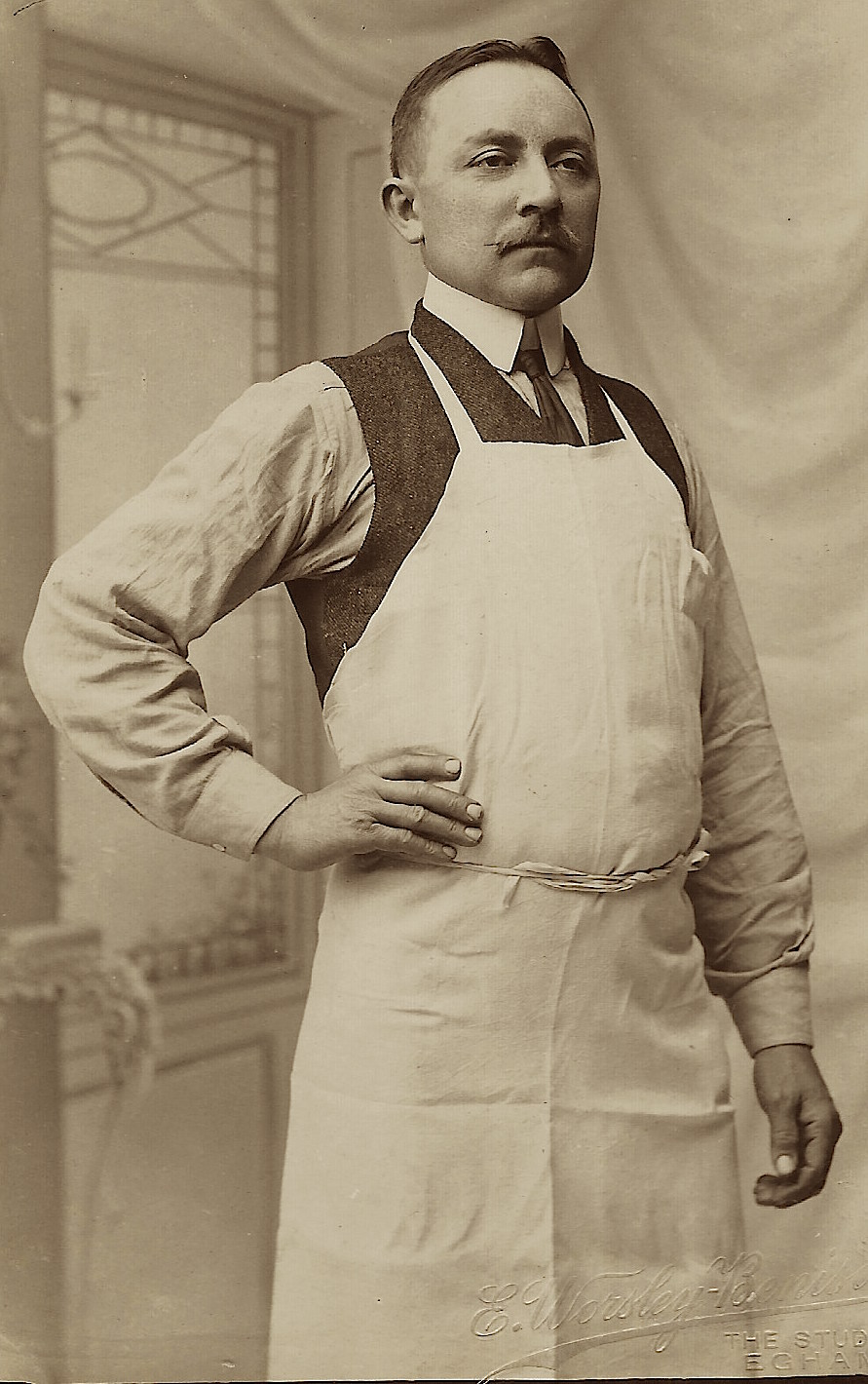 This vintage real photo postcard is quite unique. The photograph features a gentleman wearing a long apron. He is obviously dressed for work but for what kind of work? Is he a butcher, baker, or candlestick maker? Perhaps he is a physician or possibly a photographer? He is dressed well, wearing a nice vest and neck tie. He looks quite intense as he poses for his portrait at the E Worsely-Benison studio in Egham, England.
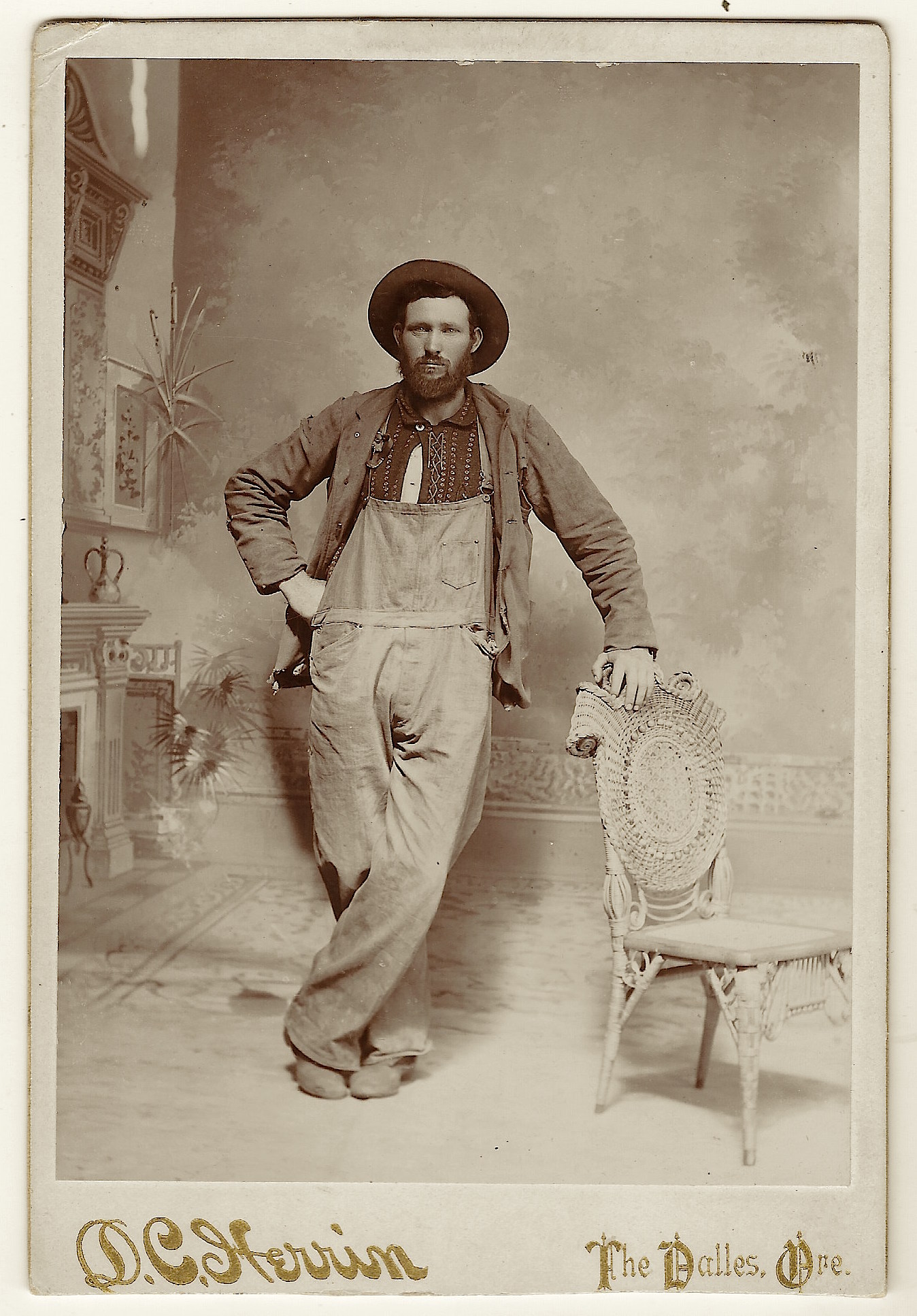 A bearded gentleman poses for his portrait at the D. C. Herrin studio in The Dalles, Oregon. The subject is wearing overalls and his attire indicates that he is a workman of some type. He is resting his hand on a wicker chair and is striking an unusual pose in that his feet are crossed at the knee. The gentleman looks rather bored as he endures the process of having his portrait taken. David C. Herrin began his photography career in Medford, Oregon (1888). He and his photographer wife, Margaret, operated a studio in The Dalles from 1892 through 1898. The couple moved to Portland, Oregon in 1899 and joined Frank G. Abell for establish Abell & Herrin photography studio. David Herrin died in 1909. An interesting side note concerns the name of the town that hosted the above photographic session. The city of “The Dalles” is named after a rock. Dalle is a French word meaning flagstone. The name of the town refers to the basalt rocks carved by the Columbia River on which the town is located. This cabinet card is in very good condition (see scans).



 THE CABINET CARD GALLERY