
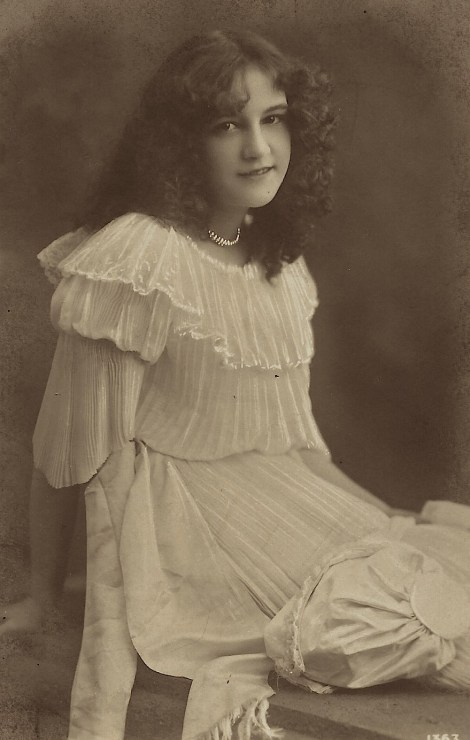
This vintage real photo postcard features stage actress Kathleen Courtney. Preliminary research yielded little information about this pretty theatre actress indicating that she was likely a minor player. However, Britain’s National Portrait Gallery has five photographs of Miss Courtney in their collection. Illustrated Sporting and Dramatic News (1901) mentions that Kathleen Courtney, at age thirteen, understudied for adult actress, Ellaline Terriss in a theatre production. Tattler: An Illustrated Journal of Society Drama and Sport (1917) reports that Courtney was appearing in “Maid of the Mountains” at Daly’s theatre. These two articles disclose that Kathleen Courtney began as a child actress and that her career lasted at least 16 years. Given that we know that Kathleen Courtney was thirteen years of age in 1901, we can extrapolate that she was about seventeen years old at the time of this photo. More extensive research is required to illuminate the details of Courtney’s personal and professional life. This postcard was published by the Rapid Photo Company as part of a series (no. 1363). The company existed between 1901 and 1910. It was located in London. The company is best known for their portraits of actresses. The card was printed in London, England. The 1905 postmark is from the town of Milnrow, which is located in Greater Manchester, England. The recipient of the card lived in Blackpool, a seaside resort on the Irish Sea coast of England. SOLD


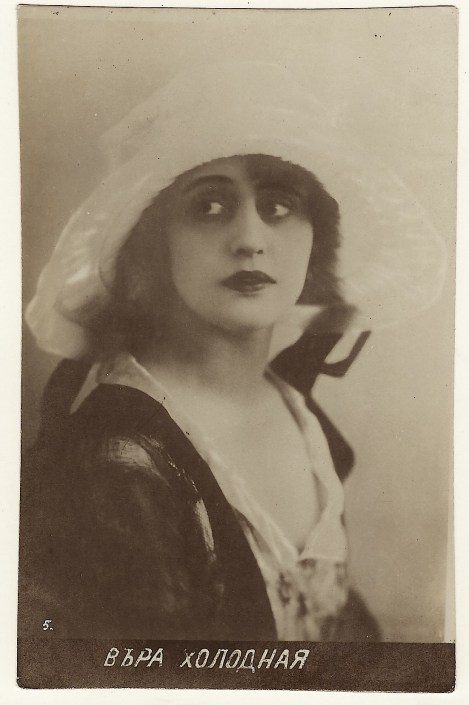
 This vintage real photo postcard features Russian actress Vera Vasilyevna Kholodnaya (1893-1919). Sometimes she is referred to as Holodnaja). She was the first star of Russian silent film. The number of films that she appeared in, is unknown. It is estimated the number of appearances is somewhere between fifty and one hundred. It is unfortunate that only five of her films survived the passage of time. She was born in Poltava which was part of the Russian Empire, and is now located in the Ukraine. At the age of two, she moved to Moscow to live with her grandmother. As a child, she fantasized about becoming a classical ballerina. She eventually enrolled in the Bolshoi Theatre ballet school From early childhood, she participated in family theater productions, While attending her school prom to celebrate her graduation she met Vladimir Kholodny, whom she married in 1910. He is known as one of Russia’s first race car drivers. The pair had two children. In 1908, after seeing actress Vera Komissarzhevskaya in a stage role, she decided that she wanted to pursue a career in films. She sought out Vladimir Gardin, a major Russian film director, and he gave her a minor role in Anna Karenina. In 1915, film director Yevgeni Bauer was searching for an actress who possessed great beauty. After meeting Vera Kholodnaya, he found the enchantress that he was looking for. Bauer’s film was a resounding success. He then made a second film starring Kholodnaya. These two Bauer films made Vera a major celebrity. She soon became known as “the Queen of Screen” and had great successes with other films. By 1918, she was a film phenom. When Russia entered World War I, her husband joined the military. She participated in charity concerts to support the soldiers and their families. It is reported that she was “worshipped” by soldiers. By the time of the Russian Revolution (1917), a new Kholodnaya film was released every three weeks and she continued to experience acclaim and success. Around this time, the actress moved with her film company to Odessa. She died there, at age 25, during the 1918 flu pandemic.This version of the flu, was known as the “Spanish Flu” and it infected 500 million people around the world between 1918 and 1920. Estimates are that between 50 and 100 million people died during the pandemic. (SOLD)
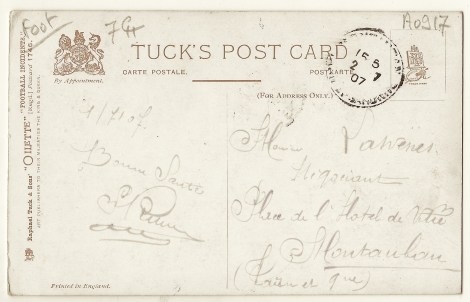
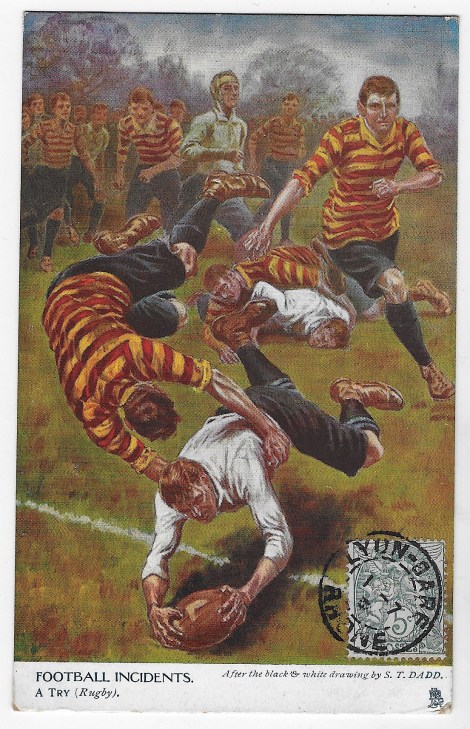 This action packed postcard features a rugby player getting past the defense and making a score (try). In rugby, a “try” earns moret points (5) than other type of scores. A “try” occurs when a player puts the ball down inside the opposing team’s designated area near the goal. This postcard was published by Raphael Tuck & Sons and is part of the “Oilette ” series (no. 1746). Oilette cards are copies of the work of commissioned artists. This postcard is part of a sub series entitled “Football Incidents”, and the card itself is captioned “A Try”. This rugby image was modeled after a black & white drawing by S. T. Dadd. The postcard was postmarked in 1907, but was issued in 1904. Raphael Tuck and his wife started their photography business in 1866 in London. Their store sold pictures, greeting cards, and in time, postcards. Their success came from the sale of postcards during the late 1890’s and early 1900’s. In the early 1900’s the firm conducted postcard competitions for collectors of Tuck postcards. These competitions offered cash prizes and they were very popular. The winner of one of these competitions had a collection consisting of over twenty-five thousand cards. Three of Tuck’s four sons participated in the business. The company was devastated by German bombing during World War II. In 1959 the company merged with two other printing companies. This postcard is in very condition (see scans).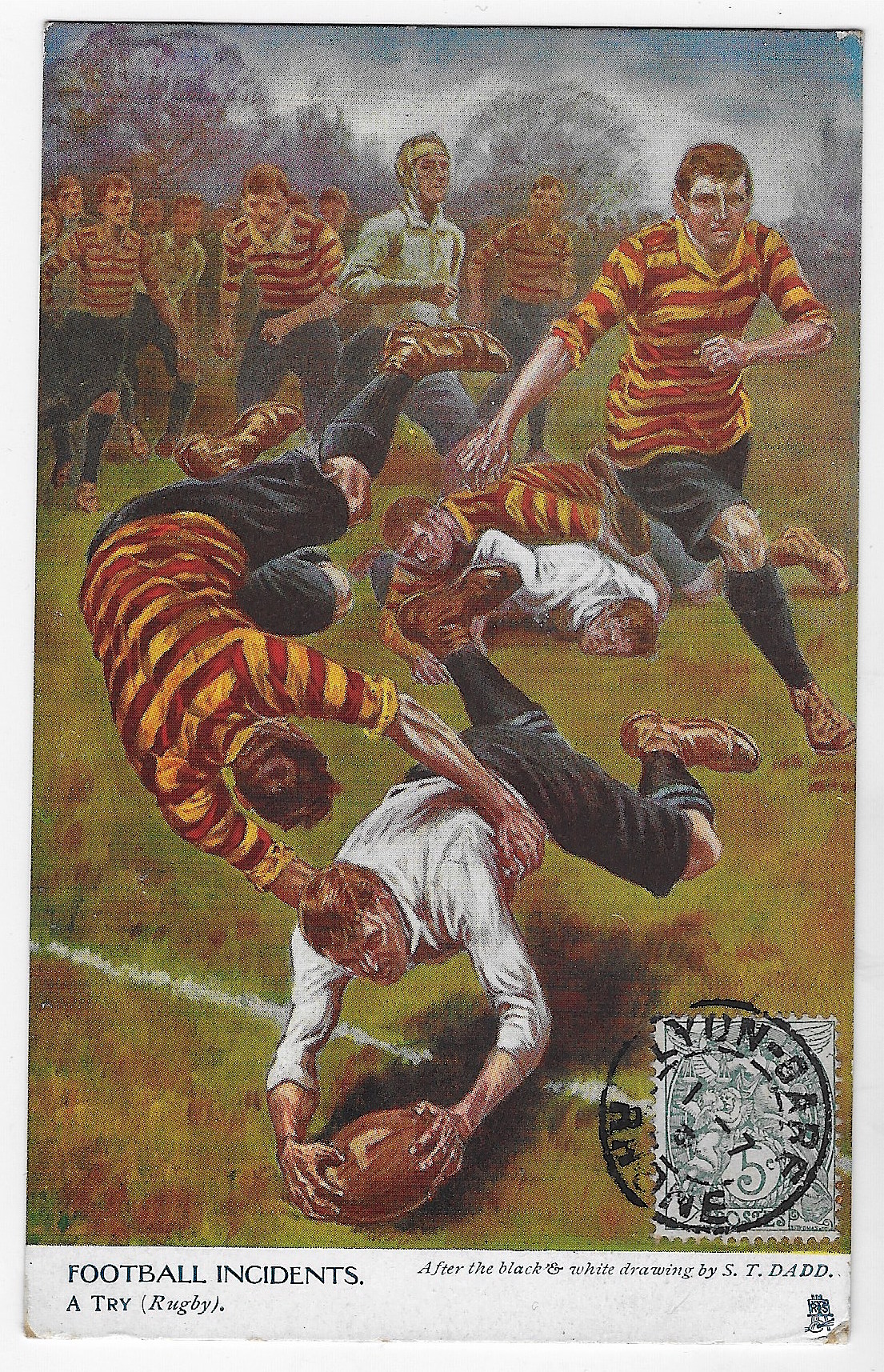

 This vintage real photo ethnographic postcard features a pretty Vietnamese woman dressed in traditional clothing. This portrait postcard was published in 1907 by P. Dieulefils in the city of Hanoi. Pierre Dieulefils was the first established professional photographer in Hanoi. In addition, he was a postcard editor and explorer. He had an excellent reputation as a photographer throughout Europe and Indochina. He won many medals at Universal Exhibitions. It is estimated that he produced approximately five thousand photos and postcards and he is considered one of the greatest photographers of the region. His photographic expeditions included such locales as Vietnam, China, and Cambodia. This postcard is part of a series (no. 7). As of this writing, the Cabinet Card Gallery has four of Dieulefils’s photo postcards in it’s collection. All four are photographs of Tonkin inhabitants and all are part of the same series.. This photo postcard is in very good condition (see scans). SOLD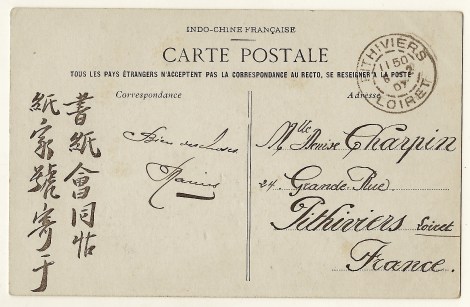
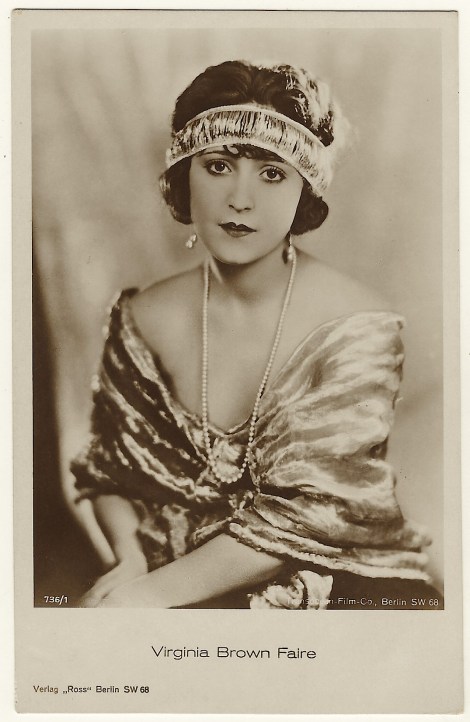
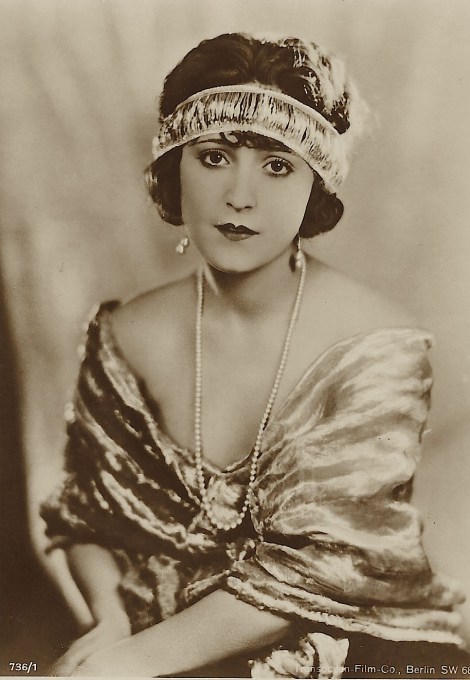 This vintage real photo postcard features American silent and sound film star, Virginia Brown Faire (1904-1980). She was born in Brooklyn, New York. In 1919, after being a winner of the Motion Picture Classic magazine’s “Fame and Fortune” contest, she went to Hollywood. At age 15, she was hired by Metro studio. She then appeared in movies for Fox, followed by Universal. Her first film “Runnin’ Straight” (1920) was a Hoot Gibson short western. She was the leading lady for John Gilbert in Monte Cristo (1922). She was chosen as one of the WAMPAS Baby Stars in 1923. Included in this group of beautiful actresses was Laura La Plante and Evelyn Brent. La Plante and Brent both had successful acting careers. She is most remembered for her role as Tinker Bell in Peter Pan (1924). Faire made a successful transition into sound films. Her first successful talkie was her role in Frank Capra’s “The Donovan Affair” (1929). She appeared in several westerns. Among the western stars that she played opposite to; was John Wayne,Hoot Gibson, and Buck Jones. In the late 1930’s she left Hollywood and moved to Chicago and worked in radio and industrial films. She retired in about 1935. According to the IMDb, she appeared in 74 films between 1920 and 1935. Faire had three marriages. The first, was to actor Jack Dougherty and the marriage lasted just over a year. She then married director Duke Worne, a film director. He died after three years and she then married William Bayer, a furniture manufacturer. She died of cancer in 1980. This vintage postcard was published by Ross Verlag of Berlin, Germany. It is part of a series (no, 736/1). SOLD
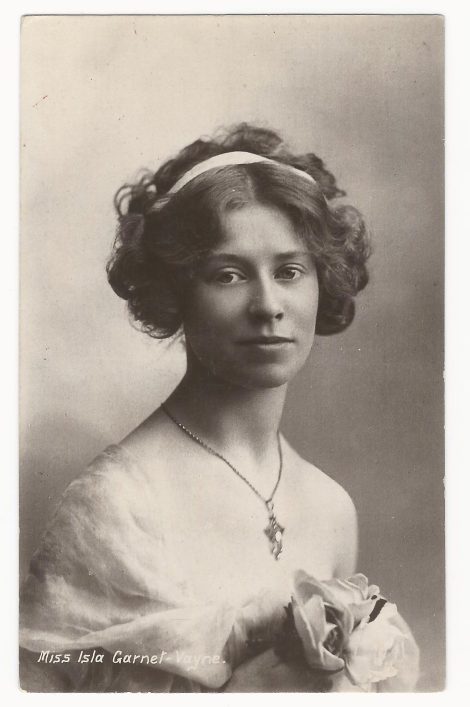
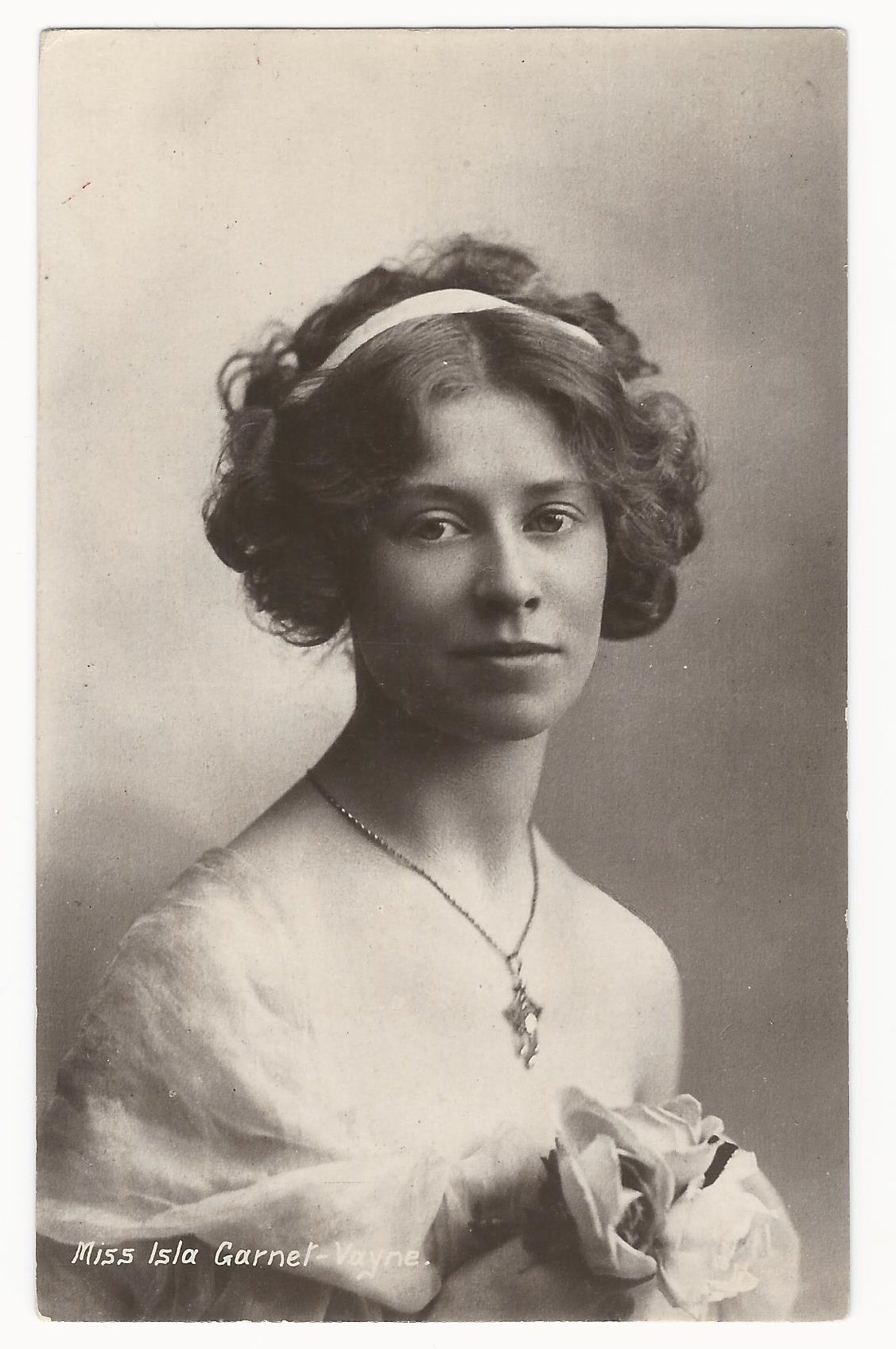
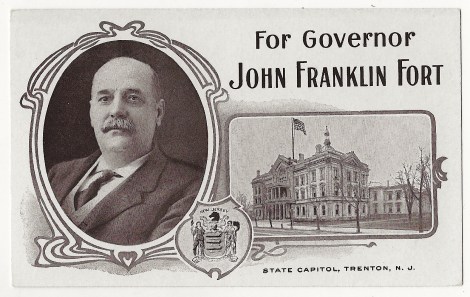
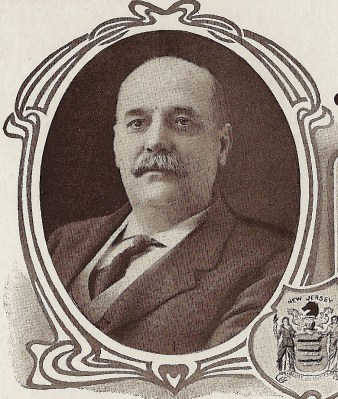 This vintage postcard was employed as advertising for New Jersey Governor candidate, John Franklin Fort (1852-1920). Fort was a Republican and won his race to become the 33rd Governor of New Jersey. He served between 1908 and 1911. He defeated Democrat, Frank S. Katzenbach. In 1908, Fort participated in New Jersey’s first radio broadcast. In 1910 he established New Jersey’s first Department of Education. Fort was followed by Woodrow Wilson in the position of Governor. Wilson went on to become the President of the United States. Fort was a lawyer. He obtained his law degree at the Albany Law School. Governor and ex civil war General, George B. McClellan, appointed Fort to serve as a judge in a Newark district court. In 1884, 1896, and 1912 he served as a delegate to the Republican National Convention. In 1900, he was appointed to the New Jersey Supreme Court. In 1915, Wilson, now President, appointed Fort to the Federal Trade Commission. He held the position for about four years but was forced to resign due to failing health. At one point,Wilson appointed Fort to act as US Ambassador to Haiti and the Dominican Republic. Besides featuring a portrait of John Franklin Fort, the postcard also displays a drawing of the state capital building in Trenton. It is interesting to note that
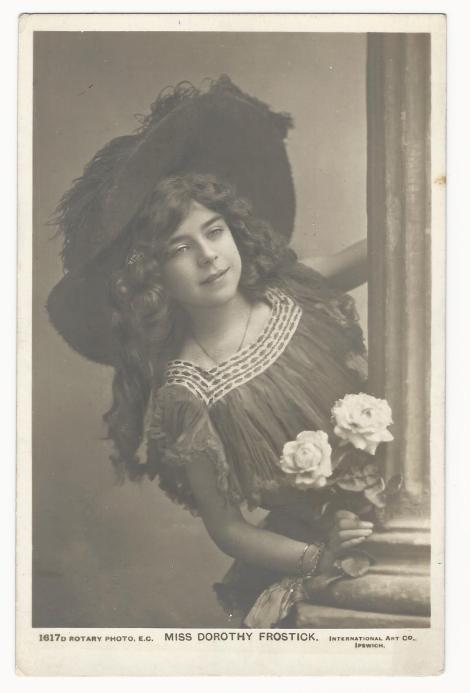 This vintage real photo postcard features English actress, dancer, and singer; Miss Dorothy Frostick. In 1901, Frostick made her debut in the successful musical dream play, “Bluebell in Fairyland”. The play appeared at London’s Vaudeville Theatre. The stars of the show were Seymour Hicks and Ellaline Teriss, a theatrical married couple. Frostick appeared again with the couple in “The Cherry Girl” (1903) and in a revival of Bluebell in 1905. There is a void of information about Miss Frostick until 1912 at which time she joined a pierrot group, “The Quaints”. She appeared with the group until at least 1914. Her final documented London appearance was in a musical and dance production, “The Latest Craze” (1919). The show bombed and closed after twenty-five performances. A portrait of Dorothy Frostick appears in England’s National Portrait Gallery. The photo on this postcard was produced by the International Art Company, which was based in Ipswich, England. This postcard was published by Rotary Photo (active 1897-1916) as part of their Rotary Photographic Series (no. 1617D). SOLD


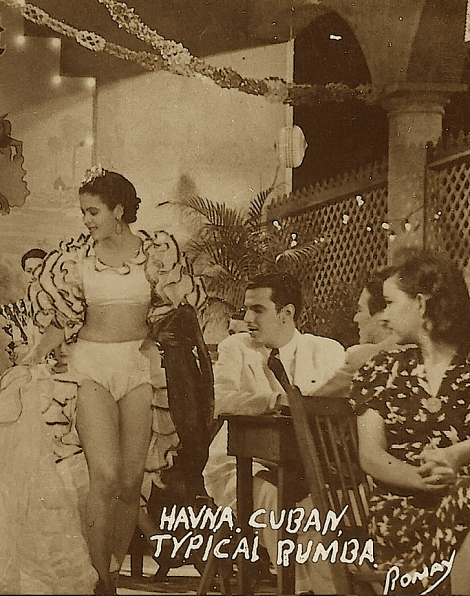 This vintage real photo postcard captures a glimpse of latin social and dance history. This is a photograph of a Havana, Cuba, nightclub in which the patrons participate in a festival of music and dance. The featured dance is the rumba. I have seen two other postcards in this “Typical Rumba” series. This postcard is by far the nicest of the three. The photographer has signed the photo with the name “Ronay”. A sign on the wall states “La Comparsa”. A comparsa is a group of dancers, singers, and musicians that perform in carnival and other festivities in Latin America and Spain. The most well known comparsas are the ones that take part in the “Carnival of Santiago de Cuba”. Does the United States have Comparsas? The most similar carnival held in the United States, according to some writers, is Mardi Gras in New Orleans. Cuban comparsas originate in the eastern part of the island, specifically the city of Santiago de Cuba. The singers, musicians and dancers form the “conga”, the ensemble that performs the canrival music, Havana has it’s own version of carnival. Each city has specific comparsas that tend to perform there. The term “rumba” refers to a style of music and dance. The rumba was exported by Cuba to North America, much like it’s replacement, salsa. The history of the rumba, as well as Comparsas, is much too complex and detailed to be adequately presented in this description. This postcard is from circa 1950 and it is in excellent condition. (see scans). (SOLD)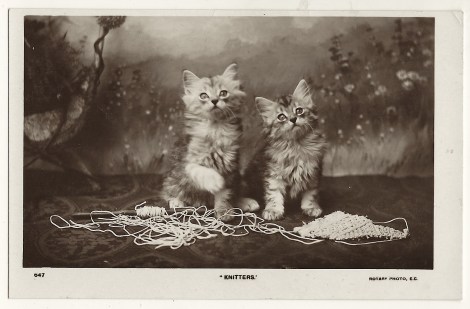
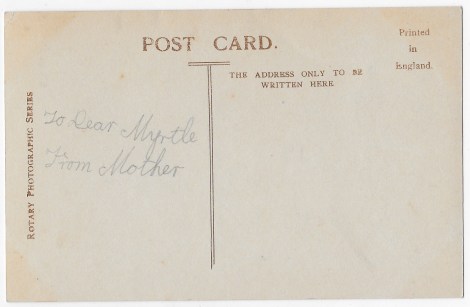
 This vintage real photo postcard is captioned “knitters”. This photograph captures two adorable kittens playing with knitting. The postcard was published by Rotary Photo as part of a series (no. 647). The card is from circa 1910’s and is in very good condition.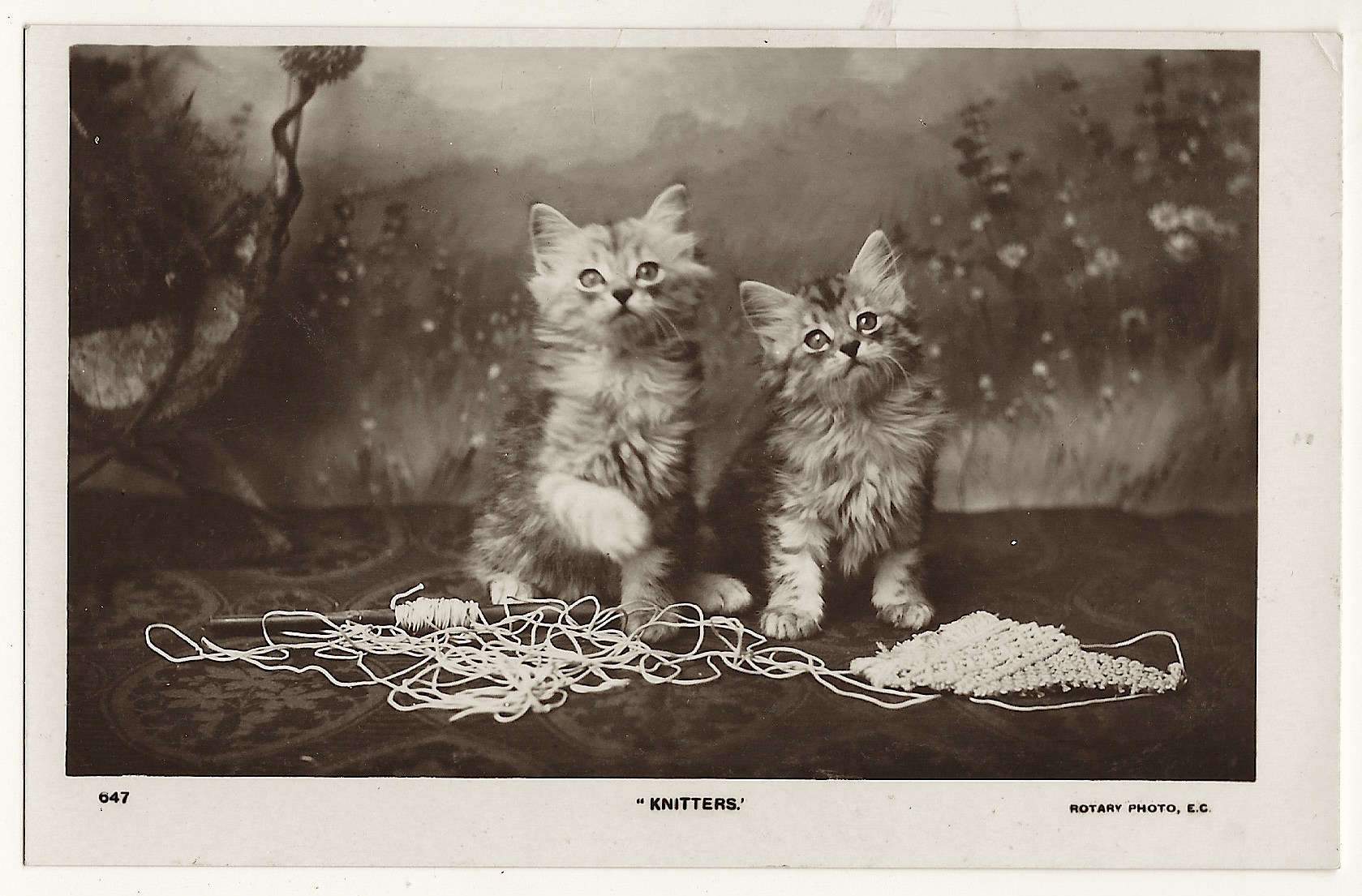


 THE CABINET CARD GALLERY