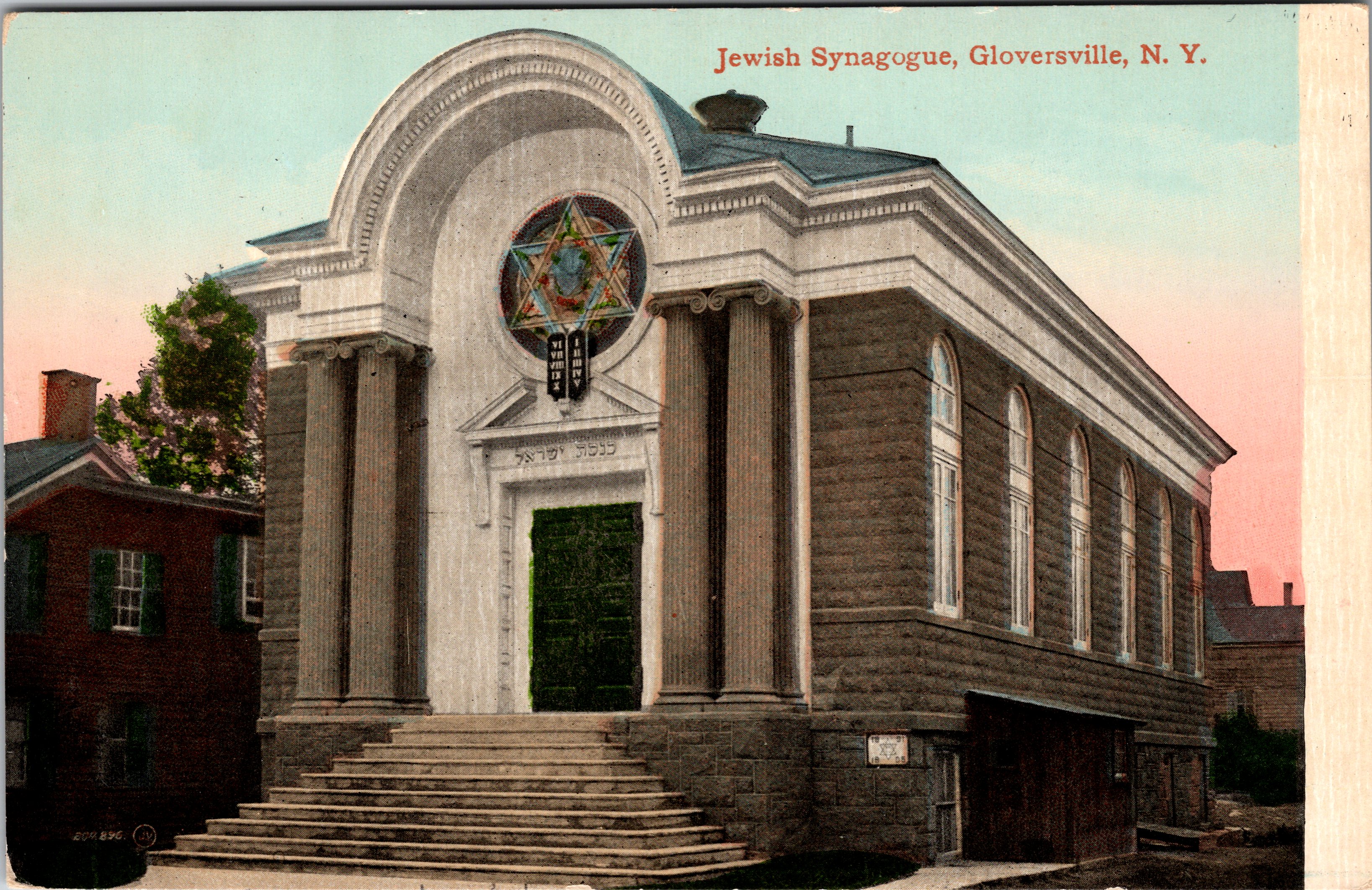
This vintage postcard features the Jewish synagogue located in Gloversville, New York. Note the Star of David window. Gloversville is a community located in upstate New York. German Jews settled in the area in th 1850’s. This turn of the century (c.1900’s) postcard was published by V. & Sons (New York and Boston) and printed in the United States. SOLD
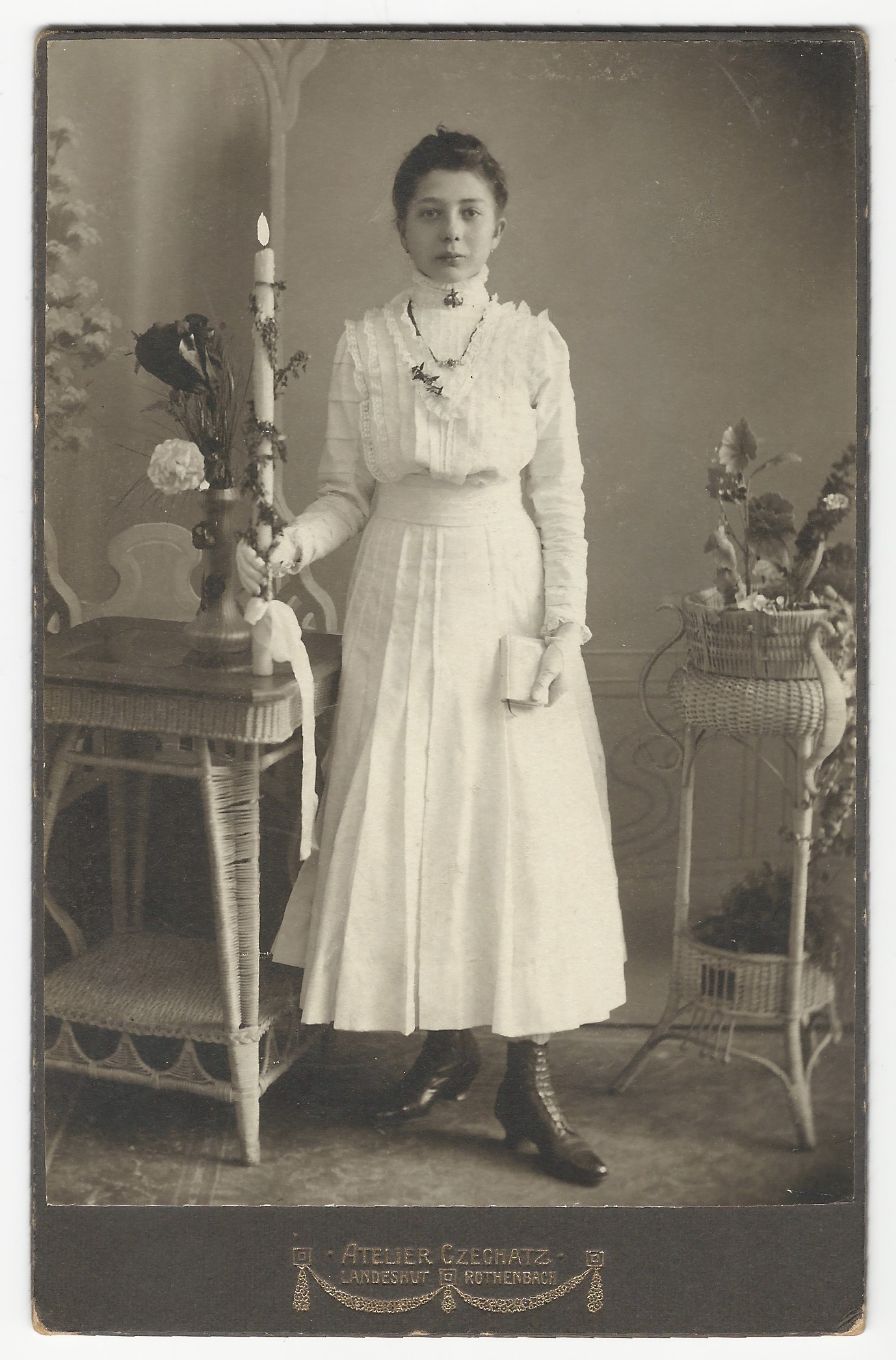
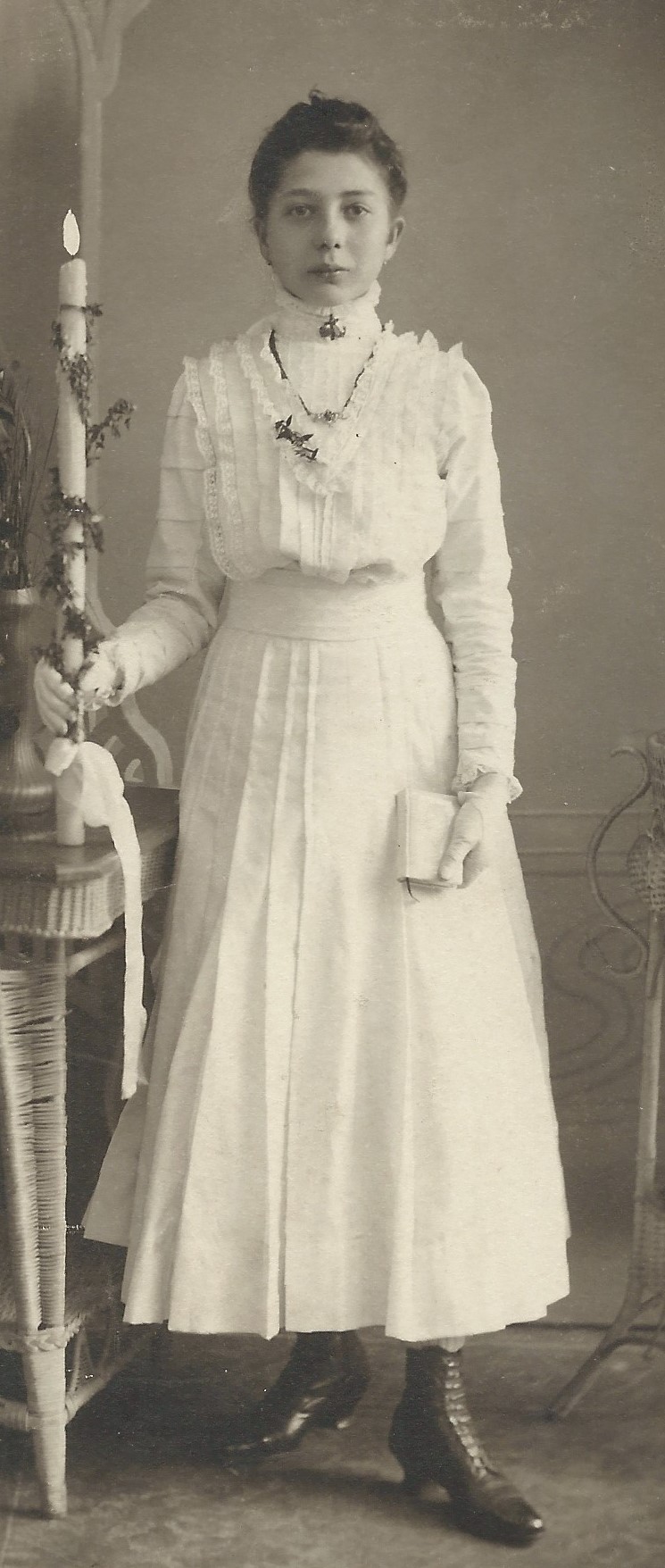
This cabinet card features a young girl posing for her first communion portrait. The photograph was taken at one of the two locations of the Czechatz studio. The sites of these two studios were Landeshut (Poland) and Rothenbach (Germany). Landeshut is also known as Kamienna Gora. This cabinet card is in excellent condition (see scans).
This real photo postcard is available for purchase at my store, The History Peddler, for $19.85 or best offer.
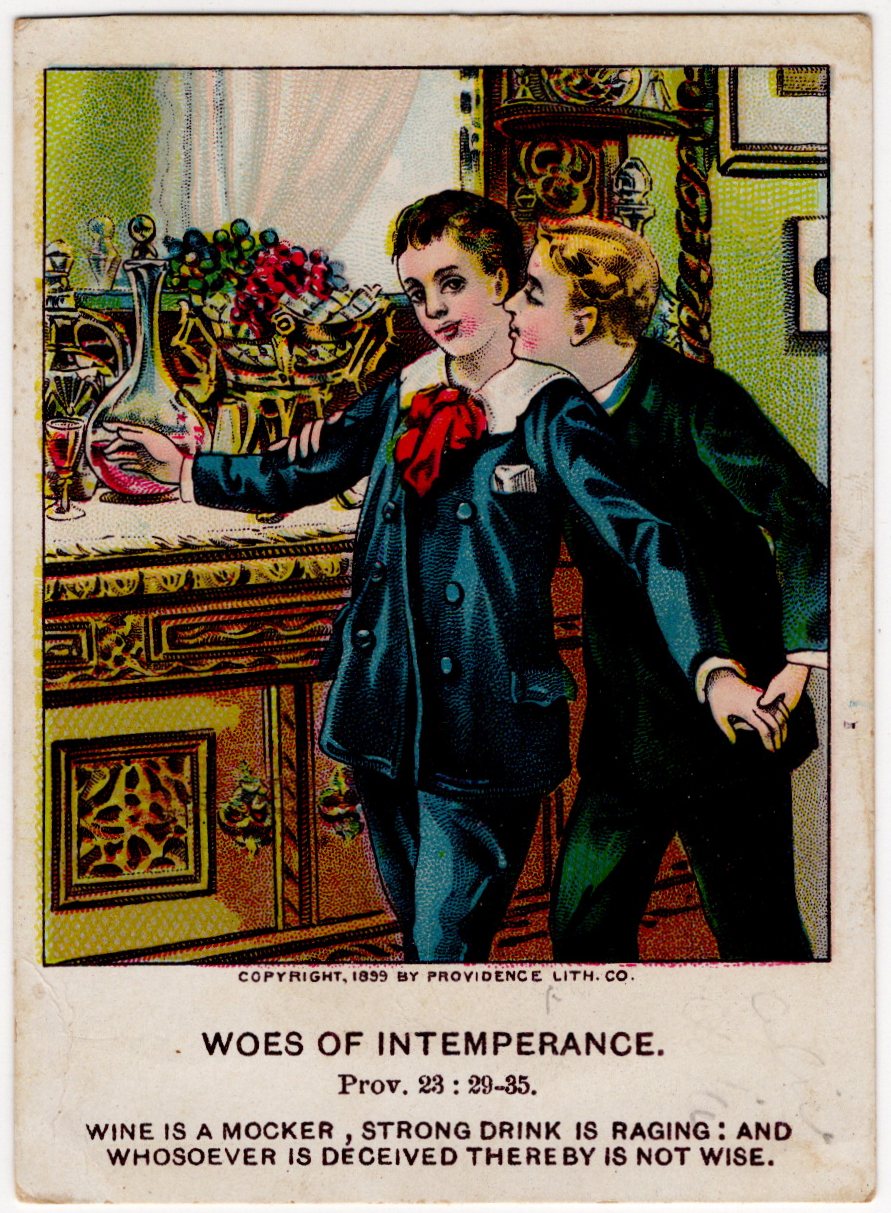
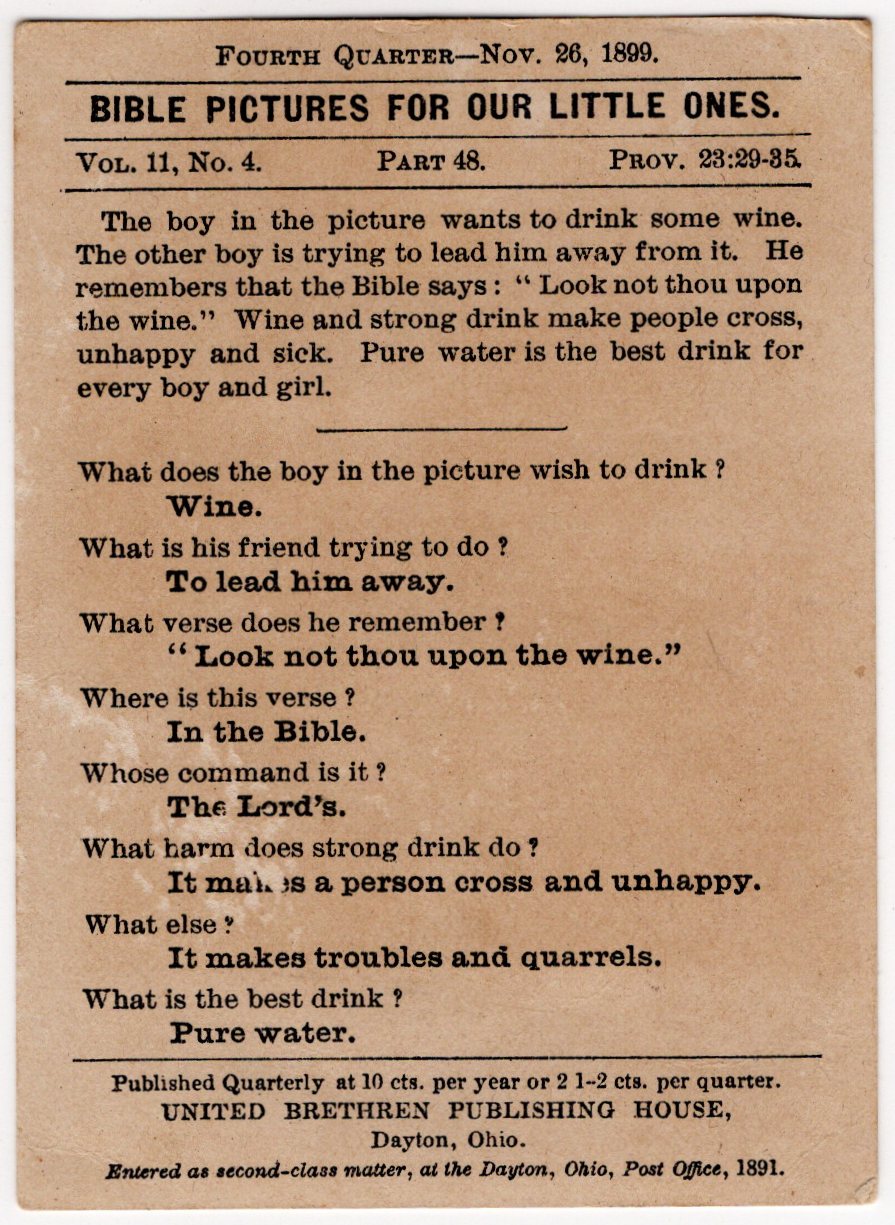
This original illustrated card dates to 1899 and was issued as part of the religious educational series “Bible Pictures for Our Little Ones,” published by the United Brethren Publishing House of Dayton, Ohio. The front features a vivid chromolithograph illustration titled “Woes of Intemperance,” copyrighted in 1899 by the Providence Lithograph Company, a major American lithographic firm known for high-quality color printing in the late 19th century. The scene depicts two well-dressed boys in a domestic interior, standing beside a sideboard laden with glassware and wine. One boy reaches toward a glass of wine, while the other gently restrains him, attempting to lead him away. The image is deliberately moralistic, visually reinforcing the biblical warning against alcohol consumption. Beneath the illustration appears the scripture citation Proverbs 23:29–35, followed by the admonition: “Wine is a mocker, strong drink is raging: and whosoever is deceived thereby is not wise.” The reverse contains a didactic lesson sheet, clearly dated Fourth Quarter—November 26, 1899, and intended for use in Sunday schools or home religious instruction. It explains the image in simple language, emphasizing temperance and obedience to scripture, and concludes with a series of question-and-answer prompts designed for children, reinforcing the moral lesson that pure water is the best drink. Items like this were meant to be both instructional and collectible, and they reflect the strong influence of the 19th-century temperance movement, which intertwined religious education with social reform. Survival rates are relatively low, as these cards were often handled by children and discarded after use. (SOLD)
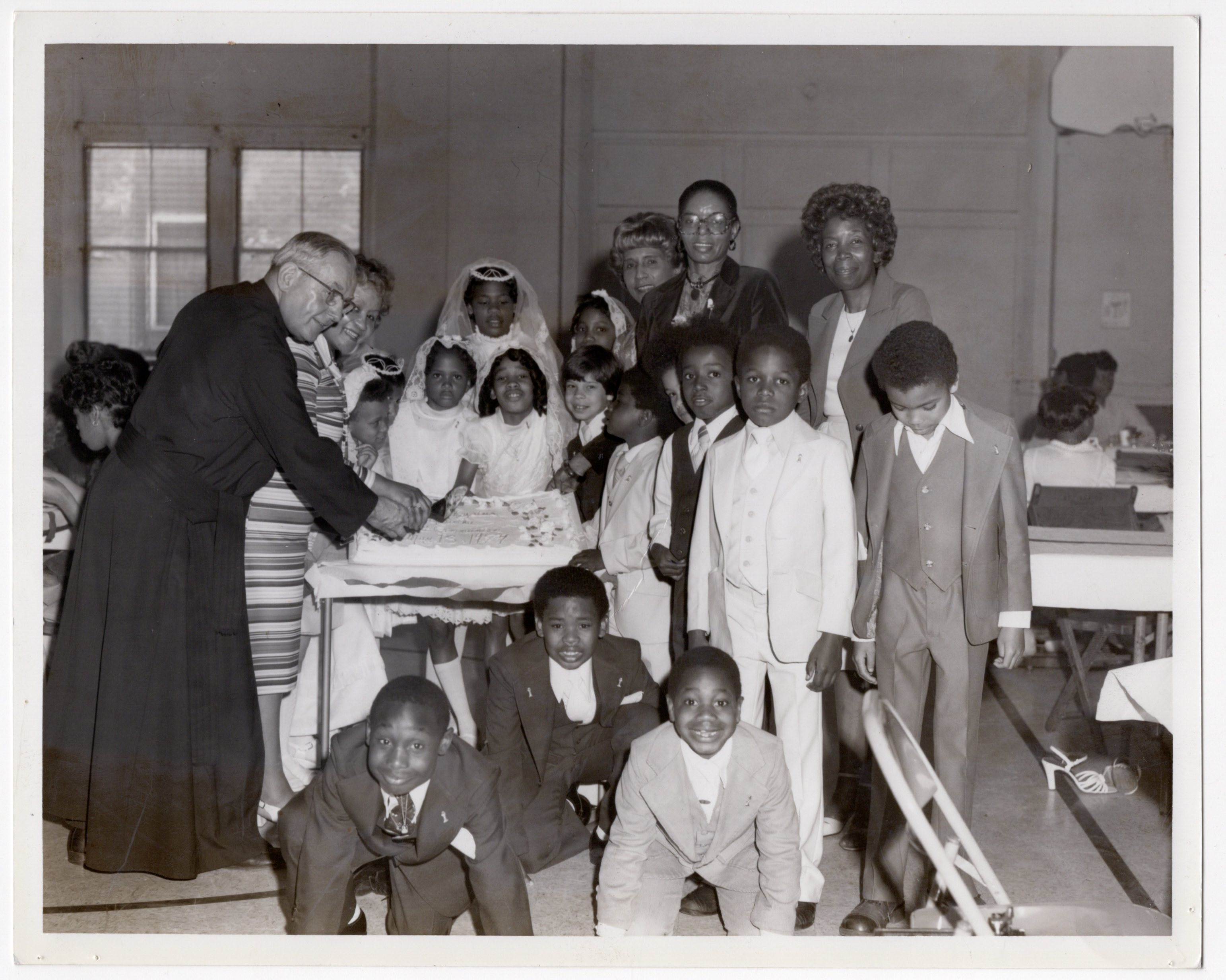
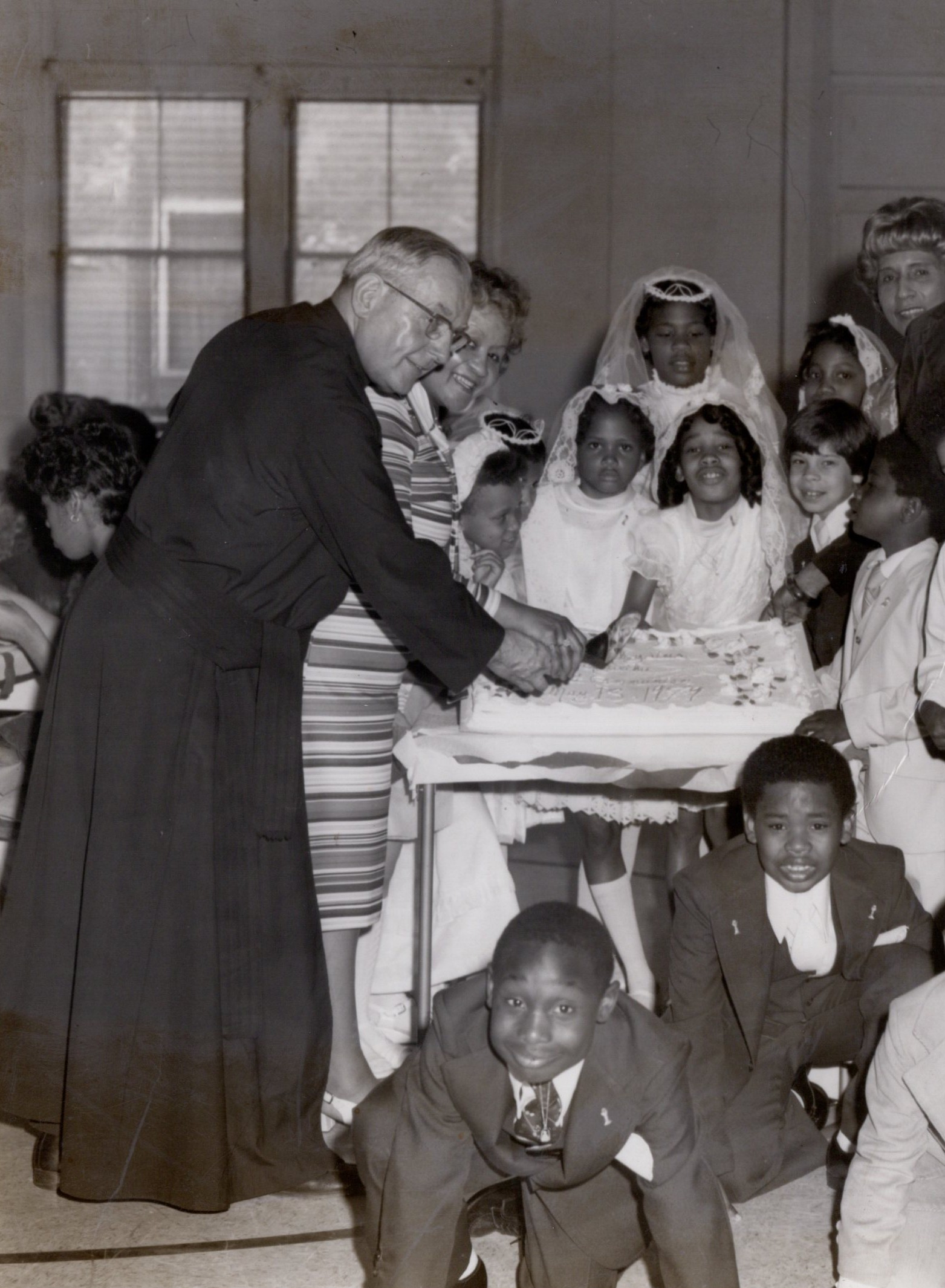
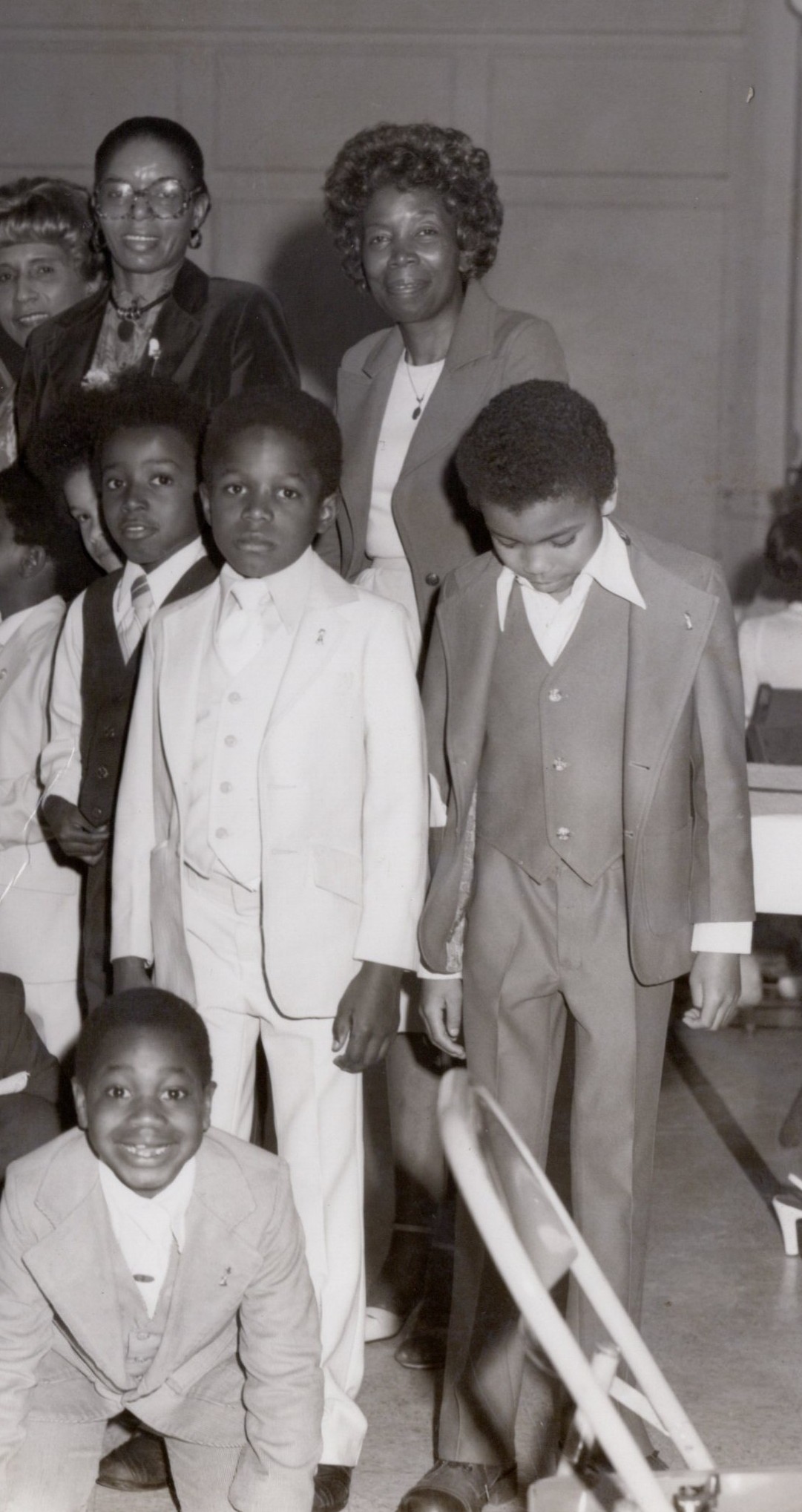
This original vintage press photograph (measuring approximately 8 by 10 inches) beautifully captures a celebratory moment in a church or parish hall, taken by noted African-American Cleveland photographer Jimmy Baynes. The scene shows a priest, dressed in his clerical robes, cutting a large frosted cake surrounded by children and adults. The children are dressed formally, with several girls wearing white communion dresses and veils, suggesting this may be a First Communion or confirmation celebration. The boys wear smart suits in both light and dark colors, complete with ties or bow ties. Their attire reflects both the solemnity of the religious occasion and the joy of the gathering. Some children smile brightly toward the camera, while others look on with curiosity and seriousness, lending authenticity and personality to the scene. Behind the children stand several women, elegantly dressed, who appear to be family members or parishioners sharing in the celebration. The priest’s presence at the cake table underscores the ceremonial importance of the event, blending sacred tradition with communal joy. The composition is lively and warm, with details like the children crouched at the front grinning toward the photographer, the ornate veils of the girls, and the cutting of the cake all contributing to a vivid record of mid-20th century African-American community life. The photographer of this photograph, Jimmy Baynes was known for his ability to capture the essence of African American life, culture, and entertainment from the 1950s through the 1980s. Originally a postal worker, Baynes pursued photography as a passion, ultimately founding Baynes Foto Service. His work chronicled the vibrancy of mid-century African American social life, from intimate gatherings and beauty contests to the pulsating energy of live music performances and political events. Baynes photographed some of the most iconic figures in entertainment history, including Aretha Franklin, Louis Armstrong, Count Basie, Mahalia Jackson, Louis Jordan, Jerry Lee Lewis, the Platters, and the Drifters. His ability to capture both candid and staged moments gave his work a lasting impact, preserving the rich history of Cleveland’s African American community. His legacy is recognized today by institutions such as the Rock and Roll Hall of Fame and Museum Library and Archives in Cleveland, which houses a collection of his photographs, primarily focusing on music and entertainment. In 2010, shortly before his passing, his work was featured in the “Polaroid: Instant Joy” exhibition in Brooklyn, New York, reaffirming his role as a visual storyteller of African American life in the mid-20th century. This photograph was taken in the 1950’s. This is a powerful image not only for its documentary value but also for its warmth and charm, preserving a moment of community, faith, and celebration.(SOLD)
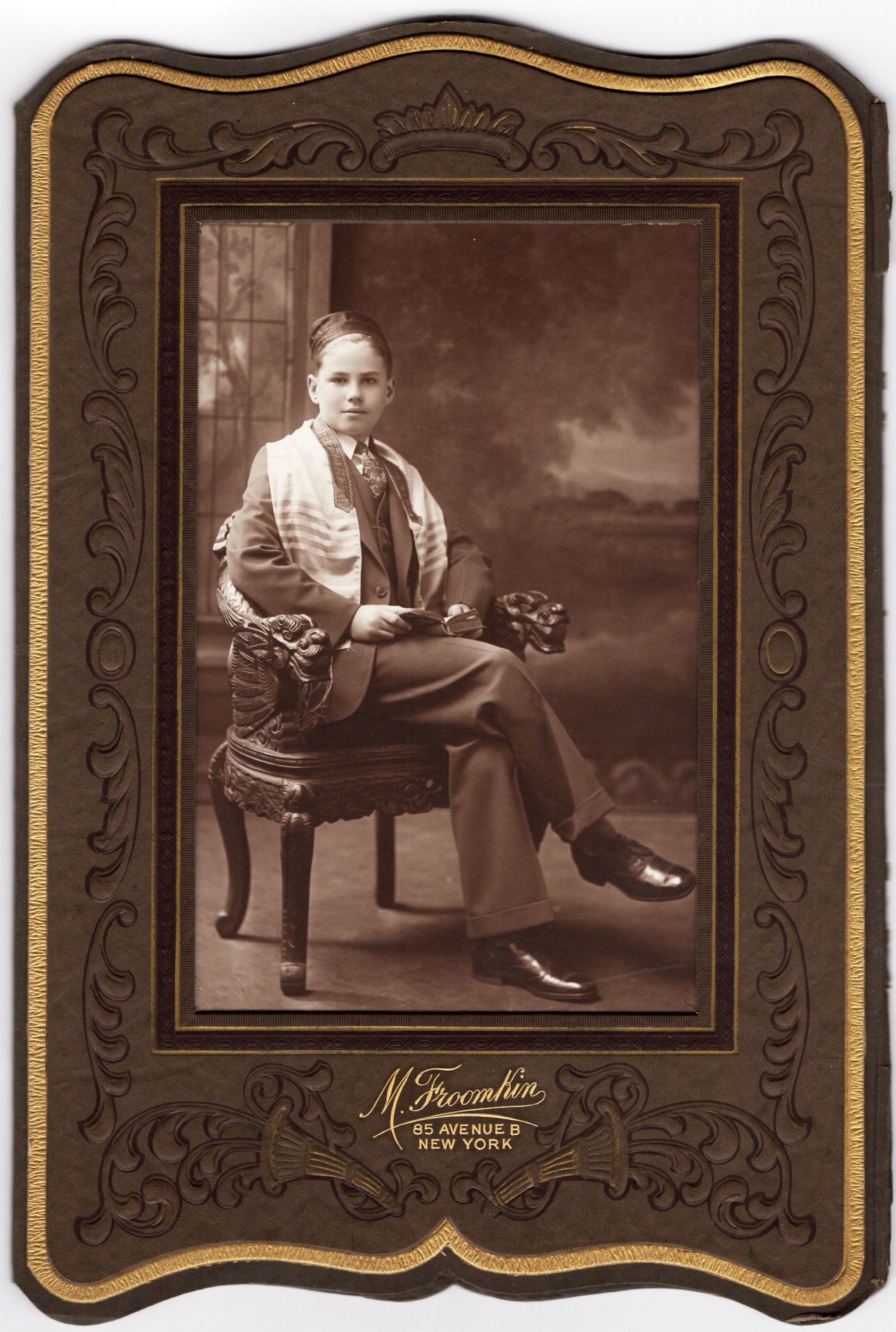
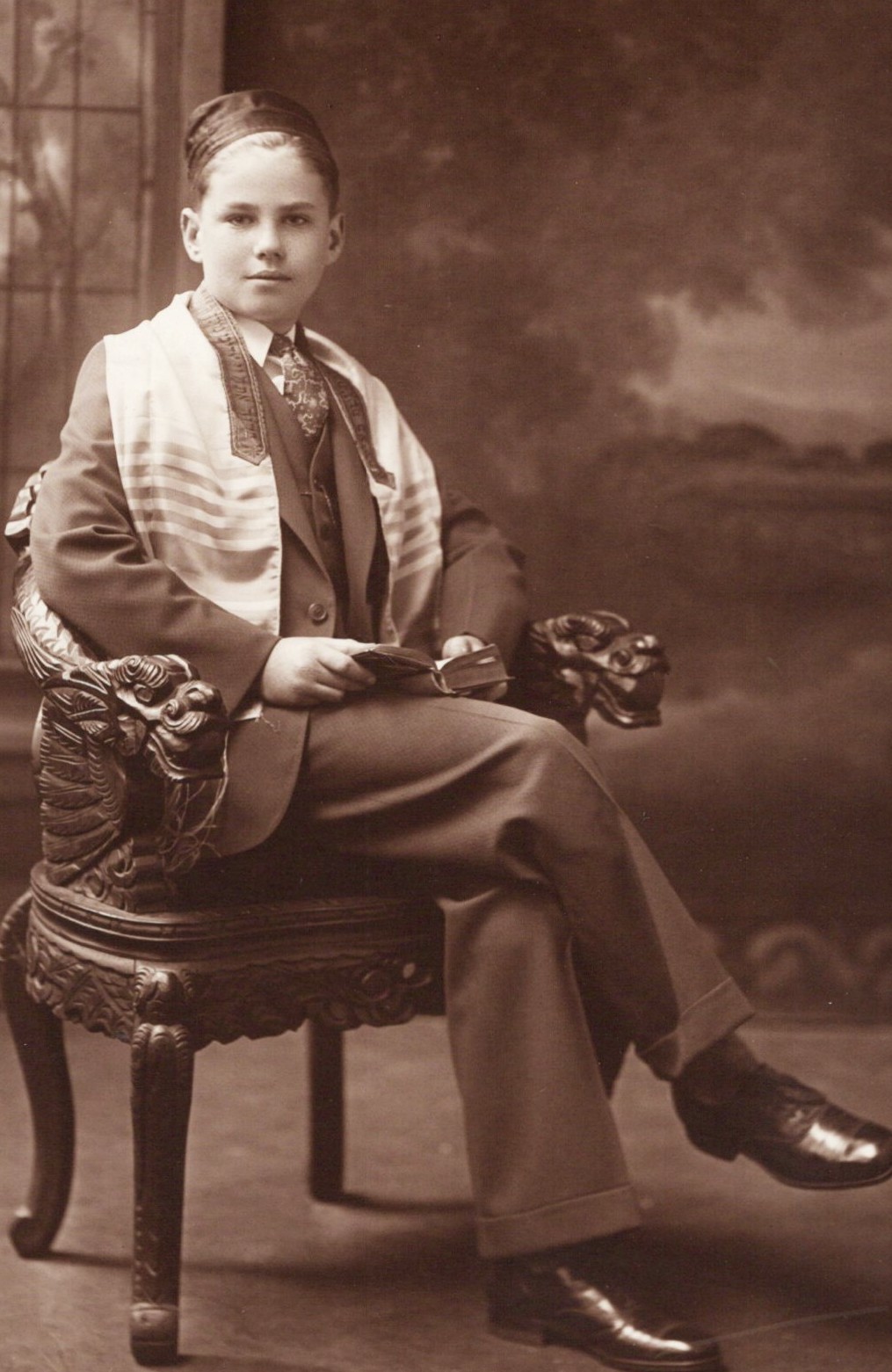
This vintage portrait photograph captures a poised young Jewish boy, likely taken around the 1920s, dressed formally for what appears to be his Bar Mitzvah. He sits confidently in a high-backed carved chair with lion-head arms, wearing a well-tailored three-piece suit. Draped over his shoulders is a traditional tallit (Jewish prayer shawl), a ceremonial item typically worn during religious rites of passage such as a Bar Mitzvah. In his hands he gently holds what appears to be a small prayer book or sacred text. His expression is one of calm maturity and seriousness, with just the faintest trace of a smile. His hair is neatly combed, and his polished shoes and well-fitted clothing reflect the importance of the occasion. The photograph was taken by Max Froomkin, a Russian-American professional photographer located at 85 Avenue B, New York—a neighborhood historically known for its vibrant Jewish immigrant community on the Lower East Side. The photograph is beautifully mounted in a decorative folder with an embossed Art Nouveau-style frame. This is a touching and visually striking example of early 20th-century Jewish portraiture in America, and it offers both historical and cultural value. (SOLD)
This cabinet card features Cardinal James Gibbons in his coronation portrait, taken around 1886. The sepia-toned photograph depicts him standing in a formal pose. He is dressed in traditional Roman Catholic clerical attire, holding a rosary in his left hand and wearing distinctive ecclesiastical garments. A crucifix is prominently displayed on the table beside him. Cardinal Gibbons is dressed in his clerical clothing. Note the following garments. 1) Cassock: A long black robe buttoned down the front, signifying his clerical rank 2) Zucchetto: A skullcap typically worn by clergy, indicating his episcopal office, 3) Roman Collar: A white collar worn by Catholic priests, 4) Sash/Cincture: A silk sash tied around the waist, symbolizing purity and obedience, 5) Surplice with Lace: A white garment adorned with lace, often worn during liturgical functions, and 6) Pectoral Cross: A cross worn on a chain or cord around the neck, signifying his role as a bishop or cardinal. Cardinal James Gibbons (1834–1921) was a prominent American prelate of the Roman Catholic Church. He served as the Archbishop of Baltimore from 1877 to 1921 and was elevated to Cardinal in 1886 by Pope Leo XIII. Gibbons was a key figure in the American Catholic Church and played a significant role in bridging the divide between Catholicism and American culture. His key achievements were as follows. 1) He was a Labor Rights Advocate. He supported the labor movement and the rights of workers, particularly during the rise of industrialization. 2) Ecumenism: Gibbons was a strong advocate for unity among Christian denominations. 3) Americanist Views: He championed the compatibility of Catholicism with American democratic values. 4) Publications: He authored The Faith of Our Fathers, a popular book explaining Catholic beliefs, which became widely read.
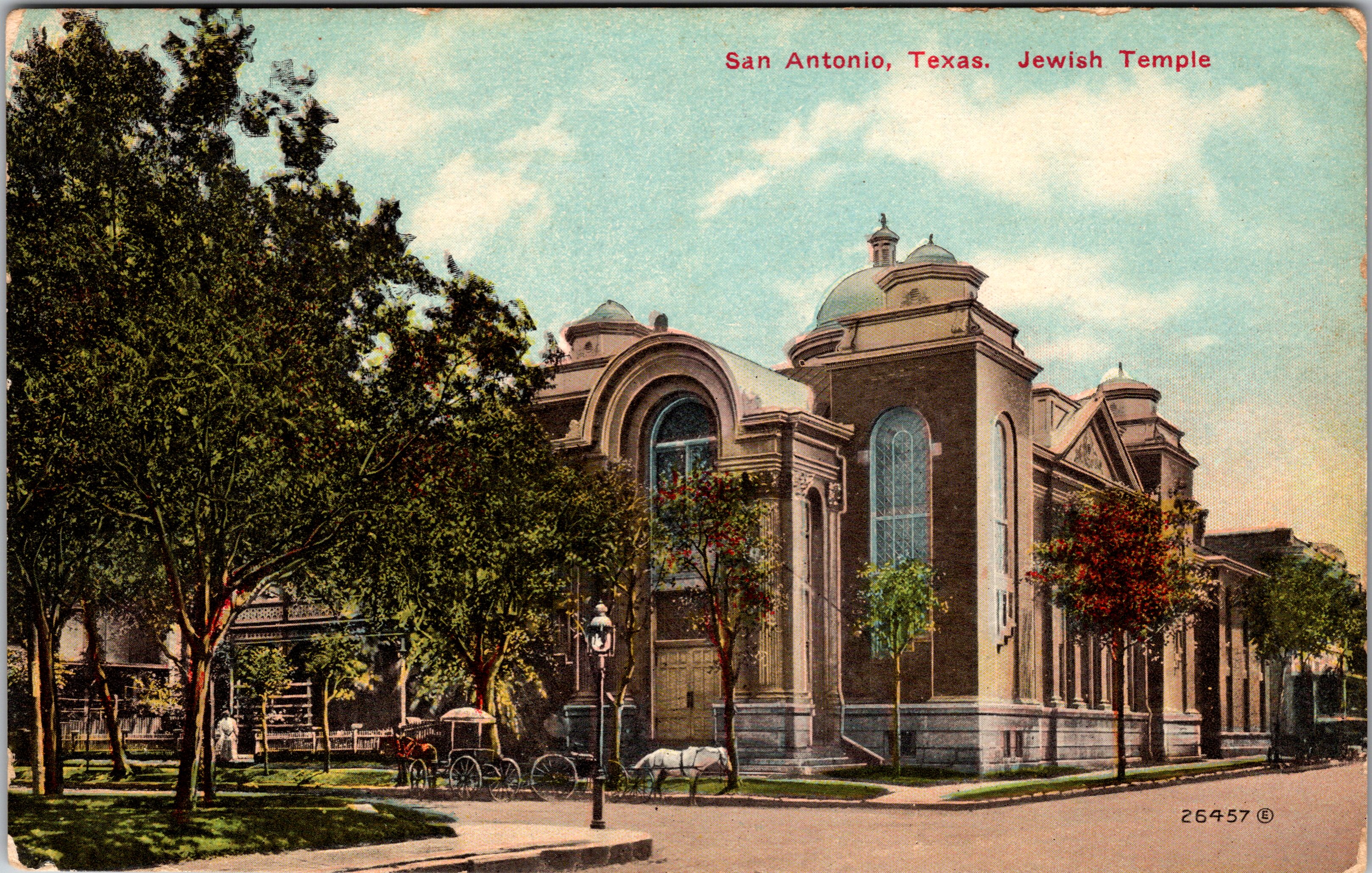
This vintage lithographic postcard features a Jewish Temple, located in San Antonio, Texas. Note the two horse and carriages at the curb in front of the temple. The temple appearing on this postcard is “Temple Beth El”. The congregation was founded in 1874 and its first temple was opened in 1875. Many of the temple’s members were German immigrants who came to Texas in the 1850’s and 1860’s. In 1903, the congregation opened another temple to replace the first which was outgrown. The second temple, built on the site of the first, is pictured on this postcard. The second temple was replaced in 1927. This postcard is from the 1900’s or 1910’s. It was published by Paul Ebers, located in San Antonio. SOLD
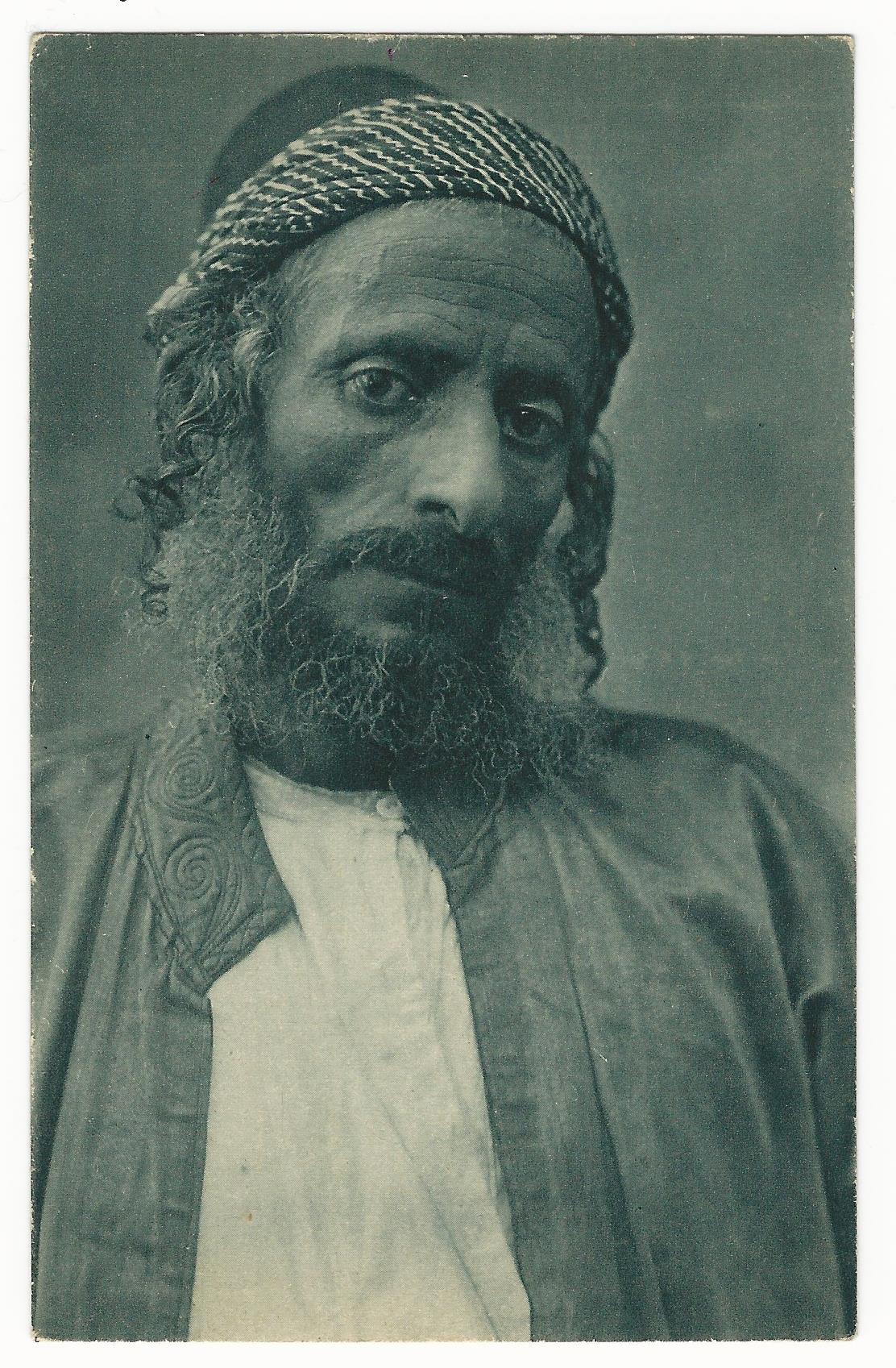
This vintage real postcard features a fascinating portrait of “a Yemenite Jew Chief in Jerusalem”. It is my belief that rather than this being a “Yemenite Jew Chief”, this gentleman is the chief rabbi of the Yemenite Jews in Palestine. Arabic and Hebrew text can be found on the reverse of the postcard. The hebrew word on the postcard is “Teimanim” which translates to “Yemenite Jew”. “Palestine”, not Israel, is printed on the reverse of the postcard. “Palestine” is used because Israel was not established until 1948, long after this postcard was printed. The photographer of this portrait is Shlomo Narinsky and the card was published in 1921 by the Jamal Brothers (located in Jerusalem). This postcard portrait is included in the collection of the US Library of Congress. Shlomo Narinsky (1885-1960) was born in Southern Russia (Ukraine). In 1904/1905, he studied photography in Paris and Berlin. He returned to Russia only briefly before immigrating to Palestine. He opened a photography studio in Jerusalem. He produced many postcards focusing on Palestine. He was known for his use of light and shadow in order to give his images a soft and romantic air. Shlomo’s wife, Sonja, was also a very talented and highly esteemed photographer. This postcard has excellent clarity and is in excellent condition (see scans). SOLD
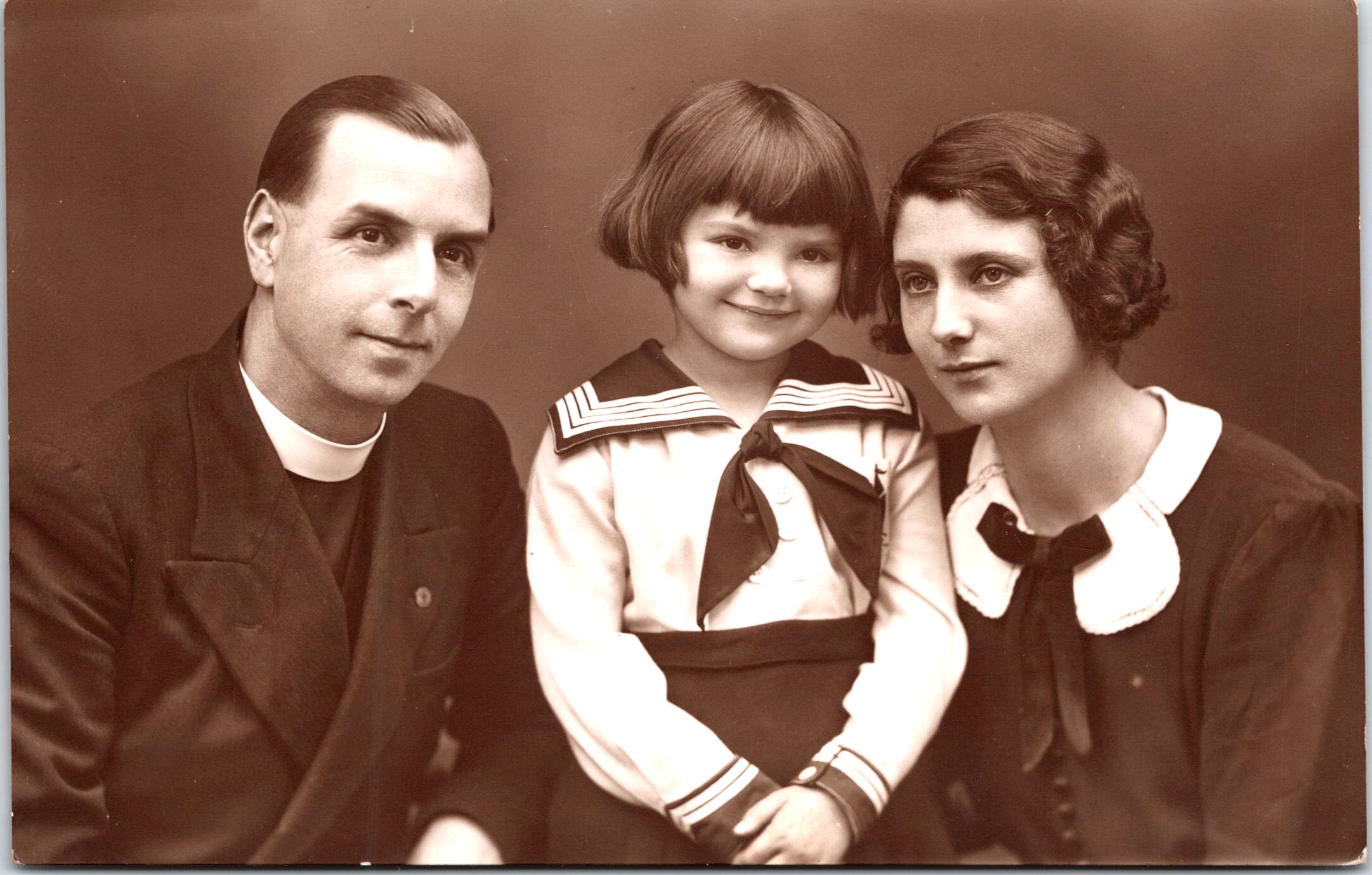
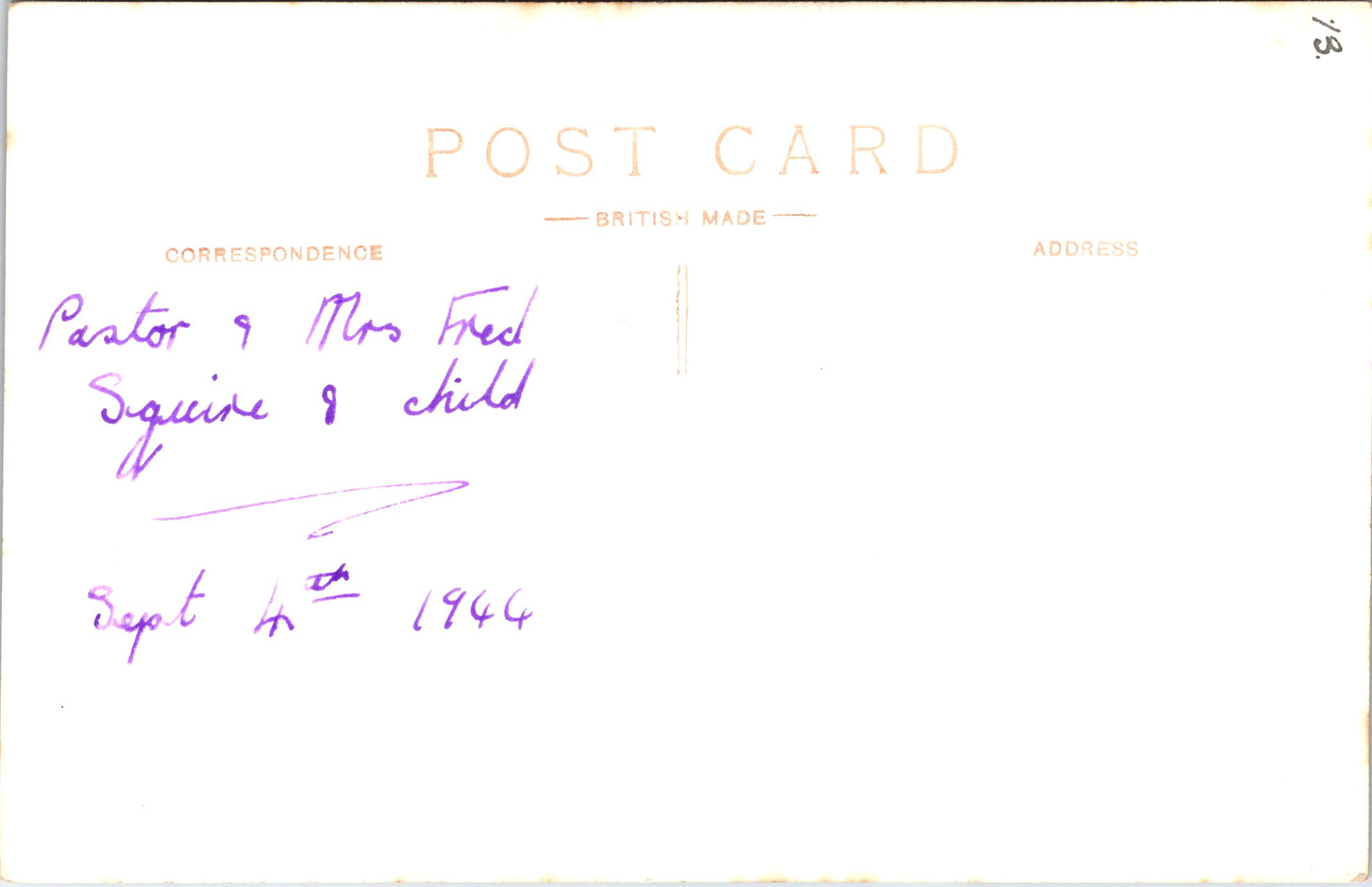
This vintage sepia-toned studio real photo postcard features a family of three, posed together with formal yet warm expressions. The man, identified as “Pastor Fred Squire,” appears to be in his late 30s to early 40s. He is dressed in clerical attire, including a dark suit with a clerical collar, giving him a dignified and professional appearance. His expression is calm and approachable, reflecting a kind personality. His neatly combed hair adds to his composed look. The woman, identified as “Mrs. Squire,” sits beside her husband. She wears a dark dress with a white Peter Pan collar and a ribbon tie, reflecting the fashion of the era. Her short, styled hair frames her face elegantly. Her expression is soft and slightly reserved, hinting at a caring and supportive nature. The child, likely their daughter, sits between them, radiating joy with a cheerful smile. She wears a sailor-style dress with a large bow at the neckline, a popular children’s fashion in the early to mid-20th century. Her short, straight haircut adds to her youthful charm. The three are closely positioned, suggesting a strong family bond. The setting is a professional studio, evident from the even lighting and neutral background. The reverse side of the postcard indicates that it is “British Made”. Written in purple ink is the identification of the subjects: “Pastor & Mrs. Fred Squire & child.” The date “Sept 4th 1944” is also inscribed, likely marking the time the photo was taken or sent. SOLD
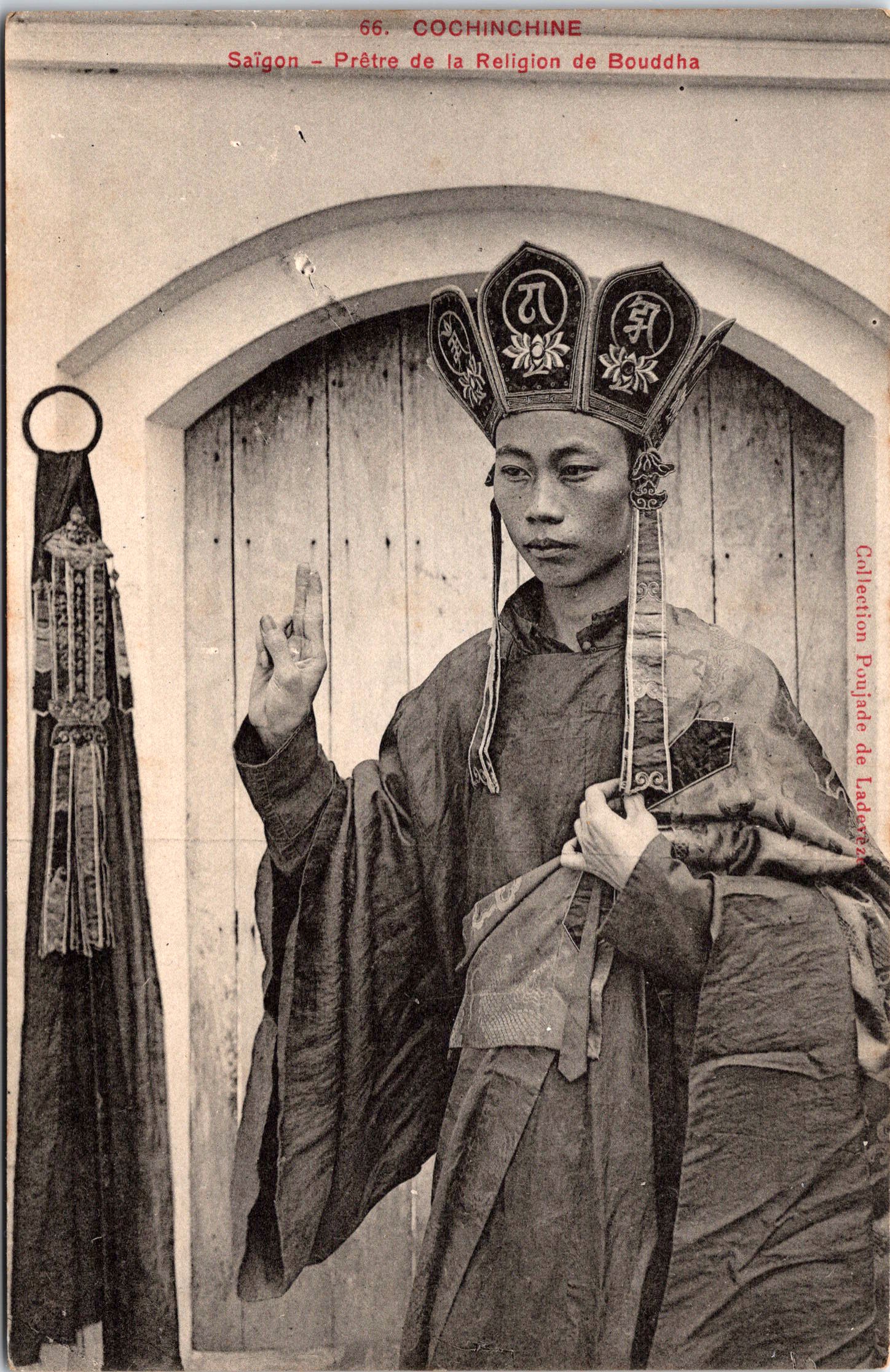
This vintage postcard features a Buddhist monk in his religious garb. Note his intricate hat. Look at his hands. He is holding up a peace sign, though the gesture most certainly signifies something else. The priest is located in French Indochina. More specifically, he is in Saigon, Vietnam. SOLD





 THE CABINET CARD GALLERY