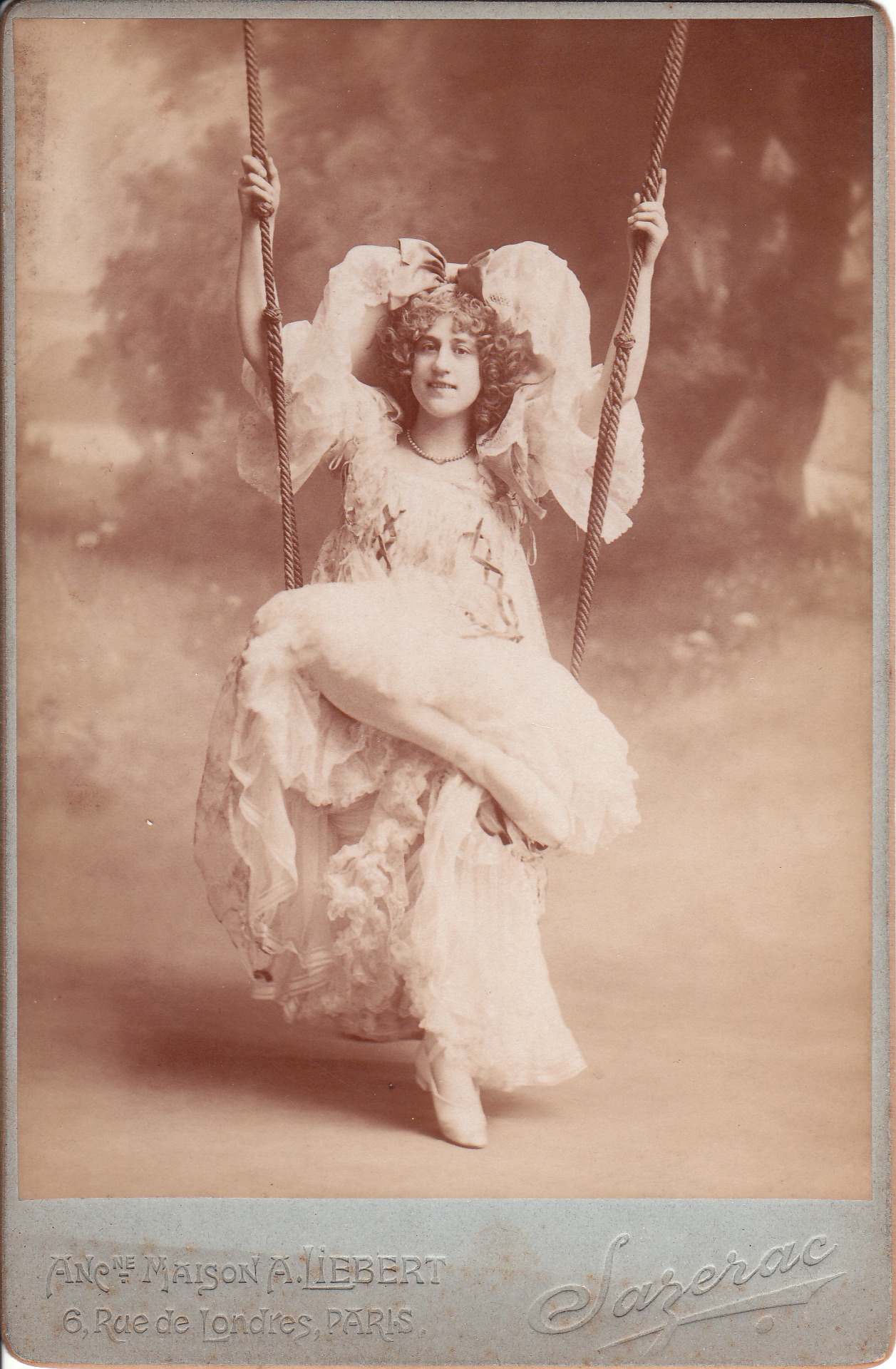
This cabinet card portrait features an unknown actress in a provocative pose sitting on a swing. An exposed leg and lacy undergarments propel this photograph into risque territory. The curly haired young woman flashes a terrific smile at the camera. The photographer of this image is the Sazerac studio which was located at the “Hotel Prive” in Paris, France. No information could be located about Mr. Sazerac but one can easily find real photo postcard portraits of French show girls that were produced by his studio. Sazerac cabinet cards are less common. SOLD
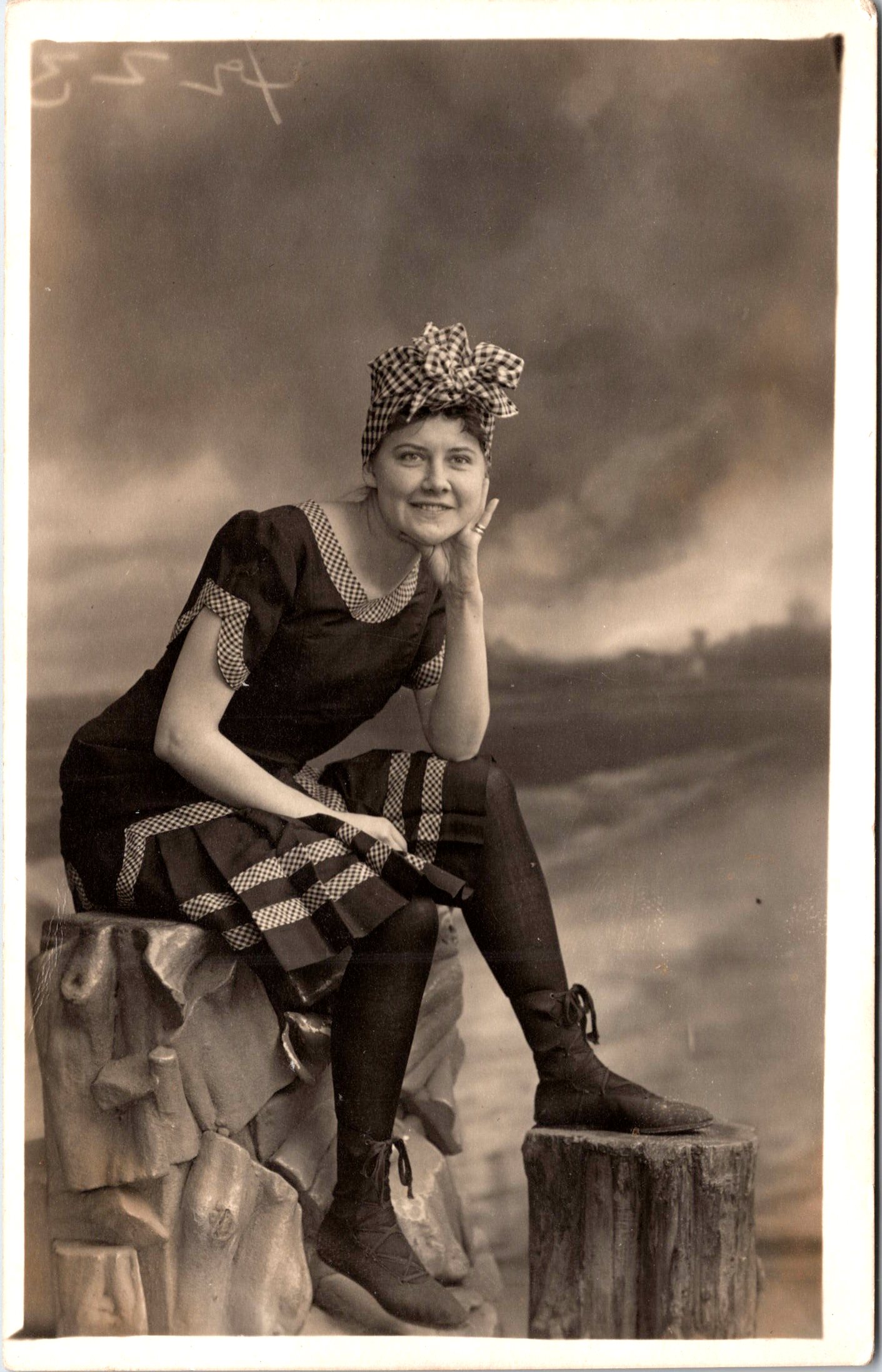
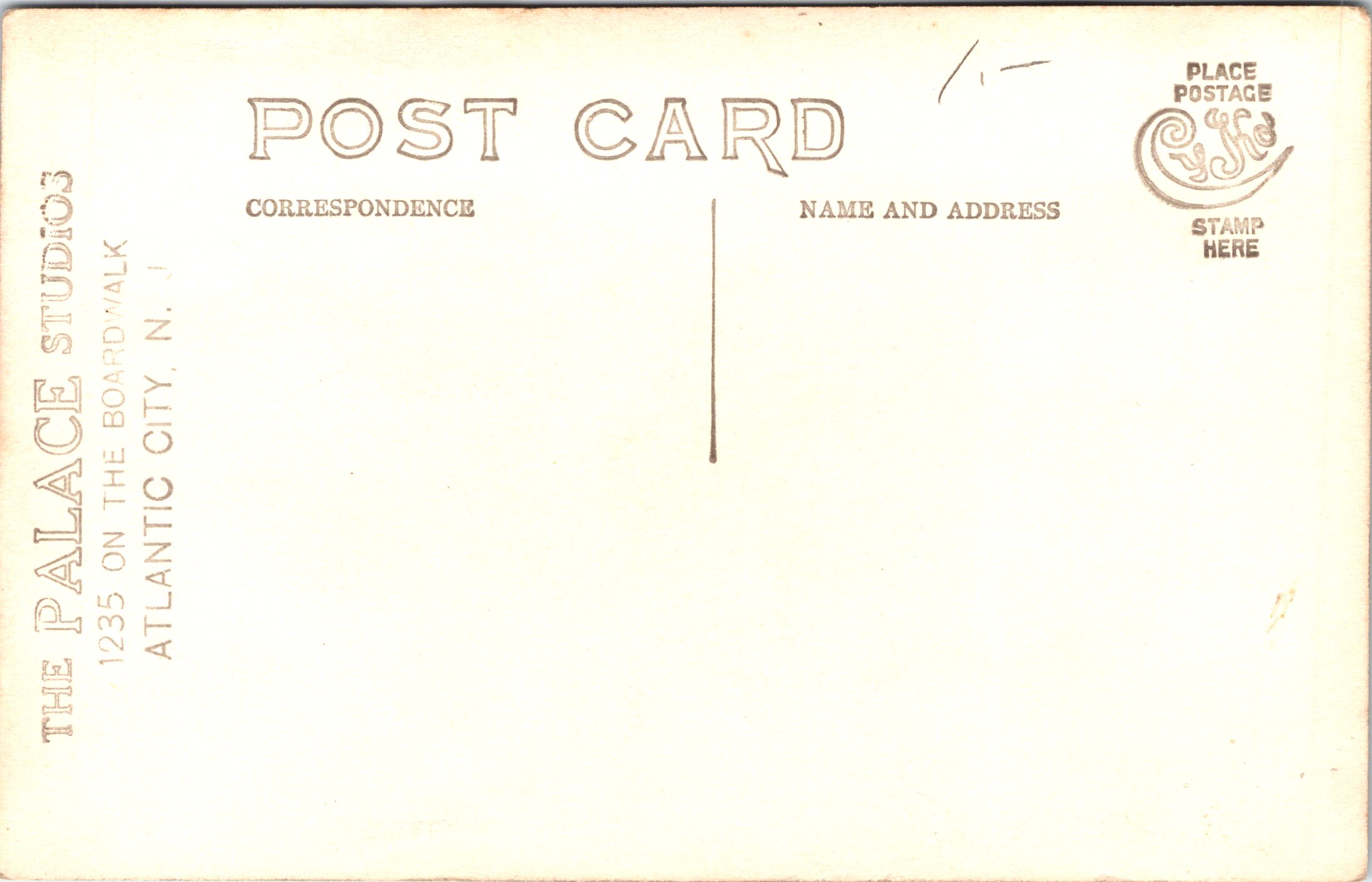
This delightful real photo postcard features a cheerful young woman seated on a faux rock formation, wearing a charming bathing costume and matching head wrap. Her outfit is a stylish two-piece ensemble made of dark fabric with bold, checked gingham trim on the collar, sleeves, and skirt hem—a classic look from the 1910s to early 1920s. Her lace-up bathing boots and the studio backdrop, which imitates a beach setting, reinforce the seaside theme. The woman’s expression is warm and welcoming; she smiles gently at the camera, her chin resting lightly on her hand in a relaxed pose. There is an engaging sense of playfulness and personality in the portrait—characteristics that make it especially appealing to collectors of early 20th-century beach imagery and character photography. This postcard was produced by The Palace Studios, located at 1235 on the Boardwalk, Atlantic City, New Jersey, a popular tourist destination in the early 20th century. Palace Studios specialized in novelty and souvenir portrait photography for beachgoers, offering whimsical props and painted backdrops that gave visitors an idealized memento of their seaside vacation. The reverse of the postcard features a CYKO stamp box, a format used by the CYKO photographic paper brand, which helps to date this postcard to the 1910s–early 1920s. The card has a divided back, which also aligns with that time frame. SOLD
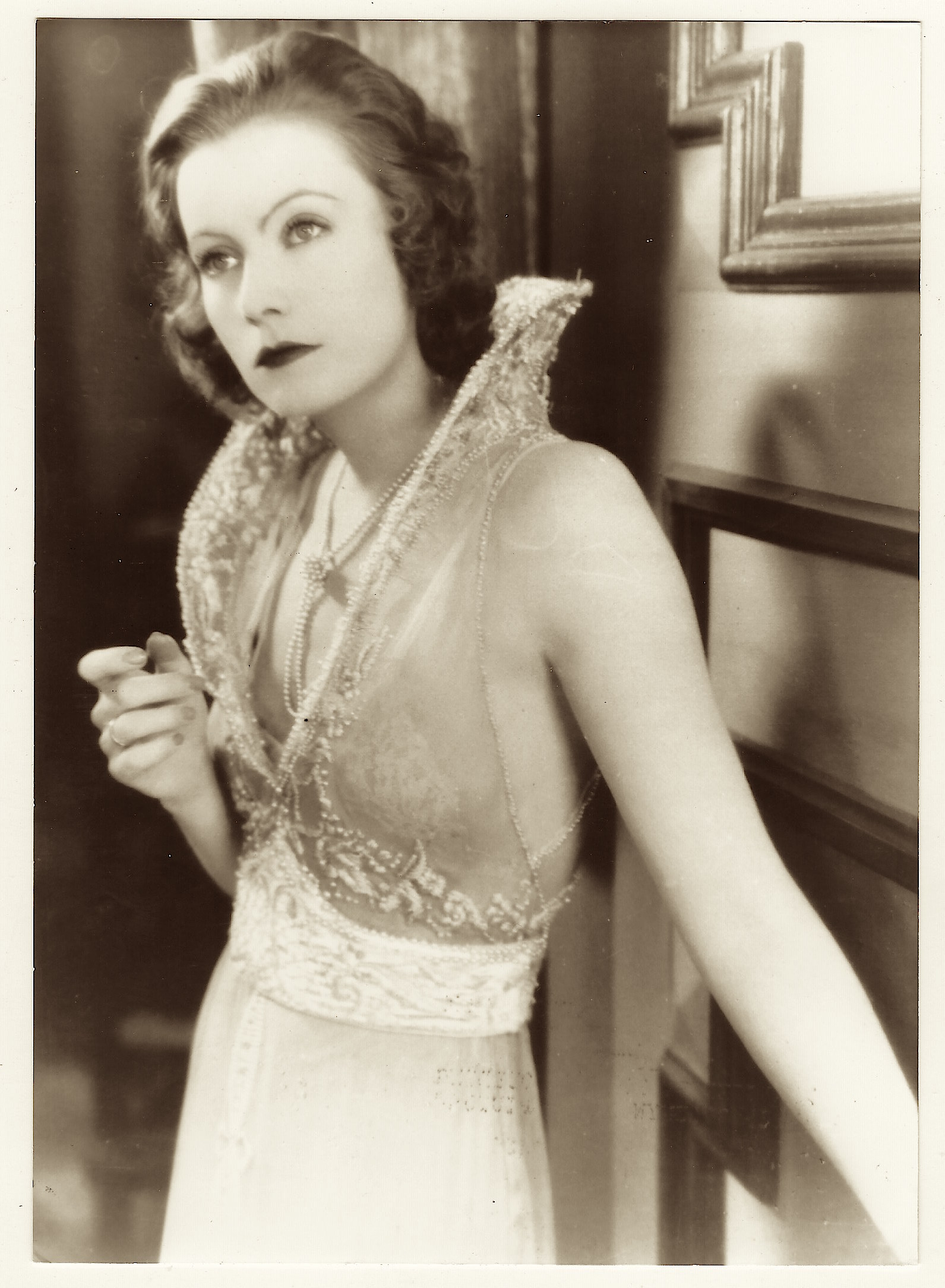
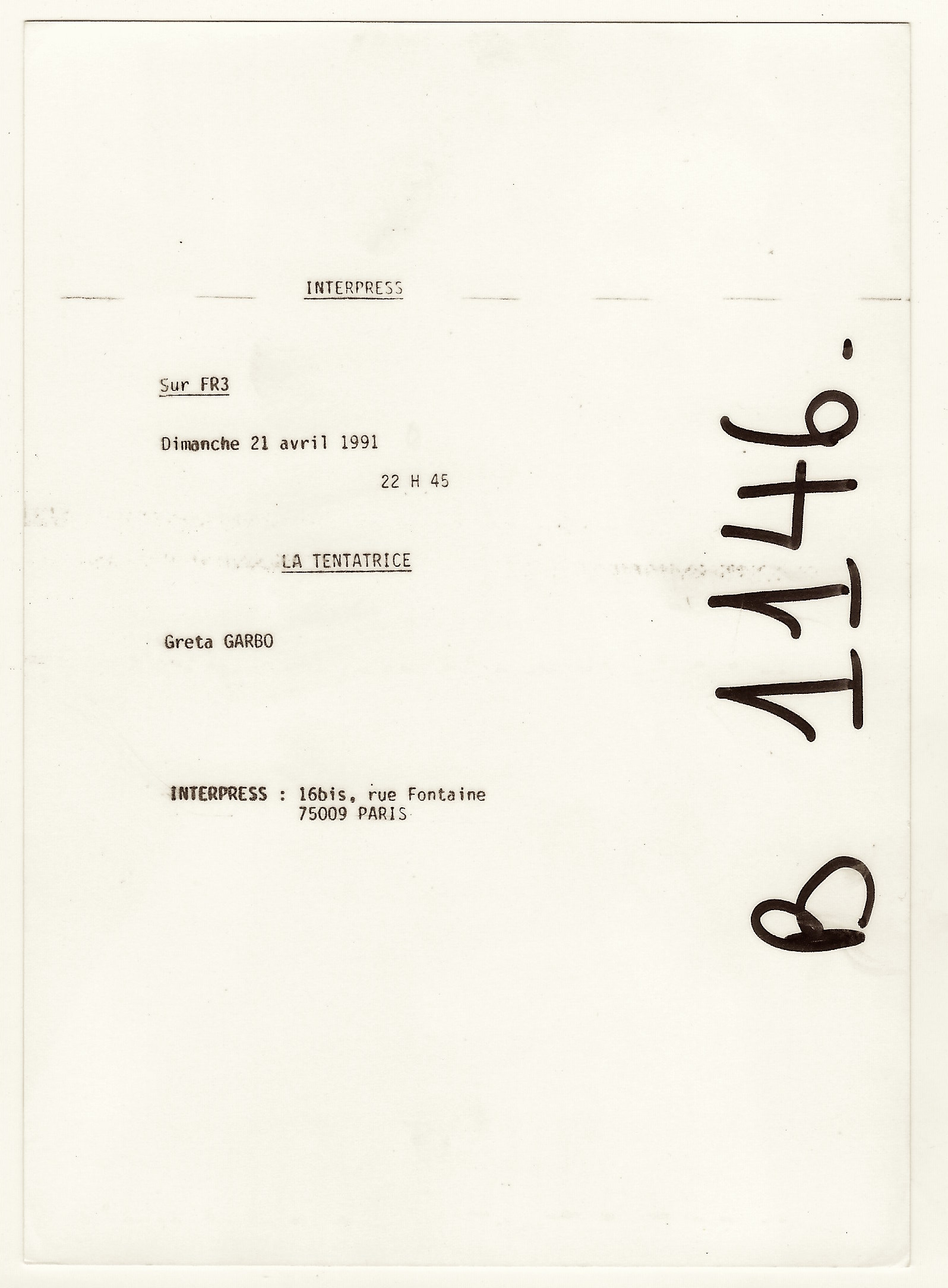
Photograph 1 is an original vintage is a French press photo from 1991. The image features the actress, Greta Garbo in a scene from the silent film, “The Temptress” (1926). Garbo (1905-1990) was a Swedish film actress in the 1920’s and 1930’s. She was beautiful and she was talented. During her career she was nominated three times for the Academy Award for best actress. The American Film Institute rated her fifth on their list of the greatest female stars of classic Hollywood cinema. Her first film role was in the Swedish film “The Saga of Gosta Berling” (1924). Louis B. Mayer, the head of Metro-Goldwyn-Mayer (MGM) was impressed by her performance and brought her to Hollywood in 1925. Her performance in the silent film “Flesh and the Devil” made her an international star. Her first talkie was “Anna Christie” (1930). Many film experts believe her finest performance came in the film “Camille” (1936). By1938, her career went into a tailspin and she retired from the movie industry at the ripe young age of 35. In total, she had appeared in twenty-eight films. She led a very private life in her retirement and she became an art collector in her later years. She clearly knew her art, evidenced by the fact that her collection was worth millions of dollars when she died. (SOLD)
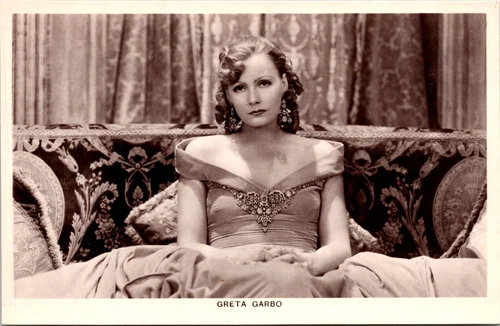
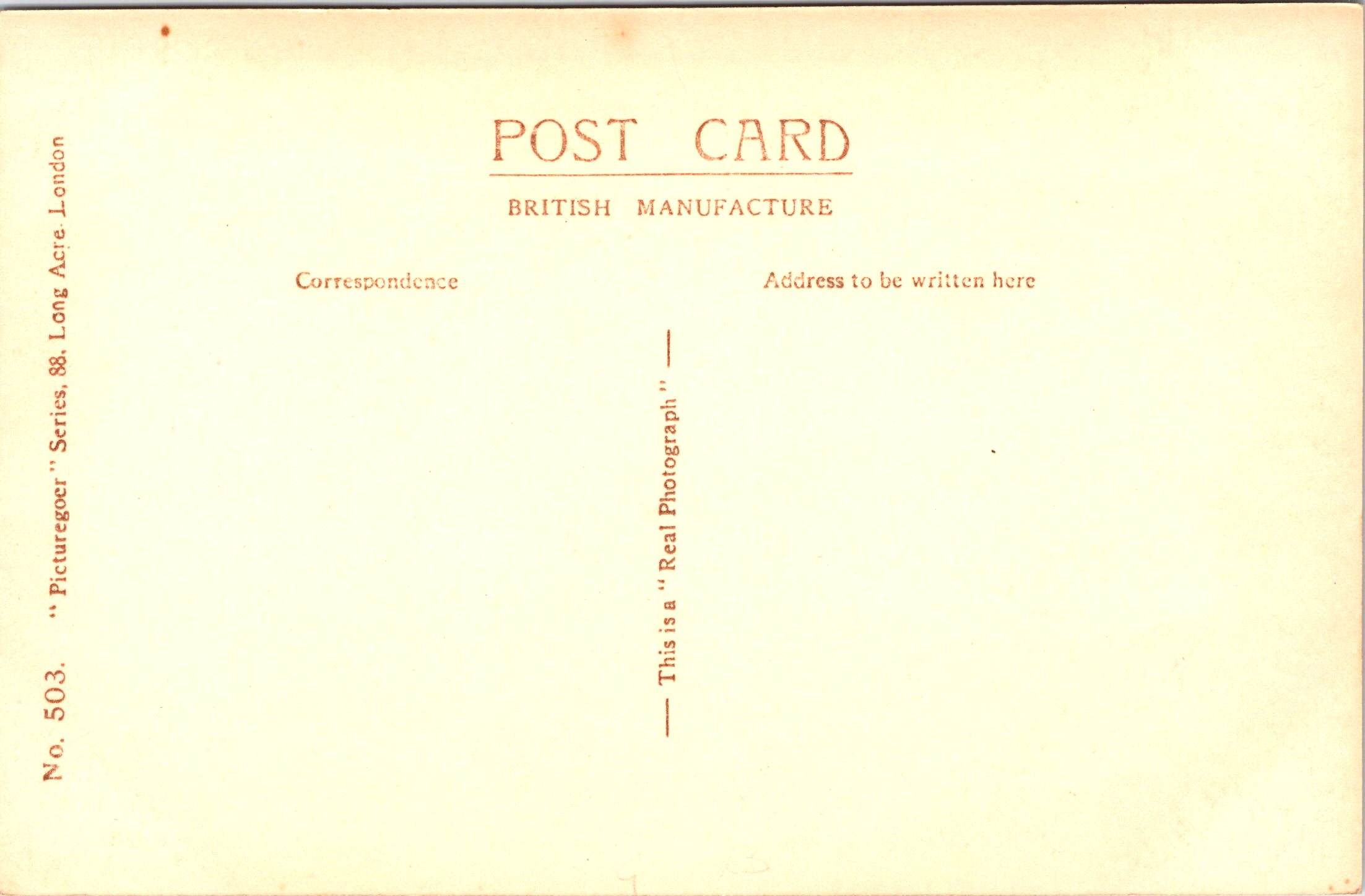
Postcard 1 is a vintage postcard that is risque. Garbo’s dress is quite low cut. This vintage postcard is part of the “Picturegoer” series (No.503). (SOLD)
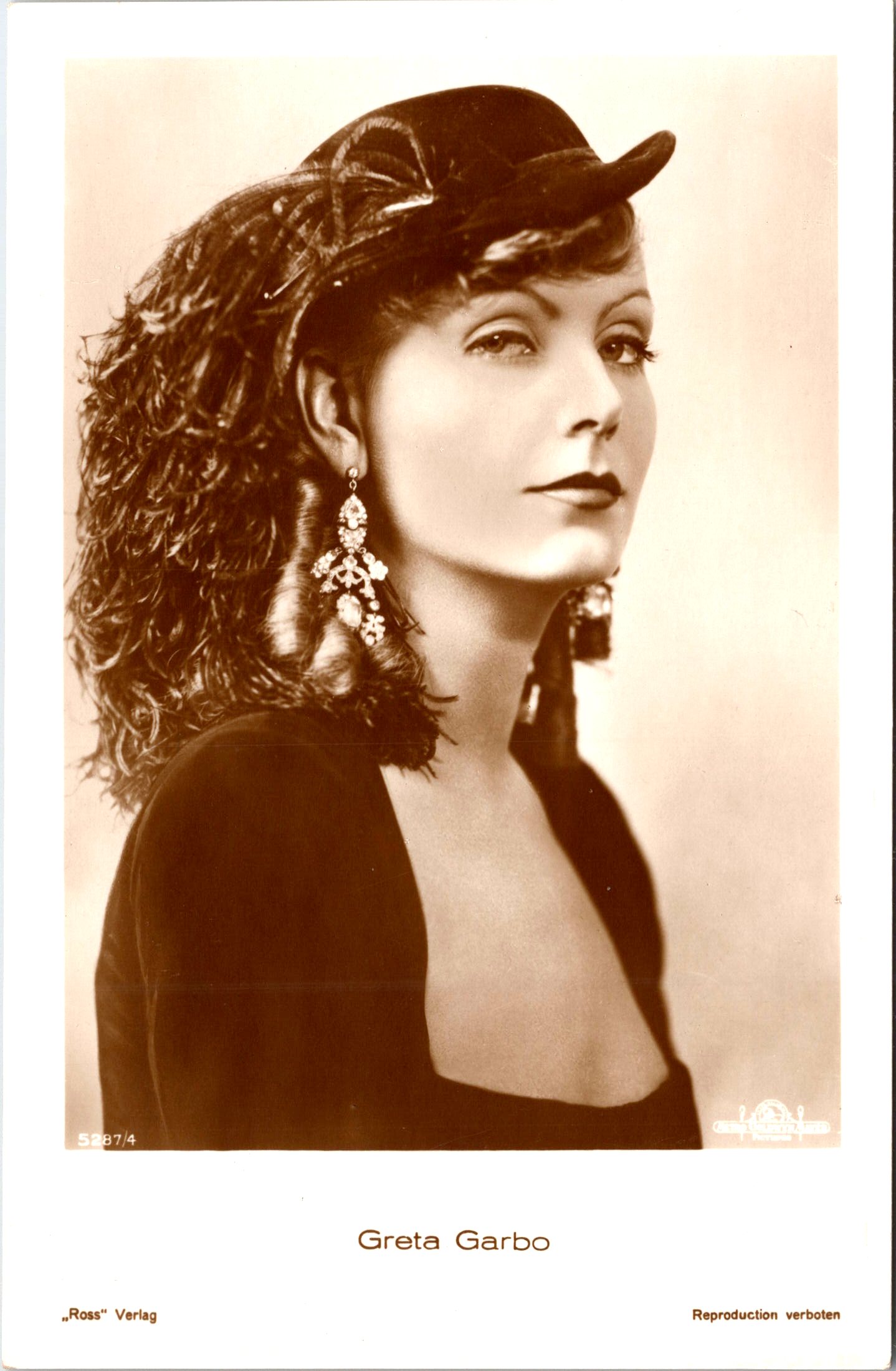
Postcard 2 was published by Ross Verlag (Berlin) as part of a series (5287/4). Note the logo for MGM in the bottom right corner of the image. (SOLD)
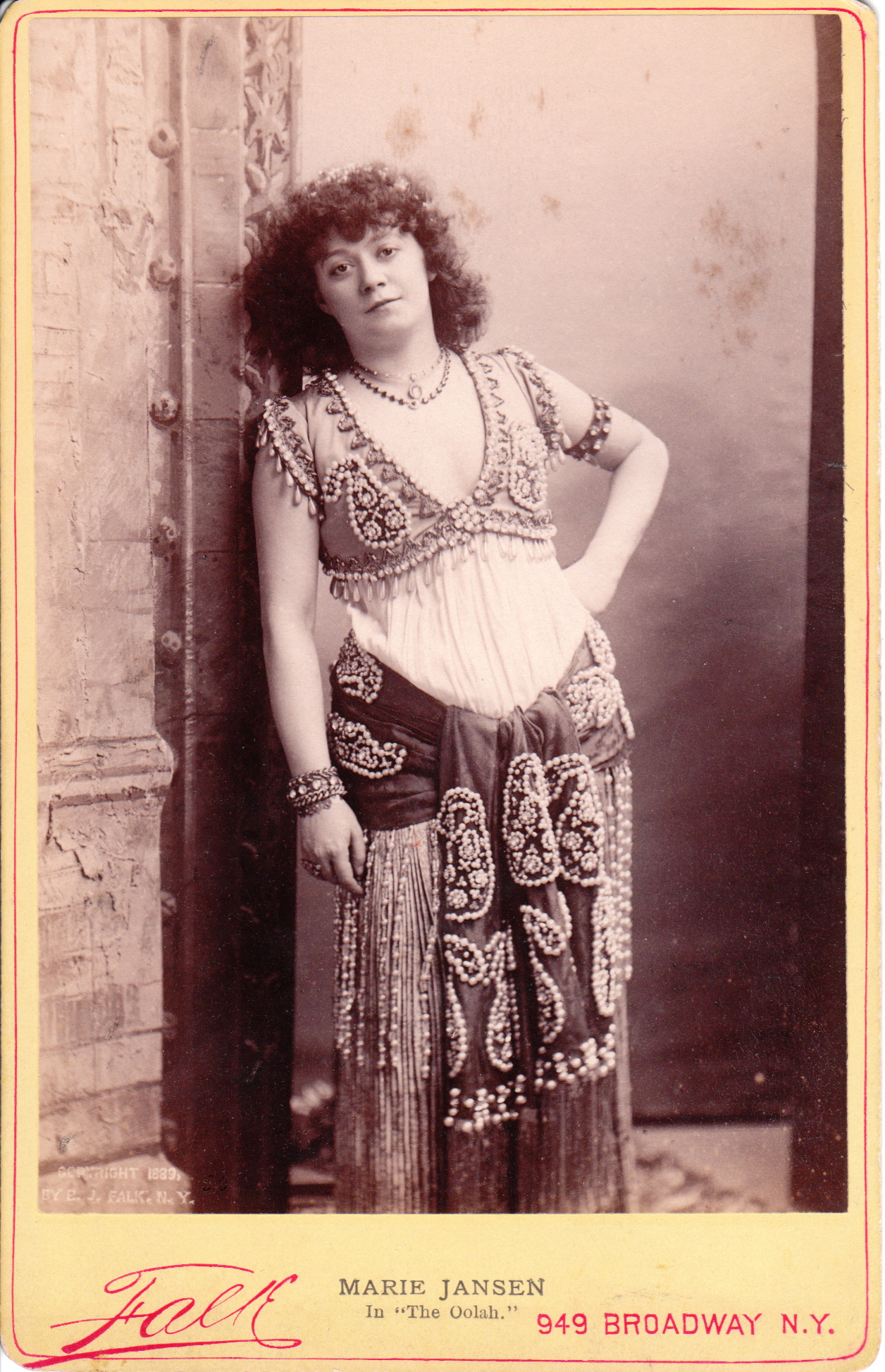
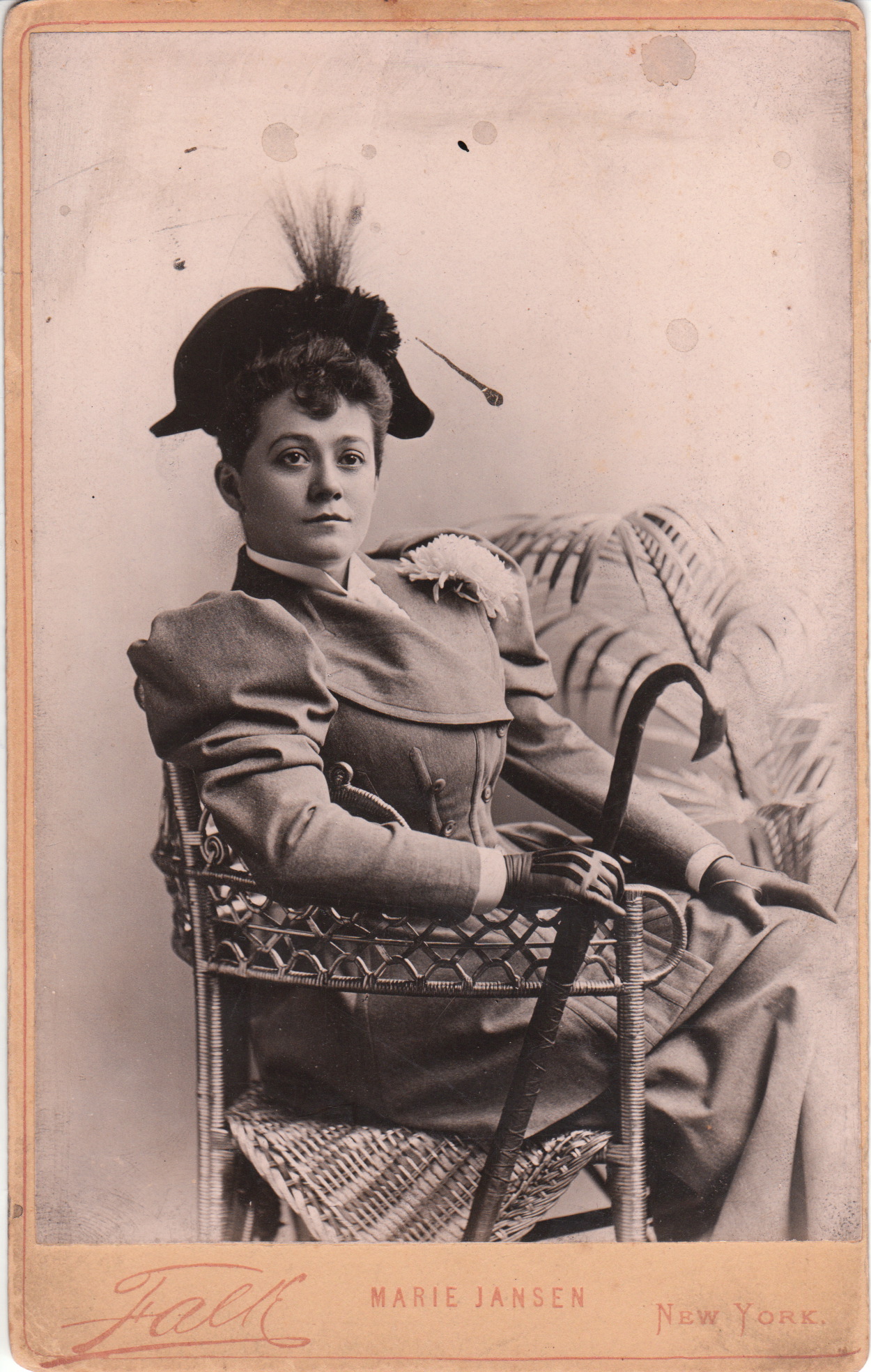
Marie Jansen (1857-1914) was an American actress and vocalist. She was a well known star of comic operas. She was born in Boston and her birth name was Hattie Johnson. Jansen made her theatrical debut in Boston at the Park Theatre in 1881. Her first major success occurred in 1883 with her appearance in “The Beggar Student”. In 1884 she was engaged by Charles Wyndham to create the title role in “Featherbrain” which ran in London, England. She then appeared in the United States for several years as the leading woman in Francis Wilson’s comic opera company. In 1901, Jansen formed her own company that she took on tour. The top image was photographed by famed celebrity photographer Falk of New York City. SOLD
Postcard 2 shows Jansen in costume for the play, “The Oolah”. “The Oolah” was a comic opera produced by the Francis Wilson Company in 1887. The music was written by Charles Le Cocq and the libretto was written by Sydney Rosenfeld.
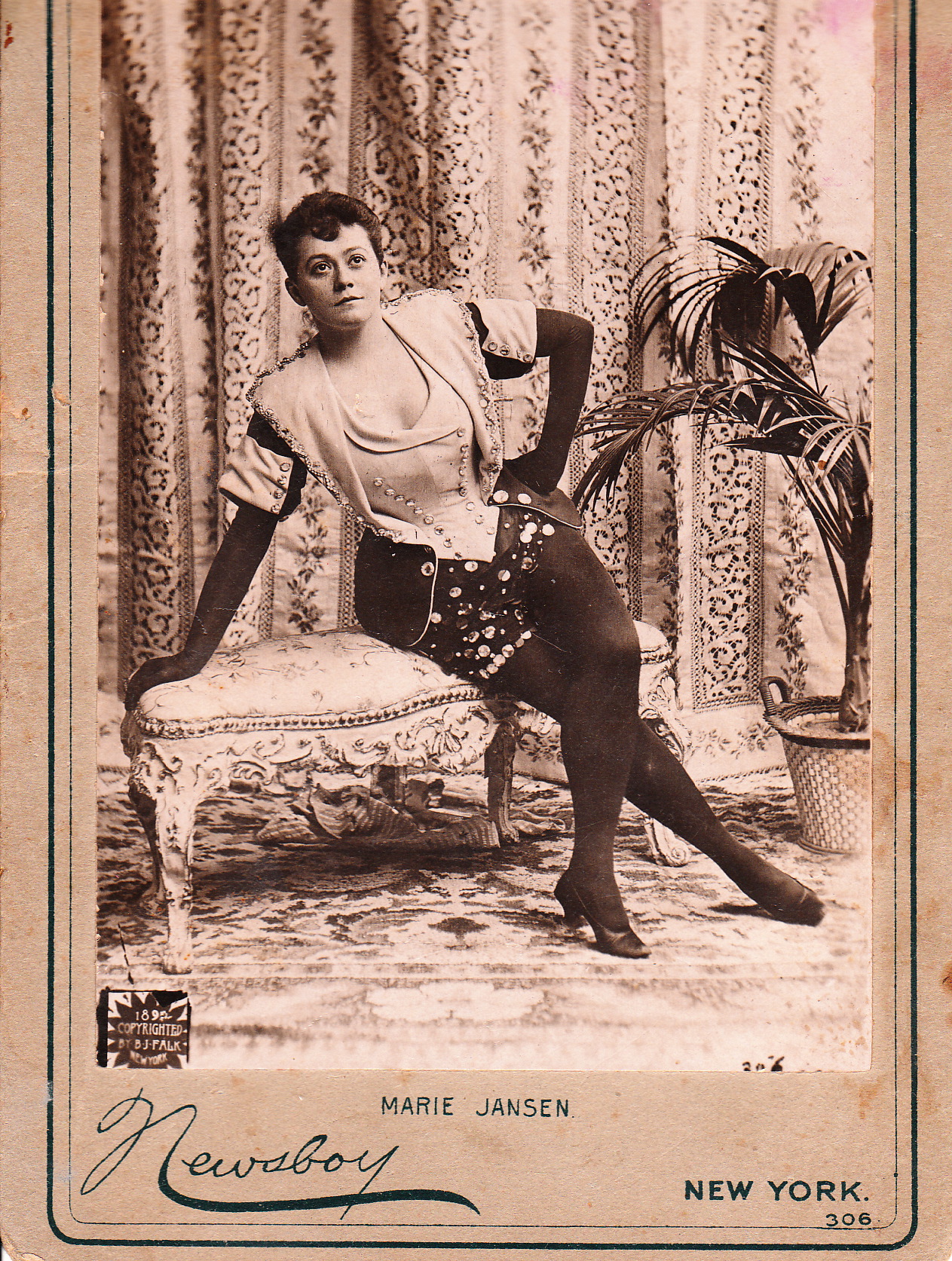
Postcard 3 was also photographed by Falk. This cabinet card is dated 1888 and is a bit risque for that time in history. The third image of Jansen also captures her in a bit risque costume. It was photographed by Falk in 1892 and the cabinet card was used as a premium for Newsboy tobacco products.
Postcard 4 features Jansen in costume and sitting on a wicker chair. She is holding a cane and wearing gloves. This undated photograph is also by Falk. To view other photographs by Falk, click on the Cabinet Card Gallery category “Photographer: Falk”.
This vintage French real photo postcard features a charming seaside scene of a “bathing beauty,” a popular motif of early 20th-century glamour photography. The young woman poses confidently on a simulated beach with a painted backdrop of choppy waves and a distant lighthouse. She wears a form-fitting, one-piece knitted bathing outfit that clings to her figure—a risqué choice for the era—along with ballet-style laced sandals and sheer stockings. A bold, dark ribbon or turban is wrapped around her head, adding a dramatic flourish to her beach attire. She holds a racket over her shoulders, likely meant to suggest leisure and playfulness, possibly referencing beach paddle games or tennis, though this is clearly a studio creation rather than a candid beach photograph. Her smile is coy and knowing, with a relaxed, flirtatious pose and bright expression that captures the coquettish spirit of Belle Époque and Edwardian postcard art. This card was published by Noyer of Paris, a noted French postcard publisher known for glamorous and mildly provocative photographic portraits. The card bears the serial number 3119 and the “Fabrication Française” mark on the reverse. This is a classic example of a risqué seaside glamour postcard. SOLD
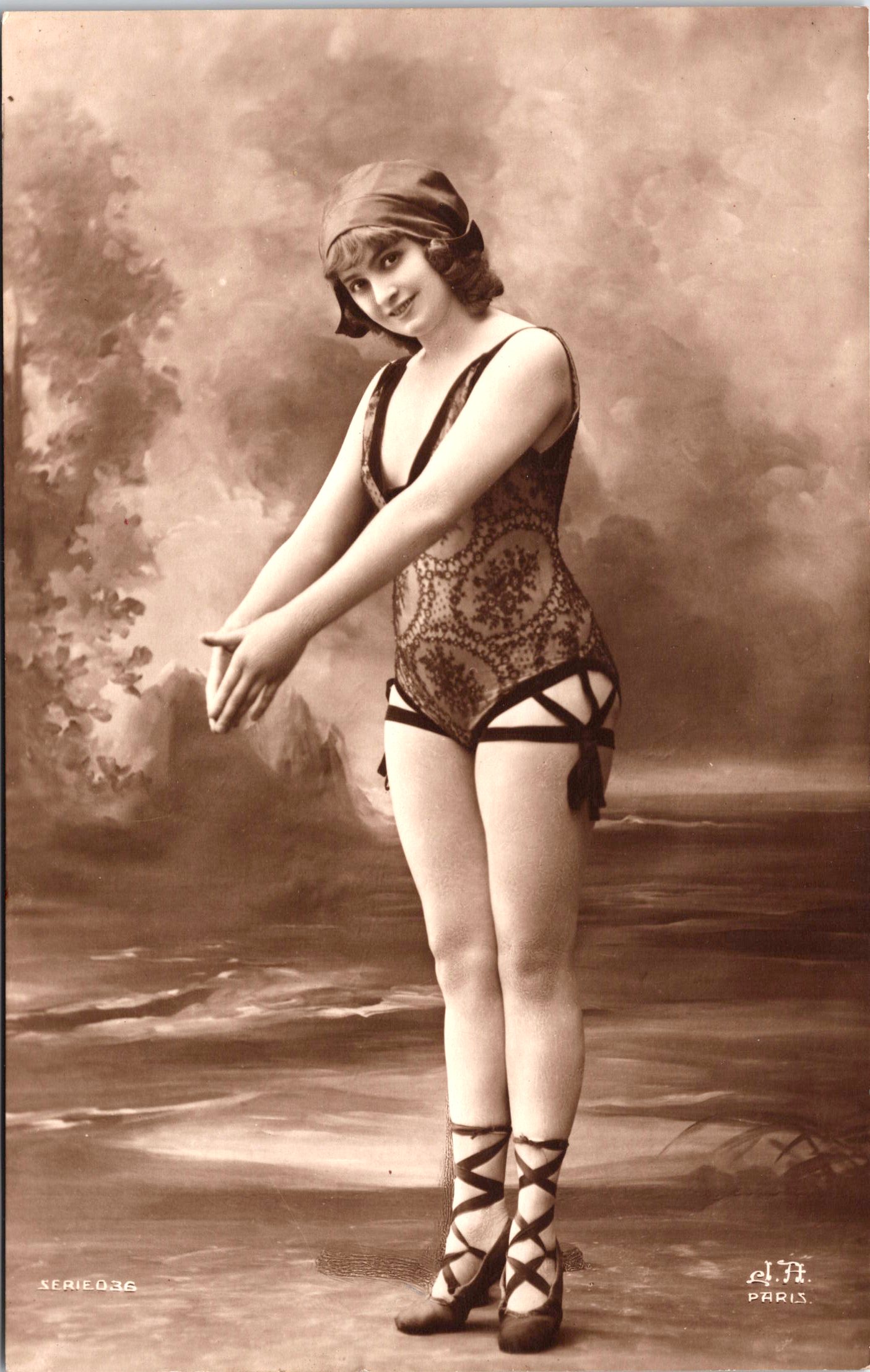
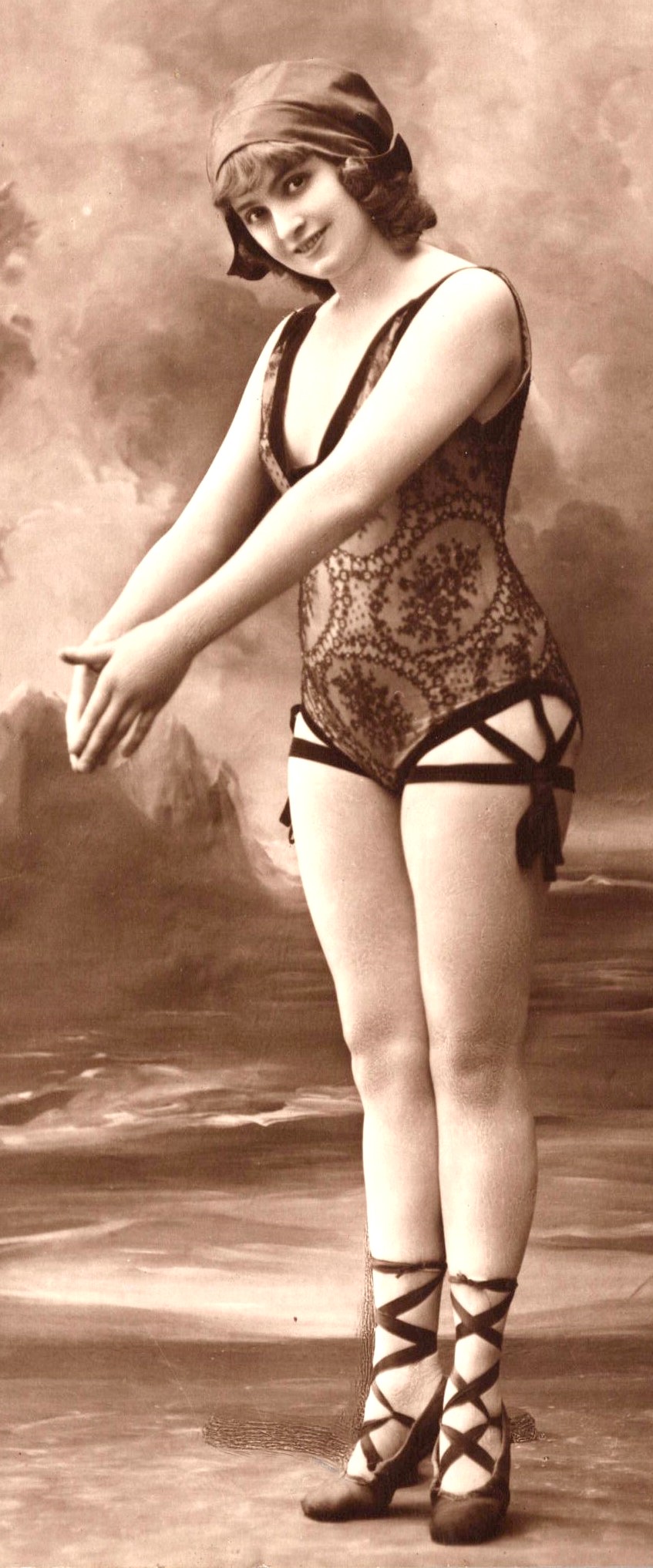
This French vintage risque real photo postcard features a pretty young bathing beauty. The young woman is wearing a bathing suit that has straps on the bottom of the suit. Her shoes also have black straps wrapping partially up her calves.This is a risque photograph. This postcard was published by celebrated photographer, Jean Agelou (1878-1921), as part of a series (No.036). Agelou was a French photographer of the 1910’s and 1920’s who is best known for his erotic and nude photographs. He was born in Egypt and not much is known about his private life. Agelou generally used models between the age of 20 and 24 years-old. Although the 1900’s was the “golden age” of erotic photograph, photographers who took such risque photos had to use discretion. As a result, Agelou signed his work “JA”. In 1908, nudity in photographs was banned in France and photographers had to cover nude women images with strategically placed undergarments or other materials. Nude images had to circulate on the down low. They were sent in the mail inside of envelopes. Jean Agelou died in 1921; the result of a car accident. His brother George, who managed Jean’s business, also was killed in the crash. SOLD
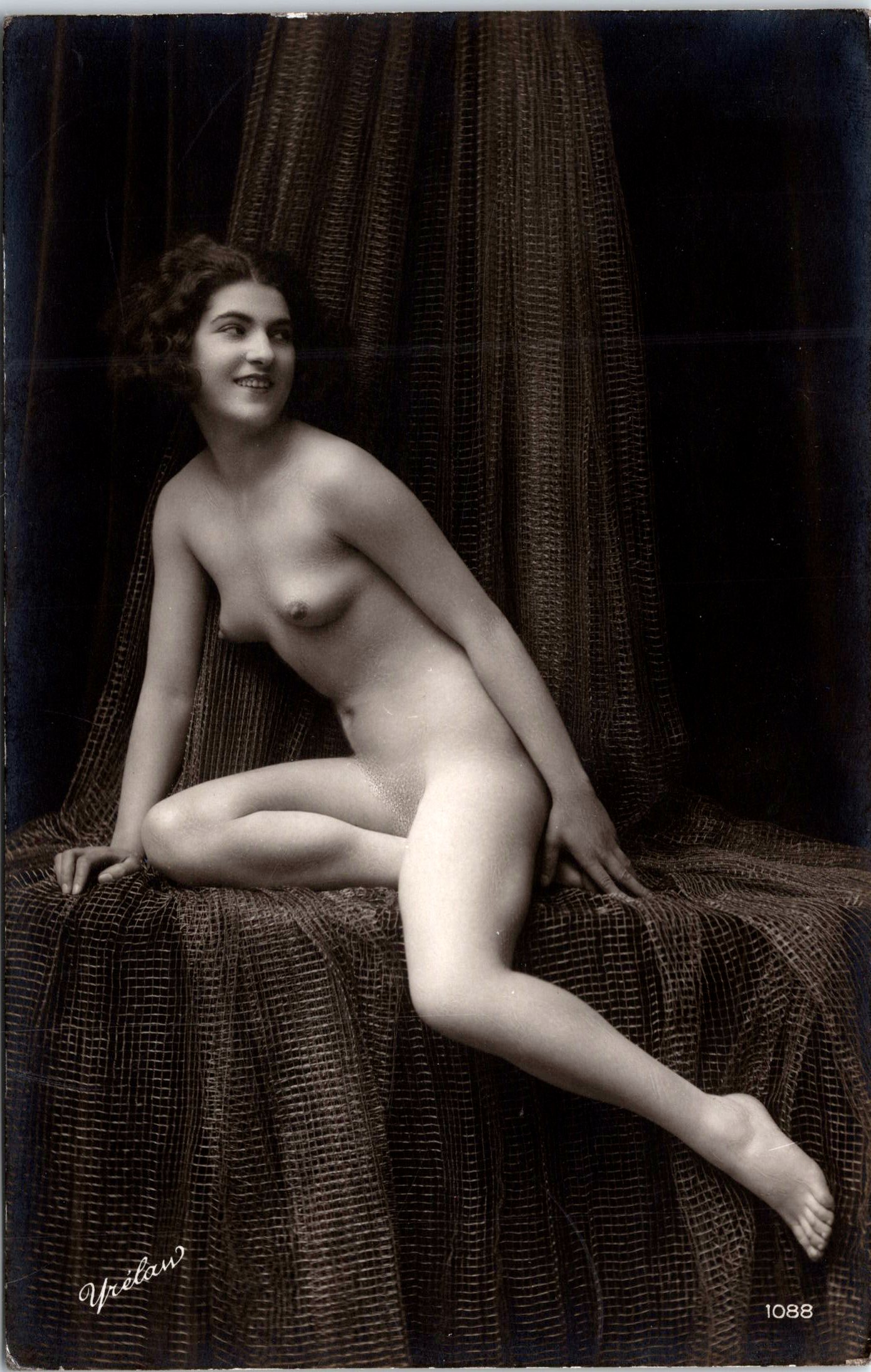
This striking vintage postcard features a classic nude portrait by celebrated Parisian photographer Lucien Waléry, whose name appears here in reverse as “YrélaW” — a common practice he used to subtly obscure his identity on more provocative works. The image is numbered 1088 in the lower right corner, indicating it was part of a larger, collectible series. The young model is posed in an artful semi-recline, one hand supporting her as she leans back against a textured curtain backdrop. She appears relaxed yet lively, her head turned to the side as she offers a gentle, playful smile. Her hair is dark, voluminous, and naturally wavy, framing her face with softness. Her expression conveys youthful confidence with an air of ease — not coy or provocative, but serene and open, as though caught in conversation or reacting to someone just out of frame. The pose emphasizes the natural curves of her body, rendered with artistic sensitivity in the soft lighting typical of Waléry’s photographic style. Though nude, the model is not sexualized in a gratuitous way; the tone is classical and aesthetic, clearly intended as fine art rather than erotica. Lucien Waléry was the pseudonym of Stanisław Julian Ignacy Ostroróg (1863–1929), a French-born photographer of Polish descent. He came from a line of photographers — his father was also a notable portraitist — and worked during the height of the Belle Époque and Art Deco periods in Paris. Waléry’s photography specialized in glamour, cabaret performers, and nude or semi-nude models, often featuring stars of the Folies Bergère and other Parisian revues. His studio attracted both high-society clientele and show business personalities. While many of his portraits were openly credited, he used backwards spellings of his name (YrélaW or similar variations) for his nude and risqué imagery — a clever form of self-censorship and anonymity designedto navigate laws and cultural norms concerning modesty and pornography in early 20th-century Europe. His works were widely reproduced as postcards, photogravures, and portfolio prints, making them highly collectible today.(SOLD)
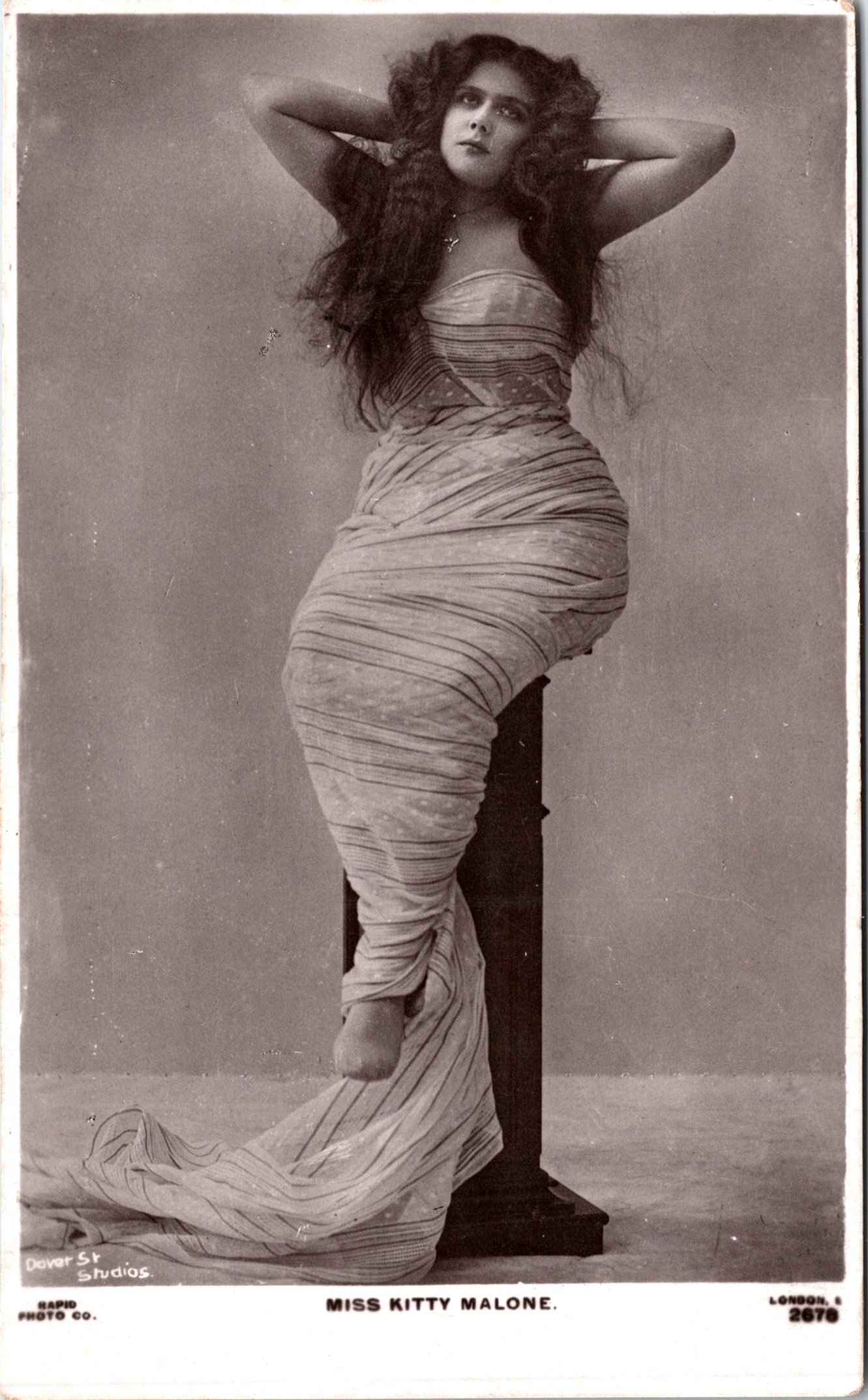
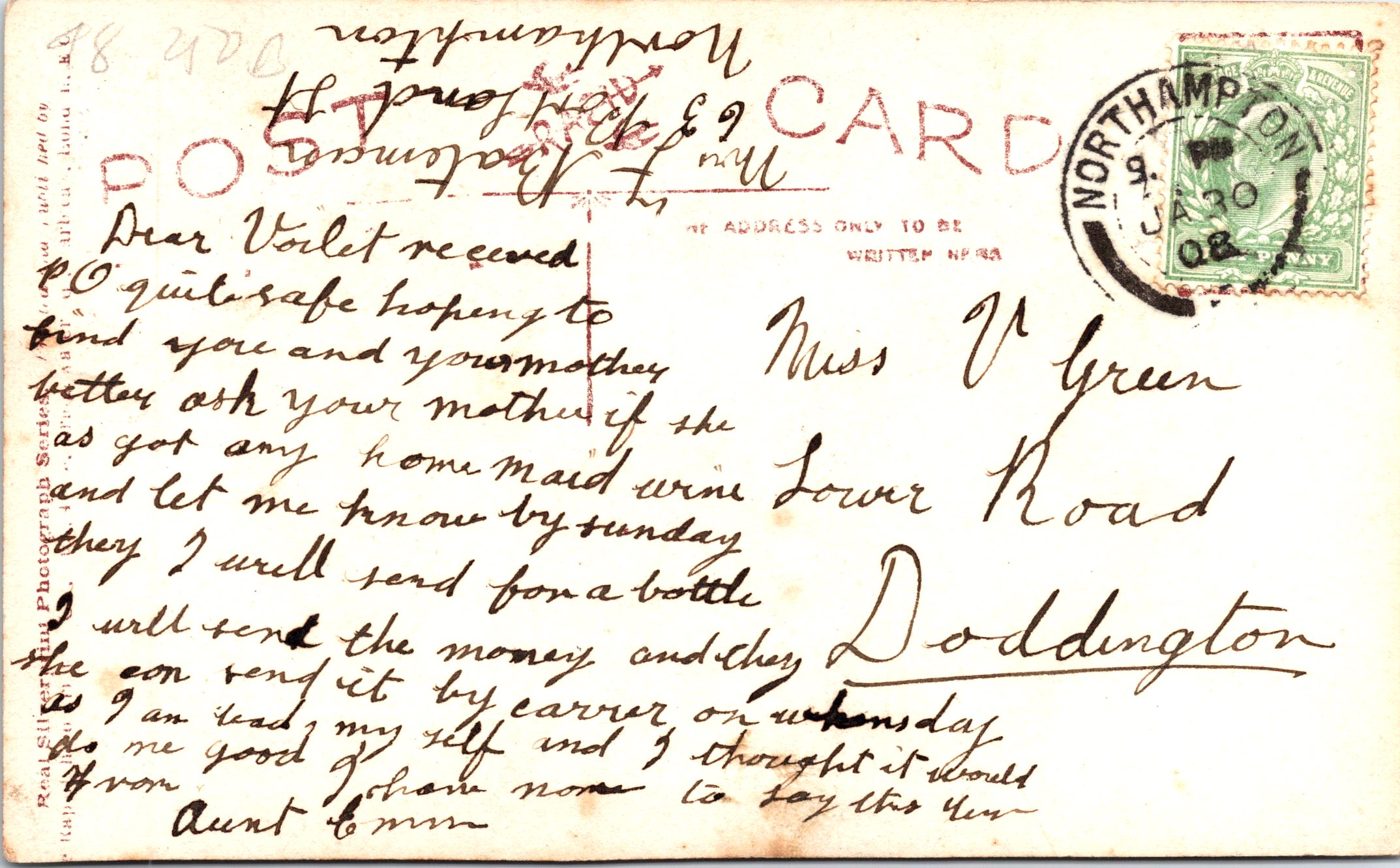
Postcard 1 is a risque original real photo postcard (RPPC) featuring Miss Kitty Malone, an early 20th-century stage performer or model. Malone is wrapped in a tight gown that accentuates all of her curves. The postcard was produced by Rapid Photo Co. in London, with the photograph taken at Dover St. Studios. In the image, Miss Kitty Malone strikes a dramatic pose, wrapped in a flowing, textured gown reminiscent of Grecian or theatrical costume styles. Her long, voluminous dark hair cascades down her shoulders, framing her striking face. She gazes directly at the camera with an intense and almost mysterious expression, her lips slightly parted. Her arms are lifted behind her head, adding to the dramatic, posed aesthetic that was characteristic of early Edwardian stage and artistic photography. This postcard is part of a series and numbered 2676 . This antique real photo postcard (RPPC) was postally used and sent in 1908. It features a green half-penny King Edward VII postage stamp, which was commonly used in the early 20th century for domestic postcards. The handwritten message is addressed to Miss V. Green and is written in black ink in elegant cursive handwriting. The sender, signed as “Aunt Emma”, writes to Violet, mentioning that she has received a postal order (P.O.) safely and hopes Violet and her mother are doing well. She asks if Violet’s mother has any homemade wine available and requests that she let her know by Sunday so she can send for a bottle. Aunt Emma also states that she will send money so it can be delivered by carrier on Wednesday, mentioning that she finds it beneficial for herself and thought Violet’s mother might feel the same. SOLD
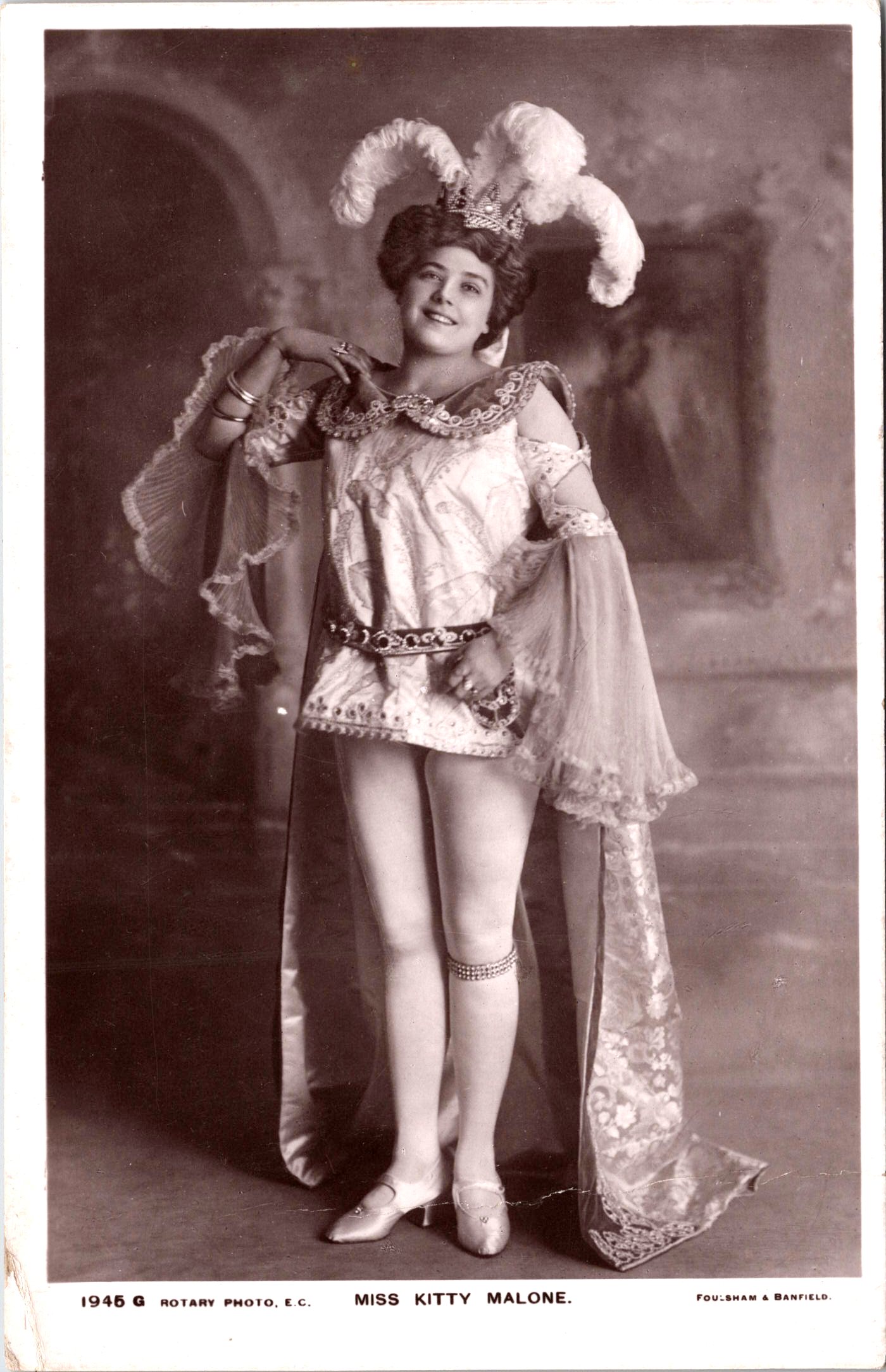
Postcard 2 is a risque vintage postcard, published by Rotary Photo and numbered 1945G in the series, features Miss Kitty Malone in an elaborate theatrical costume. This card earns the title of risque because Miss Malone’s top is exceedingly short, exposing much of her legs. The photograph was taken by the renowned Foulsham & Banfield studio. Miss Malone is dressed in an ornate, short tunic-style dress adorned with intricate embroidery and decorative trim. The outfit is cinched at the waist with a bejeweled belt, and she wears sheer, flowing sleeves that drape elegantly from her arms. She also sports shimmering stockings, one of which is embellished with a delicate garter, and dainty, pointed shoes. Her regal headpiece, topped with tall, white feathered plumes, adds to the opulent and theatrical nature of her attire. Her expression is warm and confident, with a slight smile and a poised demeanor. She gazes directly at the camera, her head tilted slightly to one side. Her dark, voluminous hair is styled in an elegant updo, framing her face beautifully. Her pose, with one hand resting on her hip and the other raised near her face, conveys a sense of grace and charisma, suggesting she was a performer or stage actress. The background of the image is softly blurred, allowing the intricate details of her costume and expression to stand out. The overall aesthetic of the postcard captures the glamour and theatrical style of the era. SOLD
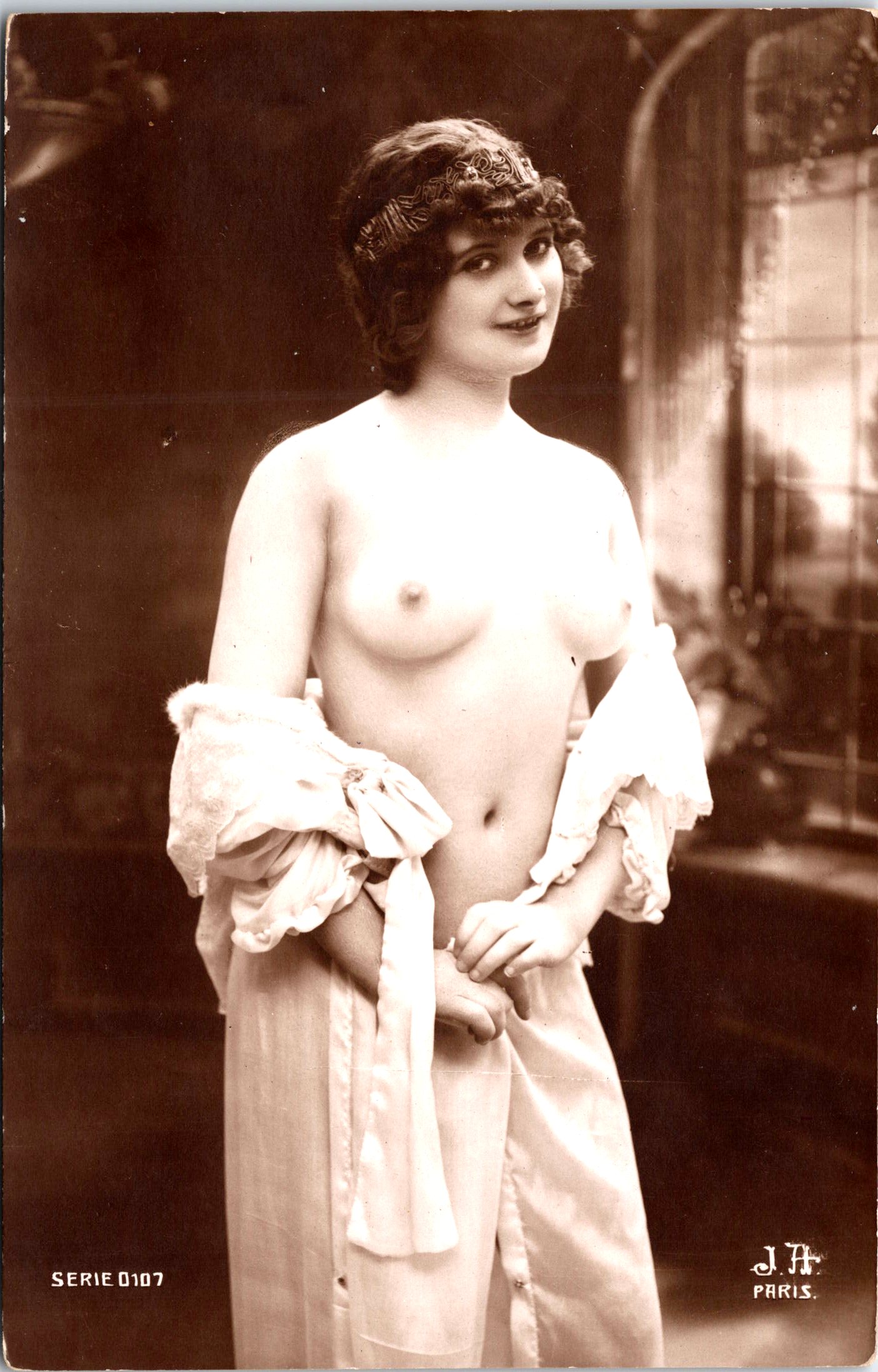
This French vintage nude real photo postcard features a pretty young woman model. Her facial expression can be described as alluring. This photograph is meant to titillate. The young woman is scantily dressed. More of her body is exposed than covered. She is wearing bed clothes, a negligee to be exact. This risque photographic portrait was published by celebrated photographer, Jean Agelou (1878-1921), as part of a series (No.D107). Agelou was a French photographer of the 1910’s and 1920’s who is best known for his erotic and nude photographs. He was born in Egypt and not much is known about his private life. Agelou generally used models between the age of 20 and 24 years-old. Although the 1900’s was the “golden age” of erotic photograph, photographers who took such risque photos had to use discretion. As a result, Agelou signed his work “JA”. In 1908, nudity in photographs was banned in France and photographers had to cover nude women images with strategically placed undergarments or other materials. Nude images had to circulate on the down low. They were sent in the mail inside of envelopes. Jean Agelou died in 1921; the result of a car accident. His brother George, who managed Jean’s business, also was killed in the crash. SOLD
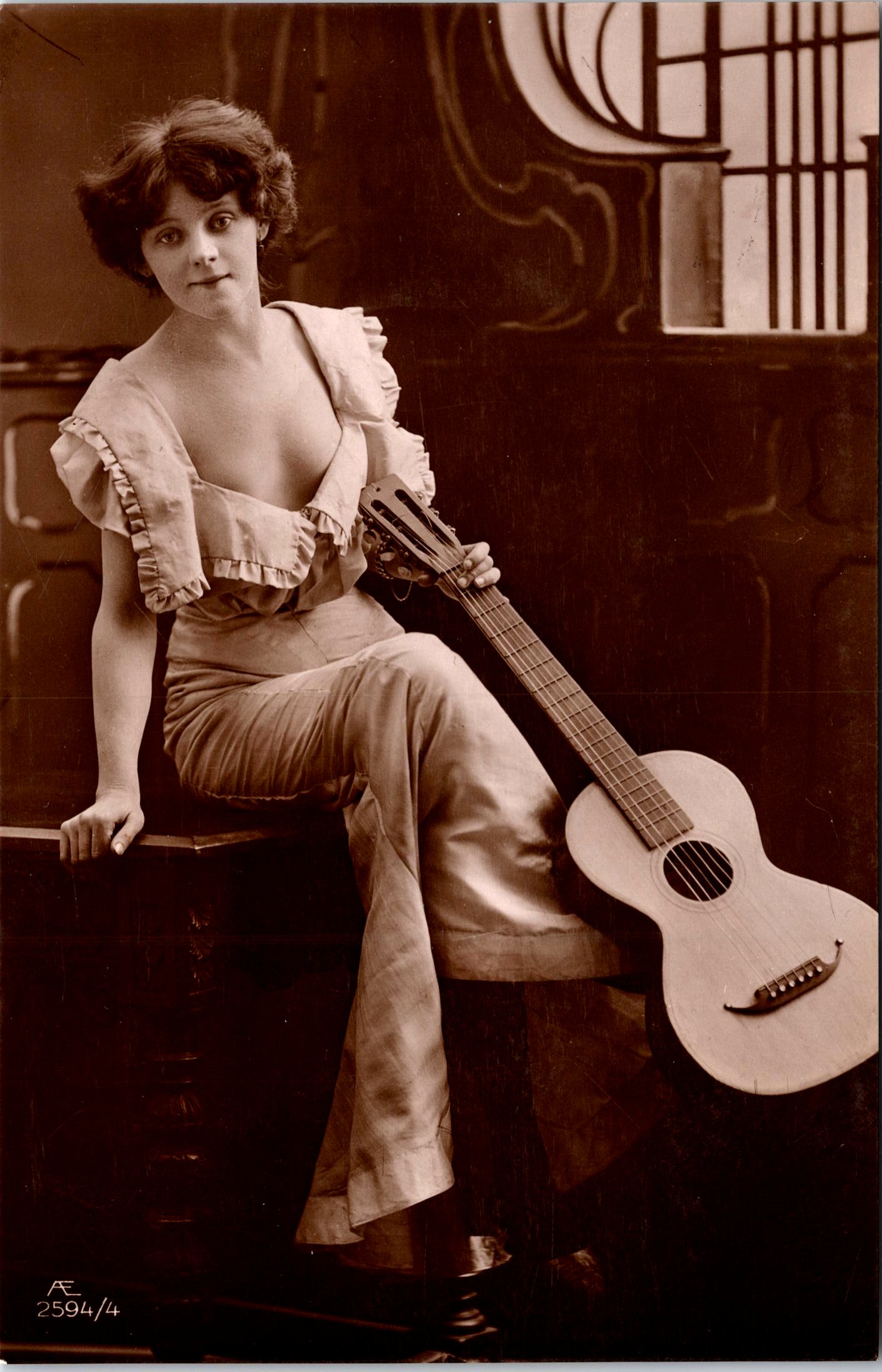
This vintage real photo postcard features a pretty young woman posing with her guitar. Her plunging neckline makes this a risque postcard. The card was published by Adolph Engel (Berlin, Germany) and is part of a series (No.2504/4). SOLD


 CABINET CARD 1 SOLD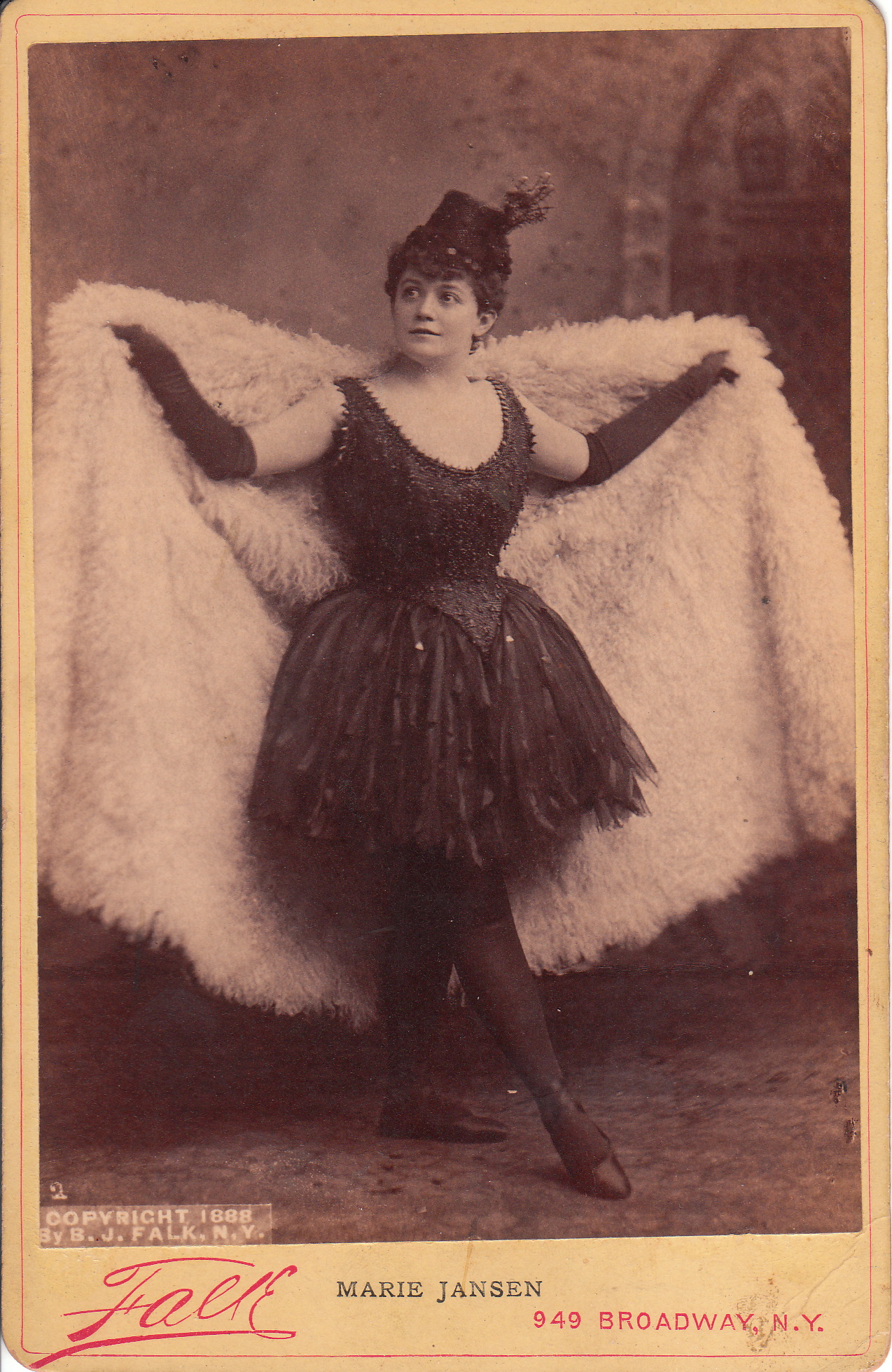
 CABINET CARD 3
 CABINET CARD 4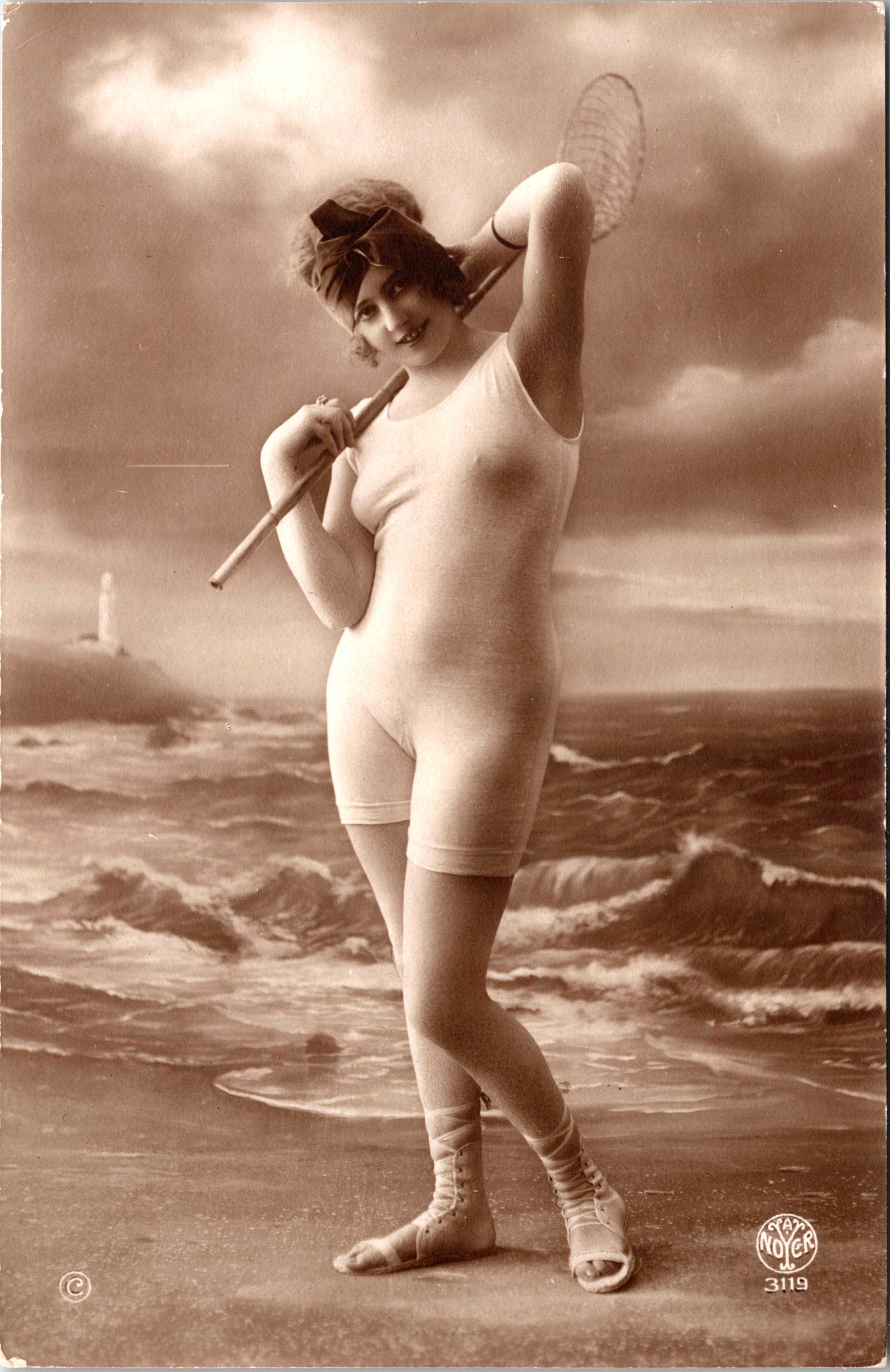





 THE CABINET CARD GALLERY
