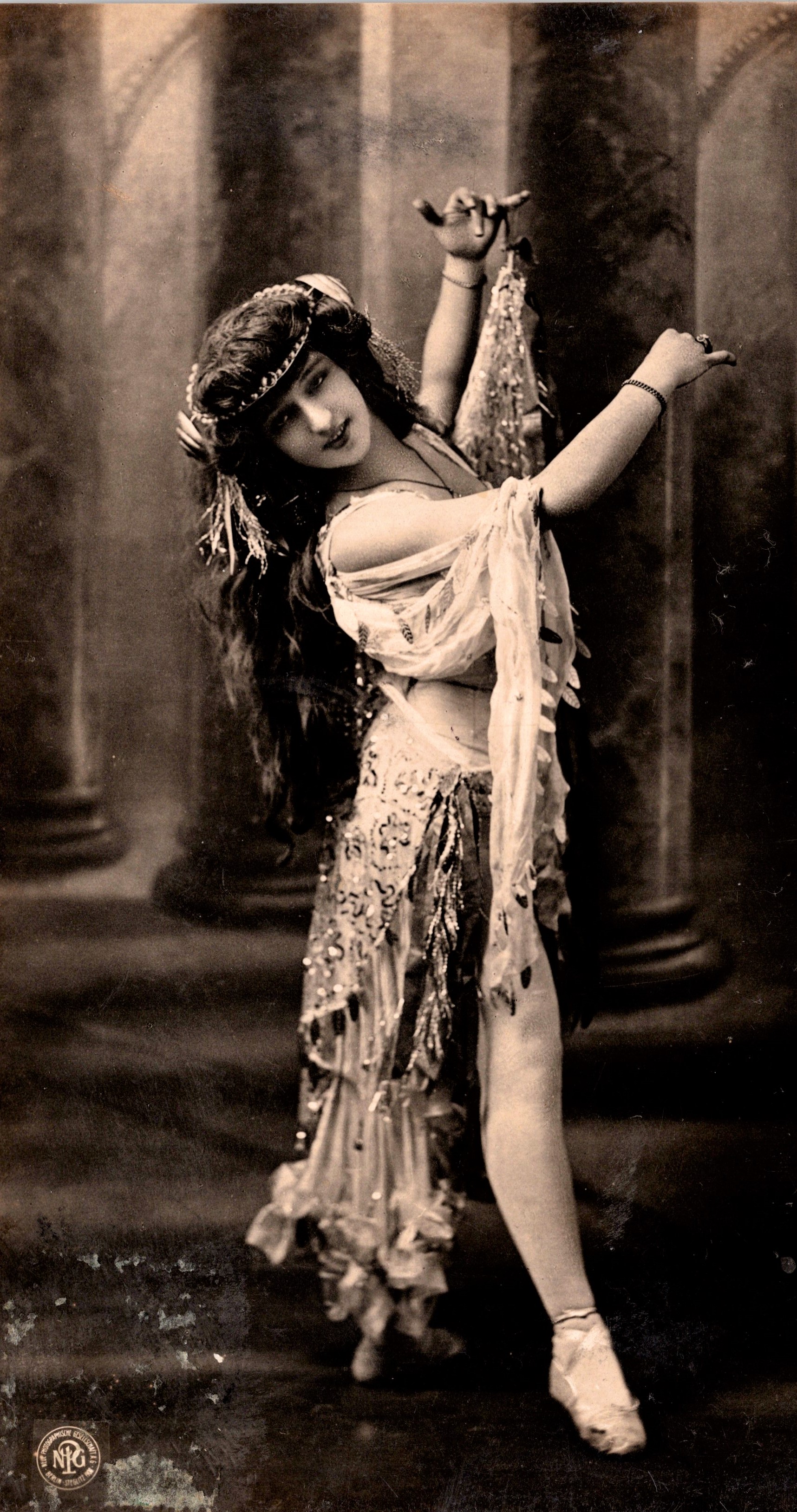
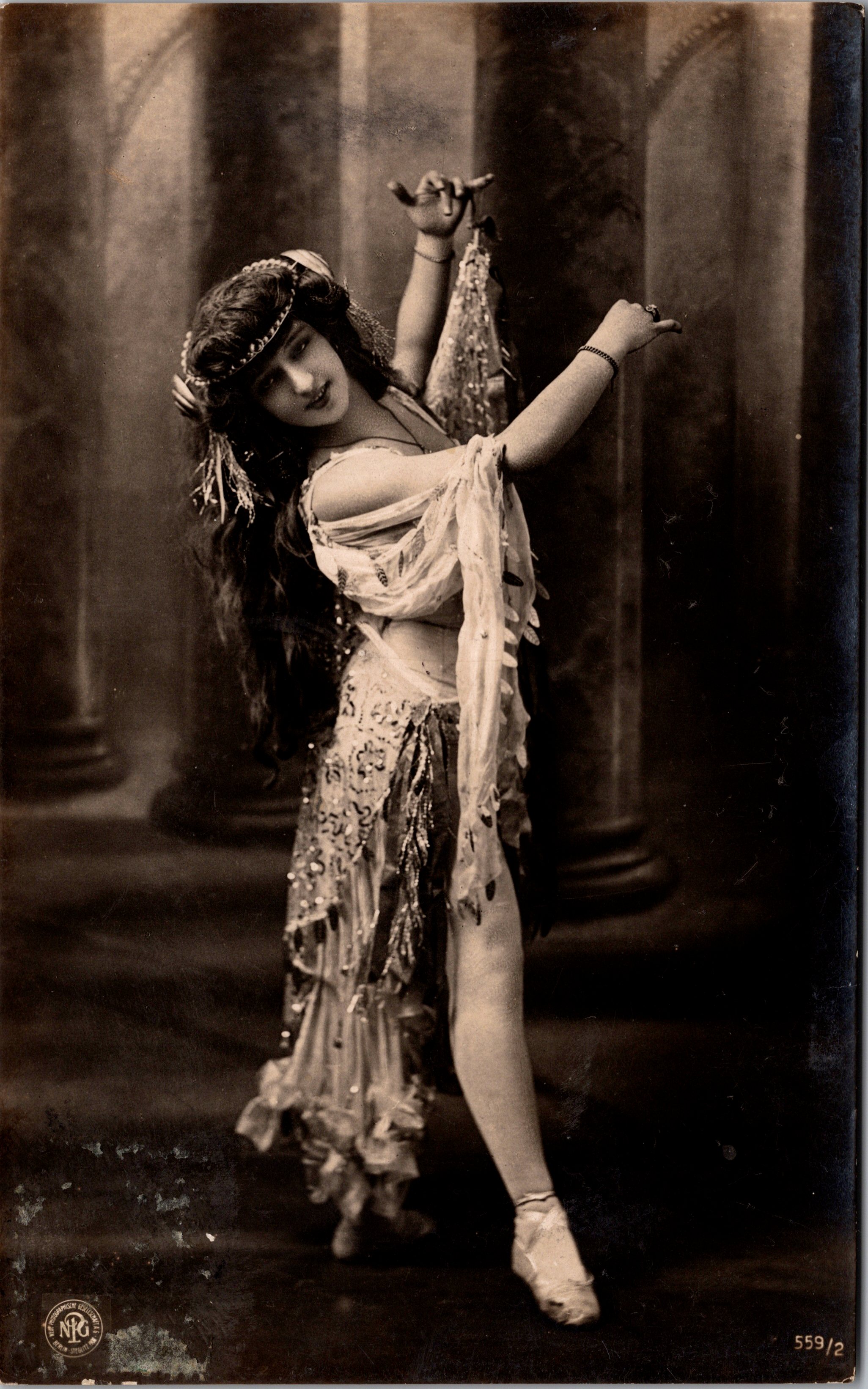
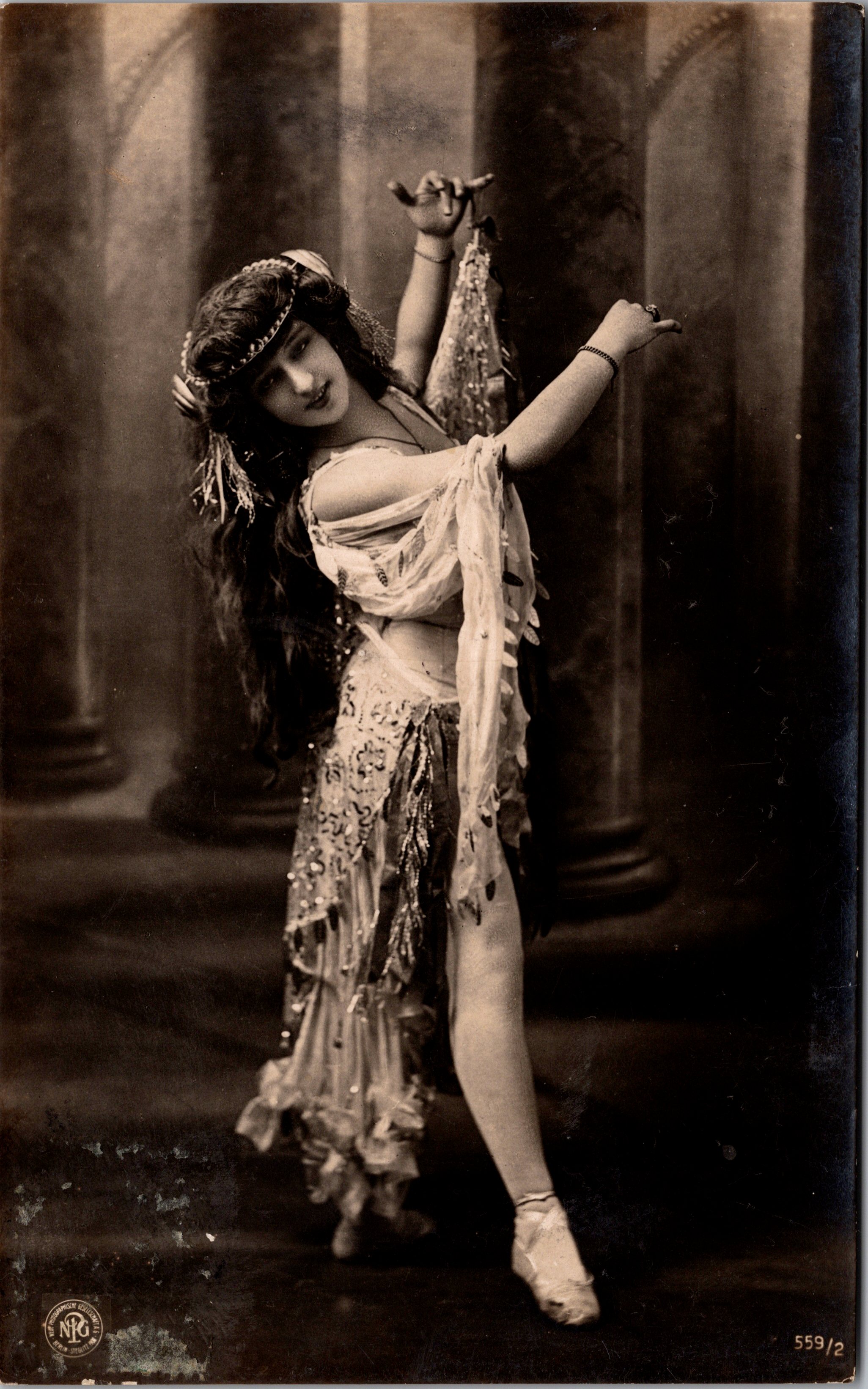
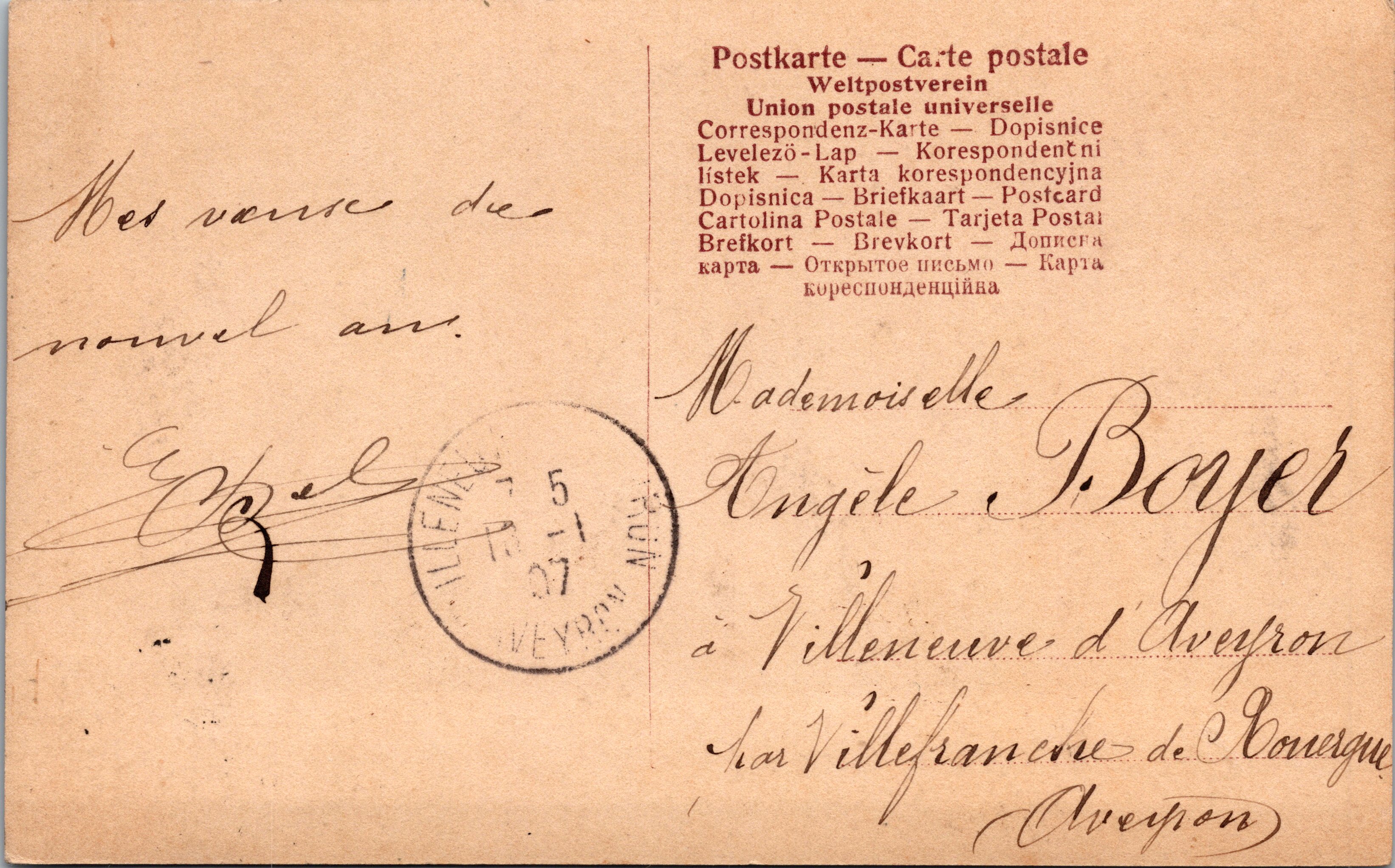
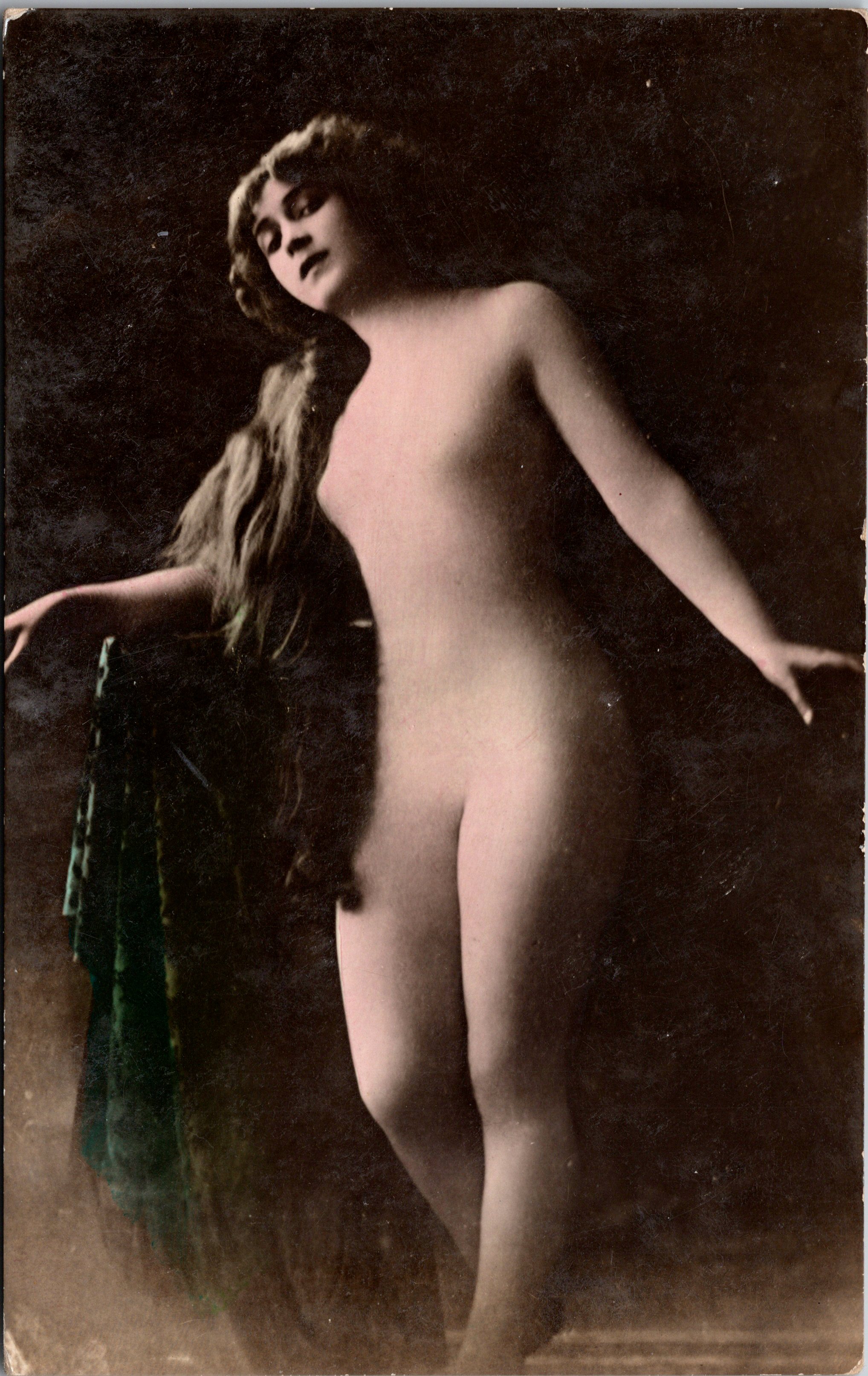
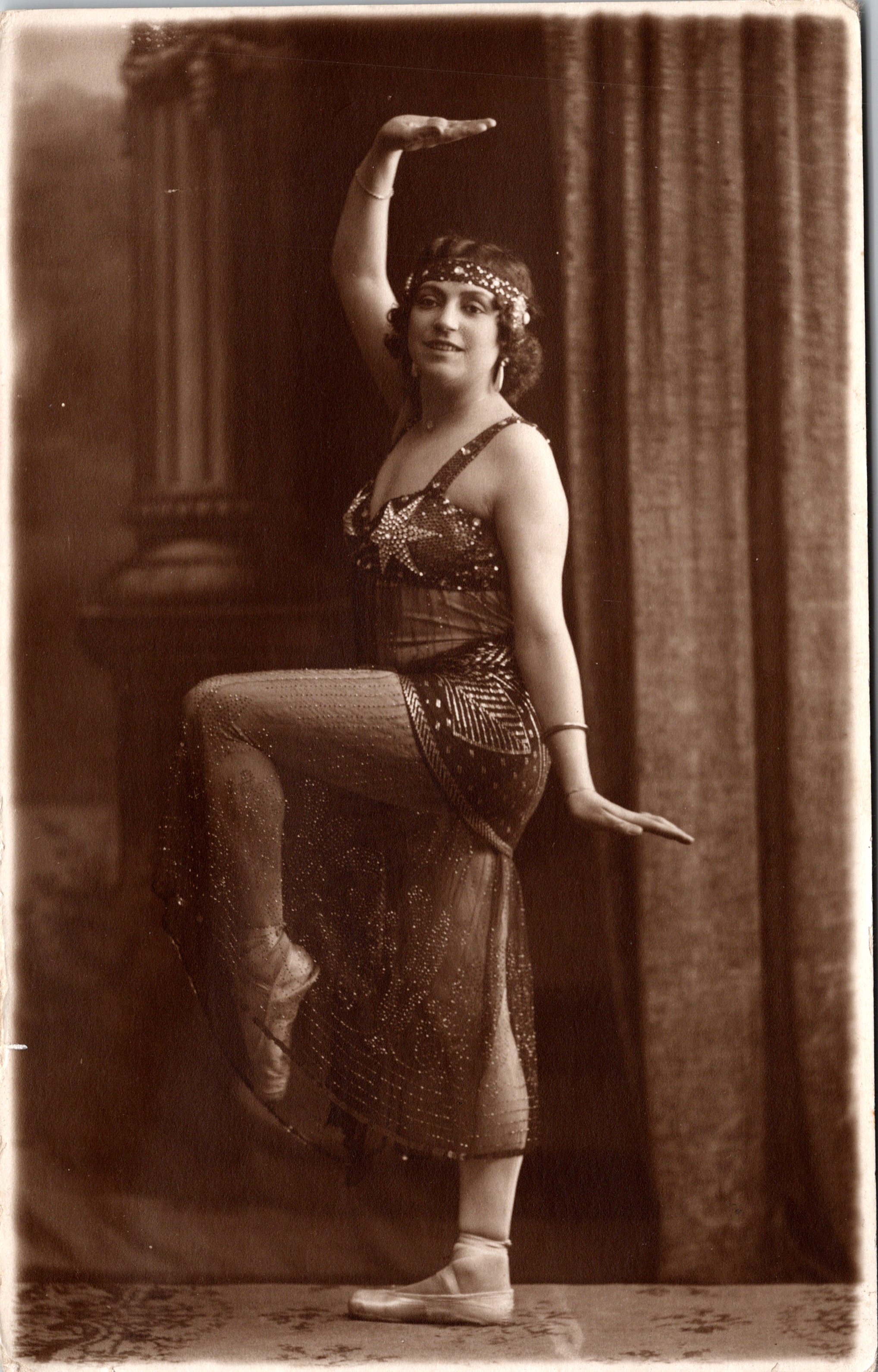
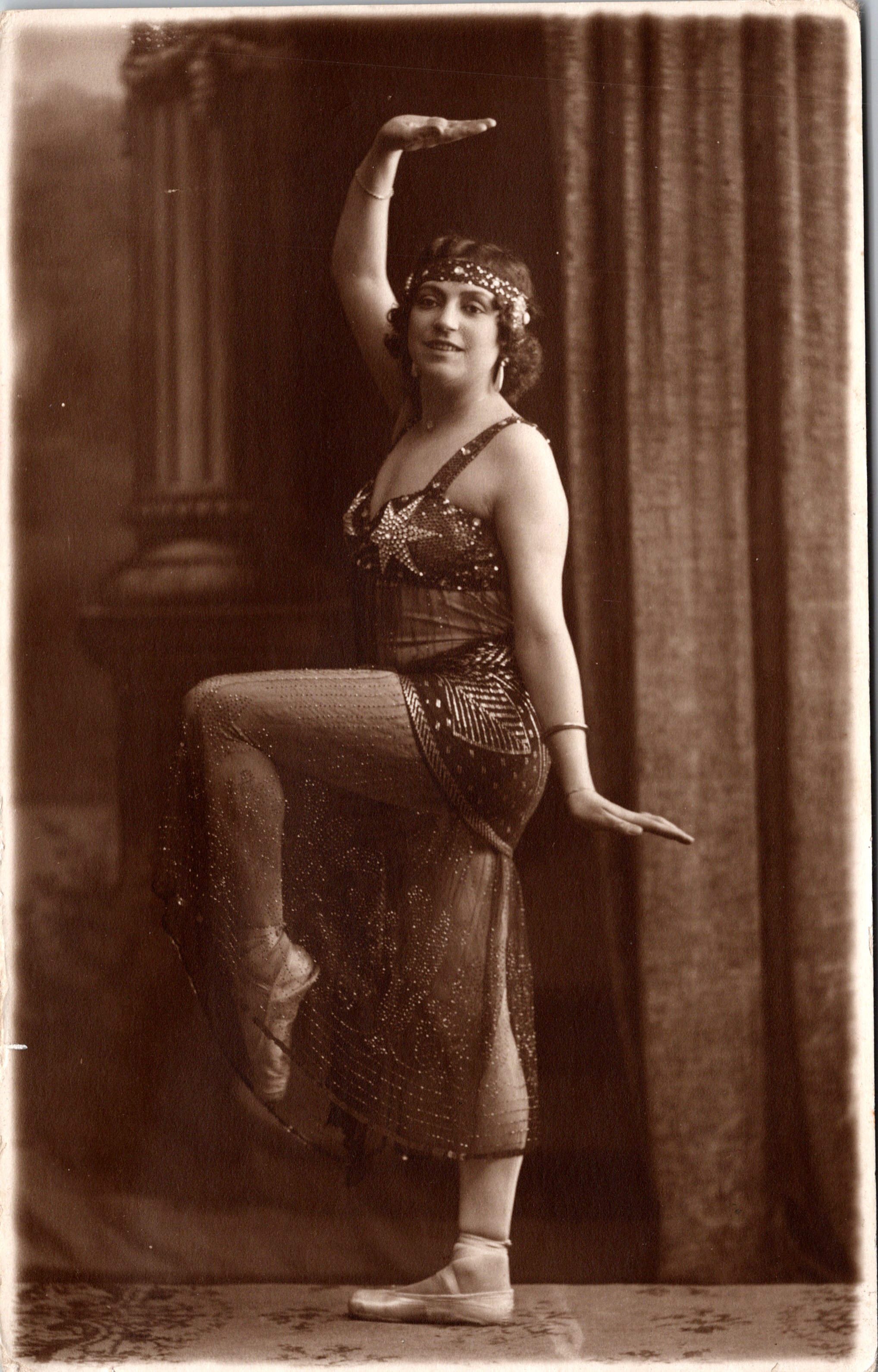
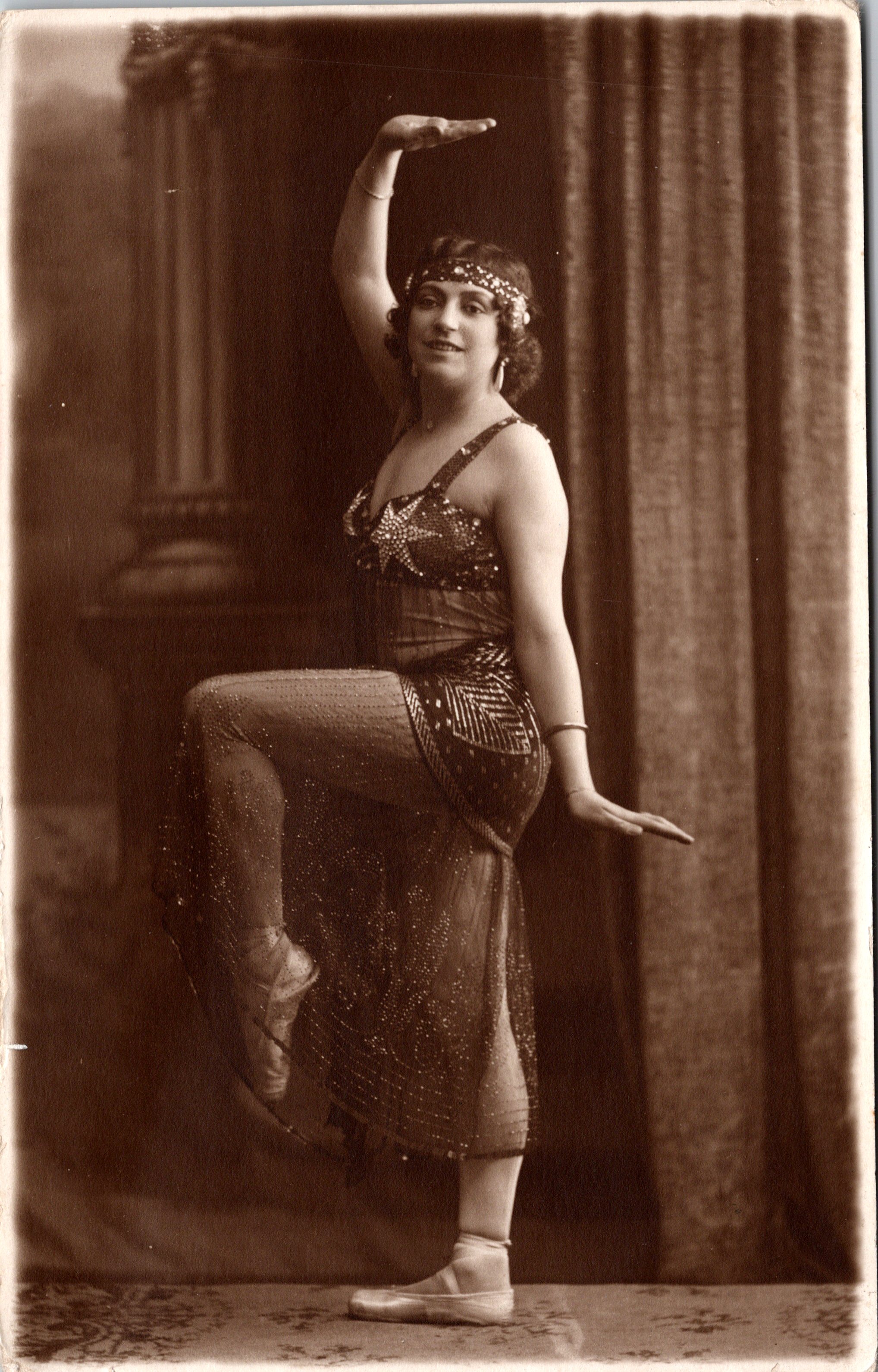
This vintage real photo postcard features a pretty young dancer dressed in a risque costume. Note her headdress. The previous owner of this postcard asserted that this image is an example of Germany’s Jugendstil period (1896-1914). The term, Jugendstil, means “young style”. The Jugendstil movement has been referred to as Germany’s Art Nouveau period. This postcard was published by NPG as part of a series (no.559/2). The card was postmarked in 1907. This postcard has stamp residue on it’s bottom left hand corner and is in overall Good Condition (See Scans).
Buy this Vintage Real Photo Postcard (includes shipping within the US) #5111
To purchase this item, click on the Pay with PayPal button below
$28.00
Buy this Vintage Real Photo Postcard (includes International shipping outside the US) #5111
To purchase this item, click on the Pay with PayPal button below
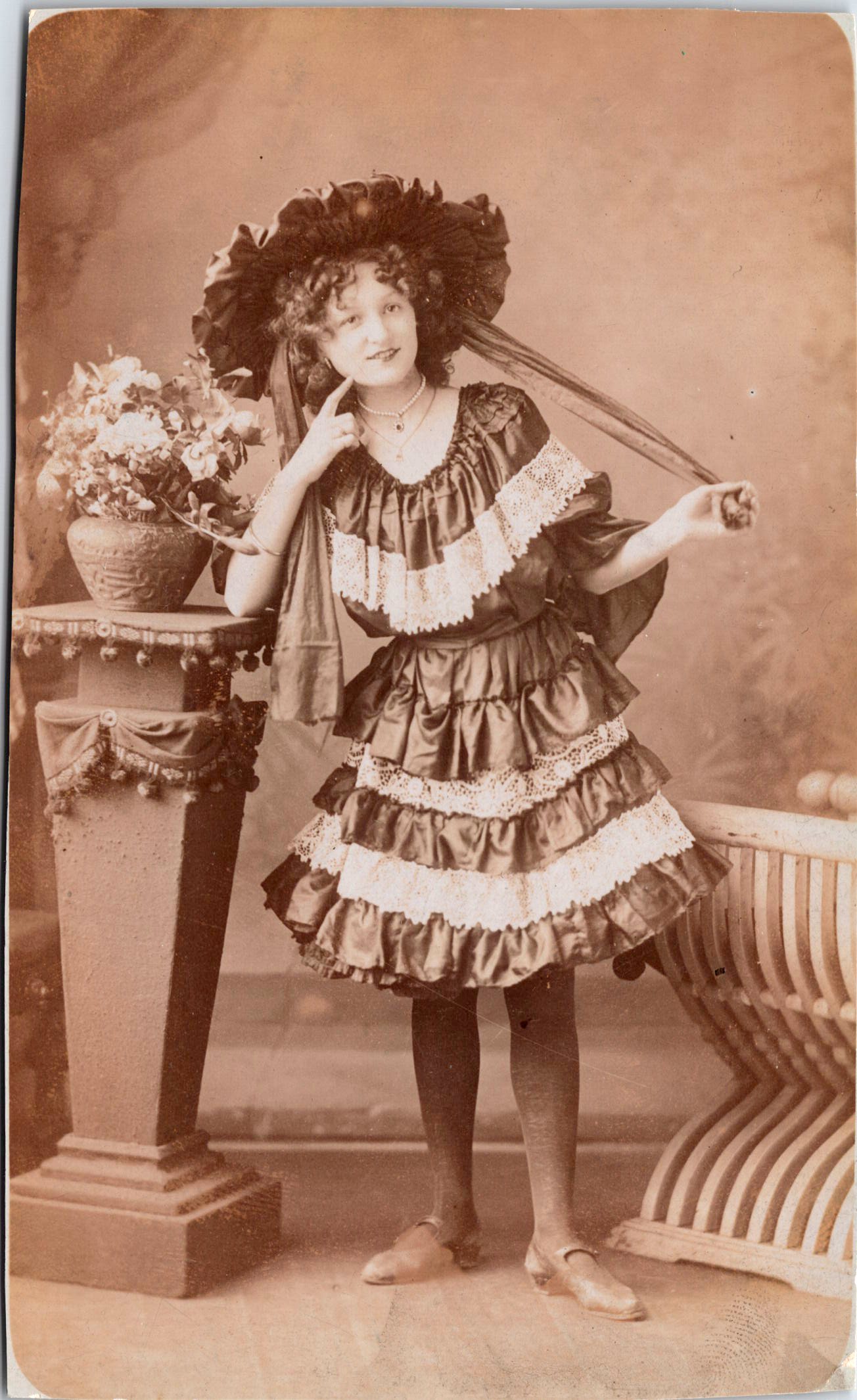
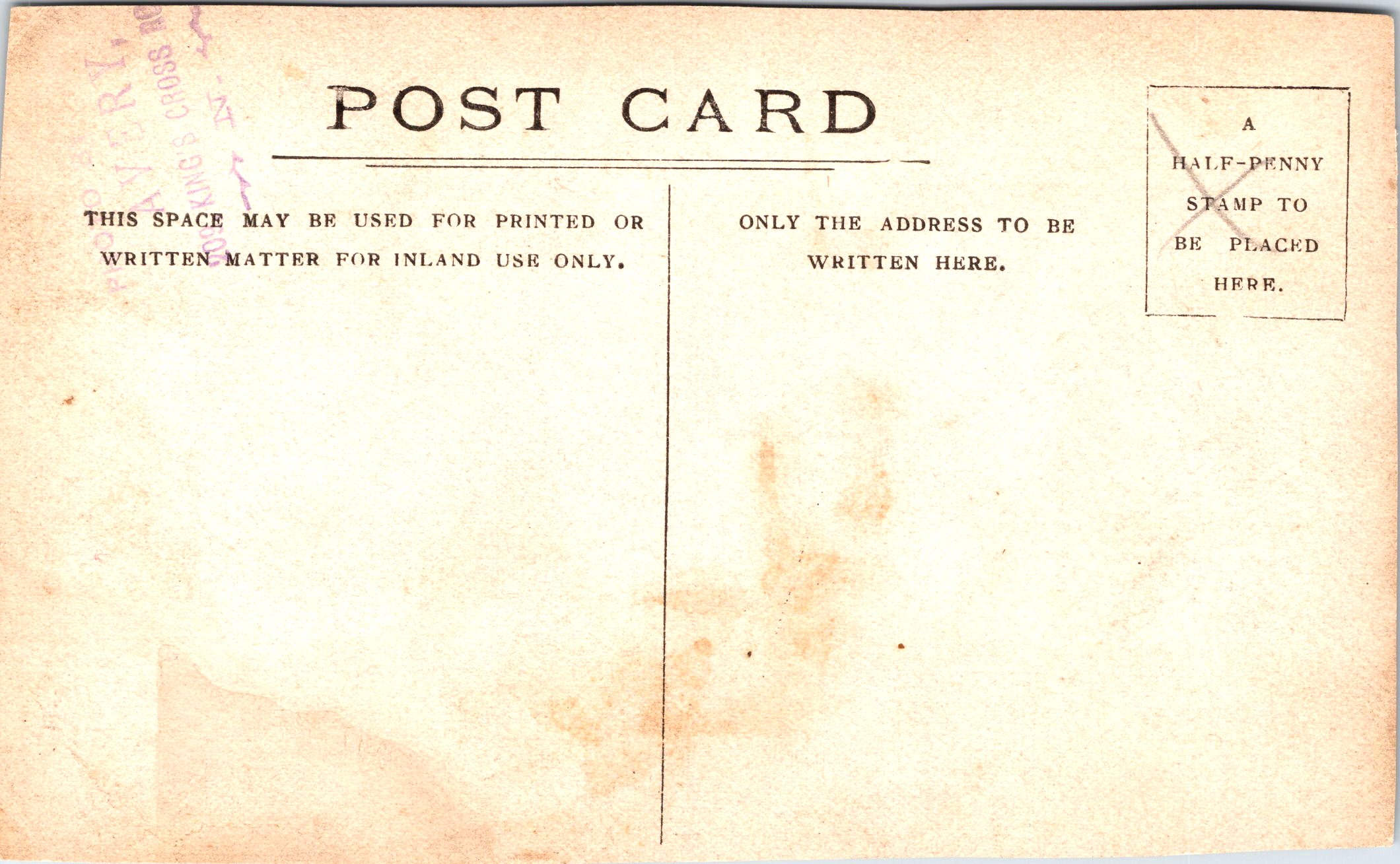
I wish I knew more about this young lady. She has an infectious smile. Her dress is frilly and has rows of lace. Judging by her attire, my guess is that she is a “dancehall girl” or actress. Perhaps a viewer of this vintage old photo postcard has another opinion as to the story behind this image. Some might consider this photo a bit risque. The woman seen in this image is wearing a very short dress for her era. An ink stamp on the reverse of the postcard reveals that this photograph was taken at the Avery studio. We only know that the studio was located on King’s Cross Road. King’s Cross is an area located in Central London. It may follow that Avery’s studio was located in London. SOLD
This risque vintage real photo postcard features a pretty young dancer. She is dressed and posed provocatively for this postcard portrait. Her legs are exposed and she is wearing a short and tight fitting costume. This art deco dancer is wearing an Egyptian costume with a sequin headband and a bra with rhinsetone stars. This vintage postcard portrait is in very good condition (see scans).
Buy this Vintage Original Real Photo Postcard (includes shipping within the US) #5061
To purchase this item, click on the Pay with PayPal button below
$52.00
Buy this Vintage Original Real Photo Postcard (includes International shipping outside the US) #5061
To purchase this item, click on the Pay with PayPal button below
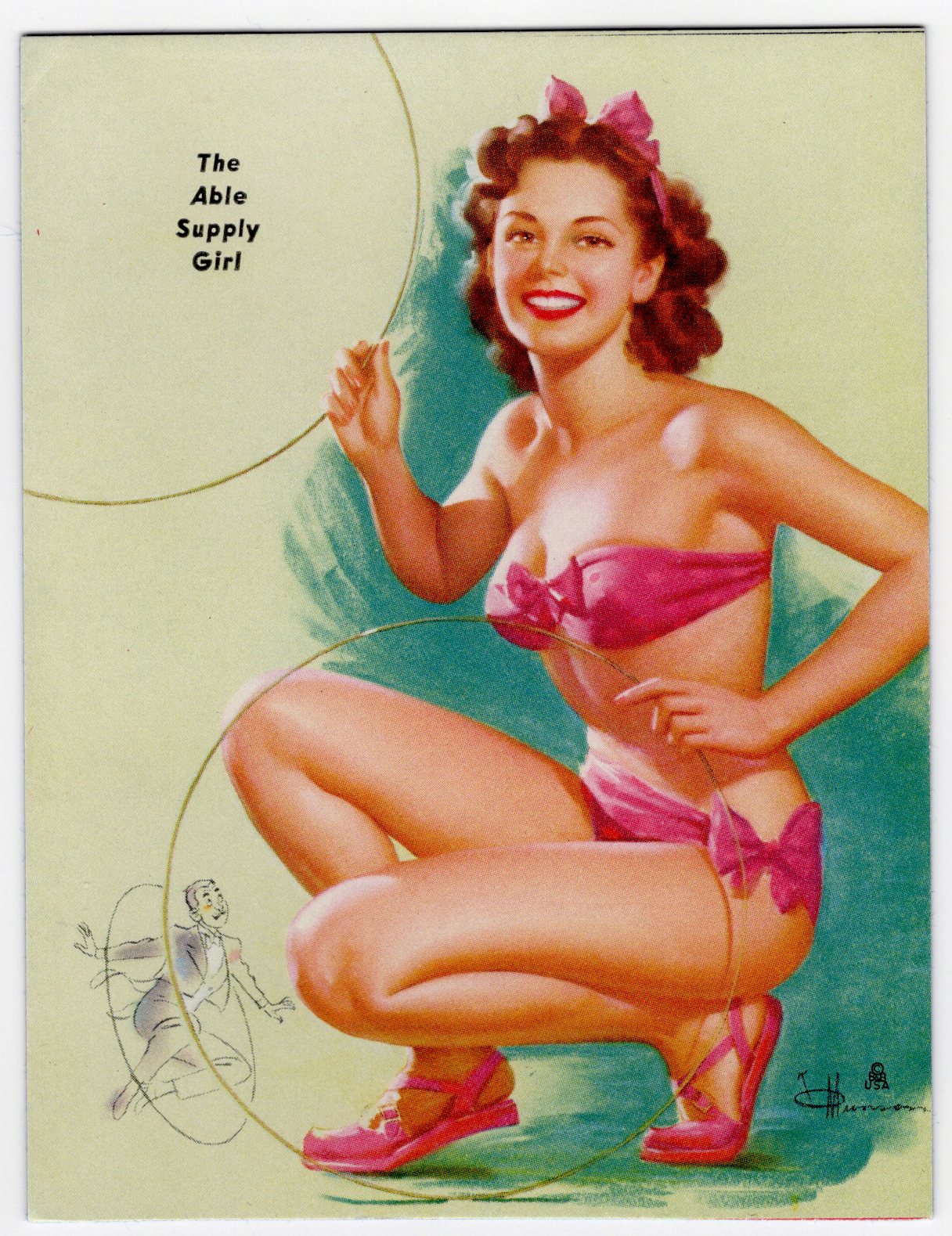
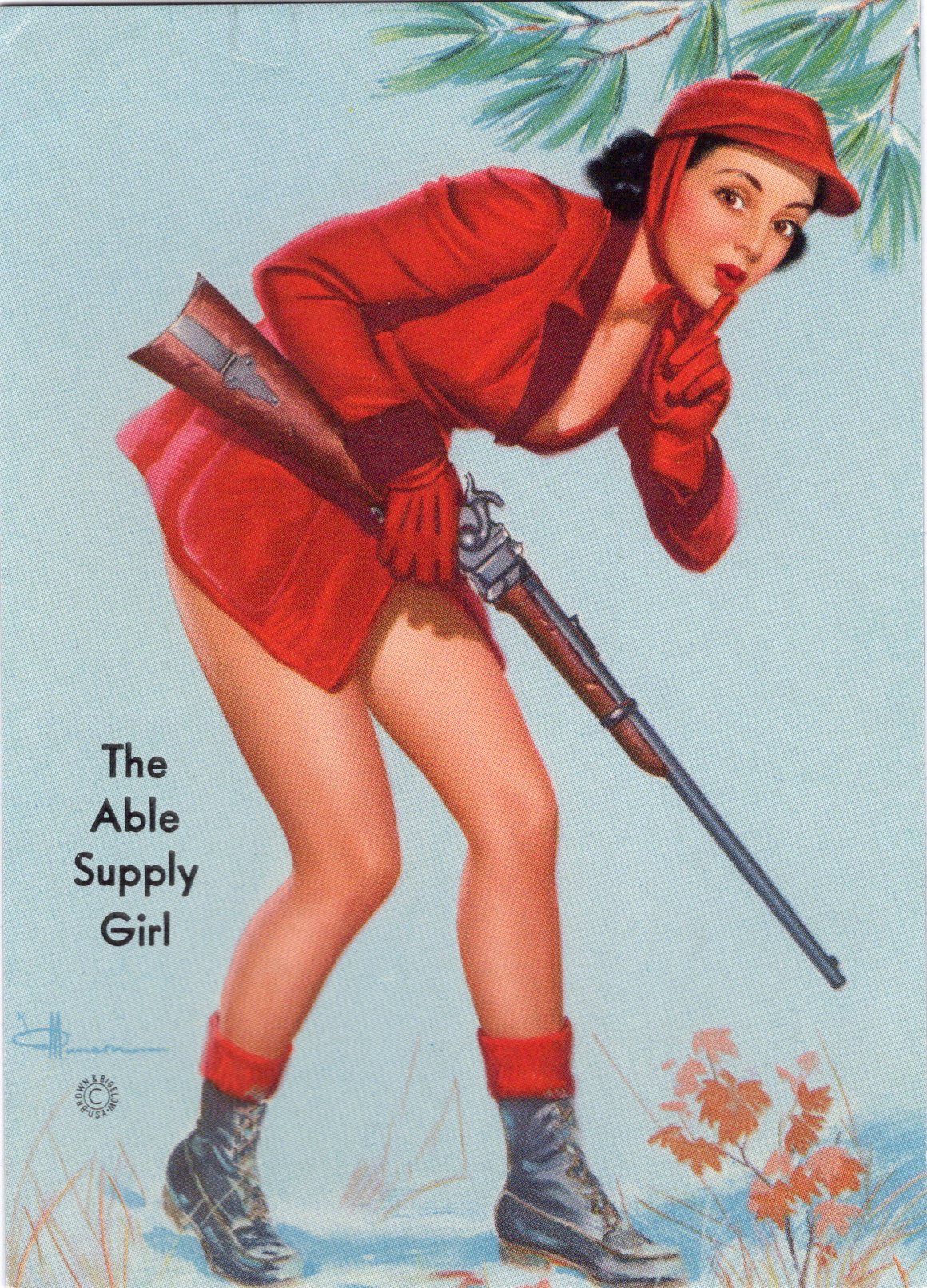
Vintage ink blotter 1 advertises the Able Supply Company. Well known pin-up artist, K O Munson, did the artwork for this risque cheese cake advertising blotter. The blotter has been trimmed, likely, to fit a frame. The item has no stains, rips, or creases. The ink blotter measures about 3 7/8″ x 5″. SOLD
Vintage ink blotter 2 also advertise the Able Supply Company and the artistry is done by K O Munson.This blotter was published by Brown & Bigelow. The publishing firm was founded in 1896 and it still exists today. It is based in Saint Paul, Minnesota. The ink blotter measures about 3 7/8″ x 5 3/8″ and dates back to the 1950’s. SOLD
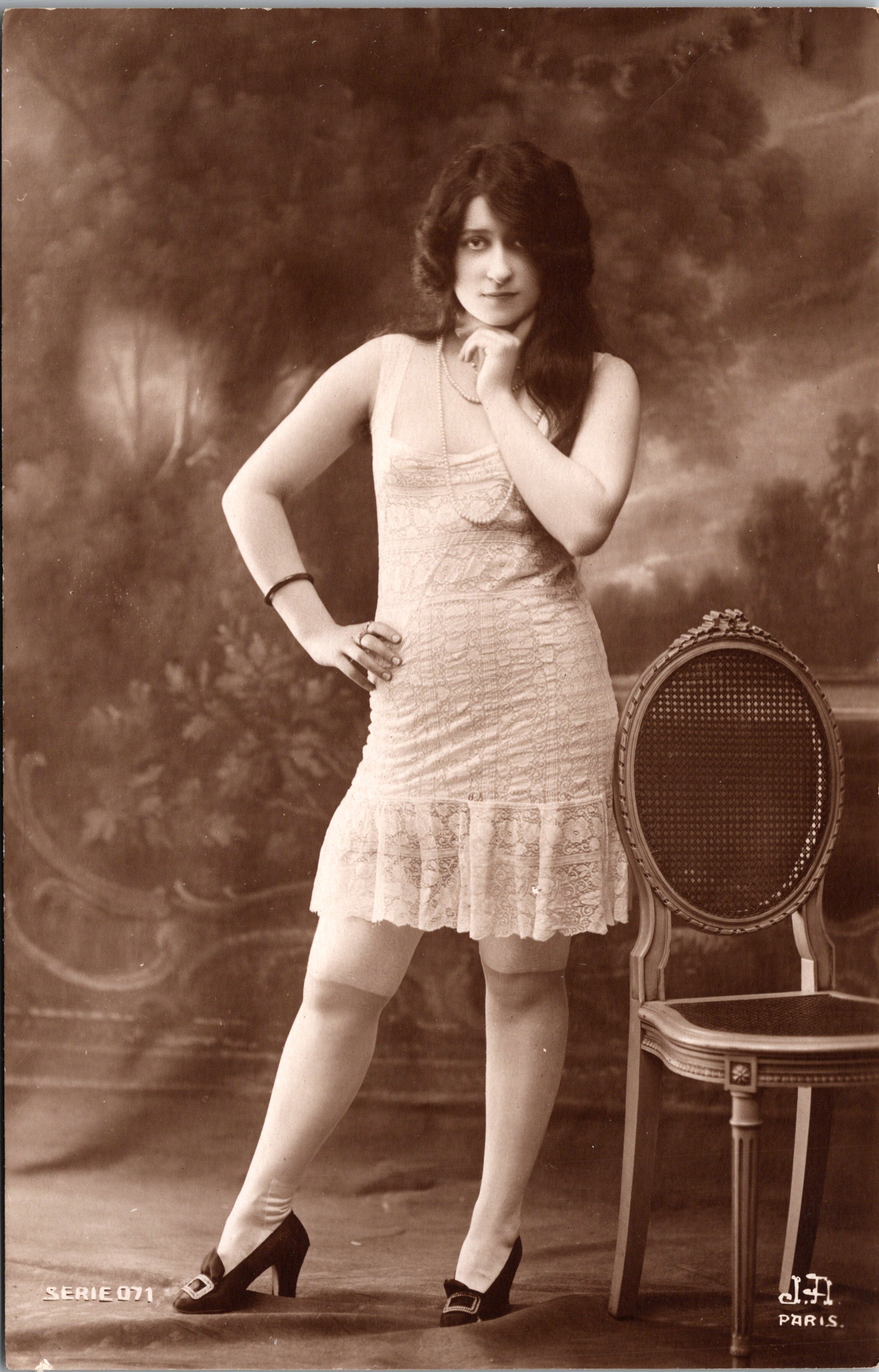
This vintage risque real photo postcard features a strikingly pretty young woman wearing lingerie. She is posed and dressed in a provocative manner and it can be said that she has “attitude”. The photographer of this postcard portrait is Jean Agelou (1878-1921). Agelou was a French photographer of the 1910’s and 1920’s who is best known for his erotic and nude photographs. He was born in Egypt and not much is known about his private life. Agelou generally used models between the age of 20 and 24 years-old. He had a favorite model. Her name was “Fernande” and in addition to modeling, she was Agelou’s lover. Although the 1900’s was the “golden age” of erotic photograph, photographers who took such risque photos had to use discretion. As a result, Agelou signed his work “JA”. In 1908, nudity in photographs was banned in France and photographers had to cover nude women images with strategically placed undergarments or other materials. Nude images had to circulate on the down low. They were sent in the mail inside of envelopes. Fernande remained popular and her erotic photographs were enjoyed by soldiers on both sides during World War I. Jean Agelou died in 1921; the result of a car accident. His brother George, who managed Jean’s business, also was killed in the crash. (SOLD)
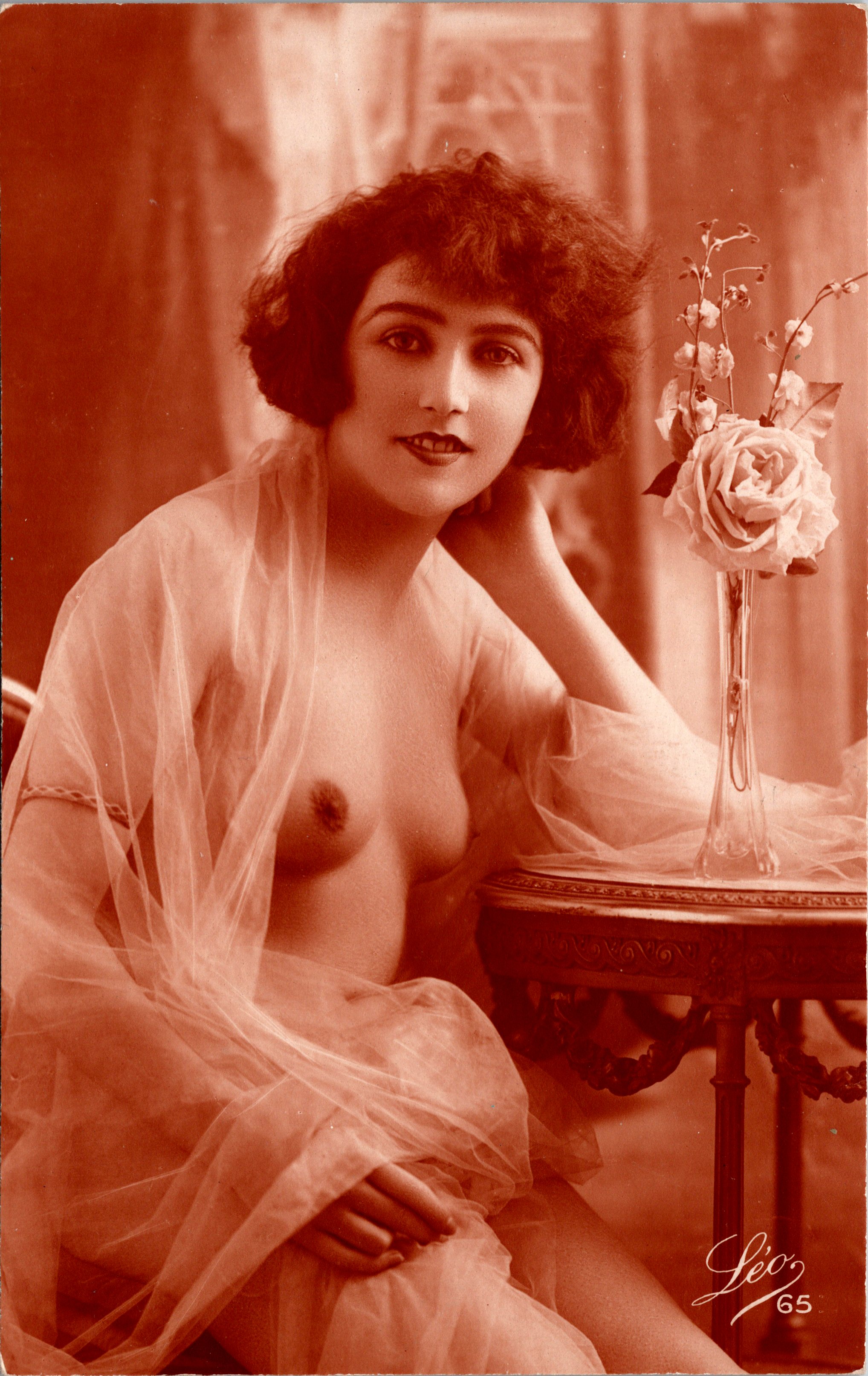
This French vintage risque real photo postcard features a pretty young woman partially disrobed. She is wearing an open negligee.Her elbow rests on a table that is topped by a rose in a vase.She has a wonderful smile. This postcard was published by Leo as part of a series (No.65). The firm was located in Pradot, France. The Leo firm operated in the mid 1920’s and published many types of real photo postcards. They were especially noted for producing a large amount of nude postcards. (SOLD)
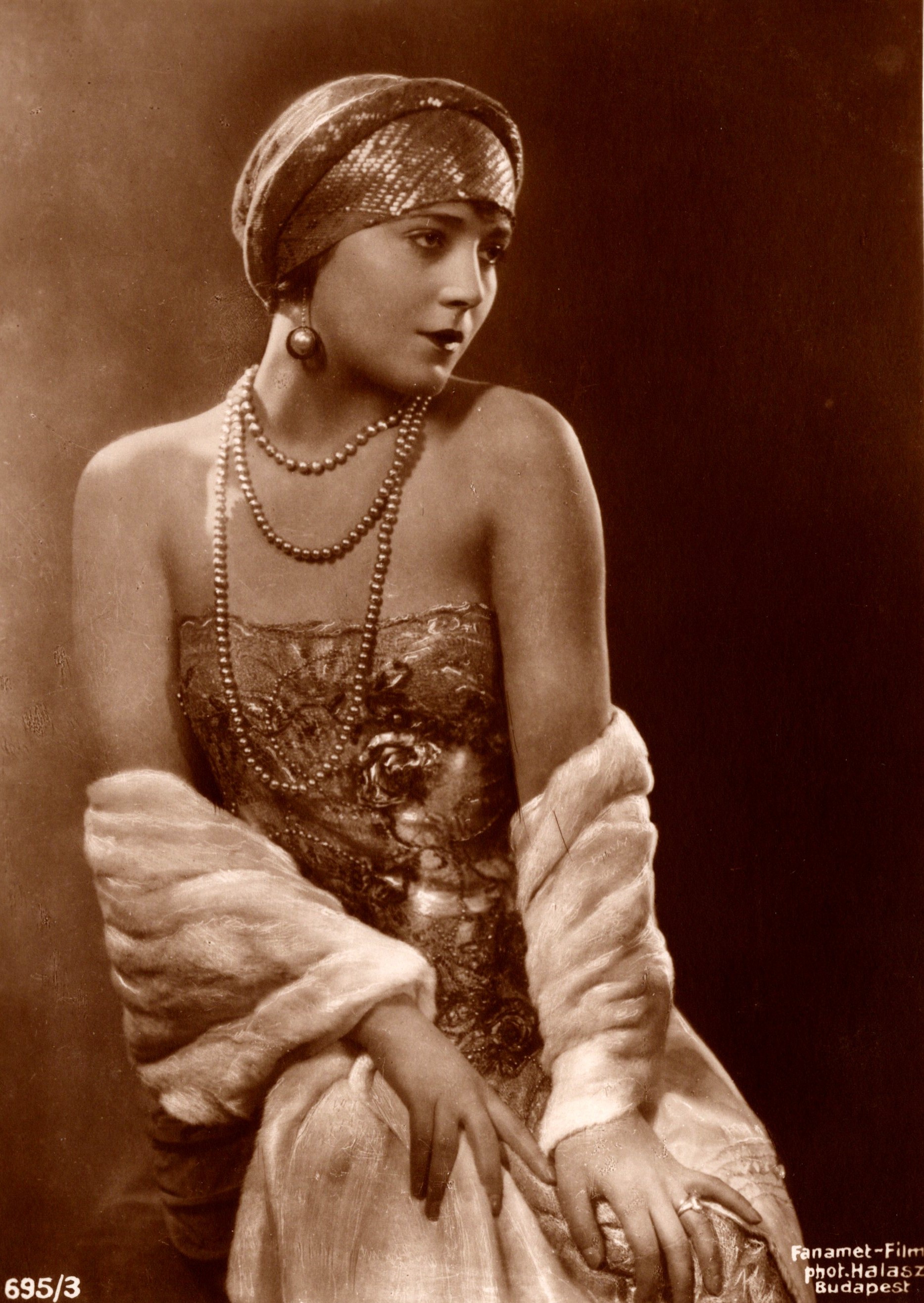
This vintage real photo postcard features beautiful and sensuous actress Miss Vilma Banky (1901-1991). She was born in Hungary but was an American silent film actress. She began her acting career in Budapest and later France, Austria, and Germany. In 1925, Banky was plucked from Europe by Hollywood film producer Samuel Goldwyn. American audiences fell in love with her and she earned the moniker of “The Hungarian Rhapsody”. In a review of her first film, “The Dark Angel” (1925), the New York Times (1925) described Banky as “a young person of rare beauty”. In the mid and late 1920’s she was Goldwyn’s biggest money maker. Some of her most famous roles were in the films “The Eagle” (1925) and the “The Son of the Sheik” (1926). She played romantic roles opposite Ronald Coleman and Rudolph Valentino. The advent of sound films is believed to have short circuited her acting career. Apparently her thick Hungarian accent was unacceptable. However, around the time of the introduction of sound films, it is thought that she had lost her enthusiasm about films and was more interested in settling down with actor Rod La Rocque (1898-1969), whom she married in 1927. Goldwyn gave the bride away and Cecil B. DeMille was the best man. By 1928, she was talking of retirement. In all, she made 24 films of which only eight remain in existence in their complete form. Her filmography begins in 1919 and ends in 1933. After leaving filmdom, she and her husband had a career in real estate and she pursued the sport of golf. The Chicago Tribue (1993) entitled Banky’s obituary “Silent Film Star Makes Dramatic Exit”. It is interesting to note that the article appeared nearly two years after her death. It seems that the press and Hollywood watchers never noticed her death. Apparently she lay sick in bed for the last ten years of her life, at home, and later in a nursing facility, without any visitors. The author of the article asserts “She died the nightmare death of every elderly person, alone, her life unremembered, her passing unlamented”. Banky was upset and angry about being abandoned, that she instructed her attorney to inform no one, including the newspapers, upon her passing. The attorney followed her instructions but when the press eventually learned of her death, the lawyer stated to reporters that Banky had no visitors because none of her friends or family still survived. She left a $600,000 trust fund to her sister’s two children in Hungary. After a difficult search the attorney found the two nieces in rural Hungary “living in peasant squalor”. The women had never met their Aunt and the last letter exchanged with Banky had been thirty years earlier. Banky’s lawyer had his hands full because a German heir hunting company had found them first and got them to sign over twenty percent of their inheritance for a finding-fee. At the time of the articles publication, the lawyer planned to pay off the company with a smaller fee and set up distant banking for the nieces who lived in an area that had no banks. Although after her death, the lawyer turned out to be a committed and wonderful friend to Vilma Banky and her family. This vintage postcard was produced by the Iris Verlag company. Iris Verlag was the most important Austrian publisher of film star postcards. It operated from Vienna during the 1920’s and 1930’s. The postcard is part of a series (no.695/3). The photographer of this portrait of Banky is Halasz of Budapest. The postcard was made for Fanamet-film which was a Austrian film distribution company. (SOLD)
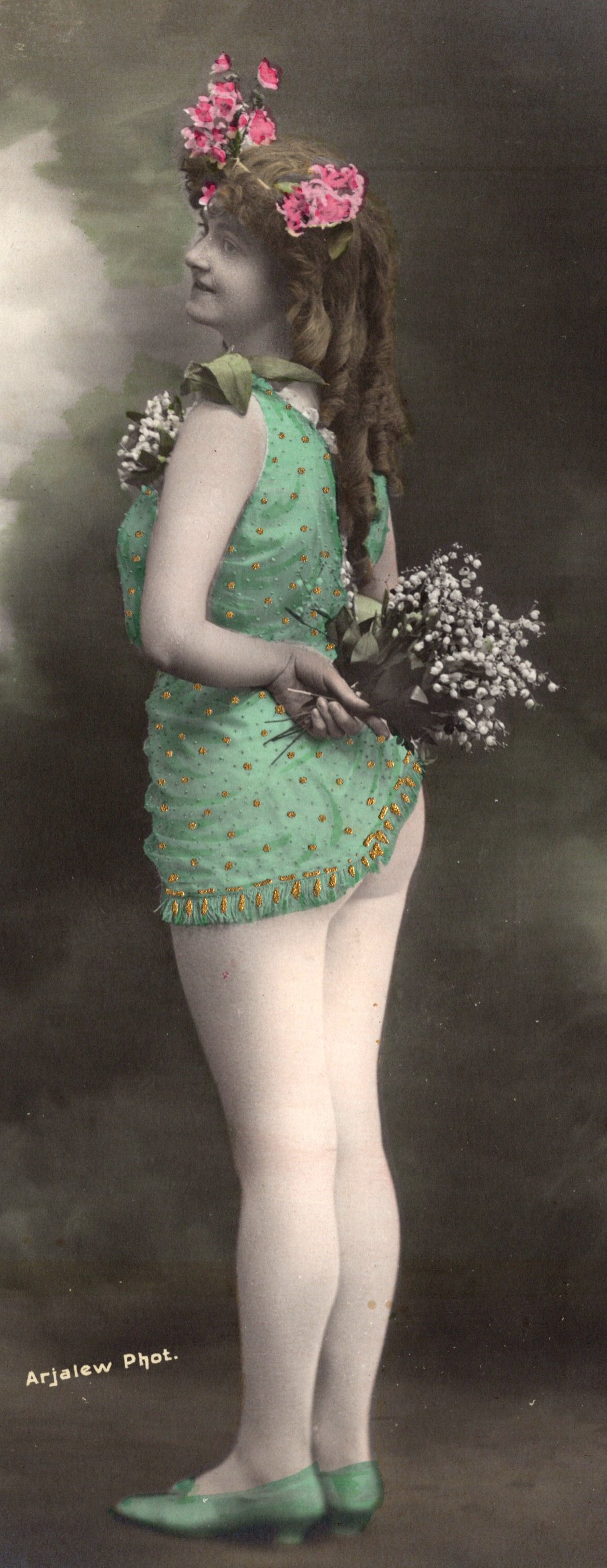
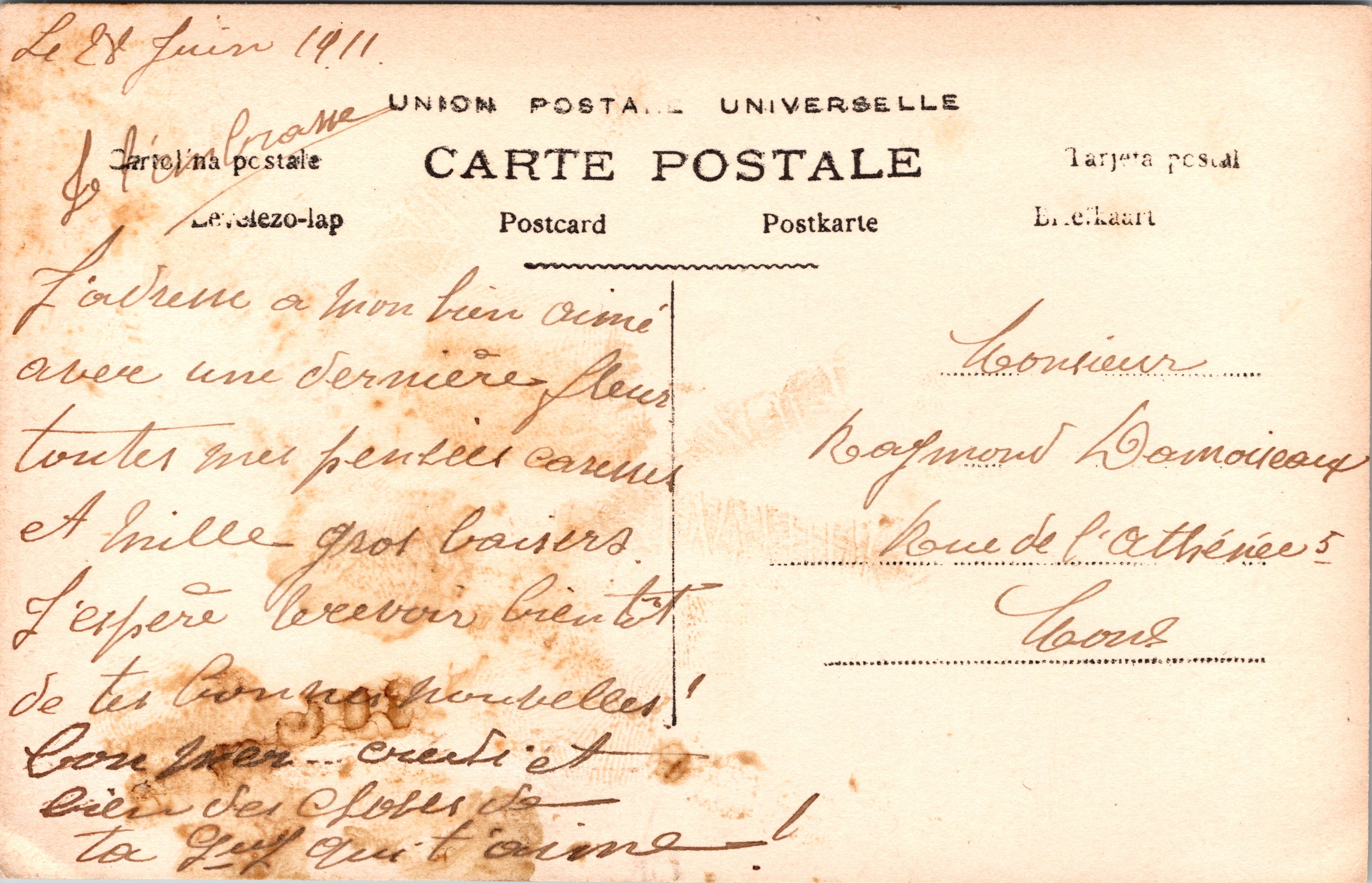
This vintage real photo postcard features a pretty costumed performer. She is a dancer or actress or both. There seems to be a wardrobe malfunction evident in this photograph. The young woman’s skirt is a bit short of material. It is not providing complete coverage of her derriere. The photo was taken by Belle Epoque photographer, Arjalew. His studio was located in Paris, France. He is known for producing many beautiful Art Nouveau images. This postcard was published by Iris (Theojac, Theo Bachellery). The firm was located in Limoges, France. (SOLD)
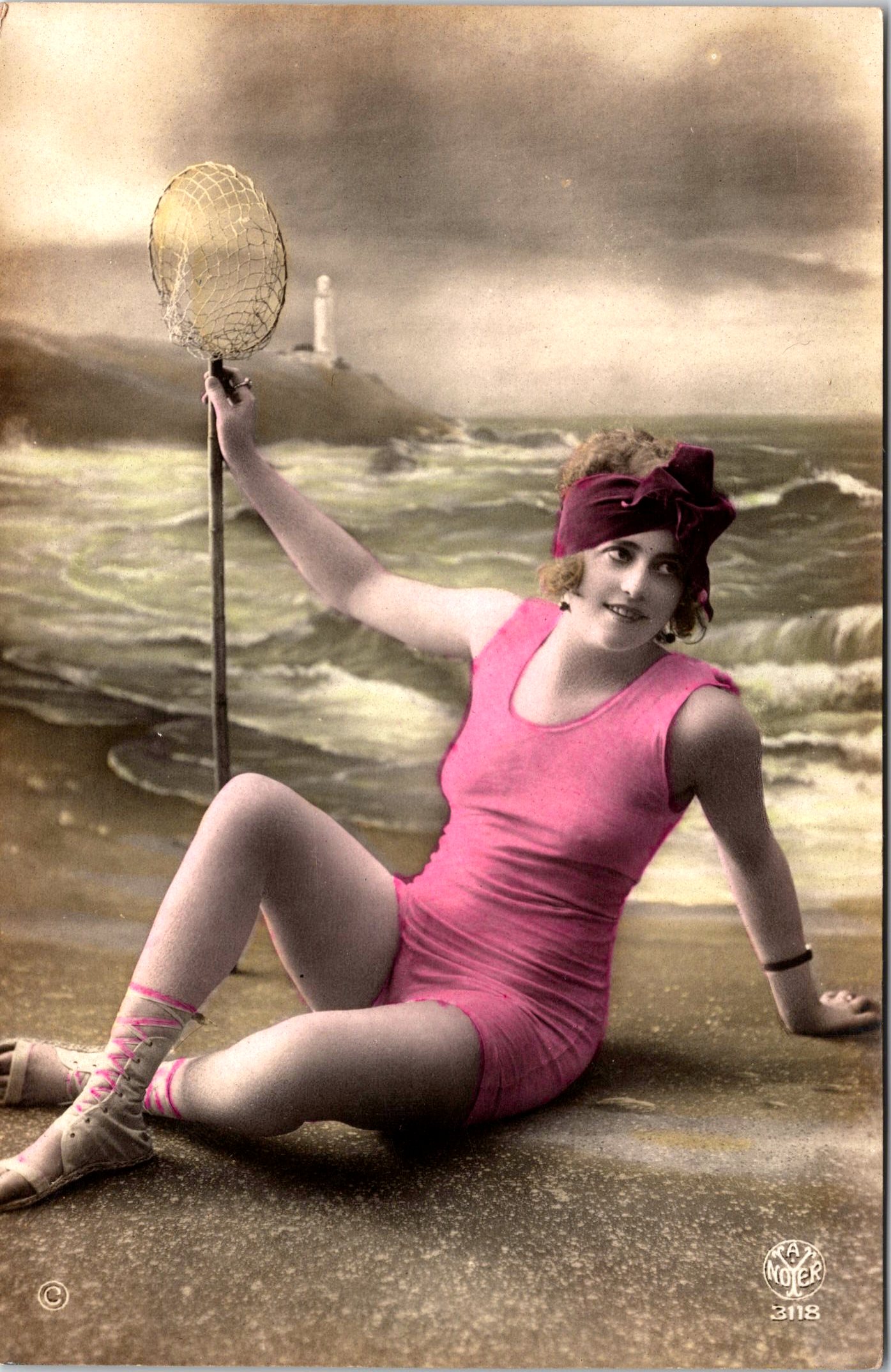
This vintage real photo postcard features a smiling bathing beauty posing while sitting on the sand at a beach. Note the ocean and the lighthouse in the background. This photograph is risque for it’s era. This image was published by Alfred Noyer. (SOLD)












 THE CABINET CARD GALLERY