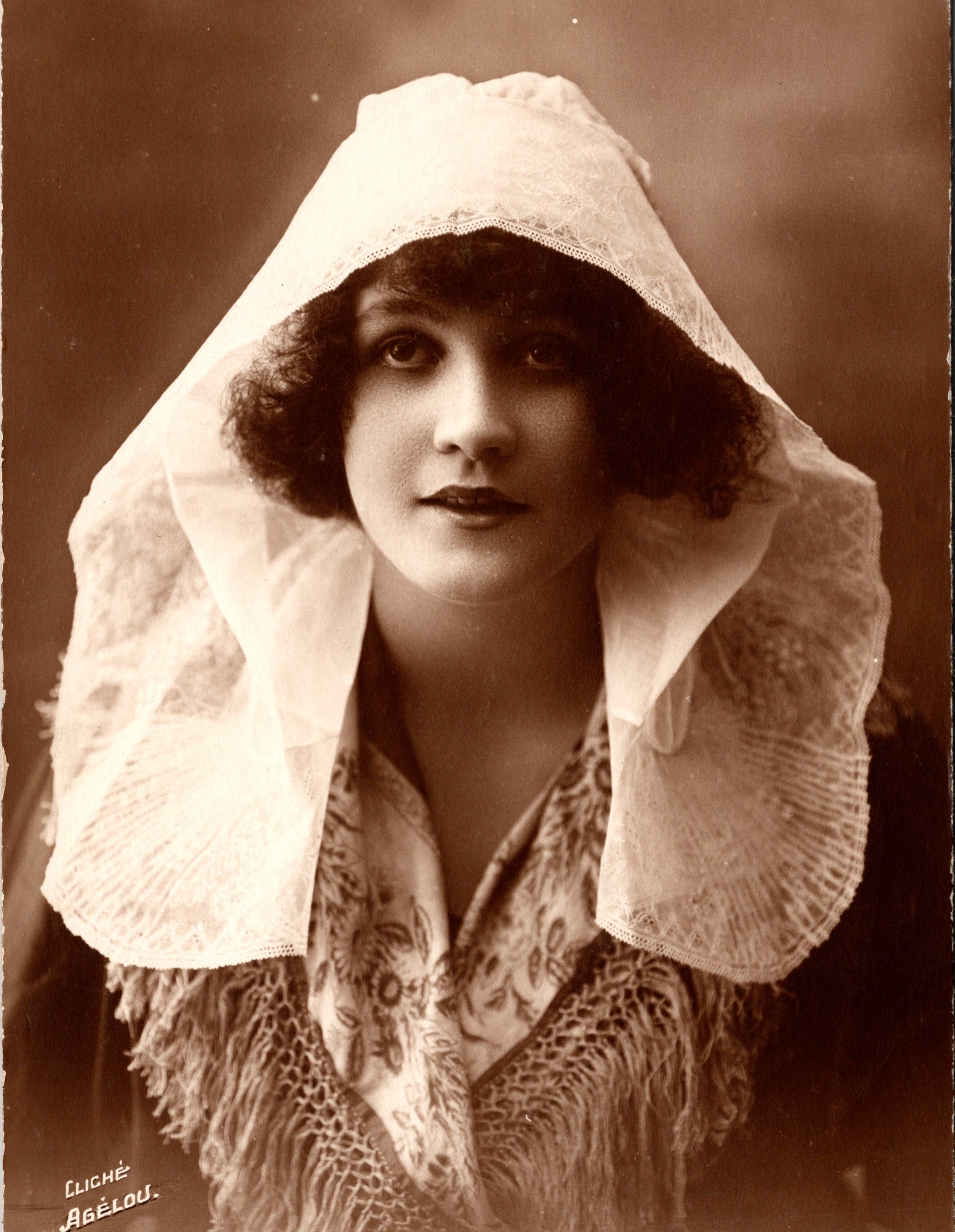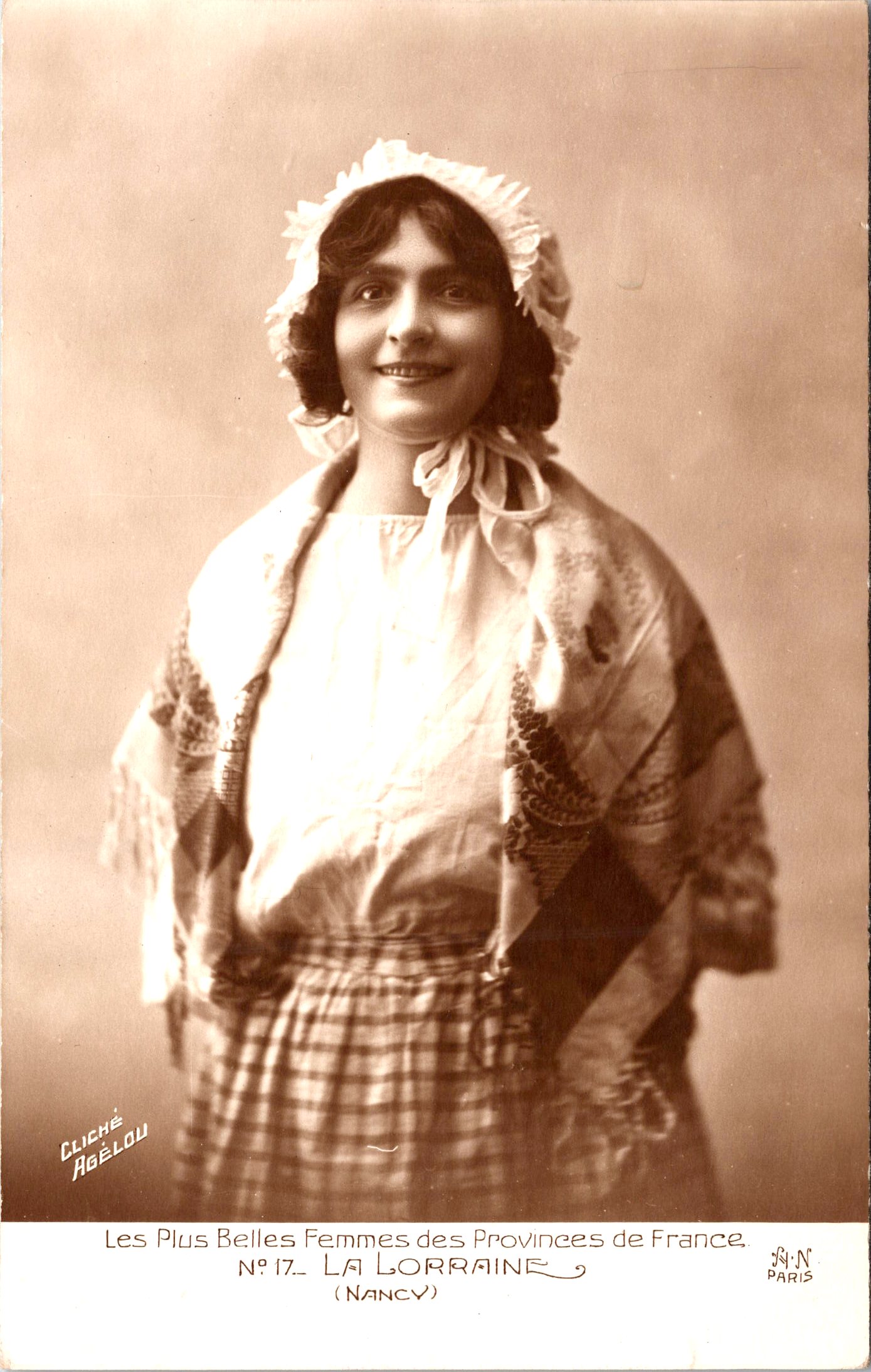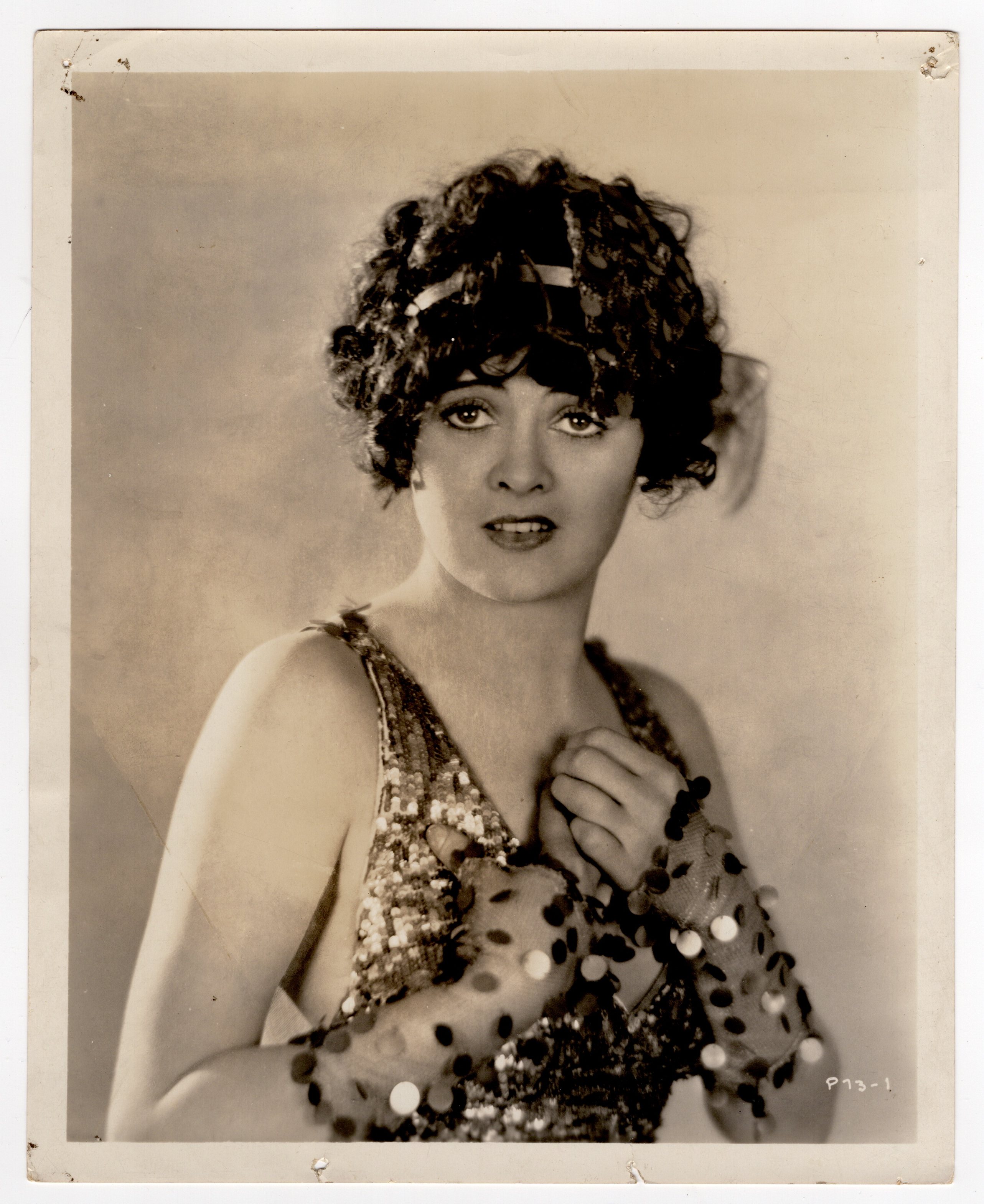
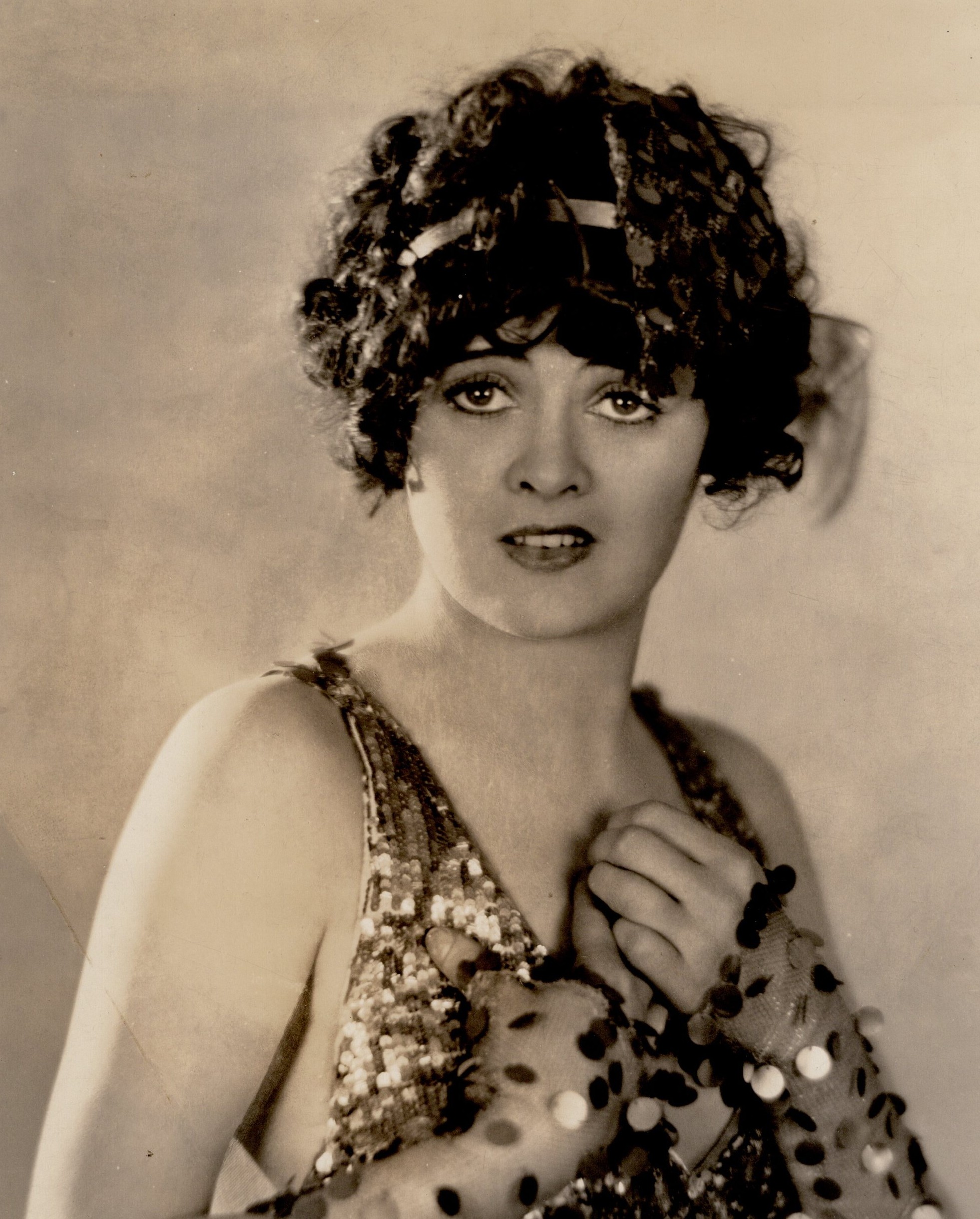
This rare color tinted vintage real photo postcard features French artiste and courtesan, Manon Loty. Her photograph is by Leopold Reutlinger and the postcard was published by SIP as part of a series (No.987). The undivided card was published circa 1902. Loty was quite the beauty. Although there is no shortage photo postcards featuring Manon Loty, this particular card is rare. Loty was a popular entertainer. She was often seen at Maxime’s, a Paris gathering spot for wealthy royals and industrialists. Men made arrangements with the Belle Epoque courtesans who gathered there. A 1910 article in Pearson’s magazine, mentions her as an example of a “mercenary woman” SOLD
This charming 1938 advertising postcard from the Rawleigh Company announces the upcoming visit of a Rawleigh salesman to a retail customer, likely a small grocery or general store. The card serves as both a product advertisement and a practical reminder of an in-person sales call — a common strategy used by Rawleigh in their extensive door-to-door and small-business sales operations. The front of the postcard is colorfully illustrated with a box of Rawleigh’s Doughnut Mix alongside a plate of golden fried doughnuts, while the reverse features bottles of Rawleigh Vanilla Compounds and a beautifully frosted layer cake. The ad copy promotes doughnut and gingerbread mixes, vanilla flavorings, malted milk, and other desserts — emphasizing convenience and taste, with phrases like “Folks Go Wild About Them” and “What Women Prefer.” The card is marked “Printed in USA – 5-38-500m”, indicating it was printed in May 1938. It also carries the promotional code “Adv. Not. 38-14.” The W.T. Rawleigh Company was founded in 1889 in Freeport, Illinois by William Thomas Rawleigh. Originally focused on home remedies, the company became one of the leading door-to-door distributors of household products in North America, offering everything from vanilla extract and liniment to spices, flavorings, baking supplies, and household cleaners. Rawleigh salesmen (known as Rawleigh men) became familiar figures in American towns and rural areas throughout the early 20th century. They were known for bringing their products directly to consumers, sometimes traveling by horse and buggy in the early days. The brand built a reputation for reliability, quality, and variety. Though its dominance faded in the postwar era, Rawleigh continued into the late 20th century and its legacy lives on — the name was revived and Rawleigh products are still available today under the umbrella of Vitasource. This postcard is in excellent vintage condition with vivid color, strong printing, and clean edges. It is unused and unposted, with a blank address section on the back (see scans).
This vintage Postcard is available for purchase at my store, The History Peddler, for $8.00 or best offer.
This striking vintage risque postcard features a dramatic sepia-toned studio portrait of Emma Darwin, identified by name printed in the upper right corner. The image captures her in an elegant, theatrical pose, standing barefoot with a long, sheer drape flowing from her arms to the floor. Her short, softly waved bob hairstyle and confident gaze are characteristic of the Art Deco era, strongly suggesting the 1920s. The composition is highly stylized, with a soft-focus woodland backdrop and carefully arranged fabric creating movement and sensuality without explicit nudity. The presence of French text on the reverse — “Carte Postale” with “Correspondance” and “Adresse” — supports French publication. The card appears to be of continental European origin, most likely French, and dates to circa 1925, which aligns well with the hairstyle, fashion, and theatrical styling. The publisher or photographer is not explicitly named beyond the logo (located near bottom right corner), which may represent the studio or publishing house. Without a clear imprint, this is likely a French studio production distributed commercially during the mid-1920s. These types of theatrical and dance portrait postcards were popular collectibles during the interwar period. Regarding Emma Darwin, she appears to have been a stage performer or exotic dancer active in the 1920s, likely within European cabaret or theatrical circuits. Preliminary research revealed no information about a dancer with that name. Her styling is consistent with continental revue, cabaret, or interpretive dance performers of the Art Deco period. This is a beautiful example of 1920s Art Deco performance photography, combining elegance, theatrical flair, and continental European style. SOLD
A charming and intimate real photo postcard capturing two young girls—likely sisters—posed together outdoors beside a calm body of water. The older child stands protectively with her arm gently resting across the younger girl’s shoulder, creating a tender and natural composition that speaks to familial closeness. Both girls wear light summer dresses with delicate trim, matching socks, and sturdy leather shoes typical of the late 1920s into the 1930s period. Their large hair bows and the younger child’s curly hairstyle add a delightful touch of personality and period charm. The photograph appears to have been taken in a casual, possibly lakeside or park setting, with softly blurred water in the background providing a pleasing contrast to the crisp focus on the children. The candid warmth of their expressions—especially the older girl’s broad, confident smile—makes this an especially appealing image. This postcard has pleasing tonal range and clear detail. The postcard has minor edge and corner wear. See Scans.
This vintage Postcard is available for purchase at my store, The History Peddler, for $14.00 or best offer.
This vintage real photo postcard features Crown Prince Wilhelm and his wife, Crown Princess Cecilie. The photo was taken by the Emilie Bieber studio (Berlin and Hamburg). She was a very successful and talented photographer during a time when female photographers were uncommon. The postcard was published by Von Gustav Liersch. Readers may be wondering about these Royals. Who are these people? Prince Wilhelm (1882-1951) was the last Crown Prince of Prussia and the German Empire. He married Duchess Cecilie of Mecklenburg-Schwerin (1886-1954) in 1905. The pair’s marriage wasn’t rock solid. The Crown Prince had affairs with both American opera singer Geraldine Farrar and dancer Mata Hari. This vintage photo has a German stamp and is postmarked in 1907. (SOLD)
This elegant early twentieth-century Romanian postcard features a beautiful portrait of A.S.R. Printesa Maria, identified clearly along the lower margin of the image. “A.S.R.” stands for Alteța Sa Regală—Her Royal Highness. The reverse of the card is printed in red ink and the card is identified as part of a Romanian royal series issued by A. Brand of Sinaia, with distribution by C. Sfetea of Bucharest, both known for publishing royal portrait postcards in the early 1900s. Based on the divided back and typography, this card likely dates from approximately 1905 to 1915. Princess Maria of Romania (1900-1961) was the daughter of King Ferdinand I of Romania and Queen Marie of Romania. Her mother, Queen Marie, was a granddaughter of Queen Victoria of Great Britain and Tsar Alexander II of Russia, placing Princess Maria within the wider network of European royalty. In 1922, Princess Maria married King Alexander I of Yugoslavia and became Queen Maria of Yugoslavia. After her husband’s assassination in 1934, she became Queen Mother and remained an important royal figure until her death on June 22, 1961. This portrait therefore captures a young princess who would later ascend to queenship in another European monarchy. The portrait itself is refined and beautifully composed. Princess Maria is shown as a young woman wearing a soft, fur-trimmed hat adorned with a plume. Her long hair falls naturally over her shoulders, and she wears a delicate pendant necklace. The lighting is soft and flattering, typical of formal royal portraiture of the period, and her thoughtful sideways gaze lends the image a dignified and almost romantic quality. The sepia tones remain warm and appealing, enhancing the overall aesthetic of this early royal postcard. SOLD
This wonderful rare antique Judaica real photo postcard shows two young children posed in a studio, the older child standing in a dark romper-style outfit with striped stockings and the younger child seated on a pedestal in a white dress. The front is printed with the Hebrew Rosh Hashanah greeting which translates as “May you be inscribed and sealed for a good year.” This was likely made or sent as a Jewish New Year greeting card, and the image has especially strong visual appeal because of the children’s direct expressions, matching bobbed haircuts, and classic studio presentation. Real Photo Rosh Hashanah greeting postcards are very uncommon. The reverse is a divided-back postcard marked “Made in Canada” with an AZO stamp box. The stamp box style indicates that the card was published sometime between 1924 and 1949. The card has a handwritten message in Hebrew script, which appears to be Yiddish rather than Hebrew. Embossed in the image (lower right corner) is the photographers name and location. The photo was taken by the Shapira studio in Winnipeg, Canada. The photographer was born in Istanbul, Turkey, in 1894 and immigrated to Winnipeg around the turn of the century. Around 1912, he became associated with the German Art Studio, which later operated under the name Shapira’s Studios, and he remained active as a photographer until his death. Shapira was also involved in both professional and Jewish communal life, including membership in the Photographers Association of America and long service with the Hebrew Sick Benefit Association. This postcard is in good antique condition overall with a strong, clear real photo image. There is expected corner wear, light age toning, and small stains in the lower left corner (not affecting the image). The reverse has surface wear and a handwritten message (see scans).
This vintage Postcard is available for purchase at my store, The History Peddler, for $36.00 or best offer.
This vintage postcard takes a step back in time with this vintage postcard capturing a picturesque view of Clinton Avenue, looking north, in Bayshore, Long Island, New York. The scene features a tranquil, tree-lined dirt road bordered by charming early 20th-century homes. On the right side of the street, you can see elegant houses with distinctive architectural details, including wrap-around porches and manicured hedges, evoking a sense of small-town serenity from a bygone era. This postcard offers a unique glimpse into the history and charm of Bayshore, where a modern Clinton Avenue still exists today, connecting this nostalgic image to its contemporary counterpart. The reverse side of the postcard provides details about its origins. It was published for A. E. Pyne of Bayshore and printed by The H. Hagemeister Co., based in New York. The card itself, was made in Germany. This postcard is part of a series, noted as No. 9. SOLD
This vintage real photo postcard features internationally acclaimed Polish-born actress and dancer, Pola Negri (1897-1987). Her father was a stage actor. She began her career in the theaters of Poland. In 1917, she made her film debut in the silent film, “Bestia”. She became an established Polish silent film actress. In 1922, Paramount brought her to Hollywood and she became one of the studio’s biggest stars. She appeared in a number of successful films, including “Forbidden Paradise” (1924), “A Woman of the World” (1925), and “The Eagle” (1925). She was known for her dramatic and intense performances, her exotic beauty, and European accent. She became a favorite of American film audiences. Negri’s personal life was often the subject of media attention. She had a high-profile romance with fellow actor Rudolph Valentino, which lasted until his death in 1926. She was also linked to several other Hollywood actors, including Charlie Chaplin and Gary Cooper. Negri’s career began to decline in the late 1920s, as the introduction of sound films made it more difficult for non-native English speakers to succeed in Hollywood. She returned to Europe in the early 1930s, where she continued to work in films and on stage. During World War II, Negri entertained American and British troops stationed in Europe. Negri’s last film appearance was in the 1964 film “The Moon-Spinners,”. She continued to perform on stage until the 1970s, and she also wrote several books about her life and career. Pola Negri died in1987, at the age of 90, in San Antonio, Texas. This vintage postcard was published by Ross Verlag as part of a series (487/2). Negri’s portrait seen on this card was taken by Ernst Sandau (1880-1918). He was born in Sweden and died in Germany. Some believe that he may have been killed in World War I. Sandau operated a studio in Berlin, Germany and was active between 1912 and 1918. His son, Ernst Jr., was also a photographer. SOLD
This exquisite, hand-tinted real photo postcard features the French performer Manon Loti, posed in a delicate, form-fitting gown adorned with embroidered florals and sheer puffed sleeves. She adjusts her wide-brimmed hat, which is lavishly decorated with large pink roses. With her sculpted hairstyle, porcelain complexion, and elegant stance, she embodies the essence of Belle Époque glamour. Photographed by the celebrated Parisian studio Reutlinger, the card is part of a numbered series and marked 90/83 in the lower left corner. The studio’s name, Reutlinger – Paris, appears in the lower right quadrant of the image, and beneath that is the publisher’s mark: K.F. Éditeurs, Paris, a known postcard publisher that frequently issued hand-colored celebrity cards in collaboration with leading photography studios. The message on the reverse of the postcard reads “My little Léon, I thank you very much for your kind wishes. Do you think there is another girl who would want so much to kiss her little man? Your little woman. Mlle G.” This personal note, possibly flirtatious or romantic in tone, adds a charming touch of period sentimentality to the card. In regard to the photographer, Léopold Reutlinger was one of the most important Parisian photographers of the late 19th and early 20th centuries. His studio specialized in portraits of actresses, dancers, and singers, many of whom became stars of the Belle Époque. His work was frequently reproduced in elegant photographic postcards like this one. The publisher of this postcard, K.F. Éditeurs (Paris), a well-known postcard publishing firm active in the early 1900s, recognized for producing tinted postcards, particularly featuring Parisian stage performers. They collaborated with top-tier studios such as Reutlinger and Waléry. (SOLD)