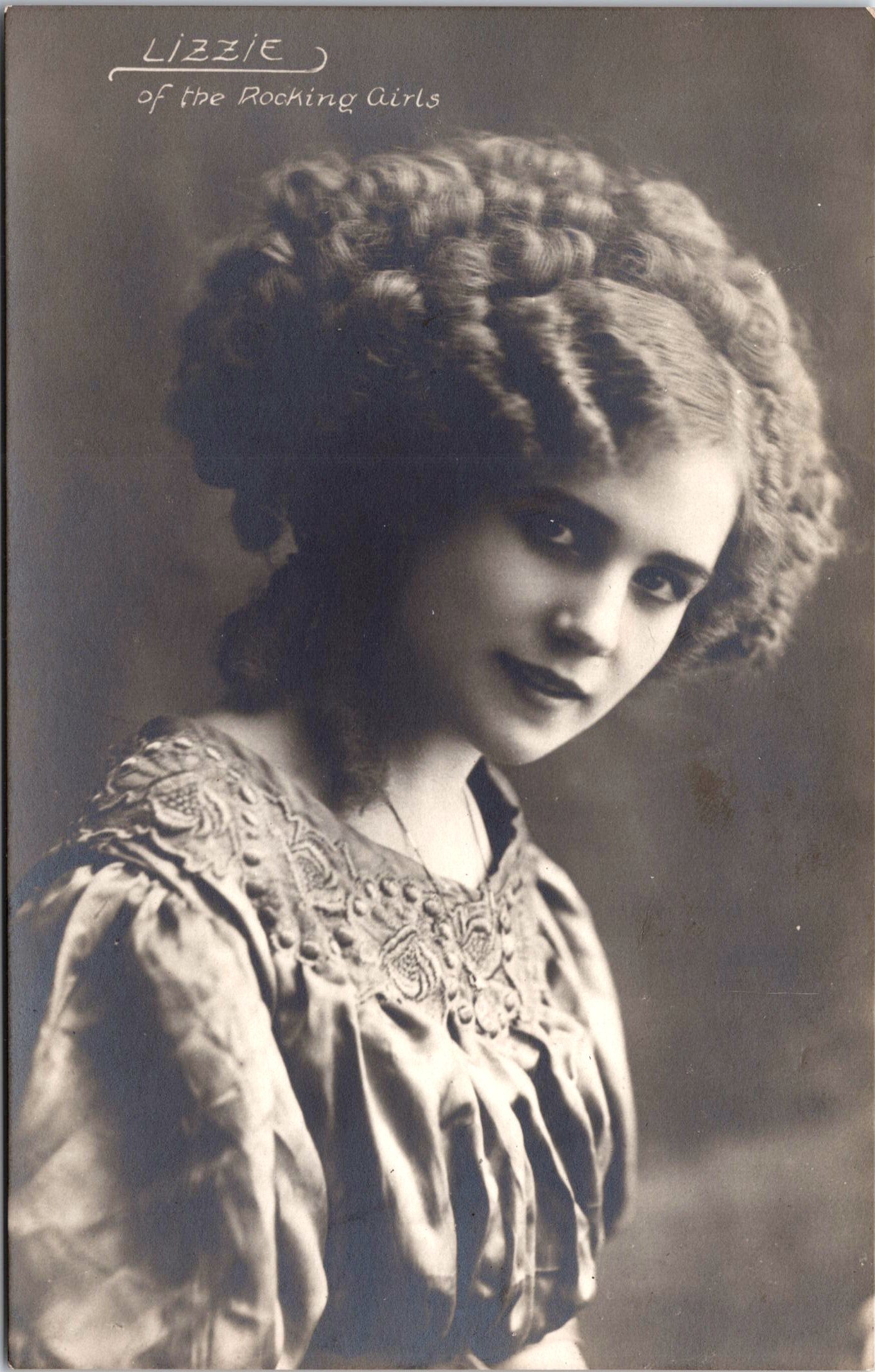
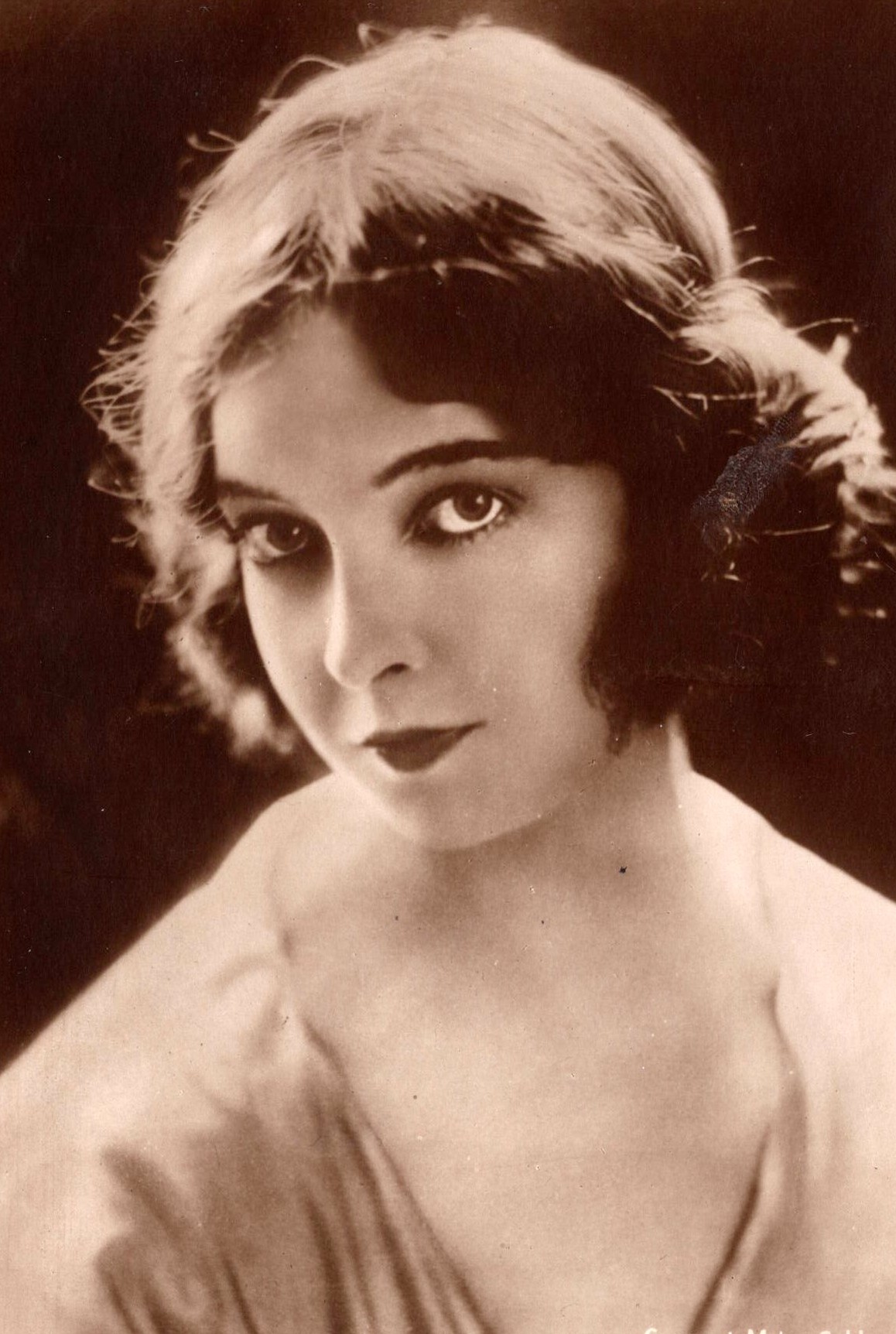
This striking real photo postcard features a studio portrait identified in period handwriting as “Lizzie of the Rocking Girls.” The image shows a young woman posed in a three-quarter view, her elaborate curled hairstyle and theatrical costume suggesting that she was a stage performer rather than a private studio sitter. Her blouse features decorative embroidery typical of stage or costume wear, and the dramatic lighting and soft-focus photographic style are consistent with theatrical portrait photography from the early 20th century. The caption “Lizzie of the Rocking Girls” likely refers to a theatrical troupe, musical comedy chorus line, vaudeville act, or touring stage company. During the circa 1905–1915 period, many small traveling performance groups—often called “girls” troupes (for example, chorus lines, dance revues, or musical comedy ensembles)—produced and sold photographic postcards of individual performers as souvenirs. These postcards were commonly sold after performances or used for promotional purposes, which would explain the professional quality of the portrait and the identification written directly on the image. The term “Rocking Girls” may refer to a song-and-dance troupe, possibly associated with a musical revue or vaudeville circuit. Many such groups had names like “The ___ Girls,” and individual performers were often marketed by first name only, which suggests that “Lizzie” may have been a stage name rather than a full professional name. Preliminary research found no information about the “Rocking Girls” which suggests that this may have been a regional or touring vaudeville company, making the postcard a scarce and interesting piece of theatrical ephemera. The postcard back has a divided back style. This real photo postcard can be dated to approximately circa 1908–1913, based on several visual and production clues. The postcard is in good antique condition overall, with a strong, clear image and pleasing contrast. There is light corner wear consistent with age. A small, faint spot is visible in the right background area a way from the subject’s chin. This postcard is an overall well-preserved and very displayable card. See scans.
This vintage postcard is available for purchase at my store, The History Peddler, for $22.00 at auction.
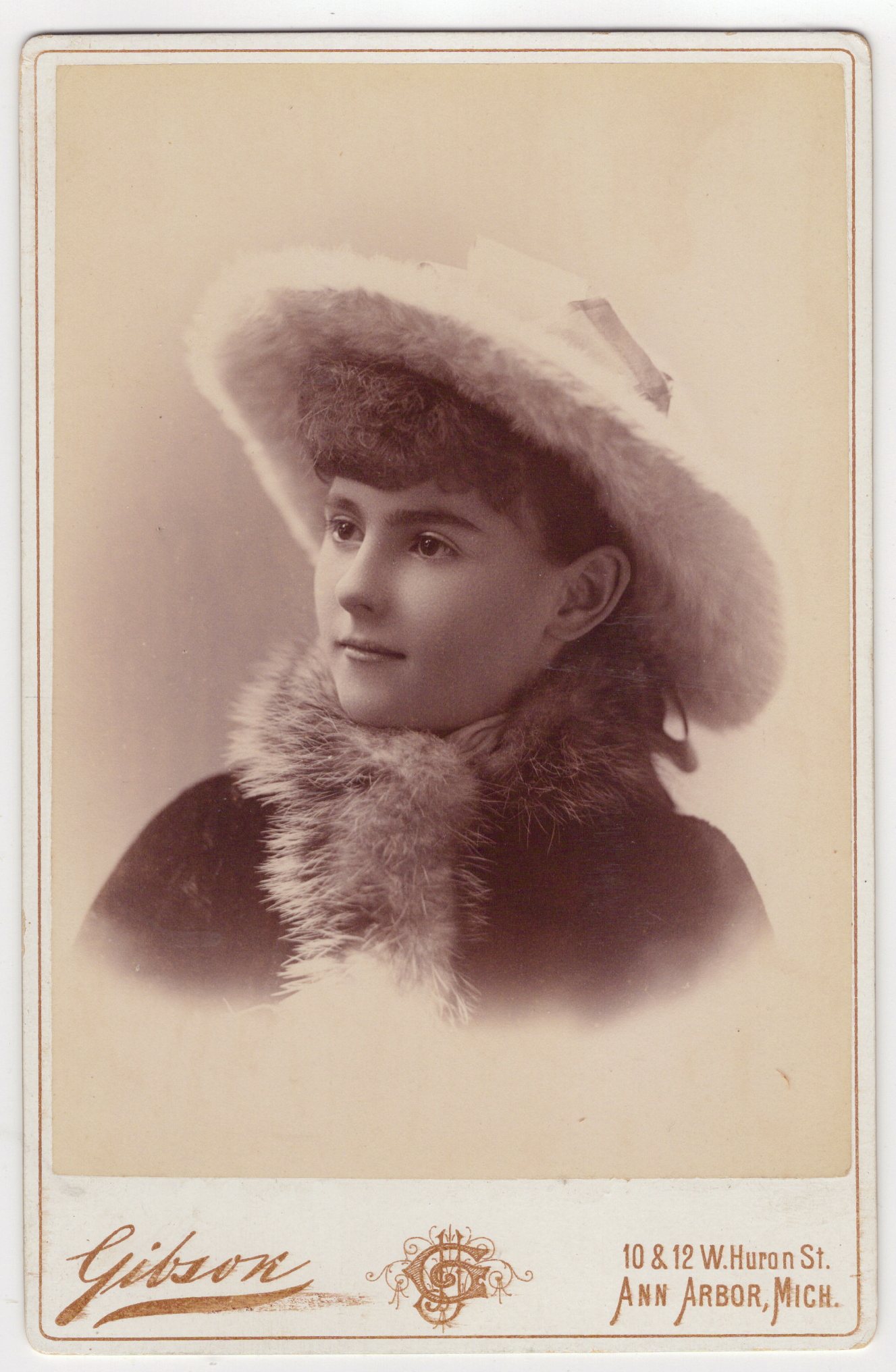
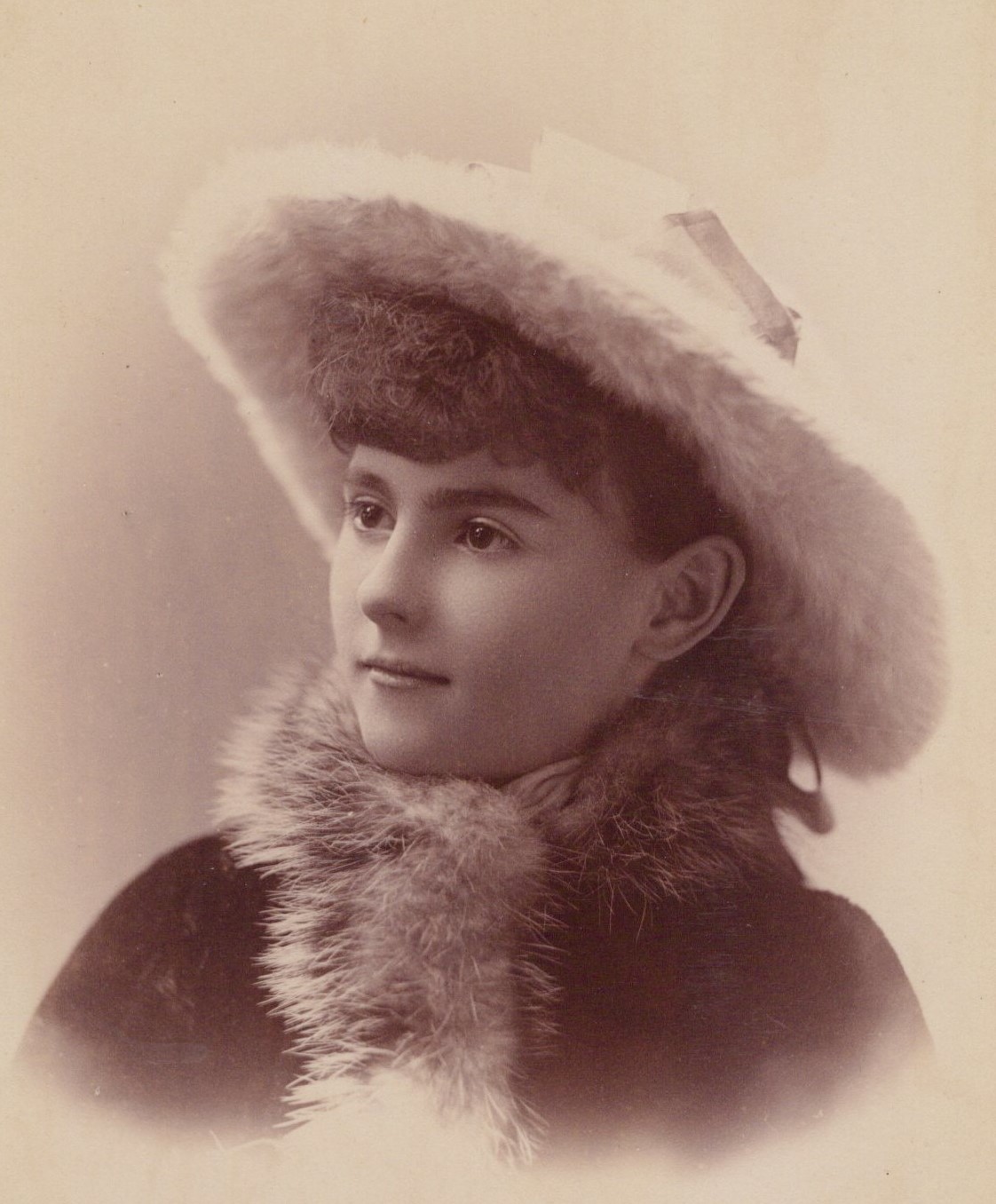
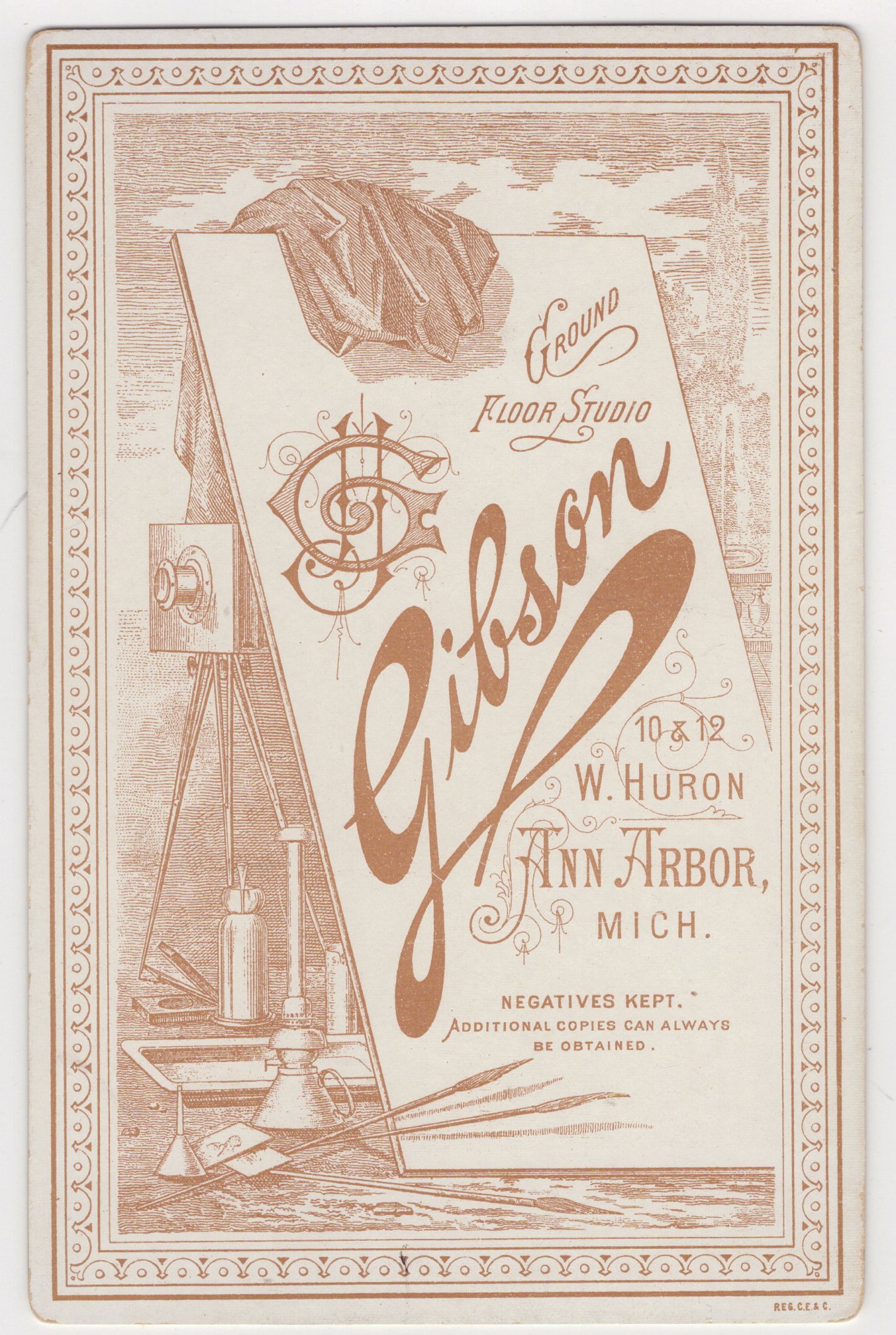
This cabinet card captures the the charm and innocence of a very fashionable young girl. She appears comfortable in front of the camera. She appears to be in her teenage years. The photographer of this pretty girl is Canadian born, John Jefferson Gibson and he took this photo at his Ann Arbor studio. He was a portrait photographer in Michigan in the 1880’s to 1893. Gibson also had studios during his career in Bay City and Detroit, Michigan. He married a Ypsilanti resident, May Clark, in 1889. Gibson was the official portrait photographer at the World’s Columbian Exposition in 1893. The Gibsons stayed in Chicago after fair and they opened a photography studio. Gibson died in 1902 at a young age (between 30 and 40 years-old). His cause of death was tuberculosis. After his death, his wife took over the studio and eventually it became the Montgomery Wards Portrait studio. Jefferson took many series of photos at the University of Michigan and this work has been published in Journals and it is currently held at the Bentley Historical Library at the University of Michigan. (SOLD)
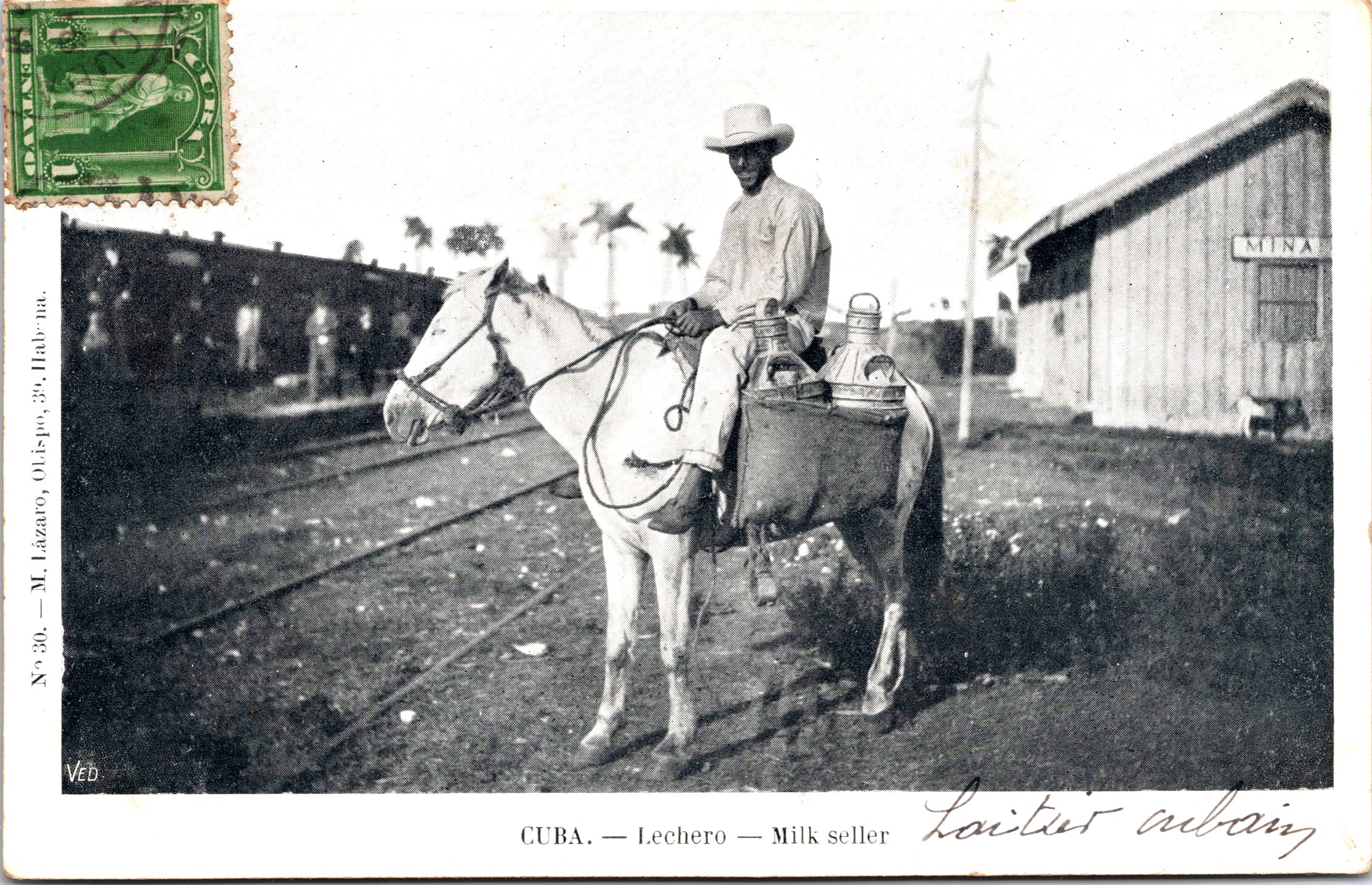
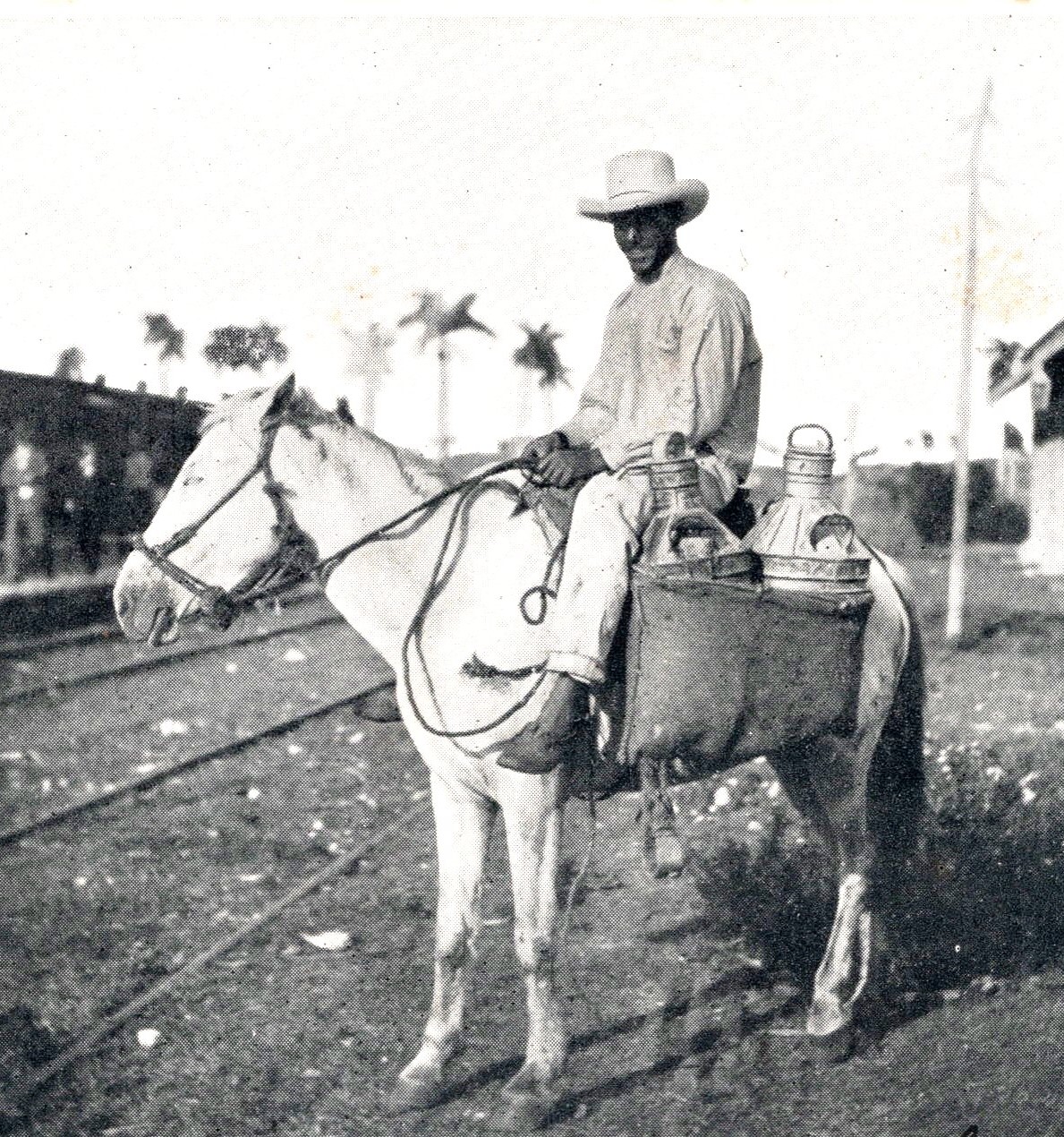
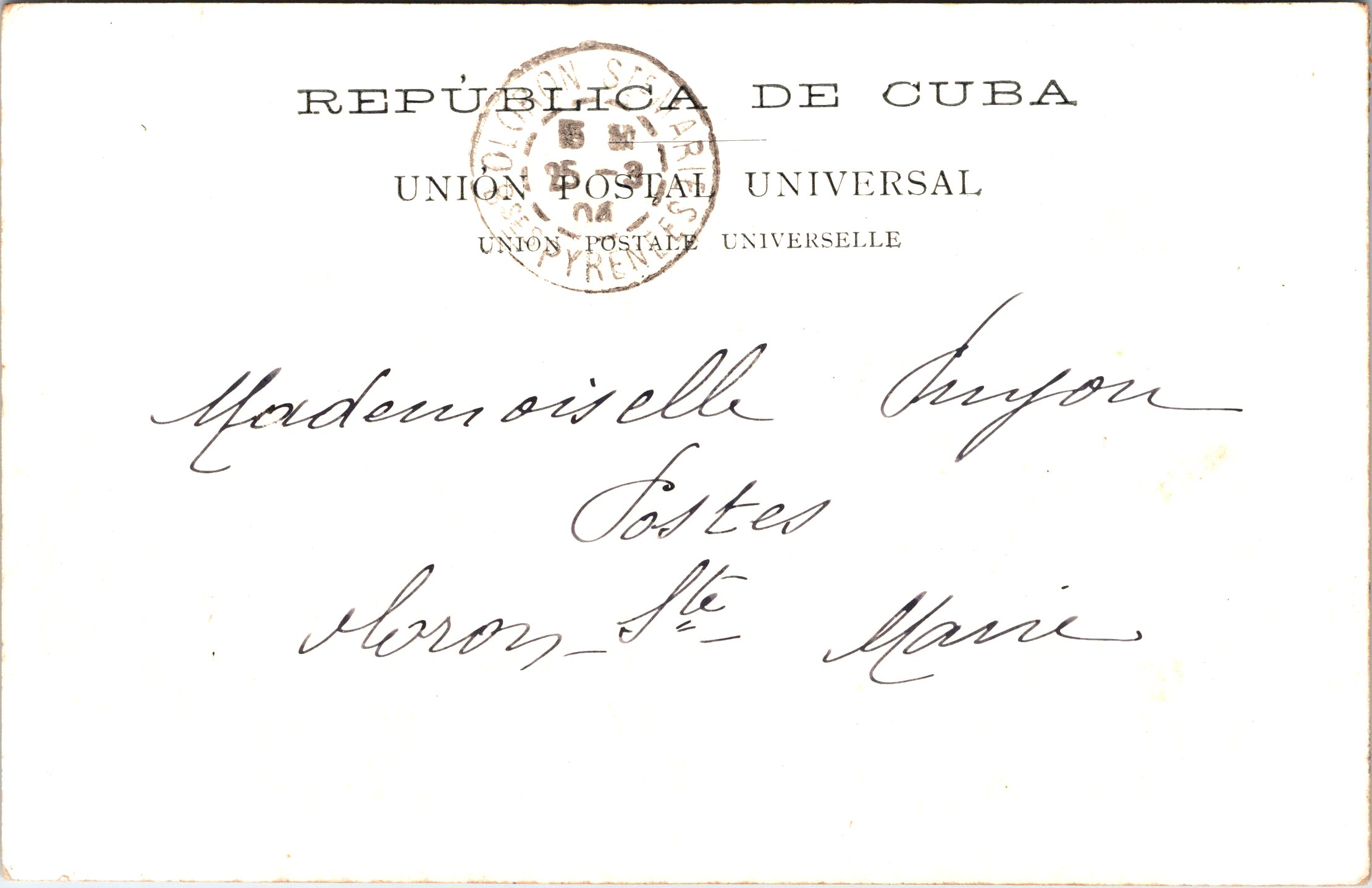
This is an interesting early twentieth-century Cuban postcard depicting a traditional milk vendor, or lechero, delivering milk on horseback. The image shows the rider seated calmly on a light-colored horse beside railway tracks, carrying large metal milk containers in saddle baskets. The scene captures a moment of everyday life in Cuba during a time when milk was commonly delivered door-to-door before refrigeration and modern dairy distribution. The printed caption at the bottom of the card reads: “CUBA — Lechero — Milk seller.” The fact that the caption includes English language, likely reveals that this postcard was meant to be sold to tourists who had a profound interest in occupational postcards. Postcards depicting occupational scenes such as this—milk vendors, street sellers, and other everyday trades—were especially popular with travelers visiting Havana during the early 1900s. The word “lechero” is the Spanish term for a milk vendor who transported fresh milk into towns and neighborhoods, often selling it directly to households. In many cities across Latin America and the Caribbean during the late nineteenth and early twentieth centuries, milk was delivered daily by riders or cart drivers who carried large metal milk cans similar to those visible in this photograph. A particularly interesting detail in this postcard is the pair of large metal milk cans secured in wooden carrying crates attached to the saddle. These containers were early transport milk churns designed to be tightly sealed to prevent contamination or spillage while traveling through town. In warm climates such as Cuba, milk sellers sometimes wrapped the cans with damp cloth or straw coverings to create a simple evaporative cooling effect that helped keep the milk fresh during the day. Milk vendors typically collected fresh milk early in the morning from nearby dairies and transported it into town in these containers. The milk was then measured and poured directly for customers, often using a smaller serving container carried along with the larger storage cans. Because refrigeration and pasteurization were not yet widespread, the milk was meant to be sold and consumed the same day. Note that there is a sign over the window in the building seen in this postcard. “Mina” can be translated as “mine” or a “mining facility”. Likely related to the mine is the railroad tracks running along side the building. The publisher of this lithographic postcard was M. Lazaro. He was located on Obispo Street in Havana. Obispo Street is one of the city’s most historic commercial streets and a well-known center of tourist shops, photographers, and postcard dealers during the early twentieth century. A Cuban one-centavo green stamp appears on the reverse of the card. The postcard is postmarked Bordeaux, France, indicating that the postcard was mailed internationally. The postcard remains in good antique condition overall with strong photographic detail and clear printing. There is general age toning and light handling wear. There is minor corner wear. The stamp remains attached on the front with a visible postal cancellation. The reverse shows the original message and address in ink along with the printed Cuban postal markings. Overall, this is an appealing and historically interesting occupational postcard documenting a traditional milk delivery scene in early twentieth-century Cuba (see scans).
This postcard is available for purchase at my store, The History Peddler, for $18.00
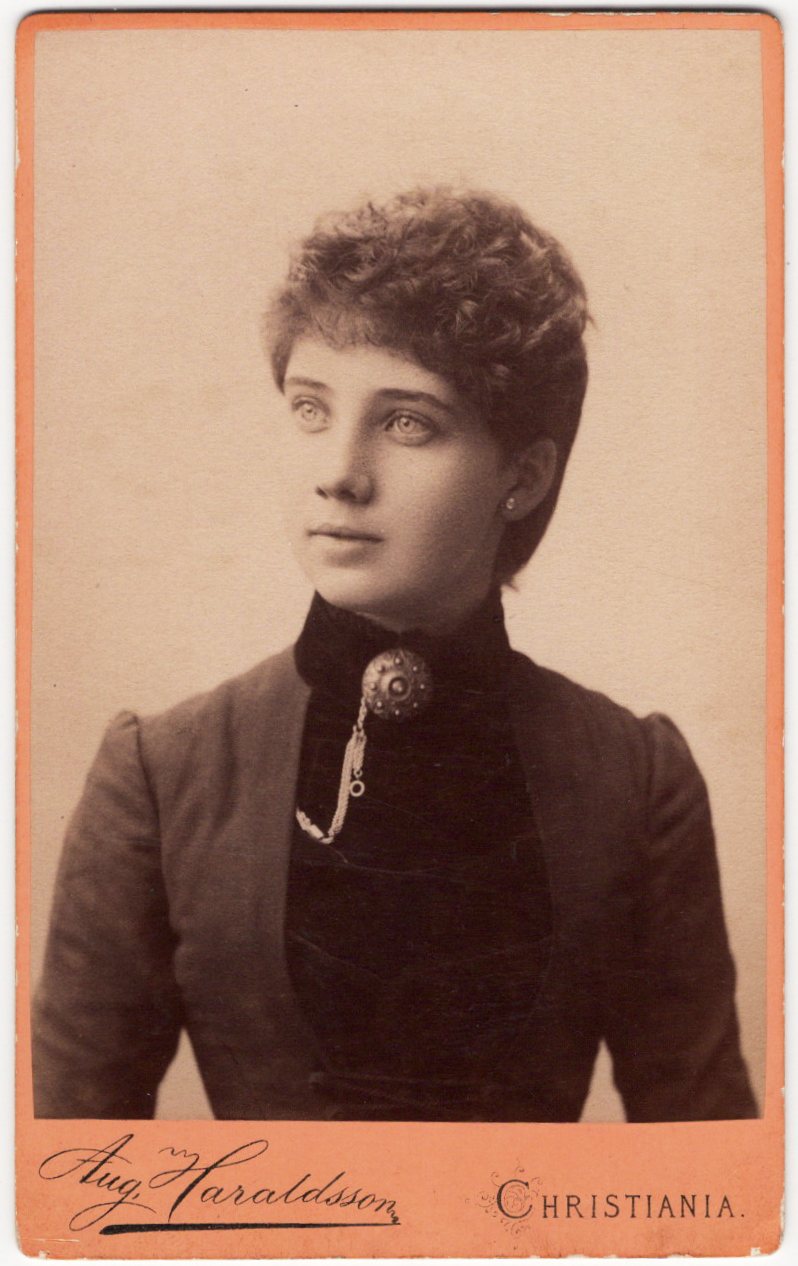
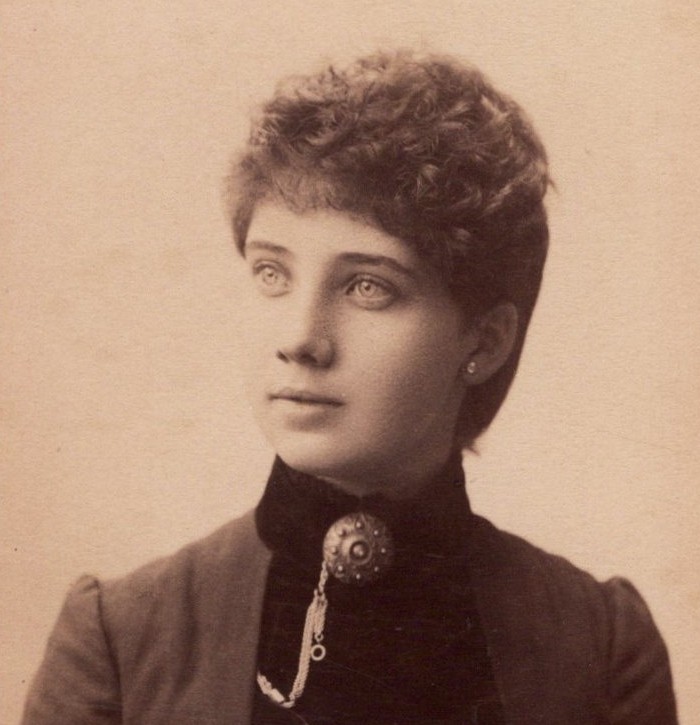
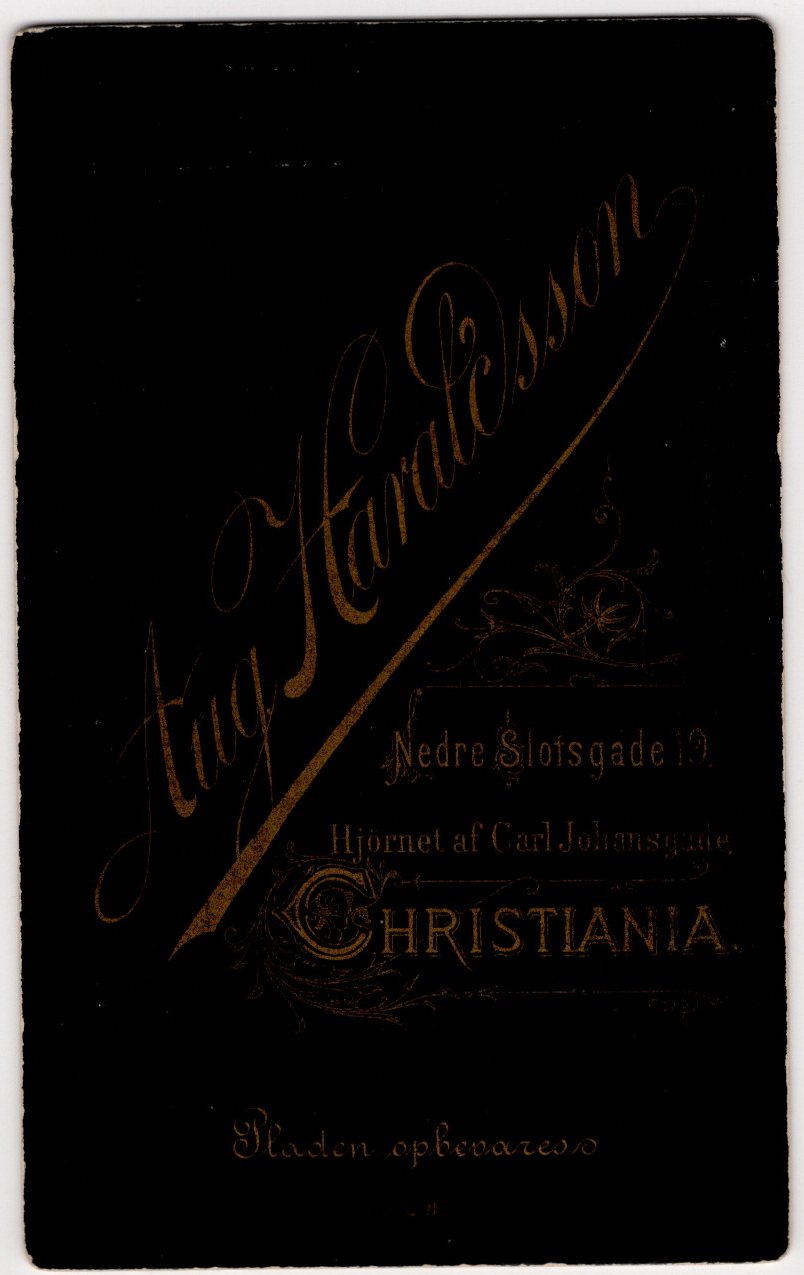
This is a beautiful carte de visite portrait of a young woman taken by photographer Aug(ust) Haraldsson of Christiania, Norway (now Oslo). The sitter is elegantly posed in three-quarter view, looking slightly off to her right with a calm and reflective expression. Her light eyes and delicate features are sharply captured, giving the image a quiet dignity and presence. She wears a high-collared dark dress or jacket with a velvet bodice, secured at the throat with an ornate round brooch featuring a dangling chain. Her hair is fashionably short and softly curled, framing her face in a way that was in vogue during the 1880s–1890s. A small earring is visible in her left ear, adding a subtle touch of refinement. The overall impression is one of youthful poise and gentle elegance. The photographer’s imprint appears on the front mount and in elaborate gold script on the reverse, which reads: “Aug. Haraldsson, Nedre Slotsgade 19, Hjørnet af Carl Johansgade, Christiania.” Haraldsson was an established portrait photographer in Christiania, operating from this address in the late 19th century. (SOLD)
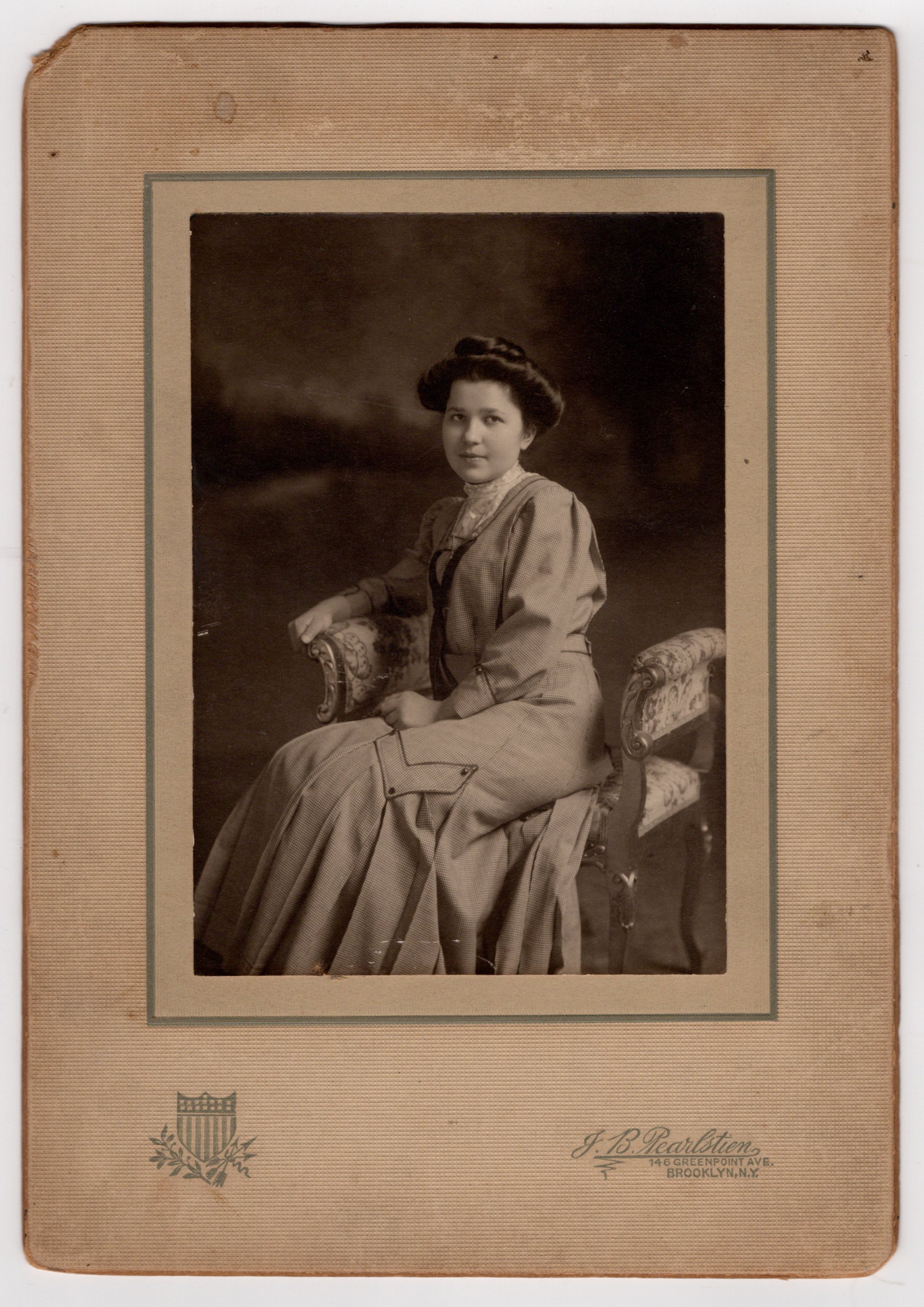
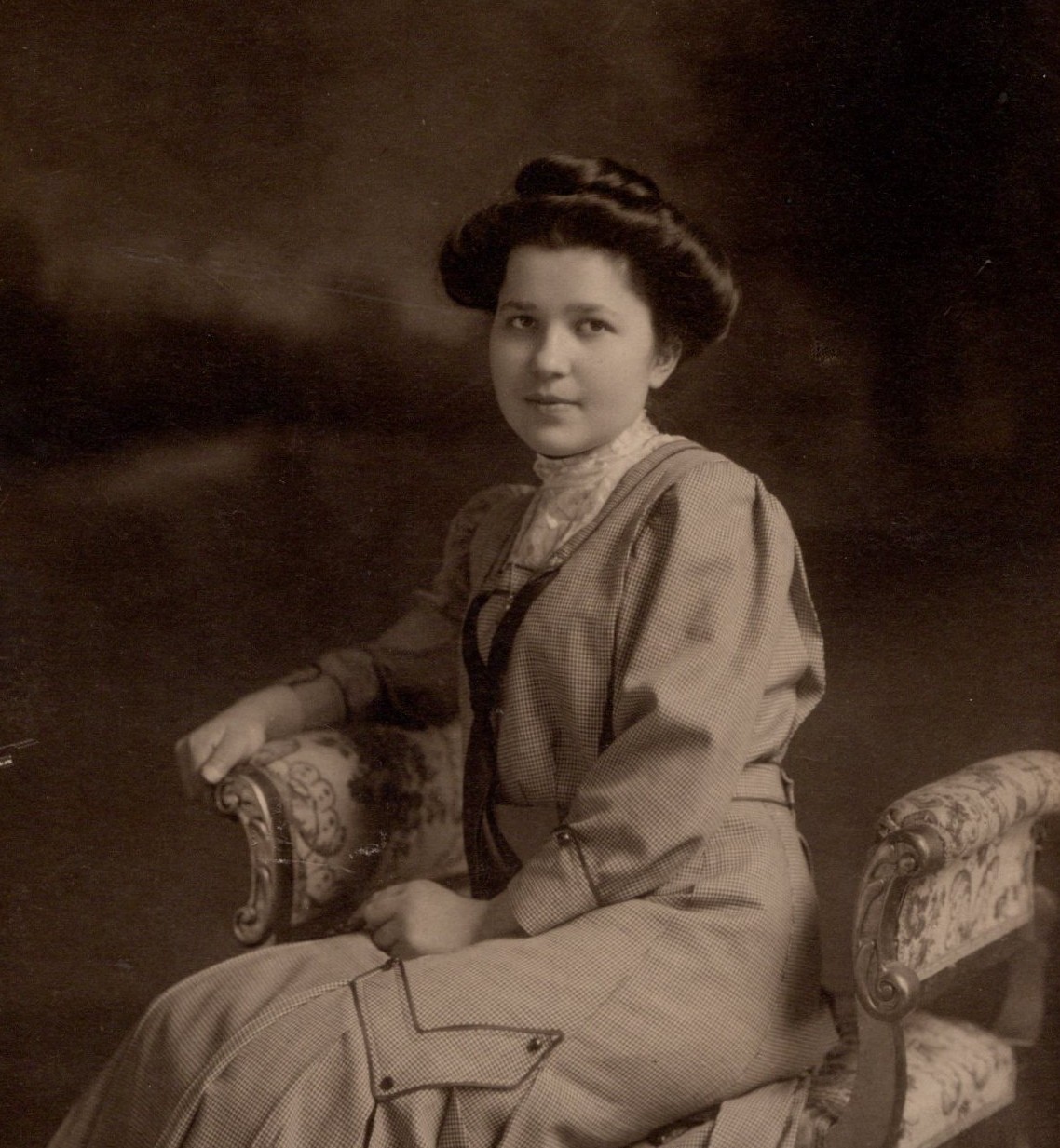
This photograph is mounted on a textured cabinet card mount measuring about 6.25 by 9 inches, with the photographic image itself measuring about 4 by 5.5 inches. The mount features a decorative crest emblem printed near the lower left corner, while the photographer’s imprint (J. B. Pearlstien) appears at the lower right.The studio address places the studio in the Greenpoint neighborhood of Brooklyn, an area that experienced substantial industrial and residential growth during the late nineteenth and early twentieth centuries. Greenpoint developed into a busy working-class district with factories, shipyards, and immigrant communities. Pearlstien was a talented photographer. The refined composition, elegant lighting, and carefully arranged pose suggest the work of an experienced studio photographer. Portraits of this style were particularly popular between about 1905 and 1915, when cabinet card mounts were still used but photographic formats were gradually shifting toward smaller prints and postcards. Here is some information about the photographer. Julius Bernhardt Pearlstien is listed in Trows Business Directory of the Boroughs of Brooklyn and Queens (1899) as operating a photography studio at 39 Greenpoint Avenue in Brooklyn. He was born sometime between 1877 and 1879. Pearlstien became a US citizen in 1900 while living in Brooklyn. He registered for the draft (World War I) in Brooklyn in 1917. In regard to condition, the photograph itself remains clear and well preserved, with good contrast and pleasing tonal range. The image has surface wear at its center bottom. The mount shows age-related wear consistent with its age, including light toning and handling marks. There is a small chipped corner at the upper left of the mount, along with minor edge wear. The reverse shows areas of surface disturbance where an old album mount or adhesive may once have been present. Despite these signs of age, the cabinet card remains an attractive and displayable antique portrait, with the image itself remaining strong and visually appealing (see scans).
This cabinet card is available for purchase at my store, The History Peddler, for $14.00 or best offer.
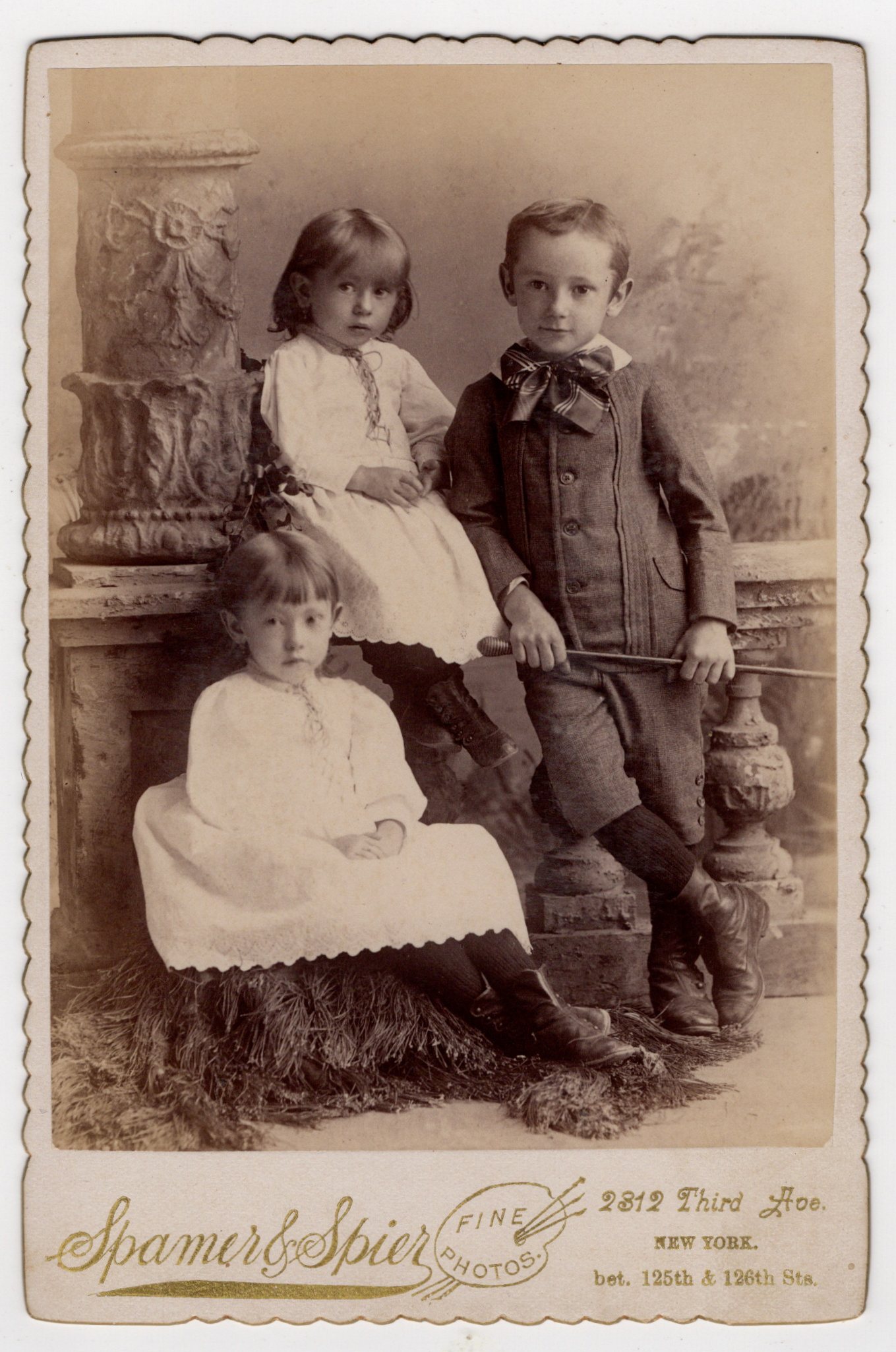
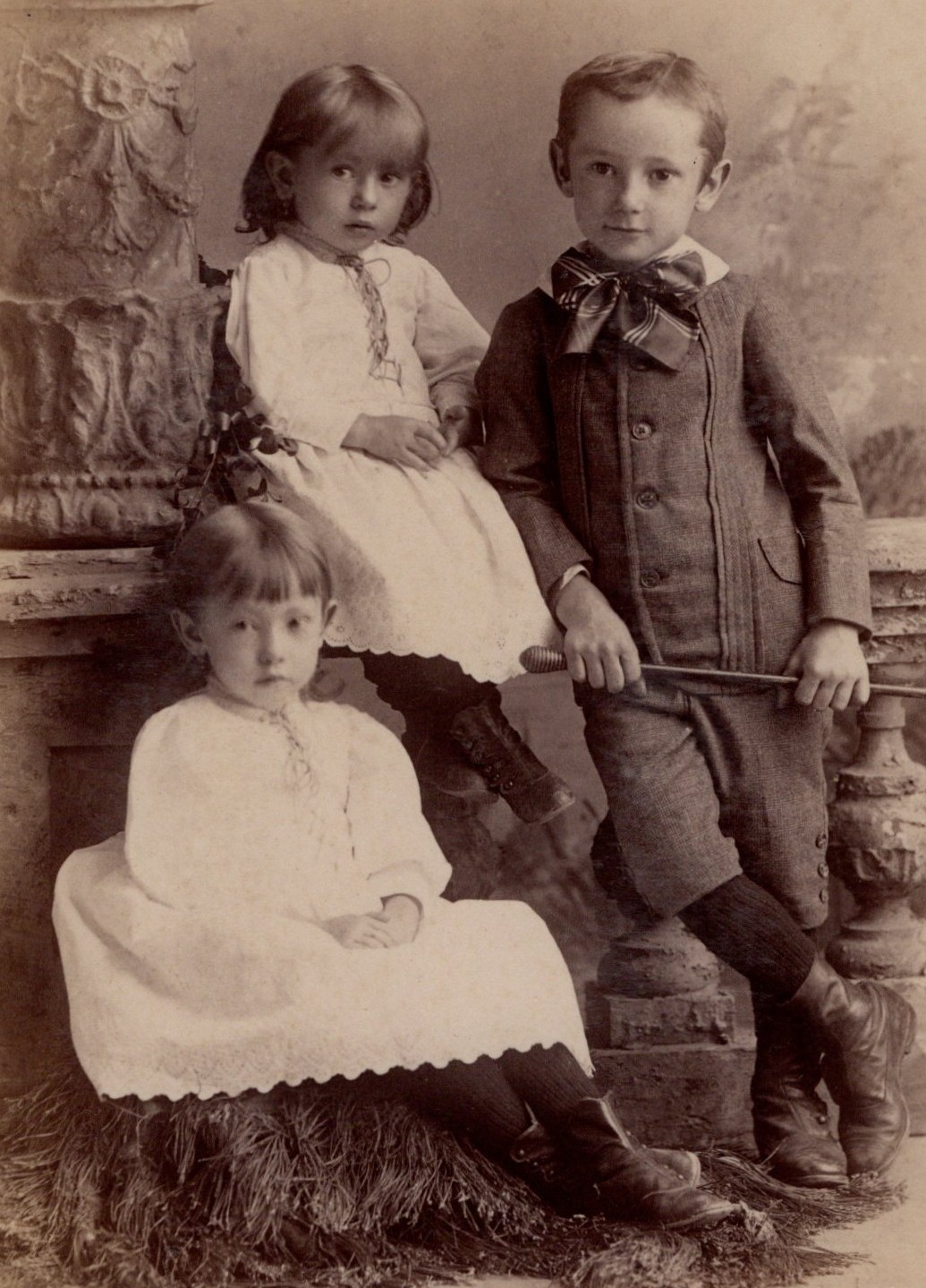
This is a charming late-nineteenth-century cabinet card portrait of three adorable young children, photographed by the New York City studio of Spamer & Spier. The portrait presents two little girls and a young boy posed together in an elegant studio setting, creating a delightful and carefully composed family image typical of the Victorian period. The photographer has arranged the children around a decorative studio pedestal and backdrop. One girl sits atop the pedestal while another sits below on a fur-covered studio prop. The young boy stands beside them wearing a tailored jacket with a large bow tie, giving him a slightly more formal and grown-up appearance. One especially appealing detail is the small stick or rod the boy is holding. This object was likely a studio posing stick or decorative prop, sometimes used by photographers to help steady young subjects or simply to give children something to hold so they would remain still during the exposure. It may also resemble a child’s riding crop or toy baton, both of which were occasionally used in portrait studios as props to convey a sense of confidence or playfulness in young sitters. The cabinet card mount itself features attractive scalloped edges, a decorative style that became popular toward the late 1880s and early 1890s. Spamer & Spier operated their studio between 1891 and 1902 and during that time, this cabinet card was produced. The studio was located in upper Manhattan along Third Avenue in the Harlem district. Photographic studios in this area served the rapidly growing population of northern Manhattan during the late nineteenth century. This cabinet card remains in excellent antique condition. The photograph retains good contrast and clarity, and the children’s faces are nicely rendered. The decorative scalloped edges remain intact and attractive. The reverse of the mount is blank. Overall, this is a very appealing and well-preserved Victorian cabinet card portrait (see scans).
This Cabinet Card is available for purchase at my store, The History Peddler, for $48.00 or best offer.
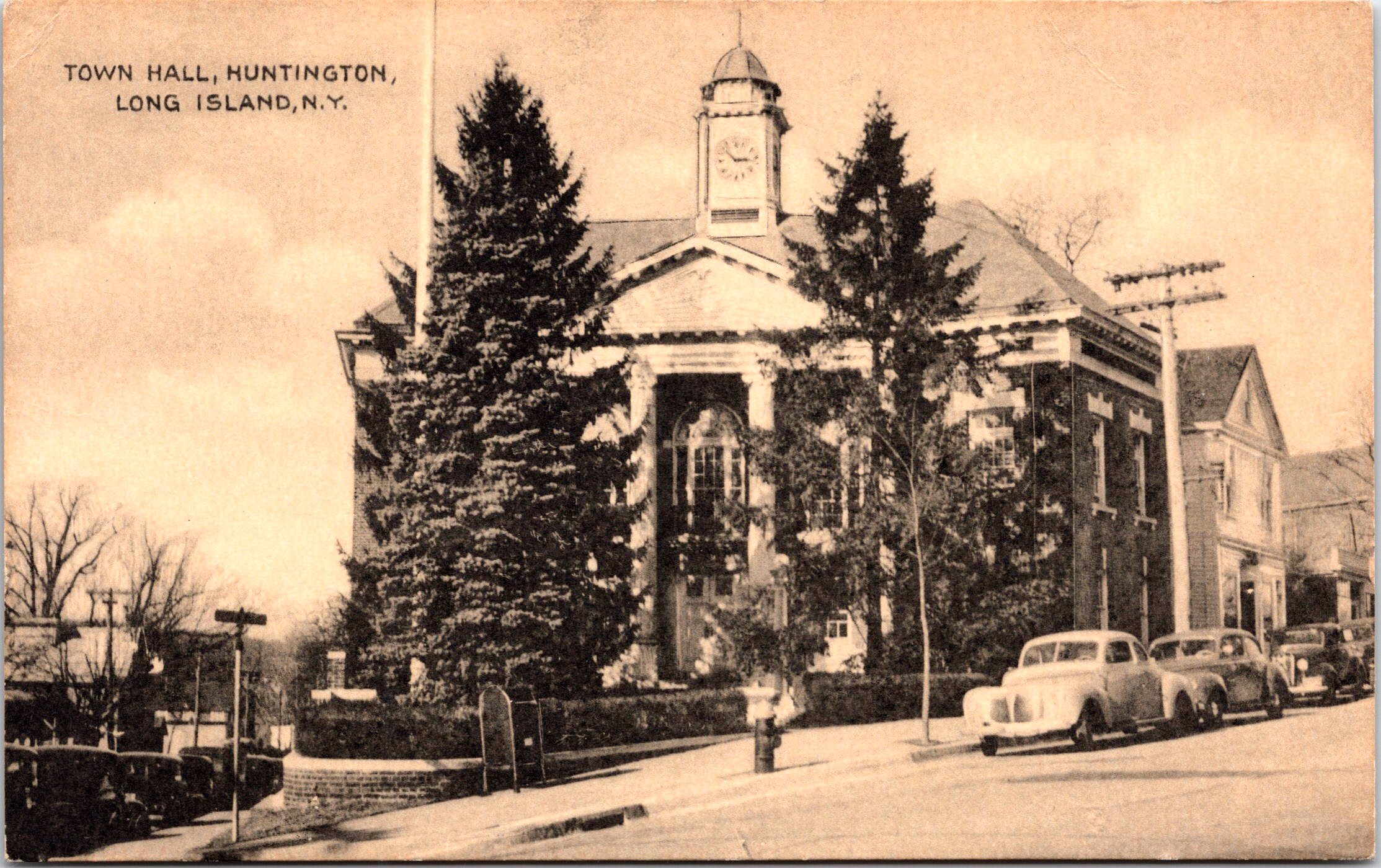
This vintage real photo postcard features the Huntington Town Hall located on Main Street in Huntington village. Huntington is a north shore town on Long Island in the state of New York. Note the old cars in the photo. Because the newest cars in the image appear to date from about 1938–1940, the photograph itself was likely taken around 1939–1941. The postcard was published by the Tomlin Art Company (Northport, Long Island, New York). The company produced a large number of scenic postcards of Long Island and nearby areas. The firm was associated with Milton (“Milt”) Price, a photographer from Islip, New York, who owned and operated the Tomlin. Price himself photographed many of the scenes that appeared on the cards. The firm appears to have been active between circa 1910 and the late 1970s. There is a very light crease in the top left corner of the card. The postcard is in overall very good condition (see scans).
This postcard is available for purchase at my store, The History Peddler, for $9.85 or best offer
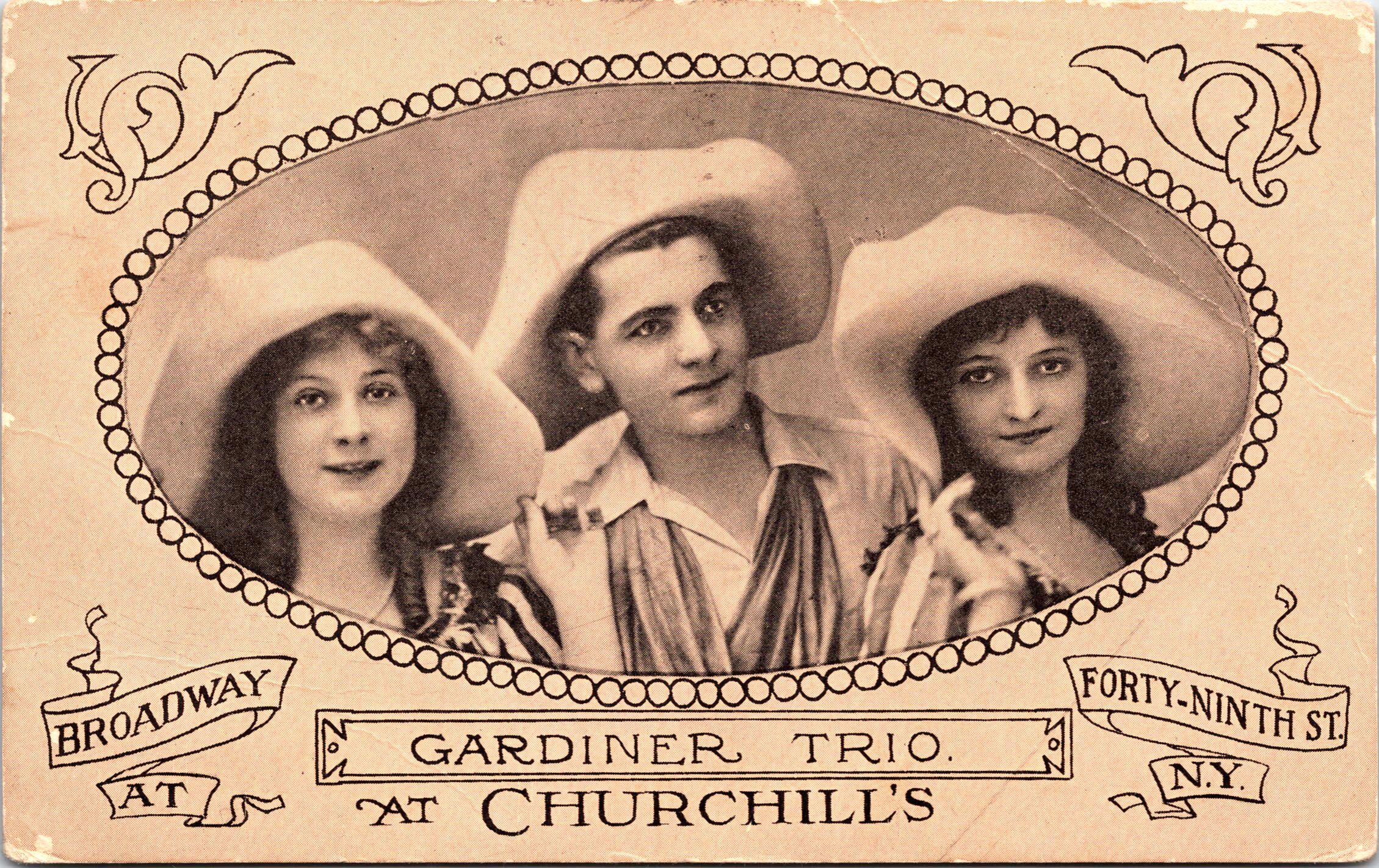
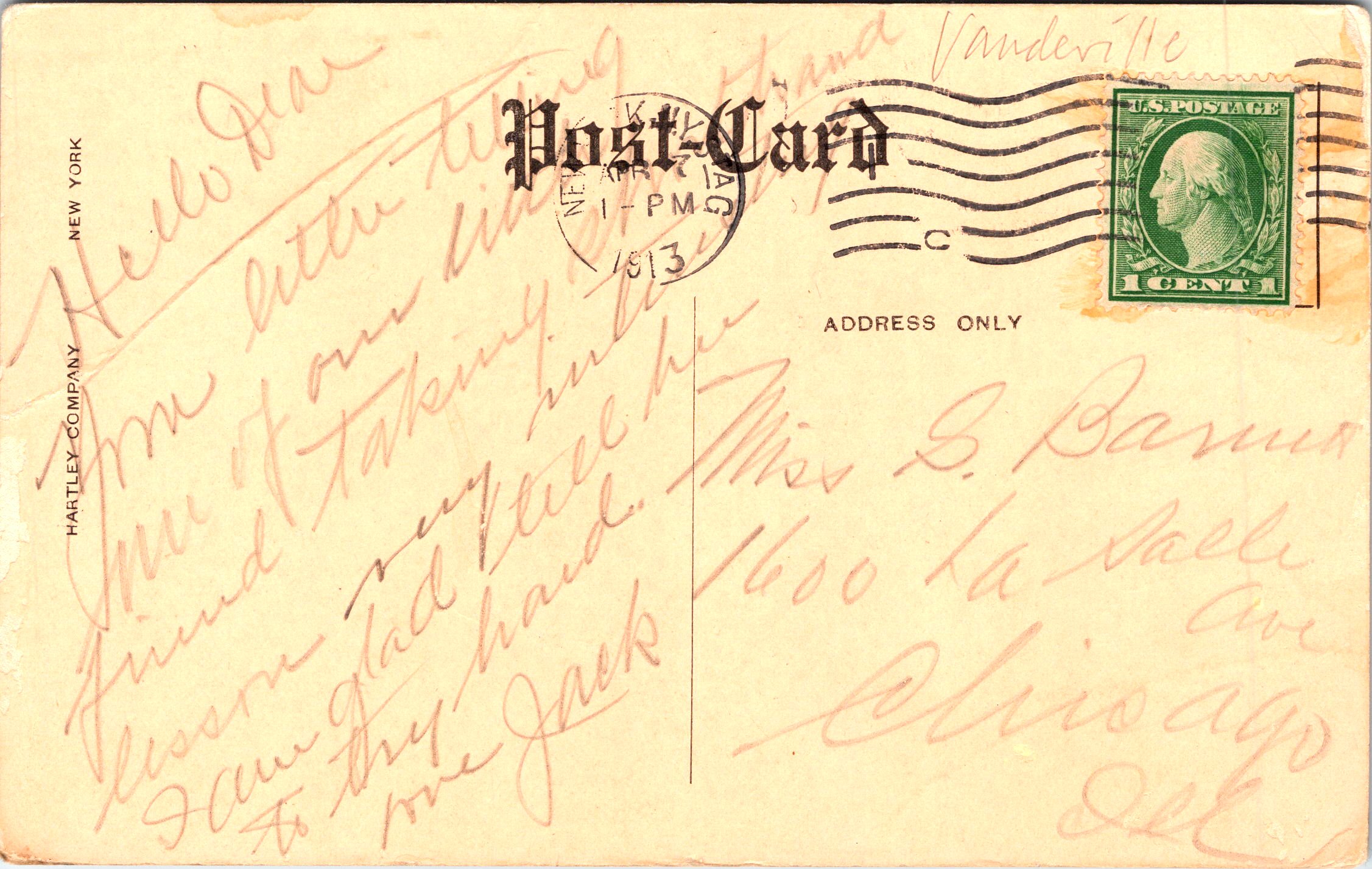
This rare vintage lithographic postcard captures vaudeville history as well as the restaurant and entertainment history of New York City. The postcard is an advertisement for the appearance of the Gardiner Trio at the venue of Churchill’s restaurant. The Gardiner trio was composed of Arline, Helen, and Edgar Gardiner. The three performers acted, danced and sang on the vaudeville stage. The trio even appeared on Broadway in the production of “Take it from Me” (1919). The New York Tribune reviewed the show. Here are a few excerpts from the review. The show was described as “mildly entertaining” and “a curious jumble of Burlesque, Vaudeville and Musical Comedy”. The production ran from 3/31/19 to 6/21/19 at the Central Theater. Now, a short description of Churchill’s Restaurant. The establishment blended restaurant service with live entertainment. It was located in Manhattan’s theater district. The restaurant was in Times Square and was founded by James “Big Jim” Churchill, a colorfull New York figure who had previously served about twenty years in the New York Police Department. He established Churchill’s in around 1909 or 1910. The restaurant/cabaret closed in around 1921. Prohibition was a large contributor to the restaurant’s demise. This postcard is in fair condition. The card has corner and edge wear and about four light creases can be seen on close examination. The fair condition does not detract from either the image of the trio or from the advertising copy on the front of the card (see scans). My research was unable to find any other examples of postcards advertising either Churchill’s or the Gardiner Trio. This postcard is an excellent illustration of both New York City and Vaudeville history.
This cabinet card is available for purchase at my store, The History Peddler, for $24.85
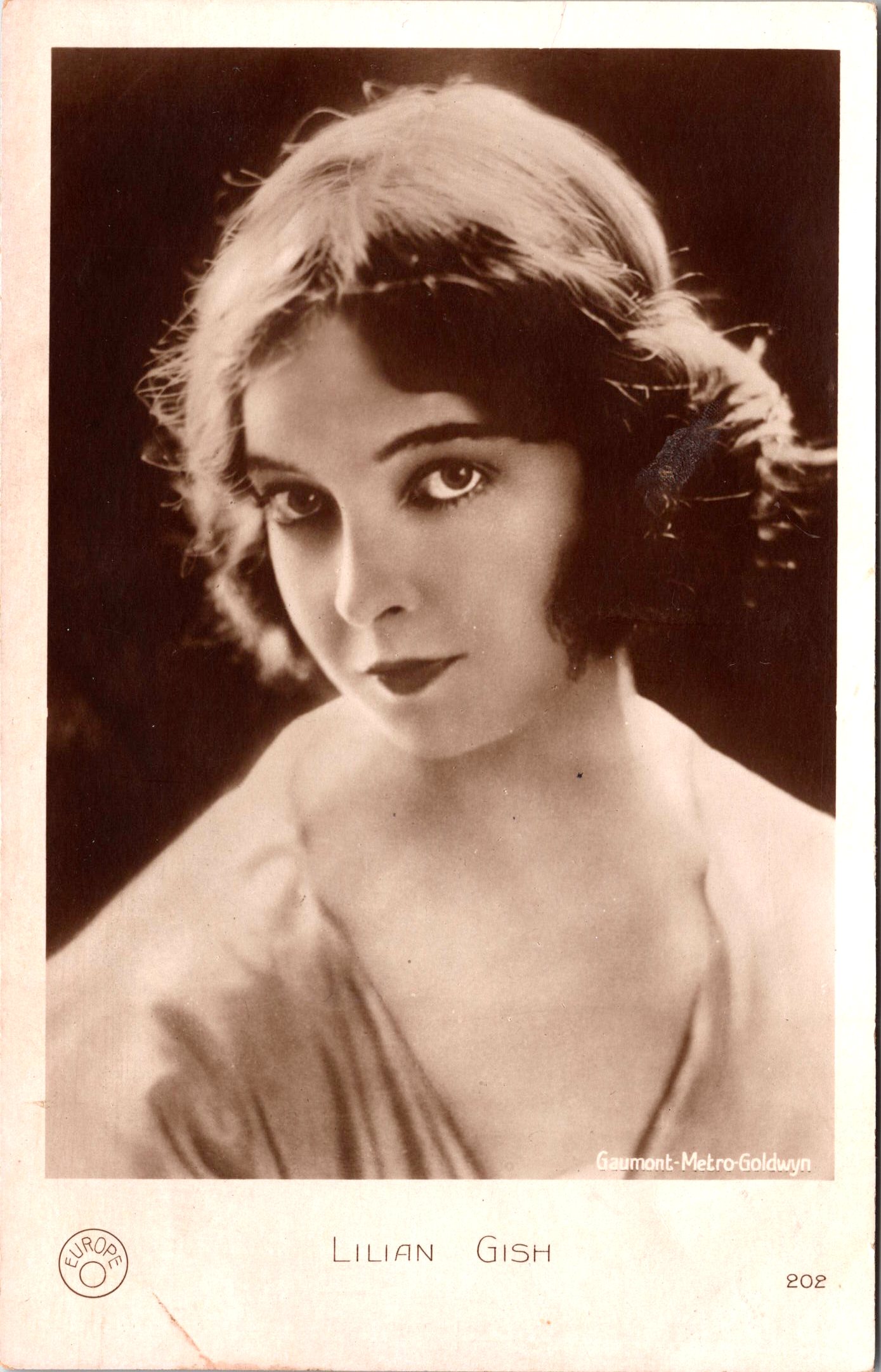
This vintage real photo postcard features American actress, Lillian Gish (1893–1993). She is considered one of the pioneering figures in early cinema. Born in Springfield, Ohio, Gish began her career on the stage alongside her sister, Dorothy, but soon transitioned to film, where her delicate features and expressive acting made her a favorite of directors during the silent film era. In 1912, Gish joined legendary director D.W. Griffith, becoming his protégé and collaborating with him on groundbreaking films like The Birth of a Nation (1915), Broken Blossoms (1919), and Way Down East (1920). These films cemented her reputation as a leading lady, often playing roles that emphasized innocence and emotional depth. She was known for her meticulous attention to the art of acting. She helped establish the art of screen acting, emphasizing subtlety and naturalism at a time when film was still evolving away from theatrical exaggeration. She was a versatile actress, adapting well to various roles, from delicate heroines to more complex characters, and her commitment to authenticity often saw her enduring extreme conditions on set, like filming in freezing temperatures and performing her own stunts. When silent films gave way to “talkies” in the late 1920s, Gish transitioned gracefully, though her popularity declined as she aged and Hollywood’s focus shifted to younger stars. Still, she continued acting, taking on character roles and even appearing on television. One of her most memorable later performances was in The Night of the Hunter (1955), a film now regarded as a classic. In addition to her acting career, Gish became a vocal advocate for film preservation and the legacy of silent cinema. She gave lectures on the subject. Her work won her numerous accolades, including an honorary Academy Award in 1971, and she remained active in the industry well into her later years. Gish’s career spanned over 75 years, and she is remembered as an icon who bridged the silent and sound eras, leaving an indelible impact on American cinema. Lillian Gish, though a public figure, led a private and often solitary personal life. She was born on October 14, 1893, in Springfield, Ohio, to James Leigh Gish and Mary Robinson McConnell. Her early life was marked by hardship; her father abandoned the family when she was young, leaving her mother to support Lillian and her younger sister, Dorothy. Her mother opened a candy store in New York City, where the family eventually settled, and the two sisters began acting in theater to help support the family financially. Lillian and Dorothy were close throughout their lives, frequently working together in theater and film. Lillian took on the role of family protector and provider from a young age. Though she later became one of the most celebrated actresses of her time, Lillian remained deeply committed to her family, often prioritizing family relationships over romantic entanglements. She never married and had no children, believing that marriage and family life might interfere with her career. However, she did have close friendships with several prominent figures in Hollywood, including her frequent collaborator, director D.W. Griffith, with whom she shared a professional and deeply loyal relationship. There were rumors of a romance with Griffith, though Gish maintained that their relationship was strictly professional. Other rumored suitors included producer Charles Duell and critic George Jean Nathan, yet she largely avoided the spotlight when it came to romance. She valued independence and often expressed a desire to avoid the constraints she felt marriage could impose on her creative pursuits. In later life, she lived with her sister Dorothy until Dorothy’s death in 1968, a loss that deeply affected her. In her final years, Gish continued to work in the entertainment industry and to honor the legacy of silent cinema. She died in 1993, at the age of 99, leaving behind a remarkable career and a life dedicated to her art, family, and the preservation of film history. This postcard portrait was taken sometime between 1908 and 1920 (likely near the earliest years). The logo for Metro Goldwyn Mayor Films can be seen in the lower right corner of the image. This postcard was published by “Europe”.The EUROPE logo enclosed within a circle was used by a continental European postcard publisher, most likely operating in France, during the 1905–1925 postcard boom. The circle logo functioned as a series trademark, identifying postcards produced or distributed under the “Europe” brand. Europe was primarily a publisher or distributor, not necessarily the photographer. This postcard is in good condition. There is surface wear on the front and reverse of the card. The image itself is clear with good contrast. See scans.
This cabinet card is available for purchase at my store, The History Peddler, for $9.85
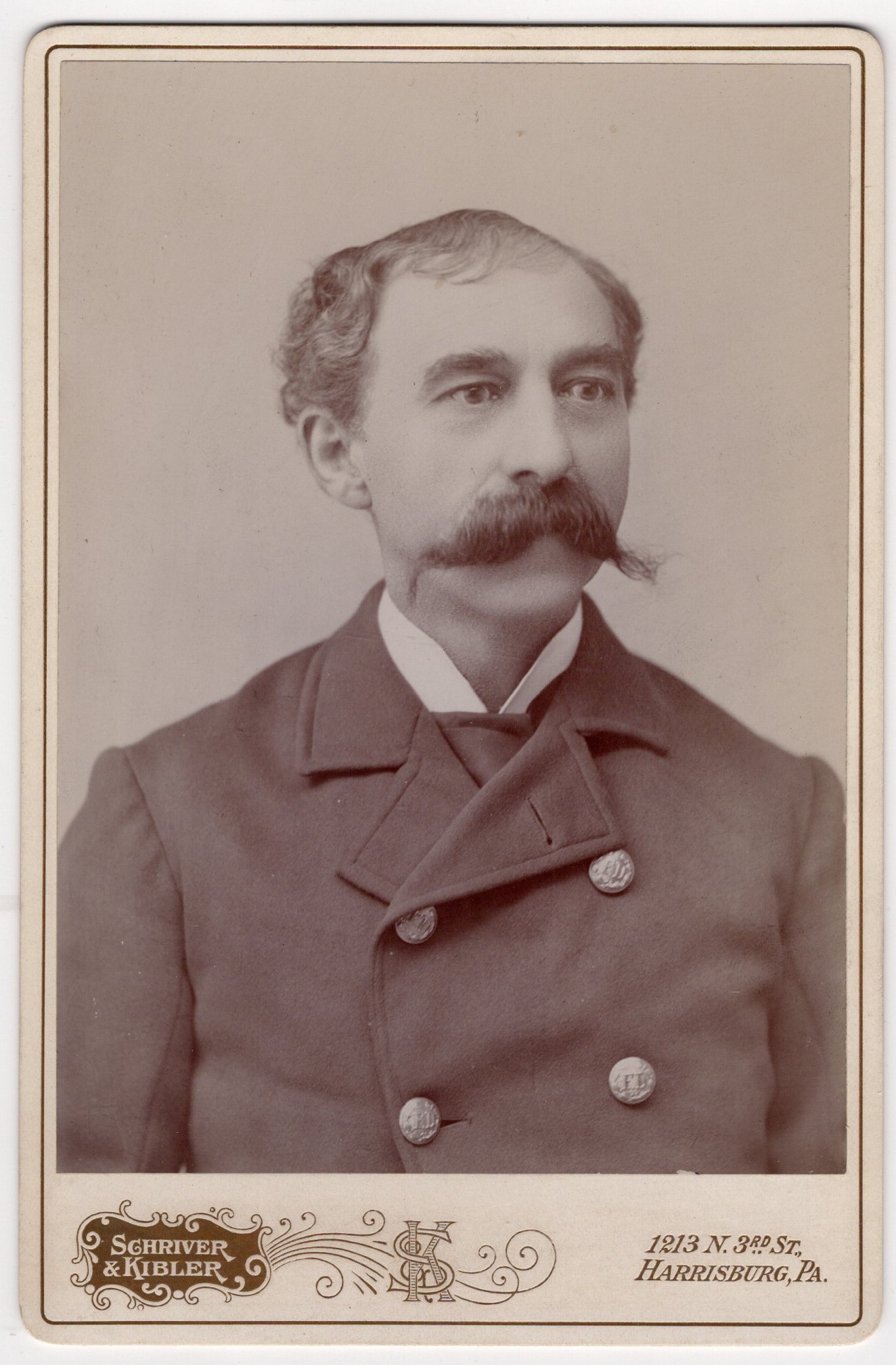
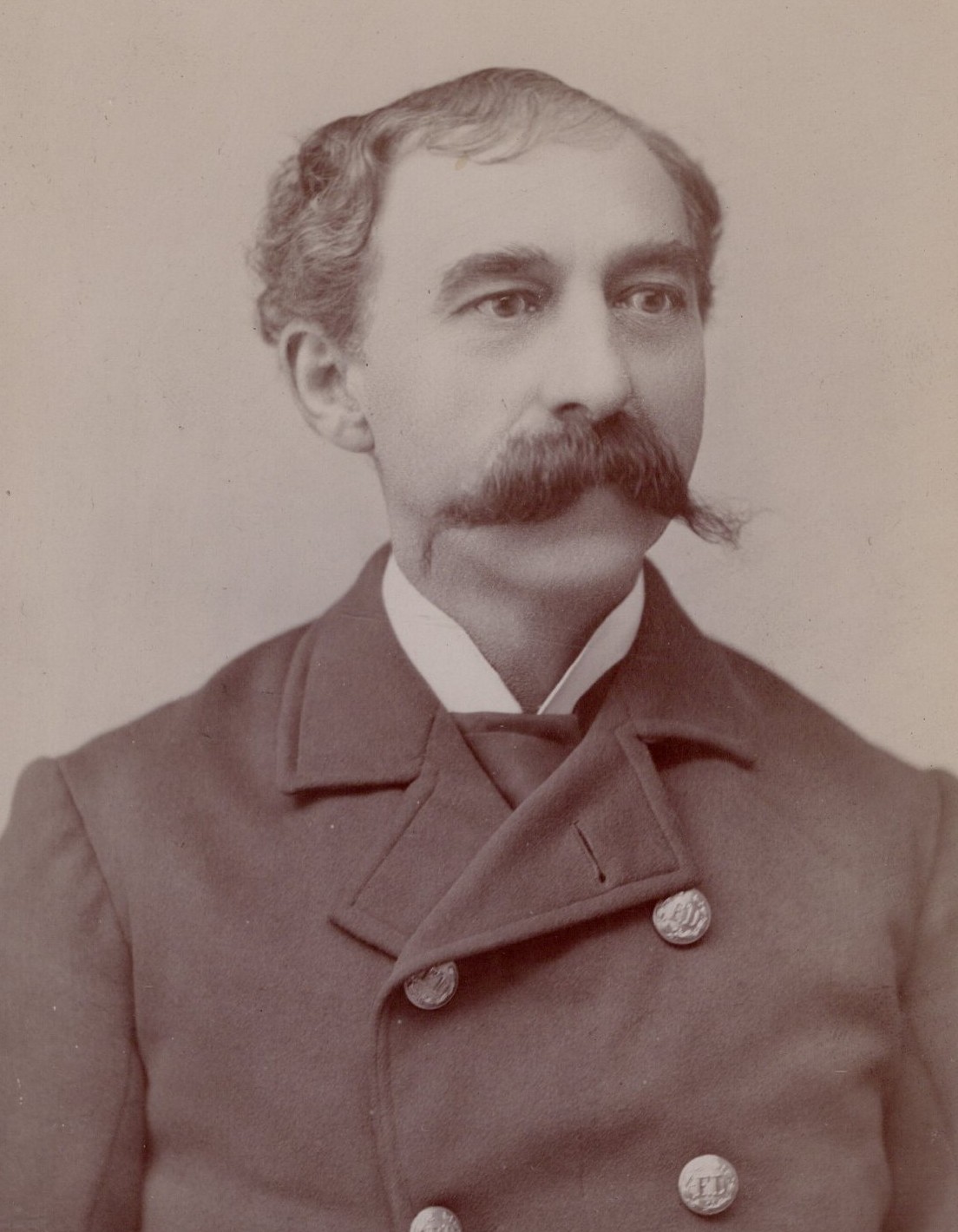
Offered here is a handsome late nineteenth-century cabinet card portrait of a gentleman with an impressive handlebar mustache, photographed by the Harrisburg, Pennsylvania studio of Shriver & Kibbler. The portrait shows the man turned slightly to one side in a classic studio pose, dressed in a well-tailored double-breasted coat with decorative metal buttons, a high stiff collar, and a neatly tied cravat or tie. His grooming is particularly notable. The sitter wears a full, carefully groomed handlebar mustache, thick across the upper lip and extending outward into gently curled ends. The mustache is both symmetrical and well shaped, giving the portrait a distinctive character and reflecting a popular masculine style of the late Victorian period, when elaborate mustaches were widely admired as a symbol of refinement and maturity. Harrisburg, located in south-central Pennsylvania along the Susquehanna River, has served as the state capital since 1812. By the late nineteenth century the city had become an important regional center for government, commerce, and rail transportation. This cabinet card remains in very good antique condition overall. The photograph retains good clarity and contrast, and the image of the sitter is sharp and well preserved. The mount shows slight corner wear. The mount also shows an extremely slight curvature from age. The reverse of the mount is plain and remains clean. Overall, the card presents attractively and displays nicely (see scans).
This cabinet card is available for purchase at my store, The History Peddler, for $28.00






 THE CABINET CARD GALLERY