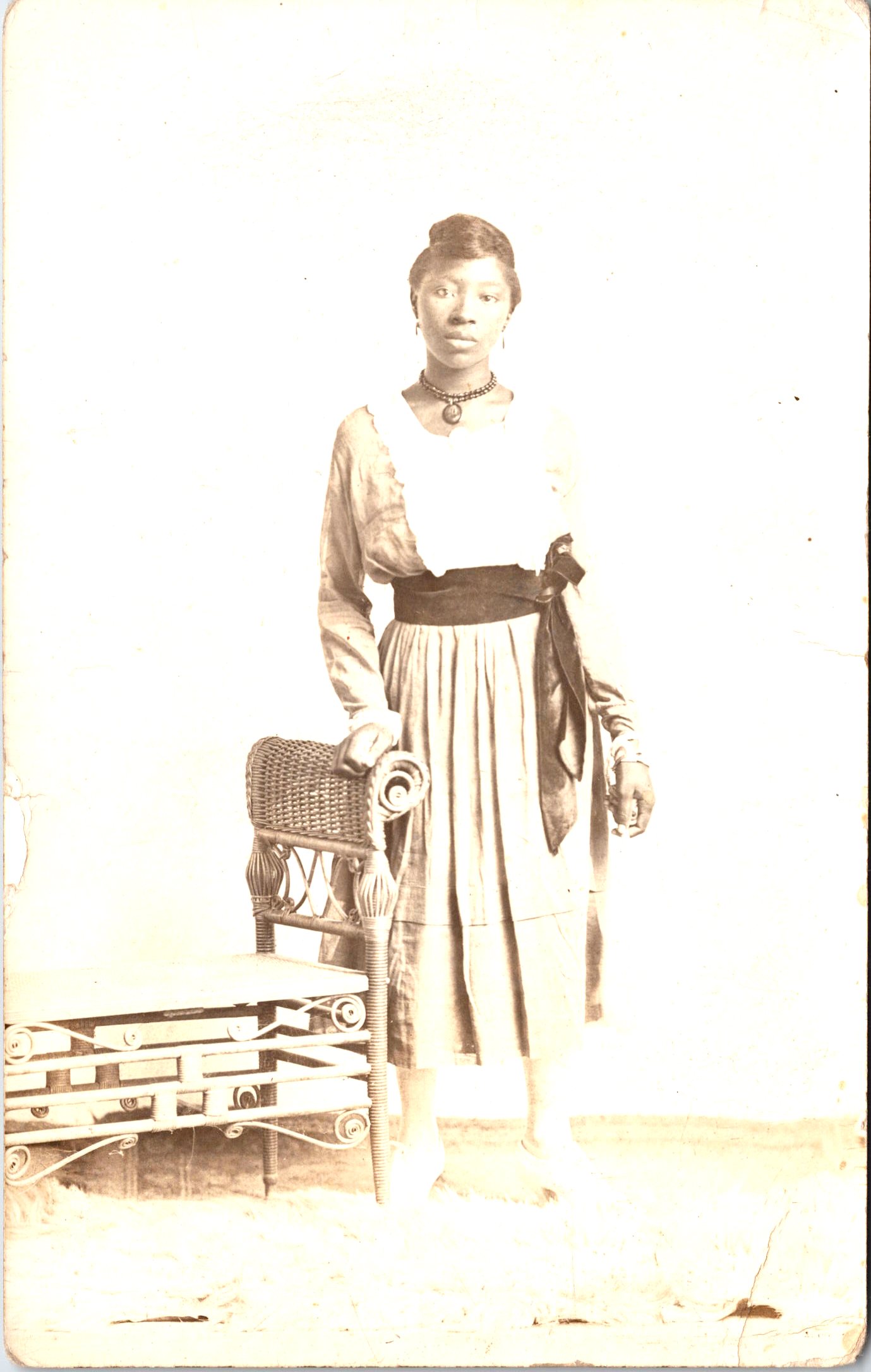
YOUNG AFRICAN AMERICAN WOMAN IN PERIOD DRESS : REAL PHOTO POSTCARD : c 1910s

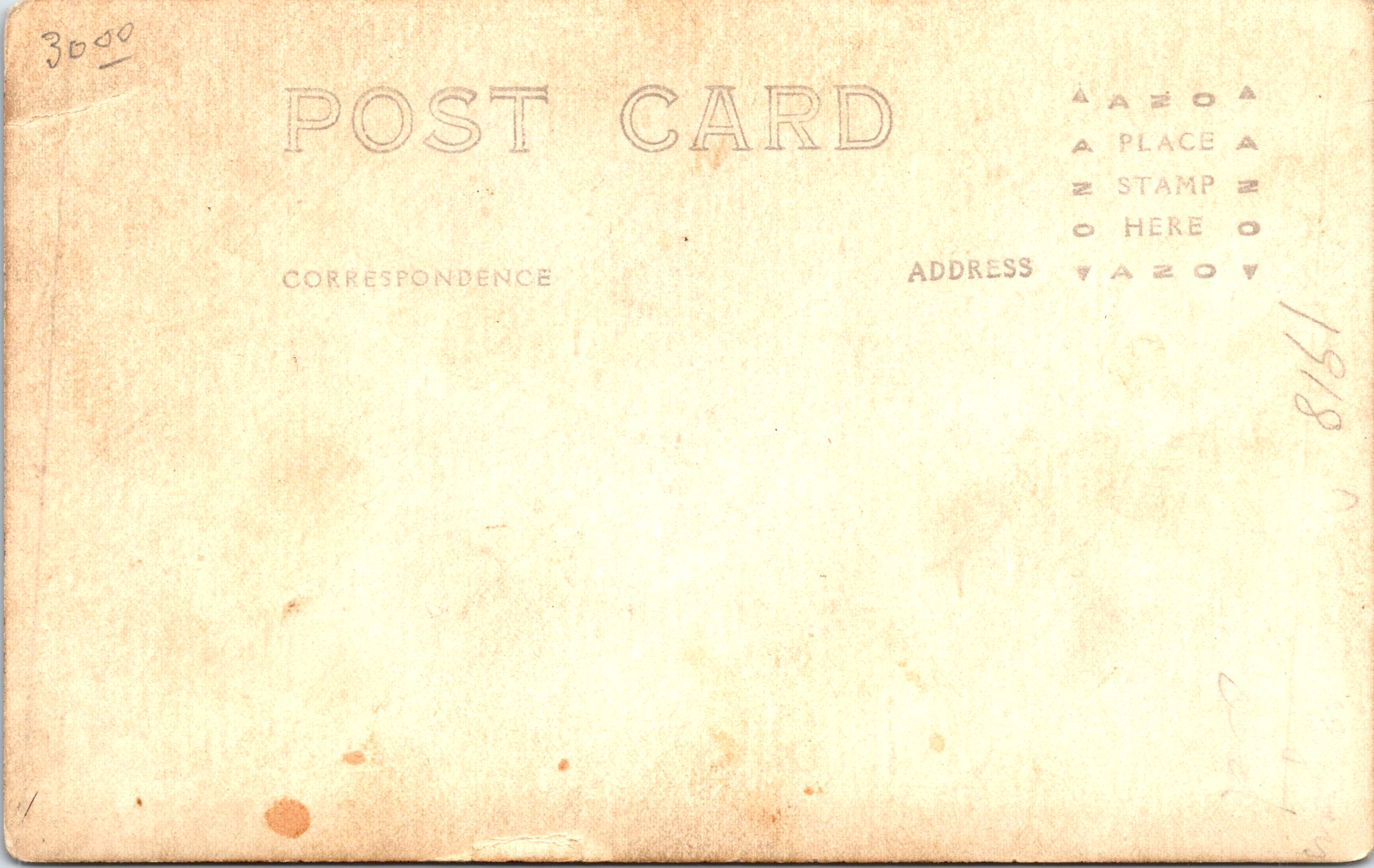
This evocative real photo postcard (RPPC) features a young African American woman standing beside an ornate wicker chair, her gaze calm yet direct. She is stylishly dressed in a light blouse with a wide white collar and dark sash tied in a bow at her waist, paired with a mid-length skirt. Around her neck she wears two pieces of jewelry—a short beaded choker and a pendant necklace—both adding a touch of grace and individuality. Her hair is neatly styled and parted, framing a face that conveys quiet confidence and dignity. The studio backdrop is minimal, drawing attention entirely to the sitter. The light is strong and frontal, giving the image a slightly high-contrast appearance that emphasizes her figure and facial features. The wicker chair at her side—an ever-popular prop of early 20th-century studios—adds a decorative element and helps balance the composition. The overall effect is both elegant and timeless, capturing the poised self-presentation of an African American woman during a period when such studio portraits were acts of personal pride and identity. The postcard’s reverse carries an AZO stamp box with two triangles pointing upward and two pointing downward, which dates the card’s production to approximately 1910–1918. This dating corresponds well with the woman’s fashion—her blouse and skirt ensemble, along with the jewelry and hairstyle, are consistent with styles of the mid-to-late 1910s. Unsigned and uncaptioned, this real photo postcard is a poignant example of African American portraiture from the early twentieth century, offering both historic and aesthetic appeal. The sitter’s steady gaze and graceful stance embody the quiet strength and dignity of a generation often overlooked in mainstream studio photography of the time. (SOLD)
Published in: on August 7, 2026 at 11:30 am  Leave a Comment  

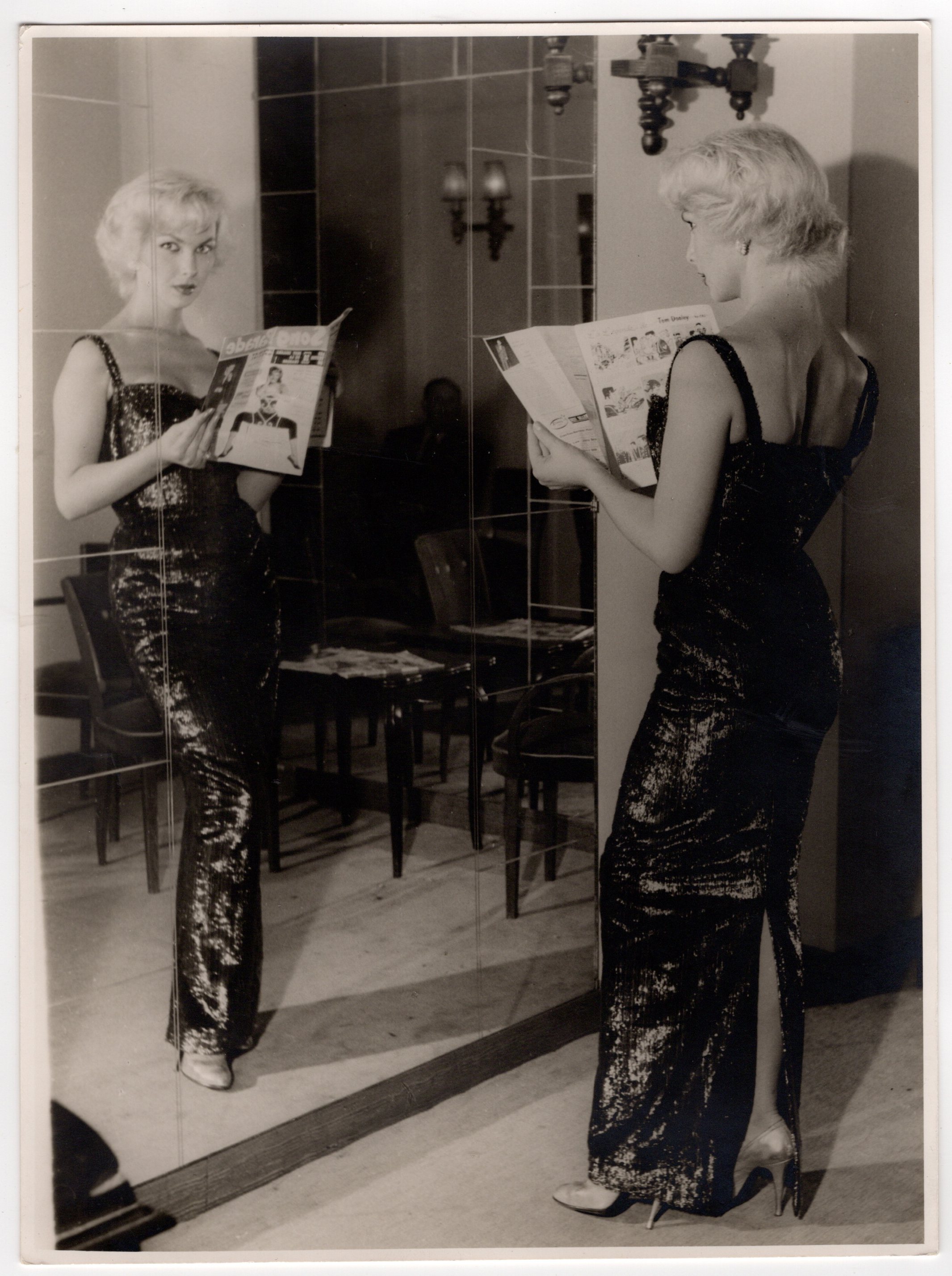
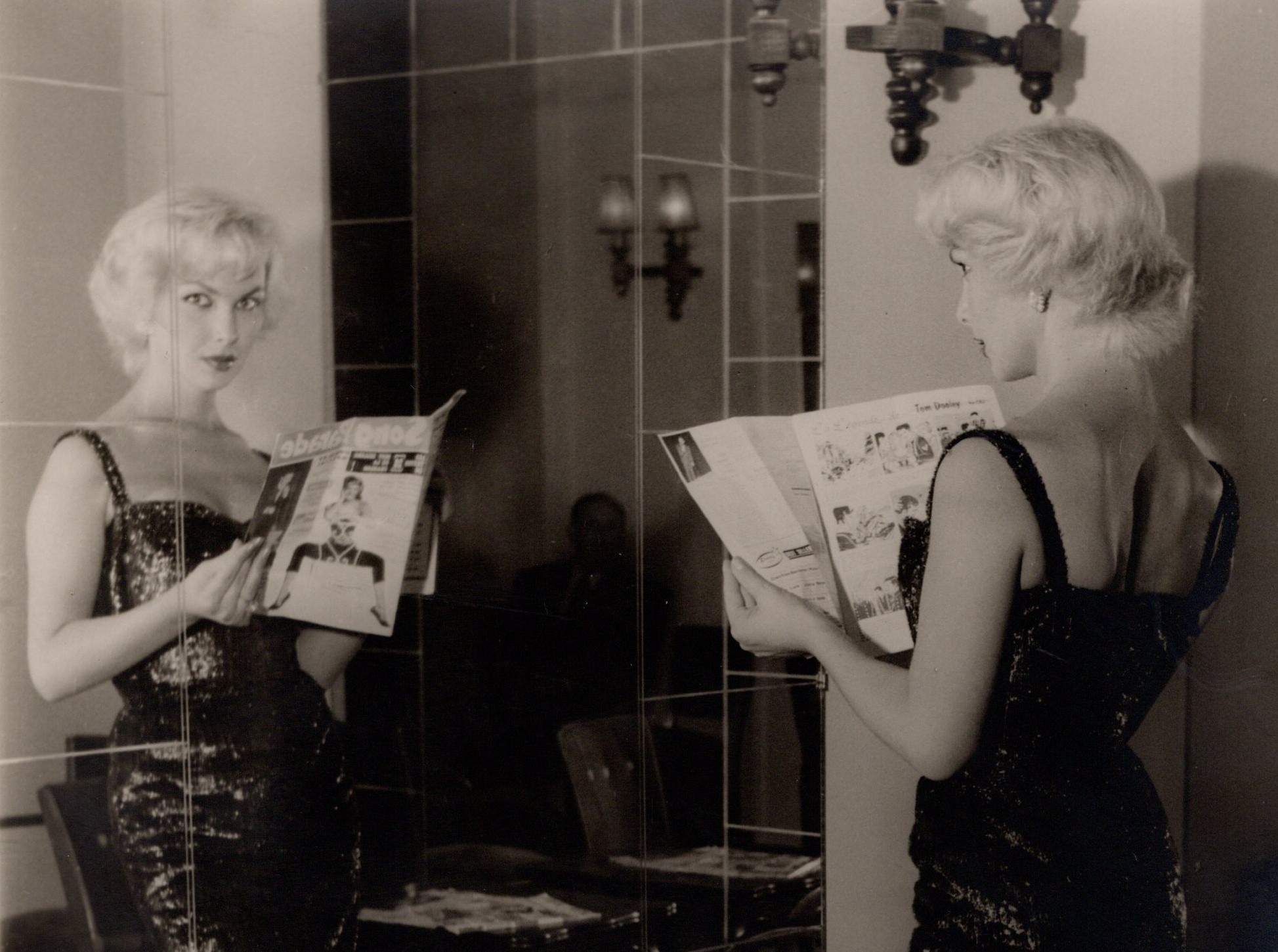
RISQUÉ PARIS CABARET PHOTO : BLONDE SHOWGIRL AT MIRROR : RISS STUDIO PARIS

This is an exceptionally striking and undeniably sophisticated vintage photograph capturing a glamorous blonde woman in a moment that feels both staged and intimate, almost cinematic in its execution. The subject stands before a full-length mirror, allowing us to see her simultaneously from the front and the back—an elegant compositional device that heightens both the allure and the artistry of the image. She is dressed in a shimmering, form-fitting evening gown, likely sequined, which clings to her figure and falls to the floor in a sleek silhouette, finished with high heels that accentuate her posture and poise. In her hands she holds what appears to be a magazine or program—possibly entertainment-related—suggesting a connection to nightlife, performance, or the world of cabaret. Her expression, as caught in the mirror, is confident, slightly provocative, and knowingly aware of the viewer, while her turned back reveals the graceful lines of her shoulders and the daring cut of the gown. The setting, with its tiled walls, sconces, and understated furnishings, evokes a refined European interior—likely a dressing area or lounge space connected to performance or leisure culture. The overall effect is stylish, suggestive, and very much in keeping with mid-20th century Parisian glamour photography. It is entirely appropriate to describe this image as risqué, though tastefully so.. The reverse provides important and quite desirable provenance. It is stamped: RISS-PHOTO (Paris and Deauville). This indicates a professional photographic studio operating out of Paris’s 16th arrondissement—an affluent district associated with high society. Deauville is a famed seaside resort long associated with luxury, fashion, and entertainment culture. Studios in these locations often produced publicity and glamour photographs for entertainers, which aligns very well with the character of this image. The photograph measures approximately 9 1/8 by 6 7/8 inches and is printed on heavy-weight photographic paper, thicker than a typical press photo. This is consistent with a presentation or studio print rather than a standard news-service photograph.  SOLD

Published in: on August 6, 2026 at 11:30 am  Leave a Comment  

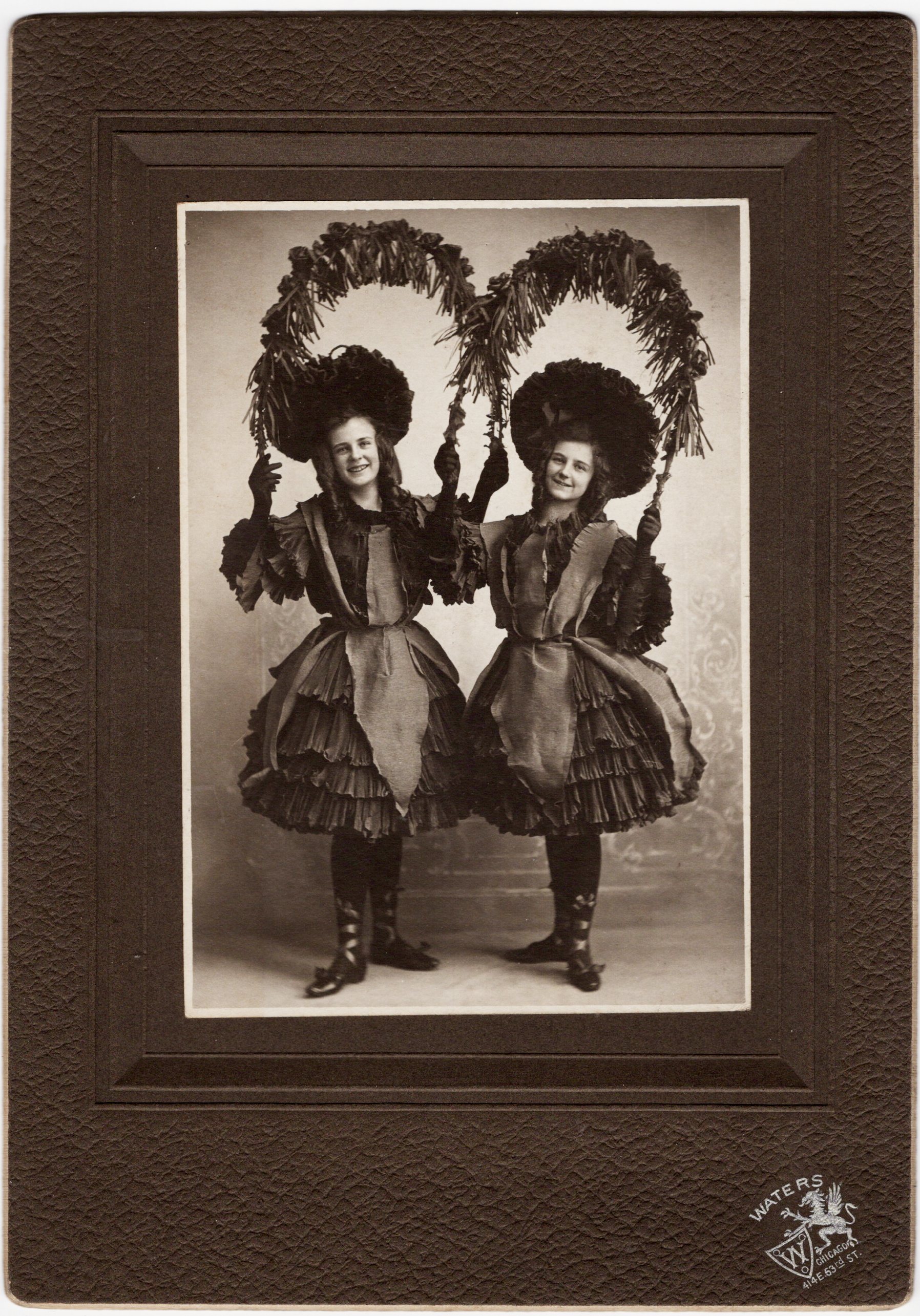
TWO YOUNG WOMEN DANCERS : HOLDING FEATHERS : CHICAGO : VINTAGE PHOTO : 1910’s

This charming vintage photograph, taken at the esteemed Waters Studio in Chicago, captures two young women in an elegant pose.  They are performers from the early 1900s. The pair stand side by side, holding large feathered props in the shape of arches above their heads, suggesting they are mid-performance or posing to highlight their costumes and artistry. The women are dressed in elaborate, ruffled costumes with matching skirts and blouses accented by puffed sleeves. Their outfits, along with their detailed lace-up boots, are typical of the turn-of-the-century vaudeville or theatrical performers. The expressions on their faces—one with a playful smile and the other with a more subdued but confident demeanor—reveal a sense of joy and professionalism, hinting at their comfort in front of the camera. These young women could very well be professional dancers, actresses, or variety show performers showcasing their talent and stage presence. This photograph, including its mount, measures approximately 6 x 8.5 inches, while the image itself is about 3 5/8 x 5.25 inches. The condition is excellent for its age, with minimal wear to the edges of the mount and crisp details in the image. There is an embossed “Waters Studio, Chicago” mark in the mounts corner. The Waters Studio was known for its striking photographic work during the early 20th century, capturing the essence of its subjects with skill and precision. I have had the pleasure of owning three other photographs by this studio, all of which sold quickly—a testament to the photographer’s exceptional talent and the enduring appeal of their work. Photographer, J. Edgar Waters wrote an article for a business magazine. “The Magazine of Business” (1915) contains an article entitled “The One-Man Business”. In the article, Waters provides practical advice about business record keeping. SOLD

Published in: on August 6, 2026 at 12:30 am  Leave a Comment  

MISS MAGGY : PRETTY ACTRESS PHOTOGRAPHED BY SAZERAC : RPPC : 1905

This vintage color tinted  real photo postcard features Miss Maggy, a Paris cabaret performer. She is pretty and has a wonderful smile. Preliminary research found no biographical information concerning this actress. The photographer of this postcard portrait is the Sazerac studio which was located at the “Hotel Prive” in Paris, France. Little information could be located about Mr. Sazerac; but one can easily find real photo postcard portraits of French show girls that were produced by his studio. In fact, Britain’s National Portrait Gallery has one of Sazarac’s photographs (circa 1906) in it’s collection. This card was postmarked in 1905 and has a French stamp. This postcard is part of a series (N. 827 Th. 91). SOLD

Published in: on August 5, 2026 at 11:30 am  Leave a Comment  

MARION MICHAEL : GERMAN FILM & TV ICON : 2ND GERMAN ACTRESS TO BE NUDE ON SCREEN

POSTCARD 1 (SOLD)

POSTCARD 2 (SOLD)

POSTCARD 3 (SOLD)

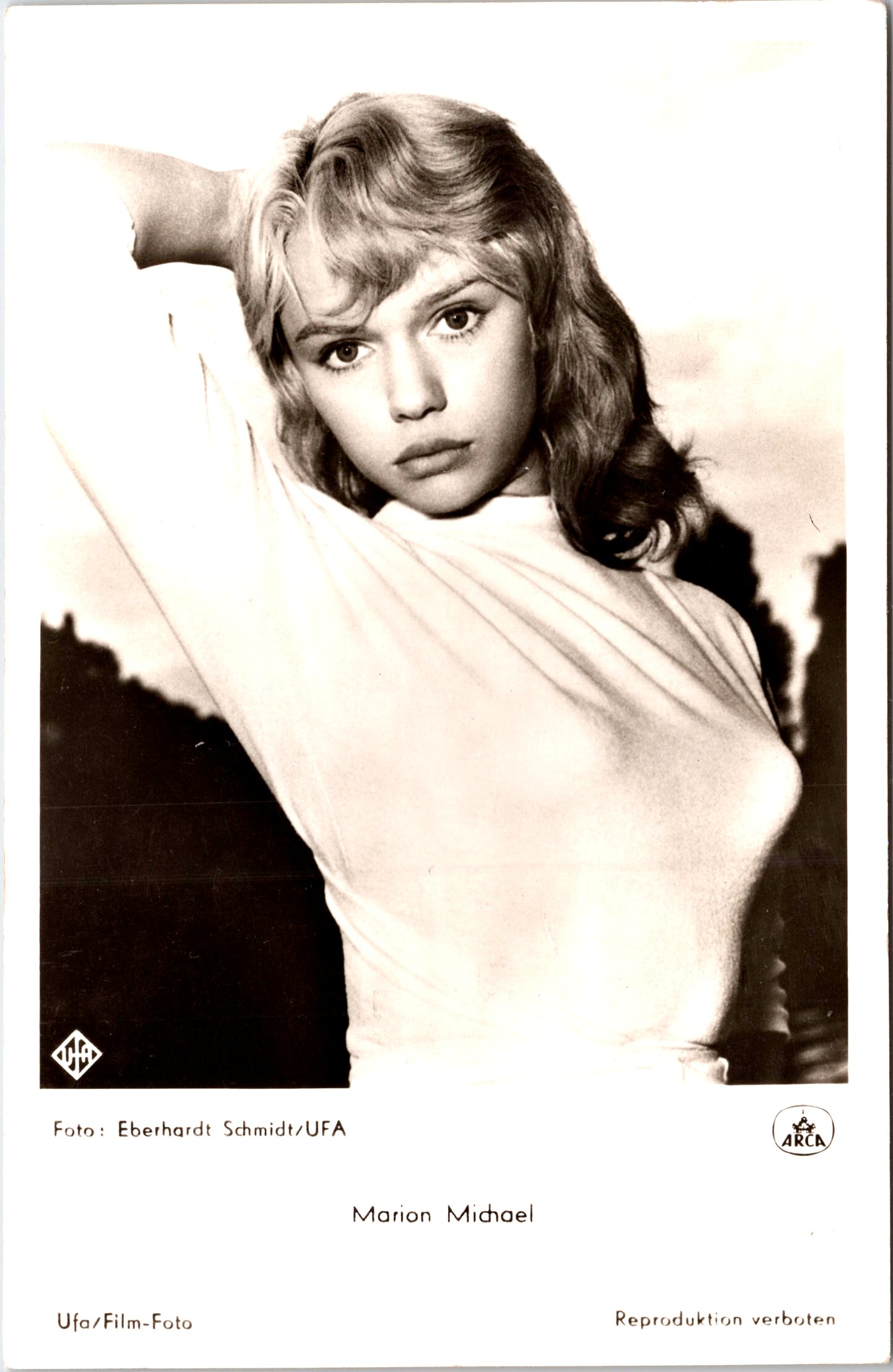
These vintage real photo postcards feature German film actress and singer, Marion Michael (11940-2007). She is best known for her role in the film “Liane, Jungle Goddess” (1956). In that film, Marion became the second German actress to appear nude in a movie. It is reported that there were 12,000 actresses that competed for that role. Sadly, she was just 15 when the movie was filmed. She appeared topless in the film. Her nudity was not meant to be erotic. She was touted as Germany’s Brigitte Bardot. The movie, shot in Africa, was very popular at the box office. During the next 6 years, none of her 10 films were successful. Michael was injured in a car accident during her acting career. She returned to acting but stopped in 1965. From there on, she infrequently acted in television and film. The last film (television) she appeared in was a musical about her life. It was entitled “Liane” (1996). After retiring from acting, she worked as a sales woman. Her filmography reported by IMDb, credits her with 19 film and television appearances. Although she was not extremely successful as an actress, she was still considered a film icon in Germany.

Postcard 1 was published circa 1956-1959. Michael’s photograph is attributed to Stempka/Arca Film. The card was published by UFA, a German film and television production company. SOLD

Postcard 2 captures Miss Michael while she is in her role in the film, “The Mad Bomberg”. This vintage postcard was published in 1957 by UFA (Berlin). Michael’s photograph is attributed to Hoenchen / Arca. SOLD

Postcard 3 was published in the mid to late 1950’s. Michael’s photograph is attributed to Stempka/Arca Film. The card was published by UFA, a German film and television production company. SOLD

POSTCARD 1

POSTCARD 2

Postcard 3

Published in: on August 4, 2026 at 12:30 pm  Leave a Comment  

COUNTRY LAKE NURSING HOME : CENTERPORT, LONG ISLAND, NEW YORK : MILL POND : RPPC

This lithographic postcard features the Country Lake Nursing Home. The home is located in Centerport, Long Island, New York. Advertising on the reverse of the card states that the home overlooks the “picturesque Mill Pond”. The home is on the Northshore of Long Island and a stones throw away from Centerport Harbor (Long Island Sound).The nursing home housed 20 patients. The postcards color photo of the nursing home was taken by Milt Price (Northport, New York) and the card was published by the Tomlin Art Company (Northport, New York).  SOLD

Published in: on August 4, 2026 at 11:30 am  Leave a Comment  

HOTEL WELLSWOOD : HAMPTON FALLS, NEW HAMPSHIRE : HISTORY : VINTAGE POSTCARD 1926

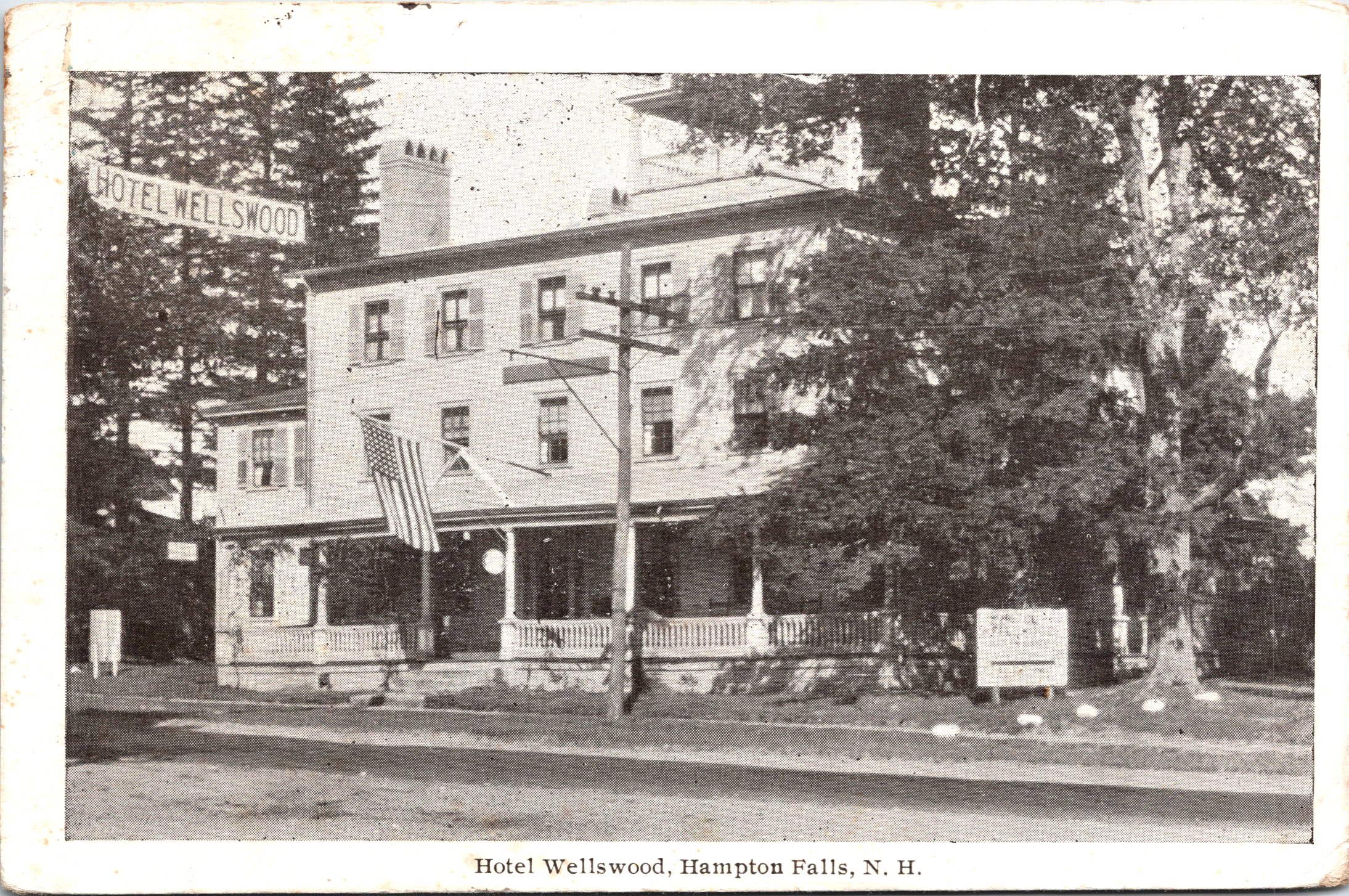
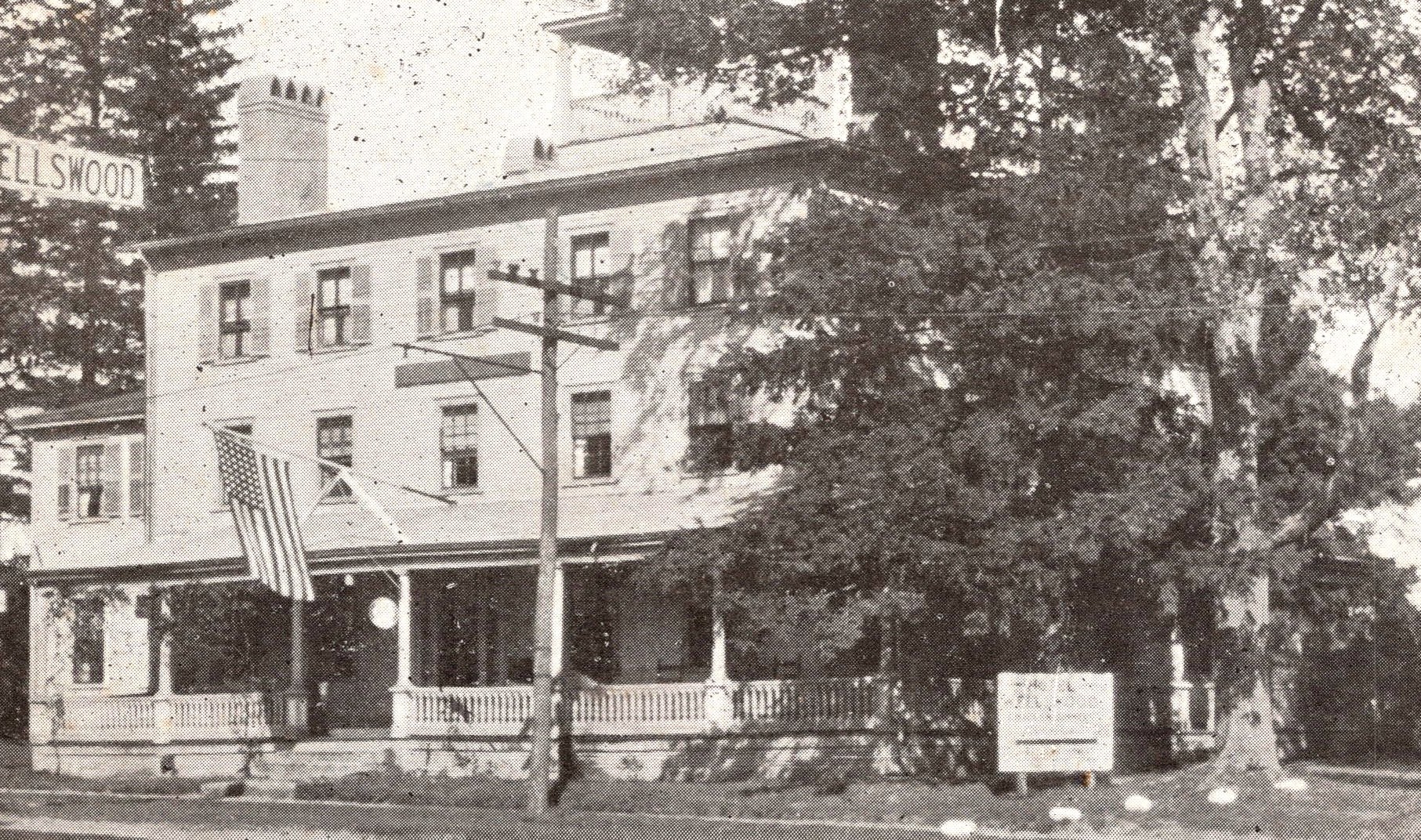
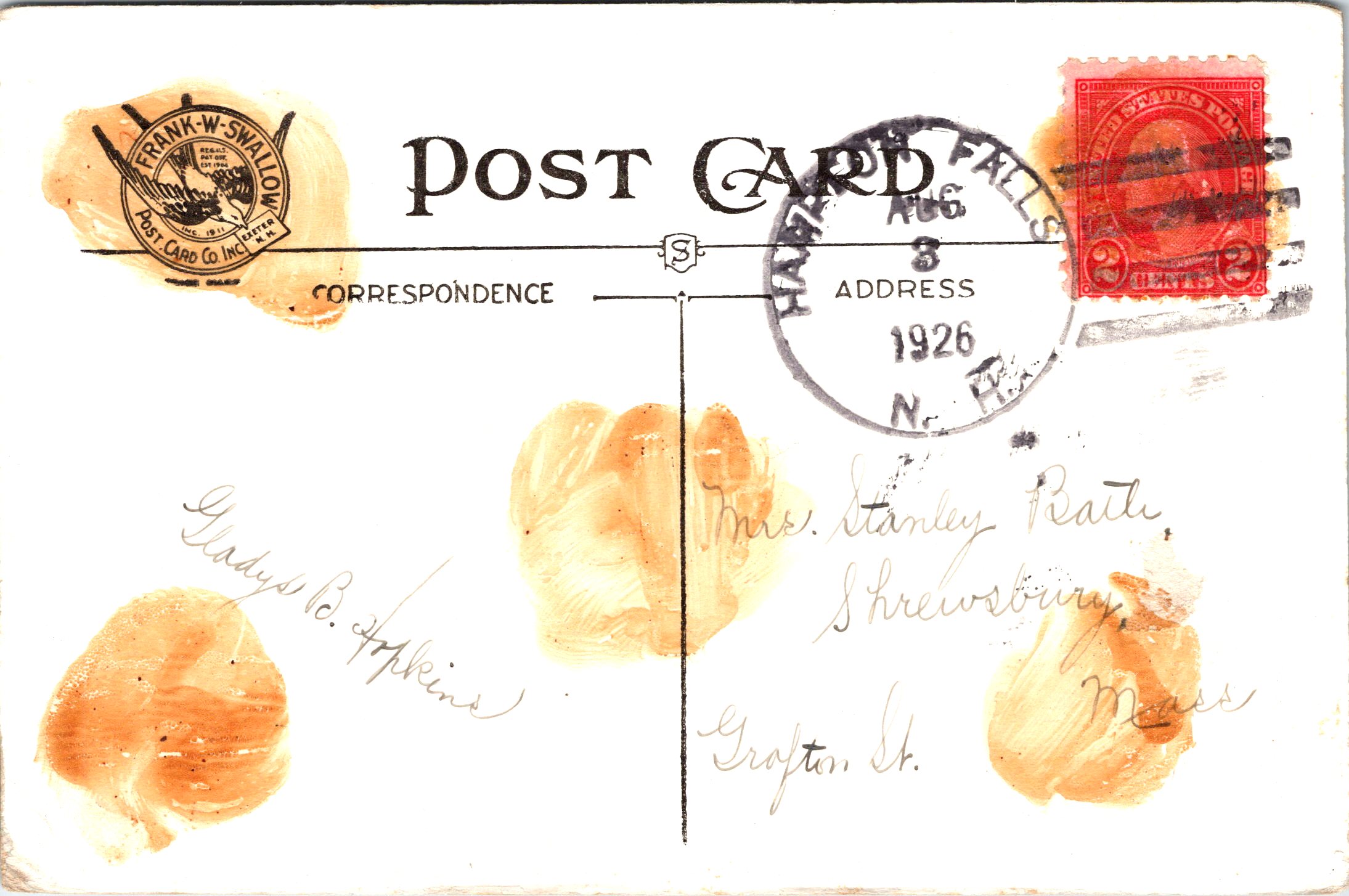
This vintage lithographic postcard depicts the historic Hotel Wellswood in Hampton Falls, New Hampshire. The hotel is a large, three-story building with a wraparound porch adorned with decorative railings. An American flag hangs prominently from the front of the building, adding a patriotic touch to the scene. The structure is surrounded by tall trees, giving it a serene and picturesque setting.A sign reading “Hotel Wellswood” is suspended between two posts at the entrance, welcoming guests. The front yard of the property appears to be well-kept, with visible landscaping and a grassy area. To the right of the hotel, a smaller sign is visible, likely advertising the hotel’s services or additional information for visitors. Power lines and a utility pole in the foreground indicate the era’s infrastructure. The Hotel Wellswood was a notable establishment in Hampton Falls, New Hampshire, during the early 20th century. An advertising card from the 1920s lists Mrs. Bertha S. Graves as the proprietor, indicating that the hotel was operational during that period. The hotel no longer exists. Hampton Falls is a small, picturesque town located in Rockingham County in southeastern New Hampshire. This postcard was published by the Frank W. Swallow Post Card Company. The firm was located in Exeter, New Hampshire. The postcard has a Hampton Falls postmark dated 1926.  SOLD

Published in: on August 3, 2026 at 12:30 pm  Leave a Comment  

JEWISH SYNAGOGUE : RICHMOND, VIRGINIA : VINTAGE POSTCARD

This vintage postcard features a Jewish synagogue located in Richmond, Virginia. The synagogue was named Beth Ahaba (House of Love) and was located at Franklin and Ryland streets. Beth Ahaba was founded in 1841 by Ashkenazic Jews. The building was dedicated in 1904. Architecturally, the building is shaped like a perfect octagon. Today, the congregation is composed of nearly 700 families. This divided back postcard was published by Southern Bargain House and was postmarked in 1910.  (SOLD)
Published in: on August 3, 2026 at 11:30 am  Leave a Comment  

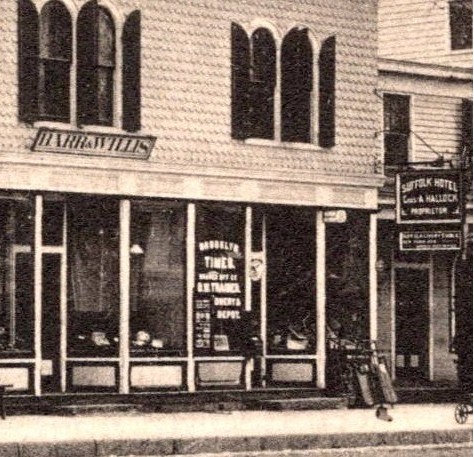
HUNTINGTON, LONG ISLAND, NY : NEW YORK AVE & MAIN ST : SUFFOLK HOTEL : RPPC 1907

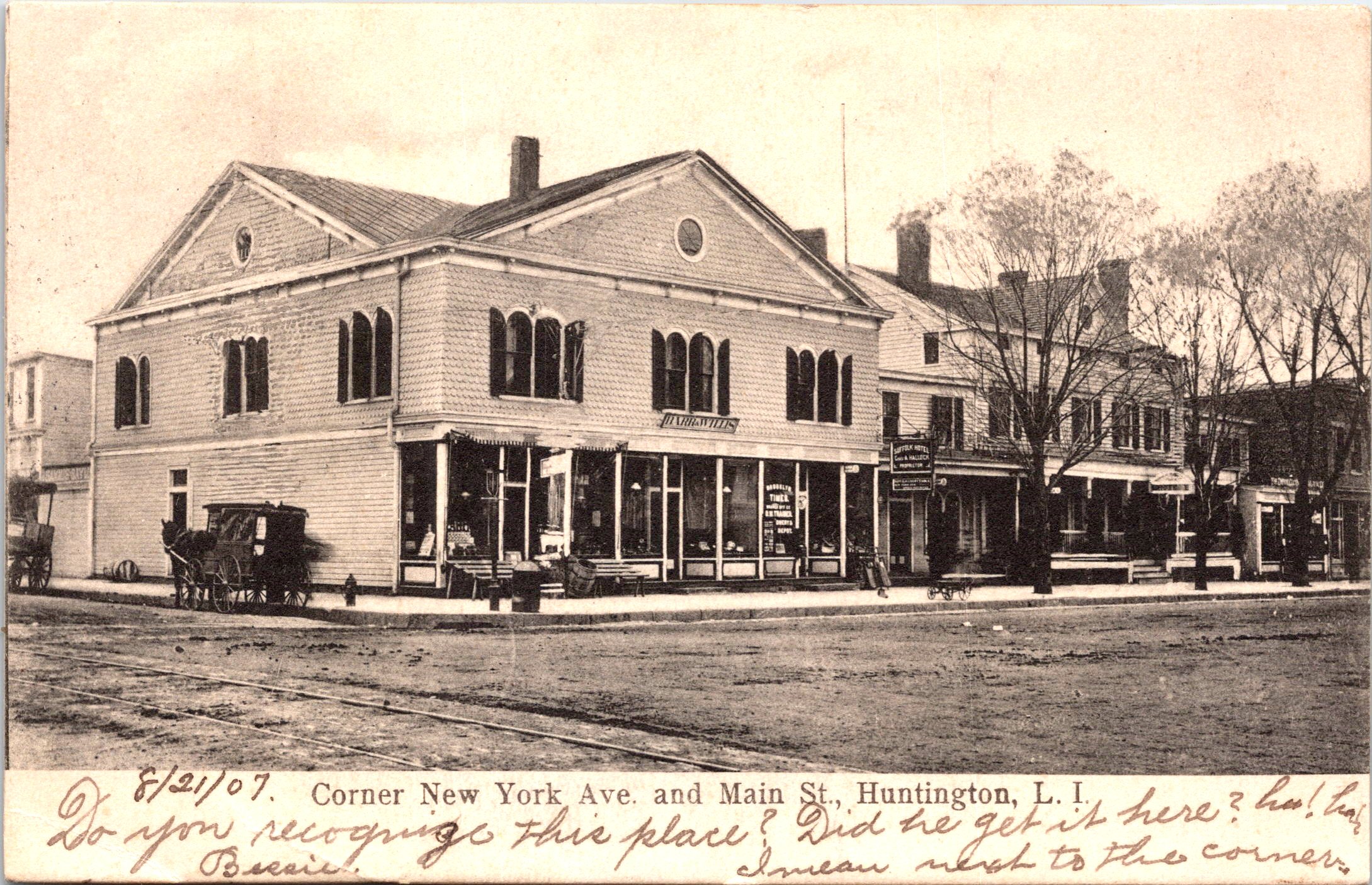
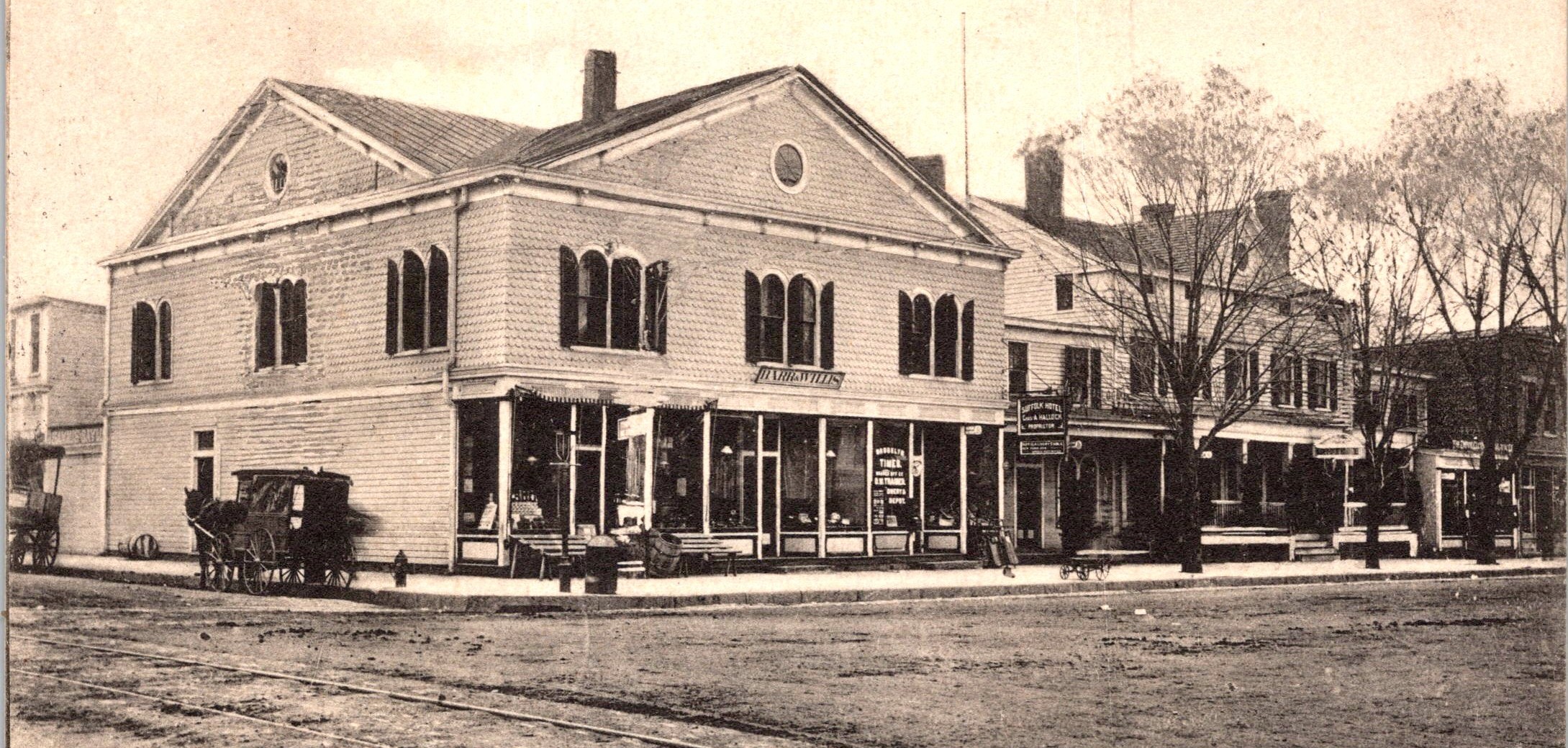
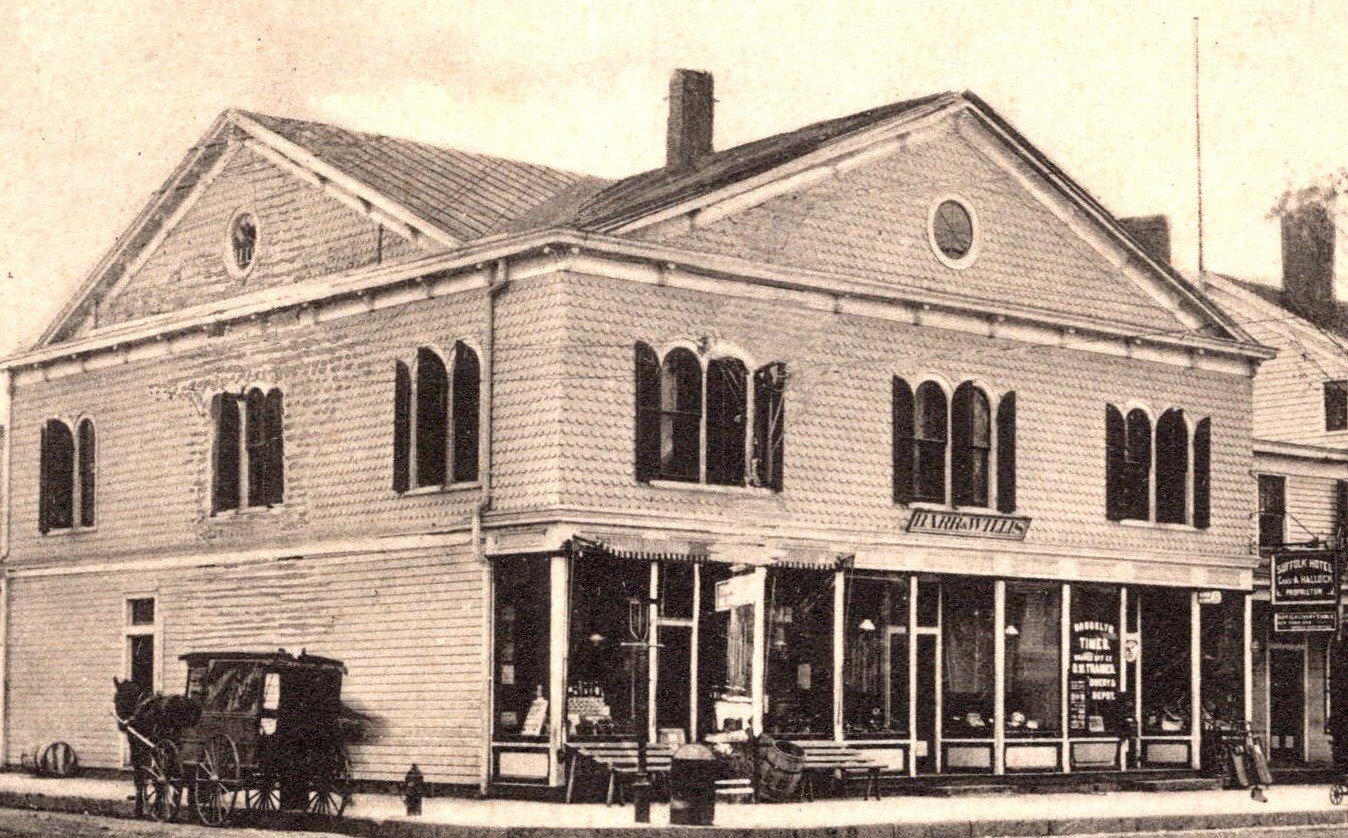
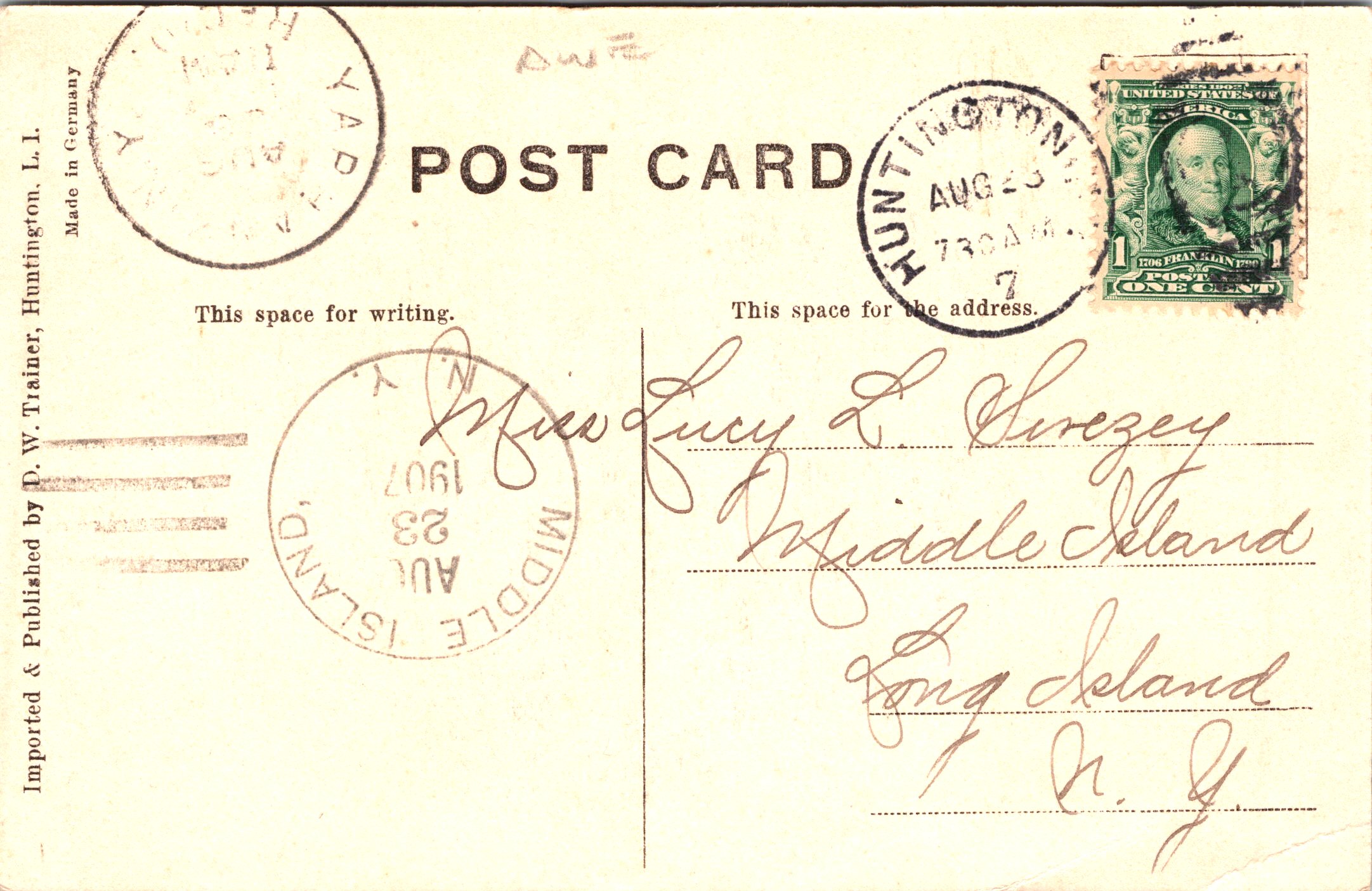
This lithographic postcard captures a bustling streetscape at the corner of New York Avenue and Main Street in Huntington, Long Island, New York, in 1907. The scene showcases a prominent two-story wooden structure with a shingled façade and arched windows, identified by the large sign over its storefront: “Barr & Willis”. This building, likely a general store or dry goods establishment, anchors the intersection and features wide display windows and wooden benches out front. Adjacent to this store, to the right, is the Suffolk Hotel, operated by Chas. A. Hallock, as noted on a hanging sign:“SUFFOLK HOTEL – CHAS. A. HALLOCK, PROPRIETOR”. A second sign underneath reads: “COMMERCIAL RATES – FIRST CLASS ACCOMMODATIONS – CAFE IN (CONNECTION)?”. Visible on the storefront window of the Barr & Willis shop is an ad that appears to read: “BROOKLYN TINSEL – WHOLE LINE OF OUTDOOR AND INDOOR DECO’N GOODS.” Horse-drawn carriages line the dirt road, and early trolley tracks run along the street, capturing a transitional period between horse-and-buggy transport and electric trolleys. Leafless trees indicate a fall or winter season. At the bottom of the card’s front, written in ink and dated 8/21/07, the sender has penned a charming personal message: “Do you recognize this place? Did we get it here? ha! ha! I mean right to the corner. Bessie.” The postcard was postmarked in Huntington, N.Y., and again in Middle Island, N.Y. later that same day. It was mailed with a green one-cent Benjamin Franklin stamp (U.S. Series of 1902). The postcard is addressed to a woman in Middle Island. The postcard was published by D. W. Treanor of Huntington, NY.  Huntington is a historic town on the north shore of Long Island, New York, facing Long Island Sound. Settled in 1653, Huntington played a pivotal role in colonial and Revolutionary War history. By the early 20th century, it had grown into a commercial and transportation hub for Suffolk County. This corner at Main Street and New York Avenue marked a key intersection at the heart of downtown Huntington.  (SOLD)
Published in: on August 2, 2026 at 12:30 pm  Leave a Comment  

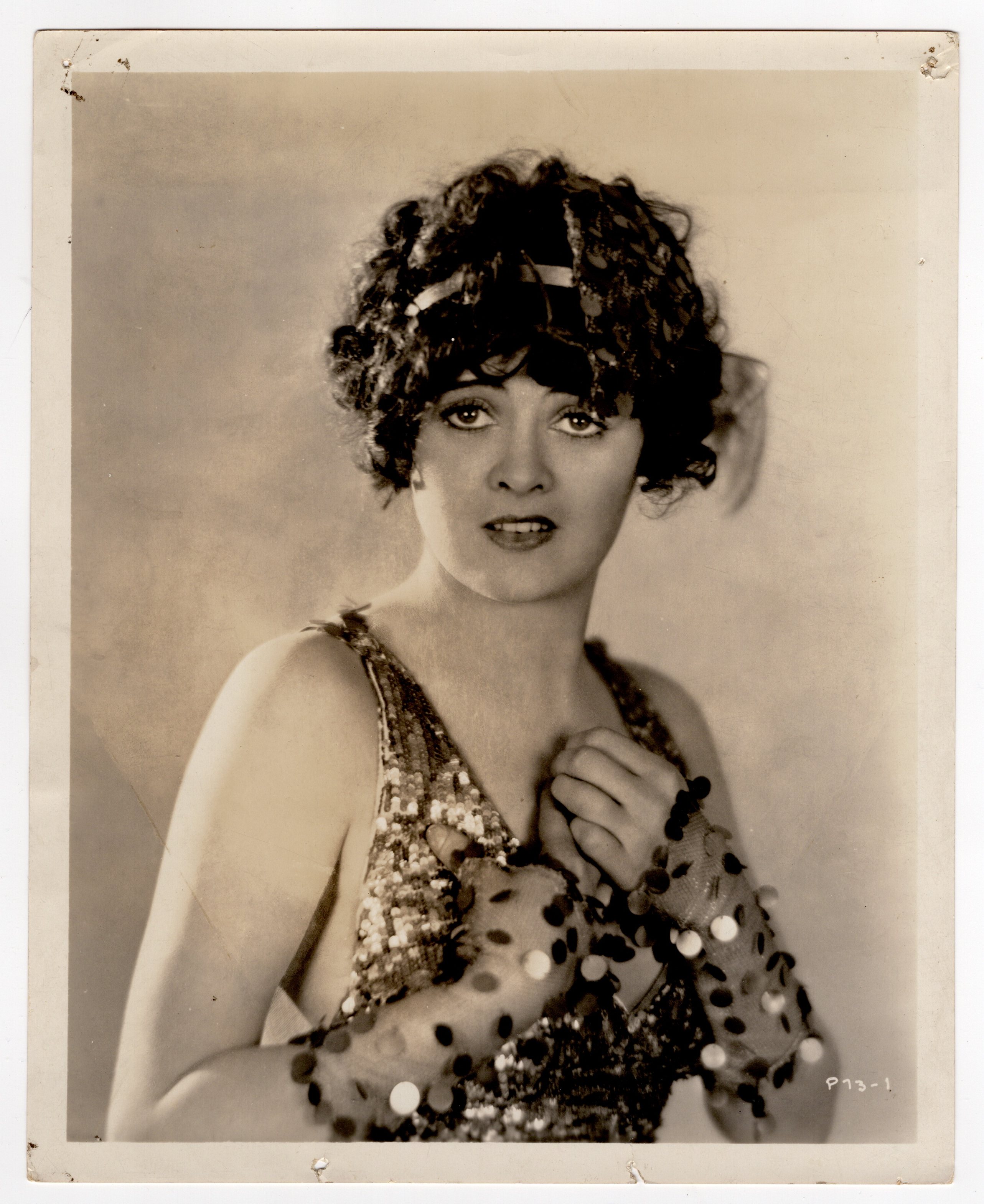
MOLLY O’DAY : IN “THE PATENT LEATHER KID” : RISQUE : MOVIE PRESS PHOTO 1927

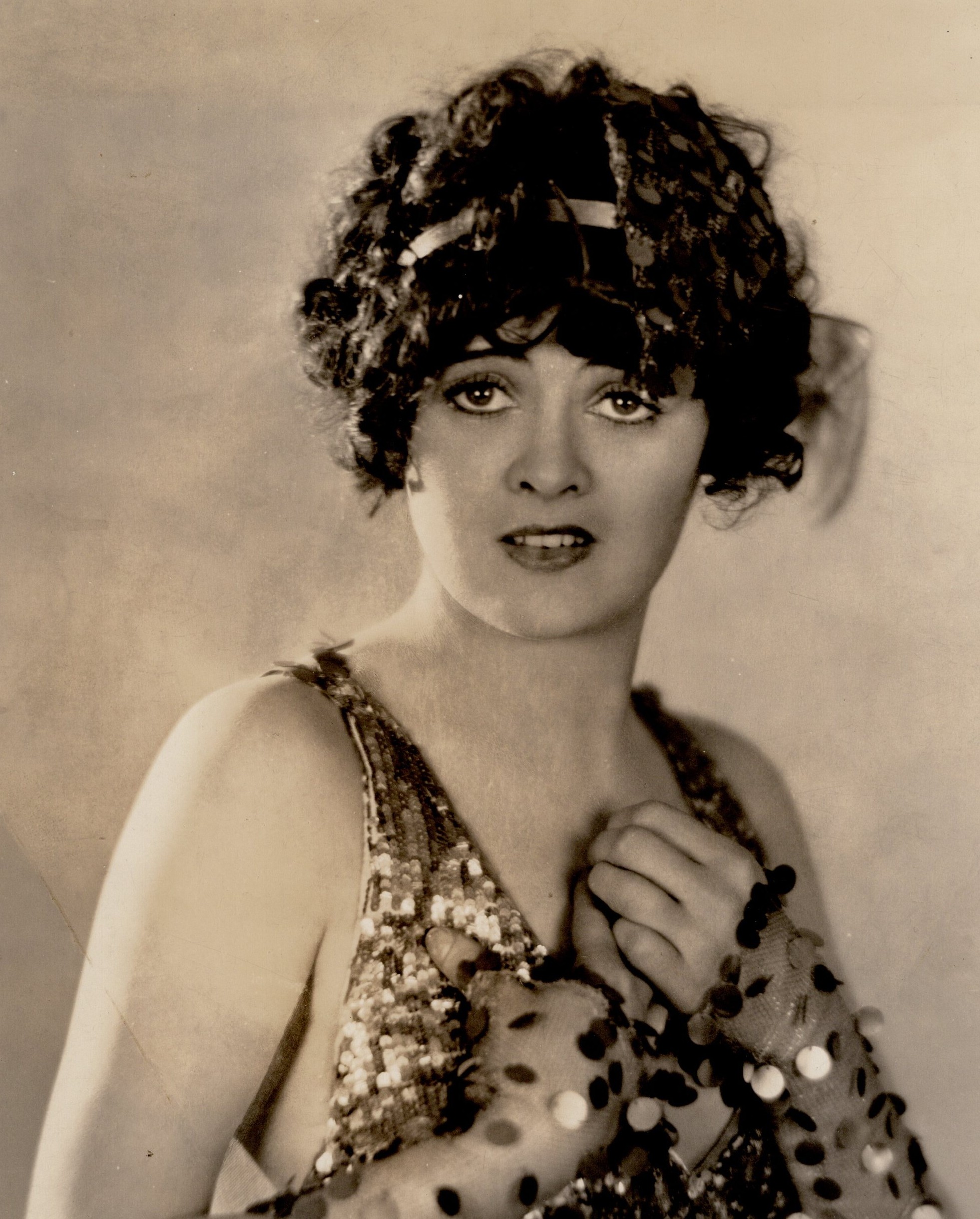
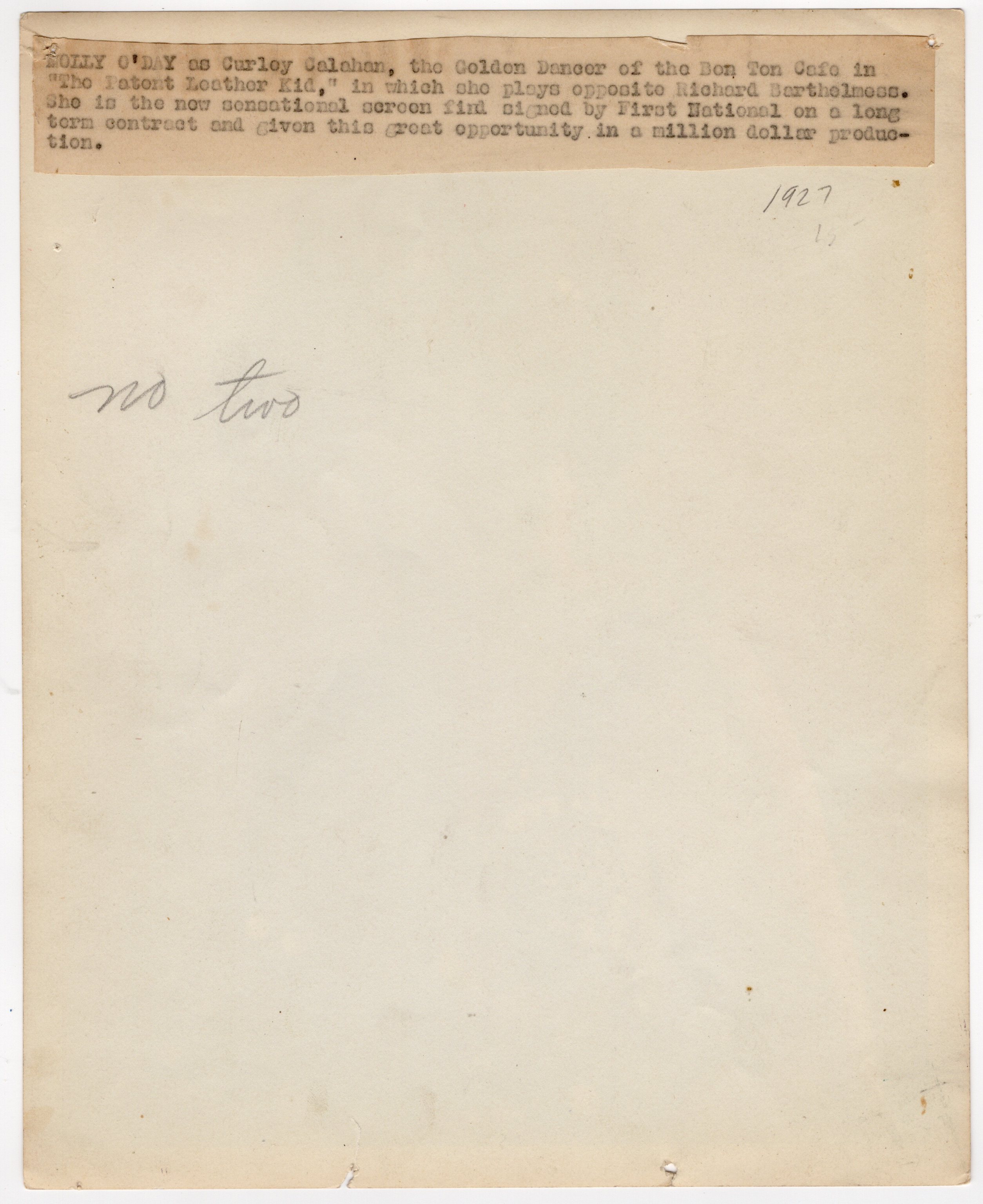
This original 8 x 10 glossy press photo captures a youthful Molly O’Day (1909-1998) in character for her role in The Patent Leather Kid (1927). She is posed confidently, wearing a two-piece costume that reveals her midriff — a daring choice for the 1920s — consisting of a bandeau-style top with soft ruffled trim and a matching skirt. Her attire, suggestive of a cabaret or showgirl character, was clearly intended to evoke a sense of allure and vivacity appropriate to the flapper era. Her expression is one of poise and subdued seductiveness, with a slight, knowing smile and eyes that seem to both challenge and engage the viewer. Her bobbed hair is tightly styled, in keeping with the flapper fashion of the time, and she wears light makeup that accentuates her cheekbones and lips. While this photograph would not be considered overtly risqué by today’s standards, in the context of the 1920s, it certainly leaned toward provocative. The exposed midriff and coquettish pose were part of the studio’s strategy to promote films with bold, modern female characters. The reverse of the photograph bears the original typed press caption, which names her and references The Patent Leather Kid. The handwritten “1927” corresponds with the film’s release year. The film was produced by First National Pictures and directed by Alfred Santell. Molly’s co-star was Richard Barthelmess. She played his love interest. This film is a silent drama with a strong boxing and war narrative. Barthelmess plays a tough New York prizefighter who finds redemption through love and heroism during World War I. Molly O’Day plays the spirited woman who softens the fighter’s hardened heart. The film was a major box office success, notable for its production values and emotional storytelling. It was a “million-dollar production,” a massive budget for the time, and was nominated for two Academy Awards at the first-ever Oscars. Molly was one of 11 children in a working-class Irish Catholic family. Her older sister, Sally O’Neil, was also a successful actress. Molly followed Sally to Hollywood and began her film career at just 16. Her big break came in 1927 when she won a “WAMPAS Baby Star” award, an honor given to promising young actresses. Her role in The Patent Leather Kid launched her into stardom. Known for her blend of wholesomeness and sex appeal, Molly became a popular figure in silent films and early talkies. Other notable films include: Gigolo (1926), Heroes In Blue (1927), and The Lovelorn (1927). Molly married actor Jack Durant in 1934, with whom she had four children. Her later years were marked by personal challenges, including struggles with weight and depression, which led her to step back from the industry in the 1930s. One of the more interesting footnotes to her career is that she underwent one of Hollywood’s earliest publicized weight-loss surgeries, which became a tabloid story in the early 1930s.  (SOLD)

Published in: on August 2, 2026 at 11:30 am  Leave a Comment