PORTRAIT OF A YOUNG WOMAN IN NEBRASKA CITY, NEBRASKA (PHOTOGRAPHER KNOWN FOR IMAGES OF NATIVE AMERICANS)

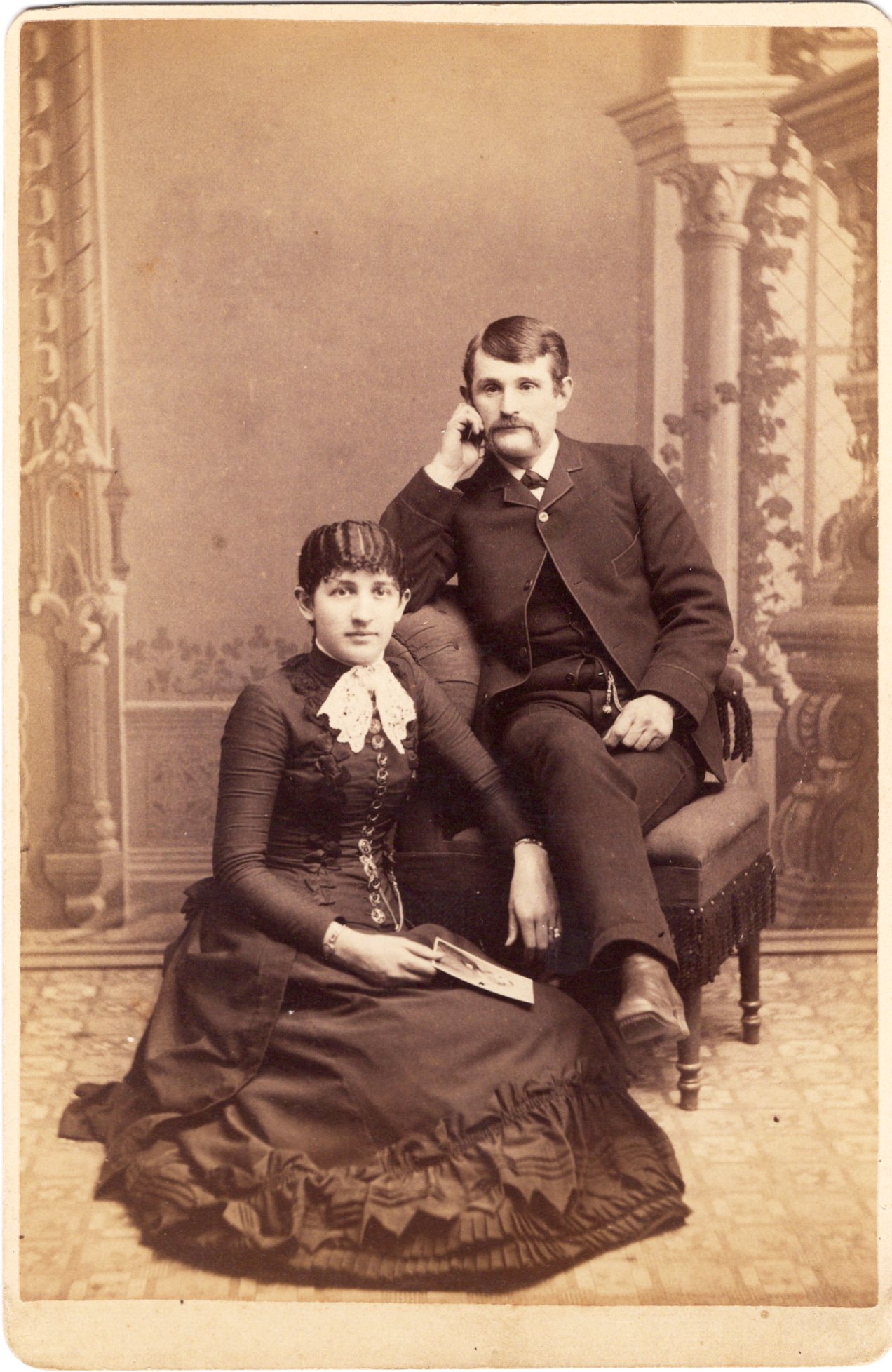
A young woman poses for her portrait at the Tolman studio in Nebraska City, Nebraska. She is likely in her teenage years. She is wearing a wide black band around her neck. Is the band jewelry? Is it part of her dress? Does the black collar band represent something (ie mourning)? I hope some of the visitors to the Cabinet Card Gallery will express their opinion about the band. The photographer of this image is Thomas W. Tolman. One source states that he was from Fort Dodge, Iowa and that he is listed in the 1882 Glenwood (Iowa) business directory (1882) as a photographer. Later, he was listed in the 1890 Nebraska City business directory. An article in the Gillette News Record (Wyoming) presents some interesting information about Mr. Tolman. He was hired by Collier’s Magazine to document a group of White River Utes migration from the Uintah reservation in Utah. They were heading north and their trip took them through Gillette. They were leaving the reservation because of a federal mandate that reclaimed some of the land on the reservation for homesteading and mining. A group of about 400 men, women, and children started the journey in 1906. Their destination was unclear. It was thought they may have been heading to Montana, or South Dakota. When they arrived near Gillette, they camped about 50 miles north of the city. This was the locale where they were photographed by Tolman. Along their travels, there were rumors of violence attributed to the this group of Native Americans. These rumors were unfounded. The New York Times condemned the journalists who reported the “fake news” about this group of Utes. Unfortunately, the complaints came from citizens who wanted the group rounded up and the US Cavalry was called to intercept them. Tolman photographed the group of Utes, both before and after the arrival of the US troops. A compromise was made and the migrating Native Americans agreed to go to Fort Meade, South Dakota with the cavalry escort. In exchange, the Utes were promised an opportunity to go to Washington D.C. to express their feelings about the Government’s “land grab”. In fact, Ute leaders did go to the nation’s capital where they met with President Theodore Roosevelt and hi head of the Bureau of Indian Affairs. The US did not change it’s policies. The Utes stayed at Fort Meade for about six months and than leased land from the Sioux for about a year. In 1908, the group returned to their reservation in Utah. The photos appeared in Collier’s Magazine. The article was headlined “The Unquiet Ute”. An example of one of the photographs in the series can be found below. It is not included in the sale of this cabinet card. It is impressive that Tolman was able to take well regarded photos without the comfort and resources of his studio. SOLD

A PHOTOGRAPH BY TOLMAN FROM “THE UNQUIET UTE COLLECTION”
Published in: on October 14, 2020 at 12:20 pm  Comments (1)  
Tags: , , ,

PORTRAIT OF A PRETTY WOMAN AND HER SMILE (TINTYPE)

This tintype photograph features a well-dressed and pretty young woman. She appears to be dressed for winter. She is wearing a dark heavy dress and a cape. She looks very pleasant and has a lovely smile. Tintypes were popular in the 1860’s and 1870’s. Over time, they were replaced by Carte de Visites and Cabinet Cards. This lovely tintype portrait measures about  2 1/2″ x 3 3/8″ and is in excellent condition (see scans).    (SOLD)

Published in: on October 13, 2020 at 12:00 pm  Leave a Comment  
Tags:

ATTRACTIVE YOUNG WOMAN WITH HYPNOTIZING EYES IN DETROIT, MICHIGAN

This bust portrait of an attractive short haired young woman is the product of the Millard studio in Detroit, Michigan. The woman is wearing a lace collared dress and earrings. She has magnificent deep hypnotizing eyes.  C. A. Millard is mentioned in The Industries of Detroit (1887) as being the proprietor of the oldest photographic studio in Detroit. It is reported that he bought out a Mr. Powelson in 1879 and at the time of the books publication, Millard employed ten to fifteen artists in his studio. An interesting side note concerns Millard’s death in 1891. Frank Scott Clark (1865-1937), a noted backdrop painter, came to Detroit in 1892 to manage Millard’s studio for Millard’s estate. Among his accomplishments, Clark was an extremely talented photographic background specialist. In fact, during his career, he created, made, and set up backgrounds for both Napoleon Sarony and Jose Maria Mora. Not too shabby a resume for Mr  Clark.  (SOLD)

Published in: on October 12, 2020 at 12:01 pm  Comments (3)  
Tags: , , , , , ,

VINTAGE PORTRAIT OF FOUR FIREMEN, A FIRE TRUCK, AND FIRE HOSE (RPPC) c. 1910

This vintage real photo postcard features a firetruck with four uniformed firemen on board. This is a great looking truck. Note the starting crank, the fire bell, the lantern, and the bug eye headlights. The truck is parked in front of the fire station’s garage, Another garage can be seen in the photo, and that garage houses a fire hose on wheels. The location of this firehouse is unidentified. The AZO stamp box on the reverse of this postcard indicates that it was published sometime between 1904 and 1918. SOLD

Published in: on October 11, 2020 at 12:00 pm  Comments (1)  
Tags: , , ,

TWO ADORABLE SISTERS SITTING ON A BENCH IN NERAC, FRANCE (CDV)

This carte de visite photograph features two adorable sisters sitting on a studio bench in Nerac, France. The two girls are wearing identical dresses, both accessorized with lace. The children are also wearing hair bows. Interestingly, one child is wearing the bow on the left side of her head while the second child’s bow is on the right side of her head. I suppose this was the work of the photographer who was intent on creating symmetry in this image. Take note of the ornate carvings on the legs of the bench. This photograph was taken at the Tuja studio. As stated earlier, the studio was located in Nerac, France. Nerac is located in southwestern France. This carte de visite photograph is in excellent condition (see scans).

tuja1-1

Buy this Carte de Visite Photograph (includes shipping within the US) #3211

To purchase this item, click on the Pay with PayPal button below

37.50 $

tuja1-2

Buy this Carte de Visite Photograph (includes International shipping outside the US) #3211

To purchase this item, click on the Pay with PayPal button below

46.00 $

Published in: on October 10, 2020 at 12:00 pm  Comments (2)  
Tags: ,

EDDA CROY : BURST INTO, AND OUT OF SILENT FILMS IN 1927

This vintage real photo postcard features silent film actress, Edda Croy. Edda has “the girl next door” look. Preliminary research uncovered little about her. Edda had a very short career. She played in three German silent films, all release in the same year (1927). One of these films was directed by Robert Wiene. He is well known for directing the silent film “The Cabinet of Dr. Caligari” (1920) and other expressionist films. Popular actor, Harry Liedtke, appeared in all three of her films. Actress Erna Morena, who’s photograph can be seen elsewhere in the Cabinet Card Gallery, apppeared in one of Edda’s films. This postcard was published by Ross Verlag (Berlin). It is part of a series (no.1923/1). Miss Croy’s photograph was taken by photographer Hans Natge. Natge was very involved in German film production. He played roles in the realm of cameras, directing and assistant directing. He was born in Berlin in 1893. His filmography on IMDb reports that he has 28 film credits between 1924 and 1949. Nineteen of these credits were for his role as the film’s “still photographer”. It is likely safe to assume that he took this photograph of Miss Croy in 1927. This vintage portrait postcard is rare and in very good condition (see scans).

croy10

Buy this original Vintage Real Photo Postcard (includes shipping within the US) #3218

To purchase this item, click on the Pay with PayPal button below

24.00 $

croy10

Buy this Vintage Real Photo Postcard (includes International shipping outside the US) 3218

To purchase this item, click on the Pay with PayPal button below

32.50 $

A PATRIOTIC MAN POSES WITH THE AMERICAN FLAG

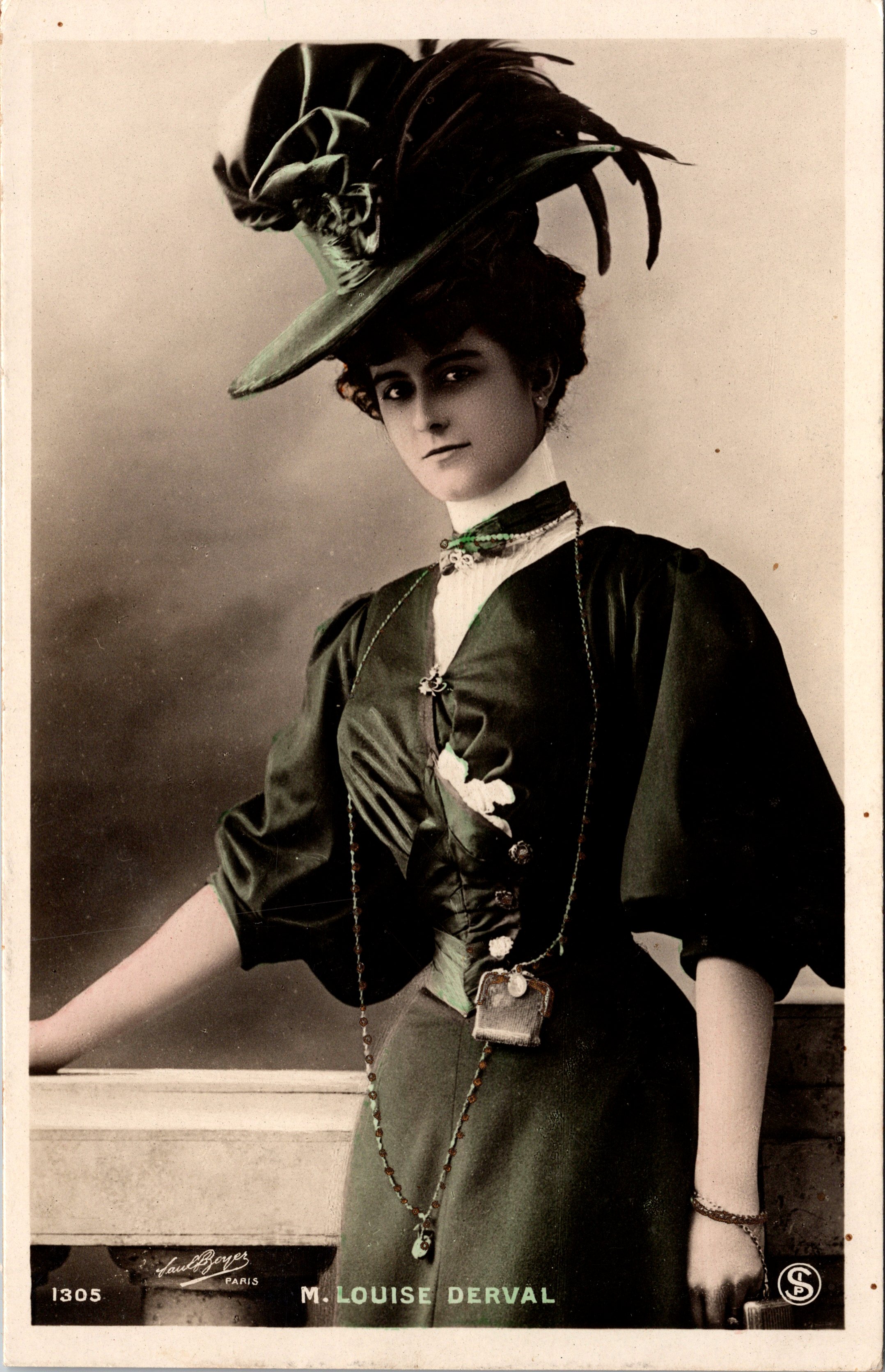
A young man wearing a three piece suit and bow tie, poses next to an American flag at an unidentified photo studio. This patriotic vintage real photo postcard has an AZO stamp box which indicates that the card dates back to sometime between 1910 and 1930. This postcard is in very good condition (see scans). SOLD
Published in: on October 8, 2020 at 2:05 pm  Comments (2)  

BETTY COMPSON : PROLIFIC AND PRETTY AMERICAN FILM ACTRESS : SITS IN SPORTS CAR

This vintage real photo postcard features American actress and film producer, Betty Compson (1897-1974). She was nicknamed “the prettiest girl in pictures”. Compson was born in a mining camp in Beaver, Utah. Her father was a mining engineer, a gold prospector, and grocery store owner. Her mother was a maid in hotels and private homes. Betty graduated from Salt Lake High School. She was hired as a violinist at age 16 in a theater in Salt Lake City. She then played in vaudeville touring companies and it was during this stint she was discovered by a film producer (Al Christie) who signed her to a contract. She began her career during Hollywoods’s silent film era. Her debut film was “Wanted, a Leading Lady” (1915). After this film, her career rocketed. She appeared in 25 film in 1916. All but one, were shorts. In 1918 she was offered a contract by studio head Mack Sennett. She rejected the offer because the salary was too low. She continued to make numerous short films until the middle of 1918. She was frequently paired with Roscoe “Fatty” Arbuckle. She started making only feature films. She became a rising star after appearing opposite Lon Chaney in “The Miracle Man” (1919). Paramount became interested in her and signed her to a five year contract. In 1921, Compson established her own production company in order to have creative control over screenplays and financing. The first movie she produced was “Prisoners of Love” (1921). After she completed acting in “The Woman With Four Faces” (1923), Paramount refused to give her a raise. She wanted an increase in her $2500 per week salary. Compson was angry enough at Paramount, to leave the company, and sign with a British film company. She made four films in England, two of them were films penned by Alfred Hitchcock. Paramount lured her back to Hollywood from England by offering her a top dollar contract. She then appeared in a movie by director, James Cruze. The pair married in 1924, but divorced four years later. The divorce from Cruze nearly ruined her financially because of debt accrued by Cruze. After Paramount did not offer her a contract renewal, she began freelancing in lower budget films. In 1928 she appeared in a “part talkie” called “The Barker”. She played a manipulative carnival girl. She was nominated for a “Best Actress” for this role by the Academy Awards. In 1929, she gained much recognition for her role in “The Docks of New York”. She played a suicidal prostitute. These two films resulted in her popularity returning to it’s previous high level. She appeared in many “talkie” films. Unlike a lot of silent film stars, Compson made a successful transition into sound films. In fact, she even appeared in a number of early musicals. When she played singing parts, her voice was dubbed. Her career flourished. In 1930, she appeared in 9 films. Her last “hit’ was in “The Spoilers”. Her costar was Gary Cooper. Her popularity waned and she only got roles in low budget, less successful studios. Her last film was in 1948. After retiring from her movie career, she started a cosmetic line and assisted her husband in a business named “Ashtrays Unlimited”. In total Compson was married three times. Her second marriage, to agent/producer Irving Weinberg ended in divorce after four years. Her third marriage was to a professional boxer. The marriage lasted 18 years and ended upon his death in 1962. She had no children. She died in 1974 after suffering a heart attack. She had much impact on the early movie industry. The IMDb reports 209 film credits between 1915 and 1948. This vintage postcard is in excellent condition (see scans). Take a look at the YouTube video below. The video features Betty Compson appearing in the silent film, “The Docks of New York” (1928). The music accompanying this video is obviously modern, but, in my opinion, it is excellent. Compson demonstrates incredible acting ability. Her facial expression and her eyes speak for her. SOLD

Betty Compson in “The Docks of New York” (1928)
Music: “Marry Me” By Dave Pagett and Viv Jones (Sax)

FIVE FEMALE JAPANESE MUSICIANS IN TRADITIONAL COSTUME (VINTAGE RPPC)

This vintage real photo postcard features five pretty female Japanese musicians and their instruments. The three women in the front row are playing percussion type instruments. The other two women are playing a flute and stringed instrument respectively. This is an early private postcard postmarked 1904. The postcard was mailed from Canada to Lexington, Massachusetts. It has both a Quebec and a Massachusetts postmark. (SOLD)

Published in: on October 6, 2020 at 12:00 pm  Leave a Comment  
Tags: , ,

PRETTY YOUNG WOMAN IN FLOWER DRESS IN NEWARK, NEW JERSEY (NINETEENTH CENTURY FLOWER CHILD)

A young woman, looks very pretty in her stunning dress, as she poses for her portrait at the Bazaar Photo Rooms in Newark, New Jersey. This trend setting fashionista is one of America’s first “flower children”. The dress has a pattern consisting of flowers and leaves. The cabinet card photograph was taken by studio operators  J. T. Creighton and Fred F. Mix. Their studio was located at 653 Broad Street in Newark and research reveals that they worked as partners in 1886. It appears that John Creighton was a sole operator between the rest of 1882 through 1889. SOLD

Published in: on October 5, 2020 at 3:00 pm  Comments (1)  
Tags: , , , ,