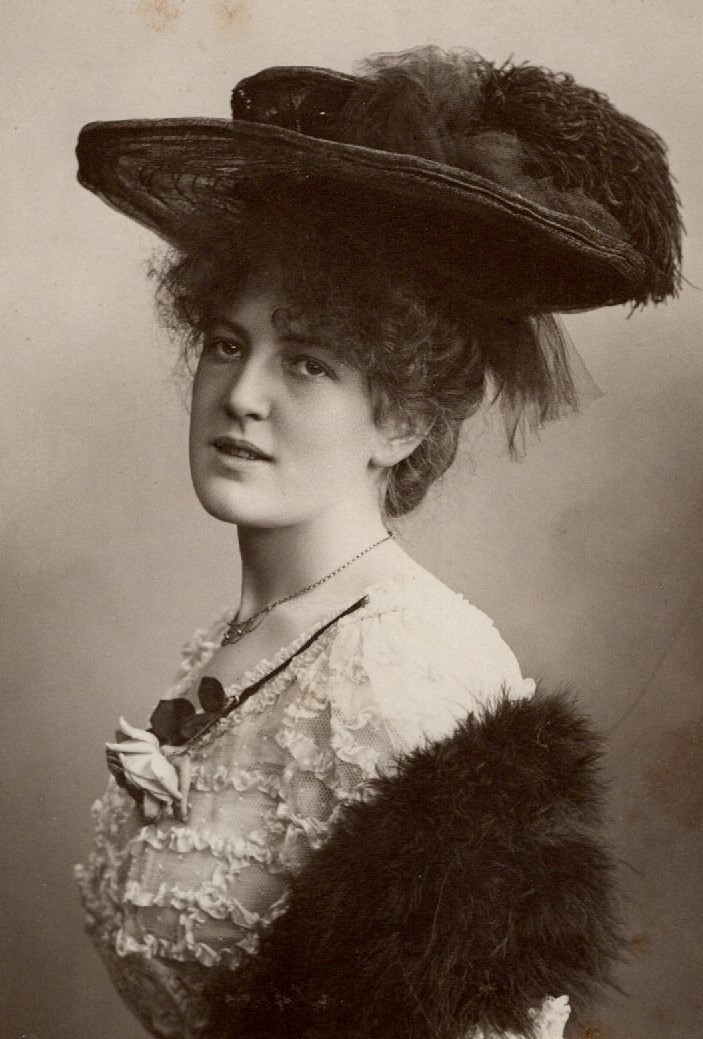
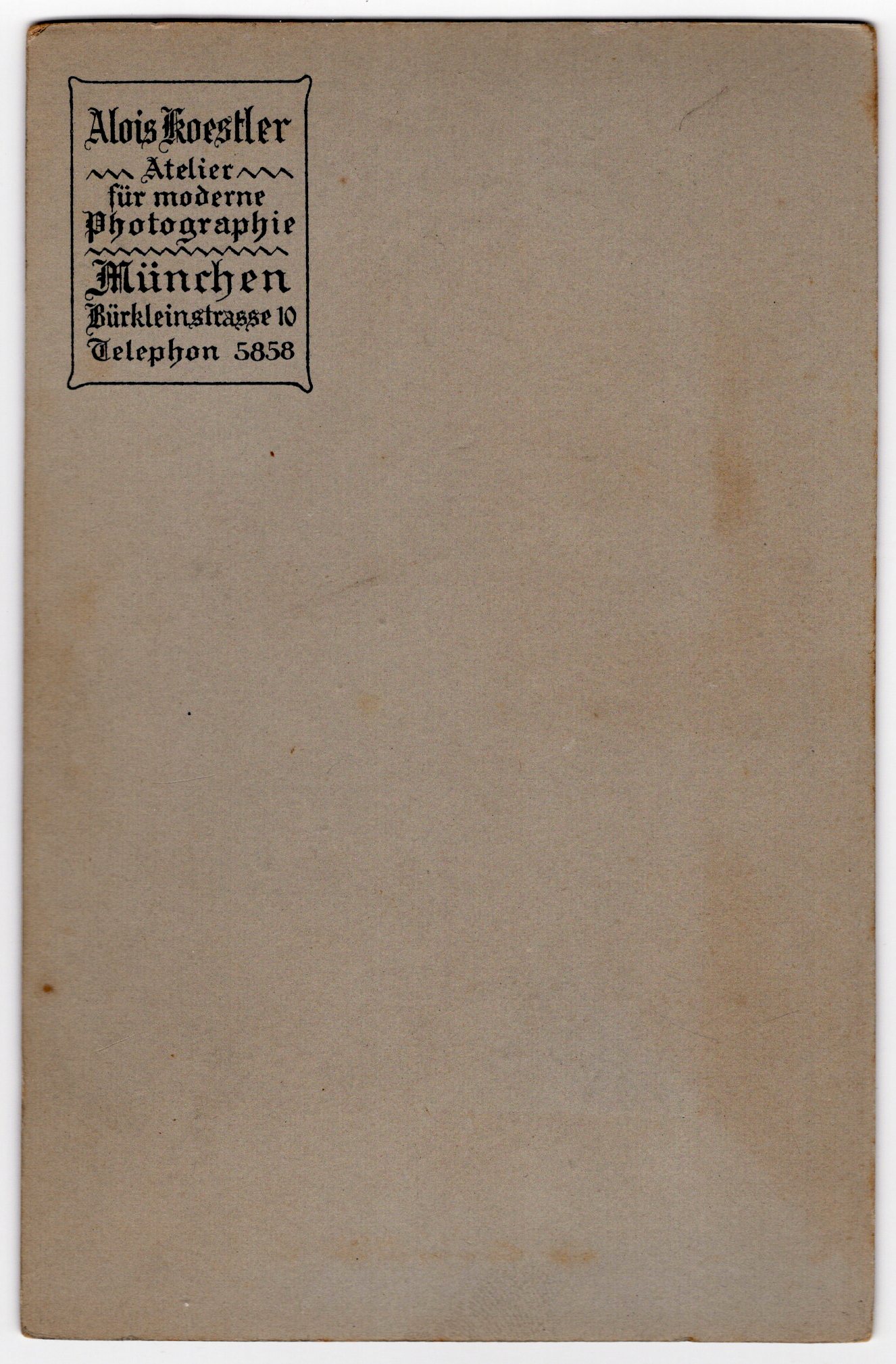
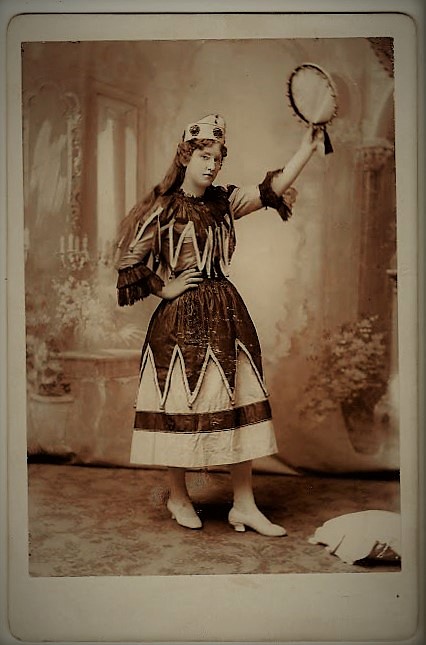
This cabinet card portrait features actress Gipsy Touzeau. She is pretty and she is an obscure performer. Information about her is not easily accessible. It would be interesting to do the research to discover more about her. This photograph of Touzeau was taken by the Ellis & Walery studio (London, England). Alfred Ellis was an active photographer between 1884 and 1899. He was a well regarded photographer who speciatlized in theatrical photography. He took photographs of individual performers, as well as whole scenes with multiple actors and actresses. Between 1890 and 1900, Ellis was joined by Stanislaw Julian Ignacy (aka Count Ostrong). The name “Walery” was adopted for professional purposes by his prominent photographer father. The younger Stanislaw kept the name. (SOLD)
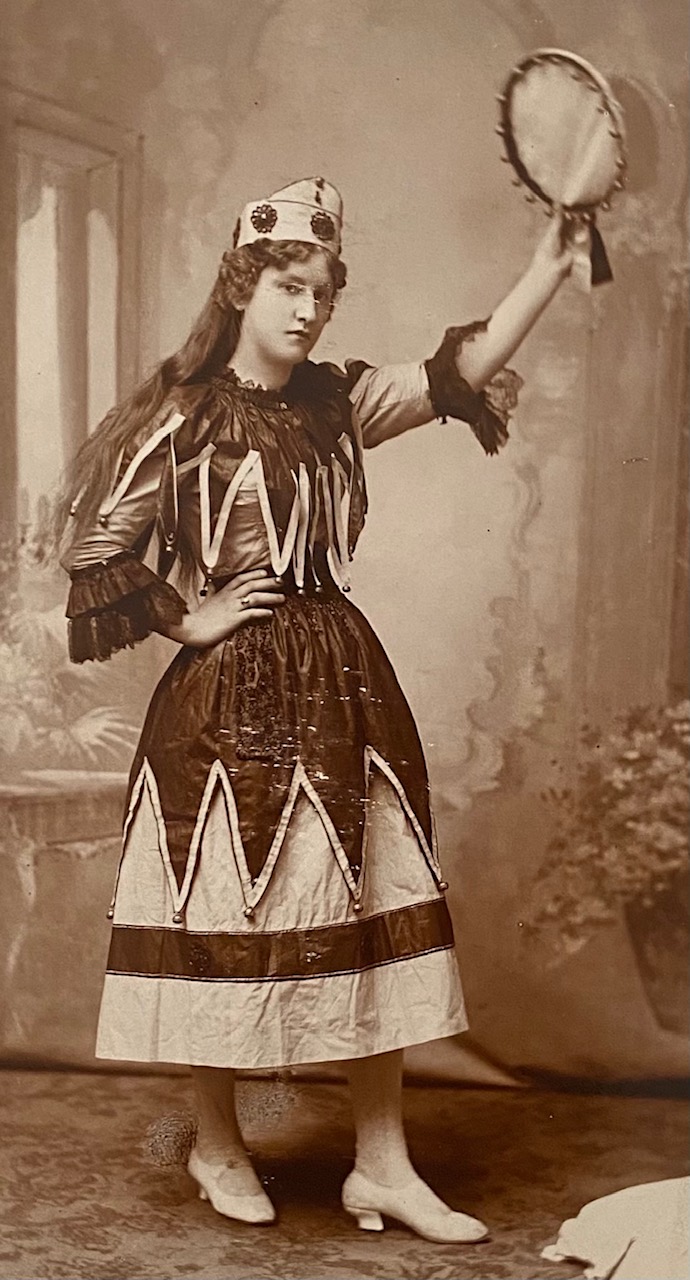
This cabinet card features a young woman dressed in a gypsy costume and waving a tambourine. Note her spectacles. The photographer and the studio’s location is unidentified. Close examination reveals slight scruffing on her dress just below her waist. (SOLD)
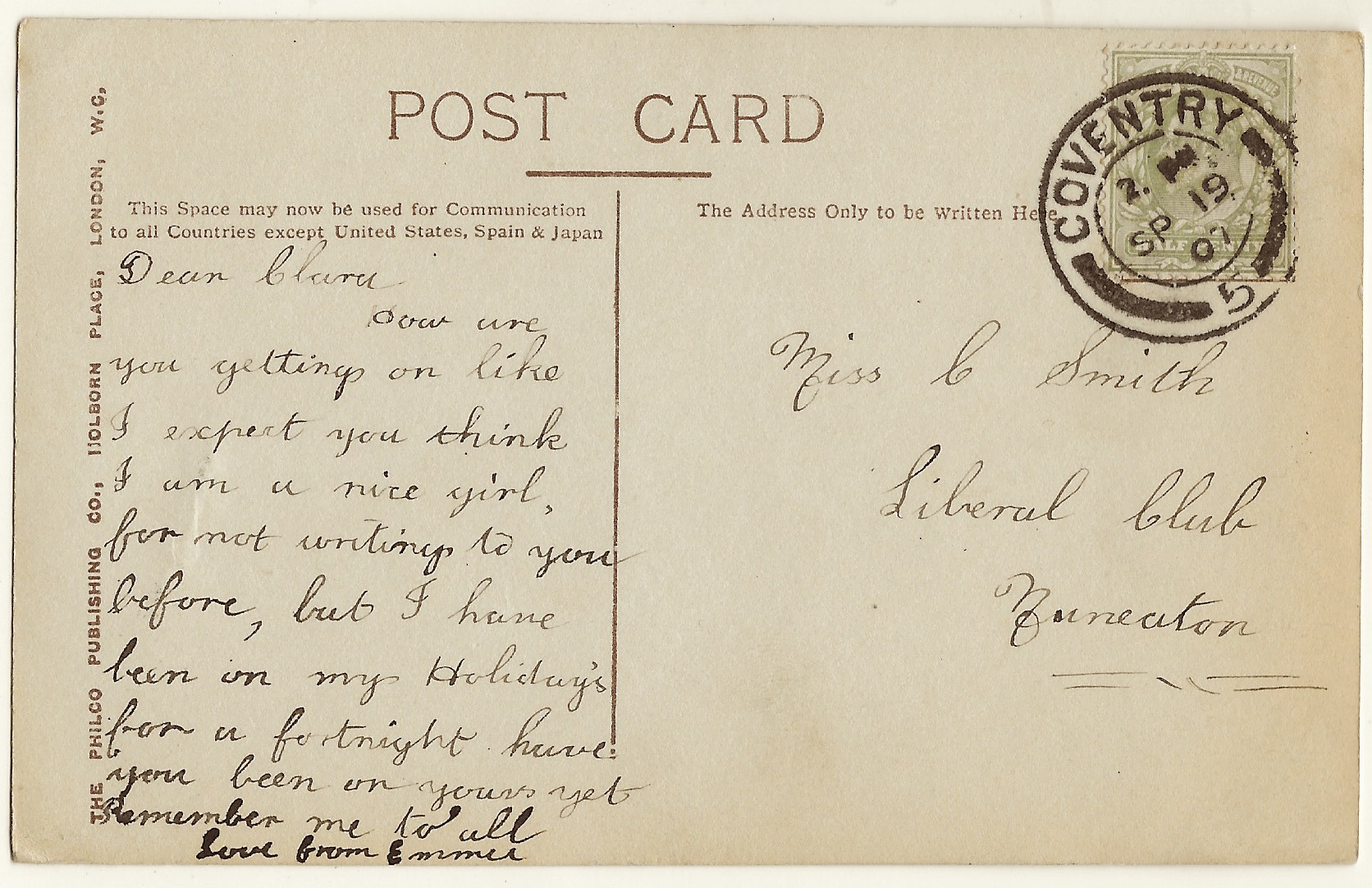
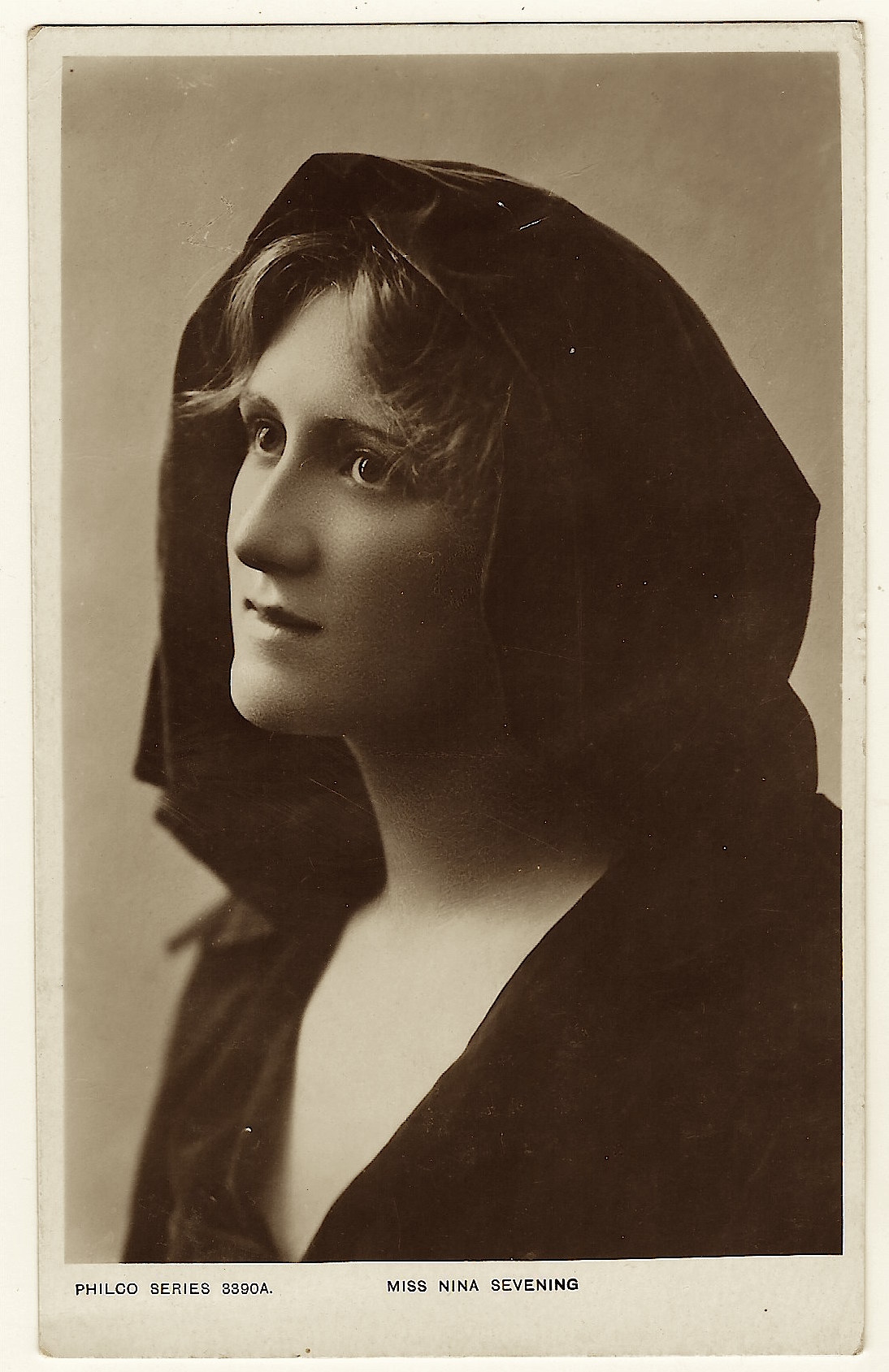
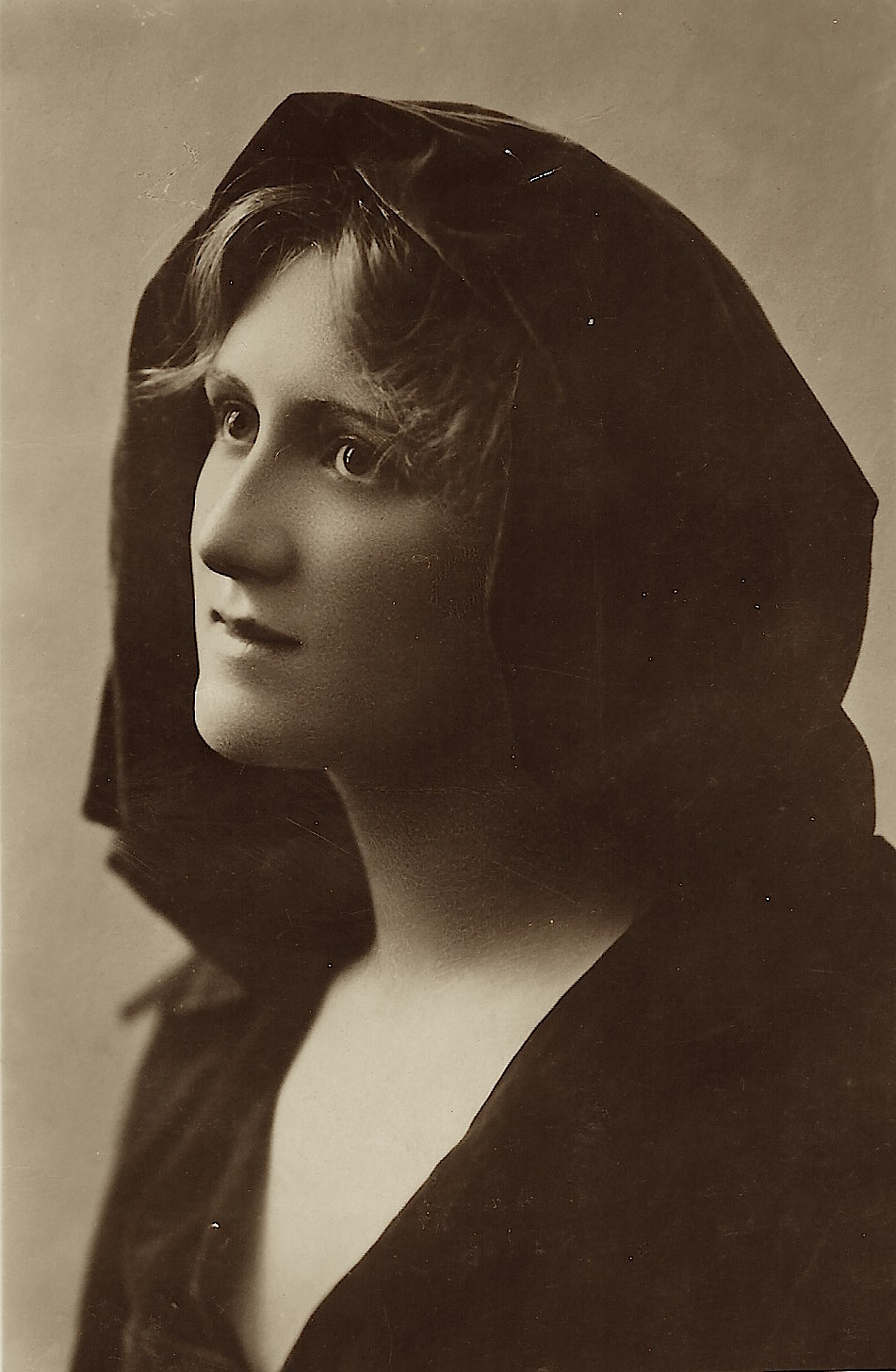
Postcard 1 features a portrait of beautiful English stage actress Nina Sevening (1885-1958). She was 22 years old at the time of this photo. Miss Sevening began her stage career as a child in 1894. She became a major theater actress, singer, and light comedienne. Some of her credits include “Three Little Maids” (1903), “The Merry Widow” (1907), and Peter Pan (1913). Nina Sevening retired from the stage in 1917. The postcard image of Miss Sevening, seen in Postcard 1 is uncommon. It was produced by London’s Philco Publishing Company as part of a series (no. 3390A). The message on the postcard is timeless. The writer, who was on vacation, apologizes for not writing sooner. The postcard was postmarked in Coventry, England in 1907. SOLD
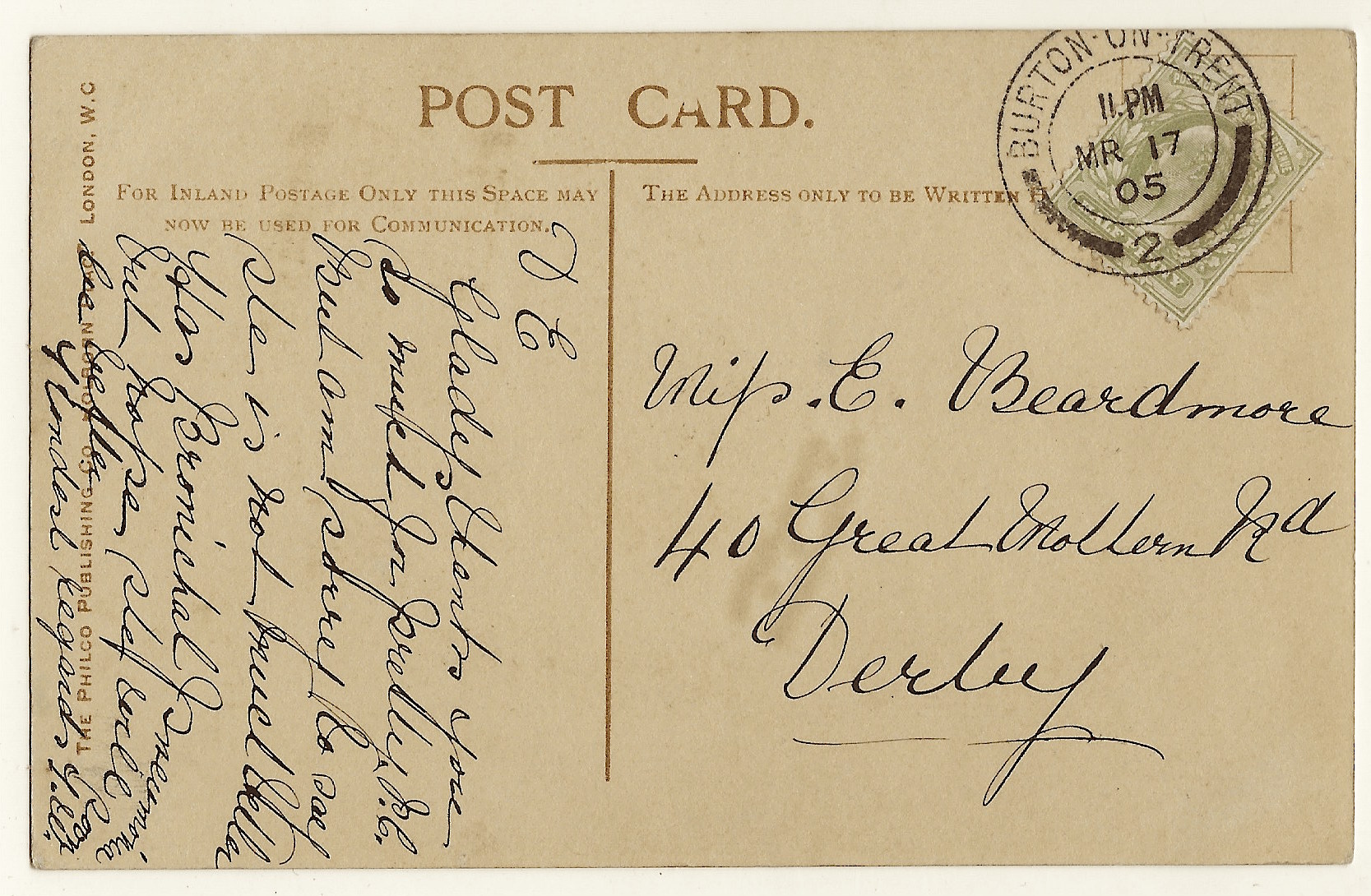
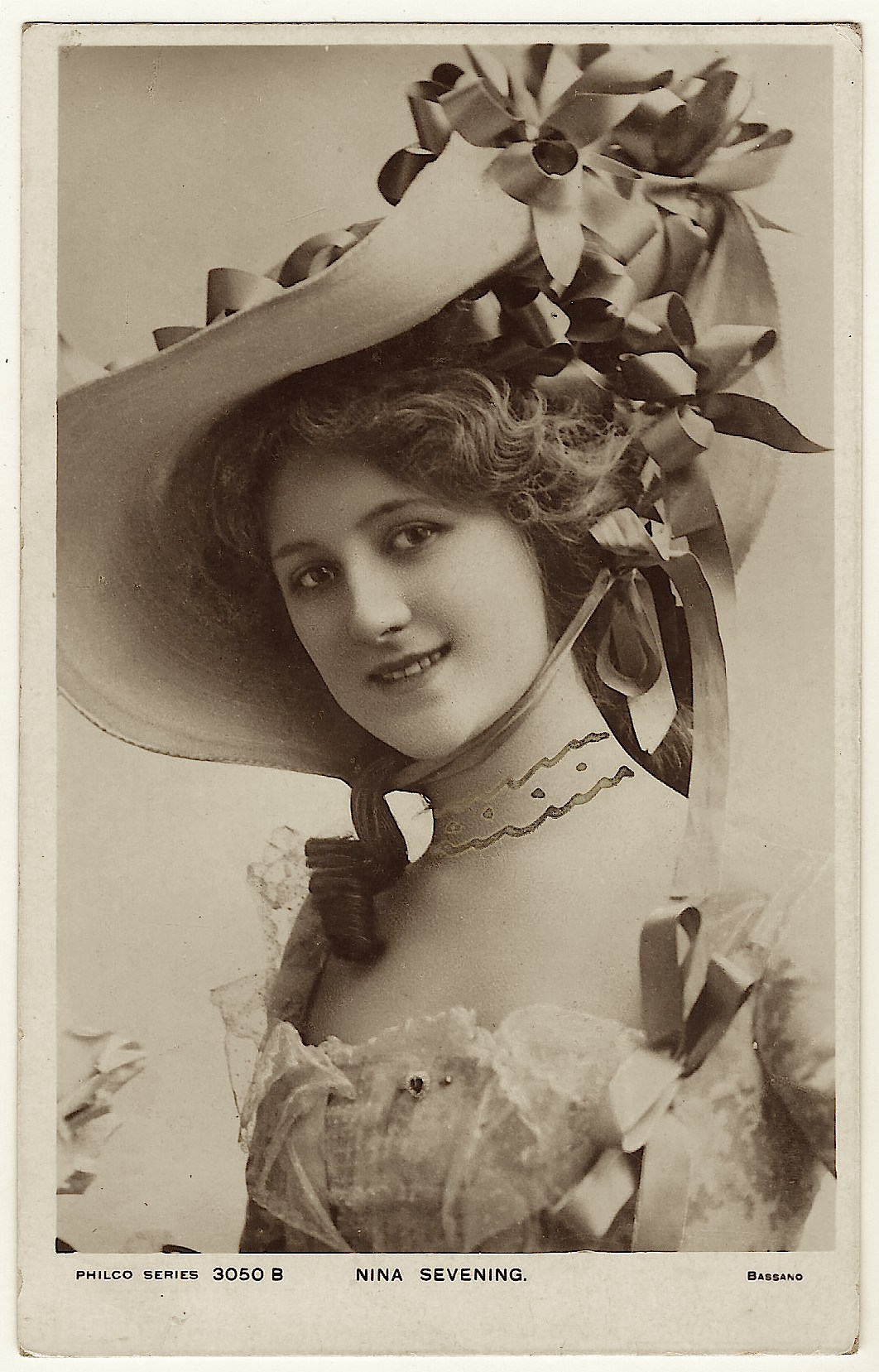
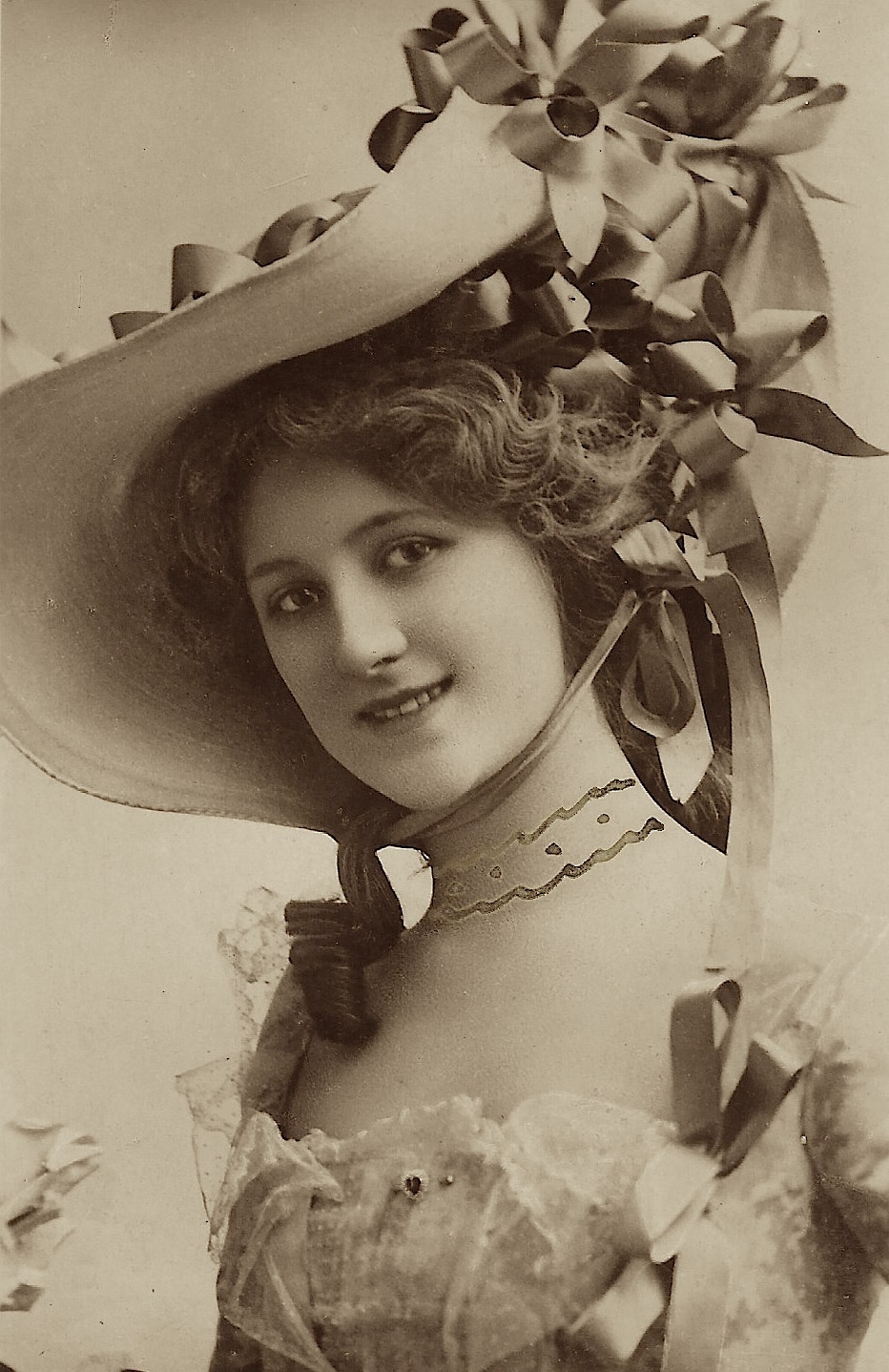
Postcard 2 features another beautiful image of the 20 year-old Miss Sevening. She is wearing a large hat which can be best described as “busy”. Once again, Philco is the publisher and the card is part of a series (no. 3050 B). The photographer is Bassano (1829 –1913). He was a leading royal and high society photographer in Victorian London. The postmark on the postcard is from Burton on Trent and is dated 1905. The writer of Postcard 2 starts the message with a thank you for a “pretty postcard” that was received from the addressee (Gladys). The writer also reports on the condition of someone who was fighting “bronchial pneumonia”. SOLD
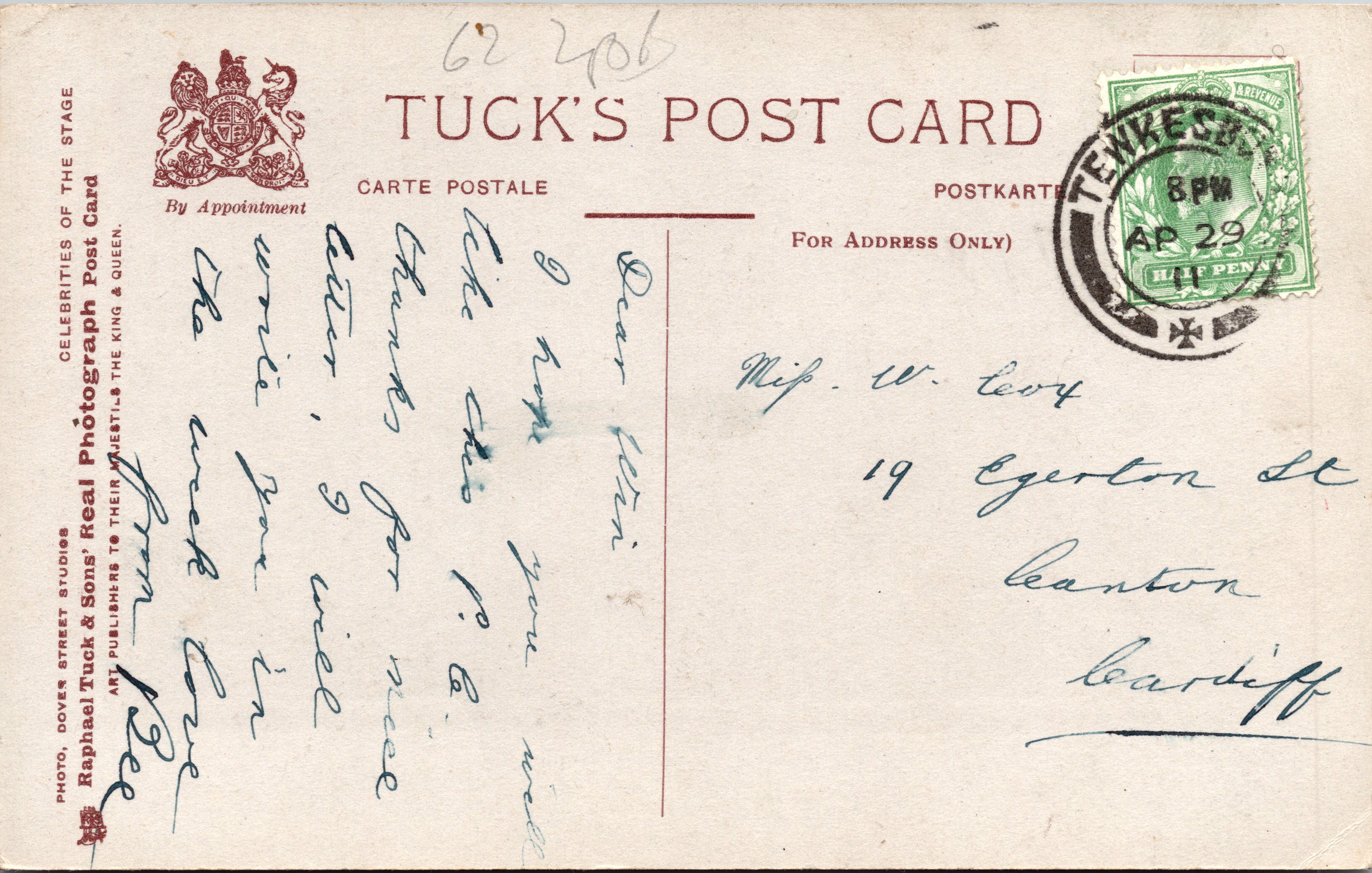
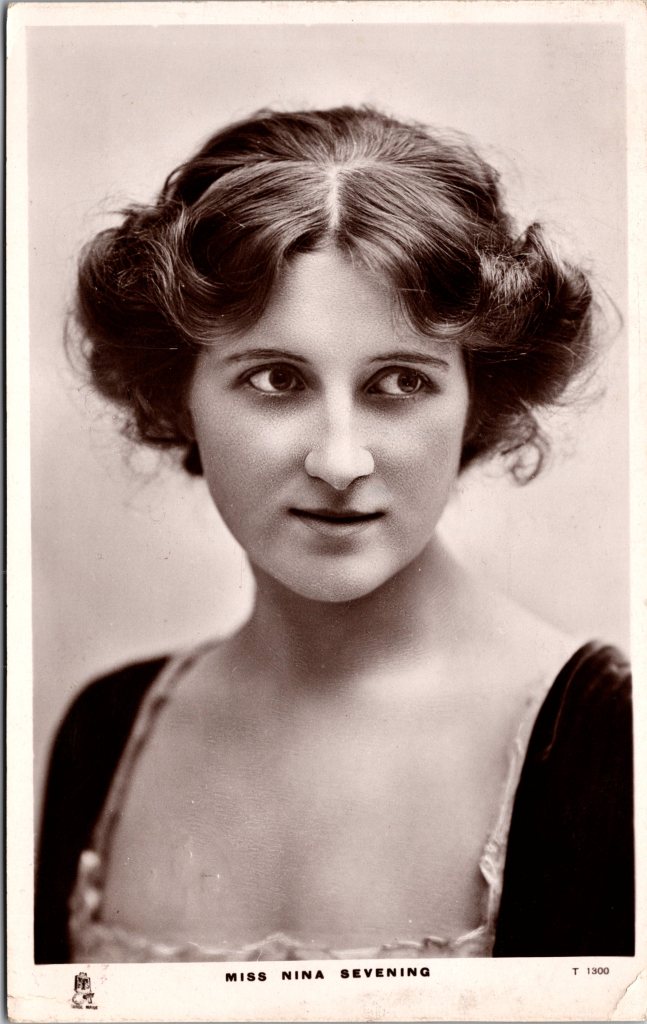
Postcard 3 was published by Raphael Tuck & Sons as part of the “Celebrities of the Stage” series (No.T 1300). Raphael Tuck and his wife started their photography business in 1866 in London. Their store sold pictures, greeting cards, and in time, postcards. Their success came from the sale of postcards during the late 1890’s and early 1900’s.Three of Tuck’s four sons participated in the business. Miss Sevening’s photograph was taken by the Dover Street Studios. The studio was active between circa 1906 and circa 1912. The gallery specialized in taking theatrical portraits and was located in London, England. This postcard is received its postmark in 1911. SOLD
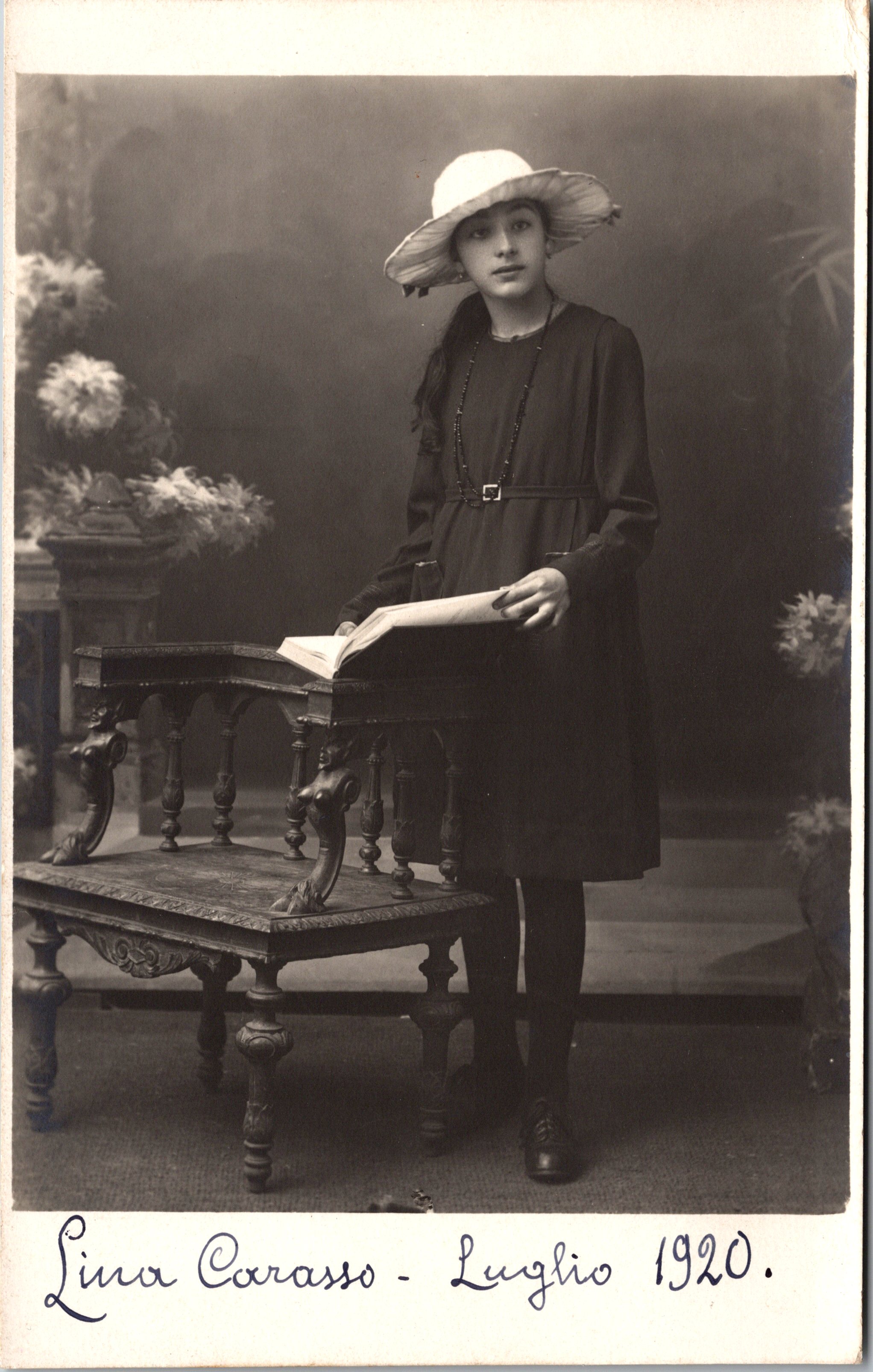
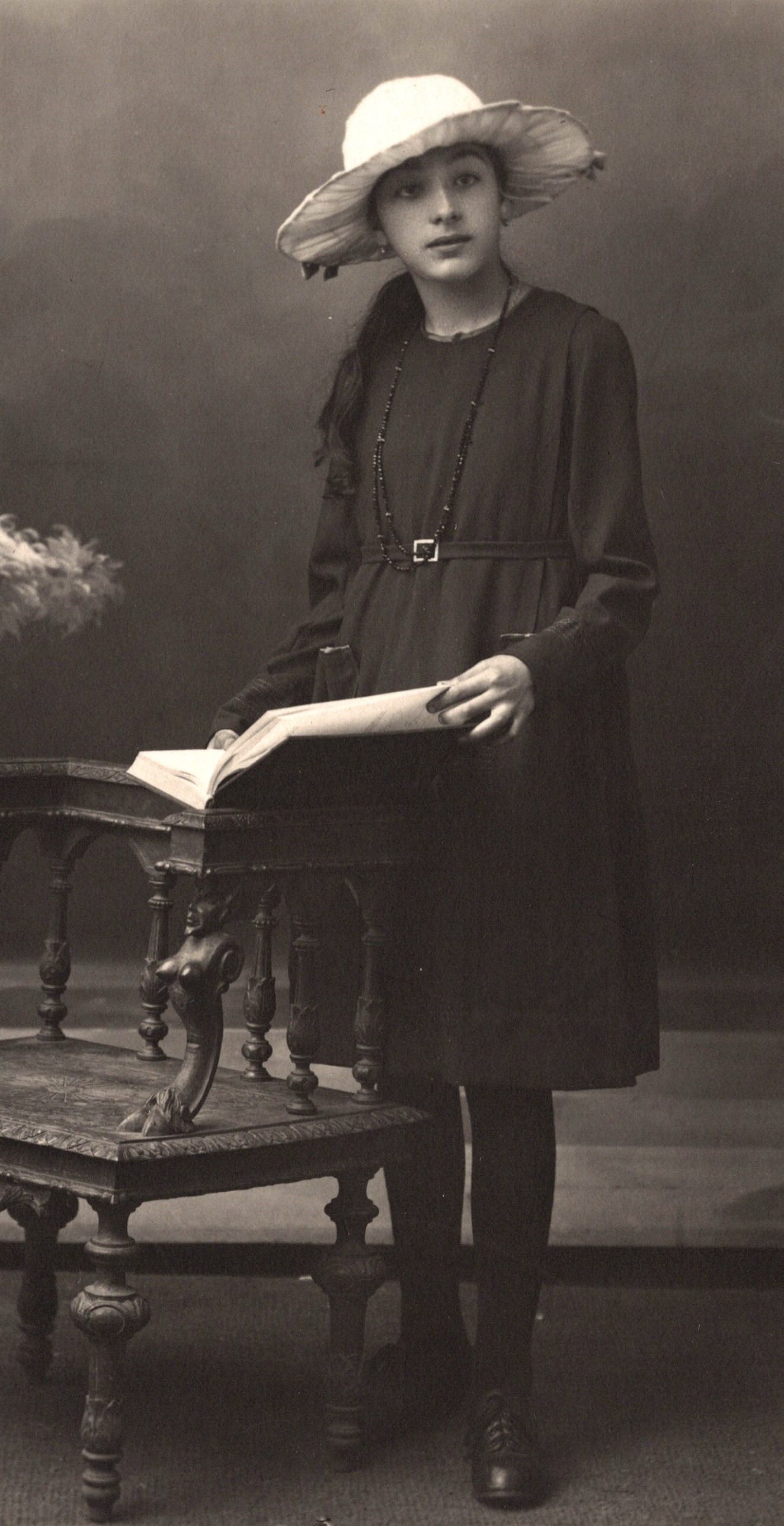
This vintage real photo postcard features a fashionable teenage girl posing for her photographic portrait at A. Cara’s studio in Fassano, Italy. The girl is resting an open book on the back of a chair. She is identified as Lina Carasso. Her portrait was taken in July, 1920. This real photo postcard is in very good condition (see scans). (SOLD)
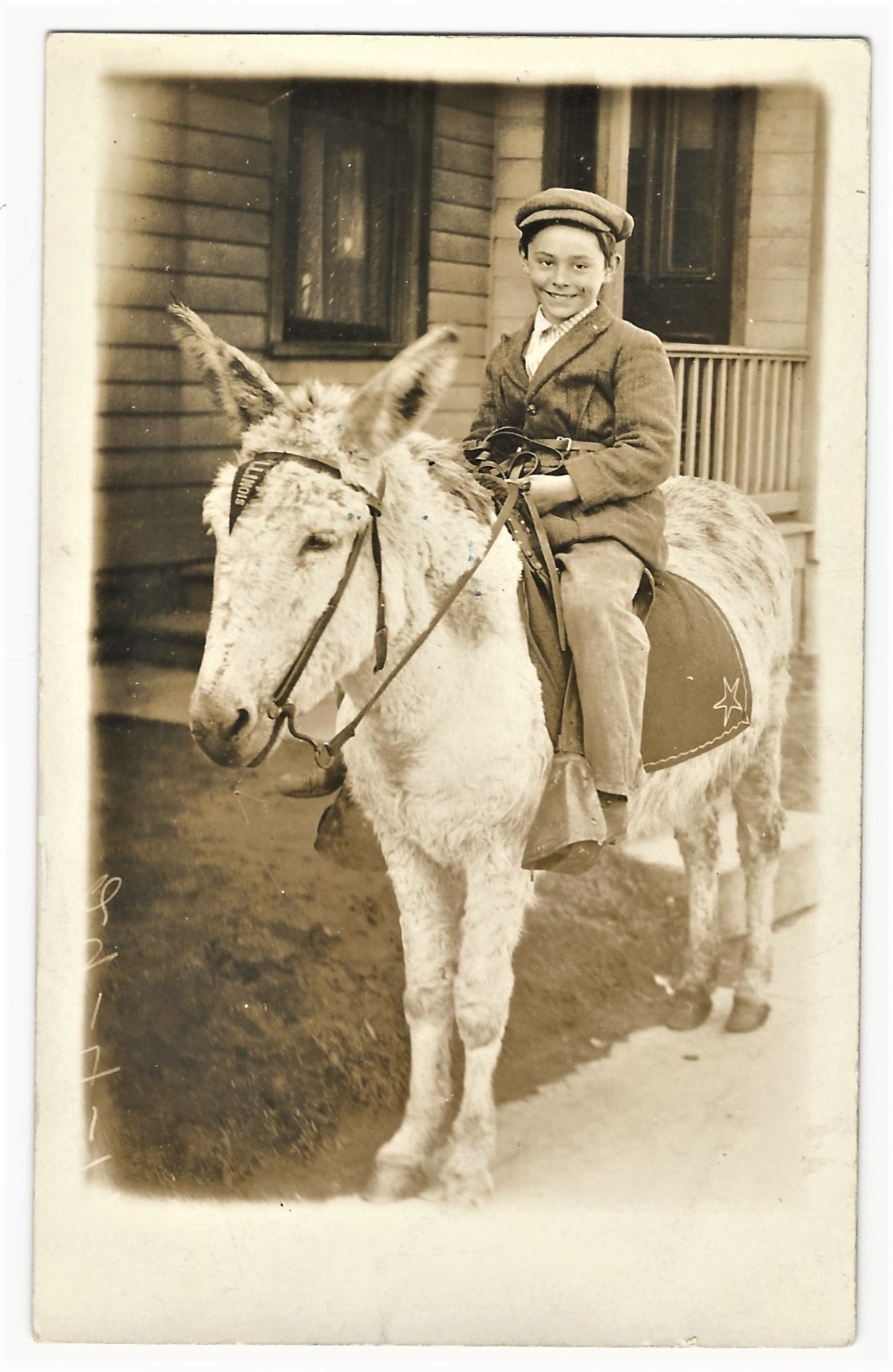
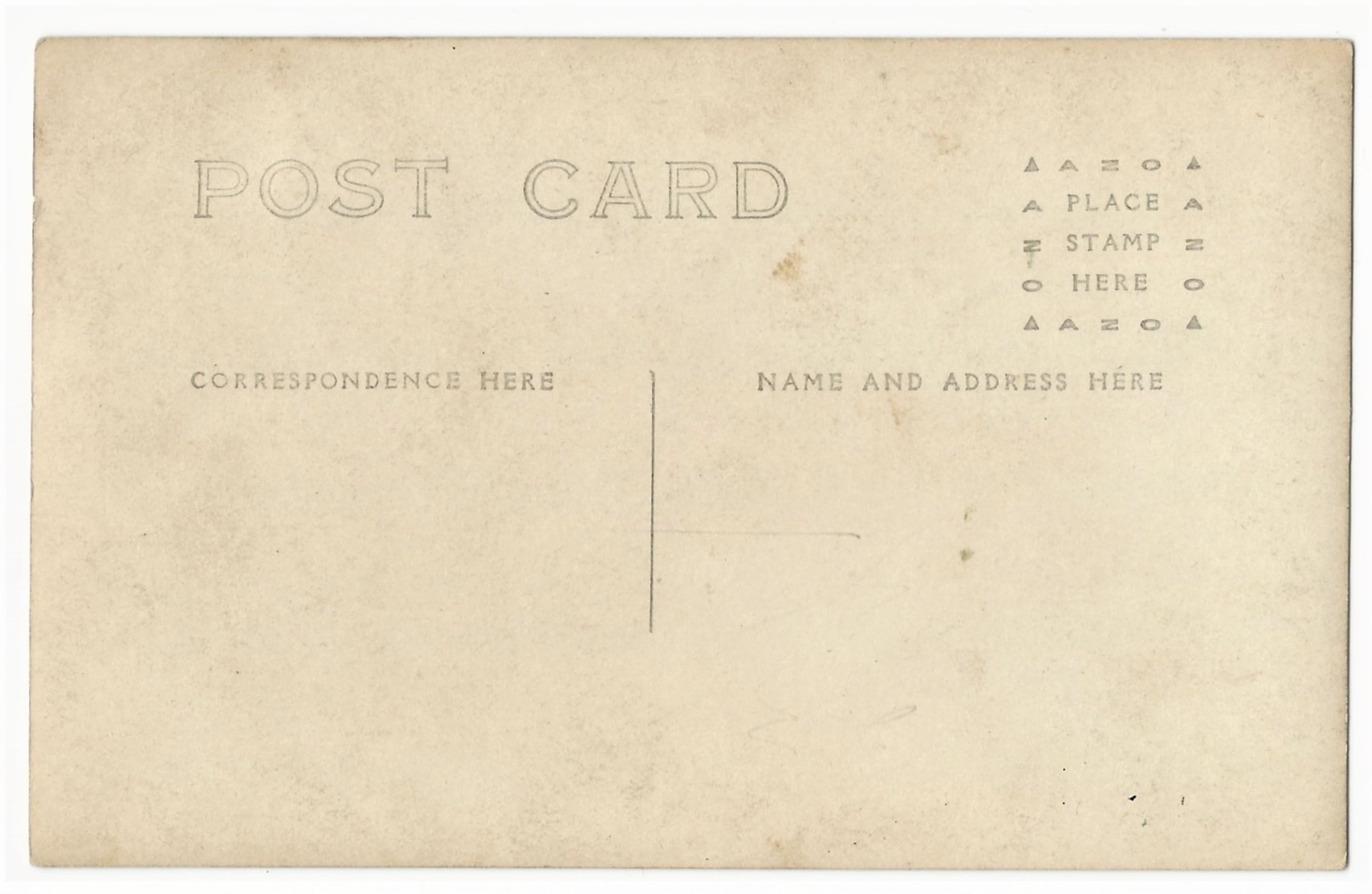
This vintage real photo postcard provides a “feel good” impact on it’s viewers. A young well-dressed boy rides a tired looking donkey and he is wearing a smile that extends from ear to ear. He seems to be having the time of his life and his smile is infectious. A nice smile serves people well in life. Marilyn Monroe must have been in agreement about the importance of smiling when she said “A smile is the best makup any girl can wear”. Note that the donkey has a pennant hanging on his forehead. The pennant has “Illinois” printed on it. We can probably posit that this photo was taken in the “Land of Lincoln” (Illinois). This postcard has an “AZO” stamp box indicating that it was produced sometime between 1904 and 1918. The postcard is in very good condition (see scans).
Buy this Vintage Real Photo Postcard (includes shipping within the US) #3144
To purchase this item, click on the Pay with PayPal button below
$21.39
product Buy this Vintage Real Photo Postcard (includes International shipping outside the US) #3144
To purchase this item, click on the Pay with PayPal button below
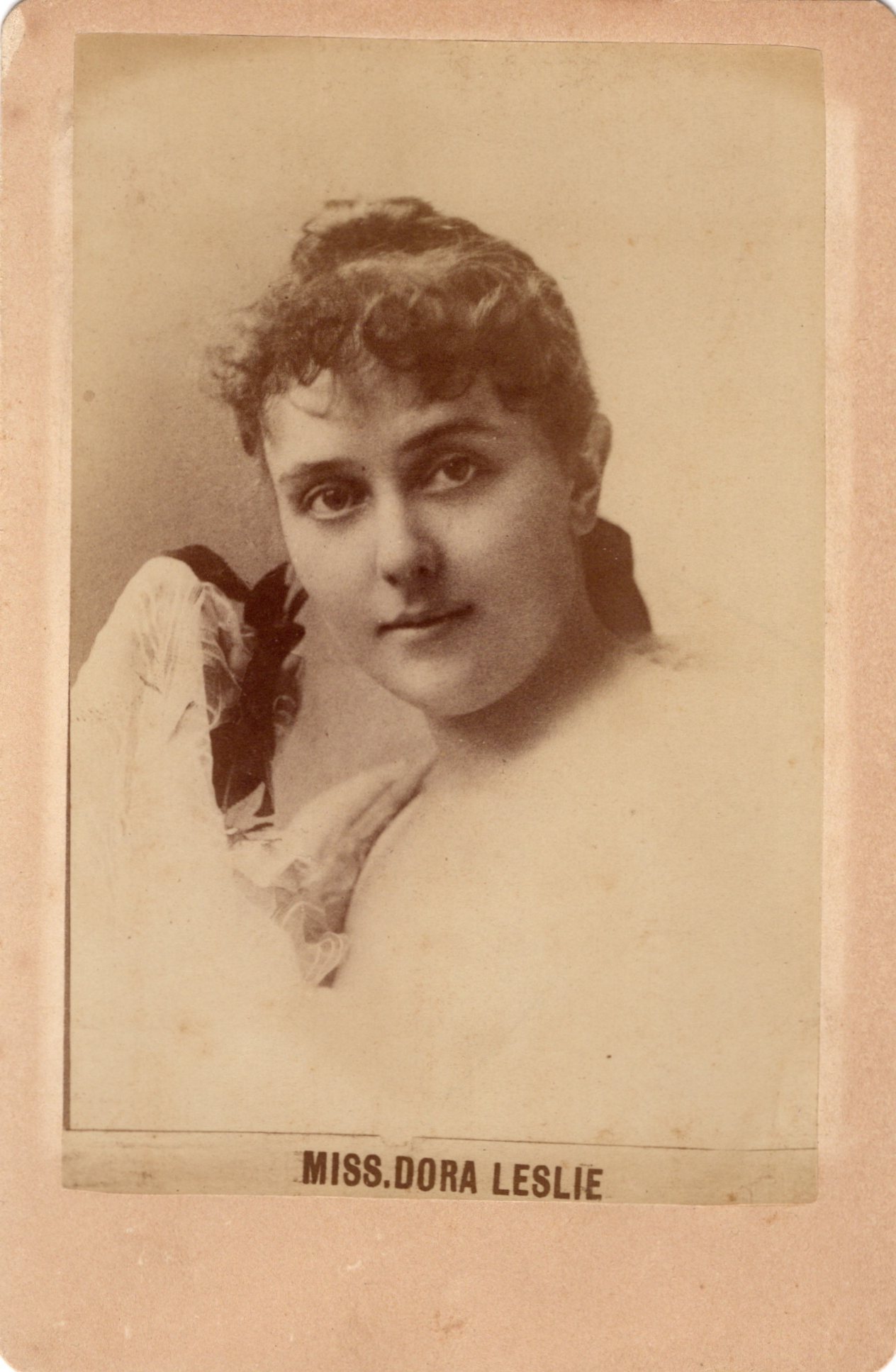
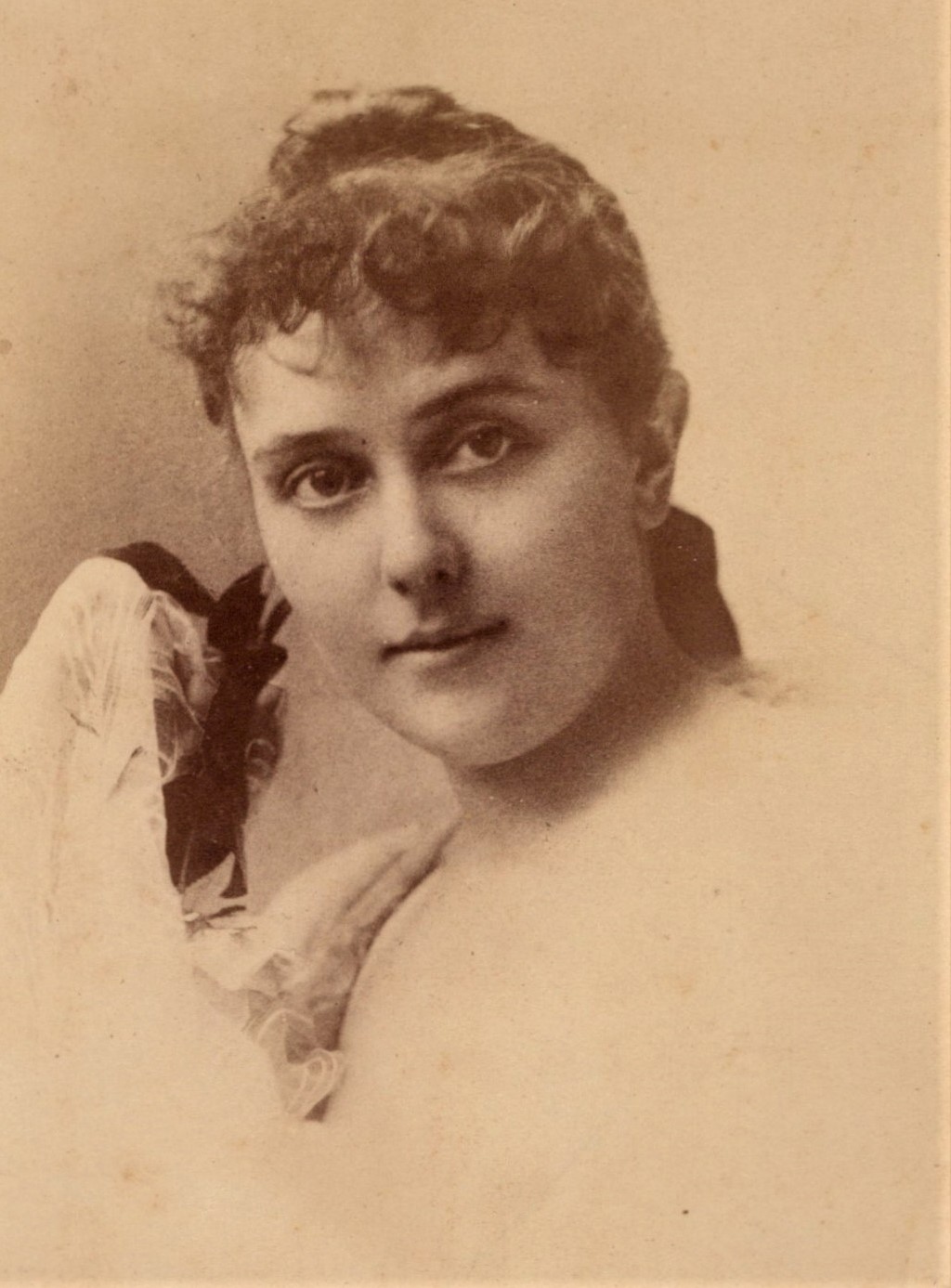
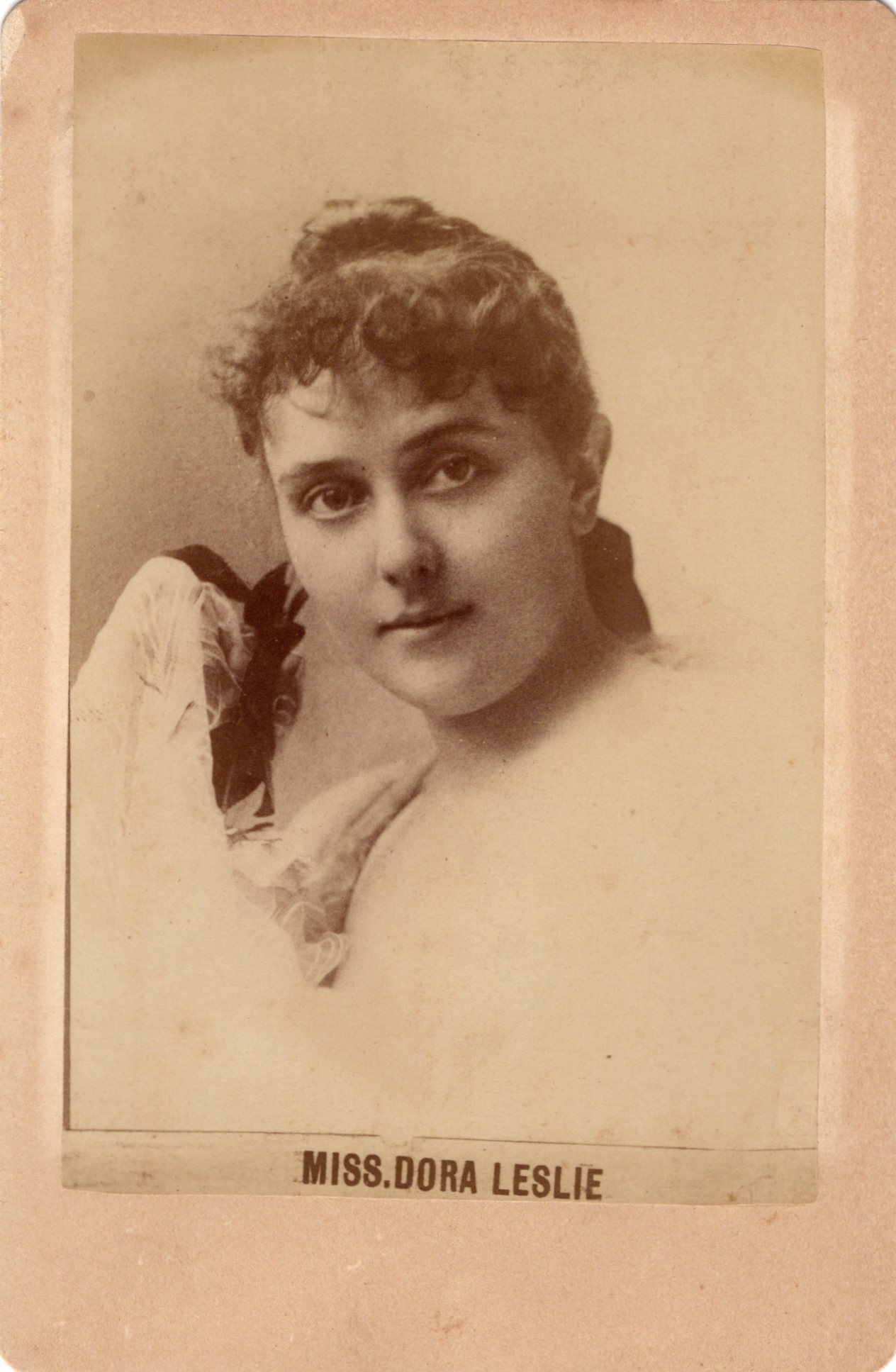
Dora Leslie was a theatre actress whose career included Broadway appearances. In 1887 she was appearing in “Lord Chumly” in Boston and wanted to leave the production because she felt her role was too small and offered little opportunity. A fifteen year old replacement was sent by Daniel Frohman; her name was Maude Adams and she went on to great fame. Leslie is mentioned in the New York Times for appearing in “The Marquis” (1889) and in a play inspired by a Mark Twain story (1890). The photographer who produced this cabinet card portrait of Leslie, is unknown. This cabinet card portrait is in good condition (see scans).
Buy this Cabinet Card (includes shipping within the US) #3762
To purchase this item, click on the Pay with PayPal button below
$28.39
Buy this Cabinet Card Photograph (includes International shipping outside the US) 3762
To purchase this item, click on the Pay with PayPal button below
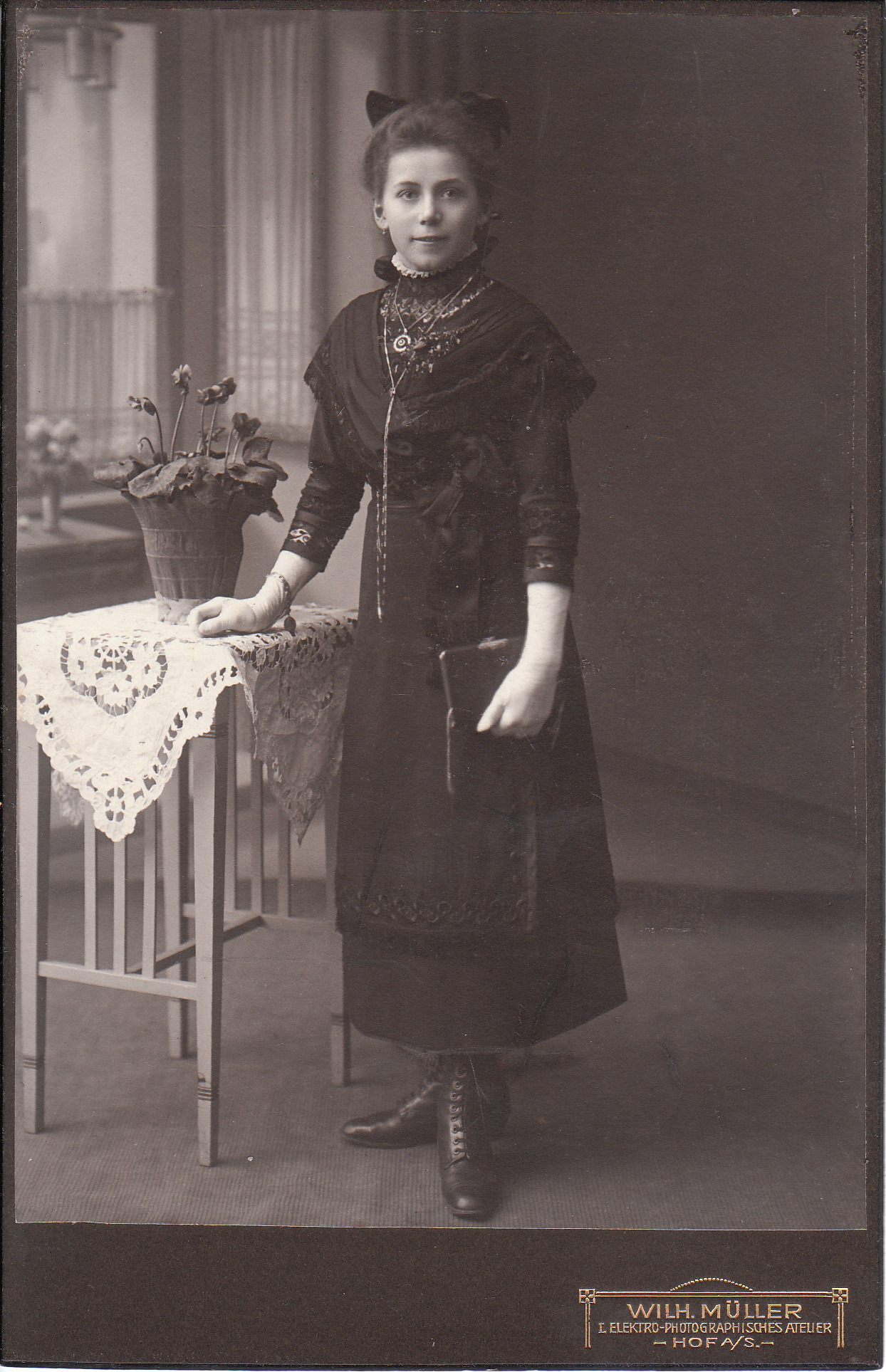
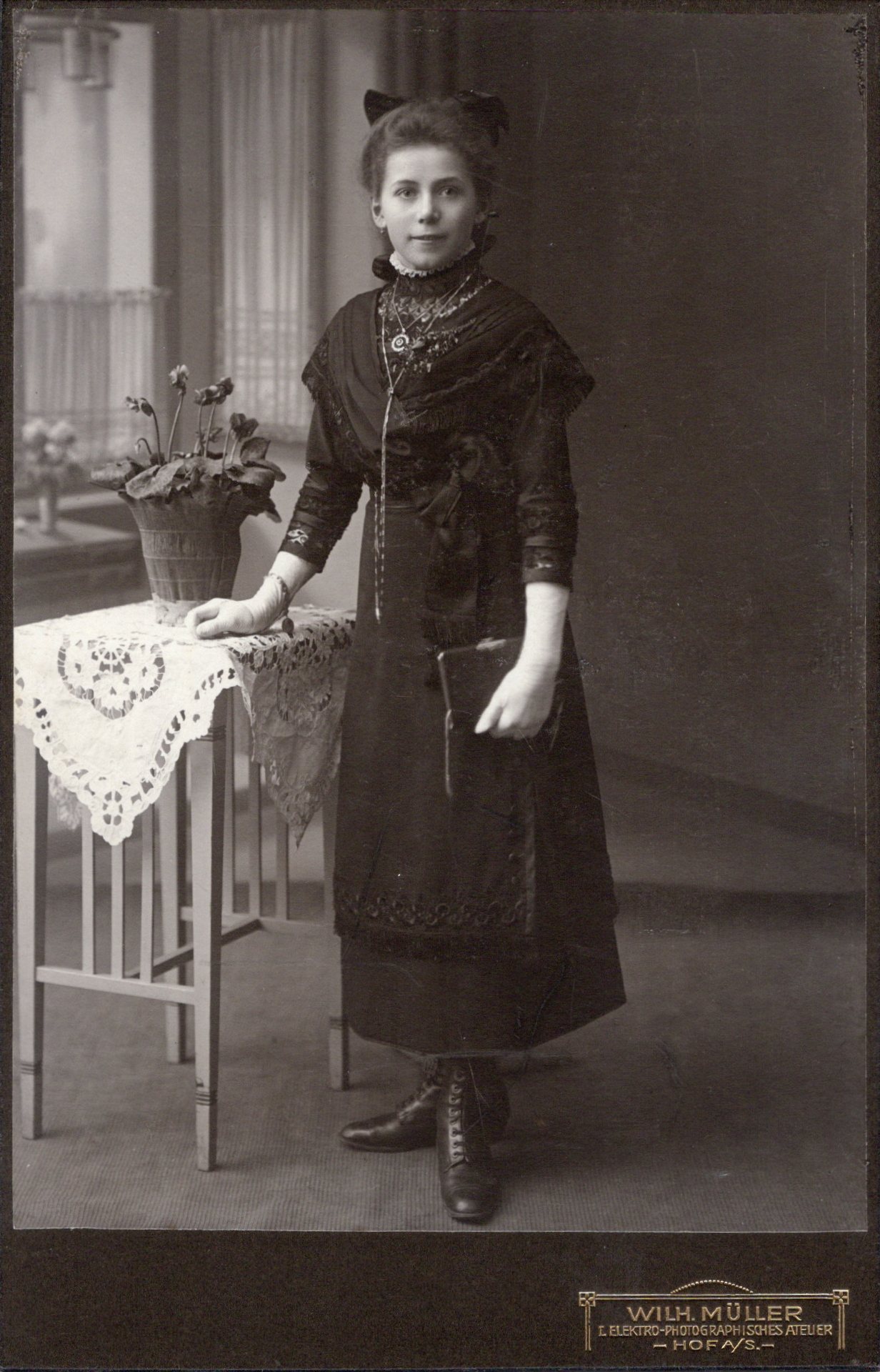
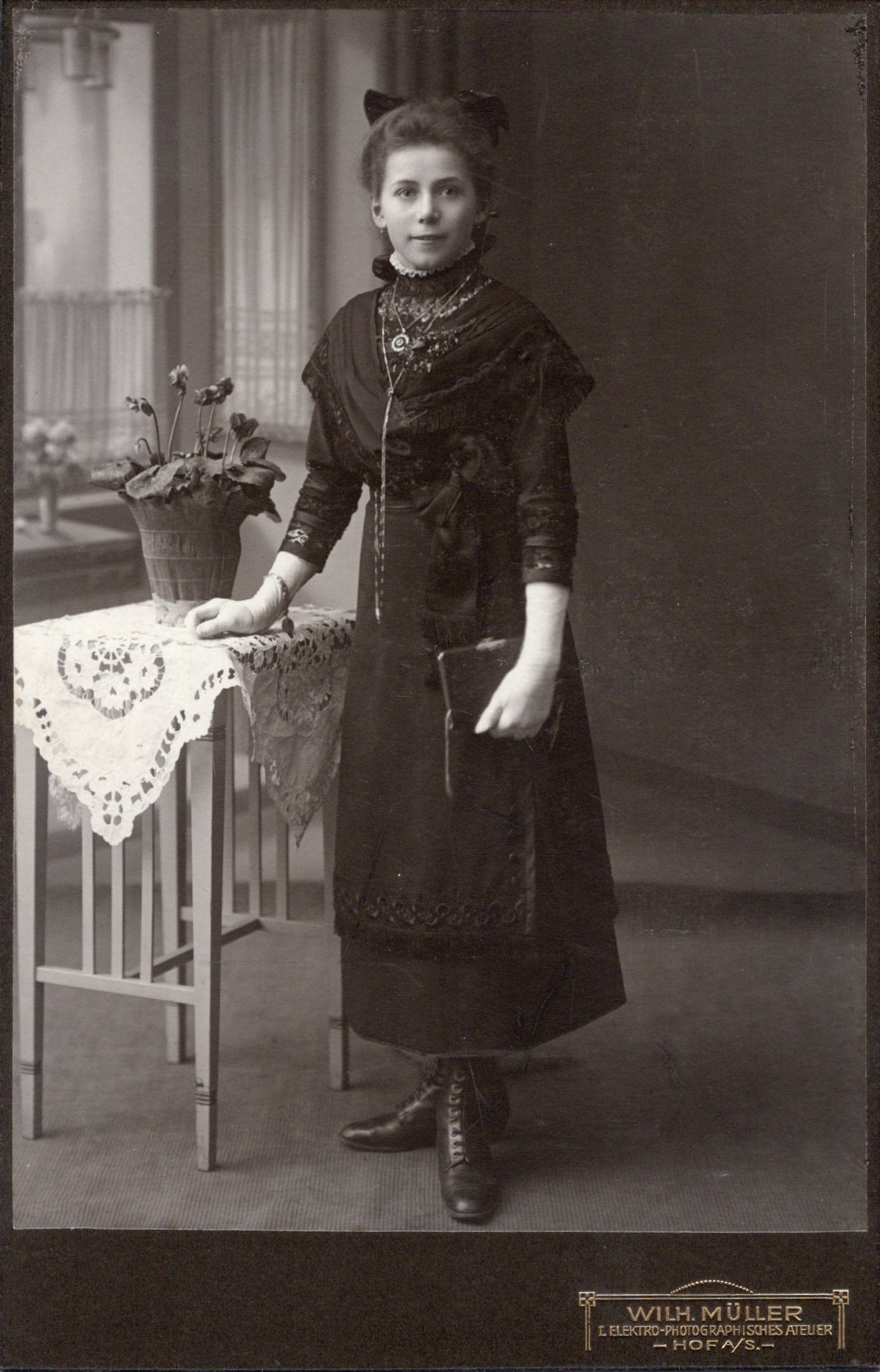
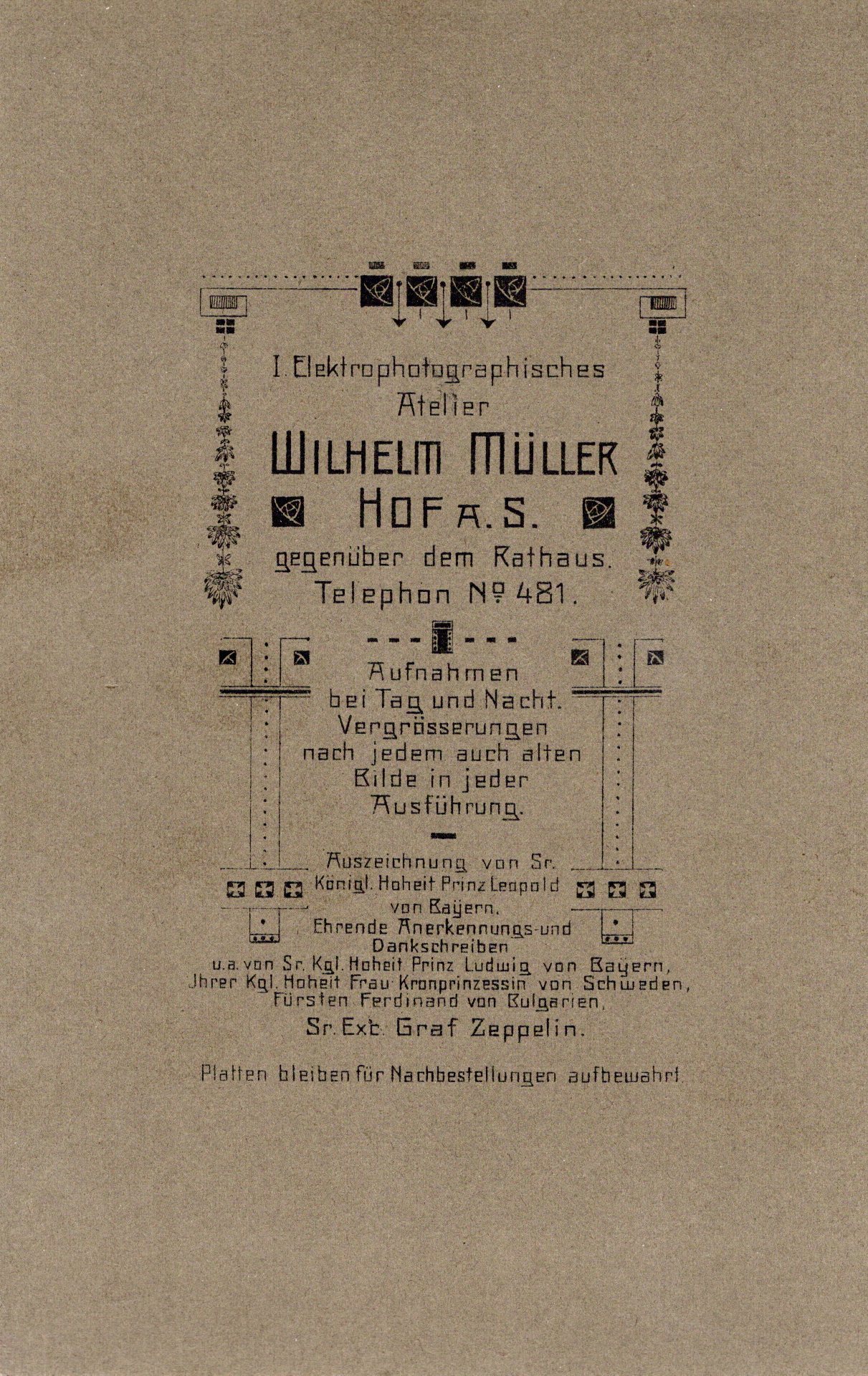
A pretty girl poses for her portrait at the Wilhelm Muller studio in Hof, Germany. Hof is a city in Bavaria, Germany. The city is located near the border with Czechoslovakia. This photograph may be a confirmation or communion picture. She appears to be a teenager and is very nicely dressed. She is wearing two necklaces, earrings, and a bracelet with a charm. She is also wearing a bow in her hair. She is holding something in her left hand, and what it is, isn’t exactly clear. The object appears to be a book or a purse. Perhaps a cabinet card gallery visitor can identify what it is that she is holding. One thing that is certain is that the girl in this photograph has a wonderful smile. This cabinet card portrait is in very good condition (see scans).
Buy this Cabinet Card (includes shipping within the US) #3761
To purchase this item, click on the Pay with PayPal button below
$51.00
Buy this Cabinet Card Photograph (includes International shipping outside the US) 3761
To purchase this item, click on the Pay with PayPal button below
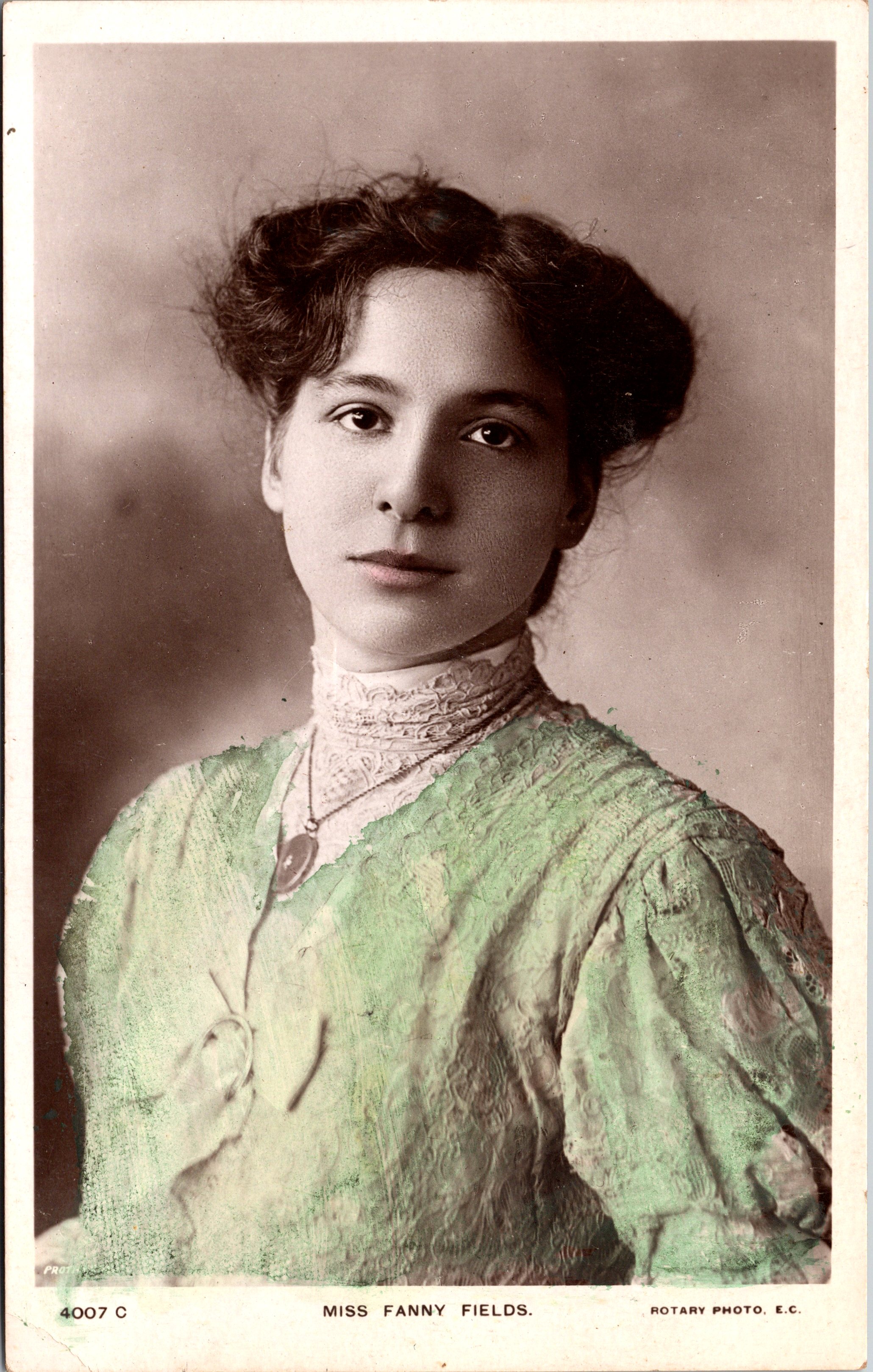
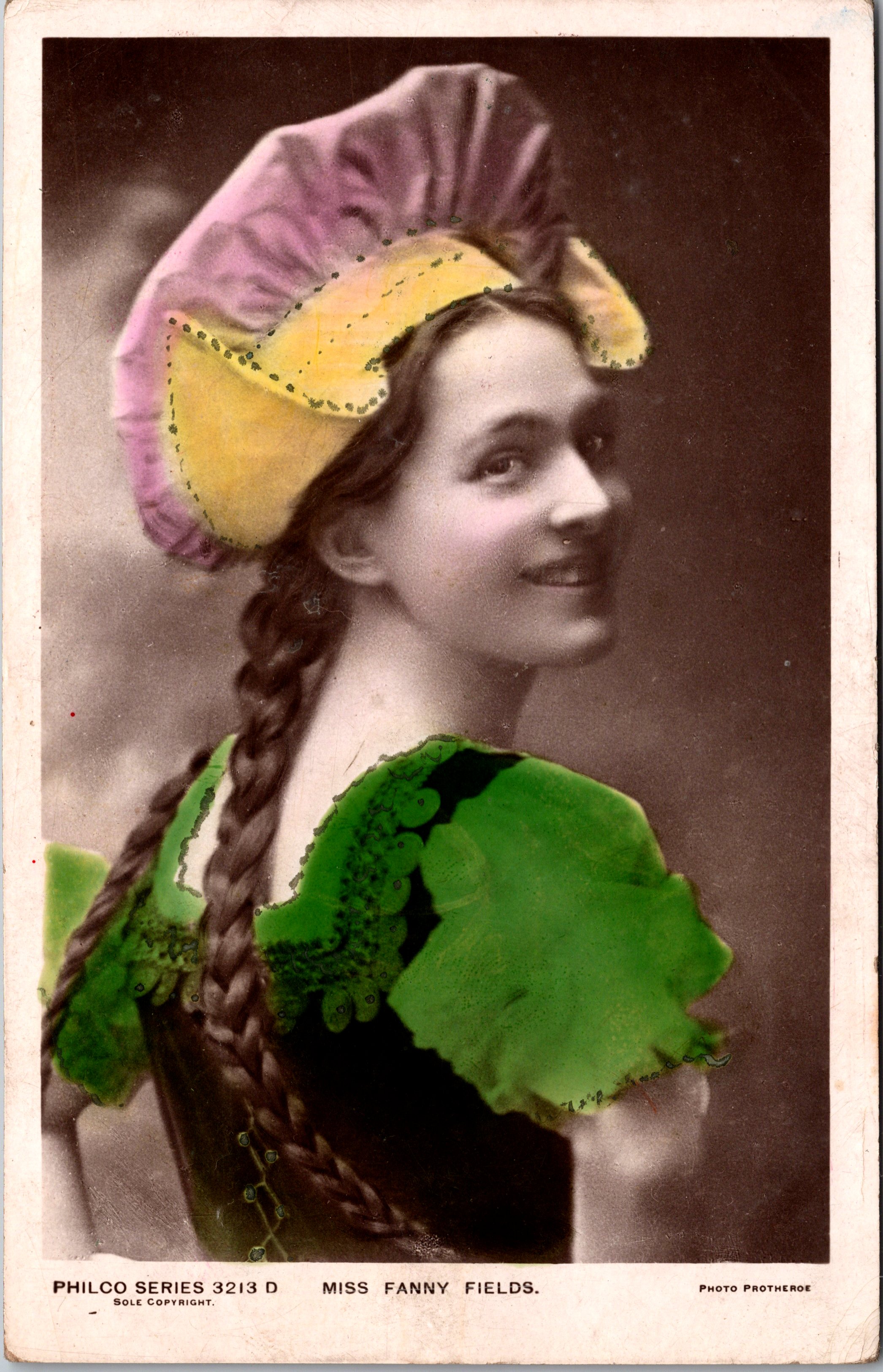
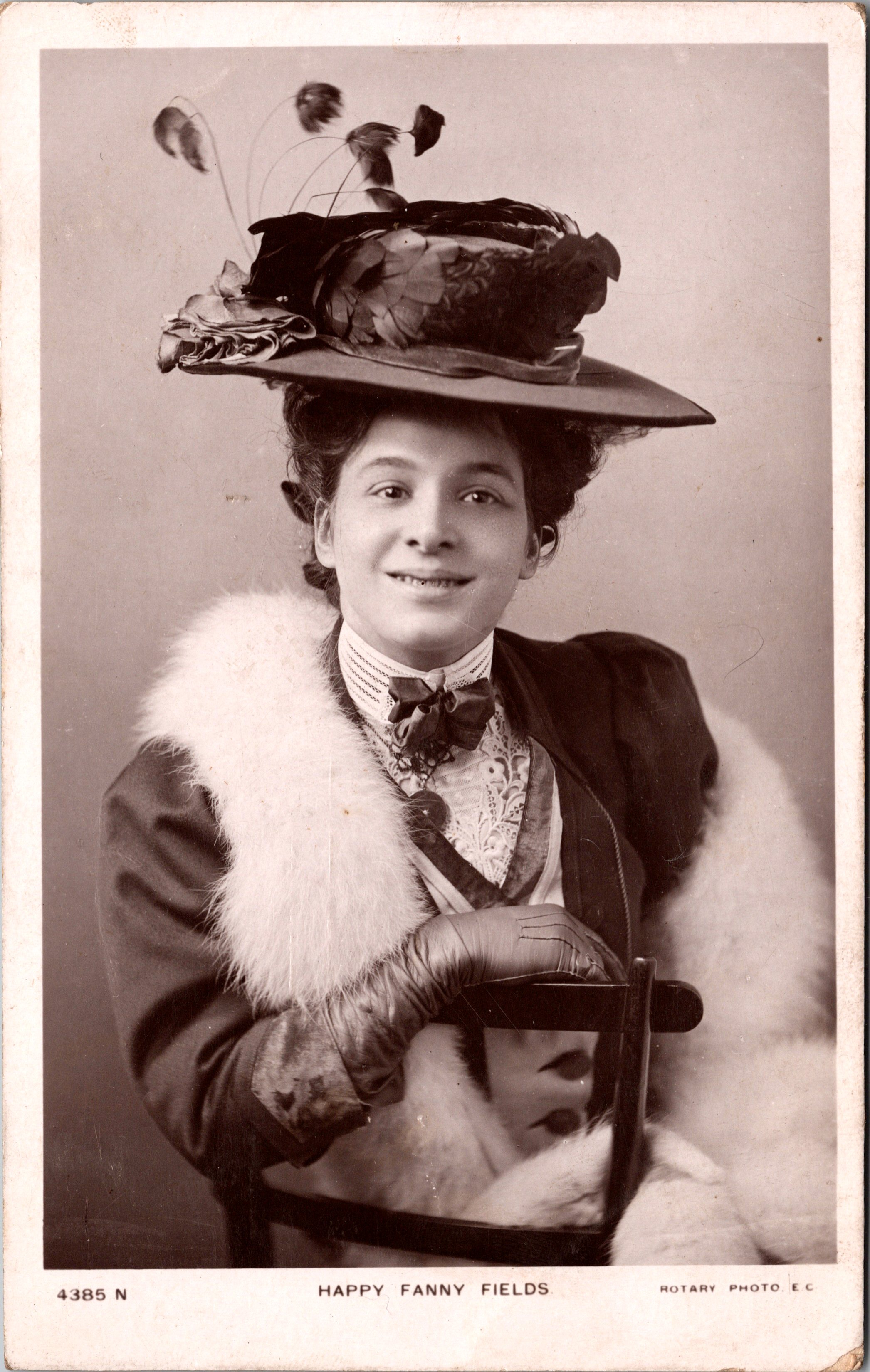
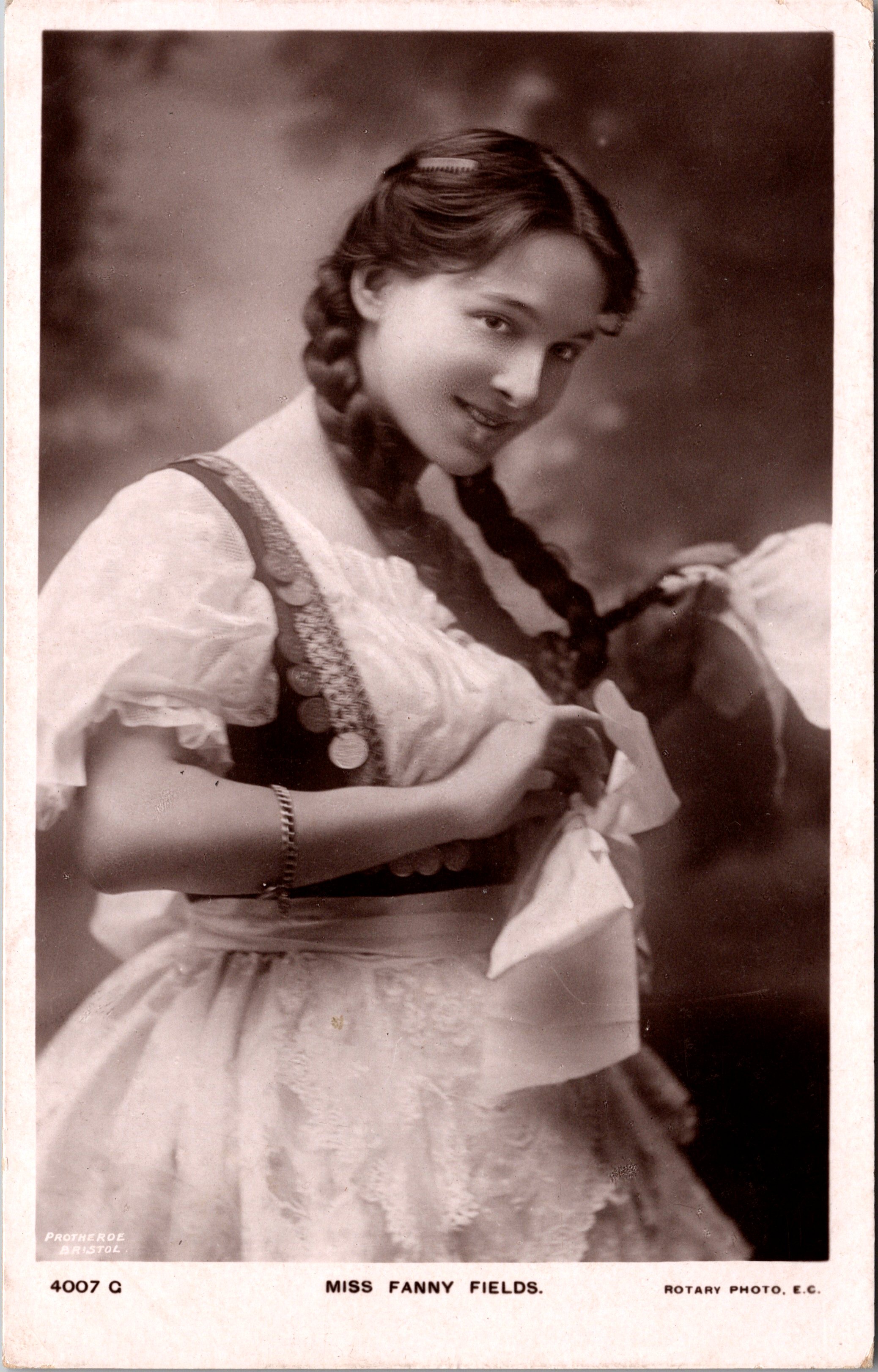
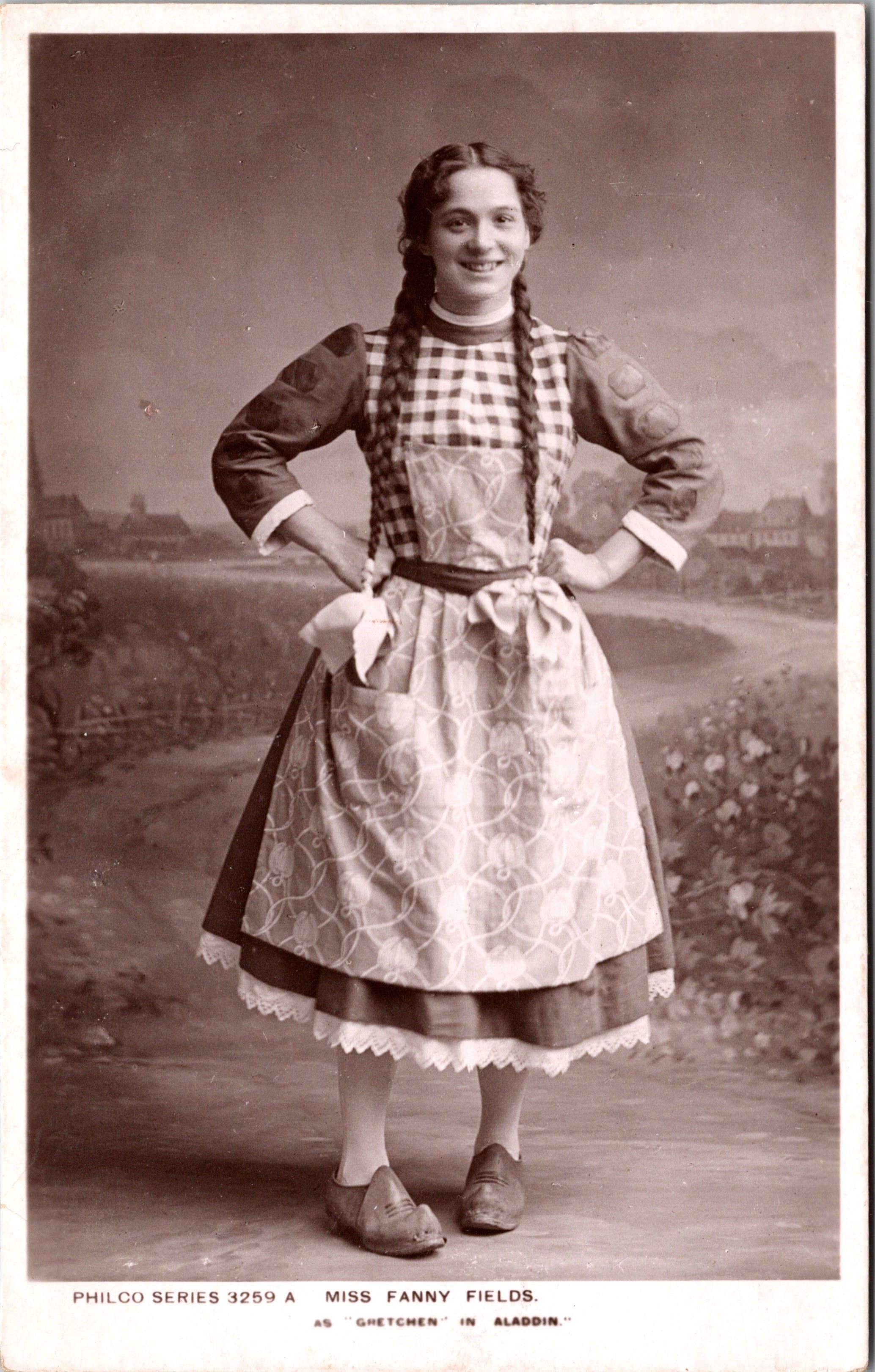
This vintage real photo postcard features American singer, dancer, and comic performer, Fanny Fields (1880-1961), who was a successful performer in British music halls and pantomimes in the early 1900s. During her career she was frequently billed as “Happy” Fanny Fields. She was born, Fanny Furman, in New York City, to a Jewish family. She first appeared in variety shows in NYC sometime around 1899. In her act, she sang and told stories. In 1902, she performed in London and had a very positive reception. One reviewer described her as “one big bubble of mirth and merriment”. She toured with Welsh harpist, Nansi Richards. She also performed “The Suffragette”. In an accompanying monologue, she encouraged woman to make a stand for their rights. In 1912, she performed in front of King George V. She also starred in a silent film short entitled “Happy Fanny Fields and the Four Little Dutchmen” (1913). She retired from the entertainment business in 1913. She returned to the United States and married Dr Abraham Rongy (1878-1949). He was a gynecologist and set up maternity hospitals. In 1933, he published one of the first books proposing the legalization of abortion. Fanny became an active fundraiser for Jewish medical organizations.
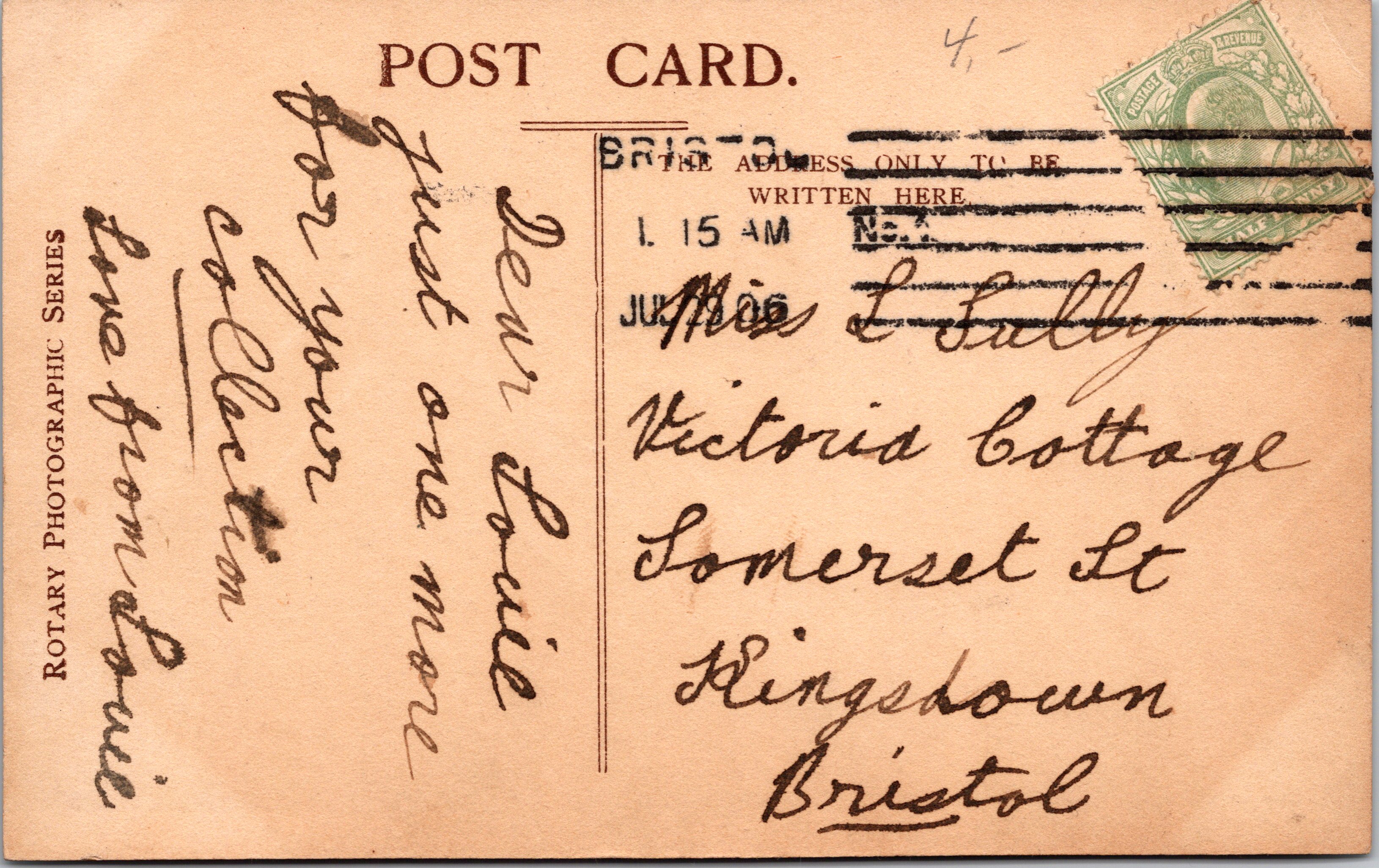
Postcard 1 features a close-up portrait of Fanny Fields. She looks pretty in this color tinted photo postcard. The postcard was published by Rotary Photo as part of a series (no.4007 C). The message on this postcard indicates that the sender sent the postcard for someone to add to their collection. This postcard has a postmark from 1906. (SOLD)
Postcard 2 is a vintage real photo postcard portrait of Miss Fields. The photograph is color tinted. The performer is just beaming for the photographer. Her hat is quite an extravaganza. This postcard was published by Philco (London) as part of a series (no.3213 D). The photographer was Lewis R. Protheroe. He operated a studio in Bristol, England. He was working as a photographer, at least between 1901 and 1917. His father, Thomas Protheroe founded the studio between approximately 1876 and 1900. The postcard has a 1906 postmark. (SOLD)
Postcard 3 is a vintage real photo postcard portrait of Miss Fields. The performer has an adorable smile. Note her long braids. This postcard was published by Rotary Photo as part of a series (no.4385 N). (SOLD)
Postcard 4 features Fanny Fields displaying a warm smile. Note her long braids. Lewis R. Protheroe who operated a studio in Bristol, England. He was working as a phototgrapher, at least between 1901 and 1917. Thomas Protheroe founded the studio between approximately 1876 and 1900 This postcard was published by Rotary Photo as part of a series (no.4007 G). The card is in very good condition (see scans). (SOLD)
Postcard 5 is a vintage real photo postcard portrait of Miss Fields. The performer is once again displaying her wonderful smile. Note her long braids. This photograph captures Fanny in costume, playing the role of Gretchen in “Aladdin”. (SOLD)
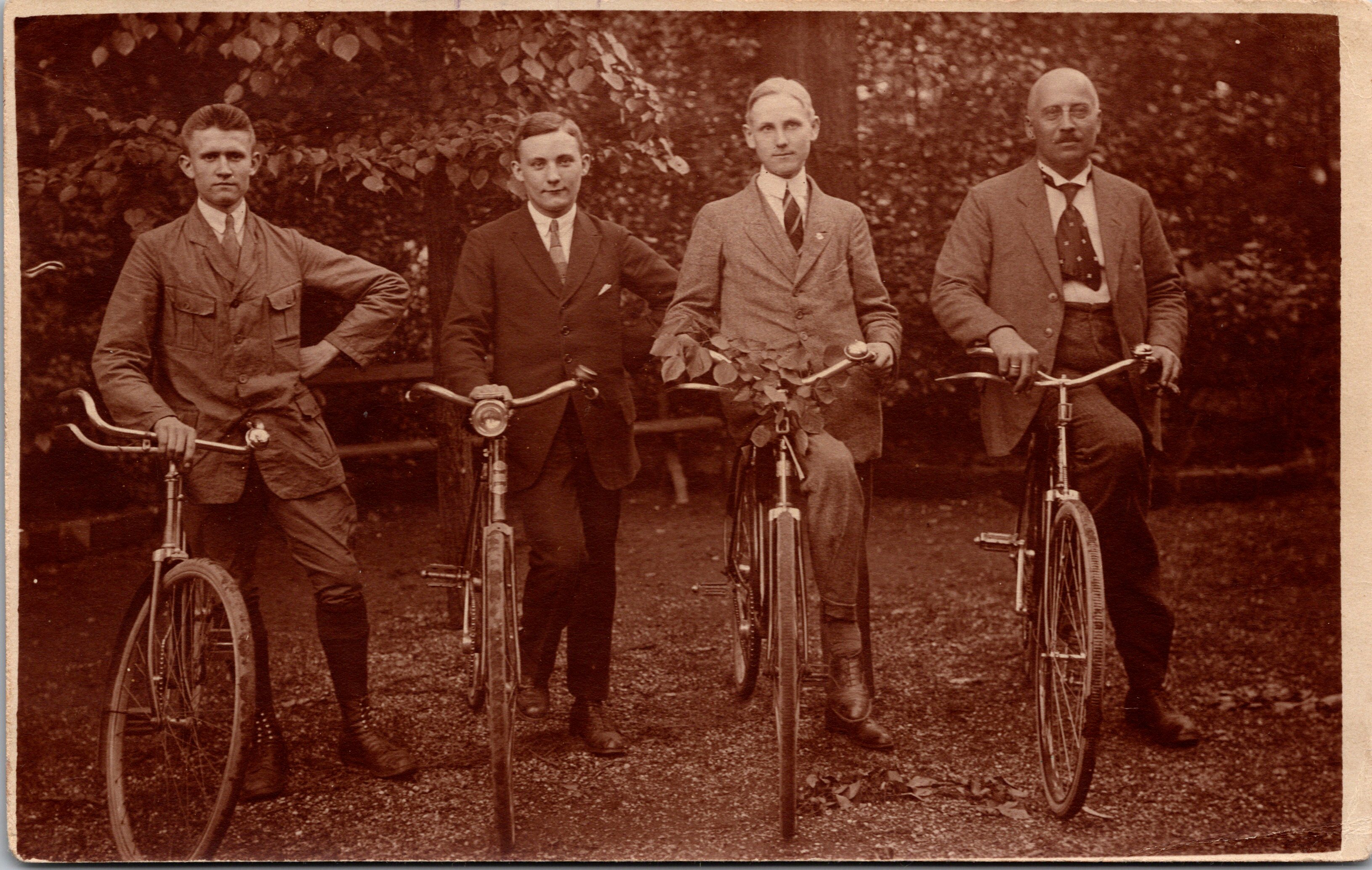
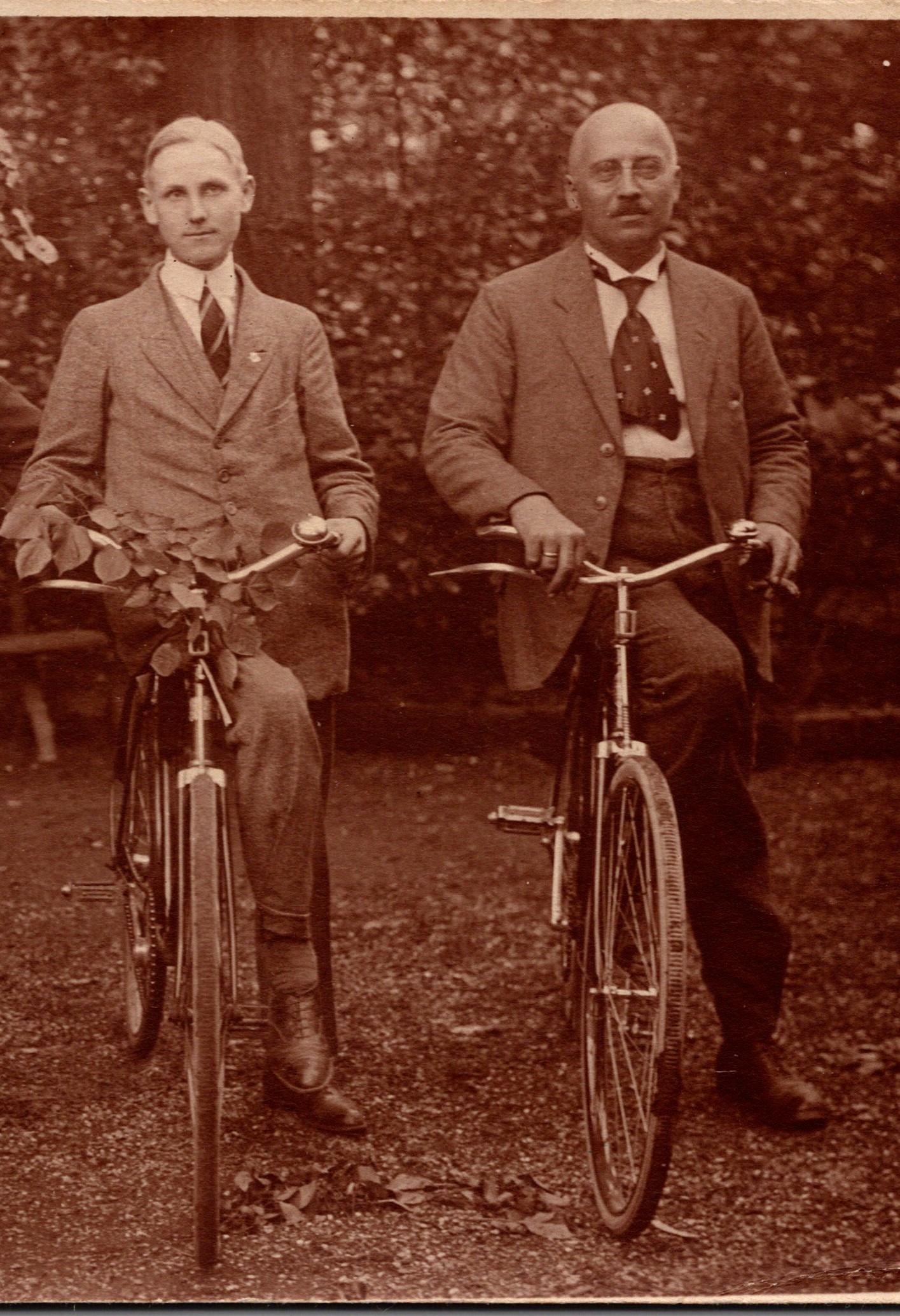
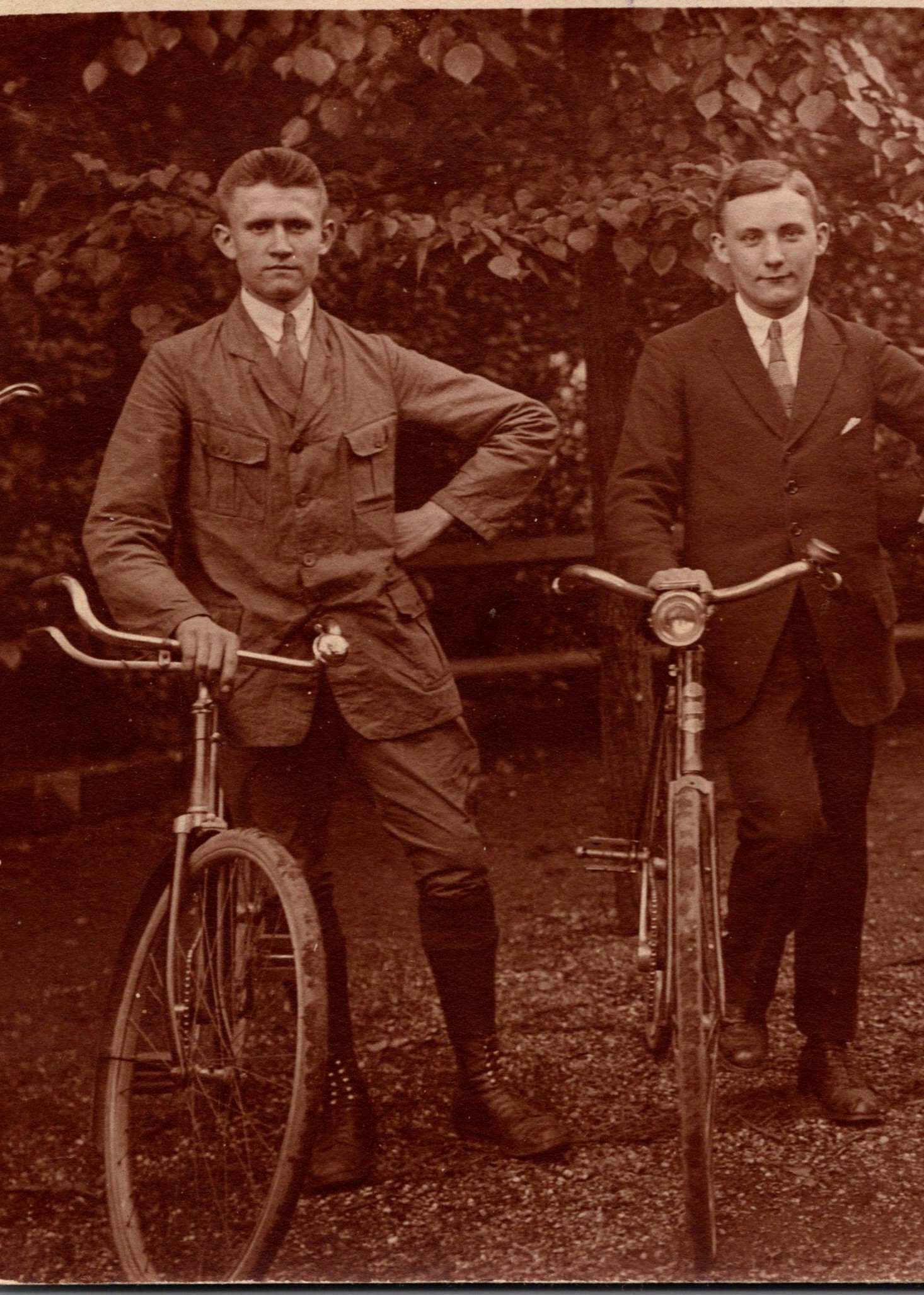
This vintage real photo postcard features four men and their bicycles. These men are well dressed and by today’s norms, they would not bike wearing dress suits. During the era seen in this image, men would wear bands on the bottom of their pants to avoid having their pant legs getting tangled in the spokes of their bike. (SOLD)
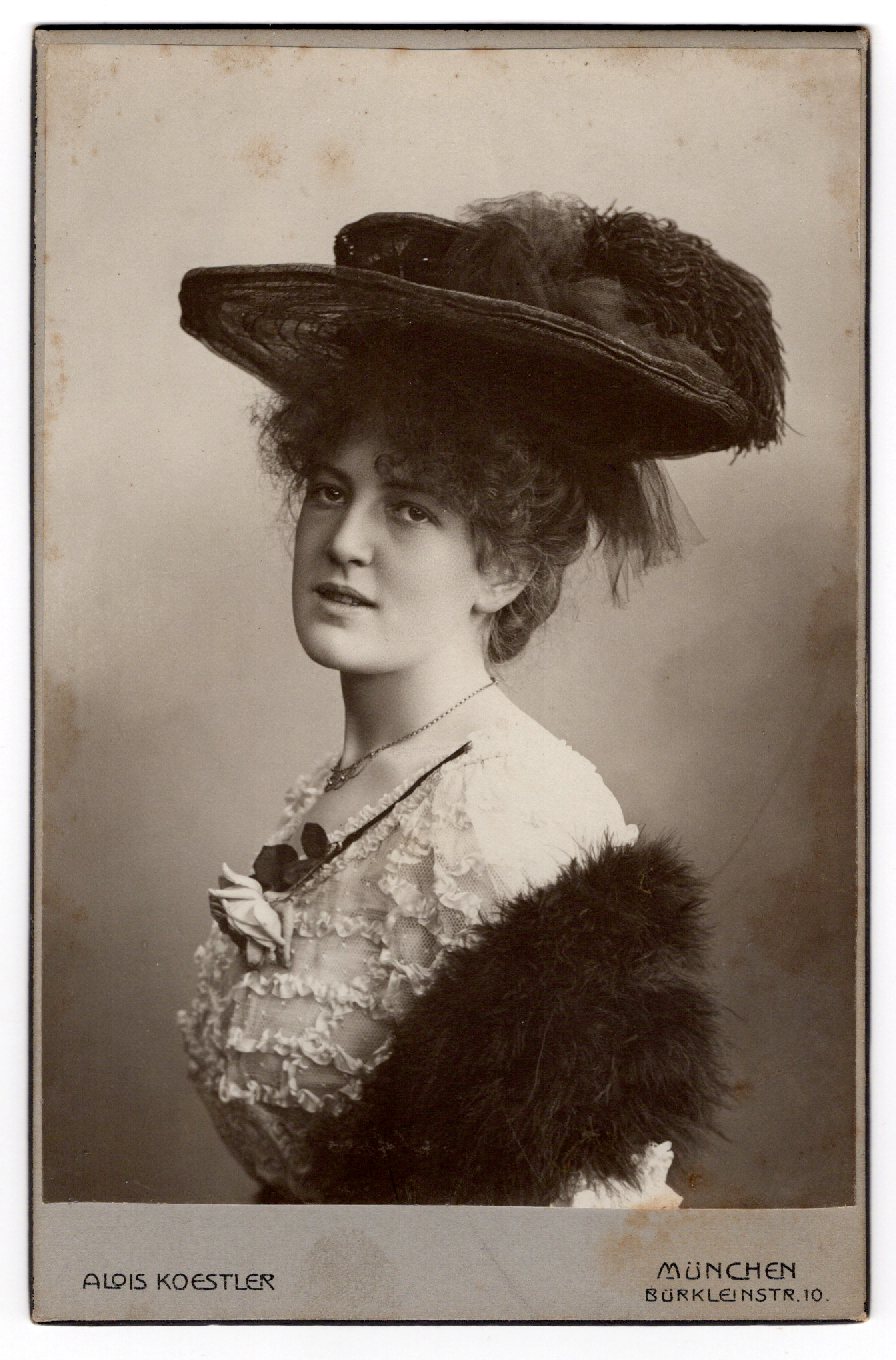
A pretty woman poses for her portrait at the studio of Alois Koestler in Munich, Germany. She is shapely and beautifully dressed. Her facial expression gives her the appearance of someone who is extremely stressed. It is as if her eyes are saying “I can’t take much more of this pressure!”. She look frazzled and exhausted. I wonder if this is just pure personal projection on my part or if other observers of this photograph see this young woman as appearing overwhelmed? Hopefully, some visitors to the cabinet card gallery will leave their impression in the comment section. It is interesting to note that this photograph may have been taken during difficult times in Munich. Pre war was certainly tense and stressful times. Following the outbreak of World War I (1914); the Allies blockaded Germany and there were food and fuel shortages in Munich. Perhaps the subjects “hard knock life” appearance has to do with the stressful impact the war had on civilian life. SOLD

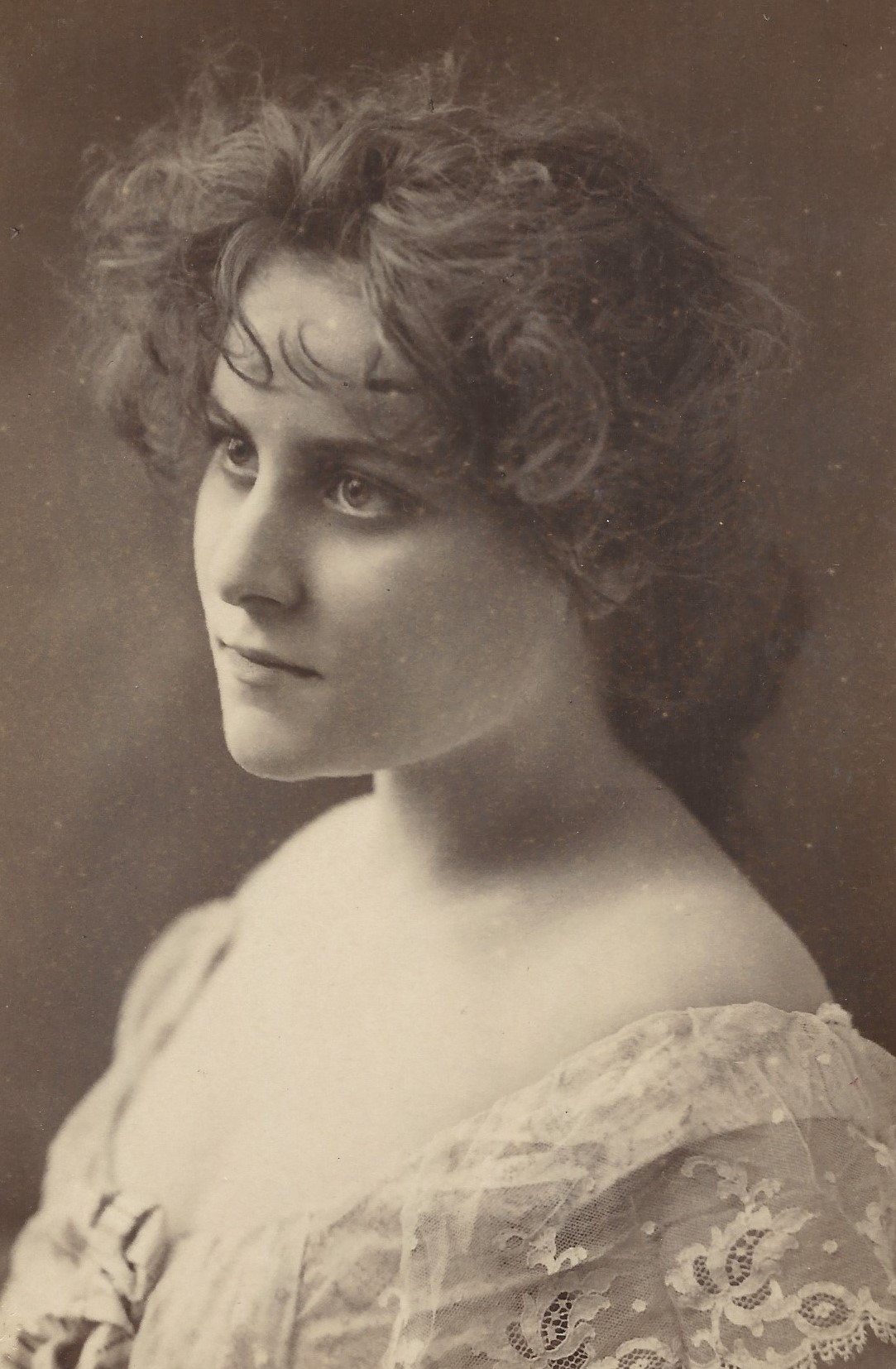


 POSTCARD 3 (SOLD)