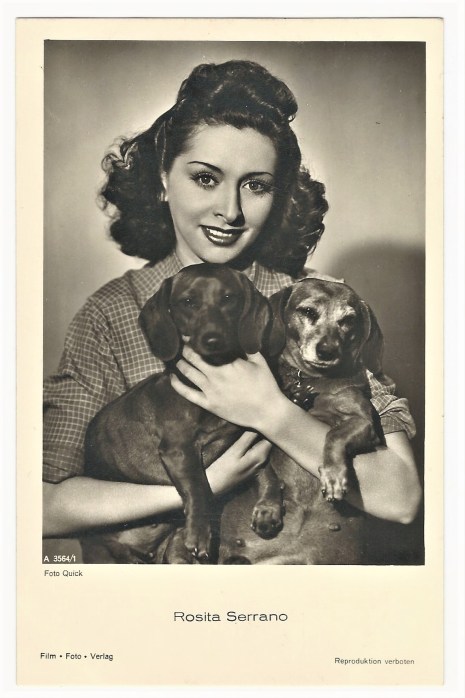
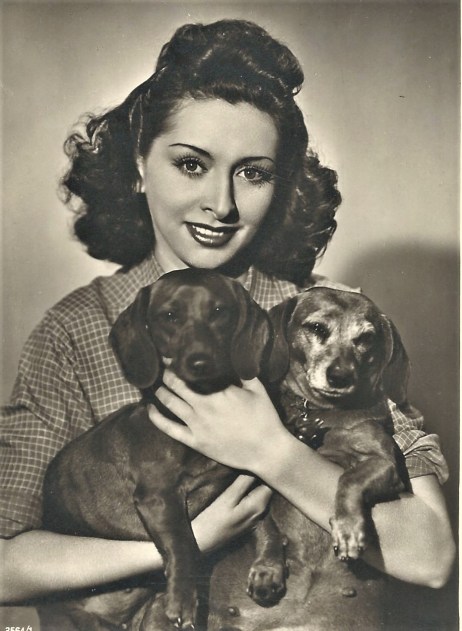
This vintage real photo postcard features pretty actress and singer, Rosita Serrano (1912-1997 . She is casually dressed and is holding two adorable dachshunds. This photo portrait displays Rosita’s lovely smile. Serrano was a Chilean singer who obtained her major success in Nazi Germany between the 1930’s and the early 1940’s. Her singing was known for her bell-like voice and her pitch-perfect whistling. She was known by her nickname as “The Chilean Nightingale”. Rosita was born in Chile. Her father was in the diplomatic corps and her mother was a popular opera singer. The family lived in Portugal and France . By 1936, the family moved to Berlin. Serrano’s initial success was in the Wintergarten and the Metropol Theater where she sang Chilean folk songs. This performance earned her a record contract. From that point, she performed in German. Many of her songs became very popular. In 1938, she began to appear in films. When she was between film roles, she toured with two popular dance orchestras. Minister Joseph Goebbels helped het her appearances on a Wehrmacht (military) radio show. In 1940, Serrano’s song “La Paloma”, became very popular throughout Germany. Serrano’s voice style is described as “coloratura soprano”. Her recordings were in German and Spanish. She sang songs in the folk and pop genre. Her songs included flamenco, rumba, tango and mambo. During a Swedish tour in 1943, she did a benefit concert for Jewish refugees. As a result of this performance, she was accused by Germany of being a spy. Rather than return to Germany and face possible arrest, she fled to Chile. Germany than banned her music. She went on tour to the United States but was not well received. It is conjectured that US citizens could not get enthusiastic about hearing Serrano’s German songs, so close to the end of World War II. She returned to West Germany to appear in films in 1951 and 1952. Besides those two movie roles, her German comeback was unsuccessful. She returned to Chile where she lived out her life. She was not welcomed upon her return to her native country. The public in Chile condemned her for performing in Nazi Germany. She died in poverty. It seems to me that Serrano had the unfortunate pattern of consistently being in the wrong place at the wrong time. Poor timing ruined this talented singer’s career. Serrano’s filmography includes 8 films between 1938 and 1952. This postcard was published by Film Foto Verlag, a subsidiary of UFA Universum Film AG. Note the company’s horse logo on the reverse of the card. The photo was taken by Foto Quick and the postcard is part of a series (no. A3564/1). Check out the video recording of Miss Serrano seen below. This real photo postcard is in very good condition.

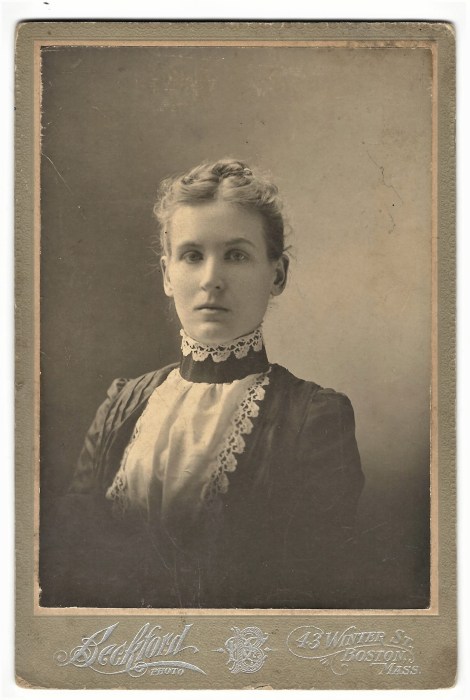
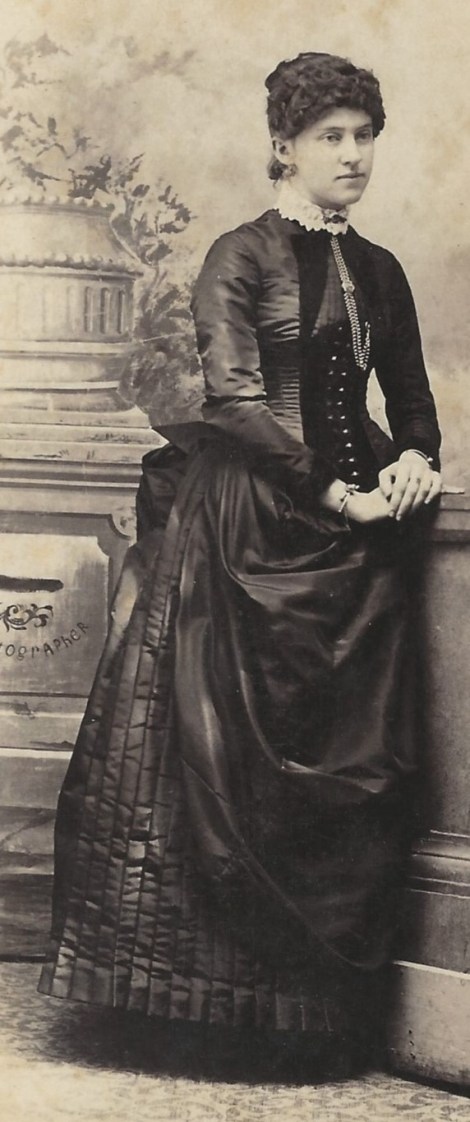
 This cabinet card portrait features a well-dressed pretty young woman. Her high collared dress includes lots of lace. She is wearing a serious expression. She appears to be in her teenage years or slightly older. This photograph was taken by the Beckford Photo, a studio located in Boston, Massachusetts. David C. Beckford received mention in the book, “Boston: Its Commerce, Finance, and Literature”. His studio is described as a leading photo studio in the country. The business was established in around 1872 as the Chickering Photo Company. The proprietor, Walter E. Chickering (not to be confused with Elmer Chickering, a well respected Boston photographer of the era) was a notorious swindler. He was especially known for his dishonesty and blatant resistance to paying his bills. Walter must have been a tough boss to tolerate. Beckford took over the business in 1888. Beckford’s establishment employed four assistants. Beckford was a native of Jamaica. He came to Boston in about 1872 and worked for Chickering for several years. According to one source, Beckford operated a Hardware business in Jamaica, at least part of the time, while he ran his photo studio in Boston. A Massachusetts directory of photographers asserts that Beckford was active as a photographer until 1909. Beckford is cited in an article appearing in the “Southern Workman” (1909). The title of the article was “Improvement in Housing Negroes in the North”. The writer states that Beckford had recently returned from a business trip to Jamaica where he directed the rebuilding of his properties; and reestablished his hardware business which had been destroyed in an earthquake. The “Southern Workman” article was the first reference that I found that indicated that David C. Beckford was a Black man. Examining the 1900 US census data provided confirmation that Beckford was indeed a Black man. Census data conflicted with other legal documents in regard to where Beckford was born. It appears he was born in either England or Jamaica. He was born in 1856 and immigrated to the United States in 1872. He married Elvira P. Gott in 1881. She was a Black woman born in Massachusetts. She was close in age to Beckford. Photographs by Black photographers are not common, making this image a great find. This cabinet card portrait is in fair condition (see scans). Note the presence of peeling along the left and bottom border of the card mount. The image itself has excellent clarity and is in good condition. (SOLD)
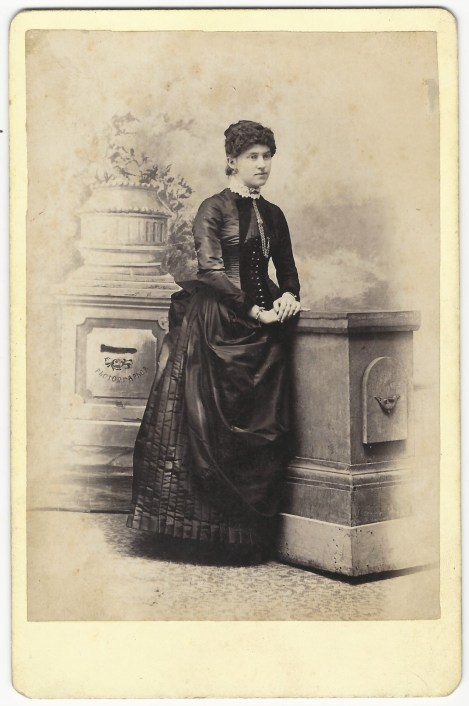




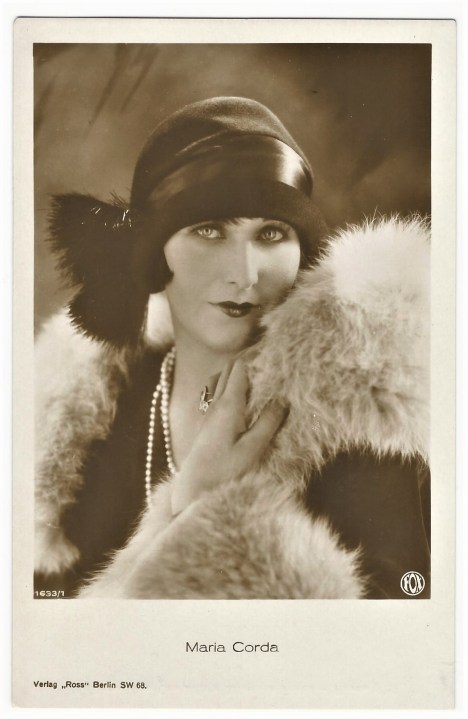 POSTCARD 1 (SOLD)
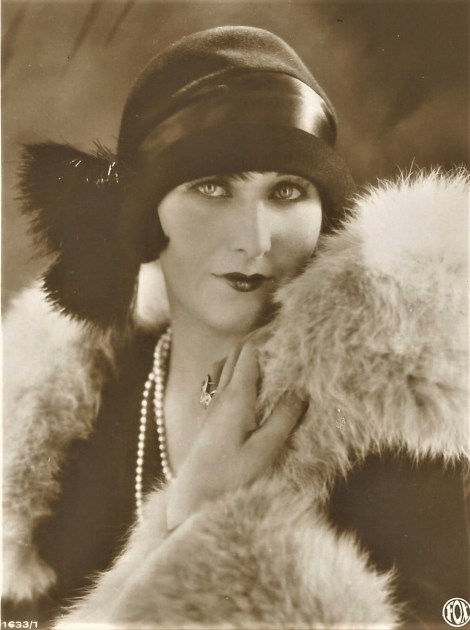 POSTCARD 1 (CLOSE-UP) (SOLD)
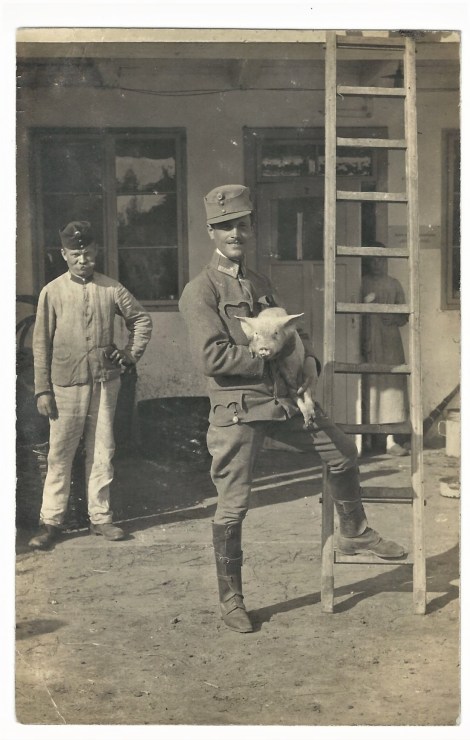
 POSTCARD 2 (SOLD)
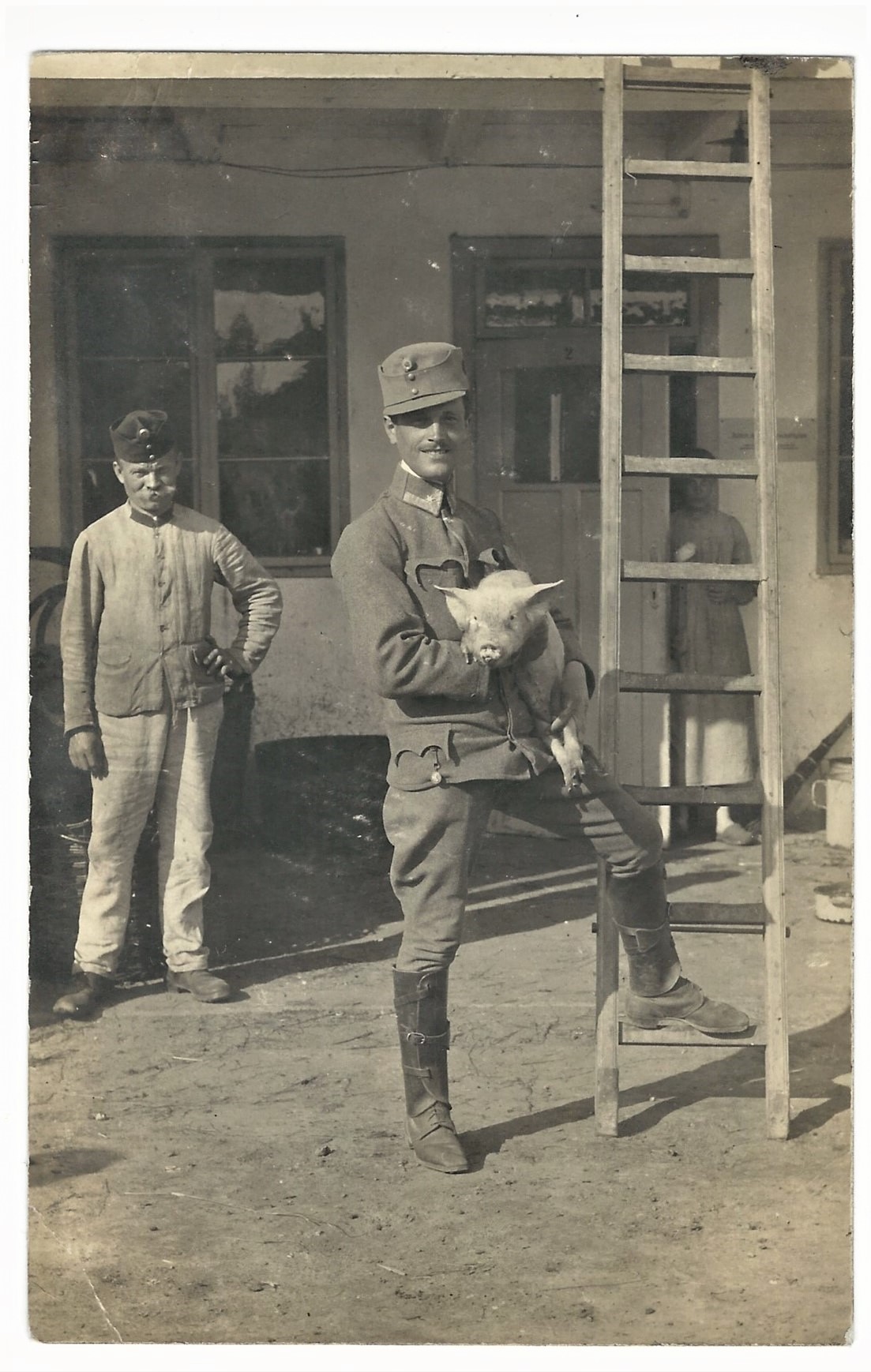
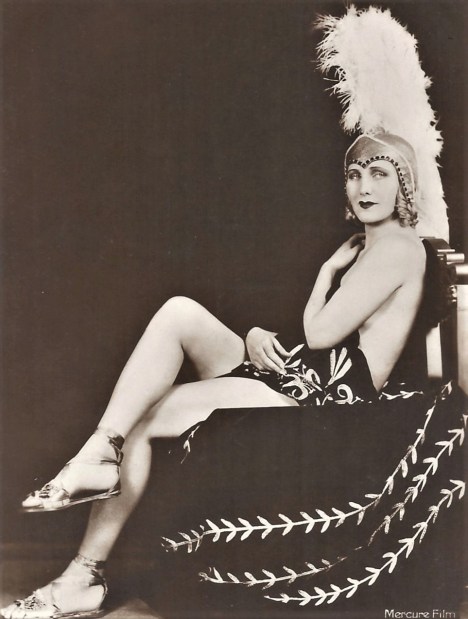 POSTCARD 2 (CLOSE-UP) (SOLD)
 POSTCARD 1 (REVERSE)
 POSTCARD 2 (REVERSE)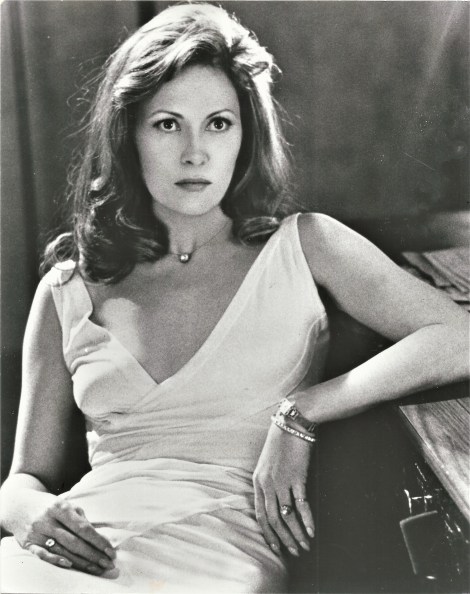


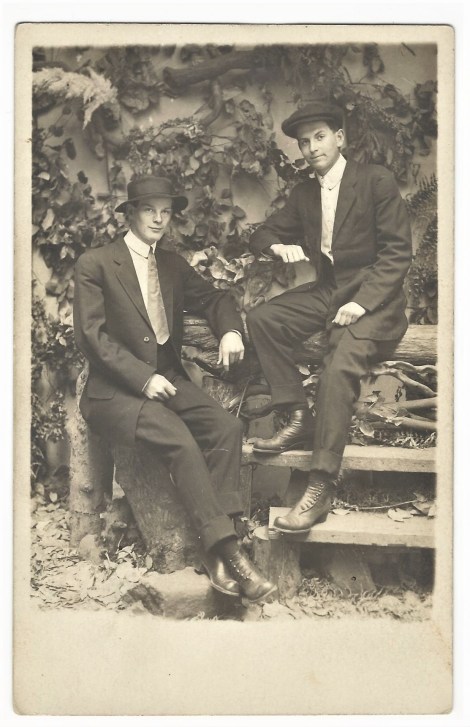
 This vintage real photo postcard features two well dressed young men sitting on what appears to be rails of a fence. The gentleman on the lower rail is wearing a suit that is swimming on him. The suit is so over sized that it likely belonged to the studio, and was borrowed by the young man for the photograph. The Cyko stamp box indicates that this postcard dates to sometime between 1904 and the 1920’s. SOLD
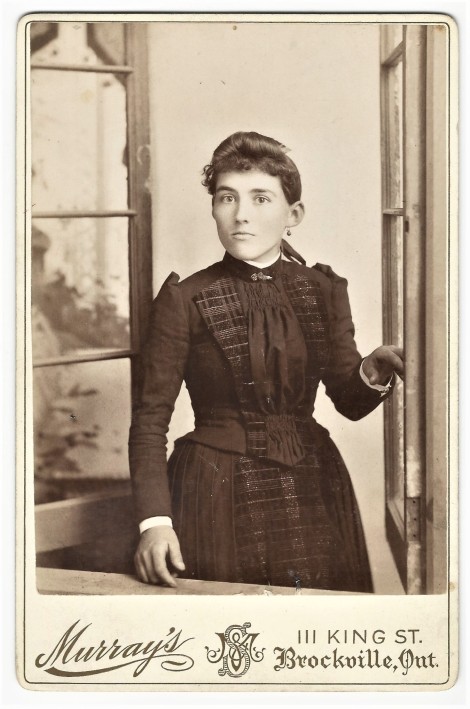


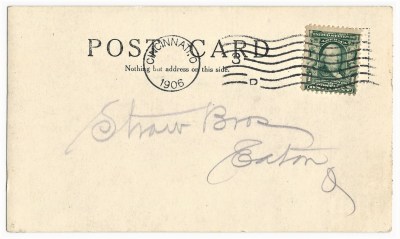
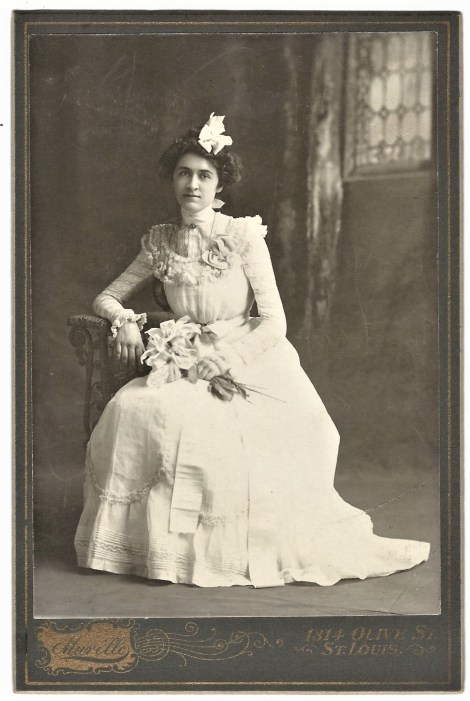
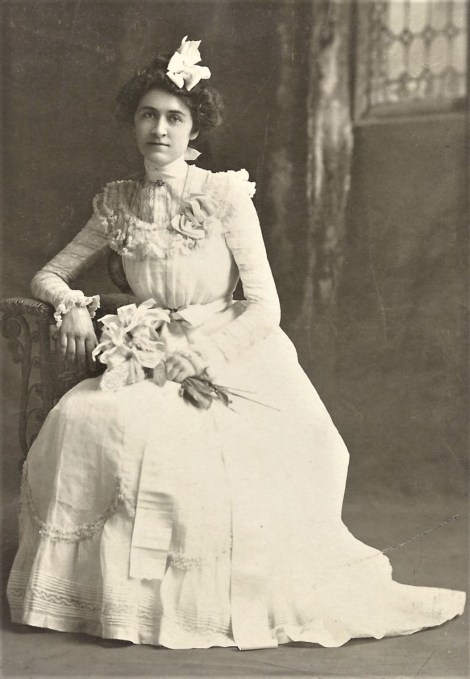 A beautiful Victorian bride poses for her wedding portrait at the Murillo studio in St. Louis Missouri. The bride is dressed in white and is holding flowers on her lap.


 THE CABINET CARD GALLERY