
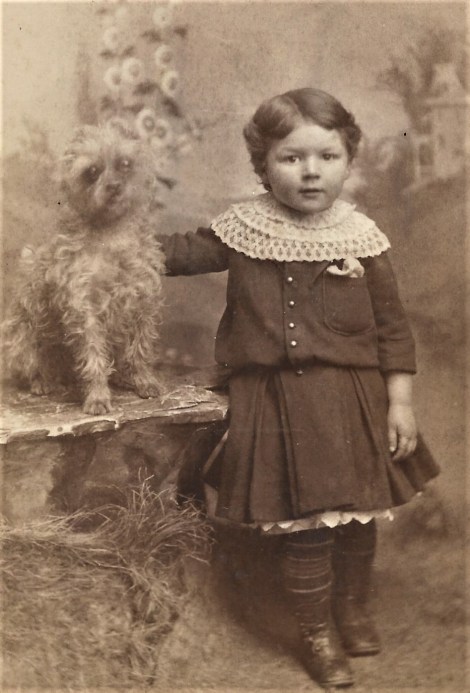
 This cabinet card photograph is absolutely precious. The photographer did a fantastic job of posing the child and the dog. The child is wearing a half smile and the dog is flashing a serious and inquisitive stare at the photographer. Is this child a boy or a girl? It is difficult to ascertain oftentimes in vintage young children’s photographs. One confounding factor is that many boys wore dresses till they reached five or six years-old. Sometimes, but not always, the way a child parted their hair, can be a clue to identifying their gender. Boys generally wore their hair parted on the side while girl’s hair was usually parted in the center. This photograph was taken by the Hall and Son studio, located in Detroit, Michigan. Henry M. Hall was born in New York in 1835. He married Eliza Hall in about 1855. The couple had three daughters and one son. The Detroit directory listed Henry and his son, Roswell (1864-?), as photographers as well as portrait and landscape painters in 1884. The firm employed two photographers, Alexander Campbell (1884) and John Bennett (1885). It is not clear if the photography studio operated beyond 1884-1885. During the 1890’s, Henry created a number of sign painting partnerships. He also had an interest in a cigar manufacturing company in 1898. Henry’s son, Roswell E. Hall was a painter and shipping clerk between 1879 and 1884. He worked as a photographer with his father between 1884 and 1885. He remained in Detroit and held various jobs; crockery store clerk and department manager (1886-1891), manufacturers agent and department store clerk (1892-1898), and foreman in an iron works (1899-1902 as well as in 1910). Roswell married Emma Hall in 1887 or 1888. The couple had four children. This cabinet card portrait is in very good condition (see scans)

Buy this Original Cabinet Card photograph (includes shipping within the US) #3084
To purchase this item, click on the Pay with PayPal button below
$63.29
Buy this original Cabinet Card Photograph (includes International shipping outside the US) #3084
To purchase this item, click on the Pay with PayPal button below
$71.79


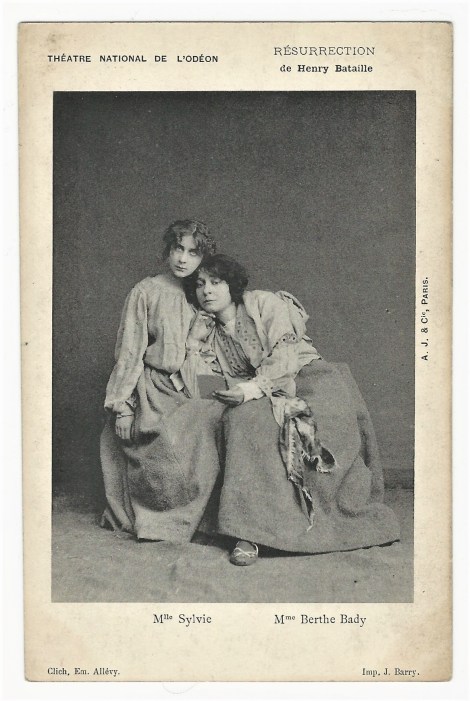
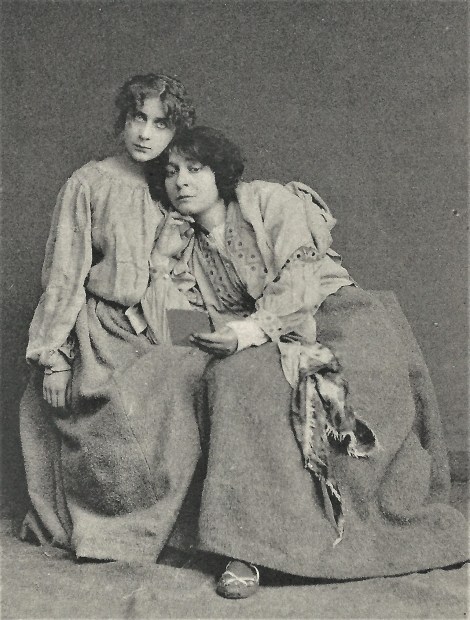 This vintage theater postcard features two actresses appearing in the play, “Resurrection”, by Henry Bataille. The play was adapted from a novel written by Leo Tolstoy. The novel was originally published in 1899. The play was performed at the “Theatre National de L’odeon. The actresses are Mll Sylvie (1883-1970) and Mme Bertha Bady (1872-1921). Here are brief biographical skethches of the actresses. Sylvie was born in Paris, France. Her original name was Louise Pauline Mainguene. Her father was a sailor and her mother was a teacher. She started her professional career in 1903. She appeared in a number of French silent films. She was both a stage and a screen actress. She graduated from the Paris Conservatoire. Her filmography, listed by IMDb, credits her as acting in 54 films between 1912 and 1968. Berthe Bady was born in Belgium but her nationality was French. Berthe Bady attended the Brussels Conservatory and was active on the stage between 1893 and 1913. She was a beautiful actress. Berthe was a companion to both Lugne-Poe and Felix-Henri Bataille. Lugne-Poe was a French actor, theatrical director, and scenic designer. He and Bady were involved in symbolist movement of the arts. Bataille was a French dramatist and poet. A brief explanation of symbolism seems to be merited. In theatre, symbolism is a way to bring a greater meaning to something than is apparent at face value. The use of color, characters, movement, props and costumes are all methods of presenting symbolism. In 1897 Bady was the subject of a portrait by Toulouse Lautrec and her death was the subject of a poem by a leading French poet, Louis Aragon. In addition, playwright Fernand Crommelynck dedicated a play to her. Wikipedia credits her with sixteen “notable” play appearances between 1893 and 1913. She appeared in Ibsen’s “The Master Builder” on an international tour. The tour took her to London, Brussels, Amsterdam, Milan, and additional cities. In 1918 she appeared in her one and only film, “Ecce Homo”. The photo of Berthe and Sylvie was taken by Emile Allevy, a Paris photographer. The postcard was published by A.J.C. (Arthur John Carter) of Eastbourne, England. This postcard was likely published around 1902 since that is when Bady played in the play at the Theatre National de L’odeon. This vintage postcard is in good condition (see scans).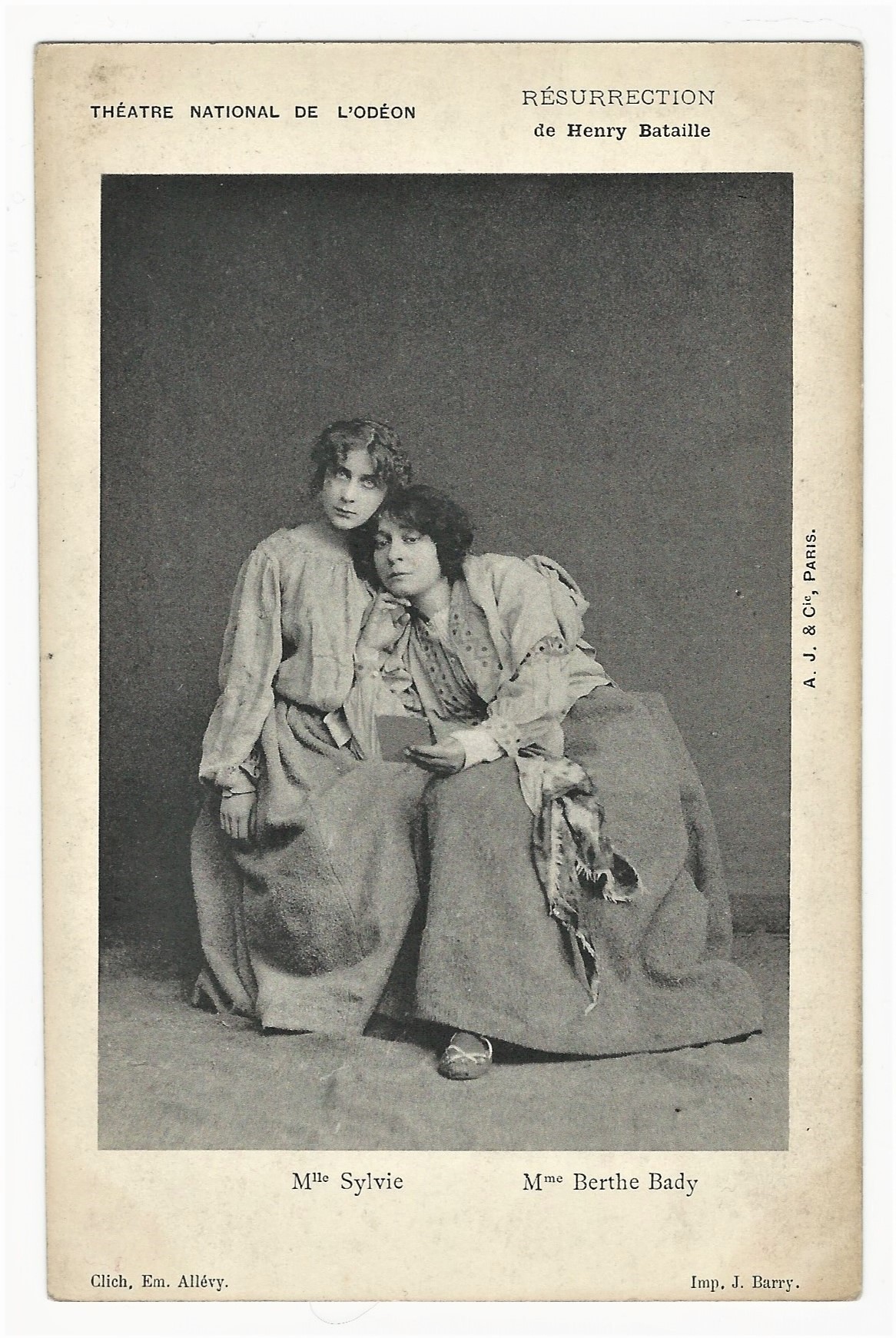
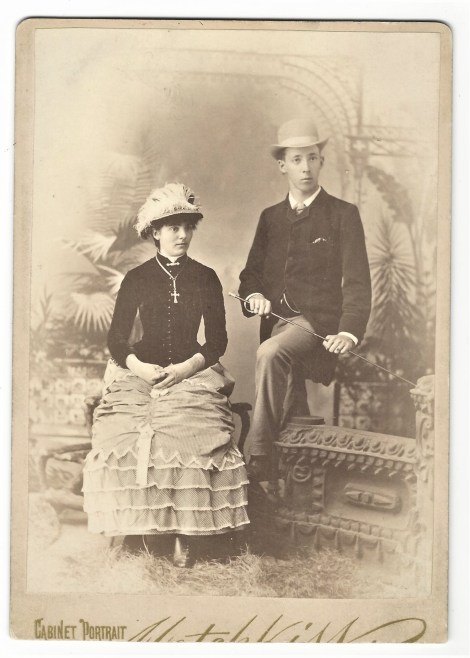

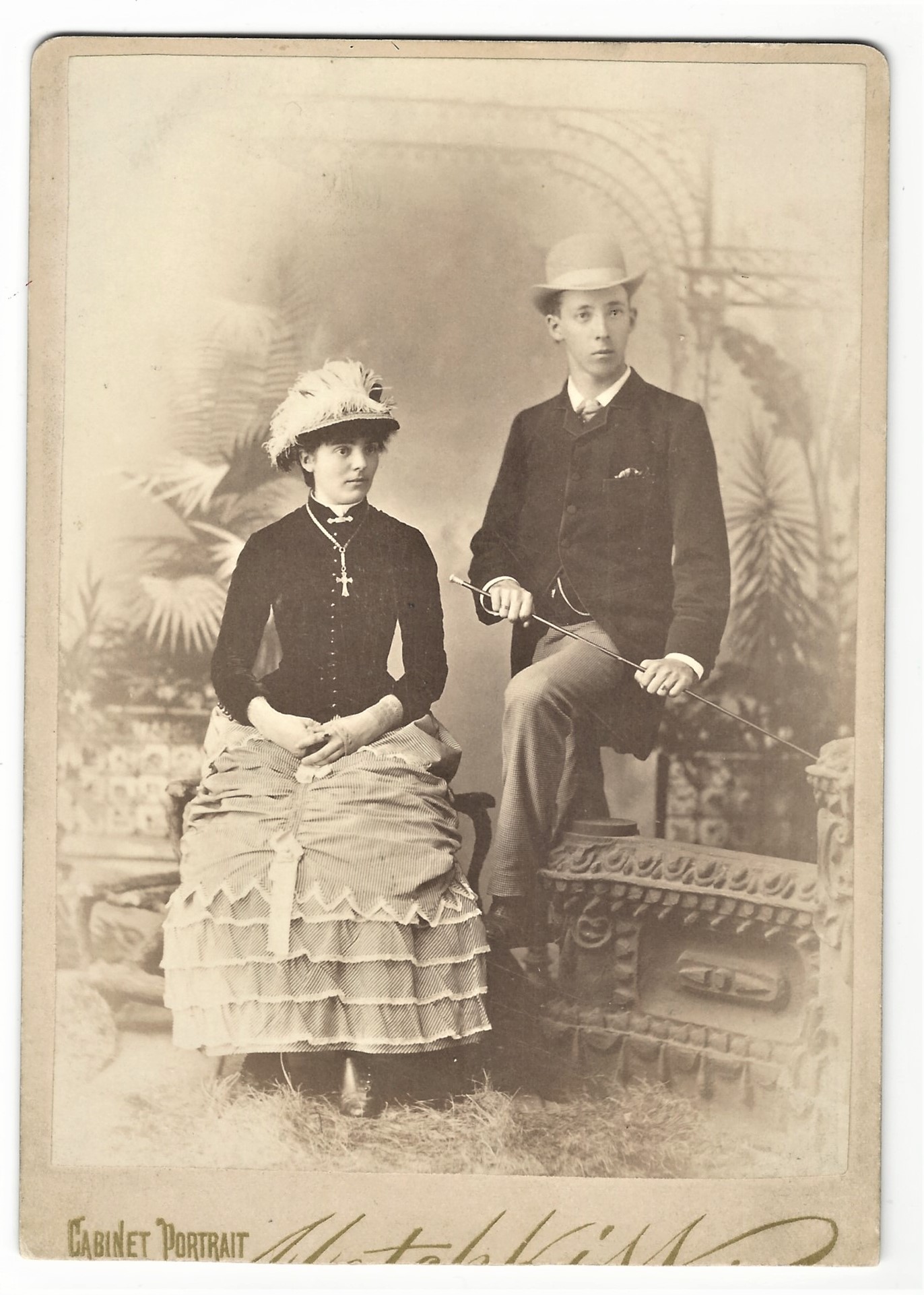
 This vintage real photo postcard features three adorable little girls dressed in lacy colorful dresses and wearing flowers in their hair. The postcard was published by ABN and dates back to circa 1909. The postcard has a French stamp and a postmark from Ardeche, a department in southeast, France. The postcard in in very good condition (see scans).

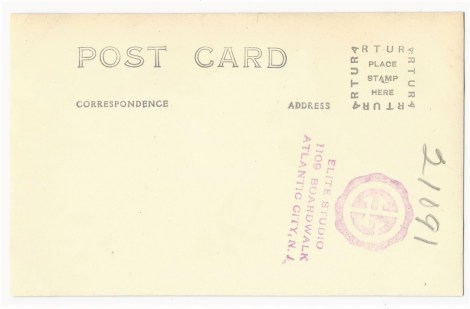
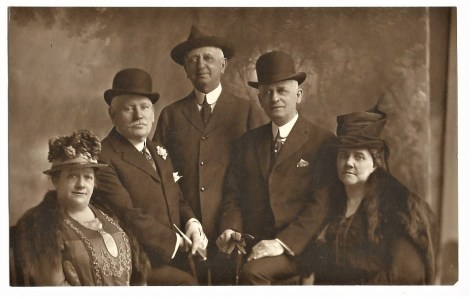 This vintage real photo postcard features five well dressed citizens being photographed by the Elite Studio, located on the boardwalk in Atlantic City, New Jersey. The gents and ladies look like they wandered off the set of “Boardwalk Empire”. Note the hats worn by this gathering of older adults. The 1919 Boyd’s Atlantic City Directory reports that the Elite Studio was operated by photographers Erna Hoefle and Ferdinand U. Latimer. Erna is a female name. Women operating photo studios during this era was not very common. This postcard has an Artura stamp box which indicates that the card was published sometime between 1908 and 1924. This vintage postcard is in excellent condition (see scans).
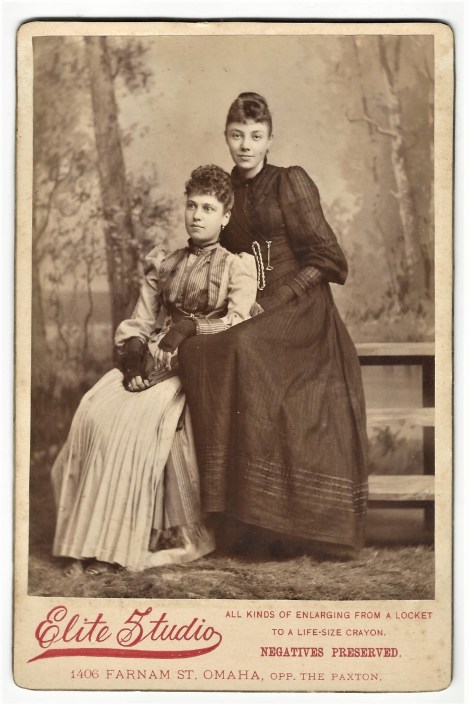
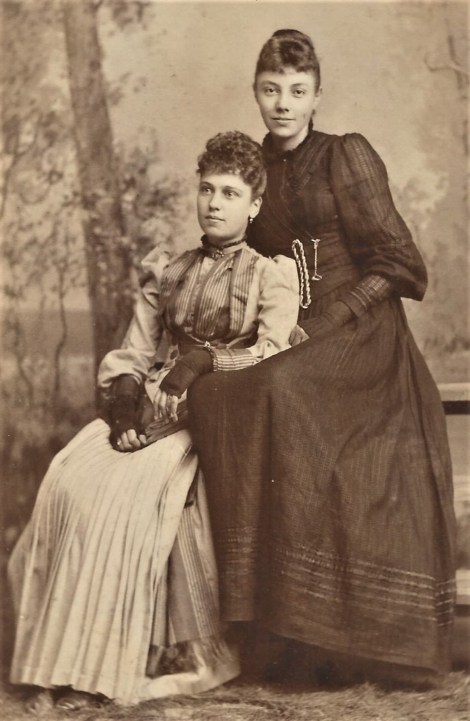
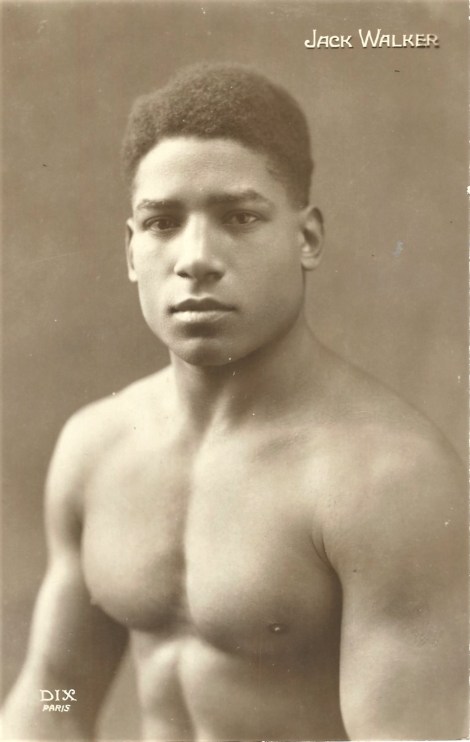 This vintage real photo postcard features boxer Jack Walker (Leone Jacovacci). His story is fascinating. He was born in Pomba (Belgian Congo) in 1902. His father was an Italian agronomist and his mother was Congolese. At age three, his father took him away from his mother and went to Italy where he left Jack to be raised by grandparents. Jack’s dad returned to the Congo. The child was a victim of racism in Italy so at sixteen years of age, he went to work as a “cabin boy” on a British ship. After arriving in England, he changed his name to John Douglas Walker, thinking the English name would help him be more socially accepted. He enlisted and served in the British army. Upon discharge, he learned to box in England and began his fighting career. During his boxing career he weighed about 150 pounds and his height was 5″ 10″. His final record as a fighter was 21 Wins, 22 Losses, and 5 Ties. His official record is thought to be incomplete. He began boxing in 1920 and his career ended in 1932. His fights were in Europe. He fought in England, France, Switzerland, Belgium, Italy, Norway, Austria, Denmark, and Spain. He fought using Italian citizenship and became the Middleweight Champion of Europe. Despite a number of successes in the ring, Jack never was accepted in Italy the way he would have liked. The racist and fascist society did not allow him to really feel like a full Italian citizen or enjoy the fruits of his boxing successes. After ending his boxing career, he became a wrestler for a few years and moved to France. He was trapped there through World War II. His companion, Berthe Salmon, changed her last name to avoid being identified as Jewish. Berthe gave birth to their only child, a daughter. Post war, he worked for the United Nations and assisted refugees. Later he was employed as a bit player in the Italian film industry. In his old age, he worked as an apartment doorman and janitor. Walker died in Milan, Italy in 1983. This postcard was published by Dix, a company located in Paris. Apparently, they published a series of portraits of boxers of the day. The Cabinet Card Gallery has another postcard from the series (Pierre Calloir: French Bantam Weight). SOLD

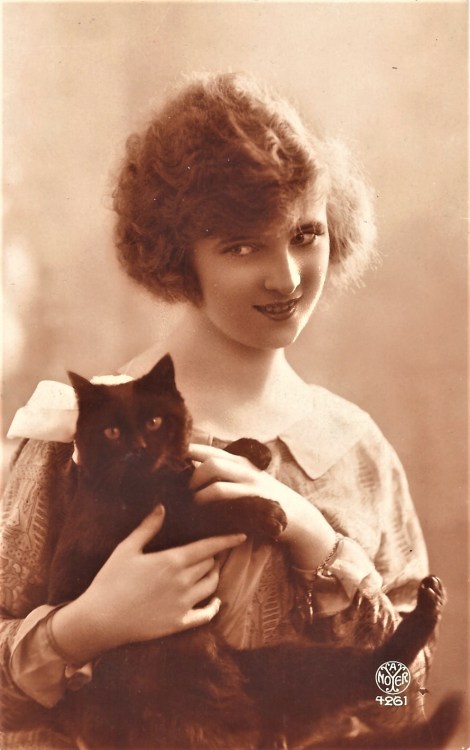 This vintage real photo postcard features a pretty young woman and her black cat. She appears to be in her teenage years. Note her coy smile. Her cat is certainly photogenic. This French postcard is dated 1925 and was published by Alfred Noyer. Noyer was well known and acclaimed for his work photographing nude, or partially clad, beautiful women. His Paris studio operated between 1910 and the 1940’s. This postcard is in very good condition (see scans).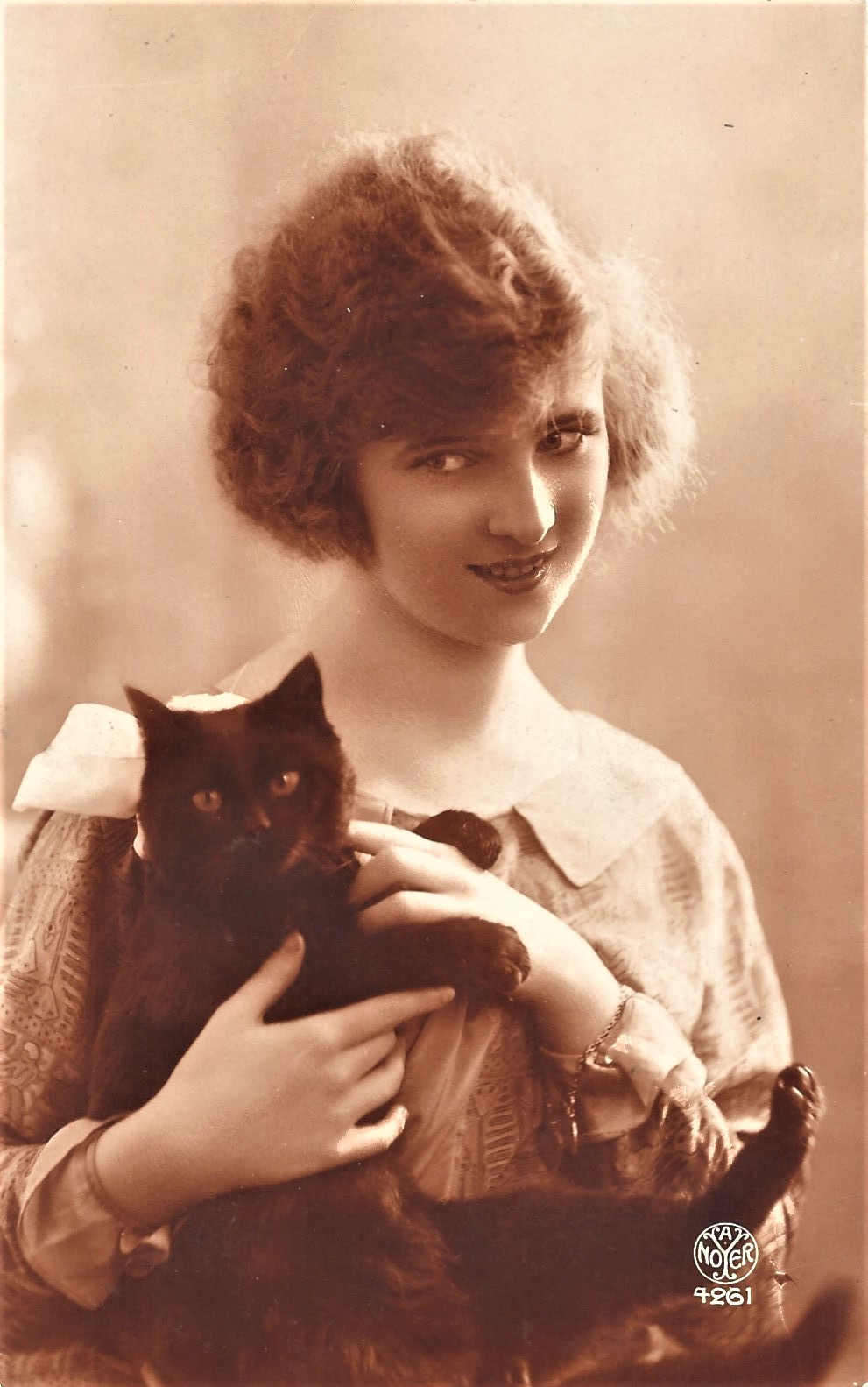


 THE CABINET CARD GALLERY