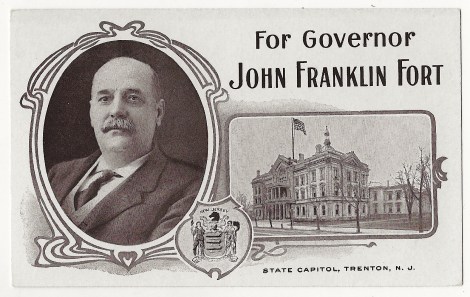
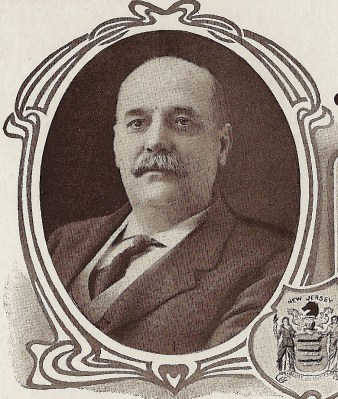
 This vintage postcard was employed as advertising for New Jersey Governor candidate, John Franklin Fort (1852-1920). Fort was a Republican and won his race to become the 33rd Governor of New Jersey. He served between 1908 and 1911. He defeated Democrat, Frank S. Katzenbach. In 1908, Fort participated in New Jersey’s first radio broadcast. In 1910 he established New Jersey’s first Department of Education. Fort was followed by Woodrow Wilson in the position of Governor. Wilson went on to become the President of the United States. Fort was a lawyer. He obtained his law degree at the Albany Law School. Governor and ex civil war General, George B. McClellan, appointed Fort to serve as a judge in a Newark district court. In 1884, 1896, and 1912 he served as a delegate to the Republican National Convention. In 1900, he was appointed to the New Jersey Supreme Court. In 1915, Wilson, now President, appointed Fort to the Federal Trade Commission. He held the position for about four years but was forced to resign due to failing health. At one point,Wilson appointed Fort to act as US Ambassador to Haiti and the Dominican Republic. Besides featuring a portrait of John Franklin Fort, the postcard also displays a drawing of the state capital building in Trenton. It is interesting to note that John Franklin Fort’s uncle, George Franklin Fort, was the Democratic Governor of New Jersey from 1851 to 1854. This postcard was published by the Whitehead & Hoag Company of Newark, New Jersey. Benjamin Whitehead (1858-1940) was born in Newark. He received his technical information from the Cooper Union Institute in New York City. He became a printer and some of his printing samples were exhibited at the 1876 Centennial Exposition in Philadelphia. In 1876, he opened his own firm in Newark. The business was named Whitehead & Clark. Whitehead liked to travel domestically and abroad (he visited 22 nations) and he took many photographs as well as gathered ideas for novelties for his business to produce. Whitehouse was joined in business by Chester R. Hoag (1860-1935). They incorporated their business in 1892. Whitehead & Hoag manufactured over 5,000 different novelty advertising items. They were considered the largest business in the nation that manufactured advertising novelties. They were particularly well known for their efforts producing advertising buttons. The company opened offices around the U.S. and in some international cities. In 1959, the company was sold and shuttered it’s doors. This would be nice addition to any New Jersey politics collection. The postcard is from about 1907. (SOLD)

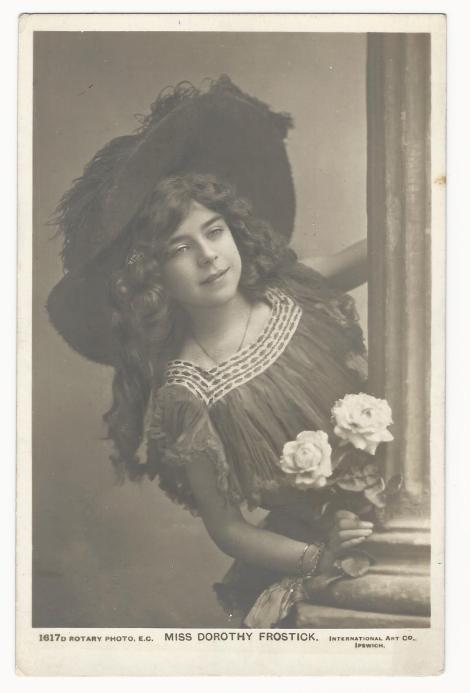 This vintage real photo postcard features English actress, dancer, and singer; Miss Dorothy Frostick. In 1901, Frostick made her debut in the successful musical dream play, “Bluebell in Fairyland”. The play appeared at London’s Vaudeville Theatre. The stars of the show were Seymour Hicks and Ellaline Teriss, a theatrical married couple. Frostick appeared again with the couple in “The Cherry Girl” (1903) and in a revival of Bluebell in 1905. There is a void of information about Miss Frostick until 1912 at which time she joined a pierrot group, “The Quaints”. She appeared with the group until at least 1914. Her final documented London appearance was in a musical and dance production, “The Latest Craze” (1919). The show bombed and closed after twenty-five performances. A portrait of Dorothy Frostick appears in England’s National Portrait Gallery. The photo on this postcard was produced by the International Art Company, which was based in Ipswich, England. This postcard was published by Rotary Photo (active 1897-1916) as part of their Rotary Photographic Series (no. 1617D). SOLD

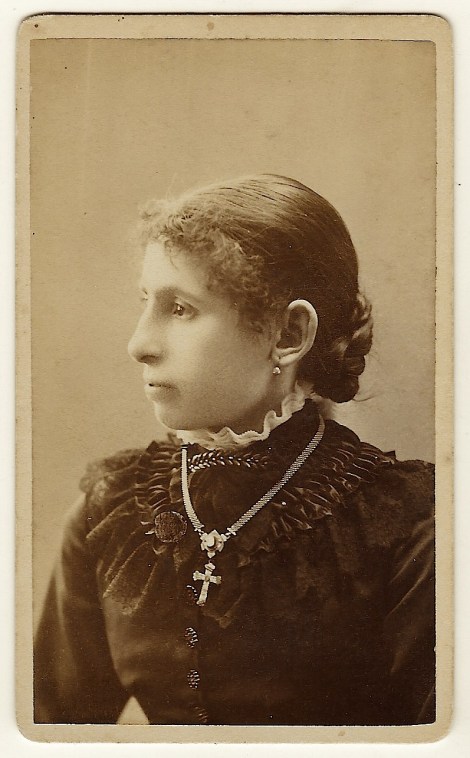
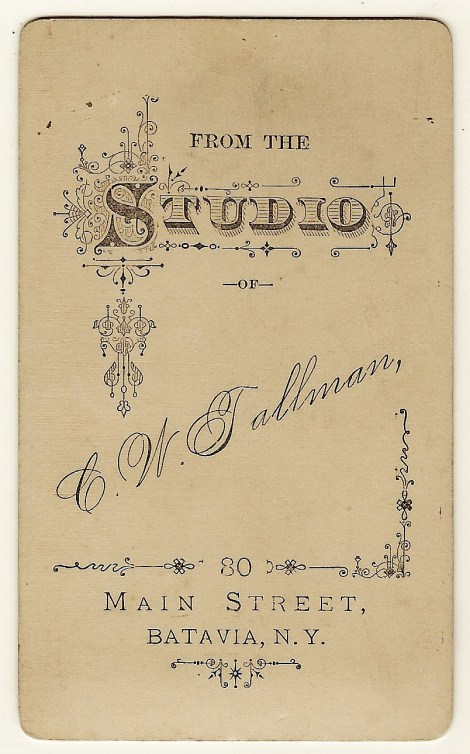
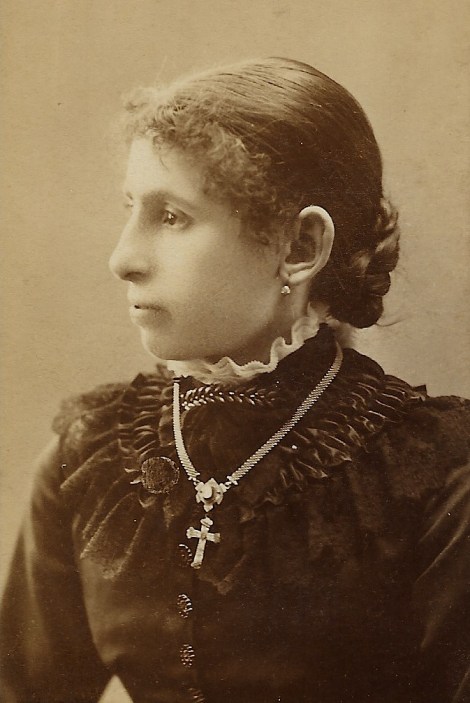 This carte de visite is a photograph of a pretty young woman wearing a large chain and cross. She was photographed at the studio of C. W. Tallman (1833-1896), in Batavia, New York. The town is located in Genesee County and is in the West Central part of the state.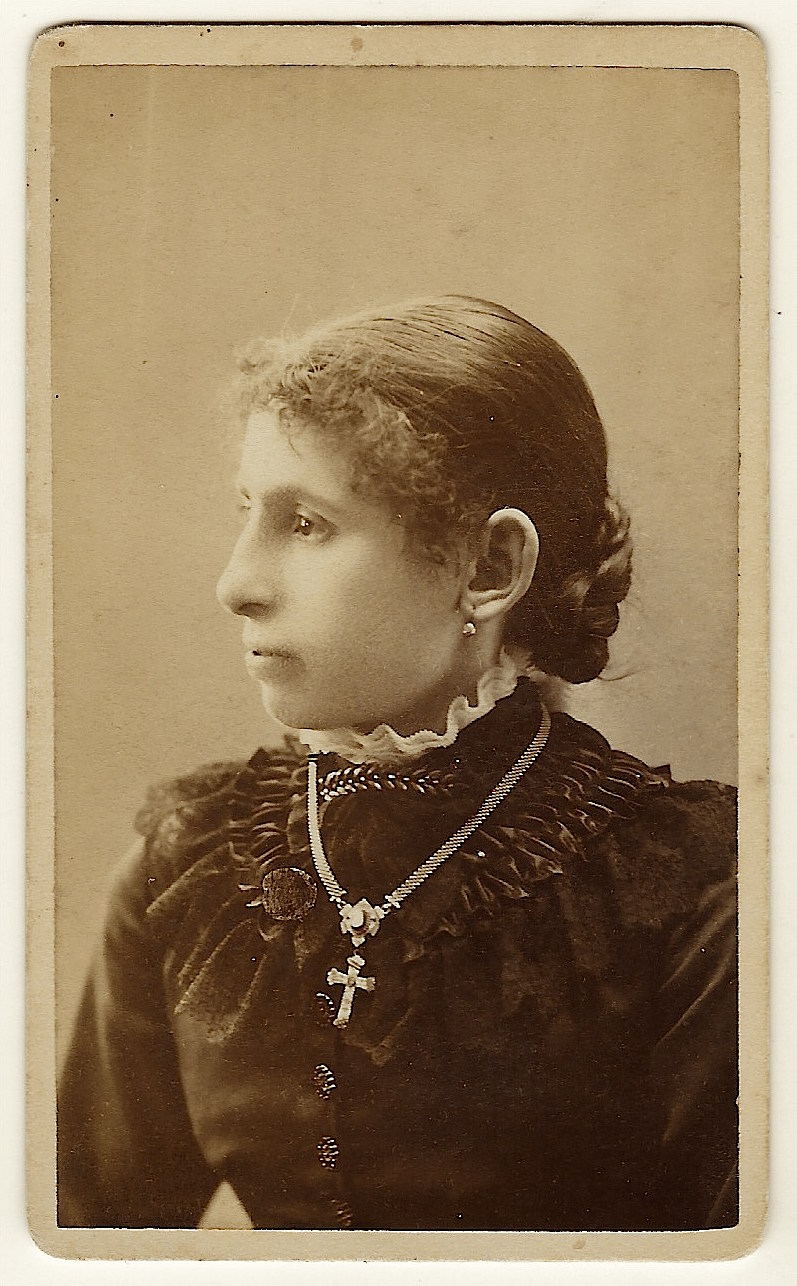


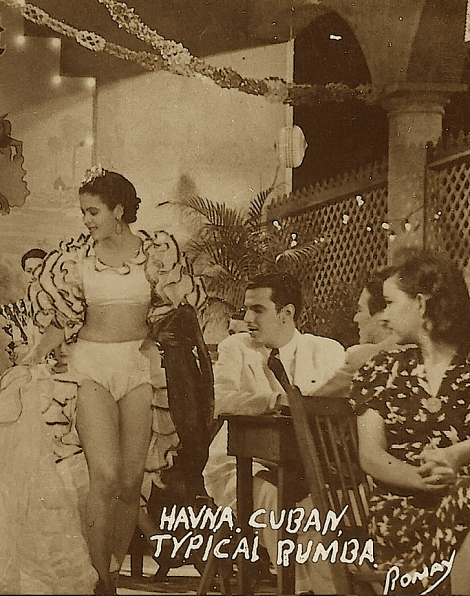 This vintage real photo postcard captures a glimpse of latin social and dance history. This is a photograph of a Havana, Cuba, nightclub in which the patrons participate in a festival of music and dance. The featured dance is the rumba. I have seen two other postcards in this “Typical Rumba” series. This postcard is by far the nicest of the three. The photographer has signed the photo with the name “Ronay”. A sign on the wall states “La Comparsa”. A comparsa is a group of dancers, singers, and musicians that perform in carnival and other festivities in Latin America and Spain. The most well known comparsas are the ones that take part in the “Carnival of Santiago de Cuba”. Does the United States have Comparsas? The most similar carnival held in the United States, according to some writers, is Mardi Gras in New Orleans. Cuban comparsas originate in the eastern part of the island, specifically the city of Santiago de Cuba. The singers, musicians and dancers form the “conga”, the ensemble that performs the canrival music, Havana has it’s own version of carnival. Each city has specific comparsas that tend to perform there. The term “rumba” refers to a style of music and dance. The rumba was exported by Cuba to North America, much like it’s replacement, salsa. The history of the rumba, as well as Comparsas, is much too complex and detailed to be adequately presented in this description. This postcard is from circa 1950 and it is in excellent condition. (see scans). (SOLD)

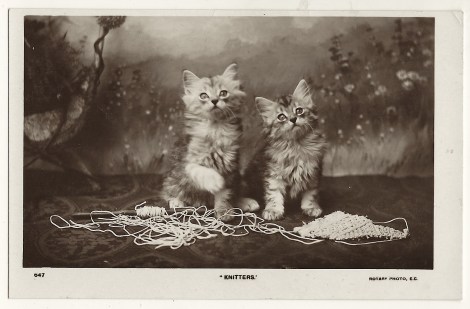
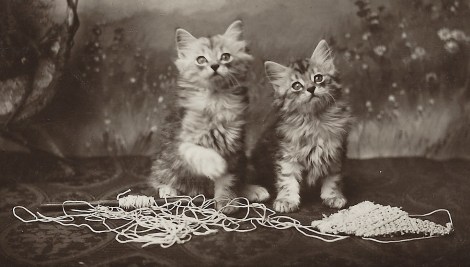 This vintage real photo postcard is captioned “knitters”. This photograph captures two adorable kittens playing with knitting. The postcard was published by Rotary Photo as part of a series (no. 647). The card is from circa 1910’s and is in very good condition.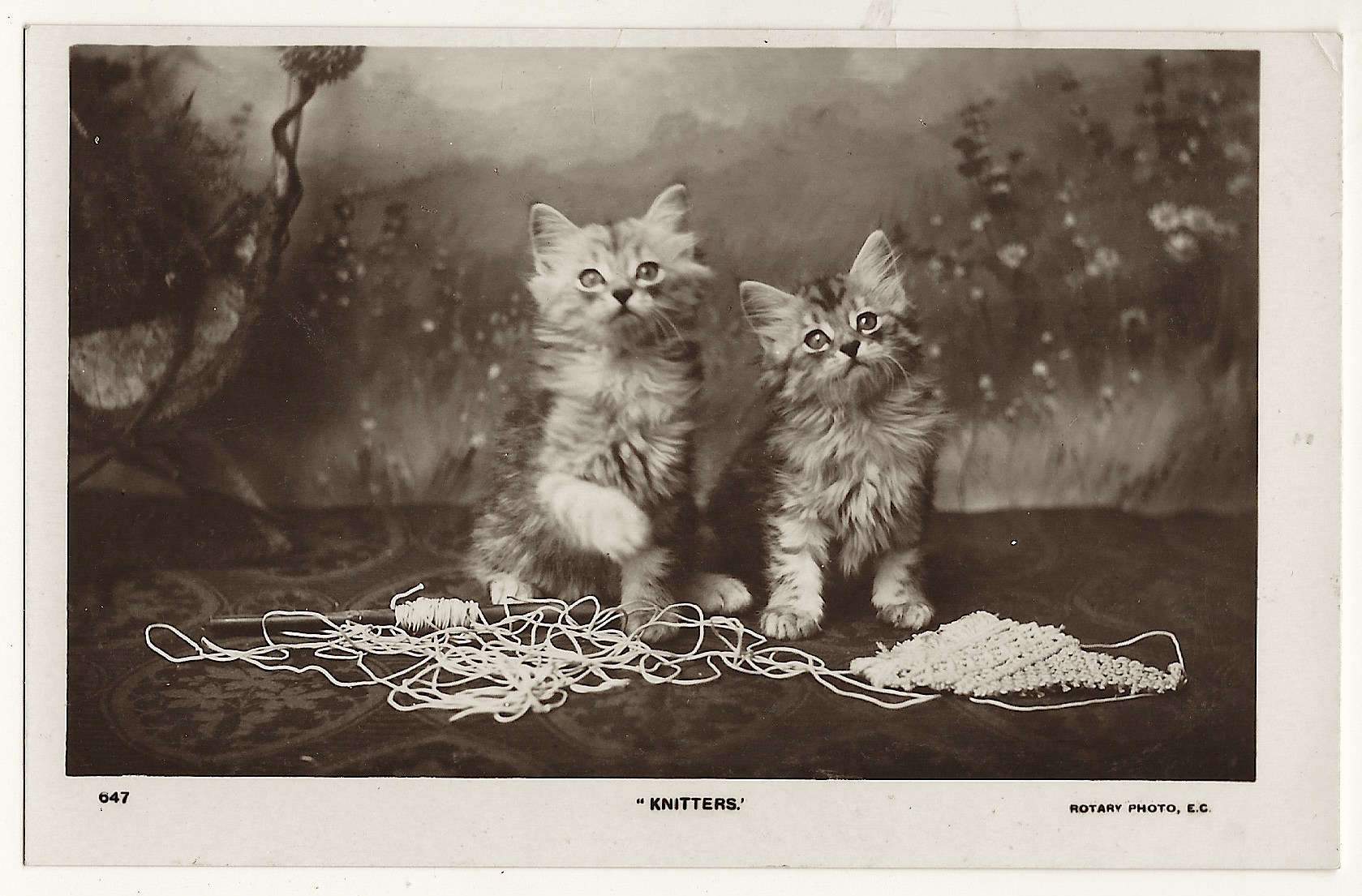
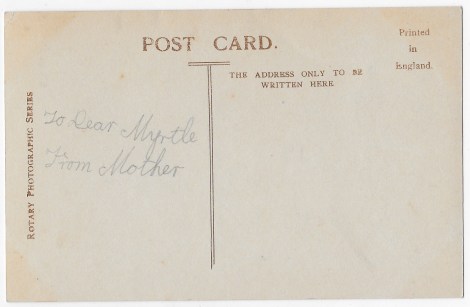

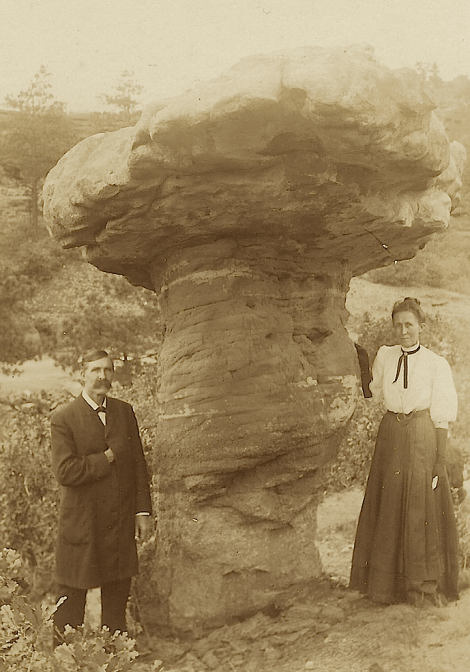 This 1908 real photo postcard captures a well dressed couple posing by “Mushroom Rock” which is located in the “Garden of the Gods” in the state of Colorado. The site is specifically situated in Colorado Springs. Garden of the Gods is a public park and was named a National Natural Landmark in 1971. Glaciers and erosion left the land with incredible rock formations. The park was named by two surveyors in 1859. Multiple Native American nations had involvement with the area. In addition to “Mushroom Rock”, tourists have made “Balanced Rock” a popular visitor site. A photograph of “Balanced Rock” can be found elsewhere in the Cabinet Card Gallery (use the search box to find it). The stamp box indicates the card was published between 1904 and 1918, The 1908 date written on the reverse of the postcard fall well within the range of those years. (SOLD)


 THE CABINET CARD GALLERY