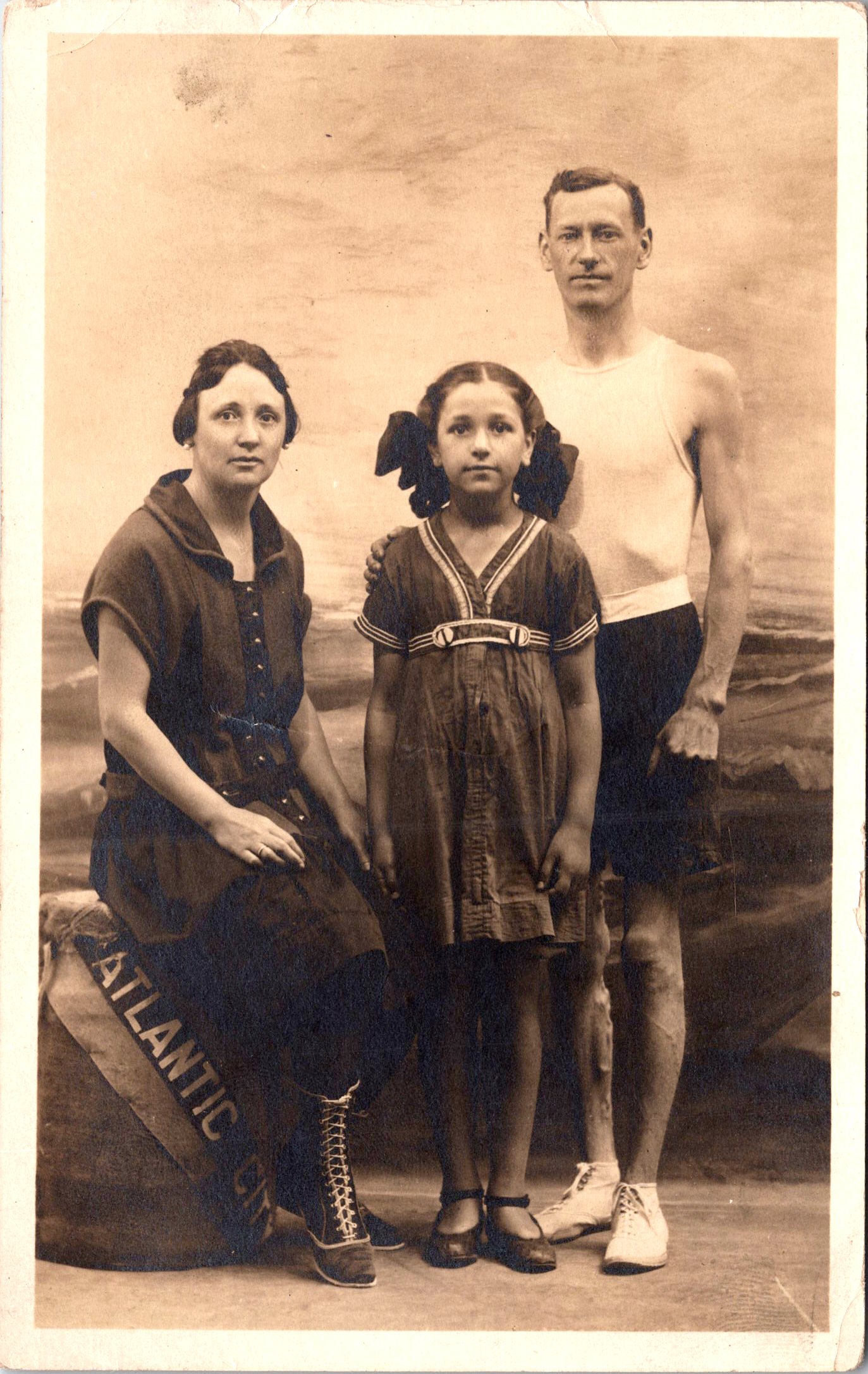
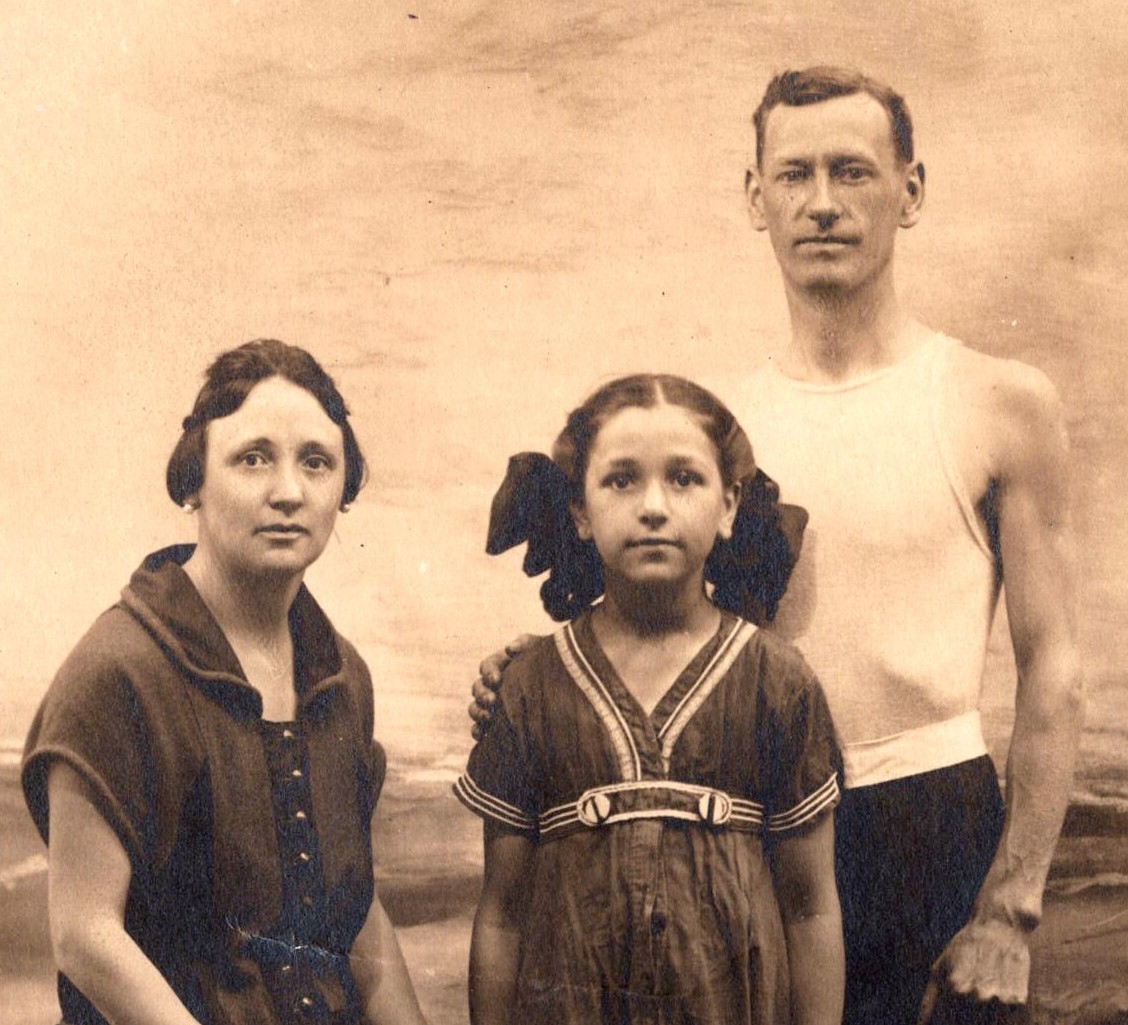
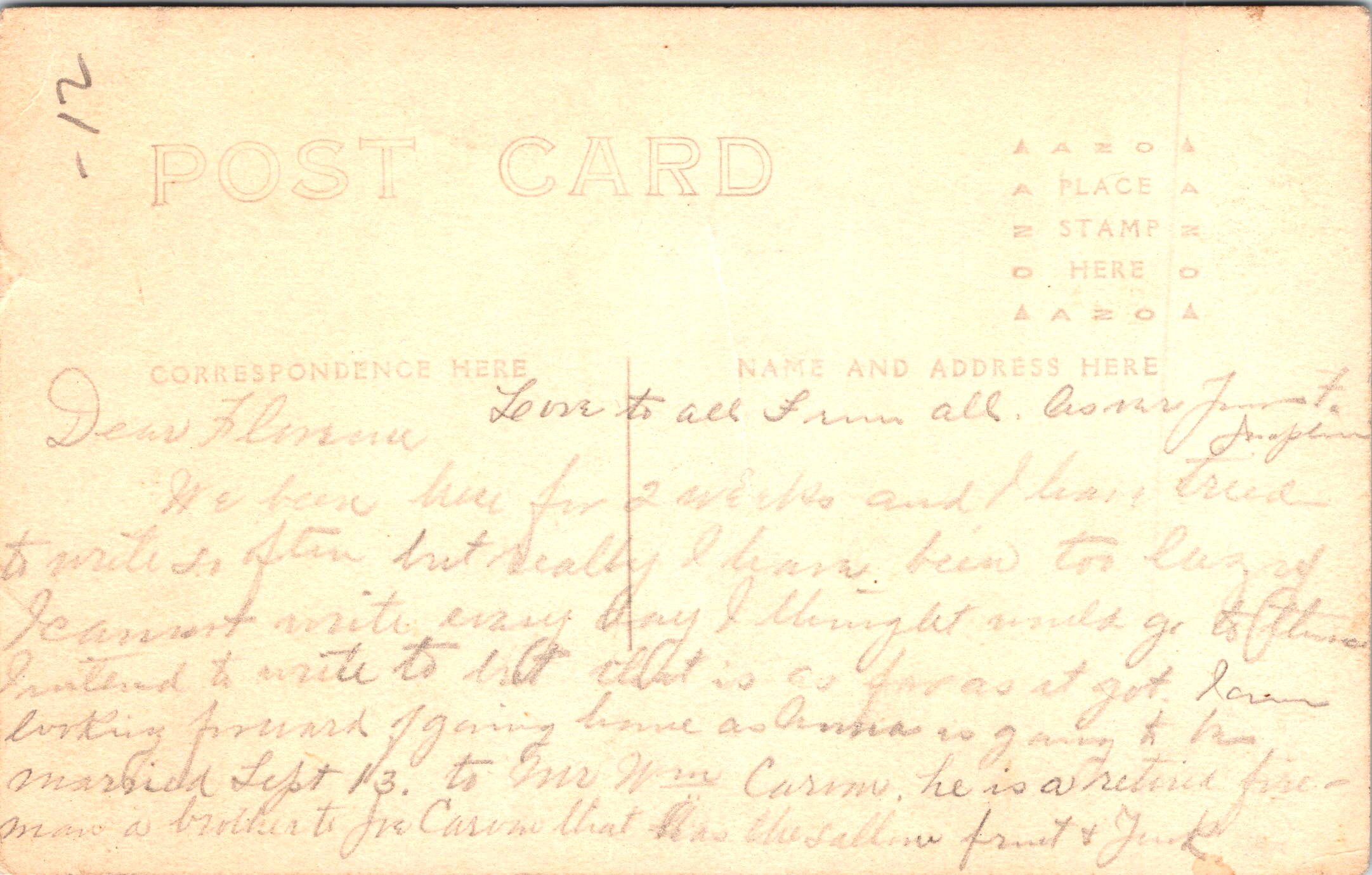
This vintage real photo postcard (RPPC) captures a striking studio portrait of a family—mother, father, and young daughter—likely taken as a souvenir along the Atlantic City Boardwalk in the 1920s. The woman is dressed in a fashionable dark seaside outfit with lace-up boots, seated on a prop with “ATLANTIC CITY” clearly visible. The young girl, wearing a sailor-style dress with large hair bows, stands between her parents, while the man wears a sleeveless athletic undershirt and shorts, a typical beach attire of the period. The backdrop is painted to resemble the seashore, a hallmark of boardwalk souvenir photography studios. A rough transcription of the message on the reverse of the photograph is as follows: “Dear Florence, We’ve been here for 2 weeks and I have tried to write a few but really I have been too lazy. I cannot write every day. I thought I would go to Florence. Intend to write to all that is a good as it got. I am looking forward to going home as Andrew is going to be married Sept 13 to Em Wm Carrow. He is a retired fireman a brother to Joe Carrow that has the saloon front & back. Love to all from all, Asmy Joseph”. The postcard has an AZO stamp box dating it to approximately 1904-1918. Atlantic City’s boardwalk photographers were popular during the early 20th century, offering tourists a chance to take home a posed souvenir photo, often with seaside props or painted backdrops. The mix of casual and dressed attire in this card is characteristic of family beach portraits from the era.(SOLD)
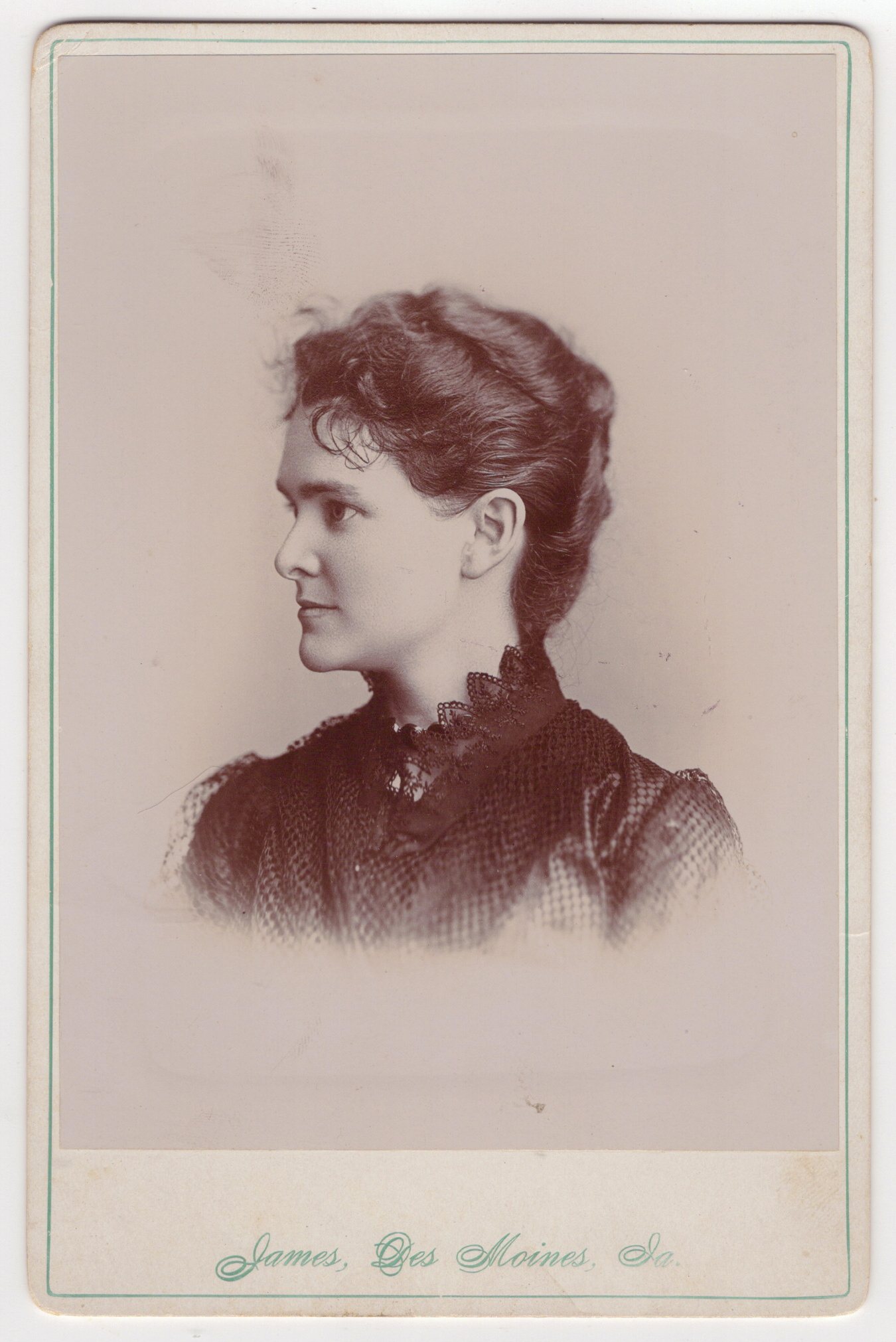
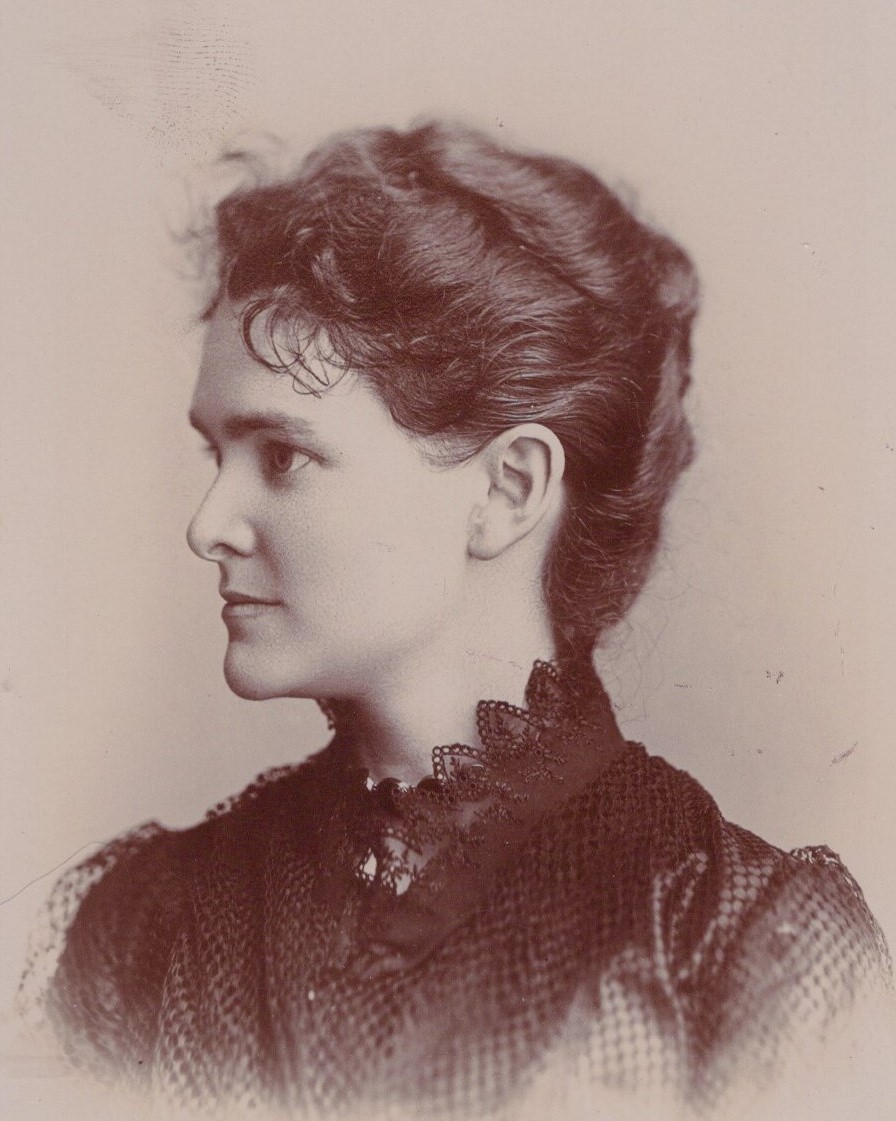
A pretty woman poses for her cabinet card portrait in Des Moines, Iowa. The photographer is named James; his first name is unknown. The young woman is wearing a scalloped lace collar and a serious expression. SOLD
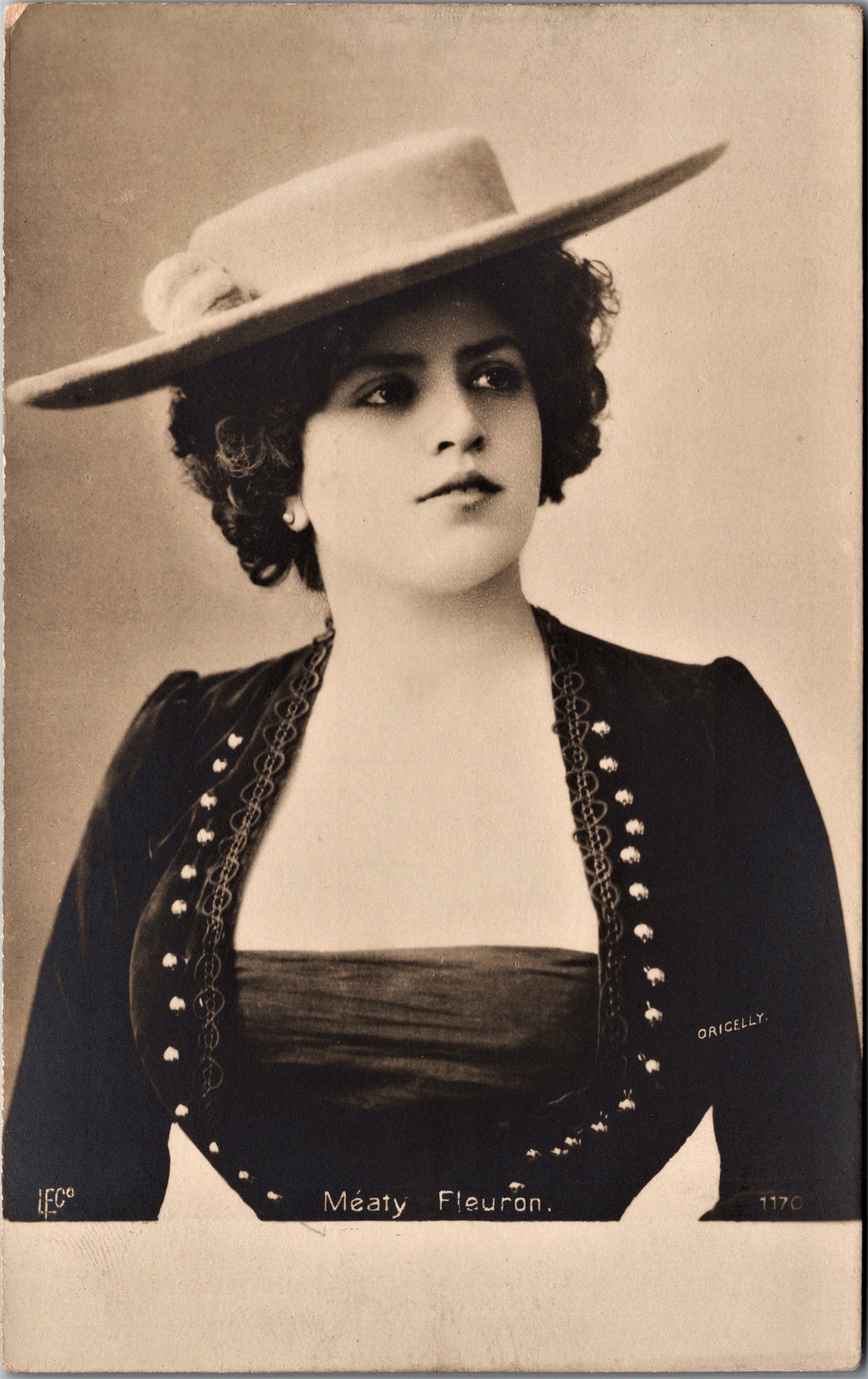
This vintage real photo postcard features Meaty Fleuron, a dancehall artist from the Belle Epoque era. Meaty was a singer and a dancer. She was one of the “Postcard Queens” popular at the turn of the century. In other words, she was a prolific postcard model. She made her debut at the European Concert hall in 1895. She is noted for appearing in “swimsuit roles”. Her sister, Lise Fleuron was also a performer. This postcard was published by LF Co. which I believe, but am not certain, is Labouene Freres. Miss Fleuron was photographed by the Oricelly studio for this postcard. Oricelly was based in Paris, France. SOLD
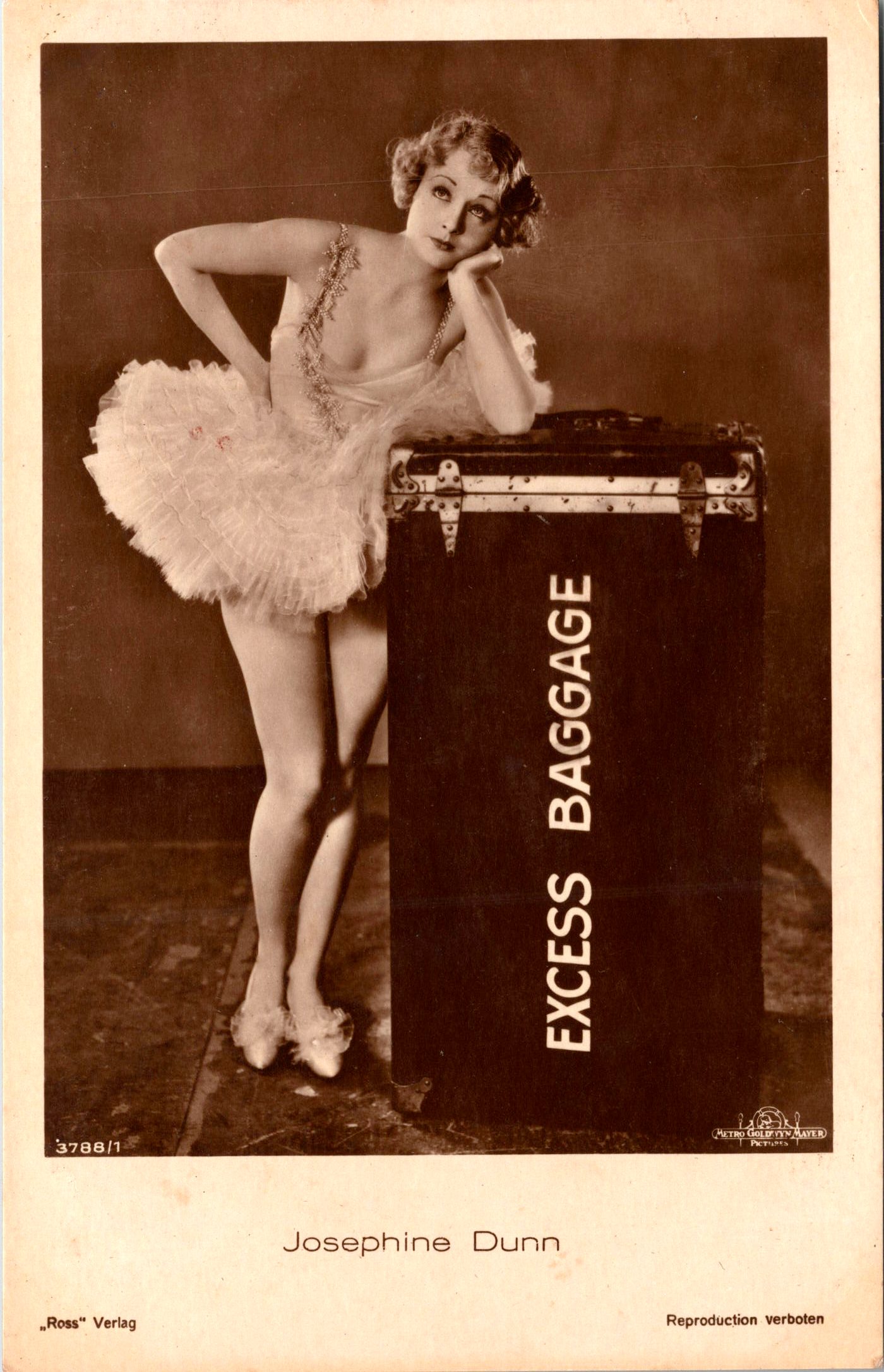
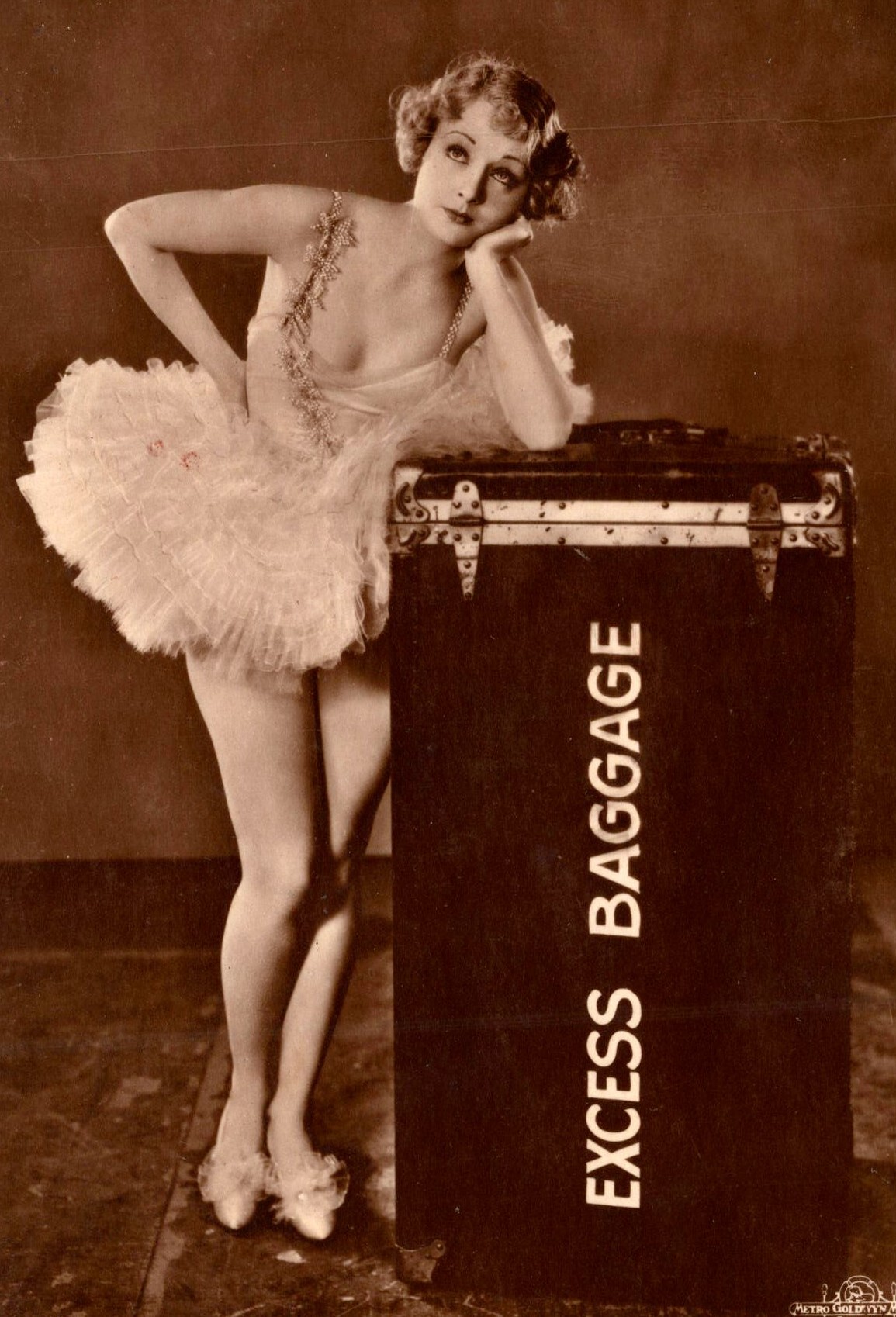
Josephine Dunn (1906 –1983) was an American actress known primarily for her work in silent and early sound films during the late 1920s and early 1930s. She was a glamorous starlet of the Jazz Age, often cast in flapper and socialite roles. Josephine Dunn was born in New York City, where she was raised. Little is known about her early years, but she entered show business as a teenager, joining the world of vaudeville before making the transition to film. Her natural beauty, charisma, and fashionable style made her a popular choice for film producers during Hollywood’s silent era. Dunn made her film debut in 1926 and quickly became a sought-after actress, starring in a variety of silent and early talkie films. She was often cast as the “other woman” or as a carefree flapper, fitting the Roaring Twenties’ archetype of modern femininity. One of her most notable films was “Our Modern Maidens” (1929), in which she starred alongside Joan Crawford and Douglas Fairbanks Jr. She also appeared in: “Excess Baggage” (1928),”The Broadway Melody” (1929), “Tanned Legs” (1929), and “Montana Moon” (1930). Her transition from silent films to talkies was fairly successful, though she never achieved the same level of fame as some of her contemporaries, such as Crawford or Norma Shearer. By the early 1930s, her film career began to slow down. While primarily a screen actress, Dunn had early experience in vaudeville and stage performances, though she never became a major Broadway star. She retired from acting in the mid-1930s and lived a largely private life afterward. Dunn was married multiple times, including to millionaire oil executive Carroll Case. Her personal life was often the subject of media gossip. Although she was never a top-tier star, Josephine Dunn was emblematic of 1920s and early 1930s Hollywood glamour. This postcard features Dunn in her starring role in the 1928 silent film, “Excess Baggage”. The romantic comedy film was produced by Metro-Goldwyn-Mayer (MGM). She played the role fo a glamourous and sophisticated young woman. Unfortunately, like many silent films of the era, Excess Baggage is considered lost, meaning no known copies are available today. In this image, Josephine Dunn is dressed in a delicate, ruffled ballet-style costume, with a short, voluminous tutu and an intricately adorned bodice. The dress features lace and embellishments, reflecting the flapper era’s fascination with femininity and luxury. Her feet are adorned with soft, ballet-like slippers, adding to the graceful, almost ethereal appearance of her outfit. Her pose is both playful and weary—leaning on the large travel trunk with one arm propped up and her hand resting gently against her face. Her expression is one of wistful contemplation, with her eyes gazing off to the side, giving a sense of melancholy or quiet amusement. This pose complements the humor suggested by the film’s title, Excess Baggage, possibly hinting at the idea of emotional or romantic burdens rather than just literal luggage. Her curled, short blonde hair, typical of the 1920s, frames her face beautifully, reinforcing her status as a Jazz Age beauty. This risque postcard was published by Berlin based, Ross Verlag. In the card’s lower right corner, we see the logo of MGM. This vintage real photo postcard was issued in 1928. (SOLD)
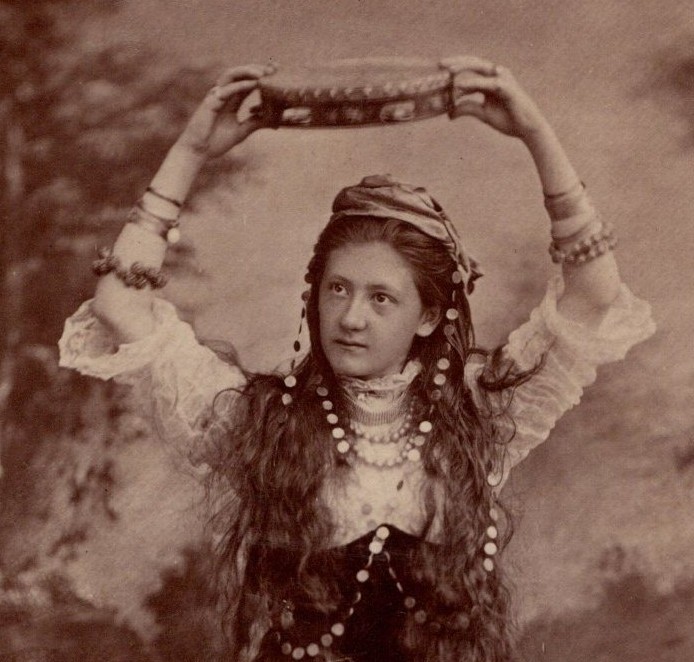
This cabinet card captures a gypsy woman with her tambourine held above her head. She is wearing multiple bracelets and necklaces, as well as linked chains. She is wearing what appears to be a head scarf, stockings, and a very interesting cloth belt. She may be an actual gypsy, or perhaps an actress in costume. The photographer is H. M. Finley of Canandagua, New York. Canandaigua is located in the Finger Lakes region of New York. Horace M. Finley (1839-?) was born in Canandaigua and educated in local schools. After completing school he worked for his father’s photographic studio. His father, Marshall Finley, was a co author of one of the first American photography books (1849). Horace Finley worked as a photographer for many years; he was listed as an artist, or photographer, in the census’s of 1860 through 1900. To view other photographs by Finley, click on category “Photographer: Finley”. SOLD
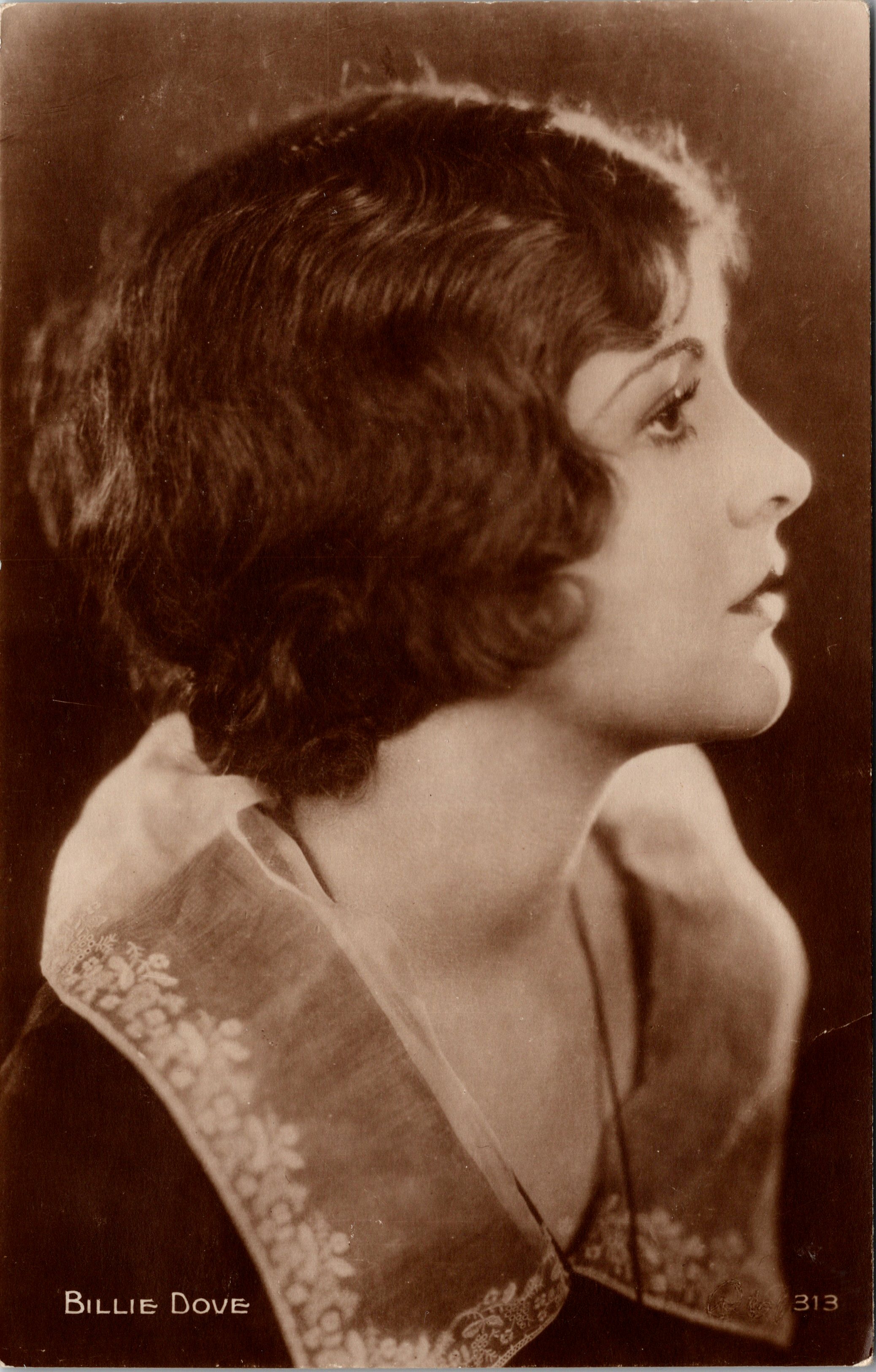
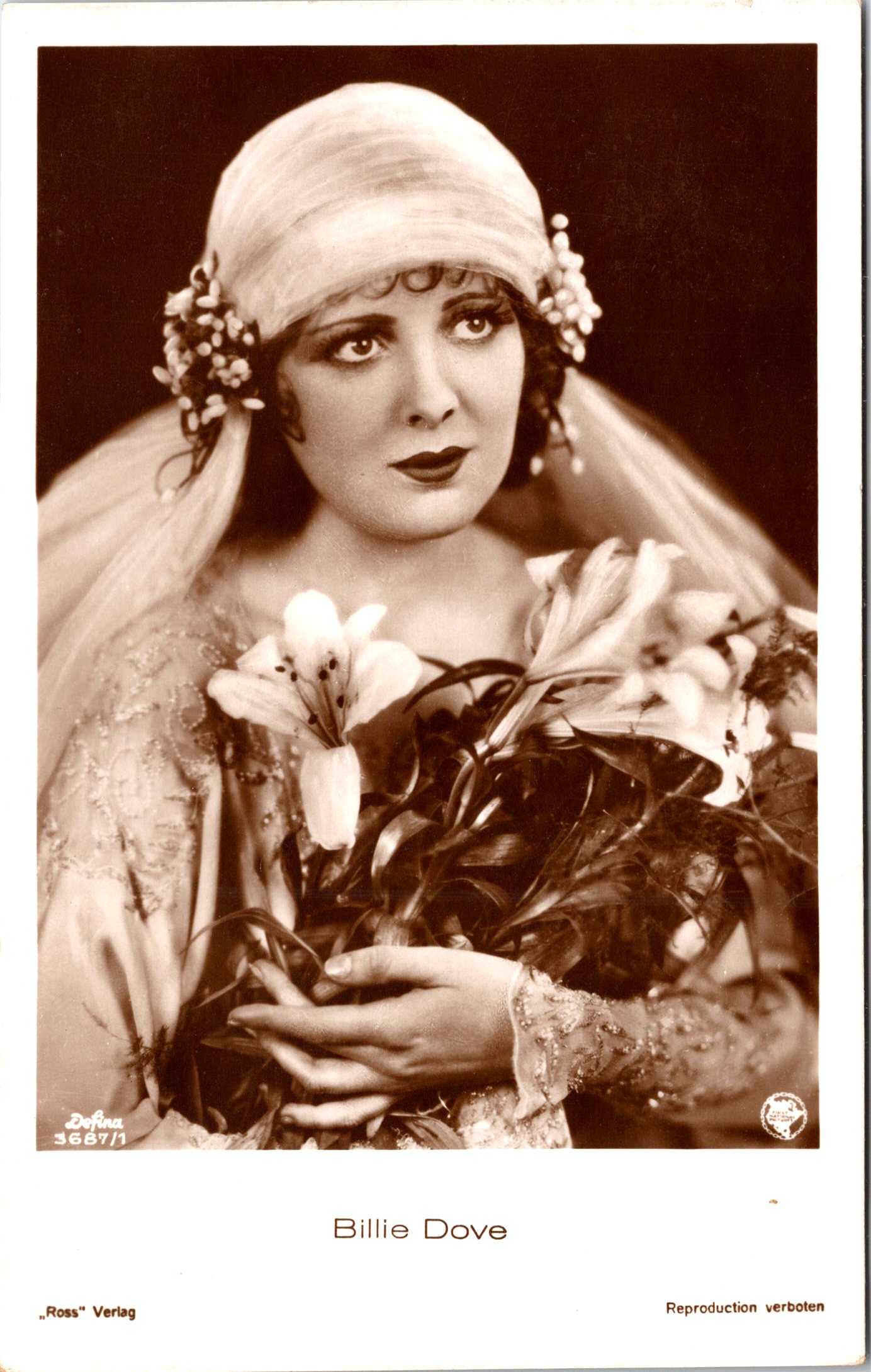
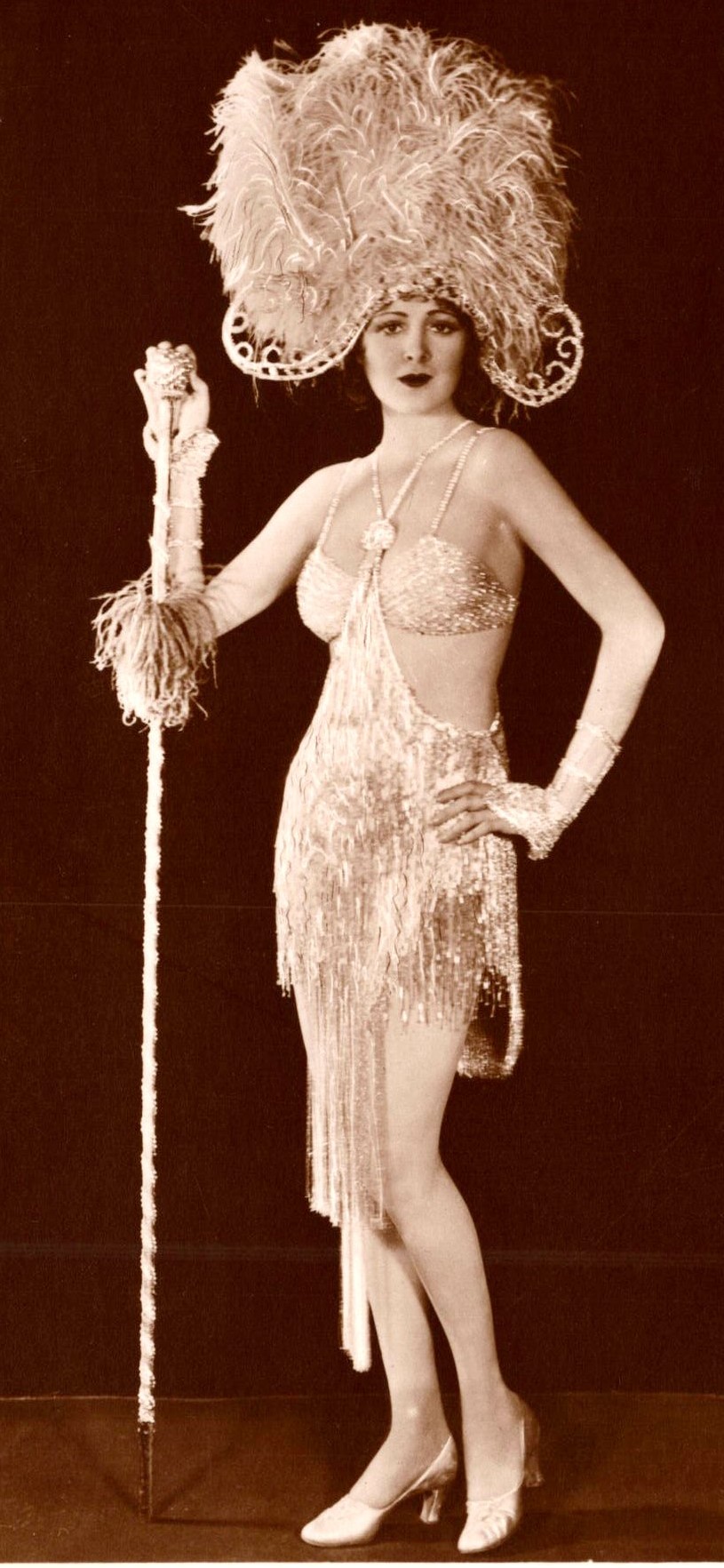
These vintage real photo postcards feature actress Billie Dove. Billie Dove (1903-1997) was an American actress. Her parents were Swiss immigrants. During her teenage years, she worked as a model to support her family. Florenz Ziegfeld hired her as a teenager to appear in the Ziegfeld Follies Revue. She was not a particularly talented dancer or singer, her beauty and acting ability were her major assets. In the early 1920’s she moved to Hollywood and began appearing in silent films. It has been written that Ziegfeld’s wife, actress Billie Burke, helped facilitate Dove’s transition to films. Apparently, Burke was trying to separate Dove from her husband because the pair were having an affair. It did not take long for her to become one of the more popular actresses of the 1920’s. Among her better known films was “The Black Pirate” (1926) with Douglas Fairbanks, and “The American Beauty” (1927). Dove was a ravishing beauty and was very photogenic. She married director, Irvin Willat, in 1923. The marriage had a six year duration. She then had a three year romance with Howard Hughes. Dove’s other interests included being a pilot, painter, and poet. After her last film, “Blondie of the Follies” (1932), Dove retired from films. It is thought that she retired because she was distraught about her role in her last film being “trimmed” by her co-star’s (Marion Davies) influential boyfriend (William Randloph Hearst). Hearst was upset because Miss Davise’s acting was overshadowed by Dove’s acting. Mr Hearst owned Cosmopolitan Productions which produced the movie. After retirement, Dove married oil executive Robert Kenaston in 1933 and the couple remained together until Kenaston’s death in 1970. She had a brief third marriage to an architect. It is interesting to note that jazz singer, Billie Holiday, borrowed Billie Dove’s first name when picking out her own stage name. Miss Holiday was an admirer of Miss Dove. The IMDb lists 50 movie credits for Billie Dove between 1921 and 1962.
Postcard 1 is a profile portrait was published by Cinemagazine – Paris Edition (no.313). (SOLD)
Postcard 2 was published as by Ross Verlag as part of a series (No.3687/1). Billie Dove looks beautiful in this portrait taken by Defina. The logo for First National Pictures can be seen in the image’s lower right corner. (SOLD)
Postcard 3 features Billie Dove looking beautiful in this provocative portrait. The card is risque, considering Dove’s pose and revealing tight dress. Billie Doves portrait seen on this postcard was taken by Defina. This card was published by Ross Verlag’s Italian Edition (Bellerini & Fratini, Florence, Italy). Casa Editrice Bellerini & Fratini was one of the most renowned Italian publishers. The firm began publishing film postcards in the early 1920’s and later became a distributor for Ross Verlag. As of 1918, the firm was still in existence. (SOLD)
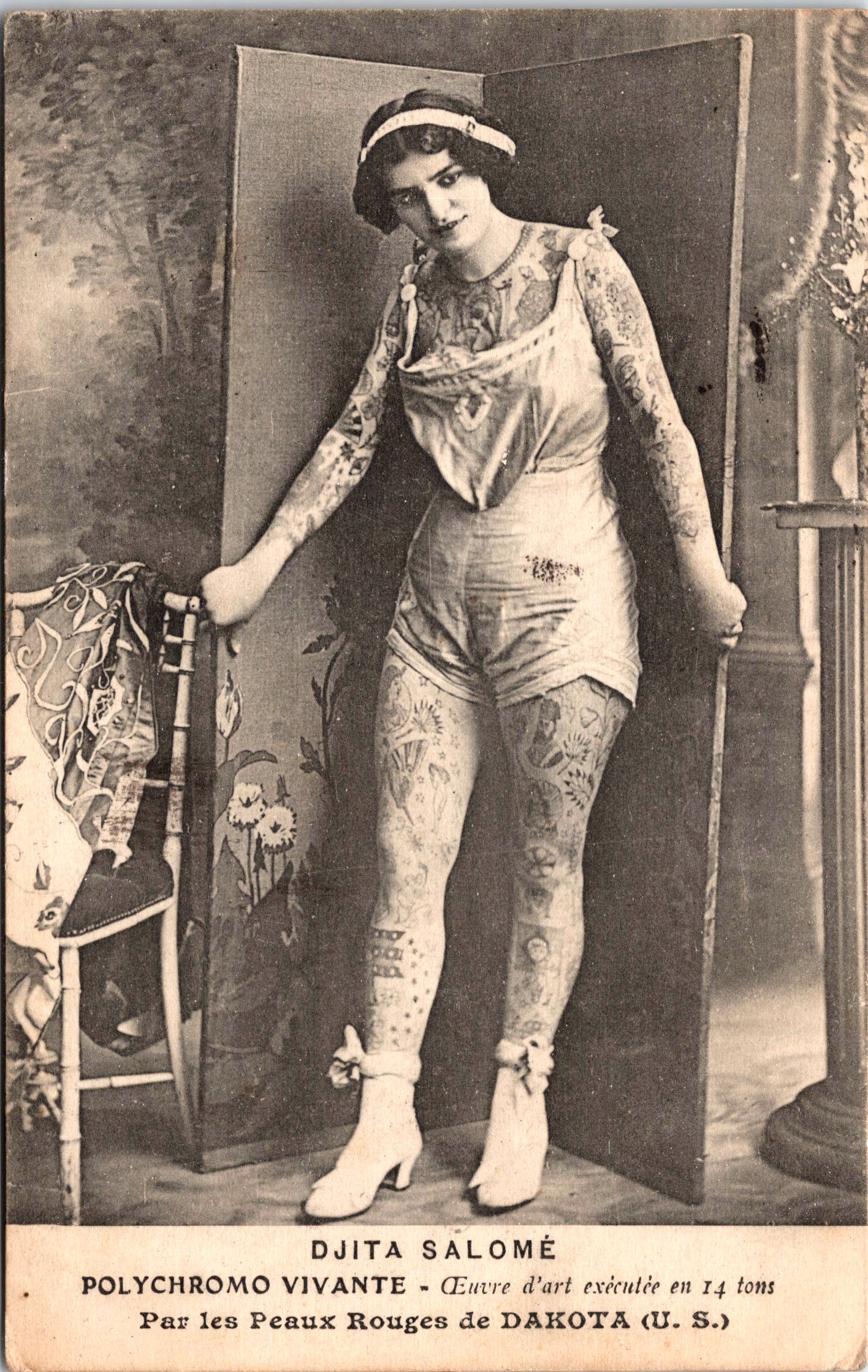
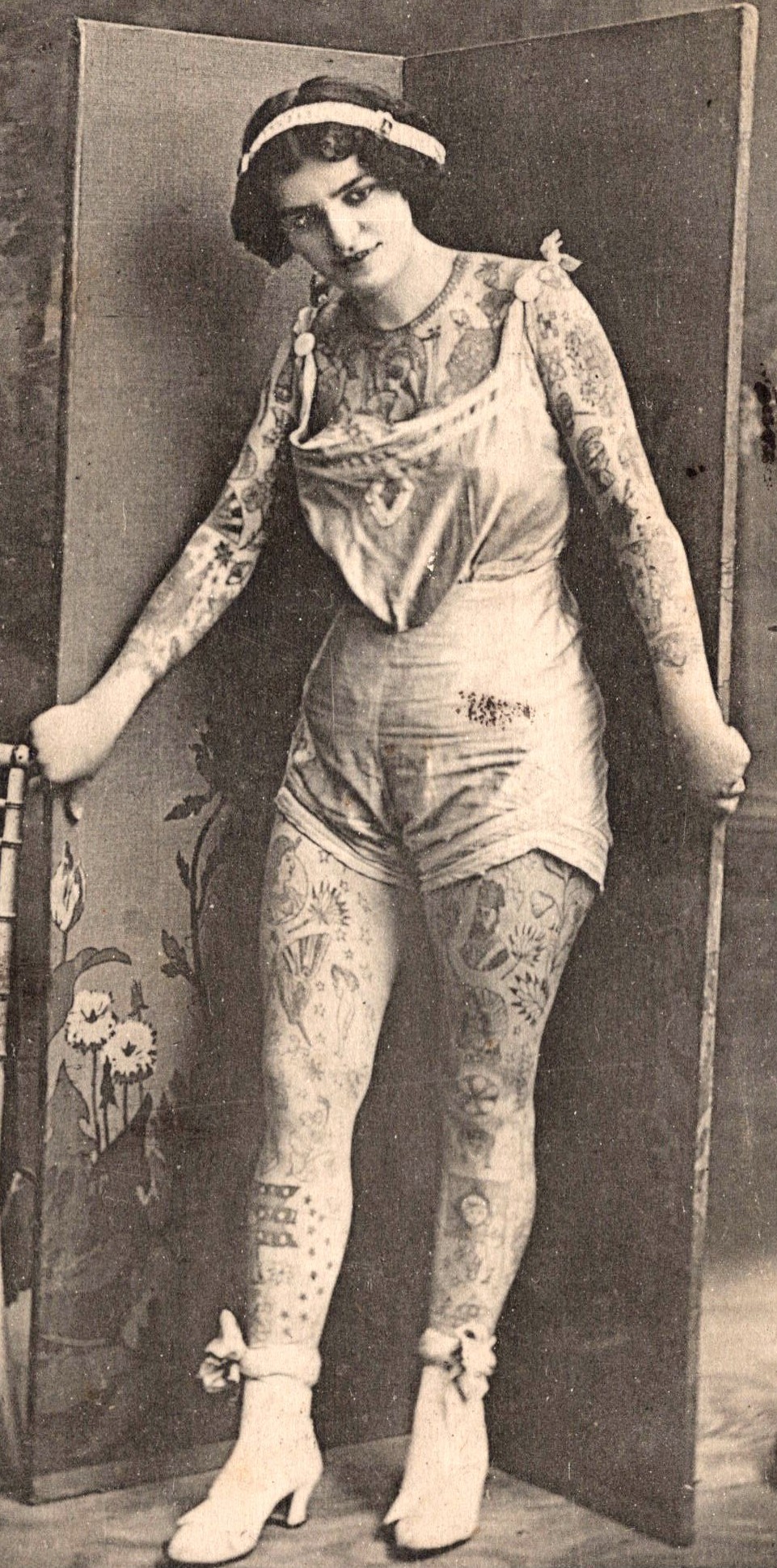
This extraordinary real photo postcard features Djita Salomé, one of Europe’s most celebrated tattooed ladies of the early 20th century. Salomé toured widely on the sideshow and carnival circuit and was promoted as a “living polychrome work of art.” Her entire body was covered in elaborate tattoos, executed in up to 14 different colors, making her a sensation across Europe. She performed at major venues including Edinburgh’s Waverley Market (1911), Toulouse’s Théâtre des Nouveautés (1913), Laval (1914), and Paris’s Bal Tabarin (1914). The postcard’s printed caption (in French) describes her as: “Djita Salomé – Living Polychrome – Work of art executed in 14 tones by the Red Skins of Dakota (U.S.)”. Such phrasing was typical of the bold circus-style marketing used to promote her act. The card carries a handwritten message dated 1916,. The card was sent from Drome, France; and was addressed to Léon Florançon at a local barracks. The following is a rough translation of the message : ” My dear Léon, I received your letter of the 14th with great pleasure. I am happy to know that you are well. Here, everything is going fine, and we are all in good health. Papa is working as usual, and we are managing with the household accounts as best we can. I sent the 25 francs you asked for last week—please let me know if you received it. Write more often when you can; your letters always bring us joy. Mama sends you her warm affection. Courage, my dear boy, and remember that we think of you every day. With tender kisses, Your loving sister, Jeanne.” This message not only adds personal warmth but also situates the postcard directly in the context of World War I France, where families maintained contact with sons and brothers in service. (SOLD)
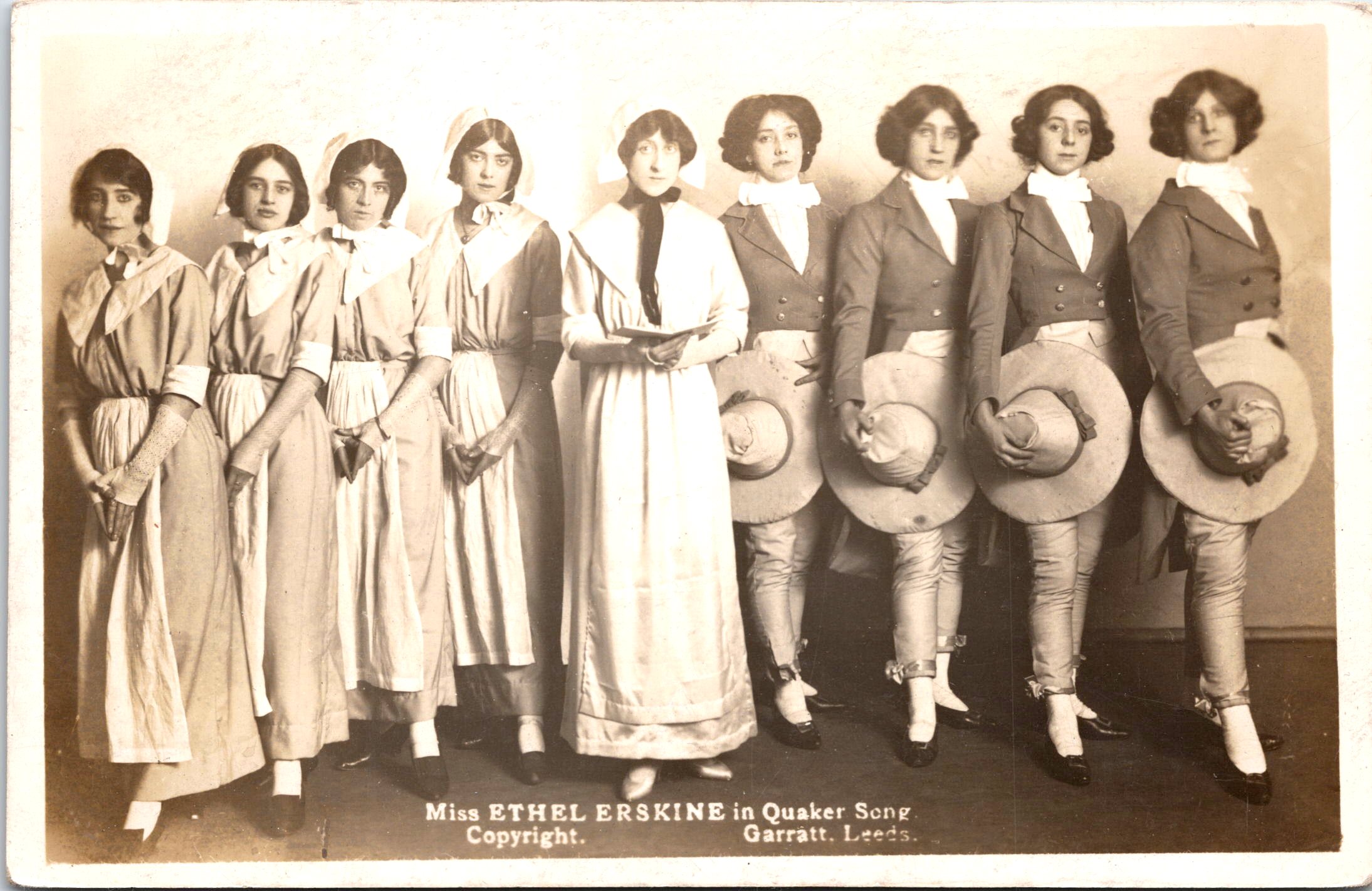
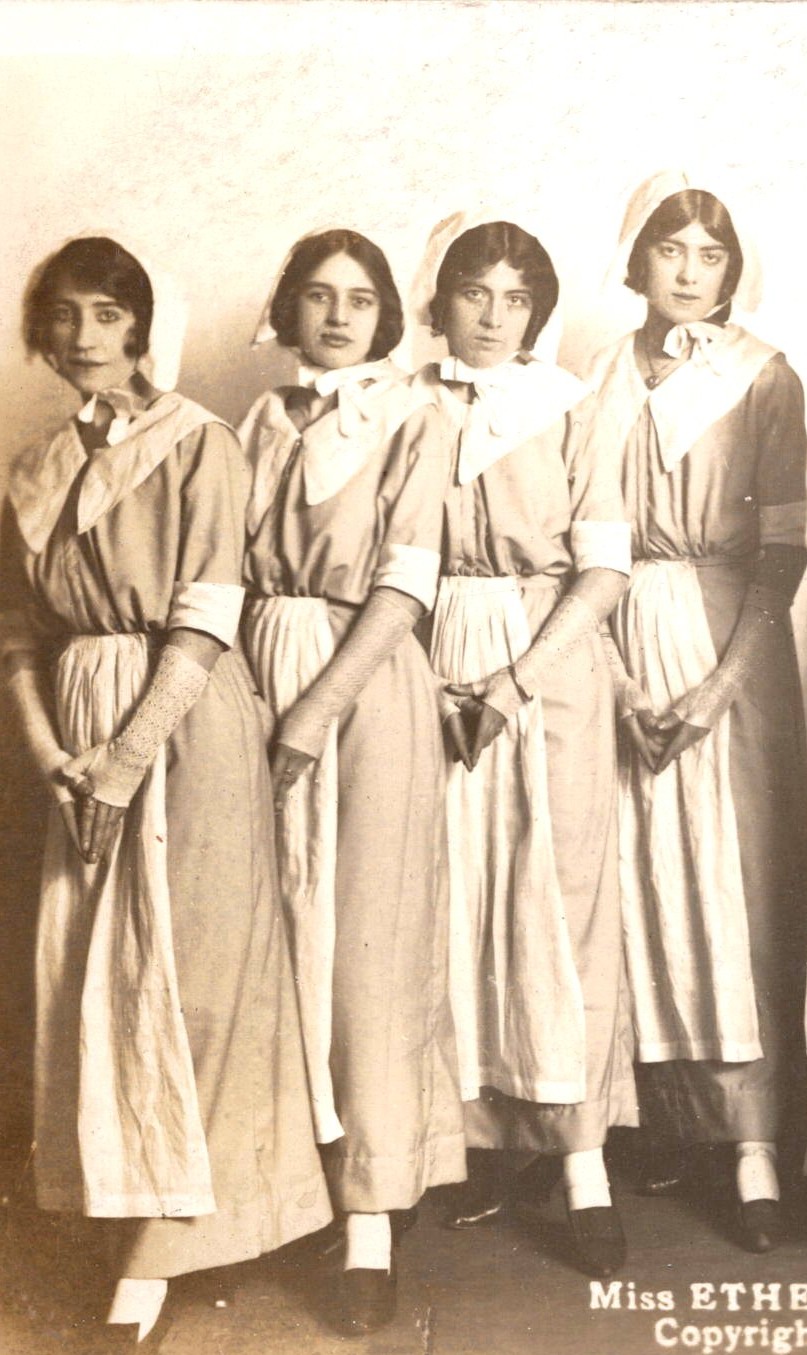
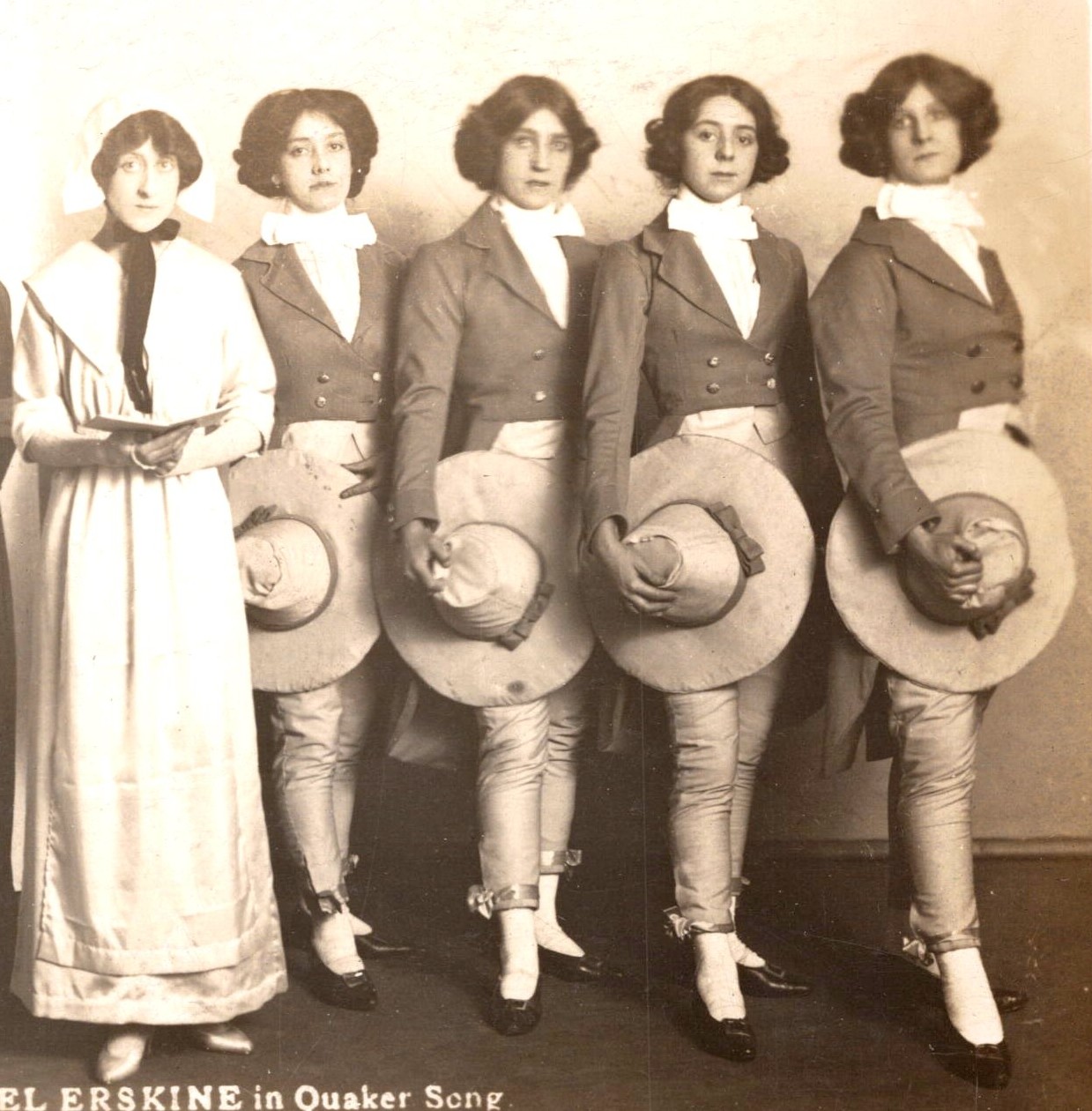
The postcard features a photograph of actress Ethel Erskine in a scene from the play “Quaker Song,” performed in Leeds, England. The image captures Erskine alongside her fellow cast members, each embodying their respective characters with period-appropriate attire and expressive demeanors. The photograph was taken by J. Garratt, a photographer who operated a studio in Leeds. Ethel Erskine was a prominent actress in the early 20th century, known for her performances in various theatrical productions. One notable role was Ilona in the operetta “Gipsy Love,” which played at venues such as the Carltheater in Vienna (1910), the Globe Theatre on Broadway (1911), and Daly’s Theatre in London (1912). Despite her evident talent and presence on stage, detailed records of her personal life and broader career remain limited. This scarcity of information adds an element of intrigue to her legacy. Specific details about the play “Quaker Song” are scarce, suggesting it may have been a lesser-known or perhaps a localized production during its time. Erskine is positioned prominently in this postcard photograph. She exudes poise and confidence. She is dressed in attire reflecting the Quaker aesthetic—simple yet elegant, with modest designs and muted colors. Her expression is serene, capturing the essence of her character’s introspective and gentle nature. The accompanying actors are arranged thoughtfully around Erskine, each contributing to the scene’s narrative. They are similarly dressed in period costumes that reflect the Quaker ethos, characterized by plain fabrics and unadorned styles. Their expressions range from contemplative to earnest, suggesting a moment of communal decision or reflection within the play. The photograph is credited to J. Garratt, who operated a photography studio in Leeds. SOLD
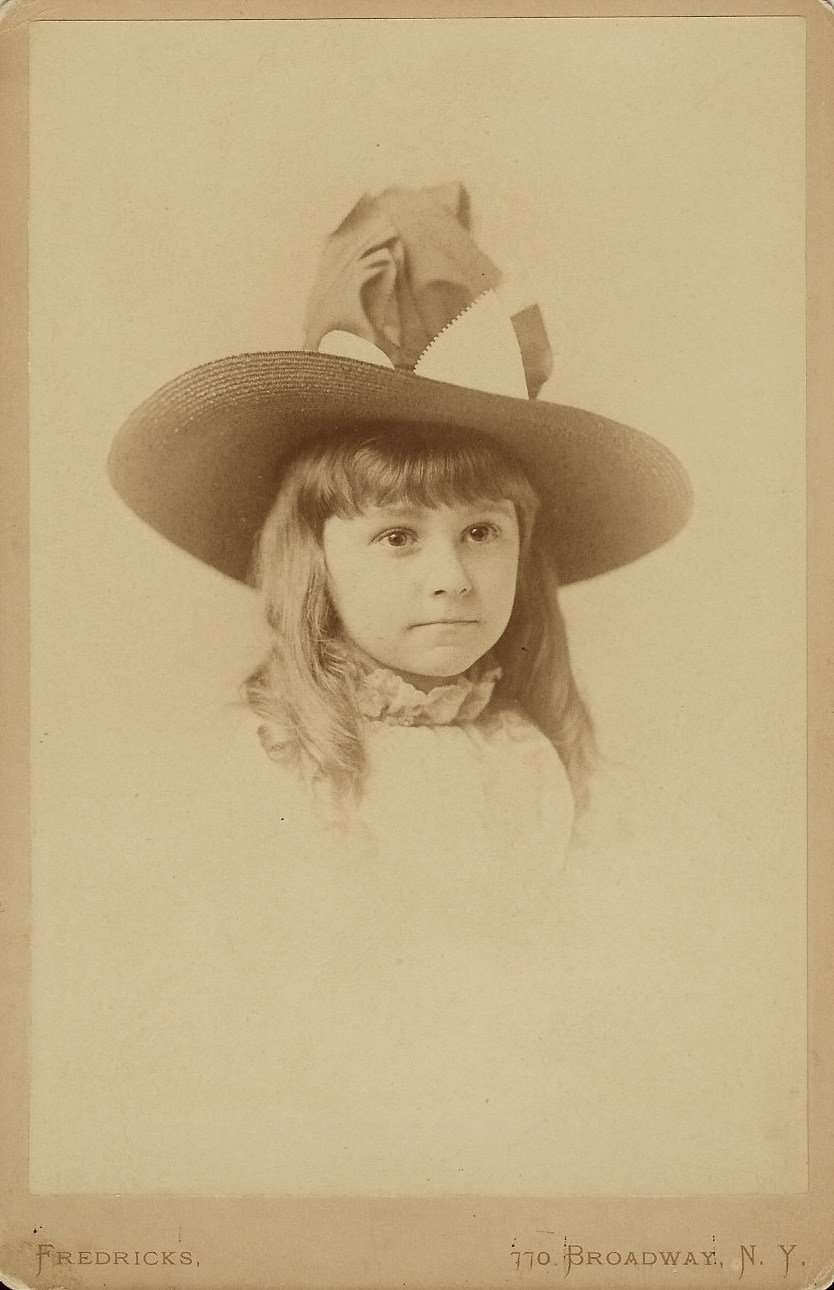
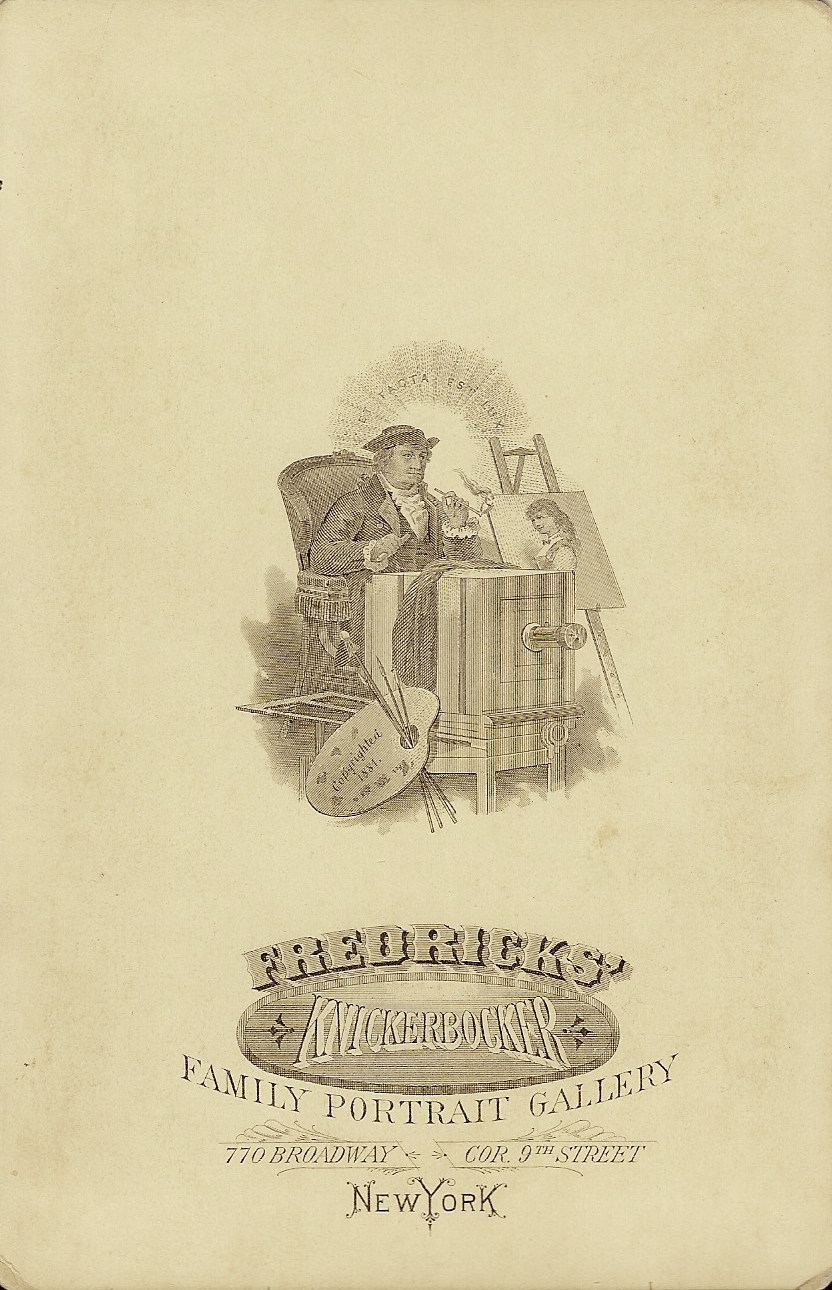
The adorable little girl with the big hat seen in this cabinet card was photographed by a talented and well known celebrity photographer by the name of Charles DeForest Fredricks (1823-1894). Fredricks was an innovative American photographer. He learned the art of producing daguerreotypes from the great photographer , Jeremiah Gurney. Fredricks worked in South America through the early 1850’s and then he operated out of Charleston, South Carolina; and Paris, France. He was the first photographer to make life-size portraits. He hired artists to color them using pastel. Fredricks then returned to New York City and rejoined Gurney. In 1854 he developed a new enlarging process and in 1855 he ended his association with Gurney. In the late 1850’s Fredricks ran his studio in Havana, Cuba, and in the 1860’s he opened a studio on Broadway, in New York City. He retired in 1889. Be sure to view the fancy advertisement printed on the reverse of this photograph. (SOLD)
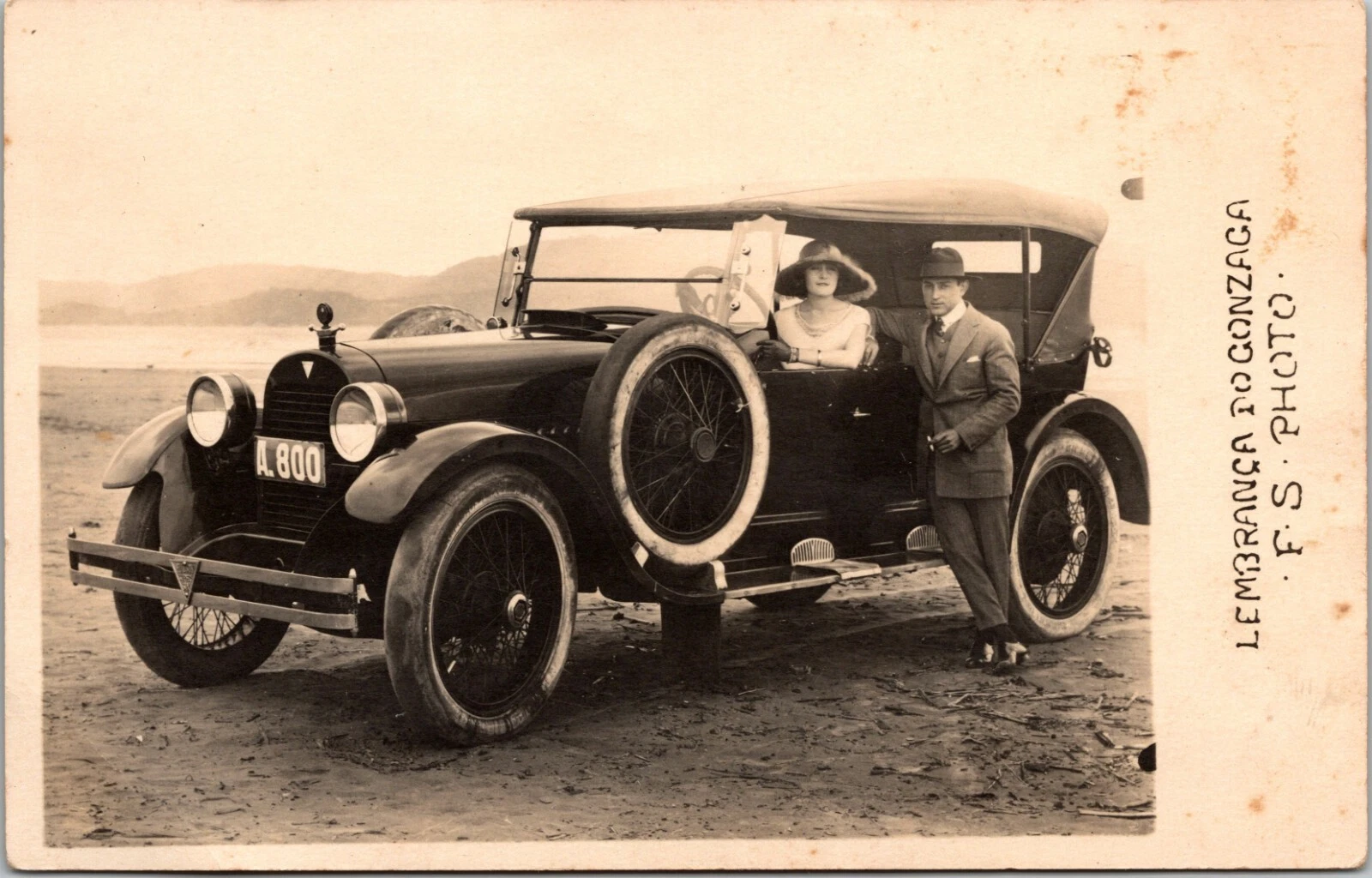
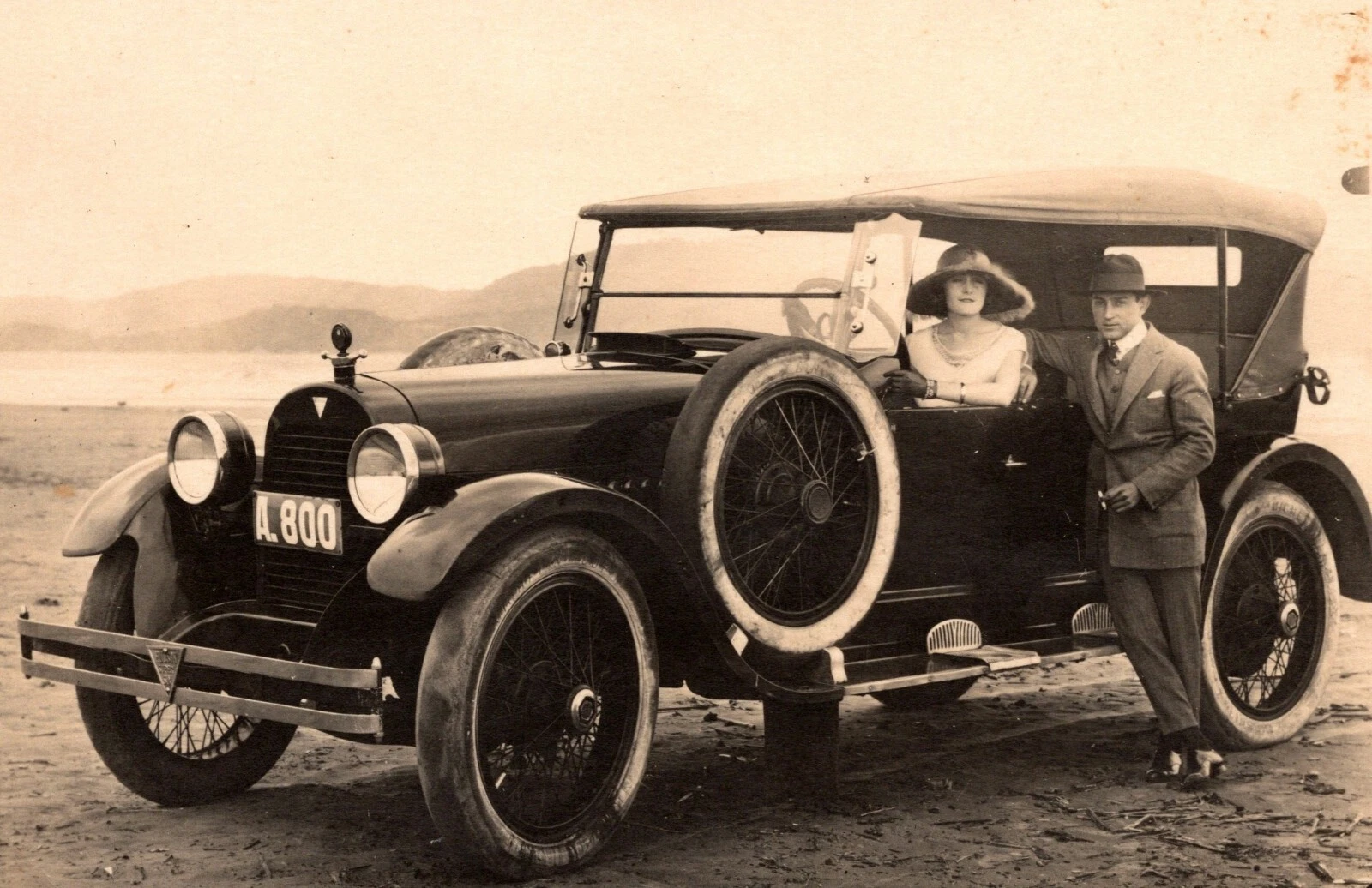
This vintage real photo postcard features a well dressed couple and their convertible automobile. The woman is in the drivers seat while the man is leaning against the outside of the car. He is holding a cigarette in his hand. The caption on the card states “Memories of Gonzaga”. Gonzaga is a municipality in Brazil. SOLD




 THE CABINET CARD GALLERY