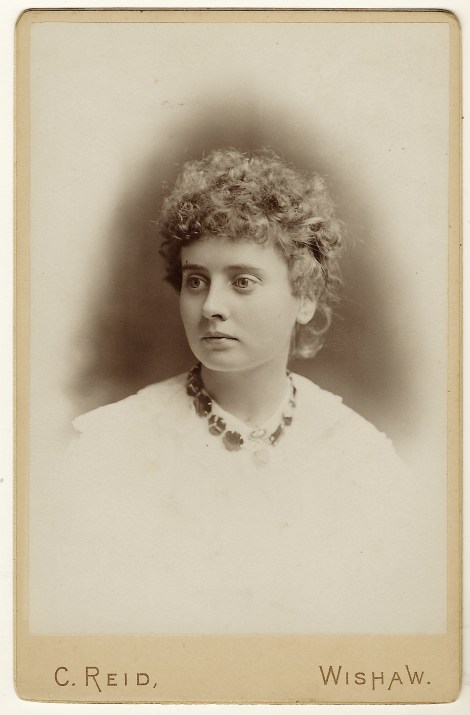
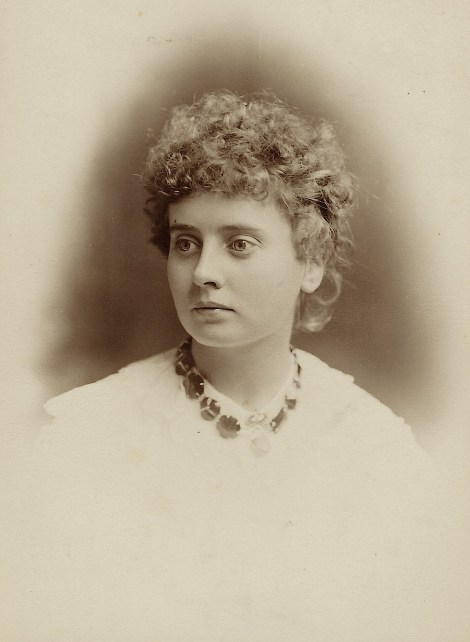
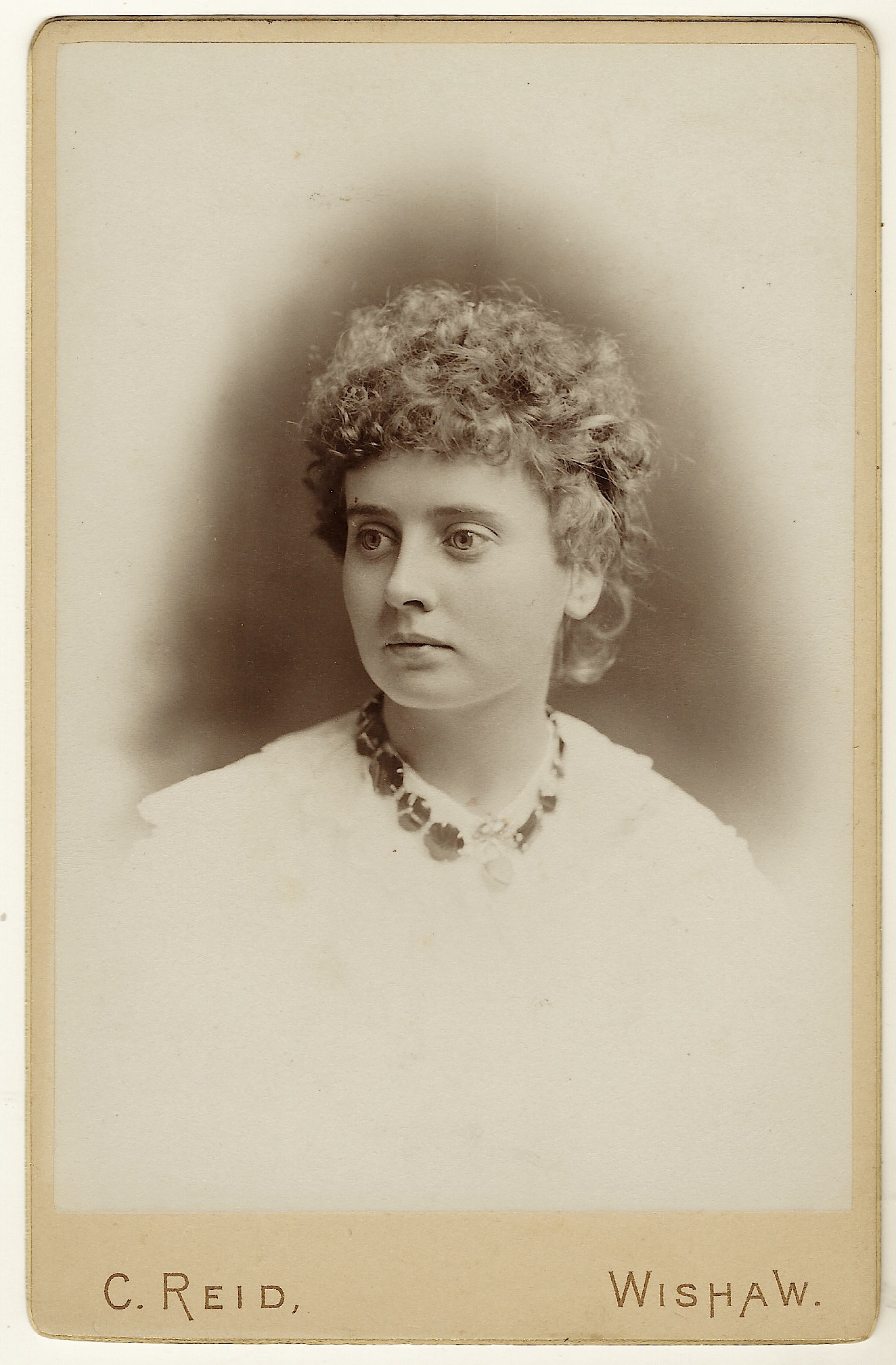
A pretty Scottish woman poses for her portrait at the Charles Reid studio in Wishaw, Scotland. The young lady has short curly hair and is wearing a necklace. She also has beautiful soulful eyes. Printing on the reverse of the cabinet card displays drawings and descriptions of some of the medals won by the photographer. The dates of the awards span between 1886 and 1891. This photograph was likely taken in 1891 or shortly thereafter. Charles Reid (1838-1929) was a noted Scottish photographer. The 1881 census reported that he was married and had seven kids. His eldest, Charles, was fourteen years old and worked as Reid’s assistant. In 1877 Reid conducted his business in New Pitsligo. Between 1882 and 1900, Reid operated a studio on Young Street in Wishaw. Reid is well known for the many wildlife photographs that he produced. He lectured the Edinburgh Photographic Society on animal and bird photography in 1882, 1890, and 1896. He produced a book, Animal Studies, published in 1901. His son, Charles, took over the studio from his father. Later, an Andrew Reid, became the proprietor. Perhaps he was the elder Charles Reid’s grandson. This cabinet card portrait has excellent clarity and is in excellent condition.
Buy this original Cabinet Card Photograph (includes shipping within the US) #2971
To purchase this item, click on the Pay with PayPal button below
$28.45
Buy this original Cabinet Card Photograph (includes International shipping outside the US) 2971
To purchase this item, click on the Pay with PayPal button below
$36.98



 The wedding took place in France. The groom was Albert Delattre and the bride was Jeanne Cuvellice. They are an attractive well dressed couple. The photographer who took this wedding portrait was Leopold Moulin. The preceding information came from the former owner of this postcard. This postcard was published by Thomas Illingworth & Co. (T.I.C.). The company was a paper manufacturer founded about 1904. They produced the “Horse Shoe Brand” photographic paper in London England. In 1919 they were bought by British Photographic Supplies company, Ilford. An internet source states that the company produced postcards with horseshoe stamp boxes between 1919 and 1930. This postcard is from circa 1920’s. This vintage photo postcard is in very good condition (see scans).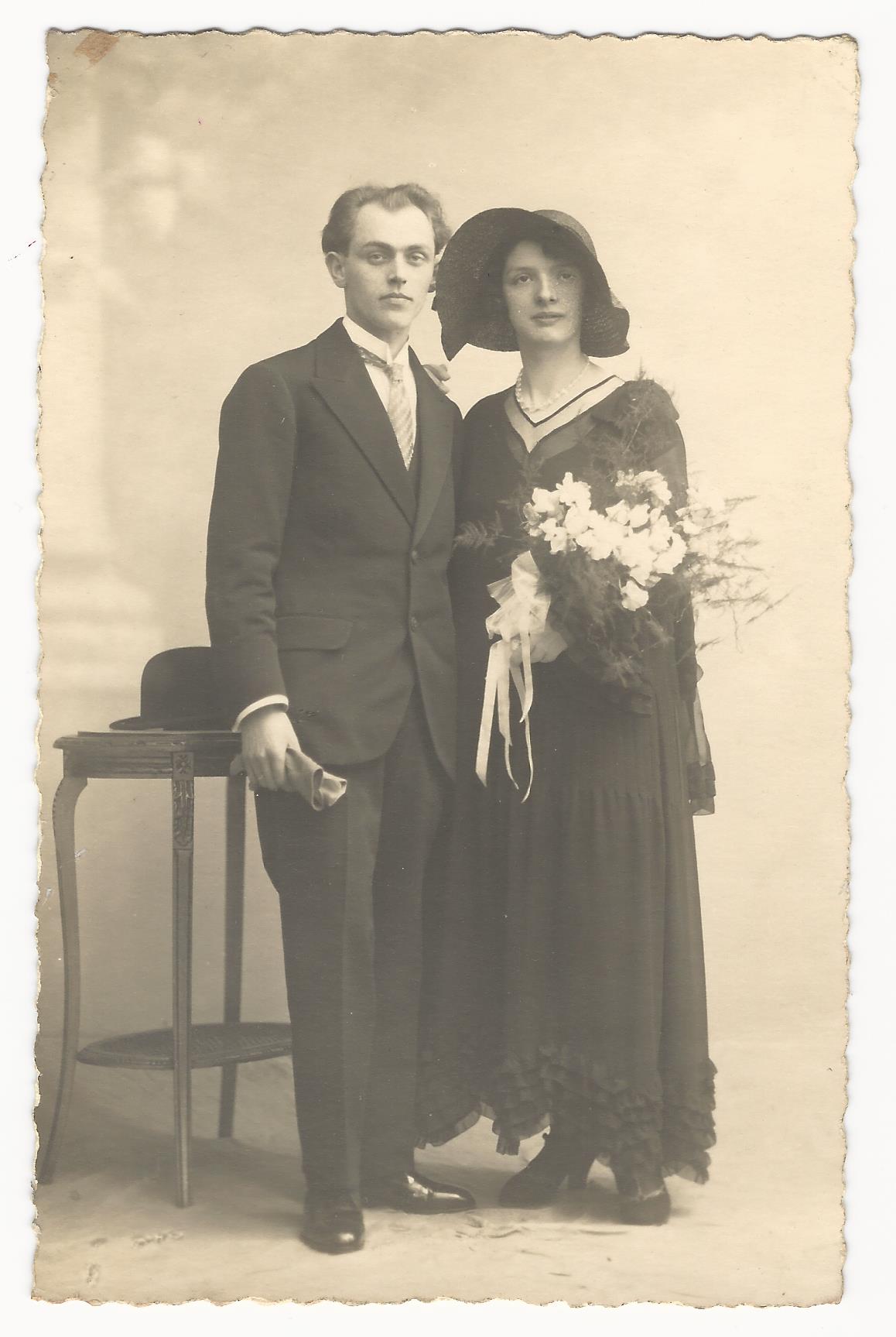

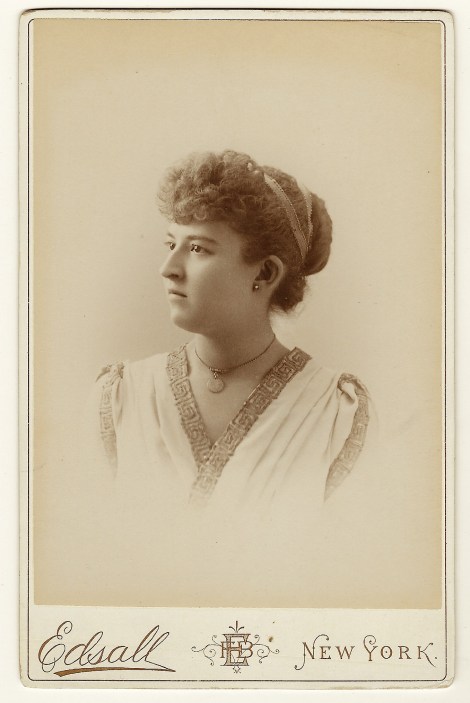
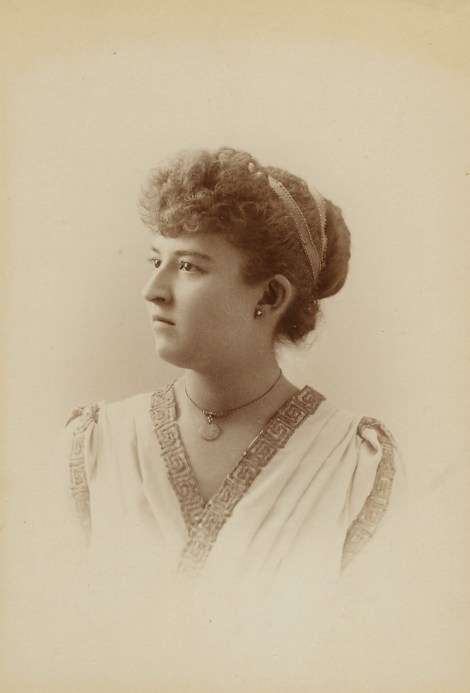 A pretty woman poses for her cabinet card portrait in New York City, New York. The photographer is the Edsall studio which was located at 246 and 248 West 125th Street. The previous owner of this image described the woman in this photograph as having the appearance of a Greek Goddess. Having spent little time hanging out with Greek Goddesses, I can not attest to the validity of the previous owner’s description; but I share his impression. Research indicates that the likely photographer of this image is Frank B. Edsall. It appears that he operated a photography studio in Goshen, New York and later opened a photographic gallery in New York City. He is mentioned in articles appearing in Anthony’s Photographic Bulletin (1888) and Wilson Photographic Magazine (1891). SOLD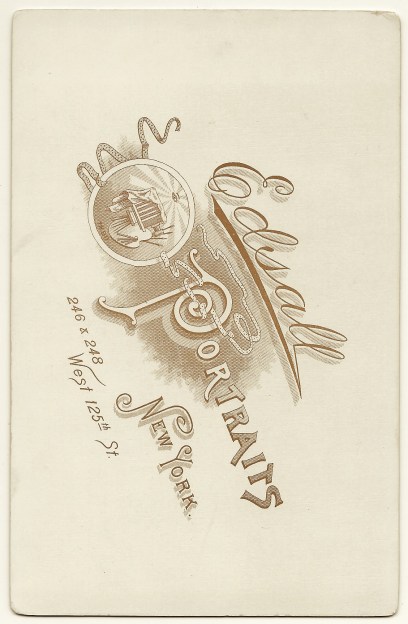


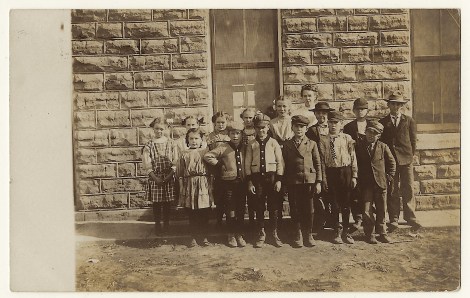
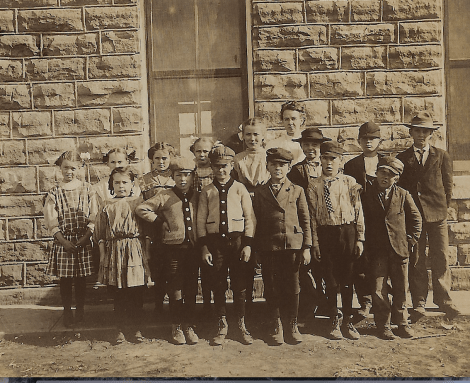 Welcome to Scottsville, Kansas. This real photo vintage postcard features fourteen young students and their teacher posing outside of their school. The class is composed of children all about the same age. That fact, plus the size of the building, reveals that the school is large enough to segregate the classrooms by age. This is obviously no “one room schoolhouse”. The children appear to have worn some of their best clothing for “picture day” at school. A number of boys are wearing sport jackets or cardigan sweaters. All of the boys are wearing hats or caps.The postcard has a postmark from Scottsville and it is dated 1908. The postcard was mailed from Scottsville to Bellingham, Washington. (SOLD)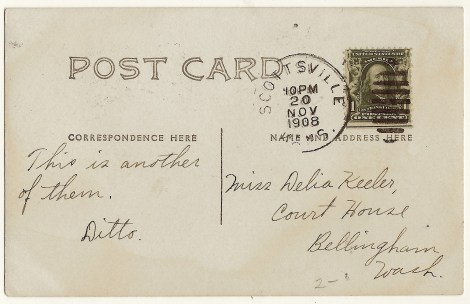
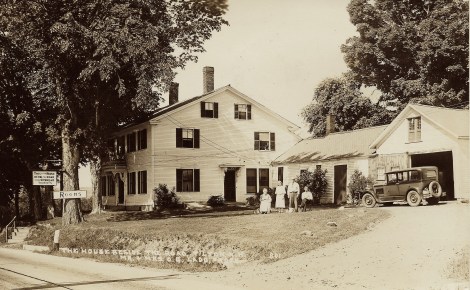
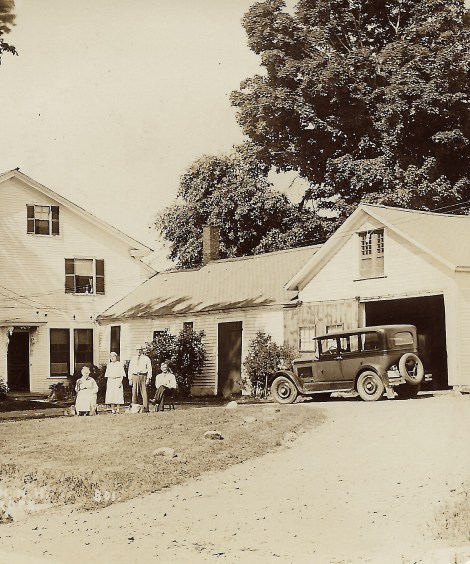
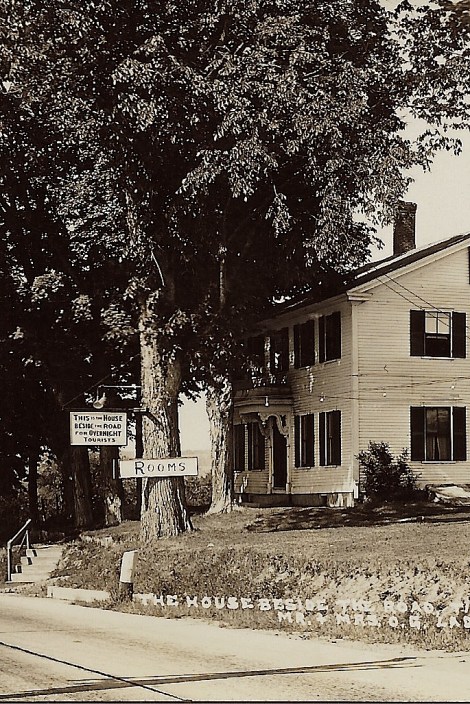
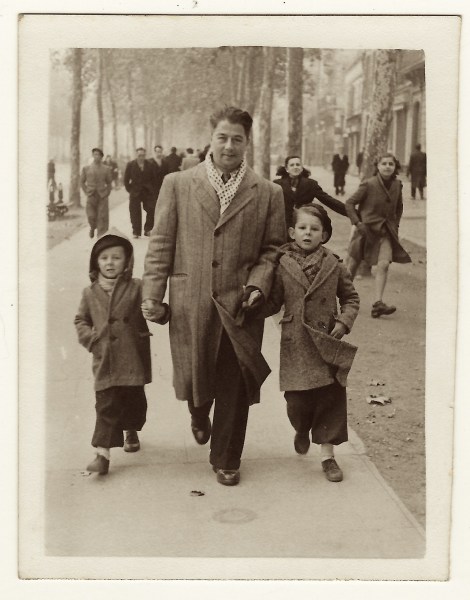 This snap shot photograph tells a story. It may go something like this. It is a cool winter day in France. Its 1966. A handsome father puts on his winter coat and scarf, bundles up his two adorable children, and the family goes for an enjoyable brisk walk down the boulevard. They are not alone. A number of pedestrians are occupying the sidewalk. The man and his children are well dressed and appear fairly affluent. An inscription, written in French, can be found on the reverse of the photo. Perhaps a visitor to the Cabinet Card Gallery will be able to translate the inscription for the rest of us. The photograph measures about 2 3/4″ x 3 1/2″ and is in very good condition (see scans).


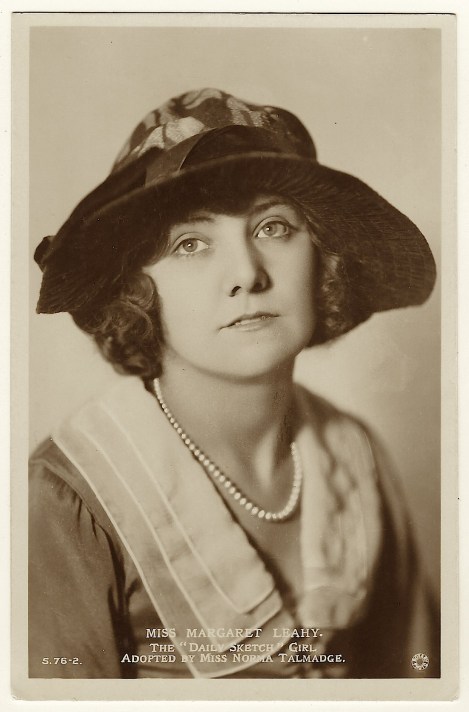 Margaret Leahy (1902-1967) was a British actress. She was born in London. At the age of eighteen, she set up a costume shop and designed women’s clothing. She also modeled her designs for her customers. The story of how she got her start in acting is an interesting one. After winning a beauty contest, she seemed destined for stardom. Unfortunately, despite her rapid launch into filmdom, her career quickly crashed. She made only one film in her short-lived career. The beauty competition occurred in 1922. Actresses, Constance and Norma Talmadge, Joseph Schenck (film studio executive), and Edward Jose (film director) held a beauty contest in England. It’s purpose was to find a new leading lady. The “Daily Sketch”, an English newspaper, offered a starring role in a major Hollywood film to the winner of the contest. Eighty thousand women entered the contest and three girls were chosen to the final competition. The finals were held in Hollywood and Miss Leahy was the winner. Norma Talmadge described Leahy as “the most ravishing girl in England”. Leahy’s start in films was a disaster. She was dismissed from “Within the Law” (1923). The film’s director found her acting talent was nearly non-existent. He threatened to quit unless Leahy was terminated. The year 1923 wasn’t all bad for Miss Leahy. She was named one of thirteen WAMPAS Baby Stars. Evelyn Brent, Eleanor Boardman, and Laura La Plante were among the thirteen. All but Leahy became successful film actresses. Between 1922 and 1934, WAMPAS association supported a promotional campaign that named thirteen young actresses thought to be destined to become stars. Margaret’s next stop was an appearance in a Buster Keaton comedy, “Three Ages” (1923). Leahy received little attention for her role in the movie and her career was stopped in it’s tracks. Leahy did not return to England. Instead she got married and remained in California. She became an interior decorator and was known to despise the movie industry. In fact, she burned all her movie related scrap books. Sadly, Leahy committed suicide at the age of sixty-four in California. This vintage postcard was published by Rotary Photo and printed in England. The postcard is part of a series (no. 5.76.2). The postcard is in very good condition (see scans). SOLD