PORTRAIT OF A WEDDING COUPLE IN LYONS, KANSAS

wedding couple

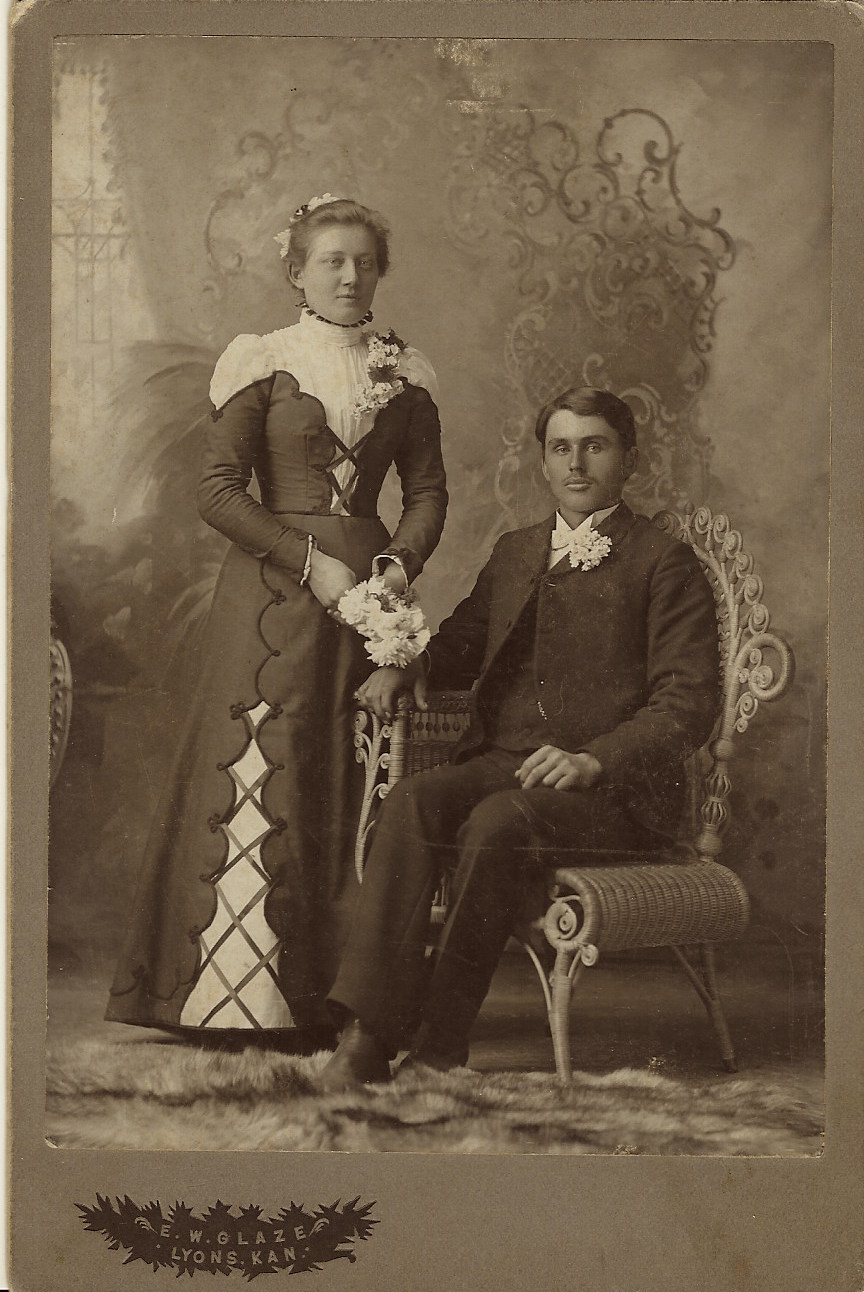
This vintage photograph features a couple posing for their portrait at the studio of E. W. Glazer in Lyons, Kansas. The bride is wearing a pretty two tone gown and holding a bouquet of flowers. The groom is sitting in a wicker chair and wearing a dark suit with a corsage. The reverse of the photograph has the inscription “Otto P.”.  One can assume that this name belonged to the groom seen in the photograph. The photographer, Elijah W. Glaze was born in 1864 in New York. “Wilson’s Photographic Magazine (1898)” reported on Glaze winning an award for his work at the Kansas Photographers Convention. The “Bulletin of Photography (1913) announced that the Glaze Photography studio had ben taken over by W. D. Jones.   SOLD

Published in: on June 11, 2015 at 10:44 am  Comments (3)  
Tags: , , , ,

A RISQUE PORTRAIT OF AN ACTRESS AND HER VIOLIN IN VIENNA, AUSTRIA

violinl 1

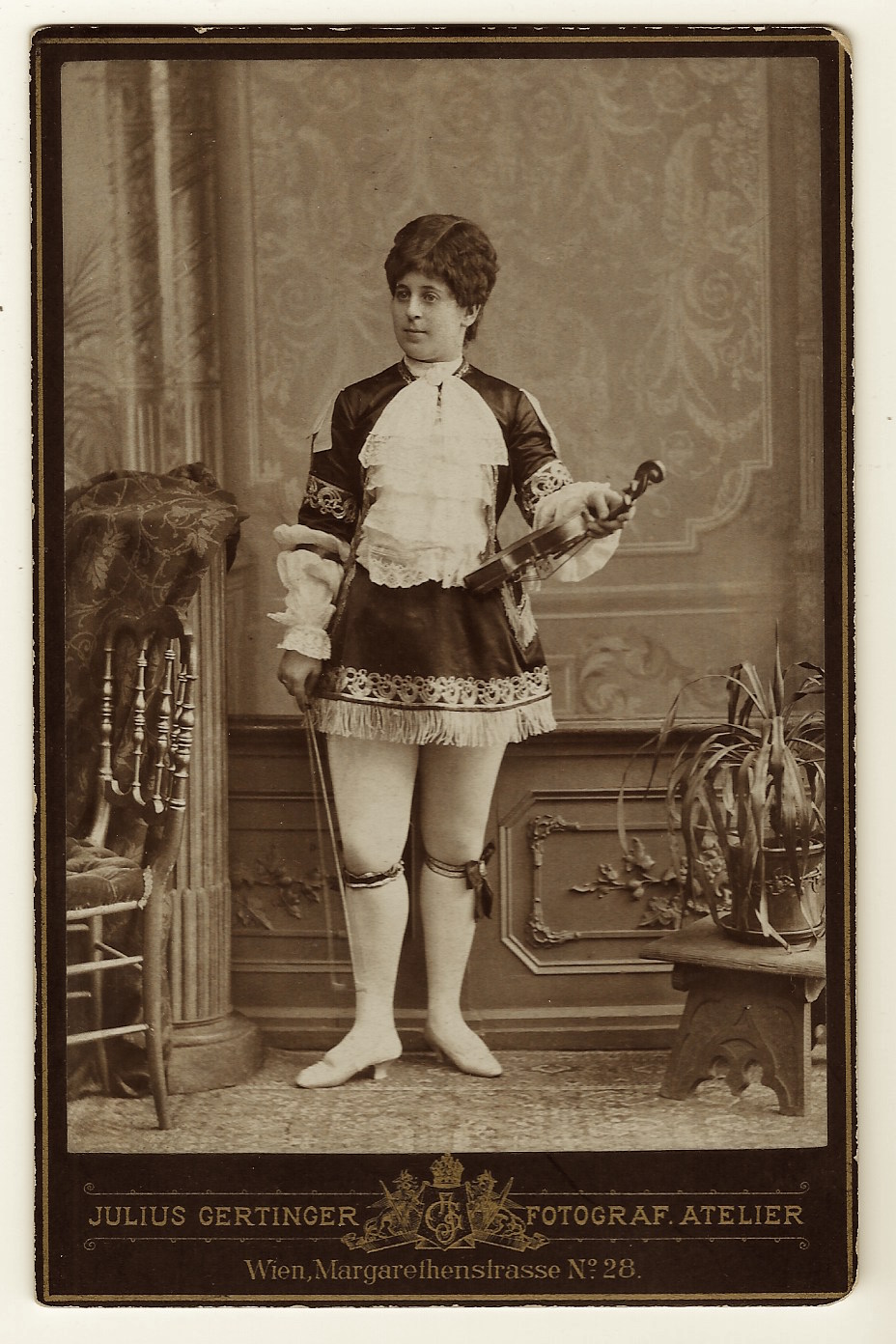
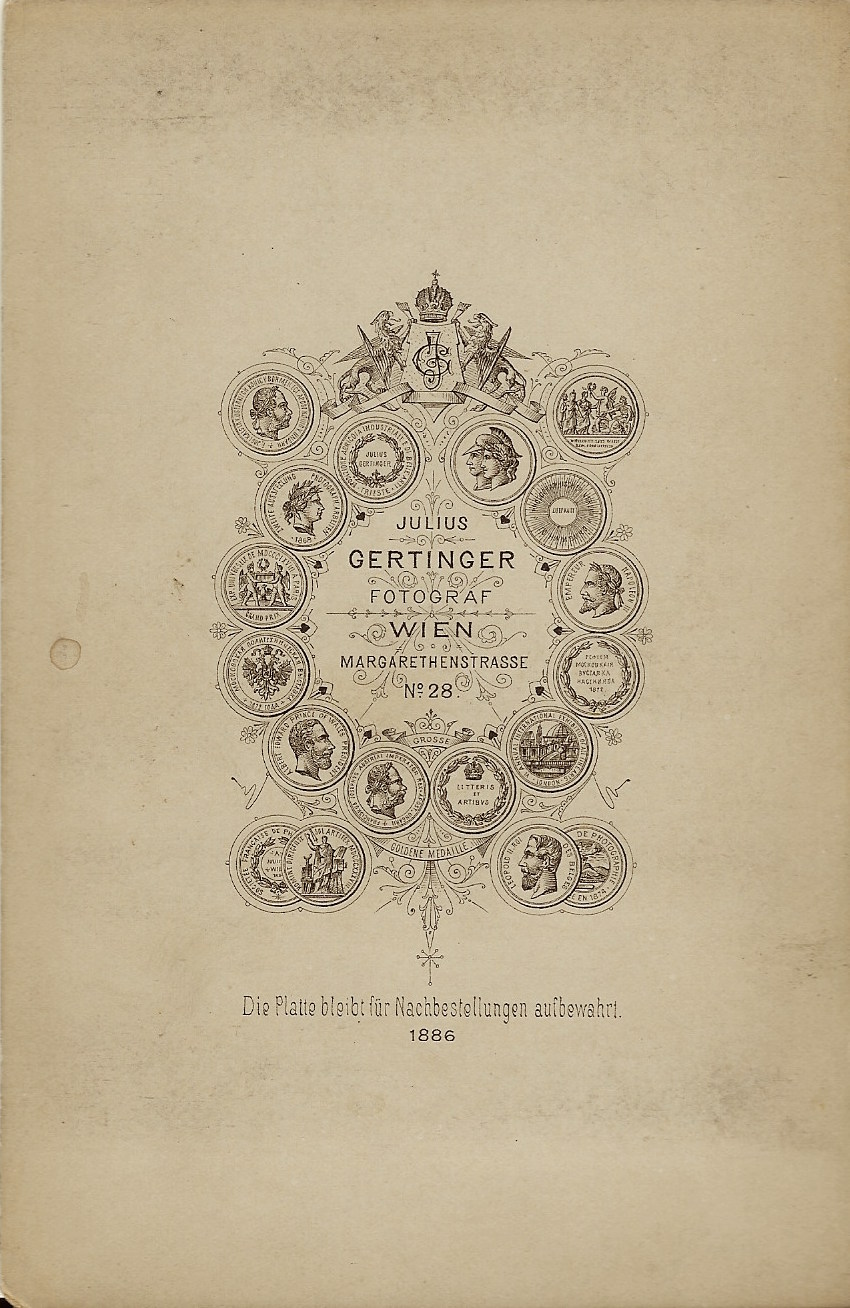
This cabinet card portrait features an actress, or possibly a musician, holding a violin and bow. She is dressed in a risque fashion. Courtesy of her short dress, she is exposing a great deal of her legs. The photograph was taken by Julius Gertinger (1834-1883) whose studio was located in Vienna, Austria. The reverse of the photo (seen below) shows some of the medals won by Gertinger in exhibitions. One of the earlier medals is from 1868. The date of this photograph (1886) is also listed on the reverse of the cabinet card. Gertinger is cited in the “British Journal of Photography (1874)”. In a review of a collection of his photos appearing in an international exhibition, the writer states that his photographs “possess great delicacy”. “The Photographic News (1875)”  in announcing the winners of awards at the Vienna Photographic Exhibition, reports that Gertinger and another winner were “by no means unknown to many of their brethren in Great Britain”. The New York Public Library’s Photography Collection includes the work of Gertinger.   (SOLD)

violinl

Published in: on June 9, 2015 at 6:52 pm  Comments (1)  
Tags: , , ,

PORTRAIT OF A LITTLE BOY AND HIS PEDAL CAR IN THE MOTOR CITY (DETROIT)

pedal car

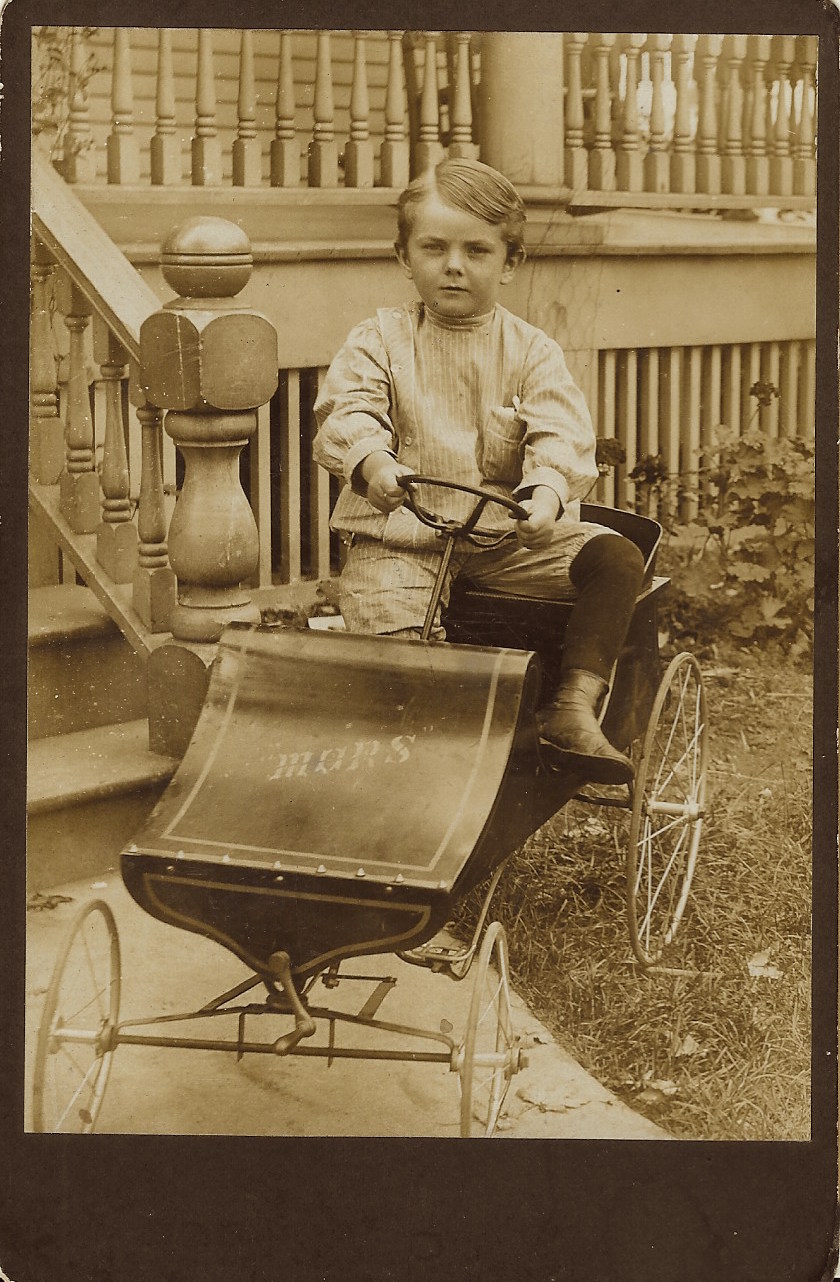
This cabinet card features a young boy driving his Keystone Auto Pedal car. The elaborate toy car was made by the Mars Company. One source told me that the car was produced in 1905 but that information is unconfirmed. The child’s expression in this photo is priceless. He is trying to appear very serious, as if he was a mature and experienced driver. In other words he seems to be saying, “Driving is no big deal for me, I do it all the time”. A light stamp on the reverse of the cabinet card reveals that the photographer of this image was F. E. Nielson and his studio was at 344 Michigan Avenue in Detroit, Michigan. Fredrick N. Nielson was born in Denmark in 1884, immigrated to the US in 1903, and married his wife Sophia in 1912. He conducted his photography business in Battle Creek (1918), Saginaw (1920), and Allegan (1920-1931). This portrait suggests that Nielson was a talented photographer.   (SOLD)

Published in: on June 8, 2015 at 3:14 pm  Comments (3)  
Tags: , , , , ,

PORTRAIT OF ETTA MILLER ORCHARD: NOTED SOPRANO

dupont 1

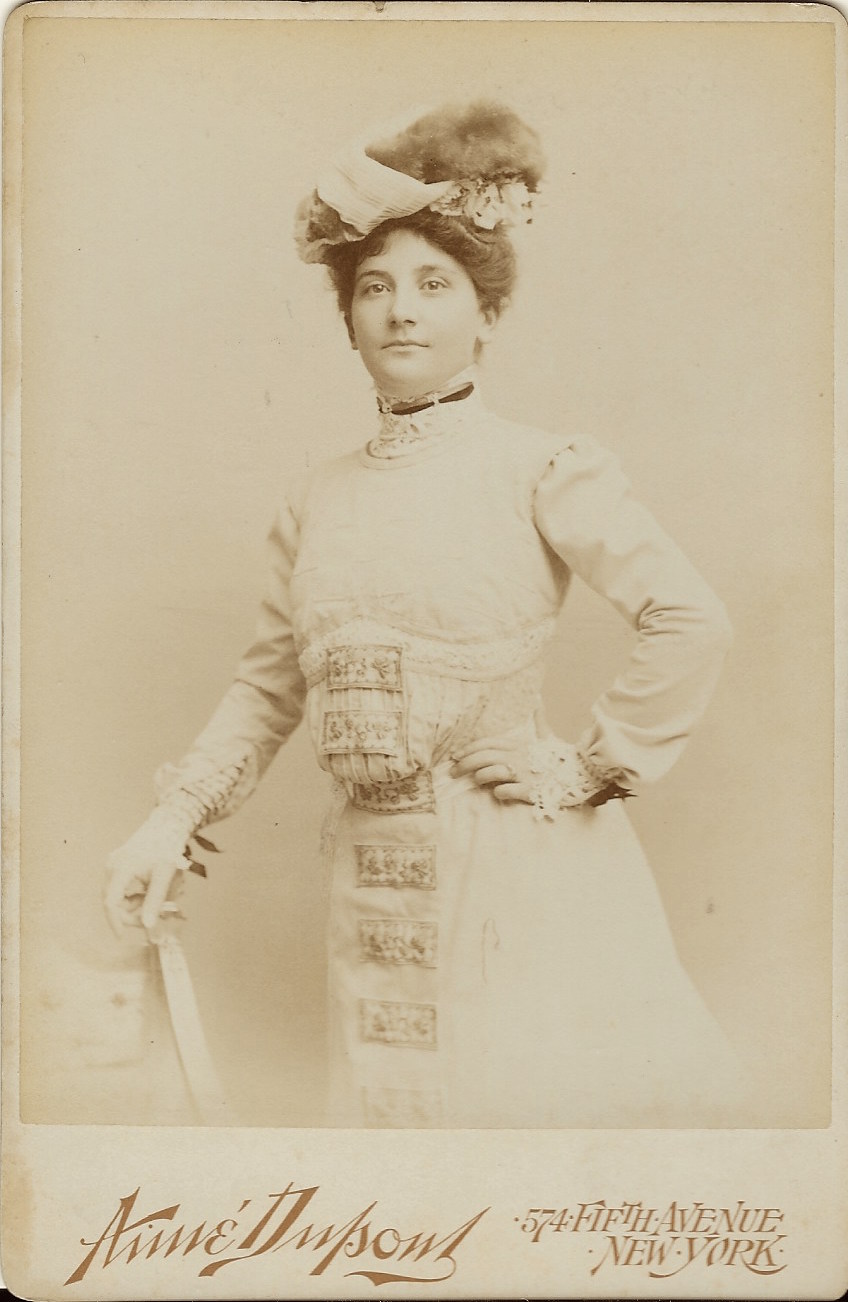
The pretty and well dressed woman featured in this cabinet card portrait is noted soprano, Etta Miller Orchard. Her photograph appears in “The International (1901)”. In addition, she is mentioned in “The Musical Courier (1902)” for her performance in a Good Friday service at the Marble Collegiate Church in Boston, Massachusetts. Interestingly the photographer of the image seen in “The International” is Aime Dupont, the same photographer who created the portrait seen above. Dupont is a well known New York City photographer who took many photographs of celebrities. To view more of his images and to learn more about him, click on the category “Photographer: Dupont”. The cabinet card is stamped on the reverse with the name “Charles L. Ritzmann”. Ritzmann was a well known collector and retailer of celebrity cabinet cards. To view more of Ritzmann’s photographs, click on the category “Charles Ritzmann Collection”.

PORTRAIT OF A BEAUTIFUL WELL DRESSED WOMAN BY CELEBRITY PHOTOGRAPHER CHARLES FREDRICKS OF NEW YORK CITY

fredricks

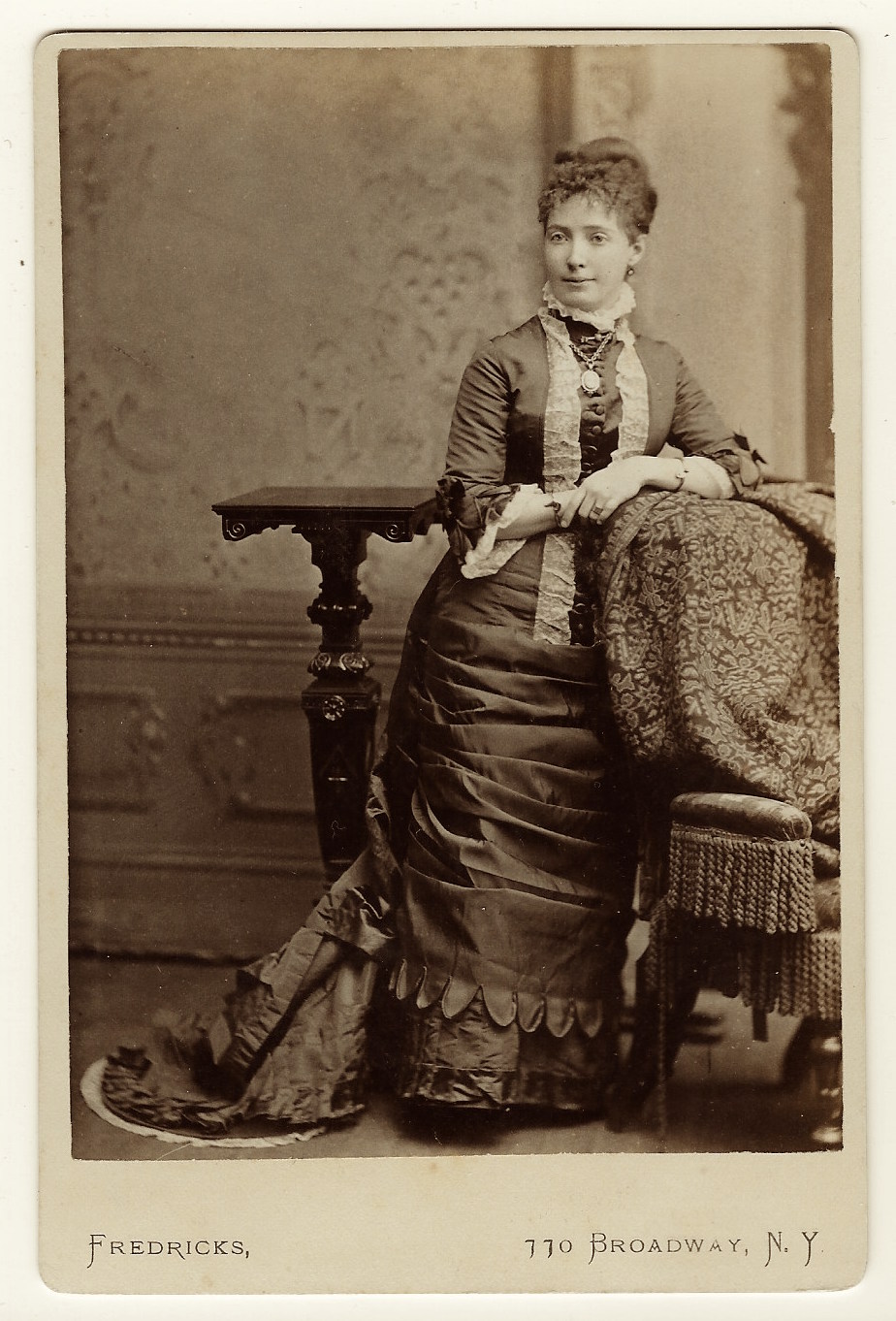
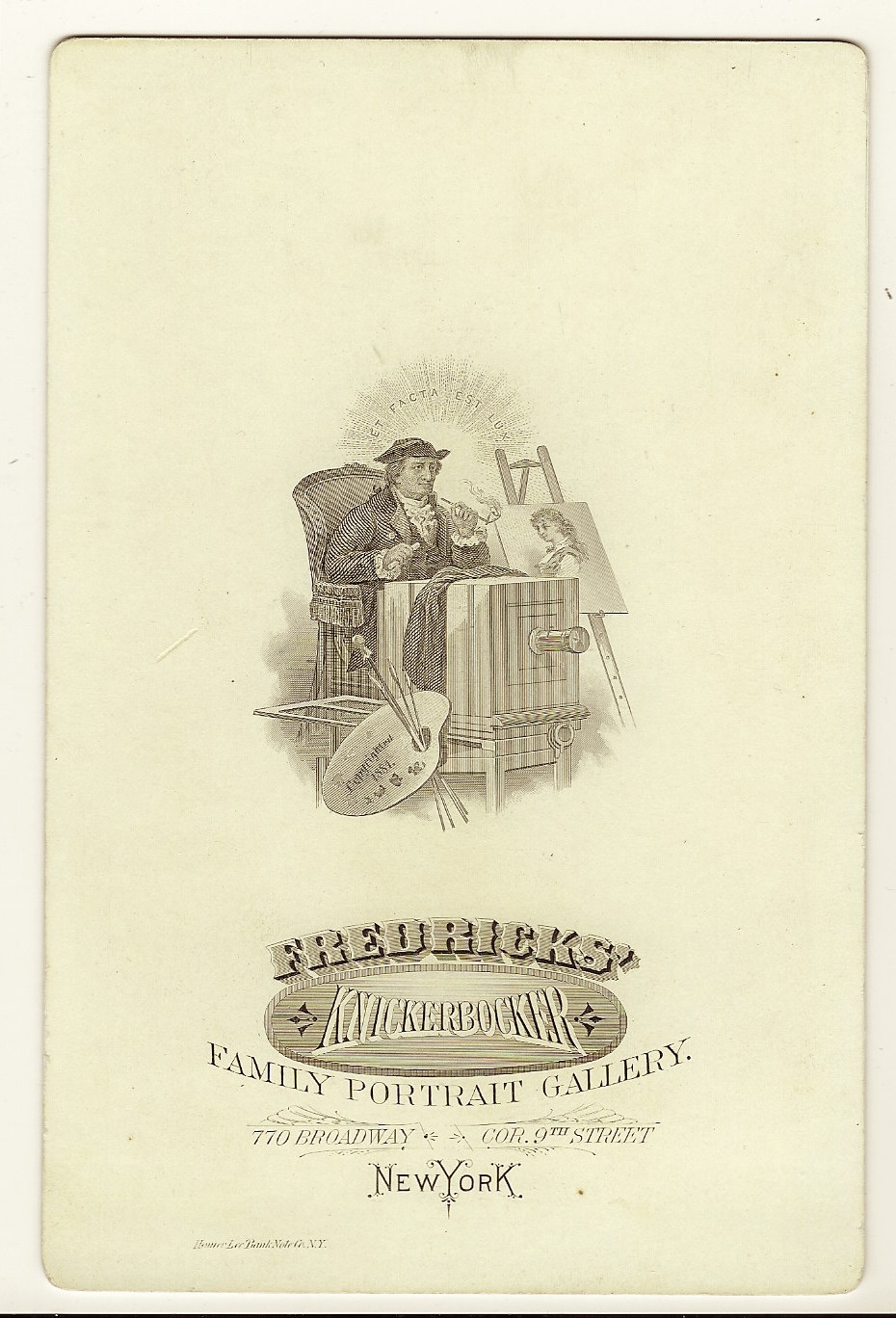
The woman who is the subject of this cabinet card photograph is truly beautiful and fabulously dressed. She is also wearing an array of jewelry including a necklace, ring and bracelet. She clearly is from the “one percent” portion of the population and this photograph certainly makes a fashion statement. Her image is captured skillfully by celebrity photographer Charles DeForest Fredricks who operated the Knickerbocker Family Portrait Gallery. To learn more about Fredricks and to view more of his photographs, click on the category “Photographer: Fredricks”. Look at the image below to see the drawing on the reverse of the cabinet card. The drawing depicts the photographer as an artist. He is also shown smoking a pipe. There is a copyright notation from 1881.   SOLDfredricks 1

PORTRAIT OF A 1920 CLASSROOM IN BERWICK, PENNSYLVANIA

class 1

This vintage photograph features a fourth grade class from a school in Berwick, Pennsylvania. I suggest to viewers that they put this photograph under magnification and be prepared for a trip back to a 1920 school classroom. I know that the students are in the fourth grade because it is written on the chalk board. The board also reveals that the teacher is named Miss Drake and that the date of the photograph was April 20th, 1920. There is a second teacher in the classroom. The class includes boys and girls. The kids dressed up for their portrait. The boys are wearing neck ties and the girls are also dressed up. Many of the girls have bows in their hair. Note the old style desks, the piled books, the American Flag, the Red Cross poster, and the old style calendar. It is particularly interesting to observe that all the seated children have their hands clasped and resting on their desk. Looks just like the discipline commonly seen in American schools today; or maybe not. The photographer of this image is the Lowry studio which was located in Berwick. The name of the studio is embossed on the bottom right hand corner of the mat. Mr. Lowry wrote an article in Abel’s Photography Weekly (1922) which attempts to answer the burning question “Is the Customer Always Right?”. Berwick is about 28 miles southwest of Wilkes Barre, Pennsylvania. Among the town’s claims to fame is that it is the place where the Wise Potato Chip Company was founded in 1921.This photograph is from the post cabinet card era and it measures 10″ x 8″.  SOLD

class

Published in: on May 26, 2015 at 12:04 pm  Comments (2)  
Tags: , , , ,

FOUR TEENAGE GIRLS EATING GRAPES IN BUTLER, PENNSYLVANIA

BUTLER CRILEY_0013

Grapes? Paper Bags? When did paper bags get invented anyway? Why did the photographer choose to photograph four teenage girls eating grapes? Is there some kind of symbolism in the image or is it meant to just show four girls enjoying a picnic? This cabinet card photograph presents a number of interesting questions and I can only answer one of them. Paper bags were invented in 1852. At least that is when Frances Wolle patented the machine that manufactured paper sacks and founded the Union Paper Bag Company. The reverse of this cabinet card has an inscription stating “Stella Pape, 1888”. Stella was actually her nickname. Her given name was Destella L. Pape and she was born in 1872. She was about sixteen years of age at the time of this photograph. In the 1900 US census she was living with her mother (Mary) and older brother (Nielson) in Butler, Pennsylvania She later married George Reiber who was a man twenty-one years her senior. The couple had a son in 1905 who was named after his father (George). Stella Pape died in Pittsburg, Pennsylvania in 1956. She was buried with her son (see the photograph of her gravestone below). The photographers of this image are Criley & Wagner. To view more of their images, click on the category “Photographer: Criley & Wagner”.


NICELY BUT BLANDLY DRESSED COUPLE IN READING PENNSYLVANIA

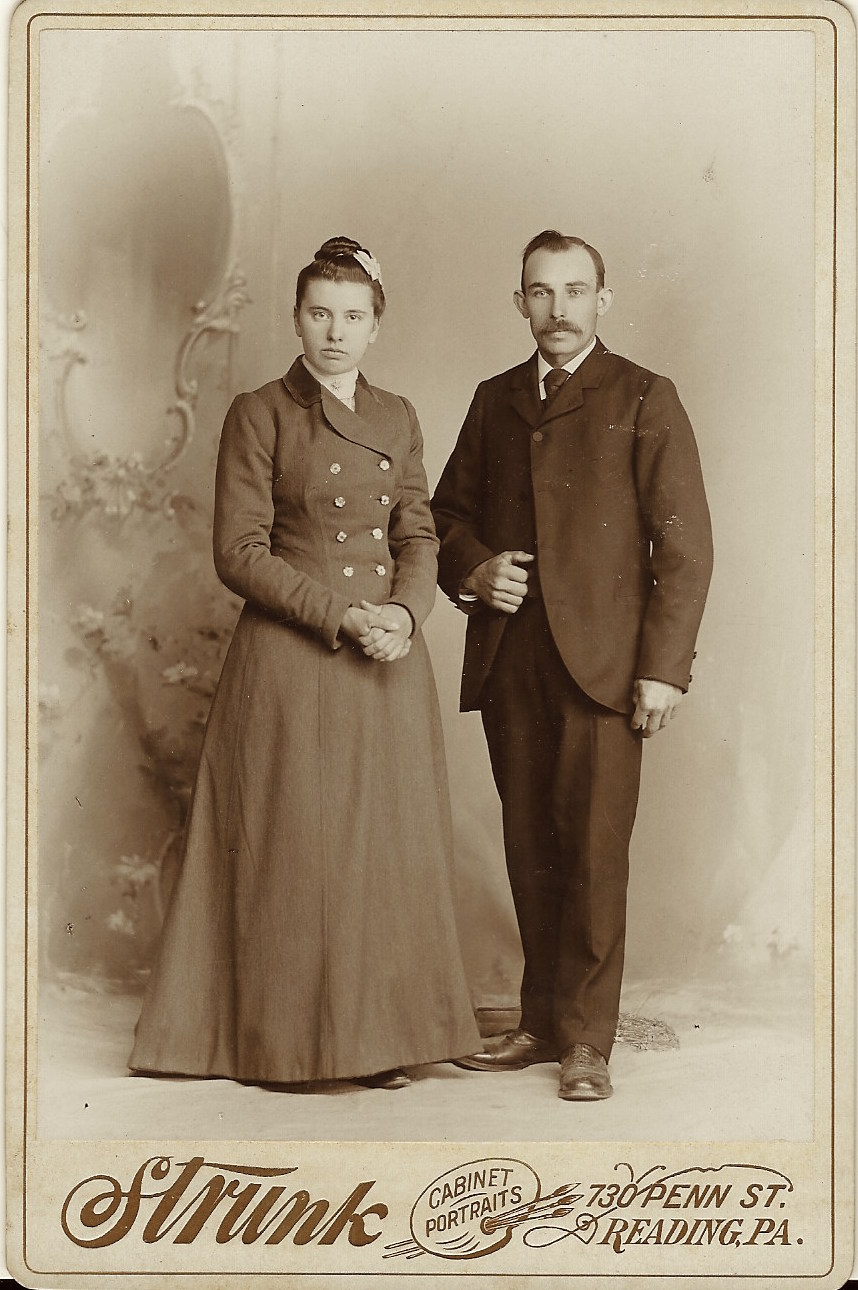
strunkA nicely but blandly dressed couple pose for their portrait at the Strunk studio in Reading, Pennsylvania. The couple do an excellent job of hiding their emotions as they pose for this portrait. John D. Strunk was a talented and prolific photographer. The Cabinet Card Gallery has a large collection of his photographs. To view these images and to learn more about him, click on the category “Photographer: John D. Strunk”.


Published in: on May 21, 2015 at 12:00 pm  Comments (2)  
Tags: ,

DARLING PORTRAIT OF A BABY IN NEWARK, OR GRANVILLE, OR THORNVILLE, OHIO

chase

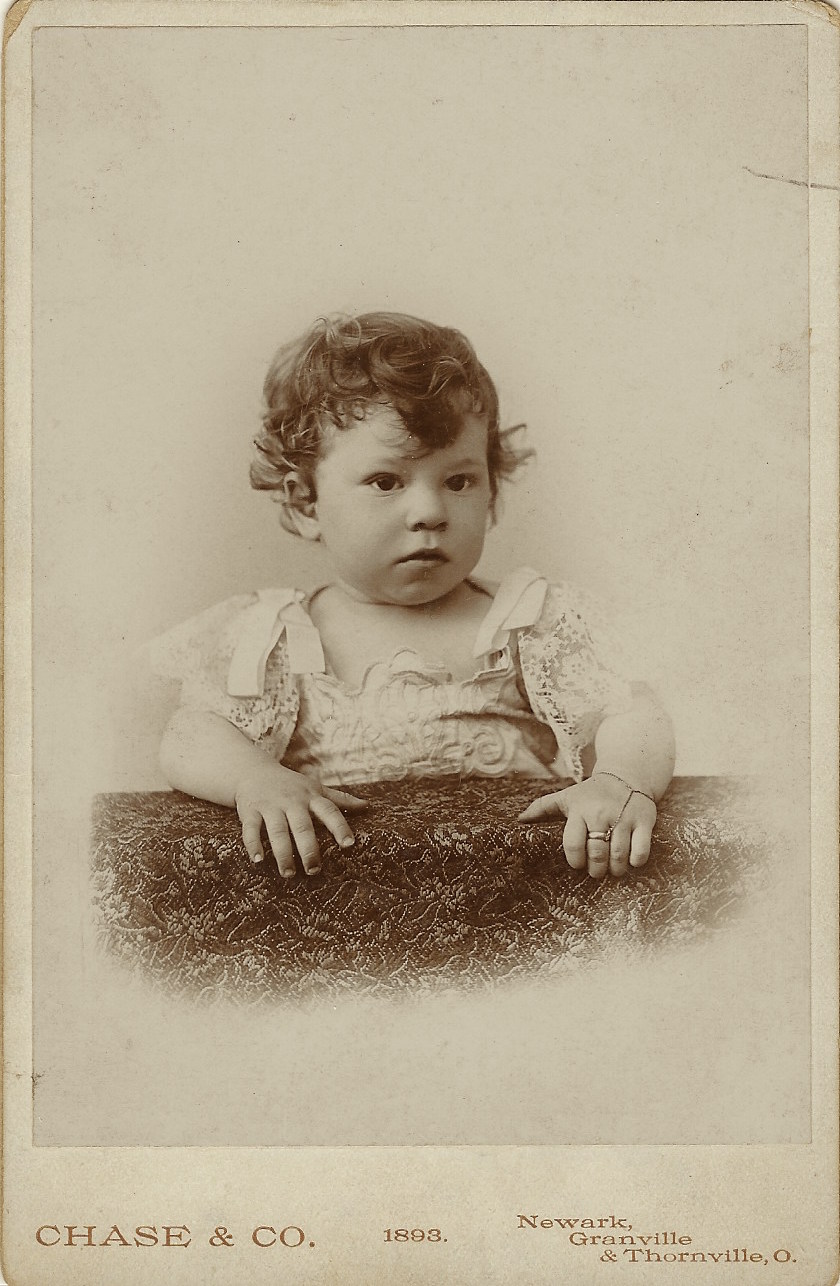
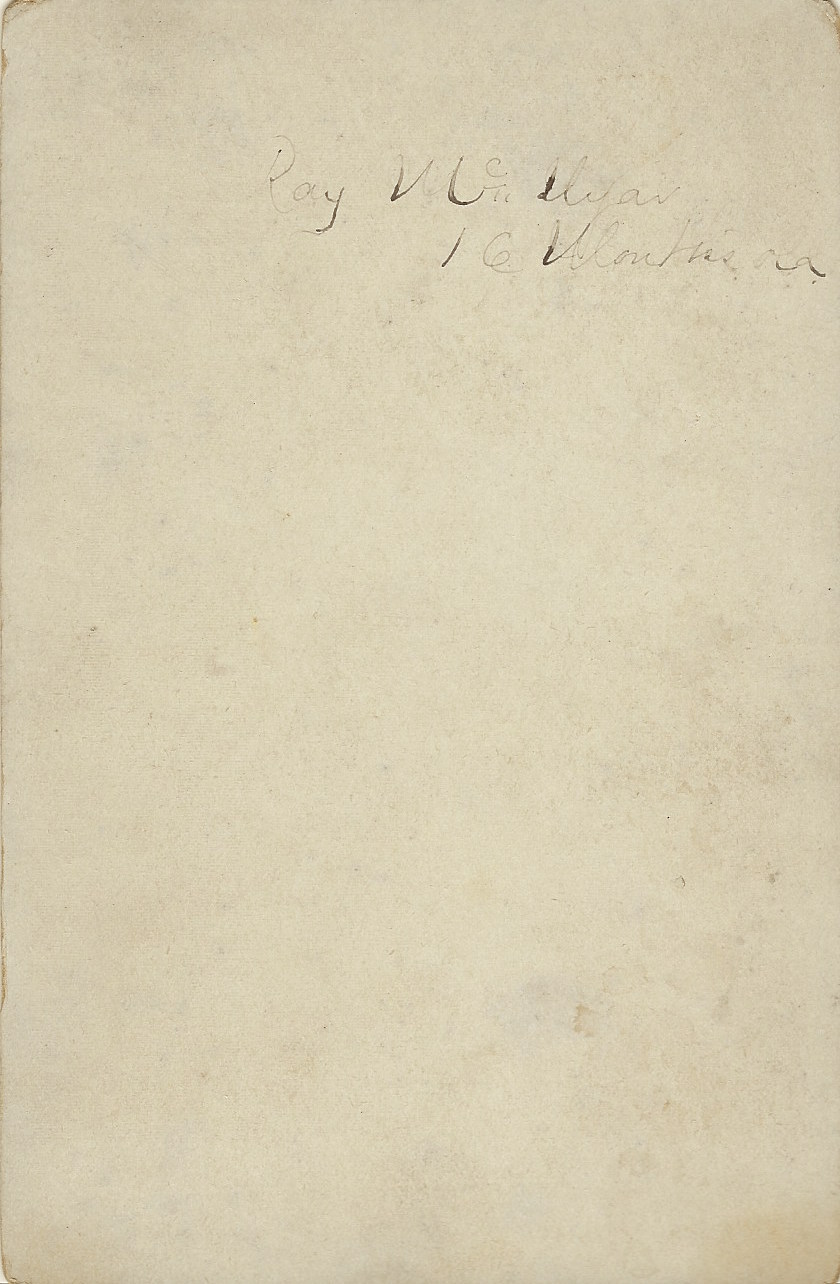
This cabinet card portrait features an adorable baby standing on a chair. The baby is wearing a ring with an attached bracelet. The child looks a bit fearful as she poses at the Chase gallery. The photo studio had three locations, all in Ohio. There were galleries in Newark, Granville, and Thornville. The advertising on the front of the photograph indicates that the photograph was taken in 1893. The reverse of the photograph has an inscription which is difficult to read (see image below). The child’s first name is clearly Ray. Research suggests that the baby is Ray Mc Slyer who was born in Ohio in 1892. Frank Chase (1863-1941) worked as a photographer in Cleveland, Ohio in 1884 and then in Newark between 1885 and a least 1905. He worked in Newark with his father, George W. Chase (1839-1925) except in the mid 1890’s when he operated a studio in nearby Granville.

chase 1

Published in: on May 20, 2015 at 5:07 pm  Leave a Comment  
Tags: , , , ,

CUTE LITTLE GIRL IN CINCINATI, OHIO (PHOTOGRAPH BY MARCEAU)

cute girl

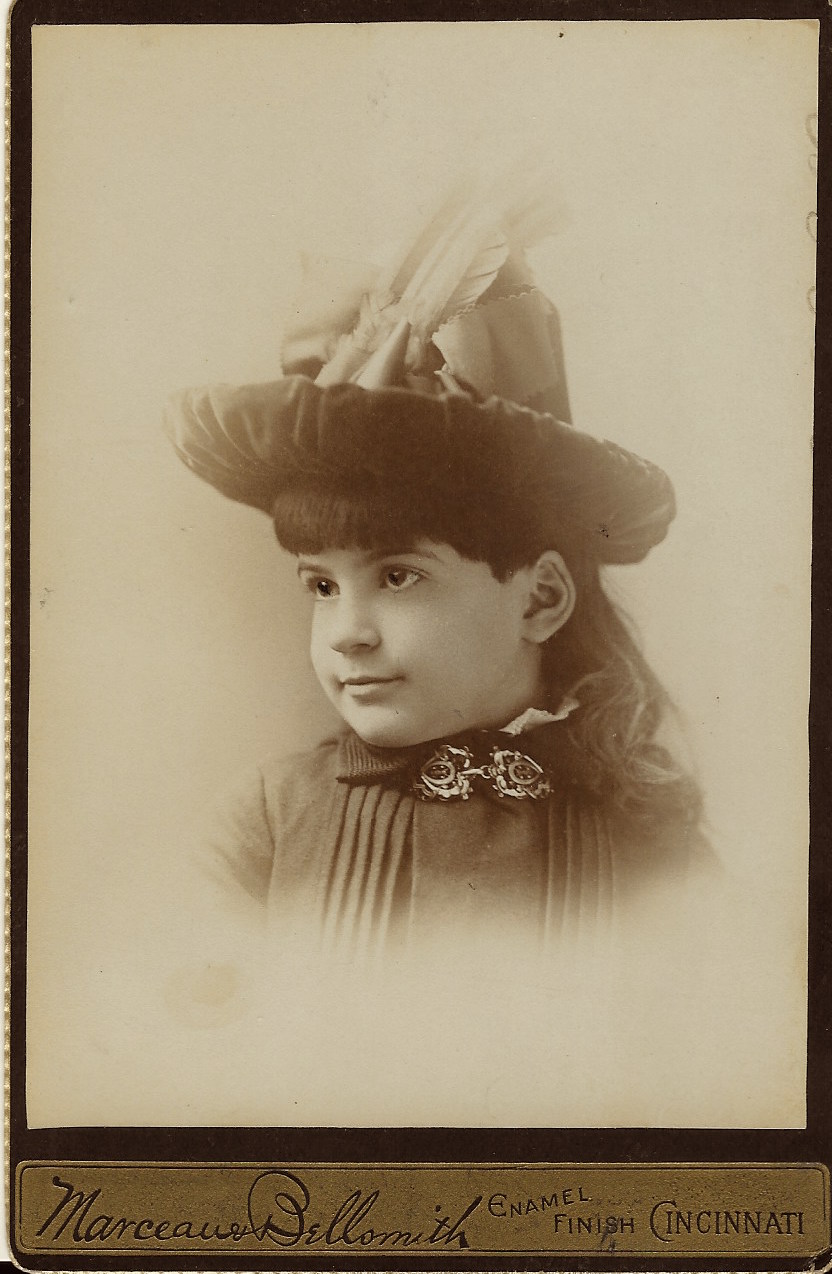
A little girl dressed in big girl clothing looks adorable as she posed in the Marceau & Bellsmith studio in Cincinnati, Ohio. The child is wearing an elaborate hat and a large collar pin. She is also wearing a very cute expression which includes a half smile. Colonel Theodore C. Marceau (1859-1922) operated a studio at 285 Fifth Avenue in New York City. The studio was known for producing many celebrity portraits. Marceau was also known for pioneering the creation of national chains of photographic studios in the 1880’s. He became nationally known at the ripe young age of twenty-two when he served as a US government phot0grapher in Santiago, Chile. He was part of an 1882 expedition that recorded the movement of Venus. Later, he served on the staff of Governor Foraker of Ohio, then Governor Markham of California. After leaving public service he lived in Cincinnati (1885-1886) and executed a business strategy that he repeated several times over the years. He would capitalize and build photographic studios, take on a talented local photographers as a partner, build the business, and then sell it to his partner. His first venture took place in Cincinnati and his partner was Randolph “Ralph” P. Bellsmith. The pair produced the photograph seen above. Marceau eventually had branches in Indianapolis, San Francisco, and Boston. His partner in San Francisco was Frederick Bushnell who later built his own chain of studios on the west coast. In 1891 Marceau married a widow named Amanda Fiske and their marriage had a deleterious effect on Marceau’s finances and emotional well being. The marriage was of short duration and Marceau took on his wife’s debts and was rewarded by her habitual infidelity. Marceau took custody of his son and became embroiled in publicity generating divorce proceedings that lasted four years. In 1900 Marceau made New York City his primary operation. For about ten years he ran the Otto Sarony and the Marceau Studios out of New York. Using the Sarony name caused Marceau to fight Jonathan Burrow (purchaser of the Napoleon Sarony Studio) in court. Marceau was described as a skilled raconteur and he became very active in the photography world in New York. In 1905 he cofounded the Professional Photographers Society of New York with Pirie McDonald. Marceau, MacDonald, and B. J. Falk organized the Copyright League to give photographers stronger rights protection of their work. Marceau was quite successful financially. He employed profits from his studios to buy a large amount of New York City real estate. His name appeared in New York’s “Blue Book”. His estate was worth millions of dollars upon his death. His son, a Yale trained lawyer, took over the operation of his father’s studio after his father died but he sold it in 1922. To view the work of Marceau’s Cincinnati partner and to learn more about him, click on the category “Photographer: Bellsmith”.   SOLD