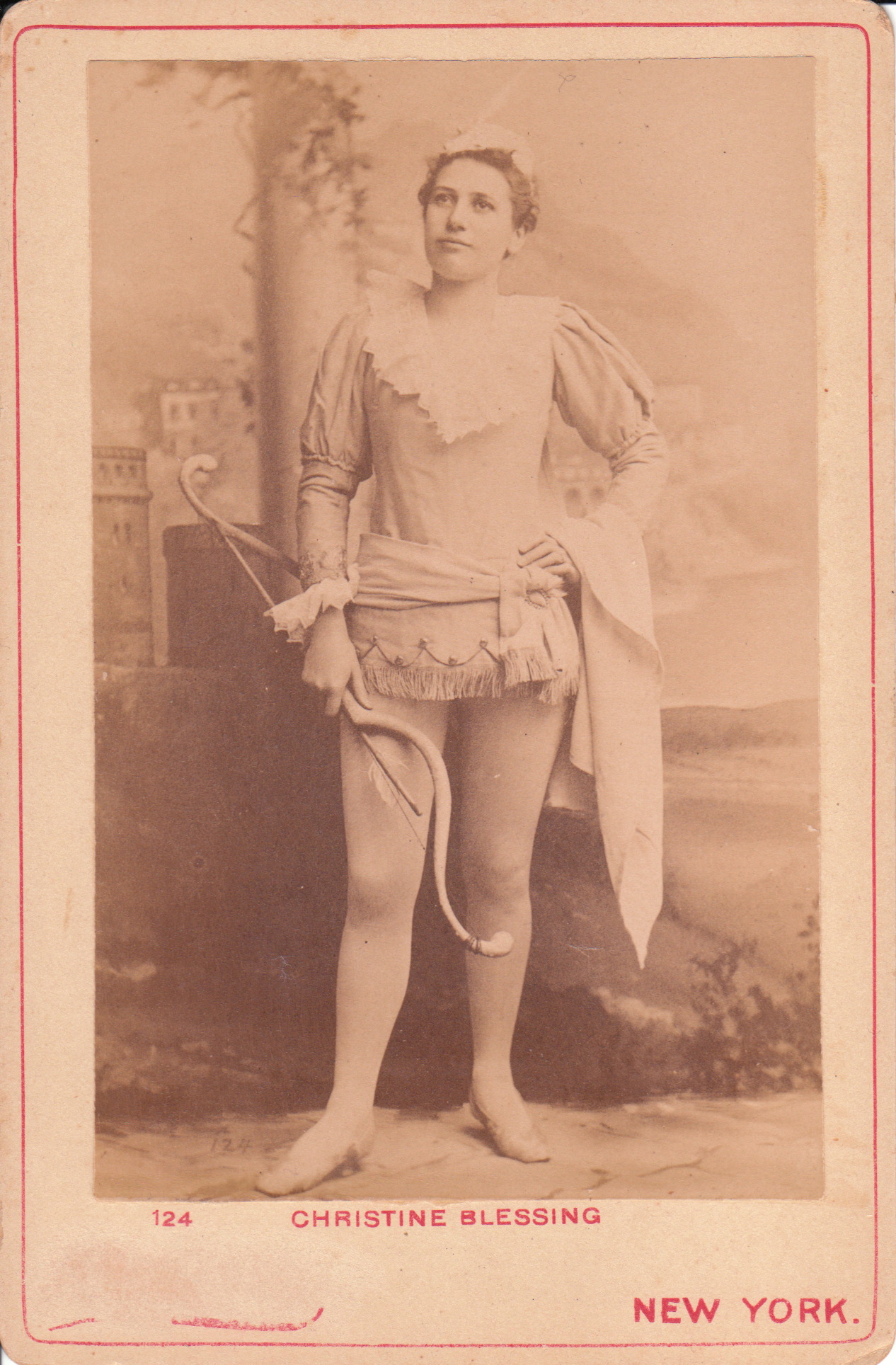
STAGE ACTRESS CHRISTINE BLESSING IN COSTUME PLAYING A RISQUE CUPID

CHRISTINE BLESSING_0004This cabinet card features a portrait of actress Christine Blessing. The cabinet card was produced by Newsboy (#124 of a series) as a tobacco product premium. For some unknown reason, a previous owner of the photograph apparently attempted to erase the Newsboy logo from the photograph. Miss Blessing is captured in this image playing the role of cupid. She is holding a bow and arrow. This cabinet card is risque for its era. The actress is wearing a dress so short that it looks like the dressmaker ran out of material just after beginning her work.  Miss Blessing is known for her theater work but also for her role in an early film titled “Dope” (1914). Her theatrical performances are the subject of a number of New York Times articles. These productions include “The Merry World” (1895), “The Maid in the Moon” (1899), “The County Chairman” (1904), and “The Bachelor” (1909), The New York Times (1893) was critical of her performance at Koster & Bials Music Hall. The newspaper stated that she had performed ballads and that Christine Blessing was “undoubtedly a blessing in disguise”. She was clearly part of a vaudeville performance that night as one of the other acts was a boxing kangaroo. The reviewer bemoaned that vaudeville performances had adverse effects on legitimate theater.

Published in: on January 14, 2014 at 11:38 am  Leave a Comment  
Tags: , ,

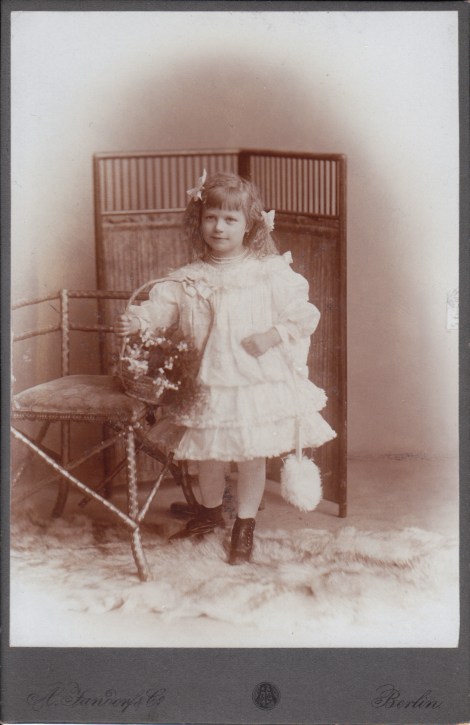
ADORABLE LITTLE GIRL IN BERLIN, GERMANY

BERLIN GIRL_0003An adorable little girl poses with a basket of flowers in Berlin, Germany. She is wearing a fancy lace dress and has bows in her hair. The photograph was produced by A. Fandorf & Company.

store

Published in: on January 13, 2014 at 11:42 am  Comments (7)  
Tags: , ,

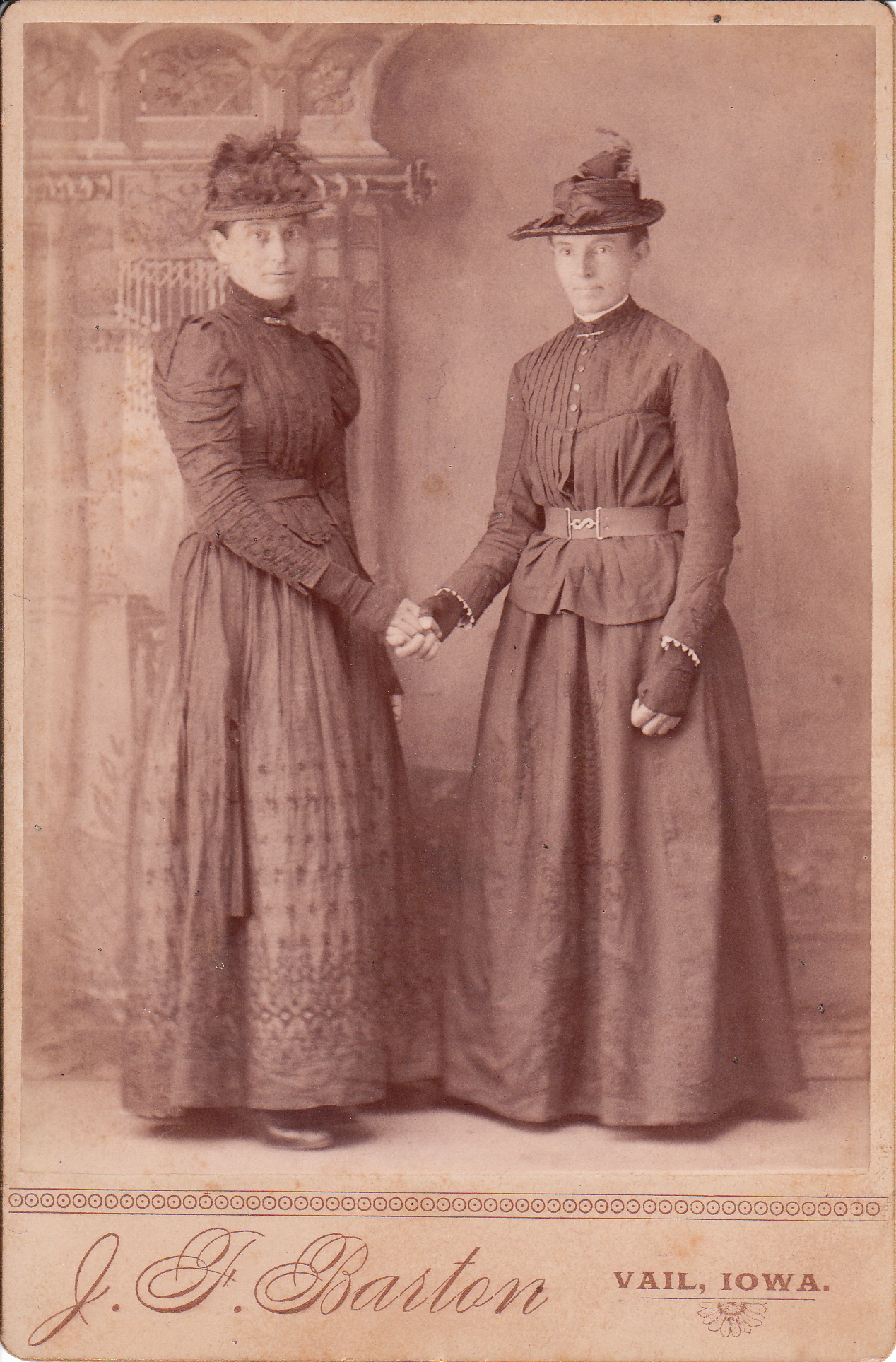
TWO LADIES HOLDING HANDS IN VAIL, IOWA

J. F. Barton documents the resolution of the conflict between the Hatfields and the McCoys. Mrs. Irma Hatfield and Miss Henrietta McCoy met at the Barton studio to resolve the decades old dispute that decimated their families. Sorry! I couldn’t resist making up a story to accompany this cabinet card portrait. The image begs for explanation, but unfortunately,  the reason for the pictured handshake is lost in history. The ladies are wearing plain dresses but nice hats. Both women are wearing fingerless gloves. The woman on the right is wearing a belt that may have been the prototype of the automobile seat belts of today. J. F. Barton is humorously mentioned in the Denison Review (1902) as a first class photographer who is “kept busy printing smiles” on his customers.

store

Published in: on January 6, 2014 at 12:01 pm  Comments (2)  
Tags: , ,

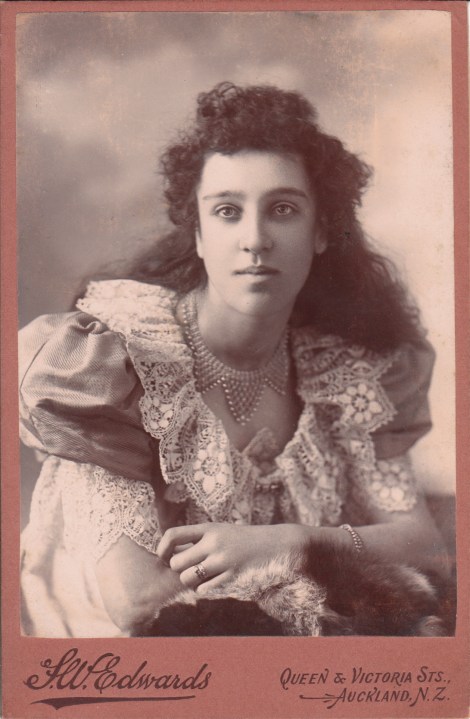
SWEET BEJEWELED LASS FROM AUCKLAND, NEW ZEALAND

newzealand lass_0001The Edwards studio produced this cabinet card portrait of a pretty Victorian woman. She is wearing a beautiful dress with a lace collar and lace sleeves. She is also wearing a lot of jewelry including a lovely necklace, ring and bracelet. Frederick William Edwards was well known in Auckland for more than his photographic skills. He was also a gifted athlete. According to the Observer (1888), Edwards was one of the best and most popular athletes in and around Auckland. he was “best known in aquatic and gymnastic circles” but he also had an impressive sports career in rowing. In addition, he was  a noted rugby player.

Published in: on January 5, 2014 at 11:54 am  Comments (3)  
Tags: , ,

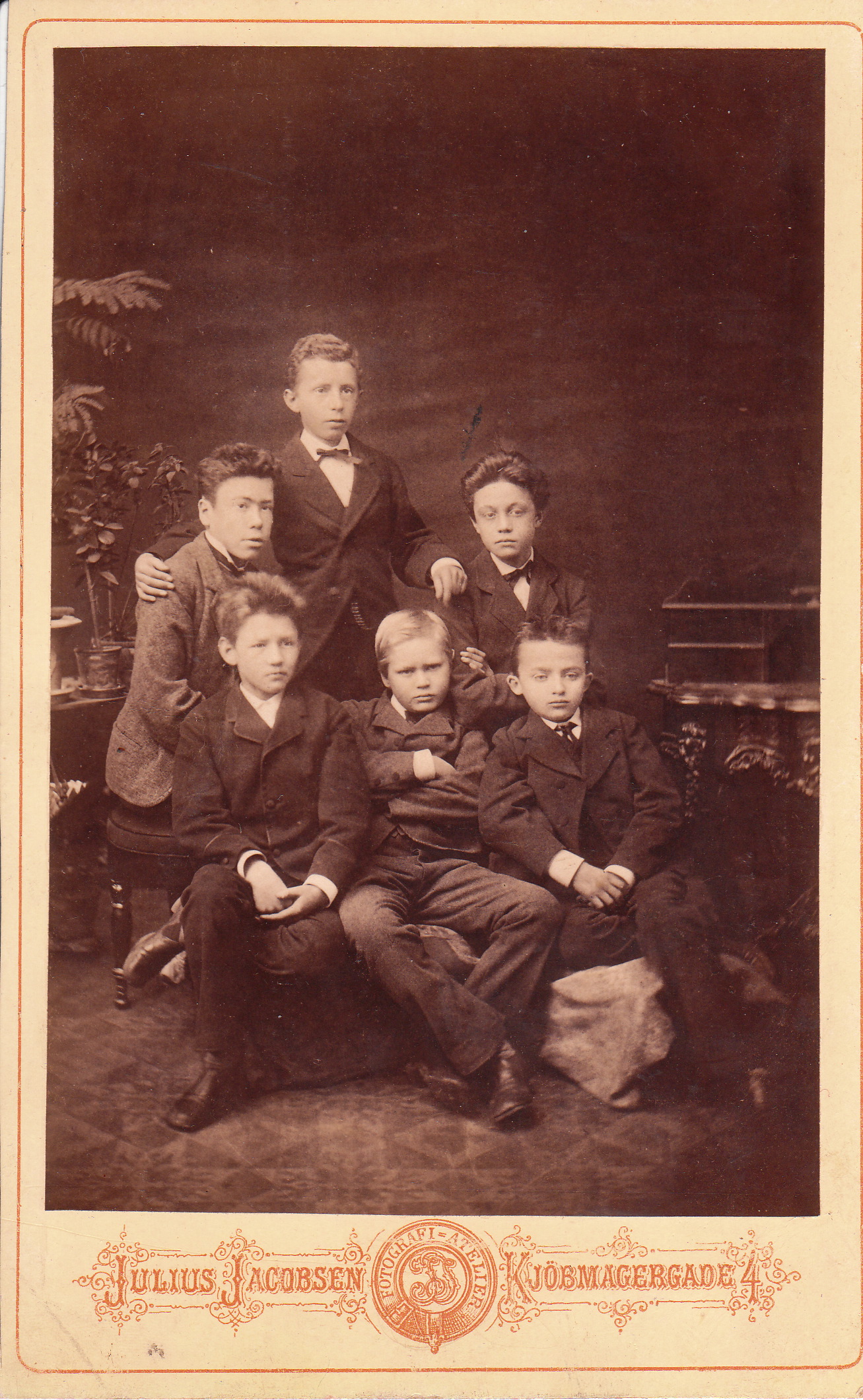
SIX YOUNG BOYS UNHAPPILY POSE FOR THEIR PORTRAIT IN COPENHAGEN, DENMARK

When does the fun start? That seems to be the question on the faces of the six young lads posing for their photograph at the studio of Julius Jacobsen, in Copenhagen, Denmark. The boys are dressed up in their finest clothing for this group photograph. Jacobsen took on the ambitious task of photographing six young boys. Jacobsen’s studio was located in Copenhagen, Denmark. It appears that the lads were not in a very cooperative mood at the time of the photograph. They appear bored, sleepy and irritated. Some of them have mischievous expressions but probably they are just boys being boys. How are these six kids related in terms of being photographed together. Perhaps they are classmates? They seem somewhat affectionate in the photograph leading one to believe that they knew each other well.

Published in: on January 4, 2014 at 12:01 pm  Comments (1)  
Tags: , ,

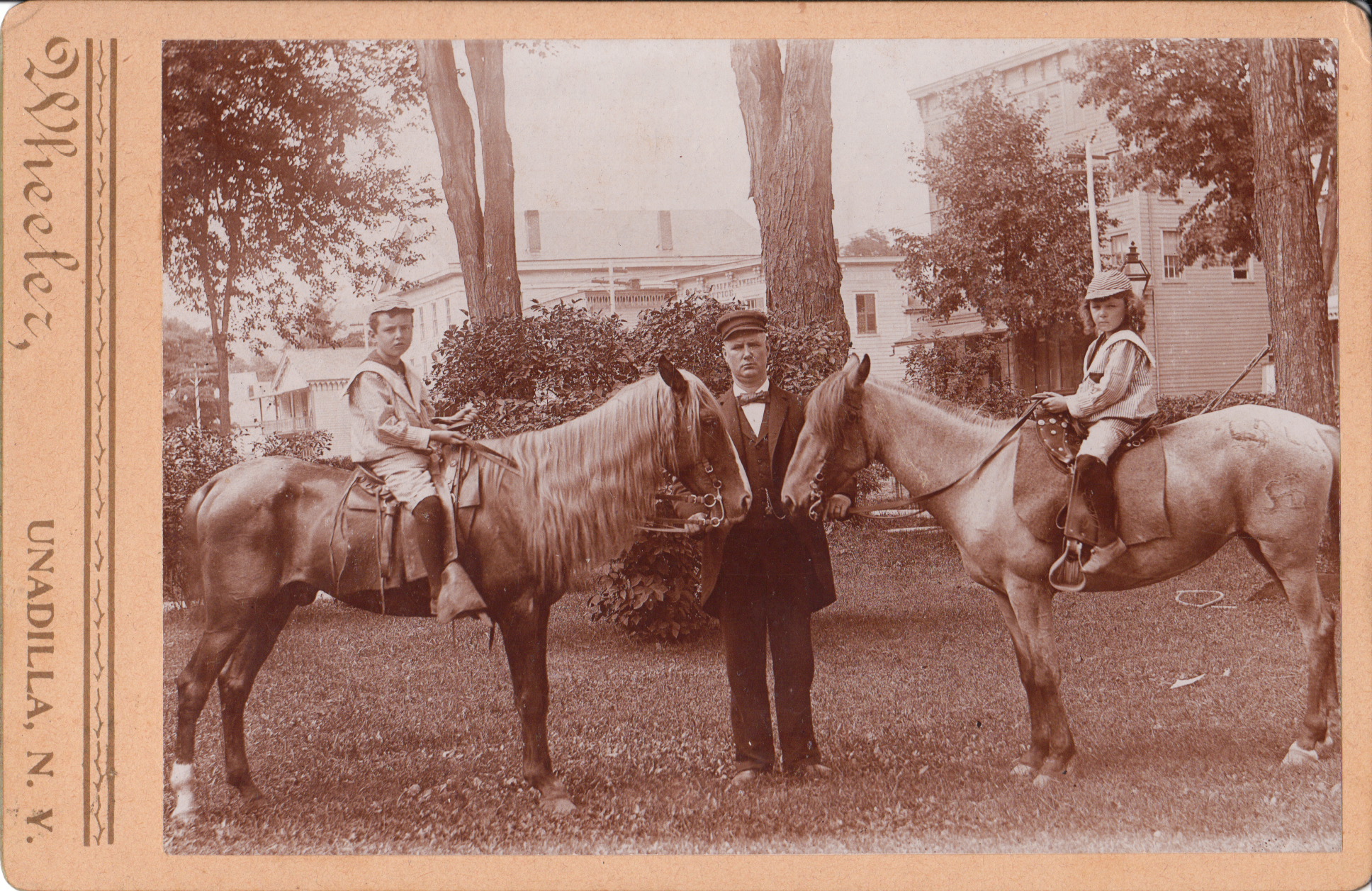
TWO SUPERVISED YOUNG CHILDREN ON HORSEBACK IN UNADILLA, NEW YORK

kids on horsesA  uniformed adult holds the reins of two horses occupied by child riders. The kids are wearing riding outfits and are on what appears to be wooded residential property. The photograph was produced by the Wheeler studio in Unadilla, New York. Unadilla is a town located in Ostego County in upstate New York. Research yielded little information about the photographer. It appears that his name is A. Wheeler and he sold his studio to C. H. Phelps in 1900.

Published in: on January 3, 2014 at 12:18 pm  Comments (1)  
Tags: , ,

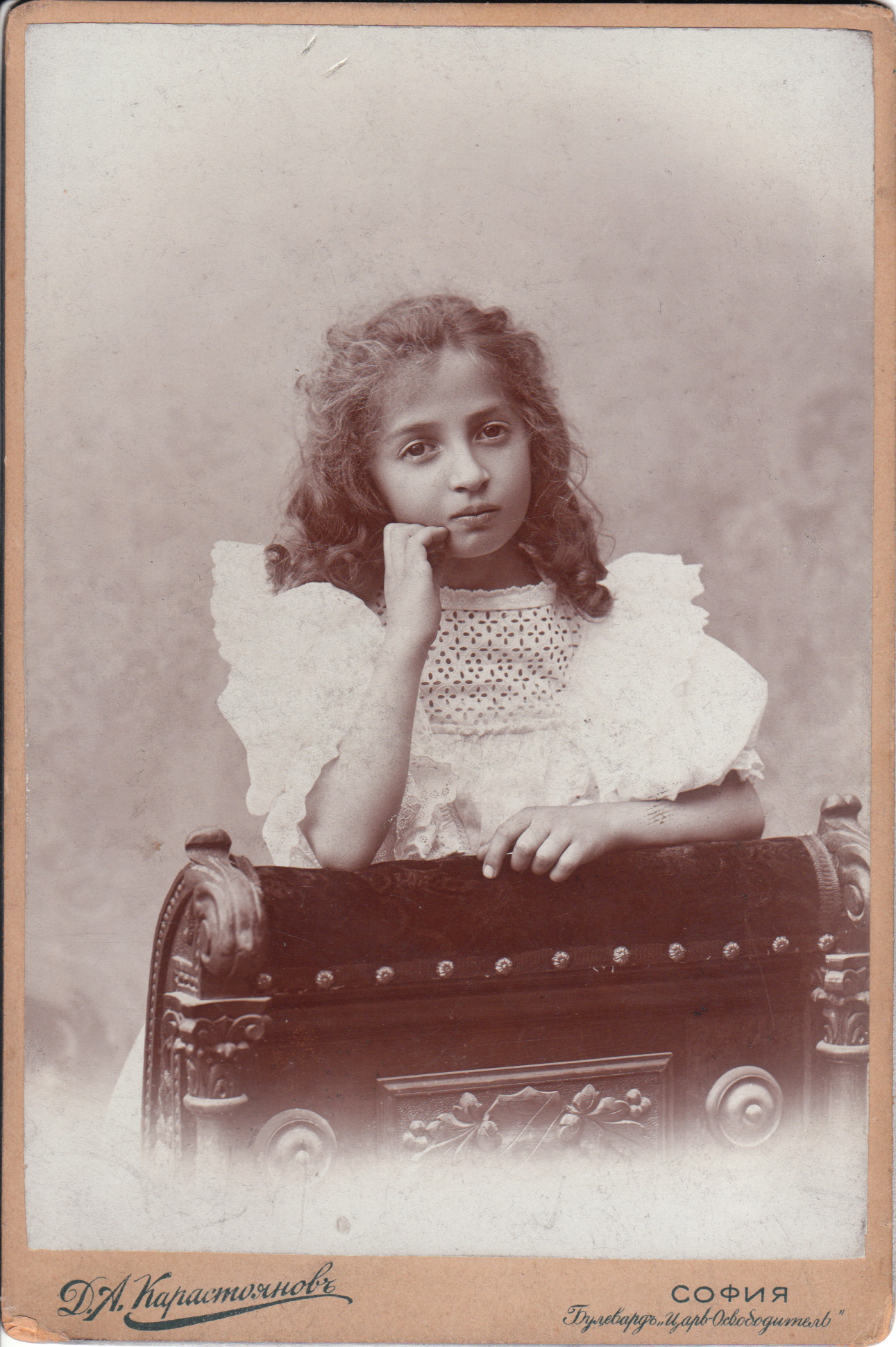
YOUNG GIRL WITH A FAR OFF STARE SOMEWHERE IN EUROPE

A young girl with a “far away” expression is captured in this cabinet card portrait. She is wearing a white gown and her appearance can be described as “haunting”. The previous owner of this photograph asserts that it is of Bulgarian origin and was from a studio in Sofia. The reverse of the image has a printed medal dated 1892 which informs the viewer that the photograph was taken after that date. Assistance from cabinet card gallery visitors would be appreciated in determining the country where this picture originated.

store

Published in: on January 2, 2014 at 11:57 am  Comments (1)  
Tags: ,

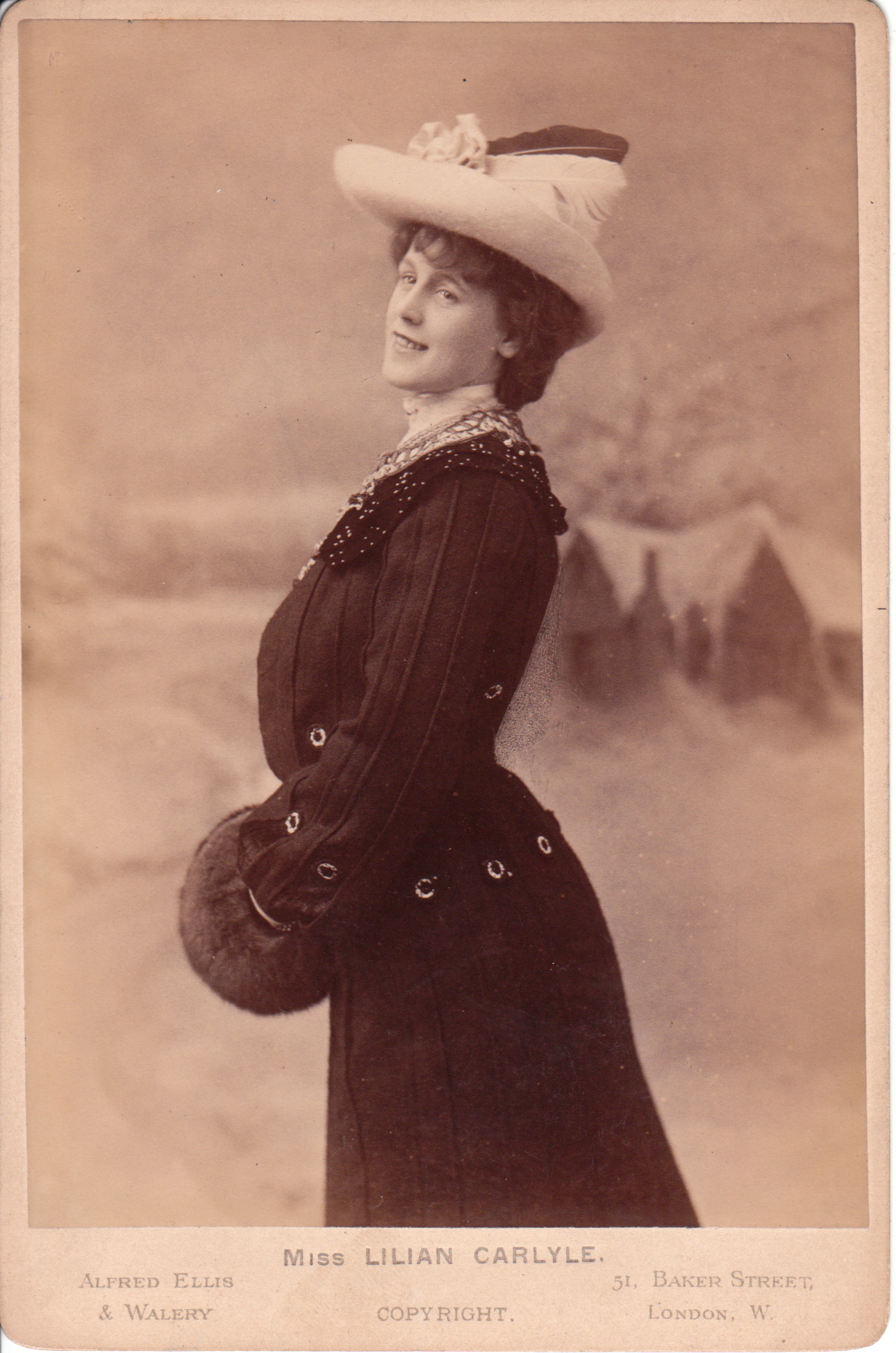
PRETTY ACTRESS WITH POOR POSTURE IN LONDON, ENGLAND (LILIAN CARLYLE)

LILLIAN CARLYLE_0004A pretty actress exhibits poor posture as she poses in London, England, at the studio of Ellis & Wallery. The performers name is Miss Lilian Carlyle, and she appears to be pushing her chest out, possibly to amplify her ample bust. Is there a chiropractor in the house? Printing on the reverse of the photograph states that the studio was established in 1884.  The backdrop employed in this portrait is not particularly realistic but at least it doesn’t detract from the portrait and allows Miss Carlyle to be the major focus. Alfred Ellis (1854-1930) was an active photographer between 1884 and 1899. He operated a studio on Upper Baker Street in London. He was an original member and served in a number of offices for the Professional Photographers Association. He specialized in theatrical photography and sometimes photographed whole scenes inside his studio. He later went to theaters to photograph performers and play scenes. Ellis was very involved in working for copyright protection in the high courts. Between 1890 and 1900 Stanislaw Julian Ignacy, Count Ostrorog (1863-1935) joined Ellis in a studio partnership. Ostrorog had followed in the footsteps of his father Stanislaw Ostrorog (1830-1890). He also kept his father’s “photographer name”. The senior Ostorog had changed his name to “Stanislaw Walery” for professional purposes. The last name of “Walery” was derived from his wife’s name, “Waleria”. The elder Walery had set up his London studio in 1883. To view other photographs by Walery, click on the category “Photographer: Walery”.

store

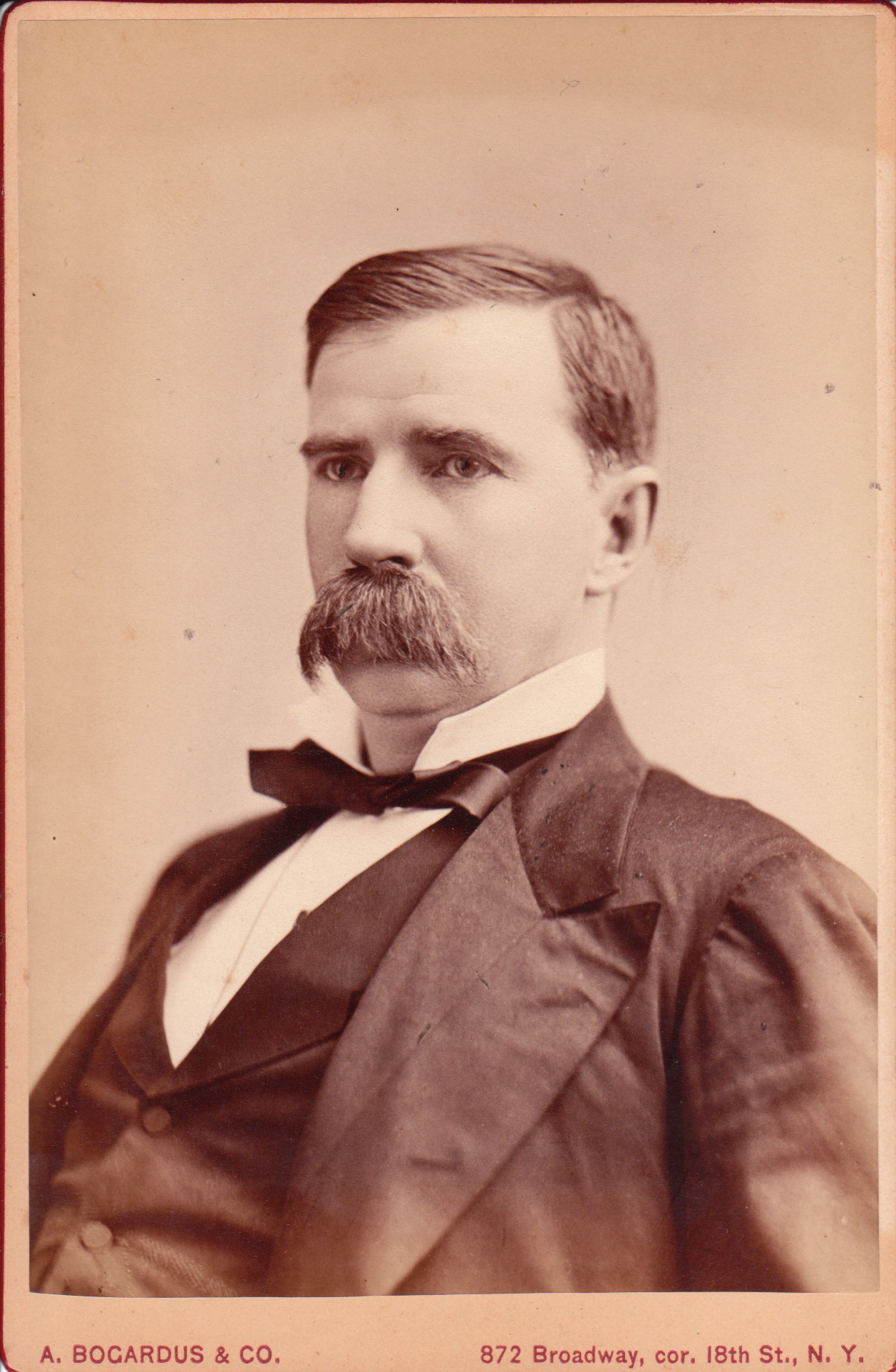
HANDSOME MAN WITH EXTRA LARGE MUSTACHE IN NEW YORK CITY

bogardusA nicely groomed gentleman, dressed in formal clothing, poses for his portrait at the Bogardus studio in New York City. The subject has an imposing mustache and a rather austere expression.  Abraham Bogardus (1822-1908) was a descendent of Dutch settlers of New York’s Hudson Vallery. He opened a studio and gallery in New York in 1846. In 1849 he opened a branch gallery in Newark, New Jersey.   His business was very successful. Bogardus was a noted celebrity photographer. In 1868 he was one of the founders of the National Photographic Association and served as the organization’s President for five years. Bogardus was a major witness at the trial of William H. Mumler. Mumler was a “spirit photographer” and he was brought to trial for fraud. Bogardus was hired by P. T. Barnum to fake a photograph of him with the “ghost” of Abraham Lincoln. The image was used as an example of the ease at which a photographer could create fake photographs of ghosts. From 1871 through 1873 Bogardus partnered in owning his studio with Daniel and David Bendann. Bogardus was not a big advocate of extensive retouching. He spoke at national conferences about his belief in minimal intervention. The popular photographers Sarony and Mora did not support the minimalist approach. Mora worked particularly hard to create celebrity portraits with an idealized appearance. Bogardus’s philosophy caused him to be very popular with male portrait sitters. In fact, Cornelius Vanderbilt insisted that Bogardus be the only photographer allowed to sell his portrait. Wishing to retire in 1884, after 38 years of business, he put his studio up for sale and in the advertisement he stated that “The reputation of the gallery is too well known to require one word of comment”. Bogardus’s studio had been located at a number of New York City addresses and the photograph above was taken at his last location. Bogardus was also a talented writer. He published many articles in photography journals and in addition during much of the 1880’s he edited a well respected monthly entitled “The Camera”. The photograph below is a portrait of Abraham Bogardus.


store

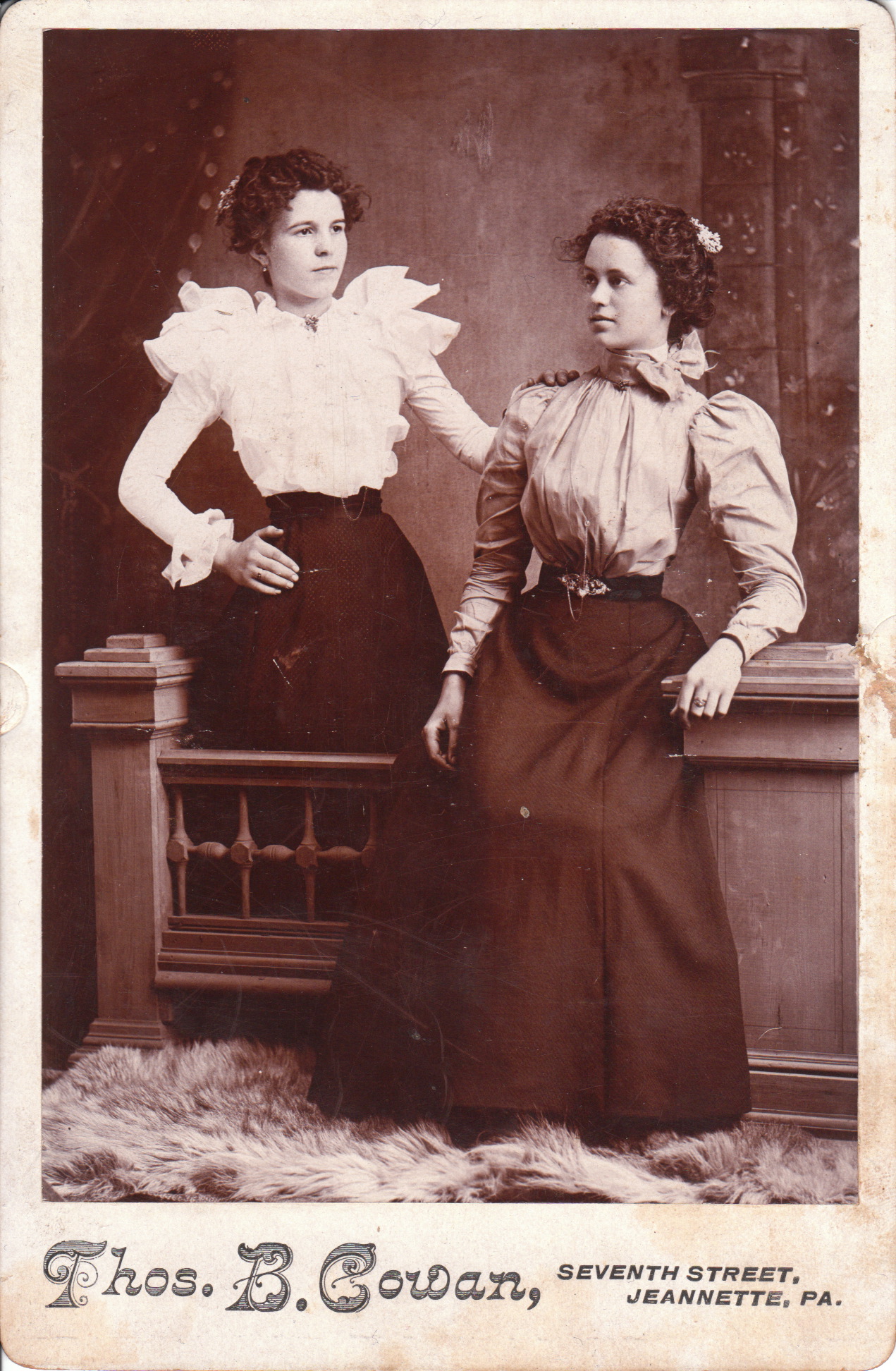
TOUCHING PHOTOGRAPH OF TWO WOMEN IN JEANNETTE, PENNSYLVANIA

touching photo

The Thomas B. Cowan studio captured these two wasp waisted women in a touching pose.The thin waists possessed by these two women didn’t come from spending hours at the gym and at palates classes. Tight fitting corsets are the likely causes of their remarkable figures. The young ladies have a family resemblance and it is quite possible that they are sisters. Thomas B. Cowan operated his studio in Jennette, Pensylvania.

Published in: on December 26, 2013 at 11:17 pm  Leave a Comment  
Tags: , ,