CHARLES EVAN JOHNSON JR.: ADORABLE AND INTERESTINGLY DRESSED TWO YEAR OLD

KID BY BOHM_0001

According to an inscription on the reverse of this photograph, the young boy in this image is named Charles Evan Johnson Jr.. At the time that this cabinet card was produced, Charles was two years old. The previous owner of this image stated that the young boy is wearing a Chinese style woolen dress and hat. I am not sure if that description is correct. The photographer of this photograph is Charles Bohm of Denver, Colorado. His studio was located at 284 Fifteenth Street. He is cited in a number of sources as the former employer of Frank Albert Rinehart (1861-1928) who became a famous American artist for his photography capturing Native American personalities and scenes. To view the work of Alfred Edward Rinehart, Frank’s brother, click on the category “Photographer: Rinehart”. Charles Bohm was an engraver, a jeweler and a real estate developer. He was born in Germany in 1846 and his family came to the United States to escape the democratic revolution of 1848. For many years the Bohm family lived in New Jersey where he became an apprentice in a design and engraving business. After a two year trip to Denver, he returned to New York where he designed copper plates, illustrated magazines, and organized the Palette Art Club. In 1872 he moved back to Denver and established a business offering design, engraving and photographic portraiture. He was active in Denver society and was a trustee for the water company and the library. Apparently, he loved speed and was involved in racing cars, horses and sleds. Research was not fruitful in learning about the subject of this photograph, Charles Evan Johnson Jr.. His name is too common to properly identify him in research materials.

THE KEMMER FAMILY POSES FOR THEIR PORTRAIT IN LINCOLN, ILLINOIS

LINCOLN FAMILYThis cabinet card features a family portrait of a mother and father with their two adult sons and their young daughter. The family is well dressed. The father has a terrific beard and mustache.  All three men in the image display the chains from their pocket watches. The photograph was produced by the Tandy studio in Lincoln, Illinois. An inscription on the reverse of the image identifies one of the subjects as “Mr Fred Kemmer, 612 College Avenue, Lincoln, Illinois”. Research has provided some information about the family pictured in this cabinet card photograph.The father in this image is Mr.Fred Kemmer (1846-?). He was born in Germany. The mother in the photograph is Hannah Kemmer and she was six years the junior of her husband Fred. The 1880 US census finds Fred and Hannah living in Mount Pulaski, Illinois with two sons and a daughter. The children were named Fred (age 6), Ella (age 3) and Charles (age 2). The 1900 census notes that Fred and Hannah were living in Lincoln with a daughter named Lucy (age 14) and that Fred Sr.was listed as working as a “landlord”. The children seen in this photograph are likely Fred, Charles and Lucy. Research also revealed information about Fred W. Kemmer Jr. (1873-1944). He was born in Lincoln and died in Mt. Pulaski at age 71. He was educated  through the fourth grade. He was married in 1899 to Carrie Backle (1877-1951), who was a Nebraska native. Fred was a farmer. The 1900 census revealed that he lived in Mt. Pulaski with his wife and 8 month old daughter, Beattrice. He still lived in Mt. Pulaski at the time of the 1940 census. The photographer of this image is Walter S. Tandy. A large collection of glass plate negatives taken between 1880 and the early 1900’s is curated by the Lincoln Heritage Museum at Lincoln College in Lincoln. Tandy’s death, at age 83, is announced in the Bulletin of Photography (1918). Most people would guess that Lincoln, Illinois was named after Abraham Lincoln but few would surmise that the town received it’s name before Lincoln became President. The town was named Lincoln in 1853.  Abe Lincoln had practiced law in the town between 1847 and 1859.

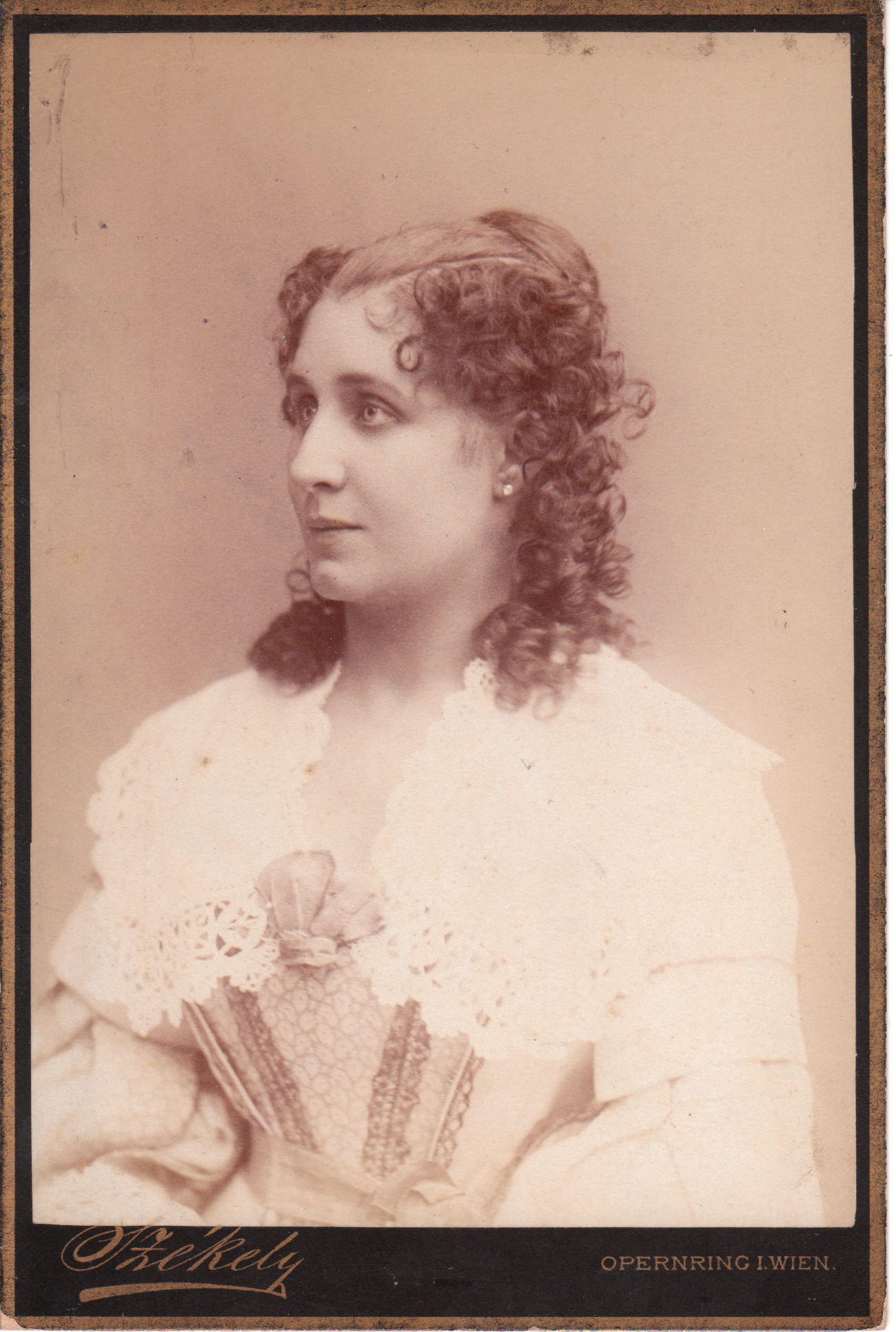
PRETTY WOMAN WITH CURLS IN VIENNA, AUSTRIA (PORTRAIT OF AUSTRIAN THEATER ACTRESS JOSEPHINE WESSELY)

VIENNA WOMAN_0003A pretty woman poses for her portrait in the studio of Dr Szekely in Vienna, Austria. The woman has an unusual hair style. Her hair seems to be straight on top of her head and she has beautiful curls on the side. The reverse of the photograph identifies the subject as Austrian theater actress Josephine Wessely (1860-1887). Wessely was born in Vienna and the daughter of a shoemaker. She began drama school at age fourteen and had her debut in “Intrigue and Love” in 1876 at the Leipzig City Theater. In 1879 she became a member of the Burgtheater ensemble. She was known for playing juvenile tragic roles and gained recognition for playing Gretchen in Goethe’s “Faust”. Wessely died at 27 years of age. The cause of her death is suspected to be leukemia. Printing on the reverse of the card reveals that Dr Szekely won medals for his photography in exhibitions in Vienna (1873) and Paris (1878). To learn more about Dr Szekely and to view more of his photographs, click on the category “Photographer: Szekely”.

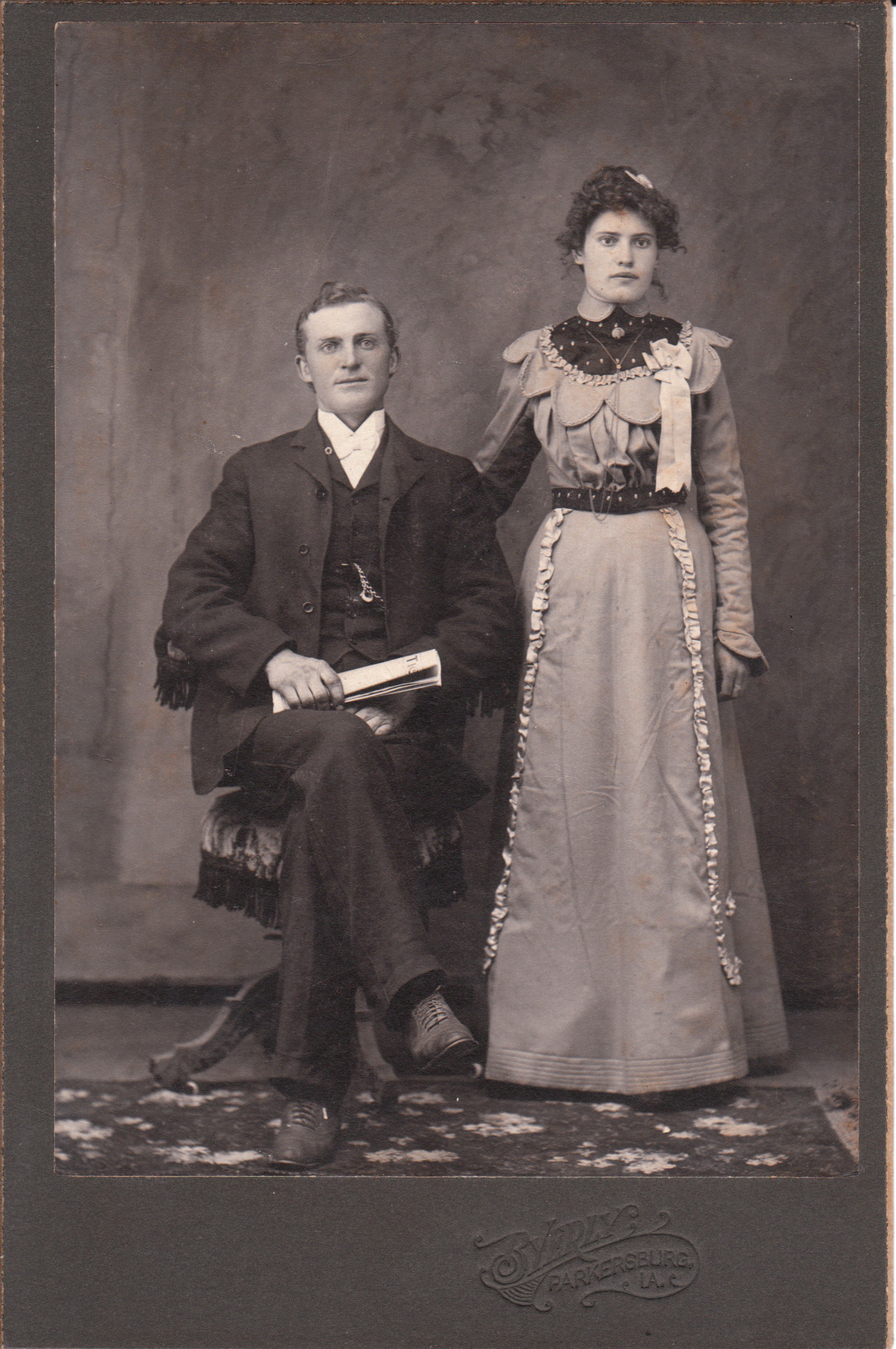
FASHIONABLE YOUNG COUPLE IN PARKERSBURG, IOWA

PARKERSBURG COUPLE_0004A young fashionably dressed couple pose for their portrait at the Byerly studio in Parkersburg, Iowa. The young man is holding a rolled up magazine or newspaper. The young woman is wearing a large ribbon. It looks like a ribbon that one might be awarded as a prize. The photographer, Orison Byerly (1836-?), operated a studio in Parkersburg in the 1880’s and 1890’s. He was born in Ohio and learned photography as a young man in Dubuque, Iowa under the tutelage of Frank Pickerel.

Published in: on March 30, 2013 at 12:01 am  Comments (1)  
Tags: , , , , ,

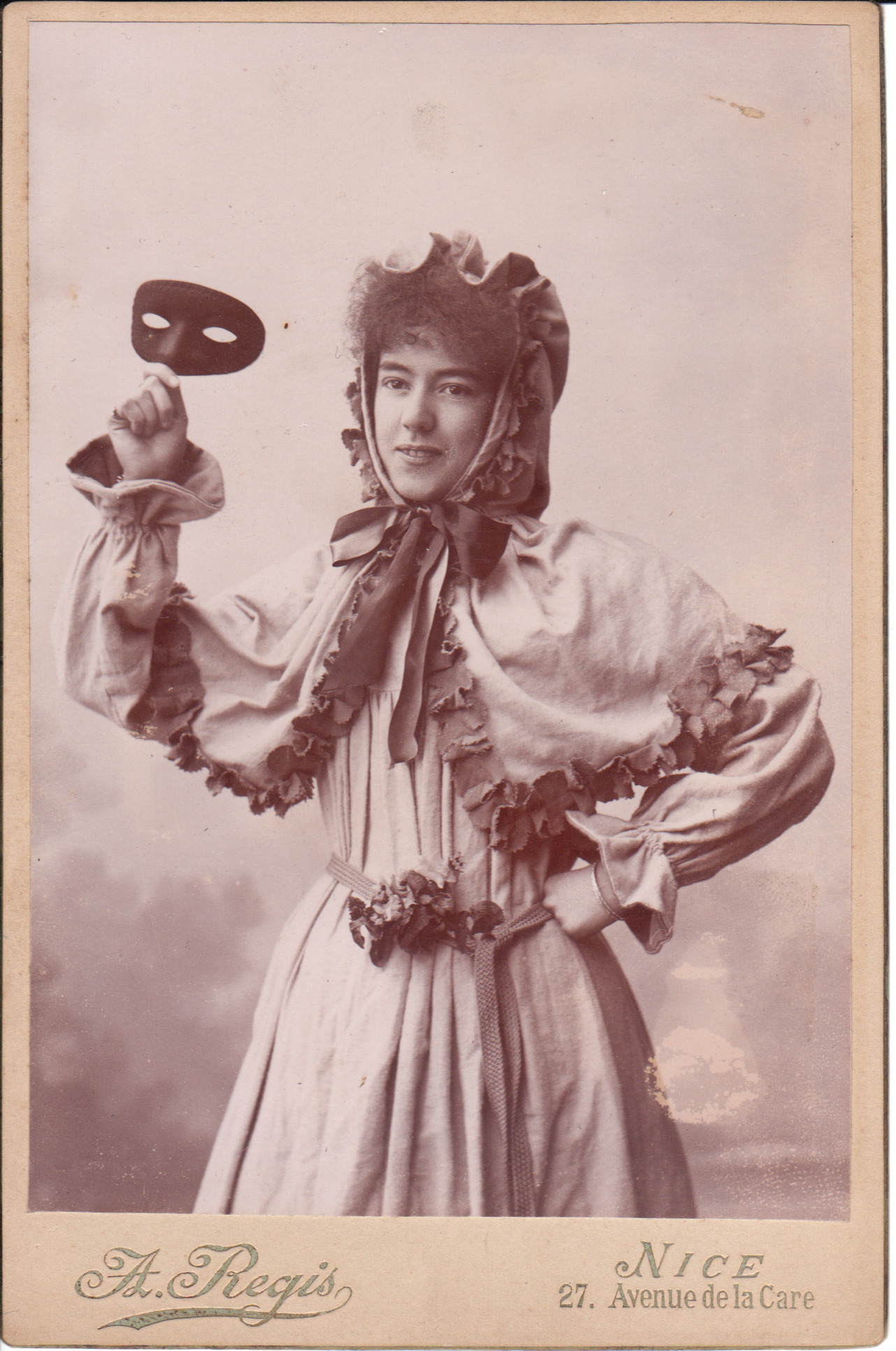
ACTRESS HOLDS THEATER MASK ALOFT IN NICE, FRANCE

LADYTHEATREMASK_0001This cabinet card photograph captures a young woman holding a theater (carnival)  mask. It is very likely that this smiling woman is an actress and that she is wearing a theater costume. Her dress is very unique and interesting. Hoperfully,  some of the fashion informed visitors to the cabinet card gallery will leave commentary about the subject’s attire. The cabinet card gallery is fortunate to have so many visitors willing to leave interesting and educational comments. This photograph was produced by A. Regis who operated a gallery in Nice, France.

Published in: on March 29, 2013 at 12:01 am  Comments (4)  
Tags: , , , ,

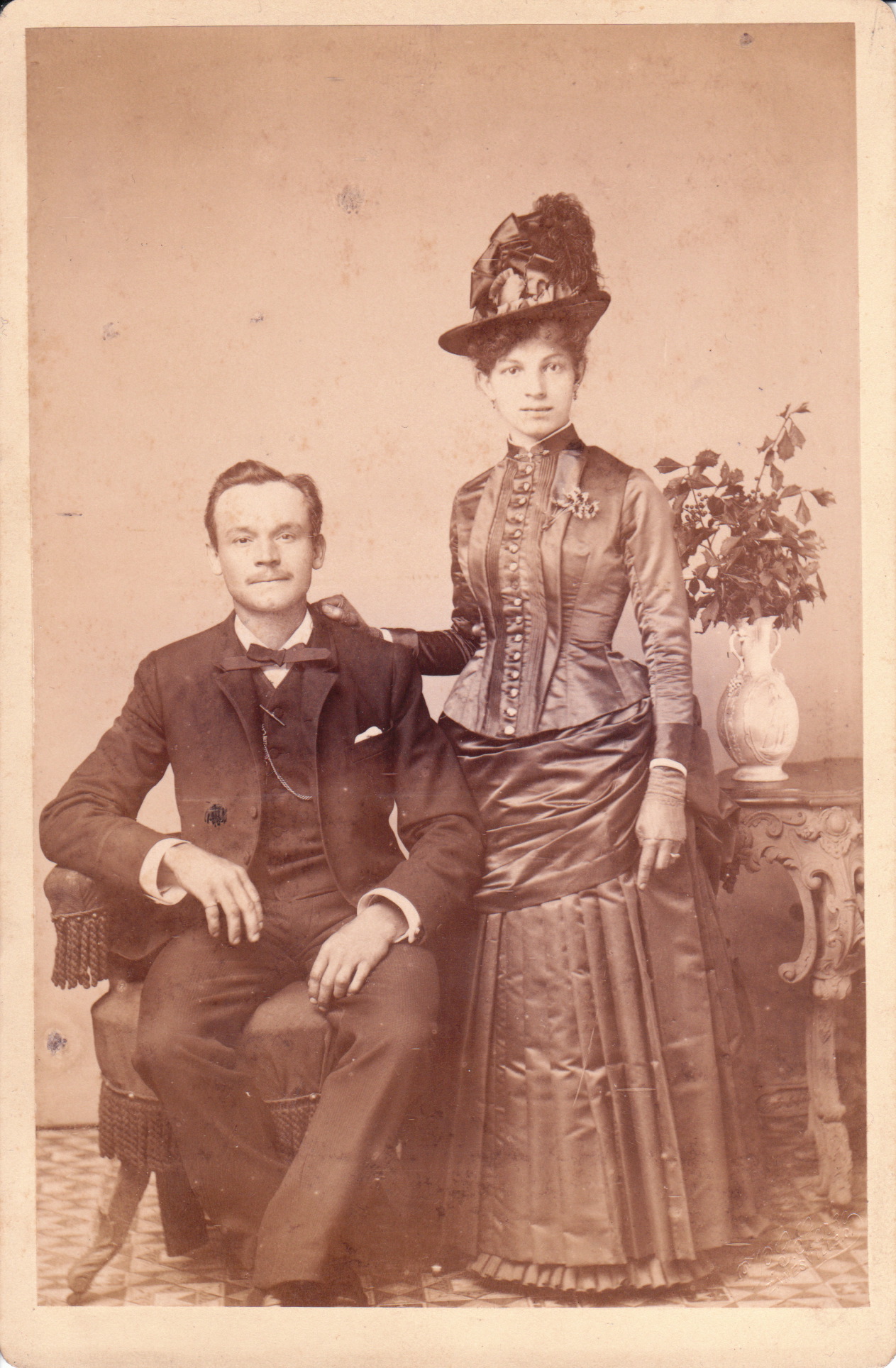
HANDSOME COUPLE IN ZANESVILLE, OHIO

HANDSOME COUPLE_0004This cabinet card captures a fashionable handsome couple   She is wearing a gorgeous dress and an elaborate hat with a feather. The photographer is William G. Starke and his studio was located on the corner of Main and Fifth Streets in Zanesville, Ohio. Starke operated in Zanesville from at least 1881 through 1897 and at some point, he was joined in the studio by his son, William E. Starke (1856-?).

Published in: on March 28, 2013 at 12:01 am  Leave a Comment  
Tags: , ,

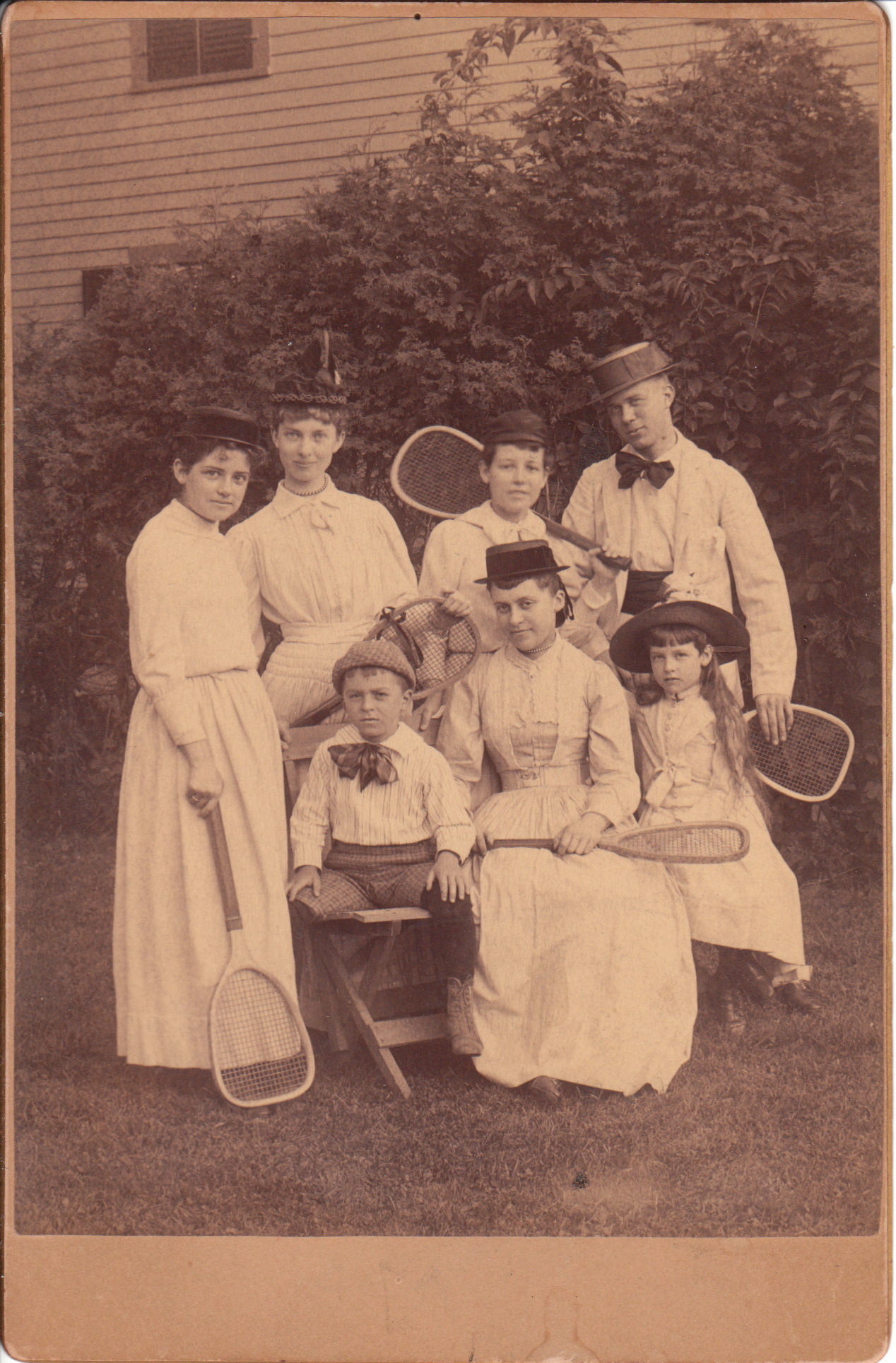
TURN OF THE CENTURY TENNIS PLAYERS (1890)

TENNSI_0002This cabinet card features a group portrait of four woman, one man, and two children dressed for tennis and all the individual’s except the children are holding tennis rackets. According to an inscription on the reverse of the photograph, the image was produced in 1890 The photographer and the studio’s location are unknown. All the individuals in the photograph are wearing terrific hats. The gentleman in the image is wearing a bow tie. Can you imagine Andre Agassi and Pete Sampras wearing bow ties as they battled for victory in an important tennis tournament? Cabinet Cards with a tennis theme are not extremely rare.     The sport of tennis was well established during the cabinet card era. In fact, a version of the game of tennis has been around for centuries. The rules of the game have not changed much since the 1890’s. The Wimbledon tournament in London, England has been played since 1877. The US Open began in 1881 and it was first played in Newport, Rhode Island.

Published in: on March 27, 2013 at 12:01 am  Comments (2)  
Tags: , , , , , , ,

ISABELLE URQUHART: COMIC OPERA AND MUSICAL COMEDY STAR (PHOTOGRAPH BY NEWSBOY)

URQUHART_0001

This cabinet card features actress Isabelle Urquhart (1865-1907). She was an American stage actress and contralto who appeared in mostly comic operas and musical comedies. Urquhart was born in New York City and claimed to have been educated in a convent. She made her first stage appearance in 1881. She performed as a chorus girl at the Standard Theatre in New York City. She than appeared in a number of small roles. From 1882 through 1883 she joined Augustin Daly’s company and acted in productions including “The Passing Regiment” and “The Squire”. In the latter production she was only seventeen years of age but played a ninety-seven year old woman. She returned to light opera because of it’s better compensation although she stated she preferred legitimate drama to comic opera. She had much success in major roles in light operas including in the hit operetta  “Erminine” which ran from 1886 through 1888 at the Casino Theatre. She also had success in other productions by luminaries such as Gilbert and Sullivan. In her leading lady role in “Erminine”, she started a fashion trend by not wearing petticoats in order “to accentuate her gorgeous figure”. Urquhart later appeared in vaudeville. Blue Vaudeville (2004) states that in a sketch at the Union Square Theatre, she “did little more than display her form in a handsome gown to the utmost advantage”. Urquhart also performed in several Broadway plays including “The Diplomat” (1902), “Arms and the Man” (1906), and “How He Lied to Her Husband”. This cabinet card was published by Newsboy and was number one i a series of photographs that were distributed as a premium accompanying tobacco sales.

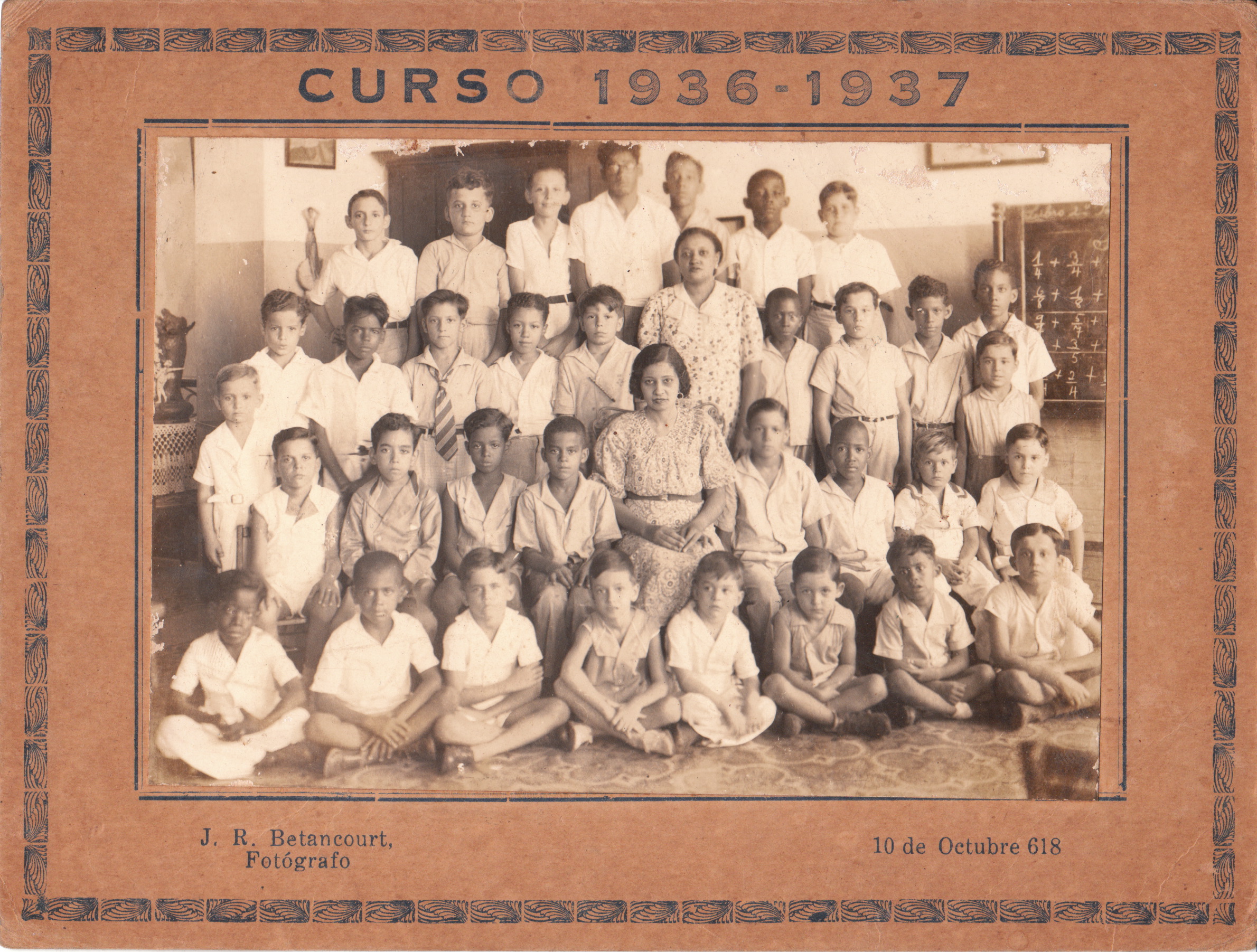
CUBAN CLASS PHOTOGRAPH (1936-1937)

CLASS 1936This non cabinet card photograph features a portrait of a class from a Cuban school. The photograph was taken during the 1936-1937 school year. The children are multi racial and all boys. There are three teachers evident in the photograph. Note the math problems written on the blackboard. The photographer is J. R. Betancourt. I do not know where in Cuba Betancourt operated his studio. “10 de Octubre 618” is likely the street address of the studio. “10 de Octurbre” is a national holiday in Cuba. The day is known as “Grito de Yara” and it commemorates the 10 Years War (1868-1878). The war was fought to gain freedom and independence from Spain.

Published in: on March 25, 2013 at 12:01 am  Leave a Comment  
Tags: , , , , ,

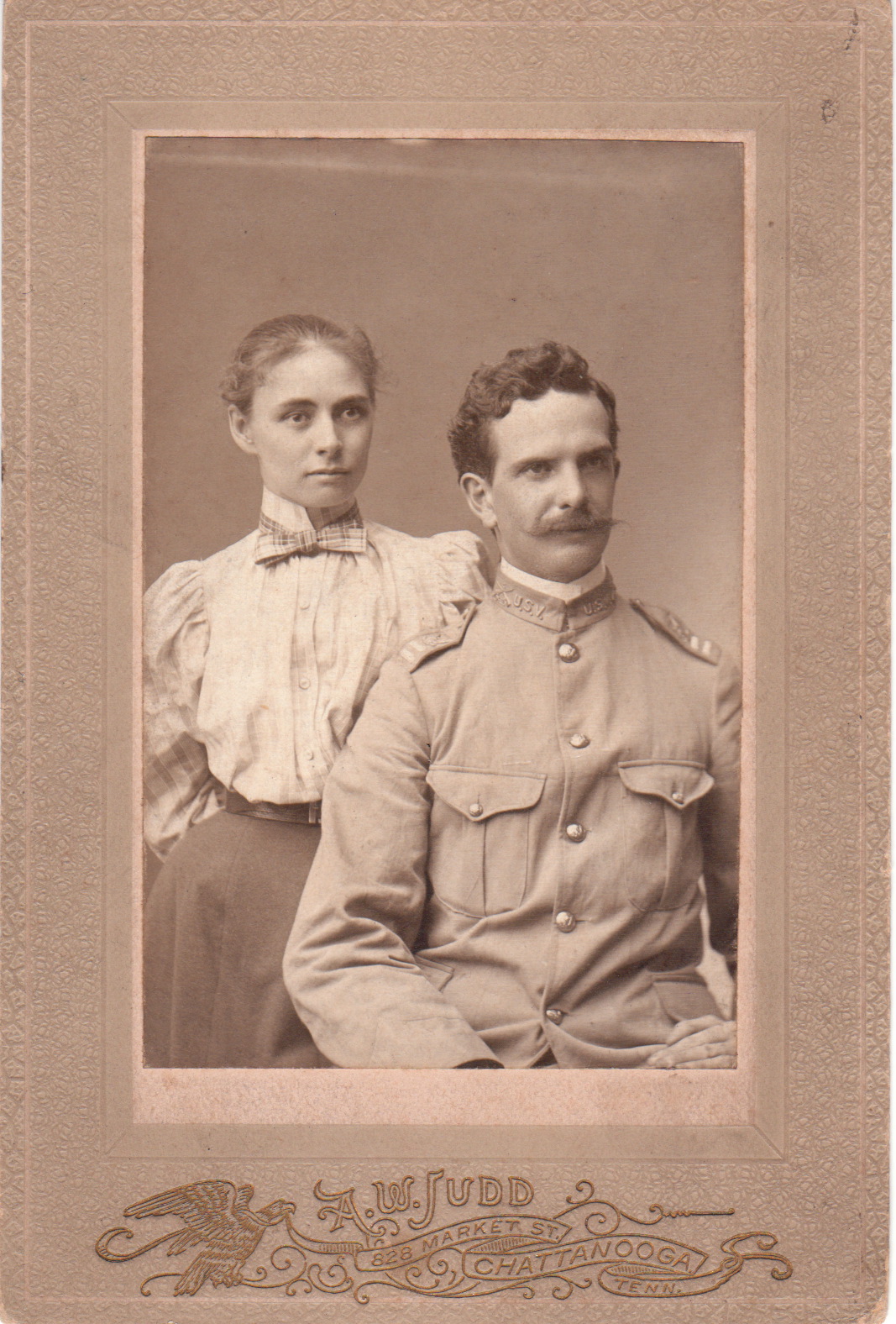
UNITED STATES VOLUNTEER UNIFORMED SOLDIER AND HIS WIFE IN CHATTANOOGA, TENNESSEE

USV TENNESSEE_0006

This photograph features a military man with a young woman who is likely his wife. The soldier is wearing collar pins that identify him as a member of the United States Volunteers. Members of the USV were enlisted in the army but were separate from units of the regular US Army. Although volunteer regiments existed during the civil war, the USV was not officially named until the Spanish American War in 1898. The volunteer army was a quick way to supplement the regular army during times of war and was unnecessary during times of peace. This portrait was likely taken during or just after the Spanish American War. The photograph is smaller than a cabinet card. It measures 3.5″ x 5.25″. Note that the woman is standing behind the man making him appear much more prominent. It almsost seems like that she was not even in the original pose and that she was superimposed onto his photographic portrait. The photographer is A. W. Judd of Chattanooga, Tennessee. Judd was born in 1846. The book “Chattanooga” (1996) reports that Amos Wilson Judd was a civil war veteran who began his photography business in 1877. His  name and studio appears in Chattanooga’s business directories from 1890 through 1920. He died in 1929. He had two brothers who were photographers. His son succeeded him in running his studio.  Judd had two portraits appear in Wilson’s Photographic Magazine (1900). The Photo Beacon (1906) states that Judd was the President of the Kentucky/Tennessee Photographers Association. Wilson’s Photographic Magazine (1908) indicates that he held a patent for a photography invention. A confederate soldier named Amos Judd was a member of the 2nd Battalion Georgia Infantry (State Guard), Company B. He mustered in as a private and left the service with the same rank.