JOAN FONTAINE : FILM AND THEATER STAR : SIBLING RIVALRY SURVIVOR

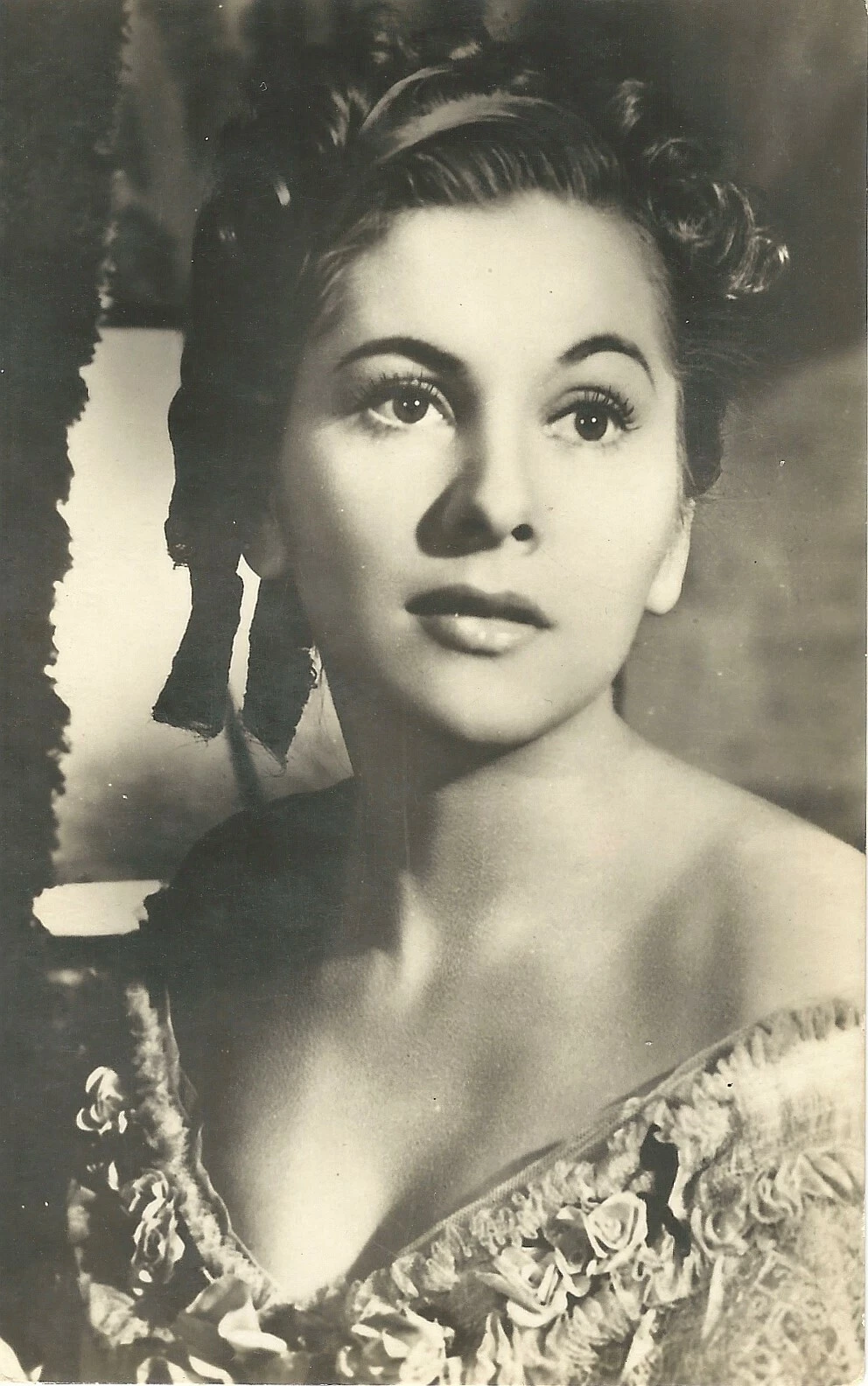
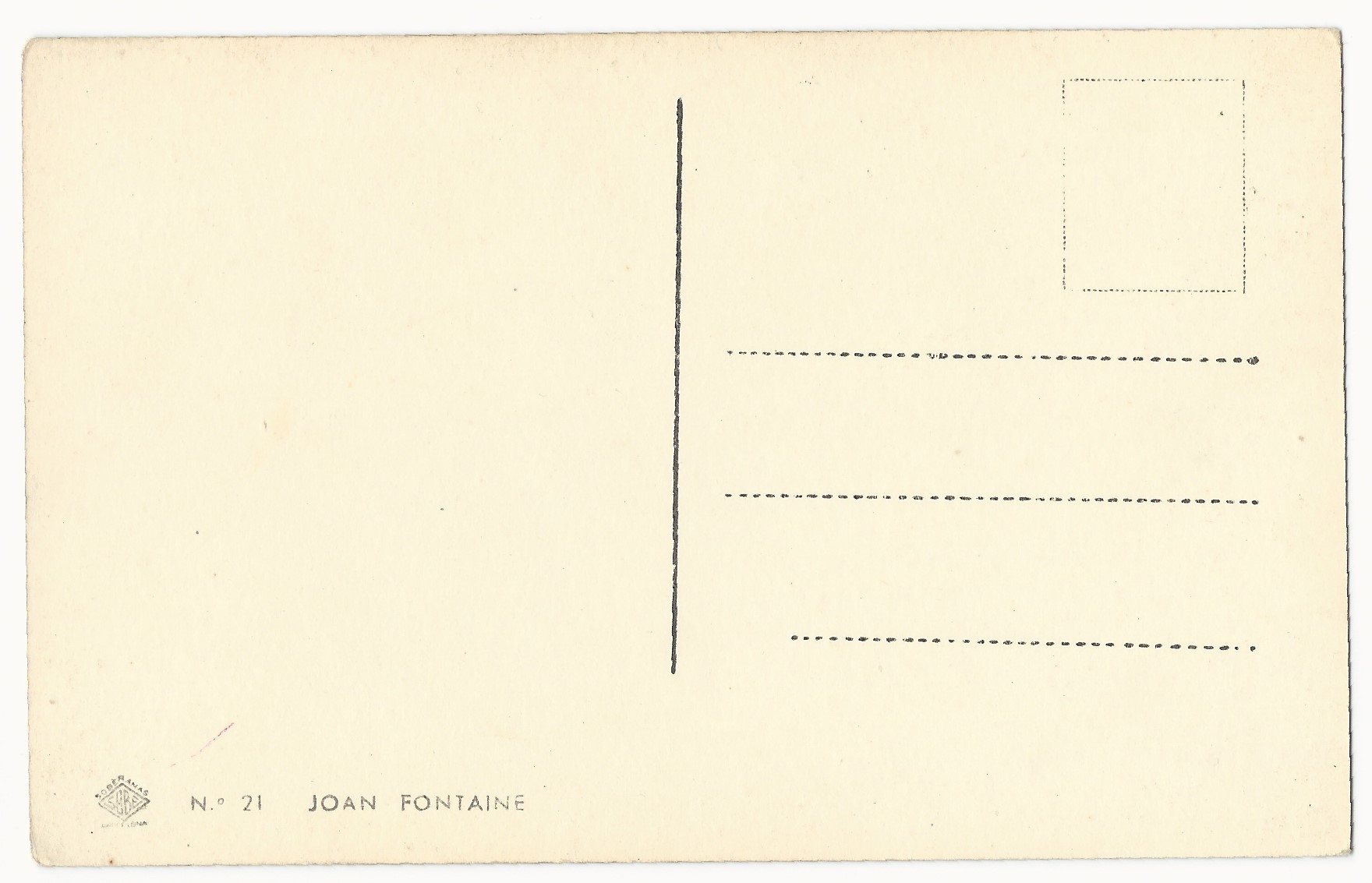
This vintage real photo postcard features a lovely portrait of Joan Fontaine (1917-2013). She was a British-American actress known for her starring roles during the Golden Age of Hollywood. She acted in more than 50 films and her career had a five decade duration. Fontaine’s older sister was the actress Olivia de Haviland, and the pair had a rivalry well covered by the press. In 1942, the sisters were both nominated for the Academy Awards “Best Actress” title. Joan won and reportedly rejected her sister’s congratulations. In commenting about their rivalry, Fontaine stated that she had both married and won an Oscar before her sister, and that she had little doubt that “if I die first, she’ll undoubtedly be livid because I beat her to it!”. Their competitive relationship began early. At the age of nine, sister Olivia wrote a will in which she stated, “I bequeath all my beauty to my younger sister Joan, since she has none”. Joan’s film career began in 1935. She was working for RKO pictures. Her first major role was in the film, “The Man Who Found Himself (1937). Also in 1937, she appeared alongside Fred Astaire in “A Damsel in Distress”. She followed that appearance with the female lead in “Gunga Din” (1939). The film was based on the work of Rudyard Kipling and it was an exciting adventure film. Some contemporary critics compare it to “Raiders of the Lost Ark” (1981). I recently viewed “Gunga Din” and it was an exciting film, but it unfortunately glorified colonialism. In 1940 Joan’s career was propelled by her appearance in Alfred Hitchcock’s “Rebecca”. This role resulted in an Academy Award nomination for “Best Actress”. In 1941 she won the “Best Actress” award for her appearance in Hitchcock’s “Suspicion”. In 1943 she received her third “Best Actress” nomination. Much of her acting in the 1940’s involved drama films. During the war, she worked on a limited basis as a nurse’s aide. In 1946, Fontaine established her own film company with her husband, William Dozier. The company was named Rampart Productions and she appeared in a number of the company’s films. In the early 1950’s her film career began to dwindle. She then took her talent to stage, radio, and television roles. She appeared in two Broadway theater productions (1955 and 1970). Her final film appearance was in 1966. She continued to act until 1994. Now, for some biographical facts. Fontaine was born in Tokyo, Japan, to English parents. Her father was an English professor and later became a patent attorney. Her mother was a stage actress until she moved with her husband to Tokyo. Her mom did return to the stage after her daughters became successful in the 1940’s. Fontaine’s parents separated in 1914, when Joan was just two years-old. It seems that Fontaine’s father enjoyed intimate relationships with some of the geishas of Tokyo. Joan’s mother decided to move with her two daughters to the United States on the advice of a doctor. Joan was a “sickly” child and a change of climate was advised. The family settled in California and Joan’s health normalized. Joan was married and divorced four times. Her first two marriages were to actors, the third was to a producer/writer, and the fourth to the golf editor at “Sports Illustrated”. She had personal relationships with Harry Belafonte and Presidential candidate, Adlai Stevenson. Fontaine was a citizen of both the United States and Great Britain. She had a pilot’s license, was an expert rider, and was an accomplished interior decorator and chef. In fact, she excelled at too many things to mention in this description. This vintage portrait postcard was published by Soberanas as part of a series (no.21). SOLD
Published in: on August 5, 2025 at 12:00 pm  Leave a Comment  
Tags: , ,

MARY PICKFORD : LES VEDETTES DE CINEMA : CINEMAGAZINE : RPPC (1920’s)

Mary Pickford (1892-1979) was a Canadian-American actress and one of the most influential figures in early Hollywood. She was often referred to as “America’s Sweetheart”. She was a pioneer of silent film and a co-founder of the film industry as we know it today. Pickford’s career began in childhood when she performed in theater productions in Canada and the United States. By the early 1900s, she transitioned to film, working with director D.W. Griffith at Biograph Studios. Her delicate beauty and expressive acting quickly made her a fan favorite, setting her apart in an era when exaggerated stage-style performances dominated silent films. During the 1910s and 1920s, Pickford became one of the highest-paid and most beloved actresses in the world. Starring in films such as Rebecca of Sunnybrook Farm (1917), Daddy-Long-Legs (1919), and Pollyanna (1920), she was known for playing wholesome, spirited young women. Her curly hair and signature on-screen innocence became iconic, but she was also a savvy businesswoman who understood the power of her brand. Pickford was not only a star but also a trailblazer in the film industry. In 1919, she co-founded United Artists alongside Charlie Chaplin, Douglas Fairbanks (her then-husband), and director D.W. Griffith. This revolutionary move allowed filmmakers to control their own productions rather than rely on major studios, changing the industry forever. As the film industry transitioned to “talkies,” Pickford retired from acting in the early 1930s, though she continued to produce films. Her contributions earned her an honorary Academy Award in 1976 for her lasting impact on cinema. Mary Pickford’s influence extends beyond her films. She helped shape the star system, paved the way for women in Hollywood, and co-founded the Motion Picture Relief Fund to support struggling actors. She remains an enduring symbol of early Hollywood glamour and innovation. Mary Pickford was born into a working-class family in Toronto, Canada. Her father, John Charles Smith, was an alcoholic who struggled to provide for the family and died from a workplace accident when Mary was just six years old. Her mother, Charlotte Hennessey Smith, was left to raise Mary and her two younger siblings, Lottie and Jack, on her own. To support the family, Charlotte encouraged her children to enter acting, and Mary began performing in theater at a young age. She soon became the family’s primary breadwinner, and her siblings, Lottie Pickford and Jack Pickford, also pursued film careers. Pickford transitioned from theater to film in the early 1900s, quickly rising to fame with her expressive acting and wholesome on-screen persona. By the 1910s and 1920s, she was one of the most recognizable stars in the world, earning the nickname “Queen of the Movies.” She also helped establish the Academy of Motion Picture Arts and Sciences. Mary Pickford was married three times. Pickford’s first marriage was to silent film actor Owen Moore (1911-1920). Her second and most famous marriage was to fellow silent film actor, Douglas Fairbanks (1920-1936). Her third marriage was to actor Charles “Buddy” Rogers (1937-1979). After retiring from acting in the early 1930s, Pickford focused on producing films and philanthropy. She became more reclusive in her later years, struggling with alcoholism and health issues. Today, she is remembered as a pioneering force in cinema history. Pickford is featured on this postcard. She is seated gracefully on a carved wooden stool, exuding elegance and poise. She is dressed in a flowing, light-colored gown with delicate embellishments on the bodice and sheer fabric draping over her arms. Her signature curls frame her face, a defining feature of her “America’s Sweetheart” image. She wears a subtle yet confident expression, her eyes gazing slightly to the side with a soft, introspective quality. Her arms are relaxed, with one hand resting gently on her lap and the other elegantly extended. Her accessories include a bracelet on her wrist and a ring on her finger, adding to her refined look. The backdrop behind her is a richly textured tapestry, possibly depicting a pastoral scene. This postcard was likely produced in the 1920s, during the height of Pickford’s career. It is numbered 86 and is part of a larger collectible series showcasing cinema stars of the era. This vintage postcard is part of a series titled Les Vedettes de Cinéma (translated as The Stars of Cinema), and it was published by Alfred Noyer (Paris,France), in collaboration with United Artists, the film distribution company that Pickford co-founded. The back of the postcard identifies the publisher as Cinémagazine – Edition and states that it was Made in France / Fabriqué en France, indicating its European origin. (SOLD)

PHOTOGRAPH OF ACTRESS GRETA GARBO IN A SCENE FROM THE “TEMPTRESS” (1926) AND ONE REAL PHOTO RISQUE POSTCARD

 PHOTOGRAPH 1  (SOLD)

GRETA GARBO : RISQUE :SWEDISH FILM STAR :1920'S & 1930'S : ACADEMY AWARDS : RPPC - Picture 1 of 3

PHOTOGRAPH 2  (SOLD)

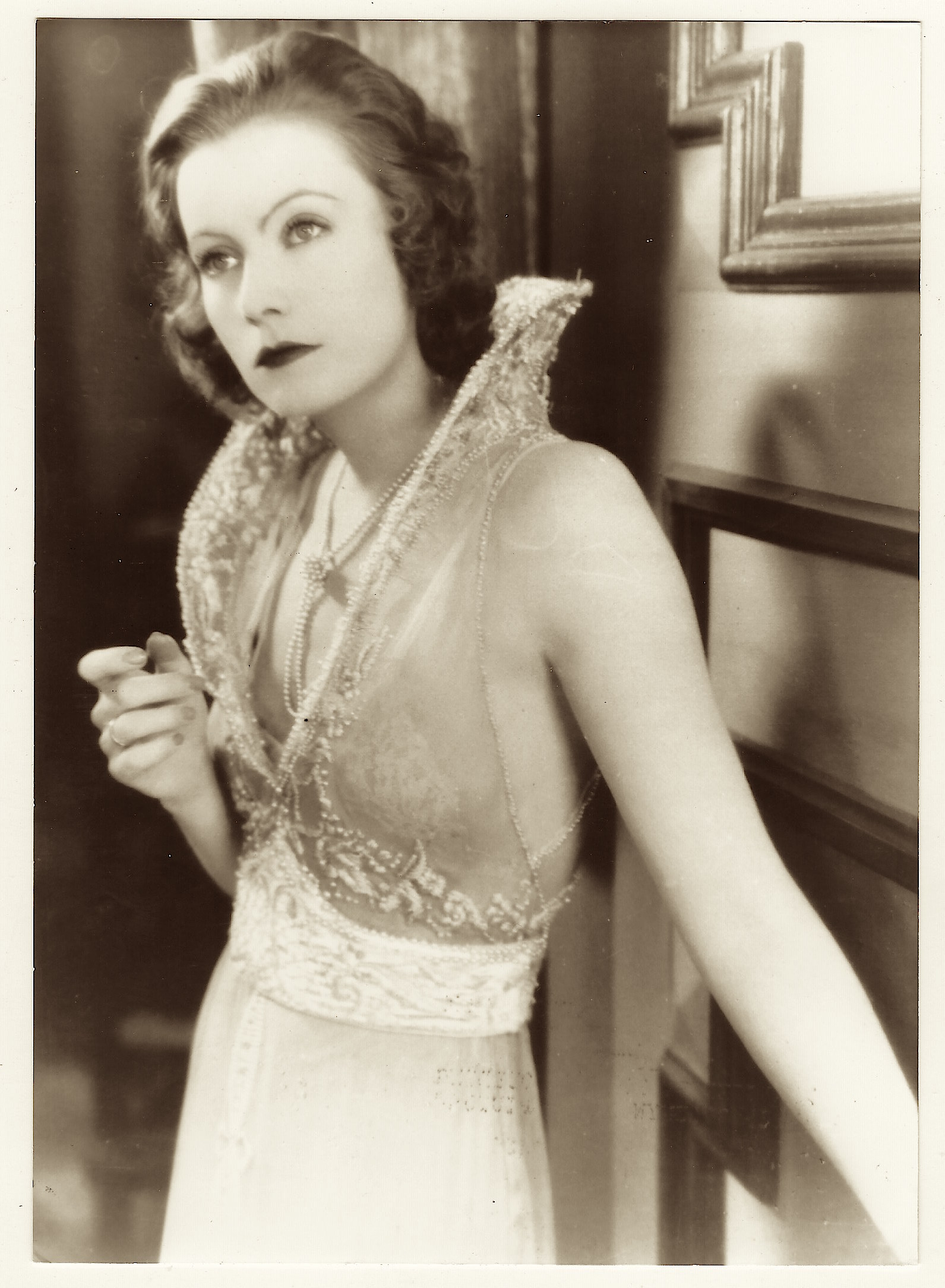
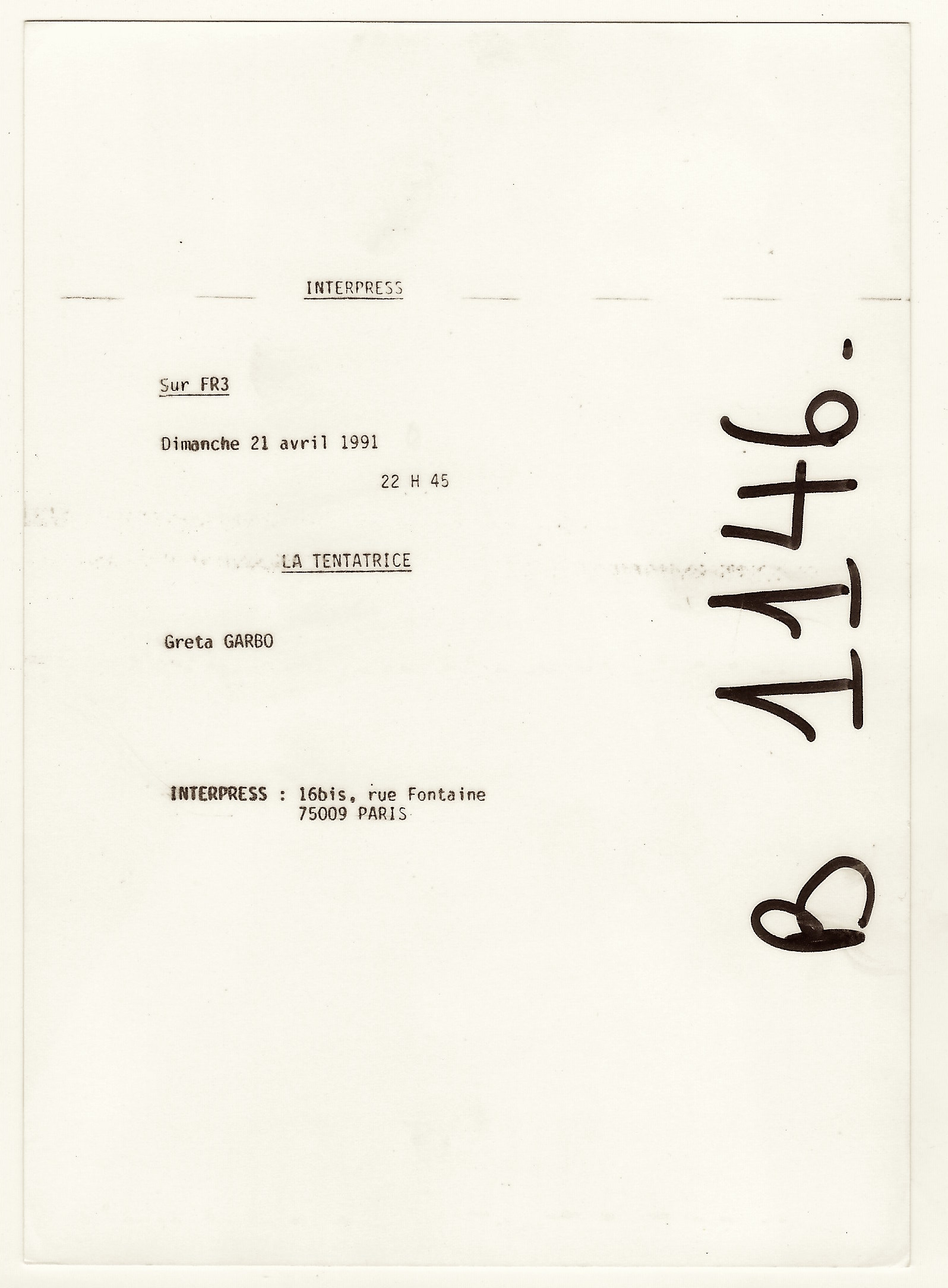
Photograph 1 is an original vintage  is a French press photo from 1991. The image features the actress, Greta Garbo in a scene from the silent film, “The Temptress” (1926). Garbo (1905-1990) was a Swedish film actress in the 1920’s and 1930’s. She was beautiful and she was talented. During her career she was nominated three times for the Academy Award for best actress. The American Film Institute rated her fifth on their list of the greatest female stars of classic Hollywood cinema. Her first film role was in the Swedish film “The Saga of Gosta Berling” (1924). Louis B. Mayer, the head of Metro-Goldwyn-Mayer (MGM) was impressed by her performance and brought her to Hollywood in 1925. Her performance in the silent film “Flesh and the Devil” made her an international star. Her first talkie was “Anna Christie” (1930). Many film experts believe her finest performance came in the film “Camille” (1936). By1938, her career went into a tailspin and she retired from the movie industry at the ripe young age of 35. In total, she had appeared in twenty-eight films. She led a very private life in her retirement and she became an art collector in her later years. She clearly knew her art, evidenced by the fact that her collection was worth millions of dollars when she died.  (SOLD)

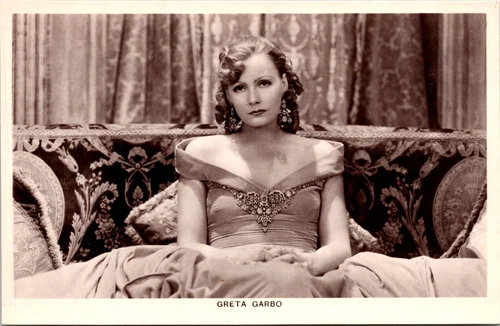
Photograph 2 is a vintage postcard that is risque. Garbo’s dress is quite low cut. This vintage postcard is part of the “Picturegoer” series (No.503).  (SOLD)

garbo 2

PHOTOGRAPH 1

PHOTOGRAPH 2

DOROTHY DANDRIDGE : AFRICAN AMERICAN ACTRESS & SINGER & ACTIVIST : TAMANGO : RPPC

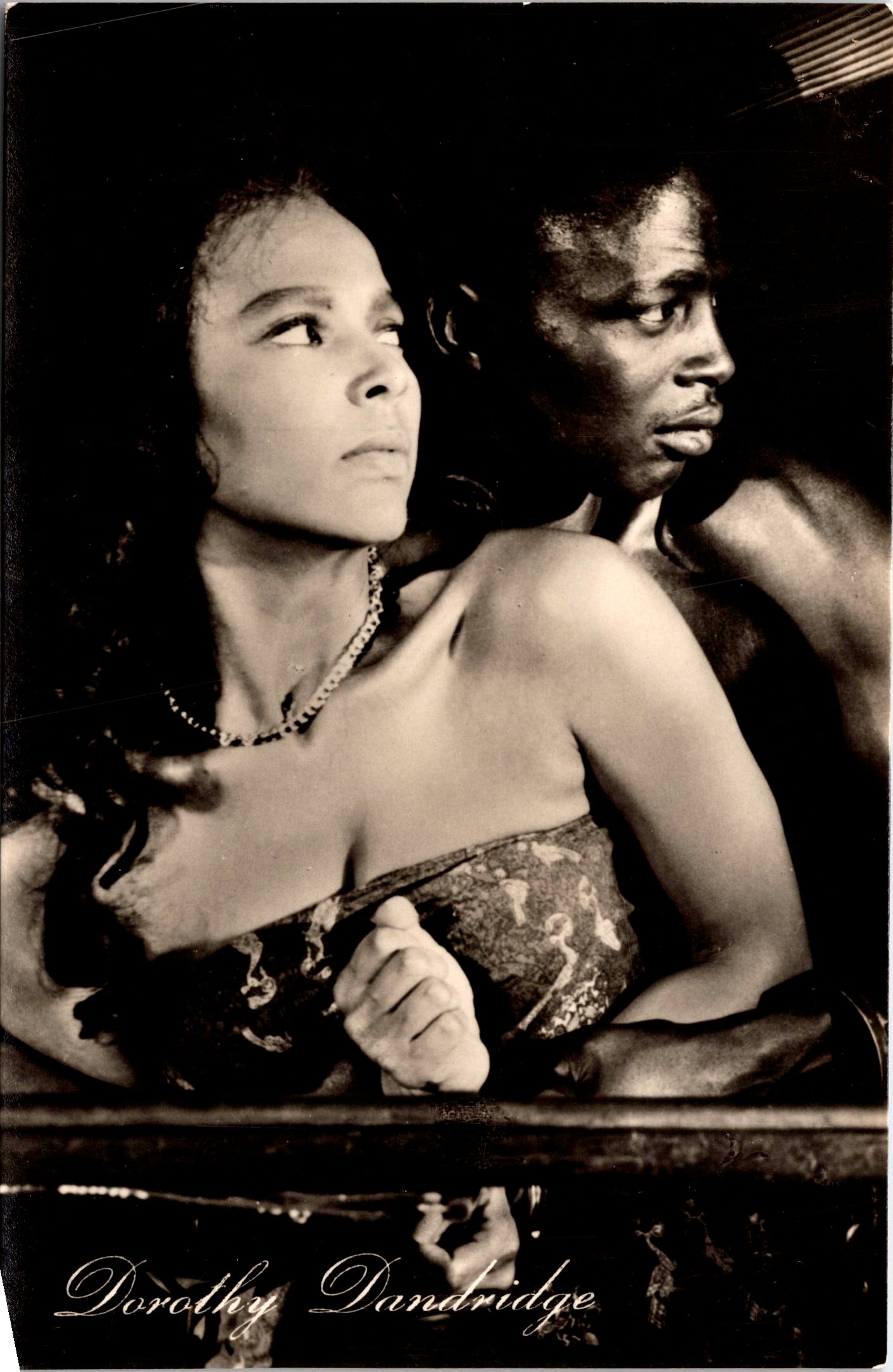
This vintage real photo postcard features African American actress and singer, Dorothy Dandridge (1922-1965). She was born in Cleveland, Ohio. Her mother was an entertainer and her father was a cabinet maker and Baptist minister. Before Dorothy was born, her parents separated. Ruby’s mom built a song and dance act for Dorothy and her sister. Her mom’s lover managed the act and it is written that the children were given abusive discipline. They toured continuously for five years and they barely attended school. When the depression hit, Ruby moved her girls to Hollywood, California. Before long, the sisters teamed up with school mate Etta Jones to do a dance act called “The Dandridge Sisters”. The act did well for several years and played in venues such as the Cotton Club and the Apollo Theater. Dorothy’s first screen appearance occurred when she was 13 in an episode of “Our Gang”. This was followed by a number of other screen roles including an appearance in “A Day at the Races” (1937) with the Marx Brothers. Her firs credited film role was in 1940. Her film roles were limited because she rejected many stereotypical black roles. In the 1940’s she appeared in both film and on the stage. She also performed as a singer in films with Count Basie and Louis Armstrong. Her first starring role was in “Bright Road” (1952) where she played opposite Harry Belafonte. In 1954, she starred in “Carmen Jones”. She received great reviews and the movie made her one of Hollywood’s first African American sex symbols and she was featured on a number of national magazine covers. In addition, she was nominated for an Academy Award for Best Actress. In 1957, she appeared in the film “Island in the Sun” in which she was involved in an interracial love affair with a white man. The script had to be revised a number of times because of the Motion Picture Production Code. The movie was controversial but received positive reviews and was successful. The IMDb credits Dandridge with 39 films between 1935 and 1962. She was politically active and was involved with the National Urban League and the NAACP. Dandridge was married and divorced twice and had a four year affair with director, Otto Preminger. Toward the end of her career, she discovered that her financial advisors had stolen much of her money and she owed over 100,00 dollars in back taxes. Her finances were in shambles and she had to move into a small apartment. In 1965, she had a phone conversation with a friend in which she made cryptic remarks intimating that her time left on earth might be short lived. The next day she was found dead in her apartment. There were two investigation into the cause of her death. One concluded she died of an accidental overdose of an anti-depressant. The other investigation determined she died of an embolism. This postcard features Dorothy Dandridge in the film “Tamango” (1959). The film tells the story of a rebellion on a Dutch slave ship. The actor standing behind Dandridge is Alex Cressan, who played the leader of the rebellion. Cressan only appeared in this one film. When he was cast in the film, he was a medical student in Martinique. Cressan received good reviews for his acting in this film. How he lived his life after this film is unknown. This real photo postcard was published by Progress Starfoto. (SOLD)

MARY ASTOR : PRETTY FILM, TELEVISION, AND STAGE ACTRESS : TRAUMATIZED BY FAMILY

POSTCARD 1

POSTCARD 2

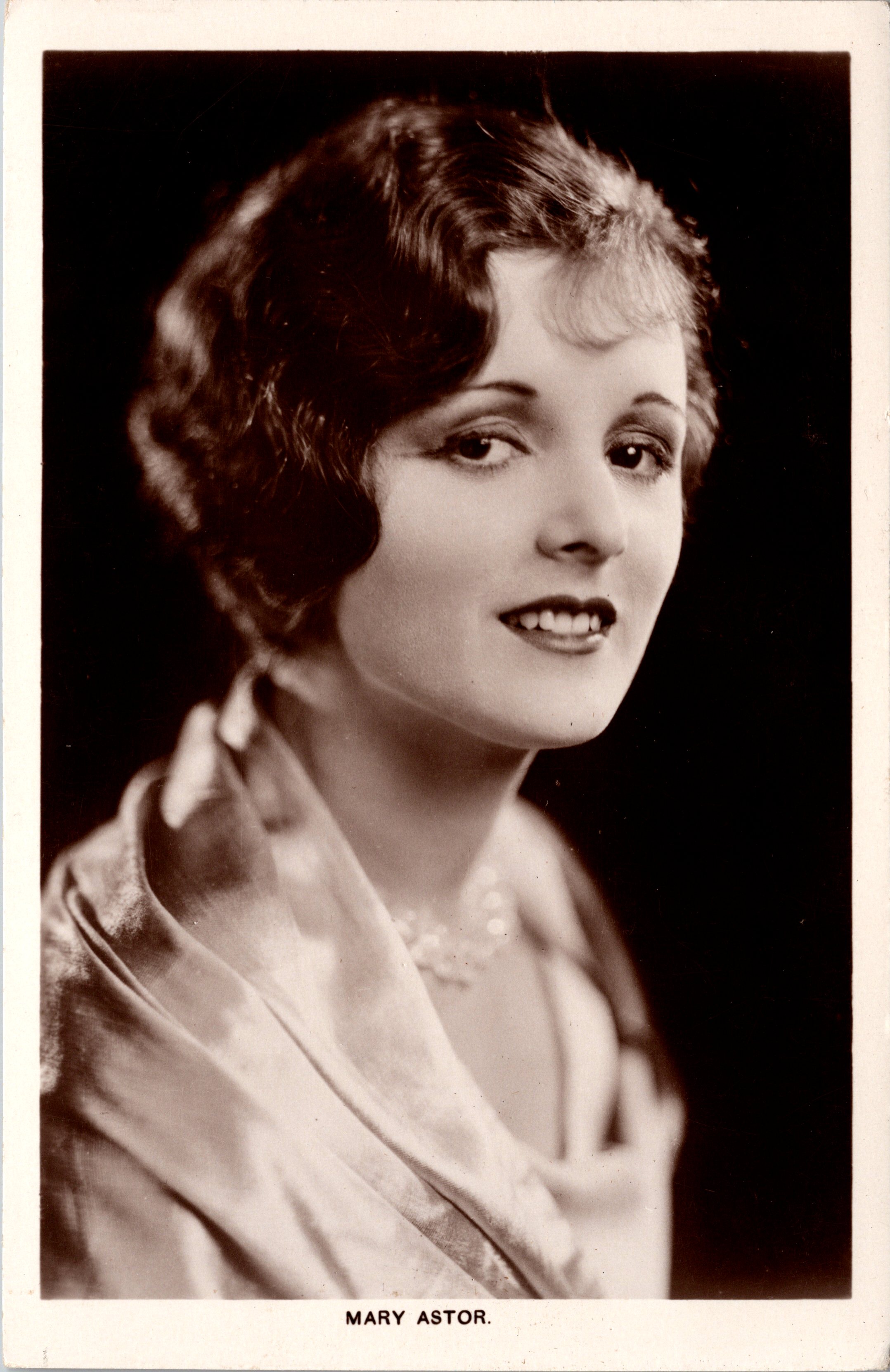
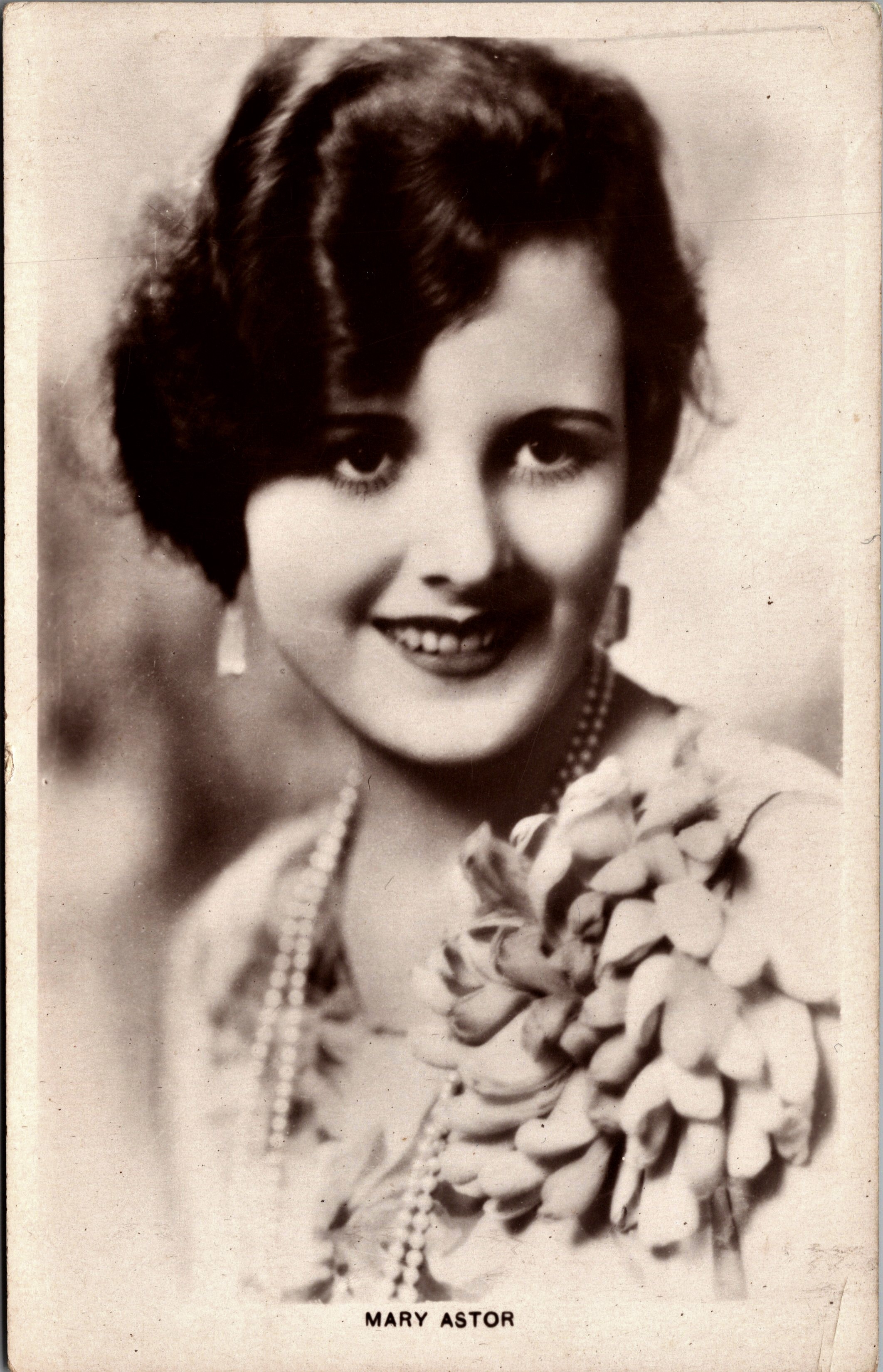
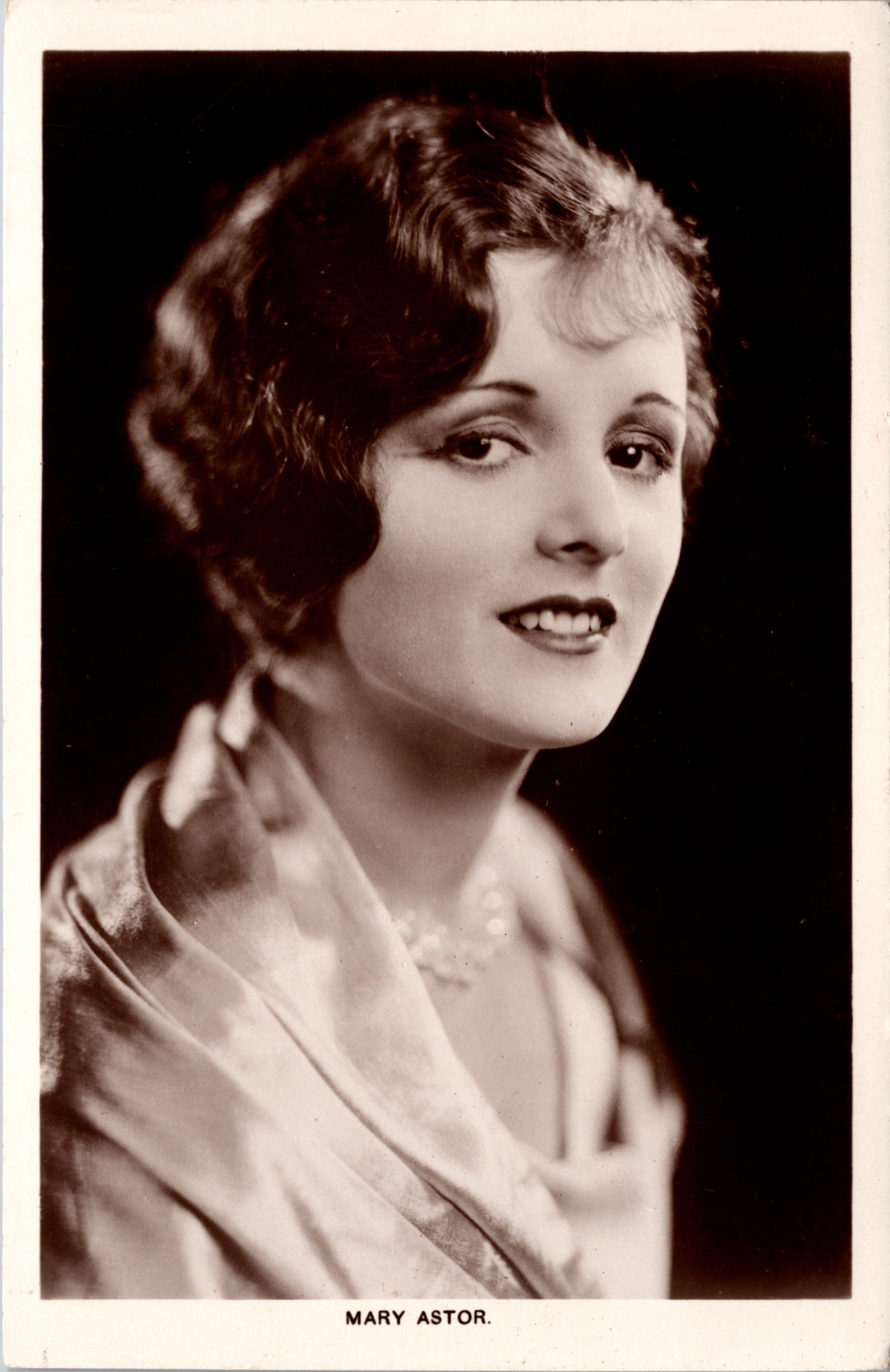
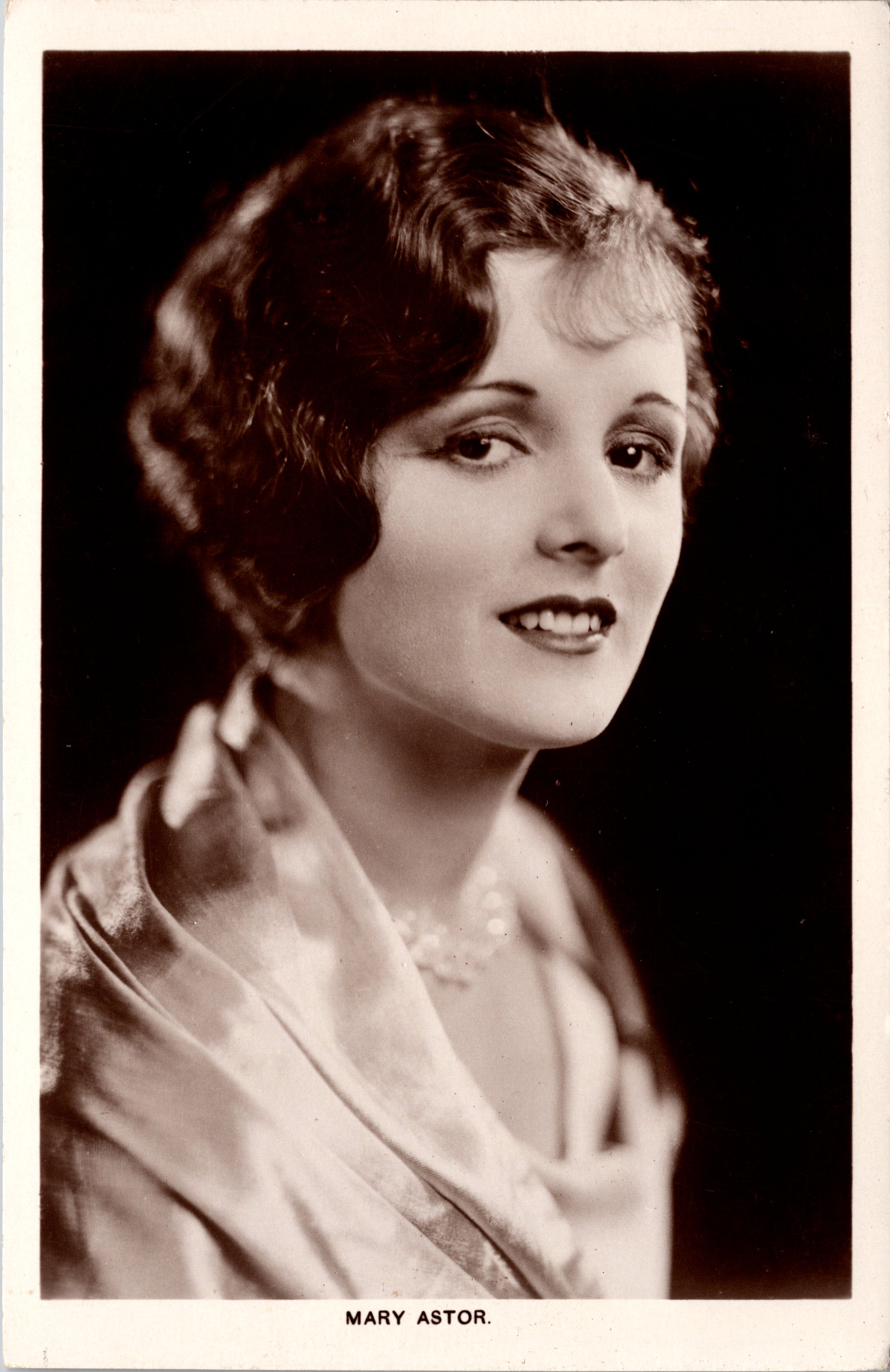
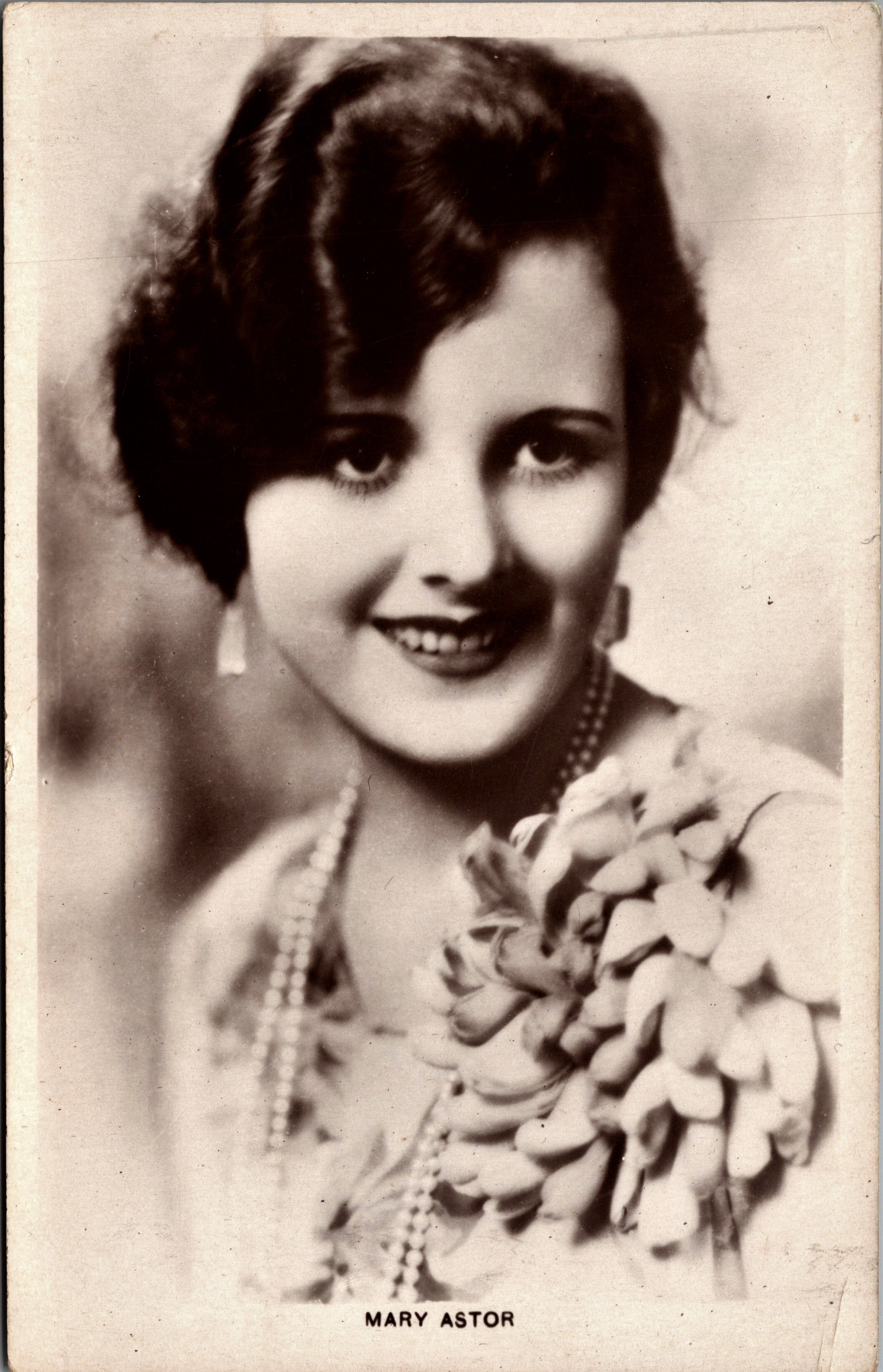
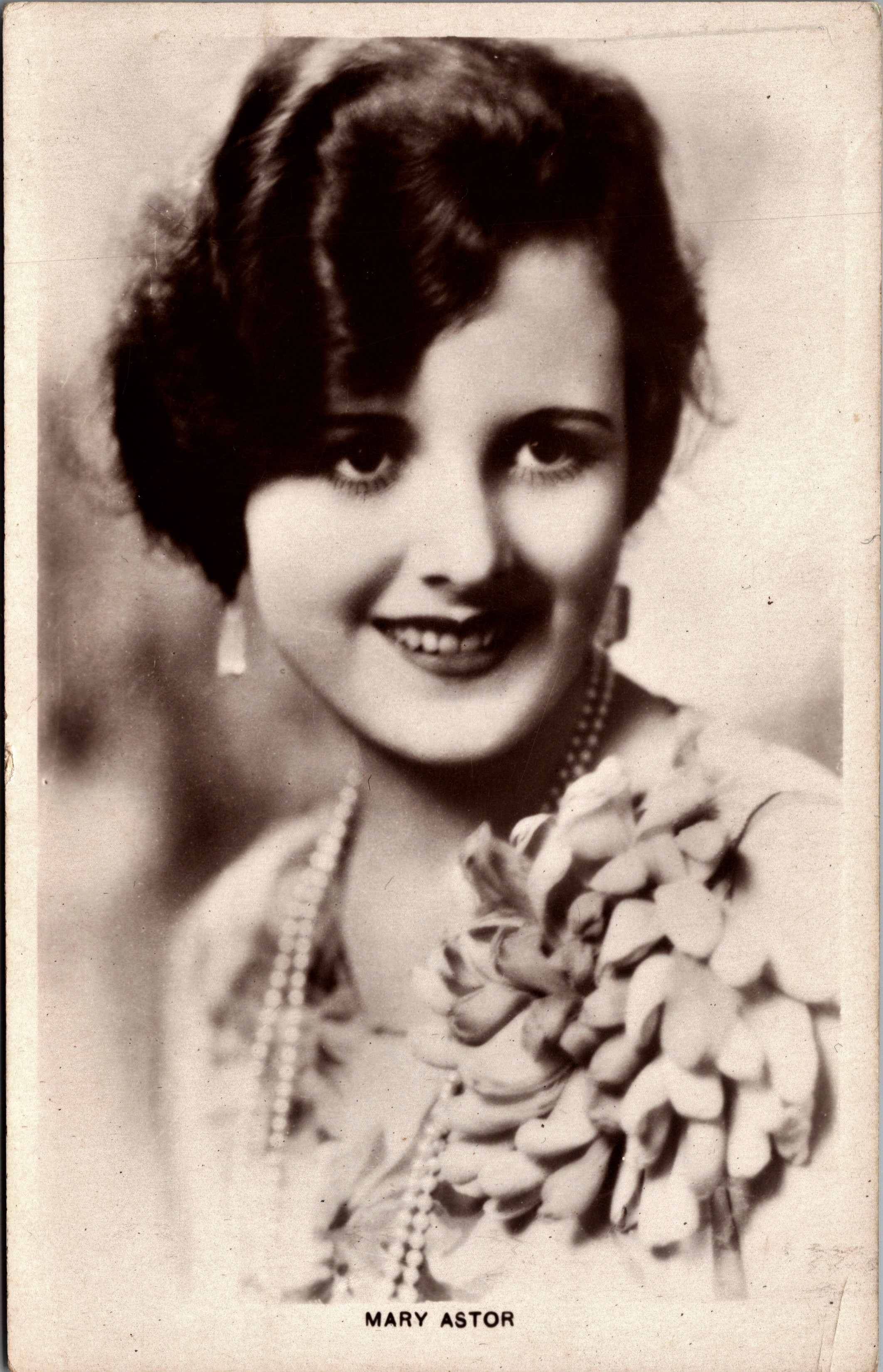
This vintage real photo postcard features American film, stage, and television actress and musician, Mary Astor (1906-1987). She played many memorable roles but she is most associated with her performance in “The Maltese Falcon” (1941). Astor also wrote five novels and an autobiography. She began her film career as a teenager by appearing in silent movies during the early 1920’s. Her career continued with the introduction of “talkies”. In 1936, Astor’s career was almost ruined by a scandal in which she had an affair with playwright George Kaufman. A custody fight with her ex-husband stigmatized her as being an adulterous wife. She managed to overcome the poor PR and in 1941, won an Academy Award fo Best Supporting Actress in “The Great Lie”.  Astor was born in Quincy, Illinois. Her father was a German teacher and her mother taught drama and elocution. Astor was home schooled by her father who also taught her the piano. In 1919, she sent her photo to a beauty contest in Motion Picture Magazine. She was chosen as a semi finalist. When she was fifteen, she and her family moved to Chicago where she took drama lessons and performed on the stage. She and her family moved to New York City so she could act in motion pictures. A Manhattan photographer asked Astor to pose for him and the resulting photographs led her to be signed by Paramount pictures. In 1921, at age fourteen, she made her film debut. In 1923, she and her family moved to Hollywood. During the filming of one movie, the underage actress was wooed off set by the significantly older actor, John Barrymore. She became a “WAMPAS Baby Star” in 1926. In Hollywood, her controlling parents kept her a virtual prisoner and lived lavishly off her earnings. They gave her a five dollar a week allowance while she was earning 2500 dollars a week. Her father was emotionally and physically abusive. She did not gain control of her salary until she was 26 years old. However, this resulted in her parents suing her for financial support.  In 1928 she married film director Kenneth Hawkes. In 1928, he was killed in a plane crash while filming sequences for a movie. After Astor appeared in a few more movies, she suffered a nervous breakdown related to the loss of her husband. She married the doctor who treated her for her psychiatric illness. By 1933, she had a child, and was seeking a divorce. Her personal life was coming apart at the seams. That is when the aforementioned scandal occurred. She continued to appear in films during the 1930’s but had entered the early stages of alcoholism. By 1949, she entered a sanitarium for alcoholics. In 1951, she experienced her third suicide attempt. Astor’s filmography credits her with 155 film appearances between 1921 and 1964. The IMDb reports that she appeared in two Broadway plays between 1945 and 1954. Astor was a very successful performer but was plagued by problems in her personal life.

Postcard 1 was published by Picturegoer as part of a series (no.240b). The firm was located in London, England. This postcard is in very good condition (see scans). 

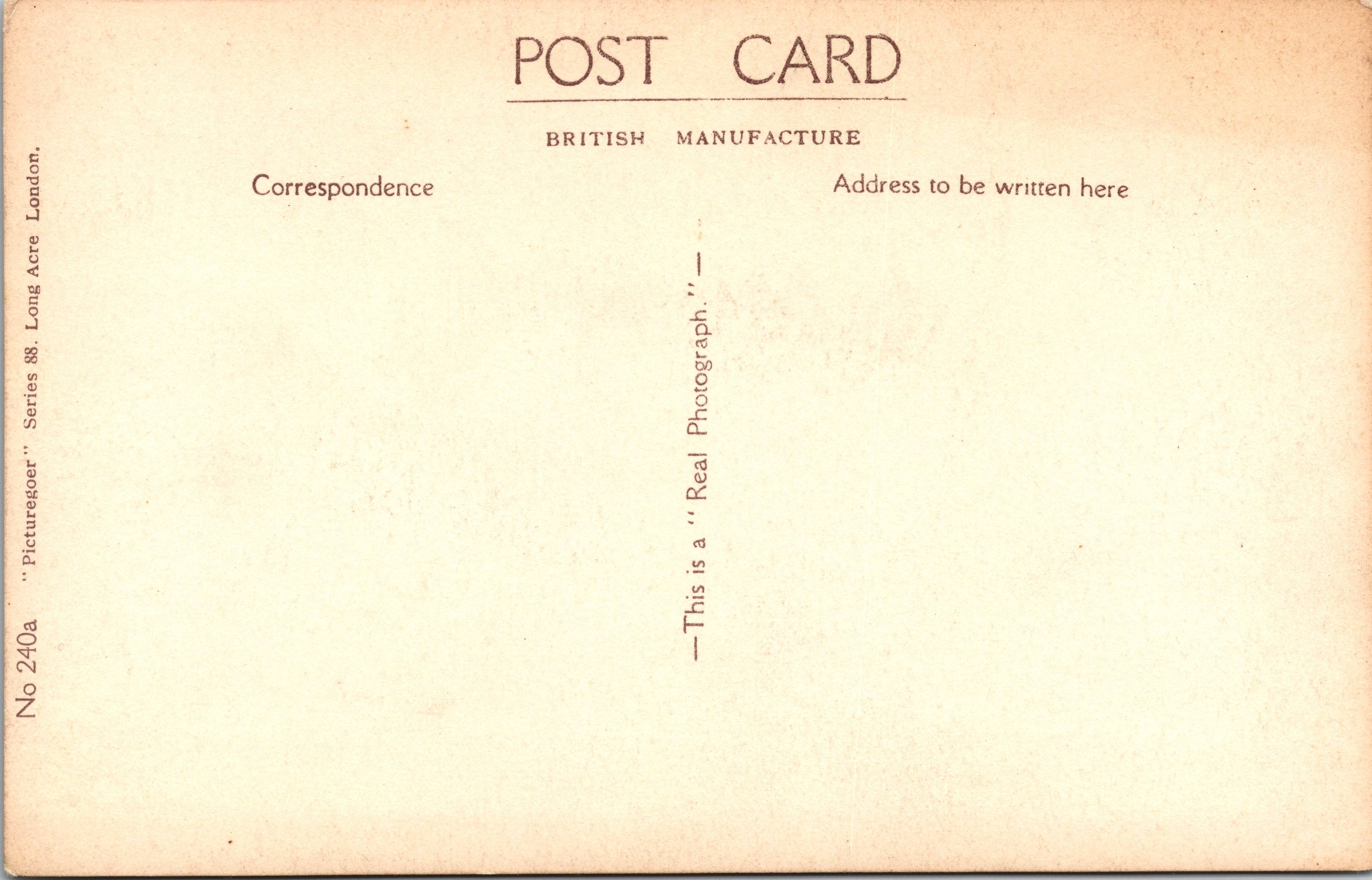
Postcard 2 was published by Picturegoer as part of a series (no.240a). The firm was located in London, England. This postcard is in very good condition (see scans). 

Buy this Vintage Real Photo Postcard (includes shipping within the US) #3903

To purchase this item, click on the Pay with PayPal button below

$15.75

Buy this Vintage Real Photo Postcard (includes International shipping outside the US) #3903

To purchase this item, click on the Pay with PayPal button below

$25.00

mary-astor-240a_0001-1

Buy this Vintage Real Photo Postcard (includes shipping within the US) #5171

To purchase this item, click on the Pay with PayPal button below

$14.00

mary-astor-240a_0001-2

Buy this Vintage Real Photo Postcard (includes International shipping outside the US) #5171

To purchase this item, click on the Pay with PayPal button below

$24.00

Postcard 1

Postcard 2

ALICE BRADY : PRETTY FILM AND STAGE ACTRESS : BROADWAY STALWART : ACADEMY AWARD WINNER

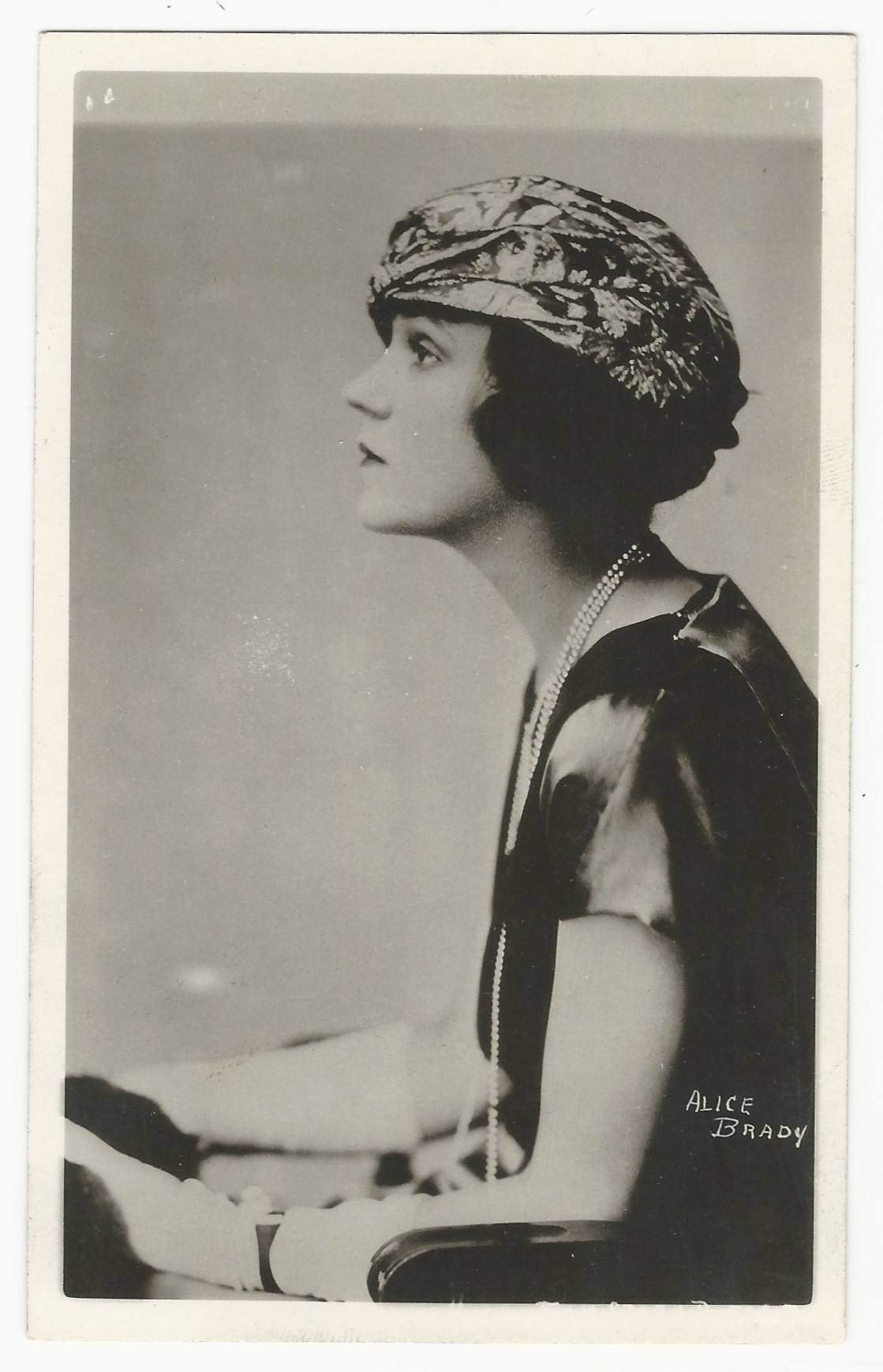
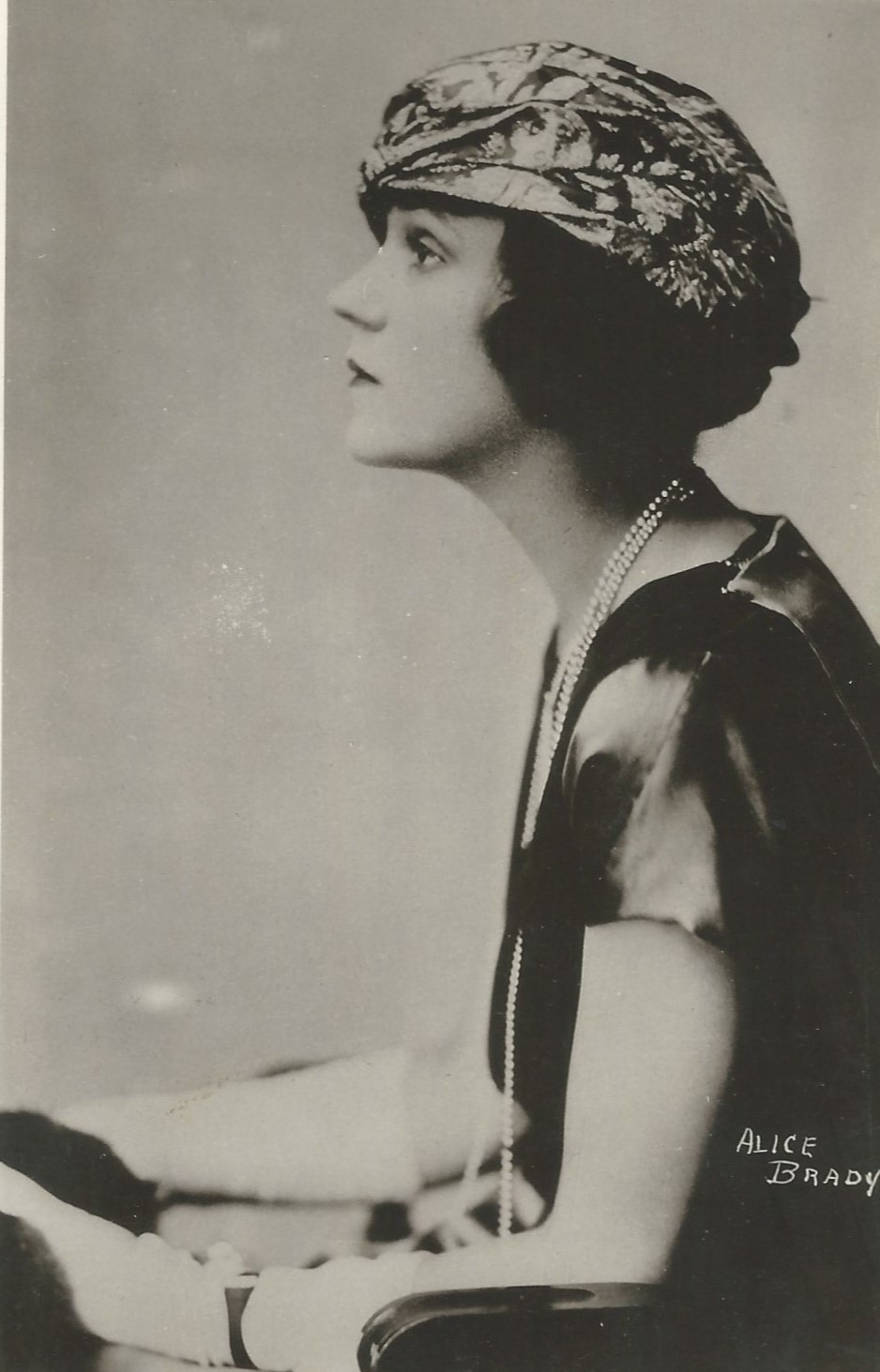
This vintage real photo postcard features film actress, Alice Brady (1892-1939). Brady was born in New York City into a theatrical family. Her father was a theatrical producer, and her mother was a French actress. When Alice was four years old, her mother died. Her father remarried and her step-mother was actress, Grace George. George (1879-1961) was a successful American stage actress. She had a long Broadway stage career and appeared in two films.  Alice knew she wanted to be an actress, like her mother and step-mother, at an early age. Her first stage appearance was at the age of 14. Her first Broadway appearance was in 1911, at the age of 18. In 1913, she appeared with John Barrymore in “A Thief for The Night”. She performed on Broadway over a span of 22 years. She began her career during the silent film era and was one of the minority of actresses that successfully made the transition into sound movies. Brady’s films included “My Man Godfrey” (1936) and “In Old Chicago” (1937). Alice made her first silent feature appearance in 1914. She appeard in 53 films over the next ten years. Simultaneously, she continued to perf0orm on stage. In 1923, she took a ten year hiatus from the stage. In 1922 she made her first talkie, an MGM production. Over the next seven years, she made 25 more films. Her final film was “Young Mr. Lincoln” (1939). In 1937, Brady won the Academy Award for Best Supporting Actress for the film, “In Old Chicago”. She had been nominated for the same award the previous year. In all, Brady appeared in more than 80 films. It is important to mention Brady’s Broadway career. The IBDb reports that she appeared in over 40 Broadway productions. Some of the “Great White Way” productions (1911-1932) that included Brady were “H.M.S. Pinafore” (1911), “The Pirates of Penzance” (1912), “The Mikado” (1912), “The Yankee Princess” (1922), “A Most Immoral Lady” (1928), and “Morning Becomes Electra” (1931).  Alice was married once. Her marriage to actor, James Crane, lasted from 1919 until they divorced in 1922. The marriage produced one son. Her life and career were cut short by her death from cancer just a day short of her 47th birthday.  The “Cyko” stamp box on this postcard indicates that it was published between 1904 and the 1920’s. (SOLD)