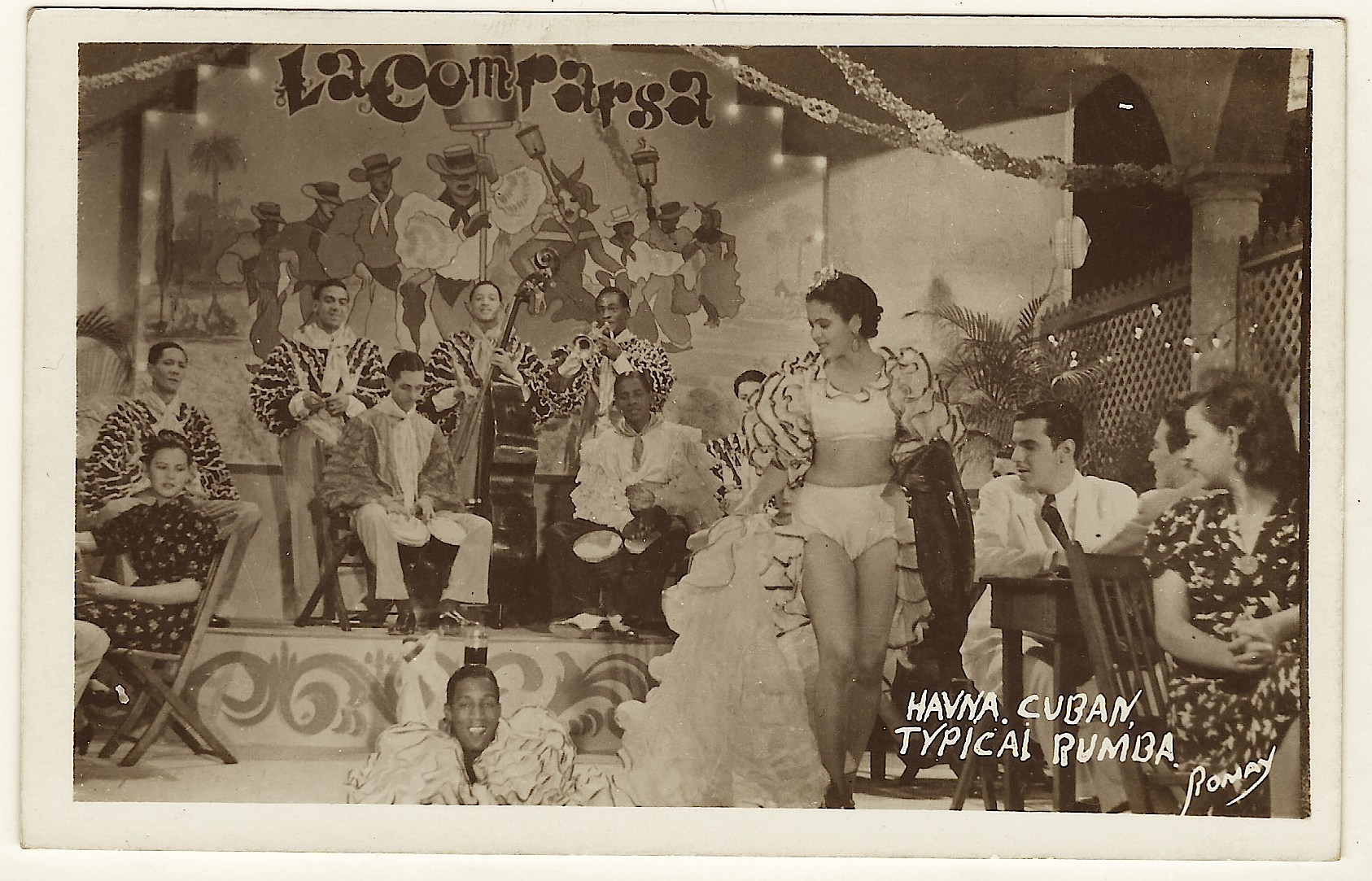
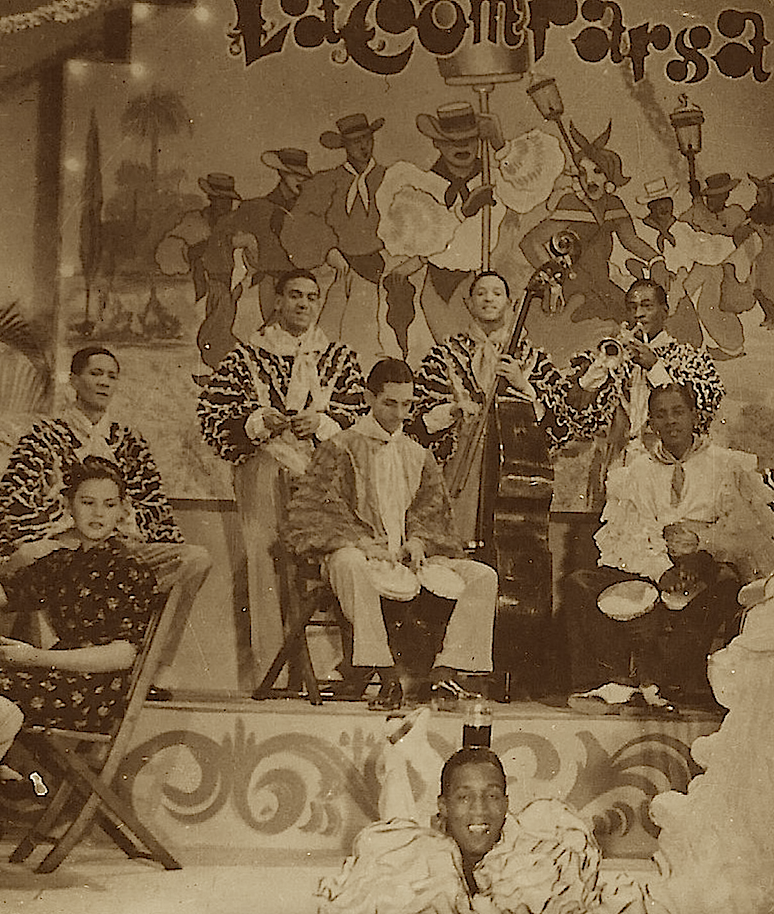
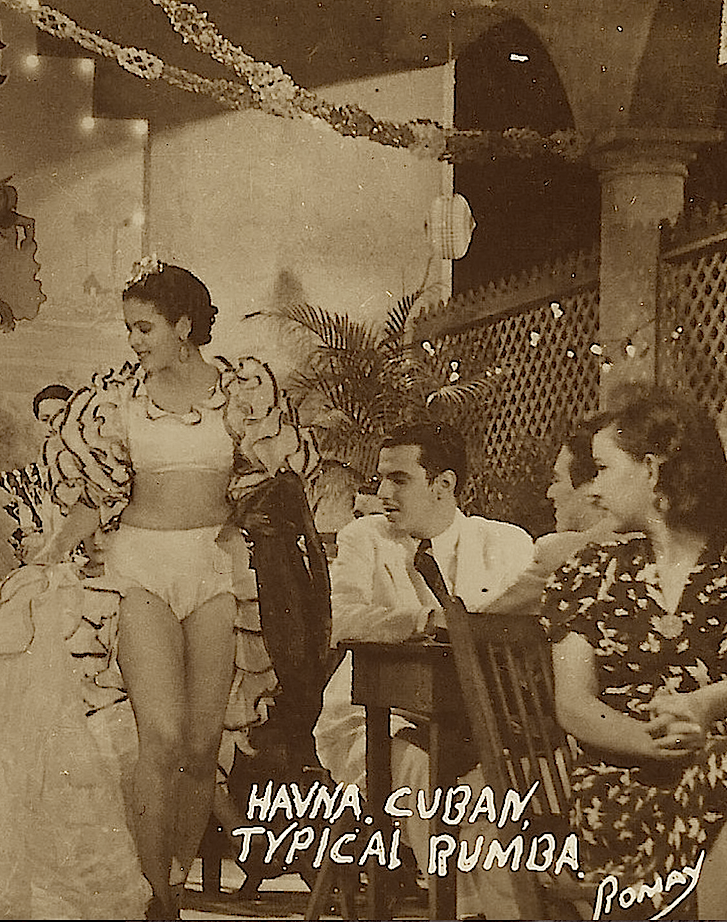
 This vintage real photo postcard captures a glimpse of latin social and dance history. This is a photograph of a Havana, Cuba, nightclub in which the patrons participate in a festival of music and dance. The featured dance is the rumba. I have seen two other postcards in this “Typical Rumba” series. This postcard is by far the nicest of the three. The photographer has signed the photo with the name “Ronay”. A sign on the wall states “La Comparsa”. A comparsa is a group of dancers, singers, and musicians that perform in carnival and other festivities in Latin America and Spain. The most well known comparsas are the ones that take part in the “Carnival of Santiago de Cuba”. Does the United States have Comparsas? The most similar carnival held in the United States, according to some writers, is Mardi Gras in New Orleans. Cuban comparsas originate in the eastern part of the island, specifically the city of Santiago de Cuba. The singers, musicians and dancers form the “conga”, the ensemble that performs the canrival music, Havana has it’s own version of carnival. Each city has specific comparsas that tend to perform there. The term “rumba” refers to a style of music and dance. The rumba was exported by Cuba to North America, much like it’s replacement, salsa. The history of the rumba, as well as Comparsas, is much too complex and detailed to be adequately presented in this description. This postcard is from circa 1950 and it is in excellent condition. (see scans). (SOLD)
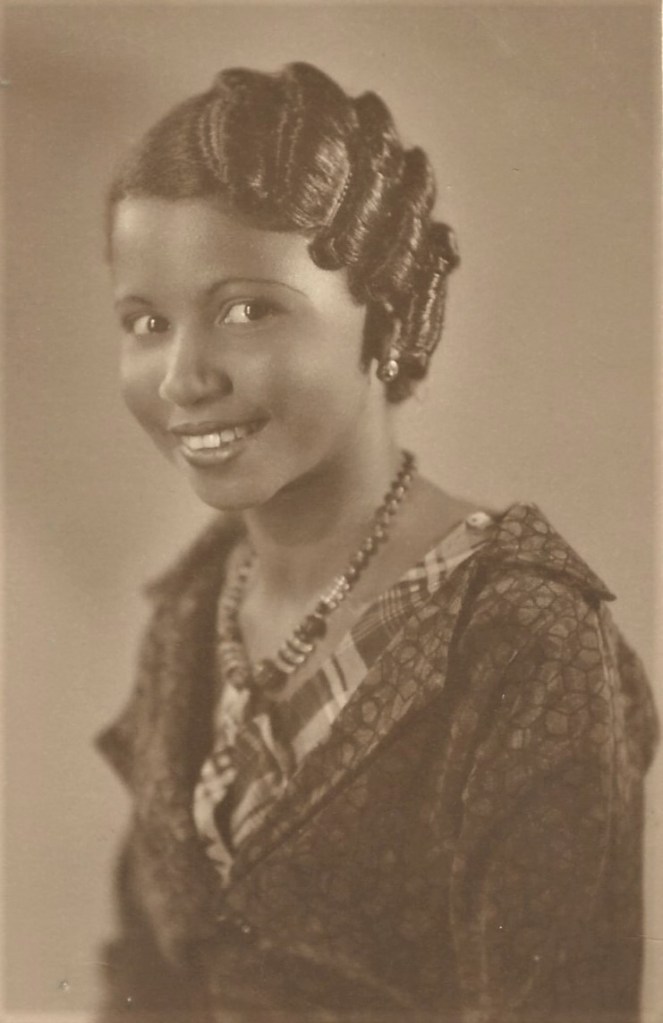
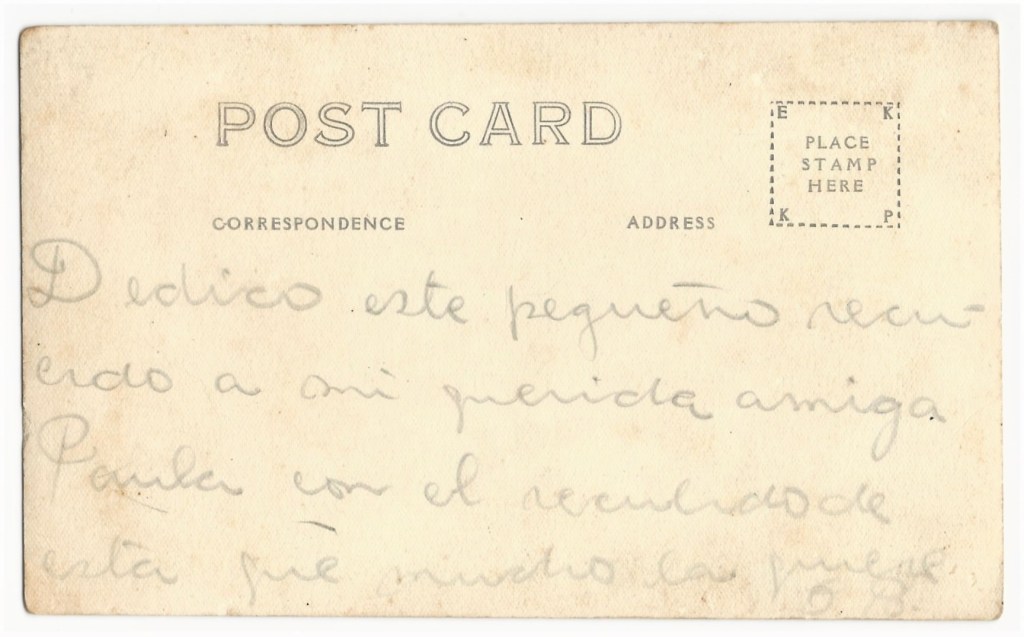

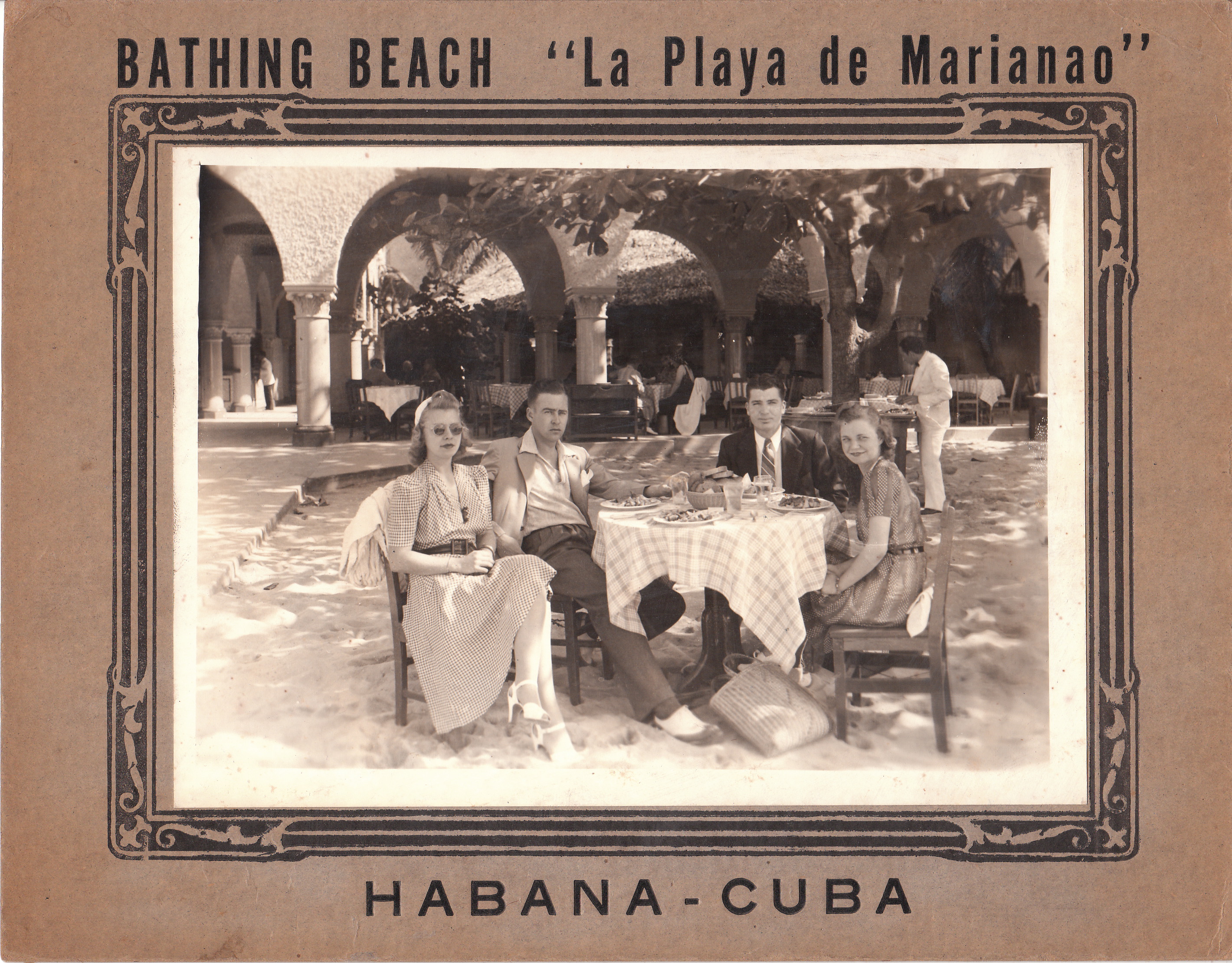
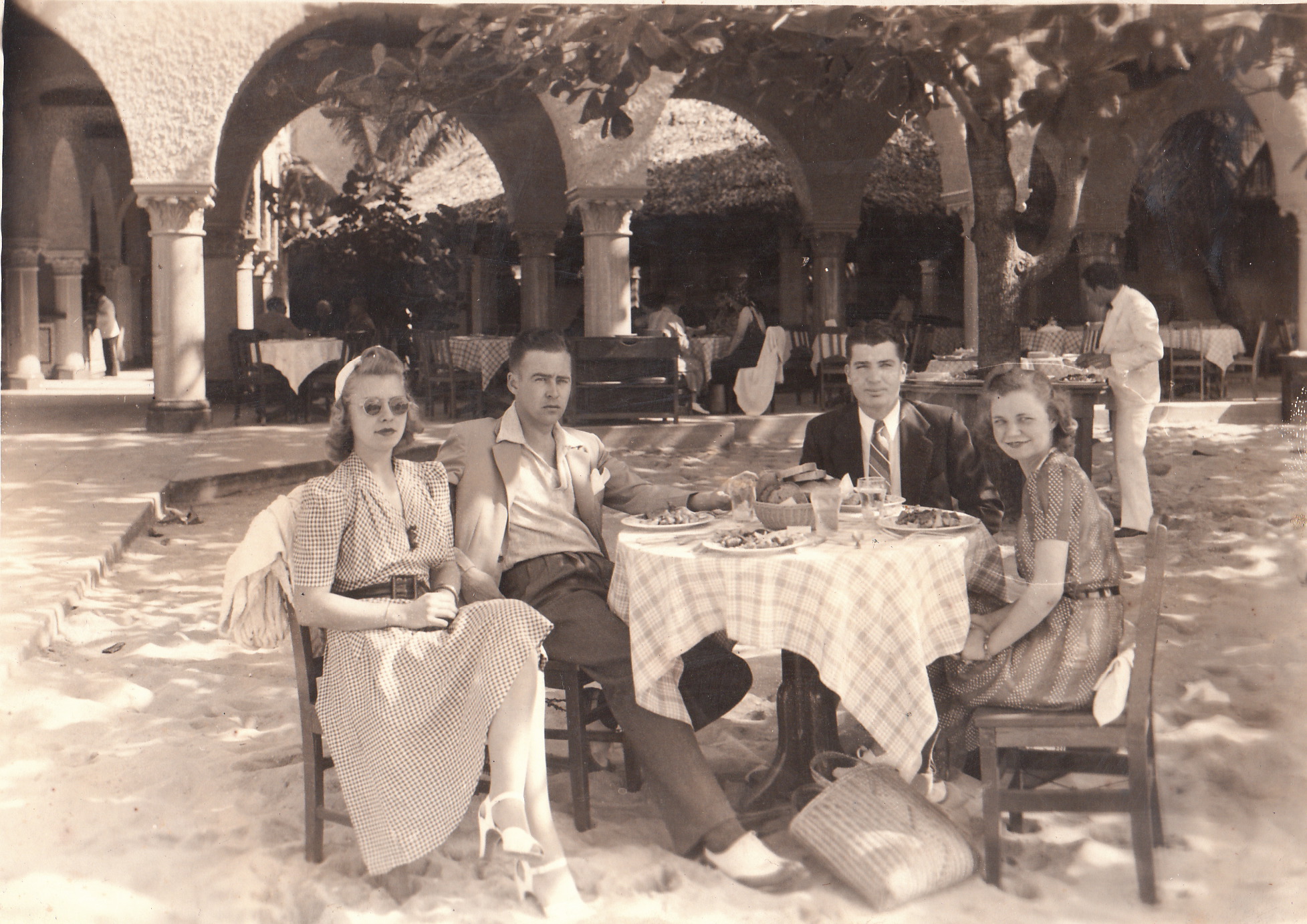
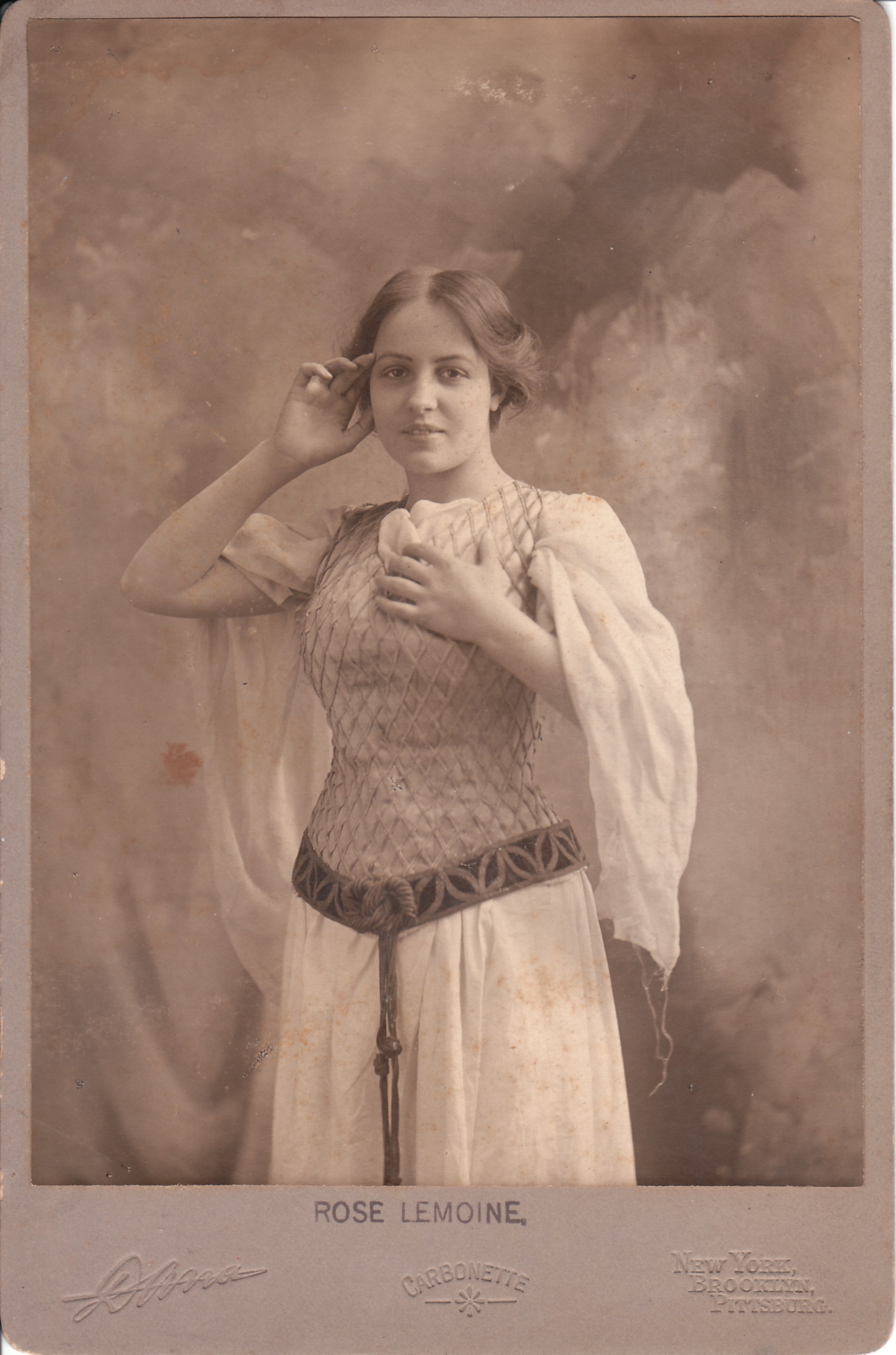 Theater actress Rose Lemoine is the subject of this Cabinet Card photographed by the Dana studio of New York. The photograph was part of the Charles L. Ritzmann collection. Ritzmann was a famous importer of theatrical photographs. The attractive Ms Lemoine was thought by some to be the model or the “Gibson Girl”. This upset some Americans because Lemoine was from Cuba, not the United States and the “Gibson Girl” was illustrator Charles Dana’s personification of the feminine ideal. The “Gibson Girl” was a popular figure for twenty years (about 1890-1910). Lemoine’s mother was Cuban and her father was a French coffee planter. In 1903, the New York Times mentions Lemoine as appearing in a Broadway play called “The Best of Friends”. Also appearing in that play was Lionel Barrymore and Agnes Booth.


 THE CABINET CARD GALLERY